PALMAM QUI MERUIT FERAT
Reading edition
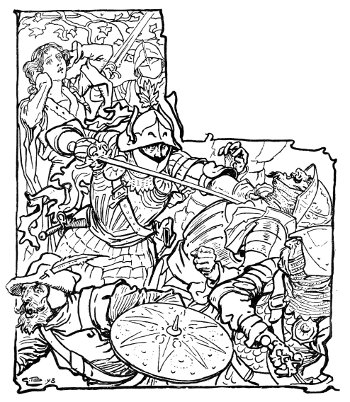
'Twas the merry month of May When the birds sing roundelay, Each to cheer his brooding mate, Nor was one disconsolate. 'Twas the golden evening hour When the spells of thought had power, Giving peace but chasing mirth, Bidding spirits walk the earth. 'Twas the fairy's silver spring With its magic murmuring; By its side a maiden lay, Weary both of work and play— "Little life my past has brought— What is in the present wrought? Kindly fairy, let me gaze In my future's tangled maze." Came the answer soft and low, Heard amid the water's flow— "Maiden, perfect love is thine, Seek no further to divine." "Perfect love? How shall I know it? Fairy, say, who shall bestow it?" "Maiden! years shall wax and wane Ere thou seek this spring again. When thou comest I will tell thee How that fairest fate befell thee." 'Tis the rosy break of day— By the fountain's dancing spray, Sword in hand, and sheathed in steel, Three in early manhood kneel. "Gentle fairy, hear us now— We have ta'en the knightly vow— Sworn to aid the fair and weak, Grant the boons thy champions seek." "Grant," saith one, "if death be nigh Me, for her I love to die." And the springlet, singing sweet, Casts a white rose at his feet. Prays the second, "Fairy, give Me for her I love to live." And the merry water flows Bearing him a crimson rose. Saith the third, "Of death or life I myself can wage the strife— Only let my love endure, Given once, unchanged and pure." Then the fountain sinks to calm, On its bosom lies a palm. In the forest, sore dismayed, Cries for help the lovely maid; Clutch of brigand fierce and rude Holds her in that solitude; Brigand hands seize gems and gold, Brigand tongues with speeches bold Offer her, since none can save, Queenship of their robber-cave. On the leaves the sunbeams glitter, 'Mid the boughs the wild birds twitter, In the grass the foxgloves rise— Is there none to heed her cries? See the branches dashed apart! Turns the chief with sudden start, Feels a sword-thrust in his heart; And another caitiff's groan Speaks his coward spirit flown, While, too swift for dying word, Dagger-smitten, writhes a third. Yet before the maid is freed Victim for her life must bleed; For the chief with parting breath Gives one succourer to death; And his comrades bending low Over him their mantles throw, While the maiden's tears betoken Grief for gratitude unspoken. Soon for him the death-bell pealeth— She beside her champion kneeleth— All in sable vesture dight Scatters o'er him roses white. One whose aid her thanks must own Asks not gratitude alone: Whispered words have soothed her fears, Loving hand shall dry her tears; Spring with all its visions tender Shall to summer-joys surrender, Hope who erst would dream apart Yield to love the virgin heart, Grateful tears no more be paid Where the milky roses fade, But the thoughts she cannot speak Shall unbidden dye her cheek, When their emblem she bestows, Gives her knight the crimson rose.
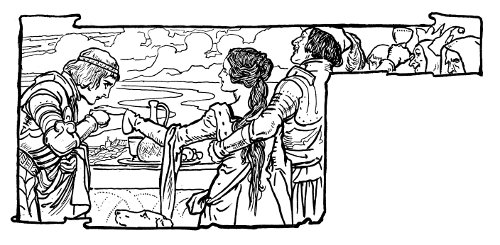
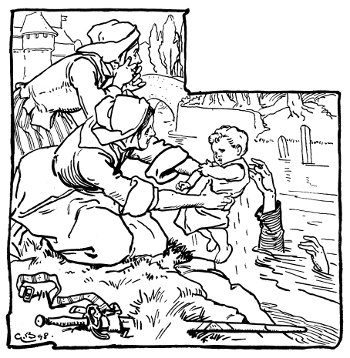
Yet another champion stood By the maiden in the wood, Slew the foe, but, wounded sore Saw her for awhile no more. When he met her glance again Was it joy or was it pain? Joy her yielded hand to press, Joy to hear her voice confess He had helped her in distress, Joy to see her eye bedewed With a friend's solicitude, Pain which would not be denied For she was another's bride! "Can I bear? He is fond But unworthy of her— The pleasures beyond Can his light spirit stir; Gay song, foolish story Can lead him astray, Vain glamour of glory Entice him away. "Must I speak? She is blind Be his faults what they will To her he is kind. Let me watch and be still: Her children beguiling Each hour as it flies, The world ever smiling, Untroubled her skies. "Shall I fly? If I would She might look e'en on me; She is true, she is good, Yet I cannot but see Some moment unwary Might bring back again That thought—— Ah! kind fairy, Is true love all pain?" Comes again the eventide: Happy wife as happy bride, Happy mother, she has dwelt, Pain unknown and grief unfelt Till her lord to rest was laid. Now in mourning weeds arrayed She has sought the fairy spring; Hears once more its murmuring, Sees once more the bees assemble There the honeysuckles tremble, Sees the armoured dragon-fly And the kingfisher dart by, Sees the blue forget-me-not Cluster in the shielded spot, Sees forsooth, with brimming eyes, Children of the earth and skies; Nothing harmful dares to roam Near the fairy-haunted home. "Fairy, he has gone to rest, His the perfect love and best!" Answered her the water's swell, "Not the best—he loved thee well." Wondering even in her tears Fly her thoughts through bygone years— "He who lay 'neath roses white, Was he then the perfect knight?" Came the answer soft and clear, "Not the best—he held thee dear." "Then, as thou didst promise, tell me How that fairest fate befell me." "Didst thou mark—a flame his crest— Him who moved among the rest, Yet no word of love addressed? Him who, wounded for thy sake, Scarce would thanks in guerdon take— Speechless, though his heart might break. Yea, thou didst, with laughing glance, Bid him lead thee to the dance, Bid him break for thee a lance. Silently would he comply, Or with half-averted eye Watch thee gaily pass him by. Yet he ever hovered near, Lest the dawn of woe or fear, Pain or trouble should appear. Once in hour of sorest strife For thy lord he risked his life. Didst thou know it—thou the wife? Once within the rushing river Garments white an instant quiver, 'Twas thy child—a pause, a shiver. All around in blank dismay Watch her swiftly whirled away— He won back the millstream's prey; Placed her on the margent green, Saw her maidens o'er her lean, Parted ere his face was seen. Death and life for thee were given, For thy sake a heart was riven. Was it hard—the yielded breath? Harder far the living death. True the love which won thee first— Truer that in silence nursed. Now he rests where flowers bloom— Wilt thou crownless leave his tomb?" Not with tears, but still and calm, On his grave she laid the palm.