APPENDIX II
Reading edition
THE PALÆONTOLOGY OF THE UPPER CRETACEOUS DEPOSITS OF NORTHERN NIGERIA
By Henry Woods, M.A., University Lecturer in Palæozoology, Cambridge
The fossils collected by Dr. J. D. Falconer and Mr. A. Longbottom from the Upper Cretaceous deposits of Northern Nigeria include Fishes, Ammonites, Gasteropods, and Lamellibranchs. The localities from which these fossils were obtained are: Awe, Deba Habe, Jibaru, Gongila,[196] Gulani, Kumberi, Kunini, and Reme. At present the number of species which can be identified is comparatively small, but the collection is sufficient to show that under more favourable conditions a large and important fauna could probably be obtained from the deposits of this region.
Teeth, vertebræ, &c., of fishes were collected at Kumberi and Jibaru, and have been examined by Dr. A. S. Woodward who identifies them as Gigantichthys, a genus which is known from the Chalk of Egypt and the Sahara.[197] Ammonites have been found at Gongila, Reme, Kunini, and Kumberi, and they show that the deposits are of Turonian age—probably Lower Turonian. The Ammonites belong to the genera Vascoceras, Mammites (Pseudaspidoceras), and Hoplitoides. Vascoceras is confined to the Turonian. Pseudaspidoceras is mainly of Turonian age. The species of Hoplitoides belongs to the section of that genus which occurs in Turonian deposits. The species of Vascoceras and Mammites (Pseudaspidoceras) found in Nigeria are closely allied to forms which occur in the Lower Turonian of Northern Africa and the Iberian peninsula.
The larger number of the Gasteropods and Lamellibranchs were found at Awe, but no Ammonites were obtained at that locality; these fossils, so far as they can be identified, do not give any definite evidence that the deposit at Awe is of earlier age than the Turonian.
At Deba Habe Ostrea (Exogyra) olisiponensis, Sharpe, is abundant and is the only fossil obtained at that place. In Portugal that species occurs in both Turonian and Cenomanian deposits. In Nigeria it has also been found at Gongila, where the Turonian Hoplitoides occurs. So that it is probable that the deposit at Deba Habe is of the same age as the one at Gongila.
At Gulani Ostrea prælonga, Sharpe, is abundant, but no other fossil was found at that locality. In Portugal O. prælonga occurs in the Bellasian—an horizon which is believed to come between the Aptian and the Cenomanian. The same species is found at a similar level in Tunis and Algeria. The occurrence of this one species can, I think, hardly be taken as sufficient evidence that the deposit at Gulani is of Bellasian age, since it is not unlikely that, as is the case with O. (Exogyra) olisiponensis, this form may recur at later horizons when a favourable facies of deposit again appears.
At present, then, we can state that the deposits in which Ammonites occur are of Turonian age, and that there is not sufficient evidence to show that beds of earlier age are represented.
The fauna of the Turonian deposits of Northern Nigeria resembles closely that found in beds of similar age in Portugal, Tunis, and Algeria. This is shown especially by the Ammonites and oysters. At present the genus Vascoceras is known only from Portugal, Spain, Algeria, Tunis, Egypt, Nigeria and Brazil. Hoplitoides occurs in Algeria, Tunis, Nigeria, the Kameruns, and probably in Egypt. The species of Pseudaspidoceras found in Nigeria is allied to forms found in Portugal, Tunis and Brazil. The oysters likewise belong to species characteristic of Northern Africa and South-western Europe, and one of them has also been found as far south as Angola. The Ammonites also show, as Pervinquière has already pointed out is the case in Tunis, that the fauna is related to that found in the Upper Cretaceous of Brazil.
Amongst other places in West Africa, Cretaceous deposits have been found in the Kameruns, and are regarded by Solger as of Upper Turonian and Lower Senonian age, but by Harbort[198] they are referred to the Emscherian (Lower Senonian). They certainly appear to be of later date than the Nigerian deposits with which they are connected chiefly by the presence of Hoplitoides.
Until the fauna of the Nigerian Cretaceous is more completely known any further discussion of its relationship to the faunas of other areas must be postponed.
The list on the following page shows the distribution of the species found in Nigeria, and is followed by palæontological notes and descriptions of some of the species.
Awe. Deba Habe. Gongila. Gulani. Kumberi. Kunini. Reme.
Nuculana, sp. *
Trigonoarca, sp. *
Trigonia, sp. *
Modiola, sp. *
Pecten (Neithea) quinquecostatus, Sow. *
Lima (Mantellum), sp. *
Ostrea prælonga, Sharpe *
„ (Exogyra) olisiponensis, Sharpe * *
Gervillia (Pseudoptera), sp. *
Astarte awensis, sp. nov. *
Lucina, sp. *
Cardium, sp. *
Corbula, sp. *
Pseudomelania, sp. *
Turritella, sp. *
Semifusus africanus, sp. nov. *
Vascoceras nigeriensis, sp. nov. * *
„ gongilensis, sp. nov. *
Mammites (Pseudaspidoceras), sp. *
Hoplitoides nigeriensis, sp. nov. *
„ sp. *
Gigantichthys, sp. *
LAMELLIBRANCHIA.
Nuculana, sp.
Plate XIX., Fig. 4.
An internal cast resembles in form N. Mariæ (d’Orbigny), but in the absence of the shell the species cannot be identified.
Locality.—Kumberi.
Trigonoarca, sp.
Plate XIX., Figs. 1–3.
Several specimens of Trigonoarca were found, but are not sufficiently well-preserved for specific identification. In general form they resemble some examples of T. trichinopolitensis (Forbes)[199] from the Trichinopoli Beds of Southern India.
Locality.—Awe.
Trigonia, sp.
Two specimens of a species belonging to the Scabræ section of Trigonia are in the collection, but are not sufficiently well-preserved for identification.
Locality.—Awe.
Modiola, sp.
Examples of a small form of Modiola occur at Awe.
Pecten (Neithea) quinquecostatus, Sowerby.
Three specimens with the shell preserved were found at Awe.
Lima (Mantellum), sp.
An imperfect specimen from Awe resembles Lima (Mantellum) gaultina, Woods.[200]
Ostrea prælonga, Sharpe.
Plate XIX., Figs. 5–8.
1850. Ostræa prælonga, D. Sharpe, Quart. Journ. Geol. Soc., VI., p. 187, Pl. XX., Fig. 4.
1869. Ostrea prælonga, H. Coquand, Mon. Ostrea. Terr. Crét., p. 169, Pl. LXVI., Figs. 1, 2.
1890. Ostrea prælonga, A. Peron, Moll. Foss. Terr. Crét. Tunisie, p. 110, Pl. XXIII., Figs. 1–6.
Remarks.—About twenty more or less perfect specimens of an Ostrea, agreeing closely with O. prælonga, Sharpe, were found. O. pentagruelis, Coquand,[201] is considered by Peron to be only a very old individual of O. prælonga.
This species occurs in the Bellasian of Portugal. In Algeria and Tunis it is characteristic of beds which occur below the Cenomanian, and are referred by Peron to the Upper Albian.
Locality.—Gulani.
Ostrea (Exogyra) olisiponensis, Sharpe.
Plate XX., Figs. 1–3.
1850. Exogyra olisiponensis, D. Sharpe, Quart. Journ. Geol. Soc., VI., p. 185, Pl. XIX., Figs. 1, 2.
1862. Ostrea Overwegi, H. Coquand, Géol. pal. rég. sud. prov. Constantine, p. 226, Pl. XIX., Figs. 1–6.
1862. Ostrea Coquandi, Julien, in Coquand, ibid., p. 324, Pl. XXXIII., Figs. 10–12.
1869. Ostrea olisiponensis, H. Coquand, Mon. Ostrea. Terr. Crét., p. 125, Pl. XLV., Figs. 1–7.
1869. Ostrea Overwegi, Coquand, ibid., p. 140, Pl. XLIV., Figs. 1–9; Pl. XLVI., Figs. 14, 15.
1873. Ostrea olisiponensis, L. Lartet, Ann. Sci. géol., Vol. III., p. 59, Pl. XI., Fig. 1.
1882. Exogyra olisiponensis, G. Seguenza, Atti d. R. Accad. dei Lincei, Ser. 3; Mem. Scien. Fis. Math., Vol. XII., p. 180, Pl. XVII., Fig. 2.
1882. Exogyra oxyntas, Seguenza, ibid., p. 178, Pl. XVIII., Fig. 1.
1888. Ostrea olisiponensis, P. Choffat, Mém. Soc. Phys. et d’hist. nat. de Genève, XXX., 2, p. 95.
1891. Ostrea olisiponensis, A. Peron, Moll. Foss. Terr. Crét. Tunisie, p. 114, Pl. XXIII., Figs. 14–18.
1902. Ostrea (Exogyra) olisiponensis, P. Choffat, Faune Crét. Portugal, Vol. I., Ser. 4, p. 166, Pl. VI., Figs. 17–19.
1903. Ostrea olisiponensis, R. Fortau, Bull. Instit. Égypt., Ser. 4, Vol. IV., p. 283, Figs. 3–5.
1905. Ostrea (Exogyra) olisiponensis, P. Choffat, Géol. Col. Portug. d’Afrique. II, Nouvelles données sur la zone littorale d’Angola, p. 44, Pl. I., Figs. 4, 5.
Remarks.—This species is represented by numerous examples, in a few of which the surfaces of the shell are well-preserved and show a few coarse ribs. Sharpe and other writers have noted the great variability in the ribbing of this species. The Nigerian specimens agree with the varieties which possess only a few ribs. Peron, Choffat, and Fortau have discussed fully the affinities and synonymy of O. (Exogyra) olisiponensis. This species is common in Northern Africa and Portugal; it occurs in the Cenomanian of Algeria, Tunis, Egypt, and Palestine; in Portugal it is found in both the Upper and Lower Turonian, as well as in the Cenomanian, wherever the deposits are of the marly facies. South of Nigeria this species has been discovered in the province of Angola.
Localities.—Deba Habe and Gongila.
Gervillia (Pseudoptera), sp.
Plate XX., Figs. 4–6.
There are several internal casts resembling in form G. (Pseudoptera) anomala (Sowerby),[202] but there is no evidence to show whether radial ribs were present on the shell or not, and the species cannot be determined at present.
Specimens from the Cenomanian of the neighbourhood of Tebessa (Algeria) have been identified with Sowerby’s species by Coquand,[203] and Peron[204] states that it is abundant and well-preserved at that locality.
Locality.—Awe.
Astarte awensis, sp. nov.
Plate XX., Fig. 7.
Description.—Shell rather small, moderately convex, with the postero-dorsal part somewhat compressed, outline subquadrate or subtriangular, very inequilateral. Anterior margin slightly concave; ventral margin convex; posterior margin short, truncated, forming an obtuse angle with the long, slightly convex postero-dorsal margin. Umbones pointed, rather prominent. Lunule large, ovate, smooth, with a sharp edge. Escutcheon large, deep, with a sharp edge. Ornamentation consists of about fourteen broad, prominent concentric ribs, which are marked by fine concentric lines. Length, 8·25; height, 7 mm.
Affinities.—In the character of its ornamentation A. awensis resembles several small species of Astarte found in the Cretaceous rocks. It is more inequilateral, more elongate, and has the posterior margin more distinctly truncated than in A. subsimilis, J. Böhm.[205] In similar respects it differs from A. griesbachi, Woods,[206] from Pondoland.
Remarks.—Numerous casts of this species occur in ferruginous nodules.
Locality.—Awe.
Lucina, sp.
Plate XX., Figs. 8, 9.
Description.—Shell nearly orbicular, convex, slightly inequivalve; height and length nearly equal. Anterior and ventral margins rounded; posterior margin truncated, forming an obtuse angle with the straight or slightly convex postero-dorsal margin. Umbones rather prominent. Ornamentation consists of regular, concentric lamellar ribs separated by broad, flat interspaces which are marked by fine, concentric lines. Length, 11 mm.; height, 11·5 mm.
Affinities.—In general form, and in the character of its ornamentation, this species resembles one of the varieties of Lucina fallax, Forbes, described by Stoliczka[207] from the Utatúr Group, but the umbones are more prominent, and the postero-dorsal angle is more distinct. It also resembles L. saharica, Quaas,[208] and some forms of L. subnummismalis, d’Orbigny.[209]
Locality.—Kumberi.
Cardium, sp.
Plate XX., Fig. 10.
In the possession of numerous radial ribs and in the general form of the shell, some internal casts resemble Cardium cenomanense, d’Orbigny,[210] but the valves are less convex.
Locality.—Awe.
Corbula, sp.
Specimens of Corbula resemble C. elegans, Sowerby,[211] in the character of their ornamentation, but the posterior part of the shell is more produced.
Locality.—Awe.
GASTEROPODA.
Pseudomelania, sp.
Plate XXI., Fig. 1.
Several specimens of a small gasteropod resemble Pseudomelania Pallaryi, Peron and Fortau,[212] from the Cenomanian of Egypt, but they are of much smaller size, being from 8 to 13 mm. long. The surface of the shell is smooth, except for slightly curved growth-lines, and, on the base, spiral grooves.
Locality.—Awe.
Turritella, sp.
Plate XXI., Fig. 2.
A species of Turritella resembles T. Choffati, Thomas and Peron,[213] from the Turonian of Tunis. The anterior part of each whorl is bent at an angle with the large flattened posterior part, and the ornamentation consists of four strong spiral ribs, one of which occurs at the angle, giving the appearance of a carina. On the later whorls the ribs become granular or tubercular. The ribs are much coarser than in T. Choffati.
Locality.—Kumberi.
Semifusus africanus, sp. nov.
Plate XXI., Figs. 3–5.
Description.—Shell subfusiform. Spire shorter than the last whorl, consisting of about five whorls. Whorls carinate, the carina being more or less distinctly nodular. Posterior part of the whorls flattened, much larger than the anterior part in the spire. Anterior part of last whorl convex. Ornamentation consists of narrow spiral ribs with flat interspaces crossed by growth-lines; on the later whorls the ribs become divided up into rows of elongated tubercles.
Remarks.—This species, which is represented by several imperfect specimens, shows some resemblance to Lagena nodulosa, Stoliczka,[214] and L. secans, Stoliczka,[215] from the Ariyalúr Group, and also to Serrifusus dakotensis var. vancouverensis, Whiteaves,[216] but possesses one carina only.
Locality.—Awe.
CEPHALOPODA.
Genus—Vascoceras, P. Choffat.
(Faune Crét. Portugal, I., 1898, p. 51.)
Vascoceras nigeriensis, sp. nov.
Plate XXI., Fig. 6; Plate XXII., Figs. 2, 3.
Description.—Shell inflated, rounded, subglobose. Whorls thick, largely embracing; umbilicus deep, rather more than a third of the diameter of the shell, with nearly vertical walls, the umbilical margin subcarinate, without tubercles. Flanks curving gradually from the umbilical margin and not limited from the rounded periphery. Surface of shell with growth-rings.
Sutures: Saddles large, broad, and low; external saddle unsymmetrically divided and with small minor divisions; first lateral smaller than the external saddle, more rounded, less divided, with the outer margin sloping and the inner margin nearly perpendicular; second lateral saddle broad, only slightly divided. External lobe deeper than the first lateral lobe; the latter is small with one main division; second lateral lobe smaller, with two points.
(1) (2)
Diameter 88 93 mm.
Thickness 58 54
Height of last whorl 37 34
Width of umbilicus 30 33
(1) Reme. (2) Kunini.
Affinities.—This species resembles the thicker forms of V. durandi (Peron and Thomas),[217] but the walls of the umbilicus are steeper, the umbilical margin is without tubercles, and the external and first lateral saddles are broader and not so high. In general form, and in the absence of tubercles at the umbilical margin, V. nigeriensis resembles V. amierensis, Choffat,[218] but the whorls embrace to a larger extent, and their sides are less flattened; there are also some differences in the suture. In the form of the umbilicus, and in the breadth of the saddles, this species resembles V. harttiformis, Choffat,[219] but the shell is much less thick. Another similar form but with a thicker shell, is V. hartti, Hyatt,[220] from Brazil.
Localities.—Reme and Kunini.
Vascoceras gongilensis, sp. nov.
Plate XXI., Fig. 7; Plate XXII., Fig. 1.
Description.—Shell moderately inflated. Umbilicus less than a quarter of the diameter of the shell, with vertical walls and subcarinate margin. Flanks somewhat compressed. Periphery flattened. Inner whorls with strong ribs on the flanks and prominent tubercles at the umbilical margin and at the limit of the flanks and periphery; on the last whorl the ribs and tubercles gradually become obsolete.
Sutures: External saddle broad, subquadrate, with small divisions; first lateral saddle broad, rounded, divided unsymmetrically by a small lobe; second lateral saddle subquadrate; one small auxiliary saddle on the flanks. External lobe deep and larger than the first lateral lobe, which has only small divisions; second lateral lobe small, its lower margin with pointed divisions.
Diameter 108 mm.
Thickness 57 „
Height of last whorl 52 „
Width of umbilicus 24 „
Affinities.—This species resembles V. subconciliatum, Choffat,[221] from the Turonian of Portugal, but the ribs and tubercles become obsolete at an earlier stage, the umbilicus is smaller, the divisions in the external saddle are less deep, the first and second lateral saddles are more rounded, and the first lateral lobe is narrower. V. gongilensis also resembles some forms of V. cauvini, Chudeau.[222]
Locality.—Gongila.
Genus—Mammites, Laube and Bruder.
(Palæontographica, XXXIII., 1887, p. 229.)
Sub-genus—Pseudaspidoceras, Hyatt.
(“Pseudoceratites of the Cretaceous,” U. S. Geol. Surv. Mon., XLIV., 1903, p. 106.)
Mammites (Pseudaspidoceras), sp.
Plate XXIII., Figs. 1, 2.
In the collection there is one specimen of Mammites (Pseudaspidoceras); it resembles the form figured by Choffat[223] under the name Acanthoceras (?), cf. Footeanus (Stol.), from the Turonian of Portugal, but differs in having a smaller umbilicus and less distinct siphonal tubercles. The sutures are not shown in the specimen from Nigeria.
The Portuguese form differs from A. footeanus, Stoliczka,[224] by the absence of secondary ribs on the siphonal region of the inner whorls, and by the forward inclination of the ribs between the lateral tubercles and the siphonal tubercles.
Other allied species are M. (Pseudaspidoceras) salmuriensis (Courtiller) var. byzacenica, Pervinquière,[225] from the Lower Turonian of Tunis, and M. (Pseudaspidoceras) Pedroanus (White),[226] from Brazil.
Locality.—Gongila.
Genus—Hoplitoides, A. von Kœnen.
(“Nachtrag Foss. Unter. Kreide Mungo in Kamerun,” Abhandl. d. k. Gesellsch. d. Wiss. Göttingen, Math.-Phys. Kl., N.F. Band 1, 1898, p. 53. Emended F. Solger, Foss. Mungokreide in Kamerun, 1904, p. 127; L. Pervinquière, Études Pal. Tunis, I. Ceph., 1907, p. 215.)
Hoplitoides nigeriensis, sp. nov.
Plate XXIII., Fig. 3; Plate XXIV., Figs. 1–5. Text-figure 1.
Description.—Shell discoidal, compressed, with truncated periphery. Whorls largely embracing, with the flanks slightly or moderately convex, the greatest convexity being at a short distance from the umbilical margin. Umbilicus small, or very small, about one-seventh of the diameter of the shell, its sides nearly perpendicular. Periphery usually rather broad, bounded on each side by a prominent rounded carina; the prominence of the siphuncle gives rise to a median rounded ridge between which and the carinas the shell is concave.
In fully-grown individuals the shell is smooth, but in smaller examples the flanks bear a few strong, rounded ribs, which curve slightly forwards near the periphery; the larger ribs start from the umbilical margin, and one or two smaller ribs may be intercalated on the flanks. Where the ribs join the carina the latter may become more or less distinctly tuberculate. Usually the ribs become obsolete when the shell reaches a diameter of about 50 mm., but occasionally they persist on larger individuals.
Sutures: External saddle broad, rather low, with a variable number of small divisions. First and second lateral saddles similar to, but distinctly smaller than the external saddle; each has usually some small divisions, but in some cases these are absent, and the saddle is then rounded. One or two auxiliary saddles may occur. External lobe deep, sometimes nearly as wide as the space between the two carinæ. First lateral lobe usually rather narrower and not so deep as the external lobe, with more or less numerous small divisions. The second lateral lobe is similar to, but smaller than the last.
(1) (2) (3) (4) (5) (6) (7) (8)
Diameter 110 95 84 67 68 62 57 44 mm.
Thickness 47 42 34 28 28 27 28 20 „
Height of last whorl 61 49 45 37 38 38 34 25 „
Width of umbilicus 15 15 10 10 7 6·5 8 6 „
(1–8) From Gongila.
Fig. 1.—Hoplitoides nigeriensis, sp. nov. Gongila. Sutures of six specimens. Natural size.
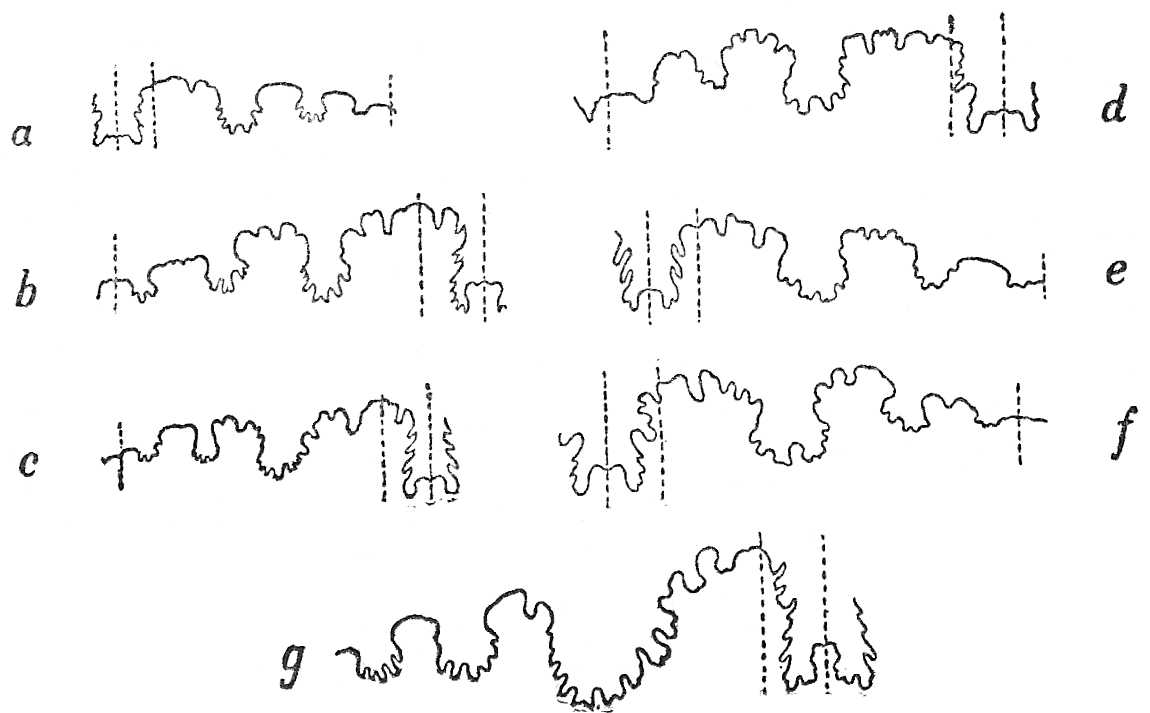
Affinities.—This species appears to belong to the bicarinate group of Hoplitoides. In general form it resembles H. munieri, Pervinquière,[227] from the Lower Turonian of Tunis, but the whorls, are thicker, the flattened periphery is broader and shows a distinct siphuncular ridge. The sutures are similar to those of H. munieri, but are symmetrically placed, and the first lateral lobe is relatively narrow. The ribbing of the smaller specimens is similar to that of Hoplites ingens, v. Kœnen em. Solger.[228]
In general form, H. nigeriensis is similar to Heterotissotia neoceratoides, Peron,[229] from the Lower Senonian of Algeria and the Upper Turonian of Tunis. Both possess a broad, flattened periphery with a keel on each side and a prominent siphuncular ridge, but in H. neoceratoides the ribs are retained to a later stage. The figures given of the suture of Peron’s species are not satisfactory, and I am indebted to Dr. L. Pervinquière for comparing figures of the sutures of Hoplitoides nigeriensis with the type of Heterotissotia neoceratoides which is now in the Sorbonne. Dr. Pervinquière states that the differences in the suture are too great to allow of these two species being referred to the same genus.
Remarks.—The sutures of Hoplitoides nigeriensis vary considerably in appearance on account of the difference in the number and size of the small divisions of the saddles. A somewhat similar variation is seen in the sutures of H. ingens, v. Kœnen, em. Solger, and H. munieri, Solger. Variations also occur in the thickness of the whorls, the breadth of the periphery, the size of the umbilicus, and the period at which the ribs become obsolete. In one specimen, which is less thick than the other, the siphuncular ridge is absent.
This species is represented by numerous specimens, all of which are internal casts or have only a small portion of the shell preserved, and in nearly all cases the sutures are clearly exposed.
Locality.—Gongila.[230]
Plate XIX
Cretaceous Mollusca. T. A. Brock, del.
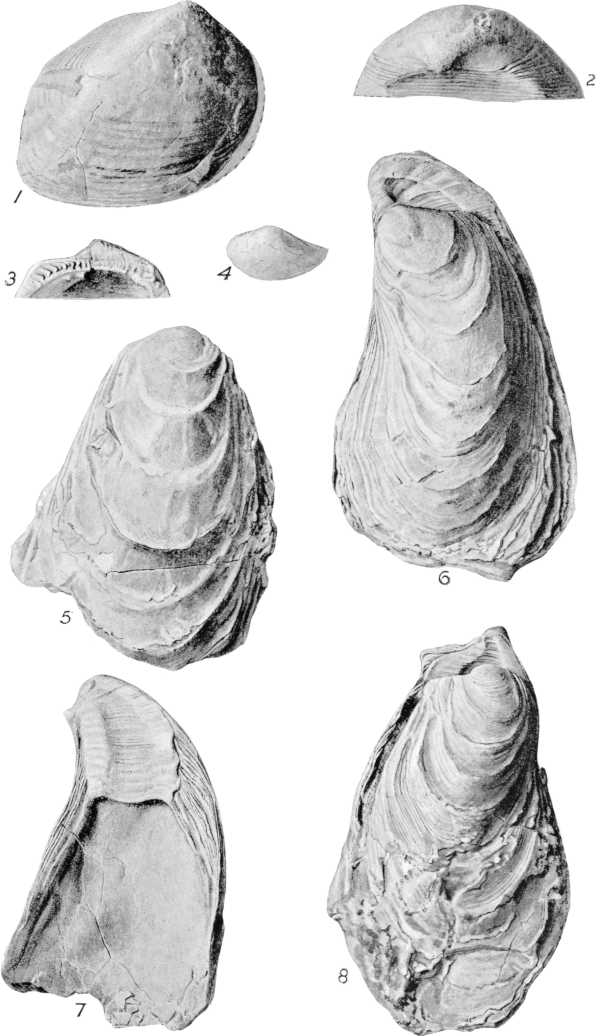
(The figures are of natural size unless the amount of enlargement is stated).
Figs. 1–3. Trigonoarca, sp. Awe. 1, right valve; 2, dorsal view of the same; 3, hinge of left valve. (Page 276.)
„ 4. Nuculana, sp. Kumberi. Internal cast of left valve. × 1½. (Page 276.)
„ 5–8. Ostrea prælonga, Sharpe. Gulani. 5, right valve; 6, 8, right valves with umbo of left valves; 7, left valve. (Page 277.)
Plate XX
Cretaceous Mollusca. T. A. Brock, del.
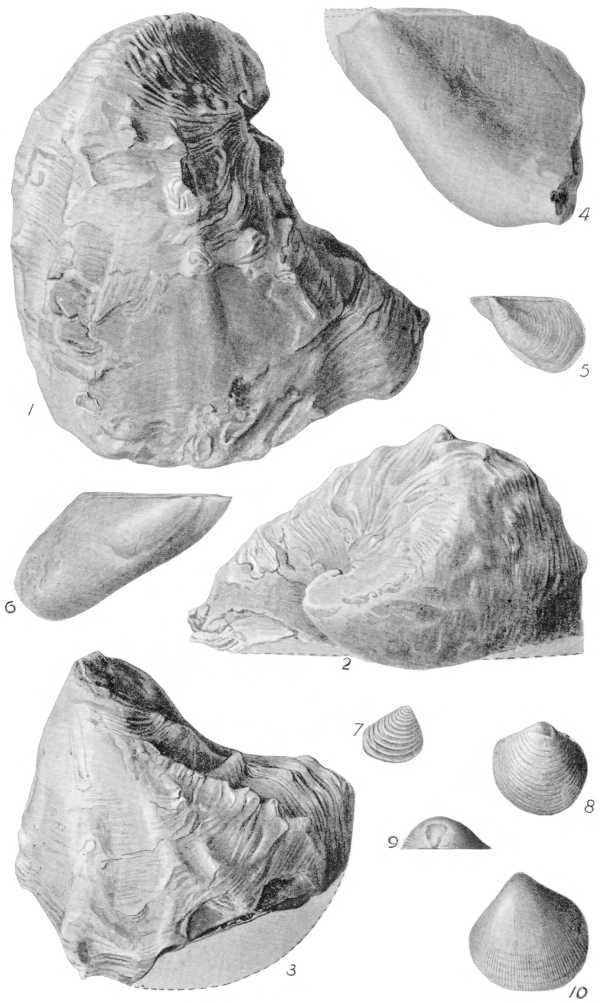
Figs. 1–3. Ostrea (Exogyra) olisiponensis, Sharpe. Deba Habe. Left valves. (Page 277.)
„ 4–6. Gervillia (Pseudoptera), sp. Awe. Internal casts. 4, 5, left valves; 6, right valve. (Page 278).
„ 7. Astarte awensis, sp. nov. Awe. Right valve, drawn from a wax impression of an external cast, × 1½. (Page 279.)
„ 8, 9. Lucina, sp. Kumberi. 8, right valve; 9, dorsal view of the same, × 1½. (Page 279.)
„ 10. Cardium, sp. Awe. Internal cast of right valve. The marginal part of the valve is imperfect. (Page 280.)
Plate XXI
Cretaceous Mollusca. T. A. Brock, del.
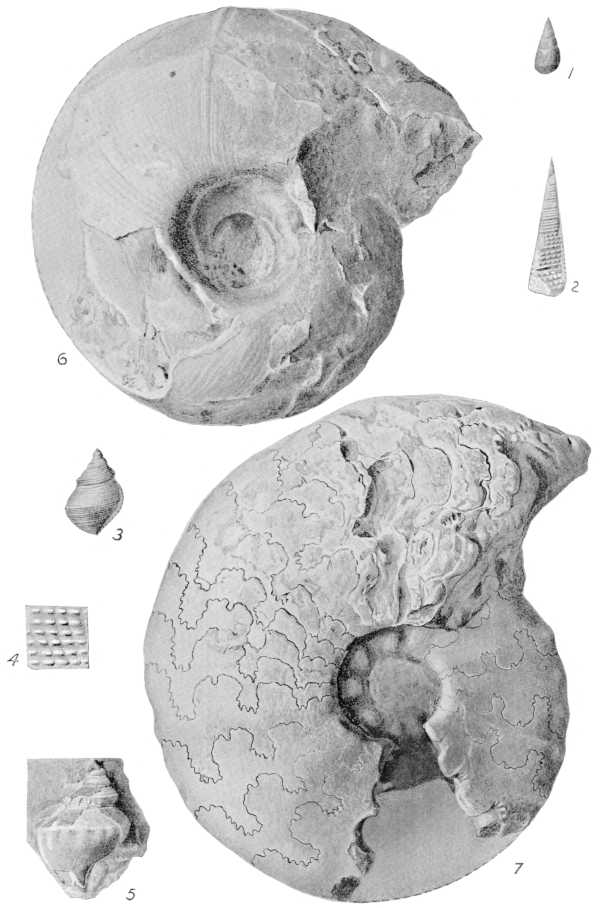
Figs. 1. Pseudomelania, sp. Awe. × 1½. (Page 280.)
„ 2. Turritella, sp. Kumberi. × 1½. (Page 281.)
„ 3–5. Semifusus africanus, sp. nov. Awe. 3, drawn from a wax impression of an external cast; 4, portion of the ornamentation of 5, × 6. (Page 281.)
„ 6. Vascoceras nigeriensis, sp. nov. Reme. (Page 281.)
„ 7. Vascoceras gongilensis, sp. nov. Gongila. Internal cast. (Page 282.)
Plate XXII
Cretaceous Mollusca. T. A. Brock, del.
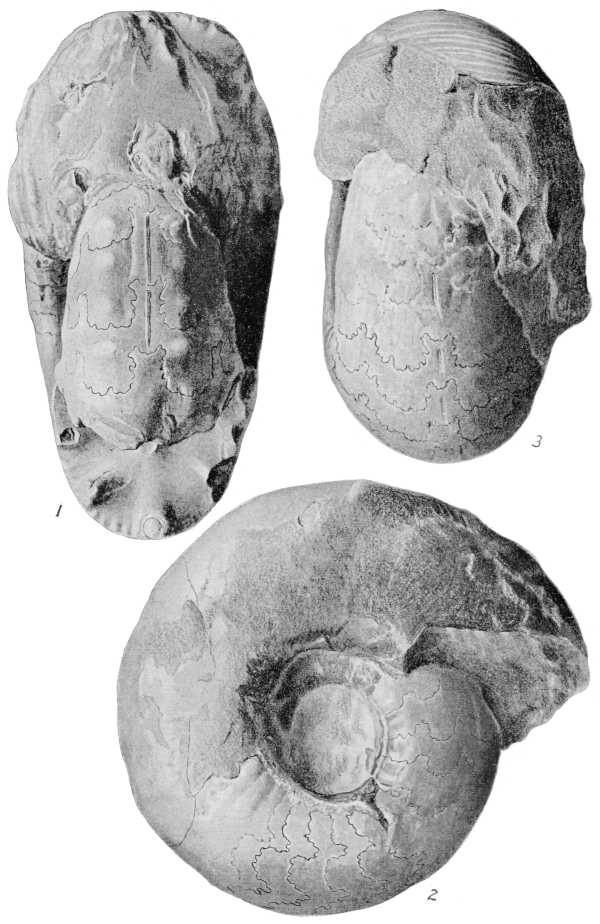
Figs. 1. Vascoceras gongilensis, sp. nov. Gongila. Siphonal view of Fig. 7, Plate XXI. (Page 282).
„ 2, 3. Vascoceras nigeriensis, sp. nov. Kunini. Two views of the same specimen. (Page 281.)
Plate XXIII
Cretaceous Mollusca. T. A. Brock, del.
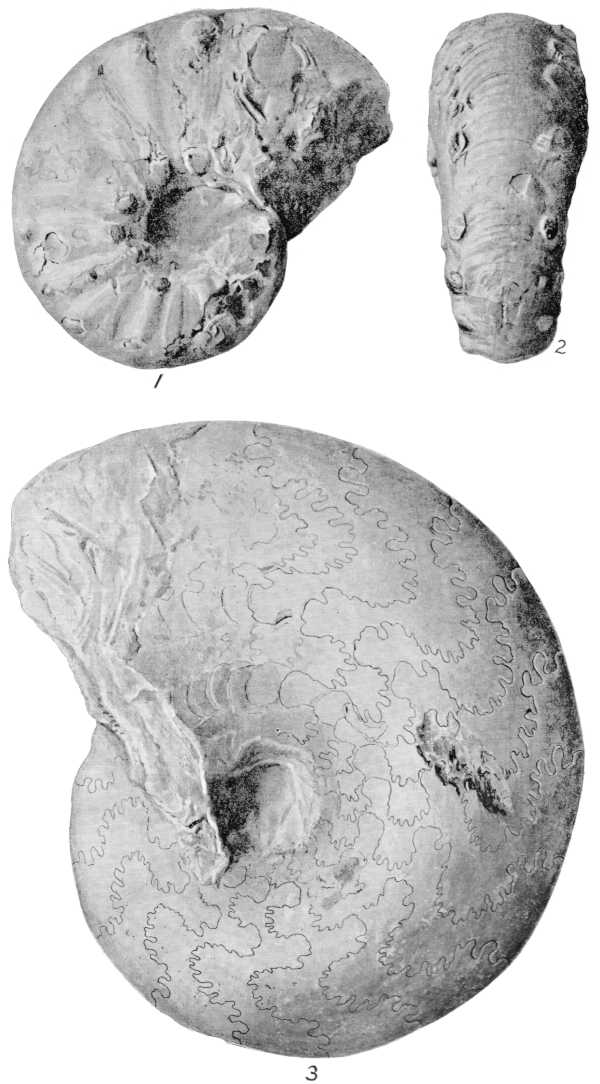
Figs. 1, 2. Mammites (Pseudaspidoceras), sp. Gongila. Two views of the same specimen. (Page 283.)
„ 3. Hoplitoides nigeriensis, sp. nov. Gongila. (Page 284.)
Plate XXIV
Cretaceous Mollusca. T. A. Brock, del.
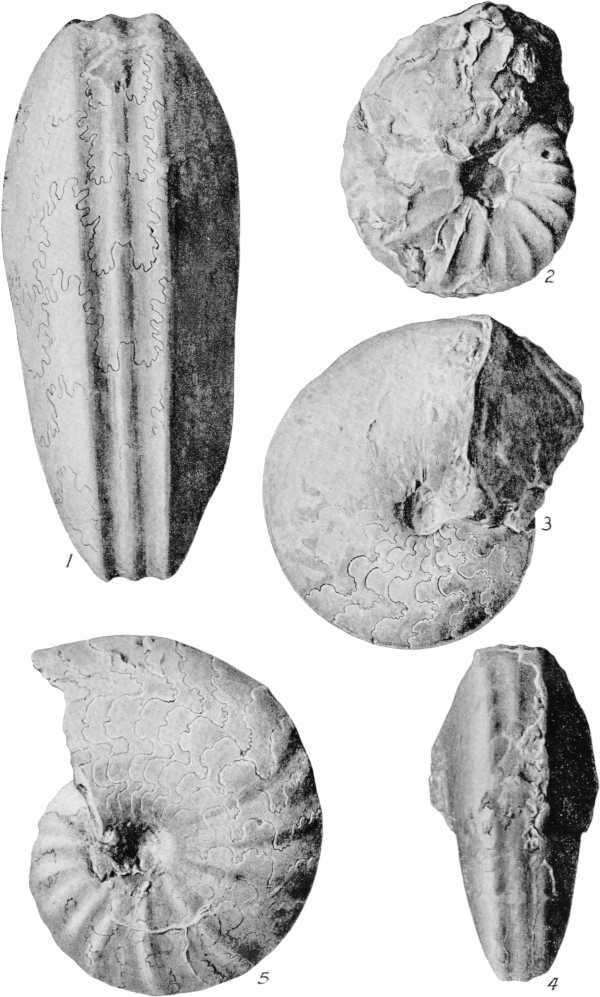
Figs. 1–5. Hoplitoides nigeriensis, sp. nov. Gongila. 1, siphonal view of Fig. 3, Plate XXIII; 4, siphonal view of Fig. 3. (Page 284.)