Act 3 — CHAPTER VIII THE DRAMATIZATION OF ABRAHAM AND THE THREE GUESTS
Reading edition
This incident should be simplified and adapted before it is told to children. The dramatization is best worked out in the form of a short, free play which involves only one act. It is unnecessary to carry it to the point of fixed words and actions. The emphasis should be placed upon the customs of the times which are so well brought out in the story; for example, the hospitality of Abraham to the strangers represents the feeling toward strangers among the nomad peoples, and the manner in which he showed his hospitality makes children acquainted with customs peculiar to those people. There is excellent opportunity here for enriching the children's understanding of the life of a shepherd people, of which the Israelites are an example.
Descriptions and pictures of the kind of tent the people lived in are necessary. It is important that children should get the idea of the correct shape of the Arab tent and not confuse it with the Indian wigwam. No stage scenery need be used; it is best to leave that to the imagination. A curtain may be put up to represent the front of the tent, but nothing more.
There is much of this incident that should be left out in the telling; by no means should it be read directly from the Bible to children. The story may be told so that the following points are emphasized:
Abraham is sitting at the door of his tent. Three men appear; he runs to meet them and bows to the ground. He invites them to rest under the shade of the tree and offers to get food and to have their feet washed. The strangers sit and talk together, then Abraham comes with the food. They all eat and are rested, and as they rise to depart they ask for Sarah, Abraham's wife. The strangers tell Sarah and Abraham that they are to have a son whose name shall be Isaac and whom God shall bless and who shall be the father of many people. Abraham and Sarah are greatly astonished and pleased. They fall upon their knees to thank God, and when they arise they find that the strangers have departed. The scene closes with their exclamation, "Surely these were angels from the Lord who have visited us!"
This story was dramatized by the children of the dramatic club after they had had experience with many other dramatizations. During the first hour after the story was told the children succeeded in getting the play into very nearly its final form. Two of the older girls, undertaking to write out the scenes as they thought they should be, brought in their versions at the second meeting. Each one was read aloud, the other children being asked to remember the parts that seemed especially good. Then by combining, adding to, or taking from, a composite result was obtained. Several children wrote down the final decisions at the dictation of the group.
Below is given the version which one child worked out by herself, and following that is the final form of the play which the group as a whole decided upon. The leader purposely left this play entirely in the hands of the children; the product is wholly their own.
THE PLAY EXACTLY AS ONE CHILD WROTE IT
Abraham: The day is hot and I am weary. I will rest myself from the heat of the day. [He seats himself in the shade of the tent.]
Sarah: It is indeed hot, and I will bring thee food and drink that thou mayest refresh thyself. [Sarah retires into the tent.]
Abraham [rises to his feet and shades his eyes with his hands]: Sarah, come hither! Yonder are strangers who are in need of rest. [Sarah comes out, and she and Abraham kneel before them.] Welcome, strangers, seat yourselves that ye may rest. My wife, Sarah, will bring you food, and water that you may wash your feet.
First Stranger: The Lord bless thee, Abraham. [Sarah and the servants withdraw, and Abraham and the three men seat themselves before the tent. Sarah returns with water and food. The strangers wash their feet and eat.]
Sarah [offering them food]: Drink thou this fresh milk, and refresh thyself with this fruit, for ye look weary. [They finish eating and Sarah and the servants retire.]
Second Stranger: We bring thee good tidings and would speak with thee and thy wife. [Sarah comes from within the tent.]
Third Stranger: We are messengers from the Lord to tell thee that thou wilt have a son.
First Stranger: He will be the father of many men and thousands will respect him. Ye shall name him Isaac.
Sarah: That cannot come to pass! For many years I have been childless, and the Lord will not give me a son.
Abraham [falling on his knees]: Thanks be to the Lord! A son at last!
Sarah: Can it be that these tidings are true? If so, it is indeed a message from the Lord! [She too falls on her knees before them. The three men quietly leave, and when Sarah and Abraham rise to their feet they are out of sight.]
Abraham: They were angels from heaven! Our wish has been granted at last!
End
The following is the play as it was finally presented:
ABRAHAM AND THE THREE GUESTS
Place: In front of the tent of Abraham.
Characters: Abraham, a Shepherd; Sarah, His Wife; Three Strangers; Four Servants.
[Abraham and Sarah come out of the tent.]
Abraham: The day is hot, and I am weary; I will sit down and rest in the shade of this tree.
Sarah: Yea, it is hot. I will bring thee drink and food that thou mayest refresh thyself, my good husband.
[Sarah goes into the tent. Abraham sees three strangers approaching. He stands up, shades his eyes with his hands, and looks out over the desert. He calls to Sarah.]
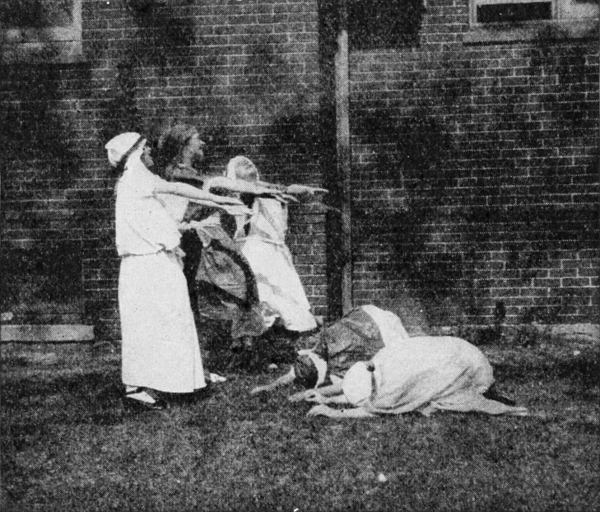
Fig. 7.—The three guests bless Abraham and Sarah
Abraham: Sarah, my wife, come hither! Lo, I see three strangers approaching over the desert.
[Sarah comes out of the tent and looks also.]
Sarah: They will be weary and in need of rest. I will hasten and prepare food and drink for them also.
[Sarah goes away. Abraham rises to meet the strangers: he falls on the ground before them.]
Abraham: Welcome, strangers, to the tent of Abraham! If I have found favor in thy sight, pass not away, I pray thee! Let now a little water be fetched and wash your feet, and rest yourselves under the tree; and I will fetch a morsel of bread, and this will strengthen your hearts; after that ye shall pass on.
The Three Strangers: So do as thou hast said, good Abraham.
[Abraham turns to the servants who are standing near.]
Abraham: Haste ye, bring water; fetch a calf, tender and good. [Servants hasten away.] [To the strangers]: Sarah, my wife, will make ready three measures of fine meal and knead it into cakes.
First Stranger: Our host, Abraham, is a true servant of the Lord.
Second Stranger: We are indeed weary; we have journeyed far across the desert.
[Servants appear with water and food. Sarah also brings food to them.]
Sarah: Drink thou this fresh milk, and refresh thyself with these dates, for ye look weary.
Third Stranger: This is indeed a rest.
[Sarah goes into the tent and the strangers finish eating. The strangers rise to go.]
Abraham: Tarry yet awhile with us.
First Stranger: We thank thee, good Abraham, but we must be on our way.
Second Stranger: We would speak with thee and thy wife, Sarah. Where is thy wife?
Abraham: Sarah, come hither.
[Sarah appears.]
Third Stranger: We bring you a message from the Lord. You shall have a son, and his name shall be Isaac. He shall be the father of many men, and thousands shall respect him.
Sarah: Surely, this cannot come to pass!
Abraham: Thanks be to God for this great gift!
[Sarah and Abraham fall down on their knees before the strangers. The strangers stretch out their hands to bless them.]
Three Strangers: The Lord will bless you, Sarah and Abraham!
[The strangers depart. Abraham and Sarah arise.]
Abraham and Sarah: Surely these were angels from the Lord!
End
As this play was very short, the suggestion was made that we might lengthen the program, as well as make it more interesting, by having some of the children tell the audience just how we worked up the dramatization. The two older girls undertook this and decided entirely by themselves just what they would say. One of them wrote with great care a description of the method of procedure. She read it to the club for approval, then she learned it by heart and gave it in an interesting manner to the audience on the day the play was given. The other girl wrote a poem about it, and recited it just before the play was given. The description and poem are as follows:
THE INTRODUCTION
By Margaret Miller
The play which the children are now going to give—Abraham and the Three Guests—has been worked out and practiced at the dramatic club. This club meets every Sunday afternoon from three until four o'clock, and is composed of any of the children of the Sunday school who wish to belong.
The first Sunday Miss Miller told the story to the members, and then they, knowing it, acted it out, making up the parts as they went along. This they did several times until they knew the story perfectly.
The two oldest girls did not take part in the acting of the play, but became assistants and helped Miss Miller direct it. During the next week the assistants wrote out the speeches very much as the children had made them up. These were read before the club and discussed, and after a number of suggestions had been added by all the children present the scene was finally written as it now is.
The children each took home a part to learn, and the following Sunday they all tried the different speeches. Before the final characters were chosen each child was able to represent any one of them. The final characters were decided upon by the group and were chosen according to their preferences and their ability to enact the different parts.
Unfortunately, most of the costumes which the club had on hand were much too small for the children this year. We therefore held a sewing-bee during the week, and lengthened the old ones or made new ones where we found it necessary.
We have worked on this play for five meetings, which represents altogether five hours, except for a little work that the assistants did outside.
We have had much fun with this play, and we are hoping that you will enjoy it too.
POEM
By Melba Pyle
Before you soon you shall see The story of Abraham and the Strangers Three. The partakers, they have worked; The assistants, they have shirked— But not as much as you would think, For they have helped to join each link. As day by day passed quickly away We read the Bible and wrote the play. Each child helped as best he could, And thus we worked in brotherhood. Word with word we did neatly join, Then home we went, our parts to learn, Next to the box where the costumes lay, And straight to sewing and not to play. And 'tis our happy aim, you see, To make you joyous as can be!