MOONE. (continued 3)
Reading edition
Prop. 4.
That the Moone is a solid, compacted opacous body.
Prop. 5.
That the Moone hath not any light of her owne.
Prop. 6.
That there is a world in the Moone, hath beene the direct opinion of many ancient, with some moderne Mathematicians, and may probably be deduced from the tenents of others.
Prop. 7.
That those spots and brighter parts which by our sight may be distinguished in the Moone, doe shew the difference betwixt the Sea and Land in that other world.
Prop. 8.
That the spots represent the Sea, and the brighter parts the Land.
Prop. 9.
That there are high Mountaines, deepe vallies, and spacious plaines in the body of the Moone.
Prop. 10.
That there is an Atmo-sphæra, or an orbe of grosse vaporous aire, immediately encompassing the body of the Moone.
Prop. 11.
That as their world is our Moone, so our world is their Moone.
Prop. 12.
That tis probable there may bee such Meteors belonging to that world in the Moone, as there are with us.
Prop. 13.
That tis probable there may be inhabitants in this other World, but of what kinde they are is uncertaine.
FINIS.
Technical Notes and Further Information
Spelling and punctuation are as in the original, including the consistently “modern” use of V and U. Italic capital V has two forms, used interchangeably. Since italic capital U does not occur, the rounded form has been transcribed as U.


The element -que in Latin passages was almost always printed with a ligature resembling “q3”:
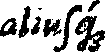
Translations of Latin and Greek passages were usually printed with marginal quotation marks. These passages have been shown as block quotes (indented) with quotation marks.
The incorrect pagination on pages 177-192 (printed as 175-190) is all one error: The eight pages printed on one side of the sheet forming signature N— 177, 180, 181, 184, 185, 188, 189, 192— were misnumbered by -2.
Works and Authors Cited in Sidenotes:
This is not intended to be a comprehensive list. A few sources could not be identified; others are so well-known, they did not need to be marked.
The following spellings and name forms are used consistently:
Austin = Augustine
Blancanus the Jesuit(e) = Josephus Blancanus, Giuseppe Biancani
Caelius = Lodovicus Caelius Rhodiginus
Tycho = Tycho Brahe
Nicholas Hill “a country man of ours”. Hill the early atomist, not Hill (Montanus, van de Bergh) the printer.
Keplar = Kepler (Johannes)
Julius Caesar = Cæsar la Galla, Giulio Cesare La Galla, Lagalla
Mæslin = Maestlin (Michael)
Rawleigh, Rawly = Raleigh (Sir Walter)
Verulam = Francis Bacon (1st Baron Verulam)
Note also “sydera” for “sidera”.
Albertus Magnus: De quattuor coaequaevis
—: De caelo et mundo
Aristotle: De Caelo
Bede: De ratione temporum
Christopher Besoldus: De Natura Populorum ejusque variatione, et de Linguarum ortu atque immutatione (1632)
Josephus Blancanus (Giuseppe Biancani): Sphaera mundi (Full Title: Sphaera Mundi seu Cosmographia. Demonstrativa, ac facili Methodo tradita: In qua totius Mundi fabrica, una cum novis, Tychonis, Kepleri, Galilaei, aliorumque; Astronomorum adinventis continetur)
—: Aristotelis loca mathematica ex universes ipsius operibus collecta et explicata
Tycho (Brahe): Astronomiae instauratae progymnasmata
Th. (Tommaso) Campanella: Apologia pro Galileo (1622)
Collegium Conimbricenses (Jesuits of Coimbra University): Commentarii Collegii Conimbricensis Societatis Jesu in quattuor libros physicorum Aristotelis de Coelo (1592)
Cardinal de Cusa, Cusanus (Nicholas of Cusa/Kues, Nicolaus Cryffts): De Docta Ignorantia
Johannes Fabricius: De Maculis in Sole Observatis, et Apparente earum cum Sole Conversione Narratio (1611)
Text not identified by name.
Libertus Fromondus (Libert Froidmont): Meteorologicorum libri sex (1627)
Galileo: Nuncius Sidereus
Camillus Gloriosus (Giovanni Camillo Glorioso): De Cometis dissertatio astronomico-physica (1624)
Isidore: Originum
Johannes Kepler: Dissertatio cum Nuncio Sidereo
The name “Galileo” (or “Galilei”) is sometimes included in the title, as “Diss. cum Nunc. Syd. Galil.”
—: Epitome astronomiae Copernicanae
—: Astronomiae Pars Optica
Julius Caesar (Giulio Cesare La Galla): De Phenomenis in Orbe Lunae (1612)
Leonard Lessius: De perfectionibus moribusque divinis (1620)
This work is often cited as “De Moribus”; other early mentions are found in Tristram Shandy and The Anatomy of Melancholy.
Mæslin (Michael Maestlin): Epitome Astronomiae (1610)
Carolus Malapertus, Malapertius (Charles Malapert): Austriaca sidera heliocyclia astronomicis hypothesibus illigata (1633)
Jacobus Mazonius (Jacopo Mazzoni): In universam Platonis et Aristotelis philosophiam praeludia sive de Comparatione Platonis et Aristotelis
Johannes Eusebius (Juan Eusebio) Nieremberg: Historia Naturae (1635)
Augustinus Nifus (Niphus, Agostino Nifo)
Quoted text not identified by name.
Benedictus Pererius (Benito Pereira): Commentariorum et disputationum in Genesim tomi quattuor (1591-99)
Plutarch: De facie in orbe lunae
—: De tranquillitate animi
Erasmus Reinhold: Commentary (1542, 1553) on Georg Purbach’s Theoricae novae planetarum
Caelius = Lodovicus Caelius Rhodiginus (Lodovico / Luigi Ricchieri): Lectionum antiquarum libri triginta
Ruvio (Antonio Rubio): Commentary on Aristotle’s De Caelo
(Julius Caesar) Scaliger: Exotericae exercitationes ad Hieronymum Cardanum
Christoph Scheiner: Rosa Ursina sive Sol ex Admirando Facularum & Macularum suarum Phoenomeno varius
Tostatus (Alonso Tostado): In Genesis