IV. BIOGRAPHICAL SKETCHES.
Reading edition
Adams, Rev. Stewart, of Greenville, Butler county, was the chief leader and organizer in that section of the State for the first seventeen or eighteen years of freedom. He was a pure-blooded Negro, and was possessed of a fine personal appearance. His forehead was large and broad, and the sparkle of his eye indicated the presence of mental power. He could read and write fairly well, and in his speeches always succeeded in conveying his thoughts to others. He was for some years missionary in that part of the State under the American Baptist Home Mission Society of New York, during which time he organized many churches, which were united to form the Union Baptist Association. His neatness in dress and caution in the use of words were everywhere noticeable. It was sometimes thought that he was rather tenacious of his opinions, but I think all his brethren credited him with honesty of purpose, and hence he died in the love and respect of the denomination.
Allen, Rev. Wallace, of Greenville, was a very pious, hard-working preacher in the Union Association. The young men delight to honor his memory. The author has been unable to learn anything of his history or lineage.
Anderson, Rev. N. P., is pastor at Ensley City.
Ashby, Rev. Nathan, of Montgomery, was born in Fredericksburg, Va., August 5, 1810. He knew nothing of his parents, and to the age of 16 he was under the care and direction of his grandmother. At this point in his life he was sold, with some horses, to traders, who brought him to Alabama. He says of this trip: “At first I was not aware that I was sold, but thought (as I had been told so) that I was only helping the man to put his horses well into the way. When informed that I was among the stock sold, I wept bitterly at the thought that I could see my dear grandmother no more. While in this state of grief, an old cake woman came on, selling cakes. She, looking into my hand, professed to read as follows: ‘Don’t cry, for you are born for good luck. The man who will buy you will be more a brother than a master. Fear God and be obedient, and you will do well.’ This counsel, no matter whence it came, removed my fears, and I left off crying.”
When about 32 years of age he bought his liberty, paying for the same the sum of $900. His good wife, Mrs. Nancy Ashby, had been freed a few years before by a Mrs. Tate. Both being of an intellectual, industrious and economical turn of mind, it was not long before they were well under way to notoriety and prosperity. Touching her experience in servitude, Mrs. Ashby tells the following: “When I was 16 years old, my mistress, in urging me to be pure and faithful, promised that if I would obey I should serve no one after her. So, when I was 24, she set me free, giving me a daughter that had been born to me.”
Bro. Ashby was baptized by Mr. Shrovell in Monroe county, Ala., and was ordained to the full charge of the gospel ministry just after the close of the war, by Rev. I. T. Tichenor, D. D., and others. His labors in the ministry, however, began about the year 1845, from which time he increased in favor with God and man to the day of his death, in 1887. He led to the organization of the First Colored Baptist Church (Columbus street) of Montgomery, in which, under his presidency, the Colored Baptist State Convention was constituted in 1868. The last seventeen years of his life he was an invalid from paralysis, and four years of this time he was blind. During this time the writer frequently visited him, and it would seem that his faith in God was mightier in the days of his weakness than in the days of his strength. Heavenly sunshine illumined all the way of the dark valley, even to the day of his departure.
Bro. Ashby was a man of naturally fine parts. His sermons and speeches were characterized by order, thought and doctrine. He was not an emotionalist nor dreamer; with him Christianity was faith in the gospel and right-doing. It affords the writer much pleasure to record that each member of his family not only receives, but also contributes honor to his valuable life and honored name.
Mr. Ashby was by trade a carpenter, by which means he was able to earn fair wages, and was not long in coming into the possession of valuable real estate.
In order to show the condition of a free colored man in Alabama prior to the close of the late civil war, I submit a legal document here, bearing upon the good man whose name is now before us:
A STRAW WHICH SHOWS THE DIRECTION OF THE WIND.
“The State of Alabama, } Montgomery County. }
“ Know all men by these presents, That whereas, heretofore, to-wit: on the 1st day of April, A. D. 1859, Charles T. Pollard sold and conveyed to Wm. B. Bell, as guardian or trustee for Nathan Ellis (now called Nathan Ashby), a certain lot in the city of Montgomery, State and county aforesaid, which is described in the deed of said Pollard as ‘Lots number three and four in square number fourteen, Scott’s plat, in the city of Montgomery.’
“And, whereas, the said Nathan Ellis (or Ashby), is now capable in law of holding property in his own name, and desires to hold the title to said lot and premises in his own name; and the said William B. Bell also desires to relinquish and give up the duties and responsibilities devolved on him by the said deed as the trustee or guardian of said Nathan Ellis (or Ashby);
“Now, therefore, in consideration of the premises and for the further consideration of five dollars, to the said Wm. B. Bell in hand paid by the said Nathan Ellis (or Ashby), at or before the sealing and delivery of these presents (the receipt whereof is hereby acknowledged), I, the said Wm. B. Bell, do hereby release, relinquish, transfer and convey by quit-claim unto the said Nathan Ellis (or Ashby), and unto his heirs and assigns, all my right, title and interest both at law and in equity of every kind or description whatever, in and to the said lot and premises herein above described.
“In witness whereof, I, the said Wm. B. Bell, have hereunto set my hand and seal, this —— day of January, A. D. 1872.
“Attest:
“William B. Bell.”
“A. R. Bell.”
This manuscript is recorded in “Book 4 of Deeds, page 314,” March 26, 1872.
Note.—Seven years elapsed after freedom was declared before Mr. Ashby received from his “trustee” the transfer of his property. He had been free ever since 1842, but his “trustee” must hold and manage both him and his.
Archer, Rev. Maurice M., son of Mr. A. and Mrs. Mary Archer, was born in Camden, Ala., in 1858. He and his parents were the property (?) of Mrs. R. J. Adams. He entered the free public schools at an early age, but did not long remain, because of his father’s death and because of the demands made upon him as the eldest son in a large family. Mr. and Mrs. J. S. McBryde, seeing that he was a very capable boy, kindly aided him in his studies while he was in their employ. Thus he learned to read and write. At 14 Mr. Archer left Mr. McBryde determined on securing an education. Advancing by various means, he was soon able to teach school. In November, 1881, he was baptized into Siloam Church by Rev. A. Gould, which church he served as clerk and superintendent of the Sunday School. Feeling a call to the ministry and desiring to prepare himself for the same, he entered Selma University October, 1883, and passed the session of 1884-5, as he says starting with only 20 cents. By severe sacrifice, by push, pluck and self-reliance, he pressed onward, till in May, 1887, he graduated at the head of his class. He was ordained at Opelika, September, 1889, Revs. G. C. Casby, C. R. Rodgers and others officiating. He has been principal of the Auburn City School. Mr. Archer is one of our clearest thinkers and most fluent speakers, and his language is especially good.
Barker, Joseph C.—This patient and cool-headed young man was born December 20, 1863, near Laneville, Hale county, Ala. His parents, Sherrod and Caroline Barker, are both living and members of the Spring Street Missionary Baptist Church, Birmingham, Ala. They are living monuments of temperance, patience and obedience. Young Joseph was sent to school when still quite young. Filled with self, family and race pride, and feeling grateful toward his parents for their strenuous efforts to educate himself, his sister and brothers, and desiring to help them in return, at their consent, he sought employment with a benevolent merchant, who, after noting his higher qualities, gave him every advantage and privilege available. After three years of pleasant and profitable services, he left his beloved employer (Mr. J. M. Manders), who gave him a final settlement accompanied by a worthy recommendation and valuable presents. He is widely experienced in mercantile enterprises.
He had two years experience on the United States jetty and log boats under Capt. J. McKee Gould, who gave him such an honorable and flattering recommendation as would have been more suitable for a pilot than for a cabin boy. By studying at home and attending summer schools, he was prepared to enter Selma University in the session of 1884, remaining two scholastic years. Under President E. M. Brawley, D. D., he won a prize for map-drawing over forty-eight competitors. He has taught successfully in the schools of Jefferson and other counties. Was four years secretary of the Jefferson County Teachers’ Institute. Re-entered Selma University in 1893, and won the only prize offered for drawing over twenty or thirty competitors under President Dinkins, D. D. He is now preparing specimens to exhibit at the Atlanta Cotton Exposition in September.
He is employed by the Monarch Book Company, of Chicago, Ill. To know him, is to know a man possessed of a great soul, affable, and naturally gifted in making friends. He is a financier, and is rapidly acquiring means. As an artist and penman, he is a prodigy. In the session of 1884 he was converted to the Christian religion, and was baptized in the University pool by Rev. E. M. Brawley, D. D., and joined the St. Phillip Street Baptist Church under Rev. C. O. Boothe, D. D. On removal to Birmingham in 1886, he united with the Sixteenth Street Baptist Church, of which Rev. Dr. Pettiford was pastor.
Last term, he was principal of the Oxmoor public school. He is now corresponding secretary of the Mt. Pilgrim Sunday School Convention. On all lines of manhood, Mr. Barker is a genuine success.
Barton, Rev. J. P., of Talladega, comes of Virginia parentage, and was born in Colbert county, Ala., October, 1844.
In 1871 he united with the Little Zion Baptist Church in said county, and was baptized by Rev. W. E. Northcross, of Tuscumbia. In 1877 he entered the work of the gospel ministry in his native section, doing valuable service within the bounds of the Muscle Shoals Association, especially in line with the Sunday School work. He has led to the organization of two Sunday School Conventions and eight churches, and built five houses of worship. His speeches before our State Convention have been largely conducive of the sentiment and system which have given birth to our women’s work and State mission operations. He has held official positions in connection with our State Convention and University, and is now chairman of the Board of Visitors of the Colored Deaf and Dumb Asylum of Alabama. He is easy in society and pleasing in address. He carries the youth and the masses, and so uses everything at his command as to impress one that he is an excellent general as well as a successful pastor. He is full of movement and plan, and is quick of discernment and clear in expression. He is a lover of science. He obtained his education in the Talladega College. Mr. Barton says that he owes much to his wife, whom the writer would honor as one of our noble women. Mr. Barton is still full of life and growth.
Our general work has always found in Brother Barton a ready and generous helper. He deserves credit for his industry and enterprise—in material as well as in church affairs. He relates the following: “In the winter of 1876-77 I chanced for the first time to meet the late Harry Woodsmall in one of his Ministers’ Institutes. He remarked: ‘On to-morrow we will discuss the subject of sanctification; and here is a little book worth only 15 cents which will be of service to you.’ I said to myself: ‘What is sanctification?’ I never heard of such a thing before. I bought the book from Brother Woodsmall, and, coming upon my subject, I read till late at night, in order that I might be in line with things next day. When the hour came I was up on the subject of sanctification, much to the pleasure of the teacher.”
Mr. Barton is ever ready to contend for his views, but is remarkably free from bitterness in discussion, is hardly ever wrong in his opinion on things, and is a remarkably winning preacher with the masses. Mr. Barton is now president of our State Convention.
Bacotes, Rev. Mr.—As the Cyclopedia goes to press the Rev. Mr. Bacotes comes to the charge of the Marion Academy and Marion Church. The writer wishes he knew something of the history of one so much favored and so highly recommended as Mr. Bacotes is. He has important trusts in hand.
Battle, Rev. Augustus A., of Hurtsboro, Russell county, the son of Deacon A. A. and Mrs. Jennie Battle, was born in Tuskegee, July 4, 1860. As his parents were pious people, he was very early the subject of religious impressions, which in 1881 culminated in a public profession of faith in Christ. On the third Sunday in August he was baptized by the Rev. Richard Lloyd, of Georgia. In the year 1879, aspiring for a liberal education, he entered the Talladega College, in which he graduated from the normal and the theological courses.
He is a young man of high moral tone, and his agreeable manners have won for him many friends. At present he is pastor at Sylacauga, and teacher of the city school in Talladega.
P. S.—Since the above was written, our good Bro. Battle has been called to the Mt. Zion Church in Anniston, and under his industrious and wise leadership his people have constructed a two-story brick edifice. To do what he has done in these hard times, in the way of raising and expending money, is to prove himself a man of no ordinary parts. The writer has enjoyed the hospitality of his quiet Christian home, where he has learned that the young minister has found helpful companionship in the person of a modest, intelligent wife.
Batts, Rev. J. H., of Florence, is an aspiring young man, and is very active in the enterprises of the Muscle Shoals Association and Sunday School Convention. Evidently, he has not enjoyed early access to books and schools, but his thoughts are orderly and clear, and he does not hesitate to give expression to his views.
Beavers, Rev. Jasper, was born May 9, 1825, in St. Clair county, Ala. His father and mother were slaves, and of course, he inherited their lot. He now lives at Easonville, in the county in which he was born, and is still a useful, as well as a very pious man. In 1851, he was baptized by the Rev. Jesse Collins (white), and in 1868 was ordained to the work of the gospel ministry by Revs. Henry Wood, J. Collins and T. Bush.
He was the first moderator of the Rushing Springs Association. In spite of the laws of the master forbidding such things, he, in slavery time, learned to read and write. By his industry and economy he has obtained real estate worth about $2,000. Brother Beavers is a man of fine personal appearance, is modest, genial, industrious, honest, firm. In the early days of our work, there was no more efficient man in St. Clair County than he. A large family of children are the support of his old age.
Since the above was penned, Brother Beavers has passed to the world that lies beyond. He was the most self-possessed and of the most commanding figure of any man in the Rushing Springs Association, though no man among them was more modest and humble.
Belle, Rev. John, of Courtland, was born in the State of Georgia and came to Alabama after the close of the war. He says: “In Stuart county, Ga., in the first part of 1861, I followed the white preacher to his different preaching stations, and he would preach to the white people in the morning and I would speak to the colored people in the evening. I could not say anything about Moses and the children of Israel.
“I went on preaching without any trouble for some little time, till at last, as I could read a little, it was decided that I should be hung. As I was ready for execution, and as I was praying God for help, a dispute arose between the white people which resulted in my release. I again went on, till on one occasion when I had displeased my mistress with reference to some garden work, and when, as she started to strike me with the rake, and I fled, she reported to her husband that I had tried to kill her and that she only saved her life by running into the house out of my reach. Of course, it was decided at once that I ought to and should die. On the night before I was to be executed, the lady became very ill and owned that she was only angry with me for getting out of her way, and that I had done nothing. She died that night. However, her dying words had set me free and so I returned to my work for God, feeling that I could not die till my work should be accomplished.”
Brother Belle has labored in different States, but his principal labors have been in Northern Alabama, where he has been one of the chief organizers of our work in this section, beginning his operations here in 1868.
It appears that Brother Belle was ordained in Helena, Ark., sometime in 1867, the late Rev. J. T. White, who was then pastor of the First Colored Baptist Church, being one of the officiating presbytery.
He is still a strong man. For several years past he has been pastor at Iuka, Miss., and of the Red Bank Church in Lawrence county. His pleasant manners have always made him an agreeable companion to his brethren.
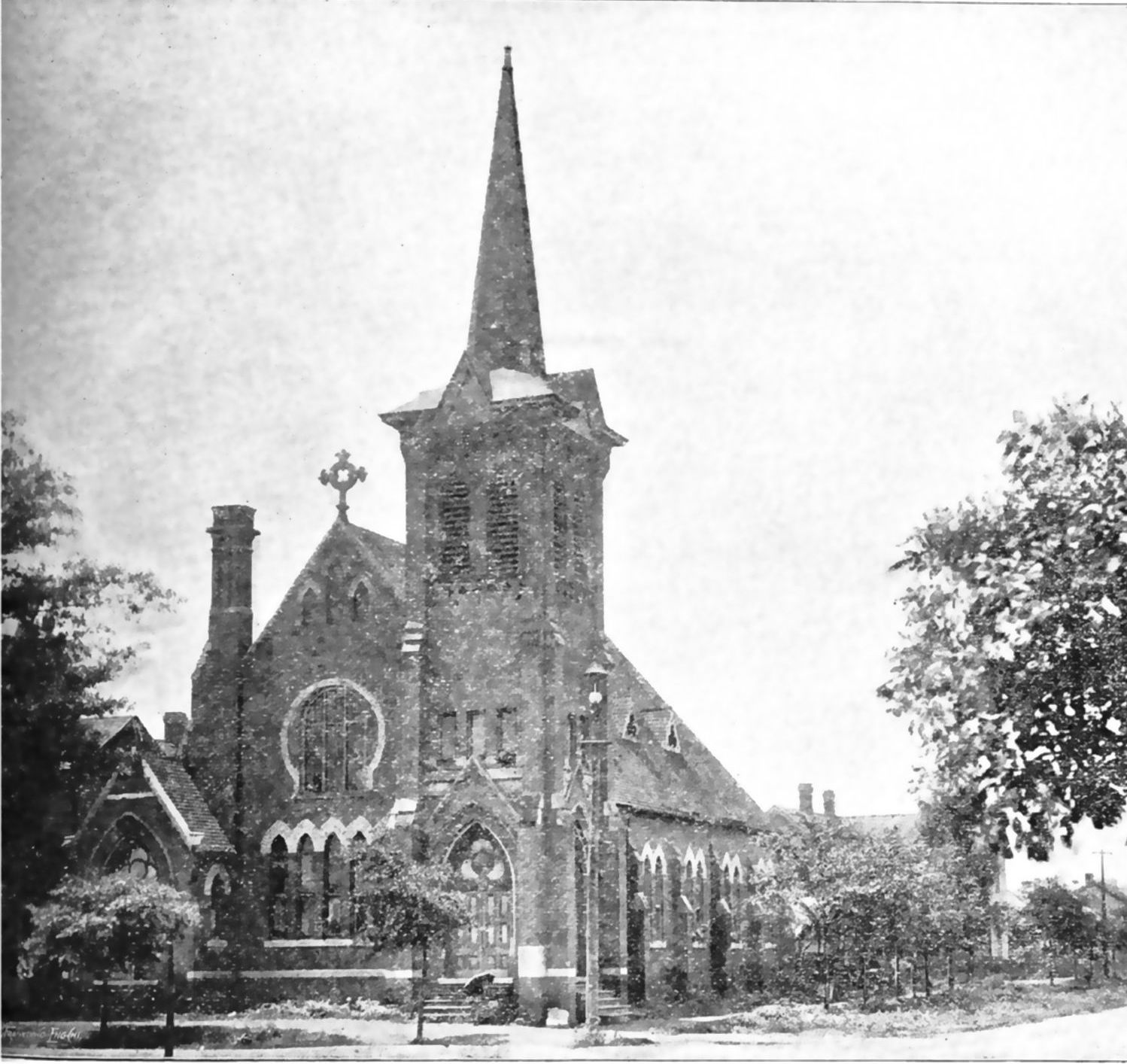
Sixteenth Street Baptist Church, Birmingham, Ala.
Belser, Rev. S. L., pastor of the First Church, Bessemer, deserves the respect and love of the denomination for his beautiful brotherly spirit and unassuming manners.
Berry, Rev. G. W.—Although this good man is no longer among us, his name is still fragrant with his exalted faith and pious life. Like his stay on earth, his stay in Alabama was short, but useful and endearing. He was the son of Pickens and Mary Berry, and was born in Edgefield county, S. C., in 1859. Having studied some time in the Benedict Institute in that State, he, after doing some effective work in that State, came to Alabama to take the pastoral oversight of the church in Eufaula. Here it was that after a short illness he exchanged the cross for the crown, singing as his soul retired from the earth, “My Lord calls me and I must go.” To know him was to love him, for his gentleness of spirit was beautiful to look upon.
Betts, Rev. J. W., of Huntsville, Ala., son of John and Edith Betts, was born June 4, 1851, near Courtland, in Lawrence county, Ala. In the fall of 1873 he was baptized into the Courtland Church by the Rev. Gabriel B. Johnson. Brother Betts is among the younger men of the Muscle Shoals Association. He is a clear thinker and a lover of books. He is a business man, industrious and economical, and does not live of the donations of his people, but the labors of his own hands. His style is rather didactic for the masses, but it is plain and his doctrine is in line with the teachings of the “Good Book.”
Berry, Prof. J. S., son of Jack and Clara Berry, of Uniontown, is one among the most proficient Sunday School workers in Alabama. He is president of the Sunday School Convention of the Uniontown Association. His happy, unselfish spirit fills all his work with pleasantness and sunshine. He is now about 35 years of age.
Blevins, Rev. John, long the leading man and pioneer of Dallas county, the first pastor of the St. Phillip Street Church after the close of the war, was for his opportunities and times a very strong man in the work of organization. May it ever be told of him that he led his people—his church, to become the foster mother of Selma University in the time of its infancy and weakness. This fact is one of the brightest spots upon his memory, and should never be forgotten.
The buildings in which the St. Phillip Street and the Green Street Churches now worship were built by Mr. Blevins. He died eight or ten years ago at the age of 65.
Bibb, Rev. Wm. T., son of Linzy and Caroline Bibb, was born in Montgomery, Ala., in 1853. Brother Bibb is one of the most worthy of our rising young men. He is not noted for brilliancy, but for constant application in the race for knowledge, for pushing things to a finish in search for truth, for the purest life and loftiest piety, he is hardly to be excelled. Already he has been entrusted with various pastorates, including one at Marion and another near Birmingham. I had the best opportunity to learn him while I was pastor at Selma. Here he was superintendent of my Sunday School and aided me in my ward prayer-meetings. He completed two courses at the Selma University, graduating with the title of A. B., and with the highest confidence of all the faculty. In looking upon his open countenance one instinctively feels the impress of an honest, earnest man—a man free from hypocrisy and guile.
Bradford, Rev. William C., pastor of the First Colored Baptist Church, Union Springs, son of Henry and Elizabeth Bradford, was born in Montgomery, Ala., in 1862. His early years were spent in the Swayne school in said city, in which he succeeded in laying the foundation of a liberal English education. In his eighteenth year, and two years after his father’s death, he was baptized into the fellowship of the Columbus Street Baptist Church, Montgomery, by the late Rev. James A. Foster. Feeling a call to the work of the gospel ministry, he, with a view to fitting himself for this solemn charge, entered Atlanta Theological Seminary. In school as well as out among his brethren, he has managed to occupy a place with those who formed the van.
In the person of his good wife, once Miss M. H. Allen, of Georgia (daughter of Rev. T. M. Allen, ex-member of the Georgia Legislature), whom he wedded in 1884, he has found happy and efficient help in his studies as well as in his calling. For a while Mr. Bradford followed the tailor’s trade, but at the call of the Gilfield Church in Wetumpka, the Dexter Avenue Church, Montgomery, in 1886 set him apart to the work of the gospel ministry. At Wetumpka he built a church edifice worth about $700. While pastor at Clayton he led to the erection of a building worth $1,000, and just now is rejoicing with the good people of Union Springs on his entrance into the new brick structure which was dedicated on the second Sunday in October, 1892. He was principal of the city school while in Clayton, and now holds several positions of honor and trust. Mr. Bradford is one of the strongest and is among the most successful young men in Alabama. His affable manner commends him to all. He is now at Tuscaloosa.
Brooks, Rev. G. J., of Selma, Ala., son of Joseph and Nancy Brooks, was born in 1830 near Richmond, Va., in which city he lived till his eighteenth year, when he was carried to New Orleans, La., and from thence to Texas. 1849 was spent in St. Louis, Mo., and in 1850 he was brought to Huntsville, Ala. In this same year he was baptized into the Primitive Baptist Church of Huntsville by Rev. Wm. Harris (colored). [1] Of this period of his life Mr. Brooks says: “By the will of a Mr. Kenedy I was left free, but as the administrator of the will, a Mr. Clark, refused to execute this point in the will, I remained a slave.” In 1867 he united with the Marion Church, under the pastorate of the Rev. James Childs. Near this town he taught school, till in 1872 he went to Kentucky, where, in 1873, he was ordained to the work of the ministry. After serving various offices in the work in Kentucky, he came to Selma in 1875, where, after a few years, he became pastor of the St. Philip Street Church. By the assistance of the white family he learned to read at the age of 14. In Marion he extended his studies under Prof. Card, and under Presidents Woodsmall, McAlpine and Brawley he further prosecuted his studies in the Selma University. Brother Brooks has held various offices of trust under the State Convention and the Uniontown Association. His health is now rather below his usual strength, but his love for the Master’s cause seems nothing abated. His wife, Mrs. Anna, is among the leading women of Alabama.
Brown, Rev. Lewis, of Epes, Sumter county, was born near St. Louis, Mo., March 23, 1835, and came to Alabama in his tenth year. He united with the church in 1863, and was baptized by a Mr. Edmonds into the fellowship of the Jones’ Creek Church, by which church he was called to ordination in the fall of 1868. The chief persons in the presbytery were Revs. Abner Scarber (white) and Mr. Wright. Mr. Brown’s main pastoral charges have been Jones’ Creek, nine years; Sumterville, thirteen years; New Bethel, thirteen years; and Mount Olive, four years. He has long been moderator of the Bethlehem Association, and is known and recognized as a firm and tried friend of education and missions; and his children give evidence of pure and wise aspirations.
Mr. Brown was married to Mrs. Elizabeth Brown, a slave girl on the same plantation with himself, in 1852. Seven sons and one daughter are the fruit of the marriage. He is a very industrious and economical man, and has possession of valuable property, worth $15,000. Seven or eight hundred acres of his farm once formed part of the plantation on which he (with 500 others) worked as a slave till 1865. He says that his master, Mr. Brown, was a Christian, and that after the close of the war this plantation gave to this county most of its religious leaders.
Burwell, L. L., M. D., the son of Charles and Amanda Burwell, was born in Marengo county, Ala., October 25, 1867. At the age of seven years he was given to his brother, Charles A. Burwell, of whom the Doctor says: “To him my success is largely due.” For quite a while he lived with this brother on a farm in Perry county. He attended the county schools till he entered Selma University in the winter of 1883-84. His love for books and his quickness of apprehension were early manifestations of native talent which, if properly cultivated, would unfold to his own honor and to the profit of his people. Each vacation found him upon the farm, earning money with which to re-enter school. During his entire course at Selma University his mother was able to spend upon him but $30. In 1886, he graduated from the above named school with the honors of valedictorian, and in the fall of the same year he entered Leonard Medical College, Raleigh, N. C., to take a course in medicine. The course extended through four years, but he completed it and received his diploma at the close of the third year, again receiving the honors of valedictorian of his class. In 1889, he passed an examination before the State Board of Medical Examiners of Alabama, and began the practice of medicine in the city of Selma, where he now resides amidst many friends, a paying practice, and a successful drug business. Commencing without a dollar, he has saved from his income about $4,000. In school he was called artist, orator, scholar. He says: “As a doctor I have for my motto: Crurare Cito.”
Brown, Rev. R. E., of Selma, the pushing, energetic leader of several associations, deserves honorable mention as a man of pluck and push—a man of courage and observation.
Bynum, Rev. Henry, of Leighton, Ala., was born in Baltimore, Md., January, 1820. In 1851, in Colbert county, Ala., he was led to exercise faith in Christ by the humble conversation and pious life of a fellow-slave by the name of Isaac. As his master did not believe in the Bible and its Christianity, his baptism was delayed till 1854. In 1867 he was set apart to the office of the gospel ministry by two white ministers, one of whom was Dr. Joseph Shackelford, of Trinity, Ala. He and Rev. Steven Coleman were the first ordained colored preachers in northern Alabama. He was married the first time in 1857, but his family were soon taken from him and he has never seen them since. His present wife is a most excellent lady, and affords him that help which only a good woman can bestow. He has good property, and he and his wife keep one of the most hospitable homes in northern Alabama. Bro. Bynum was the first colored minister in this section to administer the rite of baptism. He is now awaiting his change with triumphant hope, and still enjoys fair health.
Caddell, Rev. Perry, pastor in Shelby, Ala., son of Edmond and Edie Caddell, was born September 9, 1859, in Centreville, Bibb county, Ala. He was baptized into the Bethel Baptist Church, Calera, by Rev. John Trainholm, in February, 1873, and was set apart to the work of the gospel ministry, December, 1877, by Revs. Henry Wood and Mack Jackson. He learned his letters at the age of 12 years, and, though he has never had any help from teachers except such as he could get at night school, he has been a steadily growing man till the present time. He feels that he owes his beginning in letters to his mistress (Mrs. Caddell), who, after the close of the war, taught him to read, and to write his name. Of his father he says: “He was, no doubt, a believer; but in slavery time he refused to unite with the church for the reason that he felt that master and slave all the week could not be brothers on Sunday. And after the close of the war, he would not join for the reason that there was no colored Baptist church near his home.”
Bro. Caddell is an exemplary man in his family. I have found no family where the mother and children study the Word of God with more system and regularity. He has a ready command of language, both in speech and with pen, and is sociable and genial everywhere.
Capers, Rev. J. R., of Elyton (since gone to Oklahoma), was born in Camden, S. C., April 22, 1828. In 1845 he was baptized into the Marion Baptist Church (white) by the Rev. Mr. Devotie, and in 1869 he was solemnly set apart to the sacred office of the gospel ministry by Revs. Henry Wood, of Talladega, and Arthur Hall, of Jonesboro. He, with Revs. W. H. McAlpine, Berry Ware, Jasper Beavers, and others, organized the Mt. Pilgrim Association, in Mt. Pilgrim Church, in 1868. Of this association he was the moderator for eleven years. Bro. Capers is known among his brethren and neighbors as an intelligent, industrious, thoughtful, faithful, Christian man and earnest gospel preacher. He is a successful carpenter, and by industry, skill and economy has attained to the possession of a good deal of choice property. No doubt he owes much to his good wife, whom he married in 1850, and by whom he has a large family of thrifty children. Bro. Capers was an organizer in the Jefferson county work, and has left the impress of his decided character upon the workers of this section. He is now in Oklahoma Territory.
Chapman, Rev. F. A., of Flint, Morgan county, Ala., was born in the county and State in which he now lives, November 12, 1843. In 1861 he was baptized into the Sand Hill Church by Rev. M. A. Verser, and in April, 1868, he was set apart to the work of the gospel ministry by a presbytery which was presided over by the brother who about eight years before had administered the rite of baptism.
Mr. Chapman is one of the most sober, quiet, pious, earnest, hard-working preachers in the valley of the Tennessee river. He aided in the organization of the Muscle Shoals and Flint River Associations. Most of his time has been spent in mission and pioneer operations. In 1868 he was wedded to Miss Alabama Garth, by whom he has a large family of interesting children. Their home is a retreat for weary preachers and a Christian example in their community.
In a speech which he made before our last State Convention, he said: “The brethren ordained me in 1868, not because of my fitness for the work, but in recognition of a necessity. There was need for a Negro to baptize Negro believers, and I was chosen as an answer to this want without any examination.”
Chandler, Rev. F. C., is pastor of Walnut Street Church, Rosedale, and bears a good name.
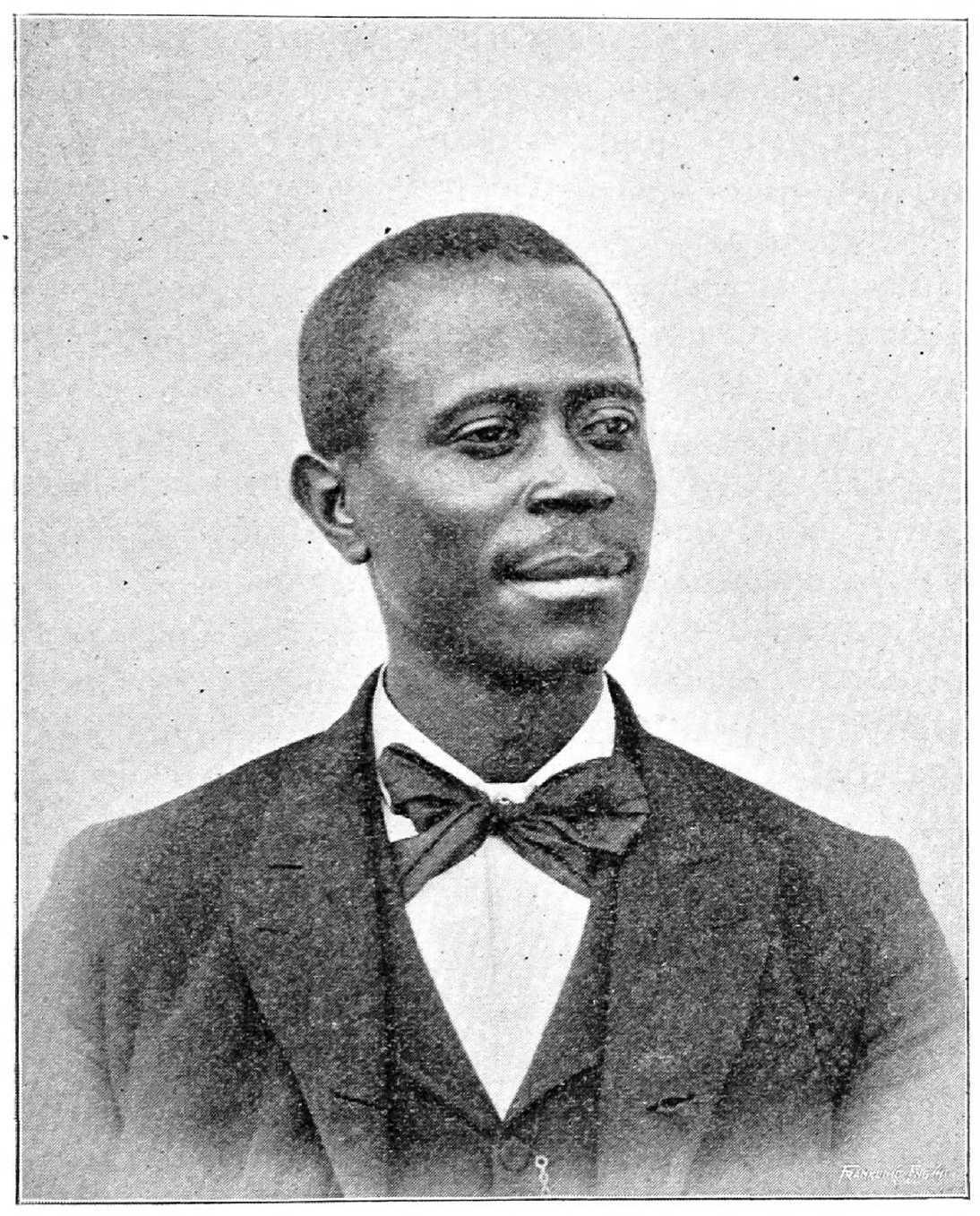
Rev. S. L. Belser, Pastor Red Mountain Baptist Church, Bessemer, Ala.
Clark, Rev. Henry, of Opelika, son of David and Patience Clark, both of Virginia birth, is one of the fathers of the work in Lee county.
Brother Clark was baptized at Auburn, Ala., by Rev. H. C. Toliver, of Tuskegee, in 1860. He was set apart to the work of the gospel ministry June 27, 1868, by Revs. W. E. Lloyd, D. D., and Thomas Glenn, since which time he has been busy going about and doing good. He has been a harmless, industrious, pioneer preacher, laying foundations upon which others have builded. He is a tried and faithful friend of missions and education. The writer has always felt that his every pledge was worth every cent it promised. Notwithstanding he has had no educational advantages, still he has, by study of books and by association with men of letters, obtained no inconsiderable store of knowledge.
The churches of Lee county and the Alabama Association owe much to the faithful, efficient labors of Brother Clark. His loving heart ever adorns his face with the smiles of peace and good will. Truly, he is a harmless man, ever ready to do a brotherly deed.
Colley, Rev. Moses, of Talladega, son of Rev. Boney Sawyer, who was a preacher over fifty years ago, is about 55 years of age. He has never had any school advantages, but has attained to a fair knowledge of books. He is a remarkably clear headed man, dignified and self-possessed. Mr. Colley is a hard working, successful farmer, and by this calling, he has obtained a comfortable support for himself and family. He was baptized by Dr. Renfroe in 1856, and was ordained to the ministry in 1872. He held several important pastorates in Talladega, and was once moderator of Rushing Springs Association. He is guarded in speech, but his manners are always affable. No act of folly or crime mars his good name. For many years he has held the pastorate at Mardisville, where he is esteemed no less for his piety than for his sound doctrine.
Collins, Rev. Asa Cyrus, of Hazen, Ala., was born November 1, 1861, in Dallas county of this State. Lost both parents at the age of 8 years. Was baptized by Rev. A. Waller in his sixteenth year, and soon began preaching. In September, 1881, he was officially set apart to the work of the gospel ministry. Mr. Collins has been pastor at various points, and is held in high esteem by his brethren. For several years he has been moderator of the Dallas County Association, over which he presides with credit to himself and with pleasure to the body. Brother Collins is still a rising young man.
Curry, Rev. J. C., of Mount Meigs, Montgomery county, the son of Rev. Philip and Venus Curry, was born in Marion, Ala., October 17, 1852. He was baptized at Felix, Ala., by Rev. D. R. Willis in 1873. On the occasion of his call to the pastorate of the Friendship Church, Shelby, Ala., he was ordained to the work of the gospel ministry by Revs. P. Caddell, M. Jackson, and Henry Scott. Mr. Curry is liberally educated, having been among the first students of Selma University. He is a close, clear thinker, a forcible speaker and a good preacher. He has been pastor at Shelby, pastor of the Dexter Avenue Church, Montgomery, and is now pastor at Mt. Meigs and Tuskegee.
At different times he has been engaged in the newspaper business; and I am informed that he is now assisting Prof. B. T. Washington in collecting certain statistics for the Tuskegee school. Mr. Curry is a man of rare energy and will force, and being endowed with good intellectual gifts there is no reason why he may not become one among the strongest men of the State.
Curtis, Hon. A. H., of Marion, Ala., was born in Raleigh, N. C., December 29, 1829. He came to Alabama in 1839 with the Haywood family. He was the property (?) of E. Haywood, and served as a waiting boy in the store of Stockton & Hunt for many years. He moved to Marion in 1848 and was the body servant of R. T. Goree for two years. After this he was barber for some years. Succeeding by industry and economy in obtaining some cash, he, in 1859, paid Mrs. E. Haywood $2,000 for his freedom, and during the same year went to New York and was emancipated. After the war he engaged in mercantile pursuits and the barber business. In 1870 he was elected to the lower house of the General Assembly of Alabama, and in 1872 he was elected State Senator from the Twenty-second senatorial district. No other colored man ever presided over the Senate of Alabama. He was connected with the legislature of the State for eight years, and not only enjoyed the respect of his fellow legislators of all parties but closed his service in this connection with growing confidence in his integrity. He was baptized in 1851. In 1850 his marriage occurred. His wife was a suitable helper for him and is still alive enjoying the honors and success which justly crown their offspring. The Curtis brothers and sisters are a praise to their parents. The senator was a strong man in society, in church, in State. He died near Marion, July 20, 1878, as the result of a bruise from a fall from his buggy. Three of his sons are successful physicians; two are north; Dr. A. J. Curtis is in Montgomery.
Davis, Rev. Philip, late of Talladega, was born in 1813, in the State of Virginia, near the North Carolina line. He was baptized in 1841, and about the year 1843 he began to speak to his neighbors of the doctrines and hope of the gospel. Early in life he married, and became the father of a large family. After he was brought to Calhoun county, Ala., he continued his labors in the ministry of the gospel, as he had opportunity, constantly increasing in favor with both God and man; and this was true of him to the day of his death, which occurred December 30, 1881. I first met this pious man in December, 1875, in Talladega. He was not a learned man, but he knew the holy scriptures, and was wise in the things of salvation. The more he was known the better he was loved; and his unassuming, gentle, chastened, self-forgetting spirit, as exhibited at home and abroad, was simply charming. As I have looked upon this unmixed, full-blooded representative of the Negro race, arrayed in the beauty of the Christian spirit, I have felt proud of him as a witness for my people. He was not fully installed in the ministry until the close of the war. The late Dr. J. J. D. Renfroe was the leading man in the presbytery who officially set him apart to the sacred office. His last words were: “Like one of old, I have finished my course and am now ready to be offered, and the time of my departure is come.” He left a pleasant home for his family.
Davis, Rev. C. M., of Flint, Morgan county, was born in the State of Tennessee. He was led to faith in Christ and was baptized by the Rev. F. A. Chapman. He says that his early life was rather wild, but when his eyes were opened he turned with all his heart. In 1885, in May, he was set apart to the ministry by Revs. F. A. Chapman and C. C. Matthews. Mr. Davis is one among the most promising young men in the Flint River Association. He is a discerning, aspiring man, who believes in studying to know the truth, so that he may not have reason to feel ashamed of his teaching, nor spend his time and energies without producing effects. The writer had special opportunity to know him at the State school, where the former was teacher and the latter was student. He is clear-headed, kind and conscientious.
Dawson, Rev. Iverson, of Eutaw, is a man rich in natural endowments, both of body and mind. Upon no man in Alabama has nature been more profuse in the bestowment of choice gifts. He is tall, well proportioned, kind hearted, genial, sociable, magnetic, clear-headed and ever sanguine. He is, no doubt, the strongest man in the Bethlehem Association, of which body he has been clerk for many years; and in every section of the State, and in every phase of business, he is recognized as a man of power and character. As a public speaker, he is both pleasing and instructive.
The vote, which in 1887 retained our university at Selma, was largely owing to his influence and labors.
Mr. Dawson has a pleasant home and an interesting family in the town of Eutaw, where he now serves as pastor. His home is placed on the roll of asylums for tired missionaries. He is a brave, fearless opponent and a true and trusty friend. At this time, he is editing a paper in his town in the interest of the republican party. The writer sincerely wishes that every motion of his strong manhood might be laid wholly upon the church’s altar, and that he could consent to leave the running of political papers to others.
Dinkins, Charles Spencer, D. D., general Sunday School missionary of Alabama for the American Baptist Publication Society, was born September 15, 1856, near Canton, Miss. Mr. Dinkins never knew his father, and his mother, Mrs. Sarah Dinkins, died when he was only 13 years of age. One year prior to her death, he was led to faith in the salvation of God as presented in the gospel, under the preaching of Rev. Jordan Williams, by whom he was baptized into the fellowship of the Mount Zion Church, Canton, in the fall of 1868. For such a boy, at such a time, to make the favorable acquaintance of such a man as Mr. Williams, was a peculiar providence. As in the cases of Saul and Ananias, and Philip and the eunuch, God brought the parties together.
Mr. Williams, perceiving the superior talents of the youth, privately inquired of him whether or not he desired to educate himself, and when the affirmative reply was obtained, he at once influenced his church to provide the means.
On Friday night, January 28, 1870, Mr. Dinkins took the cars for Nashville, Tenn., arriving at that point on Sunday morning. That day he met the good Dr. Phillips, who cordially accepted him at once, and remained his admiring friend to the close of his (Dr. Phillips’) long and useful life.
In referring to his early life, Mr. Dinkins says: “When I was 9 years old, my mother bought me a blue back speller and taught me the alphabet, which I learned in one night. My first teachers were Mrs. and Miss Highgate, of Philadelphia, and Hon. J. J. Spellman, now of Jackson, Miss. Before leaving the old plantation, I saw something of the horrors of slavery, which I can never forget.”
At the age of 16 he began teaching, which work he pursued during summer, returning to Nashville to continue his studies in the fall and winter. He graduated from the classical course of the Roger Williams University, Nashville, in the spring of 1877, as valedictorian of his class, among whom were Messrs. N. H. Ensley and H. M. G. Spenser. In 1878 he returned to take a post-graduate course and was appointed a member of the faculty. In the latter part of this same year he entered Newton Theological Seminary, near Boston, Mass., where, during the time of a full course, from which he graduated in 1881, he was associated with some of the most prominent educators of the country. In this course he took theology, church history, Hebrew, Greek, homiletics, etc. How Mr. Dinkins was seen by this institution, the following story may be allowed to signify:
Just before the death of Dr. Phillips, the writer met him in Nashville.
Dr. Phillips—How is Brother Dinkins?
The Writer—He is well and doing well.
Dr. P.—He is a very capable and worthy person. Dr. Hovey, the president of Newton, said to me on one occasion when I asked after some students who had gone from us to him, “Mr.—— is very sensitive, but Mr. Dinkins is very sensible.”
Dr. Dinkins has held various prominent positions, among which may be mentioned: Member of the faculty of the State University of Kentucky; pastor York Street Church, Louisville, Ky.; teacher of languages in Selma University; pastor Second Baptist Church of Marion, Ala.; and principal of the Marion Baptist Academy; and has been tendered the presidency of the University of Kentucky, and many times he has been earnestly solicited to return to the faculty of Selma University. His examination for ordination before the ministers of Louisville, Ky., in 1883, was an occasion of much comment by both white and colored pastors, in praise of his ability. The writer has had occasion to watch him very closely since his entrance upon work in Alabama, and he does not hesitate to write that Charles S. Dinkins, in point of scholarship, industry and high sense of honor, is not excelled by any man we have had among us. In 1890 the State University of Louisville, Ky., then under the presidency of the late Dr. W. J. Simmons, conferred on him the title of D. D. On the day which closed his twenty-fifth year, the 15th day of September, 1881, he was wedded to Miss Pauline E. Fears, the friend and classmate of Miss M. A. Roach (now Mrs. M. A. Boothe), by his fatherly instructor and faithful friend, Dr. D. W. Phillips. The marriage took place in the Roger Williams University, Nashville, Tenn., a school of which they are both graduates. Perhaps some future historian will write of Mr. Dinkins: “An eventful life, not the least eventful point in which is the finding and wedding of a woman so well suited to a man of such rare gifts.”
Five children—two boys and three girls—grace their home as the fruit of the marriage.
Closing this sketch, the writer would remark that if Mr. Dinkins has a fault, it may be described thus: An exceeding tenderness of conscience, whereby one may be so entirely possessed by present views of law and duty as to forget that new light and other views may modify appearances.
P. S.—He is now the trusted president of Selma University, and none of his predecessors have made, in the same length of time, a better mark than he has made. His personality moves in lofty purposes and is a source of pure thoughts and pious emotions which affect all his surroundings.
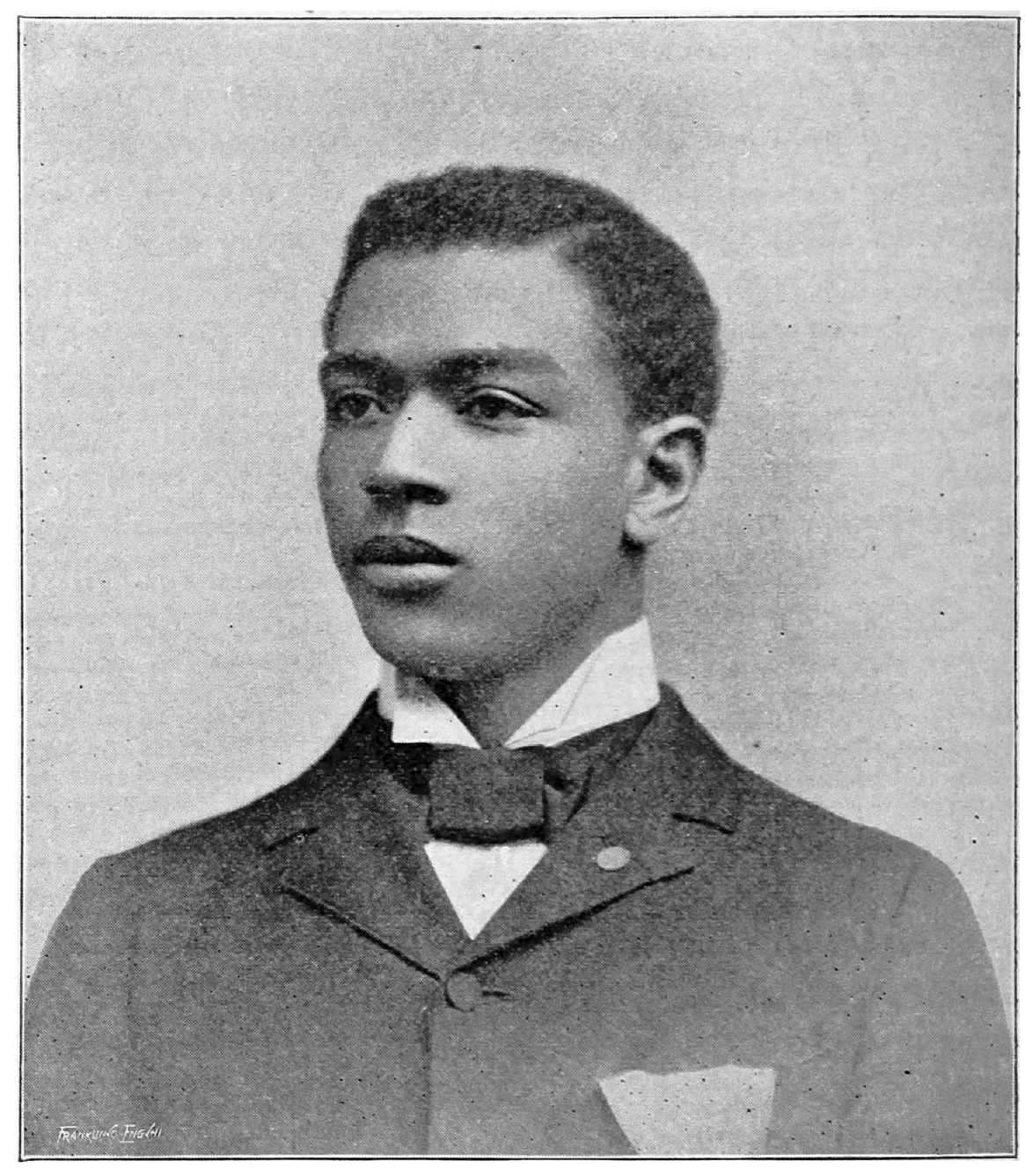
Dr. U. G. Mason, Physician and Surgeon, Birmingham, Ala.
Dosier, Rev. John, the founder and for twenty years pastor of the church in Uniontown, was a man of great moral worth. I once heard a politician who was associated with him in the legislature of Alabama, remark:
“John Dosier was an honorable man everywhere, and I never saw a man who did not believe every word he said.”
He, like Mr. A. H. Curtis, passed through his political preferments with stainless reputation.
He was a very old man at the time of his death, which occurred only a few years ago. He was born somewhere near the beginning of the present century. By some means he, during the days of his bondage, learned to read Greek, which knowledge he turned to good results upon his study and interpretation of the Scriptures. He was one of Alabama’s most worthy pioneers. He was a temperance man. Upon one occasion in a session of the Uniontown Association, some one complained that he smelled a very disagreeable whiskey odor in the house.
Mr. Dosier remarked: “With the consent of the body I will find the man who has been drinking.” It was agreed that he might make the search. Accordingly, he passed from man to man, requesting that he might smell his breath. He located the man, who, for lying about it, was excluded from the body.
The writer never met a man for whose veracity he had a higher regard.
Donald, Rev. R., of Birmingham, was born in Alabama June 10, 1854. He is the founder of the Tabernacle Church, Birmingham, and the builder of the First Church, Pratt Mines. He has worked hard and sacrificed much for the cause. His name will remain in many churches. He owes much to his noble, patient wife.
Edwards, Rev. A. J., of Lowndes county, is a teacher as well as a preacher, and in different sections of the State he has labored with good results in the interest of morality, education and religion. Mr. Edwards is blessed with much body as well as with much soul. Good health and jovial spirits abound, and hence he is ever an enjoyable companion. He is still a young man, full of manly pride, commendable ambition, and a love for the pure and charitable, in view of which we may hope that his day is only in its dawning, and that a brighter noon and evening are before him.
Ellis, Rev. Henry, of Flint, Morgan county, son of William and Martha Ellis, was born in May, 1856. He was baptized in 1871, and in 1875 he was ordained to the ministry by Revs. Charles Davis and M. J. Hooks. He is now pastor of St. Peter’s Church, which is composed of some of Morgan county’s best citizens. He deserves special praise for his attention to his Sunday School. Mr. Ellis also preaches to a church near Courtland. This brother is a warm friend to missionaries and delights to aid good causes.
Fisher, Rev. C. L., B. D., son of Alexander and Elizabeth Fisher, was born in St. Bernard parish, twenty miles below New Orleans, La., February 16, 1866.
On the first Sunday in February, 1875, he was baptized into the Broadway Street Baptist Church, New Orleans, La.
Ordained—He was set apart to the work of the gospel ministry by the Second Baptist Church in Evanston, Ill., September 29, 1887, where he was student-pastor.
Educated—He graduated from the college department of Leland University, New Orleans, La., May 28, 1884, with the degree of B. A., and graduated from the Baptist Union Theological Seminary, Morgan Park, Ill., May 5, 1887, with the degree of B. D. On May 27, 1891, he received from Leland University the degree of Master of Arts.
Positions—In 1888 pastor of Mt. Zion Church, Little Rock, Ark. In 1889-92 he is teacher of languages and instructor of ministers in Selma University, Selma, Ala. For the last two years of this time he is pastor of the Tabernacle Church of the city of Selma. In the office of State Sunday School Missionary, under the American Baptist Publication Society of Philadelphia, he has for several years rendered very profitable service for the Baptists of Alabama as well as Mississippi. He has recently been recalled to the pastorate of the Tabernacle Church, Selma.
Than is Charles Lewis Fisher, Alabama Baptists have no more thorough scholar, profound logician and industrious pastor. His physical form is a little frail. Should this not hinder length of days, early future years must present him to the world as one of our greatest theologians and metaphysicians. He is not less modest than he is learned, not less benevolent and respectful than he is self-reliant and dignified.
Fykes, Rev. A. J., of Pratt City, is the much beloved pastor of the Canaan Church, Bessemer.
Fluker, Rev. Solomon, of Sylacauga, Talladega county, was born in March, 1833; was baptized in 1866 by a Rev. Mr. Smith (white), of Talladega. He soon began to preach, and ere long he had become a leading minister in his section of the country. For nine years he was pastor of the church in his town. He is a very meek, unassuming man, careful for the welfare of his family, and hospitable towards his brethren. Of late he has been a great but patient sufferer, and hence has been compelled to cease from active labors in the ministry. We owe much of our success in this section of the State to the industry and exemplary character of this faithful man. He has left the cross for the crown.
Foster, Rev. L. P., of Selma, was baptized by Rev. Jerry Shorter in Eufaula in 1876. Mr. Foster, some time after his marriage and mature manhood, moved to Selma and graduated from the normal course of Selma University. He is a stirring, industrious, self-reliant man, who purposes to make his own way in the world without striding the back of any other man. He has occupied different pastorates and has served as missionary of the Eufaula Association. He has a comfortable home—free of debt—and lends a helping hand to missionary and educational enterprises.
Foster, Rev. James A., late of Montgomery, was born in the State of Kentucky, in which he grew to young manhood. He died in the city of Montgomery in December of 1891—died as he had lived, in love and honor with men and in peace with God. Twenty-five of his fifty-four years had been spent in the gospel ministry, from the sacred offices of which he retired in great joy. He was ordained to the work of the gospel ministry by Revs. I. T. Tichenor, D. D., Nathan Ashby and Jacob Bellser, in the city of Montgomery, in the year 1867. His first pastoral charge was the church at Mt. Meigs, which he served till he resigned to accept the call of the Columbus Street Church in 1871. He was the first recording secretary of the State Convention, and was the next man to Mr. Ashby to preside over the Convention as president. He was trustee of the State Normal and Swayne Schools, and moderator of the Spring Hill Association.
Mr. Foster was a man whom nature had variously and richly endowed. Had he possessed early educational advantages—advantages suited to his rich natural resources—he would have held a place among the sons of the giants. His sermons were always earnest, and frequently his vast audiences were melted into weeping by a pathos that was as mysterious as it was mighty. He was loved, honored, followed, and obeyed. In the two churches in which he was pastor he, it is said, baptized 10,000 persons, married 600 couples, and preached 4,000 sermons. His loving, courtly manners won and maintained for him such a tender regard as few men ever possess. Nor was this confined to his own flock and race, but it was shared more or less by the whole people, white and black. The following will show something of his liberality:
“Montgomery, May —, 1891.
“Dear Bro. Boothe: On hearing that you need some money for your work, I look over my account with the Lord and find that I owe him five dollars. Enclosed you will find this amount. May God bless you.”
The last letter I received from him, one month before his death, contained a donation to the mission work.
His wife says of him: “Some time before his sickness, he talked of nothing but heaven. I could plainly see that his mind had left the world. I tried to interest him in house and home affairs; but he would talk of nothing but of God’s grace and of the home of the saints.”
He was a model husband and father, and is sadly missed from his home, as well as from his church and community. A good man has gone from labor to reward—from cross to crown. He was thoughtful of the welfare of his loved ones, and hence carried an insurance on his life, the payment of which has rendered them some assistance since his death.
He was one of the original incorporators of Selma University, and was a life member of the Home Mission Society.
“Servant of God, well done; Rest from thy sweet employ.”
Forbes, Rev. W. R., now of Columbus, Ga., is still associated with our Alabama work. He is now about 37 years of age, is possessed of a fine personal appearance, is affable, studious, sociable and industrious. He is a Virginian by birth and came to Alabama in 1889 to begin work at Clayton and Eufaula.
Franklin, Rev. Samuel, of Mt. Meigs, was born June 4, 1849. He was converted to the Christian faith January, 1866, and ordained to the work of the ministry March, 1876. Brother Franklin is among the energetic enterprising men of his part of Montgomery county. Notwithstanding he earns his living at farming, he is busy in the interest of the affairs of the house of God. At present he is pastor at Pike Road Church.
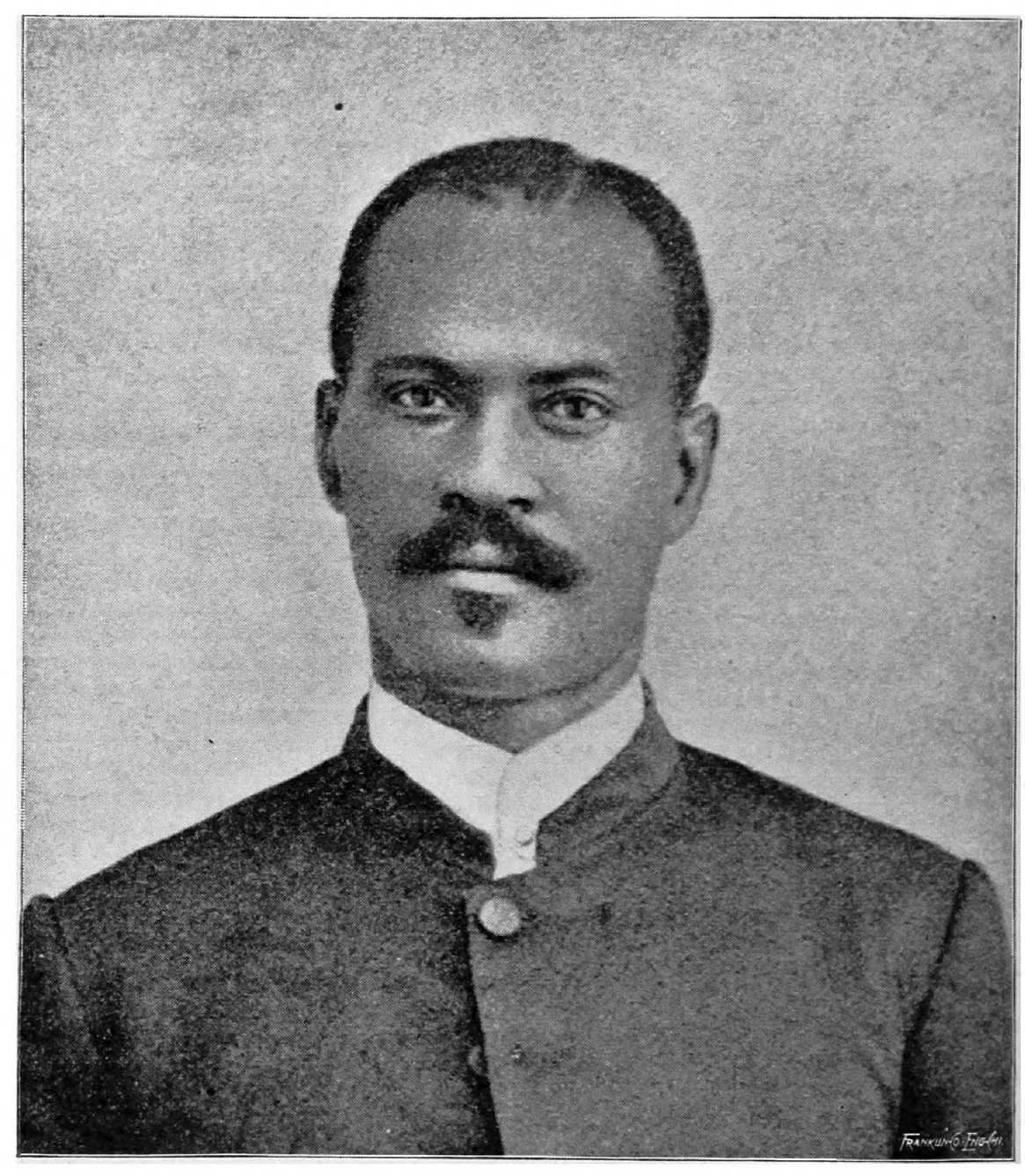
Rev. J. P. O’Riley, Trussville, Ala., Pastor Compton Baptist Church.
Franklin, Rev. William, of Mt. Meigs, was born October 30, 1852. He was baptized by the late Rev. Washington Stevens, of Montgomery, July, 1871. He was ordained in 1881 by Revs. P. Lucas, W. Stevens and his brother, Rev. Samuel Franklin.
He is a thoughtful, enterprising man, and has the pastoral charge of several country churches. Being self-reliant, persevering, as well as economical with time and means, he has risen somewhat above the crushing heels of poverty and want. At the age of 25 years, he did not know the English alphabet, but by persistent application to study, he now reads and writes and keeps his own accounts.
His face bears those hospitable marks which make one feel easy and at home in his company and restful amid his family.
On a trip to Mobile, our train stopped at the bridge of the Tensas River to allow a freight train to clear the track. Mr. Franklin’s gaze upon the bridge led the writer to think he was frightened. As the freight train left the bridge, Mr. F. remarked: “If it will hold up that train, it will ours, too.” I said: “Maybe that train has just put it into the condition to let us through.” “Yes, and I’ll pull my shoes off now in time to swim,” said Mr. F.
Freeman, Rev. James H., of Moulton, Lawrence county, is one among the very worthy young men of our State. He has had comparatively no advantages for learning, and yet his sober and comprehensive views of life have spurred him onward in search of information, till now we have but few young men in Alabama who use better language, have clearer ideas of the Christian life, and make a more orderly speech than Mr. Freeman. Better still, his neighbors speak of him as a good man—a man whose conduct is a living epistle of the faith which he professes.
French.—Of the many substantial people of Talladega county who deserve honorable mention, none are more worthy in all regards than the French family. Messrs. Emanuel, William, and Prince French would be an honor to any race of people, no matter what the degree of their civilization and the purity of their moral culture. The two first named teach in the public schools; the latter is a preacher, and all of them are prosperous land owners, as well as faithful members of the Baptist church.
Gachet, Rev. Adam, of Barbour county, Ala., was born in Randolph county, Ga., March 10, 1837. At the age of 16 he was carried to the county and State in which he now lives. His childhood was wholly deprived of parental love and care, and he says he never knew anything of a relative. Depressed by his loneliness, he early felt the need of the friendship of God, which he sought and soon obtained, to the great joy of his heart. With this sweet peace soon came an impression that he was called upon to speak of this wondrous love to his fellow-slaves. In April, 1854, he was baptized into Enon Church. On June 7, 1869, he was set apart to the work of the gospel ministry. He is one of the pioneers in the work of the Eufaula Association, having preached the introductory sermon of the first session of that body. From the first till now he has been a member of their executive board, and is now a member of the board of trustees of Selma University. Notwithstanding Bro. Gachet has had no educational advantages, he reads intelligently and writes some. He has labored, and now labors, in some of the most important churches in his section of Alabama. He is still active on all lines of progress. He has a large family, who seem to do him honor. Bro. Gachet is no more.
Goldsby, Alexander, was born February 6, 1819, in Edgefield district, S. C. He came to Alabama in 1830. His father, who was a native African, was born on the ocean while his mother was on her way to America. His mother was born in Maryland. In 1844 he was baptized into the white church at Selma, Ala., by the Rev. Mr. Collins. In 1845 he was ordained to the office of deacon, in which position he served for thirty-eight years. He was a very honorable man, and was not less respected by the white people than he was loved and followed by his own. He was a successful blacksmith, usually hired his time, and hence he was to a very considerable degree his own master. In 1843 he married Miss Nicey Goodwin, and a large family of children is the fruit of the marriage. His massive head and deliberate manner, his strong will and dauntless spirit, his good sense and genuine piety, made him a leader of the people and a pillar in the house of God. A man more capable of friendship at great personal costs, I have never known. Especially from him, aided by Deacons Charles White, Nick Claiborne, Tall Underwood, and E. Ross, our cause in Dallas county has risen up. At or near the close of his seventy-third year, “Father Goldsby” bravely, triumphantly and peacefully passed from the earth to that city which knows no night and needs not the shining of the sun. He was one of the chief leaders of the band which met on Friday night, near Selma, forty or fifty years ago, to pray for freedom. His name is honored in his children.
Green, Rev. Lawson J., son of Lawson and Martha Green, was born near Livingston, Sumter county, Ala., August 4, 1859. Though he was so young, he says his heart still bears the impress of the horrors of slavery. Under his father’s direction, he soon learned how to farm. Notwithstanding the colored people of this county were greatly hindered by the kuklux, Mr. Green utilized every educational facility within his reach to attain to a knowledge of letters. After he had gone as far as he could in the schools in and around Livingston, in 1879 he entered the Selma University, then under the management of Rev. H. Woodsmall, of Indiana. From this institution, he graduated in 1884 under the presidency of Dr. E. M. Brawley. At different times and places he has followed the work of teaching. He taught in his own county, was principal of Tullabody Academy at Greensboro, was a member of the faculty of Selma University, and was also of the faculty of the Baptist Academy at Marion. His principal pastorates have been at Greensboro, Ala., and Selma, of the same State. As Brother Green is full of good health, pluck and mental energy, there is no reason why he should not have a long and useful life as a Christian leader. He has held various honorable positions in the general work, and is now secretary of the Board of Trustees of Selma University.
P. S. He is now in Birmingham, pastor of the Spring Street Church and principal of an independent school on the south side of the city. He will long be a power in the denomination, if watchfulness and temperance attend him.
Gulley, Daniel T., of Selma, son of John L. and Amy Gulley, was born near Snow Hill in Wilcox county, Ala. He was the property of James Gulley, whom he served as “waiting boy” till the close of the war. Doubtless this position was favorable in the direction of refinement and culture. A taste and relish for the study of books would naturally come of such environments. Utilizing some school advantages which came to hand, he soon, as the result of hard work, attained to such a beginning in letters as enabled him to officiate as clerk of the Antioch Church.
At the opening of Selma University on January 1, 1878, he, at 9 o’clock A.M., was the only student on the ground. He completed a course in this institution with the class of 1884. On the fourth Sunday in February, 1873, he was baptized into the Antioch Baptist Church by the Rev. Willis Stalworth. Here he served as clerk of the church and as superintendent of the Sunday School. From the beginning, he has been a substantial friend of ministerial education. He was ordained in the session of the State Convention held in Selma in November, 1883, Revs. M. Tyler, W. H. McAlpine, J. Dosier, E. K. Love, E. M. Brawley, W. R. Pettiford, H. Stevens and the writer, officiating as presbytery. He has held various pastorates and different positions in the general work, and is now Sunday School missionary under the Publication Society.
Hampton, Rev. James, of Leighton, Ala., was born and reared near where he now lives. On July 25, 1858, he began life’s journey a slave, in line with the condition of his race. In 1869—in September—he was baptized into the Mount Pleasant Church by “Father” Henry Bynum, and on June 18, 1882, he was solemnly set apart to the work of the gospel ministry by Revs. B. King, H. Bynum, O. Jackson and T. W. Morris. Brother Hampton is one of the leading men of the Muscle Shoals Association, and justly so, for added to his natural talent are many graces of character which come only of labor, aspiration, study, faith, and exalted purpose.
Without the aid of schools, he has attained to a creditable knowledge of letters. He is a builder, an organizer, a pastor and business man. With him and his family, the tired missionary may find a place for rest and refreshment. He lives upon his own fruitful farm near Leighton, in Lawrence county, and is a light which shines upon all the Christian enterprises around him.
Hawkins, Prof. D. D., of East Lake, Jefferson county, deserves honorable mention for his services for religion and education. The people of East Lake are comparatively prosperous and progressive, and to no man are they more indebted for this condition of things than to Deacon and Professor Hawkins. As church officer and as school teacher he has long and faithfully served his church and his community, and his spirit and labors have been like the leaven which the woman hid in the meal.
The writer has ever found him a quiet, industrious, hospitable brother, with ready heart and open hand in support of every good work. He is an honor to his school—Selma University.
Hall, Rev. S. M., pastor of the First Colored Baptist Church at Warrior, Ala., is one of our most robust, handsome and spotless young men. He was born in Walker county, Ala., October 26, 1867. Attended the public schools of his community for five years. In October, 1885, he joined the Oak Grove Church in Walker county, receiving baptism the same month. He has attended the Birmingham Institute two years, and has given three years to the work of teaching. He is one of those jovial, happy, friendly souls which one always enjoys. His hard work in the study of books shows that he sees and appreciates the value of knowledge, and recognizes that there is no easy, lazy road to learning, to culture and refinement.
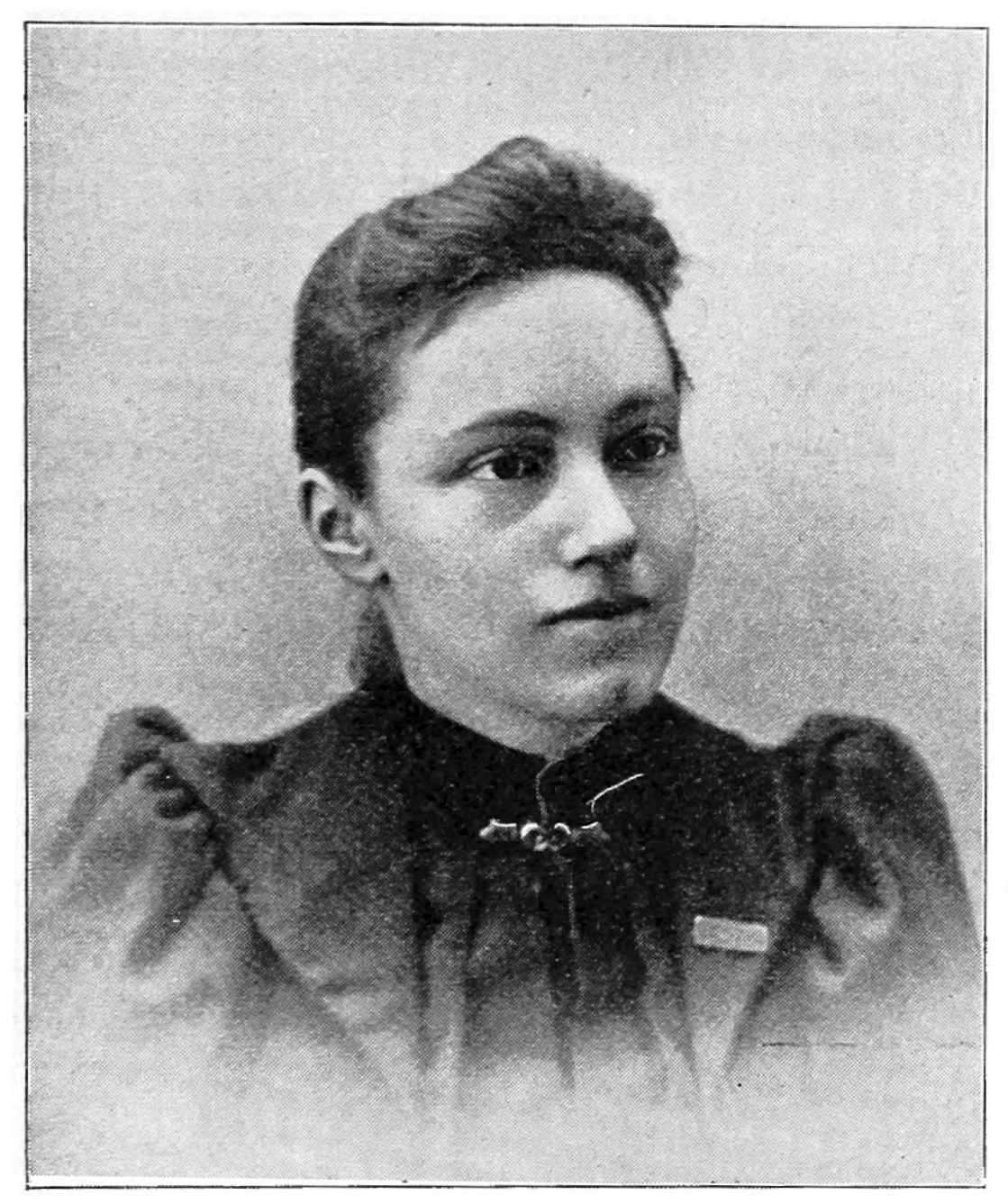
Miss Ella Knapp, Missionary, Birmingham, Ala.
Hawthorne, Rev. Lambert, of Evergreen, was born March 15, 1859, in Pine Apple, Wilcox county, Ala. When he was only six years of age his mother, Mrs. Sarah Hawthorne, died and left him and two other sons to such cold charities as might chance to fall in their way. From the time of his mother’s death till he was 18 or 20 he was an apprentice to Col. J. R. Hawthorne, of his native county. This gentleman sent him to school, sometimes paying $2 per month to his teacher, thus enabling him in his early years to lay an educational foundation upon which he has continued to build. As might be expected of any person possessing his native talent and industrious turn of mind, he has successfully drawn upon every literary opportunity that has fallen in his way, to increase and beautify his store of knowledge and wisdom. He studied in Talladega College, entering that institution 1875 and leaving in 1879.
In 1879 he was induced, doubtless by denominational influences, to enter Selma University.
Both as teacher and as preacher he has been a very busy man. At different times he has been principal of the city schools of Opelika and Union Springs, and now he presides over the Evergreen High School. His most prominent pastorates have been the First Church, Union Springs, and the Bethel Church, Evergreen. For the latter church Mr. Hawthorne is now completing a good church edifice. In 1873 he was baptized at Pine Apple by Rev. W. Allen. In 1883 he was ordained to the ministry in Opelika by Revs. Thomas Glenn, H. Clark, N. B. Robie, D. D. (white), and others. In 1880 he was wedded to Miss Laura E. Drake, of Opelika, an affable lady, by whom he has six children. Mr. Hawthorne is energetic, sociable and full of work.
Holloway, Rev. W. H., who spent two years in the Presbyterian Theological School at Tuscaloosa, is preaching and teaching at Thomas. Affable and industrious, he is making friends and followers.
Hunter, Rev. Henry, of Faunsdale, son of Reuben and Abigail Hunter, is now (June, 1892) about 77 years of age. He was baptized by Rev. James Caldwell since the close of the war, and in 1866 he was set apart to the work of the gospel ministry in a council of which the Rev. James Caldwell was chairman. Speaking of his education Brother Hunter says: “By chance I learned to read the Bible.” He is one of the pioneers of Marengo county in the work of the colored Baptists. He is naturally talented, is unassuming, deeply pious, and is known by his brethren as being sober, upright and honorable. He has property worth about $1,000. He is quietly expecting a peaceable end to his earthly career, and like Abraham, has his eyes upon another country where the wicked shall cease from troubling and the weary shall be at rest.
Hutchins, Rev. P. S. L., of Gallion, son of Reuben and Sylvia Hutchins, was born October 13, 1862, in Barbour county, Alabama. In 1879 he was baptized into the Eufaula Baptist Church by the Rev. Jerry Shorter. He, in youth, was a person of observing, active mind, and hence by the time he came to early manhood he had fairly prepared himself for the position of school teacher. He took the college course in Selma University, from which institution he graduated with the degree of A. B. in May, 1890. On May the 31st, of the same year, he was publicly and officially set apart to the work of the gospel ministry, Revs. M. Tyler, C. L. Puree, C. L. Fisher, J. Q. A. Wilhite, R. T. Pollard, L. J. Green, A. N. McEwen and the writer, officiating as presbytery. At the time of this writing Mr. Hutchins is pastor at Gallion and also at Newberne. At both these points he has succeeded in leading his flocks to the erection of good church edifices. He is full of energy and pluck as well as of literary aspiration. Like O’Bryant and other rising men among us, he is a moving man, and has muscles as well as brains.
He is physically as well as mentally strong, and so, if wisdom, prudence and Providence shall continue to be his companions, a long life, a growing life, a useful life, an honorable life is to be his.
P. S.—Since writing the above Mr. Hutchins has been abundant in labors in building houses of worship at different points. Great physical strength is proving to be a very convenient instrumentality under the powers of a strong mind.
Jackson, Rev. A. C., the son of Roderick and Ellen Jackson, was born in Pickens county, Alabama, December 13, 1848. He was baptized into the African Baptist Church, Tuscaloosa, Ala., by the late Rev. Prince Murrell.
He was ordained to the work of the gospel ministry at the request of the Sixteenth Street Baptist Church, Birmingham, by Revs. J. R. Capers (one of the most worthy organizers of the Alabama work), Henry Wood and N. G. Scurlock. The writer first met Brother Jackson in Mobile, in 1875, in company with Rev. P. Murrell. His Birmingham work was crowned with success. Beside what he did in the matter of increasing the membership, he laid at the hand of his successor in the pastorate of the Sixteenth Street Church about $3,000 worth of salable land and the present church site. He is accepted by his brethren as being an honest, earnest, industrious, studious man, especially noted for his hospitality to his brethren. Beside the pastorate above mentioned, he has been a builder and leader of other churches. He is now president of the Sunday School Convention of the Mt. Pilgrim Association and chairman of the Ministers’ Conference of Birmingham. He has had sore trials, but in all his changes his love for Jesus has been manifest to all.
Jackson, Rev. John W., pastor of the First Colored Baptist Church of Eufaula, was born at Whitesville, Ga., about thirty years ago.
Educational Advantages.—He has enjoyed only such advantages as the free public schools of Atlanta, Ga., afforded him, but because of his native talent and studious application to the study of books, and his association with men of thought, he is possessed of a fair education. His unassuming manner and happy, brotherly spirit win and hold for him the love of his brethren in the ministry as well as the tender, confiding respect of his flock.
He was led to faith in Christ in his sixteenth year. In December, 1890, he was installed into the work and office of the gospel ministry by a council, in which Revs. W. H. Tilman and E. J. Fisher, of Atlanta, Ga., officiated. He was called to labor in Alabama May, 1892. The Eufaula Church, of which he is pastor, was organized about the year 1867, and is therefore one among the oldest churches in the State. This church began on the river bank in a little board shanty, but they now worship in a nice large frame building on a main street of the city. Mr. Jackson follows in this pastorate Revs. J. Shorter, J. Q. A. Wilhite, G. W. Berry, Mr. Forbes, and Mr. Bassett; and he feels gratified with the assurance that he leads a church from which have gone forth some of the best people in the country. “Be thou strong, therefore, and show thyself a man.”
Jackson, Rev. Dennis, of Tuscumbia, is an honest, industrious man who has a large place in the love of his brethren.
James, Rev. Lewis D., son of James and Priscilla James, was born in Sumter county, Ala., December 24, 1859. Baptized by Rev. A. Gordon, of Gainesville, Ala., in August, 1875. Had limited educational advantages in youth, but has since his manhood increased his stock of information by study, in which labor he has been aided by Prof. E. D. Lord and Dr. A. F. Owens, of Mobile, and Dr. Pettiford, of Birmingham.
He was ordained to take charge of the Bethel Church at Warrior, Ala., October, 1888, by Revs. A. C. Jackson, J. W. White, A. D. Jemison and W. R. Pettiford, D. D. His brethren of the Mount Pilgrim Association have laid on him various positions of honor, such as president of the Sunday School Convention, district missionary, etc.
James, Rev. Van B., pastor at Avondale, is a brother of Rev. L. D. James. He is a progressive, industrious young man, whose breast is filled with longings for a higher life for his people. His preaching is characterized by thought rather than by emotion. In all the interests of the devotion he shows himself substantially concerned.
Johnson, Rev. Gabriel B., of Courtland, Ala., son of Beverly and Sophia Johnson, was born in King George county, Va., in 1849. Two years before the beginning of our civil war, the subject of our sketch, with three other children and his mother, were brought to Alabama as slaves. He was led to seek Christ in consequence of a revival conducted near Courtland by Revs. F. Bowman and S. Watkins. In 1867, in February, he was baptized by a white brother. Shortly after his baptism, he began to speak for Jesus in the public meetings under the authority of a license from his church. In 1873 he was solemnly set apart to the sacred office of the gospel ministry, Revs. G. Garrett, J. Belle, B. Swope and C. S. Gibson officiating, after which he was called to the pastoral charge of the Courtland Church, in which capacity he now serves. His first marriage was to Miss Millie Davis, daughter of Harry and Susan Davis. As the fruit of this marriage, there were seven children born to him, four of whom still live. In 1887, and some time after death had robbed him of this good woman, he was wedded to Miss Mariah Jarman, daughter of John and S. Jarman, of Leighton, Ala.
He has had but poor educational advantages, but has used to considerable effect such as have come within his reach. He has had some access to the free public schools and a few months in the Roger Williams University, Nashville, Tenn.
He has been Sunday School missionary under the joint appointment of the Muscle Shoals Association and the American Baptist Publication Society, has for several sessions assisted Prof. H. H. Stewart in the Courtland public school, and is at present the moderator of the Muscle Shoals Association. He has the confidence and love of his brethren, and will doubtless ascend into still greater things. Being physically strong, he will be a young man for years to come. His kind manner and polite disposition readily commend him to the favor of all persons who are inclined to be friendly, and hence a host of friends follow him with good wishes.
Johnson, Rev. Daniel, Oakland, Lauderdale county, Ala., son of Lewis and Martha Johnson, was born near Florence, Ala., November 11, 1844. Baptized by Rev. H. Beckwith in 1872. Ordained by Rev. H. Beckwith, Thos. Bruhes and A. Davis, in January, 1880.
Brother Johnson has been pastor of Zion No. 1 for some time past and is a cheerful supporter of all the general enterprises of the denomination.
Johnson, Rev. Richard, pastor of St. James Church, Birmingham, is one of our worthy pioneers, in the Macon county churches.
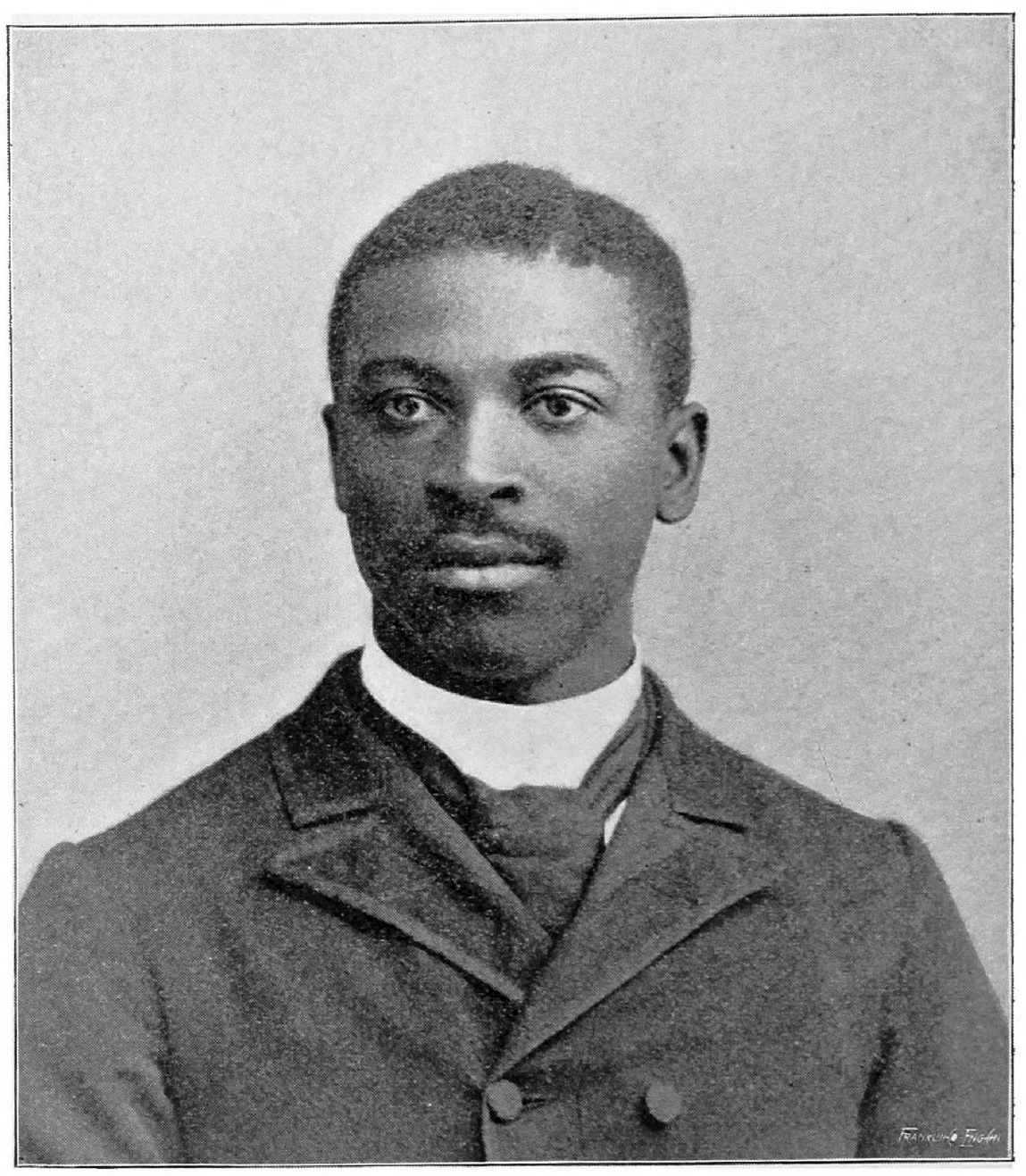
Rev. J. H. Eason, A. B., Professor in Selma University.
Jones, Rev. C. P., pastor Tabernacle Church, Selma, hails from Arkansas. We have nothing of his history. He comes to us highly recommended by those who knew him best, and so far he is making an excellent impression in his praise. Beside his moral worth and fine intellectual talents he has other personal graces very rarely seen.
The writer loves especially his earnest devotion to his sacred calling. He is of Georgia nativity, is about 27 years of age and is a good scholar. He has been in Alabama only three months. What he has accomplished in books is proof that he is a man of studious habits.
P. S.—Since the above was written Brother Jones has gone to Mississippi, forcing from Alabama Baptists an acknowledgment of his exalted piety, child-like faith, sound sense and superior pulpit power. Brother Jones is now in Mississippi, still growing in grace and popularity.
Jones, Rev. Silas, of Mt. Meigs, Montgomery county, son of Jupiter and Caroline Jones, was born May 1, 1847. He was baptized into Elam Church, May 1, 1866, by Rev. John Holmes, (white). Was ordained to the work of the gospel ministry May 29, 1870, under the auspices of the white Baptist Church, of Wetumpka, Ala., by Revs. A. Carleton, J. Cole and Thomas Smith. The writer first met Brother Jones in Mobile in 1875—has been with him in his pastorates at Wetumpka, at Sandy Ridge, at Mt. Meigs and at Calhoun. He did not learn the alphabet until after he was about 18 years of age, and hence his very manly struggles for a knowledge of books have not been attended with the perfection which comes of early training. But he is a man of natural ability and rare tact, and what he knows is most thoroughly utilized. His home Christianity includes a system of regular Bible study for children as well as for hired help. He is an exemplary pastor. He is an industrious Bible student and preaches the truth with telling effect. His urbanity and other elements of personal magnetism bind his people about him with strongest cords of confidence and affection. No one man has done more for the education of his people than he, as the schools at Mt. Meigs and Calhoun must show. Brother Jones is still young and strong and promises a long life. He has good property. His family does him honor. He is a strong man and coming days will give him the honors due him as a man great in service for home and country.
Jones, Rev. Pope, of Russellville, was born near Tuscumbia, Ala., June 15, 1839. He was baptized some time between 1862 and 1866, and was set apart to the work of the gospel ministry in 1869 by Revs. Joseph Shackelford, D. D. (white), and W. E. Northcross. Brother Jones was in many respects a very remarkable man—no man in the Muscle Shoals Association, no man in Northern Alabama, had so much power over the masses of the ministry and the great body of the laity as he. He was an executive man and a natural magnet, and men gathered about him and cheerfully submitted themselves to the sway of his opinions. He was as affable as he was firm, as joyous as he was earnest. He peaceably passed from this life in 1888.
Jones, Rev. Wm. B., of Demopolis, was born in 1847 in Marengo county, Ala. Was baptized June 16, 1867, by Rev. John Scott. He has accomplished some work in the churches.
Kennedy, Rev. F. R., of Columbiana, was born December 20, 1864, in this State. He was baptized at Calera by the Rev. Henry Clay in 1881, and in 1886 he was set apart to the work of the gospel ministry by Revs. P. Fancher and John Tranholm. Mr. Kennedy at the age of 18 did not know his letters, but perceiving at an early age the value of book learning he resolved at the time named to attain to some knowledge on this line. He has availed himself of such facilities and opportunities as have fallen in his way, and in consequence he now reads and writes fairly well. No doubt much of his advancement and general success are due to the knowledge, aspiration and persistence of Mrs. Kennedy, whose educational advantages have been superior to her husband’s. Brother Kennedy has been pastor in his own town, in Birmingham, at Calera, and now he preaches in Anniston.
Kennedy, Rev. Samuel, once pastor Union Church, Mobile, is one of those unassuming, modest, friendly men whose heart pours forth in kindness upon everybody. Like many others his chief misfortune is that he bears the marks which declare his want of early school advantages. However, he deserves praise for many good qualities and commendable labors.
King, Rev. Boling, of Leighton, Ala., was born in Orange county, Va., August, 1836. He was converted to faith in Christ under the ministry of Rev. Henry Bynum, by whom, aided by Dr. Shackleford, he was baptized into the Mt. Pleasant Baptist Church near Leighton. In 1868, in same church and by the same brethren, he was solemnly set apart to the work of the gospel ministry. Though he never attended school he can read and write, and is a natural leader. He is pastor of some of the largest churches in the Muscle Shoals Association. He is an industrious, honorable man and has accumulated about $1,700 worth of real estate. He is one of the pioneers of the work in this section of Alabama. He is still of youthful vigor and leads in the Sunday School the same as in the church.
Koyton, Prof. Abner C., of Tuscaloosa, son of Henry and Susan Koyton, was born in Marietta, Ga., but was reared in Summerfield, Ala. Mr. Koyton graduated from the State Normal School, Marion, Ala., in 1880, and delivered the first annual address to the alumni of this institution.
Under his principalship, and on his plans, so the writer is informed, the city schools (colored) of Tuscaloosa began to operate under their present graded system. He is now just inaugurating the Tuscaloosa Baptist Academy. He is young, but studious and progressive. His youth is dignified by his gravity and piety.
Lawson, Rev. A. J., of Camden, son of Mr. A. and Mrs. Julia Lawson, is doing a good work at Camden. His chief educational advantages have come of the Camden schools, and what he has accomplished in the way of letters, is evidence of his vigilance and application with reference to the opportunities which came to his hand. He was baptized by Rev. David Small, of Clark county, in 1886, two years after which time he was set apart to the work of the gospel ministry at Camden by order of the Camden Church, which was then under the pastoral care of Rev. J. W. White. His labors are well spoken of by his brethren.
Lawson, Rev. A., of Union Springs, the pastor of Mount Pleasant Church, now about 45 years of age, is one of the leading men of the “Old Pine Grove Association.” Like most of the men of his time, his education has been hindered. However, he is a very clear-headed man and, having a large following, has done much good in Bullock county.
Leavens, Rev. Charles, the man who led to the erection of the brick structure in which the St. Louis Street Church now worships, was of Virginia nativity, and was born about 1805. The writer is of the opinion that no man in Alabama did so much in pioneer days to organize the Negro Baptists in the State as Mr. Leavens. At the close of the war he was not ordained, but was the most enterprising, pushing, sanguine and influential man in his church. Naturally, therefore, the work of guiding the flock fell upon his shoulders. As he could not get ordination of his white brethren, he sought it in New Orleans. Finding himself now possessed with the commission of a gospel minister, he sought to touch and commission men for the other cities and towns of the State. The Rev. Philip Gambrell was ordained about the same time. Calling in this man’s services and assistance, Mr. Leavens ordained Messrs. P. Murrell, of Tuscaloosa; J. Bleavens, of Selma; James Caldwell, of Demopolis; the writer, and a great company of others, who went out into the various sections of the State to organize the people into churches. Of course, as might have been expected, he sometimes put out the wrong man, but it was a time to do and dare. His excuse for hasty action was: “This is a peculiar time whose peculiar circumstances call for bold methods.” His chief questions to applicants were: “Can you and do you read the Bible? Do you believe it, pray about it, and practice its teachings? Are you a good, whole Baptist? Are you a republican?”
Leach, Rev. James, of Birmingham, son of Alfred and Elizabeth Leach, was born July 16, 1832, in Marengo county, Ala. In 1846 he was baptized by the Rev. Mr. Fox, of Uniontown, and on November 26, 1867, in the African Baptist Church of Tuscaloosa, he was set apart to the work of the gospel ministry by Revs. P. Murrell, P. Bowler and James Caldwell.
In 1855 he was married to Miss Mary Martin. He was once pastor of the African Baptist Church, Tuscaloosa, and one time presided over the Bethlehem Association (organized in 1877) as moderator. Mr. Leach has held various pastorates, is a hospitable man, and has a very pleasant family.
The writer has often found—when weary and sick—a pleasing and invigorating refuge within the quiet home of these good people.
Leftwich, John C., of Montgomery, once editor and now manager of the Baptist Leader, is noted especially for energy and independence. He is, at the time of this writing, temperance lecturer for the State of Alabama under the “National Temperance Society.” Doubtless he inherits his push and ambition from his father, who was at one time a member of the Alabama legislature. He is quite a young man, and if wisdom shall rule over his purposes and plans in years to come, he will write himself upon the men and the occasions of future years.
Lewis, Rev. C., is pastor of Macedonia Church, Birmingham. He appears ready for any good word and work.
Looney, Rev. J. T., of Fayetteville, Talladega county, was born in Coosa county, Alabama, May 2, 1847. He was baptized into the Fayetteville Church by Rev. Berry Ware in 1867, and in 1885 he was set apart to the work of the ministry by Rev. H. Morris and others. At the time of this writing Mr. Looney is pastor at Alpine. He is a quiet and unassuming man, ever friendly to education and missions, and hospitable toward his brethren.
Lofton, Rev. J. B., is pastor at Smithfield, near Birmingham.
Lovelady, Rev. C. L., of Hollywood, Jackson county, is noted among his brethren for his interest in missions and education. He followed Rev. Lewis Roach in the moderatorship of the Mud Creek Association. He helps in the building of churches, and is a liberal supporter of schools.
Low, Rev. Green, of Livingston, is one of the most matter-of-fact sort of men with whom the writer has ever had any business. No man can beat him wearing his whole heart right on his face. He is uncovered, outspoken and fearless, and yet all seems so natural, so honest and so kind, until what would otherwise appear hard and ungenial, is really enjoyable. Mr. Low is among the leaders of the Bethlehem Association.
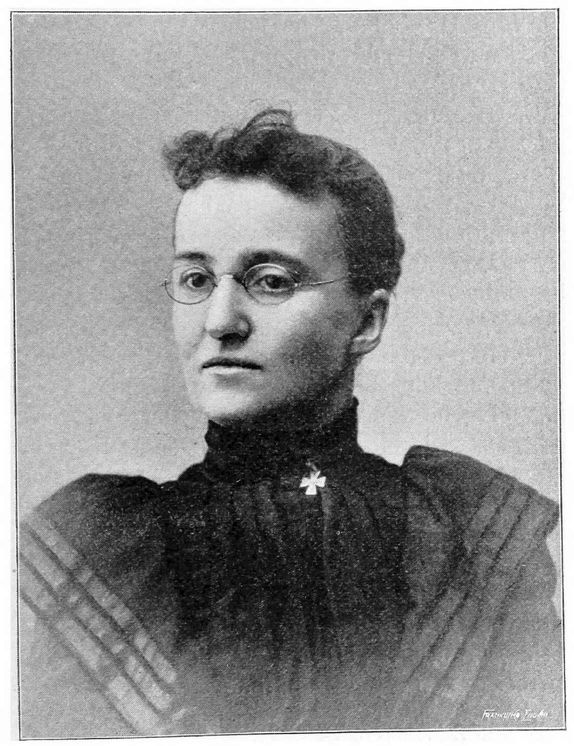
Miss A. L. Bowman, Missionary, Birmingham, Ala.
McAlpine, Rev. W. H., at present teacher of Ministers’ and Deacons’ Institute, under the appointment of the Southern Baptist Mission Board, was born in Buckingham county, Virginia, June, 1847. At the age of three years, he, his mother and a younger brother were brought to this state by a “Negro speculator,” who sold them to a Rev. Robert McAlpine, of Coosa county. At the age of 8 years and on the occasion of the death of this Presbyterian minister, he became the property (?) of Dr. McAlpine, with whom he remained till the close of the war. In this family he was the nurse of the white children for about ten years. As Mrs. Dr. McAlpine was very anxious and cautious as to the quality of the first moulding influences touching the childhood of her children, and as the schools around were hardly up to her ideal, she had her children instructed at home. As the nurse’s position placed him and kept him in constant association with the children, and as he was possessed of a literary turn of mind, he soon began to imbibe a knowledge of letters, advancing into reading, writing, grammar, geography and arithmetic. From 1855 to 1874 he saw nothing of his mother, and for sixteen years of this time did not know where she was. Naturally this incident started a train of serious reflections touching the facts and hopes of human life. About the year 1864 or 1865 he was converted to Christianity and some time after was baptized into the Talladega Church (white) by his friend, Dr. Renfroe. At the close of the war Mr. McAlpine first worked at the carpenters’ trade, which he left for school teaching. In the winter of 1866 he entered the Talladega College, supporting himself by laboring during the morning and evening hours—before the opening and after the close of the school. In 1873 he severed his connection with this institution, having been aroused to undertake the establishment of a similar institution for his own denomination. In 1871 he was ordained to the work of the gospel ministry, and accepted a call to the pastorate of the Mt. Canaan Baptist Church, Talladega, which he resigned in 1875 in order to give his whole time to his school project.