IV. BIOGRAPHICAL SKETCHES. (continued 2)
Reading edition
To no man in Alabama has been committed trusts more varied and more weighty. While connected with the Talladega College he occupied the position of State canvasser under the appointment of Mr. Cravath. He has been pastor at Talladega, Jacksonville, Marion and Anniston, and president of Selma University. His special excellence is not of that mental style which gives birth to fine psychological and metaphysical discernments and distinctiveness: it is that sort of mental something which strikes with broad side and ponderous weight. The breadth of his rear head would seem to indicate that all his faculties are driven forward by a force that starts from a broad base. The writer first met Dr. McAlpine in Mobile, in November, 1874, the year following that in which he brought forward, at the Tuscaloosa session of the Convention, his school idea. My first impression of him was that he was a man of special mission, and I immediately sympathized with him and with the school project, throwing myself fully into line with his plans.
In referring to his childhood life, and while talking with reference to the power of secret prayer, he once remarked to the writer: “Upon one occasion, though without my knowledge, Dr. McAlpine had resolved to punish me for a trivial matter on my part which had caused him some displeasure. I had gone to feed the horses, and in the crib I was on my knees at prayer. The doctor had followed me with his whip. I was not aware of his presence or purpose, and hence as he did not speak I got through with my prayer and fed my horse and returned to the house. I learned afterward that my prayer had subdued him, and that he had expressed himself as being ashamed of his purpose.”
Alluding once to some mistakes he had made, he observed: “We grow wiser as we grow older.” He has been happily married twice. By his last wife he has a large family of beautiful and promising children. The Rivers family, into which he married, are a people of very sterling qualities, and no doubt these happy associations have conduced to his success in all regards.
The act of the University in conferring upon him the honorary title of D. D. is evidence of the high esteem in which he is held by the trustees and faculty of the school. He is now theological instructor in the school and is supported by the Southern Board.
McAlpine, F. Percy, son of J. D. and Jane McAlpine, was born August 1, 1865, in Forkland, Ala. He entered the world amid that good heritage which can come only of the exemplary life of parents. Though his early life was spent on the farm, his youthful days were blessed with some educational facilities, which his discerning, appreciative mind turned to good advantage. After completing primary grades in his home schools, he, against the wish of his mother and protest of brothers, entered the State Normal School at Marion, Ala., with only $15 to begin the course of study prescribed. The next year he entered Selma University, studying during the school session and teaching in summer till 1888, when his mother, his only support since the death of his father, fell asleep. He says of this time of struggle:
“I owe a lasting debt of gratitude to President Purce, who never left me without an encouragement which it was possible for him to bestow.”
In 1890 while in his junior college year, financial straits forced him to give up study and go out to work. Applying for the principalship of the Bessemer City School, he made an almost perfect mark in his examination and obtained the position. While in this capacity, aided by Mr. J. C. Barker, he edited a paper known as “The Marvel Age.” In 1893, he and Mr. Barker operated a bookstore.
The writer knows but few young men who equal Mr. McAlpine in modesty, industry, courage, push and beauty of moral character. An honorable future awaits him, and of friends he shall have many. Talented and studious, he must still advance in scholarship. He became a member of the Missionary Baptist Church in 1885, and lives according to his profession. He expects to complete his university course in 1896.
McEwen, Rev. A. N., pastor of Franklin Street Church, Mobile, lately editor of the Baptist Leader, is a native of the State of Mississippi, where he was born April, 1849. When he was about 18 years of age he went to Nashville, Tenn., in search of better things than those to which slavery had introduced him. Here he entered the Roger Williams University, remaining only a very short while. Here also he found and wedded a wife. Being controlled by industry and economy he soon saved enough from his small wages to purchase a horse and wagon. This was the first of a series of financial successes by means of which he soon rose above poverty and want into comfortable circumstances for himself and family. While attending the services of Mt. Zion Church in Nashville in 1870 he was led to faith in Christ which he professed by receiving baptism.
Shortly after he began religious work, and in 1876 he was ordained to take charge of the pastorate at Tullahoma, Tenn. Five or six years after this he came to Alabama to take charge of the Dexter Avenue Church. Mr. McEwen, since his entrance into Alabama, has been intimately connected with all our state operations, educational and missionary, and no man among us has been more successful as a church financier. He has bestowed special care upon the education of his children, all of whom he has reared for the most part without their mother’s aid, as she died when they were young. The Dexter Avenue Church building was constructed under his leadership.
McCall, Rev. E. A., at present pastor in Columbus, Ga., the son of Rev. H. A. McCall, was born May 15, 1855, in Russell county, Alabama. In 1872 he was baptized into the Hawkinsville Baptist Church by the hands of his father. In September, in the twentieth year of his age, he was set apart to the work of the gospel ministry by Revs. A. Gachet, S. Fantroy, J. Daniel, J. H. Davis and H. A. McCall. It will be seen that he entered the sacred office at a very early age—at an age rather soon in most cases—rather early for the good of the minister as well as for the good of the people and the cause. But though in youth he was possessed of very poor educational advantages, by talent, push, courage, ambition, observation and application to books, he has made surprising advances. He is strictly a self-made man. He speaks with ease and performs well on the organ.
He has had a wide range of operation, having been pastor at different times of eleven different churches, some of them equaling the best pastorates in the country. Among them the church at Union Springs may be mentioned. No man in Alabama is more companionable than he.
McCord, Rev. C., of Selma, was set apart to the work of the gospel ministry by the St. Phillip Street Church while the writer was pastor in 1884. He started the study of books late in life, but by associating with men of advanced ideas and close application to books he is now considerably ahead of the masses of the ministry. He is a sober, judicious man, peaceable and ever ready for work.
Maddox, Rev. J. D., the son of Daniel and Tabitha Maddox, was born in Barbour county, Ala., near Midway, in 1854. His father was sold away from him when he was only three days old, and his mother when he was three years old, and hence he came up without knowing anything either of father or mother.
This friendless condition early impressed him with the desire to obtain the friendship of God, which in his eleventh year, he sought and found. He was baptized into the Rama Church by the Rev. Mr. VanHoose (white) during the same year.
In his seventeenth year, a desire to read books came into his mind. By good fortune, he came into possession of 25 cents which he invested in a “blue back speller.” In order that his book and purpose might not come to the notice of the white people he decided that he would tear out and learn one leaf at the time. Thus he began to spell, aided by a more fortunate fellow slave. The widow of a Baptist minister encouraged him with the statement that if he could read she would give him a hymn book and a Bible. On one Sabbath he learned the Ten Commandments. Doubtless he owes much of his success to his excellent wife, who is no less enterprising than she is devout and faithful. He said to the writer: “My wife makes me study.”
In 1879 at the call of the Friendship Baptist Church of Barbour county, he was set apart to the ministry by Revs. J. Shorter, A. Gachet and E. Alexander. Brother Maddox is a good man, a faithful preacher, and a successful builder—a leading man in the Eufaula Association, and is as gentle as a woman, and simple hearted as a child.
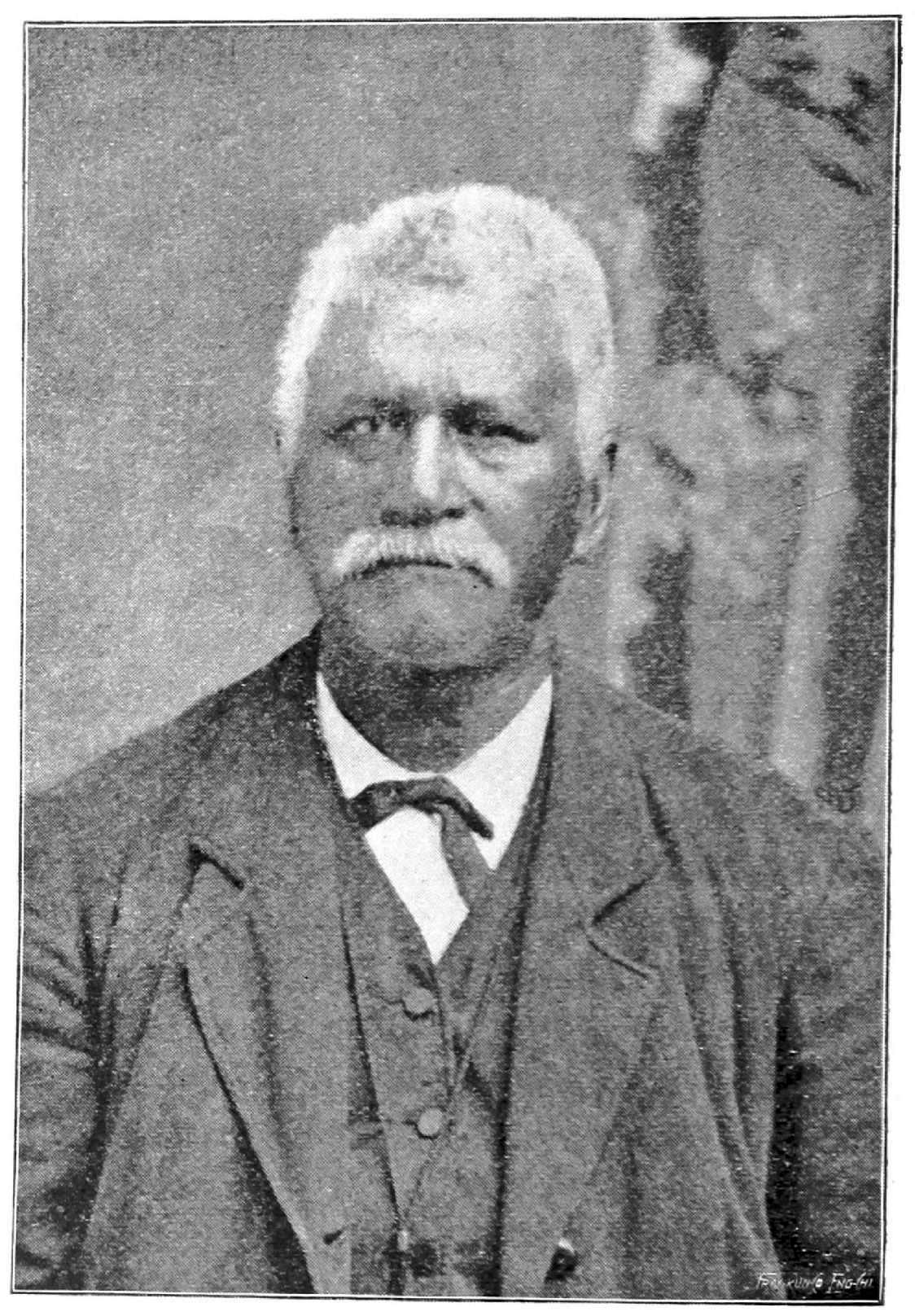
Rev. M. Tyler, D. D., Lowndesboro, Ala.
Maderson, Rev. William, of Greensboro, was born in Virginia in 1849, and came to Alabama in 1866. In the fall of 1872 he was baptized into the Second Baptist Church at Marion, Ala., and in the following year began to enter upon the work of the ministry, speaking in public as he had opportunity. While the Convention was in session in Marion in 1880, the hands of ordination were laid upon his head by order of the Marion Church, and by the same presbytery that ordained Dr. Pettiford. He spent some time in study in the Selma University, under the presidency of the late Rev. Harry Woodsmall. Mr. Maderson is a man of fine natural gifts which, considering his early, meagre advantages, have been well developed. He is remarkably capacitated for imbibing what is pure and elevating in good men and good books. He is dearly beloved no less for his stainless character than for his refinement and wisdom. After serving various other important pastorates, he was called to the pulpit of the Salem Church at Greensboro, where he now serves with success, greatly increasing the membership and purchasing a neat parsonage. For the past seven or eight years he has been the moderator of the Uniontown Association—the largest Association in the State. Should he continue as he has begun, coming years must increase his power with God and man.
Merrell, Rev. Mason C., of Fort Deposit, son of M. C. and Harriet Merrell, was born in Dallas county, Ala., June 26, 1849. As his parents were poor, he was apprenticed to the Rev. H. Talbird, D. D., of said county, who sent him to the schools of the neighborhood. By such means he was early placed in conditions where he was able to lay the foundation of a liberal English education. Much of Mr. Merrell’s time for many years has been spent in teaching in the State schools. The money thus earned has been a supplement to the meagre support given him by the small churches of which he is the efficient pastor. He was baptized into the fellowship of the Carlowville Church October, 1867, by the hands of his benefactor. In 1879 he was set apart to the work of the gospel ministry in the city of Montgomery, Revs. J. A. Foster, W. J. Stevens, Wm. Jinkins and R. Aarons officiating as presbytery. Brother Merrell is a sociable, genial companion, a careful speaker, an earnest Christian, and a firm believer in missions and education. On all the moral questions of the times he is as straight as a shingle. He, by his various pastorates, is associated with the Alabama District and the Union Associations, and in both bodies he is held in high esteem by all the thoughtful and pious persons.
Indeed, he is respected by all who know him, white and black. Because of his quietness and sunshine, as well as for his musical talent and skill, he is in special demand at our annual and extra meetings.
Murrell, Rev. Prince.—Rev. Prince Murrell was born in Savannah, Ga., January 1, 1817. His mother, who descended of a Congo prince, was born in Providence, R. I. His father was the son of an Englishman, of the name of Murrell. Some of his youthful years were spent with his parents in South Carolina. In the year 1838, his mother with seven children, he being the youngest, moved to Tuscaloosa, Ala. At this time no member of the family knew anything of the Christian life. In 1839 his mother was baptized, which incident excited such serious impressions in her son as resulted in his baptism in August, 1842. About this time he began to speak and exhort as he had opportunity. At the close of the war he had been a member of the Tuscaloosa Church (white) about ten years, and was the only colored Baptist preacher in Tuscaloosa. This brother has had a rather remarkable career. In the year 1855 he bought his freedom, and in 1856 started to Liberia, Africa, going as far as Savannah, Ga. His aspiration for liberty, his unaided toiling for the mastery of letters and books, his tact and perseverance in organizing the colored Baptists of his section into churches and associations, and his success in accumulating property with many other things, mark him as no ordinary man. His marriage to Miss Mary Drisdell in the year 1842, was no doubt largely conducive to his energy and success, for she—even up into old age—was a woman of strength and industry. The first colored school ever taught in Tuscaloosa was taught by him, and taught at a time when to teach a colored school was to put one’s life at the muzzle of the shot gun. Touching this phase of work, he related to the writer the following stories: “When we were just set at liberty I went to a white Baptist who had in times of slavery shown himself friendly toward black people, and said, ‘Mr. S——, we need a school teacher, can’t we secure you?’ He replied, ‘Do you think I would disgrace myself by teaching a negro school? Besides this, it would be only throwing into the waste my time, my talent and my strength. I might as well drive into a room a drove of sheep or a herd of swine, and put books before them as to put books before kinky-headed nigger children.’
“On one occasion, two white men who had come into town to bring a prisoner, walked into my school room with their ropes and chains in hand, and teacher and school, feeling sure that the ropes and chains were for their necks, were so dismayed as to excite the pity of the dreaded visitors, and they sought to remove our fears and to encourage us to continue on in our good way.”
Speaking of the organization of colored churches in the South, he remarked to the writer: “I was in Savannah when the white people were discussing the propriety of organizing colored churches.” He opened the first Sunday School for colored people in the city of Tuscaloosa the first Sunday in December, 1866. He claimed to owe most of his success in the study of divine truth to the Rev. Chas. Manly. On July 1 he organized the African Baptist Church in Tuscaloosa with 25 members. As he did not begin reading till he was 22 years old he was not faultless in his mastery of the English language, but was a good speaker, self-possessed and ready in words. Mr. Murrell was one of the leading fathers of the Alabama work. His children were a pride to him in his old age.
In the last years of his life he spoke tenderly of his old mistress who encouraged him to learn to read, and of his maiden mistress, who in many ways saved him from oppression and aided him in securing his liberty.
Since the above sketch was commenced Mr. Murrell and his good wife have exchanged the cross for the crown.
Nichols, Rev. James, of Greenville, moderator and missionary of the Union Association, was born in Virginia May 10, 1842, and was brought to Alabama September, 1856, locating at Selma, where he joined the church and was baptized by the Rev. Mr. McCraw, who was then pastor both of the colored and of the white churches of that city. At this time, as the dates will show, he was a young man. It was in this same church and city that he began the work of the ministry during the days of slavery.
His first marriage was to Miss Emma Allison, of Dallas county. The fruit of this marriage was two sons and one daughter, neither of whom is now living. His present wife has two living children. He has an humble home of his own.
Mr. Nichols is a man of energy, industry and decision of character; he has opinions and has the courage to express them. No man has any trouble in times of controversy to locate him, and yet in his rulings as presiding officer of the above named association, the writer has seen evidences of prudence and commendable flexibility.
His early life was robbed of literary environments, and hence he is not an extensive reader of books; but his knowledge of things is superior to many whose advantages have been far better than his have been. He says that he knew absolutely nothing of letters till since the close of the war, when he had a little opportunity to attend night school at Uniontown.
He was ordained in 1873 at Georgiana, Butler county, by Revs. Dan Shepard, Nelson Briggs, Jesse Holens and others, and he has done a good work in his section.
Northcross, Rev. W. E., of Tuscumbia, Colbert county, was born in Colbert county, Ala., in 1840, and ordained to the gospel ministry in 1867 by Rev. Mr. Slater (white) and Rev. Henry Bynum.
Mr. Northcross is strictly a pioneer. He, Rev. Stephen Coleman and Rev. Henry Bynum, aided by Dr. Joseph Shackleford (white) laid down the foundation stones in Morgan, Franklin, Colbert, Lauderdale and Lawrence counties.
He is a peculiar man. He is a man of very positive nature—with him it is yea and amen.
To those who do not know him as well as to those who vacillate and pretend, his sternness is repelling. But behind and below external appearances there is a heart that is as tender as it is brave, and as kind as it is firm. Except a little time spent in the Roger Williams University, he has had no school advantages, but he reads and writes fairly well.
The Tuscumbia, Barton and Sheffield churches were built up under his labors. In the formation of the Muscle Shoals Association at Tuscumbia in 1869, he was one of the leading spirits. He relates the following incidents:
“Before the close of the war I was captured by the Federal troops and carried to Decatur, where I joined their army. As I had a crippled foot I was allowed to remain with the commissary department. While we were camped at Athens, General Forest came upon us and defeated, captured and killed until we were almost literally wiped out of existence. I had been kind to some little white children by which I had won their love and, of course, the love of their parents. Therefore, in the time of danger, I rushed to this house, and the good people hid me and changed my clothes. Hence when I was found, I was taken for one of the gentleman’s slaves. When I was permitted by the man to try to return to Tuscumbia and had gone some distance, I was caught by deserters from the Southern army, who voted to shoot me. They bound me and kept me over night, intending to do away with me the next day. It was in a lonely desert on the Tennessee river. I could not sleep, and so all night I prayed to God, and all night the wives of the men prayed for “the poor nigger”—prayed to their cruel husbands. Their cries and tears prevailed, and I was robbed and let go after I had vowed not to reveal their whereabouts. I left loving God and believing in his faithfulness to his people as I had never done before.”
For years Mr. Northcross has been the trusted treasurer of the Muscle Shoals Association. He is the pastor of the largest church, and has the best edifice, in northern Alabama.
Oden, Rev. M. C. B., of Sylacauga, was born in Charleston, S. C., December 24, 1839. He was baptized by Rev. J. J. D. Renfroe, D. D., in September, 1865, and in 1873 he was set apart to the work of the gospel ministry, Rev. W. Wilks, and others, officiating as presbytery. He, in speaking of the rise of the work in this section, says: “I came from South Carolina in 1858, a Methodist. There were nineteen or twenty other slaves on our place beside myself. I, and one other, professed to be Christians. The master of the place permitted us to hold prayer services, and allowed the slaves of his kin people to attend. The Lord blessed these meetings and at the close of the war this humble beginning was ready to unfold into the Harpersville Church. At the close of the war, I began to teach night and Sunday Schools, and thus introduced the study of letters, though in the Sunday School as well as in the night school, we had nothing but the ‘blue back speller.’” Brother Oden is an honorable, outspoken, industrious, prosperous man, whose hospitality is known far and wide. His home has often been an asylum of rest to the writer, as well as to other missionaries of Alabama of all denominations.
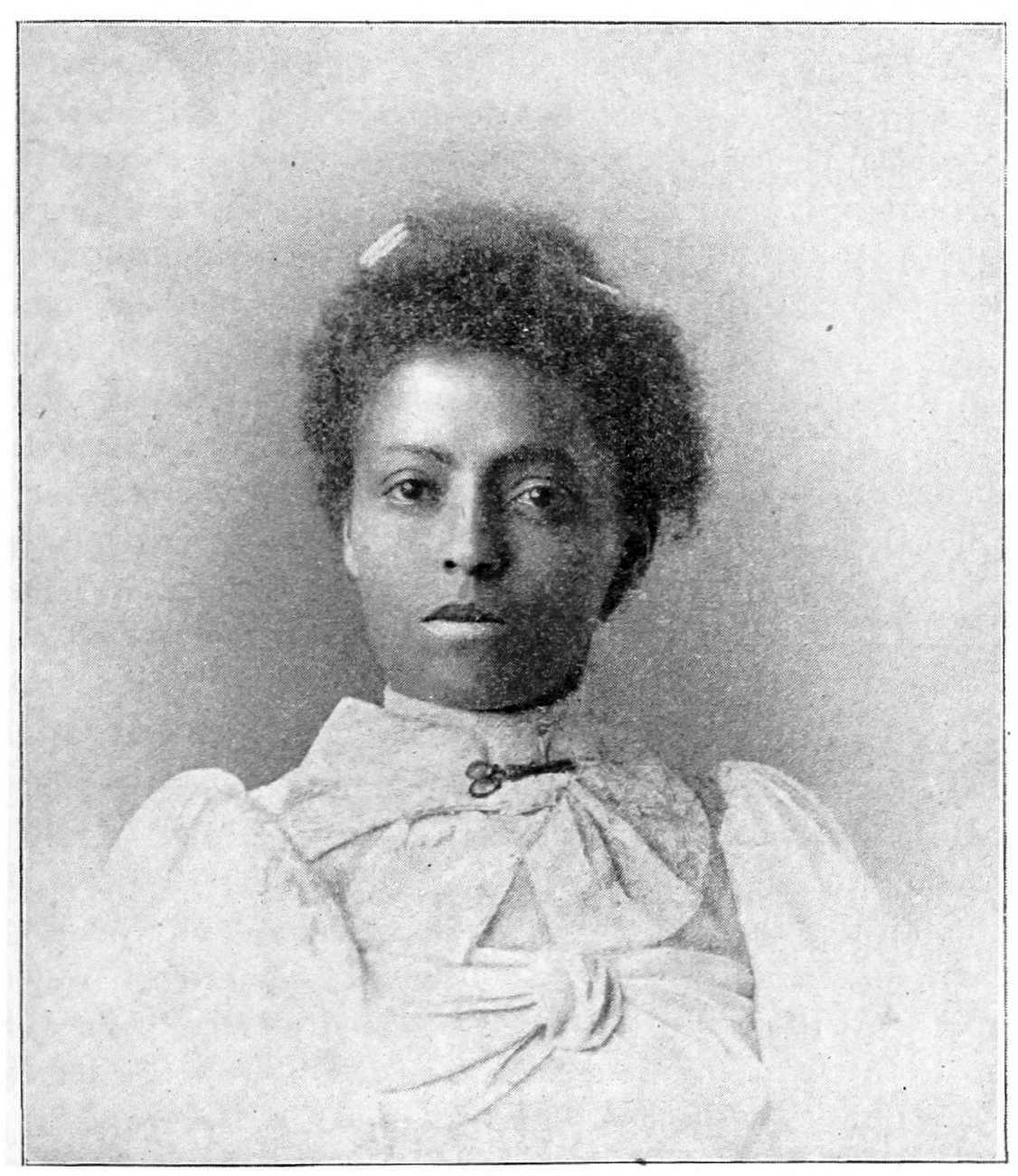
Mrs. Rebecca Pitts, Member Board of Trustees Woman’s State Convention, Uniontown, Ala.
O’Bryant, Rev. L. F., of Eufaula, the son of Frederick and Rose O’Bryant, was born on the Dent plantation in Barbour county, Ala., in the year 1860. In 1879 he was converted to the faith of the gospel under the preaching of Rev. Jerry Shorter, and was baptized into the Pleasant Grove Baptist Church. At the call of the above named church, he was set apart to the work of the gospel ministry in 1885 by Revs. J. Q. A. Wilhite, A. Gachet, J. D. Maddox, E. May and J. A. Alston, of Arkansas. Notwithstanding his educational advantages have been very meagre, he has, by constant study and observation, advanced to a fair knowledge of books. He is a loving husband, a successful pastor, a strong preacher, a genial associate, and carries sunshine everywhere. The writer was associated with him for some weeks in the institute work at Eufaula, and was truly delighted with his urbanity and innocent wit. He is a young man of hopeful prospects—if his present wise course should continue to the end. His father before him is a Baptist minister, whose life is held in high esteem, and hence the subject of this sketch comes into his public career having his own excellent personal graces savored by the good name of his revered ancestor.
Owens, Rev. A. J., of Moulton, is an ex-student of Selma University; he is an agreeable companion, a kind father, an orderly thinker and a forcible preacher. The writer has greatly enjoyed the hospitalities of his home and the abundance of his good humor.
Owens, Rev. Albert Franklyn, editor of the Baptist Leader and pastor at Mobile, was born in Wilcox county, Ala., January 1, 1854. Early in life he left Alabama for Louisiana, in which state he was led to exercise faith in the Son of God and was baptized into Little Mt. Zion Church by the Rev. G. Stemley, of Avoyelles Parish. In April, 1873, he was licensed to enter upon the work of the gospel ministry. At the call of the Third Baptist Church, Mobile, Ala., he was ordained to the functions of the ministerial office by the Common Street Baptist Church, New Orleans, La., May 28, 1877, by a council of which Rev. Marsena Stone, D. D., of Ohio, was chairman, and Rev. A. M. Newman was secretary. His longest and hitherto most prosperous pastorate has been with the church who called for his ordination, and whom he led to the purchase of their neat brick edifice on St. Anthony street.
Beginning with them in the spring of 1887, he left them for Uniontown, September, 1890, in excellent quarters and free from debt. This he did at such patient self-sacrifice as may be found in only a very few men of his age.
In 1873 he entered Leland University, New Orleans, where he remained four years pursuing the classical and theological courses under Drs. Gregory and Stone.
While in Louisiana he was engaged in teaching school and was intimately associated with the general Baptist work, being at one time editor of their state organ, the Baptist Messenger. In 1884-85 he was editor of the Baptist Pioneer, located at Selma, Ala., and has served as general superintendent of missions for the State of Alabama. For many years he has been on the Board of Trustees of Selma University, and in recognition of his solid worth and general information he is now the bearer of our denominational standard.
Mr. Owens is a typical, Christian gentleman. No other man among us has a library so select, so varied and so valuable as he has, nor has any man in Alabama a clearer evidence of literary talent and literary relish. He is a many-sided man, and the beauty of his solid personal qualities is greatly enhanced by his indigenous vivacity, unstinted hospitality, and perennial benevolence. In the hovels of the poor and in the times of the sources of disease, no man among us is more welcome than he, neither is there one of his brethren whose duty renders more heedless of danger or blind to personal privations and material losses. Whether he builds houses of worship, preaches, lectures, teaches, writes—whatever may be the engagement of the hour, that engagement focuses the whole man. The following incidents will show something of the style of his mind: On one occasion when severely tried in administering discipline, and when he had allowed his feelings of indignation to run too high, he was so distressed that for many nights sleep almost entirely forsook him. The writer overheard him on this occasion, saying, “Against thee, thee only, have I sinned, and done this evil in thy sight.”
Upon another occasion in the midst of a session of the Convention, and as one of the policemen of the town walked in and was seated, he arose and remarked: “Brother president, I see in our assembly a policeman of the city in which we are convened. I think this a fit time to give notice to any who may feel inclined to be unruly that they must observe good order or I’ll have them arrested.” This came in just at a condition of the meeting when a bit of humor was just the thing most needed.
The St. Anthony Street Church, Mobile, is a tangible memorial of his energy, self-sacrifice and patient industry. Beside the pastorate of the St. Anthony Street Church (the Third Baptist), he has served in the pastorate of the Dexter Avenue, Montgomery, and in the pastorate of the church at Uniontown.
His speeches are characterized by originality, clearness, force and dignity. He is still a growing man—growing in worth of manhood and in the confidence and love of the denomination; and should his health and life continue, the historian who will write of a brighter day than this—a day not far in the future—will point with pride to this man of rare gifts, giving more space than is here accorded him. With special pleasure the writer records the name of Albert F. Owens, D. D., high upon the roll of his personal friends.
And this short notice of a worthy man can hardly close at a point of greater beauty than in an humble tribute to his other self, Mrs. Mary Mims Owens (once Mrs. Taylor), whom he wedded in 1882, and who is held in high esteem as a leader in church and educational circles.
Pettiford, Rev. W. R., D. D., son of William and Matilda Pettiford, was born in Granville county, N. C., January 20, 1847. He was, when a boy, of an industrious turn of mind, working faithfully at whatever his hands found to do. At one time he was with the tanner, and at another time he was running his father’s farm.
At the age of 21 years he united with the Baptist Church of Rocksboro, Person county, N. C., and was immersed by the Rev. Ezekiel Horton, of Salisbury. While he was serving this church as clerk, he told his mother, as a secret which he greatly desired she would not reveal, that he felt called to the gospel ministry. As Brother Horton often put up at their home he soon got possession of the secret. Dr. Pettiford now says: “When I was called into an examining council and learned that my secret was out, I was very much frightened; but the advice given upon this day has ever been helpful to me.” The writer met the subject of this sketch for the first time at the session of the State Convention held in Talladega in November, 1876. He and the late Senator A. H. Curtis were messengers from the church at Marion. At this time the only traits that were especially noticeable were the frankness of his countenance and the geniality of his manners. At the commencement of Selma University in the winter of 1877-78, he joined Brother Woodsmall, becoming a member of the pioneer faculty of the school. It was here that he was seen as the studious, patient, industrious man—loved no less by tender youth than he was trusted by riper years. He was called to ordination by the Marion Church, Marion, Ala., and dedicating hands were laid upon his head in Marion, Ala., in the midst of the conventional session held there in November, 1880. After this he severed his connection with the school as teacher and as financial agent, to enter the pastorate in Union Springs. His open, earnest face, tact, and urbanity of speech, made him one of the most successful financial agents the University has ever sent upon the field. He relates the following incident in connection with his field work for the school: “I was about thirty miles southeast of Greenville, Ala. A colored man by the name of Turner had just been mobbed in Clark county. The colored people along the road were exceedingly frightened at the threatening attitude of the whites, and hence refused to entertain any stranger. I knew not where I was and it was now dark. My horse was broken down. Family after family turned me off. At last one man agreed to entertain my tired horse. Thankful for this little drop of kindness, I stopped and fed my animal. Then I started off—I knew not whither. After awhile I saw through the boughs of the pines a dim light, which seemed far away. Turning towards this light I wended my way through sage field and bush, until I stood beside an old log hut, a rickety relic of an old time Negro quarter. With ease this tiny spark peeped through the great opening in the dirty cabin full into my weary face. Herein, with husband and wife and babies, and a lot of dirt, I was allowed to rest my tired limbs and heavy heart till morning.
“Upon one occasion while Bro. D. T. Gulley and I were on mission work together, we were delayed in Marengo county. Waters were up, Brother Gulley was sick, and the people had no money to give for educational purposes. I went to begging milk cows and succeeded in getting the people to donate six.”
Mr. Pettiford married his present wife, Miss Della Boyd, of Selma, Ala., November 22, 1880. She is an excellent woman and comes of a fine family. As might have been expected the marriage has been a happy one for both parties.
Dr. Pettiford is a clear thinker, a concise speaker, a firm friend, a lover of his race, and a fine presiding officer. Every feature in his bearing is indicative of the true gentleman and earnest Christian. He is a firm friend of Selma University, and by this school he has been honored with the degree of D. D. He is at this time (1892) president of the “Alabama Penny Savings Bank” and of the Baptist State Convention of Alabama. He is further noticed in connection with the chapter on “State Convention” and “Selma University” as well as in other chapters.
Closing this sketch, it seems fitting that I should remark that though he excels in many virtues, he is especially peculiar in these:
1. He is abundant in plans and measures, so that the variety of his operations almost wholly exclude the monotony so often felt in church work.
2. He is in a peculiar degree a patient man. In all conditions he seems to possess his soul in patience.
Since the above was written, he has been elected financial secretary of the State work.
He is now organizing the Alabama Publishing Company. He is full of enterprise.
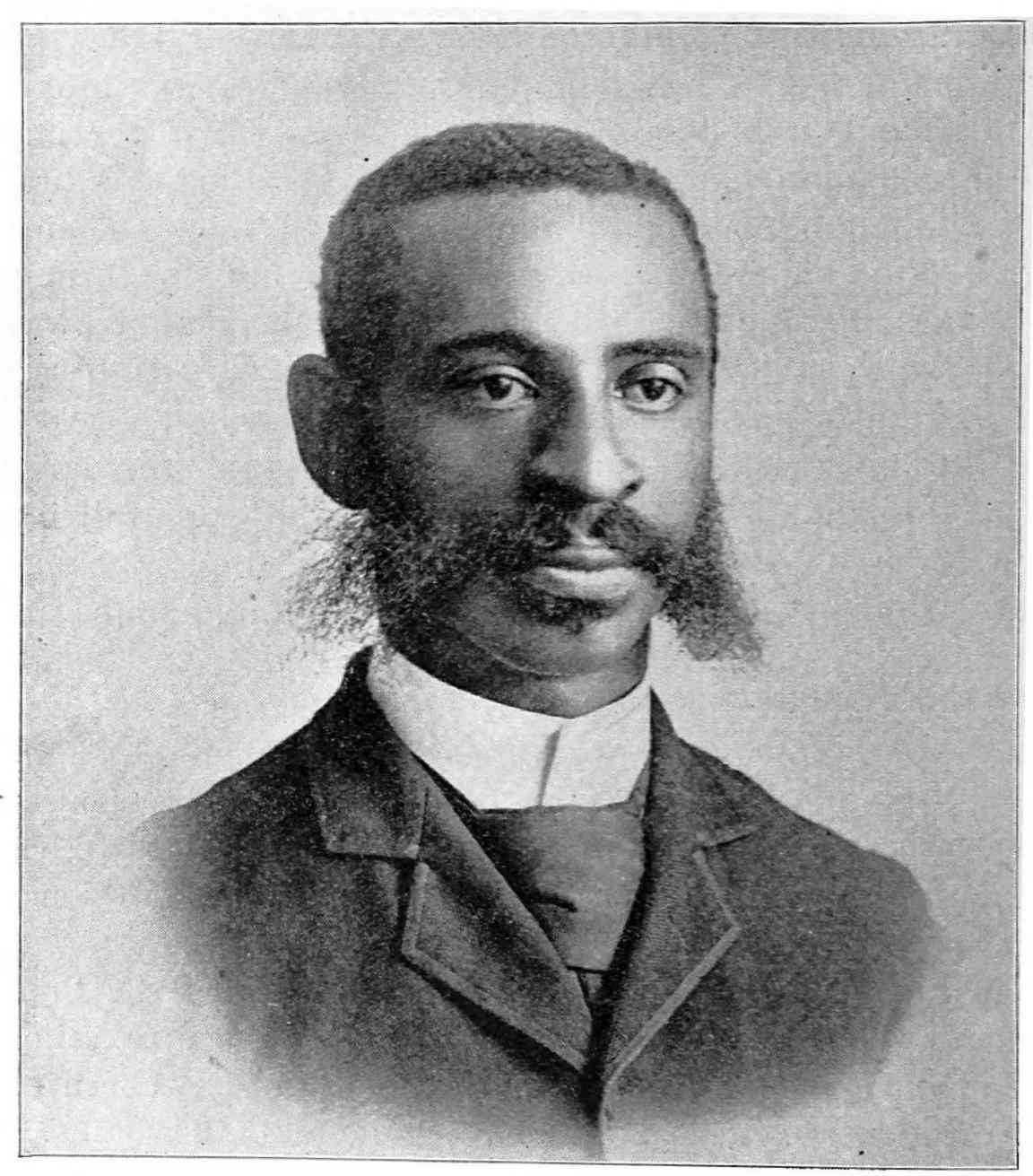
Rev. W. C. Bradford, Pastor First Baptist Church, Tuscaloosa, Ala.
Phillips, Rev. D., of Tuskegee, was a “Father in Israel.” Those who are old enough to remember him as a slave, say that he sat in council with the white ministers and was permitted to speak in their associational gatherings. Nothing seemed to disturb his peace; no amount of heated discussion ever caused him to break from his strong hiding place of pious humility. He was a large man with strong will, but every “jot and tittle” of his ponderous being was under submission to his consecrated will, which ruled all like the helmsman steers the great ship. He was about the age of Mr. John Dosier, eighty years. He refused to accept freedom till all were free.
Peels, Rev. J. A., pastor of the First Colored Baptist Church in North Birmingham, is a rising young man in the Mount Pilgrim Association. His church, though a new enterprise, is a success, and all plans for gospel aggression find in him a ready and substantial friend. His brethren love him because he is peaceable and benevolent in his dealings with them.
Pollard, Rev. Robert T., son of Rev. R. T., Sr., and Mrs. Mary F. Pollard, was born in Gainesville, Ala., October 4, 1860. A few years after the close of the late civil war, Rev. R. T. Pollard, Sr., moved with his family to Enterprise, Miss. There the subject of this sketch received his first impressions—impressions which were to serve as the foundation of his future character. At the age of 12 his mother left him for the better country. The boy, reflecting over his sad loss in the death of his mother, turned unto the Lord, and was baptized into the fellowship of the Mt. Pleasant Church, in which he immediately became clerk and Sunday School teacher. Thus, starting right, we are not surprised at the righteousness of the course he now pursues.
By studying at night under his father’s instruction, he, at the age of 12, could read and write. At 16 he was known as “the boy preacher.” At the age of 20 he entered a school taught by Prof. Paul D. Jones in Meridian, Miss., in which school he studied arithmetic, algebra, English grammar and Latin. He remained here two years. In 1882 he entered Selma University, under Prof. Woodsmall. Of this good man he says: “His consecrated life did much toward fixing my character in the spirit and doctrines of Christ.” From this institution he graduated with the class of 1884 as valedictorian. In the same school and in the same year he entered upon the college course and completed the freshman and sophomore years. During this time he was assistant teacher in the University. By all, and throughout all, he has been and is now accepted as a student, a thinker, a rigid moralist and faithful Christian. In March, 1885, he was ordained to the gospel ministry in Selma, Revs. E. M. Brawley, D. D., W. H. McAlpine, H. N. Bouey, A. N. McEwen, C. L. Price, and C. R. Rodgers, officiating as presbytery. After this he entered upon and served acceptably different important pastorates in Perry county. With credit to himself and with profit to the denomination, he has, as teacher, as moderator, as recording clerk of the State Convention, and as district Sunday School missionary, served the Baptists of Alabama. At this time he is the successful pastor of the Dexter Avenue Church, Montgomery. Thus this quiet, hard working young man has risen up till there are but few that go before him. Mr. Pollard is a philosopher, clothed with the spirit of a child. In him a full heart balances a well stored head.
Pollard, Rev. I. M., of Loachapoka, is one of the few men of whom we sometimes feel that they are Nature’s favored children. So evenly balanced are all his tempers and passions, hopes and fears, that we are almost compelled to think that so much self-government must have come largely as the gift of nature. The writer has reasons to know him as an honest man—as a man who can handle the money of his neighbor without fault to himself or loss to his friend. Mr. Pollard is held in high esteem by all who know him—white and black. He was born about the year 1840. He possesses a fine personal appearance, a gentlemanly bearing, and is a good preacher of the plain old gospel.
Posey, Prof. Thomas H., of Bessemer, the son of Wesley and Patience Posey, was born September 15, 1854, at Bessemer, Ala. He was baptized into the Canaan Baptist Church about the year 1872 by Rev. William Ware. Brother Posey deserves honorable mention for his faithful services as an educator. He graduated from the normal course in Selma University in the spring of 1884, and has proven himself to be not only a power in the affairs of secular education, but a very efficient, faithful worker in the church and Bible school.
Prentice, Rev. D. L., of Selma, Ala., son of James and Caroline Prentice, was born in Shelby county, Ala., December 25, 1852. The home of his youthful days, like that of the writer, must have been in a wild country infested by wolves; for he, in speaking of how he had to go after wood and water into the thick swamps before the break of day, says: “On one morning as I found myself surrounded by wolves, I cried to God for help and was delivered. In my prayer for deliverance I made a vow of consecration, which was the beginning of a new life.” In 1875 he was baptized by Rev. Berry Ware. About the year 1865-66 he began studying Webster’s speller, and sought information, he says, of every person that he thought had any information to give. He learned to read and write and began figuring under the instruction of a Mr. J. W. Strong, a man, so it is said, who used to be mayor of Selma, Ala. The writer first met the subject of this sketch while he was student in the Talladega College, and since his graduation from the Selma University, his course and success as pastor, teacher, missionary and lecturer, has been watched with pleasing interest. He was ordained to the ministry May, 1882, by Revs. Joe Smith and Henry Scott. He is a genuine friend of religion and education and being young and strong he has a large opening for future usefulness and fame.
Prince, Rev. J. T., of Gallion, Ala., son of John and Mary A. Prince, was born March, 1853, in Marengo county, Ala. He was baptized into the fellowship of the Bethlehem Church by Rev. D. R. Willis the third Sunday in April, 1871. In 1884 in the St. Philip’s Church, Selma, he was set apart to the work of the gospel ministry by Revs. E. M. Brawley, H. N. Bouey, C. R. Rodgers, L. P. Foster and the writer. He attended Selma University under the different presidents—H. Woodsmall, W. H. McAlpine, and E. M. Brawley. He began his education by studying under a white man, whom he paid $1.00 a week. Attended a public school after he was 23 years of age. He taught in the State school. Is now district missionary. He is an industrious man and owns good property.
Pullum, Rev. H. P., of Anniston, son of Lawrence and Caroline Pullum, was born in Pickensville, Ala., March 23, 1862; baptized at Carrolton August, 1882, and entered immediately upon the work of the ministry, but was not ordained until March, 1889. At the request of the First Colored Baptist Church at Bessemer, which he had organized and built up, Mr. Pullum received the hands of ordination from Revs. P. Murrell, W. A. Shirley, S. Page, A. J. Austin, D. M. Sewell, and J. C. Crawford. He has a large following wherever he goes.
Purce, Rev. C. L., ex-president of Selma University, is noticed in this work only so far as other authors have not been able to see him in his peculiar relations to the work in Alabama.
It was in 1886, I think, in the most trying period of our history, that Dr. Purce was unexpectedly called (upon the resignation of Dr. E. M. Brawley) to assume the presidential office in the Selma University. The school was burdened with $7,000 of debt, its credit was about gone, its debtors were impatient, its supporters divided, and denominational strife was at white heat. The former president was not only a peculiarly brilliant and cultured man, but had enjoyed special advantages looking toward fitness for the presidential chair. Many feared for Mr. Purce.
However, it was thought by some that caution and economy were the special characteristics called for by existing conditions. We needed a man who could shun the strife of factions, keep cool under severe pressure, and cause the school’s expenses to drop below its income. Some who had watched Mr. Purce, were willing to trust him with the difficult duties of this trying hour, and the writer records with much pleasure, that he kept clear of the quarrels, and meanwhile did much to remove the debt by putting the school on plain and well regulated fare.
Dr. Purce has done the Baptists of Alabama very praiseworthy service, not only as an educator, but as an example in the matter of school management; and those who follow him will profit by heeding his caution and economy. And, to his honor it may be said, we have had no president who has been more generally loved by the school.
Pyles, Rev. Carter, of Oxford, Ala., born in Talladega county, Alabama, December 15, 1845, of Christian parents. He was baptized in 1865 by Rev. Mr. Jenkins, a white minister, who devoted much of his time to evangelical work among the colored people. In 1876 he was officially set apart to the work of the gospel ministry by the Rev. Mr. Jenkins, William Taylor and B. Snow. Mr. Pyles is among the leading men of the Snow Creek Association. His pastorates at Jacksonville, Choccolocco and other points prove him to be a leader of ability. He is now undertaking a new work at Oxanna, Ala.
Rivers, Rev. E. C., of Talladega, Ala., was born January 5, 1847. He is the eldest son of Mr. Edward and Mrs. H. J. Rivers, two very worthy old citizens of Talladega. In his twenty-fourth year he was married to Miss Jane Moore, of Talladega, by whom he has a large family of children.
He has a fair English education, having attended the Talladega College for parts of five sessions. In 1867 he united with the Mt. Canaan Baptist Church, Talladega, and was baptized by the late Rev. Phil. Davis.
He was called to ordination by the Salem Baptist Church in 1884, Revs. J. P. Barton and Moses Colly officiating in the rites. He is an industrious, prudent man, and has accumulated property worth $3,000 or $4,000. At this time he is the moderator of the Rushing Springs Association, over which he has presided with dignity for several years. He is a model citizen and substantial man, sociable and aspiring.
Rivers, Rev. S. A., of Talladega, the son of Mr. Edward and Mrs. H. J. Rivers, was born in Talladega, November 10, 1854. In a series of meetings, held by the writer in Mt. Canaan Church, he was led to exercise faith in the religion of Jesus Christ in 1876. In the same year he was united with the church by baptism.
He immediately began laboring as a leader in Sunday School work, in which he at once proved himself to be a very capable person. He was soon appointed Sunday School Missionary for the Rushing Springs Association, in which position he was remarkably successful. In 1877 he married Miss Elizabeth Walker, by whom he has three promising daughters. He is a graduate from the theological department of the Talladega College. He is an industrious business man, a Christian gentleman, a clear thinker, a ready speaker, a social genius. No man among us of his age has brighter prospects than he, none more admired and loved. The manner in which he has succeeded, under trying circumstances in the Mt. Canaan Church, is simply amazing. Toward God he is faithful, toward man he is kind, gentle and full of service. He was ordained in 1889 to take charge of the Mt. Canaan Church.
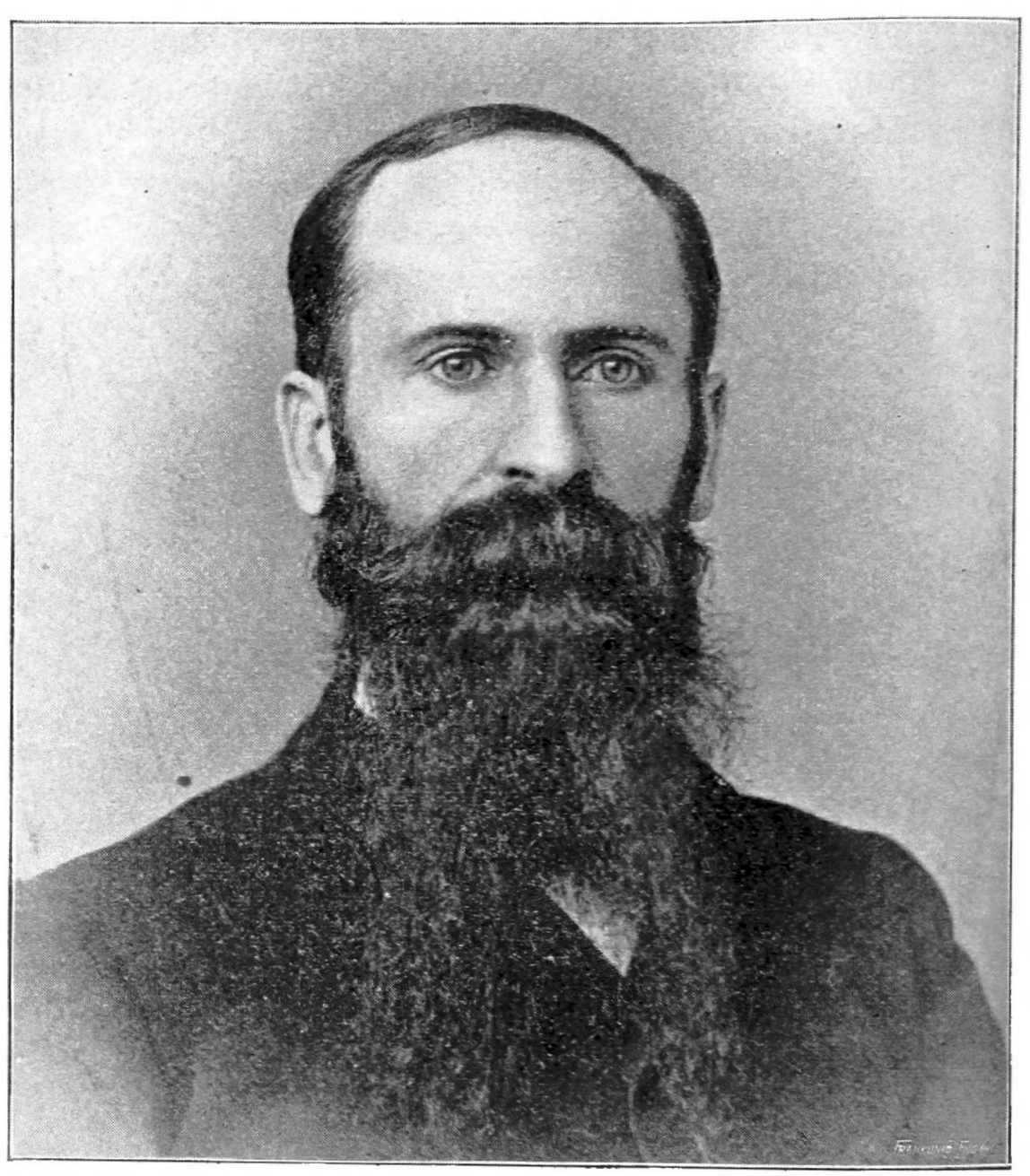
Rev. H. Woodsmall, of Franklin, Ind., First President Selma University.
Rivers, Rev. Alexander A., of Midway, Ala., the son of John and Violet Rivers, was born near Glennville, Ala., in the year 1851.
In his twentieth year he was baptized into the Spring Hill Zion Church by the Rev. A. Gachet, under whose preaching he had been led into repentance toward God and faith in our Lord Jesus Christ.
It was not long before he felt that he was called of God to the work of the ministry. At the call of the Enon Church he was set apart to the sacred office by the Revs. A. Gachet, P. Johnson and F. Randall. Brother Rivers is one of the strong preachers and successful pastors of the Eufaula Association. He has had very limited educational advantages, but he is a constant reader of books and a close observer, and hence he has made considerable educational attainments. He is quiet, unassuming, even and hospitable. The writer enjoyed a very pleasant stay with Brother and Sister Rivers at their home in Midway. He once held a very fine pastorate in Texas, which he had to give up because of the poor health of Mrs. Rivers and return to his old home in Alabama.
Roach, Rev. Perkins, of Stevenson, father of Mrs. M. A. Boothe and of Rev. Thomas Jefferson Roach, was born in Tennessee. He, with Rev. Thomas Roach (who was the first ordained colored minister in Jackson county), and Rev. Robert Caver, organized the work in northeast Alabama. He was noted for his magnanimity and joyfulness of heart. It is said that his life was as one continuous song of gladness. When a child he was a house boy, which position brought him into continual contact with persons who knew books. He so far utilized this advantage as to learn to read, but his knowledge of writing was delayed till since the close of the war his daughter (now Mrs. Boothe) had sufficiently advanced in her studies to instruct him. This story is told of him: During the war his mistress, the widow of Rev. Charles Roach, Sr., fearing the Federal soldiers, left home and fled across the Tennessee river into Sand Mountain. The slave remained at home to care for things about the place. With the view of preventing want to the widow and those who were with her, he, regardless of the dangers of his undertaking, and while the shades of night hid his operations, would bear across the river and up the mountain such things as he thought they might need.
He has been dead some eighteen years. His widow, Mrs. Charlotte Roach, has done nobly in rearing and educating the children.
Roach, Rev. Lewis, of Fackler, deserves mention as a hard working, poorly paid gospel preacher. Many years he led the Mud Creek Association as moderator. He, Rev. James Larkin, Rev. Lewis Henshaw, and others, are trying to build an academy at Hollywood, Ala. They deserve success.
Roach, Rev. T. J., of Hollywood, is an industrious and honorable man. He has served the Mud Creek Association as missionary, has been pastor at Bridgeport, and now preaches at Paint Rock.
Robinson, Rev. Isham, of Eureka, Talladega county, was born in Greenville, S. C., October 10, 1814. While he was the property (?) of Mr. John Truss (in 1833) he took to wife Miss Aggie Truss, by whom there has been born unto him a large family of sons and daughters, who are now grown and are honorable members of society. Brother Robinson was baptized by a Rev. Mr. Joseph Byers in 1840. He said to the writer: “I was licensed in 1850, but could not preach except when I could secure the presence of two slaveholders. I was licensed by the Mount Joy Church, the first church organized in our section of the State. I was ordained in 1865, by a council over which Rev. A. J. Waldrop presided. I was so hindered in my ministry in slavery time that Brother Henry Wood and I covenanted together to take our case to God and beg for liberty. We agreed that we would go at sunrise at least once each week and pray to God for freedom. It was eighteen years before the victory came, and often appearances caused our faith to waver.” Mr. Robinson is now quite old, but is still in fair health. His sons are leaders in the Baptist church and helpers in every good cause.
Rodgers, Rev. C. R., missionary for the western district of Alabama under the American Baptist Publication Society, was born at Hamburg, Perry county, Ala., August 4, 1859.
In early life he had opportunity to attend the country school of his neighborhood, beginning under the instruction of Rev. G. J. Brooks, now of Selma.
Living on the farm, his early activities were in line with his calling. He was a farmer boy, and hence he drew his bread and bed from the handles of the plow and the hoe.
In November, 1878, he entered Selma University, graduating from the normal course in 1884, with Messrs. R. T. Pollard, L. J. Green, R. B. Hudson, D. T. Gulley,—Hines, Miss S. A. Stone and Miss Eliza Washington (now Mrs. R. T. Pollard). The next year he began the college course and completed with Messrs. Pollard and Hines the sophomore year.
Mr. Rodgers was converted in his fifteenth year, and was baptized by Rev. R. Windham September, 1874.
On June 11, 1884, he was set apart to the full work of the gospel ministry in the St. Philip Street Church, Selma, by Drs. E. M. Brawley, C. L. Purce and C. O. Boothe, aided by Revs. H. N. Bouey and G. J. Brooks. From the time of his ordination till December, 1890, he served the pastorate of the First Colored Baptist Church, Tuskegee, but since this last date he has been successfully operating in his present position.
In January, 1889, he was wedded to Miss Lily B. Foreman, of Opelika. Bro. R. is a man of excellent spirit, quiet, unassuming, and makes changes in men more on the order of the sunshine than in the manner of the storm spoken of in the fable of the contest between sun and wind. Perhaps no man among us has so few enemies as he has.
From 1889 to 1892, he has presided over the Auburn Association. He is an easy, pleasant speaker, and a choice man.
Ross, Rev. S. L.—It was March 9, 1861, when the subject of this sketch was born of slave parents—Luckie and Emily Ross—near Rehoboth, Wilcox county, Ala.
He had the advantage of a pious, Christian mother, and was hopefully converted at the age of 12 years, and united with the Pine Grove Baptist Church by baptism, Rev. Wallace Richardson, pastor, officiating.
He was taught his “A B C’s” by his mother and grandfather. As soon as free schools opened he was placed in school, which were simply poor, for schools in those days were kept, not taught.
In December, 1879, he was sent to Selma for the purpose of attending school. He united with the St. Philip Street Baptist Church—Rev. W. A. Burch, pastor. For a number of years he was clerk of the church and superintendent of the Sunday School.
It was while he was superintendent of the Sunday School that Mr. Ross felt called to the gospel ministry, in order to a better preparation for which he entered (1883) the Alabama Baptist Normal and Theological School (now Selma University), where he spent a number of years.
Having received a call to the pastorate of the Hamburg Baptist Church, near Marion, Mr. Ross was accordingly ordained March 31, 1889. Ordaining council: Revs. Charles L. Purce, president Selma University; R. T. Pollard, Sunday School Missionary; William Madison, J. H. Hunter and L. J. Green. Dr. C. O. Boothe and Rev. Charles L. Fisher were also present and participated.
Rev. Ross was married to Miss Emily C. Boyd, of Selma, August 7, 1889. October 1, of the same year he resigned the Hamburg Church, the Forkland School, which he had taught for a number of years, to accept the principalship of the Eutaw public schools, Eutaw; Mt. Olive Baptist Church, Boligee, and Liberty Baptist Church, Blocton.
Owing to her thorough training and long experience as instructress in the city schools of Selma, Mrs. Ross has contributed much to the success of her husband.
Against the wishes of friends, patrons and churches he resigned his school of 350 pupils and the two churches named, to accept the position as treasurer and instructor in the State Colored Normal School, Normal, Ala.
July 1, 1893, he severed his connection with that school and became pastor of the Steele Street Baptist Church, Huntsville.
October 1 of the same year he resigned the pastorate of the Steele Street Church to take charge of the Sunday School Missionary work in the State under the American Baptist Publication Society, Philadelphia, Pa., which position he now holds.
Savage, Rev. Daniel, of Mumford, pastor of several large churches, deserves to be mentioned among the praiseworthy, busy men of the Rushing Springs Association. He is held in high esteem for his self-reliance, stainless reputation, agreeable manners, public spirit and earnest Christian labors. He preaches for Shady Grove Church, Jenifer, and Sycamore Church, Talladega. The writer has seen him during the past fifteen years—in many meetings where there were hot words and hotter feelings and yet with him there was the same quiet spirit, the same smiling face. “He that ruleth his own spirit is better than he that taketh a city.”
Sampson, Mr. James William, son of Rev. Green Sampson, of Wetumpka, is a young man of high rank in the order of the Knights of Pythias, but is no less a solid efficient member of the Shiloh Baptist Church, of Birmingham. He deserves consideration as a man of discernment and enterprise concerning racial questions and denominational interests.
Scott, Rev. John, late of Demopolis, led to the erection of the edifice in which the First Colored Baptist Church of Demopolis now worships. After the Rev. James Caldwell, Rev. Scott was the chief leader of the people in his section. He died five or six years ago at about 50 years of age, and his pastorate is now filled by the Rev. Mr. Wallace.
Scott, Rev. Anderson, is at this writing pastor of the Tabernacle Church, in Birmingham, but began his ministry at Selma, where he appears among the organizers of the work. He has undergone a good many changes, but because of the presence of a very large amount of vitality and will force he is still pushing on among his brethren. His life may give this useful lesson, namely, “keep the face to the lion, never give the back to the foe”—forgetting the things that lie behind us, vigorously reach for the good that lies before us. Brother Scott is one of the pioneers and his name lies in the foundations.
Scott, Rev. Henry, of Blocton, is of Maryland parentage. He is a man of piety, of integrity and industry. He has labored as a missionary of the Shelby Springs Association, and has rendered valuable services in support of Selma University. He is an uncompromising foe of low morals. Recently his health has been poor, and hence his work has been hindered.
When Selma University existed only in purpose he very substantially aided the purpose toward materialization. He and Rev. D. L. Prentice collected over a hundred dollars from one church and sent it up to the writer in Talladega in 1876.
Shirley, Rev. W. A., was born in Tuscaloosa, Ala., June 12, 1857. He began the work of mastering letters in his native city at the age of seven years, by attending the public schools provided for by the State. Later he attended three sessions (of nine months) of the city school in Columbus, Miss. For seven years he worked in a whiskey saloon, where, he says, that while at work behind the bar, he was converted to the faith of the Christian religion. Joined the church in 1878 in Mississippi, under the pastorate of Rev. T. L. Jordan. Studied theology in the Presbyterian school at Tuscaloosa. Was ordained in the African Baptist Church of Tuscaloosa under the pastorate of the Rev. J. M. Mason. His pastorates have been at Hull’s and Birmingham, Ala.
For ten years he served the Antioch, Bethlehem Association, as clerk. He has built three church edifices.
Mr. Shirley is possessed of that easy, joyous, friendly turn in manners and address, which make him agreeable to all classes of reasonable people. He is studious and observing, which fact, coupled with his native talent, offers him an ever broadening field of operation as the years shall come and go “Watch and pray that ye enter not into temptation.”
Simmons, Rev. J. S., at present pastor of the Gadsden Church, son of James and Annie Simmons, was born in Alabama August 16, 1859. He was baptized by the Rev. Henry Stevens into the Greensboro Church May 27, 1878. Mr. Simmons is a man of talent, and is a graduate of the Lincoln University, once located at Marion. He was set apart to the work of the gospel ministry by the Sixteenth Street Church, Birmingham, in April, 1889, Revs. W. R. Pettiford, D. D., A. C. Jackson, and R. Donald, officiating as presbytery. Since his ordination he has served the Galilee Church at Anniston, and now serves the church at Gadsden, where his labors have been especially successful. Everywhere he has borne the reputation of an honorable and pious man. He has been fortunate in finding and winning a helpmeet for him in his spiritual and intellectual labors in the person of a very excellent lady.
Simpson, Rev. I. T., of Selma, Ala., was born in this State August 1, 1858. He was baptized into the Belleville Church December, 1876, and in 1883, he was ordained to the work of the gospel ministry by Revs. D. Shepherd and C. Travis. He attended the State University at Montgomery and is now soon to close a course in Selma University. Brother Simpson is a man of fine sense, is a good speaker, and with heed on his own part, sympathy on the part of his people, and blessing from above, his opportunities for increasing usefulness and honor are very encouraging. Already he has attained a reputation as a pastor and builder as well as orator.
P. S. Since the above was written, Brother Simpson has completed his course at the University, and is now pastor at Opelika, where he is already the peerless preacher and successful leader.
The writer has the good fortune to know something about the good order of his home, and of the hospitality of his refined and agreeable wife. He is peculiarly himself and not another—clear headed, comprehensive, reasonable, self-reliant, genial, in his home as well as in the public harness. Doubtless the historian who comes after, will tell of the fruits which shall hang upon the ripened years of this strong man. May God help him to remember that Sampson’s strength was the source of his ruin. “Eternal vigilance is the price of liberty.”
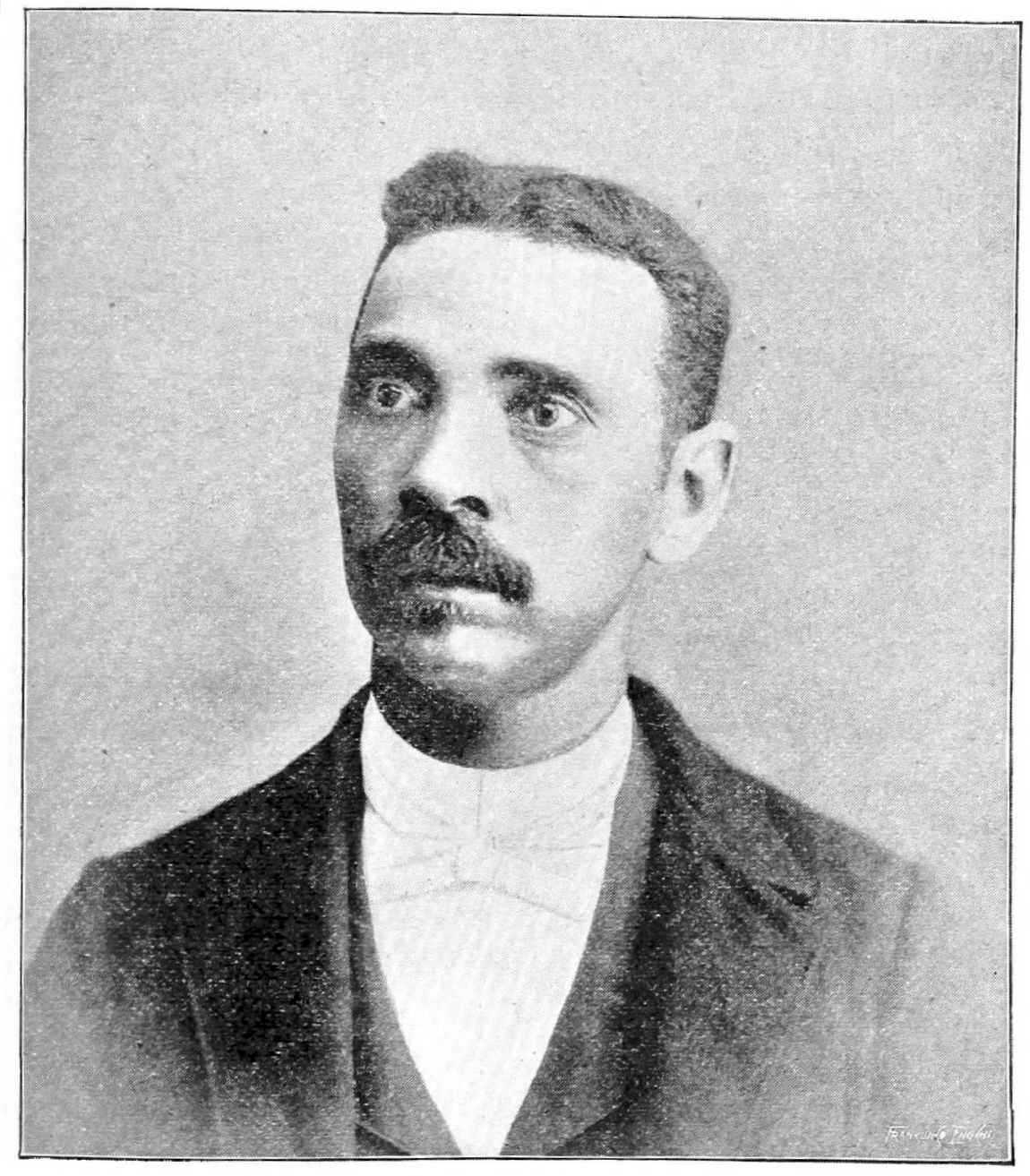
Rev. J. E. A. Wilson, Pastor Rising Star Baptist Church, Pratt City, Ala.
Smith, Rev. G. S., is pastor of the Red Mountain Church Bessemer.
Steinback, Rev. L. S., ex-pastor African Baptist Church, Tuscaloosa, was born in Marengo county, Ala., March 12, 1852. He was set free at 12 years of age.
He says: “One year, all the wages I received above my scanty meals and rough clothes, was one dozen apples. Often I was glad to obtain a good meal of parched corn. At 19 I worked in Uniontown for 50 cents a day.”
It was at this time that he learned his alphabet, studying at night school. He says that as he went to his meals and to his work, his spelling book was ever with him. He attended school after he had married—using such time as he could spare after crops were “laid by.”
He was ordained to the ministry in October, 1883, Revs. John Scott, F. Gilbert and A. Wright officiating as presbytery. By industry and perseverance, he has been able to teach in the free public schools of the State, has been missionary in his association, and is now pastor of one of our largest churches. He lives, he says, on his own plantation, for which he has paid three thousand dollars.
This is an example which is well calculated to encourage poor, struggling young men to overcome difficulties and rise anyhow—rise in spite of difficulties. Brother Steinback has served the pastorate of the Tuscaloosa Church and also edits a newspaper, The Christian Hope.
Stevens, Rev. Henry, of Uniontown, son of Harry and Agnes Stevens, was born near Port Royal, Va., May 5, 1820. At the age of 21 he was baptized into Flat Run Church, Orange county, Va., by the Rev. B. Hodge. He came to Alabama in 1843, at which time he began to speak concerning the grace of God in the redemption of sinners. In 1845 he began for the first time to read the sacred Scriptures, and in the same year he married Miss Clarissa Clay, by whom ten children were born to him.
Mr. Stevens was one of nature’s noblemen. He was an honest, outspoken man, an orderly citizen, and a very forcible preacher of the plain old gospel.
In 1868 he was fully set apart to the work of the gospel ministry by his white brethren, Revs. T. M. Bailey and Drs. McIntosh and Curry.
His every word was believed by all who knew him, and his perfect honesty no man doubted. For nine consecutive years he was moderator of the Uniontown Association. He was one of the founders of the State Convention, and also of the Selma University. In 1890 he exchanged the cross for the crown, dying as he had lived, loved and respected by all. He left his family in possession of good property, worth about $5,000, and, above all, a name that has no blemish. Often our school sought refuge from want in the purse of Elder Stevens. He was two years older than his brother Washington, who died before him in Montgomery.
Stokes, Rev. A. J., pastor of Columbus Street Church, Montgomery, was born in Orangeburg county, S. C., July 25, 1858. He was led to exercise faith in Christ at the age of twelve and a half years. He entered the work of the ministry in the Methodist church, but soon became convinced of the correctness of Baptist views, and, joining the Baptist people, he was baptized by Rev. Edward Green, of Branchwell, S. C., May, 1871. After studying two terms in Crafting University and two terms in the State University, he entered Benedict College, from which he graduated in 1884. In 1874 he was solemnly set apart to the work of the gospel ministry by Revs. E. Green, Jacob Govan, Henry Harvey, and Harry Reeves. Brother Stokes has been missionary, editor and school commissioner, and is one of the most successful preachers and pastors in all the land. During the two months in which he has been preaching in Montgomery he has added, by baptism, about 500 members. The writer tried to learn something of his methods, by visiting his meetings and young people’s classes, and the following points seem worthy of mention; his preaching is characterized:
1. By the idea of salvation by grace through simple faith.
2. By narrative and portraiture and illustration. There is no cold obtruse reasoning nor loud emptiness in his speeches.
3. By pointedness and sympathy. Each man seems to feel that the pastor is talking to him and that the heart that speaks has a care and tenderness for all.
Then he is sociable, approachable to all, from the lowest to the highest, old folks and children, rich and poor, great and small, wise and otherwise—all seem to find in him a ready echo. In view of his power and of his youth, prayer spontaneously rises to God that he may be kept in watching, in humility, in faith and in faithful service.
It is worthy of remark that during his short time with Columbus Street Church, he has bought a neat and valuable parsonage for the church from means raised above the necessary expenses.
Taylor, Rev. William, Choccolocco, was born in April, 1836, in the State of Georgia. He was the property (?) of a Mr. B. Jenks, whose daughter married a Mr. Taylor. He says, “When in my ninth year my mother bade me farewell with this charge: ‘Don’t kill, don’t steal, don’t keep bad company, don’t be impolite to old people, don’t be disobedient to those who own you, and you will never be abused.’ I have never seen her face since, but her words have ever been with me to confirm me in the right way.” Brother Taylor has now been in the ministry about twenty-four years, having entered upon his public career 1868. He is one of the leading men of the Snow Creek Association, and has attained to a fair knowledge of letters, though he has had no educational advantages. Brother Taylor has been careful of the welfare of his family and interested in the affairs of the house of God. He lives on his own farm near Choccolocco, respected by his neighbors, both white and colored.
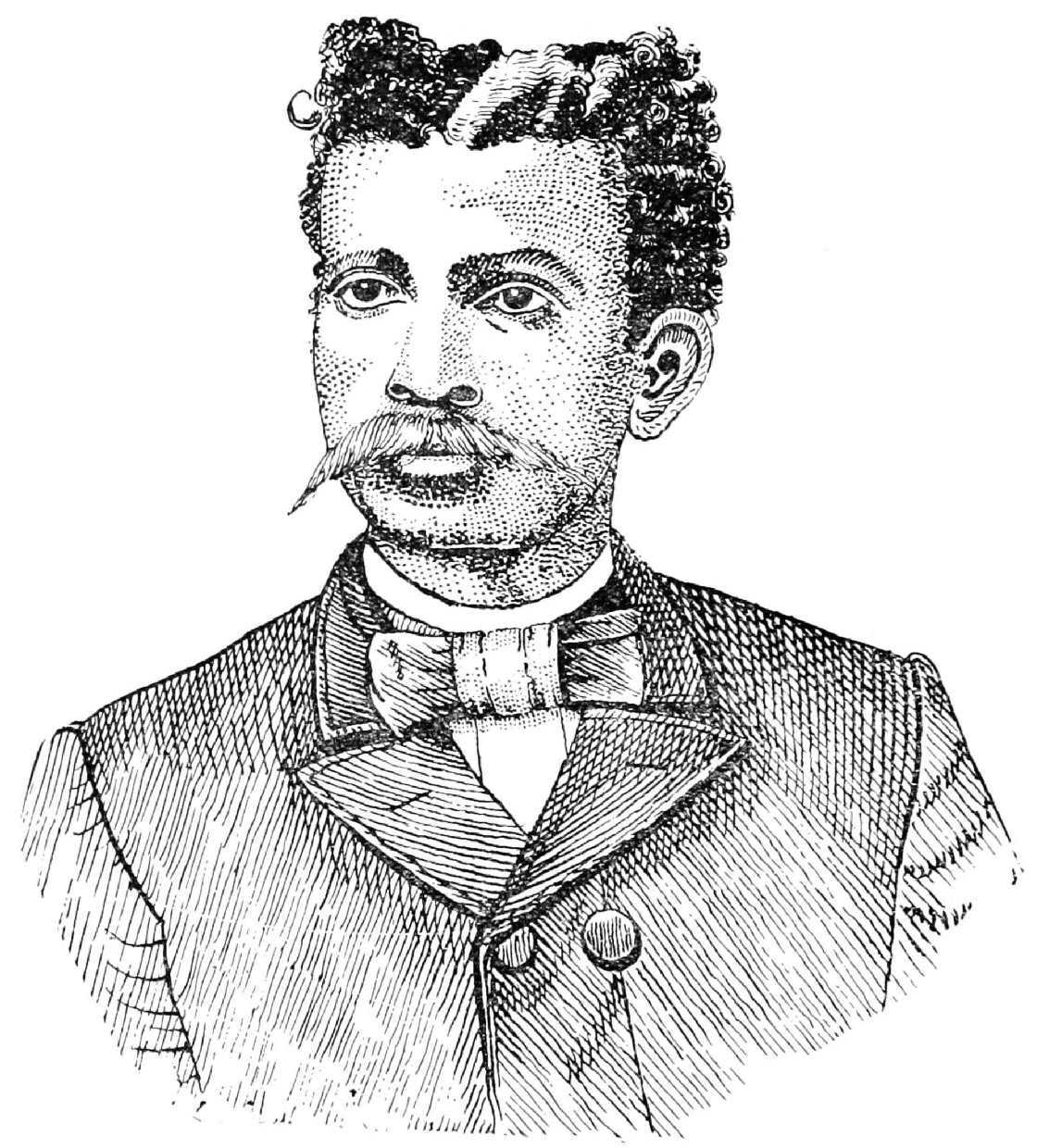
Rev. W. A. Shirley, Pastor Sardis Baptist Church, Enon Ridge.
Thornton, Rev. Elbert, of Union Springs, son of E. Thornton and Matilda Thornton, was born in the State of Georgia, December 8, 1838. In 1853 he was moved into Barbour county, Alabama, where he remained till he was emancipated in 1865. In June, 1861, he was baptized into the white Baptist Church at Midway, Ala., by the Rev. Mr. Brooks. In 1868 he was united with the church at Union Springs, and was one among the colored brethren who drew out from the white church to organize a colored Baptist Church in Union Springs—the first colored church in Bullock county. He was chosen one of the first deacons. It was not long ere his brethren urged him to enter the work of the ministry, which, under a deep sense of duty and after some hesitancy, he did. On the 5th day of June, 1874, at the call of his church, he was solemnly set apart to the sacred office of the gospel ministry by Revs. C. H. Thornton, B. Clark and others. When he took charge of the church it was in debt, but this debt was soon removed and the membership was increased, during six years pastorate, from 48 to 188, and the pastor’s salary was raised from $30 a year to $25 per month. From 1874 to 1881 he was moderator of Pine Grove Association, and since his return from his gospel labors in Arkansas he has been re-elected. Brother Thornton is no less commanding in his personal appearance than he is in his strong, clear intellect. He is a strong leader.
Thornton, Rev. C. H., of Aberfoil, Bullock county, was born in North Carolina, in 1842. He was baptized in 1862 by a Rev. Mr. Brooks, of Midway. In 1869 he was ordained to the work of the gospel ministry by Revs. R. Wright and J. C. Jett. He organized and built up the Aberfoil Church. For several years he was moderator of the Pine Grove Association. Mr. Thornton is a strong, industrious, economical, persevering man. He has obtained property worth about $3,000. The people whom he serves at Aberfoil are honorable and aspiring, and hence each—pastor and people—finds in the other the elements of success.
It was within his comfortable home that the writer, weary from overwork and exposure in constant travel, found in February, 1890, a quiet retreat in which to finish “Plain Theology for Plain People.”
Troupe, Rev. Aaron, of Town Creek, Lawrence county, was born February 14, 1851, in Morgan county, Ala. Immediately after the close of the war his parents moved to Courtland, Ala., where Aaron was brought up. He was baptized in 1869 by Rev. John Bell, the pastor of Red Bank Church. Feeling that it was his duty to preach the gospel, and not willing to enter upon such a responsible mission without previous preparation, he, for about four sessions, attended the Selma University, known at that time as the Normal and Theological School. On his return home he taught in the public schools. On May 16, 1886, he was ordained to the work of the ministry by Revs. G. Garth, M. J. Hooks, A. J. Owens and M. James. Brother Troupe has served in the church at Huntsville, and is now the successful pastor of Macedonia, near Town Creek. In 1882 he labored as district missionary under the Publication Society. He promises well. He and his brother, Deacon Troupe, are in the bone and sinew of the north Alabama work, and in them every good thing finds a ready echo and a tangible response.
Tyler, Rev. Mansfield, of Lowndesboro, was born about twelve miles from Augusta, Ga., in the month of November, 1826. When very young he was moved into the city of Augusta and lived in the family of his great aunt, the wife of Rev. Jacob Walker. He was early brought under the influences of the Springfield Baptist Church of that city—a church of colored people, which as early as 1845 was reported as numbering 1,100 members, and it was added: “This large community, with the pastor and a large corps of exhorters, are all of the colored race.” Rev. M. Tyler remained in this Christian family and attended the services of the above named church till he was 18 years of age. He says: “I was with them when the stars fell.”
At this time, as he was a slave, he was removed by his master to the State of Alabama, where he has remained until this writing. In April, 1855, he made a public profession of faith in Christ and united with the people of God by baptism. Shortly after this he felt impressed with a call to enter the work of the gospel ministry. This call he tried to obey as far as his condition and fitness would allow. “The work,” he says, “was exceeding difficult, as we were not allowed to know books and might receive only oral instruction on religious subjects.” When a very young man he married his first wife, with whom he lived for twenty-six years—till her death.
At the close of the war he located at Lowndesboro, where he went immediately to work to organize a colored Baptist church. Success attended his ministry and many were brought to faith in Christ. In 1867 he succeeded in organizing the colored Baptist church in Lowndesboro. On June 27, 1868, he was ordained to the work of the gospel ministry, since which time he has baptized 1,000 persons into the Lowndesboro church and 500 at White Hall.
When the Alabama District Association was organized in 1871, he was elected moderator, and is moderator at this time. He was a leader in the organization of the Baptist State Convention, over which he presided from 1876 to 1886. He is one of the originators, stockholders, and trustees of the Selma University, and is now, and from the beginning of the University, has been the chairman of the board of trustees. He is a man dearly beloved.
In recognition of his Christian manliness, his faithful labors, and his knowledge of the word of God, the above named university in 1890 conferred upon him the honorary title of D. D.
He is studious, industrious, devout, urbane; and though he is now about 68 years of age, he is still so full of sunshine as to be acceptable to youth as he is to old age. His present wife heartily joins him in every good word and work.
He has succeeded in accumulating considerable property, and is greatly to be praised for the care he has bestowed upon the culture of his sons. He has been among the chief financial supports of all the worthy measures of the denomination. He is very sociable, and possesses rare powers as a preacher. No man in Alabama has so much power over the Alabama Baptists as Dr. Tyler; his works as well as words make him the beloved.
Walker, Rev. William, of Avondale, was born November 30, 1848, near Jacksonville, Ala. In August of 1866 he was baptized into Bethel Baptist Church, Alexandria, by Rev. George W. Brewton. Mr. Walker’s ordination took place in August, 1876, Revs. G. W. Brewton, S. L. McLean and James Miller officiating as presbytery. It was late in life ere he came upon opportunities for book learning, but finally some good white friends, seeing his desire to learn, assisted him in making a beginning upon which he has made a fair improvement. His preaching is characterized by self-abnegation, application to the subject, and earnestness of style. Indeed in several regards he is really a strong preacher. He is no less forcible in the pulpit than he is agreeable in the parlor. He has served the pastorates at Gadsden and Anniston, and now presides over the church at Ashville. The following will give some evidence of his standing among all classes: While the Wills Creek Association was in session a few weeks ago in Ashville the white Baptists allowed him the use of the house of worship for the session, and the Rev. Mr. Montgomery (white), of this town, informs me that the white people aid in his support, some of them constantly attending upon his services.
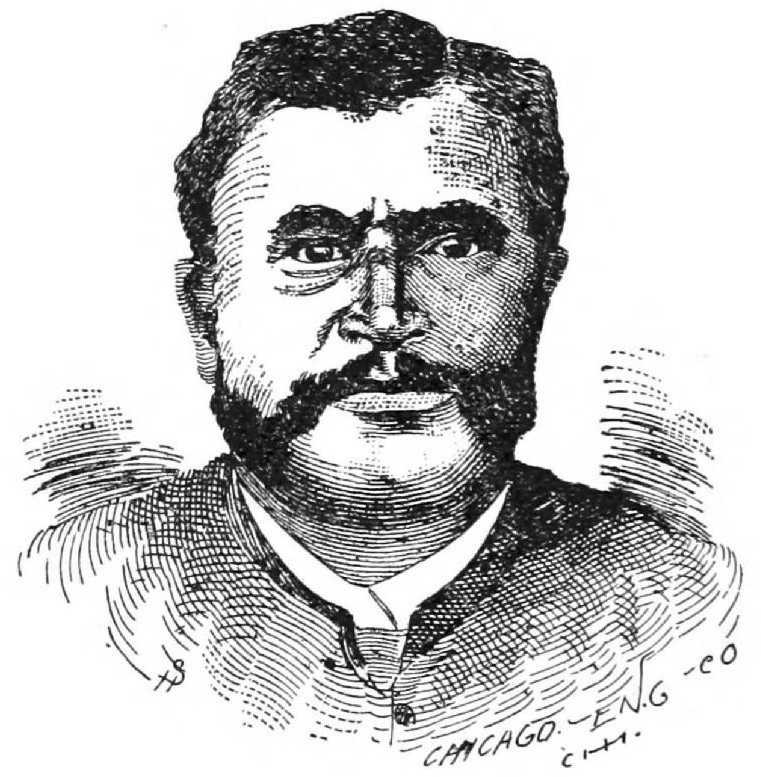
Rev. L. S. Steinback, Pastor Second Baptist Church, Demopolis, Ala.
Walker, Rev. T. W., of Birmingham, the son of Rev. Emanuel and Charlotte Walker, the property (?) of Benjamin Walker, of Coosa county, Alabama, was born in Coosa county, Alabama, September 5, 1852.
He joined the old Elam Baptist Church, Montgomery county, Alabama, in May, 1879, and was baptized by Rev. Jerry Cole in the same month. On February 26, 1884, he was ordained to the gospel ministry at the call of the Sixth Avenue Church, in the city of Birmingham, by Revs. W. R. Pettiford and J. R. Capers. His success has been marvelous.
The writer first met the subject of this sketch in Montgomery county in the year 1879, when, though he was not a Christian, he was acting as Sunday School superintendent. He says that on this occasion the question, “How can you lead others in the road to heaven when you, yourself, are not walking therein?” destroyed all his carnal security and false ease, and was the beginning of a change in his life.
I doubt if any man among us has had more power over the masses than he. While he was building the Sixth Avenue Church there was a constant demand for more room for his audiences. And since he has been serving at the Shiloh Church, the writer has seen not only the building filled to its utmost capacity, but hundreds of eager listeners standing without at the door.
Those who know him best feel that his power over the masses is largely owing to his common sense, goodness of heart, and his simple, steady faith in God, his cool self-reliance and his hard work for and among the masses of the people.
Future historians will no doubt find reasons for recording his name high on the best pages of their books. [2]
He relates the following incidents of his early childhood: “When I was five years of age, I, for the first time, enjoyed a ride to town. When I got off the wagon Mr. Harrison rolled up my shirt sleeves and the legs of my pants and placed me on a block on the street in the middle of a great crowd of people. I enjoyed it, as I seemed to be the person especially noticed by all. I saw my mother and father weeping, but I could see no reason for it. When I came down from the block, I, with two sisters and a brother, went home with a Mr. House, where the crack of the whip, the yelp of the hound and the howl of the wolf were the most frequent sounds that fell upon my ear. The fact and horrors of slavery were first branded into my heart by the tying and whipping of my father before my eyes. When I asked father what it meant, he replied: ‘The lash which I fear will soon fall upon yourself, my son, will too early explain what is meant.’”
A white man to whom he hired himself taught him at night his alphabet, and started him to spelling and reading during his eighteenth year, and now he reads, writes, and manages his own figures in business. He is a grand man.
He has organized a building and loan association with about 2,000 members.
Ware, Rev. William, of East Lake, Jefferson county, Ala., was born in said county October 5, 1837. He was converted to Christianity in his thirteenth year, and was baptized into Union Church, near Birmingham—that is, where the city now is—by the Rev. Willis Burns (white). He was ordained to the work of the gospel ministry November, 1868, by Revs. Edmond Burris and Allen McAlpine.
The Rev. A. J. Waldrop (white) says of Bro. Ware: “We never had in Jefferson county a man of more stainless character. He is not an educated man, but he is earnest, honorable and upright.”
The writer has found Bro. Ware to be one of the meekest and gentlest of men. He, with Rev. Henry Wood, organized the Mt. Zion Church in 1878, and he was the first moderator of the Mt. Pilgrim Association. He has held various pastorates, and has held them always with credit to himself and profit to the cause.
He lives on his own pleasant home and quiet farm a few miles northwest of East Lake. He is still an active worker, and enjoys the love and confidence of the people among whom his light so long has shone to the glory of God.
Ware, Rev. Berry, was one of the pioneers of the work in Shelby, Jefferson and Talladega counties. Few men in those early days had more power over the masses than he. He died some sixteen or seventeen years ago, and I have nothing of his history or nativity. He baptized the Rev. D. L. Prentice, and started the church at Aldrich.
Webb, Rev. George W., of Eufaula, Ala., was born in Russell county, Ala., in 1844. Fortunately for him, Capt. W. H. Redd carried him, while he was still quite young, to Columbus, Ga., where his perceptive mind was permitted to imbibe such ideas of refinement as did not exist on the plantation. Here, under the advice of his parents, he entered upon a sort of irregular course of study, which led to some success in book knowledge. As Gen. Wilson’s army was passing through Georgia, he enlisted as a soldier, remaining in service till he was mustered out in 1866.
He was baptized into the fellowship of the white Baptist church at Abbeville, Ala., by the Rev. L. R. Sims. In 1868 he married Miss Eliza Collins, and in 1869 was among those who led in the organization of a colored Baptist church at Abbeville. In 1870 he assisted in organizing the “East Alabama and West Florida Association.” In 1873 he moved to Eufaula. He was ordained to the gospel ministry about 1874-75. Mr. Webb is a very energetic man and a successful builder of churches. He took a leading part in the organization of the Eufaula District Sunday School Convention, and much of its success is due to his missionary labors. He is a friend of education and missions, and believes in progress on all lines.
Whatley, Rev. W. H., of White Plains, is of Georgia nativity, but came to Alabama while young. Without doubt Mr. Whatley is the most influential man in Calhoun county, and yet no man in the county is more modest, deferential and unassuming. He is a man of power, and yet he does not seem to know anything about it. For years he has been the moderator of the Snow Creek Association, and except something unusual shall occur he will continue to preside for years to come.
I know of no moderator who has better government in his association than Mr. Whatley, and yet there seems to be no effort to command. He exercises an oversight over every branch of his associational work, appearing in all the general meetings, whether the interest at stake pertains to local church work, to missions, to education, or to Sunday School. He is an ex-student of the Georgia school, and attended while it was located at Augusta. And it is a fact, much to the credit of his white brethren, that they made it possible for him to attend school. He lives on his own valuable farm amid his children, who are now maturing, his son Charles being now a young man.
White, Rev. E. C., of Tuscumbia, was born about the year 1842 in Chester county, S. C. In 1859 his master brought him to Alabama, where he has since resided. He was converted the fourth Lord’s day in October, 1869, and in the same month was baptized into the Russellville church by the late Rev. P. Jones.
Brother White says: “In April, 1868, my wife was baptized by the Rev. W. E. Northcross, and her devoted life constrained me to desire peace with God. My wife overthrew all my old ways and lovingly compelled me into the ways of the Lord.” At once he became zealous for the cause of Christ, and soon began to speak as opportunity offered itself, first at Russellville and then at Tuscumbia. At the request of a church which he had built up near Tuscumbia, Rev. W. E. Northcross called a council, and on October 8, 1873, solemnly set him apart to the office of the ministry. He has attained to some knowledge of books, of which he is still an industrious student. Before his whole time was employed in the ministry he taught in the public schools.
The good people of Russellville and Florence have long held to him as pastor.
Brother White owes much to his excellent, Christian wife, who has been a helpmeet for him since 1865. He is a hospitable brother and faithful Christian minister.
White, Rev. J. W., the son of Claburne and Elizabeth Hatcher, was born in Dallas county, Ala., in October, 1839, eleven miles south of Selma, on the Alabama River. He takes his name from the Mr. White who owned his mother. He was baptized into the St. Phillip Street Baptist Church, Selma, by Rev. John Blevins, in September, 1868. He was ordained to the work of the ministry by the above named church, in August, 1875, Revs. J. Dosier, J. Carter, Henry Stevens, and John Blevins, officiating presbytery. Bro. White was at one time moderator of the Uniontown Association; was for some months missionary under the American Baptist Publication Society; was pastor, at different times, of the Mt. Zion, the Summerfield, the St. Paul, and the Providence Churches, near Selma; was pastor at Camden, Ala., and recently retired from the pastorate of the Sixth Avenue Church, Birmingham. He has from the first been officially connected with the Selma University, in which he studied for about three sessions, being the first ministerial student who was enrolled. He is an earnest preacher and a studious man, so that it may be said of him that he is an elevator of the people on all lines. He relates the following story: “During the war, and at a time when things looked rather dark for the South, my stepfather and I were attending a Presbyterian meeting, when he was called on to pray God to ‘drive back our enemies.’ Father prayed: ‘O Lord, drive back our enemies.’ When we were at home alone I told him that I found fault with his prayer, for it was really against the interest of his people. The old man answered: ‘The our meant the colored people, and the word enemies referred to our oppressive chains.’”
At this time, extending from a time long before, there was an organized prayer circle in Selma, which met on every Friday night beneath a great oak tree in the woods to pray to God to bring liberty to the slave. Brethren Alex. Goldsby and Charles White were among the leaders of this meeting. Doubtless Bro. J. W. White knew of this meeting and of its purpose, and hence was hardly prepared to hear a prayer so seemingly contrary to the wishes and needs of his people.
Wilhite, Rev. J. Q. A., of Selma, was born August 13, 1854, in Louisville, Ky. He was baptized in 1866, and in 1878 was ordained to the office of the gospel ministry in his native city. The presbytery of the occasion was Revs. C. C. Stamm, D. A. Gaddie, W. W. Taylor and others. Shortly after this he entered the gospel work in Alabama, beginning as pastor of the Second Baptist Church, Eufaula. He came to supersede the Rev. Mr. Bassett, who for some reason had returned to Indiana. Under his administration the Eufaula Church rose into success and beauty unequaled by anything that had passed before. Beginning with 1886 he was for several consecutive years financial agent for Selma University. Resigning this work he was for sometime pastor of the church at Uniontown, where he was attended by his usual prosperity, both in gathering the people and in raising finances. This position he resigned in order to assume once more the office of financier for the University. At the present writing he is treasurer of the University.
Mr. Wilhite’s success is largely owing to the following: Self-reliance, industry, tact, perseverance, adaptability of himself and methods to the condition of the people.
He is an ex-student of the Roger Williams University, Nashville.
In 1872 he wedded Miss Kate Talbert, who has presented him with a large family of promising young folks, to whose education he is giving special attention. He is to be commended for that economy, as well as industry, which has enabled him to possess a comfortable home for himself and loved ones. He has not been forgetful of the welfare of them over whom God has made him guardian. Like very few preachers, he is a good business man as well as a good preacher.
P. S.—He has recently built a brick edifice at Uniontown. He is now a successful pastor in Birmingham.
Wilson, Rev. J. E. A., pastor of the First Colored Baptist Church, Pratt City, comes to our denomination from the Methodist Church. He was born January 1, 1861, in Fayette county, Alabama, and was led to submit to Christ as his Savior, September, 1882. He was regularly inducted into the Baptist ministry, September 27, 1887, by the laying on of the hands of a council consisting of Revs. A. C. Jackson, V. Huntington and others. He has served acceptably at Patton, Corona and Jasper. He is unpretending, quiet, brotherly and has a good report from all circles. His school advantages have been rather meagre, but with his youthful vigor and self-control, coupled with the abundant facilities for an increase of knowledge common to these times, he may yet be a man of learning and a leader in letters. Of course no man can hope to attain to knowledge beyond his ability to study forever and without any thought of tiring or despairing.
Notwithstanding he is a man of strong emotions, he has rare executive ability and is hard to equal as a leader.
Wood, Rev. Henry, of Talladega, was born August 15, 1825, in Greenville, S. C. His father was a lawyer in South Carolina. He came to Alabama with his mother when eleven months old, and was settled in Jefferson county, near Elyton.
He was baptized into the white church by Rev. Joseph Bias, who, at the time, gave it as his opinion that “Henry” would be a preacher. Ordained to the work of the gospel ministry just after the war (1867), he was a timely instrument in the special mission of organization. Mr. Wood has been one of the pioneers of our work in Jefferson, Talladega, Calhoun and St. Clair counties. In speaking of his struggle after knowledge in slavery time, he says: “I had been reading for some time and had begun to learn to write fairly well, when the fact came to the notice of the white people. They tied me up and laid 600 lashes on my back; and, I tell you, I lost all my knowledge of writing after this.” Referring to his missionary and pioneer work since freedom, he relates the following: “For the most part the white people have treated me well. Sometimes, however, I have been troubled with drunkards and ‘negro whippers.’ As I was riding on my missionary work in Blount county, I once met a man who gave me such a crack over my shoulders with his horse whip as almost broke the skin; but as I did not so much as look toward my abuser, he let me go with no further harm. I passed on, thanking God that it was no worse with me.”
Brother Wood is a man of excellent spirit—is as jovial as he is earnest. His life has been temperate and chaste, and he is approaching the death shadows and the tomb with triumph and in peace. He has occupied good pastorates and honorable places in the associations. His first wife (Miss Dicey Truss, whom he married in 1844), has preceded him to the goodly land, and both their children have passed before him. He now lives in Talladega with his second wife (the widow of Mr. Thomas Barclay), in very easy circumstances, and still finds plenty of work to do in the cause of the Master. Few men are more widely known and more generally beloved than he. For wrath and malice he is entirely a child. Nothing could more surprise his brethren than to see him in a fit of ugly temper, or to hear from his lips expressions of ill will. Brother Wood speaks in praise of Revs. Messrs. McCain, Mynett and Law (white) as friends to their colored brethren in the time of the latter’s weakness and inexperience in church work.
P. S.—Our dear Brother Wood has gone to his crown on the ever bright shore. Peace hover over thy dust, O thou man of God!
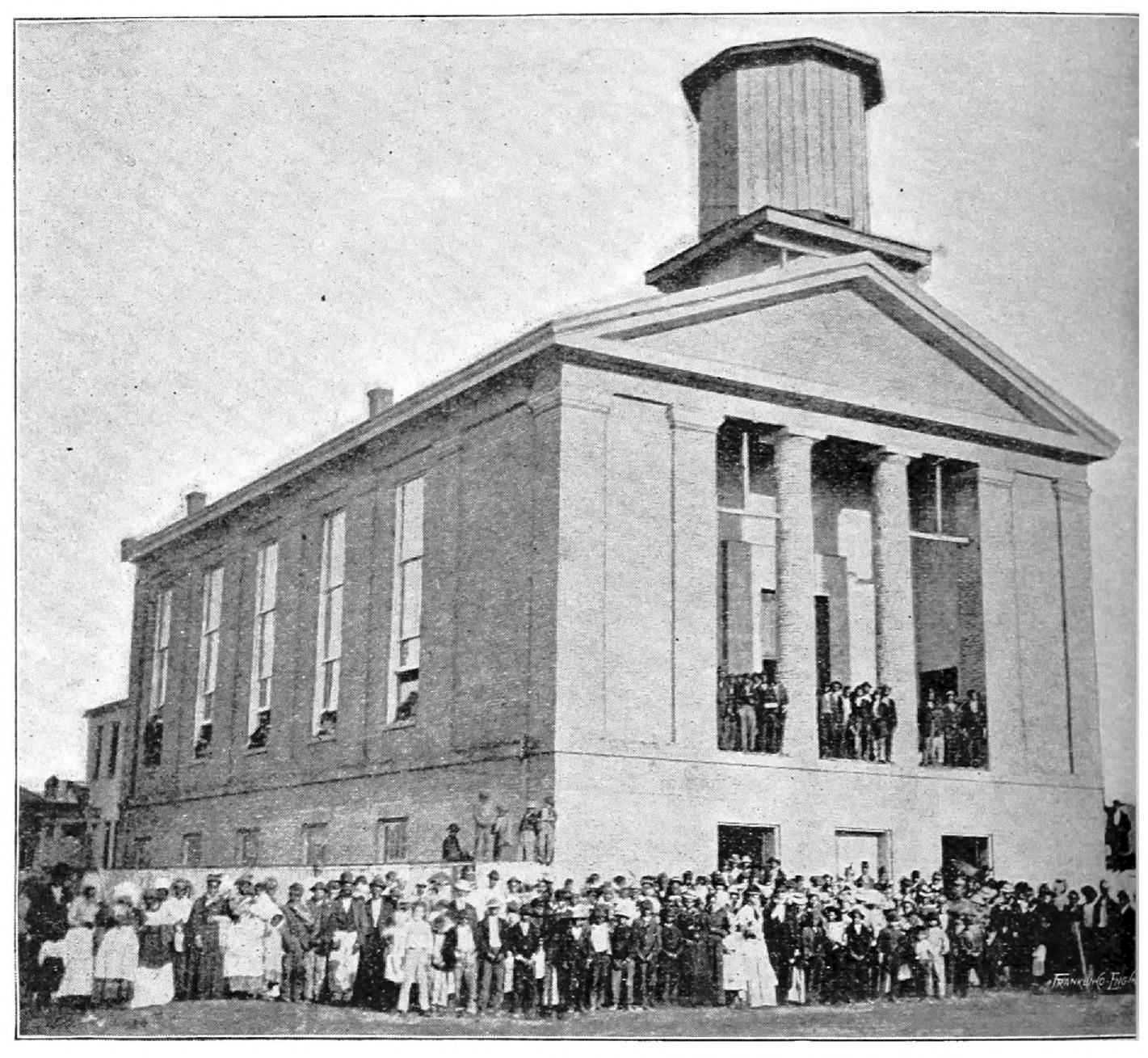
St. Louis Street Baptist Church, Mobile, Ala., Rev. J. L. Frazier, Pastor.
Wood, Rev. R. T., of Huffman, pastor of Pleasant Hill Church, and son of Mr. Henderson Wood, of the same place, is the eleventh child of a family of thirteen children. While he was still very small two older brothers were killed by the “K. K. K.,” which clan terrorized the country after the close of the war. In consequence of which sad incident, it is thought, his father died of mental depression, leaving the subject of our sketch without a father’s presence, guidance and support. Nothing daunted by this host of sorrows and misfortunes, Mr. Wood, industriously and with patient spirit, notwithstanding his delicate constitution, gave himself to such engagements as came to his hand, making horse collars and brooms as well as aiding his widowed mother in spinning, knitting and weaving. In his thirteenth year he was minded to seek for peace with God, and, so at an early age, he began to attain to experiences of grace which have increased with the growth of years.
Evidently the family is possessed of sterling qualities, as may be seen in their aspiration and courage. The other members of the family whom I have met live an independent home life in the mountains near Huffman. Mr. Wood hopes he may find an opening through which to enter the mission field in Africa, and his name has been sent in to the mission authorities. If his life should be spared for a maturer development he will be a tower of strength in good things. He is a graduate from the Grammar Department of Selma University, in which institution he expects to take a higher course.