CLASSIFICATION.
Reading edition
CLASS I.
ANNULATA.
FOUR FAMILIES.
Fam.
1. Dorsalia. Two genera.
1. Arenicola. Species 1
2. Siliquaria. „ 8
2. Maldania. Two genera.
1. Clymene. Species 1
2. Dentalium. „ 21
3. Amphitritæa. Four genera.
1. Pectinaria. Species 2
2. Sabellaria. „ 2
3. Terebella. „ 4
4. Amphitrite „ 7
4. Surpulacea. Five genera.
1. Spirorbis. Species 6
2. Serpula. „ 26
3. Vermilia. „ 9
4. Galeolaria. „ 2
5. Magilus. „ 2
CLASS II.
CIRRHIPEDA.
ONE FAMILY.
1. Cirrhipeda. Ten genera.
1. Tubicinella. Species 1
2. Coronula. „ 5
3. Balanus. „ 30
4. Acasta. „ 4
5. Creusia. „ 3
6. Pyrgoma. „ 1
7. Anatifera. „ 6
8. Pollicipes. „ 6
9. Cineras. „ 1
10. Otion. „ 2
CLASS III.
CONCHIFERA.
TWENTY FAMILIES.
1. Tubicola. Six genera.
1. Aspergillum. Species 4
2. Clavagella. „ 4
3. Fistulana. „ 4
4. Septaria. „ 2
5. Teredina. „ 2
6. Teredo. „ 3
2. Pholadaria. Two genera.
1. Pholas. Species 18
2. Gastrochæna. „ 3
3. Solenea. Four genera.
1. Solen. Species 21
2. Panopea. „ 1
3. Solecurtus. „ 10
4. Glycimeris. „ 2
4. Myaria. Two genera.
1. Mya. Species 8
2. Anatina. „ 12
5. Mactracea. Seven genera.
1. Lutraria. Species 14
2. Mactra. „ 44
3. Crassatella. „ 11
4. Erycina. „ 2
5. Ungulina. „ 2
6. Solemya. „ 4
7. Amphidesma. „ 45
6. Corbulacea. Two genera.
1. Corbula. Species 10
2. Pandora. „ 4
7. Lithophaga. Three genera.
1. Saxicava. Species 9
2. Petricola. „ 13
3. Venerirupis. „ 8
228. Nymphacea. Ten genera.
1. Sanguinolaria. Species 9
2. Psammobia. „ 21
3. Psammotea. „ 7
4. Tellina. „ 68
5. Tellinides. „ 2
6. Corbis. „ 2
7. Lucina. „ 26
8. Donax. „ 31
9. Capsa. „ 3
10. Crassina. „ 1
9. Conchacea. Seven genera.
1. Cyprina. Species 2
2. Cytherea. „ 83
3. Venus. „ 100
4. Veniricardia. „ 5
5. Cyclas. „ 15
6. Cyrena. „ 10
7. Galathea. „ 1
10. Cardiacea. Five genera.
1. Cardium. Species 57
2. Cardita. „ 23
3. Cypricardia. „ 5
4. Hiatelia. „ 2
5. Isocardia. „ 4
11. Arcacea. Four genera.
1. Arca. Species 41
2. Cucullæa. „ 1
3. Pectunculus. „ 22
4. Nucula. „ 45
12. Trigonacea. Two genera.
1. Trigonia. Species 1
2. Castalia. „ 1
13. Naiadea. Four genera.
1. Unio. Species 167
2. Hyria. „ 2
3. Anodonta. „ 49
4. Iridina. „ 6
14. Chamacea. Three genera.
1. Diceras. Species 1
2. Chama. „ 18
3. Etheria. „ 5
15. Tridacnea. Two genera.
1. Tridacna. Species 7
2. Hippopus. „ 1
16. Mytilacea. Three genera.
1. Mytilus. Species 42
2. Modiola. „ 32
3. Pinna. „ 15
17. Mallacea. Five genera.
1. Crenatula. Species 7
2. Perna. „ 10
3. Malleus. „ 6
4. Avicula. „ 19
5. Meleagrina. „ 2
18. Pectinea. Seven genera.
1. Pedum. Species 1
2. Lima. „ 6
3. Pecten. „ 62
4. Plagiostoma. „ 10
5. Plicatula. „ 5
6. Spondylus. „ 21
7. Podopsis. „ 2
19. Ostracea. Six genera.
1. Ostrea. Species 49
2. Gryphea. „ 1
3. Vulsella. „ 6
4. Placuna. „ 3
5. Anomia. „ 9
6. Crania. „ 1
20. Brachiopoda. Three gen.
1. Orbicula. Species 1
2. Terebratula. „ 13
3. Lingula. „ 1
CLASS IV.
MOLLUSCA.
TWENTY-THREE FAMILIES.
1. Pteropoda. Six genera.
1. Hyalea. Species 2
2. Clio. „ 2
3. Cleodora. „ 2
4. Limnacina. „ 1
5. Cymbulia. „ 1
6. Pneumodermon „ 1
232. Phyllidiacea. Six genera.
1. Phyllidia. Species 3
2. Chitonellus. „ 2
3. Chiton. „ 63
4. Patella. „ 49
5. Umbrella. „ 2
6. Pleurobranchus. „ 2
3. Calyptracea. Seven gen.
1. Parmophorus. Species 4
2. Emarginula. „ 5
3. Fissurella. „ 22
4. Pileopsis. „ 9
5. Calyptrea. „ 9
6. Crepidula. „ 13
7. Ancylus. „ 5
4. Bullacea. Three genera.
1. Acera. Species 1
2. Bullæa. „ 2
3. Bulla. „ 19
5. Aplysiacea. Two genera.
1. Dolabella. Species 2
2. Aplysia. „ 37
6. Limacina. Five genera.
1. Limax. Species 5
2. Vitrina. „ 3
3. Testacella. „ 2
4. Parmacella. „ 2
5. Onchidium. „ 2
7. Colimacea. Eleven genera.
1. Helix. Species 203
2. Carocolla. „ 22
3. Achatina. „ 24
4. Anostoma. „ 3
5. Helicina. „ 19
6. Pupa. „ 40
7. Clausilia. „ 15
8. Bulimus. „ 63
9. Succinea. „ 7
10. Auricula. „ 16
11. Cyclostoma. „ 38
8. Lymnacea. Three genera.
1. Lymnea. Species 33
2. Physa. „ 10
3. Planorbis. „ 22
9. Melaniana. Three genera.
1. Melania. Species 54
2. Pirena. „ 6
3. Melanopsis. „ 3
10. Peristomiana. Three gen.
1. Valvata. Species 3
2. Paludina. „ 31
3. Ampularia. „ 13
11. Neritacea. Four genera.
1. Neritina. Species 27
2. Nerita. „ 20
3. Navicella. „ 4
4. Natica. „ 36
12. Ianthinea. One genus.
1. Ianthina. Species 3
13. Macrostomiana. Four gen.
1. Sigaretus. Species 6
2. Stomatella. „ 5
3. Stomatia. „ 2
4. Haliotis. „ 19
14. Plicacea. Two genera.
1. Tornatella. Species 6
2. Pyramidella. „ 6
15. Scalarina. Three genera.
1. Scalaria. Species 14
2. Vermetus. „ 2
3. Delphinula. „ 5
16. Turbinacea. Eight gen.
1. Solarium. Species 7
2. Trochus. „ 99
3. Monodonta. „ 34
4. Turbo. „ 51
5. Planaxis. „ 4
6. Phasianella. „ 12
7. Turritella. „ 21
8. Rotella. „ 7
17. Canalifera. Eleven gen.
1. Cerithium. Species 45
2. Pleurotoma. „ 29
3. Turbinella. „ 23
4. Cancellaria. „ 49
5. Fasciolaria. „ 8
6. Fusus. „ 46
7. Pyrula. „ 29
24 8. Struthiolaria. Species 2
9. Ranella. „ 15
10. Murex. „ 73
11. Triton. „ 31
18. Alata. Three genera.
1. Rostellaria. Species 4
2. Pterecera. „ 7
3. Strombus. „ 32
19. Purpurifera. Eleven gen.
1. Cassidaria. Species 5
2. Cassis. „ 25
3. Ricinula. „ 9
4. Purpura. „ 62
5. Monoceros. „ 5
6. Concholepas. „ 1
7. Harpa. „ 9
8. Dolium. „ 7
9. Buccinum. „ 66
10. Eburna. „ 5
11. Terebra. „ 24
20. Columellaria. Five genera.
1. Columbella. Species 20
2. Mitra. „ 80
3. Voluta. „ 44
4. Marginellæ. „ 24
5. Volvaria. „ 7
21. Convoluta. Six genera.
1. Cypræa. Species 118
2. Ovula. „ 12
3. Terebellum. „ 3
4. Ancillaria. „ 4
5. Oliva. „ 63
6. Conus. „ 181
22. Nautilacea. Two genera.
1. Spirula. Species 1
2. Nautilus. „ 2
23. Heteropoda. Two genera.
1. Argonauta. Species 3
2. Carinaria. „ 3
The American species are designated by a *.
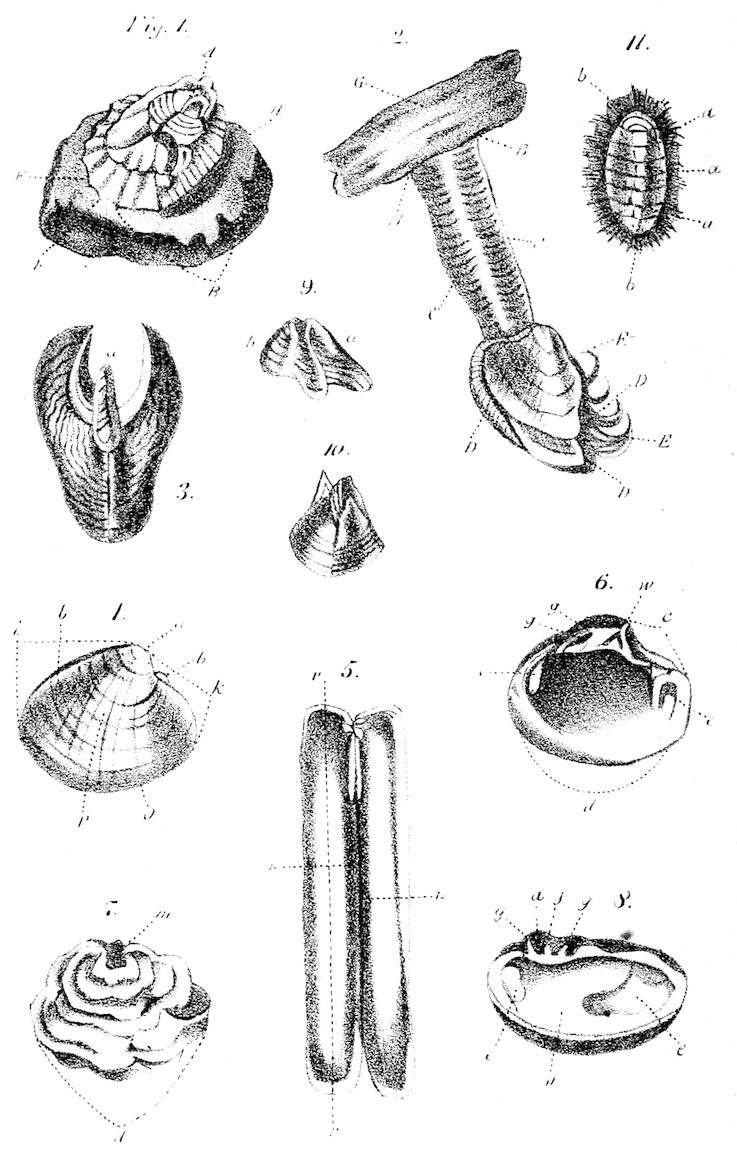
Pl. 1. Parts of Shells P.S. Duval, Lith. Phila.
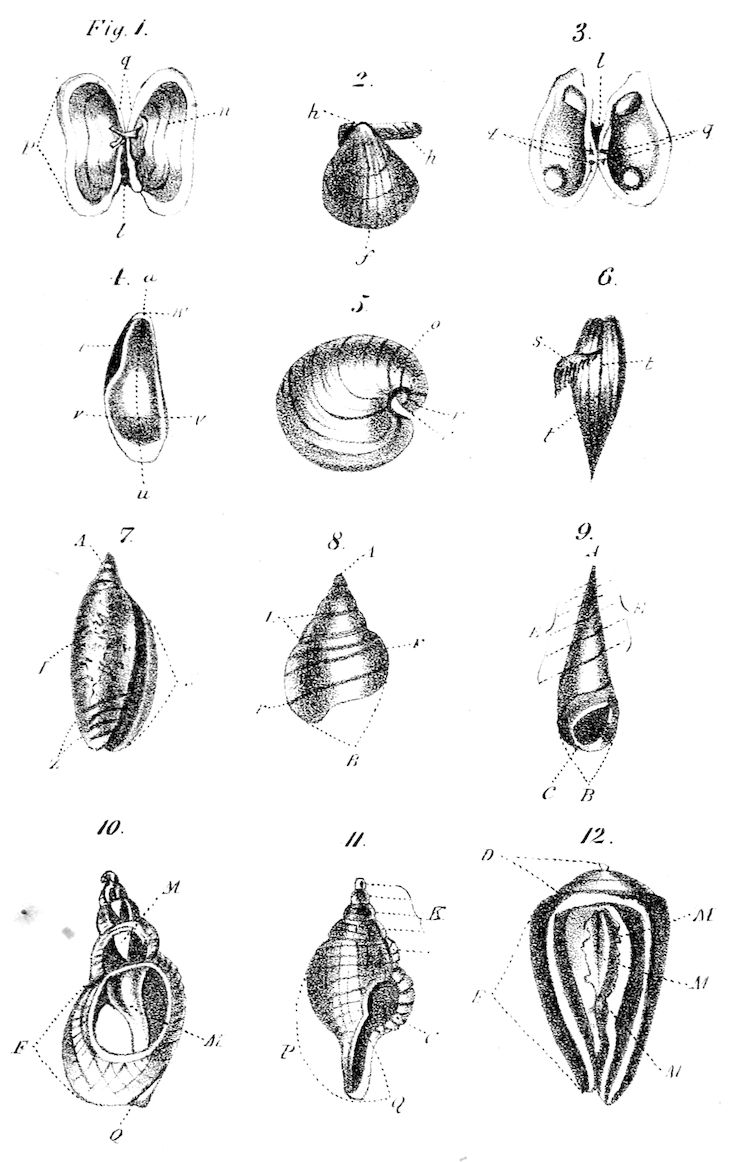
Pl. 2. Parts of Shells. P.S. Duval, Lith. Phila.
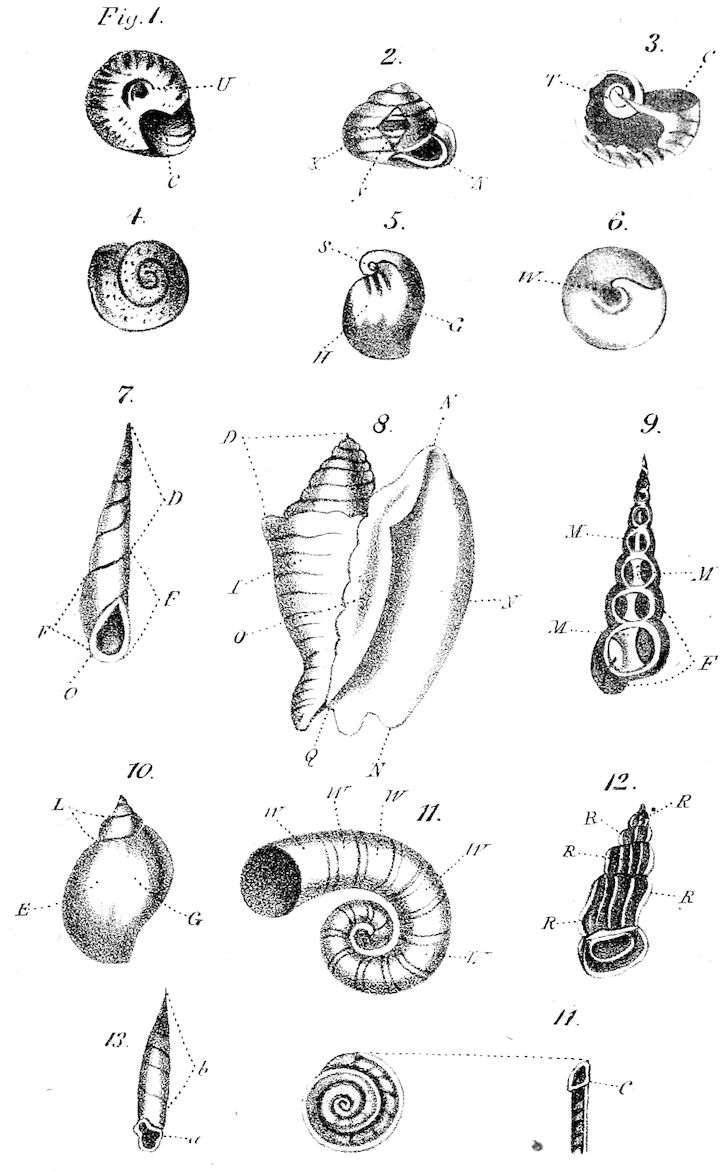
Pl. 3. Parts of Shells. P.S. Duval, Lith. Phila.
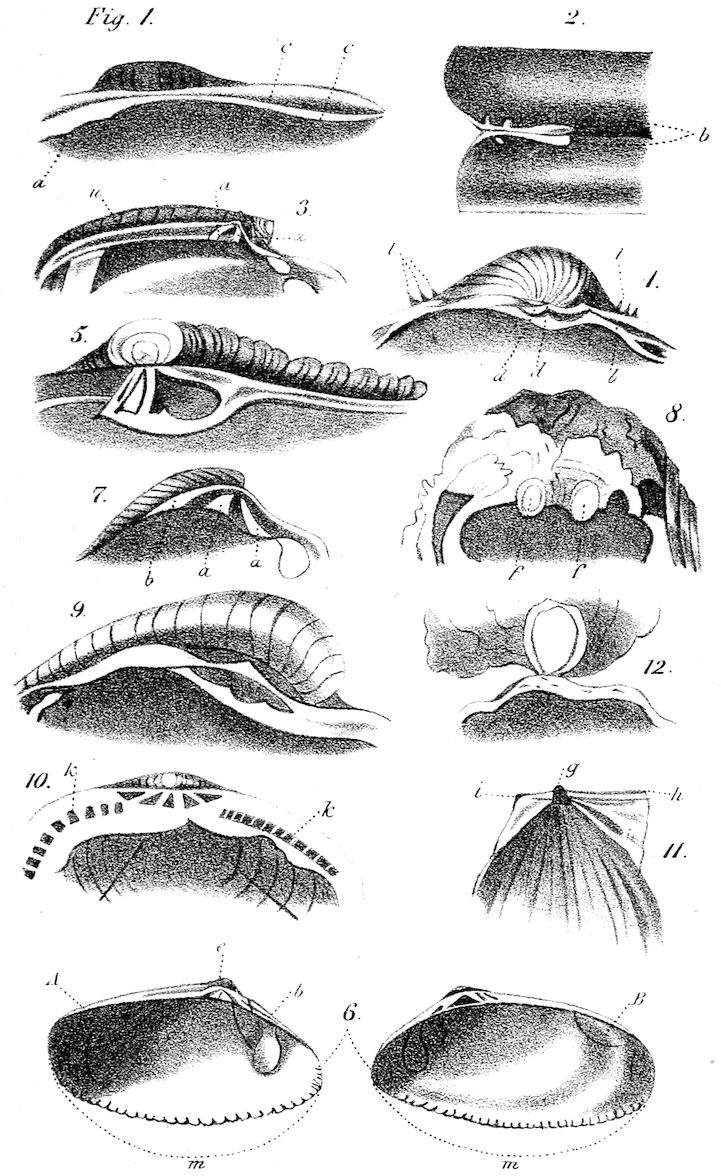
Pl. 4. Hinges of Shells. P.S. Duval. Lith. Phila.
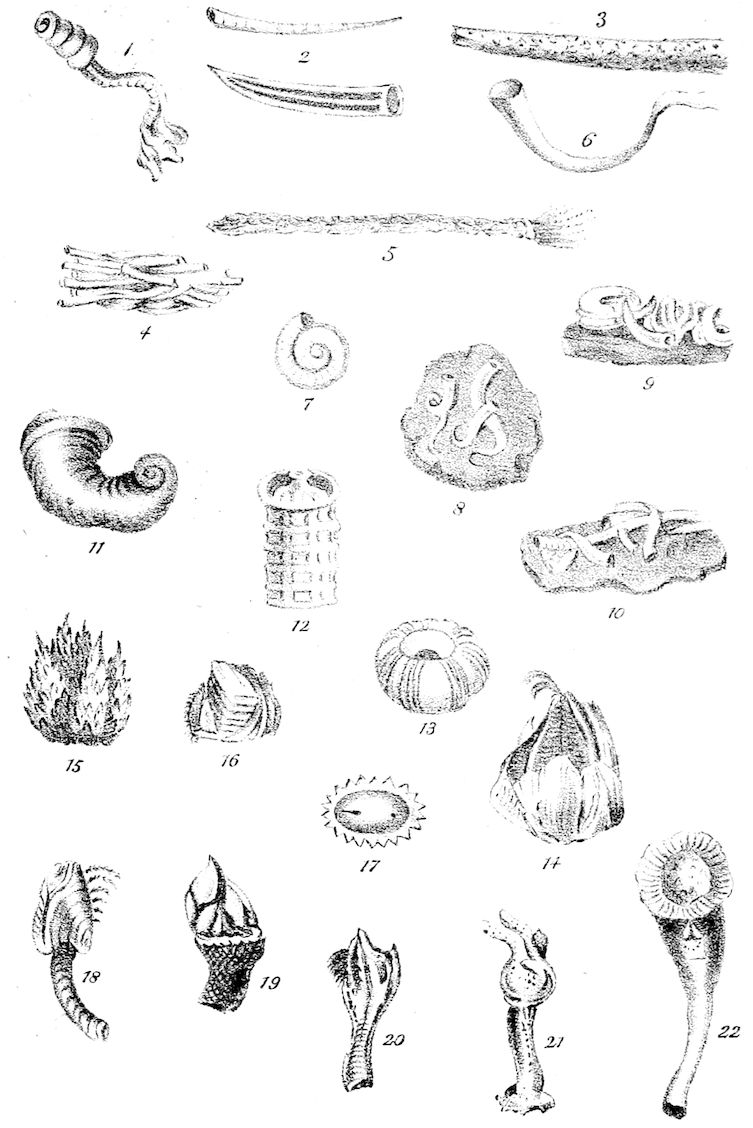
Pl. 5. 1. Siliquaria, 2 Dentalium, 3 Pectinaria, 4 Sabellaria, 5 Terebella, 6. Amphitrite, 7 Spirorbis, 8 Serpula, 9 Vermilia, 10 Galeolaria, 11. Magilus, 12. Tubicinella, 13. Coronula, 14. Balanus, 15 Acasta, 16 Creusia, 17 Pyrgoma, 18 Anatifera, 19 Pollicipes, 20 Cineras, 21. Otion, 22 Aspergillum. P.S. Duval, Lith. Phila.
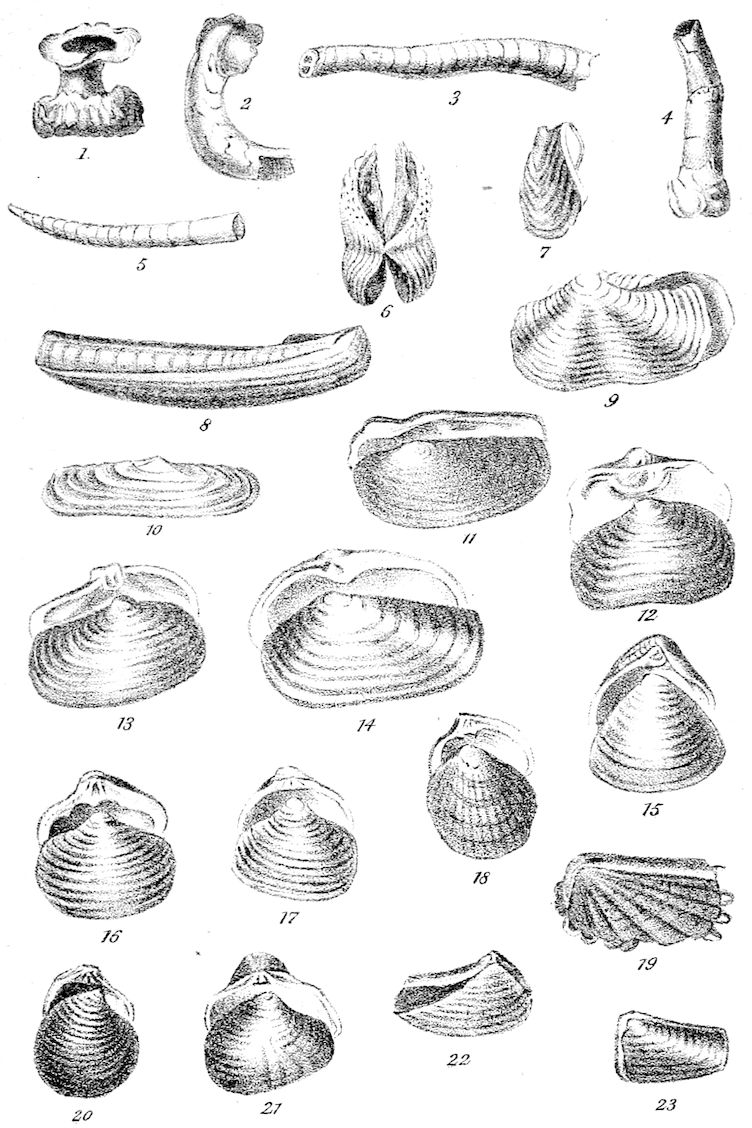
Pl. 6. 1 Clavagella, 2 Fistulana, 3 Septaria, 4 Teredina, 5 Teredo, 6 Pholas, 7 Gastrochæna, 8 Solen 9 Panopea, 10. Solecurtus, 11. Glycimeris 12 Mya, 13. Anatina, 14 Lutraria, 15 Mactra, 16. Crassatella, 17 Erycina, 18 Ungulina, 19 Solenimya, 20 Amphidesma, 21 Corbula, 22 Pandora, 23 Saxicava. P.S. Duval, Lith. Phila.
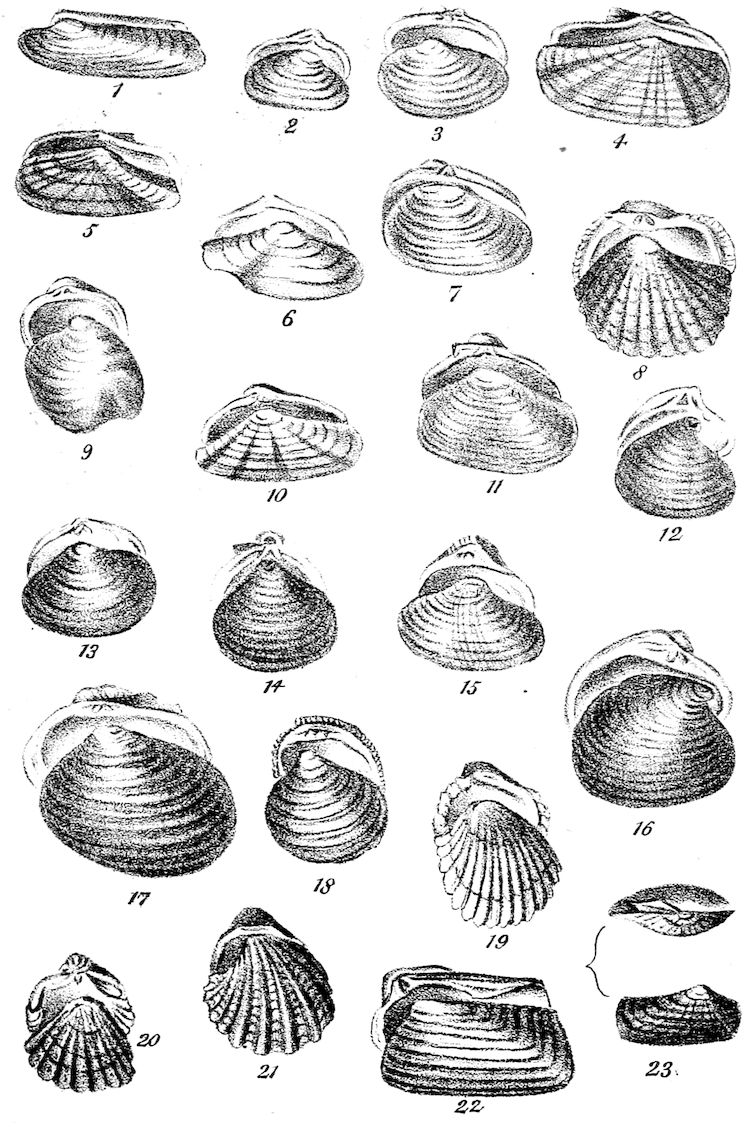
Pl. 7. 1. Petricola 2 Venerirupis 3. Sanguinolaria, 4. Psammobia, 5. Psammotea, 6. Tellina, 7. Tellinides, 8. Corbis, 9. Lucina, 10. Donax, 11. Capsa, 12. Crassina, 13. Cyclas, 14. Cyrena, 15. Galathea, 16. Cyprina, 17. Cytherea, 18. Venus, 19. Venericardia, 20. Cardium, 21. Cardita, 22. Cypricardia, 23. Hiatella. P.S. Duval, Lith. Phila.
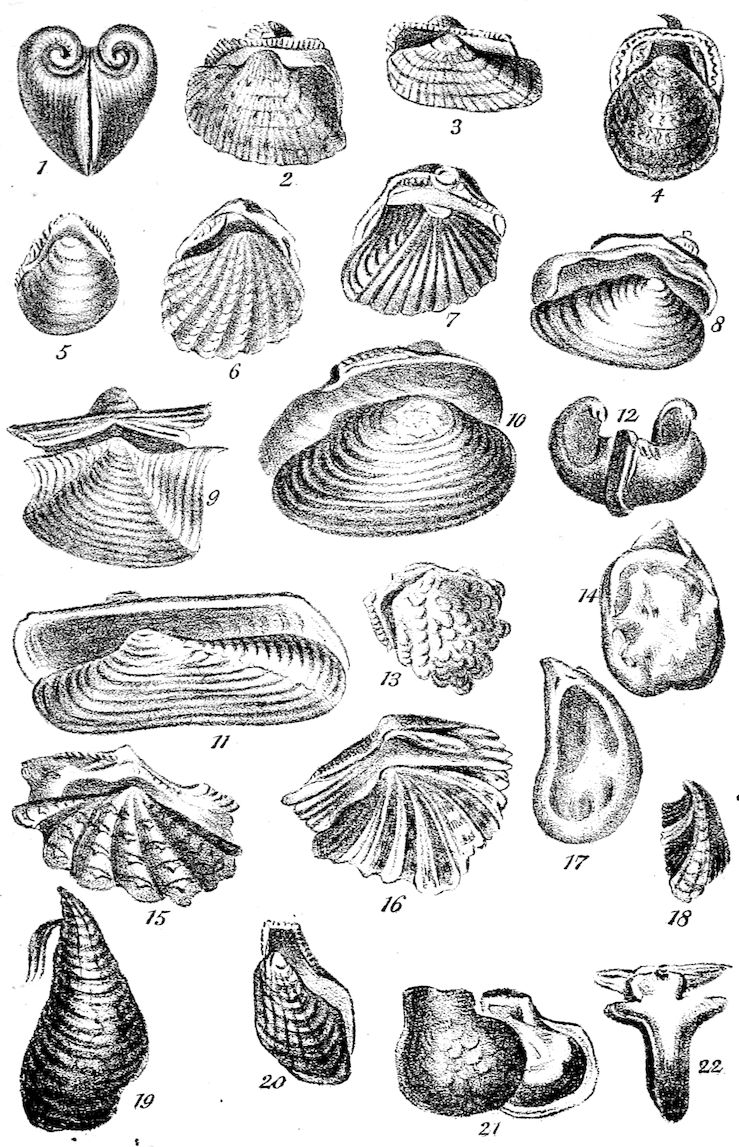
Pl. 8. 1. Isocardia, 2. Cucullea, 3 Arca, 4. Pectuncules 5 Nucula, 6. Trigonia, 7 Castalia, 8. Unio, 9. Hyria, 10. Anodonta, 11. Iridina, 12 Diceras, 13. Chama, 14. Etheria, 15 Tridacna, 16 Hippopus 17. Mytilus, 18. Modiola, 19 Pinna, 20. Crenatula, 21. Perna, 22. Malleus. P. S. Duval. Lith. Phila.
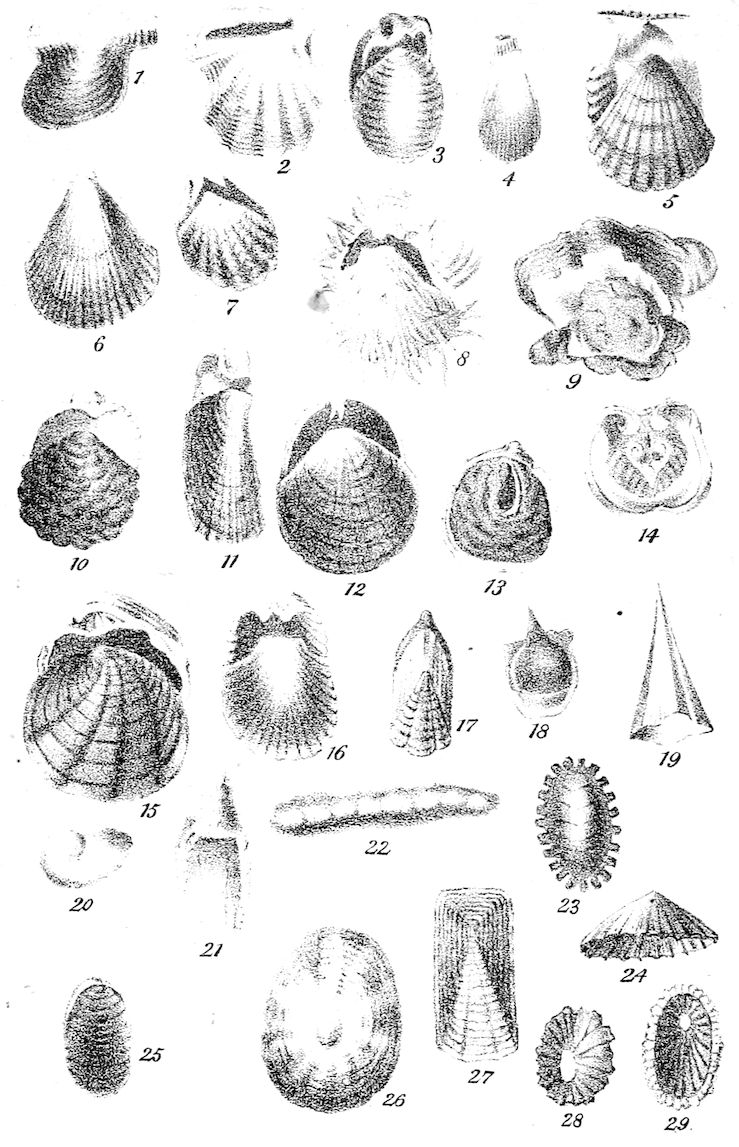
Pl. 9. 1. Avicula, 2 Meleagrina, 3 Pedum, 4 Lima, 5 Pecten, 6 Plagiostoma 7. Plicatula, 8 Spondylus, 9 Gryphea, 10 Ostrea, 11. Vulsella, 12 Placuna, 13 Anomia, 14 Crania, 15 Orbicula, 16 Terebratula, 17 Lingula, 18 Hyalea, 19 Cleodora, 20 Limacina, 21 Cymbulia, 22 Chitonellus, 23 Chiton, 24 Patella, 25 Pleurobranchus, 26 Umbrella, 27 Parmophorus, 28 Emurginula, 29 Fissurella. P. S. Duval, Lith. Phila.
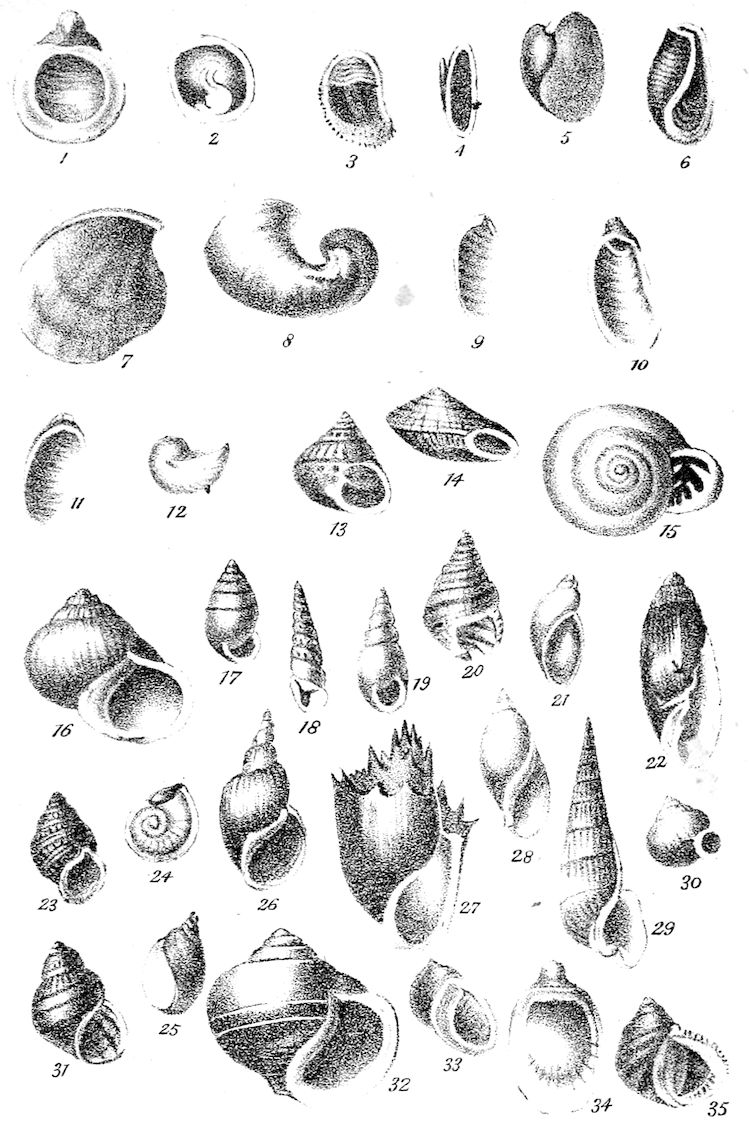
Pl. 10. 1 Pileopsis, 2 Calyptera, 3 Crepidula, 4 Ancylus, 5 Bullæa, 6 Bulla, 7 Aplysia, 8 Dolabella, 9 Parmacella, 10 Limax, 11 Testacella, 12 Vitrina, 13 Helix, 14 Carocolla, 15 Anostoma, 16 Helicina, 17 Pupa, 18 Clausilia, 19 Bulimus, 20 Achalina, 21 Succinea, 22 Auricula, 23 Cyclostoma 24 Planorbis, 25 Physa, 26 Lymnea, 27 Melania, 28 Melanospsis, 29 Pirena, 30 Valvata, 31 Paludina, 32 Ampularia, 33 Neritina, 34 Navicella, 35 Nerita. P. S. Duval, Lith. Phila.
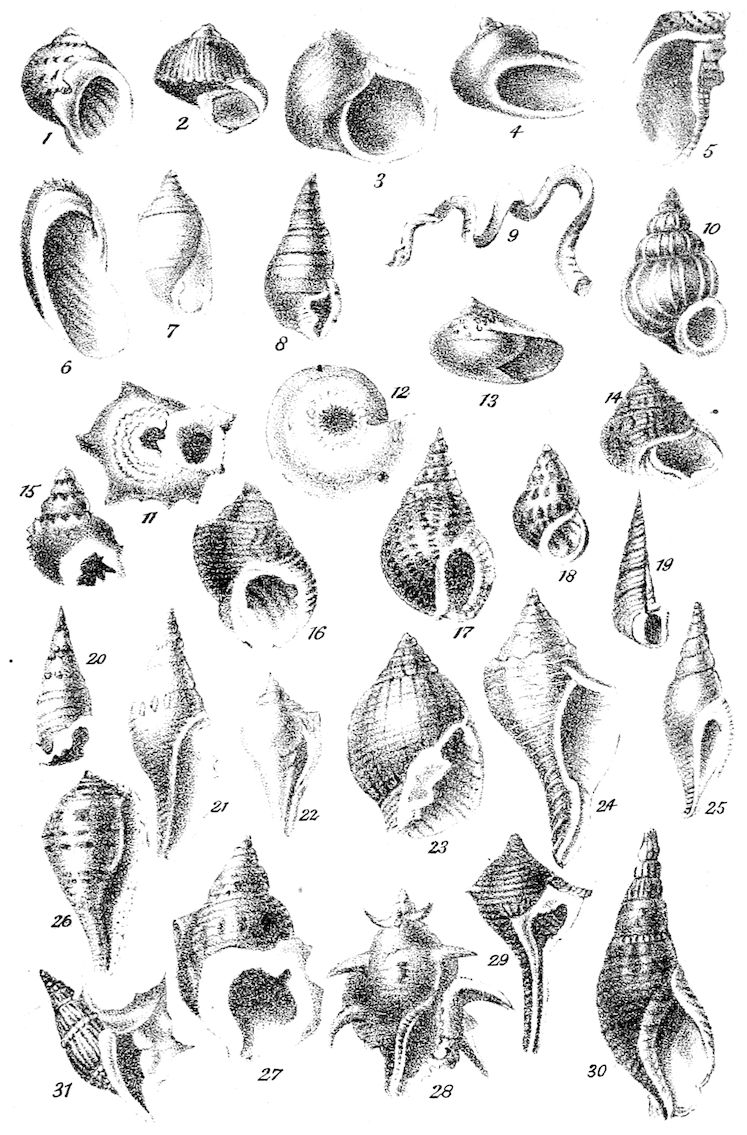
Pl. 11. 1 Natica, 2 Janthina, 3 Sigaretus, 4 Stomalella, 5 Stomatia, 6 Haliotis, 7 Tornatella, 8 Pyramidella, 9 Vermetus, 10 Scalaria, 11 Delphinula 12 Solarium, 13 Rotella, 14 Trochus, 15 Monodonata, 16 Turbo, 17 Planaxis, 18 Phasianella, 19 Turritella, 20 Cerithium 21 Pleurotoma, 22 Turbinella, 23 Cancillaria, 24 Fasciolaria, 25 Fusus, 26 Pyrula, 27 Struthiolaria, 28 Ranella, 29 Murex, 30 Triton, 31 Rostellaria. P. S. Duval Lith. Phila.
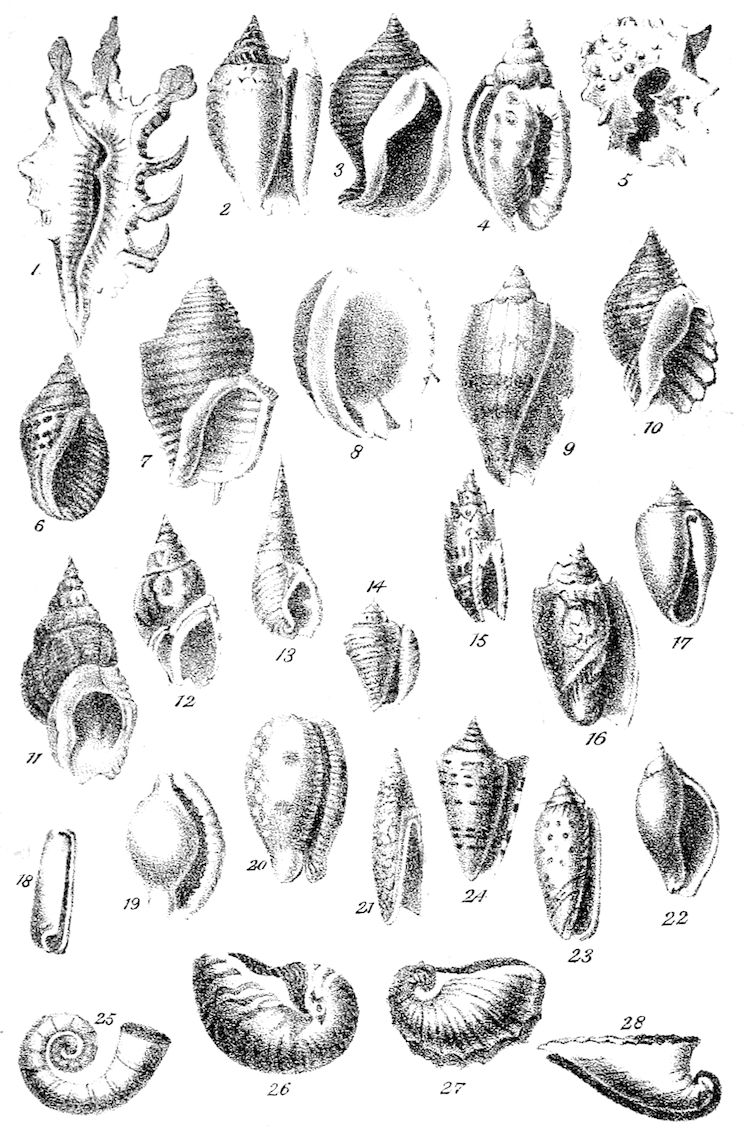
Pl. 12. 1 Pteroceras, 2 Strombas, 3 Cassidaria, 4 Cassis, 5 Ricinula, 6 Purpura, 7. Monoceros, 8 Concholepas, 9 Harpa 10 Dolium, 11 Buccinum 12 Eburna, 13 Terebra, 14 Columbella, 15 Mitra, 16 Voluta 17 Marginella 18 Volvaria, 19 Ovula, 20 Cyprea, 21 Terebellum, 22 Ancillaria, 23 Olivia, 24 Conus, 25 Spirula, 26 Nautilus 27 Argonauta, 28 Carinaria. P. S. Duval, Lith. Phila.
25
CONCHOLOGY.