Part 4 — SECTION IV. OF PAUSES.
Reading edition · Edition 2
A Pause, otherwise called a rest, is an absolute cessation of the voice, in speaking or reading, during a perceptible interval, longer or shorter, of time.
Comic Pauses often occur in Oratory. "Unaccustomed as I am to public speaking," is usually followed by a pause of this sort. A young gentleman, his health having been drunk at a party, afforded, in endeavoring to return thanks, a signal illustration of the Pause Comic. "Gentlemen," he began, "the Ancient Romans,"—(A pause,)—"gentlemen, the Ancient Romans,"—(Hear!)—"The Ancient Romans, Gentlemen,"—(Bravo! hear! hear!)—"Gentlemen—that is—the Ancient Romans"—"were very fine fellows, Jack, I dare say," added a friend, pulling the speaker down by the coat-tail.
That notable Ancient Roman, Brutus, is represented by Shakspeare as making a glorious pause: as "Who's here so vile that would not love his country? If any, speak, for him have I offended. I pause for a reply."
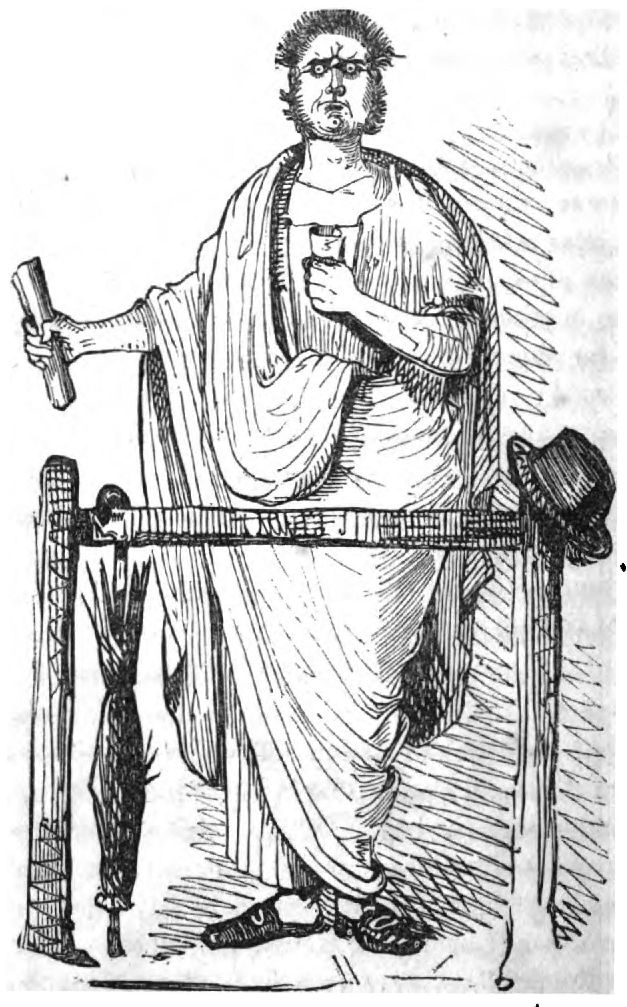
Original Size
Here of course, Brutus pauses, folds his arms, and looks magnanimous. We have heard, though, of an idle and impudent schoolboy, who, at a public recitation, when he had uttered the words "I pause for a reply," gravely took out his penknife and began paring his nails.
This was minding his paws with a vengeance.