Part 2 — SECTION III. OF THE ADJECTIVE PRONOUNS.
Reading edition · Edition 2
Adjective pronouns partake of the nature of both pronouns and adjectives. They may be subdivided into four sorts: the possessive, the distributive, the demonstrative, and the indefinite.
The possessive pronouns are those which imply possession or property. Of these there are seven; namely, my, thy, his, her, our, your, their.
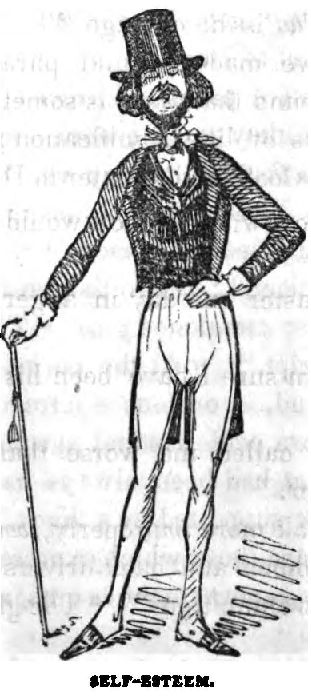
The word self is added to possessives; as, myself, yourself, "Says I to myself, says I." Self is also sometimes used with personal pronouns; as, himself, itself, themselves. His self is a common, but not a proper expression.
Original Size
The distributive are three; each, every, either; they denote the individual persons or things' separately, which, when taken together, make up a number. Each is used when two or more persons or things are mentioned singly; as, "each of the Catos;" "each or the Browns."
Every relates to one out of several; as,
"Every mare is a horse, but every horse is not a mare."
Either refers to one out of two; as,
"When I between two jockeys ride, I have a knave on either side."
Neither signifies "not either;" as, "Neither of the Bacons was related to Hogg."
The demonstrative pronouns precisely point out the subjects to which they relate; such are this and that, with their plurals these and those; as, "This is a Hoosier lad; that is a Yankee school-master."
This refers to the nearest person or thing, and to the latter or last mentioned; that to the most distant, and to the former or first mentioned; as, "This is a man; that is a nondescript."
"At the period of the Reformation in Scotland, a curious contrast between the ancient and modern ecclesiastical systems was observed; for while that had been always maintained by a Bull, this was now supported by a Knox"
The indefinite are those which express their subjects in an indefinite or general manner; as, some, other, any, one, all, such, &c.
When the definite article the comes before the word other, those who do not know better, are accustomed to strike out the he in the, and to say, t'other.
The same persons also use other in the comparative degree; for sometimes, instead of saying quite the reverse, or perhaps reverse, they avail themselves of the expression more t'other.
So much for the pronouns.