CHATTANOOGA AND ITS IMPORTANCE DURING THE CIVIL WAR
Reading edition
In 1863 Chattanooga was a very small town with a population of only 4,000. Notwithstanding the small population, it was the objective of both the Union and Confederate armies. Its importance was chiefly due to the railroads that intersected here. There were rail connections to the Mississippi River at Memphis; to the Ohio River via Nashville and Louisville; to the Atlantic at Savannah and Charleston via Atlanta, and to Richmond via Knoxville and Lynchburg. In addition to this, Chattanooga was located on the Tennessee River. Therefore, with every transportation facility possible, its possession was of vital importance. Union troops in possession of Chattanooga, meant a wedge through the Confederacy, because Chattanooga was the “key” to east Tennessee and northwest Georgia. Furthermore, it would discourage the forwarding of supplies and the transportation of troops back and forth from Richmond to the areas in west Tennessee and Mississippi. The section of east Tennessee in which Chattanooga is located is one of the most fertile sections in the entire South for the production of grain. Not only wheat, corn and hay, but plenty of beef, bacon, horses and mules. All of these were of vital importance in the support of an army. In fact, both Governments profited from the resources of this area.
Another reason for Chattanooga’s importance was a political reason. All of the mountainous region of east Tennessee in which Chattanooga is located was exceptionally sympathetic with the Union. President Lincoln and his military advisers regarded the possession of Chattanooga by the Union army as second only in importance to the capture of Richmond—the Confederate capital. It was by far the most important city in Tennessee to place Union forces since it would encourage the Unionist sentiment and relieve the loyal citizens from Confederate control.
Eventually two major battles were fought for possession of Chattanooga. First, the battle of Chickamauga on September 19-20, which was a Confederate victory. Two months later the battle of Chattanooga was fought. This was a three-day battle. At Orchard Knob, Nov. 23rd; Lookout Mountain, Nov. 24th; Missionary Ridge, Nov. 25th. This was a very decisive victory for the Union army.
NOTE: In reading of the battles, please remember that any name used applies strictly to their commands unless otherwise explained.
THE FIRST OCCUPATION OF CHATTANOOGA BY CONFEDERATES
At the outbreak of the Civil War, there were no Confederate soldiers in Chattanooga. They made their appearance in the spring of 1862—a year after the war started. These troops were commanded by Generals Floyd, Maxey and Leadbetter. It was only a short time until Union forces, commanded by General Mitchell, arrived. They shelled the city on June 7th and 8th, and the Confederates made a hasty exit. In August, General Braxton Bragg, commanding the Confederate army, invaded Chattanooga and started a campaign into Kentucky. After an unsuccessful campaign in Kentucky, Bragg was forced to fall back to Murfreesboro, Tennessee. At this time the Union army was at Nashville, Tennessee. On December 7 31, 1862, and January 1-2, 1863, the battle of Stones River, or Murfreesboro, was fought. This was a fierce battle which resulted in a Union victory. The victory enabled the Union army to spend the remainder of the winter in Murfreesboro, while the Confederates retreated southeastward to Tullahoma, Tennessee. At this time the Army of the Cumberland (Union) was commanded by Major-General William S. Rosecrans. The Army of Tennessee (Confederate) was commanded by General Braxton Bragg whom Fort Bragg, one of our most modern army posts, is named in honor of. Both armies were making preparations for future battles which they realized were forthcoming once winter was over. The Confederates posted a strong line of cavalry on the north side of the Duck river. Their infantry positions were strongly fortified. The winter months were long and severe, and you may be sure that both armies endured many hardships. The Union plans called for Rosecrans to take Chattanooga and Atlanta, both important railroad centers, during 1863. In fact, Chattanooga was an important railroad center as early as 1850. Both armies were rather idle for several months although Rosecrans was being urged to renew hostilities against Bragg.
THE TULLAHOMA CAMPAIGN
Finally, on June 23, 1863, Rosecrans left Murfreesboro, moving against Bragg at Tullahoma. By exercising very clever strategy in the form of a series of flanking movements, the Confederates were forced to give up one stronghold after another. The Confederates finally crossed the Tennessee River at Bridgeport and Caperton’s Ferry, Alabama, and moved directly into Chattanooga. The first arrival at Chattanooga was at the same hour that General Pickett made his famous charge at Gettysburg, namely near high noon on July 3rd. By this time the Union army had advanced to the western base of the Cumberland Mountain. The right of their line was at Winchester; the left at McMinnville. Rosecrans, with his headquarters at Winchester, was making preparations for another campaign for occupying Chattanooga. At this time Chattanooga was of utmost importance to both armies, and no doubt the largest prize from a military standpoint which the Army of the Cumberland ever contended for. The Confederates had destroyed the bridge across the Tennessee River at Bridgeport to delay the pursuit of the Union Army. The Union army consisted of three regular Army Corps; the 14th, commanded by Maj.-Gen. George H. Thomas; the 20th, commanded by Maj.-Gen. Alexander McCook, and the 21st, commanded by Maj.-Gen. Thomas L. Crittenden. The Cavalry Corps was commanded by Brig.-Gen. Robert Mitchell; the Reserve Corps was commanded by Maj.-Gen. Gordon Granger. The disposition of the Union forces was as follows:
Thomas was posted at Decherd; McCook at McMinnville, and Crittenden at Winchester. Again Rosecrans was urged to renew hostilities against Bragg. The Cumberland, Raccoon and Lookout Mountain ranges and the Tennessee River were some of the giant obstacles between Rosecrans and Chattanooga. To cross these required a maximum of time and supplies as it was quite a task. There were railroads to repair; the river bridge to be rebuilt. All of this required time and labor. It was humanly impossible for Rosecrans 8 to begin a forward movement at this time. By extending every effort possible, it was July 25th before the railroads were repaired. Another weighty consideration of Rosecrans was the necessary forage for the animals. Having knowledge that corn would not be ripe in east Tennessee and northern Alabama before the middle of August, Rosecrans insisted on waiting until that time before he launched another campaign. Officials of the War Department were eager for action on the part of Rosecrans.
On August 4th, Gen. Halleck sent a message to Rosecrans which said: “Your forces must move forward without delay. You will daily report the movement of each corps till you cross the Tennessee River.” Since Rosecrans was not ready for the movement, he replied: “Your dispatch ordering me to move forward without delay, reporting the movements of each corps till I cross the Tennessee River received. As I have determined to cross the river as soon as practicable, and have been making all preparations and getting such information as may enable me to do so without being driven back, like Hooker, I wish to know if your order is intended to take away my discretion as to the time and manner of moving my troops.” To this message Gen. Halleck replied: “The orders for the advance of your army, and that it be reported daily are peremptory.” This latter message did not set well with Rosecrans. He prepared his reply and after conferring with his corps commanders and receiving their assurance that they would support him, he sent the following message: Gen. Halleck: “My arrangements for beginning a continuous movement will be completed and the execution begun Monday next. We have information to show that crossing the Tennessee River between Bridgeport and Chattanooga is impracticable, but not enough to show whether we had better cross above Chattanooga and strike Cleveland, or below Bridgeport and strike in their rear. The preliminary movement of troops for the two cases are quite different. It is necessary to have our means of crossing the river completed and our supplies provided to cross 60 miles of mountains and sustain ourselves during the operations of crossing and fighting, before we move. To obey your order literally would be to push our troops into the mountains on narrow and difficult roads, destitute of pasture and forage; and short of water where they would not be able to maneuver as exigencies demand, and would certainly cause ultimate delay and probable disaster. If, therefore, the movement which I propose can not be regarded as obedience to your order, I respectfully request a modification of it or to be relieved from the command.”
Gen. Halleck wired him as follows: “I have communicated to you the wishes of the Government in plain and unequivocal terms. The objective has been stated, and you have been directed to lose no time in reaching it. The means you are to employ and the roads you are to follow are left to your own discretion. If you wish to promptly carry out the wishes of the Government you will not stop to discuss mere details. In such matters I do not interfere.”
Rosecrans replied the same day. His message read: “Your dispatch received. I can only repeat the assurance given before the issuance of the order. This army shall move with all dispatch compatible with the successful execution of our work. We are pressing everything to bring up forage for our animals. The present rolling stock of the road will barely suffice to keep us day by day here, but I have bought 50 more freight cars, which are arriving. Will advise you daily.” There was no further interference from Washington.
9
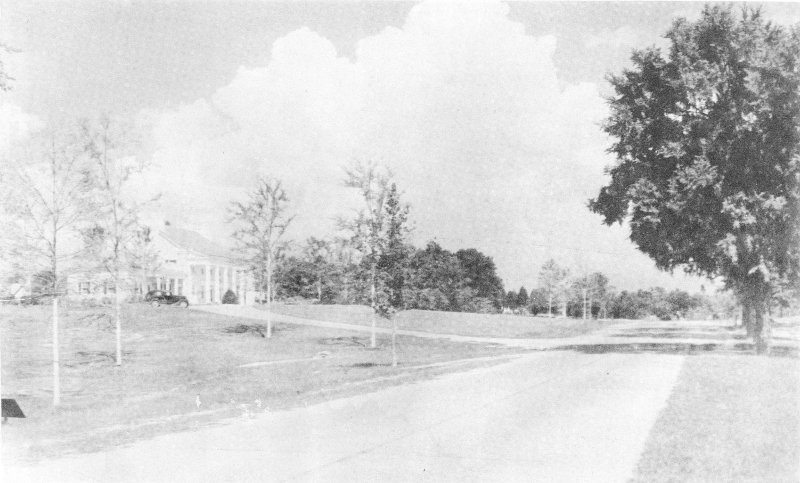
Park Headquarters, Chickamauga Battlefield
10
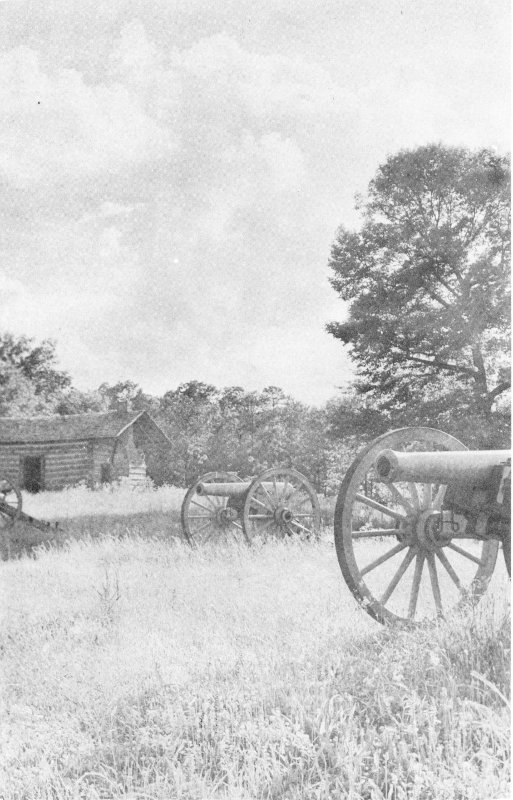
Snodgrass House, Chickamauga Battlefield
11