Front matter
Reading edition
[Transcriber's notes]
This is derived from a copy on the Internet Archive: http://www.archive.org/details/centurycolumbus01walsgoog Page numbers in this book are indicated by numbers enclosed in curly braces, e.g. {99}. They have been located where page breaks occurred in the original book. Obvious spelling or typographical errors have been corrected. Extended quotations and citations are indented. Footnotes have been renumbered to avoid ambiguity, and relocated to the end of the enclosing paragraph. The page links in the Table of Illustrations have been adjusted to always land above the image. Scroll down if the image is not in the viewing window.
[End transcriber's notes]
BY THE SAME AUTHOR FORDHAM UNIVERSITY PRESS SERIES MAKERS OF MODERN MEDICINE Lives of the men to whom nineteenth century medical science owes most. Second Edition. New York, 1910. $2.00 net. THE POPES AND SCIENCE The story of Papal patronage of the sciences and especially medicine. 45th thousand. New York, 1911. $2.00 net. MAKERS OF ELECTRICITY Lives of the men to whom important advances in electricity are due. In collaboration with Brother Potamian, F.S.C., Sc.D. (London), Professor of Physics at Manhattan College. New York, 1909. $2.00 net. EDUCATION, HOW OLD THE NEW Addresses in the history of education on various occasions. 3rd thousand. New York, 1911. $2.00 net. OLD-TIME MAKERS OF MEDICINE The story of the students and teachers of the sciences related to medicine during the Middle Ages. New York 1911. $2.00 net. MODERN PROGRESS AND HISTORY Academic addresses on How Old the New. New York, 1911. $2.00 net. THE THIRTEENTH GREATEST OF CENTURIES 5th edition (50,000). 116 illustrations, 600 pages. Catholic Summer School Press, 1911. Postpaid $3.50. IN PREPARATION MAKERS OF ASTRONOMY
THE DOLPHIN PRESS SERIES
CATHOLIC CHURCHMEN IN SCIENCE
First and second series, each $1.00 net.
PSYCHOTHERAPY Lectures on The Influence of the Mind on the Body delivered at Fordham University School of Medicine. Appletons, New York, 1912, $6.00 net.
SEBASTIANO DEL PIOMBO, CHRISTOPHER COLUMBUS (METROPOLITAN MUSEUM. NEW YORK)
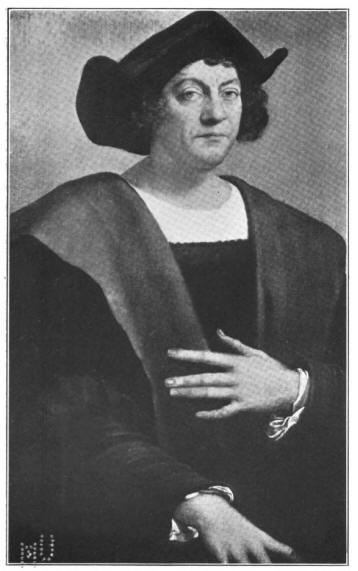
The Century of Columbus
BY JAMES J. WALSH, K.C.St.G., M.D., Ph.D., LL.D. LITT.D. (Georgetown), Sc.D. (Notre Dame) PROFESSOR OP PHYSIOLOGICAL PSYCHOLOGY AT THE CATHEDRAL COLLEGE; LIFE MEMBER OF THE NEW YORK HISTORICAL SOCIETY, MEMBER OF THE NEW YORK ACADEMY OF MEDICINE. OF THE GERMAN AND FRENCH SOCIETIES OF THE HISTORY OF MEDICINE. OF THE ITALIAN SOCIETY FOR THE HISTORY OF THE NATURAL AND THE MEDICAL SCIENCES, OF THE ST. LOUIS MEDICAL HISTORY CLUB, THE NEW ORLEANS PARISH MEDICAL SOCIETY, A.M.A., A.A.A.S., ETC. WITH EIGHTY-SIX ILLUSTRATIONS CATHOLIC SUMMER SCHOOL PRESS New York, 1914 Copyright, 1914 James J. Walsh THE QUINN & BODEN CO. PRESS RAMWAY, N. J.
To The Knights of Columbus
for whom the material here presented in book form was originally gathered for lectures in many parts of the country and whose hearty interest in the dissemination of historical truth has encouraged its completion, this book is fraternally and respectfully dedicated by the author.
"There come from time to time, eras of more favorable conditions, in which the thoughts of men draw nearer together than is their wont, and the many interests of the intellectual world combine in one complete type of general culture. The fifteenth century ... is one of these happier eras; and what is sometimes said of the age of Pericles is true of that of Lorenzo--it is an age productive of personalities, many-sided, centralized, complete. Here, artists and philosophers and those whom the action of the world has elevated and made keen, do not live in isolation, but breathe a common air, and catch light and heat from each other's thoughts. There is a spirit of general elevation and enlightenment in which all alike communicate. ... That solemn fifteenth century can hardly be studied too much, not merely for its positive results in the things of the intellect and the imagination, its concrete works of art, its special and prominent personalities, with their profound aesthetic charm, but for its general spirit and character, for the ethical qualities of which it is a consummate type."
Walter Pater, The Renaissance.
{vii}