THE CENTURY’S AFTER-THE-WAR SERIES
Reading edition
GREAT EVENTS IN AMERICAN PROGRESS
DURING THE HALF-CENTURY FOLLOWING THE CIVIL WAR
DESCRIBED BY AMERICAN JOURNALISTS AND BY WRITERS HAVING PERSONAL AND SPECIAL KNOWLEDGE OF IMPORTANT INCIDENTS
PREFATORY EDITORIAL NOTE
Two generations of readers have entered on the field of action since the Civil War marked the end of what may be called the formative era of American life. Twenty-eight years ago THE CENTURY began its memorable Civil War Series, which gave the surviving leaders, Joseph E. Johnston, Beauregard, Longstreet, and their valiant colleagues on the Confederate side, a chance to be read with calm appreciation by the people of the North, and brought to the reviving people of the South dispassionate accounts by Grant, Sherman, McClellan, Porter, and their fighting coadjutors on land and sea, of the motives and deeds which shaped the heroic contest and resulted in a reunited country. Through the medium of personal recollection, with fairness and without feeling, the brave men of both sides fought their battles over again before an open-minded audience of all the people, and for the first time since slavery became the cause of strife, both parts of the country shook hands over “the bloody chasm” in mutual admiration and respect.
The forty-seven years which have elapsed since Appomattox have also had their conflicts, though most of them have been waged in the ways of peace. They have resulted, however, in forcing the republic, shaped by the aims of the fathers, into the wider domain of empire required by the expanding purposes of the sons. In order to bring the great happenings of this period vividly before the new generations of readers, THE CENTURY has organized an After-the-War Series. It will treat of such compelling and lasting influences as the attempt to “recall” Andrew Johnson, seventeenth President, by impeachment; the acquisition of Alaska, with its great promise for the future; the settlement of the Alabama Claims, which brought about a new status for the United States with Europe; the memorable attempt to make Horace Greeley President, which in a way may be compared to the present campaign of the “Progressives”; the near ship-wreck of the Hayes-Tilden contest; the chain of measures and financial disasters from “Black Friday” and the Crédit Mobilier to the time when the nation kept its faith by the resumption of specie payments; the large features of Reconstruction, still being worked out in the South; the victory of civil-service reform, beginning with Cleveland’s election over Blaine; the solidifying of the Monroe Doctrine in the Venezuelan dispute, which prepared the way for the Panama Canal; the diplomacy of the war with Spain, by which the republic became an empire; and also articles describing the remarkable Bryan conventions, the progress of conservation, the battle with the trusts, and the gigantic problem of organized labor. In its total effect the series will reveal the drift of life in the United States.
Each of these commanding subjects will be treated by a prominent American journalist having particular acquaintance with the theme, and also, where supplemental articles are necessary, by writers having special knowledge of these historic dramas of American progress and personal contact with the actors. In this year of political conflict Colonel Watterson’s article, which begins the series, has a timely as well as a distinct personal interest.

THE HUMOR AND TRAGEDY OF THE GREELEY CAMPAIGN
BY HENRY WATTERSON
I
AMONG the many misconceptions and mischances which befell the slavery agitation in the United States and finally led a kindred people into actual war, the idea that got afloat after this war, that every Confederate was a Secessionist, best served the ends of the radicalism which sought to reduce the South to a conquered province, and as such to reconstruct it by hostile legislation supported, wherever needed, by force.
Andrew Johnson perfectly understood that a great majority of the men who were arrayed on the Southern side had taken the field against their better judgment through pressure of circumstance. They were Union men who had opposed Secession and clung to the old order. Not merely in the Border States did this class rule, but in the Gulf States it held a respectable minority until the shot fired upon Sumter drew the call for troops from Lincoln. The Secession leaders who had staked their all upon the hazard knew that to save their movement from collapse it was necessary that blood be sprinkled in the faces of the people. Hence the message from Charleston,
With cannon, mortar, and petard, We tender you our Beauregard,
with the response from Washington, precipitated the conflict of theories into a combat of arms for which neither party was prepared.
The debate ended, battle at hand, Southern men had to choose between the North and the South, between their convictions and predilections on one side and expatriation on the other side, resistance to invasion, not secession, the issue. But, four years later, when in 1865 all that they had believed and feared in 1861 had come to pass, these men required no drastic measures to bring them to terms. Events more potent than acts of Congress had already reconstructed them. Lincoln, with a forecast of this, had shaped his ends accordingly. Johnson, himself a Southern man, understood it even better than Lincoln, and backed by the legacy of Lincoln, he proceeded not very skilfully to build upon it.
The assassination of Lincoln, however, had played directly into the hands of the radicals, led by Ben Wade, in the Senate, and Thaddeus Stevens in the House. Prior to that baleful night they had fallen behind the marching van. The mad act of Booth put them upon their feet and brought them to the front. They were implacable men, politicians equally of resolution and ability. Events quickly succeeding favored them and their plans. It was not alone Johnson’s lack of temper and tact that gave them the whip-hand. His removal from office would have opened the door of the White House to Wade, so that strategically Johnson’s position was from the beginning beleaguered and, before the close, came perilously near to being untenable.
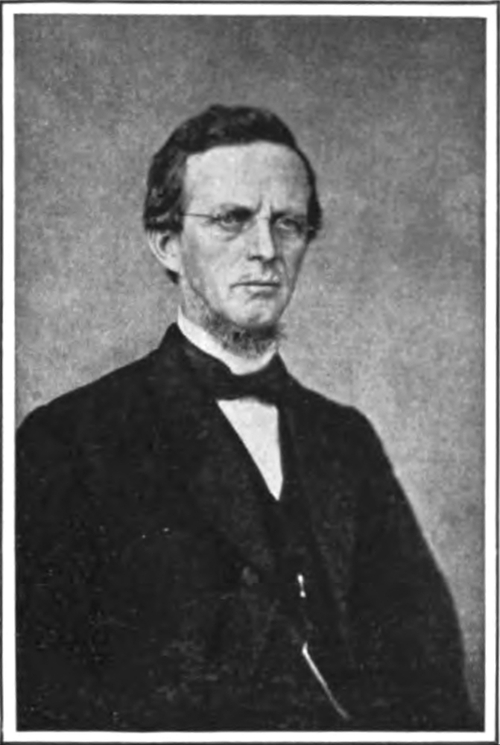
From a photograph taken about 1872, owned by Mr. F. H. Meserve
LYMAN TRUMBULL
Grant, who, up to the time of his nomination for the Presidency, had had no partizan conviction, not Wade, the uncompromising extremist, came after, and inevitably four years of Grant had again divided the triumphant Republicans. This was the situation during the winter of 1871–72, when the approaching Presidential election brought the country face to face with an extraordinary state of affairs. The South was in irons. The North was growing restive. Thinking people everywhere felt that conditions so anomalous to our institutions could not last.
II
JOHNSON had made a bungling attempt to carry out the policies of Lincoln and had gone down in the strife. The Democratic party had reached the ebb-tide of its disastrous fortunes. It seemed the merest reactionary. A group of influential Republicans, for one cause or another dissatisfied with Grant, held a caucus and issued a call for what they described as a Liberal Republican Convention to assemble in Cincinnati, May 1, 1872.[1]
A Southern man and a Confederate soldier, a Democrat by inheritance and conviction, I had been making in Kentucky an unequal fight for the acceptance of the inevitable. The line of cleavage between the old and the new South I had placed upon the last three amendments to the Constitution, naming them the Treaty of Peace between the sections. The negro must be invested with the rights conferred upon him by these amendments, however mistaken and injudicious the South might think them. The obsolete black laws instituted during the slave régime must be removed from the statute-books. The negro, like Mohammed’s coffin, swung in mid-air. He was neither fish, flesh, nor fowl, nor good red herring. For our own sake we must habilitate him, educate and elevate him, make him, if possible, a contented and useful citizen. Failing of this, free government itself might be imperiled.
I had behind me the intelligence of the Confederate soldiers almost to a man. They, at least, were tired of futile fighting, and to them the war was over. But there was an element, especially in Kentucky, which wanted to fight when it was much too late—old Union Democrats and Union Whigs—who clung to the hull of slavery when the kernel was gone, and proposed to win in politics what had been lost in battle.
The leaders of this belated element were in complete control of the political machinery of the State. They regarded me as an impudent upstart, since I had come to Kentucky from Tennessee as little better than a carpet-bagger, and had done their uttermost to put me down and drive me out.
I was a young fellow of two and thirty, of boundless optimism and with my full share of self-confidence, no end of physical endurance and mental vitality, and having some political as well as newspaper experience. It never crossed my fancy that I could fail. I met resistance with aggression, answered attempts at bullying with scorn, generally irradiated by laughter. Yet I was not wholly blind to consequences and the admonitions of prudence, and when the call for a Liberal Republican Convention appeared, I realized that, interested as I was in what might come of it, if I expected to remain a Democrat in a Democratic community, and to influence and lead a Democratic following, I must proceed with caution. Though many of those proposing the new movement were familiar acquaintances, some of them personal friends, the scheme was, as it were, in the air. Its three newspaper bell-wethers, Samuel Bowles of the Springfield “Republican,” Horace White of the Chicago “Tribune,” and Murat Halstead of the Cincinnati “Commercial,” were specially well known to me; so were Horace Greeley, Carl Schurz, and Charles Sumner. Stanley Matthews was my kinsman; George Hoadley and Cassius M. Clay were next-door neighbors. But they were not the men I had trained with—not my “crowd,”—and it was a question how far I might be able to reconcile myself, not to mention my political associates, to such company, even conceding that they proceeded under good fortune with a good plan, offering the South extrication from its woes and the Democratic party an entering wedge into a solid and hitherto irresistible Republicanism.
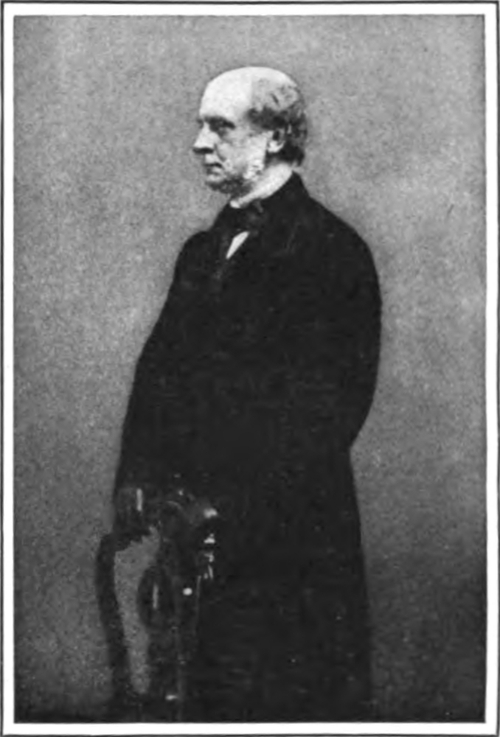
From a photograph taken about 1872, owned by Mr. F. H. Meserve
CHARLES FRANCIS ADAMS
Nevertheless, I resolved to go a little in advance to Cincinnati, to have a look at the stalking-horse there to be offered, free to take it or leave it, as I liked, my bridges and lines of communication still open and intact.
III
A LIVELIER and more variegated omnium-gatherum was never assembled. They had already begun to pour in when I arrived. There were long-haired and spectacled doctrinaires from New England, and short-haired and blatant emissaries from New York, mostly, as it turned out, friends of Horace Greeley. There were brisk Westerners from Chicago and St. Louis. If Whitelaw Reid, who had come as Greeley’s personal representative, had his retinue, so had Horace White and Carl Schurz. There were a few rather overdressed persons from New Orleans brought up by Governor Warmouth, and a motley array of Southerners of every sort, who were ready to clutch at any straw that promised relief to intolerable conditions. The full contingent of Washington correspondents was there, of course, with sharpened eyes and pencils, to make the most of what they had already begun to christen a conclave of cranks.
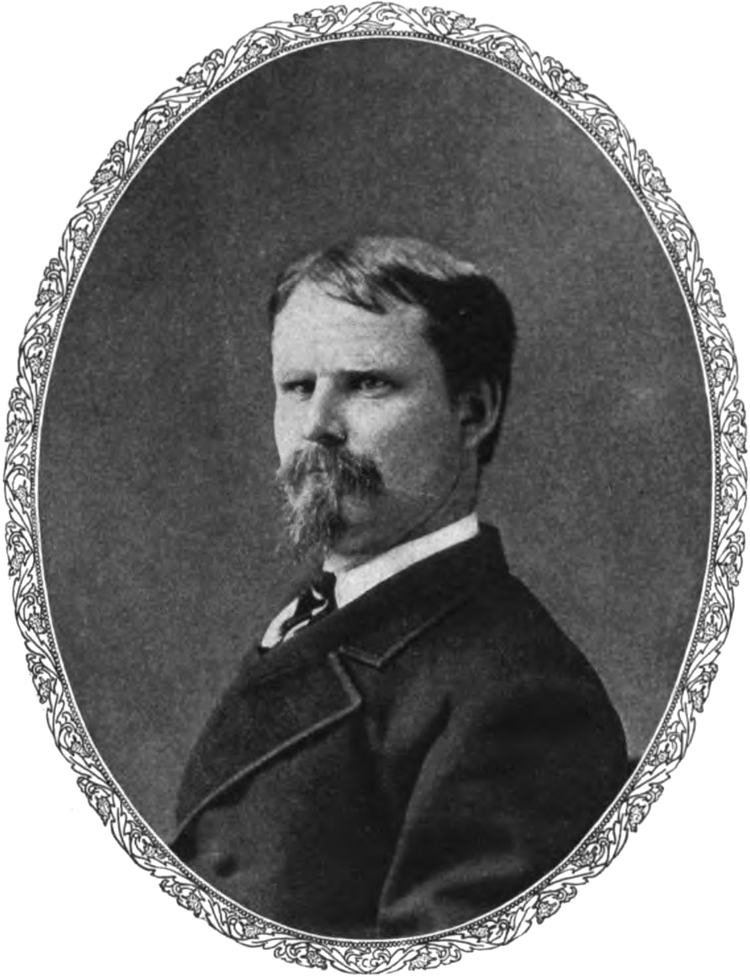
From a photograph taken in 1872
HENRY WATTERSON
Bowles and Halstead met me at the station, and we drove to the St. Nicholas Hotel, where White and Schurz were awaiting us. Then and there was organized a fellowship of the first three and myself which in the succeeding campaign went by the name of the Quadrilateral. We resolved to limit the Presidential nomination of the convention to Charles Francis Adams, Bowles’s candidate, and Lyman Trumbull, White’s candidate, omitting altogether, because of specific reasons urged by White, the candidacy of B. Gratz Brown, who, because of his Kentucky connections, had better served my purpose. The very next day the secret was abroad, and Whitelaw Reid came to me to ask why, in a newspaper combine of this sort, the “New York Tribune” had been left out.
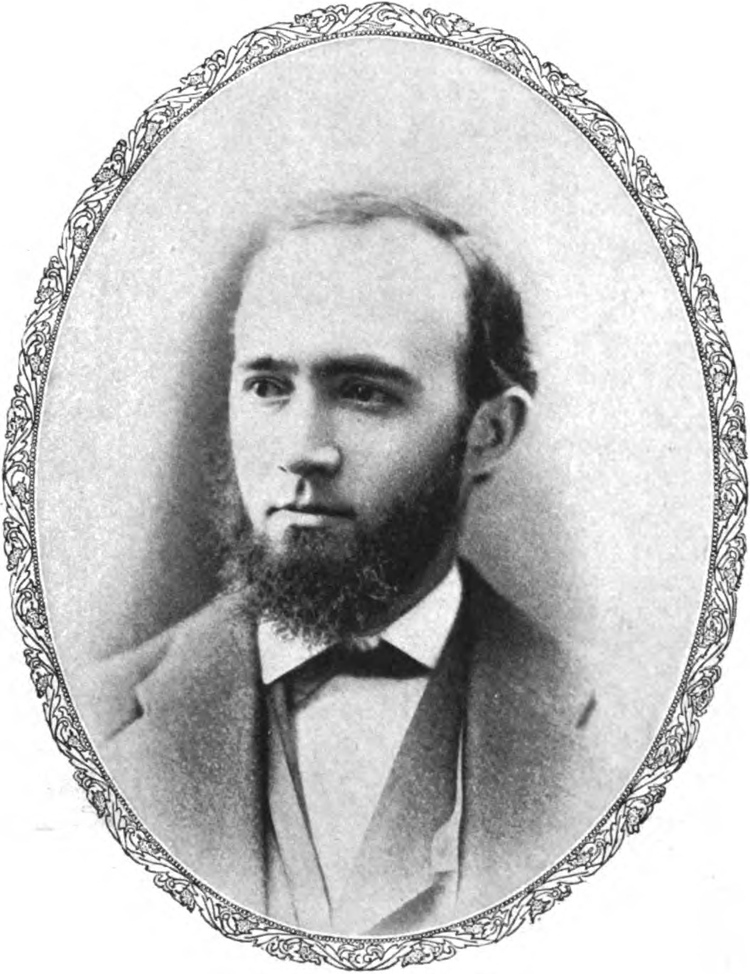
From a photograph taken in 1872
HORACE WHITE
To my mind it seemed preposterous that it had been, or should be, and I stated as much to my new colleagues. They offered objection which to me appeared perverse, if not childish. To begin with, they did not like Reid. He was not a principal, like the rest of us, but a subordinate. Greeley was this, that, and the other; he could never be relied upon in any coherent, practical plan of campaign; to talk about him as a candidate was ridiculous. I listened rather impatiently, and finally I said: “Now, gentlemen, in this movement we shall need the ‘New York Tribune.’ If we admit Reid, we clinch it. You will all agree that Greeley has no chance of a nomination, and so, by taking him in, we both eat our cake and have it.” On this view of the case Reid was invited to join us, and that very night he sat with us at the St. Nicholas, where from night to night until the end we convened and went over the performances and developments of the day and concerted plans for the morrow.
As I recall these symposiums, amusing and plaintive memories rise before me.
The first serious business that engaged us was the killing of the boom for Judge David Davis of the Supreme Court, which was assuming definite and formidable proportions. The preceding winter it had been organizing at Washington under the ministration of some of the most astute politicians of the time, mainly, however, Democratic members of Congress. A party of these had brought the boom to Cincinnati, opening headquarters well provided with the requisite commissaries. Every delegate who came in that could be reached was laid hold of and conducted here.
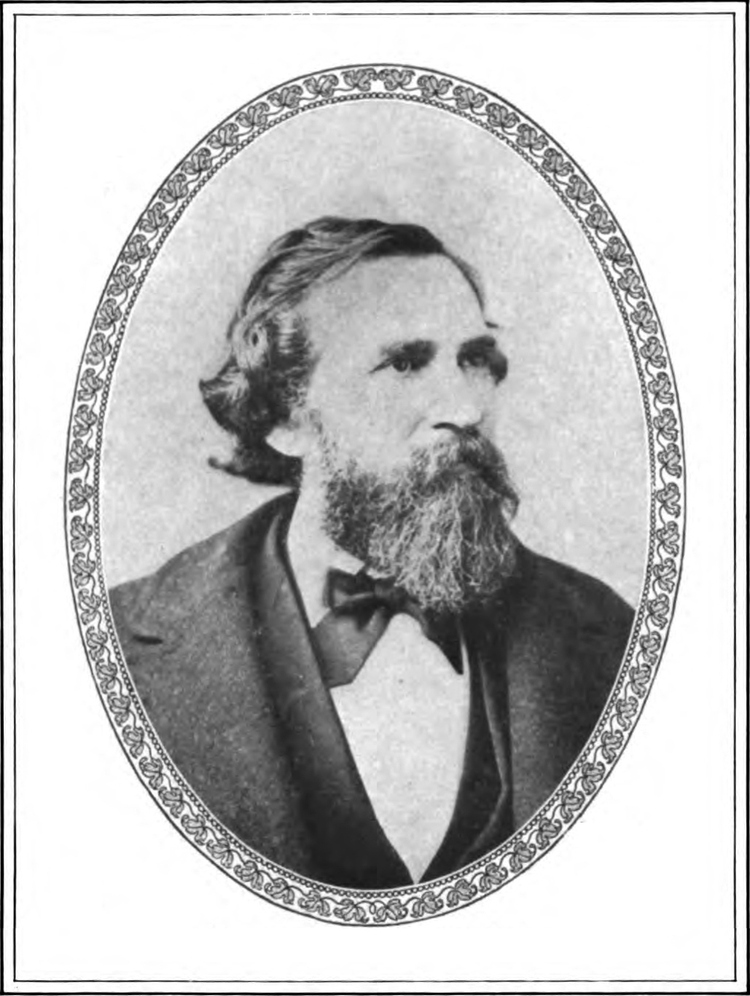
From a photograph by Sarony, taken in 1872
SAMUEL BOWLES
We considered this flat burglary. It was a gross infringement upon our preserve. What business had the professional politicians with a great reform movement? The influence and dignity of journalism were involved and imperiled. We, its custodians, could brook no such defiance from intermeddling office-seekers, especially from brokendown Democratic office-seekers.
The inner sanctuary of our proceedings was a common drawing-room between two bedchambers shared by Schurz and me. Here we repaired after supper to smoke the pipe of fraternity and reform and to save the country. What could be done to kill off “D. Davis,” as we irreverently called the eminent and learned jurist, the friend of Lincoln, and the only aspirant having a “bar’l”? That was the question. We addressed ourselves to the task with earnest purpose, but characteristically. The power of the press must be invoked. It was our chief, if not our only, weapon. Each of us indited a leading editorial for his paper, to be wired to its destination and printed next morning, striking “D. Davis” at a prearranged and varying angle. Copies of these were made for Halstead, who, having with the rest of us read and compared the different screeds, indited one of his own in general comment and review for Cincinnati consumption. In next day’s “Commercial,” blazing under vivid head-lines, these leading editorials, dated “Chicago,” “New York,” “Springfield, Mass.,” and “Louisville, Ky.,” appeared with the explaining line, “‘The Tribune’ of to-morrow morning [or the ‘Courier-Journal’ or ‘Republican’] will say,” etc.
Wondrous consensus of public opinion! The Davis boom went down before it. The Davis boomers were paralyzed. The earth seemed to have arisen and hit them amidships. The incoming delegates were stopped and forewarned. Six months of adroit scheming was set at naught, and little more was heard of “D. Davis.”
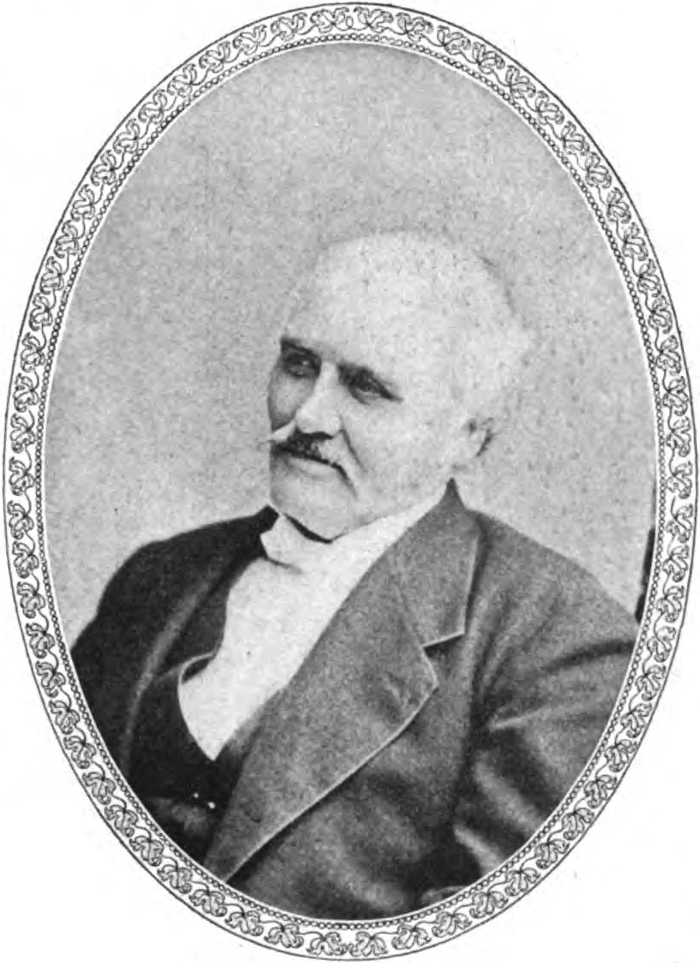
From a photograph by Gutekunst
ALEXANDER K. McCLURE
Like the Mousquetaires, we were equally in for fighting and foot-racing; the point with us being to “get there,” no matter how; the end—the defeat of the rascally machine politicians and the reform of the public service—being relied upon to justify the means. I am writing this forty years after the event, and must be forgiven the fling of my wisdom at my own expense and that of my associates in harmless crime. Reid and White and I are the sole survivors. We were wholly serious, maybe a trifle visionary, but as upright and patriotic in our intentions and as loyal to our engagements as it was possible for older, and maybe worse, men to be. For my part, I must say that if I have never anything on my conscience heavier than the massacre of that not very edifying, yet promising Davis “combine,” I shall be troubled by no remorse, but to the end shall sleep soundly and well.
In that immediate connection an amusing incident throwing some light upon the period thrusts itself upon my memory. The Quadrilateral, with Reid added, had finished its consolidation of public opinion just related, when the cards of Judge Craddock, Chairman of the Kentucky Democratic Committee, and of Colonel J. Stoddart Johnston, editor of the “Frankfort Yeoman,” the organ of the Kentucky Democracy, were brought from below. They had come to look after me, that was evident. By no chance could they have found me in more equivocal company. In addition to ourselves, bad enough from the Kentucky point of view, they found in the room Theodore Tilton and David A. Wells. When they crossed the threshold and were presented seriatim, the face of each was a study. Even an immediate application of whisky and water did not suffice to restore their lost equilibrium and bring them to their usual state of convivial self-possession. Colonel Johnston told me years after that when they went away they walked in silence a block or two, when the old judge, a model of the learned and sedate school of Kentucky politicians and jurists, turned to him and said: “It is no use, Stoddart. We cannot keep up with that young man or with these times. Lord, now lettest thou thy servant depart in peace!”
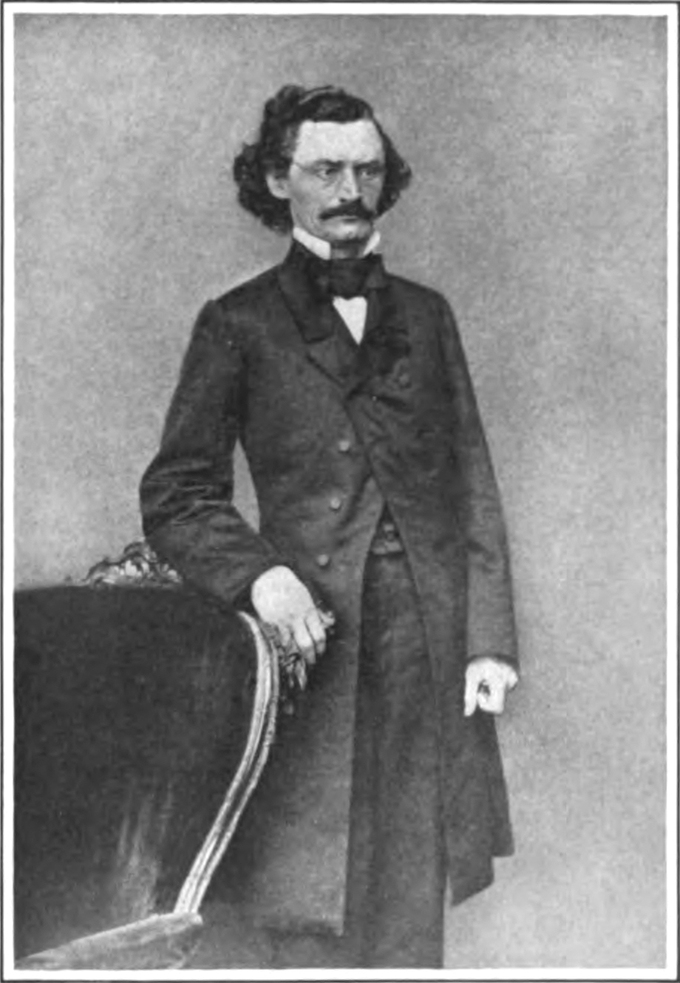
From a photograph taken in 1861, owned by Mr. Frederick H. Meserve
CARL SCHURZ
The Jupiter Tonans of reform in attendance upon the convention was Colonel Alexander K. McClure of the Philadelphia “Times.” He was one of the handsomest and most imposing of men; Halstead himself was scarcely more so. McClure was personally unknown to the Quadrilateral, but this did not stand in the way of our asking him to dine with us as soon as his claims to fellowship in the good cause of reform began to make themselves apparent through the need of bringing the Pennsylvania delegation to “a realizing sense.”
As he entered the room, he looked like a god, nay, he acted like one. Schurz first took him in hand. With a lofty courtesy that I have never seen equaled, he tossed his inquisitor into the air. Halstead came next, trying him upon another tack, but fared no better than Schurz. Then I hurried to the rescue of my friends. McClure, now looking a bit bored and resentful, landed me somewhere near the ceiling.
It would have been laughable if it had not been ignominious. I took my discomfiture with the bad grace of silence throughout the brief, stiff, and formal meal which followed. But when it was over, and the party had risen from the table and was about to disperse, I collected my energies and resources for a final forlorn hope. I was not willing to remain so crushed or to confess myself so beaten, though I could not disguise from myself a feeling that all of us had been overmatched.
“McClure,” said I, with the cool and quiet resolution of despair, drawing him aside, “what in the —— do you want, anyhow?”
He looked at me with swift intelligence and a sudden show of sympathy, and then over at the others with a withering glance.
“What? With those cranks? Nothing.”
Jupiter descended to earth. I am afraid we actually took a glass of wine together. Anyhow, from that moment to the hour of his death we were the best of friends.
Without the inner circle of the Quadrilateral, which had taken matters into its own hands, were a number of persons, some of them disinterested and others simple curiosity- and excitement-seekers, who might be described as merely “lookers-on in Vienna.” The Sunday afternoon before the convention was to meet, we, the self-elect, fell in with a party of these in a garden “over the Rhine,” as the German quarter of Cincinnati is called. There was first general and rather aimless talk, then came a great deal of speech-making. Schurz started it with a few pungent observations intended to suggest and inspire some common ground of public opinion and sentiment. Nobody was inclined to dispute his leadership, but everybody was prone to assert his own. It turned out that each regarded himself, and wished to be regarded, as a man with a mission, having a clear idea how things were not to be done. There were civil-service reform protectionists and civil-service reform free traders. There were a few politicians, who were discovered to be spoilsmen, the unforgivable sin, and as such were quickly dismissed. The missing ingredient was coherence of belief and united action. Not a man of them was willing to commit or bind himself to anything. Edward Atkinson pulled one way, and William Dorsheimer exactly the opposite way. David A. Wells sought to get the two together; it was not possible. Sam Bowles shook his head in diplomatic warning. Horace White threw in a chink or so of a rather agitating newspaper independence, while Halstead, to the more serious-minded, was in an inflamed state of jocosity.
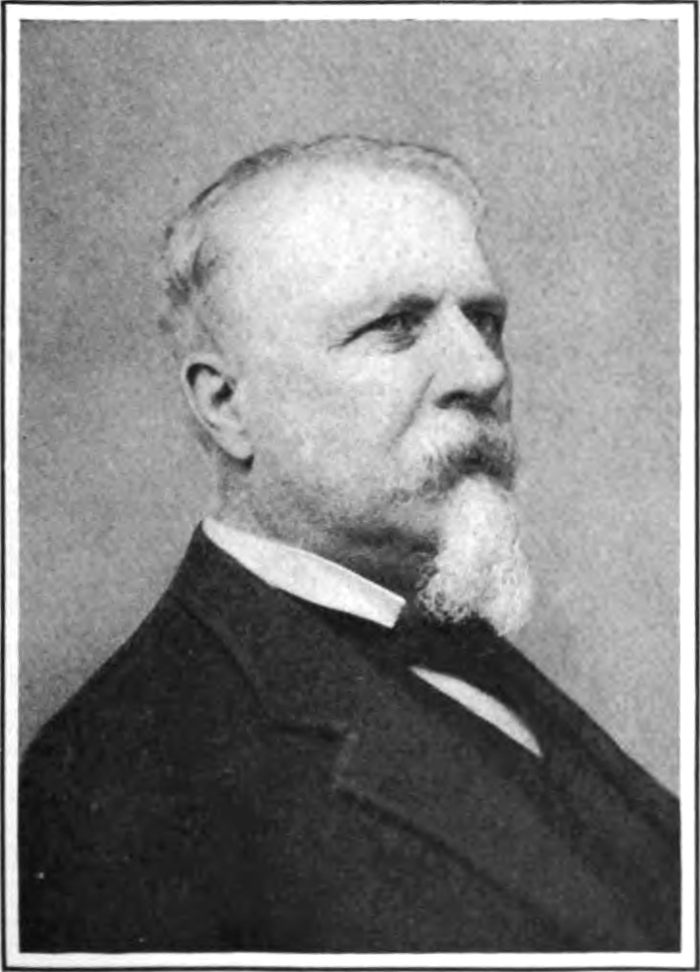
From a photograph by Sarony
MURAT HALSTEAD
All this was grist to the mill of the Washington correspondents, chiefly “story” writers and satirists, who were there to make the most out of an occasion in which the bizarre was much in excess of the conventional, with George Alfred Townsend and Donn Piatt to set the pace. Hyde of the “Republican” had come from St. Louis to keep special tab on Grosvenor of the “Democrat.” Though rival editors facing our way, they had not been admitted to the Quadrilateral. McCullagh and Nixon were among the earliest arrivals from Chicago. The lesser lights of the gild were innumerable. One might have mistaken it for an annual meeting of the Associated Press.
IV
THE convention assembled. It was in Cincinnati’s great music-hall. Schurz presided. Who that was there will never forget his opening words, “This is moving day.” He was just turned forty-two; in his physiognomy a scholarly Herr Doktor; in his trim, lithe figure a graceful athlete; in the tones of his voice an orator.
Even the bespectacled doctrinaires of the East, whence, since the days the Star of Bethlehem shone over the desert, wisdom and wise men have had their emanation, were moved to something like enthusiasm. The rest of us were fervid. Two days and a night and a half the Quadrilateral had the world in a sling and things its own way. It had been agreed, as I have said, to limit the field to Adams, Trumbull, and Greeley, and Greeley being out of it as having no chance whatever, the list was still further abridged to Adams and Trumbull. Trumbull not developing very strong, Bowles, Halstead, and I, even White, began to be sure that it would require only one ballot to nominate Adams—Adams the indifferent, who had sailed away for Europe, observing that he was not a candidate for the nomination, and otherwise intimating his disdain of it and us.
Matters being thus apparently cocked and primed, the convention adjourned over the first night of its session with everybody happy except the “D. Davis” contingent, which lingered, but knew its “cake was dough.” If we had forced a vote that night, as we might have done, we should have nominated Adams. But, inspired by the bravery of youth and inexperience, we let the golden opportunity slip. The throng of delegates and the vast audience dispersed.
In those days it being the business of my life to turn day into night and night into day, it was not my habit to go to bed much before the presses began to thunder below. This night proved no exception: being tempted by a party of Kentuckians, some of whom had come to back me and some to watch me, I did not quit their agreeable society until the “wee sma’ hours ayant the twal.”
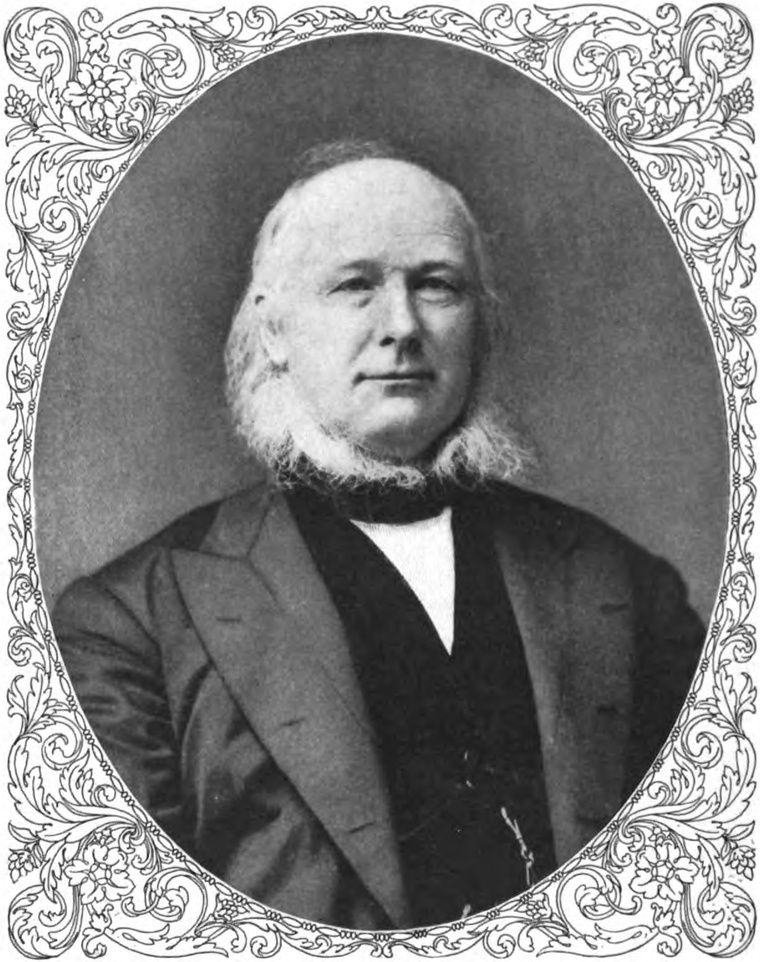
Photograph by Pearsall, taken in 1872
HORACE GREELEY
This portrait, unusual for the absence of spectacles, is owned by his daughter, Mrs. F. M. Clendenin.
Before turning in, I glanced at the early edition of the “Commercial” to see that something—I was too tired to decipher precisely what—had happened. It was, in point of fact, the arrival about midnight of General Frank P. Blair and Governor B. Gratz Brown of Missouri. I had in my possession documents which would have induced at least one of them to pause before making himself too conspicuous. The Quadrilateral, excepting Reid, knew this. We had separated upon the adjournment of the convention. I, being across the river in Covington, their search for me was unavailing. They were in despair. When, having had a few hours of rest, I reached the convention hall toward noon, it was too late.
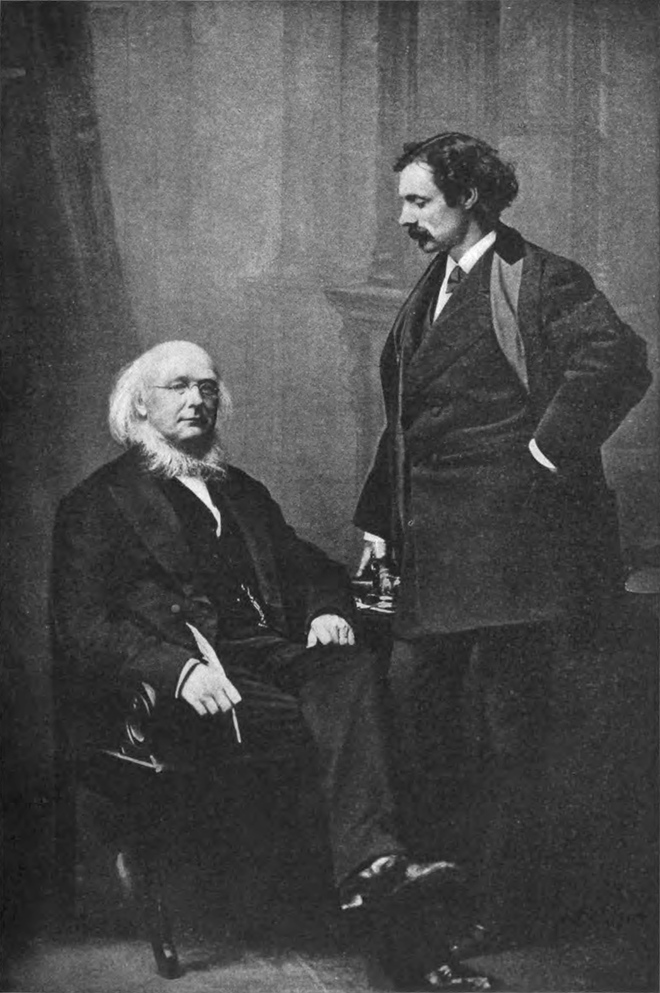
HORACE GREELEY AND WHITELAW REID
From a photograph taken in the editorial rooms of “The Tribune” shortly before the opening of the Greeley Campaign.
⇒ LARGER IMAGE
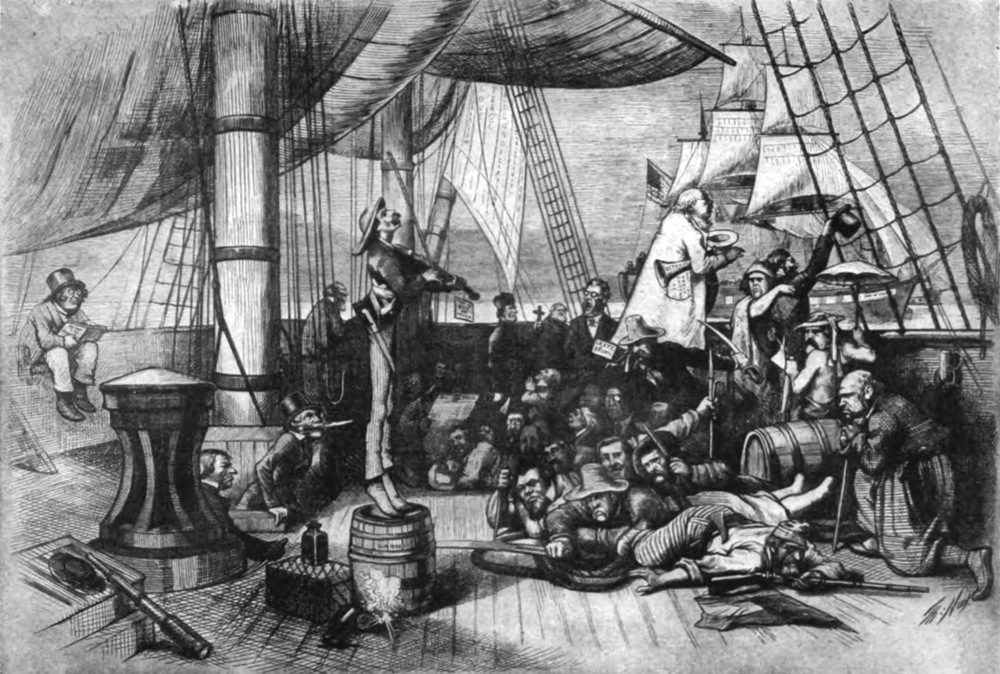
From a cartoon by Thomas Nast in “Harper’s Weekly”
NAST’S CARTOON, “‘THE PIRATES’ UNDER FALSE COLORS—CAN THEY CAPTURE THE ‘SHIP OF STATE’?”
At the left Sumner is reading a book; Andrew Johnson is behind the capstan; August Belmont in the gangway with a knife in his mouth; Fenton in the background; Whitelaw Reid on a keg of powder playing a violin tagged, “This is not an organ”; David Davis is behind Archbishop Hughes with the cross; Manton Marble is hiding behind his newspaper “The World”; Senator Tipton is bawling near Greeley; Carl Schurz is waving his hat to friends on the Ship of State and Theodore Tilton is embracing him; Governor Hoffman holds a parasol; Horatio Seymour kneels to Jeff Davis lying on the Confederate flag, behind him a group of Confederates with Wade Hampton standing near Greeley; John Kelly holds the Tammany knife, and above his head are faces of Tweed, and Mayor Oakey Hall with eye-glasses.
⇒ LARGER IMAGE
I got into the thick of the session in time to see the close, not without an angry collision with that one of the newly arrived actors whose coming had changed the course of events, and with whom I had lifelong relations of affectionate intimacy. Recently, when I was sailing in Mediterranean waters with Joseph Pulitzer, who, then a mere youth, was yet the secretary of the convention, he recalled the scene: the unexpected and not over-attractive appearance of B. Gratz Brown, the Governor of Missouri; his not very pleasing yet ingenious speech in favor of the nomination of Greeley; the stoical, almost lethargic indifference of Schurz. “Carl Schurz,” said Pulitzer, “was the most industrious and the least energetic man I have ever known and worked with. A word from him at that crisis would have completely routed Blair and squelched Brown. It was simply not in him to speak it.”
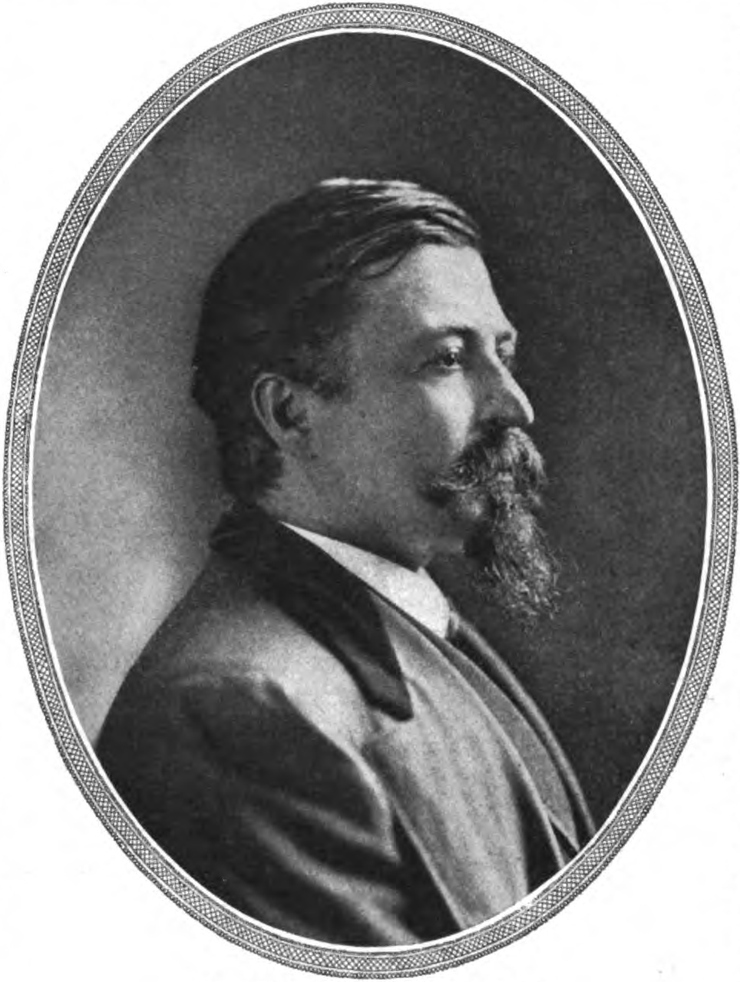
From a photograph by Sarony, taken in 1872
THOMAS NAST
The result was that Greeley was nominated amid a whirl of enthusiasm, his workers, with Whitelaw Reid at their head, having maintained an admirable and effective organization, and being thoroughly prepared to take advantage of the opportune moment. It was the logic of the event that B. Gratz Brown should be placed on the ticket with him.
The Quadrilateral was “nowhere.” It was done for. The impossible had come to pass. There arose thereafter a friendly issue of veracity between Schurz and me, which illustrates our state of mind. My version is that we left the convention hall together, with an immaterial train of after incidents; his that we did not meet after the adjournment. He was quite sure of this because he had ineffectually sought me. “Schurz was right,” said Joseph Pulitzer, upon the occasion of our yachting cruise just mentioned, “because he and I went directly from the hall with Judge Stallo to his home on Walnut Hills, where we dined and passed the afternoon.”
The Quadrilateral had been knocked into a cocked hat. Whitelaw Reid was the sole survivor. He was the only one of us who clearly understood the situation and thoroughly knew what he was about. He came to me and said: “I have won, and you people have lost. I shall expect that you stand by the agreement and meet me as my guests at dinner to-night. But, if you do not personally look after this, the others will not be there.” I was as badly hurt as any; but a bond is a bond, and I did as he desired, succeeding partly by coaxing and partly by insisting, though it was uphill work.
Frostier conviviality I have never sat down to than Reid’s dinner. Horace White looked more than ever like an iceberg; Sam Bowles was diplomatic, but ineffusive; Schurz was as a death’s head at the board; Halstead and I, through sheer bravado, tried to enliven the feast. But they would none of us, nor it, and we separated early and sadly, reformers hoist by their own petard.
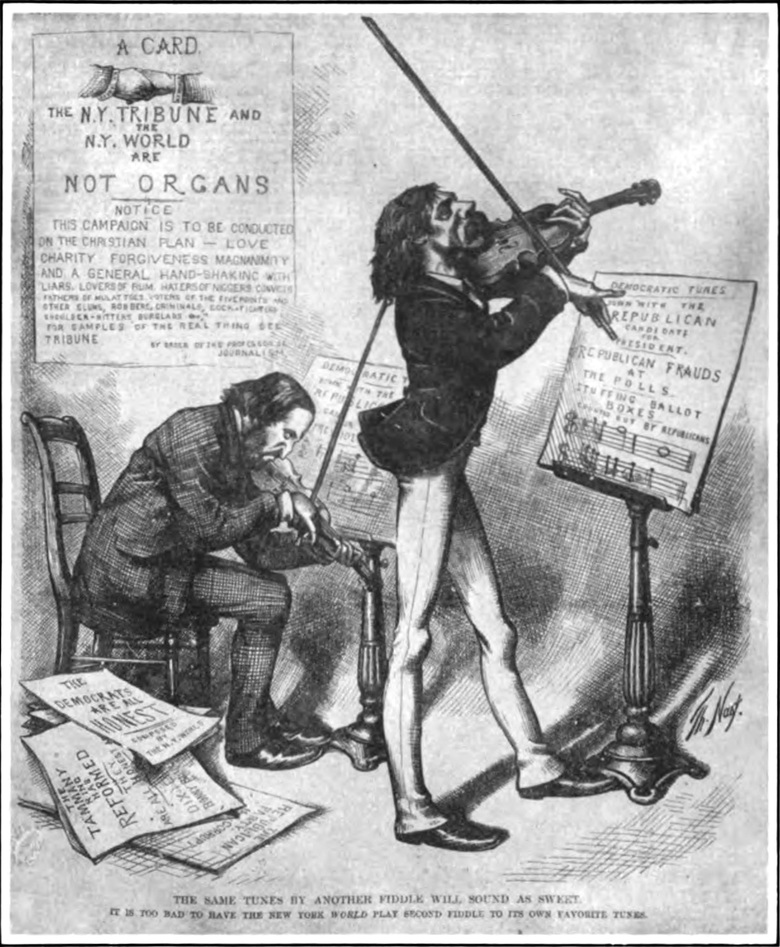
THE SAME TUNES BY ANOTHER FIDDLE WILL SOUND AS SWEET. IT IS TOO BAD TO HAVE THE NEW YORK WORLD PLAY SECOND FIDDLE TO ITS OWN FAVORITE TUNES.
From a cartoon by Thomas Nast in “Harper’s Weekly”
NAST’S CARTOON OF WHITELAW REID OF “THE TRIBUNE” AND MANTON MARBLE OF “THE WORLD” PLAYING IN CONCERT
V
THE reception by the country of the nomination of Horace Greeley was as inexplicable to the politicians as the nomination itself had been unexpected by the Quadrilateral. The people rose to it. The sentimental, the fantastic, and the paradoxical in human nature had to do with this. At the South an ebullition of pleased surprise grew into positive enthusiasm. Peace was the need, if not the longing, of the Southern heart, and Greeley’s had been the first hand stretched out to the South from the enemy’s camp,—very bravely, too, for he had signed the bail-bond of Jefferson Davis,—and quick upon the news flashed the response from generous men eager for the chance to pay something on a recognized debt of gratitude.
Except for this spontaneous uprising, which continued unabated in July, the Democratic party could not have been induced at its convention at Baltimore to ratify the proceedings at Cincinnati and formally to make Greeley its candidate. The leaders dared not resist it. Some of them halted, a few held out, but by midsummer the great body of them came to the front to head the procession.
Horace Greeley was a queer old man, a very medley of contradictions, shrewd and simple, credulous and penetrating, a master penman of the school of Swift and Cobbett, even in his odd, picturesque personality whimsically attractive and, as Seward learned to his cost, a man to be reckoned with where he chose to put his powers forth.
What he would have done with the Presidency had he reached it is not easy to say or to surmise. He was altogether unsuited for official life, for which, nevertheless, he had a longing. But he was not so readily deceived in men or misled in measures as he seemed, and as most people thought him.
His convictions were emotional, his philosophy experimental; but there was a certain method in their application to public affairs. He gave bountifully of his affection and his confidence to the few who enjoyed his familiar friendship; he was accessible and sympathetic, though not indiscriminating, to those who appealed to his impressionable sensibilities and sought his help. He had been a good party man and was temperamentally a partizan.
To him place was not a badge of bondage; it was a decoration, preferment, promotion, popular recognition. He had always yearned for office as the legitimate destination of public life and the honorable reward of party service. During the greater part of his career, the conditions of journalism had been rather squalid and servile. He was really great as a journalist. He was truly and highly fit for nothing else, but, seeing less deserving and less capable men about him advanced from one post of distinction to another, he wondered why his turn proved so tardy in coming, and when it would come. It did come with a rush. What more natural than that he should believe it real instead of the empty pageant of a vision?
After the first shock and surprise of the Cincinnati nomination, it had taken me only a day and a night to pull myself together and to plunge into the swim to help fetch the water-logged factions ashore. This was clearly indispensable to forcing the Democratic organization to come to the rescue of what would prove otherwise but a derelict upon a stormy sea. Schurz was deeply disgruntled. Before he could be appeased, a bridge found in what was called the Fifth Avenue Hotel Conference had to be constructed in order to carry him across the stream which flowed between his disappointed hopes and aims and what appeared to him an illogical and repulsive alternative. Like another Achilles, he had taken to his tent and sulked. He was harder to deal with than any of the Democratic file-leaders; but he finally yielded, and did splendid work in the campaign.
Carl Schurz was a stubborn spirit, not readily adjustable. He was a nobly gifted man, but from first to last an alien in an alien land. He once said to me, “If I should live a thousand years, they would still call me a Dutchman.” No man of his time spoke so well or wrote to better purpose. He was equally skilful in debate, an overmatch for Conkling and Morton, whom, especially in the French Arms matter, he completely dominated and outshone. As sincere and unselfish, as patriotic and as courageous, as any of his contemporaries, he could never attain the full measure of the popular heart and confidence, albeit reaching its understanding directly and surely. Within himself a man of sentiment, he was not the cause of sentiment in others. He knew this and felt it.
During the campaign the Nast cartoons in “Harper’s Weekly,” which while unsparing to the last degree to Greeley and Sumner, and treating Schurz with a kind of considerate, qualifying humor, nevertheless greatly offended him. I do not think Greeley minded them much, if at all. They were very effective, notably the “Pirate Ship,” which represented Greeley rising above the taffrail of a vessel carrying the Stars-and-Stripes and waving his handkerchief at the man-of-war Ship of State in the distance, while the political leaders of the Confederacy, dressed in true corsair costume, crouched below, ready to spring. Nothing did more to sectionalize Northern opinion and fire the Northern heart, or to lash the fury of the rank and file of those who were urged to vote as they had shot, and who had hoisted above them “the bloody shirt” for a banner.
In the first half of the canvass the impetus was with Greeley; the second half, beginning in eclipse, seemed about to end in something very like collapse. The old man seized his flag and set out upon his own account for a tour of the country. And right well he bore himself. If speech-making ever does any good toward the shaping of results, Greeley’s speeches surely should have elected him. They were marvels of impromptu oratory, mostly homely and touching appeals to the better sense and the magnanimity of a people not ripe or ready for generous impressions, convincing in their simplicity and integrity, unanswerable from any point of view of sagacious statesmanship or true patriotism, if the North had been in any mood to listen, to reason, and to respond.
I met him at Cincinnati and acted as his escort to Louisville and thence to Indianapolis, where others were waiting to take him in charge. He was in a state of querulous excitement. Before the vast and noisy audiences which we faced he stood apparently pleased and composed, delivering his words as he might have dictated them to a stenographer. As soon as we were alone he would break out into a kind of lamentation, punctuated by occasional bursts of objurgation. He especially distrusted the Quadrilateral, making an exception in my case as well he might, because, however his nomination had jarred my judgment, I had a real affection for him, dating back to the years immediately preceding the war, when I was wont to encounter him in the reporters’ galleries at Washington, which he preferred to using his floor privilege as an ex-member of Congress.
It was mid-October. We had heard from Maine. Indiana and Ohio had voted, and Greeley was for the first time realizing the hopeless nature of the contest. The South, in irons and under military rule and martial law sure for Grant, there had never been any real chance. Now it was obvious that there was to be no compensating ground-swell at the North. That he should pour forth his chagrin to one whom he knew so well and even regarded as one of his “boys” was inevitable. Much of what he said was founded on a basis of fact, some of it was mere suspicion and surmise, all of it came back to the main point that defeat stared us in the face.
I was glad and yet loath to part with him. If ever a man needed a strong friendly hand and heart to lean upon he did during those dark days—the end in darkest night nearer than any one could divine. He showed stronger mettle than had been allowed him; bore a manlier part than was commonly ascribed to his slovenly, slipshod habiliments and his aspect in which benignancy and vacillation seemed to struggle for the ascendancy. Abroad, the elements conspired against him. At home his wife lay ill, as it proved, unto death. The good gray head he still carried like a hero, but the worn and tender heart was beginning to break.
Happily the end came quickly. Overwhelming defeat was followed by overwhelming affliction. He never quitted his dear one’s bedside until the last pulse-beat, and then he sank beneath the load of grief. “‘The Tribune’ is gone and I am gone,” he said, and spoke no more.
The death of Greeley fell upon the country with a sudden shock. It aroused a wide-spread sense of pity and sorrow and awe. All hearts were hushed. In an instant the bitterness of the campaign was forgotten, though the huzzas of the victors still rent the air. President Grant, his late antagonist, with his cabinet, and the leading members of the two Houses of Congress, attended his funeral. As he lay in his coffin, he was no longer the arch-rebel leading a combine of buccaneers and insurgents, which the Republican orators and newspapers had depicted him, but the brave old apostle of freedom, who had done more than all others to make the issues upon which a militant and triumphant party had risen to power. The multitude remembered only the old white hat and the sweet, old baby face beneath it, heart of gold, and hand wielding the wizard pen; the incarnation of probity and kindness, of steadfast devotion to his duty, as he saw it, and to the needs of the whole human family. It was, indeed, a tragedy; and yet, as his body was lowered into its grave, there rose above it, invisible, unnoted, a flower of matchless beauty—the flower of peace and love between the parts of the Union to which his life had been a sacrifice.
The crank convention had builded wiser than it knew. That the Democratic party could ever have been brought to the support of Horace Greeley for President of the United States reads even now like a page out of a nonsense-book. That his warmest support should have come from the South seems an incredible, and was a priceless, fact. His martyrdom shortened the distance across the bloody chasm; his coffin very nearly filled it. The candidacy of Charles Francis Adams or of Lyman Trumbull would have meant a mathematical formula, with no solution of the problem, and as certain defeat at the end of it. Greeley’s candidacy threw a flood of light and warmth into the arena of deadly strife; it made a more equal and reasonable division of parties possible; it put the Southern half of the country in a position to plead its own case by showing the Northern half that it was not wholly recalcitrant, and it made way for real issues of pith and moment relating to the time instead of pigments of bellicose passion and scraps of ante bellum controversy.
In a word, Greeley did more by his death to complete the work of Lincoln than he could have done by a triumph at the polls and the term in the White House he so much desired. Though only sixty years of age, his race was run. Of him it may be truly written that he lived a life full of inspiration to his countrymen, and died not in vain, “our later Franklin” fittingly inscribed upon his tomb.