Volume 2 — From The Fortnightly Review. THE CLOUDS AND THE POOR.
Reading edition
No one can write upon the clouds without some reference to Mr. Ruskin's labors. Few will forget the four chapters in the first volume of "Modern Painters," dealing first with men's apathy for those forms of beauty which daily flit around us, and ending with the magnificent contrast between Turner and Claude, showing with what difference they had rendered the calm of the mist and the shock of the tempest, the crimson of the dawn and the fire of sunset We are, indeed, all of us too apathetic, and the summer and the winter clouds are alike unheeded by us. And yet our grey English clouds have impressed themselves upon even our language and our daily speech. Our word "sky" has nothing in common with the ciel of the French and the cielo of the Italians, which through the Latin coelum refer to the clear blue chasm of the air. Our "sky" is connected with the Old-English seua, and literally means "the place of shadows." Our "welkin" is connected with wolcen, "a cloud," and is derived from a root which points to the incessant, rolling, billowy motion of the clouds.
But if we have failed to notice the clouds and their beauty, others have not failed. Men, seeing their power, feeling their blessings, have worshipped them. Upon them our Scandinavian ancestors built their creeds, and from them created their gods and goddesses. The beauty and the delicacy of the early Aryan mythology is interwoven with the storm-cloud, which alike inspires the story of the Odyssey and solves the mystery of OEdipus. Mr. Ruskin has already quoted from Aristophanes. We could wish that he had supplemented the Athenian poet, who gives merely the latter sensuous mythological view of the clouds, with passages from the fathers, who so deeply penetrated into both their beauty and their moral aspect. With them the clouds appear no longer puissant goddesses, daughters of Father Ocean, thronging in troops from Maeotis and Mimas, their golden pitchers filled with the waters of the Nile. Their fleecy forms told them of him who "giveth snow like wool, and scattereth the hoar frost like ashes," of him who "maketh the clouds his chariots, and rideth on the wings of the wind." They could not feel the whirlwind's blast without remembering that it had borne Elijah heavenward, nor hear the thunder without remembering the thunder and lightning which clothed God on Sinai, {214} nor watch the evening rack without remembering that the clouds, such perhaps as they were gazing at, had received their Master out of his disciples' sight, and that again from them he should descend at his second coming. In these days of atmospheric laws, of measurements of rainfalls, and weather forecasts, we cannot by the utmost effort of the imagination place ourselves in their position. To them, as to the first Christians, heaven was directly above their heads, divided from the earth only by the screen of clouds. They must have regarded those white ethereal shadows, those dark rolling masses, in much the same way as the early sacred painters,—peopled each flake with cherubs and angels, and heard the air rustle with wings.
Be this as it may. Even if religion inspired them with such thoughts, they certainly were not insensible to the beauty which daily blossoms in the sky. "There is," cries St. Chrysostom, "a meadow on the earth and a meadow, too, in the sky. There are the various flowers of the stars, the rose below, the rainbow above." [Footnote 31] "Look up to heaven," he says, "and see how much more beautiful it is than the roof of palaces. The pavement of the palace above is much more grand than the roof below." [Footnote 32] His writings are full of metaphors drawn from the sky and the clouds. He speaks of "snow-storms of miracles," and "thick-falling showers of cares," and cries, "When God doth comfort, though sorrows come upon thee by thousands like snow-flakes, thou shalt be above them all." He reproaches men for looking down like swine to the earth, and not up to the sky, [Footnote 33] which he declares is the fairest of roofs, guiding them by its beauty to their Maker. [Footnote 34] And filled with that democratic spirit which so burns in all his writings, he cries to the poor man, "Seest thou this heaven here, how beautiful, how vast it is, how it is placed on high? This beauty the rich man enjoyeth not more than thou, nor is it in his power to thrust thee aside, and make it all his own; for as it was made for him, so it was, too, for thee. . . . . . Do not all enjoy it equally—rich and poor? . . . . . Yea, rather, if I must speak somewhat marvellously, we poor enjoy it more than they. . . . . The poor more than any enjoy the luxury of the elements." [Footnote 35]
The passage is full of the deepest interest. Mr. Ruskin has shown us with what mixed feelings the Greeks loved the clouds, and how the mediaevalist feared them. It would be well to know how they have been and are still viewed in England by the lower classes. For, as we before said, the upper classes care little about the clouds. The ( (changeful days) of England pass by unnoticed, except to fill up a gap in a conversation. St. Swithin is our national saint, but we are not enthusiastic devotees. Only when a picnic or a cricket match is involved do we trouble ourselves about the clouds. Then the barometer is studied, and the weathercock becomes an object of interest. In short, only when our pleasures are at stake do we care whether the day is wet or fine. On the other hand, life with the poor, man depends on the weather. Three continuous wet days in London throw no less than twenty thousand people out of employment. Fine weather is the poor man's bread-winner, his comforter, his physician. He may therefore be pardoned if, with Ulysses, he in the first place regards it from an economical point of view. Thus the laborers in the north midland counties speak of showery weather as "rich weather,"—that is, not only enriching the crops, but themselves. On the contrary, as producing a different effect on their calling, the sailors on the north-east {215} coast speak of such weather as "shabby weather," and call rain—useless to them—"dirt." This indeed must be the case. In the lowest as in the earliest stages of society, this utilitarian spirit—not necessarily base, but co-existent with even a passionate love of beauty—must prevail. The laborer whose day's wage depends on the clouds, and the fisherman whose meal rests with the winds, will naturally first think of them as subservient to the needs of life. Badly clothed, and ill-fed, they cannot possibly appreciate Mr. Kingsley's admiration of the east wind. The fisherman only knows it as producing a dearth of fish. To the midland peasant it is his "red wind,"—just as Virgil spoke of nigerrimus Auster, and as the Greeks called the north wind "the black wind," still the bise of the Mediterranean. In the east of England the nightingale is not the bird of song, not Ben Jonson's "dear good angel of the spring," but the "barley-bird," because it arrives when the barley is sown. For, on the whole, barley is more important to the peasant than song, and therefore the bird is thus called. Nevertheless the song may be highly prized, but it is still secondary. Thus we stumble upon a curious explanation of the utilitarian spirit observed in Homer and the earliest painters. And the terms of our country-people throw a plain light upon the Homeric epithets "fruitful" ( ), and "loamy" ( ), applied to the earth; and the phrases of our fishermen curiously illustrate the terms "barren" ( ), and "teeming with fish" ( ), as applied to the sea. Society in the same or parallel stage ever gives the same utterance.

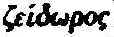
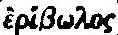
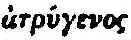

The reality, too, of the elements, as Lear and Jacques would say, touches the poor to the quick. Hence in the north they simply call rain "waters," just in the same way as the Greeks used whilst in the midland counties they nearly as often say "it is wetting" as "it is raining." Their proverbs, too, smack of the fierceness of men who have struggled with the storm. So the Anglian countryman sings of the first three days of March,

"First comes David, then comes Chad. Then comes Winnol blowing like mad."
Their vocabulary, too, teems with words expressive of every shade and variety of weather. Our skies and clouds have entered far more into the composition of popular phrases than we are commonly aware. Such trivial expressions as "being under a cloud," "laying up for a rainy day," unconsciously reflect the character of our weather. Its power overshadows even the altar and the grave in the common rhyme:
"Happy the bride whom the sun shines on. Happy the dead whom the rain rains on."
And the rhyme at one time really exercised a spell. You find it used by lovers amongst our Elizabethan dramatists, who so faithfully reflected the spirit of the day. Thus, in Webster's Duchess of Malfy, Ferdinand cries to the duchess about her lover:
"Let not the sun Shine on him till he's dead." Act iii. Sc. 2
But the poor possess an abundance of such expressions. And as life is real to them, so their sayings are quickened with reality. Thus, "to be born in a frost" is in Yorkshire an euphemism for being foolish. In the same county, "to obtain anything under the wind" means to obtain it secretly. In Norfolk the ploughman says "there is a good steward when the wind-frost blows." Just consider, too, the richness of their vocabulary of weather-terms, and the observation which it implies. Take Yorkshire alone, and there we shall find "dag," "douk," "pell," "pelse," "rouk," "rag," "sops," all standing for different kinds and degrees of rain and showers. There the white winter-mist is the "hag" the hoar-frost the "rind," the snow-flakes "clarts of snow," and the summer heat-mist the "gossamer," as Wedgwood {216} notices, the Marien fäden of Germany. Go into the eastern counties, and the dialect is as rich. The sea-mist is the "sea-fret" and the "sea-roke." The heavy rain, which soaks into the earth, is the "ground-rain." The light rain is the "smur" in Suffolk, the "brange" in Essex, and the "dag" in Norfolk, from which last word the various corruptions "water-dogs" and "sun-dogs" are formed.
Passing, however, from words, let us note a few of the weather-rhymes and weather-proverbs which show what accurate observers necessity has made our peasants. There is not a village where the local phenomena of mists and clouds are not preserved in some rhyme. From Cumberland to Devonshire the land echoes with these weather-saws. In the former county we have—
"If Skiddaw hath a cap, Criffel wots full well of that."
In the latter, the rhyme—this time really a rhyme—runs:
"When Haldon wears a hat, Let Kenton beware of a skat."
The Warwickshire and Worcestershire peasants in the Vale of Evesham repeat a similar couplet about their own Bredon, and the Leicestershire and Lincolnshire churls about their Belvoir. Weather-rhymes lie treasured up throughout the midland counties about
"The green-blue mackerel sky, Never holds three days dry;"
in the northern counties about "mony haws, mony snaws," and in the eastern of the "near bur, rain fur."' In England we, too, can rhyme about la journée du pèlerin. For centuries the village poet has sung of "mare's tails" and "hen-scrattins," and the great "Noah's Ark cloud," and the "weather-head," of the changes of the moon, how
"Saturday change, and Sunday full, Never did good, nor never wull."
For the peasant in his rude fashion is a meteorologist and has studied the ways of the clouds, "water wagons," as in some counties he calls them. From him Aratus might have filled another Diosemeia, and Virgil improved his first Greorgic. Our Elizabethan dramatists have borrowed some of their most life-like touches from the peasant's weather-lore. Thus Cunningham, in Beaumont and Fletcher's Wit at Several Weapons, says of wrangling:
"It never comes but, like a storm of hail, 'Tis sure to bring fine weather in the tail on't." Act. iii., Sc. 1.
And Webster, borrowing from the sailor, makes Silvio say of the cardinal that he
"Lifts up hit nose like a fool porpoise before storm." Duchess of Malfy, Act, iii., Sc. 3.
Shakespeare borrows from both peasant and sailor. His finest descriptions of cloud scenery, as we shall show, are based upon popular phrases. Two of his most beautiful similes illustrate the villager's weather lore. Thus Lucrece is described:
"And round about her tear-distrained eye. Blue circles streamed like rainbows in the sky. Those water-galls in her dim element, Foretell new storms to those already spent."
And again, in All's Well that Ends Well, the countess says to Helena:
"What's the matter That this distempered messenger of wet, The many-colored Iris, rounds thine eye?" Act. i., Sc. 3.
And the peasant's rhymes and sayings undoubtedly contain some germs of truth, or they could never have so long held their ground. Admiral Fitzroy, in his "Weather Book," has rightly given a collection of such saws, though it might with advantage be greatly enlarged. Science has before now been forestalled by some bold guess of the vulgar. And often has some happy intuition outstripped the slow labor of the inductive process.
But with the English peasant a sense of the beautiful accompanies that of the useful. Living ever out of doors, he names his clouds after natural objects. He thus gives a {217} reality to them which is unknown to scientific nomenclature. The "lamb storms" of Derbyshire, and the "pewit storms" in Yorkskire, significantly mark the time of year when the lambs are yeaned in the cloughs, and the pewits return to the moors to breed. His symbolism is always true. The peasant in the eastern counties talks of "bulfinch skies" to express the lovely warm vermilion tints of sunset clouds. Tennyson's "daffodil sky" is not truer, nor Homer's more poetical. In Devonshire the peasan has his "lamb's-wool sky" the tenuia lanae vellera of Virgil. In parts of the midland counties he has his "sheep clouds" the schäffchen am himmel of the German, the same clouds which the Norfolk peasant boy has described with so perfect a touch:

"Detached in ranges through the air, Spotless as snow, and countless as they're fair. Scattered immensely wide from east to west, The beauteous semblance of a flock at rest."
The Derbyshire countryman knows the hard stratified masses of cloud (cumulo-strati) by the happy name of "rock clouds" and the great white rolling avalanches (cumuli) as "snow packs" and "wool packs" the former being rounder than the latter, which lie in folds pressed and packed upon one another. Further living amongst hills and mountains, watching them, as Wordsworth says, "grow" at night, enlarging with the darkness, he finely calls the great hill at the entrance to Dovedale, Thorpe Cloud. He had seen it apparently shift and move with the changes of light and atmosphere, and he could only liken it to a cloud. Perhaps, even at times, some faint glimmering might flit across his mind of the instability of the hills, and the rack to him thus became a symbol of the world's unsubstantial pageant.
The midland counties peasant, too, employs such old-world phrases as the sun is "wading" when it is straggling through a heavy scud, and the sun is "sitting" when her dark side is turned toward the earth. The poets themselves may be in vain searched for a finer expression than the first. The beginning of Sidney's sonnet, which Wordsworth has adopted,
"With how sad steps, O moon, thou climb'st the sky,"
and Milton's description,
"As if her head she bow'd Stooping through a fleecy cloud,"
are somewhat parallel. But the peasant's expression is equally fine. Most readers of "Modern Painters" will remember Mr. Ruskin's vivid description of what he so well calls the "helmet cloud," which rests on the peaks of mountains. But long before Mr. Ruskin wrote, the Westmoreland and Cumberland dalesman named the cloud that at times floats round the tor of Cross Fell by the still better names "helm cloud" and "helm bar."
We could indeed wish that Mr. Ruskin had more deeply studied peasant life and peasant habits. The meaning of the clouds in Turner^s "Salisbury" and "Stonehenge" would have then been more thoroughly appreciated. Fine and poetical as is Mr. Ruskin's interpretation, yet we venture to think that he misses the truth when, in this case, he refers Turner's inspiration to Greek sources. To those who have lived near the Plain, and have mixed with the shepherds, the meaning and the symbolism come far nearer home, and more closely touch the heart. Turner was here no Greek, except as all men who love beauty are Greeks. Here he was, at all events, intensely English. Sprung like so many great poets and painters from the lower class, he could sympathize with the shepherds of the Plain. To them, as to the shepherd in the "Iliad," standing on the hill-top facing the sea, shepherding their flocks, far away from any village, on the vast treeless down, the clouds become a constant source of fear or joy. Their hearts gladden as the light white clouds roll up from the English Channel, and then, as they say, "purl round" and retreat. {218} In spring and summer they joyfully hail the "water dogs," the "gossamer" of the Yorkshire peasant, which herald the fine weather. They, above all other English peasants, solitary on that wide plain, watch with fear the "sun-galls," Shakespeare's "water-galls," as the broken bits and patches of rainbows are called, hanging glorious, but wrathful, in the far horizon. They mark with dread "the messengers" and "water streamers," and at night, too, anxiously note the amber "wheel-cloud" round the moon.
With all this, like a true poet, Turner sympathized. He entered into the reality of shepherd life upon the Plain; its joys and its dangers. In one picture, therefore, he has given us the rain-clouds showering their blessings upon man, and in the other revealed the dread fatalistic power that ever darkens the background of life.
But we must leave the peasant, and turn to the fisherman. More even than the peasant, he naturally regards the weather in its effects upon his calling. The rain with him—we are speaking more especially now of the North Country fisherman—is "dirt," and a rainy sky a "dirty sky." The "water-galls" of the Salisbury shepherd, from which Shakespeare took those most exquisite similes, have with him lost their beauty, and are changed into "sea-devils," evil prophets of tempest. The flying clouds, that herald the storm, are with him "the flying devil and his imps." He realizes the danger, and therefore christens the clouds with rough names.
He too, like the peasant, is learned in weather-lore, and keeps an almanac of weather-rhymes in his memory. In such fishing villages as Staithes and Runswick, on the north-east Yorkshire coast, a large collection might easily be formed. They partake of the roughness and the truthfulness of the inhabitants. Such jingles as:
"When wind comes before rain Then let your topsails remain: But if the wind follows rain. Then you may close reef again,"
are certainly more accurate in sense than rhythm. Again, the couplet:
"When the sun crosses line, and wind's in the east. It will hand (hold) that way meast, first quarter at least,"
contains a warning not always to be despised. The riddle of the "brough," that amber halo of clouds seen sometimes round the moon, which the shepherds of Salisbury Plain call "the wheel," and the midland peasants "the burr," is solved by the rhyming adage:
"A far off brough Means a near hand rough."
But we must not be too critical, and demand both sense and rhythm. It is something if in poetry we obtain truth. At all events, the Yorkshire fishermen's rhymes are quite as good as a great many of those in which Apollo formerly conveyed his prophecies to mankind. And we think that Admiral Fitzroy might have profitably added some of them to his collection.
Many a time have we seen at some little fishing village the fishermen all detained by some "breeder," or "flyer," whose meaning their eyes alone could read. If the threatened storm has not visited the coast, yet the heavy sea tumbling in without a breath of air has shown that the gale has broken not far distant. Still mistakes arise. Life is constantly sacrificed. But the glory and the pride of science is, that, whilst serving the sublimest ends, it still helps the humblest. We may be unable to control the elements. But we shall triumph over the law by obeying the law. The day will come when the notion of chance will be altogether eliminated, and the law by which the clouds are governed recognized. And in the blessings of science all men are partakers. Alike shall the fisherman steer his craft with a firmer faith in the essential goodness of all things, and the hand of the artist gain strength and his eye see a {219} deeper beauty when each knows that the clouds are as regular in their movements as the stars.
Of course men living by the sea, daily watching the clouds, life itself hanging upon a knowledge, however uncertain, of the meaning of their color and their shapes, have naturally named them in a rude fashion. Landsmen, who only now and then gaze at the clouds, are apt to regard them as ever changing. But not "a wisp" flies in the highest air, not "a creeper" rises out of the sea, whose shapes are not moulded by a definite law. Day by day the same forms repeat themselves with unceasing regularity. The clouds might be mapped out like the land and sea over which they fly. More than half a century has passed since Howard first gave them names. After him Forster wrote, and like him illustrated his theory with diagrams of the principal cloud-forms. And now Admiral Fitzroy has so improved upon their nomenclature, that there is not a cloud that cannot be scientifically named and defined. But our sailors and fishermen have long ago known these facts. Not a stray waif of film flecks the heavens which they have not christened. They know all kinds and shapes, from the "crow-nests," those tiny white spots (cirriti) dotting the sky, up to the glorious "Queen Anne's feather," waving far away into the horizon its soft downy plume, rippled and barred by the wind.
Thus to take a few examples. The North Yorkshire fisherman has his "dyer's neif," a small dark purple cloud, so called from its supposed resemblance to the black grained fist (neif) of a dyer. Some three thousand years ago, Elijah's servant, on Mount Carmel, cried that he saw a little cloud rising out of the sea like a man's hand. And still on the Yorkshire coast the fisherman utters the same language, and knows that cloud still as the forerunner of storm and rain. Quite as striking, too, is the way in which his names of clouds throw a light upon Shakespeare. All readers will remember the passage between Hamlet and Polonins, ending with "Very like a whale;" a phrase which has passed into a proverb for anything very improbable. And no actor can utter it on the stage without producing a peal of laughter. Yet the proverb and the laughter are equally inappropriate. The names of the clouds in the passage are all real names. The "dromedary cloud," or, as Shakespeare calls it, "the camel cloud," is well known to sailors. It is a species of cumulus, a white, packed, humped cloud, and when seen in the southern hemisphere is said to foretell heat; but, in the northern, cold. It is also called the "hunchback cloud." "See, there's the hunchback; look at its pads," North Country fishermen will say. The "weasel-cloud" also is known, though not so well, and is more often called "the hog-cloud" and the "wind-bog," from its being the forerunner of wind. But the "whale-cloud" is as well known to sailors, especially those employed in the Greenland trade, as the "bridge-cloud," or "feather-cloud," or any other well recognized form. "We shall hae a bit o' a puff, lads. See that sea-devil; and yonder's a regular finner to the norrard," have we heard North Sea captains say. A "finner," it should be explained, is a small whale. If ever there was a realist, Shakespeare was. He drew direct from nature. But, like a true artist, he knew how to mould and shape mere barren naturalism by the vitalizing power of the imagination. In its white heat he fused all things. And so, noting the common names of clouds as daily used in conversation by sailors and fishermen and seafaring folk, he could rise from the satire of Hamlet to the high pathetic pitch of Antony's speech:
"Sometime we see a cloud that's dragonish; A vapor, sometime, like a bear or lion, A towered citadel, a pendent rock, A forked mountain, or blue promontory. With trees upon't, that nod into the world, And mock our eyes with air. Thou hast these signs; They are black vesper's pageants. Eros. Ay, my lord. Antony. That which is now a horse, even with a thought The rack dislimns; and makes it indistinct As water is in water. Eros. It does, my lord. Antony. My good knave, Eros, now thy captain is Even such a body." Anthony and Cleopatra, Act iv, Sc. 12.
{220}
Here the whole scene is colored by the imagination and ennobled by human pathos, such as no other man ever possessed. But the basis of the thought is the simplest naturalism, such as other men had seen and observed a thousand times before. The Flying Dragon is mentioned as far back as the latter part of the sixteenth century by Hyll in his "Contemplation of Mysteries," where the first rude ideas of weather forecasts may be found. The "pendent rock" and "forked mountain" are nothing more than the "rock-clouds" of the Derbyshire peasant, concerning which a local rhyme runs:
"When clouds appear like rocks and towers, The earth's refreshed by fragrant showers."
We must not, however, lose sight of our North Country fisherman. If to him the sky is at times black with terror, yet it is also splendid with beauty. In fine weather it is his garden, the heavenly "meadow," as St. Chrysostom would say, blossomed over with flakes and garlands of cloud-bloom, white and peach-colored. He has his names for them, his "crow buds," and his "cherry flowers," and the great "tree cloud" with its purple branches. It is, too, his fairyland full of loveliest shapes flying and wandering here and there, "pigeons," as he calls those white detached winged "flyers," "flying fish," "streamers," and pencilled "plumes."
Thus far of the peasant and the sailor. They certainly more than any one else recognize the terror and the beauty of cloud scenery. The well-to-do man knows the clouds only as they affect his pleasures. Life is not dependent upon them, and he therefore misses that true enjoyment which springs from reality. On the whole, he thinks with the Epicurean that rain ought to fall by night, whilst his wife sighs for Italy and blue skies. But let us, on the contrary, love the grey cloud, and rather hold with that fine old skipper, who, after enduring six months of unbroken weather in the Bay of Naples, cried out on seeing a cloud, "Turn out, boys, turn out; here's weather as is weather; none of your everlasting blue sky." Let us rather love the storm-rack that beats against our island. This it is that gives the color to the cheeks of our maidens; this that has moulded our features, and deepened the lines of our faces, and hardened the national character.
Let us be thankful, with Mr. Raskin, that nowhere can the swiftness of the rain-cloud be seen as in England, nowhere in such perfection as among the Derbyshire hills; nowhere the keenness of the storm be felt as on a Yorkshire wold. [Footnote 36] But in these days even the power of the elements is threatened. We have seen in Derbyshire, when the west wind blows, the cloughs filled, not with troops of clouds dashing slantwise up the valleys, but choked with dull rolling Lancashire smoke; seen, under this canopy of fog, the snow on the Edges turn yellow and brown. One by one, too, the blast furnaces are burning up the Yorkshire moors. And instead of white wreaths of clouds crowning the wolds, a pillar of fire lights them up by night, and a cloud of smoke darkens them by day.
Luckily the sea-coast still remains unpolluted. And if any one really wishes to study the clouds, let him go to the North Yorkshire and Northumberland coasts in winter. Then will he understand something of their majesty and power; then will he see the true purple wind-tints, see the sky a wilderness full of strange weird creatures—"wild hogs," those purple hump-backed clouds running one after another in a line, and the "Flying Devil and his imps" marshalling the storm, which is banking up out of the German ocean; see, too, the "Norway bishop" rise—a man's figure clothed {221} in white, with outstretched arms, under whose ban many a fisherman from Staithes and Runswick has sunk; see the figure melt and disappear in a mist of sleet and snow and hail; and then, last of all, see "the weather-gleam," when all objects loom against the one pale rift of sky, as ships loom in an east wind.
These sights have never been painted, and never can. Even Turner cannot give them. For who can give that which is the greatest pleasure in watching the clouds, the feeling of change? Yon cannot paint the movement of the rack, as the vapor shifts from form to form, now a mountain, now a dragon, now a fish, each change answering to the changes of the spirit. Only the poets can paint the clouds and their lessons—only Shelley and Shakespeare. But put away even Shakespeare himself. Love them, study them from nature. And, as St. Chrysostom says, the poor man, more than any one else, enjoys "the luxury of the elements." The lawyer may hold cujus solum ejus ad coelum; but he who most enjoys the clouds, as with all things else, is their real possessor. And the artist and the poor man, though they may not have a rood of ground to call their own, here reign over an empire.