BOMBARDMENT OF FORT SULLIVAN.
Reading edition
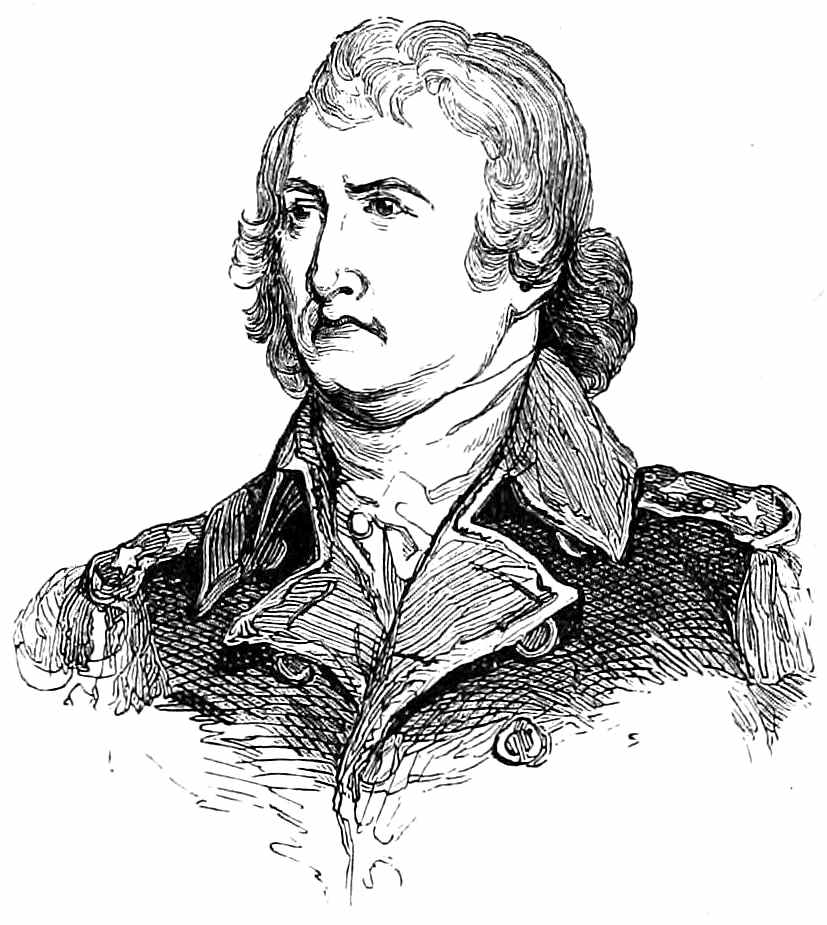
WILLIAM MOULTRIE.
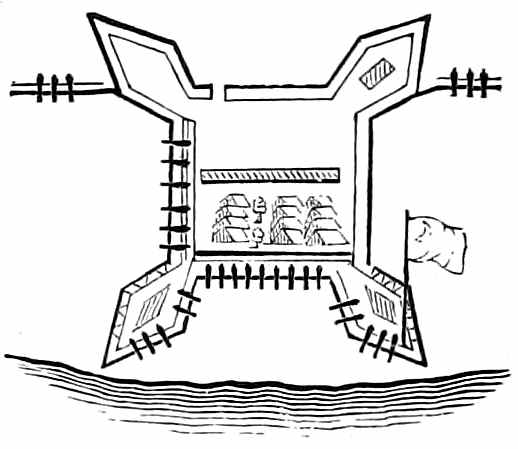
PLAN OF FORT ON SULLIVAN’S ISLAND.
The Provincial Congress of South Carolina, in 1775, appointed a Committee of Safety to sit during its own recess, and to this it delegated full power. The Committee fitted out a vessel, which captured an English sloop, laden with powder, lying at St. Augustine. The royal governor of the State sent couriers to intercept the vessel, but they failed. The powder was brought to Charleston, and part of it was used by Arnold in the siege of Quebec. Later in the year Colonel Moultrie took possession of a small fort standing on Sullivan’s Island, in Charleston Harbor. The governor fled to the frigate Tamar, and the Committee of Safety took charge of affairs. Fort Johnson, on James’s Island, was seized and armed. Guns were mounted on Haddrell’s Point, and a fascine battery made on Sullivan’s Island. Between these two the Tamar and her consort were obliged to leave the harbor. Colonel Moultrie was now ordered to build a strong fort on Sullivan’s Island, and over three hundred guns were mounted on the various fortifications. Colonel Gadsden was placed in command, and every preparation made for a vigorous defence.
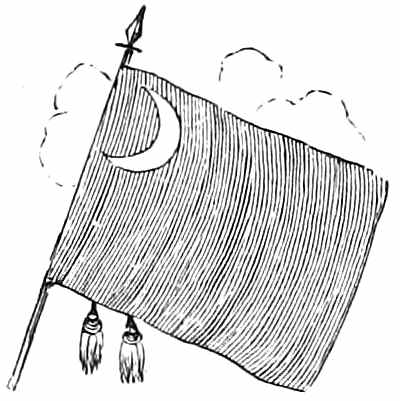
SOUTH CAROLINA FLAG.
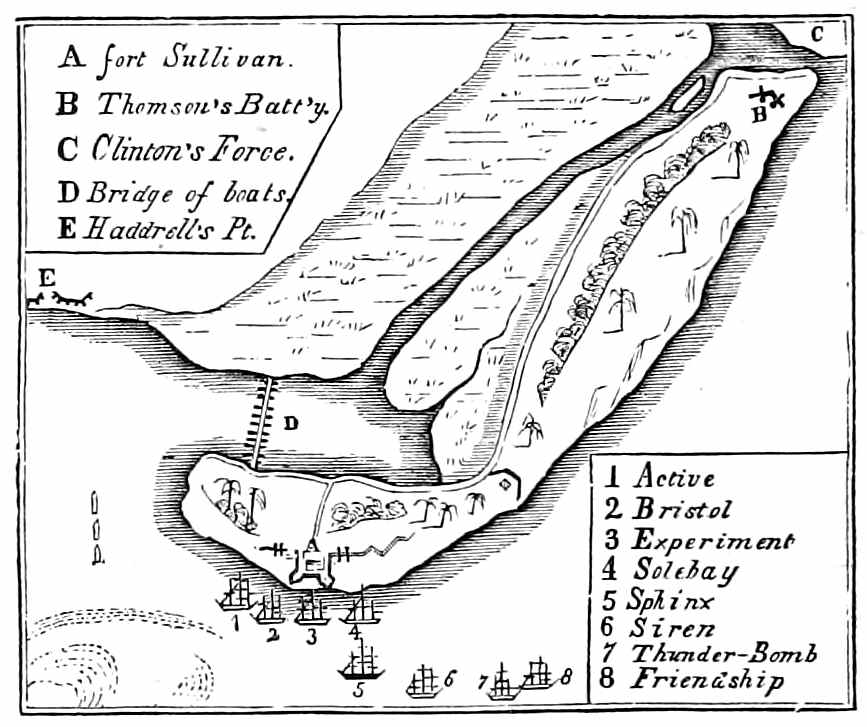
SULLIVAN’S ISLAND, AND THE BRITISH FLEET AT THE TIME OF THE ATTACK.
The Continental Congress knew that a combined naval and land attack would be made on Charleston; and in April Brigadier-general Armstrong was sent there to take command, but was superseded, on the fourth of June, by Major-general Charles Lee, who had been sent by Washington. He worked hard for the defence of the city, and was supported with ardor and enthusiasm by the people. Troops flocked in until there were between five and six thousand men in arms, including the Northern troops that had come with Armstrong and Lee. They were disposed at Fort Johnson, on James’s Island, under Gadsden; a battery on Sullivan’s Island, under Thomson; in the fort on the same island, under Moultrie; and at Haddrell’s Point, under Lee.
The British arrived on the fourth of June, but it was not until the twenty-eighth that they were ready to attack. During the interval they had constructed batteries on Long Island, to silence that of Thomson on Sullivan’s Island and cover the landing of the storming-party of Clinton’s troops.
On the morning of the twenty-eighth of June the attack began. The incidents are faithfully given in the ballad, and to that the reader is referred.
SULLIVAN’S ISLAND.
Stout Sir Henry Clinton spoke— “It is time the power awoke That upholds in these dominions Royal right; Set all sail, and southward steer, And, instead of idling here, Crush these rebel Carolinians Who have dared to beard our might.” Of his coming well we knew— Far and wide the story flew, And the many tongues of rumor Swelled his force; But we scorned his gathered might, And, relying on the right, Bade the braggart let his humor For a battle take its course. Neither idle nor dismayed, As we watched the coming shade Of the murky cloud that hovered On our coast; From the country far and near, In we called the volunteer, Till the ground around was covered With the trampling of our host. In their homespun garb arrayed, Sturdy farmers to our aid Came, as to a bridal lightly Come the guests; Leaving crops and kine and lands, Trusty weapons in their hands, And the fire of courage brightly Burning in their manly breasts.
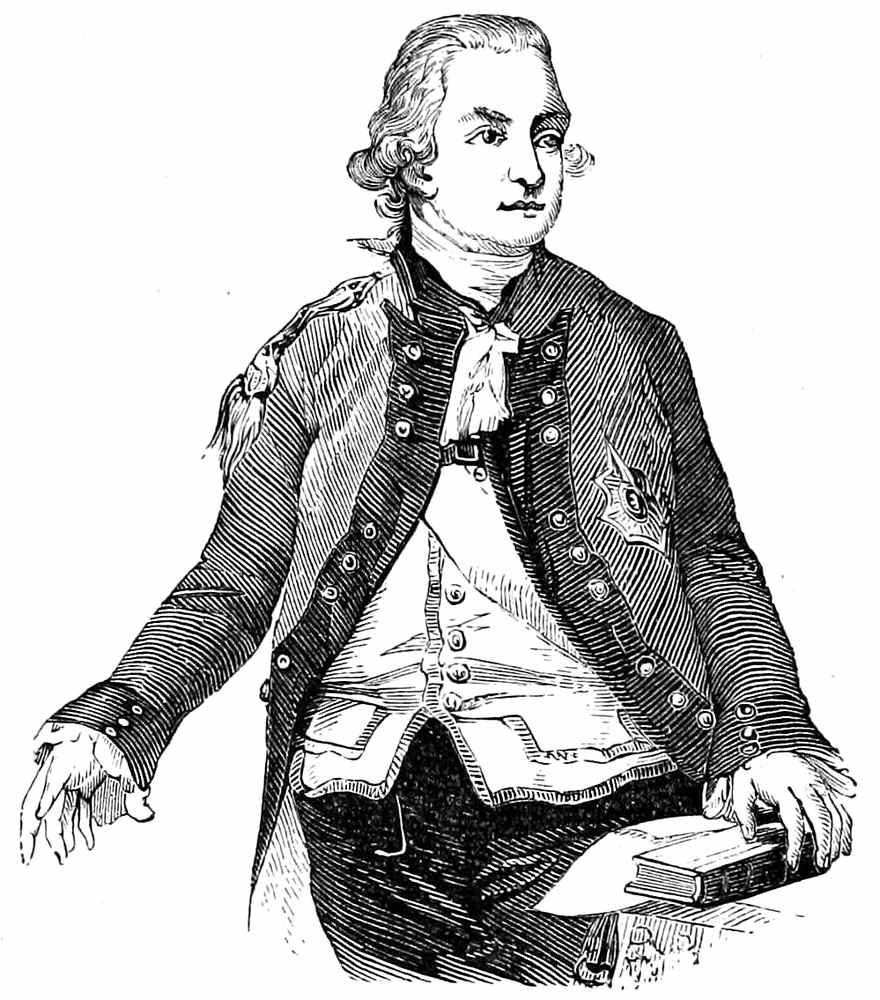
SIR HENRY CLINTON.
[From an English Print.]
From the hills the hunters came— Having dealt with meaner game, Much they longed to meet the lions Of the isles; And ’twas pleasant there to see With what stately step, and free, Strode those restless-eyed Orions Past our better-ordered files. There were soldiers from the North, Hailed as brothers by the swarth, Keen, chivalric Carolinians At their side— Ah, may never discord’s fires, Sons of heart-united sires Who together fought the minions Of a tyrant-king, divide! Came the owner of the soil, The mechanic from his toil, And the student from the college— Equal each; They had gathered there to show To the proud and cruel foe, Who had come to court the knowledge, What a people’s wrath could teach. Watching Clinton, day by day, From his vessels in the bay, On Long Island beach debarking Grenadiers, In the fort at Sullivan’s isle, With a grim and meaning smile, Every scarlet soldier marking, Stood our ready cannoneers. Of palmetto logs and sand, On a stretch of barren land, Stands that rude but strong obstruction, Keeping guard; ’Tis the shelter of the town— They must take or break it down, They must sweep it to destruction, Or their farther path is barred. ’Twas but weak they thought to shield; They were sure it soon would yield; They had guns afloat before it, Ten to one; Yet long time their vessels lay Idly rocking in the bay, While the flag that floated o’er it Spread its colors in the sun. But at length toward the noon Of the twenty-eighth of June, We observed their force in motion On the shore; At the hour of half-past nine Saw their frigates form in line, Heard the krakens of the ocean Ope their mighty jaws and roar. On the decks we saw them stand, Lighted matches held in hand, Brawny sailors, stripped and ready For the word; Crawling to the royal’s head, Saw the signal rise and spread; And the order to be steady To the waiting crews we heard. Then the iron balls and fire, From the lips of cannon dire, In a blazing torrent pouring, Roaring came; And each dun and rolling cloud That arose the ships to shroud, Seemed a mist continual soaring From some cataract of flame. Moultrie eyed the Bristol then— She was foremost of the ten— And these words, his eyes upon her, Left his lips: “Let them not esteem you boors; Show that gentle blood of yours; Pay the Admiral due honor, And the line-of-battle ships.” Back our balls in answer flew, Piercing plank and timbers through, Till the foe began to wonder At our might; While we laughed to hear the roar Flung by Echo from the shore; While we shouted to the thunder Grandly pealing through the fight. From Long Island Clinton came, To surmount the wall of flame That was built by Thomson’s rangers On the east; But he found a banquet spread Where, with open hand and red, Dangers bade the hostile strangers Bloody welcome to the feast. Moved their boats, with soldiers filled, Rowed by seamen picked and skilled, O’er the channel, urging proudly To attack; Stern and silently they moved, As became their courage proved, Though the rangers’ rifles, loudly Speaking peril, warned them back. Long the barges headway held, By the sinewy arms impelled Of the dauntless British seamen, Through the foam; Through the leaden death that came, Borne upon the wings of flame, From the rifled guns of freemen Fighting fiercely for their home. One by one the rowers dropped; Then their onward course was stopped— Death stood ready for the daring At the oar; Though in scorn they came at first, When the storm upon them burst They returned with humbler bearing To the safe and farther shore. Then the bluff Sir Peter cried, “Though they lower Clinton’s pride, And with front as stern as iron Are arrayed, There’s a joint within their mail— To their western front shall sail The Actæon, Sphynx, and Siren, And the fortress enfilade.”
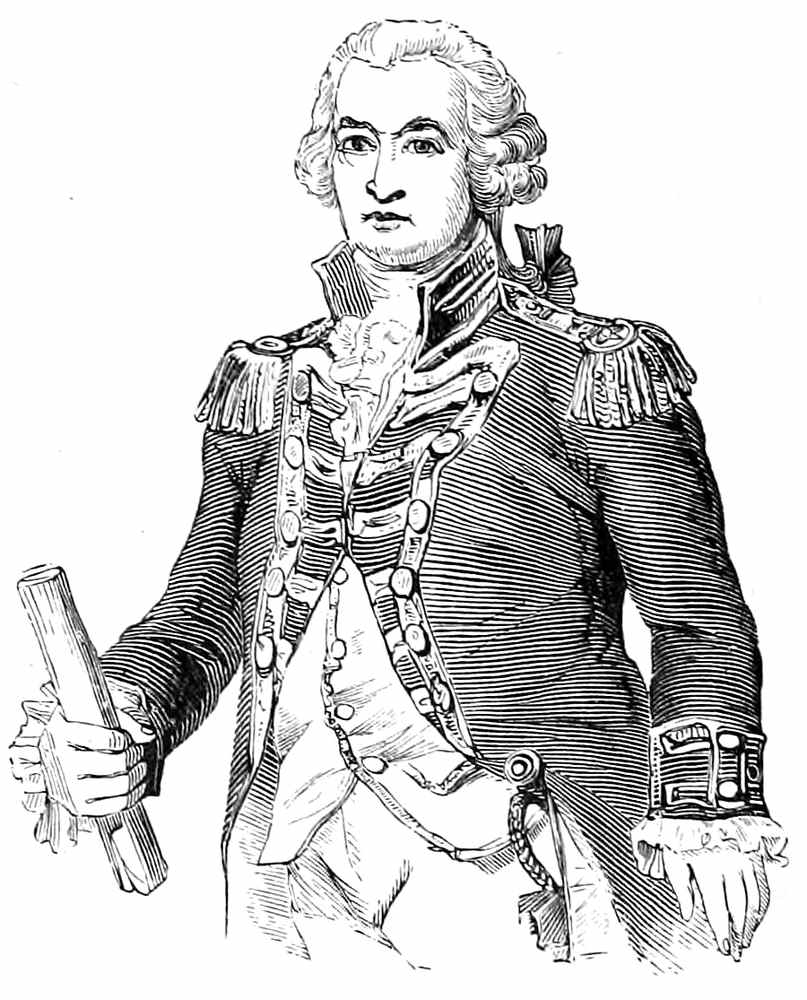
SIR PETER PARKER.
Oh, the admiral was too free With his gallant frigates three! It were better had he kept them As they were; For the Middle Shoal they found, Where they snugly lay aground, While so bloodily we swept them With our iron besoms there. They were taught full soon aright That the bravest man in flight May, when perils dire environ, Safety find: Soon, by aid of sail and sweep, From the shoal unto the deep
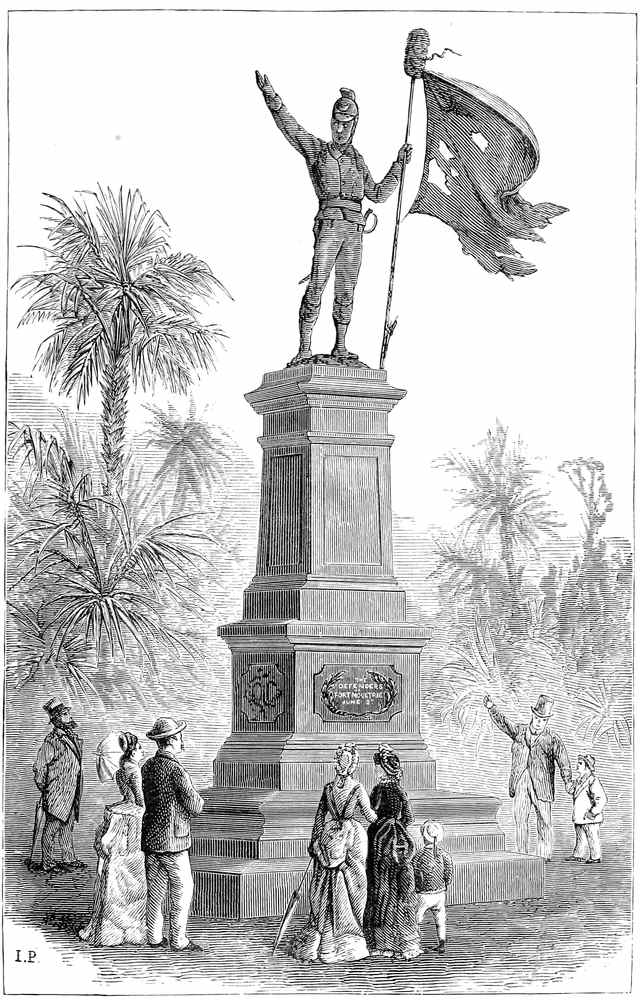
MOULTRIE MONUMENT, WITH JASPER’S STATUE.
They restored the Sphynx and Siren: But the other stayed behind. Gnawed the admiral his lip; Yet the combat from his ship Coolly, ’mid our fire so deadly, Guided he, Though the dying and the dead On the decks around were spread, And the blood was running redly From the scuppers to the sea. On that bloody deck he stood, While, with voices deep and rude, Thrice a hundred cannons thundered For the King; And our thirty cannon black Growled their terrible answer back, Till the souls from bodies sundered Of three hundred men took wing. All the while the battle through Waved our crescent flag of blue, Till the staff was cut asunder By a ball; And the foemen raised a cheer, Like the crow of chanticleer, Shrilly sounding through the thunder As they saw the color fall. On the ramparts Jasper stood, In his hands that banner good, ’Mid the balls that flew incessant O’er the brine; To a sponge-staff firmly tied Once again it floated wide, Flashing to the sun the crescent Of the Carolina line. Rang the stirring cheer on cheer For our hero void of fear, For our young and gallant sergeant Firm and bold; And we swore our bones should bleach On that barren, sandy beach, Ere that flag with crescent argent Should be wrested from our hold. So we fought till set of sun, When their vessels, one by one, Slackened fire, and, anchor weighing, Shaped a course; To Five Fathom Hole they fled With their dying and their dead, In their battered hulls displaying How our skill surpassed their force. Through the night we never slept— Ceaseless watch and ward we kept, With the port-fire steady burning At each gun; And the vessels of our foes We beheld when dawn arose— Eastwardly our glances turning— Lie between us and the sun. Yet not all escaped that day: The Actæon frigate lay At the shoal whereon she grounded Hours before; And her vexed and angry crew, As our shot at her we threw, And her sides of oak we pounded, Left the guns and took the oar. We beheld them from the deck Of her rent and tattered wreck, Like the rats from garner burning, Fastly flee; Ah, no more before the gale Will that gallant vessel sail; Nevermore, the billows spurning, Wave her white wings o’er the sea! Ere they fled, with spiteful ire They devoted her to fire, With her red-cross ensign proudly Floating free; But we boarded with a crew, Down the flying colors drew, While our cheers rang long and loudly To the fortress from the sea.
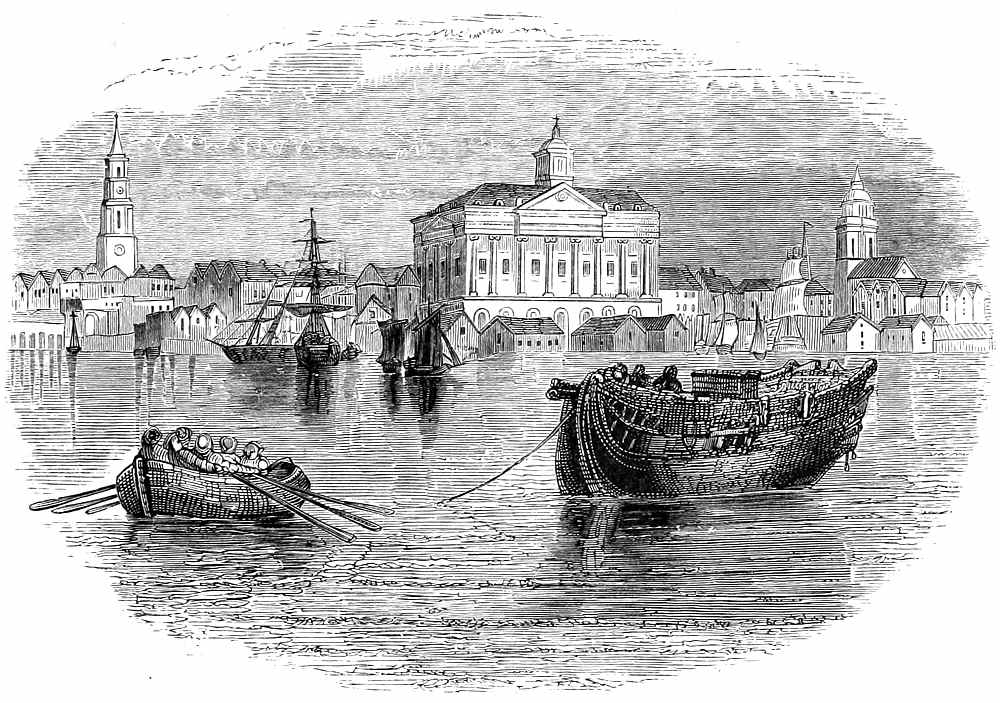
CHARLESTON IN 1780.
Then her small-arms all we took, And her bell and signal-book; Fired her cannon thrice, in honor Of the day; Bore her colors ensign down, In defiance of the crown; And to heap more scorn upon her, Jeering, trailed them o’er the bay. Then we fired her as before, And, exulting, from the shore Saw the flaming serpents creeping Up the shrouds; Saw them dance upon the deck, Saw them lick and gnaw the wreck, Saw them to the mast-heads leaping Through the rolling, smoking clouds. Then, while gleamed the sparks like stars, Snapped and fell the blazing spars, While the fire was moaning dirges, Came a roar; Upward sprang a pillared flame, And to fragments rent her frame, With a shock that drove the surges, White with terror, to the shore. Time since then has travelled on: Moultrie, Thomson, Jasper, gone! Few survive who shared the glory Of the scene; But their names in light shall blaze To the very latter days, And our sons, in song and story, Keep their memory ever green.