THE Complainte of Anthonie Babington.
Reading edition
The following deeply interesting "complaynt" was written by Richard Williams, and dedicated, in MS., to King James the First. It remained unpublished until 1862, when it was communicated to "The Reliquary" by Mr. W. Durrant Cooper, F.S.A. Anthony Babington was born in 1561, and on the death of his father, succeeded to the family estates at Dethick, in Derbyshire, which had been acquired by the Babingtons through marriage with the heiress of Dethick. He was executed, along with thirteen others, under circumstances of peculiar barbarity, on the 20th of September, 1586, for a conspiracy to liberate the truly unfortunate and much to be commiserated Mary Queen of Scots. His petition to Queen Elizabeth is simple and touching in the extreme, and the heart must indeed have been callous to good and womanly feeling that could withstand it and spurn its prayer. It is as follows:—[83]
"Most gratious Souvarigne yf either bitter teares a pensisve contrite harte ore any dutyfull sighte of the wretched Synner might work any pitty in your royall brest, I would wringe out of my drayned eyes as much bloode as in bemoaninge my drery tragedye shold, lamentably bewayll my faulte, and somewhat (no dought) move you to compassion, but synnce there is no proportione betwixte the qualitye of my crimes and any human commiseration, Showe sweet Queene some mirakle on a wretch that lyethe prostrate in yr prison, most grivously bewaylinge his offence and imploringe such comforte at your anoynted hande as my poore wives misfortunes doth begge, my childe innocence doth crave, my gyltless family doth wishe, and my heynous trecherye dothe leaste deserve, So shall your divine mersy make your glorye shyne as far above all princes, as my most horrible practices are more detestable amongst your beste subiectes, whom lovinglye and happielye to governe.
"I humbly beseche the mercye Master himself to grante for his sweete Sonnes sake, Jesus Christe."
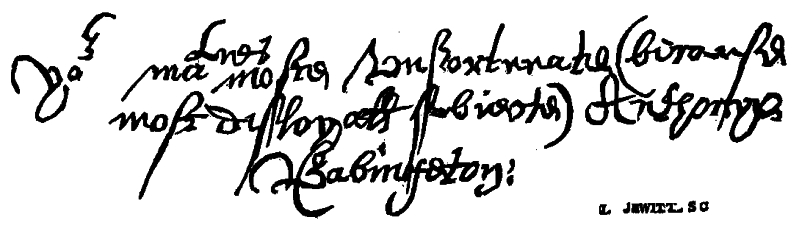
The following is the "Complaynte of Anthonie Babington by Richard Williams:"—
To the kinges most excellent maiestie with all other kinglie titles and dignities whatsoever to whome your poore humble subject Richard Williams wishethe healthe long life and many happy yeares to reigne over us to the glory of God and your Maiesties comforte.
My dreade and royall sovereigne,
This Anthonie Babington was borne at a mansion house of his father called Dethicke in the Countie of Darbye in the parishe of Critche; whose father was a man of good accompte and lived well and orderlie in his contrie, kept a good house, and releived the poore. But he was inclined to papistrie as the times then required; who had a brother that was doctor of divinitie in queene Maryes dayes, of whome some mention is made in this storye. This Anthonye, the son, was a yonge man, well featured, and of good proportion in all the lyneamentes of his bodie, of a most pregnante fyne witt and great capacitie, had a watchinge head, ande a moste proude aspiringe mynde; and by nature a papist, whereinn hee was borne and brought upp; where if he had bene trayned otherwise hee might have proved a good member of the common wealthe, where nowe be became a reproche and scandall to the same.
In whose course of life many accidents hapned even from his birthe to his deathe as appeares in this his complainte wherein I have followed the methode of a booke intituled, the "Mirrour of Magistrates" wherein everye man semes to complayne of his owne misfortunes, humbly beseeching your royall maiestie to pardon all defectes as well in my writinge as in the baseness of the verses. In the one I have done as well as my learninge did serve me, for the other as well as my olde eyes woulde permitt me, which I beseech your royall Maiestie to censure with clemencye, and I will trulye praise to the almightie for the long continuance of your healthe and happie Estate bothe to Godes glorye and your Maiesties comforte.
Your poore distressed subjecte Richard Williams.
The Complainte of Anthonie Babington, sometyme of Lyncolns Inne Esquier, who with others weare executed for highe treason in the feildes nere Lyncolns Inne the xixth of September Ao 1586.[84]
A DREAME OR INDUCTION. ANTHONIE BABINGTON HIS COMPLAYNT.
What will it avayle on fortune to exclayme When a due desarte is chiefest cause of all; Myself and none but myselfe justlie can I blame, That thus have procured myne untymelie fall; And turned have my honnye swete unto bitter gall. Wherefore good frende take thie penne and write, And in mournful verse my Tragedie recite. Long mighte I have lived a contented happie state, And have borne a porte and countnance with the beste, If fortune should me cheicke, I could her mate; Thus none like me more happie was and bleste, Till that discontente procured myne unreste; And the pompe of pride so glared in myne eyen, That I rejected vertue moste devyne. But firste I will tell thee myne estate, and name, And contrie soile, where I was bredd and borne; Anthonie Babington I hight; of a worthy house I came, Till my mysdemeanours made me forlorne, Givinge cause to my foes to laugh me to scorne. Whoe have stayned my state and blemisht my name, In clymbing by follie have falne to my shame. At Dethwicke in Darbye shire I was both borne and bredd; My father was an esquier of good reputation; A good house he kepte, a virtuose life he ledd; My selfe beinge a childe was helde in estimation; But havinge gott the rayne I changed my facion; Then privatlie I sought my owne will and pleasure, Livinge to my liking, but never kepte a measure. Doctour Babington myne eame[85] did pronosticate That harde was the happe whereto I was borne, He sayde that "pride by glorye shoulde abate And destenye decreede I shoulde be folorne;" Whose wordes my father then helde in scorne, "O trayne him up well," mine unkell did saye, "Unlesse hee repente the same a nother daye." "Give hym not brother his libertie in youthe, For then olde dayes hee never shall see, Hee is my nephewe the more is my rewthe, To think of his happe and harde destinie, If skill beguyle me not hanged he shalbe." This was the foresight of my father's brother, For which lote of his hee was hated by my mother. I know not where hee spoke by hassarde or skill, For such divinations I doe not comende; Yet his counsell was good to flie future ill; For whoe so in vertue there dayes doe not spende Shalbe sure with me repente them in th' ende. The proofe of myne unkells worde I founde so trewe As by the sequell hereafter you may viewe. Not longe after my father resyned upp his breathe, And lefte my wofull mother with a great charge; Whiche proved for us all to tymelie a deathe; For then good gentelwoman her purse ranne at large, Havinge of debts and legacies great somes to discharge; But in the state of widowhode not long she tarried For with that good gentleman Henry Foljambe she married. Whoe loved us all tenderlie as wee had benne his owne, And was verye carefull of oure education, Whose love so mee was diverse wayes showne, And I of the saime had daylie probation, And by this maye appeare of whiche I make narration. Withe his owne chaine of golde hee would mee oftene decke Whiche made me a proud boye to weare about my necke. As on a tyme this chayne about my necke I did weare, And going to an orcharde some apples to gett, When clymbing a high tree, as one without feare, The boughe then brake, whereon my foote I sett, And downwarde I slipt, but was caught in a nett. In the tree I was hanged faste by the chayne, So desyre of my pride was cause of my payne. But was not suffered there longe to hang, But was nere strangled or I was taken downe, For there I strugled with suche a deadlie pange; My mother shee frighted and fell in a sowne, And griefe made my father likewise to frowne. But my reviving, there sorrowes over caste; Then they rejoyeste sayinge, "my destinie was paste." Thus carelesse a tyme with them I lived at pleasure, Surfetted with self will and with fonde delite; I knew no golden meane, nor never kepte a measure, But like a kyndlie beare gan tymelie to byte. Even then I harborde envye and sucked despite; And pride at that instante tooke so deepe a roote, That humilitie for ever was troden under foote. In myne noneage I was when my father dyde, Philip Draycott, of Paynslie hee did me obtayne, Whoe had appoynted me his doughter for my bryde, And in whose house a space I did remayne; There suckte I pleasure that proved to my payne; There was I misled in papistre my soul to wounde; There was I corrupted made rotten and unsounde. There, even there awhile, I spente my youthfull tyme, There was I lulled in securitie faste asleepe, Then was I frollicke, there was I in my pryme, In jollitie then I laught, but never thought to weepe; My witts were moste fynne and conceits verye depe. But oh Paynslie! Paynslie! I may thee curse; Where nature made me ill, education made me worse. For by nature I was with papistrie infected, But might have beene restrayned, had it pleased God; My father and myne eame they weare suspected; They lived with there censcience wherein I was odd, Therefore was beaten with a more sharper rodd; There conscience they kepte, & ruled it by reason; Livinge like subjectes, and still detested treason. My father-in-lawe still ledd me to what I was inclined; I meane for my conscience, no farther he coulde deale; My mayntnance sufficient to content my mynde, So that all this, whiche I tasted, nought but weale, But could not be contente, which I muste nowe reveale. My fynne head was desyrouse to studye the lawe, In attainge whereof I proved my selfe a dawe. And for that cause forthwith I to London wente, Where in Lyncolns Inne a student I became; And there some part of my flittinge tyme I spente, But to bee a good lawyer my mynde coulde not frame; I addicted was to pleasure and given so to game; But to the theater and curtayne woulde often resorte, Where I mett companyons fittinge my disporte. Companyons, quothe you, I had companyons in deede, Suche as in youthe with me weare well content to drawe; Lyncked so in myscheife, wherein wee did excede, We cared not for order nor paste of reasons lawe; Of God, nor of good man, wee stoode in little awe. Wee paste the bounds of modestie, and lived without shame, Wee spotted our conscience, and spoiled our good name. We cared not for the church, that place we not frequented; The tavernes weere better our humors to fitt. The companye of dayntie dames, wee chieflie invented; With whom in dalliance wee desyred ofte to sitt. Theise weare the fruytes of yonge hedds and witt; Thus in lustlie libertie I led a loose life, And thoughe I weare maried I cared not for my wife. Yett to the sèrmons wee woulde oftene resorte, Not in hope edification by them to obtayne; But rather to jeste and make of them a sporte; Whiche nowe I feele to my sorrowe griefe and payne; These bee the fruytes that sicophantes doe gayne, Cheiflie when they mocke, and skorne God's worde, Disdaining the servantts and prophetts of the Lorde. With Catholicks still conversant I coveted to be, That weare alwayes in hope and looked for a daye; Gapinge for a change which wee trusted to see. Ambition so stonge me my selfe I could not staye, Whiche makes me sighes to sighe well a waye. Then I had my will and playde with pleasure's ball, Then I was alofte and feared not this fall. Yett so covertlie all this tyme I did my selfe behave, And so closelie wrought in subtell syners faime, What so ere I thought my selfe I sought to save, Livinge all this while without suspecte or blame; And more to wynne mee credditt a courtier I becaime; Where the syrens song so swetelie I did synge, I never was suspected to worke such a thinge. The nobles of the courte of me thoughte so well, That often to their tables they would me invite; Where in gesture and talke I did the common sorte excell; Thereby wynninge favor in my company to delite, Whiche with a Judas kisse I soughte to requyte. As in a sequell of my storye will after appeare, Which I shame to tell it toucheth me so nere. And daylie more and more my credditt did increase, And so in like manner did pride still abounde; Beloved I was bothe of more and lesse; When my inwarde motions were all unsounde; My parsonage was comelie which favour eache where founde; But pryde had so blynded me I could not see. That with Iccarus aloft, I mynded was to flee. The grounde, that I troade on, my feet could not holde, Nor I bee contente in a happie state to reste, Like Bayarde that blushed not, then was I more bolde; When rancor inwardlie still boyled in my breste, That like an unnaturall birde I filed my neste; In parlinge with parasites that looked for a daye, By the counsell of Caterpillers, I wrought my decaye. Then I beganne to prie into matters of the state, And with what I liked nott I secrett faulte did fynde; Where I fawned openlie, I inwardlie did hate, And to my confederates would closelie breake my mynde; I mean to suche as to my love weare inclynde; Betweene whome and mee suche mischiefe intented, That we thoughte to have made all England repented. Where upon in to France a jorney I did frame, To parle with Padgett, Morgan, and others of that crewe; What wee had but decrede, they resolved on the same; Whose pretended purpose at large, when I knewe, I willinglie consented too, which makes mee nowe to rewe; And to sett the same forwarde a solleme oathe did take; O cursed conscience that a traytor didst me make! Then into Englande I retorned agayne with spede, And gott conferrence hereof with some of greate fame. Manye weare the plotts, whereon we agreed; And greate the attemptes, whereat wee did aime; Which afterwarde proved oure ruynose shaime; And aspiringe pride so fyred my harte, I was content to playe a traytors parte.
HIS ARTICLES OF ARRAYGNMENT.
Yea to bee a most savage monster agaynste all kynde, In seking the deathe of my Queene, the Lord's anoynted, Ambition so stonge me, that I was stroke blynde, In pluckinge her downe that God had appoynted, And the unitie of the realme in sonder to have joynted; To have made kings and rulers at our pleasure; To have exceeded in vyllanye without rule or measure. To have made suche lawes as wee thought beste; To have turned the state quyte upside downe; The nobles to have slayne and clene dispossest; And on a stranger hedd have placed the crowne; Herein we weare resolute, but fortune did frowne, No twas God woulde not suffer our villanyes take place; But unlookte for retornde them to our shamefull disgrace. Farther our intente was to poyson the ordinance of the realme; A most haynouse matter as ever was invented, Whoe ever hath harde of trecheries so extreame, Concluded, agreed upon, and fullye consented? An wofull matter of all to be lamented. All court rolls and records we mente to have raced, And them to have burned spoyled and defaced. The faire cittie of London wee also mente to rifell, To have rob'de the rich, and killed eke the poore; Theis thinges in effecte we counted but a trifell; In all places of the lande have sett an uprore; The wealthie to have bereavde both of life and store, No state nor degree we weare mente to spare, But if hee would resiste deathe should be his share. Theise weare our intents, with mischiefs many more, Even confusion to the whole realme to have brought, Confederates we had, and that no small store; Which ruyne and destruction weare readie to have wrought; We either mente to make or bringe all to noughte. Nought ne nought indeede, for nought weare our happs, For desperate myndes doe feare no after clapps: So forwarde weare that the verye daye was sett To murther our good queene, that God had preserved; Barnewell and Savage should have done the feate; But justice rewarded them as they well deserved, Being twoe monstrose traytors that from duty swerved; The daggs and all things weare redye preparde, But in the nett they layde, they themselves weare snared. And Ballarde, that beast, hee into England was come, A Jesuite, a prieste, and a semynarie vilde; Hee brought with him our absolution from Roome, Promysinge good successe, wherein he was beguyled; So that from our hartes all pitye hee exilde; And still he incoraged us in my myscheife to precede, Egging us forwarde wherein there was no neede. But God woulde not suffer us so closelie to worke, But that all our doyngs laye open in his sight: Revealinge those myscheifs, that in our hartes did lurke, When wee suspected not, he brought the same to light. Then must wee hyde our hedds, or scape awaye by flight; But when wee had inklinge our treasons were descryde, Away awaye in haste twas then no tyme to byde. Then watche and warde was made in everye coaste, Then weare wee taken, eache houre of the daye; My selfe was once taken, but whie shoulde I boaste, Howe that I made a scape and so gott awaye, Not knowinge where to goe nor have perfitt staye; But to Harrow on the Hill my selfe I convayde, There in Bellamyes howse a little tyme I stayde. But there was made for me suche previe watche and warde, And the contrie so besett, I no where coulde flye, All hope of my escape was utterlie debarde; And searche in eache corner was made no nye, That I was compelde this polecye to trye; To forsake the house and my self disguyse, Lyke an Inkeper of London, to bleare the people's eyes. But a rewarde was promyst hym that coulde me take, Which made the people looke so much the nere; And beinge constrayned the house to forsake; Walked throughe the pastures as men without feer; My man, like an hostler, was cladd in simple geare; But this woulde not serve if truthe I shall tell, My favor I could not change, my face was knowen well. There was a poore man, a weaver, was one of the watch, By whome the gate laye, as of force I must walke; Hee came to mee boldly, by the arme did me catche, "Staye, good frende," quothe he, "with you I must talke:" My consciense beinge guyltie my tonge gane to balke. "Wee are not those you looke for," I foltringlie did say, "Our comyssion," quoth hee, "is all passengers to staye." Then the people gan flocke aboute me a pace, And before the Master of the Rolls I forthwith was broughte; When I came there, I was knowne by my face. To bee the same man that theye so longe had soughte; And chiefest of the crewe that all the sturr had wroughte; Sir Gilberte Gerrarde examynde, and sente me to the Towre, And stronglie was I guarded with a myghtie greate powre. Then the Londoners rejoyced, and merrye did make, With ringinge of bells, givinge God the prayse; All my olde comon frendes did me clene forsake, That before had flattred me dyverse and sondry wayes; But favor, friendshipp, and faithe by treason decayes, As appeares by me, whosse faime creditt and renowne, My traytrose attempts had sone plucked downe. Then shortlie after to the Kings Benche wee were broughte, And a nomber of others confederates like case; There to make awnswer to the deeds wee had wroughte; But then my glorye gan darkyne apace, Yett with a countnance I sett thereon a face; Where beinge arraygned, I guyltie was found Of high treason, agaynste my kinge and crowne. Barnewell and Savage had confest the same before; Then bootlesse twas for us anye poynte to denaye; Our conscience beinge guiltie it irkt us the more; So that fourteene of us weare condemned that daye. We carde not for deathe, wee stowtlie did saye; Our judgment was to bee hanged & quartered like case; Of whiche wee made no accounte deathe coulde not us disgrace. And nowe the day of our execution drewe nere, In whiche wee did playe our laste tragicke parte; When seven of us on hurdles from the towre were drawne, Whiche was no small corsive[86] to our heavie hartes, Yet a juste rewarde for our wicked desartes; The people flockte aboute us with this heavie sounde, "God save the Queene, and all traytors confounde." In the fieldes near Lyncolns Inne a stage was sett upp, And a mightie high gallose was rayled on the same, Whiche was the verye instrument & our deadlie cuppe, Of whiche to taste our selves wee must frame; And beastlye Ballarde twas hee beganne the game, Whoe was hanged and quartered in all the peoples sight, And his head on a poule on the gallose sett upright. Nexte muste I make readie to treade the same dance; Wherto I prepared myselfe, as a man without feare, Thousands lamented I had so harde a chance, And for mee there was shedd many a salte teare; They lookte for confession, but weare never the nere, Sir Francis Knolls with others offered with me to praye, "None but Catholick's prayers will profitt thus" did I saye. Thus died I stoutlie and did not trulie repente, My wicked life paste and moste haynouse treason; If in a good cause my life had been spente, To have avouchte the same there had bene some reason; But wickedlie I lived and died at that season. Havinge hanged a while, and my head cut off in haste, On the right hande of Ballards it was placed.[87] Then died Barnwell; Savage; and yonge Tuchborne; With Tilnie; and Abington, in order as they came; But O Tuchborne! Tuchborne! thou makest me follorn! For I was the firste that allurde thee to the same, Thie witts beinge yonge likewaye I did frame, Thou beinge well inclined through mee didst consente To conceale the thinge that made us all repente. The nexte daye dyed Salsburye; Henrye Dunne; & Jones; And John Travice of Preskott, which is in Lancashire; So did John Charnocke, a traytor for the nonce; Robert Gage of Croydon muste then on stage appeare; And lastlie Bellamye our hoste that made us all the chere. Theise seven weare apointed on Sainte Matthewes daye, The twentithe of September their partes they did playe. Oure quarters weare boyled like the flesh of swyne, And on the cittie gates in open veiwe doe stande; Our conceited hedds, that once wee thought so fyne, On London bridge be spectakles to subjectes of the lande, Warning them to shunne to take like things in hande. Our selves in the censure of God's judgments doe reste; This was the rewarde for the treasons wee profeste. Thus have I tolde thee my traggedie at large, In everye particular as the same was wroughte; Reporte it to my contrie men, I thee straytlie charge, To shunn those things, that my destruction brought, For traytrose attempts at all tyme prove noughte, Serche our Englishe Chronikells thou shalte fynde the same, That, whoe beginns in trecherie, hee endeth still in shame. At my request therefore admonyshe then all men, To spende well the tallente, that God hathe them lente; And hee that hathe but one lett hym not toyle for tenne, For one is to muche unlesse it be well spente; I meane by ambition leaste he to sone repente. To conclude happie is the man and threefold bleste is he, That can be contente to live with his degree. Felix quam faciunt aliena pericula cantum. FINIS.