Chapter V · World Travel.
Reading edition
The taste Dr. Stopes had inherited for travel found practical justification in many journeys in connection with her scientific research work. In addition to these expeditions, which were often long ones, she was continually travelling both in the British Isles and on the Continent. At the close of the first Session after her appointment to Manchester she attended a scientific Congress in Vienna, where she enjoyed the gathering of learned men, and also the city and its beautiful surroundings. She then returned to Munich for a further couple of months’ work in Professor Goebel’s department, including some research in his Alpine laboratory perched high up on the Bavarian Tyrolese mountains. The research she was engaged on was on the structure and development of the fertilized ovum or egg-cell, together with a study of its actual fertilization by the male sperm cell and the introduction of food granules from the sperm into the ovum. This work led to very interesting original observations, to make which she had to be up all night for a series of nights, cutting into the living ovules and examining their structure under the microscope at regular intervals through the whole 24 hours. These investigations, though minor in comparison with her other researches, were part of the preparation which subsequently enabled her to speak with authority on problems of fertilization in other connections; for the nucleus and the detailed structure of ovum and spermatozoa and the immediate after-effects of fertilization, are remarkably uniform wherever life is sufficiently evolved to have two distinct sexes.
Holland, especially Amsterdam, and also Leiden, the home of so much of Holland’s scientific life, were visited several times, as also was Switzerland and France. On one occasion, after having spent a few weeks in the University of Caen where she was visiting Professor Lignier, one of France’s great palæobotanists, she set out to walk from that town to the distant coast of Brittany, there to form one of an expedition organized by Professor Oliver, on then new and interesting lines, for the study of œcology. Sending her luggage on in advance, she started with a knapsack across Normandy, first making a bee-line for the coast and then following the ins-and-outs of the rugged headlands and bays. A characteristic anecdote may be told of this expedition. Failing to find an hotel in one of the further portions of Brittany, she decided to sleep on a ledge of rock on the coast which seemed safely far from the sea and afforded some shelter approximating to a roof. Having a camper’s equipment with her, she made her evening meal and, curling up in her long cloak, went peacefully to sleep. Next morning she was waked by a gurgling suck of water at her very toes, and found that the ledge, that had afforded a roof at night, shut her in with no possible outlet of escape. The tide had come in much further than had seemed possible the evening before. Fortunately the sea was calm, and Dr. Stopes examined the rock on which she sat and, finding certain lichens in its crevices, she felt reassured that she would not be swamped out, and turning round went to sleep again until the tide had receded.
It has sometimes been said by those anxious to destroy her reputation that she spent her vacations in “very curious ways,” implying that what she did was improper. Unusual many of her vacations undoubtedly were. Not the least so was one spent in Norway, when she and the only Norwegian woman Professor, Frau Resvoll, went together to the north on an œcological expedition, touching the Lofodon Islands and then going to the northern coast of Norway, into the Arctic Circle. They walked back in a bee-line over snowy mountain passes, and past glaciers, in places where houses were sometimes forty miles apart, carrying provisions, as well as their clothes, on their backs, sleeping on more than one occasion in little isolated huts provided by the community for those who travel in the only way possible in these districts, namely, on foot. In Norway, accompanied by one so well known and appreciated as Frau Professor Resvoll, she saw something of the type of life which years before had influenced Ibsen when writing his plays. A deep impression was made upon her by the austerity and difficulty of the life in some of those isolated homes, where the flatbrød was baked only once a year, and the muscles of dried reindeer were scraped to a kind of powder for meat, and where, except for brief seasons in the summer, potatoes and fruit were an unknown luxury. She will never forget looking down from a mountain crest and seeing a herd of reindeer fording the icy water below, and she has an equally keen recollection of the exhilarating effect of a sun that set at 11 p.m. and rose again at 1 a.m. In Christiania she and Frau Professor Resvoll were the only women present at the opening of the University by King Haakon, and was afterwards heard laughingly to say he was the only king with whom she could fall in love! However abstruse and scientific the work occupying her days in the laboratories and in the various Universities she visited, time was always found in the evening for opera or theatre, and she was fortunate enough to see “Peer Gynt” presented in its native theatre, as well as to meet some of those who had been connected with its original production.
The journey to Japan, of which mention has already been made (p. 66) and which preceded her marriage to Dr. Gates, opened new and delightful vistas. Dr. Stopes went across the Continent, embarking at Genoa, visiting Naples and the great aquarium there, and then proceeded down the Red Sea. Of this she says: “I was peculiarly fortunate when travelling through the Red Sea to have it shown me in such a way as to understand its name. One evening I came on deck and found the whole sky from east to west and north to south one blazing crimson and copper fiery mass of light; this was reflected in the sea itself, so that it looked blood red, and the desert rocks on either side glowed in orange and coppery colours. I should never have believed such a sight possible had I not seen it with my own eyes. After a quarter of an hour or so it had almost faded, but I saw that the Red Sea undoubtedly can be red.” Aden, with its ostrich feathers and diving natives, its pathetic “ladies’ garden” and rock-bound sterility, was succeeded by the luxuriant beauty of Ceylon and Singapore. At Singapore the ship stayed in port two or three days, enabling Dr. Stopes to visit the botanical gardens, one of the famous gardens of the world, where she collected specimens, besides seeing living in their native haunts many plants which had hitherto only been significant names to her. Shanghai, with its great river, affords a curious little memory. Of this Dr. Stopes says: “I noticed telegraph lines, and thought them incongruous enough in ancient China, but I was surprised to see them made of what looked like barbed wire. On closer examination I found that what I had taken for the barbs were seated dragon-flies perched at intervals from each other as far as the eye could see all along the wire.” In Shanghai a sidelight on the population problem gripped the girl’s heart. With the rest of the tourists she was investigating the town in a rickshaw; there on the street, kicked aside by the passers-by like garbage in the gutter, was a dead baby.
Penang left a memory of moonlight and wonderful sleeping trees. Some of the wide streets were lined by avenues of some kind of leguminous tree which folded its leaves in sleep as a clover does. In the native quarter an outdoor stage was showing one of the interminable Chinese plays, which had lasted all day and was still going on at midnight. Finally Japan was reached, and about this I need not say very much, for the Journal kept by Dr. Stopes has been published. From that book, A Journal from Japan (Blackie, 1909), one may take a few characteristic passages, but, first of all, let us note Dr. Stopes’s remarks on a trait in her own character which, though perhaps an inevitable accompaniment of some of her best qualities, has struck many people as a defect. It is not surprising that an able, energetic and successful woman should exhibit a high degree of self-confidence, tenacity and perseverance in pursuing her aims. There is a driving power about Dr. Stopes which, if mistakenly applied, would be blameworthy, and those who have not had experience of her uncanny trick of being right have often been taken aback by the decision and emphasis with which she speaks and acts. It is unwise to expect a racehorse always to go quietly, and if one expected Dr. Stopes to be placid in her activities and struggles, one would be courting disappointment. But let us see what she herself says on this matter in her Journal.
“In many ways I had wonderful opportunities of touching the living reality in the Japanese; opportunities so exceptional that it is to my lasting shame that my stock of patience and sympathy was not always equal to them.... It is true that from an ordinary standpoint there are many things in Japan which are exasperating to a Westerner, but that was no excuse for me. Let me quote as an illustration a small incident that I have ever since regretted. On page 43 (of the Journal) you will find the account of my involuntary visit to the courteous principal of a College, when I was really bound for a coal mine. This young gentleman asked me to give a lecture to his young men, and I refused. It is true that I was really anxious to go directly to that mine, that it would upset my plans if I were at all delayed, and that at the moment the disturbance of those plans seemed a serious matter. But nevertheless I was the first European woman that many of the people there had seen, and the first scientific woman that any of them had seen or heard of. Their curiosity and interest about me were as natural as my curiosity and interest about their coal mine, but I gratified my own curiosity and not theirs.... It would be practically impossible for them to realize how many other claims had been made on that hasty young scientist who visited them; they would only feel that in place of the human interest and understanding which might have been shown there was a blank wall of refusal. I tried to explain that science is a hard taskmaster, but what good are explanations?...”
The following entries in the Journal give some idea both of her work and her play while in Japan:—
“Some of the Professors kindly took me to visit the Principal of the University in solemn state; he was most gracious, and (through an interpreter) said most ridiculously flattering things. According to him only one ‘specialist’ lady has visited Japan before, and she was elderly. Therefore, they all marvel at me, as though I were some curious kind of butterfly! We then visited the Director of the Imperial Geological Survey. The Director is most kind, as is also the Chief Inspector of Mines, and they put every facility in my way. The Director gave me all the information he could and the largest geological map of the district, which is very small, only about one-hundredth part of the scale I am accustomed to do geological work with, so that things will be difficult. The Government here has kindly written to the Governor of Hokkaido and to the owners of the mines, so that I shall fare as well as possible.”
[In Hokkaido.] “The Governor insists that as well as Professor Y—— (who is to be interpreter), as well as an official from the Department of Agriculture and Commerce, as well as several coolies, I must have a policeman to escort me to the mountains. I besought him not to enforce him on me, but it is an honour they delight to give me, and I had to submit. Too much zeal and too much kindness are as difficult to contend with as too little. We then called on the Department of Agriculture and Commerce, and there were more formalities and more talk—when I shall get to the actual hammering of rocks I can’t imagine.”
“We began the day at five, and the regular escort is now raised to ten, with temporary additions between every stage! I have given up protesting that so many people require quantities of food, which will have to be carried, and will now look on 100 without a murmur.
“We went through the forest and up the river prospecting, and found scrambling along the steep banks of friable shale by no means easy; but the escort assists me greatly, and one of them carries me on his back on the frequent occasions when it is necessary to cross the river. The only use the policeman has been so far was to lend his sword to cut chopsticks which had been forgotten, and of course we had no knives and forks with us at all, for I have learnt to get on very comfortably without.”
“A long day going up-stream collecting nodules, which are very big and very hard to break. The scenery up the rivers, with the magnificent forests, is very fine. It is a curious sensation to be in the midst of this boundless forest and see peak after peak densely clad by trees which no man has touched.”
“Really it is hard work to carry tents and everything along these rivers. Often I alone find it difficult to go, and I have nothing to carry—except my fan and my hammer, both of which are in constant use. Sometimes it would be impossible to go where we have been with boots, the straw-sandals give such a clinging grasp that we are able to get a foothold on a steep rock which in boots it would be mad to attempt.
“Fortunately the river, into which one would be precipitated, is seldom deep enough to be dangerous. The day’s scientific results are solid, but not thrilling. Tents are a luxury, but I would rather sleep out under the stars. With all these coolies and people I am not allowed to do my own cooking, but I most fervently wish I might.”
“Sapporo once more. A day of official calls, bowing, compliments and formalities. They asked me to lecture to the women’s Aikoku Fujinkai: the request of the Governor can hardly be refused after all he has done, so it had to be. The lecture was held in the large hall of the Government House, the body of the hall filled with women, the galleries with men; the Governor acting as Chairman and giving an immensely lengthy introductory speech, of which I could only guess the drift from words here and there, Professor My—— following on with another. It is easy to speak in an interpreted address, because there is so much time to think between the paragraphs; but I am sure it has not the same effect on an audience as the direct address. Some, of course, understood my English. Before the lecture there was a reception, and I was regaled with tea and cakes and left to the tender mercies of the ladies, and men who can only speak Japanese; later, however, the Governor’s German was available, and so it was all right, and we were quite cheerful till the interpreter arrived with a solemn face and a black suit.”
“[Tokio.] Professor Sakurai took me to visit Count Okuma in the morning; he has a lovely house and grounds, which he was gracious enough to show me. Every ordinary day he has about thirty or forty visitors, and is one of the busiest men in the country. He has an old face, with almost no hair, and is tall for a Japanese, and dignified in his silken robes, and distinctly pleasing. He could speak no English, so that conversation was rather limited, as he spoke more than usually indistinctly, but he was amused with Professor S——’s account of me and very gracious. The rooms are nearly all provided with European chairs and tables, rich and handsome, the drawing-room in which he received me upholstered in gold brocaded silk, which harmonized well with the handsome old gold and painted screens from ancient Japan which stood around the room. I begged to see the Japanese wing of the house, which he showed me. His Japanese guest chambers were, to my taste, far more beautiful, though perforce less able to display his wealth. He is the Chamberlain of Japan in one sense, and has the finest orchid houses in the country.”
“November 24.—This morning early I started off on foot in glorious hot sunshine to get the fossils, and succeeded in getting more than my coolie could carry. I am almost the only visitor in the place, and everyone is very kind and very interested. My colloquial Japanese comes a cropper now and then—but I get what I want, which is the main thing. The rocky valleys and woods are very lovely, and I appreciate the loneliness after these Tokio weeks. I should like always to live in complete solitude two days in seven.”
“[Tokio.] All yesterday the Institute had been undergoing extensive cleaning, and this morning was spent in expectation and preparation of exhibits—the great Dr. Koch, the world-famed German bacteriologist, was coming to see the Institute. Professor Fujii was brought back from the mountain before his cure was finished, to be on duty; my fossil slides were borrowed and put under microscope, and the spermatozoids of ginkgo were on show. He came, after the whole Institute and Baron Hamao had waited in a flutter of excitement for nearly an hour; he is a big stout man, not very intellectual-looking. Though interested, he had evidently been trotted round a great deal. He seemed to like my fossils, and asked me to show him a section of a leaf, as well as those I had under the microscope.”
“[Tokio.] I went early to the Institute, where there is grand excitement over ginkgo; the sperms are just swimming out, and they only do it for a day or two each year. It is no such easy business to catch them, in 100 you can only get five with sperms at the best of times, and may get one and be thankful. I spent pretty well the whole day over them and got three, and several in the pollen tube, not yet quite ripe. It is most entertaining to watch them swimming, their spiral of cilia wave energetically.”
“[Tokio.] At work all the morning, lunch with the Faculty at the Goten, and then at work all the afternoon. The fossils proved so enticing that though I had worn a traily frock all day intending to go to the Belgian Legation garden party, when it came to the point the fossils won, and I didn’t go. In the evening I cycled down to dinner at our Embassy.
“When once one makes up one’s mind to a cycle, one can even go out to dinner on it. I wondered, however, what the footman thought when he had to lift it into the Embassy hall in case of thieves getting it in the garden (I was told he has a brother who is an attaché at the French Embassy! The Japanese are very quaint that way—one Count or Baron or other is driven up to the door every day by his own brother as a coachman). Thanks to the unmoved countenance of flunkeydom, added to the immobility of the Japanese, I could sail into the dining-room, past the same man, trailing a pink silk skirt with apparent dignity.”
“[Tokio.] ... When I got to the Embassy garden party (it was given to welcome Admiral Sperry and the American fleet) I found it had been postponed in the morning, but as the weather was now so lovely it was put on again. That is to say, it was half on and would be repeated to-morrow. So we had one of the bands and quite a lot of the American officers and other people turned up. The chief sight was seeing Admiral Sperry and Admiral Togo sitting side by side looking on at a kind of sword dance.... Admiral Sperry, though not imposing or impressive in any way, seemed pleasant and keen, and was tall.”
“[Tokio.] Sven Hedin lectured to-day at the University, and I had been asked to tea previously to meet him before it.... He gave me the impression of being a genial, friendly, hardy, pushful, but not a great man. The only other lady there was Madame G——, the mother of the French Ambassador, whom I think I have mentioned before. She was very gracious, as she always is, but cannot speak a word of anything but French. We all walked over to the Lecture Hall from the Goten—a slow and solemn procession. About the only people who spoke were Hedin and Madame G——, a few people said a sentence or two to me, but even the genial Dean seemed to be overpowered by the funereal solemnity of the march. I had my cycle, and the French Ambassador helped me to haul it up the steps! His only remark was très moderne, which was very moderate of him. In the lecture I was placed in the front row, between Madame G—— and Baron K——, and got into nice hot water! The poor lady couldn’t understand a word of the lecture, and Hedin often said things to make us laugh, and she could not join in, so now and then I translated a word or two for her. This upset Baron K——, who nudged me violently from the other side, so I had to stop, but then I hurt the lady, for I didn’t dare answer her further questions.”
“[Tokio.] Almost immediately after lunch we went over to—where do you think?—Lafcadio Hearn’s house to see his wife and family! A rare privilege, for the sanctum is unusually well guarded. But Mrs. Noguchi’s friendship has won me the way in, for, as I said, the eldest boy learns English from her and is devoted to her....
“As we entered we passed along an engawa (verandah) bounding a tiny internal square of garden on our way to the reception-room. This was in the purest Japanese style, well-built, with pretty woodwork, a thing one learns to notice in this country. I immediately observed the kakemono, which was exceptionally beautiful, tall peaks of bare rock pillars standing up against a grey sky, where a moon half shone through a band of cloud. A picture that one could never forget and yet would ever wish to see instead of merely remembering. I remarked on it to Mrs. Hearn, who told me that ‘Lafcadio had very good taste in kakemonos,’ and always bought only what pleased him exactly. Wise man! when he had the cash! There was also a bronze in the room, the bent stalk of a fading lotus leaf with the collapsed blade of the leaf, and though there sounds no beauty in that, the bronze throbbed with it. Mrs. Hearn was very friendly: less shy and quiet than most Japanese women, she was yet distinctly Japanese in her shyness and quietness. Without beauty, she pleased.
“She and the children were all in usual Japanese costume, and the only ‘foreign’ things in the room were ourselves and the cakes and cups of tea she brought us. I inquired if she liked foreign food, and she told me that she did, very much, and that ‘Lafcadio’ always ate it, for though he liked all the things to be pure Japanese, and would have nothing he could help that was not, Japanese food upset him, and he always had foreign food, but that now she never prepared it. We chatted about many things, and she spoke freely of Hearn, of whom I did not dare at first to ask any questions till she had spoken voluntarily so much, to show that she liked to speak of him....
“The children were with us most of the evening, showing Brownie picture-books, of which they had a fine stock. Hearn evidently liked Andrew Lang’s fairy books, for they were nearly all there.
“In his study, where we had supper, was the little family shrine, built rather like a miniature temple of plain wood; within was Hearn’s photo, and before it burnt a tiny lamp and stood dainty vases of small flowers. According to Japanese ideas, the spirit of the departed inhabits this dwelling and needs the love and attention of his kindred, and takes part in their life. Is Christianity more consoling to the bereaved than this? From the window by the shrine could be seen the grove of the tall bamboo Hearn loved, and in the room floated one or two of the mosquitoes with which he had such sympathy.”
Some of the Japanese ways must have startled a girl brought up in the propriety of the Stopes family. One finds indications of this in such passages as the following of A Journal from Japan:—
“The life in this train is different from anything I have yet seen in trains, yet very comfortable, with dining-car where they cook beside you what you order. Near me was sitting a smart man, cultured-looking, and extremely well-dressed in perfect English style. Thus he remained for an hour; then, the heat being great, he took off his coat, then his waistcoat, and finally came to his shirt alone! Then he pulled over him a loose kimono and removed every stitch but that, finally winding a soft silk sash round his waist and sitting down, all without removing his gold-rimmed glasses or turning a hair! The transformation was extraordinary, and during the whole ridiculous scene, acted within two feet of me, he was so utterly unconscious and dignified, and so many others in the long car did the same, that I began to wonder if we aren’t a little super-prudish in England. During the night that man was most thoughtful and kind to me, insisting on my using his rug, and finally doing an act of service that called for such unselfishness that I am sure we underrate the innate courtesy of Japanese men to women; and he was, of course, a perfect stranger.”
And also from Hokkaido:
“I arrived at Aomori early this morning, and lost much temper because I had to lose much time in getting on to the ship. The language, of course, was partly the difficulty, but the natives are excruciatingly slow to move. After three hours of talking and arguing and going over things again and again, at last I reached the steamer—a very good little ship with nice state-rooms and saloons; of course very small. The state-rooms have three berths, and I find my two companions are men. It was a shock at first, but they seemed so surprised at my being surprised, that I thought again that we have too much of the trail of the serpent about our customs. I slept in the train with men near me, why not in the steamer? It is only for one night.”
And again:
“Life in the Club-house last night was not without its interest. I couldn’t get to bed for constant visits and interviews from officials; the last gentleman came after I had prepared for bed, and I conversed with him in my night-gown (which, mercifully, was long and rather like a tea-gown), but he never turned a hair—coming in on me before I could put on a dressing-gown. The maids are all excessively sweet and polite, but they slide open the partitions noiselessly, with no warning, and catch me unawares.
“I put up at a little hotel near the sea, and after six went down for a bathe. The coast was perfect, shelving rocks sloping out to sea, with little bathing coves and sheltering rocks, and, as I imagined, perfect solitude. But, of course, in this out-of-the-way place I had been noticed, and before I was in the water a minute a crowd of women and children had collected. Nothing I could do or say would drive them away, and so I had to get out and dress under the fire of their eyes and criticisms. In their long-drawn country tones they kept up a running commentary, ‘Ooá—how white she is!’ ‘Is she married?’ ‘Why does she wear a dress in the sea?’ ‘How old can she be?’ ‘Perhaps twenty years.’ There was no escape from nearly fifty people forming a cordon but three feet away from me; if I had fled they would have followed, so I dressed, as leisurely and as unconcernedly as if I were at home, and gravely buttoned the little buttons of my bodice and put on my stockings while I returned the compliment and made a searching examination of them.
“The boy children were naked, with smooth glowing copper limbs like sun-burned clay—as indeed they were. The girl children had usually some floating robe of a dressing-gown nature, open to show the whole body, or caught at the waist and turned down to leave the upper part free. Bright-eyed they were and muddy-cheeked, but neither pretty nor attractive. The women were naked to below the waist, the kimono being turned down over the girdle to form a kind of double skirt. No one wore any ornament of any kind, save a few coloured beads to tie their hair, but few of them had even that. The men wore three inches of cloth round their waists and sometimes a band round their heads made of a small Japanese towel. All were perfectly quiet, and the remarks were made one at a time by the older women; the children stood open-mouthed. I know that the blue of the sea-water makes one gleam like white ivory, and as all my clothes were white, I suppose the effect must have seemed novel to them. The deep colour of the Japanese is chiefly due to sunburn, but as they are exposed to it from their earliest days, it gets so ingrained that they may not realize it is an attempt at clothing on the part of a body otherwise so unprotected.”
From the above extracts it will be realized that, after a short stay at Tokio, Dr. Stopes set off by herself to the northern trackless forests in Hokkaido. She found however that the introductions kindly sent by Sir Edward Grey and the Royal Society left her less free than she would otherwise have been to travel in obscurity, and on arriving in Hokkaido an interchange of visits with the Governor was necessary. Before matters were settled she found that an escort of considerable magnitude was considered essential. Among them of course was an interpreter, as she had no knowledge of the Japanese language. Whilst on the expedition with a party of coolies however the town of Hakodate was burnt down entirely and the interpreter had to return hurriedly to see to his family affairs, leaving her, with the meagerest smattering of Japanese, to cope with her entire expedition, an experience she found most salutary and not a little amusing. In many of the villages to which Dr. Stopes penetrated, no white person of any sort, male or female, had ever been seen before, and the curiosity her arrival aroused was naturally great and often embarrassing, as, for instance, when an entire school was brought to watch her dress, the natives having noiselessly removed the sliding panels of her room before waking her. The fossils she sought proved to be there, and her coolies returned laden with specimens of great interest and new to science. From Tokio she made many expeditions in other directions, including one to the Southern Island of Amakusa, where coal mines of a very primitive sort existed. Throughout her stay in Japan she continually experienced difficulties in consequence of the ramifications of Japanese interests she aroused. “It was so difficult,” she said, “to get anywhere I wanted to go because they always wanted me to do something else!”
In Japan the aristocratic or “No” plays greatly attracted and interested Dr. Stopes, and she attended as many performances of these as possible; and in collaboration with Professor Sakurai, then the Dean of the Imperial University, she made the first translation of three of them into English. They were published by Heinemann in 1913, with her notes on this most interesting and archaic of all still living forms of the drama. Concerning this, Baron Kato, then Japanese Ambassador, wrote of Dr. Stopes and her co-translator: “I am glad to be able to extend to them my sincere congratulations on their remarkable achievement. They have succeeded in their work to the best extent anyone can hope to succeed, and in my opinion have placed Western students of Japanese art and literature under a debt of gratitude to them.”
After living for some time as a paying guest with a Japanese officer’s family, Dr. Stopes decided to try the experiment of having a little Japanese home of her own in Tokio, which city she always made her headquarters. To run this, she had a delightful Japanese maid, and lived as nearly as was convenient in the Japanese style, using chopsticks and sleeping on silk quilts on the floor, though she kept to European cooking. As the French Ambassador said, “Next to the French, the properly trained Japanese made the very best cooks in the world,” and her maid was remarkably skilful over a little charcoal brazier.
The many dances and dinners, garden-parties, and receptions at the Embassies, which social life at Tokio offered, afforded ample gaiety as a contrast to her serious and arduous palæontological work. At an “At Home” in Tokio one day a matron, talking to a slender young woman in a pretty art gown of blue velvet, said: “Who is this Dr. Stopes people are talking about? He collects fossils, and I expect he is a bit of a fossil himself.” Later on the same lady said to her hostess: “Who is that nice girl I have been talking to in the blue dress?”—“That is Dr. Stopes, the learned geologist,” said the hostess, and the Yokohama matron collapsed. But Dr. Stopes wanted some social activity rather more serious than any that were available, and so she hit on the idea of founding a ladies’ debating society like one her mother founded many years earlier in London. For the ladies in Tokio nothing beyond the superficialities of social life existed, since, being foreigners, the various fields of social usefulness open to women in their own countries were not available, and her idea was taken up with zest. The debates were both animated and interesting, but, to the amazement of all concerned, no men were admitted. This of course, in such a circle as the Tokio diplomatic one, caused great astonishment, and Baroness d’Anethon, the English wife of the Belgian Minister, who was the doyen in Tokio, pleaded in vain when the debate was held in her house, for exception to be made in favour of the Baron. This being sternly refused, he hid in the room, and had to be dislodged amid laughter. In looking back, Dr. Stopes thinks that this unexpected attitude of the women was what secured the initial success of the little Society. It undoubtedly filled a want, and it took root, and in an expanded form, with many added activities, is now the Tokio Ladies’ Club. Dr. Stopes also initiated a club for both men and women, the London University Club, in Tokio. She, as a graduate of London University, felt that the graduates of Oxford and Cambridge, who each had their club in Japan, should not be the only ones to foregather. In this undertaking she was much helped by the fact that several of the most distinguished statesmen in Japan, as well as Professor Sakurai, the Dean of the Imperial University, were graduates, or had been students, at London University. That club, too, still maintains its existence and from time to time communicates with her.
On leaving Japan Dr. Stopes was the recipient of many beautiful gifts from various departments, including a pair of exquisite silver cloisonné vases, with a dedication to her from the Japanese Government “in recognition of the service she had been to science in Japan.”
After a year and a half in Japan Dr. Stopes returned home across the Pacific and via Canada. The ship encountered a terrific storm. The manuscript containing her original drawings and the only copy of the results of Professor Fujii’s and her work for the last year and a half was with her in her cabin. The sea broke in, bursting the port-hole, and before anything could be done water was waist deep in her cabin and the precious manuscript was floating about with the rest of her luggage. When rescued it was well-nigh ruined, but, having been tightly tied up, there was some hope of saving it if it could be dried quickly. The storm by this time was so terrific that she could not walk along the corridor of the ship at all, and, with her heart in her mouth, had to see the manuscript taken out of her care to the engine-room to be dried, while she was tightly wedged in with pillows and fastened into her bunk. Some days later the manuscript, with its pages entirely disarranged, was retrieved; and from that experience the authoress learnt a lesson she has never forgotten, and never now allows a manuscript of hers to remain uncopied.
On her arrival in Vancouver she was asked to lecture before the Women’s Canadian Club. In Toronto, too, she was most cordially received and made much of by Dr. Helen MacMurchy, a well-known figure in the medical and Government circles of Canada. She then proceeded to New York, where she received much cordial and friendly hospitality.
It was not very long before she returned to America for a stay of over three months, a large part of which was spent in Washington, where she was correlating the palæontological collections with those in the British Museum, in preparation for the volumes published later by the Trustees of the British Museum. She was the guest then of Hennen Jennings and his charming wife, who gave her many delightful opportunities of meeting Americans of note. At a dinner-party to meet Viscount Bryce, in whom she found an Ambassador not merely broad and sympathetic, but with a profound knowledge of unexpected subjects, as he showed in his table talk. Of him she says: “He was the only man of general world-culture and note I have ever met who knew the correct scientific names of fossils in coal-bearing horizons and mentioned them as though they were everyday matters of conversation. He amazed and delighted me.”
In New York she met Andrew Carnegie, who invited her to his palatial home, and she found him very different from the hard old man rumour had described him as being. He gave her tea in tête-à-tête comfort, and though he refused an endowment for palæontological research in London, which she asked him for, he received the request with such humour and such personal charm that she went away feeling she had gained a great deal. And perhaps she had, for this wise old man said to her: “You are far too clever, my dear, to be wasting your time over fossils; things that live matter more. If you had come to me with a proposition that would help the peace of the world, I would not have given you a quarter of a million” (dollars, presumably), “I would have given you a million, and gladly. Take my advice, and do not waste your time over these dead-and-gone things.” (Alas for the later work of Dr. Stopes, that is so essentially calculated to help the peace of the world, Carnegie died before she was ready to ask him to redeem his promise.) The palæontological enthusiast then pointed out to him that the whole of his wealth rested on the use of coal, and therefore the palæontological study of its nature and structure must have value, even to him. But he would not see it, and said: “You are clever enough to make all the millions you want for yourself. We dug coal before you scientists existed, and we can go on digging it without you.” Patting her kindly, he led her downstairs, right down his front steps on to the street in most kindly and fatherly fashion, and next day sent her a book of his own, inscribed as follows: “For relief from severer studies likely to destruct the brain.”
In St. Louis, as has already been mentioned, Dr. Marie Stopes met Dr. Gates whom she afterwards married, and in Chicago, where she was invited to lecture at the University, she met Jane Adams, the great social worker, and a number of academic men of world note. Of American cities, Boston, next to Washington, attracted her most, and there she was entertained by old Mrs. Fields, whose home was one of the last links between modern times and the glorious days of American literature, and who showed her a manuscript collection of many of the great English authors. Other friends in Boston gave a dinner for her to meet Henry James on his native heath. “That night,” she said, “I really felt that I had achieved fame. Henry James entertained the dinner-table with a number of stories from one of my books. I suppose he had forgotten their origin, but I played up, and laughed in the proper place every time. I felt for the first time in my life that I really had accomplished something.”
In Ottawa she was the guest, at Government House, of the Governor-General and Lady Grey. Here she met the Premier, Sir Wilfred Laurier, who was full of reminiscences and confidences about his youth. The Minister of Finance sat next to her at dinner one evening, and semi-officially asked her to name her own terms for remaining in Canada to develop palæontological work in connection with their Government departments, but she then felt that she would rather have a junior’s salary in London than comparative riches elsewhere.
Shortly after this she went on to Montreal, staying only a few days. Lord Grey, who was visiting Montreal at the time, opened Lord Strathcona’s house and gave a luncheon party to Dr. Stopes. In Montreal she visited Professor Penhallow, the palæobotanist, who had charge of many interesting fossil specimens, some of them dating from the famous Dawson’s time. She also met Sir John Macdonell and Professor Adami and others of the University staff.
In Montreal she was married to Dr. Gates, who came to meet her there for that purpose.
Dr. Stopes has twice seen Niagara: once in brilliant summer sunshine, pouring over in torrential floods, and once frozen, with an ice halo round all the neighbouring trees, with an ice bridge across it, and a rainbow sparkling in the sunshine from the small central stream.
In Stockholm, Professor Nathorst, one of the greatest palæobotanists in the world, had unique collections it was necessary for her to correlate with those in the British Museum. She stayed a good many weeks in Stockholm, and while she was there the city was also visited by Professor Seward (now the Master of Downing College, Cambridge), a palæobotanist, and his wife and daughter. This palæobotanical party, together with Professor Nathorst, was invited to a lunch by the British Minister, Sir Cecil Spring Rice, at his beautiful summer villa some way out of Stockholm, who made a deep personal impression on Dr. Stopes. His sympathetic and charming personality and real interest in science was unusual. She had often experienced in Japan, where she moved freely among the diplomats, and at Washington and elsewhere where she met Ambassadors and their kind, a superficial courtesy and a pretence of interest which seemed to her unreal, but Sir Cecil created an impression of noble sincerity and sympathetic understanding.
Since the war Dr. Stopes has travelled little, though she has been once to New York and in 1923 attended the Fuel Congress in Paris, where she had been invited to give a paper on her researches on the structure of coal.
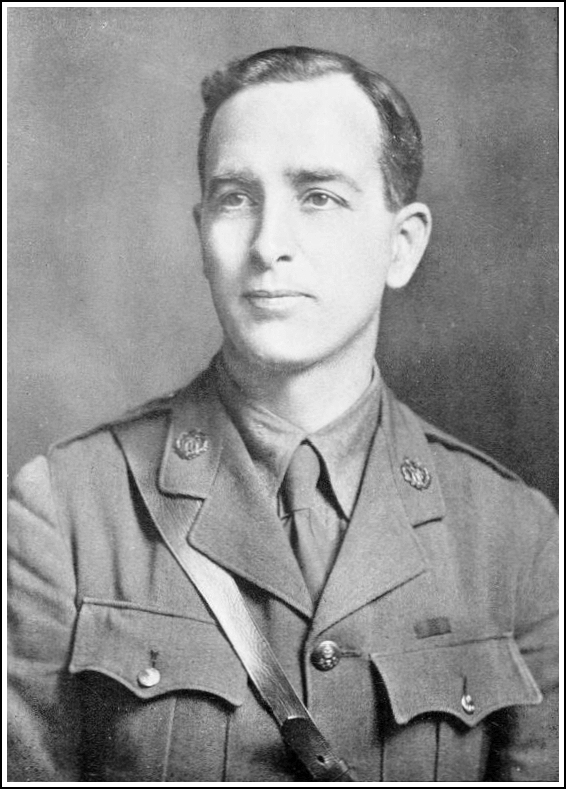
Humphrey Verdon Roe.