SEEKING ANSWERS
Reading edition
Historians of the future will record that man almost simultaneously unlocked the secret of atomic energy and ventured into new domains beneath the closed doors of the world ocean, in one of the greatest exploration endeavors of all time.
History may also show how these two efforts to benefit mankind became closely interthreaded—how nuclear energy, in its many forms and applications, played a major role in the efforts to explore and exploit “the other three-quarters” of our planet, and moreover, how the very development of a nuclear technology enforced our need to know more about the sea around us.
Nuclear energy is a fundamental physical phenomenon, like the actions of the wheel, the lever, or the inclined plane. Like chemical combustion or electricity, it is but another means for men to do useful work, whether that work be in the interests of science, commerce, recreation, or war. To this extent, nuclear energy is universal, as applicable in the sea as it is on land or in outer space. Wherever man goes and whatever he does, he requires energy to get him there and energy for his work or play when he arrives. Some of the places he now seeks to pioneer are hard to investigate by anyone encumbered with bulky traditional energy sources—coal, fuel oil, or storage batteries. The ocean in its full three-dimensional scope is one of these places.
2
The atom is the most concentrated source of energy, and one of the most diverse. Thus, not only are we able to do familiar things better with nuclear energy (the nuclear-powered submarine is a dramatic example), but we are also able to do things never before possible (such as studying the diffusion of dissolved salts in the open ocean or extending the useful life of seafoods through irradiation).
Nuclear energy has at last enabled us to realize the predictions of Jules Verne’s adventure tale, Twenty Thousand Leagues Under the Sea, and to build a true submarine—a craft whose submerged existence is limited only by the physiological and psychological endurance of its human crew. This fact in itself has added greatly to our need to learn much more about the ocean, for the sea is an opaque and strange environment in which the deadly game of hunt-and-be-hunted will be won by whoever knows the ocean best.
The very fact that we have nuclear energy means we have nuclear wastes; many of these inevitably find their way into the ocean, as all things do. We need to know more about the watery world before we can safely allow this inflow to continue.
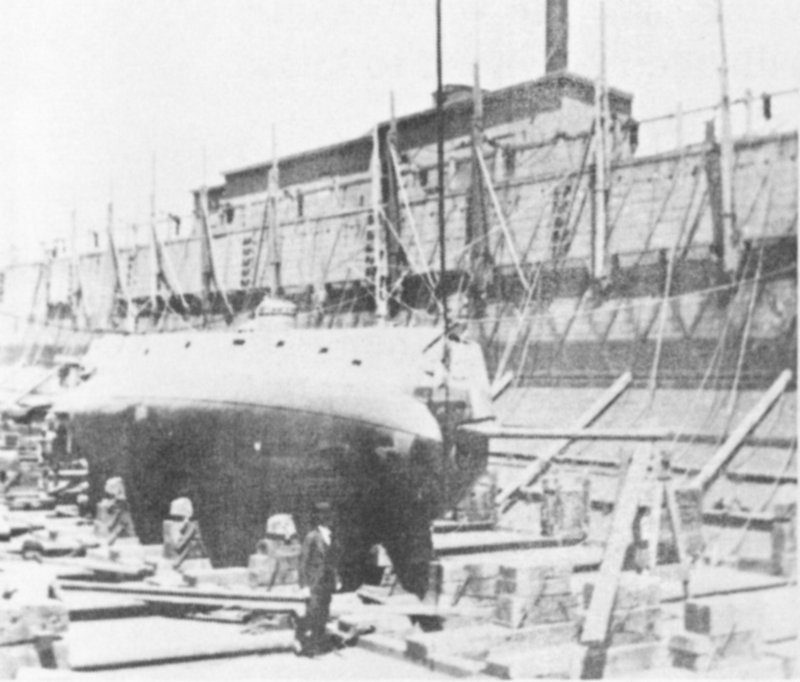
In 1900 the U. S. Navy commissioned its first submarine, the USS Holland, which was built by John P. Holland. It is shown in dry dock at Perth Amboy, New Jersey, in 1898.
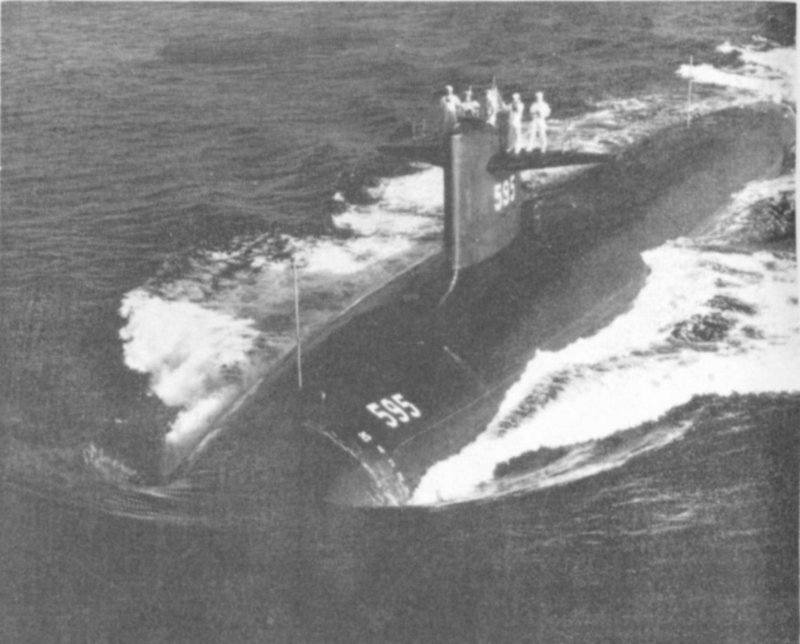
The USS Plunger, named after an early John Holland submarine, which is an example of the Navy’s present fleet of nuclear submarines.
3
In the waters of the seven seas are enough deuterium and tritium to power tomorrow’s thermonuclear power plants[1] for millions of years. These rare, heavy varieties of hydrogen, enormously abundant in the vastness of the sea, comprise an energy source without limit for all nations, which need only develop the technological ability to extract them and put them to work.
Energy for Exploration
For this exploration, men need to put instruments, navigation beacons (see figures on pages 46 and 47), and other devices on the deep ocean floor, where they must operate for long periods of time unattended and with no external source of power. Radioisotope-powered generators, capitalizing on the energy of disintegrating radioactive atoms, are almost the only devices capable of fulfilling these requirements.[2] Man also wants to do productive work under the ocean, such as drilling seafloor oil wells, mining, and salvaging for profit some of the tens of thousands of cargoes lost at sea during thousands of years of ocean commerce. Eventually, he even wants to farm the ocean floor.
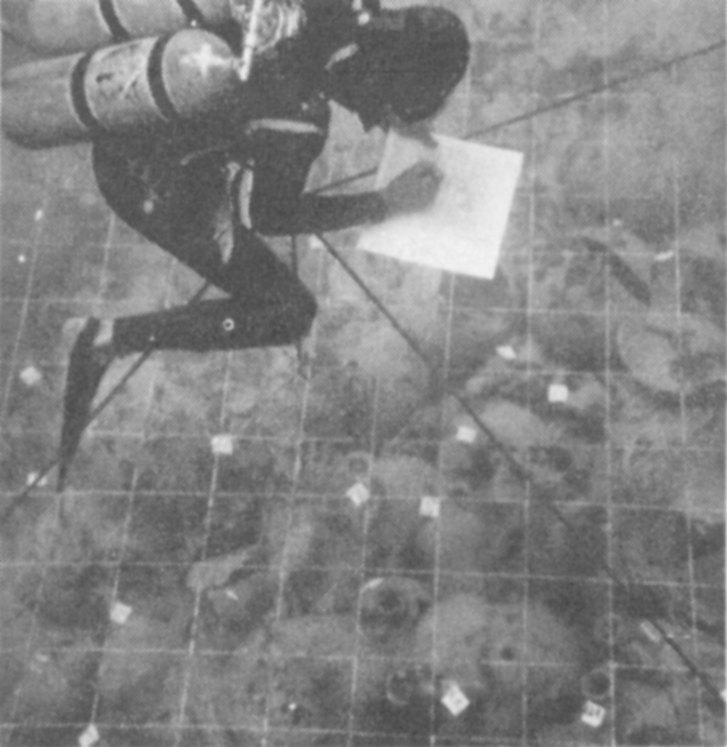
An artist draws (using pencil and frosted plastic sheet) the position of objects in the wreck of a 7th century Byzantine ship 120 feet down in the Aegean Sea. Nuclear power will permit historians of the future to remain underwater for long periods exploring shipwrecks or old cities far below the surface.
All these activities require energy—energy in an environment where most sources cannot be applied. Above all, 4 man wants to go down himself to explore, to work, and perhaps to direct nuclear-powered robots to do even more work. This means that small, manned, nonmilitary submersibles will be needed—vessels whose endurance should not be limited by the short life of traditional power sources, but should draw on the fissioning atomic nucleus, harnessed in small reactors.[3]
To work effectively in any environment, we must first know and understand it. This is the job of science. In the quest for knowledge and understanding of the ocean, nuclear energy provides scientists with better instruments to put down into the depths and wholly new techniques for the direct study of the many oceanic processes.
For example, take the role of radioisotope tracers: For the first time, these telltale atoms permit us to study the metabolism of tiny plankters, the often microscopic drifting creatures of the sea that in their incredible abundance form the base of the entire marine food chain, including fish eaten by humans. Even fallout isotopes from nuclear tests enable us to trace important physical oceanographic events, such as the ponderous process known as overturning, which transports oxygen-rich surface water to the deeps and nutrient-rich bottom water to the surface. Radioisotope tracers also provide a tool for studying the mechanics of littoral transport, which continually tears down some beaches and builds up others. They also enable us to determine if oceanic processes are likely to concentrate fallout particles and deliver them in dangerous doses through the food chain to our dinner tables.[4]
By using other nuclear energy technology, we are better able to ascertain the age and composition of deep ocean sediments and the rate at which they are deposited, how a tsunami (tidal wave) propagates across vast distances, how tides operate in the open ocean, where the brown shrimp of the Carolina coast go every fall, and the migration patterns of tuna, swordfish, and other valuable food fish.
5
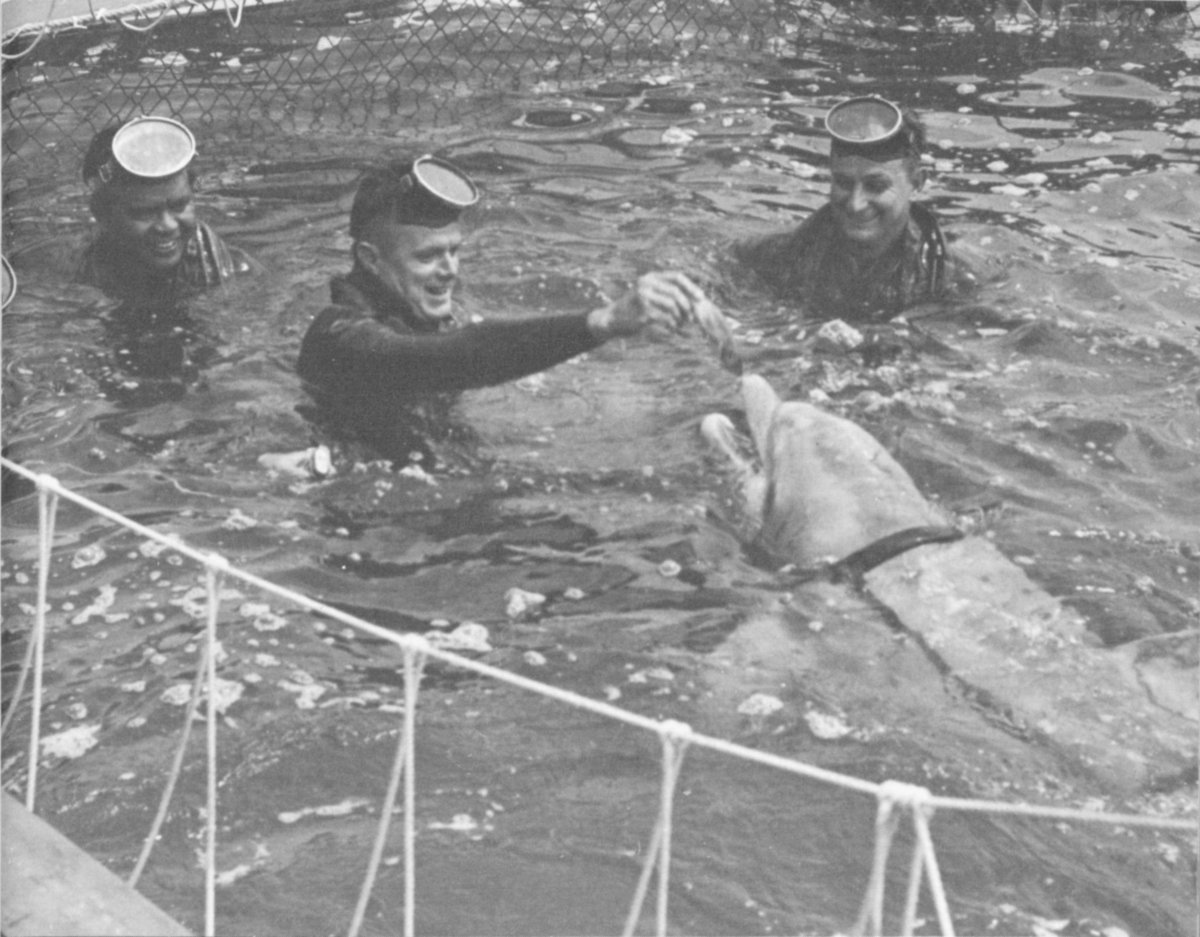
Navy men preparing for undersea research by feeding Tuffy, a friendly porpoise, which later carried messages for them during the “Man-In-The-Sea” experiment. (Also see photos on page 12.)
These are just a few of the answers we seek from the world ocean—answers important for more productive fisheries, more accurate long-range weather forecasting, possible control of hurricanes and typhoons, pollution control, safer and more economical shipping, better recreation, and numerous other matters that bear on our health, well-being, and day-to-day lives.
On all these endeavors the ocean exerts a major influence. And in each, atomic energy is helping assemble and interpret answers.
6