INDEX.
Reading edition
Abandoning obelisk, reason of, 6, 10.
Alaqi, Wady, 12, 27.
Amasis II, transport under, 30.
Amenemêt III, expedition, 29.

Anastasi papyrus, 30, 35.
Balls of dolerite (see ‘pounders’).
Basic nuclei at Aswân, 12.
Bed of removed obelisk, 17, 20.
Bending stress, 42, 43.
Block and tackle, 38.
Boat, loading obelisk on, 33.
Boats, 32, 33.
Boning rods, 7.
Burning, to break up granite, 4, 5.
Calculations, ancient, 30, 35, 43.
Canal, suggestion by Pliny, 33, 49.
Capstan, 38.
Centre lines, 8.
Centre of gravity, 42.
Chisel marks, 5, 11.
Chisels,
— copper, 24–27.
— stone, 26.
Cleopatra’s needle (see London obelisk).
Colossi, 23, 35.
Compartments in brick ramp, 35.
Constantinople obelisk, 3, 43.
Copper chisels, 24–27.
— micro-examination of, 52.
— tempering of, 27.
Cost of excavation, 2.
Cracks,
— ancient examination of, 6.
— in obelisk, 6–8, 10.
Crowbars, 4 (note 2).
Cubit,
— alleged lapidary, 19.
— common, 19.
— obelisk, 20.
— royal Egyptian, 19, 20.
Cutting granite, 25–27.
Date of obelisk, 3.
Derricks, 38, 53.
Detaching obelisk from bed, 23–25.
Dutotpe, statue of, 30, 38.
Dimensions of obelisks, 9.
Dolerite, 12, 13, 26.
Double-foot, 11, 7.
Embankment for erecting obelisks, 35, 37.
Emery, 5, 27.
Entasis, absence of, 7.
Erection of obelisks, 35–42, 50, 51, 52.
— by direct raising, 36, 51.
— by embankment, 37.
— by embankment and funnel, 38–42.
— New York, 52.
— Paris, 53.
— Seringapatam, 36.
— under “Rhamsesis”, 36.
— Vatican, 51.
Expeditions for stone, 29, 30.
— Amenemêt III, 29.
— Menthuotpe IV, 29.
— Ramesses IV, 29.
Extraction of obelisk from quarry, 23–27.
Finger, division of cubit, 19.
Fissures, ancient examination of, 6.
— in obelisk, 6, 7, 10.
Foot, as measure, 11, 14, 17, 19, 20.
Friction of sled, 30, 31, 38.
Funnel for erecting obelisks, 38–42.
Geology of Aswân, 12.
Glaze, natural, on pot, 44.
Graffiti, 46.
Guide-lines for masons, 6, 8, 11, 17.
Gum, acacia, 44.
Gyn, 38.
Hammâmât, quarries, 26.
Hammer-dressing, 7, 8.
Hammer, granite from Saqqârah, 5.
atshepsôwet,

— obelisk of, 9, 14, 32, 41.
— obelisk on sled, 32.
Hieratic inscriptions, 20, 44.
ori, the scribe, 30, 35.
Inscription
— on bed of small obelisk, 21.
— on rocks, 46.
— on ostrakon, 46.
— on quarry-face, 20.
Iron,
— halberd of, 26.
— preservation of, 26.
— wedges, 5, 26.
Karnak, obelisk of pylon VII, 9, 10.
Lateran obelisk, 9, 10.
Later project, dimensions of, 9.
Length of Aswân obelisk, 3, 9.
Levers, for tilting obelisks, 23–25.
— note on, 37.
Lines,
— guide, 6, 8, 11, 17.
— measuring, 11.
London obelisk, 9, 53, 54.
Luxor-Paris obelisk, 9, 31, 38, 53.
Maarieh obelisk, 9.

Menthuotpe, expedition of, 29.
Mindâlah, 13.
Modern erections of obelisks, 31, 33, 52–54.
Modulus of rupture for granite, 43.
New York obelisk, 9, 33, 52.
Nineveh, transport at, 30.
Obelisks,
— alleged 108‐cubit, 3, 43.
— ancient problem on, 30.
— dimensions of, 9.
— erection of, 35–43.
— extraction from quarry, 23–27.
— atshepsôwet’s, 9, 14, 32, 41.
— Lateran, 9, 10.
— limit to length of, 43.
— London, 9, 53, 54.
— Luxor-Paris, 9, 31, 38, 53.
— Maarieh, 9.
— modern removals of, 31–33, 52, 54.
— New York, 9, 33, 52.
— Seringapatam, 36.
— stresses in, 42, 43.
— transport of, 29–33.
— Tuthmôsis I, 9.
— Tuthmôsis III, 9, 10.
— undercutting in quarry, 23, 24.
Ochre, 11, 44.
Ostrakon, 44, 45.
Palm (measure), 19.
Palm-rope, 25.
Paris obelisk, 9, 31, 38, 53.
Platform above obelisk, 17.
Plug and feather, 4.
‘Pounders’,
— attachment of, 13.
— broken by blows, 12.
— material of, 12.
— provenance of, 12.
— rate of work with, 14.
— specific gravity, 12.
— used by hand, 13, 20.
— use with rammers, 13.
— wear on, 12.
Pounding, ancient word for, 46.
Pot found in clearing, 44.
Ptolemy Philadelphus, transport under, 33.
Quarries at Aswân, 12.
Ramesses IV, expedition of, 29.
Rammers, 13.
Rate of work in pounding granite, 14.
Records of ancient workmen, 18–20.
Reed cushion, 41.
Rollers,
— obelisk placed on, 31, 38.
— ancient, 38.
Rolling obelisk from quarry, 23–25.
Ropes, sizes of, 25.
Rusting of iron, 26.
Sand,
— cohesion of particles in, 39.
— packing with, 24, 25.
— used in erections, 35, 39.
Sarcophagi, unfinished, 12.
Scale models, 40, 43.
Seringapatam obelisk, 36.
Sheers, 38.
Sleds, 32, 41.
Slot in obelisk pedestals, 40, 41.
Softening (!) granite, 26.
Soldiers in transport work, 29, 30.
Specific gravity of ‘pounders’, 12.
Stains on dolerite ‘pounders’, 12.
Steel, 25, 26.
Stresses due to weight of obelisk, 42, 43.
Survey Department, 1.
Tempering of copper, 27.
Test-shafts, 6.
utotpe (see Dutotpe), 30, 38.

utiy, record of 108 cubit obelisk, 43.
Time taken in pounding out trench, 14.
Transport of obelisks, 29–33.
Trench on upper quarry-face, 17.
Trench round obelisk, 11–15.
Tuthmôsis I, obelisk of, 9.
Tuthmôsis III, obelisk of, 9, 10.
Undercutting obelisks in quarry, 23, 24.
Units used in this volume, 2.
Wedges, 4, 5, 26.
Weight of Aswân obelisk, 3, 9.
Weight of obelisks compared, 9.
Work, ancient arrangement of, 14.

Plate II
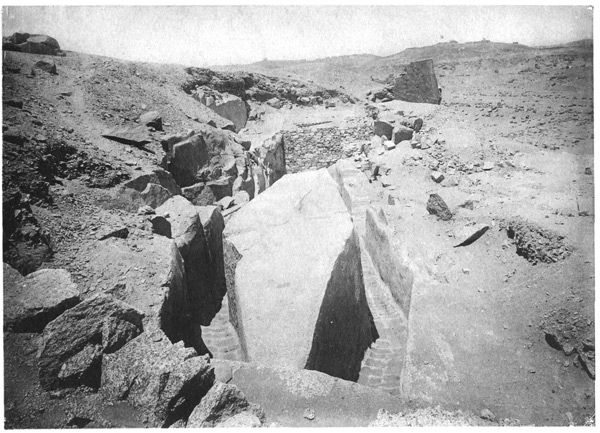
(1) View from East.
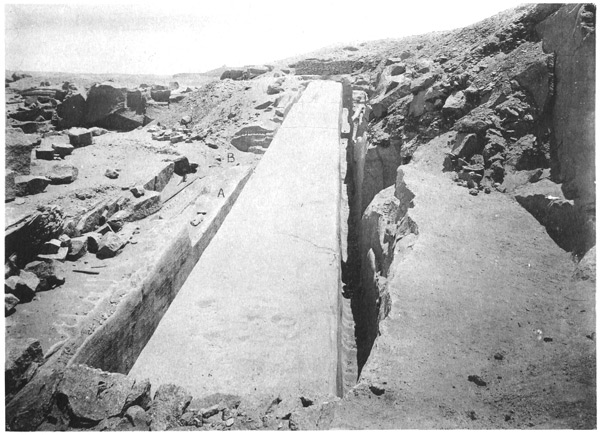
(2) View from West.
IMP. CATALA FRÈRES, PARIS
Plate III
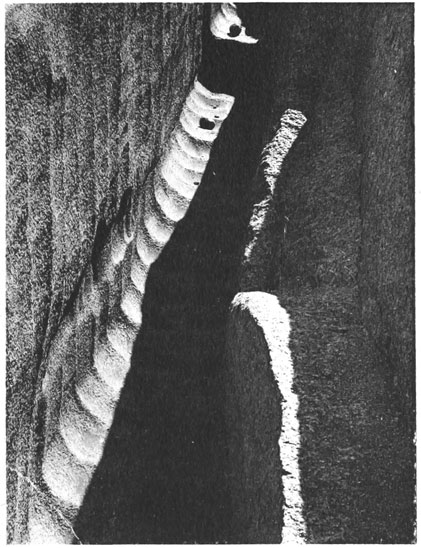
(1) Bottom of trench.
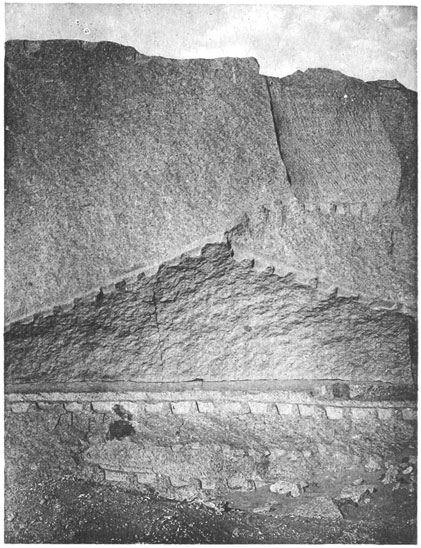
(2) Wedge & chisel marks.
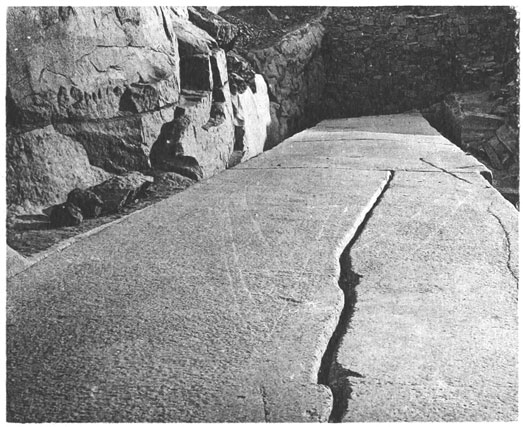
(3) Lines for pyramidion of a smaller obelisk.
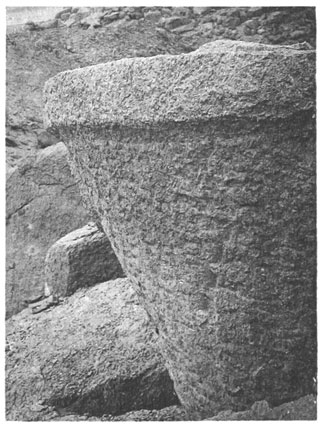
(4) Rough-dressing: “El-Hammâmât”, Shellâl.
IMP. CATALA FRÈRES, PARIS
Plate IV
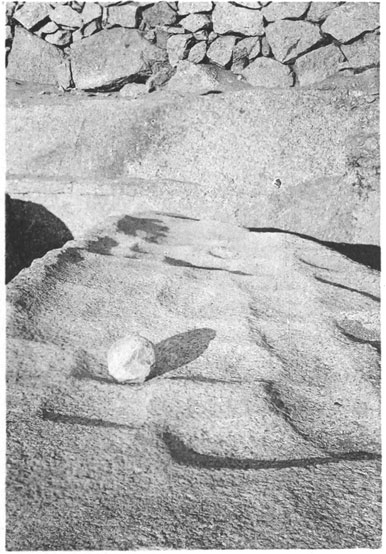
(1) Hammer-dressing on pyramidion.
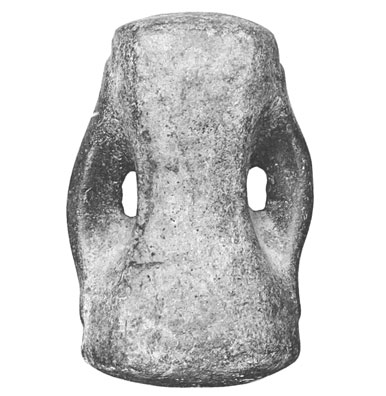
(2) Black granite hammer from Saqqârah.
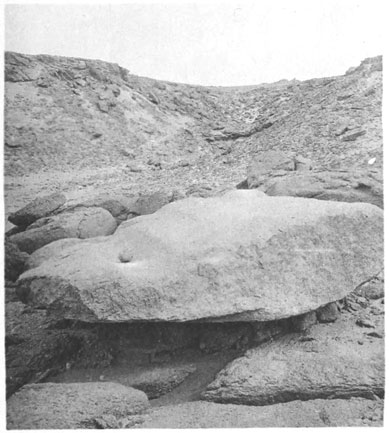
(3) Construction of sarcophagus lid by pounding.
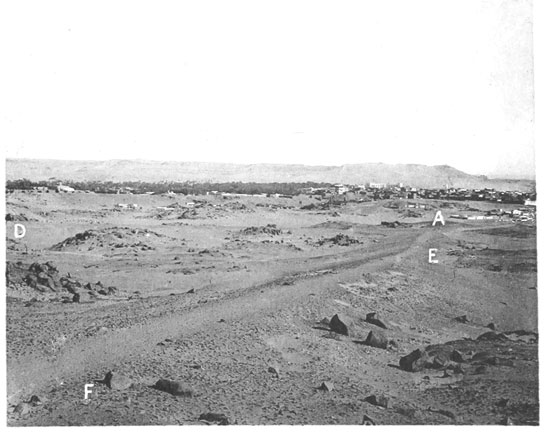
(4) Embankment near obelisk.
IMP. CATALA FRÈRES, PARIS
Plate V
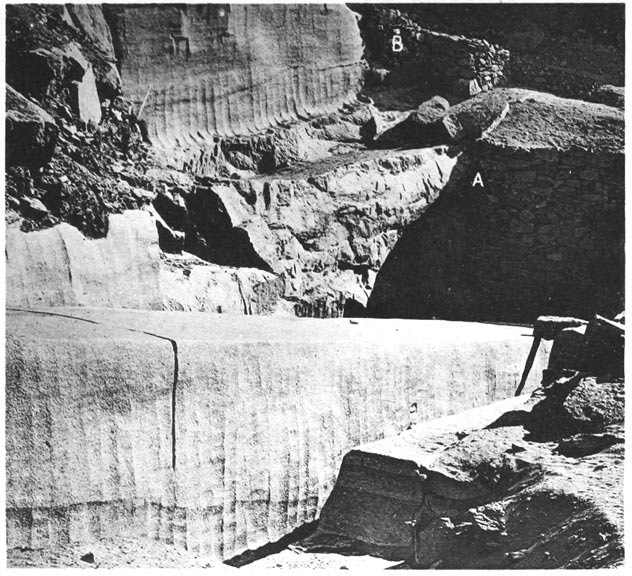
Fig. 1—Obelisk, platform and quarry-face from north.
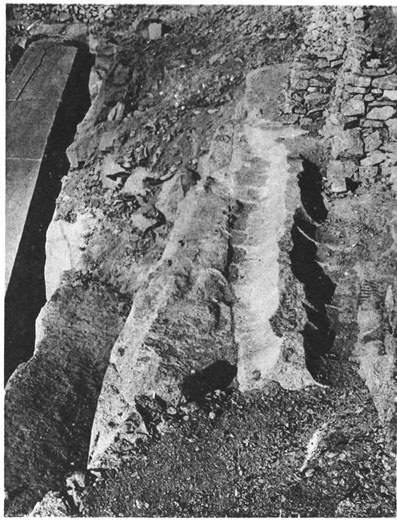
Fig. 2—The upper quarry face.
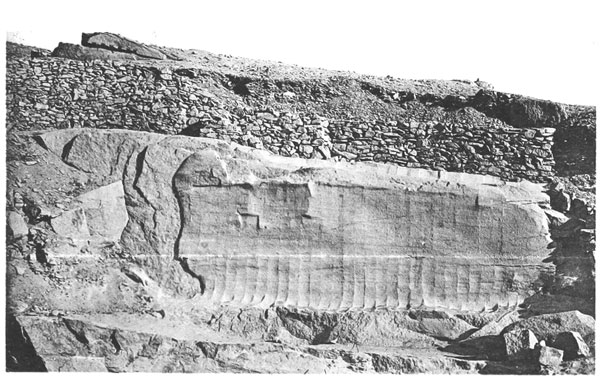
Fig. 3—Bed of a small obelisk.
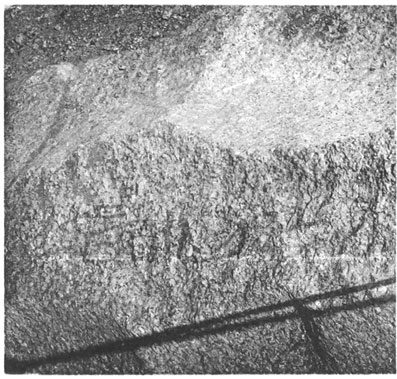
Fig. 4—Inscription on bed of small obelisk.
IMP. CATALA FRÈRES, PARIS
PLATE VI.
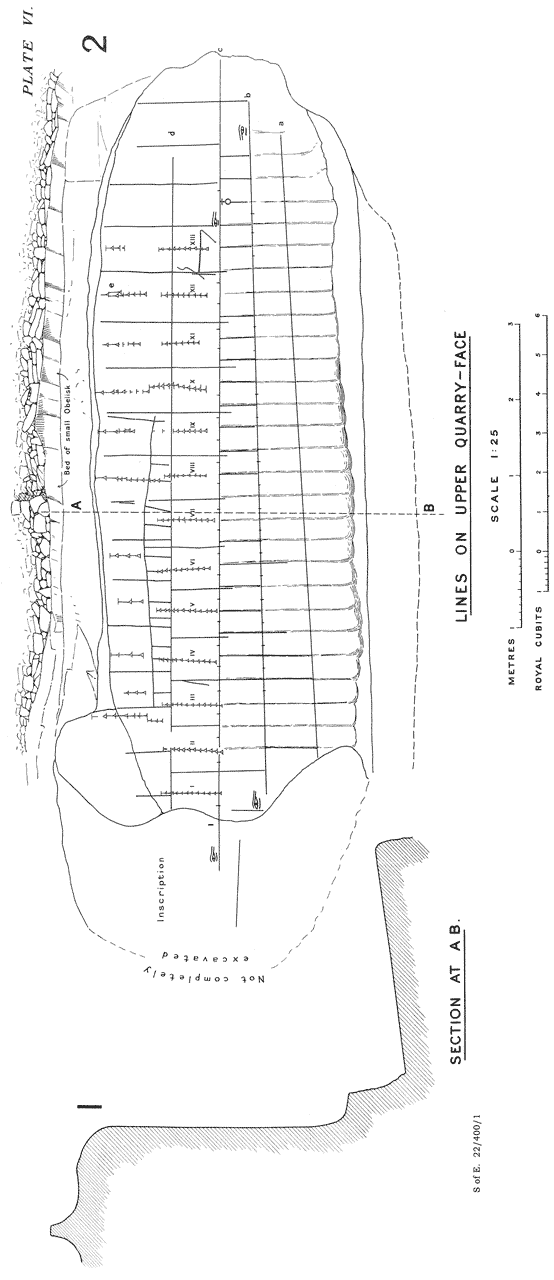
[See larger version.]
PLATE VII.
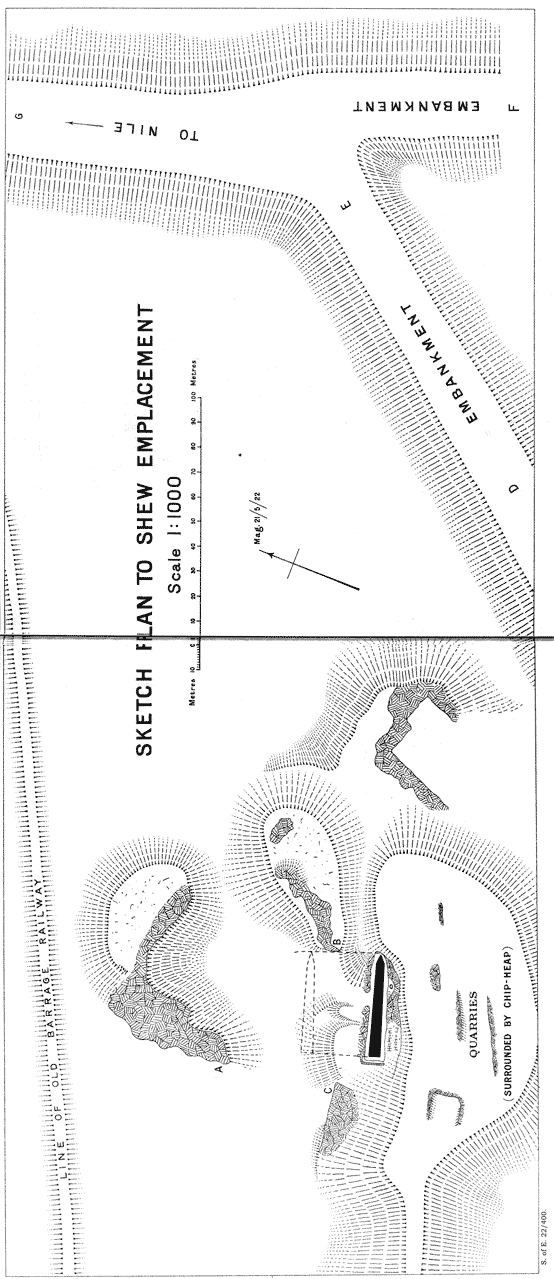
[See larger version.]
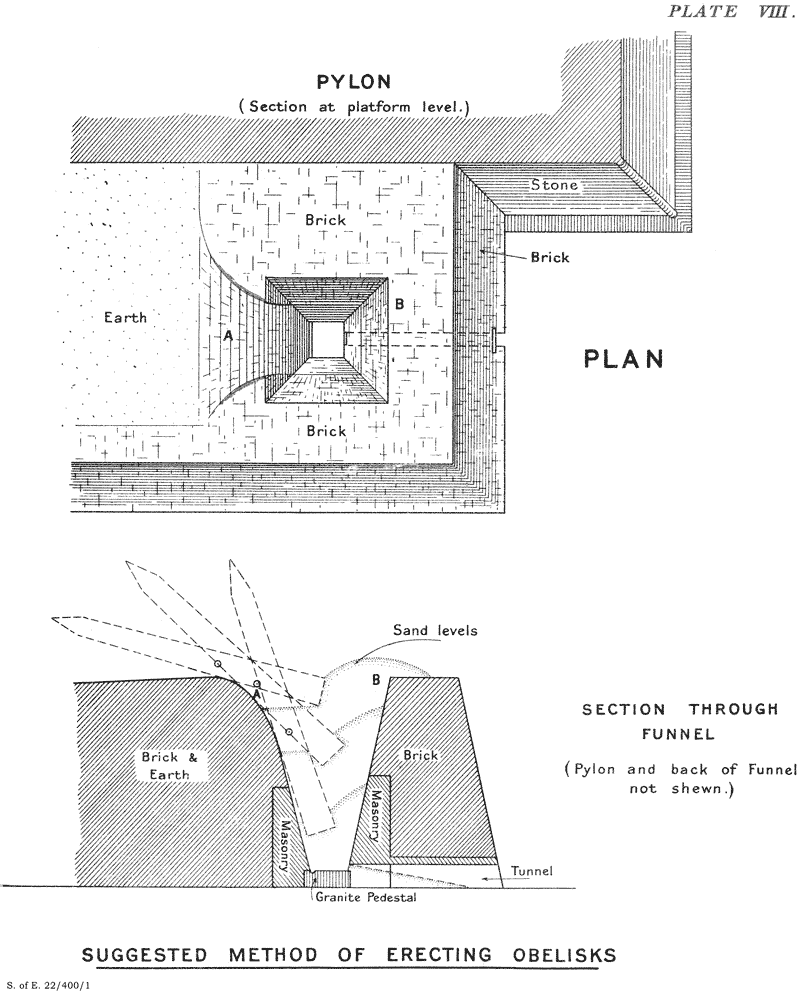
PLATE VIII.