Ernest Glanville (continued 3)
Reading edition
“He was up to his work!”
“Him—I guess so, lad. He were a caution for cunnin’ and bush learnin’, were the chief.”
“What chief was he?”
“This ain’t the place to bring in his name, for I didn’t know him then. I tell you it was smart work tracking him through the woods, over the hills, inter the kloofs, but Abe Pike did it sure enough, and he tracked the white man, though he were half starved and lamed in the arm, by gosh. Many a time that day, when my back ached from the bending of it, and my stummick was jammed together for want of something to eat, many a time I thought of the three of us strung out in the dark woods like tigers on the scent. Hungry, by gum! I jest chewed leaves as I went along; and sore—thunder—I kin feel now the throbbing of the wound in my arm. But I kep’ on. I tell you, young Abe Pike was tough as foreslag, and he wern’t going to cave in while that red Kaffir boy was keepin’ up. The chap in the lead, the man in veldschoens who was escaping, must a been made o’ iron too, I reckon, for he only stopped once the second day, when he ate some bread. There was some crumbs on the yearth among the grass, with the ants over ’em where he’d sat and ate, and the dry skin from a piece o’ biltong. I took a chew o’ elephant leaves, and bymby in the afternoon I seed little balls of pith, which showed the Kaffir had cut off a insengi root to chew. The white man kep’ on for twenty miles, keeping to the woods all the time where he could, and the Kaffir kep’ on arter him, and Abe Pike he kep’ on arter the Kaffir. If it hadn’t a been for that insengi root I’d a lost the spoor clean, for there were a big stretch of rock veld where they passed over, and all I could follow was white balls of chewed root. I dunno how the Kaffir picked up the trail on that stretch. He must ha’ smelt it. There were a bit o’ hill to climb, and when I reached the top my head swam, an’ I pitched down like a log. When I opened my eyes it were dark, and my bad arm was doubled up.”
“You gave up?”
“Sonny; you didn’t know young Abe—no, you didn’t. But I did. And I tell you, for all his emptiness, he jes’ kep’ on. Yes, sir—he did that I said the darkness were down, but when I looked aroun’ I seed the glimmer o’ a spark down below, an’ I kep’ my eyes on it whiles I crawled down the steep of the hill to the kloof below. Things happen sometimes, sonny, in a way that makes you very quiet an’ thoughtful. A bird flew up—a grey-wing partridge, I guess, from the whirr—and, searchin’ around, I found its eggs. They put life into me, and I steadied up—but what’s all this I’m telling you about? There’s work to be done, and if you don’t stir ’twill be sun-down and too dark. As for me, I’m going to boil the kettle.”
“But you’ve not finished telling about the spooring.”
“Ah, well, it can wait, sonny; but it’s time the kettle were put on and the mealies roasted.”
Chapter Twenty One.
The Boom of the Drum.
“Oh, ghoisters!” said Abe, “there’s the blamed bung come outer the vaitje and not a drop of Dop left, and all the buchu collected for the soaking.”
“Do you soak the buchu in brandy?”
“The brandy brings out the goodness from the yerb, and I tell you a dose of it gets home every time. But what’s the good—the brandy’s gone, there’s not a tickey in the stocking, and not a man in the country would offer ole Abe Pike so much as half-a-pint—not a one. The old people’s gone and the new ones, blow me—the new ones drink cold tea.”
“What about the Kaffir chief you were following Abe?”
“I ain’t follering no Kaffir chief, not me—and look here sonny, you get along home, see, ’fore it gets dark.”
“I think I could spare a gallon of brown Cango, Abe, if you come over in the morning.”
“Cango, eh! Stay right here, sonny—I’ve marked down a fine porkipine—and we’ll hunt him to-night. In the morning I’ll go over with you, arter showing you something as’ll surprise you, I bet.”
“What’s that?”
“A horn-bill sitting on her nest in a hollow tree, and the entrance built up with mud, so she can’t get out, and the cats can’t git in, by gum, an’ the ole chap a feeding her. Lor’ love yer, there’s no matchin’ animiles an’ birds for cunnin’.”
“Yet I remember you saying that young chief was very cunning.”
“So he were; lad, he were born smart; an’ them gleamin’ eyes of his’n could read the writin’ on the ground, the signs of weather, and the ways of fightin’ men better’n you could read a big print book. That’s so. I tole you how I follered him, and how he follered a chap in veldschoens all the way from the Chumie. Well, in the dark of the second evenin’ I seed a red light, and were blunderin’ on towards it, being pretty well dazed from the hunger and weakness and pain o’ my bad arm, when somethin’ in the steady glow of it brought me up with a jerk. Says I, that fire’s been long lit, there’s nothin’ but coals blazing, and whoever lit it must feel safe. Says I, who can feel safe in this yer place? Why, a Kaffir. So I slowed down to a crawl, and blow me, when I got within hearin’ distance, I seed a man by the fire. Sonny, he were the man in veldschoens.”
“The white man the chief was after.”
“’Twas a blanged half-caste, lad, that’s what he were. I saw that in the fust look by the red dook he wore roun’ his greasy head, and by the spread of his flat nose, and the sight of him kept me still, I tell you. Half-castes is mean. And to think I’d been goin’ hungry to save a thing like that, and him a sitting there with his mouth all smeared with black coal from the bried meat he were eatin’. The smell of it came to me where I lay in the shadder, an’ I tell you it made me sick with longing for a bite, but I jes’ kept there sniffin’ till the faintness left me. Well, all ov a sudden I seed his jaws stop, and his eyes had that sort o’ fixed look which they has when a man’s listenin’. Then, without movin’ his body, he reached out for his gun. Yes, sonny, he reached out for his gun with his eyes starin’ straight for me, and I kivered him. While I was gettin’ ready to shoot, outer the darkness behin’ him there come a voice callin’ in greetin’, ‘Gumela vietu!’ I giv’ a start, but that ere half-caste he never stirred. The hand that was reachin’ out for his gun stopped, his jaws began to move, but his voice were a bit shaky when he said ‘Gumela inkose!’ and there was a sort o’ hunchin’ of his shoulders as tho’ he felt the assegai going in. For a spell there was silence, then from the wall o’ blackness there stepped to the fire the young chief hisself. I see the gleam o’ his ivory bracelet. With his toe he moved the gun away. Then he reached down, took up a length of roasting flesh, caught hold of a mouthful and saw off the chunk with the blade of his assegai ’twixt his hand and his lips. He jes’ ate and ate, an’ the smell o’ the meat made my stummick heave an’ grumble most horrible.”
“They were friends, then, after all?”
“You wait, sonny—jes’ keep still an’ wait. Arter a time they began to talk. Then it came out that the half-caste was on some mission from the head chief, and the young chap was mighty curious to know all about it; but the half-caste he were too slim. They jes’ paced roun’ each other like a couple o’ strange dogs. At the end the chief he up and say, ‘I know where you’re going.’ ‘Soh?’ said the half-caste. ‘Yes,’ said the chief, ‘you’re going to the white man’s camp to give the white chief news of our coming.’ Well, the half-caste he spat in the fire. ‘You are a boy,’ he said; ‘your place is at home with the women.’ ‘My place is with you,’ said the young chief, speaking soft, so that the other laughed in his throat, and called the chief quedin—‘boy’—again, which you know is the easiest word to rile a Kaffir. ‘I know, in your heart,’ said the boy, ‘you will sell us for the white man’s money.’ The half-caste spat again. ‘Oh, yes,’ he said, ‘the white men are in terror of you—a warrior like you would be worth a whole goat to them.’ ‘I am Sandili,’ said the lad, ‘son of the head chief, and one day the Amakosa will do my bidding.’ The half-caste giv’ a start; then he grew soft all of a sudden. ‘I was but trying you,’ he said. ‘Oh, chief, forget my words, and take the path with me in the morning. We will find out where the red-coats are, how many of them, and what road they take, so that we can report to your father, and plans can be made to trap them.’ I could hear the hiss of a snake in the man’s speech, sonny; and it struck me then he had, in his heart, determined to take the young chief Sandili to the English colonel.”
“It was really Sandili?”
“It were, an’ no mistake. I could a’ shot him then, an’ put a stop to two wars; but a good many things could be done, sonny, if only we could see ahead. Well, for all they’d made friends, those two didn’t trust one another—not a bit, not they—they jes’ sat there glancing acrost the coals, nodding, an’ wakin’ up with a start, and when one on ’em moved t’other would have his eyes wide open. Long before sun-up they moved off, an’ I crep’ outer my hidin’ place to the fire, where I found jes’ a coal-blackened strip o’ meat that jes’ made me hungrier than afore. Lor’ love you, a human is a helpless crittur. There was animiles about an’ birds, but as I darn’t use my gun I couldn’t get one. I cotched a salamander and ate him, an’ a land crab by the stream, an’ ate him—an’ I ate some berries, an’ a clutch o’ young birds from the nest, and I had a bathe—and took up the spoor of the two of ’em. ’Twas easier spoorin’ now, for they was going slow, and at mid-day I had ’em in sight, and so kep’ ’em till the last. In the afternoon we were climbing a ridge among the bushes, when boomin’ along there came the sound of music that brought the three of us to a dead stop. Never had young Abe yeard any sound like that afore or since ’cept once—it went through my worn-out body until I trembled like a leaf—yes, sonny—and the wet ran down my cheeks. ’Twas the soun’ of a big drum.”
“There’s not much music in that, Abe.”
“Isn’t there, sonny? Not when you’ve been three days in the woods, skeered of every shadder; not when you’ve yeard the war-cry of the red Kaffir; not when the cries of the little ones waitin’ for the assegai are ringin’ in yer head. Only the soun’ of a drum. One, big boomin’ note, rolling clear an’ far with a message of help. The tiredness an’ the sickness fell from me, sonny, an’ I could a’ run up that hill. The other two they crept up presently, and bymby I follered and hid behind ’em. They was crouchin’ by a rock, lookin’ down, and I forgot ’em in lookin’ at the picture. Far below in the valley was the white tents, an’ the cattle, an’ a line of red where the soldiers were drawn up, bayonets flashing. Then a troop of men on horseback rode down the line, and again the drums beat and the bugles rang out. It was a picture, sonny, that I could a’ looked at all day, but I were jes’ jerked out o’ my spell o’ dreamin’ by the chief talkin’.”
“‘Yoh,’ he said, ‘they are few, but what noise is that?’
“‘Tis their witch-music,’ said the half-caste; ‘’tis kep’ in a big box, and when the man hits the top of it with a stick the witch cries out what they should do.’ ‘Yoh!’ said the chief, ‘I will kill the box! They are great warriors, these, but they are foolish to wear a red so bright, that no man of them can hide.’ ‘They do not hide,’ said the half-caste, and he shifted his gun as he looked at the chief from the corner of his eyes. ‘Let us go.’ ‘Nay,’ said the chief, ‘it is a good sight this—stay a little while. Why do they move about so?’ ‘It’s their war-dance, and he on the white horse is the chief. At his words they turn and stop, break up, and come together.’ The young chief watched like a dog straining at the leash—and, by gum, he yeard the colonel’s commands, though never a sound reached me. A smart Kaffir can smell, and see, and hear like a animile. ‘Yoh!’ he said; ‘listen to his words!’—and in his excitement he raised his head, and the half-caste he stood back and lifted his gun. But he measured his distance to the camp, and he said, ‘Let us get nearer’—for why, the cuss wanted to be near help when he went for the chief. The chief looked round, and, ghoisters! he seed my face stickin’ outer a bush. He jumped to his feet and drew back his arm to fly the assegai, but the half-caste, after one glance at me, dropped his gun, seized the haft of the assegai with one hand and hooked his other arm round the chief’s neck. ‘It was a good word you spoke, quedin,’ he said, hissing as he struggled with the boy. ‘I will sell you to the white man.’ Seein’ how it was, I stepped out, and as I went up I seed the chief’s eyes rollin’, while his nostrils were blowed out like a horse. ‘I am a boy,’ he said; ‘I give in.’ The half-caste he laughed, turnin’ to me whiles he called out in Dutch that it was he who took the quedin prisoner, but he’d give me somethin’ if I helped him—the skunk, the blanged, mangy, yeller dog. Well, sonny, that Kaffir were shamming. Soon’s he give in, the half-caste he loosed his hold, when, with a grunt, the Kaffir yanked his assegai away, and with a wriggle o’ his naked body he got a length and struck the half-caste under the armpit. ‘Dog,’ he said, and druv’ his assegai in over the blade. The half-caste he jes’ went green. ‘Ek ’es dood,’ he said, lookin’ at me; then he sat down all of a heap. The young chief he stood there eyein’ me like a tiger, with his lips curled back and his chest heavin’. It was the first man he’d killed, I guess. Well, I lifted the gun, but the left hand gave out and the barrel wobbled—then, I dunno why, but I begin to laugh in a foolish way, an’ I kep’ on laughin’ whiles the Kaffir came crouchin’ up with his assegai held back. Nex’ thing I seed the half-caste roll over, and then sit up and point his gun at the boy’s back. ‘Pass op,’ I said ’mid the laughin’, while the sweat was drippin’ off my nose; and the chief he jumped aside as tho’ there was a snake in his way, and the bullet whizzed by him. The half-caste gave a groan and rolled over dead, out of hate and disappointment, ’cause he’d missed. That’s so. The chief he looked at me, an’ he looked at the soldiers who were hurrying up from down below, then he jes’ turned and walked away; yes, he jes’ walked away with his head up, and I could a’ shot him—for the laughin’ fit had passed away. But before he could ha’ killed me easy as sticking a pig, so I watched him go; an’ when he reached the bush he said, lookin’ over his shoulder, ‘Grow fat, man who laughs, an’ you will be food for my assegai.’ The cheek of these young bucks; but I reckon, sonny, if he’d a’ known I’d killed two of his men in the Chumie he wouldn’t a’ waited, for all I was like a shadder.”
“Is that all?” I said, when the old man paused.
“Well, it were enuff, wern’t it?”
“What did the Colonel say?”
“Oh, the Colonel! He said, ‘Who the devil are you, an’ where the blazes you come from?’ That’s what he said, that time; but ’twern’t long afore he changed the tune of his remarks. ‘Who the devil are you, and where the blazes you come from?’ he sed, sittin’ in his tent with his officers by him; an’ I jes’ reached over to a black square bottle that was ahind him and put the neck to my mouth.”
Chapter Twenty Two.
The Red Diamond.
Our big Christmas hunt was in full swing. In a smooth, well-carpeted glade, surrounded by forest trees and bush, the three tent wagons of the party were outspanned, drawn up in a hollow square which formed a capacious outside room, roofed in by a wide stretch of canvas. From the spreading branches of a yellow-wood hung the last day’s ‘bag,’ consisting of seven bushbucks, two duikers, three blaauwboks, one jackal, and a wild dog. Beyond the wagons was the servants’ fire, and the ‘boys’ themselves were ‘brying’ meat and talking, as only Kaffirs can talk when the day’s work is over and food is plentiful. In our ‘scherm’ one lantern swung from the centre pole, its light just sufficient to mark out the position of the brown demijohn on the box that served as a table; while across the breadth of darkness, where the ‘scherm’ opened to the wood, fireflies crossed and circled. The quiet of the night was over the bush, intensified by the deep undertone from the sea, and the brooding spirit in time reduced us to silence, even stilling Long Jim’s concertina, whose lugubrious notes had in the early hours of the evening wailed complainingly over “The Old Camp Ground,” “Poor Old Joe,” and other old favourites.
“I envy you fellows,” said Mr Strong, a crack shot from the town; “we don’t get such nights as this.”
“The boot’s on the other foot,” said Long Jim, making his instrument moan. “We’ve got poverty and pumpkins. You’ve got comfort and a pianny.” And he pumped out “Hard times come again no more” till a dog pointed its nose to the sky and howled in sympathy.
“There’s no chance of making a pile in the country,” said Amos Topper, who raised ten acres of “forage” regularly every season, and “rode” firewood for a living in the balance of the year. “’Tis all hard work and disappointment—ticks in the cattle and rust in the corn.”
“Soh!” said Abe Pike.
“Well; so it is!”
“Yet,” said Abe, “there’s chances.”
“Meanin’ pine-apples and bananas, which Dick Purdy made a fortune out of through growing them on the slope of a valley.”
“No; meanin’ diamonds.”
“There’s no diamonds down here.”
“Is that so? Well, I seed one right here, as big as a plum an’ as red as the eye of a coal gleamin’ outer the dark. Yes, sir.”
“Of course. It belonged to some digger from the field. For the matter of that, I’ve seen a whole bucketful of them, but then they was white, and the sight of ’em never made me any the richer.”
“Your head was allus too big for your hat, Amos. I expect that’s why there’s a hole in the crown of it for your hair to grow through—but it so happens this yer diamon’ I’m speakin’ of could ha’ been gathered by anyone who had the pluck to grab it.”
“Fire ahead, old man,” I said, seeing that Abe was preparing the way for a yarn.
“You’ve hit it, sonny,” said Abe solemnly; “it was fire-ahead, and no mistake. Lemme see; you know ole Harkins, the mad trader?”
“I remember him,” said Mr Strong, “a fine hunter in his youth, who returned from his last trip into the interior broken by the Zambesi fever. He had a suspicion that everyone was watching him, and I believe he died in the bush after leading the life of a hermit.”
“That’s him,” said Abe, pulling at his pipe until the glow lit up his lined face. “Yes, he went into the bush—and for three years he hunted for that same red diamond. Some people thought he was crazy—so he were crazy after a fortune, but lor’ bless yer, he’d got all his wits about him, and the fortune was big enough to buy up the whole side of this district—houses, land and stock—which is a big enough haul to turn the minds of most of us. One night, many years ago, I was still-huntin’ buffel by the Kowie bush, when from the thick of the wood I yeard a noise that sent me up a tree in a jif—a shrill sort o’ scream that I couldn’t fix—an’ whiles I was up the tree I seed ole Harkins slippin’ along through the moon light. He stood under the tree listenin’, and then he began talkin’ to hisself in jerks. ‘That’s him, I swear!’ he said, ‘and by God I’ll have him or die!’
“I jes’ kep’ quiet, for I tell you I didn’t like the look o’ him, with his long hair, and his lean fingers, and burnin’ eyes, but when he slipped along inter the wood like a shadder—for there the no boots on his feet—I skimmed down and let out after him with my heart in my mouth. I guess I hadn’t got much sense, and when I’d gone no more’n fifty paces inter the dark of the trees he grabbed me by the throat—afore I knew where he were. Oh, lor’! He jes’ grabbed me by the throat and shook me. ‘You’re follerin’ me!’ he hissed.
“Of course, I couldn’t speak, but I kicked and spluttered, and he loosened his hold. ‘You’re follerin’ me!’ he said, stickin’ his face close up. ‘I ain’t,’ I said; ‘I’m after buffel.’ ‘You yeard it,’ he hissed; ‘and you meant to rob me.’ Well, I laughed. The idea of robbing a scarecrow like him was too much, and I couldn’t help laughing, not though he looked as savage as a starved tiger. All the property he carried were a big-bore elephant gun, and I noticed the trigger were cocked. ‘Clear out,’ he said; ‘and if I see you after me I’ll kill you.’ By gum, he meant it, and I cleared out smart with him after me over the ridge, when once ag’in there came that strange cry from the woods, so near this time that I jumped inter a bush. Well, there were a smashin’ o’ trees, and afore I knew what was up a bit of the country rose up and came rolling down through the moonlight. Man alive—it were a thunderation bull elephant, and I slipped outer the bush and bolted for hum with Harkins’s yell a-ringing in my ears. Well, sir, whiles I was sittin’ in the room gettin’ back my wind, up along, in a flurry, came Sam Dale. ‘It’s true,’ said he, with a gasp, as he flung open the door. ‘What’s true?’ ‘Yes,’ he said, ‘I seed it. I were crossing the drift in Euphorby Valley when I yeard a splash in the pool, and out of the dark end beneath the krantz I seed a glow of red. First I thought it were a eye, but then I noted how it sparkled, and all in a breath it struck me it were ole Harkins’s diamond. Then there was a splash in the water, and I ran on here to ask you to help me kill the crittur.’ ‘Hol’ on,’ I said; ‘what the blazes are you talking about? I never yeard of any diamond, and I’m not killing any crittur to-night,’ I said. Well, Sam Dale he up and tole me how Harkins had courted his sister years before, and how his sister had told him, unbeknown to Harkins, how she had seen the big red diamond he kep’ in his pocket, which he had bought from a Kaffir chief. And Sam, he told me a most surprisin’ story, how Harkins being one night cornered by a animile in the wood had loaded his big rifle with that same diamond instead of a bullet—and how he had fired it into that animile—and how he went crazy in consequence. That’s what Sam tole me that very night arter I had met Harkins hisself, and it wern’t more’n a minute afore I seed that if there was any truth in that yarn the red diamon’ was in that bull elephant. Sam and me we talked and talked, until in the early morning we fixed up a company.”
“What did you do?”
“We made a company—that’s what—the Dale-Pike Diamon’ Mining Company, but lor’ bless yer, in the morning the whole thing seemed so blamed ridiklus that we guv up the idea. All the same, Sam he went down to Euphorby Drift, and I smoused over to the old spot where I seed the elephant, and blow me—there was ole Harkins flattened out Yes, sir. He were.”
“What ailed him?”
“He were dead—that’s all. That bull elephant must have charged him down soon’s I cleared off. We reckoned, Sam and me, that as Harkins were dead that diamon’ mine b’longed to us, and we started that company over again. It was quite reg’lar. Sam he studied up a prospectus, and fixed up a capital, he subscribin’ two trek oxen, an’ me a cow, a bull calf, and a pair o’ gobblers. The hull lot came to 16 pounds, and with that we laid in a stock o’ powder, lead, blankets, boots, coffee, sugar, tabak, an’ a demijohn o’ Cango. Then we shut up our homes, both on us being bachelors, and started after that ere blasted bull elephant.”
“I thought you were after a diamond?”
“You ain’t got any more thinking machine than a biled rabbit, Sam Topper. That bull elephant were the diamon’ mine, in course.”
“How was that?”
“Ain’t I tole you? Why, when Harkins made that mistake and fired off that diamon’ it went plump into the ole bull. I seed that as soon’s Sam Dale told me the yarn, and we started after that property of ourn. That was forty-five year ago, and I guess from the size of his right tusk, the left been broken off, he were then about one hundred years old. I tell you what, chaps, that diamon’s still knocking aroun’ in the Addo bush.”
“The company didn’t come into possession, then?” said Mr Strong.
“Well, do I look as if I had a fortune of one hundred and fifty thousand golding sovereigns, which we reckoned was the value of that stone? Not much! No, sir.”
“Well, did you ever see the diamond?”
“I’ll tell you. Sam and me we struck the spoor at Euphorby, follered it fifteen miles in an’ out of the Kowie bush, away over to the Kasouga, and ten miles to the Kareiga—in an’ out of the thickest bush—sleepin’ out o’ nights. Back ag’in to the Kowie bush, over into the Fish River, without settin’ eyes once on the blanged thing. One month we were on the spoor, and the food run out, so’s we’d got to raise more capital, which we riz by selling Sam’s plough and my harrow—the two of ’em bringing in twenty-five shillings. Then we ran ag’inst the mine after Sam had taken a horn o’ Cango—and his ribs were broken in. Yes, the fust thing we knowed one night thet bull charged us out of a patch of bush in the open. Well, I took Sam to a farmhouse, and picked up the spoor, and two nights after came on the bull standin’ in a vley on the flats over yonder. My! He were jes’ standing there shooting the water over his mountain-high body, with his big ears flapping, when he turned his head, and I seed that diamon’ shinin’ in his forehead like a blood-red star. I tell you that mine lit out a yell and came arter me like a rock hurled from the hilltop. The land was as flat as the palm of your hand, and the only thing was ter double. Well, I did that, and slipped into the vley, and the ole bull, arter ramping around, stood there on the brink listenin’, while his trunk went twistin’ about to catch my wind. He kep’ me there till the cold got into my bones, and then, when the dawn was breaking, off he made for the Kareiga again. Arter that Sam and me we called in fresh capital, an’ Jerry Wittal joined us with a piebald mare and twenty-five sheep. Part o’ the money was paid to mend Sam’s ribs, and then we went arter the ole bull ag’in. This time he went west, through the Addo and on to the Knysna. Six months we kep’ on arter him, sometimes he came arter us; and at last he smashed up the company one morning by takin’ us as we slep’. Yes, sir. That crittur, he waited till the cold of the mornin’, when we couldn’t see for the sleep, and he pounded Jerry into the groun’. He did that, and ef he hadn’t a screamed in his joy he might a done for us; but Sam and me, we dodged roun’ a tree an’ blazed inter him. Sam right there said the company must go inter liquidation, an’ he worked his way back home as a handy-man from farm to farm. Poor Sam! His nerves went, and in less than a year he was dead, sure enuf. Of course all this huntin’ got about, and a chap from Port Elizabeth said he would help me refloat the company; but when I giv’ him all the facts blow me if he didn’t try to ‘jump’ the claim.”
“How was that?”
“Why, he went off on the hunt with a couple o’ niggers, and afore I knowed about it he’d been out three days in the bush. It makes me laugh now. Wha’ yer think? I came across him without his gun, or his hat, or his kit, making tracks for home. He found the bull sure enough, but the bull chased him up a yellow-wood tree and kep’ him there one day and a night.”
“Did he see the diamond?”
“Oh, yes; he seed too much of it; but he didn’t want any more of that sort o’ minin’—and ’tweren’t long afore I chucked the job, too.”
“How was that?”
“Well, you wouldn’t believe me if I tole you. At any rate it’s bedtime; and if you young ones don’t roost now you’ll never hold your guns straight in the mornin’. So long!”
Chapter Twenty Three.
Abe’s Diamond Mine.
We were still at the camp near the bush by the sea, and the week’s hunt was ended. The “boys” had gone off to a neighbouring kraal to dance and eat and drink throughout the night, and we were left in the great quiet of a South African evening. As usual, Long Jim had squeezed from his concertina all the melancholy airs he knew, and Amos Topper had trotted out all his well-worn arguments against the Ukolobola—the Kaffir system of selling girls into wedlock in exchange for cattle; a system which he warmly contended was the root of all the stock-thieving.
“A darned good system,” said Abe; “one that’s based on reason and justice; that’s so.”
“Hear the old boomer!” said Amos scornfully; “anyone would think he’d got a parcel o’ daughters to marry off fer cattle.”
“Go slow, Amos Topper, and maybe you won’t stumble. A good system, says I; and why? ’cos it’s lasted all these centuries—since and before Jacob he collected a heap o’ goats for his wife. See yer, when a white man marries a girl he don’t give nothin’ for her, but he asks her father how much he’s going to give the girl. That’s what a white man does, and lor’ lov’ yer, more often than not he swallows up all her money, and then beats her, the skunk. Now a black man is different. When he goes courtin’ he don’t ask the father how much the girl’s goin’ to bring to the hut—not he. What he does is to ask the father how much he wants for the girl. ‘Five cows,’ says the father ‘for the girl is nice an’ fat.’ Well, the young buck he’s got to get them five cows, and if he takes one outer a white man’s kraal that’s due to his impatience—it don’t prove the system is wrong. Well, the five cows is paid over, an’ the girl goes to the young buck. As usual, the pair has children—and the cows has calves. Maybe the husband beats his wife. What then; why, sir, the wife takes her children and goes back to her father. ‘I’ve come back,’ she says, ‘and I’m going to live on them cows and calves.’ The father he can’t say nothin’; ’cos why, ’cos he took those same cows in trust for his daughter ’gainst she should come, back to him on account of her husband’s bad treatment. That’s so. The Ukolobola is better’n a magistrate for keeping the peace ’twixt husband and wife. That’s why I say ’tis a good system, an’ a just system.”
“’Tis well known,” said Amos, “that Abe Pike’s got no cause to kick against Kaffir customs, because he keeps no cattle worth havin’—nor nothin’ else, for that matter.”
“By the way, Uncle Abe,” I said quickly, to prevent the coming storm; “you promised to tell us how it was you gave over searching for that diamond mine.”
“Meaning that bull elephant,” said Amos Topper, still aggressively; “and I do say this, of all the yarns I heard there’s none to beat that for downright contrariness to what is reasonable. Who ever heard of a bull elephant rampaging round with a red diamond stuck in his forehead?”
“Humph!” grunted Abe. “If we was to believe nothin’ you never yeard on we’d be a pack o’ blamed jackasses, and no mistake. Now, I tell you that same elephant is a-tramping around now over yonder in the Addo bush, with that same red diamond a-gleamin’ in his forehead, if so be the hide ain’t growed over it.”
“Why don’t you get a permit from Government and shoot him, then!”
“Not me: not Abe Pike. Oh, no! I tole you how he flattened out ole Harkins, an’ stove in my partner’s ribs, an’ laid out another chap what j’ined the company with a yeller horse, an’ skeered off that Port Elizabeth fellow what tried to ‘jump’ my claim. Well, that showed this yer walkin’ diamond mine were dangerous, but, lor’ bless yer, the schreik he gave me was somethin’ that sent the everlastin’ shivers up an’ down my backbone. I’ll tell you how ’twas. When the company was busted up I was the only chap what held shares, an’ as there was no market for ’em I calkerlated to do the prospectin’ myself. So I went on a reg’lar expedition into the bush with a new castin’ o’ bullets, a horn o’ powder, a tin box o’ caps—them being muzzle-loading days—an’ a kit o’ one sheepskin kaross, with a roll o’ tobacco, five pounds o’ coffee, an’ sugar, an’ as much Boer meal as I could buy, with a pot an’ cometje. I reckoned to shoot my own meat an’ pick up berries, besides gettin’ a square meal at a farmhouse now an’ ag’in. So I sot out into the Addo, an’ gettin’ to the middle of it, planted my kit in a holler tree. That was a Sunday. Then I scouted aroun’. Monday I seed nothin’. Tuesday I came on a family party o’ two tigers an’ their cubs. The ole woman, steppin’ on her toes, marched me off the premises, an’ I darsn’t shoot for fear o’ skeerin’ the elephant. I had to march back’ards, an’ the thorns they jest had a picnic with my shirt, I tell you; an’ I got sich a cramp in my stummick that I couldn’t hunt any more that day. Wednesday I came on elephant spoor—fresh spoor—and follered it for four hours without ever seein’ a patch o’ the animile. Thursday I came on spoor ag’in within twenty yards o’ where I camped. Yes, sirree; that crittur had come up as near as that, and he’d stood there for a long time, maybe watchin’ me. Well, I lit out on the tracks and follered ’em in an’ out an’ roun’ about all through the mornin’ into the afternoon, the tracks keeping so fresh that I kep’ on with the trigger at full cock. In the evenin’ the spoor led me right back to my holler tree, and blow me if that crittur hadn’t been overhauling my goods. Yes, that’s so. The kettle it were hung twenty feet from the ground. The kaross it were peppered all over with holes, where he’d drove his tusk through. The Boer meal were all eaten up, except for a sprinkle here and there; and the tobacco were chewed up and spat out. I dried it and smoked it, and it had a flavour of boots most terrible. Well, I tell you, this made me quei, but when I seed, arter looking more carefully, that this yer fool elephant were my diamon’ mine itself I jes’ picked up. ’Cos, what’s the loss of a few shillin’s worth of things when that diamon’ ’ud bring in enough to buy up a whole street full o’ grocers’ shops.”
“How did you know it was the elephant you wanted?”
“How did I know! ’Cos I seed, that’s how, by the size of his hoofs and the plain writin’ that he’d only one tusk, same as my bull. That’s how! Friday I up and follered ag’in afore sunrise, and I tell yer I hadn’t gone mor’n half-an-hour before I diskivered that he were follerin’ me. Yes. I were standin’ to listen, and I yeard the rumbling of his stummick. I yeard it plain—and jes’ crawled along so’s not to crush so much as a dry leaf. I yeard that rumble ag’in—but blow me if I could see him, an’ I crawled an’ crawled, poking the big gun afore till the sweat it run down my back. There was the spoor and there was the rumble, but—there was no elephant. I began to feel shivery, and looked over my shoulder like a man does in the dark, and—by gosh!—I seed that red diamon’ gleamin’ out of the leaves behind me. An’ jes’ below it and on each side were two other gleamin’ objects—the eyes of the bull hisself. Well, he giv’ a scream, I rolled over—an’ the next I yeard he were thundering by, smashing down the trees and yelling out most horrible. Abe Pike didn’t stop there, I tell you. He jest sneaked off, and when he yeard the bull stand—which was plain to hear from the stillness—Abe he stopped to. I did that.”
“Why didn’t you go back and shoot him?”
“Sonny, you never had a railway engine runnin’ arter you, did you? Well, you try, and then settle with yourself whether your nerves would be worth much for a spell. No, sir; I didn’t go back to shoot him, but I found the biggest yellow-wood and I climbed up. That’s what I did, and that bull he found out. Yes, sir, he picked up my scent and he tree’d me. But, by gum, d’ye think he’d show hisself? No, gentlemen, he jes’ kep’ away in the thick o’ the bush, goin’ roun’ and roun’ an’ stopping sometimes for a blow. Once I saw the sparkle of the diamon’, when he was doin’ a spell o’ listenin’ and watchin’, and I pulled straight at it. I hit him hard, the ole cuss, an’ he fetched a yell an’ went smashin’ off. The sound o’ him runnin’ away did me good. I loaded up and picked up the blood-trail, and was goin’ so hot on that that I’m blowed if I didn’t a’most run inter him. I were slippin’ along, and from the corner of my eye I saw the point of his tusk on my left. The ole chap had turned on his spoor; but his tusk saved me, for I dodged roun’ a big tree and brought the gun up. D’ye think he’d charge? He jes’ slipped back by inches and stole away as silent as a hare, whiles I had my eyes gummed on the thick cover where he’d stood. He jes’ slipped away and made a circle to come on me from the rear. He did that, and if I hadn’t edged away to see better inter the cover he’d a nabbed me—for bymby I saw he’d gone, and on follering on the spoor I seed where he’d turned back. I tell you that gave me the creeps, and I made off for a small krantz near by where there’s a stream. I crawled inter a cave there and went off ter sleep, because of the tiredness in my bones; and Saturday mornin’ I woke up hungry an’ stiff in the j’ints, and I laid off for the camp. Blow me, if that blamed bull hadn’t been there ag’in. The kettle were clean gone this time, and all the other things was smashed to nothing—so there wasn’t a smell, let ’lone a mouthful. I were that savage I jes’ went hot-foot on the old boomer’s spoor ag’in, an’ this time he were travellin’. He went straight on for fifteen miles, over the ridge, inter a deep kloof—where he laid in grub—and then set off, nose on, for another five mile towards Alicedale, where he had a bathe in a pool. All this time I hadn’t seen even the flap of his ears, and I were still on his spoor, when I just flung myself inter a hump o’ grass and chawed on to a stick o’ biltong. Then I went to sleep, ’cos I couldn’t keep my eyes skinned, but the morning cold woke me in the small hours, and the fust thing I seed were a blazing eye looking at me outer the dark. It sparkled and flickered and blinked, with the red heart of it contractin’ an’ expandin’. In the drowsiness I lay there, thinkin’ ’twas the mornin’ star, when I yeard the rumble of a elephant’s inside, an’ I knew that ole bull were a standing over me; maybe had been standin’ there for hours waitin’ for me to wake so’s he could enjoy seein’ me shake.
“Afraid! Well, I think so. And the shakes went scooting up an’ down my backbone, an’ my heart nearly stopped and I could skasely breathe. Then I felt about for my gun with one hand, then with the other, and then with each foot; but, by gosh! the wepin weren’t there, an’ the cole chills were chasing each other up an’ down my bones, an’ the ole bull laafed in his stummick, while that busted red diamond glowered at me. I thought o’ poor ole Harkins flattened out, an’ I jest pulled the plug outer the powder-horn, then I got out the flint an’ steel, an’ lay there watching the outline of the ole cuss come clearer an’ clearer out of the darkness an’ saw the shine of his wicked little eyes. He laafed in his stummick ag’in, and the coil of his trunk came out. I got the flint ready over the powder, and the stir of my body made him suspicious. His big ears went out like sails, and he made a step forrard. Then I struck with the steel, an’ turned over on my back. He brought his trunk down ‘ker—whack,’ on my sitting place, rolling me over an’ over—and when I rubbed the dust outer my eyes I yeard him smashin’ through the trees. The puff and flame of the powder must ha’ skeered him bad, but I didn’t wait beyond a second to search for my gun, and I seed the stock one side of a tree and the barrel bent up a yard away. He had moved it away, and were waitin’ for me to wake. Then I lit out for the water an’ hid away. That was Saturday. On Sunday I took the back tracks, without a wepin or anythin’, and blow me ef that bull didn’t reg’lar hunt me. He did that, an’ in the afternoon he caught me up and druv me inter a big tree. I jes’ managed to reach the first bough when, ker-blunk, he came up ag’inst it an’ nearly shook me off. By gum! the way that bull went on was a caution. He let off steam through his nose, stamped his feet, dug his tusk in the ground, twisted his little tail, and butted that tree till its roots heaved up the ground. In his walk he wore down a circle as big as a cattle kraal, smashin’ all the trees down, and trampling the leaves and branches and trunks inter a mass. And every now and then he’d wheel round and come smash ag’inst my tree till he started the wound in his forehead where my bullet struck, an’ the blood poured down his face. I never seed such wickedness an’ temper, never, and I crawled up to the top branch, for the sight of him made me queer. All through that Sunday afternoon he kep’ up that smash-jamble, an’ in the night he fetched up some water outer his stummick an’ washed his face; then, with that diamon’ shinin’ red outer the dark, he stood there, still as a rock, keeping guard. That night I went empty in my head, an’ got back my senses in starts when I were slippin’. In the mornin’ I jest gave him my trousers.
“It was a inspiration, that’s what. A flash came inter my brain from the blue sky, an’ I gave him my trousers. Lor’, the scream he gave when he fell on ’em, trampled ’em, knelt on ’em, jabbed his tusk inter ’em, and then danced ’em outer sight through the mass o’ leaves into the yearth beneath. Then he kep’ on going away and comin’ back with a rush, till I got giddy, and fin’ly jest slithered to the ground. That time he didn’t come back, and I krept away outer the Addo bush, living on roots and leaves like a animile. That’s so. I got on a Wednesday to a Kaffir clearing, most like a wild beast, all kivered with ticks and sores.”
“And what became of the diamond?”
“Well, the Abe Pike Diamon’ Mining Company went to smash. That diamond’s still in the Addo bush, and if any o’ you would like to float the company I’m not sure but I wouldn’t jine you again. I guess that ole bull’s a hundred an’ fifty years old, an’ maybe he’s not so blamed active. So long!”
Chapter Twenty Four.
How Abe lost his Water Barrel.
Abe Pike was laying a new floor to his shed. He had at last, after many years, brought that wonderful structure to some semblance of a covered shelter, and now he was stamping down the red earth taken from ant-hills. This earth makes a firm floor, as it binds well and grows harder from use.
“Yes, sonny,” said the old man, “when animiles or insecks take a work in hand they do it better’n men. See this yer earth. Well, every grain of it’s been worked up by the jaws of a ant, and covered with a nateral mortar. It’s been all milled month in and month out, mostly after a fall o’ rain, each tiny pellet mined out o’ the smoking ground and carried by the little chaps way up the tunnels out inter the sunlight and glued to its place on the risin’ mound. An’ in the buildin’ of the dome them critturs don’t forget the chopped straw, and when they’ve carried their temple high above the groun’ they don’t forget, too, to narrow the circle till they come to the finishin’ peak. Yes, sir, I tell you, there’s more wonder in one of em ord’nary ant-hills than there is in the biggest cathedral ever built, an’ yet here I be spreading the remains of such works over the floor of this yer shed.”
“But ants always keep to the same designs, Abe.”
“Not they. In diffrent countries they have diffrent kinds o’ hills; but when they find the sort that’s best fitted for the climate they sticks to it, which is morn men do. No, sonny; the animiles an’ the insecks know what they start out to learn without goin’ to school for sixteen years, same as some young ones do that I know of, and then can’t tell a field of wheat from a barley crop. As for me, I’ve had no schooling; but I know how to do what I want to do.”
“How long have you been over this shed, Abe?”
“Lemme see. I laid the fust pole at the time of the big drought, maybe thirty years ago.”
“And when it’s finished?”
“Finished!” Abe left off stamping the red earth, and looked around with a strange expression. “I ain’t goin’ to finish it, sonny; no, what’s the use? When I begun that shed Abe Pike were a young man, and I seed under the roof of it when the work were done sacks o’ yellow wheat, piled up. The lands were young, I had a team o’ young oxen, there were young cows in the kraal, a good flock o’ sheep, an’ a crop of hopes in my head. That were thirty years ago, sonny, an’ the shed ain’t finished yet, and the cows is dead, the lands are poor, and Abe Pike don’t hope no more. I ain’t goin’ to finish this yer shed, not me; it’s all that holds me together. There’s a man buried in this yer shed.”
“What!”
“Yes, lad, that’s so. Young Abe is here—in the four corners, and under the ground, an’ in the roof, and the sides. Yes, young Abe hisself, an’ his sorrows, an’ his hopes, an’ his pride and laziness. I’ve worked him in these thirty years in loneliness, with the sound of the sea groanin’ in the air, an’ the hills lookin’ on, and the sky stretched abuv, workin’ him in slowly with nery an eye to watch, and what’s lef of him is this yer sun-dried karkus that’s standing afore you. That’s all.”
Abe Pike straightened himself and looked round at the drab veld, the grey hills, and the dark of the kloof where the forest trees were massed. Then he rested his hands on the handle of his stamper, and, so standing, gazed with a vacant expression before him, and watching him I seemed to see a long line of shadowy reflections of him, standing so with the same fixed look fastened on the empty veld. The hollow booming of the great waves solemnly breaking in endless succession alone broke the heavy silence.
“Did ever anything come out of the sea, Abe?” I asked, idly, as I gazed, like him, in a sort of spell, scarcely knowing what I meant.
“A many things,” said he, without moving. “Yes, sonny,” he continued, after a long pause; “a many, many things. When the evenin’ wind comes off the sea, and I been a-sittin’ outside the door, listenin’ to the waves and the different voices of ’em all blendin’, with now and ag’in a mighty bass note from the biggest of the seven brothers, as he rolled his shining crest—I’ve seed things come over the randt yonder, seed ’em come an’ melt away, often an’ often.”
“What things?”
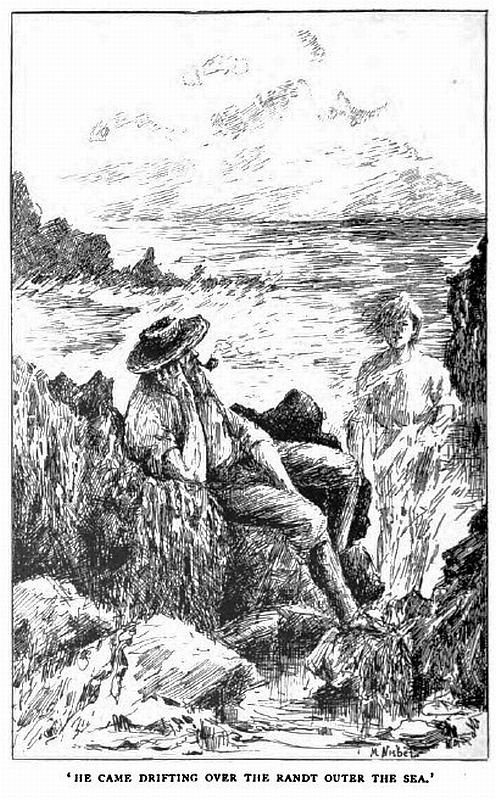
“All manner o’ things, sonny; but I allow you won’t see ’em, as you ain’t had the trainin’. Night after night, year in year out, you must sit alone listenin’ in the stillness, and maybe you’ll year the voices I year an’ see what I see. But you couldn’t go through it—no, sonny! I bin frightened many a time so that I’ve got up and fetched the gun to make a noise—yes, that’s so; for there’s some things you can’t see, only feel, an’ they hard to bear. I seed a little boy once. Maybe he was young Abe Pike afore I knew him. A little chap with brown legs an’ curly hair an’ big eyes. He came drifting over the randt outer the sea, when its waves was jes’ murmuring sof and low, and I yeard him laugh as I watched him come, thinking he were a wild fowl. He lighted over there where that railed-in moss is a-growin’—see how green it is in the dry of the yearth. That’s where his little naked feet touched the ground, and where he stood eyeing me with his big eyes and a sort o’ dew on his forehead where the curls came down. Then he laughed, and with his head on one side he came up to my knee an’ looked up at me. Yes, a little chap; an’ he came outer the sea to ole Abe Pike, sitting lonely out there on the door-step. Maybe if I’d a married I might a’ had a son like that, for he seemed to b’long to me, as he eyed me with a smile. Only onct he came, only onct; but, sonny, I feel the touch of his hands now, an’ by that touch I know I will meet him ag’in. He may a bin young Abe afore I knew him come back to see what I’d made o’ him, an’ but for the smile on his face I’d think he were grieved to see what a blamed failure I’d made outer him. Many a time I watched for him. Yes, sonny; I’ve sat in the quiet of the afternoon, listenin’ to the sea, and when I year the murmuring same as then I look for that little chap to come floatin’ up over the randt, an’ I keep the moss there wet when I have to go without water to drink in the drought. You ain’t laughing?”
“No, Abe, no. One of these wretched flies has got into my eye.”
“I made a boat for the little chap, ’gainst he came again, and a fishin’ line, and a reed pipe. We could ’a played many games together, him and me, but he only came onct.” Abe turned his face to the sea and stared wistfully. He was not yarning now, and I wondered at him.
“Yes,” he said; “I could a showed him many a bird’s nest if he’d a come, but maybe the white woman has kep’ him away. She’s bin here off an’ on for maybe six years. She came outer the sea, too, footin’ her way through the air—comin’ like a cloud or one o’ these big sea-birds that sails on the wind without a flap of his long, narrer wings. White, my sonny!—I never seed anythin’ so white, not even the sails o’ a ship with the sun on, or the inside o’ one o’ them shells folk use for tooth powder. She comes on me all o’ a sudden, and all I see is the gleam o’ her eyes—then she’s gone, leavin’ me here with my heart beatin’. Maybe she looks after the little ones, for when she comes there’s a queer noise in the waves over yonder ’s if a heap o’ girls were at play. Oh, yes; many things come outer the sea besides fish an’ otter an’ sich like—many things, sonny; an’ when I’m buildin’ this yer shed I stop workin’ to look for their comin’. Of late I bin expectin’ somethin’ mor’n ord’nary, but it ain’t come. Yes, I bin waitin’ for that little chap to take me by the hand. Got any tabak?”
I handed over the pouch, and saw that Abe had come out of the spell that had been on him.
“That water bar’l o’ mine’s all broken up.”
“How was that?”
“I’ll tell you how it happened. The dry weather druv the field-rats to the bar’l for water, which they fetched out by dipping their tails in. Many a time I seed ’em at it, an’ it weren’t long before a ringhals spotted the performance; so what’s he do but get inter the water, tail fust, through the bung, and watch for the rats to come an’ drink. My! He guv me a schreik when I went for a drink an’ saw his eyes gleamin’ up outer the green bough I poked in the hole to cool the water an’ prevent it shakin’ out. I lef him there, for I couldn’t see how to fetch him out; but, whiles I were sittin’ quiet in the evenin’, waitin’ for him to crawl out, up came along a percession of rats, with a ole grey-whiskered chap leading. He took a look at me, movin’ his nose, but I kep’ still, and he reared hisself against the bar’l. Next rat he run up, and the next over the two of ’em, till the third got over the swell of the bar’l and scooted to the bung-hole, backed round and popped in his tail, unsuspicious of that vicious crittur inside. Nex’ minit that rat were hollering out blue murder, for the snake grabbed him by the tail, and the other rats, they jes’ lit out for hum. Well, that snake he let go, but the rat he jes’ curled up and fell down in a kickin’ fit. Then the ringhals crawled out—the ugly five feet length o’ livin’ death—and there and then gorged the rat. Well, I let him be. Snakes is bad, and rats is bad. I let him be, and three days arter there were the blamed ringhals in my bar’l again. Blow me, if the same performance didn’t happen over ag’in, and some days arter I seed that partickler tribe o’ rats was gettin’ smaller, and, believe me, sonny, that ringhals had guv the news to another snake, for one evenin’ I seed two o’ their wicked-lookin’ heads jes’ inside the bung on the twigs. I were watchin’ for the tragedy—same as us’al—when—same as us’al—up come that ole grey chap on his own hook. He came to the bar’l, and sat up on his behind legs like a hare, twiddling his moustaches and twisting his nose. Then he backed off, and give a whopping spring, which landed him on a swell of the bar’l. Well, he weren’t takin’ any water, he weren’t; oh, no! He jes’ walked on his hind legs and took a peep inter the bung-hole. I guess he seed something, for he turned a back sumersault, jes’ as a vicious head came with a hiss at him. Well, I tell you that ole chap he scooted off, squeaking like a forty-shillin’ kettle. I sat there laughin’ at the skeer of that ’ere rat, but, by gum! I soon dropped grinnin’, for up along came the ole feller ag’in with a ’ole lot o’ rats behind him. When they drew near he gave them the word to stop, whiles he examined the bar’l all round. Then he spoke a few words, and the entire gang they went to the lower side of the bar’l and began to scratch away the yearth. Yes, sir, that’s what they done. They scratched away the yearth. Then the ole chap guv another word, an’ they got roun’ on the top side o’ the bar’l. Then they begun to shuv.”
“Nonsense!”
“I tell you; them rats they jist put their backs ag’in the bar’l and shuved for all they were worth; but ’twarn’t no go. They was too light. D’ye think they guv up the job—not they! The ole chap led ’em roun’ the bottom side, and they set to scraping more yearth away till the bar’l were almost undermined. Then roun’ they came ag’in, all squeaking, and one of the snakes popped his head out ter see what the noise were about. Nex’ minute he’d a’ bin among ’em, but the ’ole parcel o’ rats, maybe one hundred, guv another mighty shuv, and ’fore I could start up to prevent it that bar’l gave a list over, and then started. Once it started it jes’ flew down the slope, and went to pieces at the bottom with a smash. The snake that were hangin’ out were flattened dead, and the way them rats fell on his body were a caution. They were tearin’ it to pieces when, bilin’ with rage an’ hissin’ most furious, up came the other riptile. The rats then scooted—that’s so!”
Chapter Twenty Five.
Abe Pike Scouting.
“Yes!” said Abe, one afternoon, after he had been helping threshin’ wheat; “these newfangled machines bin smashing up all the good old customs that were the salt of country life. This yer thresher of yours may get through the sheaves with a lot of dust an’ rattle an’ smoke, but give me the old floor, an’ the oxen tramping out the ear, an’ the neighbours coming to the supper. Oh, yes! the old customs they brought the people together and made ’em soshiable and talk. Lor’ bless you, there ain’t no talking nowadays—only grunting.”
“Is that so?” said I, as I brushed the dust from my eyes.
“It are. No one talks now, ’cos of these yer machines, which does everything. Why, blow me! you can shoot a man with these new guns without ever seeing him.”
“I don’t know that it is any more satisfaction for the man shot to die with the knowledge that he knows who shot him.”
“Well, I do know. Take these yer talking machines I year on. What’s the good squeaking through a machine to a man, or maybe a girl, in the nex’ street when you can’t see the eyes of her, or the shape of her lips, or the expression, without which talking’s no account. Look here, sonny, you listen to what I tell you; these yer machines goin’ to turn out people same as pins, all o’ one pattern.”
“You’re a great talker yourself, Abe?”
“I’m not talking when I ain’t got nothin’ to say. When I seed the Colonel of the 94th up by Pluto’s Vale—‘Who the blazes are you,’ he said, ‘and where the devil you come from?’—I weren’t saying much, but I took a pull at his black bottle. He were one of the ole sort were the Colonel—grey an’ peppery, an’ stiff in the upper lip ’s if his face bin fixed in a iron mask. That’s the sort of man he were. ‘The Kaffirs is laying a trap for you,’ I said to him. ‘They darn’t do it,’ he said. ‘Lay a trap for the 94th! I never yeard o’ sich blamed impertinence,’ he said, twisting his grey moustaches, an’ glaring at me’s if I’d insulted him. ‘All right,’ I said, ‘if yure too proud to take advice, go an’ walk inter the trap like a blunderin’ porkipine, an’ you’ll get stuck full o’ assegais,’ I said. ‘You’re too free with your tongue,’ he said, gettin’ red in the face; so I walked out, but bymby he came over to where I sot by the fire, an’ he sot down ’longside o’ me. He talked an’ I ate, but at last he up an’ came to the point. ‘Can you scout?’ he said. ‘Mejum,’ says I. ‘Oh,’ he said, ‘I’ve got a mejum scout with me. What I want is a fust-class scout.’ Well, sonny, I jes’ lit my pipe and took a puff. He looked at me under his eyebrows. ‘My scout tells me the Kaffirs have retreated,’ he said. ‘Soh!’ says I, and went on smoking. ‘Yes,’ says he, gettin’ angry aller a sudden, ‘and you’ve been giving me false news for the sake of getting a reward.’ Well, I jes’ pulled up my sleeve and showed him where I’d been stabbed. ‘I beg your pardon,’ he said, and riz up to go back to his tent. ‘Colonel,’ says I, laying hold of his sash, ‘if you want me to scout I’ll scout, and you can send a man along with me.’ ‘Leave to-morrer,’ he said, ‘if you feel well enough;’ and he marched off jes’ as stiff an’ unconcerned ’s if he’d asked me to supper. Soon after a young chap came up to my fire. ‘I’ve received orders to go on scout duty with you,’ he said, eyeing me up an’ down ’s if I’d been some kur’ous kind o’ inseck. ‘When do we start?’ says I. ‘Oh, furst thing in the morning, if you’re awake.’ ‘Oh!’ says I, ‘so’s the Kaffirs can see us?’ ‘There ain’t no Kaffirs,’ says he; ‘’t any rate I ain’t seen any.’ ‘I’m startin’ at midnight,’ I says, and with that turned over to sleep. Well, at midnight I woke up and prepared to leave, thinking that young fellow wouldn’t be about. But, blow me, there he were, sitting by the fire watching me. ‘I’m ready,’ he said, standin’ up. ‘What for?’ ‘Why, to scout, of course’ ‘Orright,’ says I; ‘take off that sword then, and that white hat, and that red coat. You ain’t anxious for the Kaffirs to see us furst, are you?’ He jes’ opened his mouth to cheek me; then he ran off, and bymby he came back without them things, with a grey shirt and soft hat. ‘Is that right?’ he said, fetching a grin. I jes’ nodded, an’ off we stepped inter the dark of the night. Slipping by the sentries without givin’ ’em good evenin’, we marched along outer the side of the valley where the camp were pitched to where it narrowed into a poort, between big krantzes, with a kloof running down on the left side. By sunrise we were on the divide between the poort and the nex’ valley, jest about where the road led over the neck ahead of the troops. We took cover and looked around. ‘There’s a Kaffir,’ said I, ‘over yonder on that rock above the far krantz, watching the camp.’ The young chap fetched a laugh. ‘That Kaffir,’ said he, ‘is a vidette, and there’s a whole string of ’em on the heights. None of the enemy can get inter the poort without being seen.’ Well, this was up against me, an’ I kep’ quiet, looking away down inter the next valley where the road track twisted along the steep aside of the thick bush. ‘That’s the place for an ambush,’ said the young chap, ‘down in that ravine. If there are any Kaffirs about they will be there. Let us go down.’ I jes’ sot there watchin’, an’ bymby he began to fidget; then he up an’ tole me that if I would not scout, he would. ‘There’s no Kaffirs in the far valley,’ I said. ‘I’m tired of you,’ he said, in one o’ them sort o’ drawn tones that always reminds me o’ a sword glinting out o’ the scabbard; ‘I came out to scout, not to lie in cover; you may stay here by yourself; I’m going inter the valley below.’ I nearly got angry, but then I thought what’s the use, so I jest explained matters. ‘There’s no Kaffirs down there,’ says I, ‘but there is Kaffirs down here in the poort in that big kloof, an’, what’s more, them pickets o’ yours will be assegaied before long. I’ll tell you why. See them birds flying over that kloof? They’ve been startled, an’, what’s more, when they settled jest now they started off ag’in on a new flight, an’, what’s more, I seed a jackal an’ a ram slip away over the rise. That’s good enough for me, an’ when it’s dark I’ll slip back to the camp to tell the Colonel.’ ‘Are you sure?’ he said, lookin’ at me hard. ‘Certain,’ I said. ‘Then,’ said he, ‘we must go back to the Colonel at once.’
“‘You might start to go back,’ I said, ‘but you’d never reach half way. Where’s the picket?’ I said. He took a look at the krantz where we’d seen the figgur of a man, and he seed the poor beggar was gone. ‘Yes,’ I said, ‘he’s been assegaied!’
“‘My God!’ he said, ‘can’t we do anything to save the others?’
“‘It’s no go,’ said I, pulling out my pipe. ‘Haven’t you got any heart?’ he said, fiercely, then he began to move off. Well, that wouldn’t do, so I pulled him back. ‘Keep still,’ says I; ‘the pickets must look after themselves; we’ve got to save the camp.’ Well, blow me, that made him worse, and he struggled to get free, saying the 94th didn’t want to be saved from any Kaffirs, and all that—but I jes’ hung onter him, an’ while we were struggling in a holler behind a rock, up there came the sound of a bugle. ‘Hark!’ he said, lettin’ go his hold; ‘the regiment has struck camp—that’s the order to advance.’ ‘The blamed fool,’ I said, ‘he’ll march straight inter the trap.’ ‘Soh,’ says he, then he made a bolt, saying as he ran, ‘I must warn them.’ I seed it were no use, an’ I let him go. By gosh! he jes’ bounded down from rock to rock, without taking any cover, straight for the track that ran down the poort past the kloof to the regiment. At the same time I seed a black figure running down the slope from where the picket had been, then another an’ another, all of ’em crouchin’. Of course, there were Kaffirs there, an’ in course they seed him, an’ they were runnin’ down to stop him.”
“And what did you do?”
“What did I do? Well I jes’ sat an’ looked, an’ bymby I edged away over the randt away from the Kaffirs. Then I sot off at a run round to get to the back of the krantze where the picket had been killed.”
“You didn’t know he had been killed.”
“Well, according to all that was goin’ on he oughter bin killed, and ’t any rate I made round that way—but if you’re going to talk to me like that I’ll jes’ shut up. I’m gwine to supper now.”
Chapter Twenty Six.
End of the Scouting.
The next morning Abe was stamping mealies with a wooden pestle in a wooden mortar made from a tree trunk. It was a piece of unusual labour on his part, and I complimented him on his early industry.
“Industry be blowed—it’s my teeth! They’re worn down, and not equal to chewing hard mealies. You take pattern by me, sonny, and keep your teeth. Lor’ love yer, when I sees young boys and gals with half their teeth missin’, I’m jest thinkin’ that there’s no ignorance like that of the civilised man. Take me, or take an ord’nary raw Kaffir turned sixty, and look at his mouth. Teeth as white and soun’ as a animile’s—’cos why?—’cos he ain’t loadin’ his inside with all sorts o’ hots an’ colds, an’ sweets, and thingammies painted yeller an’ red—an’ ’cos he polishes up his grinders with a bit o’ wood and heaps o’ water. Toothache—man wasn’t born to have toothache—o’ course not; nor to have his jawbone broken with steel pincers; but there, he ain’t got sense to know when he’s well off, and so he starts undermining his teeth from the day he’s old enough to chew toffee.”
“I’ve known a Kaffir to have toothache.”
“And I’ve known a Kaffir to drink off a bottle of Worcester sauce. But why? ’Cos some blamed white man invented the sauce to help out his finicking appetite, and if the Kaffir’s fool enough to drink white man’s mixtures, why there’s an end to him. When you start to civilise a Kaffir you give him toothache, and fill him as full o’ wickedness an’ sickness as a white man. That’s so!”
“I didn’t know you were such an admirer of Kaffirs.”
“Ghoisters! You’re like a ramrod; you can’t see your way unless it’s straight. I’m not in love with the black because his teeth is good.”
Abe scooped up the broken maize, and proceeded to make his morning pap, after which he lit his pipe and was at peace.
“What was the end of your scouting, Abe?”
“I ain’t scouting.”
“I mean at Pluto’s Vale, when the young officer left you.”
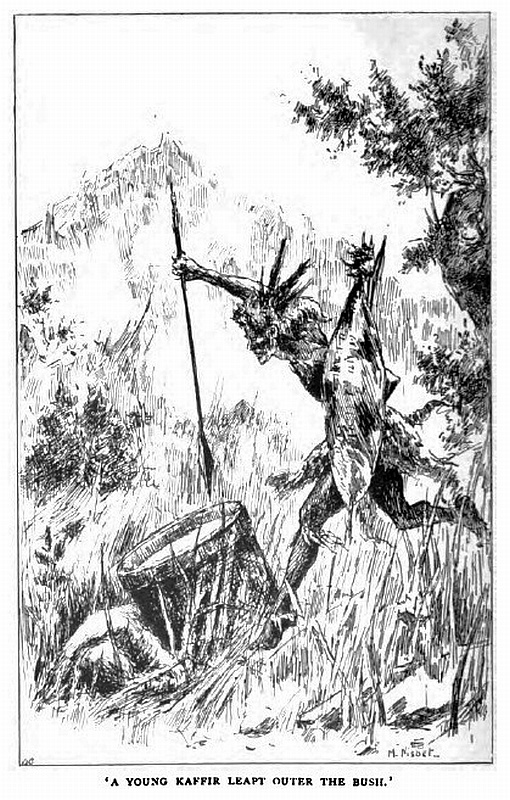
“Is that so! Lemme see. I left him running like a blind hoss at a precipice, straight for the path by the kloof which I reckoned were full o’ Kaffirs, and with three chaps runnin’ down to cut him off. That weren’t me. No! I jest skipped round back o’ the krantz opposite the kloof, an’ crawled up to where I’d seen the vidette. It were as I thought Stone dead he were, with his face to the sky and his arms stretched out, assegaied through the back and then turned over by them as stabbed him—and who who was sneaking down the hill to do the same for my partner. I jest peeped over the rock—and far down the valley to the lef I see the regiment on the march, with the waggons in the centre and the Colonel riding ahead’s if he were going on parade. Sonny, them rooibaaitjes can fight, but they’re foolish. They’re too stiff in the lip to ask questions, and too proud to learn. That’s so! There were the Colonel marching his men straight into the tightest kind o’ fix without waiting for me to report the lay o’ the land. I looked down below, and there were that young chap booming along like a rock rolled from the top, leaping like a buck, an’ jes’ ahead o’ him, in a turn in the road, crouchin’ behin’ bushes, was them three red Kaffirs waitin’ to stab him. A hundred paces he had to cover afore he came up to the fust of ’em, and I seed in a flash he were a gone coon, unless somethin’ happened. I tell you, sonny, I did some quick thinking while he were running them hundred paces. S’pose I fired! The report would jes’ boom from side to side o’ that valley and wake up every darned Kaffir in the kloof—s’posing Kaffirs was there. The Kaffirs would be on the watch, the Colonel would hear, an’ rush up his men, leaving his waggons unprotected. Then there’d be a awful kind of a mess—s’posing the Kaffirs was in that kloof. I thunked all that, and that young chap had gone half-way. If I fired he couldn’t a pulled up in time, so I jest fetched a yell in Kaffir. From the bottom o’ my throat I fetched up one of them deep Kaffir shouts. ‘Look out!’ I yelled; ‘the soldiers—run!’ The words fell on them Kaffirs like the lash of a whip. The three of them jumped to their feet, run across the road, an’ slipped inter the kloof. The young chap seed ’em cross his track, and pulled up, then I’m darned if he didn’t keep on again. Well, I give him another chance. I cried to him in English to keep to his left, but he jes’ lifted his hand and kep’ on. Nex’ moment he were running along the fringe of the kloof where the dark wood came down to the road, and then he gave a lurch, and rolled over an’ over, his gun flying from his hand. I could hear the tinkle of the metal against the stones. The roll carried him to a rock, and over that he went with a splash inter a pool o’ water, and as he went in a Kaffir darted from the kloof with his shield and assegai. I knew then the kloof were full of Kaffirs, for none of the other three carried a shield. All this yer happened in a breath almost, and then I ran along the krantz to where a corner of it stood out bold, an’ standing there I shouted to the regiment, which lay outstretched down below, the head of it no further than 300 paces from the beginning of the kloof on that side. The Colonel were riding ahead, then followed the pioneers, with their axes and spades sheathed in shiny black leather, and on their chests big black beards, behind them a company of the 94th with the bayonets glittering like running fire, back o’ them the band, and ahind them the waggons in the long line, and far behind, a full mile from the Colonel, the balance of the regiment. Sonny! in ten minutes the hull biling of ’em would ’a been in the narrer of the valley without room to turn, and they’d a bin assegaied to a man, I tell you! But Abe Pike were there; and I tell you he gave a shout that went ekering down that valley from side to side. ‘Halt!’ I said. The Colonel he pulled up. I seed him shade his eyes with his hand as he took a look, and I seed some of the soldiers point up at me. The Colonel he shook his reins, and rode on. ‘Halt!’ I said; but he jes’ kep’ on, calm as possible. ‘You blamed fool,’ I shouted; ‘stop! There’s Kaffirs ahead.’ He pulled up, and turned in his saddle. ‘Ninety-fourth,’ he said—and his voice came up clear—‘halt!’ All along that mile o’ men and oxen the order ran down, and the moving column came to a stand. ‘Number 1 company,’ he said, ‘leading files from your left, two paces to the right. Rear ranks, two paces to your front.’ The leading company jest stretched out like a concertina, across the road. ‘Prepare to fire,’ he said, and down came that shining stretch o’ bayonets to the level. Then I’m darned if the Colonel didn’t walk his horse round the turn in the road till he came to the kloof, and seed the track wind up through the narrer poort up to the ridge beyond, with me on his right far above him. He seed nothin’, of course; ’cos why, he couldn’t see through the dark o’ the woods on his left; but there was hundreds of black eyes glaring at him through the leaves. He looked up at me, as if to say, ‘Where are the Kaffirs?’ ‘They’re in the bush,’ I shouted; then I slid down the krantz by a monkey tow, and after making my way through the tumbled mass of boulders and thorn scrub at the base, started to run down, when I yeard the beat of the drum, and the next minute seed the pioneers come round the bend, then the first company, and nex’ the band, with the Colonel ’twixt the pioneers and the company. The old fire-eater were determined to get inter the trap after all, and when I reached him he were half-way by the kloof. ‘For God’s sake,’ I said, putting my hand on the bridle, ‘stop the waggons, and get your men outer this. Turn back!’ I said. He were jest going to rap me over the head for mutinous conduct, or some sich nonsense, when the Kaffir yell rang out. They couldn’t wait any longer. Whew! My gum, sonny! talk o’ yellin’ an’ cussin’ an’ gruntin’. Them red Kaffirs were into us. They jumped this way, and that, their eyes rollin’ in their heads, their assegais whizzing and kerries flying, with a noise like a flight o’ partridges. Then the rifles snapped out, and the big drum boomed onct. Only onct. Then I seed the drummer throw up his sticks an’ roll over, drum up, man up, turn an’ turn. I didn’t know which way to turn at first; then I seed a Kaffir raising his kerrie to smash the Colonel, who were lying on the ground, and I shot him. I helped the Colonel up, and he roared out ‘Bayonets.’ The soldiers were too mixed up to use their bayonets. I seed five of them—one after another—assegaied. The Kaffirs, they jes’ grabbed the poor Johnny by the belt, pulled him outer the thick of the jam, and then assegaied him. I seed how things would go if the soldiers couldn’t get ground to fight, so I jumped for the drum, and, cutting it free from the poor drummer chap, I banged on it and marched across the stream to the far slope. Some of the fellers seed me and follered. ‘Steady,’ says I, ‘take your man—fire.’ Well, they did jes’ so, and I banged the drum. The ole Colonel he got the pioneers with him—there was eight of them—and, my gum!—they jest swished their way through the Kaffirs with their axes. Then up come some more men, follering the drum, and we peppered the Kaffirs till they were obliged to get back inter the wood. Then the Colonel he looked for the wounded. There were nary one, but seventeen men lay dead. ‘There’s one here,’ says I, and led the place to where the young officer had tumbled in the water. There he were among the rushes, bleeding to death from an assegai wound, and one of them pioneers, his arms all bloody, lifted the young chap up and carried him to the waggons. I guessed it were time to go before them Kaffirs got up steam—so I banged the ole drum and marched back. ‘Where you going?’ says the Colonel. ‘Back to the camp,’ I says. ‘That ain’t the way,’ he says; ‘we camp over the ridge to-night,’ pointing the other way. ‘The Kaffirs will never let the waggons through,’ I said. ‘The Kaffirs is beaten,’ he says; and just then a young Kaffir leapt outer the bush and rammed his assegai into the big drum. ‘I have done it,’ he cried and I seed it were Sandili hisself. I tole you how Sandili he said he would bust the drum, and by gosh! he bust it. He was back inter the wood in a wink, and then he shouted how he had killed the white man’s war-god, and from all parts of the kloof the Kaffirs they began shouting. You could hear ’em comin’. The Colonel he looked round and said ‘Retire!’ So he had to turn back after all. He shelled the kloof all that afternoon; and the Kaffirs they just moved on.”
“And what did the Colonel say to you?”
“He said he’d half a mind to tie me up for givin’ orders to the regiment, and he went on most horrible; then when he cooled down he give me a huntin’ knife, with five blades and a corkscrew, and said he would mention me in despatches. I dunno whether he did; ’t any rate I never were called to account again, so I guess he were only skeering me. Well, so long!”
Chapter Twenty Seven.
Abe and the Tiger Trap.
I had got a new tiger trap, and was displaying its beauties to some members of our Cat Club—not that this was the official name, which in full dress proclaimed itself as the Round Hill Society for the Destruction of Vermin. The mouth of the trap had a span of fifteen inches, and the steel spring almost required the weight of a twelve-stone man to flatten it down to the catch. There was a stout chain to the shank end, which could be secured to a log, and the iron lips had no teeth.
“There’s a power of grip in the toothless gums of that ’ere grinning mouth,” said old Abe Pike, who was President of the Club, by virtue of which office it was his right to point out the spots for the setting of traps. “I don’t hole with teeth nohow.”
“Quite so,” remarked Amos Topper, sourly; “your tongue’s long enough to get a clinch round anything. What I say is, give me a trap with teeth a inch long that will drive through a tiger’s shin-bone.”
“Yes; and maybe cut the foot of him right off, and leave ole dot-and-carry-three to go limpin’ away growlin’ vengeance. You ain’t got no exper’ence, Amos; and talking about tongues, if you shut your teeth down tight you might pass for a wise man.”
Amos opened his mouth wide for a retort, but nothing came out but a cloud of smoke and a grunt.
“I shot a trapped tiger once,” said Long Jim, “that was caught only by his toe. Yes, sir, by his toe! and the danged crittur jes’ lay there and took the bullet ’thout even standing up. He jes’ hissed like a room full o’ kettles.”
“Ever been caught in a trap?” asked Abe quietly.
“I ain’t had any occasion to,” said Jim severely.
“Well, I have!”
“Gwine after anybody’s pumpkins?” asked Amos, thinking this was a good opportunity to work in his belated retort.
“Some folk’s talk,” said Abe slowly, “is like burrs—never wanted and allus spoilin’ good material, with this difference on the side of the burr-weed—that you can root up the weed when you find it.”
“It would take a better man than you to dig me up,” said Amos, shaking himself.
“We ain’t discussin’ weeds,” said Abe, looking his lanky opponent up and down; “we’re discussin’ the points o’ traps—especially teeth. I bin caught, an’ that’s why I’m sot against teeth.”
“When did it happen, Abe?”
“Well, I’ll tell you. You know ole Hill’s garden, which held more different kinds o’ fruit-trees than I have seed in the whole country. There were a thick quince hedge down one side, and the wild pigs had made a path through it big enough to let a stoopin’ man through. Well, I were going short cut to the house one night, and I remembered this yer pig-track.”
“You always had a weakness for fruit, Abe!” remarked Amos.
“I remembered this yer track, and, follering the hedge down, I felt where the path had been worn, and, parting the quince luikeys with my hand, made a stoop forrard. My gum!—there were a click, and a yell which I ripped out, and nex’ thing I knowed somethin’ got me sore fast by the right leg in the thin of the ankle. It were a tiger trap—that’s what, and sot with teeth. Lor’ love yer! I can feel the pain of it in my leg now when I think of it, though it were over twenty-seven year ago. One iron fang scramped my shin-bone, and the back one druv clean through the flesh, while the sides of the mouth pressed in so that the blood were stopped, and the foot seemed to belong to someone else. I tell you all the blood in my body jes’ run down to the tight place to find out what the trouble was, and came rushing back with the news up to my head with a touch of fire all along. Then that held-fast leg began to throb and throb, and a hundred thousand little hammers began a-hammering all up my backbone, while cold spasms went quivering through me and outer the top of my head. I jes’ let go yell on yell, until a faintness came over me, and the sound leg which had been all on a tremble gave way, and I sot down. The wrench were terrible, and I jes’ grit my teeth, and held on till the weakness went off, when I shifted the trap a bit.”
“Why didn’t you ease the spring?”
“Why don’t a bird fly when its wing’s broken? Ease the spring! Jes’ you put your foot in this yer trap, and see if you can get the spring down with thirty pound o’ iron at the end of your foot and your muscles all turned to water—to liquid fire—with the pain of the hold. All I could do was to rub my knee and yell and bite at the quince leaves, and dig my fingers inter the flesh. After a time I found my voice ain’t got no carrying power; it came out in a hoarse whisper, and I seed if the people at the house hadn’t yeard my first call they wouldn’t catch any cry for help I could give now; so I jes’ groaned for comfort, same’s if I were a trapped tiger growling through the night. My head were tossing about from side to side like the pendulum of a clock, and one of these side swings I noticed the glare of something bright close by. I jes’ noticed it as if ’twere something of no account; for, if all the stars in heaven had taken to swinging at the ends of golden threads it wouldn’t have mattered to me as much as the flame of a tallow candle sputtering in a horn lantern. Well, each time I swung my head I seed these yer bright spots without seeing them—if you know what I mean?—when I were held still for a moment by a sound. I looked, and I saw then that they were eyes staring at me, which blinked as I stared, and turned away, then sought my face ag’in, and, narrering to a thin green slit, so looked at me. What do ye think it were?”
“A pig, of course, waiting for you to move,” said Topper.
“You can tell a pig by his grunt,” said Abe, pointedly. “Who ever seed a pig with green eyes flaming through half-closed lids? It were a tiger,” and Abe took his pipe out and impressively spat at a black-beetle that was fussily moving on a ball of earth with its hindlegs.
“A tiger?”
“Yes, sirrees! It were that—sitting down on his hams like a big dog within two yards of me. No, I were not skeered, for the burning pain in my head and the throbbing in my shin-bone didn’t give room for fear of that kind—and the tiger, he seemed to know what were up, for after a while he stretched himself out on his stummick, and yawned till I could see the gleam of his teeth. Well, I went on groanin’ and tossin’ my head, and rubbin’ my knee-cap, and chewin’ up the quince leaves, every now and then taking a look at the big crittur lying stretched in the dark with his eyes opening and shutting like’s if you moved the slide over a bull’s-eye lantern when he rolled over on his back and reached out a claw for me, like a kitten playing with a leaf. He hooked a claw inter the trousers of my well leg, and the jerk on it gave him a schreik, for he let out a growl and jumped away, looking back at me over his shoulder. Then he slunk away, but bymby when I looked ag’in he were standing up against the fence with his nose jes’ peeping round, and his near eye squintin’ at me through a hole in the leaves. That give me a queer feeling—for the beggar’d come up so sly, and I lit out a yell this time which stuck in my throat. The pain made me feel faint inside, an’ I jes’ closed my eyes. Soon’s the tiger saw I wern’t looking he jes’ poked his nose up ag’in the trap, and I yeard him licking the iron where the blood had run. Then I felt on my sound leg the pressure of his body, and yeard the snarly purr of him. Then he began licking at my trousers where the trap held fast, and I opened my eyes. The weight of his body held my leg down, and one of his paws were right into my weskit; and, blow me, if he didn’t begin shovin’ it inter my body, and opening and shutting his claws like a pleased cat, while the jar of his purring ran up through my bones, and his big tongue were rasping at my trousers. A sort o’ stupor, don’t-care-what-he-does feeling come over me, and with it the burning in the pain left my brain, and the hammering at my bones dropped away inter jes’ a sort of tired feeling. Nex’ minute I felt his tongue on my flesh—for he’d worn a hole right through them cord tweeds I were wearin’. At the taste of the blood then he purred louder than ever, and shuved his paw quicker and harder into my stummick, until I gasped for breath. Then he drew fresh blood, and his purr went inter a savage growl, while, the weight of his body lightened on my leg. I tell you, that growl brought back my luv for life in a moment. I saw that crittur would in his eagerness take a bite at my leg—then the game would be up. What d’ye think I did?”
“Began to jaw,” said Topper; “and he bolted with his tail down.”
“Jobbed him with a knife back of the head,” suggested Long Jim.
“No; what I did was a cirkimstance which only one man would think of, and that’s ole Abe Pike. I jes’ took out my ole pipe, wriggled a length of straw down the stem till it were black with nicotine, then laid it across his tongue. My! You should ’a seen him. He shook his head, tried to wipe his tongue with his paws, then give a roar, and make lightning tracks for the nearest water. His growl set the dogs going tremenjus, then I yeard ole man Hill whistlin’ ’em, and I fetched a yell that brung him up at the double. By gum! In being saved I were nearly killed!”
“How was that?”
“Why, them dogs took me for the tiger, and they tore the coat offin me, beside some skin, ’fore ole Bill see who were in the trap and took me out. That’s why I say I’m dead sot against traps with teeth.”
Chapter Twenty Eight.
Abe and the Eagles.
I had not seen old Abe Pike for some weeks, having been on rinderpest guard on the Orange River, but on my return to the coast I rode over to Gum Tree Farm, where the lone blue-gum threw its pillar of cloud, in the blazing afternoon, across the doorway. Uncle Abe was lounging, as usual, by the doorway, looking listlessly at the sea.
“Well, oud baas! How goes it?”
“Is there no more cattle to kill?” he said, straightening his back and propping himself against the wall. “Think you’d be ashamed to look a beefsteak in the face after the way you been shooting them pore animiles!”