Cloves
Reading edition
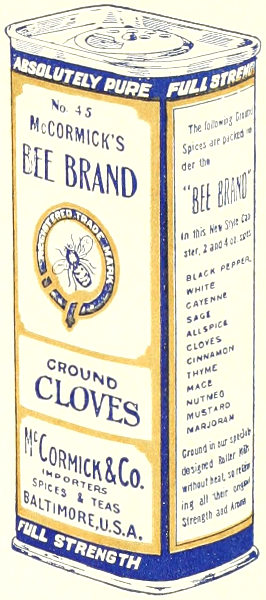
Cloves are the dry flower-buds of an evergreen (Caryophyllus, Aromaticus or Eugenia caryophyllata) belonging to the Myrtle family, averaging in height twenty to forty feet. The Clove-tree is cultivated in Ceylon, India, Mauritius, the West Indies and Zanzibar. The different varieties derive their names from the district of origin or the city of exportation. Cloves from Amboyna, Penang and Zanzibar are perhaps best known and are in greatest demand.
The flowers grow in clusters. The green buds change to a reddish hue, at which stage they are removed from the tree, spread in the sun and allowed to dry. When allowed to fully fruit, the bud develops into a hard seed an inch long, with a pulpy cover. This is called Mother of Cloves.
The tree yields only one crop a year, the yield under normal conditions being about 300 pounds to the acre. The average consumption is estimated at 11,000,000 pounds per year.
There are a number of varieties of Cloves resembling each other in appearance, but vastly different in pungency and flavoring value.
The slender stems bearing the closed buds have, to a limited degree, the aromatic clove flavor, and as they sell for a very small fraction of the cost of Cloves, are frequently powdered and used for reducing the cost of Powdered Cloves, at the expense of quality and of common honesty.
McCormick & Company do not import, buy or sell Clove stems. Their Bee and Banquet Brands Cloves, whole or ground, are carefully selected for superior quality.
PRATT INSTITUTE BROOKLYN, N.Y. SCHOOL OF HOUSEHOLD SCIENCE AND ARTS Isabel Ely Lord, Director
May 22, 1913.
Mr. W. M. McCormick, McCormick & Co., Baltimore, Md.
Dear Mr. McCormick: I have just received the report of the instructors who had charge of testing your products, and I am glad to tell you that it is a very favorable one. The report is that no one of the flavorings and spices was found unsatisfactory, and that the Orange Tipped Pekoe Tea was especially praised. We shall be very glad to know if you put your products on sale in New York, as in that case we shall certainly use them. Yours very truly, Isabel Ely Lord.
16
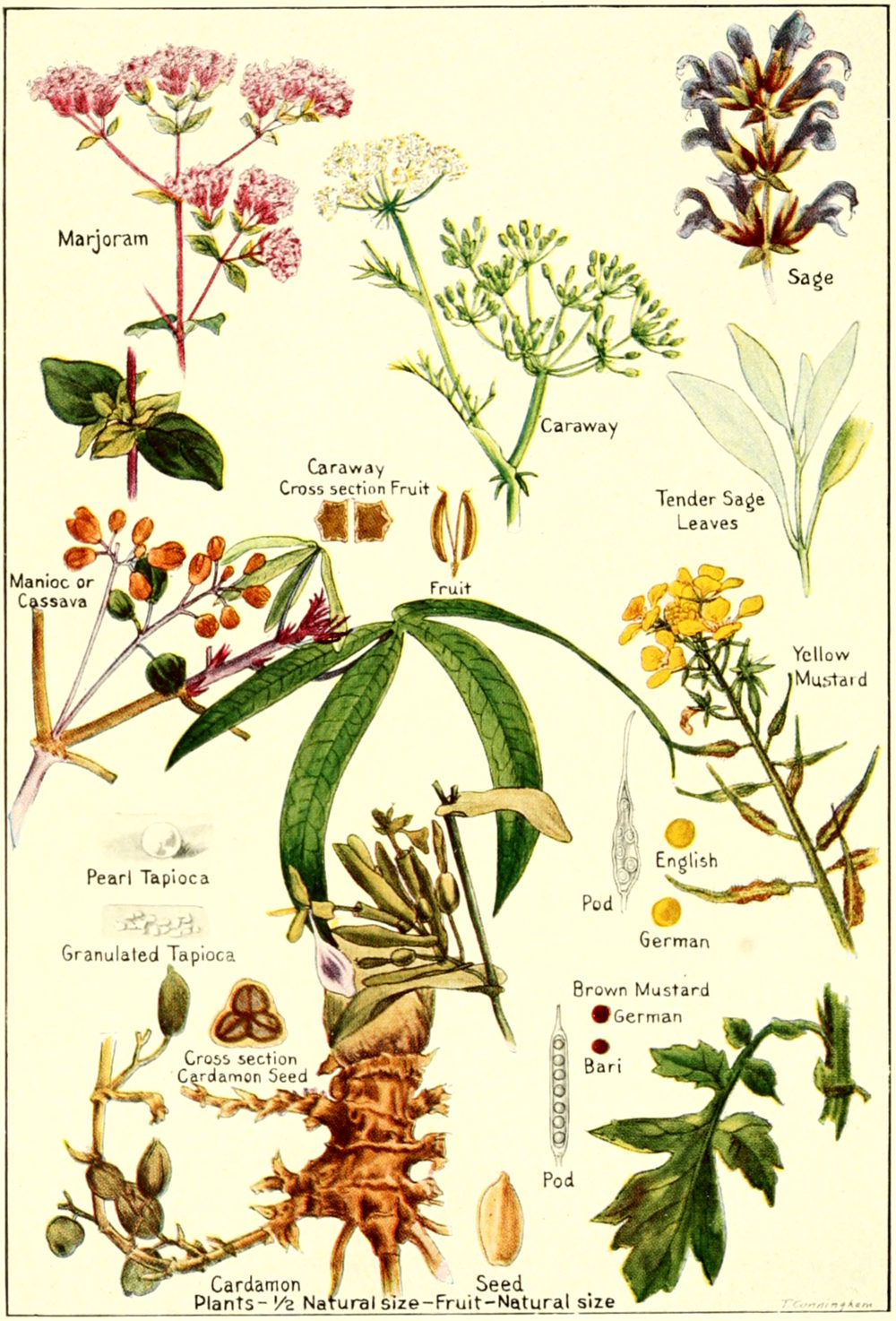
(Herbs)
Marjoram
Sage
Caraway
Caraway Cross section Fruit
Tender Sage Leaves
Manioc or Cassava
Fruit
Yellow Mustard
Pearl Tapioca
Pod
English
Granulated Tapioca
German
Cross section Cardamon Seed
Brown Mustard
German
Bari
Pod
Cardamon
Seed
Plants—½ Natural size—fruit—Natural size
17