Cassia and Cinnamon
Reading edition
The terms Cassia and Cinnamon, although they represent two separate species of the genus Cinnamomum belonging to the Laurel family, in commerce are interchangeable.
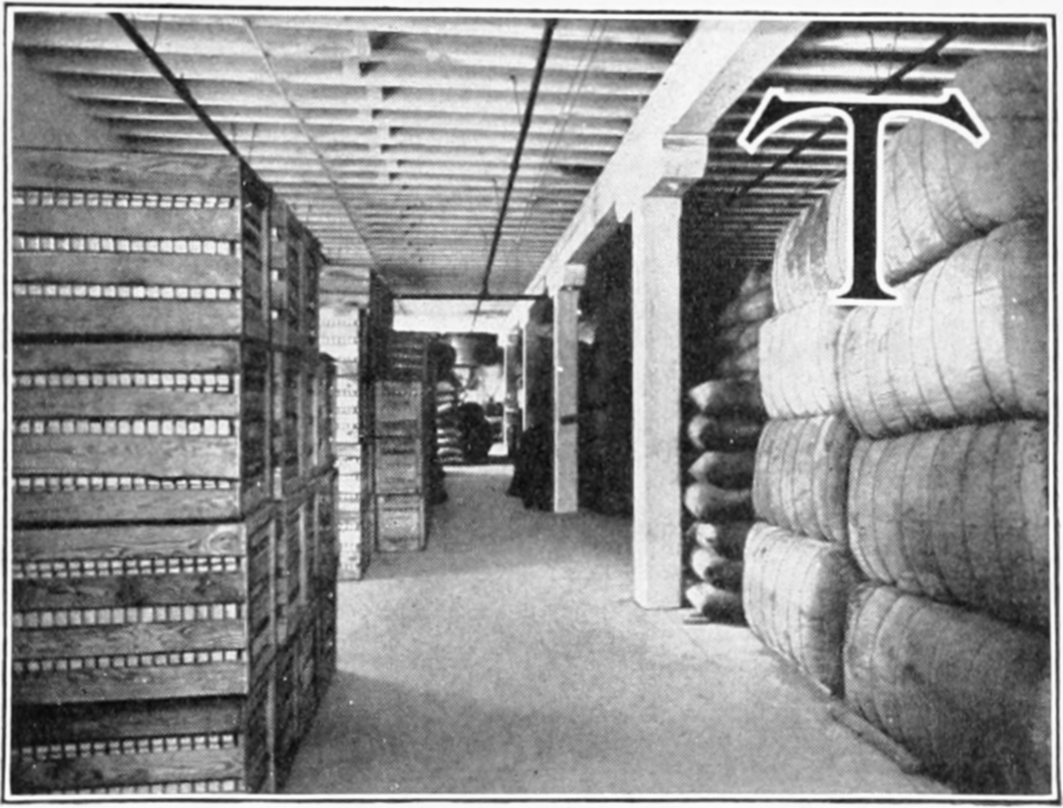
A Corner of One of the Warerooms
Cinnamon
Is the thin, inner bark of the tree, of a pale yellowish brown color, and is found on the market in long, quill-like rolls, the smaller rolls being incased in the larger. The small dark spots on the outer surface correspond to points where the leaves were attached to the stem.
True Cinnamon is native to the Island of Ceylon, but is cultivated in tropical Asia, Sumatra and Java. The yield of Ceylon Cinnamon is relatively small. Its use in the United States is limited.
Cassia
The ordinary commercial Cassia is the bark of the Cinnamomum Cassia, which comes from China, Japan, Indo-China and India. It is usually darker in color than true Cinnamon, rougher, and about four times as thick.
Cinnamon and Cassia range in value according to type and quality, although much depends on actual flavoring strength. They are chiefly valued in the order named—Saigon, Batavia or Java and China.
Those desiring a pure Ceylon Cinnamon can secure it from McCormick & Company of Baltimore, Importers and Grinders of Spices. Choicest Cassia, in rolls or ground, is put up under their Bee Brand and Banquet Brand Trade Marks.
8
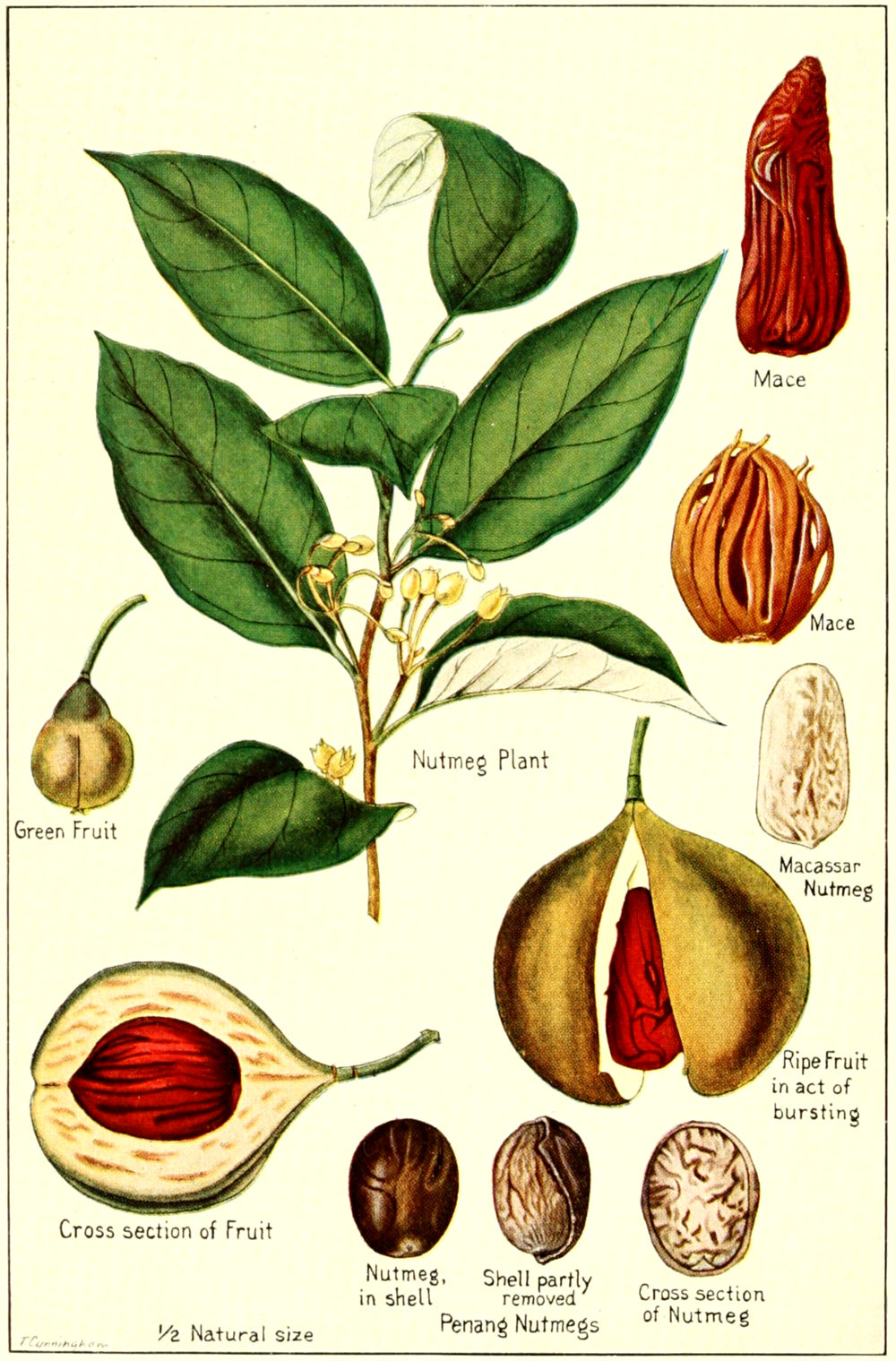
(Mace or Nutmeg)
Mace
Nutmeg Plant
Green Fruit
Macassar
Nutmeg
Cross section of Fruit
Ripe Fruit in act of bursting
Nutmeg, in shell
Shell partly removed
Cross section of Nutmeg
Penang Nutmegs
½ Natural size
9