Chapter XVII · OUTLOOK TOWARDS EMANCIPATION
Reading edition
I. The intellectual movement after the expulsion of the Jesuits. II. Political reformers. III. Poets. IV. Literary periodicals: Mercurio Peruano; Gaceta de Lima. V. Contributors to Mercurio Peruano. VI. El Telégrafo Mercantil. VII. Tadeo Haenke. VIII. El Volador.
I
Expulsion of the Jesuits
Signs of new intellectual life
The old views and the new
The expulsion of the Jesuits in 1767 produced an immediate decline of literary activity in the Spanish colonies. It had, moreover, a far-reaching influence on the means of instruction; it closed the most efficient schools, and silenced those persons who might have continued to spread enlightenment through their writings. The most noteworthy salvage from the wreck was the collection of books and manuscripts that were gathered up from the Jesuits’ colleges. In Bogotá some of these books and papers, placed in charge of a librarian and made accessible in the building of the ancient Jesuit college, formed what was then known as the Royal Library. It was formally opened to the public January 9, 1777, and at that time contained 13,800 volumes. Another act tending to stimulate the intellectual life of New Granada was the organization of the Botanical Expedition, or bureau of scientific investigation, under the direction of José Celestino Mutis. A little later literary production was encouraged by the formation of literary societies, or “circles,” and the founding of periodicals. The new intellectual movement appealed particularly to the rising generation of creoles. A phase of it was seen in the attention given to political questions and the enthusiastic patriotism manifested by Antonio Nariño and his associates. But this movement did not close abruptly the period of mediævalism in the colonies. Writers, like Manuel de Caycedo Ladrón de Guevara (Bogotá, 1718-1781), continued to produce voluminous works which made clear only the author’s ecclesiastical erudition. But in view of the approaching revolution in the British colonies and in France, more men began to think in terms of worldly things; instead of exercising their imaginations in creating a heavenly state, they began to look forward to a new earthly state. The new idealism, imposed upon men by the rising spirit of revolution, contained a force competent to transform the world.
A writer who may be said to have spanned the gulf between the old and the new order of things was Felipe de Vergara y Caycedo, who was born in Bogotá on May 20, 1745. He was educated in the college of Rosario, received there the degree of Doctor, accepted a professorship of theology, and while holding this position gave instruction also in mathematics. He visited Spain, carrying letters from the viceroy, the audiencia, and the archbishop. He returned as contador of Panama, and later he became contador of the Royal Tribunal of Accounts in Bogotá. After the Revolution of 1810 he was a member of the Assembly and of the electoral college of Cundinamarca, and later was secretary and counsellor of state to President Nariño. He died December 18, 1818. The long list of his work is evidence not only of his vast erudition but also of his indefatigable industry.[210]
Bogotá a centre of reform
Bogotá as the centre of the intellectual movement in New Granada was already provided with institutions competent to further this movement. The University of Santa Fe was under the direction of the Dominicans in the Dominican monastery. The college and seminary of San Bartolomé had been for a century and a half under the control of the Jesuits, but after the expulsion of the Society it was placed in charge of the archbishop. The college of Rosario, like that of San Bartolomé, was by royal decree made equal in privileges to the University of Salamanca, the type of the Spanish university. In these institutions the early curriculum, limited to Latin, theology and philosophy, was increased by the addition of courses of instruction in jurisprudence, medicine and mathematics.
Change in the religious orders
Throughout the greater part of the colonial period the religious orders had in many instances been true to their mission as advocates of the Christian faith. Many of the members had led lives of devotion and heroism in their efforts to impart to the Indians a new and higher conception of life. But in the course of time the zeal of their militancy declined. With the contributions of the faithful they built imposing edifices and filled them with books and works of art. A few still became writers, and all, in virtue of the history of their institutions, continued to hold a high place in the esteem of the public, even when many of them had fallen into indolence and were leading more or less useless lives.
Reaction and Progress
The monasteries, however, in the course of time ceased even to be centres of historical study. The Dominicans had produced Zamora, the Franciscans Simón, and the Augustinians San Nicolás, but the orders developed no successors to these writers; rather, in the presence of the intellectual awakening, they assumed an attitude of protest and denial. They disputed the affirmations of Galileo and the conclusions of other scientific investigators; and thus, with the progress of the inquiries instituted by Mutis and carried on by his pupils and followers, there appeared a widening breach between the monasteries, representing mediævalism, and the investigators of nature, presaging a new day.
Francisco Antonio Moreno
It was clear to some minds that in order to make continuous the forces of intellectual progress it was necessary to reorganize the schools of the country and to bring them into harmony with the new views of knowledge. In sympathy with this thought Viceroy Guirior commissioned Francisco Antonio Moreno to form a new plan of instruction, that would provide not only for a new curriculum, but also for the establishment of a school wherever one had been closed by the expulsion of the Jesuits. In the judgment of the persons most eminent in the affairs of New Granada Moreno appeared admirably fitted for this undertaking. He was born in Mariquita on October 25, 1736, and was educated at Bogotá, his studies taking a somewhat wider range than that provided by the conventional curriculum. He held in succession various high offices in the viceregal government, to which he was promoted with the spontaneous support of the viceroy, the secular cabildo, the university, the archbishop, and the audiencia. Towards the end of his career he was appointed an oidor, or judge, of the audiencia at Lima; a little later he was transferred to Chile as regent, and died at Santiago on February 24, 1792.[211]
Revolt of the Comuneros
Moreno’s plan received the enthusiastic support of the viceroy and men of liberal intelligence, like Mutis and Felix Restrepo, and promised to introduce an enlightened revolution in the field of education, but when it was brought to the attention of the crown it was disapproved by the Council of the Indies. The Council held rigorously to the old plan of instruction, but two years were spent in making the application for approval and in receiving the reply, and in this period important steps were taken in the execution of Moreno’s proposed reform. And finally, when the order of the council arrived, Viceroy Guirior had been succeeded by Flórez, and Flórez had been shoved into the background by Visitador Piñeres. Then came the revolt of the Comuneros of 1781, and the governmental authorities had a mind for no other phase of internal affairs. In this period, when the government was paralysed, the advocates of the new plan succeeded in carrying out many of its features; other persons were converted to its advocacy, and Zea published in the Papel periódico an article entitled Hebéfilo, a vigorous argument against the old scheme of studies.[212]
II
Mutis and literary unions
Antonio Nariño
The new intellectual movement expressed itself not only in the researches directed by Mutis but also in the formation and activity of literary unions, or “circles.” At the meetings of these circles a great variety of scientific subjects were discussed. Two persons especially conspicuous in the decade between 1790 and 1800 were Antonio Nariño and Francisco Antonio Zea. Nariño was born in Bogotá in 1765, studied philosophy and jurisprudence in the college of San Bartolomé, and was appointed treasurer of tithes. Provided with an adequate income and moved by his zeal for instruction, he collected in his house an extensive library of books imported from Europe, and the facilities which they offered for acquiring information attracted about the owner the serious youths of the city. By diligent use of modern European works Nariño not only acquired a knowledge of several modern languages, but was also able to correct the instruction he had received in the college as it was conducted under its mediæval régime; he also acquired the progressive ideas of Europe and the British colonies then putting into operation the independent government of the United States. Inspired by these ideas, he became a vigorous advocate of liberty and independence, but the vicissitudes of ill-fortune prevented him from attaining the object of his early ambition. For printing a Spanish translation of Les droits de l’homme he was arrested and condemned to imprisonment in Africa. At Cadiz he escaped, fled to Madrid, visited France and England, and finally returned to Bogotá. In spite of the good offices of friends, he was again arrested, and kept in confinement until the revolution of 1810 set him free.
Antonio Zea
Zea in Spain
Zea in Spanish service
Antonio Zea was sent to Spain as a prisoner with Nariño and the others who at that time had fallen under the condemnation of the colonial authorities. He was five years younger than Nariño, having been born in Medellín in 1770. He received his early instruction in the seminary of Popayán, and passed from that institution to the college of San Bartolomé, in Bogotá, where he studied theology and civil law. Through his association with Mutis, he was introduced to the study of the inductive sciences. On the withdrawal of Valenzuela from the botanical expedition, Zea was appointed to the position thus made vacant, with a salary of five hundred dollars a year. Zea was then nineteen years old, and for a person so young he had extraordinary attainments. It was after two years in this service that he was arrested, in 1794, for conspiracy and sent to Spain. In the long trial to which he was subjected with the other political offenders, the charges were not sustained. The next three years he spent in Paris on a scientific mission, receiving a stipend of twelve hundred dollars a year, the Spanish government being apparently solicitous that he should not go back to New Granada; for when he sought permission to return to America, his request was refused and he was appointed adjunct, and later director, of the botanical collections in Madrid. In 1805 he was appointed professor of Botany. His residence in Madrid extended over the years from 1804 to 1807, and during this period he was elected to membership in various scientific societies, and wrote a number of memoirs embodying the results of his observations and studies in New Granada. His scientific studies were interrupted in 1807, when he was drawn into the revolution of Aranjuez. He belonged to the “afrancesados”, the party in sympathy with French ideas and plans, and believed that the triumph of this party would be followed by the emancipation of his country. During the following years he was in the service of the government, now as director of one of the sections of the Department of the Interior, and subsequently as prefect of Malaga. He was occupying this latter post when the Spanish colonies in America struck for independence.
Concordia en discordia
Lagunas’ Colección legal
The opposition to various provisions of the Spanish government, which found expression in revolts and rebellions in the eighteenth century, occasionally appeared also in writings of that time. The pamphlet called Concordia en discordia, by Alonso de la Cueva Ponce de León, was a document of this class. It criticized prevailing doctrines, attacked the royal prerogatives, and argued against many of the recognized rights of the crown. The author was a native of Lima, became an ecclesiastic, was appointed vicar-general of the bishopric of Panama, was attorney for the Inquisition of Cartagena, and became the historian of the archbishopric of Peru. His criticism of political affairs aroused hostility and, in consequence of this, as one writer has expressed it, he was “pulverizado” by the distinguished jurist Pedro José Bravo de Lagunas y Castilla, who, about the middle of the eighteenth century was a judge of the audiencia of Lima, and in 1761 published in that city a number of pamphlets under the general title of Colección legal.[213]
III
José María Gruesso
Gruesso’s Las noches de Geussor
Besides the group of political reformers associated with Nariño there was a society of young men of letters who formed a literary union called “Eutropélica.” At the head of this company stood Manuel S. Rodríguez. Among the other members were José María Valdés, Francisco Antonio Rodríguez and José María Gruesso. As a young man Gruesso prepared himself for the practice of law. He had finished his legal studies, when the sudden death of the young woman whom he was about to marry caused him to change completely his plan of life. Under the influence of this shock he turned from the legal profession to the Church. He entered the college of San Bartolomé, and began at once his ecclesiastical studies. Two years later he returned to Popayán as a priest, and lived there, it is said, “triste hasta la muerte.” During this period, and while in this state of mind, he wrote Las noches de Geussor in imitation of Young’s Night Thoughts. The plan of this work provided for thirty cantos, or nights, but whatever may have been the number written, only three have been preserved. These are entitled La soledad, La noche, and El remordimiento.
Buen Gusto
José Fernández de Madrid
Another group of writers formed a society known as “Buen Gusto.” These writers were accustomed to meet at the house of Doña Manuela Santamaría de Manrique, who was esteemed not only for her attainments in literature, but also for her knowledge of nature. The members of this group were chiefly poets, born in New Granada, and educated in either the college of Rosario or the college of San Bartolomé. They wrote, among other things, certain plays that were presented in the theatre of Bogotá. Two of these were the Sacrificio de Idomeneo and El Zagal de Bogotá. Perhaps the most widely known of the poets of the Buen Gusto was Dr. José Fernández de Madrid, whose studies had given him the title of Doctor of Laws as well as that of Doctor of Medicine. Whether in prose or verse, the writings of the persons who were thus drawn together in these associations are rather indications of beginnings in literature than of a culmination of literary progress. They are not reminiscent of colonial dependence but premonitory of an emancipated population.
The poems of Aguirre
La rebelión y caída de Luzbel
The poems of Juan Bautista Aguirre are found chiefly in a manuscript collection called Versos castellanos, obras juveniles, misceláneas. The author was born in Guayaquil, and as a youth was sent to Quito by his parents to prepare for his career as a man of letters. The university was then under the control of the Jesuits, and Aguirre accepted membership in the Society. It is, moreover, reported that he became a lecturer on philosophy in the university. An elegy on the death of Philip V and an account of the earthquake of 1746 suggest that he was writing before the middle of the century. In 1767 he was involved in the general expulsion of the Jesuits from South America. Later he lived in Rome. His lectures on philosophy, whether in Quito or Rome, apparently did not turn his mind from his inclination to write verses, and some part of his writings indicate that they were produced when religious thoughts and the image of the Bible were uppermost in his mind. In the Concepción de Nuestra Señora he is lost in profound mysticism, and in La rebelión y caída de Luzbel y sus secuaces he is seized by the subject which Milton evidently found the most inspiring in his great theme, the pride and ambition of Satan to rule the universe:
Falsear haré con ira fulminante Del alto cielo en un vaivén ruidoso, La azul muralla y subiré triunfante A ser Señor del reino luminoso: Si son estorbo a mi ímpetu arrogante Aire, mar, tierra o firmamento hermoso, Haré que sientan mi furor violento El mar, la tierra, el aire, el firmamento.
When Aguirre sang of “amores profanos” he may be thought to have gone beyond the limits of his proper field as a priest, but he took the precaution, as Gutiérrez remarks, to indicate in a note that if he wrote erotic verses it was purely for diversion and exercise, and that they should be considered like the innocent love-talk of Don Quijote with the impalpable Dulcinea.[214]
A una tórtola quejosa
An opinion of the quality of Aguirre’s lighter poems may be derived from his sonnet A una tórtola quejosa, which a distinguished critic affirms embodies the style and sentiment of Petrarch:
Por qué, Tórtola, en cítara doliente Haces que el aire gima con tu canto? Si alivios buscas en ajeno llanto Mi dolor te lo ofrece; aquí detente. Al verte sola de tu amante ausente Publicas triste en ayes tu quebranto; Yo también ¡ay dolor! suspiro tanto Por no poder gozar mi bien presente. Pero cese ya ¡oh Tórtola! el gemido, Que aunque es inmenso tu infeliz desvelo Mayor sin duda mi tormento ha sido: Pues tú perdiste un terrenal consuelo En tu consorte; pero yo he perdido En mi adorado bien la luz del cielo.
Later poets
Tucapelina
The Chilean poets of the later decades of the colonial period lacked the inspiration that the writers of the sixteenth century received from the events of the conquest. They had no longer the spirit that moved Ercilla to attempt to weave the circumstances and happenings of the Araucanian war into an epic. The Cautiverio feliz, by Francisco Núñez de Pineda y Bascuñán, the Restauración de la Imperial, by Juan de Barrenechea y Albis, and Tucapelina, by a writer who assumed the name of Pancho Millaleuba, reveal a less exalted vision and purpose than the earlier writers, less seriousness of thought and a less effective use of the Spanish language. They drifted towards the expression of subjective moods, and into giving their verses a distinctly satirical tone. “The muse of Bascuñán, with philosophico-moral tendencies in sentiment, was not long in becoming entirely mystical.”[215] The verses of Juan de Barrenechea y Albis are passed over by the Chilean critic as “in reality without animation or sentiment,” leaving the writer with no higher rank than that of a rhymer.[216] The writer of Tucapelina calls his work an “heroic poem.” It consists of ten divisions called decadas, and aims, among other objects, to represent the changes that had come over the Araucanian country in the period between the time of Ercilla and the last half of the eighteenth century, when the inhabitants had ceased to be rebellious and the sons of caciques were taking advantage of facilities for education provided by the Spanish government. The critic suggests that the element of burlesque and satire in the poem may have been one of the reasons why the author wished to conceal his identity under an assumed name.
Padre López and his kind
Among other verse-makers who obtained a certain local celebrity Padre López was especially noted. He was a Dominican friar, and was known as a wit and an improvisator, but very naturally, having gained this reputation, many sayings were attributed to him for which he was not answerable; yet an attempt has been made to attach to him the designation of the Chilean Quevedo. Most of his productions that have survived are occasional satirical pieces; in fact, the serious things of life seem not to have come within the field of his vision. He was a pronounced enemy of the Jesuits but a welcome participant in meetings pervaded by a spirit of revelry. Another ecclesiastic, Padre Escudero, a Franciscan, wrote much in the same vein as Padre López, and showed no more inclination than López to abide by the regulations that are supposed to control the conduct of monks.
Minor poets
In the last quarter of the eighteenth century appeared a number of poems narrating events that had made an impression on the public mind. Those narrating in metrical form the tale of thieves asphyxiated in their attempt to carry off the treasures of a mine, the death of Bishop Alday, and the destructive flood of the Mapocho in 1780 are chiefly noteworthy by reason of having been remembered by the people, thus magnifying and immortalizing their subjects. There is also manifest at this time a tendency to invent new forms of verse in which to express commonplace thoughts. To these late years of the century belong also the satirical verses of Fernández Ortelano, issued under the title: Ensalada poética jocoseria.[217]
With the spiritual awakening and the extension of education among the creoles it was to be expected that many persons would essay poetic flights; still the most important intellectual tendencies were along political, not poetical, lines. Whatever ideas came from other nations, from North America or from France, tended to arouse the people to practical action rather than to stimulate their poetic fancies. The poets were distinctly minor poets: Jerónimo Hurtado de Mendoza, Antonio Campusano.
Ecuadorian poets
José Orozco is probably the most widely known of the Ecuadorian poets. He was born in Riobamba in 1733. His principal literary product was the “epic poem” called La Conquista de Menorca. At nearly the same time there was born in Ibarra a writer, Ramón Viescas, who as a lyric poet held a place comparable with that held by Orozco as an epic poet. Two other poets, Ambrosio and Joaquín Larrea, born about the middle of the eighteenth century, became residents of Italy and in their later writings made use of the Italian language. Although Juan de Velasco is especially known for his Historia del reino de Quito, he left certain mediocre writings in verse. He was born in Riobamba in 1727. The minor poets are, like the poor, always with us, and among these in Ecuador in the eighteenth century may be classed Juan Ullauri, Manuel Orozco, José Gorrido and Nicolás Crespo.[218]
Juan Manuel Lavarden
The name of Juan Manuel Lavarden had passed almost completely out of memory in Buenos Aires, when it was recalled by the publication of the Oda al Paraná in El Telégrafo mercantil. Later researches have revealed very little concerning the youth and early education of the author. He was known in Buenos Aires as a licenciado, honorary oidor of the audiencia of La Plata, and auditor de guerra. The title of auditor de guerra was created by Philip V (1738), and first held by Florencio Antonio Mereiras. It passed to Juan Manuel Lavarden, a lawyer of distinction, under the approval of the king dated April 30, 1761. Lavarden’s title to a place in the literary history of his country rests on a Sátira, the drama of Siripo, and the Oda al Paraná.
It is through various persons that Lavarden voices his satire of things colonial. The new nobles are among his victims. Resenting the contemptuous attitude of Lima towards Buenos Aires, the poet was pleased to point to the fact that in spite of the haughtiness and family pride of the nobles they did not hesitate to abase themselves even by mingling Spanish blood with the dark and turbulent blood that flows in the veins of the daughters of Mozambique.[219]
Political radicalism in poetry
In some of the lines a political radicalism appears, which is a youth’s anticipation, in 1786, of the revolutionary democracy of three decades later:
El pueblo que de libre se gloría, Produce nobles almas, que a ninguno Quisieran conceder la primacía.
Lavarden’s Siripo
The gist of Siripo
Siripo takes its title from the leading character of the drama, one of two caciques, Mangore and Siripo, of the tribe of Timbu, pacified residents at the fort of Santo Espíritu, who both conceived an ardent passion for Lucía Miranda, the wife of the Spaniard Sebastián Hurtado. These pacified savages traitorously get possession of the fort in the absence of Hurtado. Lucía remains the captive of Siripo on the taking and burning of the fort, but Hurtado returns and is persuaded that Lucía still lives. He goes in pursuit of her and gives himself over to the caciques, with whom he finds Lucía. The previous appearance on the scene of Miranda, the father of Lucía, with a suggestion that Siripo shall become a Christian on condition of receiving the hand of Lucía, although, aside from the main story, is too grim a proposition to be thought of as furnishing the comedy element of the play. Hurtado and Lucía are unable to conceal their mutual affection, and the savage jealousy of Siripo is aroused. The drama was played at several towns in Argentina, but only a fragment of it has been preserved. The text of a few scenes have been printed by Gutiérrez.[220] The following lines, a part of the twelfth scene of the second act, will give a sufficient idea of Lavarden’s verses:
Act II, Scene 12
Lucía (apresurada). Compasivo es mi Dios con una ingrata? Respiras todavía, esposo amado? Aún duran mis delicias, dueño mío? Mis lágrimas los cielos apiadaron. Cómo evitaste a Lambaré sangriento? Te miro y me parece que es milagro. Sin duda te herirían (abriéndole la ropilla) y por eso En venirme a buscar has sido tardo. Hurtado (lloroso). Hiciéronme creer mis camaradas Que murieras la noche del asalto. Lucía. Qué, tu lloras mi bien? Y qué la dejas A mi terneza entonces? Los amargos Fenecidos pesares no dilates Que se tornaron gozos en tus brazos. Sí, mi bien. Cuando en dulces soledades De afanes tan crueles recorramos El recuerdo, serán del amor nuestro Testimonios que estrechen nuestros lazos. Hurtado. O consuelo infeliz! Consuelo estéril, El monstruo del furor has abortado! Más amargo, mi bien, hace este gozo De nuestra desventura el triste plazo. Me perdiste y te pierdo. Ya el cacique Quien soy, sabe. Lucía. Mi Dios! Mas cuando te hallo Constante y amoroso, esposo mío, El morir junto a tí será regalo. Hurtado. Ello hemos de morir de alguna suerte, Y, ya que es fuerza, con honor muramos. Lucía, mi Lucía, muestra el cielo Que ha tomado nuestra honra por su cargo. Me mandó a confortarte. Ten presentes Tu patria y religión, y cuánto te amo. Lucía. Qué, ya no me conoces? Tú me animas? Dudas que alegre moriré a tu lado?
French influence
Whatever influences had been exerted in South America by the ancient classic forms and spirit was subdued by the French literary spirit during and after the reign of Philip V; and the drama of Siripo, as Gutiérrez suggests, was cast in the classical mould of the French school, in so far as the subject and the condition of some of the characters permitted it.[221]
Oda al Paraná
The Oda al Paraná, offering an opportunity to set forth the riches of unspoiled nature in the New World, was Lavarden’s most noteworthy literary achievement. It became the model for later poetic efforts to glorify the country, like Vicente López’s Triunfo argentino.
IV
Gil de Taboada Lemus
Mercurio peruano
Viceroy Gil de Taboada Lemus (1790-1796) stimulated literary activity in Lima by extending his friendly patronage to men of letters. He gathered about the viceregal court persons of talent, who were interested in the spread of knowledge, and whose special attainments fitted them to become instrumental in the development of cultivation. These persons decided to co-operate in issuing a literary and historical periodical, and their plan was approved by the viceroy. He offered to furnish from the archives and the records of public offices such data or material as might be useful in executing the project. In this way the famous Mercurio peruano came into existence. The entire lack of freedom of printing in the Spanish dependencies made the established relation to the viceroy indispensable, and thus under his sanction there was organized a private literary association designed, by the co-operation of its members, to provide the articles required for the pages of the proposed periodical. The viceroy was a member of this association, and held the title of Protector, and the association itself assumed the title of “Amantes del país.”
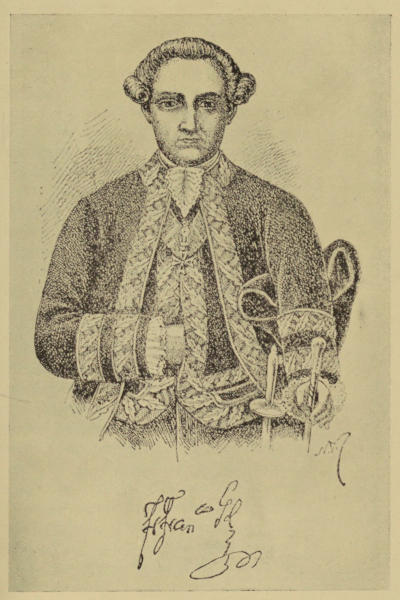
Francisco Gil de Taboado, 35th Viceroy of Peru 1790-1796
Tertulia poética
Prior to the founding of the Mercurio peruano there had existed a periodical for the presentation of economic and commercial subjects called Diario erudito, which ceased publication at the end of its second year. The first number of the Mercurio appeared on the first of January, 1791, under the editorial direction of Jacín de Calero y Moreyra. The periodical itself was designed to treat of scientific, political, commercial, historical, and statistical subjects, in a manner hitherto quite unknown in the colonies. It was continued until eleven volumes had been completed by the association; and on the failure of funds to meet further expenses of publication, Padre Cisneros, who had succeeded the former secretary of the society caused a twelfth volume to be printed at his own expense. In this year, 1791, there was formed, moreover, a new society called “Tertulia poética,” which held frequent meetings for the examination of articles or poems presented, some of which were published in the Mercurio peruano.
Gaceta de Lima
Anti-revolutionary propaganda
In 1793 the viceroy decided to publish a Gaceta de Lima, reviving a title that had been used in the middle of the century, in order that the inhabitants of the viceroyalty might have a properly accredited journal that would inform them regarding the excesses of the French Revolution, of which various rumours were reaching their ears. For this purpose the viceroy concluded that it would be better to have an independent journal rather than to give to the Mercurio peruano an official character. The number of the persons associated with the Mercurio would make it practically impossible to prevent their intervention in the determination of what should be published. These persons, for the greater part, were men of high ideals and not in sympathy with all of the views and practices of the government, and the viceroy had doubtless reason to believe that their interference would furnish a source of embarrassment, for he evidently did not propose, in the gazette, to present the unvarnished truth, but, on the other hand, through its pages, to carry on a propaganda against revolutionary doctrines, free criticism of the Church, and republican attacks on the absolute state. The Gaceta was continued until 1821; and it made public only such facts or documents as the government wished to have known, in other words, falsified and garbled information.
V
Hipólito Unánue
Some of the ablest writers of the transition period were interested in the Mercurio peruano as contributors. Dr. Hipólito Unánue was of this class. He was a native of Peru, born in Arica in 1755. He completed his studies for an ecclesiastical career, but was persuaded by his uncle, Padre Pedro Pabón, to abandon his plan to enter the Church and to direct his attention to scientific studies. Under this advice he turned to the study of medicine, and at the same time he became known for his attainments in mathematics, physics, and natural history. Between 1783 and 1797 he wrote a political, ecclesiastical and statistical account of the viceroyalty of Peru. He held a professorship of anatomy in Lima, and exerted an affective influence in increasing facilities for anatomical study in that city.
Amantes del país
Under the name of “Aristio” he wrote for the Mercurio peruano, and was a member of the society of “Amantes del país,” which consisted of thirty members, twenty-one of whom were residents of Lima. In order to acquire membership one had to offer two discourses; these having been found acceptable, the case was presented to the viceroy for his approval. On the occasion of his inauguration the new member was required to deliver an address. A committee of “censors” examined productions presented to decide as to their fitness for publication.
Unánue’s El clima de Lima
Among Unánue’s writings, his Observaciones sobre el clima de Lima y sus influencias en los seres organizados; en especial el hombre, attracted much attention; it was published at Lima in 1806 and at Madrid in 1815. It is divided into three sections. The first section treats of the history of the climate of Peru; the second of the influence of climate on organized beings; the third of the influence of climate in relation to health and disease. This section contains an extensive review of the means essential to the preservation of health under different climatic conditions, particularly under the climatic conditions prevailing in Peru.[222]
The bulk of the writings of Hipólito Unánue belong to a period subsequent to that here under consideration.[223]
González Laguna
Celo sacerdotal para con los no-nacidos
Padre Francisco González Laguna was also a contributor to the Mercurio. He wrote under the name of “Thiméo.” He had marked attainments as a botanist, and participated in the work of the botanical expedition directed by Ruiz and Pavón and in that of Malaspina’s expedition. The plant Gonzalaguna dependens was named in his honour by Hipólito Ruiz. Laguna and Juan Tafalla were commissioned to arrange the botanical garden of Lima. Besides articles published in the Mercurio, Laguna wrote various papers on natural history and a work called Celo sacerdotal para con los no-nacidos, in which one may find data with respect to the number of missionaries who had perished at the hands of the Indians in the wilds of Huanuco, Huamalíes, and Tarma; also an account of the exotic plants that had been introduced into Lima during the previous thirty years.
Ignacio Lecuanda
Social confusion in Lima
Another writer for the Mercurio was José Ignacio Lecuanda, who held various offices in Peru between 1782 and 1801; accountant in the tribunal of accounts, treasurer of Guamanga, royal official accountant at Trujillo, and later accountant of the customs at Lima. His articles dealt with geographical questions, agriculture, industry and commerce. He wrote also on matters of politics and administration. In the Mercurio he published an account of the vagrants in Lima and of the means proposed for employing them. He affirmed that in Lima two-thirds of the inhabitants supported the rest, and that this state of vagabondage was due to the freedom with which the inhabitants, the foreigners as well as other classes, acceded to requests for charity, in this way developing in large numbers of persons an unwillingness to work. The sons of artisans, as well as many persons of other classes, refused to take up the careers of their fathers. The women refused to work preferring to attach themselves to families where they might obtain mere subsistence, or to acquire a livelihood in some other way. The existence of distinct classes added to the social confusion: the whites and the mestizos refused to treat as their equals the negroes and the mulattoes, while these in turn refused to undertake domestic service or labour in the fields, and attempted to imitate the members of the dominant class.
Chinchona
This periodical contained also notable articles on quina. These appeared in the eighth and twelfth volumes. Juan López Canizares is said to have been the first European to acquire knowledge of the medicinal properties of this plant, communicated to him by an Indian. In 1630, knowing that the wife of the viceroy, the Condesa de Chinchón, was ill with an exhausting intermittent fever, López sent a quantity of quina to the viceroy, and this was administered to the countess by Dr. Juan de Vega, with eminently satisfactory results. This incident induced Linnæus to give the plant the name of Chinchona. Some of the bark in the form of a powder was taken to Madrid, where it was examined by physicians and rejected as a medicine. It was nevertheless used, and noteworthy cures were effected. Here it was known as “pulvos de la condesa.” It was later taken to Rome by Jesuits, and became known in Italy, France, and Germany as Jesuits’ powder.
Opposition to use of quina
Some light is thrown on the spirit of the seventeenth century by its reception generally in Europe. Persons who observed its effects could not deny its efficacy, but they attributed these effects to a pact which the Peruvians had made with the devil. It was discredited in France and Germany; the English prohibited its use; and the learned men of Salamanca maintained that it was an unpardonable sin for a physician to prescribe it. Late in the eighteenth century, in spite of the fact that Charles III tried to encourage the extraction of chinchona bark, certain physicians in Spain continued to speak of it as a remedy that was worse than the disease; but its properties had already attracted the attention, and called forth the commendation of Dr. José Celestino Mutis, the distinguished botanist of New Granada.[224]
Gabriel Moreno
Dr. Gabriel Moreno, a distinguished physician, who was born in Peru in 1735, occupied a prominent place among the scientific men of South America during the last half of the eighteenth century. His special field of research was Botany. The Mercurio peruano contains an article on coca by him. He published other papers and a series of biographies of distinguished Peruvians: Francisco Ruiz Lozano, professor of mathematics; Dr. Juan Ramón Koenig, the first cosmographer of Peru; and Dr. Cosme Bueno, a physician of note in Lima. Dombey, who went to Peru with the botanical expedition of 1778, dedicated a plant, which he discovered to Dr. Moreno, calling it Morena peruana.
Politics and literature, as well as the sciences of nature, claimed some part of the attention of contributors to the Mercurio. Dr. José Ignacio Moreno, a professor in the University of San Marcos, born in Guayaquil, published here certain of his discourses on various subjects: one of these was on freedom of worship; another treated of the supremacy of the pope; a third was a report concerning the creation of the bishopric of Junín. Dr. Moreno lived on beyond the limit of the colonial period, and, as a member of a patriotic society created in 1822, his discourses concerning a form of government for Peru produced great popular dissatisfaction; for he spoke in opposition to the general sentiment of Spanish America, which accepted the principles of democratic rule. He died in 1841.
Mercurio suppressed
On one occasion at least the Amantes del país got into embarrassment through the freedom of their criticism. The Franciscan Antonio Olavarrieta, writing in the Semanario, undertook to treat of the public amusements, the dress, the balls, promenades, and receptions of Lima. Writers in the Mercurio analysed Olavarrieta’s article, and made certain satirical allusions to the subjects treated, and their observations displeased many persons, who appear to have had influence with the authorities; for the number of the periodical for June 23, 1791, was suppressed. It was, however, replaced by another number of the same date.
VI
Telégrafo mercantil
The volumes of the Telégrafo
The noteworthy success achieved by the Mercurio peruano was one of the inducements leading to the establishment of El telégrafo mercantil at Buenos Aires in 1801. The founder and editor was Francisco Antonio Cabello. His announced purpose in founding this periodical was to advance science and the arts, to create a school of philosophy that would banish the barbarous forms of scholasticism, to extend the knowledge of agriculture, and to inform the readers of the progress and new discoveries in history, archæology, literature and other departments of human learning. The first number was issued on April 1, 1801, and it appeared thereafter during its continuance generally twice a week. The first volume of thirty-five numbers covered the months of April, May, June and July; the second volume, September, October, November, and December; the third volume, January, February, March and April, of 1802; the fourth volume, May, June, July, and August; but the fifth and last volume was never completed. It’s fourth number, the last issued, appeared on October 17, 1802; it contained an article which the public found extremely objectionable. In this article the editor wrote that there existed no place under the sun more effective than Río de la Plata for encouraging the idleness of foreigners, on account of the abundance of food and of the superabundance of unmarried women, lovers of society and of luxury. And in order to remedy this evil this article further proposed that towns should be built on the coast of Patagonia; that all Spanish bachelors in the country should be arrested and induced to marry; and afterwards sent to the new Patagonian towns under penalty of a forced return to Spain of all those who would not accept the hand of some poor young woman of Buenos Aires, and who would not be willing to establish themselves either at the bay of San Julián or the bay of San Matías.
The end and character of the Telégrafo
Influence of the Telégrafo
This article put an end to the Telégrafo mercantil; the viceroy, in justice to those who had been offended, ordered the publication to be suspended. The Argentine critic, José María Gutiérrez, says the editor “proposed to realize in Buenos Aires the design conceived by the editors of Mercurio peruano without possessing the judgment, the serenity of character, and the literary qualities that distinguished Unánue, Baquijano, and other writers of that part of America, the founders and supporters of that famous publication.” “But one must confess,” he continues, “that in spite of the incompetence of the editor and the great defects displayed by the Telégrafo mercantil, the appearance of that publication marks an epoch of progress, and that, by awakening a curiosity for reading and the natural ambition to write for the press, it gave a visible impulse to minds and to ideas. In its pages appeared for the first time the ode of Lavarden to the Río Paraná, the fables of Azcuénaga and other contributions, which are not to be underestimated and are an honour to the country, the first essays of the patriotic muse. In it one finds also descriptions of some of the Argentine cities and provinces, and various contributions by Haenke; the first meteorological observations published in Buenos Aires; important and curious isolated data concerning commercial practice, and the price of objects of production and consumption throughout the whole viceroyalty.”[225]
The Semanario de agricultura, industria, y comercio at Buenos Aires
Another periodical publication was established in Buenos Aires in 1802. This was the Semanario de agricultura, industria, y comercio. The first number appeared on September 1, 1802, and the last on February 11, 1807. It was edited by Juan Hipólito Vieytes. It greatly surpassed its predecessor with respect to the method shown in the arrangement of its material and in the judgment displayed in selecting this material.
VII
Malaspina’s expedition
Tadeo Haenke
The expedition of Malaspina was also a factor of the movement, in the last third of the eighteenth century, to increase the world’s scientific knowledge of South America. This expedition would merit no special remark in this place but for the fact that Tadeo Haenke, one of its members, remained to be a permanent resident of Upper Peru, and became a contributor to the intellectual activity of that part of the continent. Haenke was born in Treibitz, Bohemia, near the Saxon frontier, on October 5, 1761. He studied at Prague, and was promoted to the degree of Doctor in 1782. Four years later he removed to Vienna, and continued his studies in mineralogy under Professor Ignacius Born and botany under Professor Nicolas Jacquin. His relation to these men was also that of a collaborator. Under the initiative of the latter he made a botanical exploration of the Alps. He was also charged with the preparation of the eighth edition of Linnæus’ Genera plantarum.
Haenke joins the expedition
At this time, 1788, the Spanish government was preparing the scientific expedition to be commanded by Malaspina, and asked Professors Born and Jacquin to designate a person who might join the expedition in the capacity of naturalist. Without hesitation they nominated Tadeo Haenke, who, although only twenty-seven years old, had already given evidence of remarkable knowledge and ability. Their suggestion was accepted, and Haenke entered upon the journey from Vienna to Cadiz; but by a miscalculation of the time required for it, and by delays in Paris and Madrid, he arrived at the port shortly after the “Descubierta” and the “Atrevida” had sailed. He followed by the first merchant ship available. This was wrecked at the mouth of the Río de la Plata, and through this misfortune Haenke lost most of his books, papers and instruments. He arrived at Montevideo eight days after Malaspina had departed for the Strait and the Pacific. Aided by the government of Buenos Aires, Haenke now undertook the overland journey across the pampas and over the Andes. When he arrived at Santiago, April 10, 1790, Malaspina’s ships had already anchored at Valparaiso.
The expedition sailed northward along the coast, and the most important halt was in the port of Callao. The ships were left under the necessary guard, and the members of the company established themselves for four months in the valley of the Rimac. The viceroy Francisco de Gil y Lemus received the officers and the scientists, but the festivities of the viceregal court did not prevent somewhat elaborate investigations in Peru. Haenke accompanied by the botanist Tafalla and the draughtsman Pulgar, went over the Andes to Tarma and visited Huanuco and the mines of Cerro del Pasco. Tafalla and Pulgar had been associated with the botanical expedition under Ruiz and Pavón, and after its return to Spain, they remained under orders from the government to continue their botanical investigations in Peru, and to make collections to replace those that had been lost at Macora.
Voyage northward and to the Far East
Haenke leaves the expedition
Towards the end of 1790 Malaspina’s expedition continued its northward voyage, halting at Guayaquil, Panama, Acapulco, and advancing to the Strait of Fuca and into the Behring Sea. In the beginning of 1792 it entered upon the voyage across the Pacific, to the Philippine Islands and Australia, and, returning, arrived at Callao July 23, 1793. This long voyage was for Haenke a period of fatiguing and profitless idleness; and when the expedition started on its homeward voyage from Peru it was determined by Malaspina and approved by the viceroy that Haenke should be temporarily separated from the ships and go to Buenos Aires by way of Huancavelica, Cuzco and Potosí, for the purpose of continuing his investigations in botany and zoology. Luis Nee, another member of the scientific staff, was permitted to leave the “Atrevida” at Concepción in Chile, and proceed by land to Buenos Aires and meet the ships at Montevideo. But Haenke, on account of the great extent of his proposed journey, had permission to delay his arrival in Buenos Aires until October or November 1794. Nee complied with the stated requirements, rejoined the expedition at Montevideo, and returned to Spain. Haenke, on the other hand, failed to carry out the conditions under which he was permitted to cross the continent. Letters from him received by his companions at Montevideo announced that on account of the extent of his explorations, reaching to the territory of the Mojos and Chiquitos, he would be delayed beyond the time specified for his arrival in Buenos Aires, but that he believed he would be in Montevideo and embark for Europe in the early part of the following year.
Haenke’s Writings
But this belief was not well founded; he never left America. He was granted a pension by the viceroy, established himself at Cochabamba, and continued his scientific researches. The principal product of his inquiries was his Historia natural de Cochabamba. This was written in 1798. To the same period belong his Memoria sobre los ríos navegables que fluyen al Marañón and Descripción del Perú. Numerous fragments of these works were published in the Telégrafo mercantil but without his name.
Groussac on Haenke
Paul Groussac, who caused the Natural History of Cochabamba to be published in the first volume of the Anales de la biblioteca characterized its style, in the preliminary essay on the life of Haenke, as “that of descriptive science, simple and positive, and as far from the incorrect creole verbosity as from the elegant precision of the French travellers.” Of Haenke he affirms “We find ourselves in the presence of a savant of high quality, worthy by his own ideas as well as by his vast and varied knowledge to take his place, if destiny had not decreed otherwise, in that illustrious galaxy near the end of the last century, in which Priestly, Scheele, and Lavoisier shine as stars of the first magnitude.”[226]
Haenke’s late years and death
But his marvellous zeal for exploration and investigation gradually waned; isolation, lack of the results attained by other investigators, the spiritual inertia of frontier conditions, and a relaxing climate wrought, in the course of time, their deadly work, dulling the acuteness of his mind, and destroying his energy. And the end, it is reported, was hastened by the carelessness of a servant, who, in his illness at his hacienda, administered by mistake a dose of poison in place of the beneficent medicine. He died in 1817.
VIII
Santiago Cárdenas
El Volador
Perhaps to these indications of an intellectual awakening in Spanish South America one ought to add a reference to a forerunner of modern aviation, who achieved fame to such an extent that he became known as El Volador. This was Santiago Cárdenas, who was born in Callao about 1726. Here he lived with his parents, who were extremely poor, until they secured for him, while he was still very young, a position on a vessel trading between Callao and the coast of Chile. The tidal wave that succeeded the earthquake of 1746 threw the vessel, to which he was attached, upon the shore. This event deprived the seafaring life of some of its attractions for him, and he left his service and went to Lima. Here he devoted himself to work in practical mechanics. Having acquired noteworthy skill in this field, he became ambitious to invent a machine for flying, and petitioned Viceroy Amat for support to enable him to carry out his project. The inhabitants of Lima did not receive with favour his proposal to fly from the hill San Cristóbal to the great square of the city, and on his appearance on the streets they hooted at him and stoned him. The government, however, intervened, and set aside the proposed attempt. Thereafter El Volador’s efforts were directed to writing a book on flying, which he called Nuevo sístema de navegar por les aires.
On art of flying
In 1860 the manuscript of this book was in the library of the school of medicine; it was afterwards transferred to the national library at Lima, but some pages at the end had been lost, as also some of the rude pen drawings. But in 1878 Ricardo Palma had the manuscript copied and printed at Valparaiso in a little volume of one hundred and thirty pages. In the introduction he set down certain curious facts regarding Cárdenas. The next year Pedro Ruiz published a pamphlet in which he discussed the art of flying. Mendiburu, from whose notice of the Volador these facts are taken, refers to a manuscript in the library of Lima entitled Viaje al globo de la luna, giving some account of Santiago El Volador. In the course of time the populace recovered from its aversion to Cárdenas’ project, and it is reported that he had to seek asylum in a church to escape from the crowd that wished to compel him to fulfil his promise to fly.
Intellectual movement in the last decades
Mutis and Nariño
Although this general survey of the intellectual activity in Spanish South America in the last decades of the colonial period brings to light no epoch-making achievements, there is revealed, however, an increasing interest in the real world, in the sciences that deal with natural phenomena, in literature that is worldly in its tone and subjects, and in the spread of enlightenment through the press that might lead to the formation of a reasonable public opinion. In many quarters there were signs that the new generation was arousing itself to overcome the dulness of the middle years of the eighteenth century. The creoles and the mestizos had been drawn together, and through their union a new society had come into existence. The young creoles in New Granada gathered about Mutis as his disciples and co-workers in the field of scientific investigation, and, with Nariño as their leader, announced their adherence to the doctrine of political liberty. Everywhere they displayed a spirit of revolt against the institutions through which Spanish absolutism had found expression, and they resented with increasing vigour and determination their exclusion from participation in the direction of public affairs that vitally concerned their welfare.
THE END