PART II. NEW DATA. (continued 2)
Reading edition
LINKAGE OF CLUB AND VERMILION.
The linkage of club and vermilion is shown by the cultures listed in table 51, which were obtained as controls in working with lethal III. The cross-over value is shown in the male classes by the cross-over fraction 276/1463 or 19 per cent.
LINKAGE OF YELLOW, CLUB, AND VERMILION.
The data just given in table 51 show that club is 19 units from vermilion, but in order to determine in which direction from vermilion it lies, the crossing-over of club to one other gen must be tested. For this test we used yellow, which lies at the extreme left of the chromosome series. At the same time we included vermilion, so that a three-point experiment was made.
Females that were (gray) club vermilion were bred to yellow (not-club red) and gave wild-type daughters and club vermilion sons. These inbred gave the results of table 52.
The data from the males show that the locus of club is about midway between yellow and vermilion. This conclusion is based on the evidence that yellow and club give 18 per cent of crossing-over, club and vermilion 20 per cent, and yellow and vermilion 35 per cent. The double cross-overs on this view are yellow club (3) and vermilion (3). The females furnish additional data for the linkage of club and vermilion. The value calculated from the female classes alone is 20 units, which is the same value as that given by the males.
Table 51.—P1 club ♀ ♀ × vermilion ♂ ♂. F1 wild-type ♀ × F1 club ♂.
Reference. Females. Non-cross-over ♂ ♂. Cross-over ♂ ♂. Total ♂ ♂. Cross- over values.
Club. Ver- milion. Club Vermilion. Wild- type.
137 75 17 39 6 11 73 23
138 64 24 32 6 8 70 20
139 56 10 31 4 3 48 15
140 74 13 39 3 5 60 13
144 97 30 40 10 13 93 25
145 63 15 29 4 6 54 19
146 126 44 46 9 9 108 15
106 92 33 34 6 10 83 19
107 55 31 25 7 3 66 15
108 86 29 32 7 10 78 22
109 103 25 36 4 9 74 18
83 30 34 6 9 79 19
77 18 26 7 8 59 25
67 20 21 6 7 54 24
126 32 60 15 13 120 23
63 21 28 7 10 66 26
114 45 71 9 7 132 12
46 18 18 3 3 42 14
111 35 56 6 7 104 13
Total. 1,578 490 697 125 151 1,463 19
Table 52.—P1 club vermilion ♀ ♀ × yellow ♂ ♂. F1 wild-type ♀ ♀ × F1 club vermilion ♂ ♂.
Reference. F2 females. F2 males.
Non-cross- overs. Cross-overs.


Club ver- milion. Wild- type. Club. Ver- milion. Yellow. Club ver- milion. Yellow club ver- milion. Wild- type. Yellow ver- milion. Club. Yellow Club. Ver- milion.
99 44 52 13 7 35 27 2 9 8 11 0 1
100 38 58 6 12 43 23 1 15 11 14 0 0
101 30 32 6 12 19 24 6 5 10 3 1 0
102 44 55 20 13 48 38 12 14 8 15 1 1
103 ... ... ... ... 43 32 7 16 13 7 1 1
Total. 156 197 45 44 188 144 28 59 50 50 3 3
LINKAGE OF CHERRY, CLUB, AND VERMILION.
The need for a readily workable character whose gen should lie in the long space between cherry and vermilion has long been felt. Cherry and vermilion are so far apart that there must be considerable double crossing-over between them. But with no favorably placed character which is at the same time viable and clearly and rapidly distinguishable, we were unable to find the exact amount of double crossing-over, and hence could not make a proper correction in plotting the chromosome. Club occupies just this favorable position nearly midway between cherry and vermilion. The distances from cherry to club and from club to vermilion are short enough so that no error would be introduced if we ignored the small amount of double crossing-over within each of these distances.
It thus becomes important to know very exactly the cross-over values for cherry club and club vermilion. The experiment has the form of the yellow club vermilion cross of table 52, except that cherry is used instead of yellow. Cherry is better than yellow because it is slightly nearer club than is yellow and because the bristles of yellow flies are very inconspicuous. In yellow flies the bristles on the side of the thorax are yellowish brown against a yellow background, while in gray-bodied flies the bristles are very black against a light yellowish-gray background.
For the time being we are able to present only incomplete results upon this cross. In the first experiment cherry females were crossed to club vermilion males and the wild-type daughters were back-crossed to cherry club vermilion, which triple recessive had been secured for this purpose. Table 53 gives the results.
Table 53.—P1 cherry ♀ ♀ × club vermilion ♂ ♂. B. C. F1 wild-type ♀ × cherry club vermilion ♂ ♂.
Refer- ence. Total. Cross-over values.


Cherry. Club ver- milion. Cherry club ver- milion. Wild- type. Cherry ver- milion. Club. Cherry club. Ver- milion. Cherry club. Club ver- milion. Cherry ver- milion.
163 68 68 4 10 21 13 1 0 185 8 19 26
164 99 67 13 21 21 12 1 0 234 15 15 29
165 23 37 9 7 15 2 0 2 95 19 25 35
166 107 86 14 28 31 43 3 3 315 15 25 37
167 42 49 7 11 12 11 2 2 136 16 20 30
168 40 30 6 15 16 8 0 0 115 18 21 39
Total. 379 337 53 92 116 89 7 7 1,080 15 20 32
A complementary experiment was made by crossing cherry club vermilion females to wild males and inbreeding the F1 in pairs. Table 54 gives the results of this cross.
Table 54.—P1 cherry club vermilion ♂ ♂. ♀ ♀ × wild ♂ ♂. F1 wild-type ♀ × F1 cherry club vermilion ♂ ♂.
Refer- ence. Total. Cross-over values.


Cherry club ver- milion. Wild- type. Cherry. Club ver- milion. Cherry club. Ver- milion. Cherry ver- milion. Club. Cherry club. Club ver- milion. Cherry ver- milion.
188 60 76 12 8 12 29 2 1 200 11 22 30
189 228 314 48 44 50 60 1 8 753 13 16 27
197 68 81 23 13 9 22 2 0 218 17 15 31
Total. 356 471 83 65 71 111 5 9 1,171 14 17 28
The combined data of tables 53 and 54 give 14.2 as the value for cherry club. All the data thus far presented upon club vermilion (886 cross-overs in a total of 4,681), give 19.2 as the value for club vermilion. The locus of club on the basis of the total data available is at 14.6.
GREEN.
In May 1913 there appeared in a culture of flies with gray body-color a few males with a greenish-black tinge to the body and legs. The trident pattern on the thorax, which is almost invisible in many wild flies, was here quite marked. A green male was mated to wild females and gave in F2 a close approach to a 2:1:1 ratio. The green reappeared only in the F2 males, but the separation of green from gray was not as easy or complete as desirable. From subsequent generations a pure stock of green was made. A green female by wild male gave 138 wild-type females and 127 males which were greenish. This green color varies somewhat in depth, so that some of these F1 males could not have been separated with certainty from a mixed culture of green and gray males.
The results of these two experiments show that green is a sex-linked melanistic character like sable, but the somatic difference produced is much less than in the case of sable, so that the new mutation, although genetically definite, is of little practical value. We have found several eye-colors which differed from the red color of the wild fly by very small differences. With some of these we have worked successfully by using another eye-color as a developer. For example, the double recessive vermilion "clear" is far more easily distinguished from vermilion than is clear from red. But it is no small task to make up the stocks necessary for such a special study. In the case of green we might perhaps have employed a similar method, performing all experiments with a common difference from the gray in all flies used.
CHROME.
In a stock of forked fused there appeared, September 15, 1913, three males of a brownish-yellow body-color. They were uniform in color, without any of the abdominal banding so striking in other body-colors. Even the tip of the abdomen lacked the heavy pigmentation which is a marked secondary sexual character of the male. About 20 or more of these males appeared in the same culture. This appearance of many males showing a mutant character and the non-appearance of corresponding females is usual for sex-linked characters. In such cases females appear in the next generation, as they did in this case when the chrome males were mated to their sisters in mass cultures. Since both females and males of chrome were on hand, it should have been an easy matter to continue the stock, but many matings failed, and it was necessary to resort to breeding in heterozygous form. The chrome, however, gradually disappeared from the stock. Such a difficult sex-linked mutation as this could be successfully handled (like a lethal) if it could be mated to a double recessive whose members lie one on each side of the mutant, but in the case of chrome this was not attempted soon enough to save the stock.
LETHAL 3.
In the repetition of a cross between a white miniature male and a vermilion pink male (December 1913), the F2 ratios among the males were seen to be very much distorted because of the partial absence of certain classes (Morgan 1914c). While it was suspected that the disturbance was due to a lethal, the data were useless for determining the position of such a lethal, from the fact that more than one mother had been used in each culture. From an F2 culture that gave practically a 2:1 sex-ratio, vermilion females were bred to club males. Several such females gave sex-ratios. Their daughters were again mated to vermilion males. Half of these daughters gave high female sex-ratios and showed the linkage relations given in table 55.
Table 55.—Linkage data on club, lethal 3, and vermilion, from Morgan, 1914c.
Females. Males.


Club. Wild-type. Club vermilion. Vermilion.
588 182 28 11 1
Lethal 3 proved to lie between club and vermilion, 13 units from club and 5 from vermilion. The same locus was indicated by the data from the cross of vermilion lethal-bearing females by eosin miniature males. The complete data bearing on the position of lethal 3 is summarized in table 56. On the basis of this data lethal 3 is located at 26.5.
Table 56.—Summary of linkage data on lethal 3, from Morgan, 1914c.
Gens. Total. Cross- overs. Cross-over values.
Eosin lethal 3 1,327 268 20.2
Eosin vermilion 1,327 357 27.0
Eosin miniature 3,374 967 29.0
Club lethal 3 222 29 13.0
Club vermilion 877 161 18.4
Lethal 3 vermilion 1,549 105 6.8
Lethal 3 miniature 1,481 138 9.3
Vermilion miniature 1,327 31 2.3
LETHAL 3a.
In January 1914 a vermilion female from a lethal 3 culture when bred to a vermilion male gave 71 daughters and only 3 sons; 34 of these daughters were tested, and every one of them gave a 2:1 sex-ratio. The explanation advanced (Morgan 1914c) was that the mother of the high ratio was heterozygous for lethal 3, and also for another lethal that had arisen by mutation in the X chromosome brought in by the sperm. On this interpretation the few males that survived were those that had arisen through crossing-over. The rarity of the sons shows that the two lethals were in loci near together, although here of course in different chromosomes, except when one of them crossed over to the other. As explained in the section on lethal 1 and 1a the distance between the two lethals can be found by taking twice the number of the surviving males (2+3) as the cross-overs and the number of the females as the non-cross-overs. But the 34 daughters tested were also non-cross-overs, since none of them failed to carry a lethal. The fractions (6+0)/(71+34) = 6/105 give 5.7 as the distance between the lethals in question. In the case of lethals 3 and 3a another test was applied which showed graphically that two lethals were present. Each of the daughters tested showed, by the classes of her sons, the amount of crossing-over between white and that lethal of the two that she carried. These cross-over values were plotted and gave a bimodal curve with modes 7 units apart. It had already been shown that the locus of one of the two lethals was at 26.5, and since the higher of the two modes was at about 23, it corresponds to lethal 3. The data and the curve show that the lethals 3 and 3a are about 7 units apart, i. e., lethal 3a lies at about 19.5.
LETHAL 1b.
A cross between yellow white males and abnormal abdomen females gave (February 1914) regular results in 10 F2 cultures, but three cultures gave 2 ♀ : 1 ♂ sex-ratios (Morgan, 1914b, p. 92). The yellow white class, which was a non-cross-over class in these 10 cultures, had disappeared in the 3 cultures. Subsequent work gave the data summarized in table 57. At the time when the results of table 57 were obtained it did not seem possible that two different lethals could be present in the space of about 1 unit between yellow and white, and this lethal was thought to be a reappearance of lethal 1 (Morgan, 1912b, p. 92). Since then a large number of lethals have arisen, one of them less than 0.1 unit from yellow, and at least one other mutation has taken place between yellow and white, so that the supposition is now rather that the lethal in question was not lethal 1. Indeed, the linkage data show that this lethal, which may be called lethal 1b, lies extraordinarily close to white, for the distance from yellow was 0.8 unit and of white from yellow on the basis of the same data 0.8. There was also a total absence of cross-overs between lethal 1b and white in the total of 846 flies which could have shown such crossing-over. On the basis of this linkage data alone we should be obliged to locate lethal 1b at the point at which white itself is situated, namely, 1.1, but on a priori grounds it seems improbable that a lethal mutation has occurred at the same locus as the factor for white eye-color. Farther evidence against this supposition is that females that have one X chromosome with both yellow and white and the other X chromosome with yellow, lethal, and white are exactly like regular stock yellow white flies. The lethal must have appeared in a chromosome which was already carrying white and yet did not affect the character of the white. We prefer, therefore, to locate lethal 1b at 1.1-.
Table 57.—Summary of all linkage data upon lethal 1b, from Morgan, 1914b.
Gens. Total. Cross- overs. Cross-over values.
Yellow lethal 1b 744 6 0.81
Yellow white 2,787 23 0.82
Lethal 1b white 846 0 0.0
FACET.
Several autosomal mutations had been found in which the facets of the compound eye are disarranged. One that was sex-linked appeared in February 1914. Under the low power of the binocular microscope the facets are seen to be irregular in arrangement, instead of being arranged in a strictly regular pattern. The ommatidia are more nearly circular than hexagonal in outline, and are variable in size, some being considerably larger than normal. The large ones are also darker than the smaller, giving a blotched appearance to the eye. The short hairs between the facets point in all directions instead of radially, as in the normal eye. The irregular reflection breaks up the dark fleck which is characteristic of the normal eye. The shape of the eye differs somewhat from the normal; it is more convex, smaller, and is encircled by a narrow rim destitute of ommatidia.
Facet arose in a back-cross to test the independence of speck (second chromosome) and maroon (third chromosome). One of the cultures produced, among the first males to hatch, some males which showed the facet disarrangement. None of the females showed this character. The complete output was that typical of a female heterozygous for a recessive sex-linked character: not-facet ♀ ♀ (2), 112; not-facet ♂ ♂ (1), 57; facet ♂ ♂ (1), 51.
Of the three characters which were shown by the F2 males, one, facet, is sex-linked, another, speck, is in the second chromosome, and maroon is in the third chromosome. All eight F2 classes are therefore expected to be equal in size, and each pair of characters should show free assortment, that is, 50 per cent. The assortment value for facet speck is 48, for speck maroon 52, and for facet maroon 48, as calculated from the F2 males of table 58.
Table 58.—P1 speck maroon ♂ × wild ♀ ♀. B.C. F1 wild-type ♀ × speck maroon ♂.
Reference. F2 females. F2 males.
Speck maroon. Wild- type. Speck. Maroon. Facet. Speck maroon. Facet speck maroon. Wild- type. Facet maroon. Speck. Facet speck. Maroon.
66 31 30 26 25 14 14 14 10 11 17 12 17
LINKAGE OF FACET, VERMILION AND SABLE.
In order to determine the location of facet in the first chromosome, one of the facet males which appeared in culture 66 was crossed out to vermilion sable females. Three of the wild-type daughters were back-crossed to vermilion sable males. The females of the next generation should give data upon the linkage of vermilion and sable, while the males should show the linkage of all three gens, facet, vermilion, and sable. The offspring of these three females are classified in table 59.
The cross-over fraction for vermilion sable as calculated from the females is 19/194. The cross-over value corresponding to this fraction is 10 units, which was the value found in the more extensive experiments given in the section on sable.
It will be noticed that the results in the males of culture 150 are markedly different from those of the other two pairs. While the sable males are fully represented, their opposite classes, the gray males, are entirely absent. This result is due to a lethal factor, lethal 5, which appeared in this culture for the first time.
The males of the two cultures 149 and 151 give the order of gens as facet, vermilion, sable; that is, facet lies to the left of vermilion and toward yellow. The cross-over values are: facet vermilion 40; vermilion sable 12; facet sable 42. Since yellow and vermilion usually give but 34 per cent of crossing-over, this large value of 40 for facet vermilion shows that facet must lie very near to yellow.
Table 59.—P1 facet ♂ × vermilion sable ♀ ♀. B.C. F1 wild-type ♀ × vermilion sable ♂ ♂.
Reference. F2 females. F2 males.
Non-cross-overs. Cross-overs.


Ver- milion sable. Wild- type. Ver- milion. Sable. Facet. Ver- milion sable. Facet ver- milion sable. Wild- type. Facet sable. Ver- milion. Facet ver- milion. Sable.
149 16 29 3 3 17 10 8 12 2 .. 2 1
150 13 17 2 2 .. 10 9 .. 1 .. .. ..
151 37 63 7 2 38 23 12 26 2 8 4 1
Total. 66 109 12 8 55 43 29 38 5 8 6 2
LINKAGE OF EOSIN, FACET, AND VERMILION.
In order to obtain more accurate information on the location of facet, a facet male was mated to an eosin vermilion female. The F1 females were mated singly to wild males and they gave the results shown in table 60. The F2 females were not counted, since they do not furnish any information. The evidence of table 60 places facet at 1.1 units to the right of eosin, or at 2.2.
Table 60.—P1 eosin vermilion ♀ × facet ♂. F1 wild-type ♀ × wild ♂.
Reference. Total. Cross-over values.


Eosin ver- milion. Facet. Eosin facet. Ver- milion. Eosin. Facet ver- milion. Eosin facet ver- milion. Wild- type. Eosin facet. Facet ver- milion. Eosin ver- milion.
512 43 43 .. 1 13 16 .. .. 116 .... .... ....
513 28 35 .. 2 19 5 .. .. 89 .... .... ....
514 18 31 1 .. 17 11 .. .. 78 .... .... ....
515 18 60 .. .. 20 15 .. .. 113 .... .... ....
516 10 31 .. .. 7 12 .. .. 60 .... .... ....
517 24 34 .. .. 10 12 .. .. 80 .... .... ....
518 44 38 1 1 23 22 .. 1 130 .... .... ....
Total. 185 272 2 4 109 93 .. 1 666 1.05 30.5 31.3
LETHAL SC.
The third of the lethals which Miss Stark found (Stark, 1915) while she was testing the relative frequency of occurrence of lethals in fresh and inbred wild stocks arose in April 1914 in stock caught in 1910. Females heterozygous for this lethal, lethal sc, were mated to white males and the daughters were back-crossed to white males. Half of the daughters gave lethal sex-ratio, and these gave 1,405 cross-overs in a total of 3,053 males, from which the amount of crossing-over between white and lethal sc has been calculated as 46 per cent.
By reference to table 65 it is seen that white and bar normally give only about 44 per cent of crossing-over in a two-locus experiment; lethal sc then is expected to be situated at least as far to the right as bar. Females heterozygous for lethal sc were therefore crossed to bar males, and their daughters were tested. The lethal-bearing daughters gave 144 cross-overs in a total of 1,734 males, that is, bar and lethal sc gave 8.3 per cent of crossing-over. Lethal sc therefore lies 8.3 units beyond bar or at about 66.5. The cross-over value sable lethal sc was found to be 23.5 (387 cross-overs in a total of 1,641 males) which places the lethal at 43+23.5, or at 66.5. We know from other data that there is enough double crossing-over in the distance which gives an experimental value of 23.5 per cent, so that the true distance is a half unit longer or the locus at 67.0 is indicated by the 1,641 males of the sable lethal experiment. In a distance so short that the experimental value is only 8.3 per cent there is, as far as we have been able to determine, no double crossing-over at all, or at most an amount that is entirely negligible, so that a locus at 57+8.3 or 65.3 is indicated by the 1,734 males of the bar lethal experiment. To get the value indicated by the total data the cases may be weighted, that is, the value 65.3 may be multiplied by 1,734, and 67.0 may be multiplied by 1,641. The sum of these two numbers divided by the sum of 1,734 and 1,641 gives 66.2 as the locus indicated by all the data available. This method has been used in every case where more than one experiment furnishes data upon the location of a factor. In constructing the map given in diagram I rather complex balancings were necessary.
LETHAL SD.
The fourth lethal which Miss Stark found (May 1914) in the inbred stocks of Drosophila has not been located by means of linkage experiments. It is interesting in that the males which receive the lethal factor sometimes live long enough to hatch. These males are extremely feeble and never live more than two days. There is, as far as can be seen, no anatomical defect to which their extreme feebleness and early death can be attributed.
FURROWED.
In studying the effect of hybridization upon the production of mutations in Drosophila, F. N. Duncan found a sex-linked mutation which he called "furrowed eye" (Duncan 1915). The furrowed flies are characterized by a foreshortening of the head, which causes the surface of the eye to be thrown into irregular folds with furrows between. The spines of the scutellum are stumpy, a character which is of importance in classification, since quite often flies occur which have no noticeable disturbance of the eyes.
The locus of furrowed was determined to be at 38.0 on the basis of the data given in table 61.
Table 61.—Data on the linkage of furrowed, from Duncan, 1915.
Gens. F2 males. Total. Cross-over values.
Eosin minia- ture. Minia- ture fur- rowed. Eosin fur- rowed.


Eosin, miniature, furrowed. 142 59 4 3 208 29.8 30.4 30.3
Fur- rowed sable. Sable forked. Fur- rowed forked.


Furrowed, sable, forked. 166 9 31 3 209 5.7 16.3 19.1
Verm- ilion fur- rowed. Fur- rowed bar. Verm- ilion fur- rowed.


Vermilion, fur- rowed, bar. 188 9 43 0 240 3.8 21.6 17.9
ADDITIONAL DATA FOR YELLOW, WHITE, VERMILION, AND MINIATURE.
Considerable new work has been done by various students upon the linkage of the older mutant characters, namely, yellow, white, vermilion, and miniature. We have summarized these new data, and they give values very close to those already published. We have included in the white miniature data those published by P. W. Whiting (Whiting 1913).
Table 62.—Data upon the linkage of yellow, white, vermilion, and miniature (contributed by students).
Gens. Non-cross-overs. Cross-overs. Total. Cross-over values.
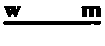
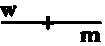
White miniature. 6,219[8] 7,378 3,754 3,337 20,688 34.2
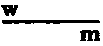
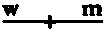
1,651 1,116 671 1,047 4,485 38.3
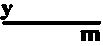
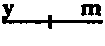
Yellow miniature. 761 923 421 653 2,758 39
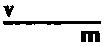
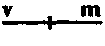
Vermilion miniature. 1,685 1,460 32 36 3,213 2.1
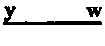
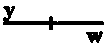
Yellow white. 1,600 1,807 10 7 3,424 0.5
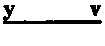
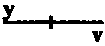
Yellow vermilion. 509 587 328 284 1,708 35.8
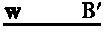
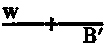
White bar. 198 272 168 166 804 42
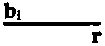
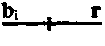
Bifid rudimentary. 142 15 12 116 285 45
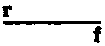
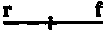
Rudimentary forked. 73 211 ... 4 288 1.4
NEW DATA CONTRIBUTED BY A. H. STURTEVANT AND H. J. MULLER.
Data from several experiments upon sex-linked characters described in this paper have been contributed by Dr. A. H. Sturtevant and Mr. H. J. Muller, and are given in table 63.
Table 63.—Data contributed by A. H. Sturtevant and H. J. Muller.
Gens. Classes. Total. Cross-over values.
Yellow white. White bifid. Yellow bifid.


Yellow white × bifid. 233 254 1 2 10 6 .. .. 506 0.6 3.2 3.8
Yellow ver- milion. Ver- milion bar. Yellow bar.


Yellow × vermilion bar. 99 101 60 55 49 48 9 14 435 32 28 49
White bifid. Bifid forked. White forked.


White bifid × forked. 84 77 9 6 65 59 1 5 306 7 42 45
Ver- milion minia- ture. Minia- ture sable. Ver- milion sable.


Vermilion miniature × sable. 152 111 4 2 5 12 .. .. 286 2.1 6 8.1
Sable rudi- men- tary. Rudi- men- tary forked. Sable forked.


Sable rudimentary × forked. 143 195 26 27 4 3 .. .. 398 13.3 1.8 15
White Bifid × Rudimentary.
F2 females. F2 males. Total. Cross-over values.
White bifid. Bifid rudi- men- tary. White rudi- men- tary.


228 335 15 11 150 66 2 10 29 135 2 1 395 3.8 42.3 44.5
White Bifid × Miniature Rudimentary.


344 31 109 2 58 41 2 0 6 1
SUMMARY OF THE PREVIOUSLY DETERMINED CROSS-OVER VALUES.
The data of the earlier papers, namely, Dexter, 1912; Morgan, 1910c, 1911a, 1911f, 1912f, 1912g; Morgan and Bridges, 1913; Morgan and Cattell, 1912 and 1913; Safir, 1913; Sturtevant, 1913 and 1915; and Tice, 1914, have been summarized in a recent paper by Sturtevant (Sturtevant, 1915) and are given here in table 64. Our summary combines three summaries of Sturtevant, viz, that of single crossing-over and two of double crossing-over.
Table 64.—Previously published data summarized from Sturtevant, 1915.
Factors. Total. Cross-overs. Cross-over values.
Yellow white. 46,564 498 1.07
Yellow vermilion. 10,603 3,644 33.4
Yellow miniature. 18,797 6,440 34.3
Yellow rudimentary. 2,563 1,100 42.9
Yellow bar. 191 88 46.1
White vermilion. 15,257 4,910 32.1
White miniature. 41,034 13,513 32.8
White rudimentary. 5,847 2,461 42.1
White bar. 5,151 2,267 44.0
Vermilion miniature. 5,329 212 4.0
Vermilion rudimentary. 1,554 376 24.1
Vermilion bar. 7,514 1,895 25.2
Miniature rudimentary. 12,567 2,236 17.8
Miniature bar. 3,112 636 20.4
Rudimentary bar. 159 7 4.4
SUMMARY OF ALL DATA UPON LINKAGE OF GENS IN CHROMOSOME I.
In table 65 all data so far secured upon the sex-linked characters are summarized. These data include the experiments previously published in the papers given in the bibliography and the experiments given here. The data from experiments involving three or more loci are calculated separately for each value and included in the totals.
Table 65.—A summary of all linkage data upon chromosome I.
Gens. Total. Cross-overs. Cross-over values.
Yellow lethal 1. 131 1 0.8
Yellow lethal 1b. 744 6 0.8
Yellow white. 81,299 875 1.1
Yellow abnormal. 15,314 299 2.0
Yellow bifid. 3,681 201 5.5
Yellow club. 525 93 17.7
Yellow vermilion. 13,271 4,581 34.5
Yellow miniature. 21,686 7,559 34.3
Yellow sable. 1,600 686 42.9
Yellow rudimentary. 2,563 1,100 42.9
Yellow bar. 626 300 47.9
Lethal 1 white. 1,763 7 0.4
Lethal 1 miniature. 814 323 39.7
Lethal 1b white. 846 0 0.0
White facet. 666 7 1.1
White abnormal. 16,300 277 1.7
White bifid. 23,595 1,260 5.3
White lethal 2. 8,011 767 9.6
White club. 2,251 321 14.3
White lethal sb. 3,678 572 15.6
White lemon. 241 35 14.5
White depressed. 59 12 20.3
White lethal sa. 1,150 256 22.2
White vermilion. 27,962 8,532 30.5
White reduplicated. 418 121 28.9
White miniature. 110,701 31,071 33.2
White furrowed. 208 63 30.3
White sable. 2,511 1,032 41.2
White rudimentary. 6,461 2,739 42.4
White forked. 3,664 1,676 45.7
White bar. 5,955 2,601 43.6
White fused. 430 186 43.3
White lethal sc. 3,053 1,406 46.0
Facet vermilion. 852 278 32.6
Facet sable. 186 80 43.0
Bifid vermilion. 2,724 849 31.1
Bifid miniature. 219 67 30.6
Bifid rudimentary. 899 384 42.7
Bifid forked. 306 130 42.5
Lethal 2 vermilion. 1,400 248 17.7
Lethal 2 miniature. 6,752 1,054 15.4
Club lethal 3. 222 29 13.0
Club vermilion. 5,558 1,047 18.8
Lethal sb miniature. 3,678 733 19.9
Lemon vermilion. 241 29 12.0
Shifted vermilion. 1,007 155 15.5
Shifted bar. 242 76 31.4
Depressed vermilion. 59 10 17.0
Depressed bar. 464 176 38.0
Lethal 3 vermilion. 1,549 105 6.8
Lethal 3 miniature. 1,481 138 9.3
Vermilion dot. 57 0 0.0
Vermilion reduplicated. 667 11 1.7
Vermilion miniature. 10,155 317 3.1
Vermilion furrowed. 240 9 3.8
Vermilion sable. 9,209 929 10.1
Vermilion rudimentary. 1,554 376 24.1
Vermilion forked. 665 163 24.5
Vermilion bar. 23,522 5,612 23.9
Vermilion fused. 9,252 2,390 25.8
Reduplicated bar. 583 120 20.6
Miniature furrowed. 208 7 3.4
Miniature sable. 1,855 125 6.7
Miniature rudimentary. 12,786 2,284 17.9
Miniature bar. 3,112 636 20.5
Furrowed sable. 209 12 5.7
Furrowed forked. 209 40 19.1
Furrowed bar. 240 43 17.9
Sable rudimentary. 663 95 14.3
Sable forked. 872 140 16.0
Sable bar. 7,524 1,036 13.8
Sable lethal sc. 1,641 387 23.6
Rudimentary forked. 1,456 20 1.4
Rudimentary bar. 664 15 2.3
Forked bar. 1,706 8 0.5
Forked fused. 1,201 37 3.1
Bar fused. 8,768 222 2.5
Bar lethal sc. 1,734 144 8.3
BIBLIOGRAPHY.
Bridges, Calvin B.
1913. Non-disjunction of the sex-chromosomes of Drosophila. Jour. Exp. Zool., 15, p. 587, Nov. 1913.
1914. Direct proof through non-disjunction that the sex-linked gens of Drosophila are borne by the X chromosome. Science, 40, p. 107, July 17, 1914.
1915. A linkage variation in Drosophila. Jour. Exp. Zool., 19, p. 1. July 1915.
1916. Non-disjunction as proof of the chromosome theory of heredity. First instalment, Genetics I, p. 1-52; second instalment, Genetics I, No. 2, 107-164.
Chambers, R.
1914. Linkage of the factor for bifid wing. Biol. Bull. 27, p. 151, Sept. 1914.
Dexter, John S.
1912. On coupling of certain sex-linked characters in Drosophila. Biol. Bull. 23, p. 183, Aug. 1912.
1914. The analysis of a case of continuous variation in Drosophila by a study of its linkage relations. Am. Nat., 48, p. 712, Dec. 1914.
Duncan, F. N.
1915. An attempt to produce mutations through hybridization. Am. Nat., 49, p. 575, Sept. 1915.
Hoge, M. A.
1915. The influence of temperature on the development of a Mendelian character. Jour. Exp. Zool., 18, p. 241.
Morgan, T. H.
1910a. Hybridization in a mutating period in Drosophila. Proc. Soc. Exp. Biol. and Med., p. 160, May 18, 1910.
1910b. Sex-limited inheritance in Drosophila. Science 32, p. 120, July 22, 1910.
1910c. The method of inheritance of two sex-limited characters in the same animal. Proc. Soc. Exp. Biol. and Med., 8, p. 17.
1911a. An alteration of the sex-ratio induced by hybridization. Proc. Soc. Exp. Biol. and Med., 8, No. 3.
1911b. The origin of nine wing mutations in Drosophila. Science, 33, p. 496, Mar. 31, 1911.
1911c. The origin of five mutations in eye-color in Drosophila, and their mode of inheritance. Science, April 7, 1911, 33, P. 534.
1911d. A dominant sex-limited character. Proc. Soc. Exp. Biol. and Med., Oct. 1911.
1911e. Random segregation versus coupling in Mendelian inheritance. Science, 34, p. 384, Sept. 22, 1911.
1911f. An attempt to analyze the constitution of the chromosomes on the basis of sex-linked inheritance in Drosophila. Jour. Exp. Zool., 11, p. 365, Nov. 1911.
1912a. Eight factors that show sex-linked inheritance in Drosophila. Science, Mar. 22, 1912.
1912c. Heredity of body-color in Drosophila. Jour. Exp. Zool., 13, p. 27, July 1912.
1912d. The masking of a Mendelian result by the influence of the environment. Proc. Soc. Exp. Zool. and Med., 9, p. 73.
1912e. The explanation of a new sex-ratio in Drosophila. Science, 36, p. 718, No. 22, 1912.
1912f. Further experiments with mutations in eye-color of Drosophila. Jour. Acad. Nat. Sci. Phil., Nov. 1912.
1912g. A modification of the sex-ratio and of other ratios through linkage. Z. f. ind. Abs. u. Veterb. 1912.
1914a. Another case of multiple allelomorphs in Drosophila. Biol. Bull. 26, p. 231, Apr. 1914.
1914b. Two sex-linked lethal factors in Drosophila and their influence on the sex-ratio. Jour. Exp. Zool., 17, p. 81, July 1914.
1914c. A third sex-linked lethal factor in Drosophila. Jour. Exp. Zool., 17, p. 315, Oct. 1914.
1914d. Sex-limited and sex-linked inheritance. Am. Nat., 48, P. 577, Oct. 1914.
1915a. The infertility of rudimentary-winged females of Drosophila. Am. Nat., 49, p. 40, Apr. 1915.
1915b. The rôle of the environment in the realization of a sex-linked Mendelian character in Drosophila. Am. Nat., 49, p. 385, July 1915.
Morgan, T. H., and C. B. Bridges.
1913. Dilution effects and bicolorism in certain eye-colors of Drosophila. Jour. Exp. Zool., 15, p. 429, Nov. 1913.
Morgan, T. H., and Eleth Cattell.
1912. Data for the study of sex-linked inheritance in Drosophila. Jour. Exp. Zool., July, 1912.
1913. Additional data for the study of sex-linked inheritance in Drosophila. Jour. Exp. Zool., Jan. 1913.
Morgan, T. H., and H. Plough.
1915. The appearance of known mutations in other mutant stocks. Am. Nat., 49, p. 318, May 1915.
Morgan, Sturtevant, Muller, and Bridges. The mechanism of Mendelian heredity. Henry Holt & Co., 1915.
Morgan, T. H., and S. C. Tice.
1914. The influence of the environment on the size of the expected classes. Biol. Bull., 26, p. 213, Apr. 1914.
Rawls, Elizabeth.
1913. Sex-ratios in Drosophila ampelophila. Biol. Bull. 24, p. 115, Jan. 1913.
Safir, S. R.
1913. A new eye-color mutation in Drosophila and its mode of inheritance. Biol. Bull. 25, p. 47, June 1913.
Stark, M. B.
1915. The occurrence of lethal factors in inbred and wild stocks of Drosophila. Jour. Exp. Zool., 19, p. 531-538. Nov. 1915.
Sturtevant, A. H.
1913. The linear arrangement of six sex-linked factors in Drosophila as shown by their mode of association. Jour. Exp. Zool., Jan. 1913.
1915. The behavior of the chromosomes as studied through linkage. Z. f. Ind. Abs. u. Vereb. 1915.
Tice, S. C.
1914. A new sex-linked character in Drosophila. Biol. Bull., Apr., 1914.
Whiting, P. W.
1913. Viability and coupling in Drosophila. Am. Nat., 47, p. 508, Aug. 1913.
DESCRIPTIONS OF PLATES.
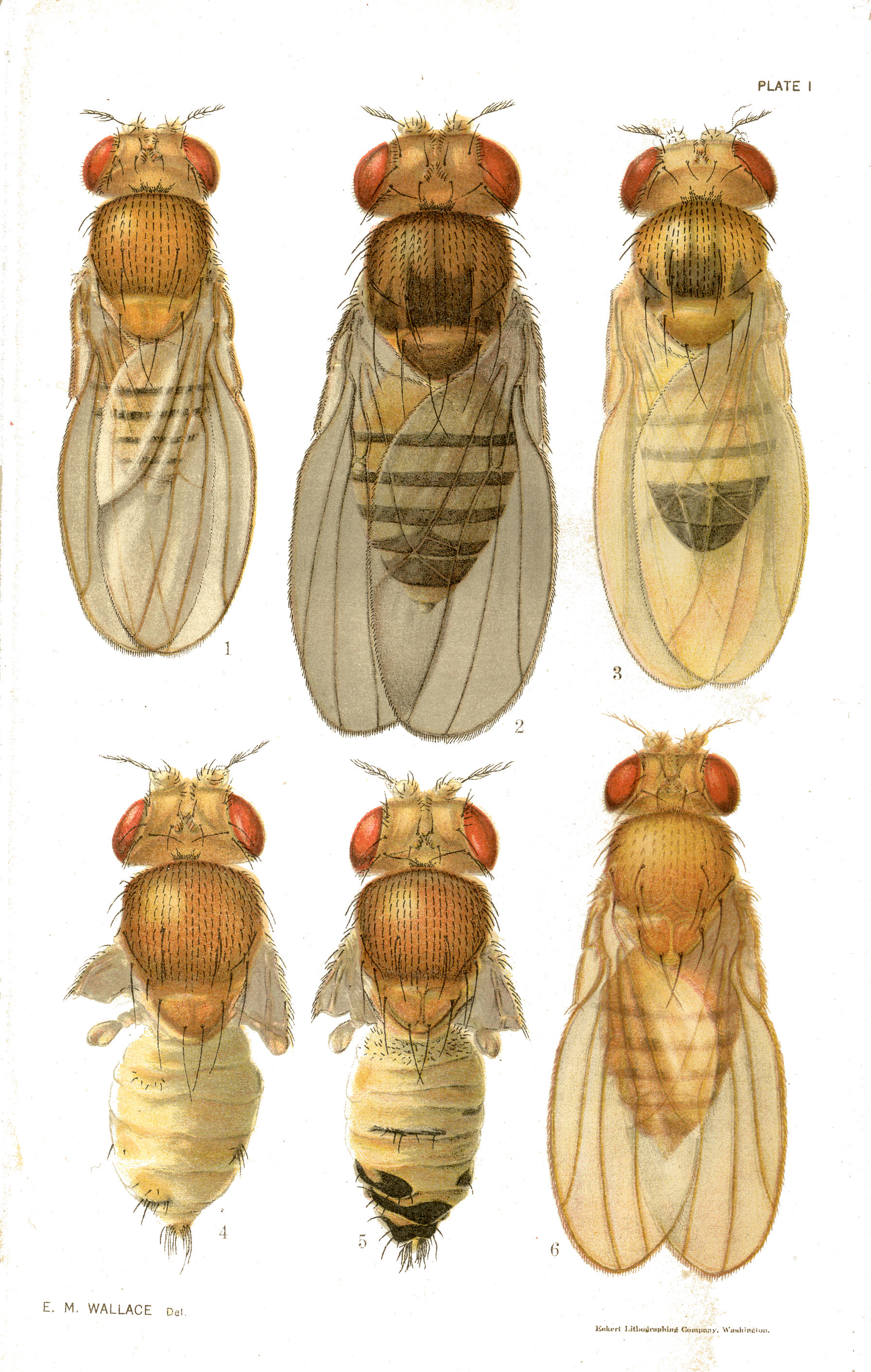
Plate I.
Fig. 1. Normal ♀.
Fig. 2. Sable ♀.
Fig. 3. Lemon ♂.
Fig. 4. Abnormal abdomen ♀.
Fig. 5. Abnormal abdomen ♀.
Fig. 6. Yellow ♀.
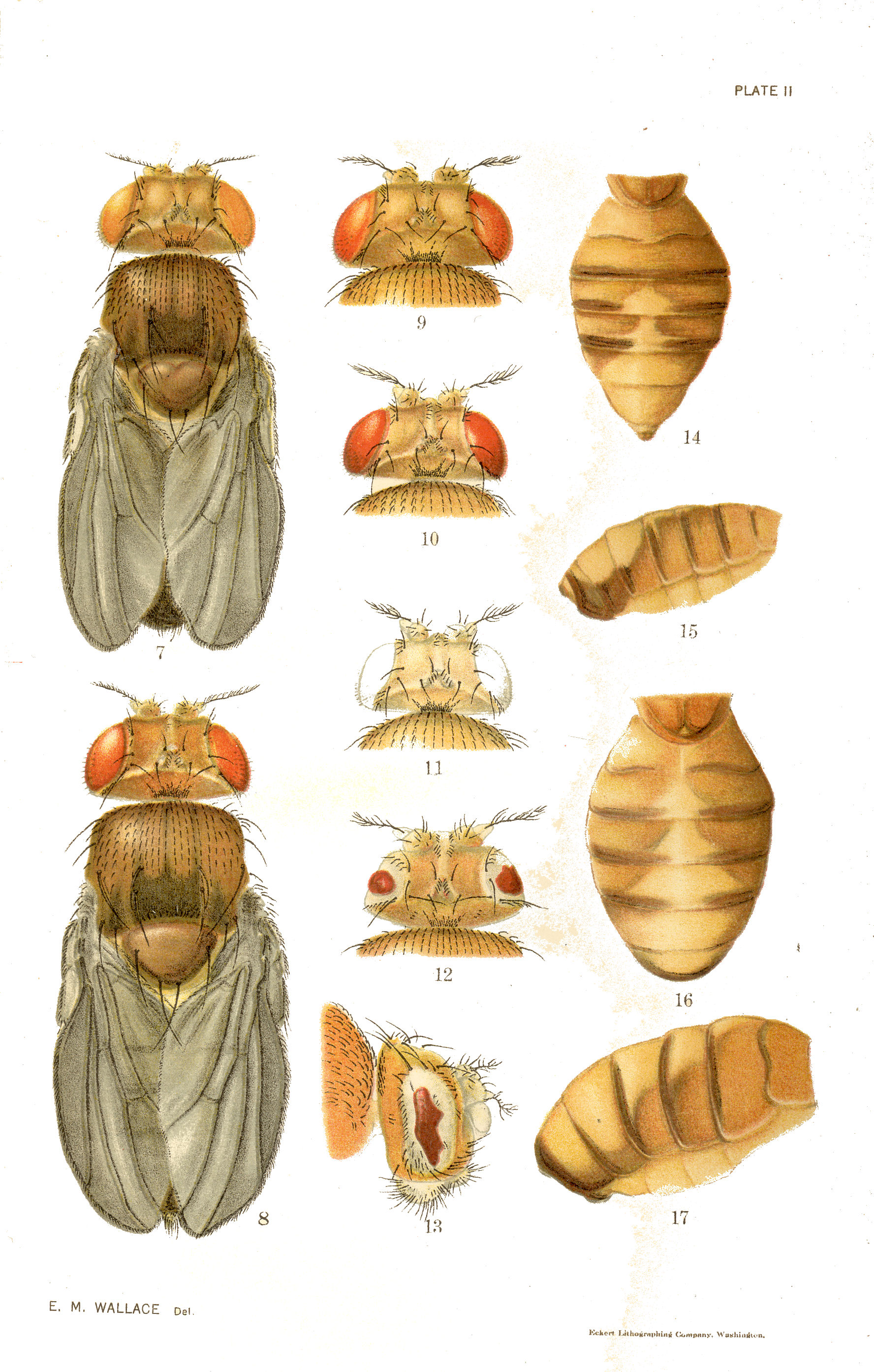
Plate II.
Fig. 7. Eosin, miniature, black ♂.
Fig. 8. Eosin, miniature, black ♀.
Fig. 9. Cherry.
Fig. 10. Vermilion.
Fig. 11. White.
Fig. 12. Bar (from above).
Fig. 13. Bar (from side).
Fig. 14. Spot ♀ (abdomen from above).
Fig. 15. Spot ♀ (abdomen from side).
Fig. 16. Spot ♂ (abdomen from above).
Fig. 17. Spot ♂ (abdomen from side).
Notes
[1] For a fuller discussion see "The Mechanism of Mendelian Heredity" by Morgan, Sturtevant, Muller, and Bridges. Henry Holt & Co., 1915.
[2] B. C. here and throughout stands for back-cross.
[3] The first dark body-color mutation "black" (see plate II, figs. 7, 8) had appeared much earlier (Morgan 1911b, 1912c). It is an autosomal character, a member of the second group of linked gens. Still another dark mutant, "ebony," had also appeared, which was found to be a member of the third group of gens.
[4] Wherever reference numbers are given, these denote the pages in the note-books of Bridges upon which the original entries for each culture are to be found.
[5] In addition to these expected F1 wild-type females there occurred 13 females of an eye-color like that of the mutant pink. So far as was seen none of the F1 males differed in eye-color from the expected eosin vermilion. Since the eosin vermilion and sable stocks were unrelated and neither was known to contain a "pink" as an impurity, these "pinks" must be due to mutation of an unusual kind. That these "pinks" were really products of the cross is proven by the result of crossing one of them to one of her eosin vermilion brothers, for she showed herself to be heterozygous for eosin, vermilion, and sable.
F1 "pink" (Ref. 51 C) ♀ × F1 eosin vermilion ♂.
Reference. Wild-type. Eosin vermilion. Eosin. Vermilion.
♀♂♀♂ ♀ ♂ ♀ ♂
59 C 59 38 43 40 15 9 16 17
In addition to the combinations of eosin and vermilion, sable also appeared in its proper distribution though no counts were made. The four smaller classes are cross-overs between eosin and vermilion. Since no "pinks" appeared the color is recessive, and the brother was not heterozygous for it.
Two other "pink" females mated to wild males gave similar results in their sons.
F1 "pink" ♀ × wild ♂.
Reference. Wild-type ♀. Wild-type ♂. Eosin vermilion ♂. Eosin ♂. Vermilion ♂.
61 C 101 33 37 9 11
These F1 flies should all be heterozygous for "pink." A pair of wild-type flies which were mated gave a 3 : 1 ratio—wild type 51 to "pink" 18. From the "pinks" which appeared in this cross a stock was made which was lost through sterility. Females tested to males of true pink were also sterile, so that no solution can be given of the case.
[6] Purple is an eye-color whose gen is in the second chromosome.
[7] The curve published by Miss Stark included by mistake 6 cultures from the succeeding generations, and these coming from only one of the lethals (lethal sb) increase its mode so that the mode of the other lethal (lethal sa) becomes submerged. If these cultures are taken out the curve shows two modes more clearly.
[8] The figures to the left in each double column correspond to the symbols above the heavy line, as, in the first example 6,219 white miniature. The similar figure to the right corresponds to the symbol below the heavy line. If no symbols are present below, as in the first example, the column to the right should be read wild-type.