DISPOSAL OF DRAINAGE FROM FIXTURES OTHER THAN TOILETS
Reading edition
When the farmhouse does not have an indoor toilet but does have a kitchen sink or other similar fixtures, the drainage can be disposed of as shown in figure 12. Even where septic tanks have been installed, it is sometimes advisable to have a second disposal field for other fixtures than the toilet, to avoid overloading the tank, especially where large quantities of laundry water are discharged at one time.
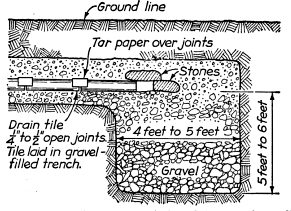
Figure 12.—Disposal of drainage from kitchen fixtures, using a line of terra cotta or fiber drain tile surrounded with gravel. One or two rock-filled pits at the end of the line increase the absorption area and are desirable where there are several fixtures or the soil is nonporous. The pits may be lined with boards or masonry laid without mortar and provided with a tight cover.
These wastes are not likely to create serious health hazards, but they become nuisances if discharged promiscuously on the ground surface. Such drainage should never be permitted on the watershed of a spring.
Coarse sand and gravel, 12 to 18 inches deep, may be placed on the bottom of the pit, to strain out small particles of solids, which might clog the pores of the soil. If, after a few years, the sand or gravel becomes clogged with solids, it should be replaced with clean materials.
If excessive quantities of grease are permitted to enter the sink drain, a grease trap may be advisable.