SEYFFERTH'S PYROMETER.
Reading edition
The thermometers and pyrometers usually employed are almost all based on the expansion of some fluid or other, or upon that of different metals. The first can only be constructed with glass tubes, thus rendering them fragile. The second are often wanting in exactness, because of the change that the molecules of a solid body undergo through heat, thus preventing them from returning to exactly their first position on cooling.
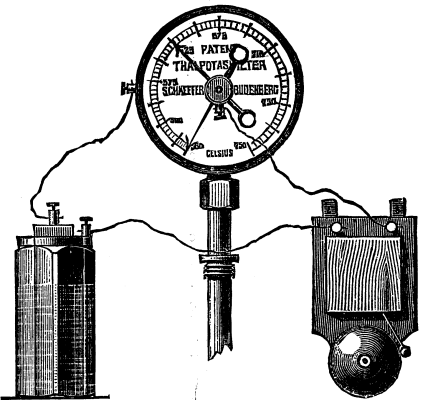
Fig. 1.--Pyrometer with Electric Indicator.
The principle of the Seyfferth pyrometer is based on the fact that the pressure of saturated vapors, that is, vapors which remain in communication with the liquid which has produced them, preserves a constant ratio with the temperature of such liquid, while, on the other hand, the temperature of the latter when shut up in a vessel will correspond exactly with that of the medium into which it is introduced.
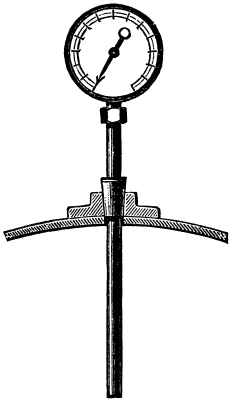
Fig. 2.--Method of Mounting by means of a cone on vacuum apparatus.
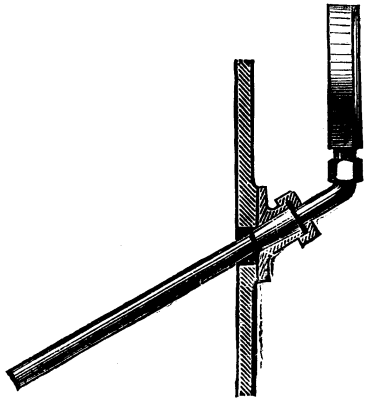
Fig. 3.--Mounting by means of a sleeve on vacuum apparatus.
This instrument is composed of a metallic vessel or tube which contains the liquid to be exposed to heat, and of a spring manometric apparatus communicating with the tube, and by means of which the existing temperature is shown. The dial may be provided with index needles to show minimum and maximum temperatures, as well as be connected with electric bells (Fig. 1) giving one or more signals at maximum and minimum temperatures. The vessel to contain the liquid may be of any form whatever, but it is usually made in the shape of a straight or a bent tube. The nature of the metal of which the latter is made is subordinate, not only to the maximum temperature to which the apparatus are to be exposed, but also to the nature of the liquid employed. It is of either yellow metal or iron. To prevent oxidation of the tube, when iron is employed, it is inclosed within another iron tube and the space between the two is filled in with lead. When the apparatus is exposed to a high temperature the lead melts and prevents the air from reaching the inner tube, so that no oxidation can take place.
Pyrometers filled with Ether.-These are tubular, and constructed of yellow metal, and are graduated from 35° C. to 120°. They are used for obtaining temperatures in vacuum apparatus, cooking apparatus, diffusion apparatus, saturators, etc. Figs. 2, 3, 4, and 5, show the different modes of mounting the apparatus according to the purpose for which it is designed.
Pyrometers filled with distilled water are used for ascertaining temperatures ranging from 100° to 265° C., 80° to 210° R., or 212° to 510° F.
Pyrometers filled with mercury are constructed for ascertaining temperatures from 360° to 750° C.
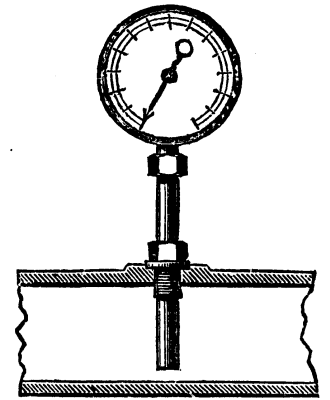
Fig. 4.--Mounting on horizontal pipes by thread on the tube.
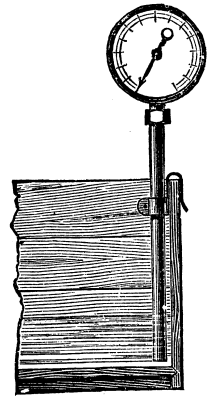
Fig. 5.--Mounting by means of a clasp in reservoirs.
APPLICATION OF THE PYROMETER IN BONE BLACK FURNACES.
The temperature necessary for the complete carbonization of the organic substances of animal charcoal is from 430° to 500° C. In order to transmit this temperature from the cylinder to the charcoal it is indispensable that the air surrounding the cylinder be heated to 480° to 550°. If the heating of the animal black exceeds 500° the product hardens, diminishes in volume, and loses its porosity. There are two methods of ascertaining the temperature of the red-hot bone black by means of the pyrometer: First, by inserting the tube of the instrument into the black. (Fig. 6, a.) Second, by finding the temperature of the hot gases in the furnaces (Fig. 6, b.). In the first case, the plunge tube should be of sufficient length to allow its extremity to penetrate to the very bottom layer of the red-hot black. This mode of direct control of the temperature of the black is only employed for ascertaining the work accomplished by the furnace, that is to say, the ratio existing between the temperature of the hot air surrounding the cylinder and the black itself. This calculation being effected, it is useless to note the differences of temperature which arise in the spaces between the cylinders of which the furnace is composed.
The position that the pyrometer should occupy is subordinate to the construction of the furnace. Fig. 6 shows the type which is most employed.
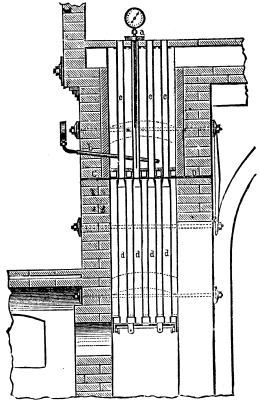
Fig. 6.--The Pyrometer mounted on a bone-black furnace.
In a furnace with lateral fire-place, cc are the heating cylinders, and dd the cooling cylinders. C D is the plate on which are mounted vertically the former, and from which are suspended the latter, b shows the pyrometer, the length of which must be such that the manometric apparatus shall stand out one or two inches from the external surface of the wall, while its tube, traversing the wall, shall reach the very last row of heating cylinders.
That the apparatus may form a permanent regulator for the stoker it is well to adapt to it an arrangement permitting of a graphic control of the work accomplished and signaling by means of an electric bell when the temperature of the gases in the furnace descends below 480° C. or rises above 550° C.
APPLICATION OF THE APPARATUS TO BRICK FURNACES AND IN THE MANUFACTURE OF CHEMICAL PRODUCTS.
The operation of heating brick furnaces is generally performed according to empirical methods, the temperature having to vary much according to the products that it is desired to obtain. It is necessary, however, for a like product to maintain as uniform a temperature as possible. These observations are particularly applicable to continuous furnaces such as annular brick furnaces, etc., in which a uniformity of temperature in the different chambers is of vital importance to perfect the baking. In these furnaces the tube of the pyrometer is inserted through one of the apertures at the top, as shown in Fig. 7. The dial is graduated up to 750°, which is more than sufficient, since the temperature of the upper part of a compartment fully exposed to the heat rarely exceeds 670° to 680° C.
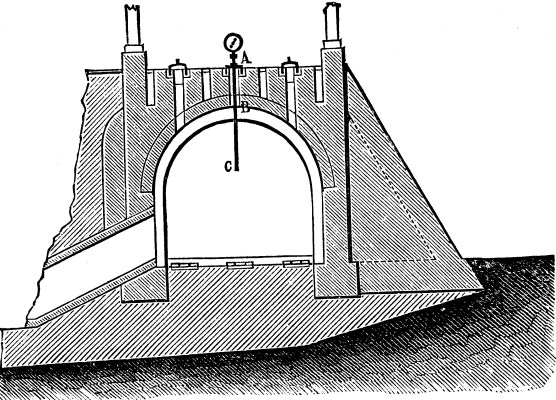
Fig. 7.--The Pyrometer mounted on a brick furnace.