ACTIVITY 3—Fortifications & Obstacles
Reading edition
Armies in the 18th Century built fortifications to make it more difficult for their enemies to attack them. At the Saratoga Battlefield, the Americans and British constructed fortifications to protect their camps.
Obstacles would be placed outside the fortifications. Sometimes they would be made by boring (drilling) holes through logs and putting pointed poles through the holes. These were called chevaux de fris (pronounced “shuh-vo-duh-free”). A quicker obstacle could be made by cutting down trees and sharpening a tangle of branches. This was called abatis (pronounced “ah-bah-tee”); it was used a great deal at our battlefield. When placed properly, these obstacles could force an enemy to attack in directions where they could not sneak up on the defender—and where the defenders were waiting for them.
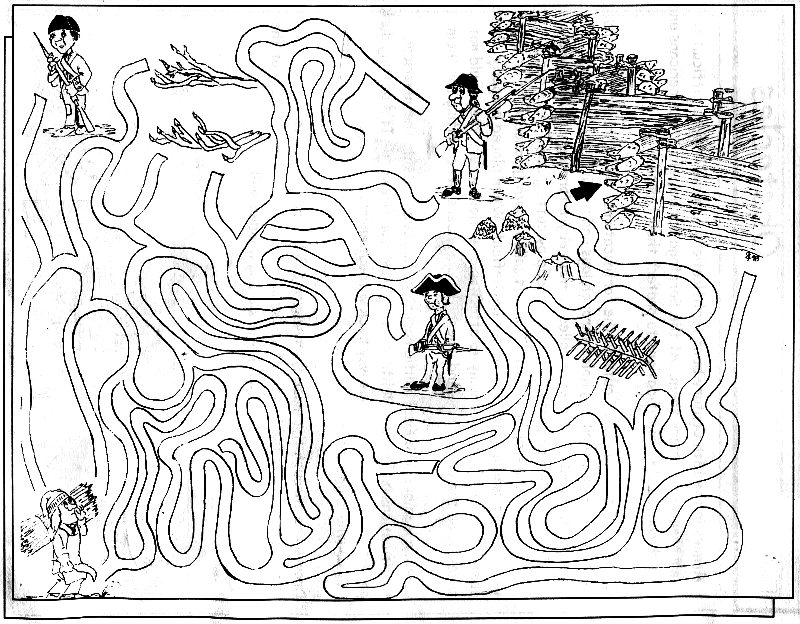
Caleb, a member of a local militia regiment, has been outside the American fortifications on Bemis Heights, cutting brush for firewood. It’s getting dark and he needs help finding his way back without encountering obstacles or guards who might shoot him by accident.
Draw a line through the maze from where Caleb is now (lower left corner of the maze: he’s got the bundle of sticks on his shoulder) to the safety of the redoubt (pronounced “re-dowt”), the zig-zag wooden wall.
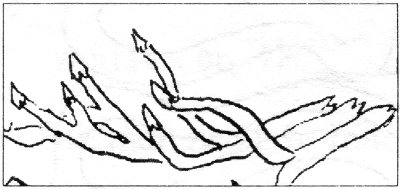
abatis
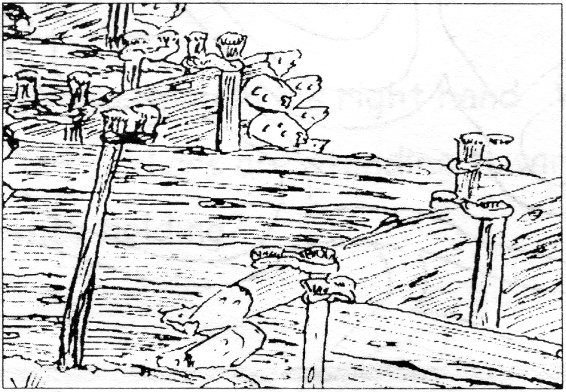
redoubt
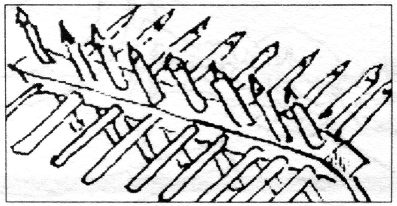
chevaux de fris
8
9