ACTIVITY 2—Food & Supplies
Reading edition
Armies in the 1700’s were not always welcomed by people in the areas they marched through, as these armies often took food and other items from civilians. Sometimes they paid for these supplies, sometimes they did not. Sometimes, they might only promise to pay. Here in America, even if the soldiers paid for supplies, it might be with Continental money, which wasn’t often accepted by everyone.
When soldiers were officially ordered by their army to collect what was needed, it was called requisitioning [“reh-kwi-zi-shen-ing”] When soldiers took items without permission, it was called theft (stealing). Civilians usually felt it was theft, whether the soldiers had the army’s permission or not.
Soldiers’ wives and even families sometimes followed the armies. These “camp followers” were often forced to forage—look around for whatever supplies they could find—without permission, as the armies did not give them everything they might need. For them, it was a matter of survival.
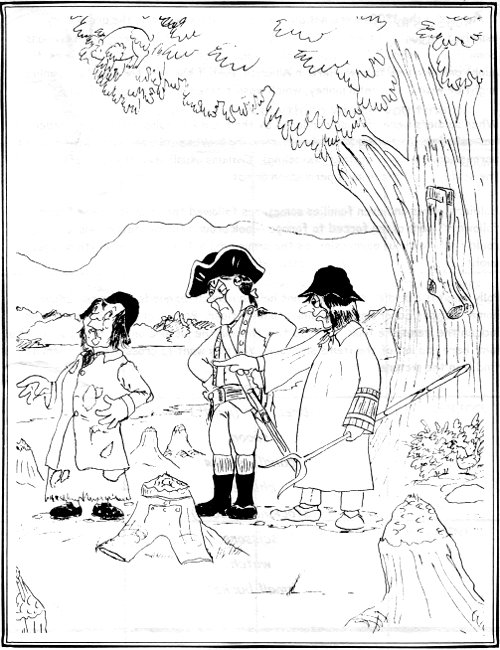
Polly Sloat is a soldier’s wife who has helped herself to goods at Farmer Edgar’s home. Farmer Edgar has complained to an officer. Polly is crafty, though, and has hidden the items she took. Can you find them in the picture on the next page? As a hint, here is a list of the items she took. You may want to cross off each item as you find it in the picture.
a pig
breeches (pants)
spoon
candle sticks
chicken
stockings (socks)
scissors
watch
small bucket
6
7