major plant communities of saguaro
Reading edition
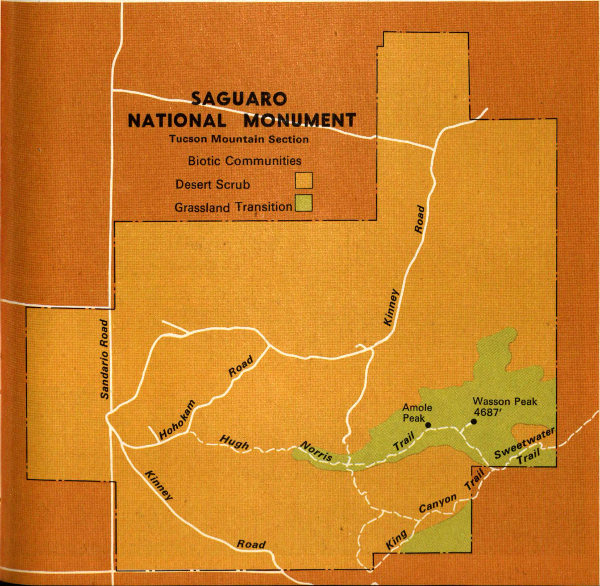
SAGUARO NATIONAL MONUMENT
Tucson Mountain Section Biotic Communities
Desert Scrub
Grassland
Transition
In any region where a great range of altitude exists, the vegetation grows in a continuum of overlapping but recognizable zones. Climate being the major controlling factor of this zonal distribution, the plants of each band grow higher on south-facing slopes than on cooler, moister north slopes. In Saguaro the major plant communities roughly correspond to altitudinal bands—with the desert at the lower, drier levels, and the transition through grasses and 50 shrubland to forest community occurring with increasing altitude (and increasing rainfall). Timberline—the boundary between high mountain forests and the alpine meadows and barrens—does not exist in Saguaro, where trees clothe the highest peaks.
The fauna of each community is made up of animals adapted to the climatic conditions and the available food, cover, and water. In Saguaro, some animals, such as the desert kangaroo rat and the cactus wren, are restricted by their life requirements to a narrow belt; others, such as the gray fox and great horned owl, are more adaptable and live in all the major plant communities.
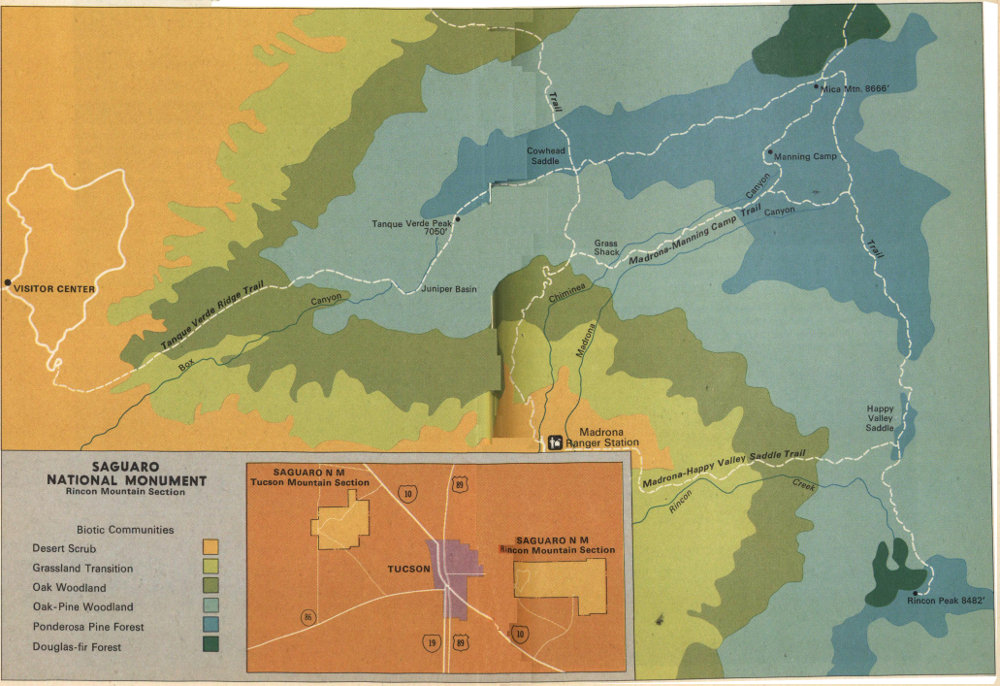
SAGUARO NATIONAL MONUMENT
Rincon Mountain Section Biotic Communities
Desert Scrub
Grassland Transition
Oak Woodland
Oak-Pine Woodland
Ponderosa Pine Forest
Douglas-fir Forest
52
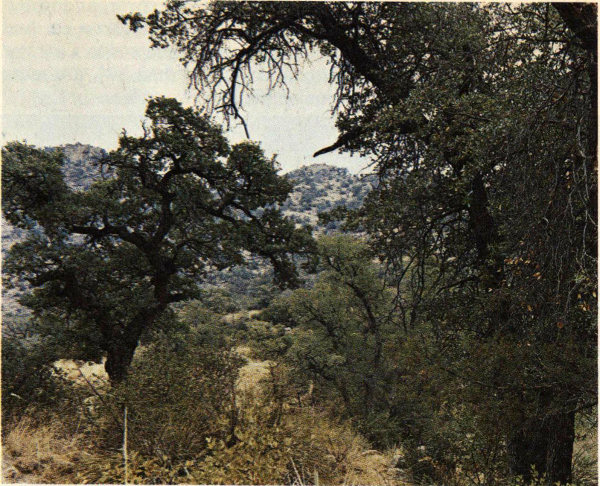
The Open Oak Woodland has scattered trees associated with many plants of the Grassland Transition.
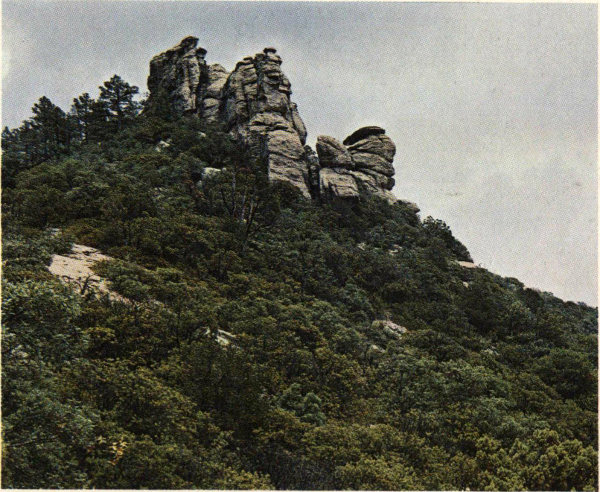
The Oak-Pine Woodland, from 4,500 to 7,000 feet, occupying a slightly cooler, wetter environment than those below, is broken by open glades and grassy hillsides.
53
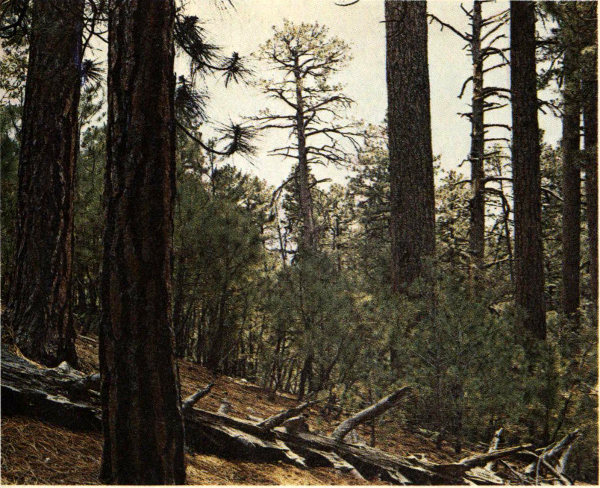
The Ponderosa Pine Forest, unlike the Oak-Pine “pygmy woodland,” has tall trees growing in clear, open stands. It covers much of the Rincon Mountains above 6,000 feet.
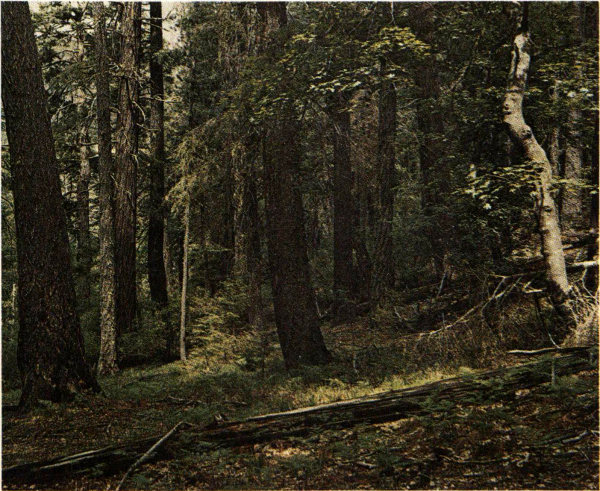
The Douglas-fir Forest, limited to the higher northern and northeastern slopes of Mica Mountain and the north side of Rincon Peak, often contains aspens and white firs.
54
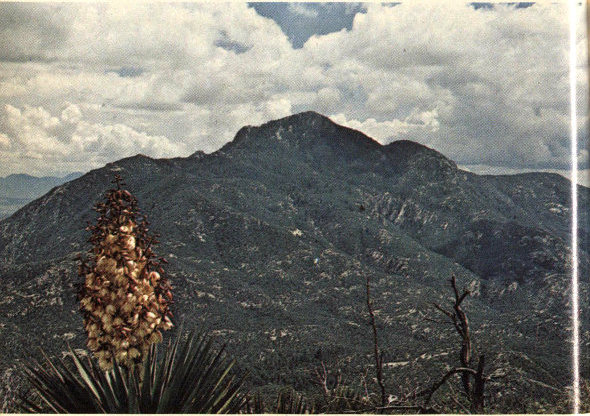
Spanish dagger, with Rincon Peak in the background.
55