ROWLANDSON THE CARICATURIST. (continued 3)
Reading edition
'The wit and invention of this artist places him above all others in the personification of low scenes of humour. Among his earliest productions were those series of groups entitled Effects of Flattery, Effects of Hope, &c., which were illustrated by scenes of truly dramatic excellence, and upon which might well be built farces for the stage which could not fail to delight the town. His Babes in the Wood, Raffling for a Coffin, The Club of Quidnuncs, as pieces of original humour, have never, perhaps, been equalled. Had this low humourist studied drawing and been temperate in his habits, such was the fecundity of his imagination and perception of character, that he might have rivalled even Hogarth. His style, always sufficiently careless, latterly even outraged the outré. Yet there were those, and men of taste too, who insisted that the humour of his pieces was augmented by the extravagance of this defect.'
The name of Henry Wigstead will be met with pretty constantly in the course of this volume; his designs approach the nearest to those of Rowlandson as far as regards humorous qualities, a cultivated sense of beauty and grace, and a decided grasp of character, without that violent divergence from the semblance of humanity as ordinarily recognised, to which failing the old-fashioned caricaturists were somewhat over-addicted, as we are inclined to suspect; but, like many worthy amateurs of his period, his own hand lacked the skill to express all that his eye saw and his taste appreciated. In the guise of a skilled translator of crude ideas, our Caricaturist, with ready ease, and that dexterity which was peculiarly his own, came to the rescue most efficiently, and his etchings and scrapings have preserved many a capital design, due to the esteemed Wigstead, which otherwise would have been lost; the sterling excellence to be detected in many of these pictorial scenes and satires, renders the action meritorious, which has enabled posterity to judge how far those praises which partial contemporaries lavished upon all these non-professional humourists, were justified by the actual merits of their subjects. We have already recounted certain jocose and whimsical traits in the disposition and career of this genial son of merriment; we have nothing to add but the brief notice from the obituary of The Gentleman's Magazine for October 1800, which informed many a congenial friend of the loss society had sustained, and made many a heart feel saddened by the stroke which had fallen on the kindliest and best of comrades.
'At Margate, where he went for the benefit of his health, Henry Wigstead, Esq., of Kensington, an active magistrate for the county of Middlesex.[14] He was a man of considerable talent, and contributed to the celebrity of the Brandenburgh theatre, both by his pen and his pencil. He was a good caricaturist, which naturally made him more enemies than friends. He was hospitable and generous to a degree of extravagance. He married the daughter of Mr. Bagnal, of Gerard Street, with whom he had a good fortune, and by whom he leaves two children, a son and a daughter.'
Another eminent humourist, in whose praise contemporaries were enthusiastic, but whose biography no one has taken the pains to collect, was John Nixon, the facetious Nixon, as he is generally entitled in the memoirs and scribblings of the period; beyond the kindly appreciative anecdotes of this worthy, set down by Angelo, barely any record exists. Pleasant John Nixon was an Irish factor, and resided for many years in Basinghall Street, where, over his dark warehouses, he and his brother Richard kept 'bachelors' court.' The elder brother, John, however, was the principal mover in all the convivialities and Bacchanalian revels celebrated in this old-fashioned dwelling; 'which was not too large for comfort, and yet sufficiently spacious in the first floor, at least, to spread a table for twelve. Who that were witty, or highly talented of the days that are gone, who, loving a social gossip, over a magnum bonum of capital wine, had not been invited to his hospitable board?' The Nixons were wealthy, and had the felicity to be well enabled to enjoy life according to their own liking.
John Nixon, besides possessing a well-deserved reputation for social qualifications of no ordinary calibre, was a man of taste and talent, and an amateur performer in various arts, his accomplishments being multifarious.
As a man of business he was highly respected, as a man of pleasure universally sought, and as generally esteemed. Sedulous in his commercial pursuits, in the counting-house his maxim was that there is time for all things, and he found leisure daily, when the ledger was closed, to open his heart to the enjoyments of friendly intercourse. 'I have no objection to placing my knees under another man's table,' the social convive would say, 'but I had rather seat him at my own.'
Nixon was at home at the Beef-steak Club, where he was made honorary secretary and providore, a well-bestowed distinction, since he was a first-rate connoisseur of wines, and a capital judge of a rump of beef. 'My lord duke,' he would say to the noble president, 'he who would invite Jupiter to a feast on a steak, should select a prime cut of little more than half-an-inch thick, from a Norfolk-fed Scot,' and this, says Angelo, became statute law in that glorious club.
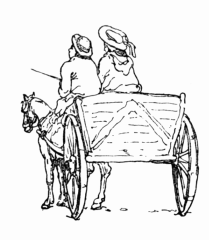
Among other pursuits for which Nixon obtained notoriety among the haut ton, he was known for his fondness for the stage. An excellent amateur performer, he shone as one of the stars of the celebrated private theatricals held at Brandenburgh House, when in the possession of the Margrave and Margravine of Anspach. It was under the splendid roof of these entertainers, on an occasion when all the amateurs were celebrating their host's anniversary, that Nixon was honoured with his cognomen of 'the well-bred man.' On his late arrival in a piebald uniform, his blue dress-coat, with the gold buttons of the Beef-steak Club, being considerably powdered, the wearer, who was not in the least disconcerted or embarrassed, related, on taking his seat at the table, a droll tale of adventures on the road, to the hearty amusement of the company, while the servants were in convulsions of laughter, as Nixon described how the post-horses were knocked up, and he was obliged to complete his journey and his engagement in the cart of a baker, where he got completely dusted with flour; whence the Margravine facetiously dubbed him the 'well-bread man.'
John Nixon's original talent for the humorous department of the graphic art was well known; as an honorary exhibitor at the Royal Academy for many years, his grotesque scenes such as Bartholomew Fair, and village fêtes, abounding with character, diverted the public. Angelo, in recording the comical celebrity of his friend, mentions, 'Nixon had the reputation of introducing, through his inventive faculty, that most amusing species of caricature, the converting spades, hearts, clubs, and diamonds into grotesque figures and groups, which he designed with a whimsicality of appropriateness, that Gillray, or even George Cruikshank himself, might have envied.'
The list of amateur artists, who enjoyed Rowlandson's friendship, and whose designs received the advantages which his assistance was able to lend them, will not be complete without the name of Collings, well known in the regions of Covent Garden, and some time editor of the Public Ledger, who was a lively satirist, both with his pencil and his pen. 'When Boswell's Tour to the Hebrides was ushered forth, it was celebrated by as many crackers and squibs as the Burning of the Boot (Lord Bute). Among other assailants, the impenetrable Bozzy had to expose his front to this lampooner's shafts. A whole series of designs were published by this witty wag, the heroes of which, or rather the knight and the esquire of his drama, were Johnson and Boswell. The knight, it is likely, never saw them; and, as for the squire, his love of notoriety rendered him, if not vain of, at least not vulnerable to, these successive attacks. [15]
'The Laird of Auchinlek, indeed, had a large collection of these satires upon "self and company," as he used facetiously to inscribe them, and boasted at the judge's table that his History would be more copiously illustrated than even the Lord High Chancellor, Clarendon's.'
Caleb Whiteford, another crony of the caricaturist, was an excellent judge of paintings (especially works by the old masters) and was generally known as a fervent admirer of George Moreland's pictures; he was the reputed discoverer of 'cross readings,' [16] and a dabbler in verse. It was he who, as everyone will remember, received such a complimentary notice in the postscript to the mock epitaphs known as Goldsmith's Retaliation, that there were not wanting those who contributed to the flattery by suspecting that the additional epitaph was due to Caleb's own pen.
Old Caleb Whiteford, the witty wine-merchant and 'connoisseur in old masters,' knew everyone of any reputation, and was well-received at the various hospitable boards to which allusions have been made in the course of these discursive notes; he was a welcome guest at numerous convivial gatherings of the artistic and literary coteries of the period, whose jovial meetings and good cheer have been suffered to pass into oblivion, unrecorded by the scribes who shared 'the cakes and ale,' in the palmy days of sociable festivities and kindly familiar intercourse.
'Mr. Ephraim Hardcastle, citizen and drysalter,' as he whimsically elected to style himself—in sober fact, W. H. Pyne, the artist to whose literary ventures we have already referred—has on occasions come to the rescue in his Wine and Walnuts, or after-dinner Chit-Chat. Here is the report of a conversation concerning Rowlandson, which is supposed to have taken place between Whiteford and the caricaturist's jolly friend Mitchell, culled from the Chit-Chat in question, which was published in 1823.
'Well, Master Caleb Whiteford [17] was on his way up the hill in the Adelphi to his post at the Society of Arts, and who should he stumble upon at the corner of James Street, just turning round from Rowlandson's, but Master Mitchell, the quondam banker of old Hodsoll's house. He had, as usual, been foraging among the multitudinous sketches of that original artist, and held a portfolio under his arm, and as he was preparing to step into his chariot, Caleb accosted him: "Well, worthy sir; what! more choice bits—more graphic whimsies to add to the collection at Enfield, eh? Well, how fares it with our friend Roly?" (a familiar term by which the artist was known to his ancient cronies).
'"Why, yes, Master Caleb Whiteford, I go collecting on, though I begin to think I have enough already, for I have some hundreds of his spirited works; but somehow there is a sort of fascination in these matters, and—heigh—ha—ho—hoo!" (gaping) "I never go up—up—bless the man, why will he live so high? It kills me to climb his stairs"—holding his ponderous sides—"I never go up, Mister Caleb, but I find something new, and am tempted to pull my purse-strings. His invention, his humour, his—his oddity is exhaustless." "Yes," said Whiteford, "Master Roly is never at a loss for a subject, and I should not be surprised if he is taking a bird's-eye view of you and me at this moment, and marking us down for game. But it is not his drawings alone; why, he says he has etched as much copper as would sheathe a first-rate man-of-war; and I should think he is not far from the mark in his assertion.'
'"Yes," replied the banker, "he ought to be rich, for his genius is certainly the most exhaustless, the most—the most—no, Mister Caleb, there is no end to him; he manufactures his humorous ware with such increasing vigour, that I know not what to compare his prolific fancy to, unless it be to the increasing population....
'"Roly has promised to come down. I would have taken the rogue with me, only that he is about some new scheme for his old friend Ackermann, there, and he says he must complete it within an hour. You know Roly's expedition."'
James Heath, also a caricaturist, and a delineator of sporting sketches, was another of Rowlandson's intimates; a Good-Friday jaunt, or an Easter excursion, was for many years indulged by these worthies, who with genial Bannister, the comedian, and their faithful chronicler, Henry Angelo, the fencing-master, annually kept up the practice of proceeding on a jovial expedition at this season, some distance from town, Staines, Windsor, or some similar starting-point, being the rendezvous selected by these congenial spirits.
The list of Rowlandson's friends would be incomplete without the name of George Moreland, who, with all his eccentricities and shortcomings, was another favoured child of fortune, whose inheritance was natural genius; and though the fairy gift was turned to the very worst account, dragged through the mire of dissipation, and sordidly made to supply the means of that social degradation, which lowered the possessor beneath his worst associates, the power remained in the poor shattered wreck, and did not forsake him until, in a state of premature decay, he perished miserably before his easel.
A sketch of Moreland's career is by no means called for in this place. His erratic disposition was not without its whimsical traits; sufficient anecdotes exist of the wayward painter to prove that, beyond his happy qualifications for his art, there was found in his composition a spice of pleasantry that did not always degenerate into buffoonery or horse-play, with occasional flashes of wit and sprightly allusions which, to say the least of them, were remarkably apposite. Perhaps too much stress has been laid upon Moreland's deficiencies, while his more agreeable traits have been somewhat slighted. Putting aside the numerous anecdotal sketches of the painter, we have only to record, in this place at least, that a friendship existed between the subject of this volume and the man to whose sketches those of our caricaturist frequently offer a suggestive resemblance, it being actually difficult to distinguish between the unsigned etchings and drawings of the two artists, in the walk practised by Moreland. The similarity of their talent is more evident perhaps in the larger hunting scenes, and the studies of female heads, tinted in colours, than in any other direction; although, with the pencil or the chalk, their rustic landscapes, from the freedom of their respective handlings, are remarkably alike, both in the choice of subjects and the spirit of the execution.
As we have already noticed, the most characteristic portrait of Moreland, and the one which appears to offer us the most life-like representation of the capricious painter, is due to the skill of Rowlandson. We are informed, in a note which we gather from Angelo, that Moreland, in his various flittings round the metropolis in dread of creditors, when he took sanctuary with any intimate whose residence he happened to remember, gave his colleague the caricaturist the opportunity of exhibiting his friendship by harbouring him in his lodgings under one of these emergencies, which were of tolerably frequent occurrence. 'Rowlandson, the artist, lodged at Mrs. Lay's printshop, a few doors from Carlton House, Pall Mall. One morning when I called upon him, we heard a loud knock at the street door, and looking out of the window, he said, "There's Colonel Thornton——knock again! He may be at this fun three months longer; he is come for his picture, but Moreland, having touched fifty pounds in advance, is never at home to him now. He's in the next room, which he has for painting. You had better go and do the same with him, and drink gin and water; he'll like your company, and make you a drawing for nothing." This was in the middle of the day.'
We are inclined to think that the most memorable of the caricaturist's associates was James Gillray, whose age was within a year of that of Rowlandson; it is a coincidence that two unrivalled geniuses, and in such eccentric walks, should have been both contemporaries, and steady-going friends, never clashing in the course of their respective careers. In this work various allusions will be noticed to the intimacy which subsisted between these remarkably gifted men, each perfectly original in his fashion, and both possessing singular points of resemblance in their characters.
We content ourselves with mentioning that they occasionally entered into friendly alliances, but that, when pitted against each other, they had more regard for friendship than for party warfare, which they utterly despised, except as an opening for the exercise of their skill.
Gillray and Rowlandson were, perhaps, never properly appreciated in their generation, the higher capacities which distinguished both these spoiled pets and wilful sons of Momus, were comparatively slighted, if not completely ignored; all that was vulgar, wayward, and wild in their dispositions was fostered and enlarged upon; their errors, and their occasional lapses into downright coarseness, were, according to the lights of the day, flattered and encouraged as flights of the raciest humour; the crude, careless, and commonplace, received too frequently a hearty and undeserved recognition, which their ambitious efforts failed to inspire; the very productions they scorned were exalted, while, when they felt the magic fire warming their imaginations, the results were misunderstood too commonly.
Their keen intellects, and their satiric sense of the almost constant unfitness of things as they found them, the gnawing of the vanity of vanities, ever present, must have made their temperaments peculiarly sensitive to such slights as the want of discrimination in their admirers which occasionally shocked and continually disheartened them—evils which the want of culture, or consideration on the part of their audience, continually brought in their train.
It is no matter of surprise that the enchantments which they saw before them at the opening of their careers, vanished all too soon, and left them chilled, and inclined to become misanthropes; the very genius, which promised to be a delight to themselves and to mankind, proving a bitter curse.
When the satirists, who felt alike and were sympathetic on most points, met, it seems their intercourse was the reverse of boisterous—in fact, they were rather inclined to be depressed, or, at least, they shrunk within themselves with a more marked contrast to the conduct which should, it was supposed, distinguish notorious pictorial humourists, and became, perhaps, a trifle more retired and undemonstrative than ordinary—possibly to the disappointment of the less-informed habitués, who evidently thought they were defrauded of a diversion, and had a right to anticipate, these gentlemen being in a sort graphic jesters by profession, that in private life they would feel themselves impelled to play off a little whimsical jugglery for the entertainment of the company. These professional tricks belonged to the lesser lights, and we warrant that Woodward, Collings, Newton, and the smaller following of the eccentric art, were infinitely more amusing to the taste of their auditors.
It is certain Gillray was grave and self-contained, and Rowlandson, in his degree, participated in his friend's humour, slightly at first, perhaps, as a passing depression, and, later in life, with an intensified and growing grimness, and a gathering gloom, as friends dropped off, and age crept on, and the caricaturist's world was materially altered for him, as his work seemed over.
'For years Gillray occasionally smoked his pipe at The Bell, The Coal-Hole, or The Coach and Horses; and, although the convives, whom he met at such dingy rendezvous, knew that he was that Gillray who fabricated those comical cuts, the very moral of Farmer George and Boneyparty, of Billy Pitt and Black Charley, he never sought, like that low coxcomb Moreland, to become king of the company. He neither exacted, nor were they inclined to pay him, any particular homage. In truth, with his associates, neighbouring shopkeepers and master manufacturers, he passed for no greater wit than his neighbours. Rowlandson, his ingenious compeer, and he, sometimes met. They would, perhaps, exchange half-a-dozen questions and answers upon the affairs of copper and aquafortis; swear all the world was one vast masquerade, and then enter into the common chat of the room, smoke their cigars, drink their punch, and sometimes early, sometimes late, shake hands at the door, look up at the stars, say "It is a frosty night," and depart, one for the Adelphi, the other to St. James's Street, each to his bachelor's bed.'[18]
Our friend Angelo, a bright chirpy spirit, who retained his liveliness unimpaired, let us hope, to the last of his long days, not having any pretensions to be a genius, was exempt from the sinister tendencies which too frequently attend its possession. Although, as he confesses in his Memoirs, not precisely the 'rose' himself, he had lived near it, and his association with men of an admittedly high type, as far as gifts of fancy and versatile talents were concerned, had taught him to observe the drawbacks not unusually allied to distinguishing attainments; and he records a few sober axioms for the enlightenment of those who have been excluded from his privileges.
'Those who at a distance contemplate characters like these, so professedly eminent for invention, wit, and satirical humour, naturally suppose their society must be universally sought; and that such must, of necessity, be the life and soul of the convivial board. Men, however, who see much and speculate but little, know better. Among the dullest in company could be pointed out those who are "wondrous witty" by themselves; and this not from pride of their superior faculty to please, but from a constitutional shyness or modest desire to avoid notice or applause—or from indolence, or actually from conscious dulness when absent from the study and the desk, when without the pencil and the pen.
'Peter Pindar was witless, even over his bottle, with his most intimate cronies. Anthony Pasquin was sour, and not prone to converse. Churchill was a sulky sot. Butler was lively neither drunk nor sober—a choice companion only when "half gone;" hence, as the witty Duke of Buckingham observed, "he was to be compared to a skittle, little at both ends, but great in the middle!" Burton, who had no less humour than Cervantes, and the learning of a whole university to boot, was neither a cheerful companion, nor endurable to himself. A hundred more could be named, whose aptitude and promptness to discover the ridiculous side of human action, has astonished the grave; and yet, these men who have thus exposed folly to the laughter of mankind, have been themselves the dullest dogs alive. Gillray was always "hipped," and at last sunk into that deplorable state of mental aberration which verifies the couplet, so often quoted, wherein the consanguinity of wit to madness is so eminently proved, to the comfort of those who thank God for their own stupidity.'
Perhaps the most constant friend, and certainly the best adviser, our caricaturist retained to the grave was his principal publisher, Mr. Rudolph Ackermann. We have mentioned this gentleman last among the personal associates of Rowlandson, as his untiring services only ended with the life of the artist.
The name of Rudolph Ackermann, who died March 30, 1834, is worthy of more than a passing mention; he has been cited as one of the first natives of Germany who, by far-sighted and active occupation, accompanied by philanthropic exertions for the benefit of his fellow-creatures, raised the character of his nationality to a high point of esteem in other countries. An account of his energetic and charitable career appeared in the Didaskalia, Frankfurt-am-Main, No. 103, April 13, 1864, and was adopted by the writer (W. P.) of an excellent notice upon the well-known publisher, in the pages of Notes and Queries, (4th S. iv., August 7 and 14, 1869). The son of a coach-builder, Rudolph Ackermann was born April 20, 1764, at Stolberg, in the Saxon Hartz. We are told 'his sympathies with the misfortunes of others were so warmly excited by the misery seen around him in the famine of 1772–73, that he frequently in later years excused the zeal which he showed on other occasions, by pictures of the distress that he experienced when he, at the age of eight years, was employed for hours daily in distributing food and money.' In 1775 his father removed to Schneeberg. Rudolph received his education in the local school till he was fifteen years old, and showed a decided predilection for literary pursuits; but his father's pecuniary position precluding the choice of a profession to more than one of his sons, he entered the paternal factory. An elder brother, Frederick, instructed Rudolph in the use of the drawing instruments, and he busied himself more willingly in the offices than in the workshops, gaining an acquaintance with details, which proved subsequently as important to his advancement as were his visits to Dresden, the towns of the Rhine, and Hueningen near Basle. He afterwards went to reside in Paris, where he became the friend of Carrossi, the most esteemed designer of equipages of his time, and Rudolph, who proved his best pupil, acquired sufficient knowledge as a practical draughtsman to push his way in the world. From Paris he proceeded to London in pursuit of fortune, and to turn his talents to account: he was delighted to find that, in the metropolis, carriage-building was one of the most successful occupations, and that the exercise of his acquirements would be handsomely rewarded; so for several years, until 1795, he was employed in furnishing the principal coachmakers with designs and models for new and improved carriages. The models of the state coach, built at the cost of nearly 7,000l., for the Lord-Lieutenant of Ireland in 1790,[19] and that for the Lord Mayor of Dublin in 1791, exhibited his taste and skill. In 1805, the preparation of the car that served as a hearse at the funeral of Lord Nelson was entrusted to him; and during the years 1818–20 the patent for a moveable axle for carriages engaged much of his attention.
It is not, however, in this connection that we have to consider Ackermann, but rather in his relation to the arts as a print-seller and publisher. On his marriage with an English lady, with commendable prudence, he became desirous of establishing a business which would, in case of his own premature decease, prove a suitable provision for his family. He commenced the print trade at 96 Strand, and soon after he secured a large apartment, 65 feet long, 30 feet wide, and 24 feet high, at 101 Strand (erected upon the courtyard of Beaufort House), which had been the drawing academy of William Shipley; it had then passed to Henry Pars, and later passed into the hands of the Radicals, and became notorious as the British Forum, when it was used by John Thelwall for his oratorical lectures. These meetings exceeding the bounds of reasonable political discussion, the Government instituted prosecutions, and the Forum ceased to exist. On the ministerial interference, October 1794, Mr. Ackermann was enabled to secure the lease of the premises, and the room was again used as a school for drawing. In 1796 the entire business was removed to 101 Strand. The drawing academy seems to have flourished; and in 1806 there were three masters engaged for figures, landscape, and architecture, and some eighty pupils were resorting to the school, when the requirements of the founder's business, as a publisher, printseller, and dealer in fancy articles, papers, medallions, and artist's materials, had so increased, that the convenience of this room as a warehouse became of more consideration than the continuance of the school.
During the revolutionary era, and when French emigrants were numerous in this country, Mr. Ackermann was one of the first to find a liberal employment for the refugees; it is said that he had seldom less than fifty nobles, priests, and ladies engaged upon screens, card-racks, flower-stands, and other ornamental work.
His inventive faculties and his disposition to take up with new ideas were marked by many improvements he introduced. At the beginning of the century he was one of the first who arrived at a method of waterproofing paper, leather, woollen stuffs, and felted fabrics, in which he obtained for some time considerable traffic; this branch was conducted in a factory he established at Chelsea for the purpose.
He further contrived an apparatus which was at least ingenious, both in theory and intention. To counteract Napoleon's endeavours, by bridling the newspapers, to keep the French nation in complete ignorance, as was actually the case, of events that were disastrous to him, Mr. Ackermann bethought himself of reviving, for the annoyance of the enemy, the use made by the French in 1794–96 of aërostation in L'Entreprenant and the Télémaque; and he contrived a simple mechanism which would, every minute, detach thirty printed placards from a packet of three thousand. Three such parcels were attached to balloons thirty-six inches in diameter, made of gold-beater's skin, and committed to the air in the summer of 1807. The success of the experiment was proved at Woolwich in the presence of a Government commission. With a southerly wind the balloons passed over Salisbury and Exeter, and several of the placards, as a proof of the practical working of the machinery, were returned to London from various parts of the country.
Mr. Ackermann was one of the first inhabitants of London who adopted the use of gas as a means of artificial light to his premises.
The establishment of lithography in England was another example of his patient and persevering expenditure of money and time in the introduction and improvement of a novelty. 'He was not content with translating Alois Senefelder's treatise in 1819, but made a journey to the residence of that inventor, in order to exchange the results of their theory and practice before producing in 1822 a Complete Course. The business relations between leading artists and Mr. Ackermann enabled him to induce them to touch the lithographic chalk; so in 1817, through Prout and others, the process became an acceptable, or rather a fashionable mode of multiplying drawings; lithography, for want of such advantages, when introduced into this country by Mr. Andréc, of Offenbach, in its original and rude state, had failed to make its way, and all its subsequent success may be attributed to Mr. Ackermann's personal emulation of the advancement it made in Munich.'
In 1813, upon receiving an authentic account from Count Schönfeld of the misery produced in Germany by Napoleon's wars, particularly in Saxony, culminating in engagements at Leipzig (during the 'five days' October 15–19, 1813), 'Mr. Ackermann temporarily abandoned the oversight of his own multifarious occupations, in order to exert all his strength in procuring aid for the sufferers. With the help of the Duke of Sussex, he formed a committee in Westminster and in the City; the first obtained a Parliamentary grant of 100,000l., and the second furnished a larger sum in private contributions. This was the occasion on which the use of Whitehall Chapel was granted for a musical performance in aid of the subscription. For two years, Mr. Ackermann undertook the task of corresponding with the German committees for distributing these sums, examining into the urgency of the appeals for help, and apportioning the fund. The members of "The Westminster Association for the further relief of the sufferers by the war in Germany," were anxious to commemorate their sense of the pains, prudence, and probity Mr. Ackermann had displayed, by presenting him with a testimonial in silver; this costly acknowledgment, together with a vote of thanks proposed to be inscribed on parchment in gold, he had the modesty to decline, begging that all thanks for his services might be comprised in a few autograph lines from the Archbishop of Canterbury.'
In his business relations we are told, 'the discretion which he exercised in choosing his subordinates, and the liberal manner in which he repaid their services, enabled him to produce several books which deserve the notice of all those who know how to appreciate the merit of these illustrated works in colour, relatively to others of similar pretension, both of that time and of the present day.
'A long list might be formed by enumerating the literary, musical, and scientific men of more or less eminence, who appeared as his coadjutors, and who enjoyed his intimacy. Several of them owed to him a helping hand, either in their first efforts or in their declining fortunes. To the end of his days he retained a strongly-marked German pronunciation of the English language, which gave additional flavour to the banters and jests uttered in his fine bass voice; but he wrote in English with great purity on matters of affection and business long before middle life.
'From early in 1813, every Wednesday evening in March and April was given to a reception, half a conversazione and half a family party, in his large room, which then, as at other times, served as an exhibition of English and foreign books, maps, prints, woodcuts, lithographs, drawings, paintings, and other works of art and ornament, besides the leading Continental periodicals. There on those evenings, by annual invitation,[20] amateurs, artists, and authors were sure to find people whom they knew, or wanted to know. Many an introduction grew to an acquaintance; and the value of such evenings to foreigners was often gratefully acknowledged by travellers, who, with any distinction in art or literature, were welcome without any other introduction.
'His active assiduity and his spirited enterprise were suspended by a weakness of sight, commencing from his charitable exertions in 1814, which made his repose at Camberwell, and afterwards at Ivy Lodge in the Fulham Road, first a matter of prudence, and later on of necessity. In the spring of 1830 he experienced an attack of paralysis, and never recovered sufficiently to exert his intelligence in business. He removed for a change of air to Finchley, but a second stroke produced a gradual decline of strength in the honourable old man; and March 30, 1834, saw an end put to the hearty kindness, constant hospitality, and warm beneficence which had been inseparable from his unquestioned integrity. He was interred on April 9 in the family grave, in the burial-ground of St. Clement Danes.'[21]

The little that remains to be recorded of the Caricaturist is best expressed by the kindly writer, a friend of nearly half a century's standing, who contributed an obituary notice of the artist to the Gentleman's Magazine (June 1827).
It is not generally known that, although a considerable proportion of Rowlandson's humorous political and social etchings are in many instances strongly tinctured by an absence of refinement in taste, and are roughly executed—the means simply of tiding over some pressing necessity, or providing funds for further relaxations—his early works were characterised by painstaking and conscientious application; and his studies from the human figure at the Royal Academy were scarcely inferior to the productions of Mortimer, then the most admired and proficient among the Academic professors.
From the versatility of his talent, the fecundity of his imagination, his command of composition, in which he equalled the greatest masters, the grace and elegance with which he could design his groups, added to the almost miraculous despatch with which he supplied his patrons with perfectly original compositions upon every subject, it was a theme of regret at his decease, that he had not sufficiently valued his reputation, to which it has been suspected he was thoroughly indifferent. It was universally admitted in his own days that, had he pursued the course of art steadily, he might have become one of the foremost and most celebrated historical painters of the English school. His style, which was purely his own, was unquestionably original. His bold, fluent, and spiritedly turned outlines were thrown off with easy dexterity, with his famous reed-pen, in a tint composed of vermilion and Indian-ink, the general effect was rapidly washed in, so as to produce an effective chiaro-oscuro, and the whole was coloured in tender tints with a most harmonious arrangement of colour.
His manner, though slight in almost every instance, is highly effective; and it is known on indubitable authority that the presidents of the Royal Academy, Sir Joshua Reynolds and Sir Benjamin West, whose manners were most foreign to those of the Caricaturist, individually asserted their conviction that many of his drawings would have done honour to Rubens, or to the most esteemed masters of design of the old schools.
For many years he was too indolent to seek new employment, and his kind friend, and it may be added with justice, his best adviser, Mr. Ackermann, the respected and leading publisher of Rowlandson's period, supplied him with ample subjects for the exercise of his talent. The many works which his pencil illustrated are existing evidence of this, and books containing impressions from Rowlandson's etchings continue to fetch high prices, and are industriously sought after. Many suggestions for plates to enliven new editions of The Travels of Dr. Syntax, The Dance of Death, The Dance of Life, and other well-known productions of the pen of the prolific Coombe, the Defoe of the eighteenth century, will remain esteemed and lasting mementoes of his graphic humour.
It should be repeated that his reputation had never reached its full maturity in the life-time of Mr. Ackermann, his friend, patron, and publisher. The inimitable water-colour drawings of Rowlandson, of which he had a large collection, were justly appreciated by connoisseurs, and his folios have often been viewed with admiration and delight by the many professional artists and amateurs who frequented Mr. Ackermann's conversazioni at his library at the old house in the Strand. No artist of the past or present school, perhaps, ever expressed so much as Rowlandson, with so little effort, or with so evident an appearance of the absence of labour.
The artist's remains were followed to the grave by the two friends of his youth, John Bannister and Henry Angelo, and his constant friend and liberal employer, Rudolph Ackermann.