POCKET GOPHERS
Reading edition
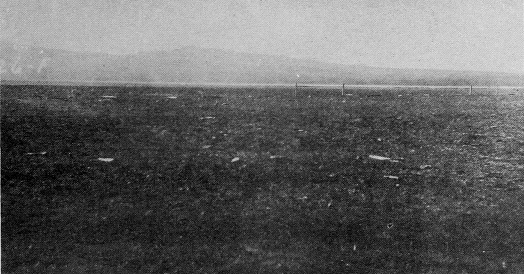
Typical mountain range land, heavily infested with pocket gophers—Davis Lake, Oregon—before treatment.
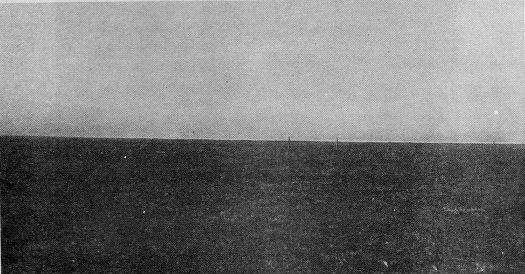
Same area one year later after pocket gophers were brought under control and native grasses had had a chance to reseed.
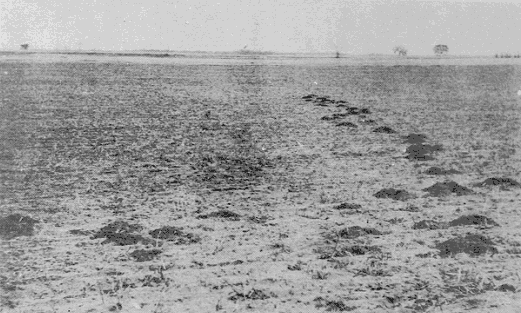
Farm land infestation—Texas. Mounds represent pocket gopher workings.
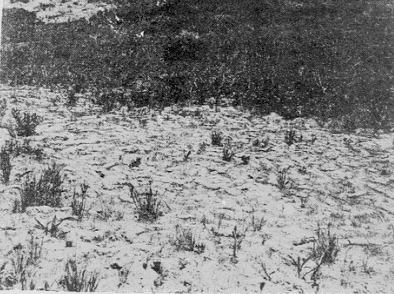
Mountain meadow in Utah. Picture taken just after snow had melted in spring. Ridges of dirt show extent of pocket gopher operations under snow in winter.
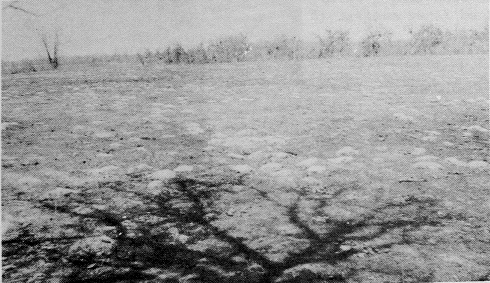
Pocket gopher infestation—Louisiana.
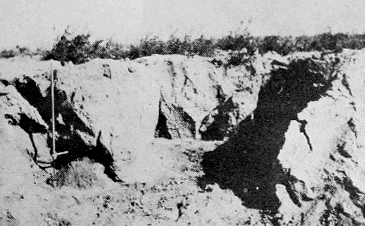
Break in terrace caused by pocket gophers burrowing through embankment.
Pocket gopher infestation along highway.
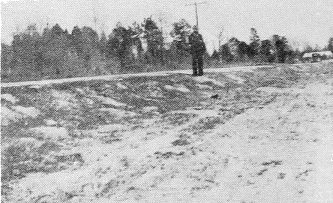
Flood water starting through a pocket gopher burrow passed under a cement highway,—
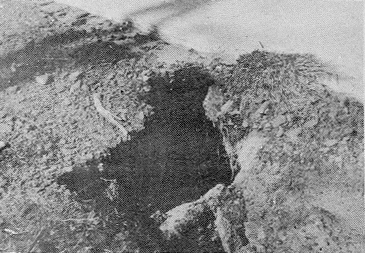
Flooded the barrow pit on the opposite side of road, and poured into farmer's field, leaving a deep wash as a monument.
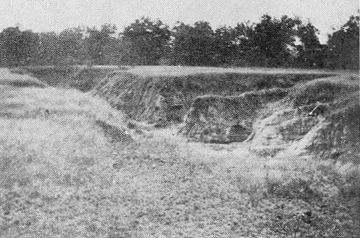
Damage starting from pocket gopher hole in irrigation canal bank—
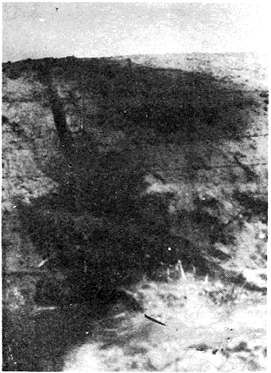
Soon results in bad breaks causing expensive repairs and loss to crops through failure of irrigation water.—
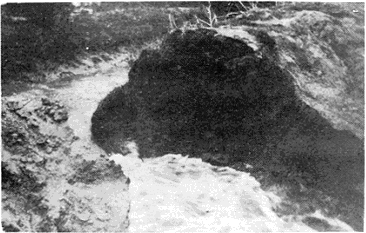
And is often responsible for start of gullies.
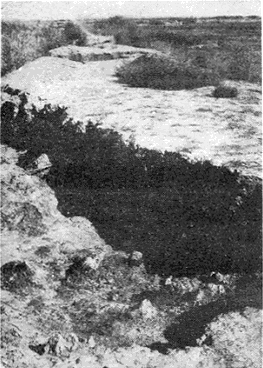
KANGAROO RATS
Kangaroo rats abound on millions of acres of desert and semidesert range and farm lands. On ranges that have been overgrazed, kangaroo rats must be controlled before reseeding can be accomplished, as they gather and store practically all of the seed within a radius of 100 yards from their burrows.
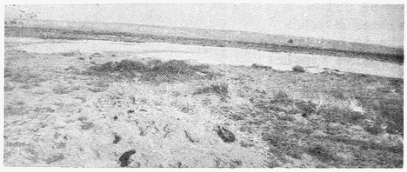
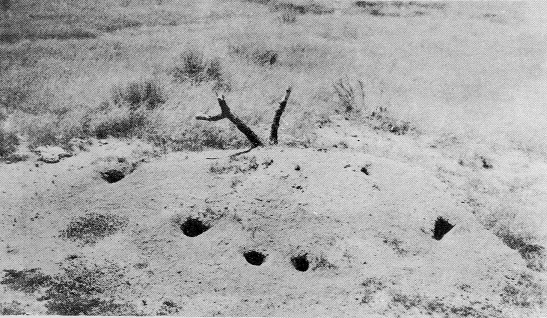
Close-up of typical kangaroo rat den.
Showing plot protected from both livestock and kangaroo rats. Plot showing grazing by kangaroo rats—livestock being excluded.
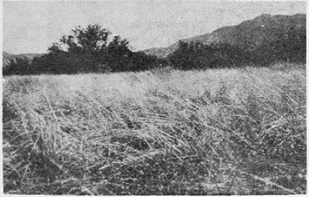
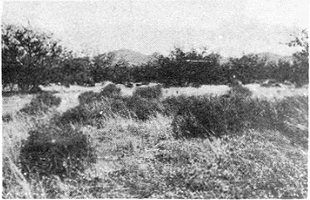
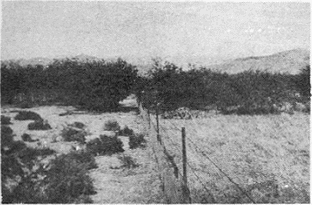
Area on left of fence subject to grazing by both livestock and kangaroo rats. On right of fence shows protection from both livestock and rodents. Open range—note lack of native grasses.
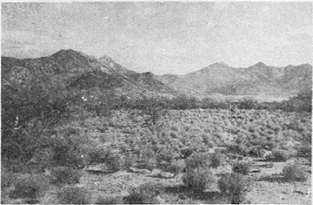
Kangaroo rat den around mesquite bush. Note lack of vegetation.
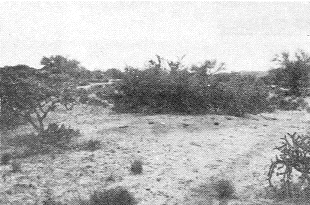
Typical kangaroo rat infestation.
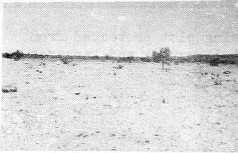
Trail leading from kangaroo rat den to feeding ground.
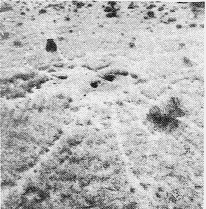
Close-up of feeding ground. Note rat pellets and close cropped grass.
Kangaroo rat den before excavating,
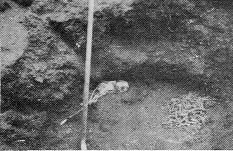
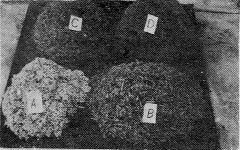
Cross section of den, showing storage chambers and stored grass seeds. Seed heads taken from one kangaroo rat den— A—Burrow grass seed. B—Indian wheat heads. C—Weed seeds. D—Unidentified grass heads.
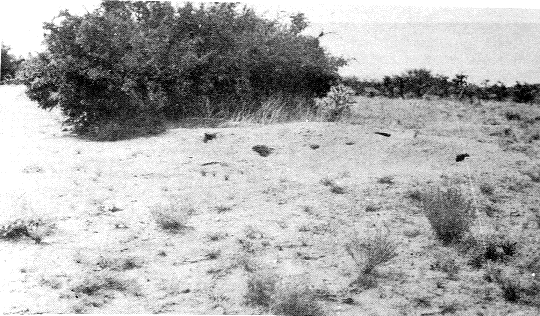
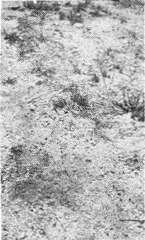
Kangaroo rat den before treatment (July 1, 1935), Papago Indian Reservation, Sells, Arizona.
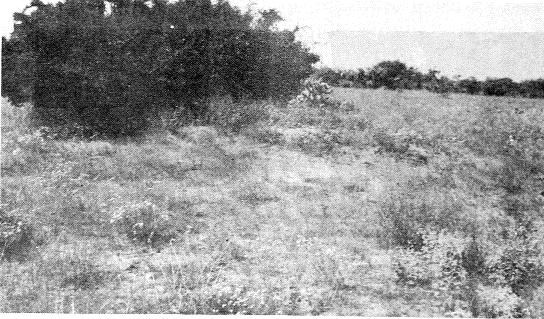
Same location as above two months later after eliminating the kangaroo rats.
RABBITS AND HARES
Reforestation is greatly hampered by rabbits in cut-over areas where intermittent fires have killed all seedlings over a period of years. In many areas the snowshoe hare will eat off as many as 40 percent of the seedlings and damage up to 70 percent of them.
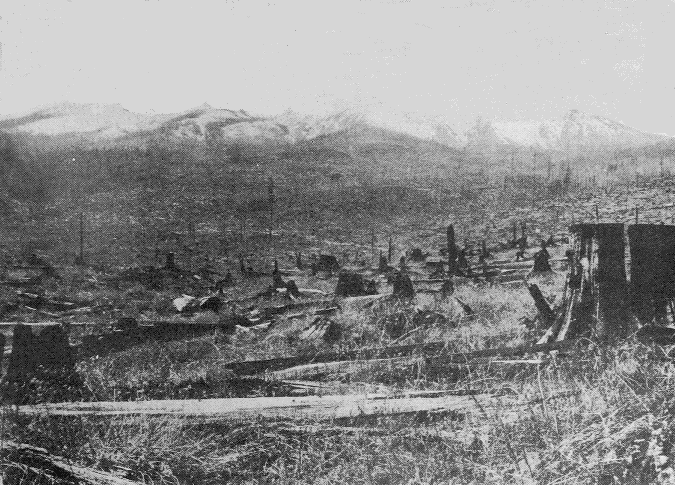
Rabbit-infested reforestation area—Olympic National Forest, Washington.
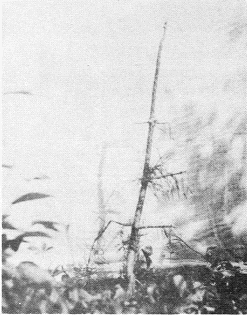
Damage to jackpine caused by snowshoe hares—Dukes, Michigan.
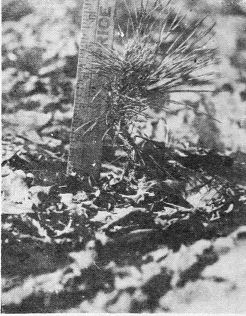
Healthy Norway pine. Snowshoe hare damage to pine and spruce seedlings at this stage of growth consists of nipping the terminal bud.
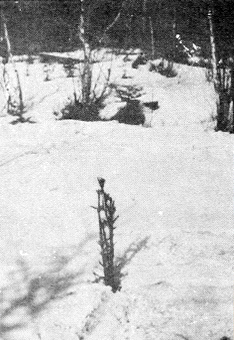
Spruce tree with lateral branches removed by snowshoe hares—Price County, Wisconsin.
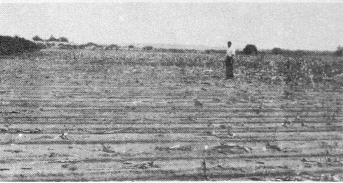
Typical damage to cornfield by jack rabbits—Texas.
PORCUPINES
On many national forest areas the control of porcupines is imperative from the standpoint of timber reproduction. This is especially true on cut-over areas and where fires have destroyed all seedlings. Porcupines will often destroy up to 90 percent of the seedlings and, through continued girdling of young trees 15 to 25 years of age, will destroy all chance for commercial timber for many years to come.
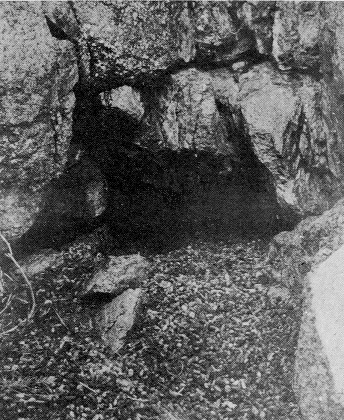
Typical porcupine den. Picture taken on Pike National Forest in Colorado, in area where porcupine control work was conducted under the Forest Service E.C.W. program.
Porcupine at work girdling pine tree.
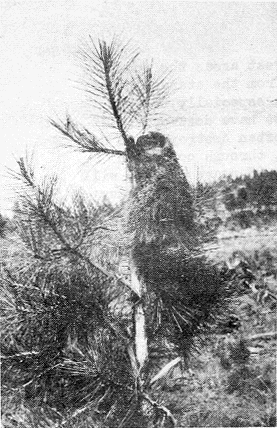
Showing one of 114 young pines damaged by porcupines on 15 acres. Additional evidence on cut-over areas.
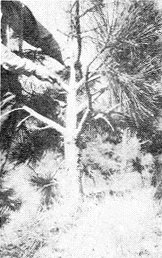
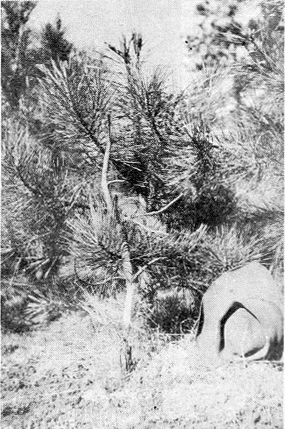
Porcupine at foot of tree probably 15 years old, which it has damaged beyond hope of recovery.
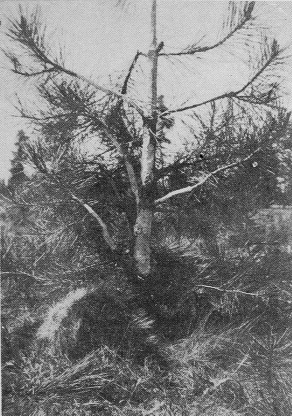
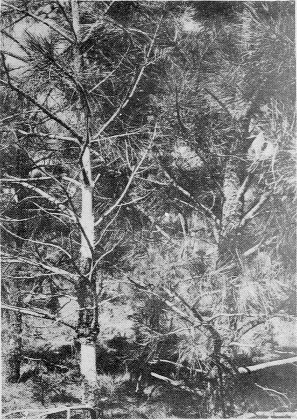
Complete girdling by porcupines about 12 inches above ground.
A TYPICAL E.C.W. CREW
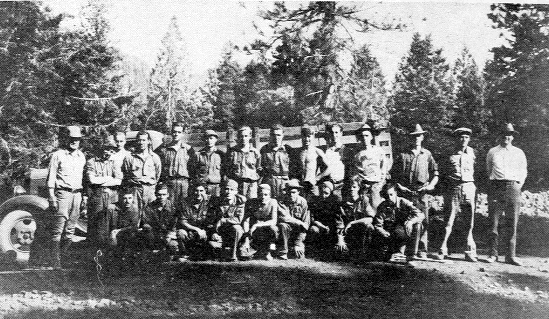
E.C.W. crews have treated almost 12,000,000 acres of rodent-infested lands during the past three years, have done it carefully and well, and in so doing have been taught valuable lessons in wildlife management.
Transcriber's Note
Original publication appears to have been a typewritten document which was imaged and then printed.