Control Work Illustrated
Reading edition
The illustrations on the following pages tell better than would volumes of written words, the story of rodent damage and of cooperative work to reduce this damage.
PRAIRIE DOGS
Four years experimental study in northern Arizona showed that prairie dogs destroy 60 percent of the wheat grass, 99 percent of the dropseed, and 83 percent of the grama grass, or 80 percent of the total potential annual production of forage. The possible destruction of four-fifths of the forage, or even a far smaller proportion, is serious enough at any time, but in periods of drought it is likely to be calamitous.
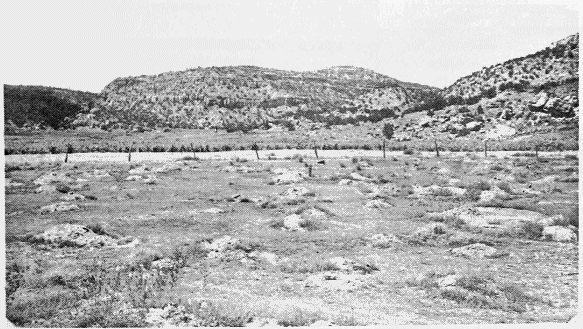
The following pictures show typical prairie dog infestation.
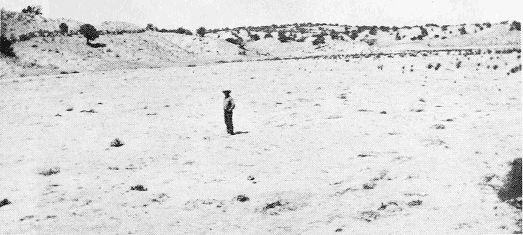
Prairie dog mounds on abandoned Indian farm, Southern Navajo Reservation, Arizona.
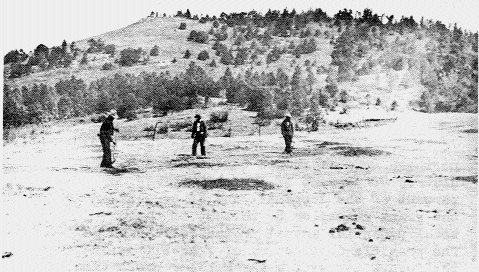
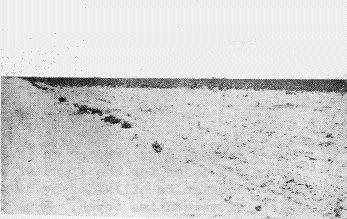
Area practically denuded of grass by prairie dog— Wescalero Indian Reservation, New Mexico.
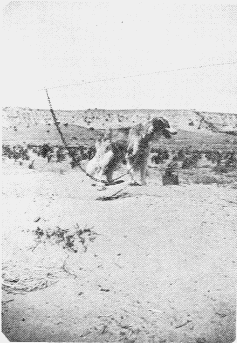
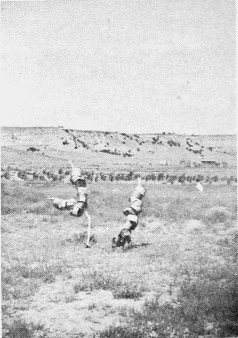
Dogs on leash and tin cans rattling in the wind are some of the primitive methods employed by Indians in futile attempt to save crops from ravages of prairie dogs in the Southwest.
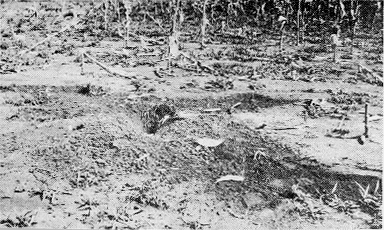
Indian cornfield totally destroyed by prairie dogs.
Cotton and corn fields damaged by prairie dogs in northwest Texas.
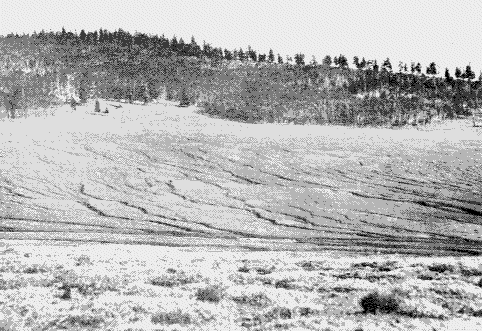
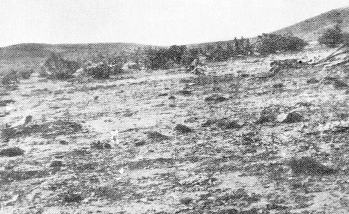
Side of basin denuded by prairie dogs—devastation being rapidly completed by erosion. Cochetopa Forest, Colorado.
Prairie dogs prepare an ideal condition for the start of sheet erosion on hillsides by denudation of vegetative cover. Note lack of vegetation. Erosion once started is accelerated by other factors as shown on page 11.
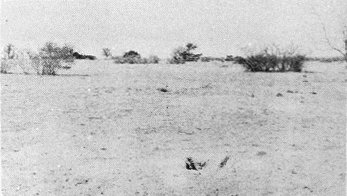
Overgrazing, wind, and flood—
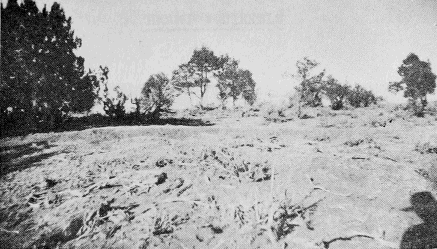
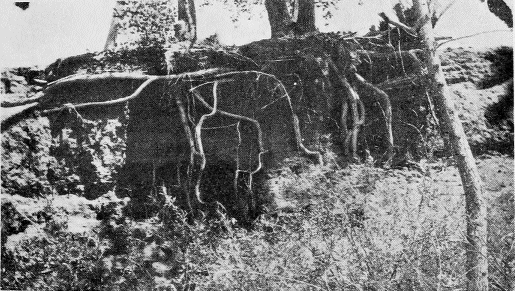
resulting in gullies and arroyos.
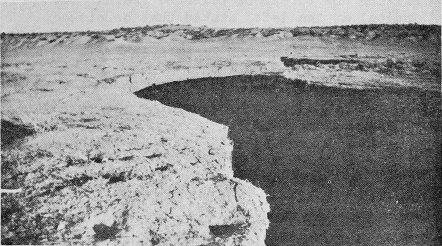
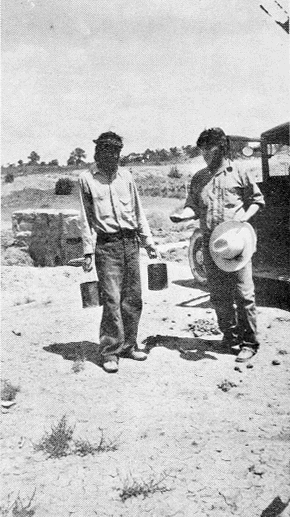
Interpreter explaining to Indian farmer in Arizona how to expose poisoned grain. The Indian, at the left, stated that he picked up 180 dead prairie dogs over an area estimated at about 200 acres around his 48 acre farm.
GROUND SQUIRRELS
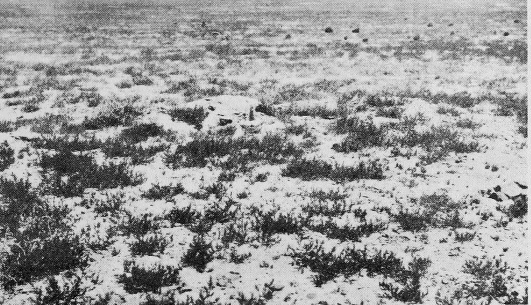
Ground squirrel damage. Semidesert type country. Note squirrel at mouth of burrow.
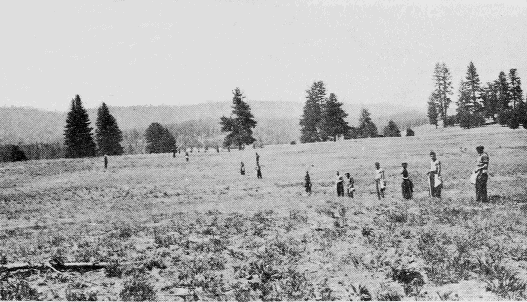
E.C.W. ground squirrel control crew—Payette National Forest, Idaho.
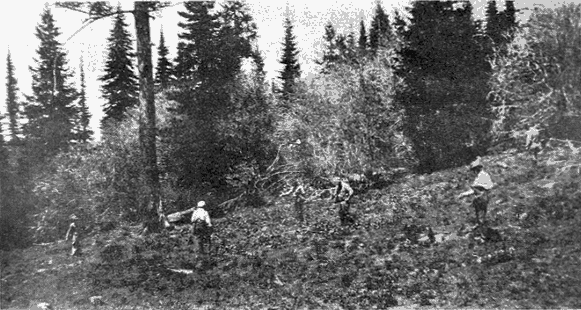
E.C.W. crew at work on Umatilla National Forest, Washington.
Ground squirrel burrows become waterways during a rain and are the beginning of this type of erosion.
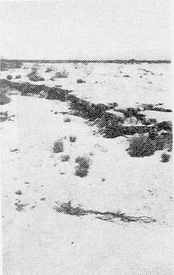
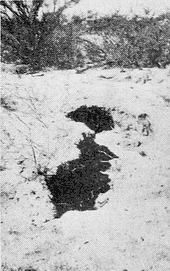
Papago Indian Reservation, Arizona.