Part 2 — LEERIE
Reading edition
Leerie is the name the children in Scotland call the man who lights the street lamps.
“Leerie” means lighter.
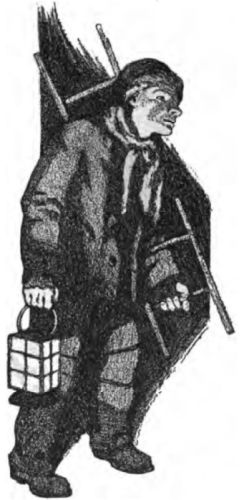
Every evening, just as it begins to get dark, the lamplighter goes through the town.
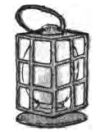
He carries a ladder and a lantern.
When he comes to a lamp-post, he places his ladder against it.
Then he climbs up and lights the lamp from his lantern.
So through the town he goes lighting all the lamps.
Often a crowd of boys follow him, calling,
“Leerie, Leerie, light the lamp! Leerie, Leerie, light the lamp!”
Sometimes this makes the lamplighter angry.
He drops his ladder and chases the boys.
Just in front of Louis’s home was a lamp-post.
Every evening as soon as it began to get dark Louis ran to a front window.
There he would watch for the lamplighter.
He could not follow Leerie with the other boys and he never teased him.
When the lamplighter came Louis nodded and smiled to him.
He liked to watch Leerie light the lamp before the house.
I hope Leerie always looked up and saw the lonely little lad.
Perhaps he did and nodded to him.
Or, better still, perhaps he waved his bright lantern to Louis before he hurried down the street to light the other lamps.
Louis thought it must be great fun to be a lamplighter.
I think he told his nurse about it.
Perhaps he said, “Nursie, don’t you think it must be fine to be a lamplighter? I do.”
“But why, my child?”
“Well, you see, if we had no lamplighter, the town would all be dark.
I don’t like the dark.
It is good to make the town light for all little children.
Just think, Nursie, of coming into a street and finding it all dark.
Then as Leerie passes along with his ladder and his lantern, it all becomes light.
I had rather be a lamplighter than anything else in the world.”
“But, laddie, you told me the other day that you wanted to sail to the Far-away land.”
“So I do, Nursie.
But don’t you think I might go around, just once, and light the lamps with Leerie?”
Perhaps some night Leerie did take the little boy around with him.
Perhaps he often let him light the lamp before the door.
I hope so. Don’t you?