Chapter II · OPHIDIAN REPTILES, OR TRUE SNAKES. (continued 2)
Reading edition
It is generally agreed that Rattlesnakes only attack Men in self-defence, but it is at all times a dangerous neighbour, and it is important to know how to keep them at a distance in countries where they abound. The Pig is an excellent auxiliary in obtaining this result. In the west and south of America, when a field or farm is infested by these ferocious reptiles, it is usual to put a Sow with its young brood there, and the Snakes, it is said, will soon be eaten up. It appears that owing to the fatty matter which envelopes the body of this animal, it is safe from the venemous bite. Besides, it likes the flesh of the Snakes, and eagerly pursues them. According to Dr. Franklin, when a Pig sees a Rattlesnake, it smacks its jaws, and its hairs bristle up; the Snake coils itself up to strike his enemy; the Pig approaches fearlessly, and receives the blow in the fold of fat which hangs upon the side of its jaw. Then he places a foot on the tail of the Snake, and with his teeth he begins to pull the flesh of his enemy to pieces, and eats it with evident enjoyment.17 The Pig is not the only animal employed to destroy Rattlesnakes. Dr. Rufz de Lavison, who has long resided in the French Antilles, and who has since been manager of the Jardin d'Acclimatation, of Paris, has published a highly interesting work, in which he relates the very important services which certain birds, especially the Secretary-bird, or Serpent-eater (imported from South Africa), render by destroying Rattlesnakes in the West Indies. We have said that the Crotalidæ are some of the most dangerous of any Snakes; let us mention some facts which show the frightful power of their venom. A Crotalus, about three feet in length, killed a Dog in about fifteen minutes, a second in two hours, and a third in about four hours. Four days after he bit another Dog, which only survived thirty seconds; and another, which only struggled four minutes. Three days afterwards it bit a Frog, which died at the end of two seconds; and a Chicken, which perished at the end of eight minutes.
An American, named Drake, arrived at Rouen with three live Rattlesnakes. In spite of the care which he had taken to preserve them from cold, one of them died. He put the cage which contained the other two near to a stove, and excited them with a small stick, to assure himself that they were alive and in health. As one of the Snakes made no movement, Drake took it by the head and tail and approached a window to see if it was dead; the animal turned its head quickly, and bit the unfortunate man on the back of his left hand; as he replaced it in the cage he was bitten anew in the palm of the same hand. "A doctor! a doctor!" cried the unhappy man. He rubbed his hand upon some ice which was close by, and two minutes after, he bound the wrist tightly with a cord. Four hours later a doctor arrived, and cauterized the wound, but alarming symptoms soon appeared. Syncope, noisy respiration, scarcely any pulsation, and involuntary evacuations followed; the eyes closed, their pupils contracted; the limbs became paralyzed, and the body cold. Drake died at the end of nine hours.
Some experiments made by a friend of Dr. Bell seem to present different results. This gentleman had received a living Rattlesnake from America, intending to try the successive effects of its bite upon some Rats. He introduced one into the cage with the Snake: it immediately struck the Rat, and the latter died in two minutes. Another that was placed in the cage ran to the farthest corner, uttering cries of distress. The Snake did not attack it immediately; but after about half an hour, on being irritated, it struck the Rat, which, however, exhibited no signs of being poisoned for several minutes; nor did it die for about twenty minutes after the bite had been inflicted. A third Rat, remarkably large, was then introduced into the cage, and exhibited no signs of terror, nor did it seem to be noticed by its dangerous companion: after watching some time, the gentleman retired to bed, leaving the Rattlesnake and Rat in the cage together. In the morning the Snake lay dead, and the Rat had supped on the muscular part of its backbone. Unfortunately, Dr. Bell does not remember at what season this experiment took place, but thinks it was not in very warm weather.
The climate of France differing only slightly from that of the United States, it is consequently well adapted for the production of Rattlesnakes. If a living male and female of these dangerous Crotalidæ were to escape from a menagerie, they would soon infest the country with their terrible progeny. It is for this decisive reason that public exhibitions of Rattlesnakes are forbidden in France. Nevertheless, two or three may be seen in the collection of the Museum of Natural History at Paris, miserably installed in a chest, which is quite unworthy of this establishment. The Rattlesnakes are enclosed in a double cage, and every measure of precaution is taken which prudence demands.
It is a remarkable fact that the poison is secreted after death. Dr. Bell, in his "History of British Reptiles," adduces the following as evidence of the facts:—He was dissecting very carefully and minutely the poison apparatus of a large Rattlesnake, which had been dead some hours; the head had been taken off immediately after death; yet, as Dr. Bell continued his dissection, the poison continued to be secreted so fast as to require to be dried up occasionally with a sponge or rag: and his belief is, that there could not be less than six or eight drops of the poison. It is obvious that such experiments require the utmost caution, seeing that preparations are not without danger.
[The family of the Viperidæ, or true Vipers, are peculiar to the Old World, inclusive of Australia, with the sole known exception of one species in Peru. They have generally a robust body, with non-prehensile tail; the head broad or thick, generally scaly above or incompletely shielded; the eye of moderate size, with vertical pupil, and they are at once distinguished from the Crotalidæ by the absence of the pit below the eye. The scales are keeled except in one genus (Acanthopis). For the most part, these reptiles inhabit exposed and arid situations, though perhaps all of them will take to the water on occasions, as does the common British Adder.
They are divided, firstly, into those which have a depressed head, rounded on the sides, and covered with acutely-keeled scales. Some of these have large nostrils in the centre of a ring-like shield, edged with a large scale above. Such are the genera Daboia in the warmer parts of Asia, and Clotho, which is peculiar to Africa—both genera are terrifically venemous.
The famous Tic-polonga of Ceylon (Daboia elegans) is also widely diffused over India and Burmah. It is beautifully marked with three rows of white-edged, oblong, brown spots. Occasionally the spots forming the middle row are connected like the beads of a necklace, whence the name Cobra monil (literally Coluber moniliger), applied to the young of this Viper by the Indo-Portuguese, and now corrupted into "Cobra de Manilla," which bears the reputation of being a highly poisonous Snake of diminutive size; it attains, however, to a length of nearly five feet, the tail then measuring about eight inches, with considerable thickness of body. It is nocturnal, and preys chiefly on Mice. In Burmah this formidable Viper is dreaded almost as much as the Hamadryas. It has been obtained in the Himalayas at an elevation of 5,500 feet, at Almorah, and elsewhere. Mr. Theobald has known one to kill a Bull-terrier in twenty minutes. The D. xanthina is a second species of this form inhabiting Asia Minor.
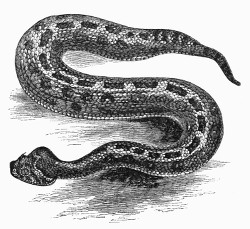
Fig. 21.—The Horned Puff-adder (Clotho cornuta).
The genus Clotho consists of the terrible Puff-adders of Africa, of which there are at least four or five species. Among the best known of them are the ordinary Puff-adder (C. arietans), and the Berg-adder (C. atropos), of the Cape colonists. The Rhinoceros Puff-adder, C. nasicornis, of Guinea, has the scales over the nostrils of the male produced into a long recurved spine; and in the Horned Puff-adder, C. cornuta, of South Africa, there is a group of small horn-like scales over each eye. Examples of the Common and of the Rhinoceros Puff-adders may generally be seen in the reptile house of the London Zoological Gardens. The last mentioned is a huge Viper of wondrous beauty, both of colouring and in the complex pattern of its markings, especially as seen when it has newly shed its epidermis; but the aspect of its surprisingly broad, flat, and triangular-shaped head unmistakably betokens its terrific powers. Its head is remarkably massive. One peculiarity of the Puff-adders is that they sometimes hold on to their victim by their long fangs. Thus, of the common C. arietans Sir A. Smith remarks that "although generally inactive, it is by no means so when attacked—its movements are then bold and energetic, and when once it seizes the obnoxious object, it retains its hold with great determination, and some considerable exertion is often necessary to detach it."18 The traveller Burchell remarks of this Snake that "its venom is said to be most fatal, taking effect so rapidly as to leave the person who has the misfortune to be bitten no chance of saving his life, but by instantly cutting out the flesh surrounding the wound. Although I have often met with this Snake," he adds, "yet, happily, no opportunity occurred of witnessing the effects of its poison; but, from the universal dread in which it is held, I have no doubt of its being one of the most venemous species of Southern Africa. There is a peculiarity which renders it more dangerous, and which ought to be known to every person liable to fall in with it. Unlike the generality of Snakes, which make a spring or dart forward when irritated, the Puff-adder, it is said, throws itself backwards, so that those who should be ignorant of this fact would place themselves in the very direction of death, while imagining that by so doing they were escaping the danger. The natives, by keeping always in front, are enabled to destroy it without much risk. The Snakes of South Africa, as of Europe, lie concealed in their holes in a torpid state during the colder part of the year. It is, therefore, only in the hottest summer months that the traveller is exposed to the danger of being bitten." Dr. Gray refers doubtfully to this genus both the Echidna inornata of Sir A. Smith, and the E. mauritanica of Duméril and Bibron, from Algeria; likewise a Peruvian species named Echidna ocellata by Tschudi, which is the only known instance of a member of this family inhabiting the New World. The appellation Echidna, however, belongs properly to the Porcupine Ant-eaters of the class Mammalia.
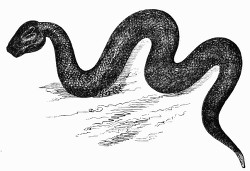
Fig. 22.—The Unadorned Puff-adder (Clotho inornata).
The species of Cerastes and of Echis have the nostrils much smaller than the preceding, and are Vipers of less formidable size. In the two species of Cerastes, or Horned Viper, the eyebrows of the male bear commonly a sort of horn. C. Hasselquistii is common in Egypt, and the other, C. Richii, inhabits Tripoli. Of Echis there is one species in Egypt and North Africa—E. arenicola, and another in India—E. carinata. The latter grows to about twenty inches long, of which the tail measures two inches and a third. These Vipers commonly lie half-buried in the sand, which they much resemble in colour. They feed upon Centipedes (Scolopendra), and no case is known of their bite having proved fatal.
The remaining Viperidæ have the head more or less shielded. They are divided by Dr. Gray into Vipera (with two European species, not found in Britain—V. aspis from the Alps, and V. ammodytes from the countries bordering on the Mediterranean);—Pelias, which contains only the Common British Adder, P. berus; Sepedon, with one species only, from South Africa, S. hæmachates; Causus, with also only one African species, C. rhombeatus; and finally, Acanthopis, founded on the Death-adder of the Australian colonists, A. antarctica, which is the only member of the family Viperidæ known to inhabit Australia, where the Poisonous Colubrine Snakes are so numerous. It is also the only known species the scales of which are smooth or not keeled. It seldom exceeds thirty inches in length, and varies a good deal in colour. Like other Viperidæ it is sluggish in its movements, but when irritated it flattens itself out generally in the form of the letter S, turning round to one side or the other with astonishing rapidity, but never jumping at its enemy or throwing itself backward, as the Puff-adders are described to do. The Death-adder is found in almost every part of Australia northward of the thirty-sixth parallel of south latitude.]
The Common Adder (Pelias berus), is not improbably the Εχις of Aristotle, and the Vipera of Virgil, as it is the Manasso of the Italians, the Adder of the country-people in England and Scotland, and the Vipère of France. It is found in all these countries, and in Europe generally.
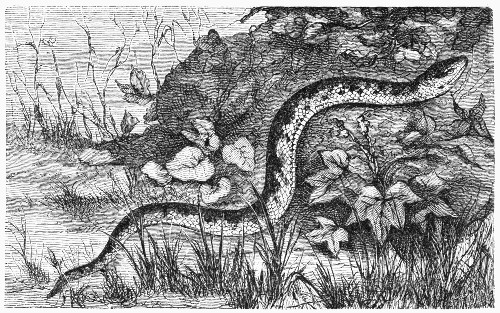
Fig. 23.—The Common Adder (Pelias berus).
The Common Adder varies in length, from thirteen or fourteen inches to double that length; and from two to three or even four inches in girth.
Its general colour varies considerably: in some it is olive, in others reddish-brown, varying sometimes to an ashy-grey; at other times it is greyish-black. A waving brown or blackish line runs along the back. A row of unequal spots of the same colour is observable on the flanks; the belly is slate-coloured; the head nearly triangular, a little larger than the neck, obtuse and truncated in front, and covered with granulated scales. Six small plates cover the muzzle, two of which are perforated for the nostrils, which are lateral, forming a blackish spot. Above is a sort of V shape, formed by two black bands. The upper jaw is a white ground, spotted with black; the lower jaw is yellow. The eyes are small and sharp, edged with black. The tongue is long, grey, and forked.
Adders are met with in the wooded, stony, and mountainous regions of southern and temperate Europe—in France, Italy, England, Germany, Prussia, Sweden, Poland, and even Norway. They are met with in the heaths near London and in the neighbourhood of Paris; they are met with at Montmorency, and in the forest of Fontainebleau. They feed upon Lizards, Frogs, mollusks, worms, insects, and small mammalia, such as Field-mice, Shrews, and Moles. They pass the winter and early spring in a state of torpor in deep hollows, where they are sheltered from the cold. It is not unusual to find several Adders coiled up together in one heap, entwined and intimately interlaced together.
The movement of Adders is abrupt, slow, and irregular. They appear to be shy and timid creatures, shunning the day, and only seeking their food in the evening. The young come into the world naked and living: so long as they are maintained within the mother, they are enclosed in eggs with membranous shells. Soon after their birth the young Vipers, whose length does not exceed six or seven inches, are abandoned by the mother, and left to shift for themselves. They do not, however, acquire their full development till they are six or seven years old. Adders are justly considered objects of fear and horror both to Men and to other animals. They carry with them a formidable apparatus, of which it is important that both the structure and the mode of action should be known. This venemous apparatus is composed of three parts—the secreting glands, the canal, and the hooked fangs.
The gland is the organ which secretes the venom; it is situated upon the sides of the head, behind and a little beneath the globe of the eye; it is formed of a number of inflated bladders, composed of a granulous tissue, and disposed with great regularity along the excretory canal, not unlike the barbs of a pen-feather. This arrangement, however, is only visible through a microscope. The tube destined to conduct the secreted venom through the gland is straight and cylindrical; after being filled, in its short journey it ends in two peculiar hook-like teeth, called fangs, tapering to a point, and in shape horn-like. They are much longer than the others, and placed one to the right, the other to the left of the upper jaw. The Adder, then, is furnished with two of these poison-fangs; they are curved and sharp-pointed, convex anteriorly, and furnished with a straight duct which commences in one part by a slit placed at the anterior part of its base, terminating by a second and smaller cleft towards its point, and on the same side. This last cleft is like a little trench or fine furrow, which extends the whole length of the convexity. These hooked teeth are surrounded by a fold of the gums, which receives and partly hides them, like a sheath, when they are at rest or hidden. They are attached to the upper maxillary bones, which are small and very mobile, and are put in motion by two muscles. Behind them are dental germs, intended to replace them when they fall out. The other teeth in the roof of the mouth belong to the palate, where they form two rows.
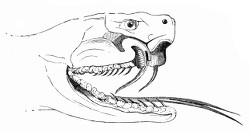
Fig. 24.—Fangs and Tongue of a Poisonous Colubrine Snake.
Such are the terrible weapons of the Viper group. It is not, therefore, as many persons still believe, with the tongue that the Adder inflicts its wound; the forked, projecting tongue serves them as a feeler, and to drink with, but cannot inflict a wound. We have said that when in a state of repose the hooked teeth are hidden; when the animal wishes to use them, they issue from their fleshy sheath, somewhat in the same manner as a man draws his knife, when attacked, to defend himself, and in this case the knife is poisoned.
Adders use their fangs to seize the small animals which serve as their prey. They do not voluntarily attack a Man; on the contrary, they flee at his approach. But if he imprudently places his foot on or attempts to seize them, they defend themselves vigorously. Let us see how an Adder conducts itself when it hunts its prey and takes it. In this case it may be supposed to act without passion, merely seizing its prey for food; it simply bites, sinking its fangs into the body of its victim. In proportion as the fangs penetrate the body of the animal the poison flows into the canal, which again conducts it to the fangs under the influence of the contracting muscles, by which they are raised and made to press upon the gland; but this movement causes the Adder to close its mouth, and the venom is injected into the wound.
Adders bite in much the same manner when seized by the tail or middle of the body; but when they think themselves attacked and become irritated, they strike rather than bite. At first they coil themselves up into several superposed circles, then they will uncoil themselves to their whole length with excessive quickness, extending their bodies like a spring, drawing it out with the rapidity of lightning, and gliding over a space equal to their own length; for they never leave the ground. They will now open their jaws wide, erect their fangs, and strike, first throwing back their heads, by which means they contrive to strike as with a hammer.
Dr. Bell expresses doubts, in his "History of British Reptiles," of the existence of any well-authenticated case in this country of an Adder bite terminating fatally.19 At the same time he cautions all persons against exposure to them in the heat of summer and autumn, when the poison is most virulent. The remedy applied to such a bite is to rub the part with olive oil, over a chafing dish of coals, and to take a strong dose of ammonia (spirit of hartshorn) internally.
Open copses, dry heaths, new woodland clearings, and sandy wastes are the usual haunts of the Adder; and in such places its hibernaculum is usually found in winter, where several of the same species lie intertwined in a torpid state.
It was long supposed that Adders, and Snakes generally, exercise a sort of magnetic action from a distance—a power which has been called fascination. This impression has been denied, and attributed, not without reason, to a less mysterious cause; namely, the sentiment of profound terror which these creatures inspire. This terror manifests itself in animals by tremblings, spasms, and convulsions. The sight of a venemous Snake sometimes renders its victims immovable, incapable of flight, and as it were paralyzed, and they allow themselves to be seized without opposing the slightest resistance. Others give themselves over to confused movements, which, far from saving them, only make their capture easier. M. Duméril, while pursuing experiments in the Museum of Natural History, demonstrative of the sudden and mortal action of the bite of a Viper on little birds, saw a Goldfinch, which he held in his hands, die suddenly, merely at the sight of the Viper.
In warm countries, wounds produced by the larger species of these terrible reptiles are extremely dangerous—they swell, become red and ecchymose, and sometimes livid; the wounded person is seized with syncope, fever, and a series of morbid symptoms, which often terminate in death. The remedy is to bind immediately a ligature above the wound with a band, such as a rolled handkerchief, a cord, or a string, so as to stop all communication of the blood with the rest of the body, and thus prevent the absorption of the venom into the system till more effectual means can be adopted. It is well to suck the wound and make it bleed; it is necessary also to make an incision, so as to expose the internal parts, and then to cauterize the wound immediately, either with a red-hot iron or by means of a caustic agent. For this purpose the following composition may be employed:—
Perchloride of iron 60 grains.
Citric acid 60 "
Hydrochloric acid 60 "
Water 144 "
A few drops of this is poured on the wounded part, which is then covered with a small piece of lint. Iodine or iodinet of potassium can also be employed. M. Viand-Marais has substituted the following composition for this compound with great success:—
Water 50 grains.
Iodinet of Potassium 50 "
Metallic iodine 50 "
To facilitate the introduction of caustic into the wound, the same naturalist has invented a little bottle closed with emery; the stopper, which is long, and conical at the lower end, plunges into the liquid. By means of this stopper the medicated substance can be made to penetrate by drops as far as the bottom of the wound, which has been previously enlarged by the bistoury. This little apparatus will replace with advantage the bottle of volatile alkali with which Viper-hunters are usually furnished. But all these means are only useful when applied immediately. The limbs and round about the wound must besides be rubbed with ammoniacal liniments. Afterwards emollient poultices should be used to lower the swelling and reduce the chances of congestion; while tonics, sudorifics, and sometimes ammoniacal potions should be given internally.
It is a remarkable fact that this venom, which is one of the most virulent poisons known, can yet be swallowed with impunity. It is neither acrid nor burning, and only produces a sensation on the tongue analogous to that caused by greasy matter. But if introduced into a wound in sufficient quantities, it enters into the blood, and causes death with frightful rapidity. This is a characteristic common to all morbid and venemous virus.
The strength of the venom varies according to the species of Snake, and likewise the condition of the animal. The same species is more dangerous in hot than in cold or temperate regions. The bite is serious, according as the poison is more or less abundant in the glands, and probably with the degree of rage experienced by the animal, as Professor Owen supposes.
[Of Snakes in general it has been remarked that "all strangers in countries where these reptiles abound are apt to exaggerate their danger; but in a year or two they think as little of them as we do in England. I never knew an instance of a Snake attacking a person unless it was trodden upon or molested, and even then they almost always give warning by hissing, or endeavour to effect their escape. During my residence in the Cape colony, I have at different times trodden on them or kicked them in the grass unintentionally, but was never bitten."20 This writer, however, could hardly have accidentally placed his foot upon a Puff-adder.21]