Chapter V · LAND SCULPTURE. (continued 2)
Reading edition
Fifth. The drainage of an alluvial cone or of a delta is independent of the structure of the bed-rock beneath; and if in the course of time erosion takes the place of deposition and the alluvial formation is cut through, the drainage system which is acquired by the rocks beneath is not consequent upon their structure but is superimposed by alluviation.
Sixth. The drainage of a district of planation is independent of the structure of the rock from which it is carved; and when in the progress of degradation the beds favorable to lateral corrasion are destroyed and the waterways become permanent, their system may be said to be superimposed by planation.
In brief, systems of drainage, in their relation to structure, are
(A)
consequent (a) by emergence, when the displacements are subaqueous, and (b) by sudden displacement;
(B)
antecedent; and
(C)
superimposed (a) by sedimentation, or subaqueous deposition, (b) by alluviation, or subaërial deposition, and (c) by planation.
THE DRAINAGE OF THE HENRY MOUNTAINS
is consequent on the laccolitic displacements. The uplifting of a laccolite, like the upbuilding of a volcanic cone, is an event of so rapid progress that the corrasion of a stream bed cannot keep pace with it. We do not know that the site of the mountains was dry land at the time of their elevation; but if it was, then whatever streams crossed it were obstructed and turned from their courses. If it was not, there were no preëxistent waterways, and 145the new ones, formed by the first rain which fell upon the domes of strata, radiated from the crests in all directions. The result in either case would be the same, and we cannot determine from the present drainage system whether the domes were lifted from the bed of the Tertiary lake or arose after its subsidence.
But while the drainage of the Henry Mountains is consequent as a whole, it is not consequent in all its details, and the character of its partial inconsequence is worthy of examination.
Let us begin with the simplest case. The drainage system of Mount Ellsworth is more purely consequent than any other with which I am acquainted. In the accompanying chart the point c marks the crest of the Ellsworth dome; the inner circle represents the line of maximum dip of the arching strata and the outer circle the limit of the disturbance. It will be seen that all the waterways radiate from the crest and follow closely the directions in which the strata incline. At a the Ellsworth arch touches that of Mount Holmes and at b that of Mount Hillers; and the effect of the compound inclination is to modify the directions of a few of the waterways.
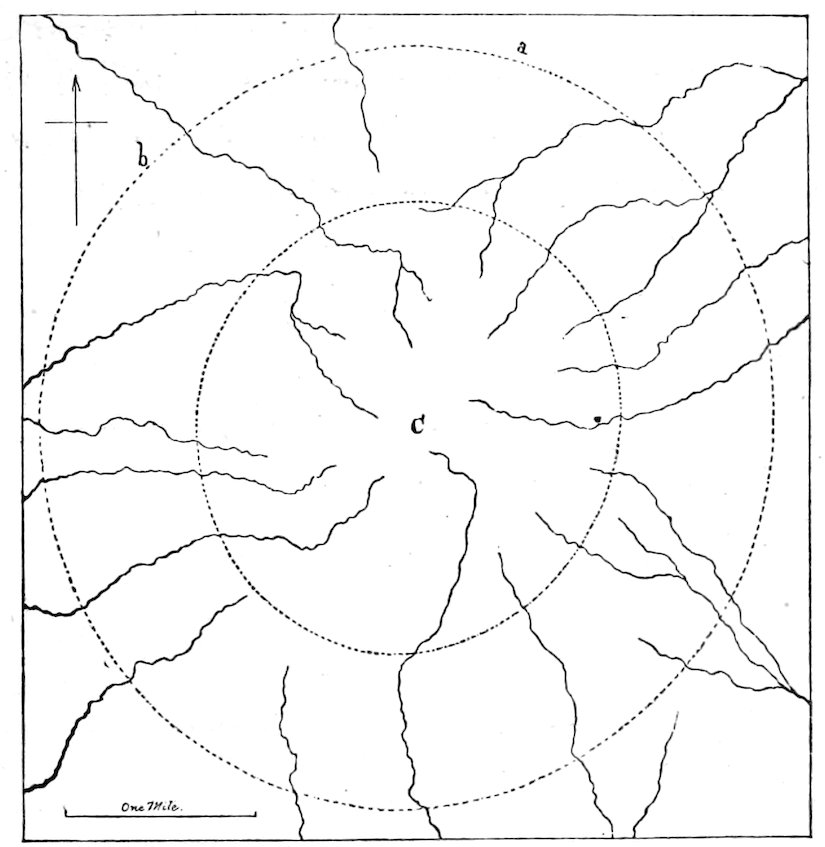
Fig. 71.—Drainage system of the Ellsworth Arch.
146Turning now to Mount Holmes, we find that its two domes are not equally respected by the drainage lines. The crest of the Greater arch (see Figure 72) is the center of a radiating system, but the crest of the Lesser arch is not; and waterways arising on the Greater traverse the Lesser from side to side. More than this, a waterway after following the margin of the Lesser arch turns toward it and penetrates the flank of the arch for some distance. In a word, the drainage of the Greater arch is consequent on the structure, while the drainage of the Lesser arch is inconsequent.
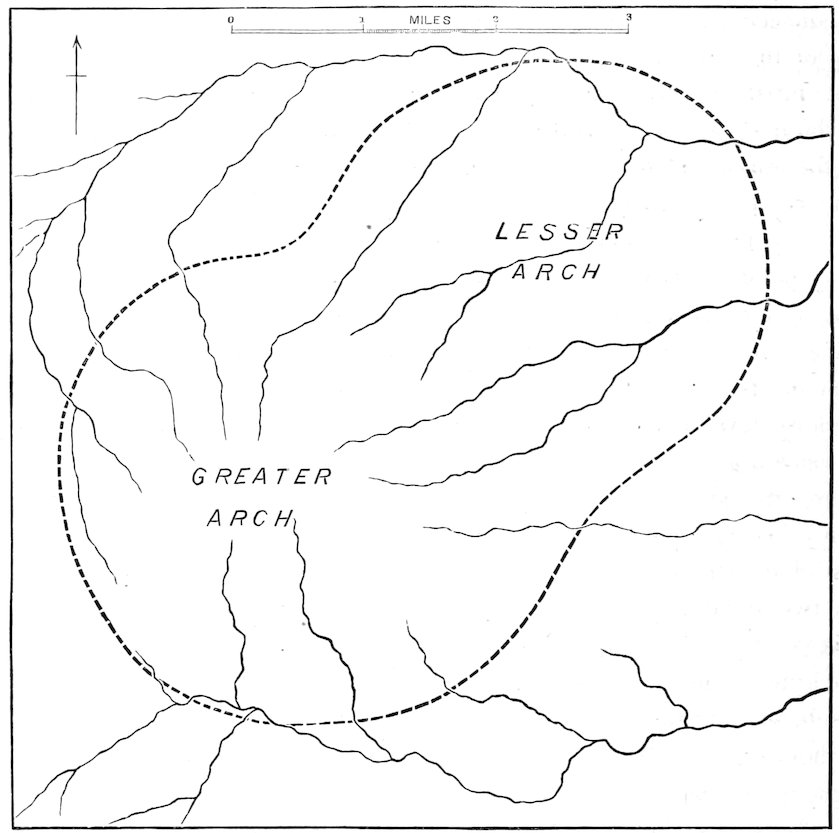
Fig. 72.—Drainage system of the Holmes Arches.
There are at least two ways in which this state of affairs may have arisen.
147First, the Greater arch may have been lifted so long before the Lesser that its waterways were carved too deeply to be diverted by the gentle flexure of the latter. The drainage of the Lesser would in that case be classed as antecedent. If the Lesser arch were first formed and carved, the lifting of the Greater might throw a stream across its summit; but it could not initiate the waterways which skirt the slopes of the Lesser, especially if those slopes were already furrowed by streams which descended them. If the establishment of the drainage system depended on the order of uplift, the Greater arch is surely the older.
Second, the drainage of the Lesser arch may have been imposed upon it by planation at a very late stage of the degradation. Whatever was the origin of the arches, and whatever was the depth of cover which they sustained, the Greater is certain to have been a center of drainage from the time of its formation. When it was first lifted it became a drainage center because it was an eminence; and afterward it remained an eminence because it was a drainage center. When in the progress of the denudation its dikes were exposed, their hardness checked the wear of the summit and its eminence became more pronounced. It was perhaps at about this time that the last of the Cretaceous rocks were removed from the summits and slopes of the two arches and the Flaming Gorge shale was laid bare, and so soon as this occurred the conditions for lateral corrasion were complete. With trachyte in the peaks and shale upon the slopes planation would naturally result, and a drainage system would be arranged about the dikes as a center without regard to the curves of the strata. The subsequent removal of the shale would impart its drainage to the underlying sandstones.
Either hypothesis is competent to explain the facts, but the data do not warrant the adoption of one to the exclusion of the other. The waterways of the Lesser arch may be either antecedent, or superimposed by planation. The Greater arch may have been the first to rise or the last.
The drainage of Mount Hillers is consequent to the main uplift and to the majority of the minor, but to the Pulpit arch it is inconsequent. In this case there is no question that the arch has been truncated by planation. (Figure 73.) The Hillers dome, rising five times as high as the Pulpit, became the center of drainage for the cluster, and the trachyte-laden 148streams which it sent forth were able to pare away completely the lower arch while it was still unprotected by the hardness of its nucleus. The foot-plain of Mount Hillers, which extends unbroken to the outcrop of the Henry’s Fork conglomerate, is continued on several lines across the Pulpit arch, although in the intervals the central area is deeply excavated. The planation stage is just completed, and an epoch of fixed waterways is inaugurated.
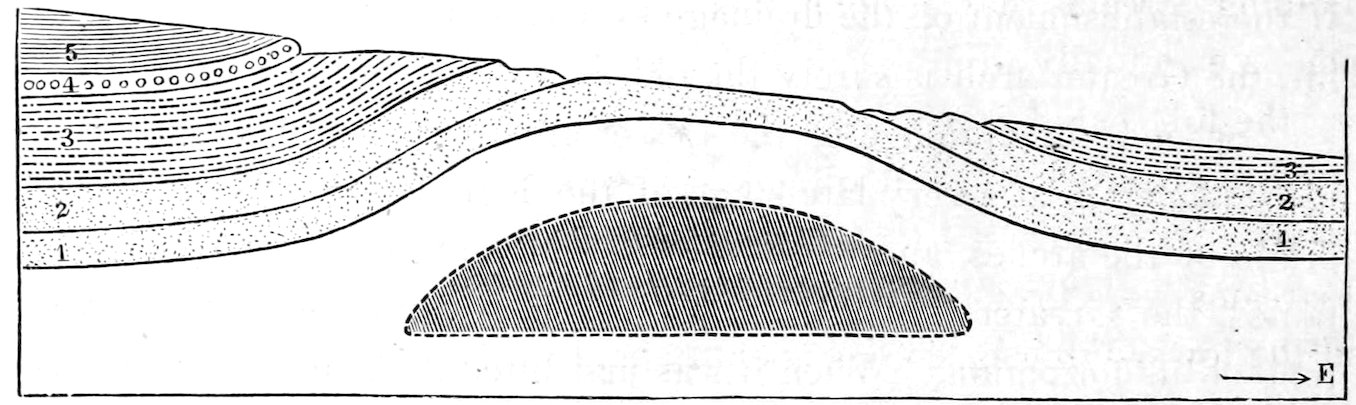
Fig. 73.—Cross-section of the Pulpit Arch, showing its truncation.
The drainage of Mount Pennell is consequent in regard to the main uplift, but inconsequent to some of the minor. A stream which rises on the north flank not merely runs across one of the upper series of laccolites,—a companion to the Sentinel,—but has cut into it and divided it nearly to the base. It is probable that the position of the waterway was fixed by planation, but no remnant of the plain was seen.
Too little is known of the structure of the central area of Mount Ellen to assert its relation to the drainage. About its base there are five laccolites which have lost all or nearly all their cover, and each of these is a local center of drainage, avoided by the streams which head in the mountain crest. Four others have been laid bare at a few points only, and these are each crossed by one or two streams from higher levels. The remainder are not exposed at all, and their arches are crossed by numerous parallel streams. The Crescent arch is freshly truncated by planation, and the Dana and Maze bear proof that they have at some time been truncated. The laccolites which stand highest with reference to the general surface are exempt from cross-drainage, and the arches which lie low are completely overrun.
If we go back in imagination to a time when the erosion of the mountain 149was so little advanced that the stream beds were three thousand feet higher than they now are, we may suppose that very little trachyte was laid bare. As the surface was degraded and a few laccolites were exposed, it would probably happen that some of the then existing streams would be so placed as to run across the trachyte. But being unarmed as yet by the débris of similar material they would corrade it very slowly; and the adjoining streams having only shale to encounter, would so far outstrip them as eventually to divert them by the process of “abstraction”. In this way the first-bared laccolites might be freed from cross-drainage and permitted to acquire such radiating systems of waterways as we find them to possess. At a later stage when trachyte was exposed at many points and all streams were loaded with its waste, the power to corrade was increased, and the lower-lying laccolites could not turn aside the streams which overran them.
The work of planation is so frequently seen about the flanks of the Henry Mountains that there seems no violence in referring all the cross-drainage of lateral arches to its action; and if that is done the history of the erosion of the mountains takes the following form:
When the laccolites were intruded, the mounds which they uplifted either rose from the bed of a lake or else turned back all streams which crossed their sites; and in either case they established upon their flanks a new and “consequent” set of waterways. The highest mounds became centers of drainage, and sent their streams either across or between the lower. All the streams of the disturbed region rose within it and flowed outward. The degradation of the mounds probably began before the uplift was complete, but of this there is no evidence. As it proceeded the convex forms of the mounds were quickly obliterated and concave profiles were substituted. The rocks which were first excavated were not uniform in texture, but they were all sedimentary and were soft as compared to the trachyte. The Tertiary and probably the Upper Cretaceous were removed from the summits before any of the igneous rocks were brought to light, and during their removal the tendency of divides to permanence kept the drainage centers or maxima of surface at substantially the same points. When at length the trachyte was reached its hardness introduced a new 150factor. The eminences which contained it were established more firmly as maxima, and their rate of degradation was checked. With the checking of summit degradation and the addition of trachyte to the transported material, planation began upon the flanks, and by its action the whole drainage has been reformed. One by one the lower laccolites are unearthed, and each one adds to the complexity and to the permanence of the drainage.
If the displacements were completed before the erosion began, the mountains were then of greater magnitude than at any later date. Before the igneous nuclei were laid bare and while sedimentary rocks only were subject to erosion, the rate of degradation was more rapid than it has been since the hardness and toughness of the trachyte have opposed it. If the surrounding plain has been worn away at a uniform rate, the height of the mountains (above the plain) must have first diminished to a minimum and afterward increased. The minimum occurred at the beginning of the erosion of the trachyte, and at that time the mountains may even have been reduced to the rank of hills. They owe their present magnitude, not to the uplifting of the land in Middle Tertiary time, but to the contrast between the incoherence of the sandstones and shales of the Mesozoic series and the extreme durability of the laccolites which their destruction has laid bare. And if the waste of the plain shall continue at a like uniform rate in the future, it is safe to prophesy that the mountains will for a while continue to increase in relative altitude. The phase which will give the maximum resistance to degradation has been reached in none of the mountains, except perhaps Mount Hillers. In Mount Ellen the laccolites of the upper zone only have been denuded; the greater masses which underlie them will hold their place more stubbornly. The main bodies of Mounts Ellsworth, Holmes, and Pennell are unassailed, and the present prominence of their forms has been accomplished simply by the valor of their skirmish lines of dikes and spurs. In attaching to the least of the peaks the name of my friend Mr. Holmes, I am confident that I commemorate his attainments by a monument which will be more conspicuous to future generations and races than it is to the present.
151