III. REFLECTIONS ON THE MOTIVE POWER OF HEAT, AND ON MACHINES FITTED TO DEVELOP THAT POWER.[4] (continued 2)
Robert Henry Thurston translation
(5) One of the gravest inconveniences of steam is that it cannot be used at high temperatures without necessitating the use of vessels of extraordinary strength. It is not so with air for which there exists no necessary relation between the elastic force and the temperature. Air, then, would seem more suitable than steam to realize the motive power of falls of caloric from high temperatures. Perhaps in low temperatures steam may be more convenient. We might conceive even the possibility of making the same heat act successively upon air and vapor of water. It would be only necessary that the air should have, after its use, an elevated temperature, and instead of throwing it out immediately into the atmosphere, to make it envelop a steam-boiler, as if it issued directly from a furnace.
The use of atmospheric air for the development of the motive power of heat presents in practice very great, but perhaps not insurmountable, difficulties. If we should succeed in overcoming them, 122it would doubtless offer a notable advantage over vapor of water.[33]
As to the other permanent gases, they should be absolutely rejected. They have all the inconveniences of atmospheric air, with none of its advantages. The same can be said of other vapors than that of water, as compared with the latter.
If we could find an abundant liquid body which would vaporize at a higher temperature than water, of which the vapor would have, for the same volume, a less specific heat, which would not attack the metals employed in the construction of machines, it would undoubtedly merit the preference. But nature provides no such body.
The use of the vapor of alcohol has been proposed. Machines have even been constructed for the purpose of using it, by avoiding the mixture of its vapor with the water of condensation, that is, by applying the cold body externally instead of introducing it into the machine. It has been thought that a remarkable advantage might be secured by using the vapor of alcohol in that it possesses a stronger tension than the vapor of water at the same temperature. We can see in this only a fresh obstacle to be overcome. The principal defect of 123the vapor of water is its excessive tension at an elevated temperature; now this defect exists still more strongly in the vapor of alcohol. As to the relative advantage in a greater production of motive power,—an advantage attributed to it,—we know by the principles above demonstrated that it is imaginary.
It is thus upon the use of atmospheric air and vapor of water that subsequent attempts to perfect heat-engines should be based. It is to utilize by means of these agents the greatest possible falls of caloric that all efforts should be directed.
Finally, we will show how far we are from having realized, by any means at present known, all the motive power of combustibles.
One kilogram of carbon burnt in the calorimeter furnishes a quantity of heat capable of raising one degree Centigrade about 7000 kilograms of water, that is, it furnishes 7000 units of heat according to the definition of these units given on page 100.
The greatest fall of caloric attainable is measured by the difference between the temperature produced by combustion and that of the refrigerant bodies. It is difficult to perceive any other limits to the temperature of combustion than those in which the combination between oxygen and the combustible may take place. Let us assume, however, 124that 1000° may be this limit, and we shall certainly be below the truth. As to the temperature of the refrigerant, let us suppose it 0°. We estimated approximately (page 104) the quantity of motive power that 1000 units of heat develop between 100° and 99°. We found it to be 1.112 units of power, each equal to 1 metre of water raised to a height of 1 metre.
If the motive power were proportional to the fall of caloric, if it were the same for each thermometric degree, nothing would be easier than to estimate it from 1000° to 0°. Its value would be
1.112 × 1000 = 1112.
But as this law is only approximate, and as possibly it deviates much from the truth at high temperatures, we can only make a very rough estimate. We will suppose the number 1112 reduced one half, that is, to 560.
Since a kilogram of carbon produces 7000 units of heat, and since the number 560 is relatively 1000 units, it must be multiplied by 7, which gives
7 × 560 = 3920.
This is the motive power of 1 kilogram of carbon.
In order to compare this theoretical result with 125that of experiment, let us ascertain how much motive power a kilogram of carbon actually develops in the best-known steam-engines.
The engines which, up to this time, have shown the best results are the large double-cylinder engines used in the drainage of the tin and copper mines of Cornwall. The best results that have been obtained with them are as follows:
65 millions of lbs. of water have been raised one English foot by the bushel of coal burned (the bushel weighing 88 lbs.). This is equivalent to raising, by a kilogram of coal, 195 cubic metres of water to a height of 1 metre, producing thereby 195 units of motive power per kilogram of coal burned.
195 units are only the twentieth of 3920, the theoretical maximum; consequently ¹⁄₂₀ only of the motive power of the combustible has been utilized.
We have, nevertheless, selected our example from among the best steam-engines known.
Most engines are greatly inferior to these. The old engine of Chaillot, for example, raised twenty cubic metres of water thirty-three metres, for thirty kilograms of coal consumed, which amounts to twenty-two units of motive power per kilogram,—a result nine times less than that given above, 126and one hundred and eighty times less than the theoretical maximum.
We should not expect ever to utilize in practice all the motive power of combustibles. The attempts made to attain this result would be far more hurtful than useful if they caused other important considerations to be neglected. The economy of the combustible is only one of the conditions to be fulfilled in heat-engines. In many cases it is only secondary. It should often give precedence to safety, to strength, to the durability of the engine, to the small space which it must occupy, to small cost of installation, etc. To know how to appreciate in each case, at their true value, the considerations of convenience and economy which may present themselves; to know how to discern the more important of those which are only accessories; to balance them properly against each other, in order to attain the best results by the simplest means: such should be the leading characteristics of the man called to direct, to co-ordinate among themselves the labors of his comrades, to make them co-operate towards one useful end, of whatsoever sort it may be.
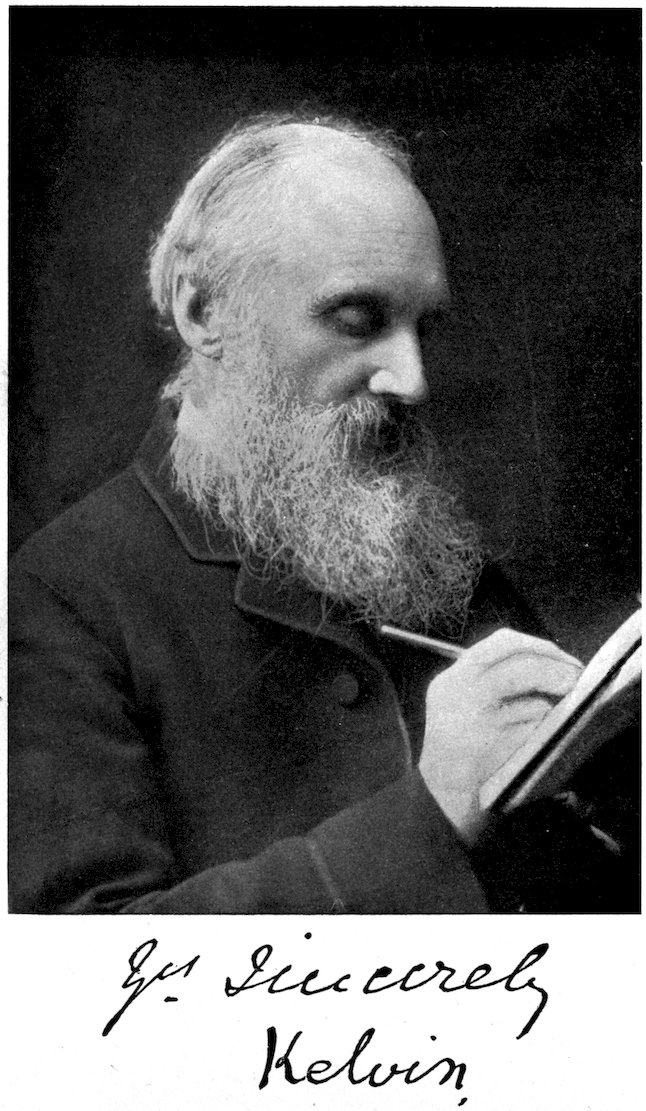
(To face p. 127.)
127