Volume 102 — ON A NEW YEARLING.
Reading edition
(Second Week.)
Second Week. Little 1892 grows rapidly, and begins to look about him.
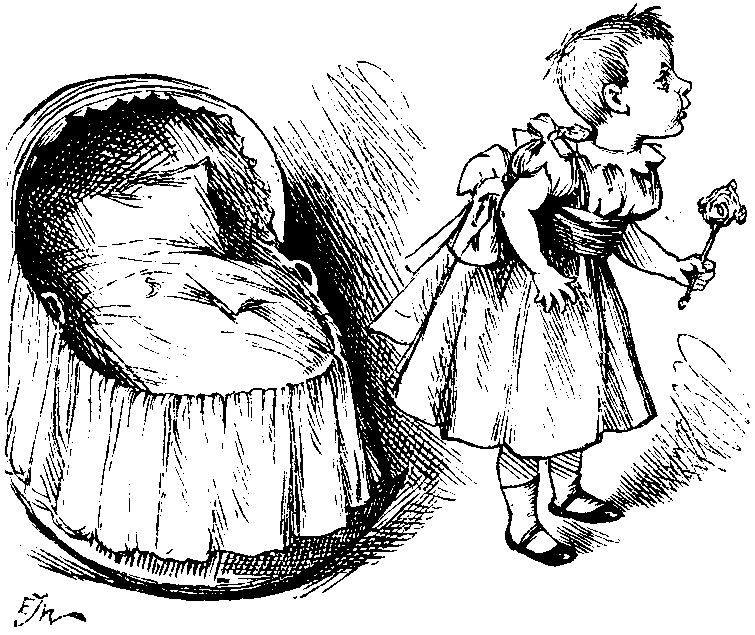
My fire was low; my bills were high; My sip of punch was in its ladle; The clarion chimes were in the sky; The nascent year was in its cradle. In sober prose to tell my tale, 'Twas New Year's E'en, when, blind to danger, All older-fashioned nurses hail With joy "another little stranger." The glass was in my hand—but, wait, Methought, awhile! 'Tis early toasting With pæans too precipitate A baby scarce an outline boasting: One week at least of life must flit For me to match it with its brothers— I'll wager, like most infants, it Is wholly different from others. He frolics, latest of the lot, A family prolific reckoned; He occupies his tiny cot, The eighteen-hundred-ninety-second! The pretty darling, gently nursed Of course, he lies, and fondly petted! The eighteen-hundred-ninety-first Is not, I fancy, much regretted. You call him "fine"—he's great in size, And "promising"—there issue from his Tough larynx quite stentorian cries; Such notes are haply notes of promise. Look out for squalls, I tell you; soft And dove-like atoms more engage us; Your fin-de-siècle child is oft Loud, brazen, grasping, and rampageous. You bid me next his eyes adore; So "deep and wideawake," they beckon; We've suffered lately on the score Of "deep and wideawake," I reckon. You term me an "unfeeling brute," A "monster Herod-like," and so on— You may be right; I'll not dispute; I'll cease a brat's good name to blow on. Who'll read the bantling's dawning days?— Precocious shall he prove, and harass The world with inconvenient ways And lisped conundrums that embarrass? (Such as Impressionists delight To offer each æsthetic gaper, And faddists hyper-Ibsenite Rejoice to perpetrate on paper?) Or, one of those young scamps perhaps Who love to rig their bogus bogies, And set their artful booby-traps For over-unsuspicious fogies? Or haply, only commonplace— A plodding sort of good apprentice, Who does his master's will with grace, And hurries meekly where he sent is? And, when he grows apace, what blend Of genius, chivalry and daring, What virtues might our little friend Display to brighten souls despairing? What quiet charities unknown, What modest, openhanded kindness, What tolerance in touch and tone For braggart human nature's blindness? Or what—the worser part to view— Of wanton waste and reckless gambling, What darker paths shall he pursue With sacrilegious step and shambling? What coarse defiance, haply, hurl At lights beyond his comprehension— An attitudinising churl Who struts with ludicrous pretension. I know not—only this I know, They're getting overstrained, my ditties, This kind of poem ought to flow Less like a solemn "Nunc Dimittis." 'Twas jaunty when I struck my lyre, And jaunty seems this yearling baby; But, as both year and song expire They're sadder, each, and wiser, maybe.