Volume 102 — TO MY COOK.
Reading edition
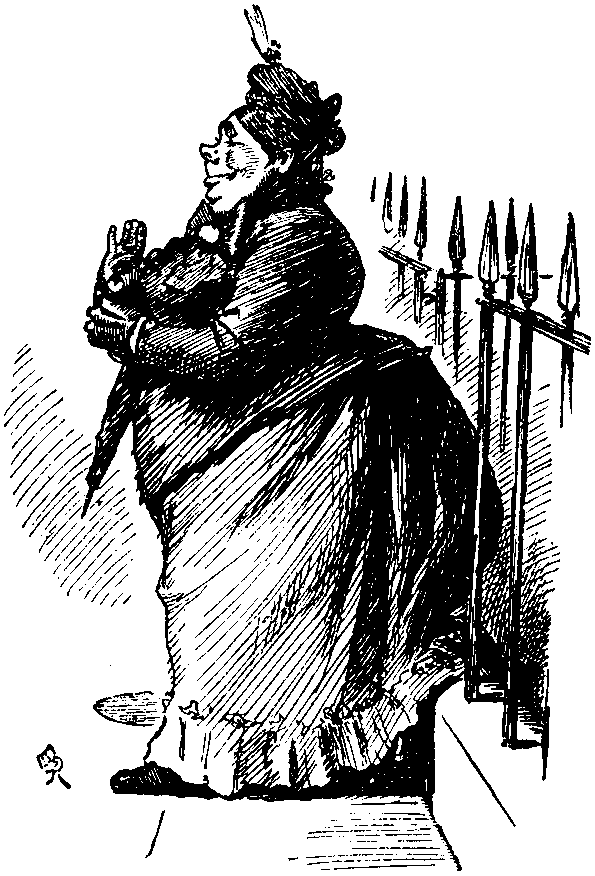
Oh, hard of favour, fat of form, How fairer art thou than thy looks, Whose heart with kitchen fires is warm, Thou plainest of the plainer Cooks! Low down upon thy forehead grows Thick hair of no conducive dye; Short and aspiring is thy nose, Watched ever by a furtive eye. In shy defiance rarely seen Where kitchen stairways darkly tend, A foe to judge thee by thy mien, Proclaimed in every act a friend! I know thee little; not thy views On public or on private life, Whether a single lot thou'dst choose, Or fain would'st be a Guardsman's wife; For who can rightly read the change When, still'd the work-day traffic's din, In best apparel, rich and strange, Thou passest weekly to thy kin! A silken gown, that bravely stands Environing thy form, or no; Stout gloves upon thy straining hands, For brooch, the breastplate cameo. Shod with the well-heeled boots, whose knell Afar along the pavement sounds, Blent with the tinkling muffin-bell, Or milkman, shrilling on his rounds. Nil tangis quod non ornas. Nay, 'Tis not alone the parsley sprig, The paper frill, the fennel spray, The Yule-tide's pertly-berried twig; But common objects by thy art Some proper beauty seem to own; Thy chop is as a chop apart, Fraught with a grace before unknown; The very egg thou poachest seems Some work of deft orfévrerie,— A yolk of gold that chastely gleams Through a thin shrine of ivory. From thee no pale and wilted ghost, Or branded by the blackening bar, But crisp and cheery comes the toast, And brown as ripening hazels are. Thy butter has not lost the voice Of English meads, where cowslips grow, And oh, the bacon of thy choice— Rose-jacinth labyrinthed in snow! And mutton, colder than the kiss Of formal love, where loathing lurks Its deadlier chill doth wholly miss, Fired with the spirit of thy works. To true occasion thou art true, As upon great occasions great; Doing whatever Cook may do When PHYLLIS, neat, alone will wait, As when the neighbouring villas send Their modish guests to statelier fare, And PHYLLIS, neat, is helped to tend By that staid man the Greengrocer. Though thou art more than plain in look, Thou wieldest charms that never tire— O Cook—we will not call thee Cook, Thou Priestess of the Genial Fire.