FROM GRAVE TO GAY; OR, THE SECRET OF SUCCESS.
Reading edition
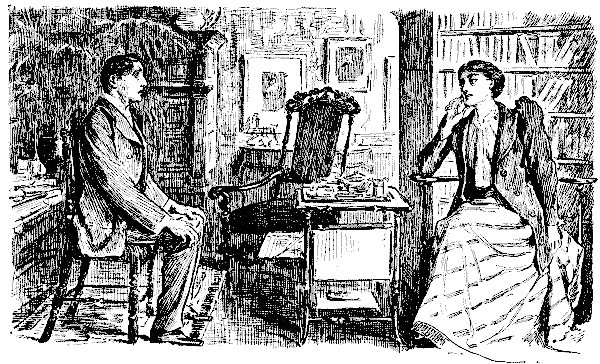
Dash Blank was a genius. He had been an immense success at school, and had done admirably at the University. He then came up to town and tried many things. He was a poet, a musician, an artist, an inventor. And everyone he knew, said it was absolutely wonderful, and that he should make a fortune. But just at the moment he had a fair income, which had been left to him by his deceased relative, and there was no occasion to augment his means. On the contrary, if anything, his accomplishments were rather a loss to him than a gain. So the situation existed for a time.
Then came a crash in the City, and poor Dash Blank found himself penniless. It was then he tried to turn his talents to account, but found that their market value was nil, or even less.
But, fortunately, he was "such a genius," and to persons of that class often come what may be termed happy thoughts.
Dash Blank disappeared—completely, absolutely. His absence remained unnoticed for some time, and then, of a sudden, his death got into the papers. It was copied from one journal to another, until the intelligence was conveyed from one end of the Empire to the other. Then some one made the discovery that Dash Blank had not been appreciated. Immediately all his brilliant failures were unearthed, and advertised into popularity. His poems on republication realised hundreds, and his pictures thousands; his wonderful invention was patented, turned into a Company of Limited Liability, and quickly realised a fortune. Dash Blank was a name to conjure with—it was typical of success.
At length a statue was erected to his memory, and the unveiling became an important function. All sorts of smart people were present, and the finest things imaginable were said about his career. When it was all over, the Sculptor was left alone with what had been recently termed his "masterpiece."
"No," said he; "it is not a bit like poor Dash. I never could get his expression."
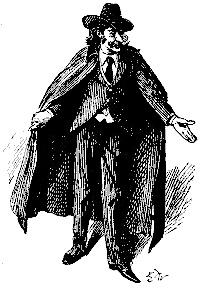
"It's not bad," observed a man in a cloak, who had come up while he was murmuring, and who now stood beside him; "not at all bad, considering he never gave you a sitting."
"That's true enough," replied the Sculptor; "but how did you know it?"
"Because I happen to be Dash Blank himself!" and then the man in the cloak threw off that covering, and revealed his identity.
After this came an explanation. The genius noticing that when a clever man dies there is always a run upon his works, died himself. At any rate that was the impression in the minds of everyone save a friendly executor, who collected the money for his estate. Then the friendly executor paid the proceeds to the imaginary deceased.
"And shall you resume work?" asked the Sculptor, after he had recovered from his astonishment.
"Not I. You need be under no alarm that anyone will compare your portrait with the original. I have had enough of work, and with my recently accumulated capital, shall try my hand at speculation. Good bye, if you are in my neighbourhood, look me up. You will find me anywhere between the Arctic and Antarctic Zones." And then he went over to America, put his money into wooden nutmegs, and promptly became a millionaire.
THE "ONE-HORSE" HOUSEHOLDER.
(A Solemn Social Ditty.)
In a region where freshly-built suburbs lie ending 'Mid plots of the glum market-gardener's ground,— Its bare, tenantless frontages gloomily blending With grime and neglect that are rampant all round, Runs the street, so forlorn it could not be forlorner, Where, looking straight down a "no thoroughfare" road, With the blaze of a new public-house at the corner, The sad "One-horse" Householder finds his abode!
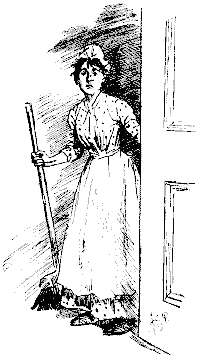
'Tis a wilderness wild of dread dilapidations, Where one feeble gas-light illumines the street, While right over the way fourteen kitchen foundations Of houses unfinished the aching eye greet! How he first chanced to find it his friends often wonder. No omnibus runs within miles of his door,— Nor a train, be it either above-ground or under, Wakes life with its thrice welcome whistle and roar. If you call at that house, you'll be knocking and ringing, Till, with forcible language, you're leaving the place, When a slavey, who comes up the hall gaily singing, Flings open the door, with a smut on her face. You ask "if they're in," and she looks you all over,— It's clear she's quite new to an afternoon call,— P'raps takes you for Turpin, Bill Sikes, the Red Rover; But she says that she'll "see," and leaves you in the hall. You are ushered upstairs, which a Dutch carpet graces, To a drawing-room, curtained at threepence a yard, Where Japanese gimcracks appear in odd places, Though Aspinall clearly has proved their trump card; For here it envelopes a plain kitchen-table, There a weak wicker lounge which invites not repose; And at length you are seated, as well as you're able, On a folding arm-chair that half threatens to close. But they offer you tea, made with unboiling water, A syrupy Souchong at tenpence a pound, Which a simpering, woebegone, elderly daughter, With stale bread rancid buttered, is handing around. And you think you'll be off: as your talk halts and flounders, For you feel most distinctly, they're not in your line, And you say to yourself, "Yes, these Johnsons are bounders," But before you can go, you have promised to dine! That same dinner will take you some seasons forgetting! The claret was sour, the "tinned" oysters, Blue Point; And moreover 'tis really a little upsetting, For the cook to come up very drunk with the joint! And when to crown this you are asked to expel her, And find a Policeman,—that is, if you could. It may soothe you to hear yourself called "a good feller," But can you admit that the dinner was good? And so when you meet Johnson going up to the City, It somehow to-day does not strike you as odd, That with feelings of scorn not unmingled with pity, You hurry on fast with a stiff little nod. Be his craze "speculation," "a crush," "a small dinner," A christening, marriage, a death or a birth,— There's a limpness of purpose that shows, though no sinner. Why the dim "One-horse" Householder cumbers the earth!