Front matter
Reading edition
Transcriber's Notes:
the preposition de (+ abl.) is alway with ‘long e’, i.e. dē. This has been corrected once (cf. 2 lines before ‘Fābula dē Thrasyllō.')
it uses once Romae instead of Rōmae. This has also been corrected.
the text uses īmmō (long i) throughout; dictionaries consider immō (short i) correct.
the text uses pīstrīnum (long first i), dictionaries (like OLD) consider pistrīnum (short first i) correct. This has be corrected.
Proofreader’s notes / layout notes:
Special note to you users of the popular LLPSI method: you should have ended and studied thoroughly the first book before starting this, and around starting Rōma Aeterna because this book makes full use of the grammar seen in Familia Rōmāna with a very rich vocabulary and because of the similarity of the topics addressed.
A notable feature of this work is that, as a Latin reader intended at intermediate learners, the long vowels are marked with macrons.
Big update from the original uploaded version: graphic update, semantic code added, page numbers, plus an optimized navigation system with internal links: the chapter titles are clickable
Some images were redrawn, either because vectorization was logical, either because the original scan was of a so bad quality that it was made necessary
The images were originally laid in full pages, so they could only fit in specific places between pages; this limitation disappears in an ebook and the images have been placed back to the most fitting place, resulting sometimes in some inconsistencies with the page numbers
In some words, the length of the vowels differ with what can usually be seen in dictionaries. They are part of the text and have been kept: When the syllabe is inherently long and the vowel marked as long although it’s actually short: mītt-, iūss-, āc…, which also happens when the consonant is /j/ written i: ēius vs ejjus, cūius vs cujjus, māius vs majjus… Some final long o’s are written as short: homo, nēmo, Nāso, quando
When the same word has been written more than once and quantity on vowels is inconsistent (which are assumed to be typos) or macrons obviously lack, the dictionary version was preferred: nūm → num (p. 27), fūlīgo → fūlīgō (p. 29), bellī sicut → bellī sīcut (p. 52), venēno → venēnō (p. 56), fābula → fābulā (E21/B4-9), ārchimīmus → archimīmus (E27/B2-7), qui → quī (E29/C-2), cōntulit → contulit (E32/B-1), ludī → lūdī (E33), hōc → hoc (p. 64)
The chapter title Iūppiter rēgem avium creāre voluit. was missing altogether in the narrative while it was present in the exercices. It was necessary to fix this in order to keep the consistence between the two parts of the work
Preface
Ego et vīta mea
Lūdus
Dē mīlite fortissimō sed īgnōtō
Cēna
Iter
Iūppiter rēgem avium creāre voluit
Rōma
Nocturna Lemūria
Dē mānibus
Dē somniīs
Somnium vērum
Trium somniantium fābula facēta
Causae somniōrum
Magister laqueō suō captus
Colloquium cum patre
Māter mente turbāta irruit
Laqueō meō captus
Fābula dē Gabiēnō
Alia fābula inter cēnam nārrāta
Patruus meus aliquid nārrat
Fābula dē Thrasyllō
Simōnidēs poēta
Comitēs Ulixis
Caesar Rubicōnem trānsit
Cubitum eō
Dionȳsius et Dāmoclēs
Fūnus
Tēstāmentum et līs inde orta
Rūs ītur
Dē gruibus
Dē cervīs
Dolus piscātōrum
Lūdī magister scelerātissimus
Physiōgnōmōn
Advena
Pyrrhī medicus
Mārcus Atilius Rēgulus
Theātrum
Dē alcibus
Circus Māximus
Leō in arēnā
Pugilēs
Gladiātōrēs
Dē puerīs in Senātū
Lūcius patrī suō salūtem dat
Fīnis
LINGUA LATĪNA
W. H. D. ROUSE S. O. ANDREW
PUER RŌMĀNUS
R. B. APPLETON W. H. S. JONES
OXONII E TYPOGRAPHEO CLARENDONIANO
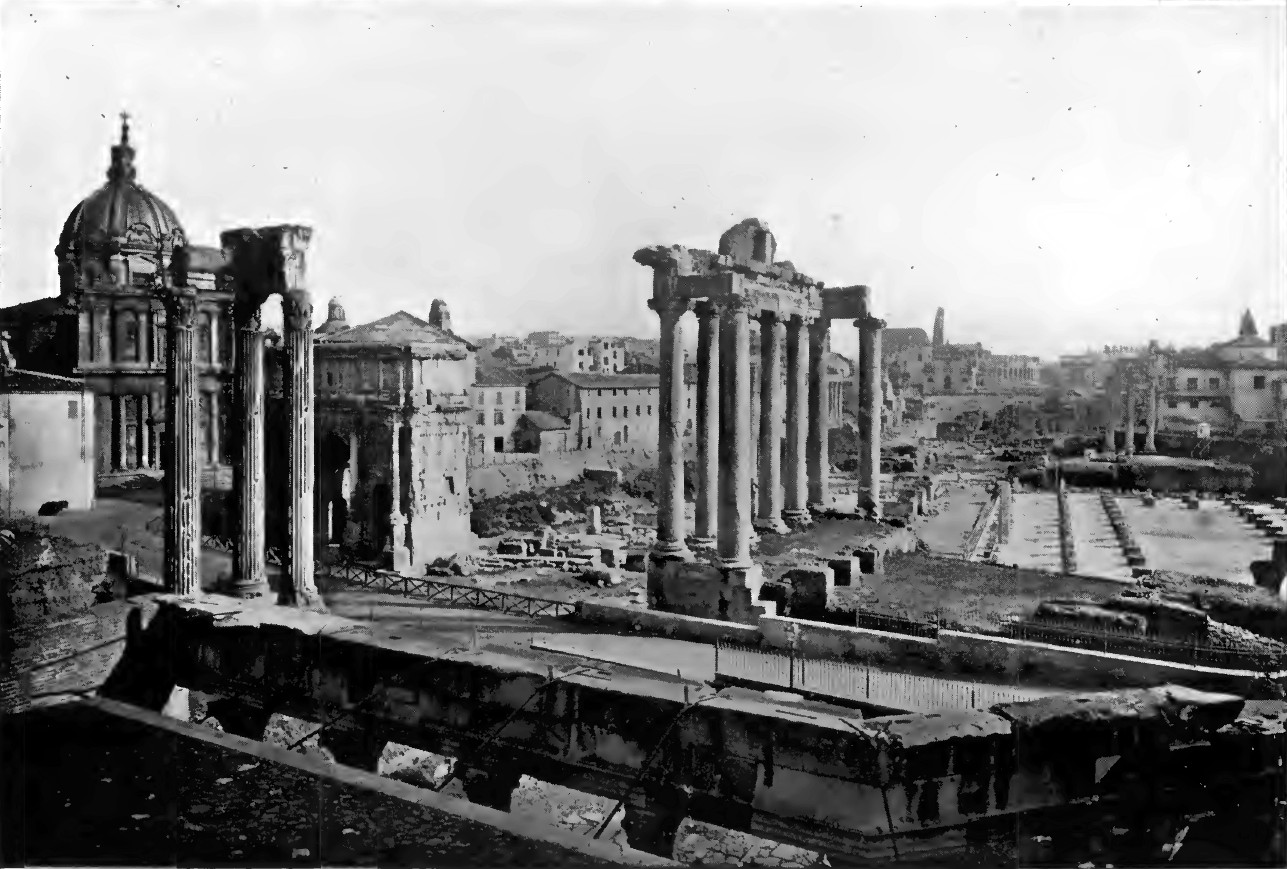
Photo Moscioni
Forum Rōmānum
LINGUA LATĪNA