THE MOUND-BUILDERS AND THE INDIANS
Reading edition
When white settlers first entered the country north and west of the Ohio River, from which later on the state of Ohio was to be carved, they found here, as everyone knows, the Indians. When we pause to consider that Ohio today is one of the greatest states in the Union, it is hard to believe that this happened less than two centuries ago. However, the story of the Indian tribes that white men found living on Ohio soil when they arrived is a part of Ohio history, and will not be dwelt upon in this booklet. For the present we are concerned only with the people who lived in Ohio before the historic Indians, and we may refer to them as the first Ohioans.
THE FIRST OHIOANS
White people had not been on Ohio soil very long before they began to notice peculiar mounds and fortifications built of earth and stone. Evidently these were very ancient, as they were overgrown by the forest. The Indian inhabitants were neither building nor using such structures, nor could they tell the white settlers anything about them. A bit of digging, here and there, soon showed that the mounds contained human burials and that with these were strange relics. Hence it was clear that they had been built by human beings. But by whom? The settlers reasoned, very naturally, that 6 if the tribesmen living in the region had not constructed them, then they must have been built by a people preceding the Indians. And so, lacking a better name, they called them “The Mound-builders,” just as we of today, viewing the few remaining log cabins scattered over the countryside, might call the pioneers “The Cabin-builders.” The settlers, however, who built and lived in the log cabins of pioneer days, realized the value of records, so that people who came after them might know who they were and what they did. And so they wrote history. But the Mound-builders had not yet progressed far enough on the road to civilization to do this; and so we must look elsewhere for the answers to those questions which naturally come into our minds. Who were the Mound-builders? Where did they come from, and when; why did they build Mounds; and what became of them? The pioneer settlers who first noticed the Mounds could not open a book and read the answers to these queries. But as the years have passed, the puzzles have been solved in a most interesting manner, as we shall see presently.
To begin with the Mounds and Earthworks themselves, it may be said that there are many thousands of them. They are scattered over 20 or more states, from the Mississippi River eastward to the Atlantic and extending southward to the Gulf and into Florida. Ohio, it may be truly said, was the center of Mound-builder life, as a result of which it has come to be known as the Mound-builder state. More than 5,000 Mounds, fortifications and other remains of these interesting people have been located within its bounds.
7
ANCIENT MOUNDS AND EARTHWORKS
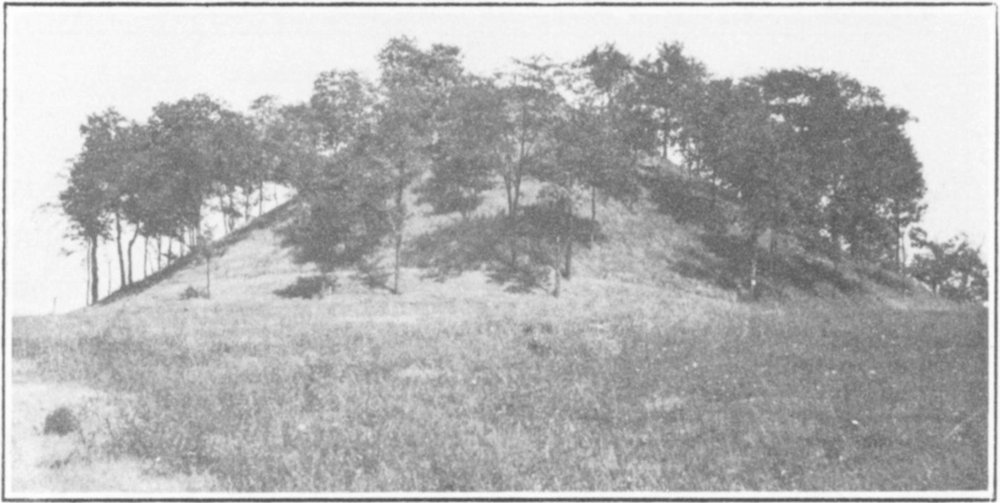
Fig. 2—The Miamisburg Mound.
A glance at the outline map on page 4 shows the location of these ancient works. It will be noted that the southern one-half of the state was the favored region, especially along the courses of the streams and rivers flowing southward to the Ohio. An automobile trip through southern Ohio affords an excellent outing or vacation, and makes it possible to see the actual Mounds and other structures of the long ago. Some of them, the tourist will note, are merely heaps of earth, more or less pointed at the top and ranging from slight elevations, hardly noticeable above the surface of the fields, to others as much as twenty, thirty, or even forty feet in height. The tallest Mound of this kind in Ohio is the great Miamisburg Mound, near the town of that name, in Montgomery County, which is 70 feet high and covers nearly three acres of ground. These conical Mounds, as they are called, are shaped like a chocolate 8 drop. They are far more numerous than any other kind of earthen structures and, as we shall see presently, they served as monuments to the dead; that is, they were burial mounds—tombstones.
Next in point of numbers are the ancient fortifications, built as means of protection from enemies. Usually they are the more or less level tops of hills or plateaus, with steep slopes and ravines offering ready-made obstructions to the approach of enemies. Around the edges of the area set aside for the “fort” earthen and stone walls were thrown up, and probably wooden pickets or stakes were set into these as further protection from without. Among the largest and finest of these old fortifications in Ohio are the noted Fort Ancient, in Warren County, and Fort Hill, in Highland County.
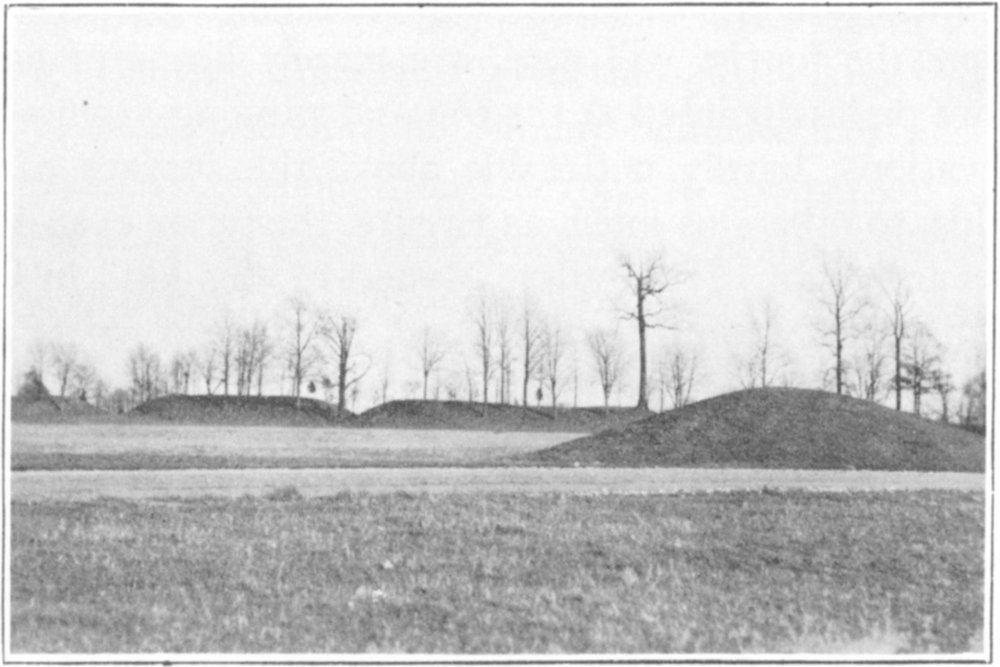
Fig. 3—The Walls of Fort Ancient.
9
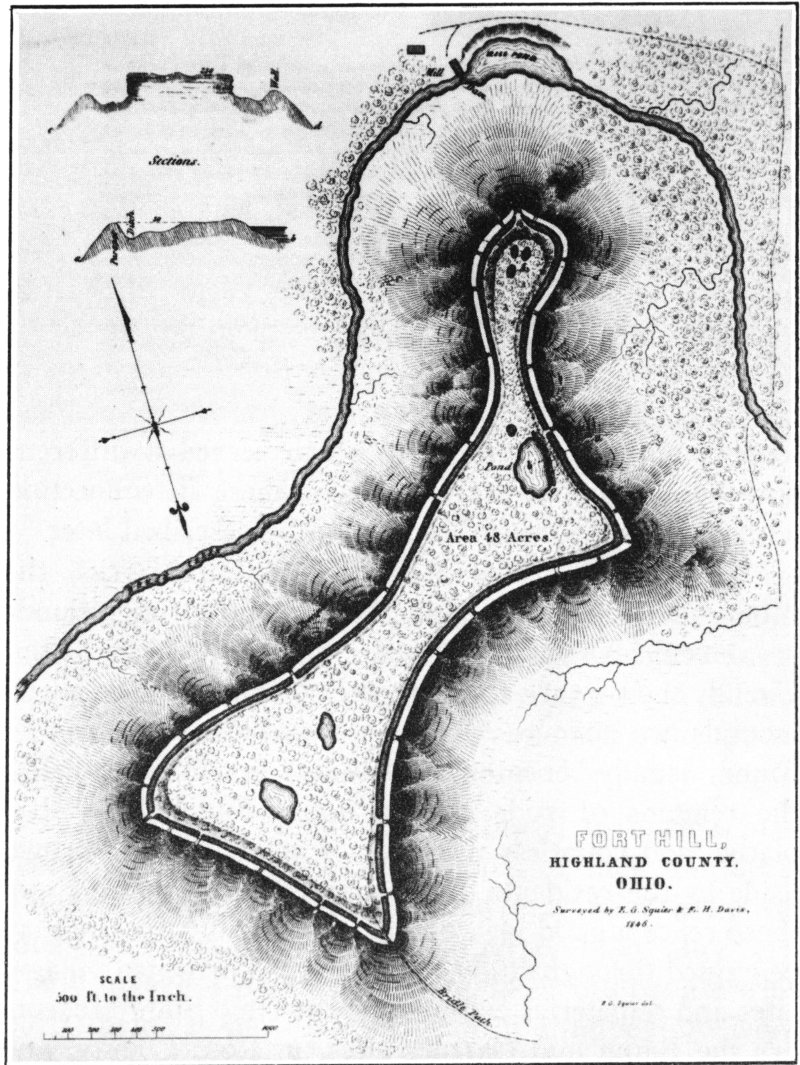
Fig. 4—Map of Fort Hill, Highland County, Ohio.
FORT HILL, HIGHLAND COUNTY, OHIO. Surveyed by E. G. Squier & F. H. Davis, 1846. SCALE 500 ft. to the inch.
10
Fort Ancient, perhaps the greatest prehistoric fortification in the United States, is permanently preserved as one of Ohio’s State Memorials. It consists of two principal divisions, known as the Old Fort and the New Fort, the two being connected by a narrow passageway enclosed within earthen walls.
Fort Hill, in Highland County, is not as large as Fort Ancient, but is finely preserved, very bold in outline, and most picturesquely located.
Other important Fortifications are Glenford Fort, in Perry County; Miami Fort, near the mouth of the Great Miami River; and Spruce Hill, in Ross County.
There is another type of earthwork, resembling somewhat the old forts, but which served a different purpose. We shall learn more of these in connection with Hopewell culture Mounds, to be described later.
In addition to the Mounds and Earthworks, the Mound-builders left behind them many burial grounds or cemeteries, and numerous village or town sites. Usually the two are found together, and often the burial mounds are near-by. In the village sites there may be found, usually beneath the plow line in cultivated fields, the remains of rude streets, house foundations, fireplaces, and countless numbers of relics lost or thrown aside by the residents of the site, centuries ago. From these relics a good idea of the people and their life may be gained through study. Some of the principal village-sites and cemeteries explored by the Ohio State Museum are the Baum and Gartner sites, in Ross County, and the Feurt village-site, in Scioto County. The largest of all the Ohio village sites is known as the Madisonville site, located near Cincinnati.
11
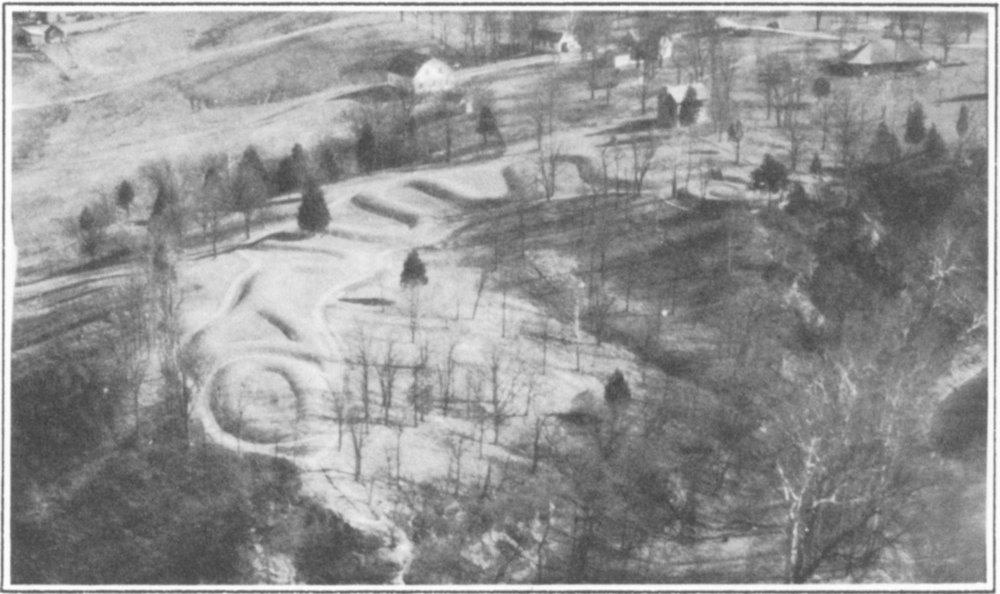
Fig. 5—The Great Serpent Mound, Adams County, Ohio.
Certain prehistoric remains of great interest are the Effigy Mounds, so-called because they were built in the effigy or image of birds and animals. The finest of these in Ohio is the Great Serpent Mound, of Adams County. Another interesting effigy mound is the Opossum Mound, near Granville, Ohio.
The Effigy Mounds are believed to have represented the totems or clan symbols of their builders. Thus the Great Serpent Mound may have been the totem of the Serpent or Snake tribe. They also very likely played a part in the religion of the people who built them, as most primitive people appear to worship natural objects.
Although most of the Effigy Mounds are found in southern Wisconsin, the Great Serpent Mound is the largest and finest known.
12
THE ARCHÆOLOGIST AND HIS WORK
All that we have seen and learned of the Mounds and Earthworks, up to this point, is merely what anyone, by using his eyes, might see and learn; in fact, just what the pioneers observed. In other words we have looked at them from the outside, without knowing the secrets buried inside them. And now, since the Mound-builders left no written history behind them, we must get acquainted with another branch of science in order to obtain the information we desire. This new science is known as Archæology, and the man or woman who works at it is called an archæologist. Archæology is really the science of old things; that is, it concerns itself with the things which human beings did before they became intelligent enough to write and leave behind them their own histories. Since he has no intentional records to guide him, the archæologist depends mostly on exploration or digging into ancient ruins and remains for his information. Thus he finds the rude relics of by-gone ages, relics lost or thrown away by their one-time users, and from these he pieces together the story of a people.
Having met the archæologist, we may now get an insight into the interiors of the mounds, cemeteries and village-sites of the Mound-builders. Let us go ahead of our story for a moment and explain that archæologists, as a result of their explorations, have found that there were numerous kinds, or cultures as he calls them, of Mound-builders. While all of them were closely related, and belonged to the same race, they differed greatly among themselves in manners and customs. Some of them were rather highly advanced in their civilization, 13 while others were rather backward, just as is true of the various tribes and nations of Indians of later or historic times. With some of them the trait or habit of building mounds was very important while with others it was only a sort of “side-line.” Some of them merely placed their dead upon the surface and piled earth above the remains to form a Mound, while others prepared carefully made tombs of logs within the Mound for the dead. Some were skilled in the use of copper and silver, the weaving of cloth and the making of potteryware, while others contented themselves with only flint and stone and the simpler arts of living.
VARIOUS KINDS OF MOUND-BUILDERS
In Ohio alone there were three outstanding kinds or cultures of Mound-builders, besides several less important ones. These three are known as the Fort Ancient, the Adena and the Hopewell cultures, taking their names from the places where their Mounds were first examined and identified. The Fort Ancient peoples were the least advanced of the three, yet they were the most numerous and prosperous of the prehistoric peoples of Ohio. Their old village-sites are numerous in the southern half of the State, as at the Baum, Gartner and Feurt sites, and always are accompanied by burial Mounds and cemeteries. A number of them have been explored by the Ohio State Museum where the relics are on display. They used no metals and had but little art, but they made many useful, practical things of flint, stone, bone, shell, clay and wood.
Adena peoples were more highly advanced than the Fort Ancient but were not nearly so numerous. They 14 worked copper into ornaments and were highly artistic in carving stone and bone. They are noted for their large shapely mounds, the great Miamisburg Mound being an example.
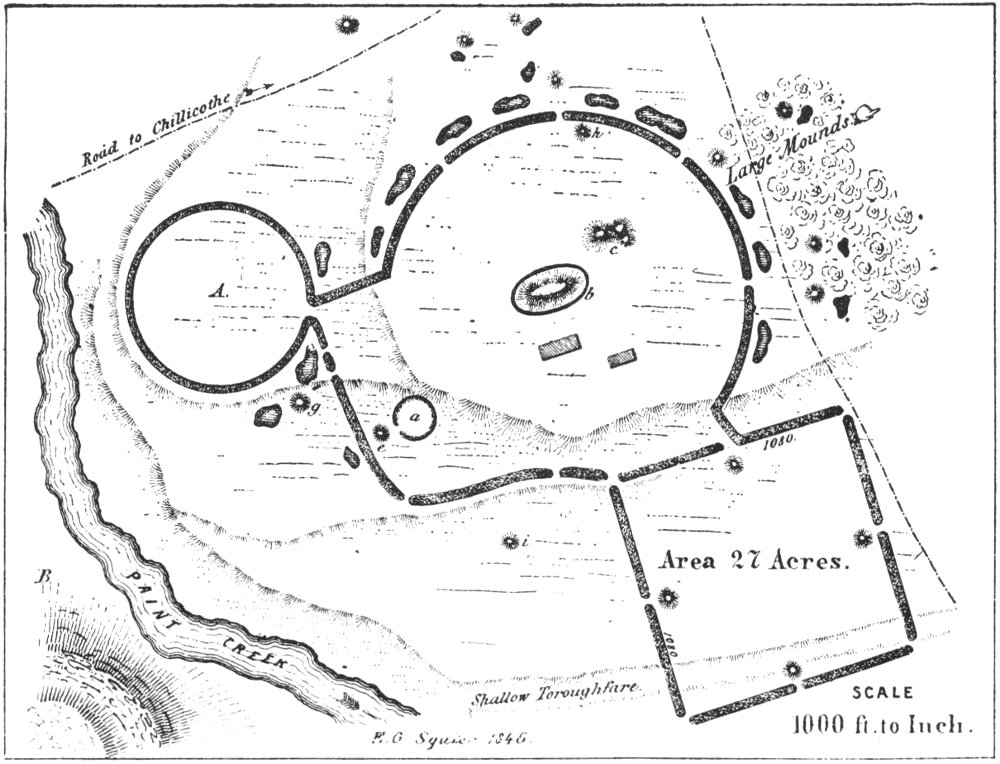
Fig. 6—The Seip Group of Earthworks, Ross County, Ohio.
The Hopewell peoples were not only the most highly advanced in Ohio, but in many respects in the entire country north of Mexico. They are noted for their many mounds, usually occurring in groups, and for the peculiar earthworks or enclosures in groups, earlier in this booklet. These earthworks or enclosures are known as “Geometric Enclosures,” because they are built in geometric forms, such as circles, squares, crescents, and so forth. They differ from the fortifications in that 15 they were used for social and religious purposes rather than for defense. Important examples of Hopewell works are the Hopewell Group, in Ross County; the Mound City Group, within Camp Sherman, Chillicothe; the Seip Group, near Bainbridge, Ross County; the great works at Newark, the Marietta works, and others. The Mound City, the Newark and the Seip Groups are now State Memorials and those at Marietta are preserved by local interests.
THE INSIDE STORY OF A MOUND
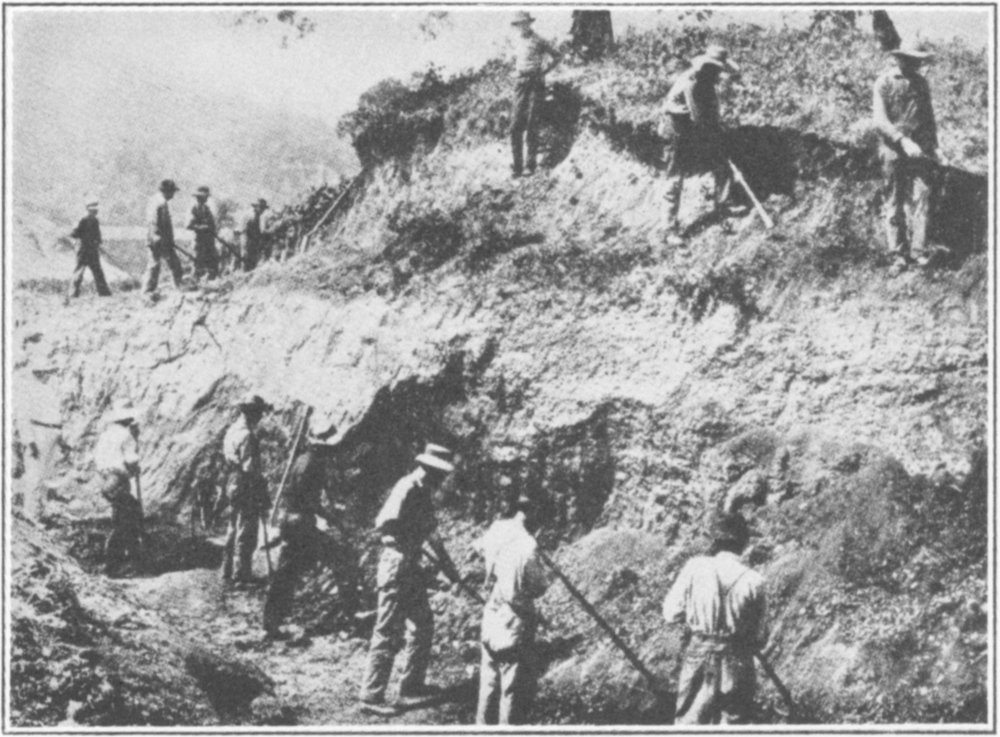
Fig. 7—Exploring the Seip Mound, Ross County, Ohio.
No doubt every reader of this booklet would like to take part in the actual “digging” of a mound. This, of course cannot be, since the actual exploration of a large Mound requires months and even years. But perhaps 16 we can do the next best thing; perhaps we can take part in an imaginary examination of a Mound, and in that way get an idea of how it is done and of what is found. Supposing we select a Mound of the interesting Hopewell culture. The Hopewell peoples, as we have seen, were very highly advanced and this fact, therefore, might lead the reader to expect too much of the other cultures, yet if we keep this in mind we will be on the safe side.
Let us imagine that our Mound is located in Ross County, in the charming Paint Creek Valley, somewhere near old Chillicothe, first capital of Ohio and ancient capital of the Mound-builders. Before us stands a mound of earth, 125 feet in diameter at its base and 25 feet in height. The field in which it stands is under cultivation but the mound itself, being too steep for farming purposes, is covered by a thicket of shrubbery and trees. An exploration party has arrived on the scene and is preparing to examine this ancient earthwork.
Workmen with picks and shovels step to the edge of the Mound and begin to dig, throwing the loose earth well behind them. The “boss” explains that the entire mound is to be removed by slicing it off, as a cake might be, in five-foot sections. We note surveying instruments, cameras, notebooks, everything in readiness. Teams and scrapers are waiting to take away the loose earth after it has been carefully examined.
17
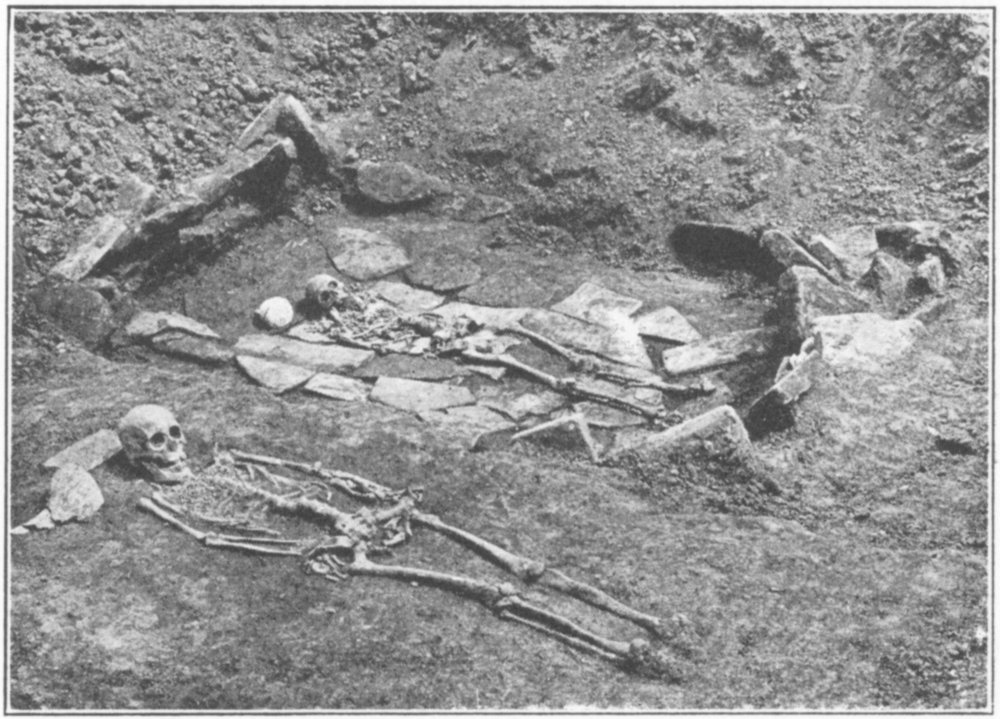
Fig. 8—Burials in the Hopewell Mounds, Ross County, Ohio.
The first of the five-foot slices having been removed there appears, at the level of the surrounding field, what looks like a cement floor. At the outer edge of this and following the curve of the mound we see post holes a foot or two apart in some of which are decayed posts. These post holes prove to the explorer that this Mound was built by the Hopewell peoples. When a Hopewell Culture band or tribe picked a site for a new home, he explains, one of the first things it did was to set aside a place for the burial of its dead and for worship, a sacred place. After clearing this spot of all underbrush and trees, the top-soil was removed and in order to make a firm floor they plastered this over with clay. On top of that was placed an inch or two of sand or fine gravel for a floor-covering. The next step was to secure some posts and set them in the ground around the edge of this area to form a wall. Twigs and branches of trees were woven among these and plastered with clay to keep out cold and rain. A thatched roof made of closely 18 woven twigs and boughs was placed over it and the sacred temple was complete. Into this they brought their dead for funeral ceremonies, burial and cremation.
Our attention is suddenly called to the actual work at hand. A laborer has struck his mattock into a loose spot in the face of the Mound. We are informed that this will be a burial and, sure enough, within an hour a human skeleton has been unearthed and lies there on the floor all ready to have its picture taken. The Hopewell people, we learn, made platforms of earth a few inches above the floor and after placing their dead on these they built cabin-like structures of logs over them and covered these, in turn, by small mounds of earth.
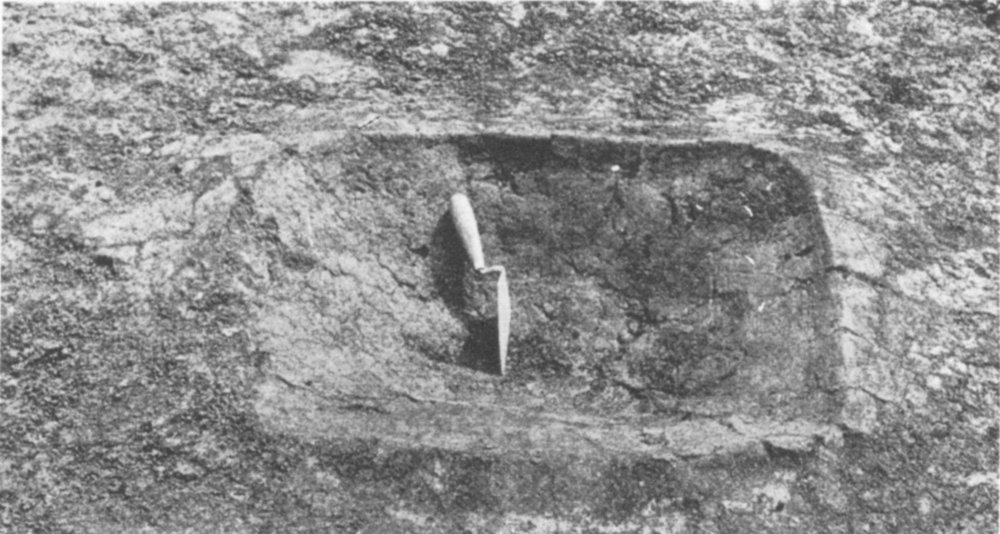
Fig. 9—Crematory Basin in a Hopewell Mound.
And now we come to the second burial which appears in every way like the first, excepting that instead of a skeleton there is merely a “hatful” of burned bones and ashes. This we are informed is a cremated burial. We can see no evidences that a fire has burned here and 19 we are curious to learn how the ashes and charred bones came to be so carefully placed in a small heap. These questions are answered when we find near-by a little rectangular basin of baked clay, shaped something like a cement horse trough, built into the floor. In this basin they had cremated the body and then had removed the ashes and burned bones to the prepared platform for burial.
Thus far in exploring this Mound we have found no relics; these two people must have been just “poor folks.” But now comes a third. This grave is larger than the others and, we are told, looks as if it might be a good one. It proves to be a double burial containing the skeletons of a male and female. Royalty, they must have been, judging from the many ornaments that were placed around them; helmet-shaped head-dresses made of copper; beads and bracelets made of the same metal; spool-shaped ear ornaments of copper, and hundreds, yes, thousands of fresh-water pearl beads, and pieces of cloth with colored designs painted on it.
The workmen have found another burial. This one may have been the chief of the tribe for, in addition to ear ornaments, a copper head-dress and a necklace made of bear-teeth, we find a large copper axe and beautiful spearheads chipped from what appears to be colored glass but which, we are told, is volcanic glass or obsidian.
From what we have seen during the exploration of this Mound we try to form a picture of how the builders of it must have lived. In this the archæologist assists by telling us that many other things besides those which we have seen here are found with burials. The Mound-builders 20 made artistic pottery; from grasses, plants and trees they collected fibers which they wove into fabrics; from stone, flint, bone, shell, wood, copper and silver they made their implements, cooking utensils and ornaments. Many of the materials which they used had been brought from distant sources. They found copper and silver near Lake Superior which they hammered and ground into the desired forms. They obtained grizzly-bear teeth for necklaces from the Rocky Mountains; lead ore from Illinois; sea shells from the Gulf of Mexico. They may have secured some of these things by trade or by sending out expeditions, probably both. A great deal of their time must have been spent in gathering mussels from the streams in order to secure the thousands of pearls they possessed.
And now that we have seen how the Hopewell peoples buried their dead, we ask “Where did they live?”
Like the ancient Mexicans, the Hopewell peoples, and some others of the Mound-builders, gave most of their attention to the dead rather than the living. The Pueblos and Cliff-dwellers built for the living, burying their dead in the quickest and easiest manner. The Mound-builders built mainly for the dead. Not far from the mounds are found the sites of their villages or towns but the only evidences of their homes are the post molds and fireplaces showing where their rude huts or tepees have stood.
In the fields surrounding their villages they raised maize, squash, beans, and tobacco; but they depended mainly on the game which they secured in the chase, fish from the streams, and wild fruits, berries and nuts from the forest, for their food supplies.
21
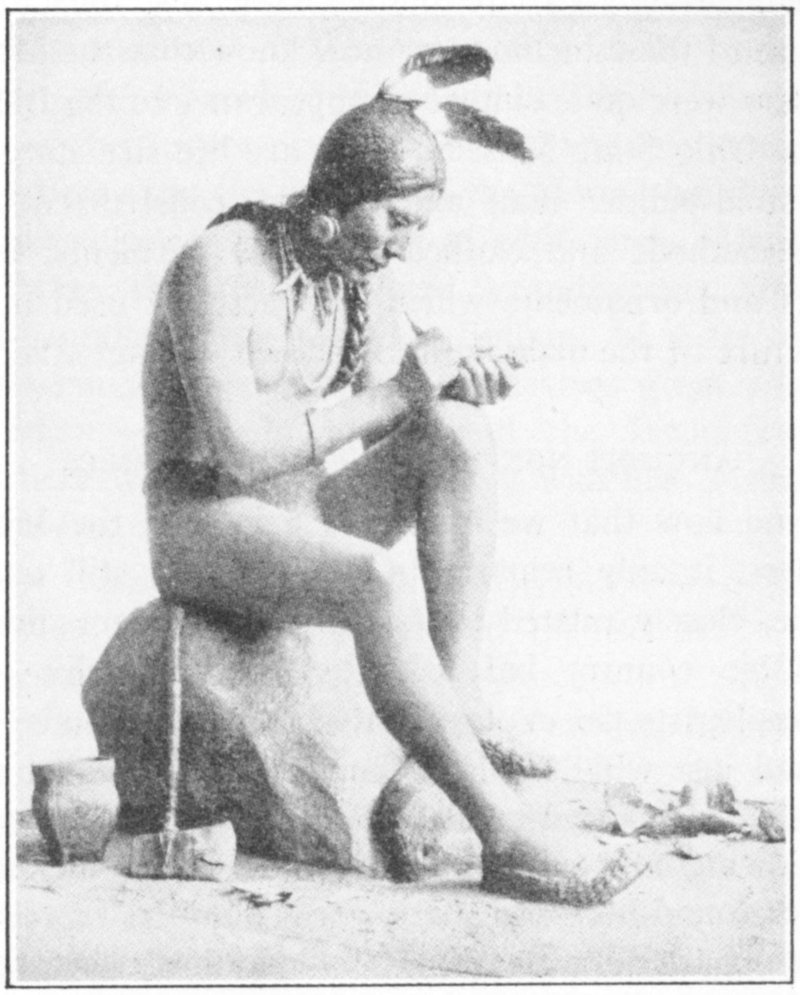
Fig. 10—Statue of a Mound-builder, in the Ohio State Museum.
Having learned something of what the Mound-builders did and how they lived, we naturally are curious to know what they looked like. Formerly it was believed that the mysterious builders of the mounds were a race of giants and that they were altogether different in appearance from any other people. Careful study of their skeletons however proves that this is not true. Scientists are able to determine almost exactly how persons looked, no matter to what race or age they belonged, 22 through a study of their skeletons, and by making use of these methods we now know that the Mound-builders were quite similar in appearance to the Indians. In the Ohio State Museum there are life-size statues of a Mound-builder man and woman, constructed after these methods and clothed with the garments, implements and ornaments which they actually used in life. A picture of the male figure is shown on page 21.
ANCIENT NON-MOUND-BUILDING TRIBES
And now that we have had a look at the Mound-builders, it only remains to be said that still another people, closely related but somewhat different, lived in the Ohio country before the coming of white men. Archæologists, in exploring the ancient Mounds, have learned just what kinds of implements, ornaments and utensils the Mound-builders used. But this is not all. In plowing and cultivating the fields, and in shallow graves found here and there, great numbers of relics of kinds not used by the Mound-builders have been found. Numerous collections of such relics, including arrow and spear points, grooved stone hatchets or tomahawks, stone pestles or corn grinders, ornaments of slate and stone, rude pottery vessels and other things somewhat different from what the Mound-builders used; are to be seen in these private collections. Some of them have been found on almost every farm in Ohio and almost every family has a few of these “Indian relics.” And the name “Indian relics” exactly describes them, because the archæologist has found that they were made and used by ancient tribes of Indians who lived in Ohio, in 23 prehistoric times, but who did not build Mounds. It is probable that some of them were here at the same time as were the Mound-builders, but it is also likely that some of them were earlier, and perhaps they continued to live here after the passing of the Mound-builders, and up pretty close to the coming of white men. Doubtless they were the ancestors—the grandparents and the great-grandparents—of the Indians of later times. They seem to have belonged to the two great families of Indians—the Algonquins and the Iroquois—who were here when the Ohio country was first visited by white men.
Just who these ancient Indian tribes were—that is, just what they may have called themselves or what others may have called them—is not known. Although the Shawnee, Miami, Delaware, Wyandot, Mingo and other Indian tribes were living in Ohio at the time of settlement, these tribes all were newcomers in a sense; that is, they had come into the country only a century or two earlier, mostly from the east and south. The earlier tribes, which we might call the native tribes, had been driven out of the country along about 1650 by a great raid or invasion carried on by the Iroquois Indians of New York state and the St. Lawrence Valley. This was about a century before the coming of white men, and it is believed that it left the Ohio country almost without Indian residents, a sort of no-man’s land, until the Wyandots, Miamis and others arrived.
And now as to the interesting questions concerning the Mound-builders: Who were they? Where did they come from and when? Why did they build Mounds? What became of them?
24
QUESTIONS CONCERNING THE MOUND-BUILDERS
Time and space will not permit us to discuss these queries very fully, but perhaps we can tell enough about them in a few lines for the present purpose. Archæologists are now pretty well agreed that the Mound-builders, the Indians and all other peoples who lived in the Americas before the coming of Christopher Columbus, belonged to a single great race, which we may call the American Indian race. They believe that the Western Hemisphere was first peopled directly from Asia, by way of Bering Straits, by bands of savages or barbarians belonging to the Mongolian or Yellow race. These simple folk appear to have migrated to America soon after the disappearance of the great ice glaciers which once covered all of our northern country, reaching as far south as central Ohio. Geologists tell us that this happened some 12,000 to 15,000 years ago.
And so, from the Arctic regions on the north, to the southern tip of South America, these yellow-skinned immigrants spread until they peopled both continents. In Mexico, Central America and Peru, they came to have great civilizations, and to be known as the Aztecs, Incas, and others. Just why some of them became so highly civilized while others, like some of our Indians, remained the lowly barbarians that they were, is explained partly by what the archæologists call environment; that is, by weather, rainfall, soil, natural food supplies as game, fish, wild fruits—in a word, environment means the things we find around and about us. In the end we find that while all these peoples belonged to the same race they had formed different habits and 25 customs and were really very different from one another in what is termed culture.
As to what became of the Mound-builders, we cannot give very satisfactory answers. Some of them must have been destroyed by famine, disease, and warfare with enemies, just as were many of the nations of early history, in the Old World. Others probably gave up the habit of building Mounds, for some reason or other, and contented themselves with living just like other Indians. In this case, they were of course, the ancestors of the Indian tribes which we have known in historic times.
In the following pages there are shown pictures and descriptions of the commoner relics found in the fields and taken from the Mounds. Most of these objects were used both by the Mound-builders and the Indians who did not build Mounds. Where this is not true, it is made plain in the descriptions. It is hoped that these pictures and descriptions will help the reader to understand the relics so freely found in Ohio, and that they will encourage those who may be interested further to visit the Ohio State Museum, in Columbus. Here the finest collections of Indian and Mound-builder relics to be found anywhere are displayed for the study and enjoyment of the public.
HOW THINGS BEGAN
The Mound-builders, and all other peoples at some time during their existence, lived in the Stone Age period of human development. Throughout the countless centuries of the Stone Age, human beings did not know the use of metals, as such. Indeed, it is only 26 during the past few centuries that men have known such things as iron and steel, to say nothing of other metals. Some of them made limited use of raw metals and minerals, believing them to be only peculiar kinds of stone, never dreaming that they could be melted and refined and cast into implements and ornaments. Stone and Flint were the “metals” of the Mound-builders and other primitive peoples, while bone, shell, clay, wood and fibers were also much used. If peoples of the Stone Age had not made their humble beginnings, we would not be today living in the Age of Iron and enjoying the conveniences of civilization. While the specimens illustrated and described in the following pages belonged altogether to the Mound-builders and the prehistoric Indians, they are very similar to those used by early peoples the world over. Their study will aid us in understanding and appreciating how things began.
Those who may wish to know more of the story of the Mound-builders and the Indians will find numerous books on the subject in their local libraries. When not available otherwise, they may be found in the Library of the Ohio State Museum, in Columbus. The following are recommended:
Publications of the Ohio State Archæological and Historical Society, in which may be found articles concerning the Ohio Indians, and reports of explorations of the ancient mounds.
The Mound-builders, by H. C. Shetrone, published by D. Appleton & Co., in 1930.
27