Chapter III · THE ANASAZI CULTURE (continued 2)
Reading edition
There was undoubtedly a general trend toward a coalescence of the population, however, and it is interesting to speculate on the reason for this tendency. The fact that the great houses were admirably suited to defense has given rise to the theory that the people began to move together for protection against an outside enemy. There can be no doubt that the need for defense was taken into consideration in the building of the big structures, but this cannot be the whole answer. There is some evidence of violence, but not a great deal. The utmost care was taken in the construction of the great houses, and much time-consuming work went into decoration. When danger threatens, speed becomes the primary consideration, and the amenities of life are sacrificed. There were many small houses in which a good portion of the population lived, and these were not always in locations suitable for defense. Since defense obviously was a consideration in the minds of the builders of the great houses, and since there is some evidence of violence and bloodshed, we cannot discount the role which warfare may have played in architectural development, but it seems certain that this was not the only factor which influenced this development.
Another interesting theory has been proposed.[81] It is based on the fact that, not only was there great building activity during this period, but also that there was much restlessness and moving about. Walls were torn down and rebuilt, and many buildings were abandoned and new ones erected, without any reason that is apparent from archaeological evidence. It has been suggested that this restlessness and the intensity with which building activities were pursued may have been an outlet for the repressions and inhibitions of a group which had a cultural pattern with set rules against violence and excess. There is great variation among the different groups which make up the Pueblo Indians of today, but, in many cases, they have a cultural pattern that upholds the golden mean and discourages all extremes.[4] Such a way 80 of life might well produce certain repressions which would result in a general restlessness and desire for change and activity.
The chief objection to this theory lies in the defensive character of the great houses, which would suggest that violence was not unknown. In times of war, desire for change and action is readily satisfied, and socially approved reasons are provided for breaking away from many of the established rules of society. Undoubtedly, though, the urge which resulted in the creation of great community dwellings which were in essence city-states, came to some extent from within the people themselves and was not entirely the result of outside influences. Many factors undoubtedly played a part, but the building of the big houses must, in some measure, be regarded as an architectural vogue which, to a great extent, stemmed from the desires as well as the needs of the people.
The causes which led to the abandonment of the great houses and which resulted in the end of this phase of Pueblo development are just as difficult to understanding as are those which led to their being constructed in the first place. By 1300 A.D., the entire northern section of the Plateau had been deserted. This was not the result of a single mass migration, but rather of a wide general movement. First one big center and then another was deserted. Even in these centers themselves, all the inhabitants did not leave at the same time; rather it seems that small groups drifted away, a few at a time. Eventually, though, the entire northern frontier was deserted, and no living person who had contributed to the growth and flowering of the culture remained. Naturally, this strange departure has given rise to much conjecture. It would be pleasant to be able to say that such and such a cause produced this result. Unfortunately, anything connected with the human race is rarely quite so simple.
The invaluable tree-rings have not only provided us with dates for various events, but have given us information about climatic conditions which undoubtedly had a tremendous effect on the movements of the people with whom we are concerned. From tree-ring records we know that during the centuries when the hopes and fears of the prehistoric Pueblo Indians were centered on their crops there were bad years as well as good ones. We know of periods when rainfall was below normal, and of others when there were real droughts. Most of these were of short duration, however, until the disastrous period between 1276 and 1299 when there was practically no rain, and the Southwest suffered an extremely severe drought. It was during this 81 period that the northern frontier was finally abandoned, and the people moved to new localities. Some archaeologists have felt that the disappearance of the Pueblos from their old homes can be traced entirely to this disastrous drought. If all the communities had been abandoned at the same time, this would be a logical assumption. Actually, the time of the abandonment of all of the main centers does not fall between these two dates. Some were deserted prior to the beginning of the great drought and a few continued to be occupied after the dry period had begun.
One of the most interesting theories yet advanced is based on the suggestion that a really severe drought was not necessary to upset the economy of the Pueblo farmers.[10][39] Some dry farming was practiced and there was some ditch irrigation, but the greatest dependence seems to have been on flood-water farming in valley bottoms. This is a system whereby water is simply diverted and distributed through the fields when floods come down the valley. During periods when rainfall is deficient, although not sufficiently so to warrant the use of the term drought, steep channels, known as arroyos, are cut into flood plains; the water-table is lowered, and flood-water fields become useless. Not only may the fields themselves be dissected by the arroyo cutting, but water can no longer be diverted for flood irrigation. If, as seems probable, the great drought was only the climax of a period of increasing dryness when much farmland was lost through arroyo-cutting, it is not hard to understand why the Pueblo farmers might move on to more favored localities.
Another theory advanced to explain the departure of the ancient agriculturists, and one which has enthusiastic supporters, is that they were driven from their homes by fierce nomadic tribes who were attracted by the wealth of food stored in their granaries.[73] Much of this thinking is based on what we know of nomadic raids in general, and the records of the terrible Navajo and Apache depredations from the middle of the seventeenth century until their comparatively recent subjugation by the United States Army. For years it has been the practice simply to accept the belief that fierce warlike tribes had preyed on the peaceful Pueblos for centuries. More recently, however, some searching questions have been asked, and this theory is under close scrutiny.[80]
It is granted that the type of construction employed in the Great-Pueblo era indicates some need for defense, but it does not show against whom the defense was needed. Assuming that there were 82 nomadic tribesmen, ready and anxious to carry away the patiently accumulated wealth of the Pueblos, we must ask ourselves what advantage they would have had over their victims which would have enabled them to carry out their depredations. If the nomads had been mounted, as they were in later times, they would have had the advantages of speed and mobility which are essential for surprise attacks—the only type which would be of much avail against a heavily fortified structure. Only much later, however, were horses introduced into the Southwest; and at this time the attackers would have had to travel on foot.
Greater numbers, or superior organization, might have given them an advantage, but we can hardly believe that the nomads were as numerous or had as good an organization as that of the people of the Pueblos. The region in which they presumably lived would certainly not support a large population, and particularly one with an essentially parasitic economy which did not produce. With such an economy, people cannot live too close together without exhausting the available resources, and a thinly spread population is unlikely to be highly organized.
Great physical superiority may be another factor in the winning of battles between people who have not yet become so civilized as to have machines which will enable one individual to kill thousands of his fellow men. Any physical superiority, however, would seem to rest with the sedentary people who had an assured food supply. Moreover, their life was still sufficiently rugged so that there can hardly be any question of their having been greatly weakened by soft living.
Doubtless, there were sporadic raids by nomads, and these may have had a cumulative effect in upsetting Pueblo economy. The role played by periods of arroyo-cutting and by droughts can certainly not be overlooked. These may well have done more than reduce the food supply. When food is scarce, raids are more likely to occur, and it is entirely probable that the relationship between various groups deteriorated as prosperity decreased. Toward the end of Great-Pueblo times we find increasing signs of warfare in the form of burned buildings and unburied bodies, many of which show evidence of violence. The latter are of the characteristic Pueblo type, however, and would seem to indicate warfare between people of the same blood.
83
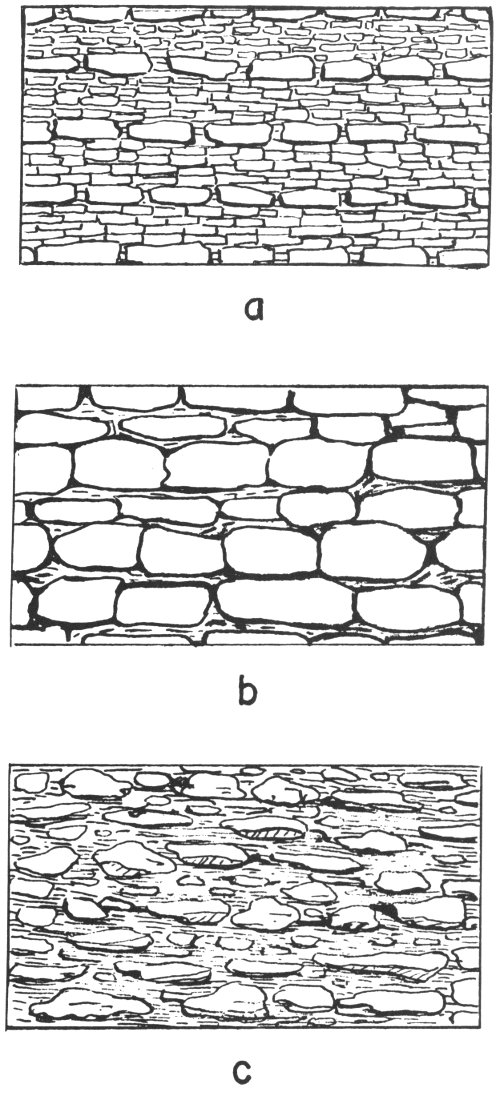
Fig. 28—Types of Great-Pueblo masonry. a. Chaco, b. Mesa Verde, c. Kayenta.
84
The most logical theory seems to be that many factors contributed to the great change which occurred in the Anasazi province. Doubtless, climatic conditions were the great underlying cause, but there may have been others. We cannot afford to confine our attention entirely to material causes, but must take into consideration even the possibility that fears, engendered by religious beliefs, may have played a part. All this, however, is largely in the realm of conjecture, for, with no written records, there can be no first hand information.
Whatever the causes, the end of the Great-Pueblo period was marked by a redistribution of population and a general trend toward concentration in places where conditions were most favorable. While the chief movement was from the north, there was also some withdrawing from the south. By the beginning of the following period, which is sometimes known as the Regressive-Pueblo phase, much territory throughout the Plateau area was deserted. Main population centers were confined to the central area of the Plateau. This includes the Little Colorado drainage, particularly the section in the vicinity of the Hopi mesas and the Zuñi region, and the Rio Grande drainage.
Although there were certain traits which characterized the culture as a whole during the Great-Pueblo period, there was a somewhat different development in each of the three main culture centers which flourished at this time. In each of these there was an intense local specialization in architecture and in pottery making.
The latter, in fact, became so highly specialized that products of the various areas may be identified no matter where they may be found. No two pieces of pottery of each kind will be exactly alike, but they all conform to a common ideal. It must be stressed that, by culture center, we do not mean an entirely restricted area, but rather a nuclear section in which specialization was most intense and from which influence spread, often over a large area.
The oldest settlement, and one which continued to be a cultural leader with far-reaching influences for centuries, lies in the Chaco Canyon of New Mexico.[61][73][95] The Chaco River is a tributary of the San Juan which flows through northwestern New Mexico. Within the canyon are found twelve large ruins, which include some of the most spectacular of the ancient buildings erected in North America, and innumerable smaller ruins. The twelve great communal buildings were more or less rectangular, oval, or D-shaped structures, with up to four stories on three sides, and a single-storied row of rooms which bowed out to the southeast. Within the walls was a great open court or plaza which contained numerous kivas. Other kivas were incorporated within the building mass. It is interesting to note that the traditional underground character of the ceremonial chamber was preserved through filling in the space between the circular walls of the kiva and the straight walls of the other rooms.
85
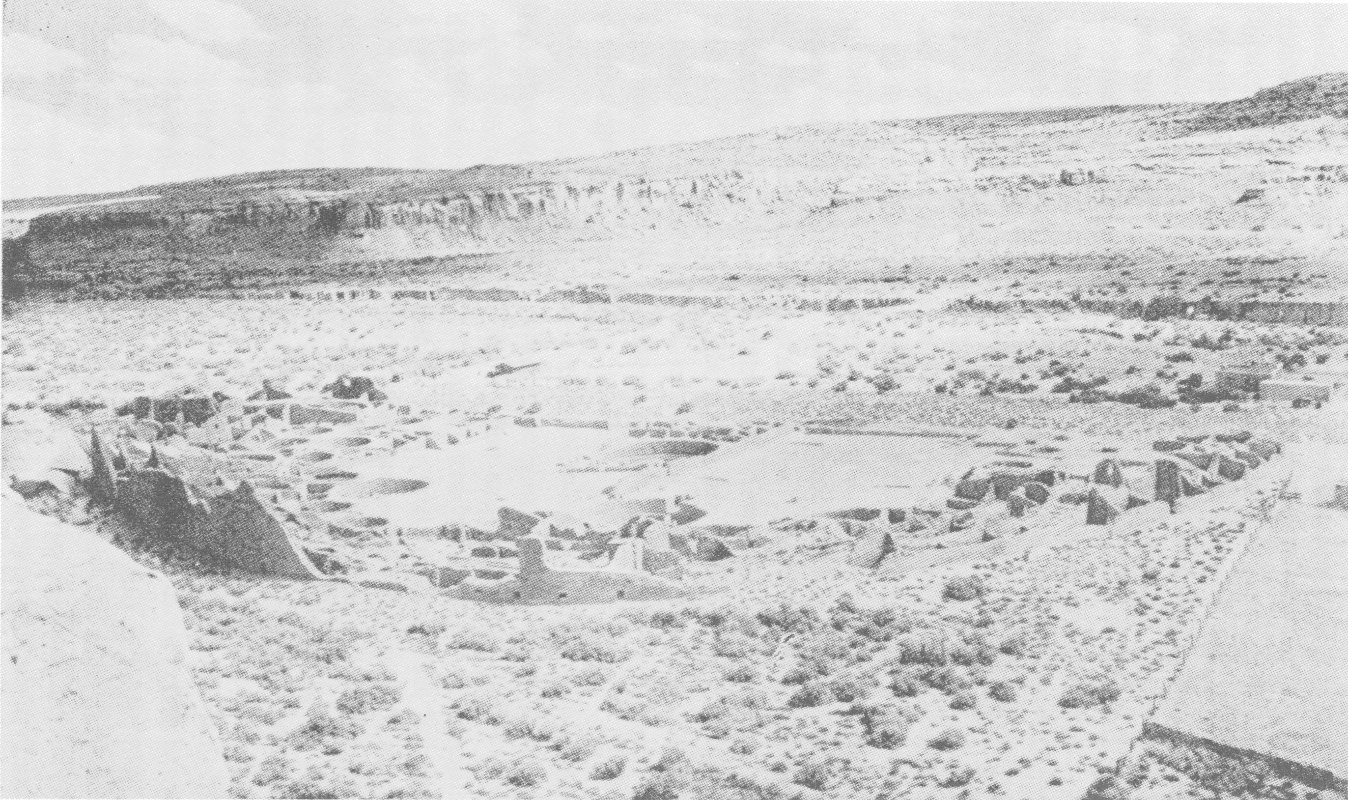
Fig. 29—Pueblo Bonito, Chaco Canyon National Monument, New Mexico. (Courtesy National Park Service.)
86
One of the largest and most famous Chacoan structures is called Pueblo Bonito.[71] It was a town, consisting of a single building, which covered over three acres of ground and contained at least eight hundred rooms. It has been estimated that it could have sheltered 1200 inhabitants, and it was the largest “apartment house” in the world until a larger one was erected in New York in 1882. Building had begun at Pueblo Bonito as early as 919 A.D., but it did not reach its final form until 1067 A.D. or later. It is believed that the more definitely planned settlement may have been the work of new and more progressive people who moved into the area.
Pueblo Bonito, as it stands today after archaeologists have cleared away the dust of centuries and exposed it to view, is truly a remarkable structure. Even in ruins, it is not too difficult to picture it as it must have been during those long ago times when it was one of the great cultural centers of the Southwest. On three sides of the center court was the main building, terraced back from a one-story level in front to four stories in the rear. With each succeeding row of rooms the height was increased by one story. Extending from the ends and enclosing the side to the south was a one-story row of rooms. Outside of this single tier was the rubbish heap around which retaining walls were built. The center court contained numerous kivas, and others were incorporated in the building mass.
In addition to the regular kivas, whose diameter rarely exceeded twenty-five feet, there have also been found in Chaco Canyon, Aztec, and other sites with Chacoan architecture, big circular structures with diameters of from forty to sixty feet ringed by a concentric row of small rooms. These are known as Great Kivas. They are thought to have been religious edifices which served an entire community, while the smaller kivas probably belonged to various clans or societies. Great Kivas, though in a simpler form, were apparently present as far back as Modified-Basketmaker times when most rites were performed in dwellings, but a larger place was needed for ceremonies in which the people of a whole community or district participated.
Architecture in general reached its highest development in Chaco Canyon, and there was real beauty as well as solidity of construction. The walls were massive, although there was a decrease in thickness with succeeding stories, as the weight resting upon them was reduced. The most distinctive type of masonry consisted of a center 87 portion of stone and adobe or rubble, faced on two sides by a veneer of horizontally laid thin, tabular stones. These are so perfectly fitted together that a knife blade can scarcely be inserted between them. Sometimes this particular type of stone was not available and it was necessary to use more massively bedded stones which had to be dressed to the proper shape, but the masonry was uniformly good. Great beams, stripped of bark and beautifully dressed, were placed across the chambers. Small poles, which were finished with equal care, were placed at right angles to the main beams and so spaced as to form patterns. Over these lay carefully fashioned mats of peeled willow, followed by a cedar splint layer. A thick coat of earth overlay the entire mass, forming a floor for the room above as well as a roof for the one below.
The use of big logs, which do not bear the scars indicative of transportation over a long distance, and the common use of willow, which must have been abundant, suggest conditions different from those of today. It is not known with certainty whether there has been a real climatic change. Many believe that, when hoofed animals were introduced by the white man, the grass cover was destroyed, and that this led to the cutting of arroyos which carried off flood waters and lowered the underground seepage and as a result the land became progressively drier, but others believe that there were earlier periods of arroyo-cutting.
Although severe erosion did not occur until a later time, it was a process with which the ancient inhabitants of Pueblo Bonito were familiar. Overlooking the Pueblo was a tremendous rock with an estimated weight of 30,000 tons, detached from the cliff and seeming so precariously balanced as to threaten the building. At the foot of the rock the prehistoric inhabitants erected a brace of wood and stone masonry. At first glance it seems a rather pathetic effort, but actually it may not show any ignorance on the part of the ancient Bonitians, but rather a familiarity with certain engineering principles which suggested that protecting the base of the rock would curtail erosion and help to prevent the threatened disaster. The fears of the prehistoric inhabitants were never realized in their time, for it was not until January 22, 1941, that the threatening rock finally fell. It damaged one hundred feet of the back wall of the pueblo and twenty-one adjacent rooms.
Rooms in Chaco-Canyon structures were relatively large and high ceilinged, with plastered walls. The inner rooms, which lacked light 88 and air, were used for storage. Household activities were not confined to the rooms, for the roofs of the lower tiers provided additional living space, and much work, such as the preparing of food, the making of pottery, and the flaking of arrowheads, probably took place in the open. Fire places are rare in the rooms, and it seems likely that much of the cooking was done outside—in the courts and on the roofs. At first there were doorways and high windows in the outer wall, but these were later blocked off with masonry. The single gateway in the front of the pueblo was first greatly narrowed and then entirely closed, so that the great house could be entered only by means of a ladder which, if necessary, could be withdrawn. This is some of the best evidence of the fear of attack which must have existed.
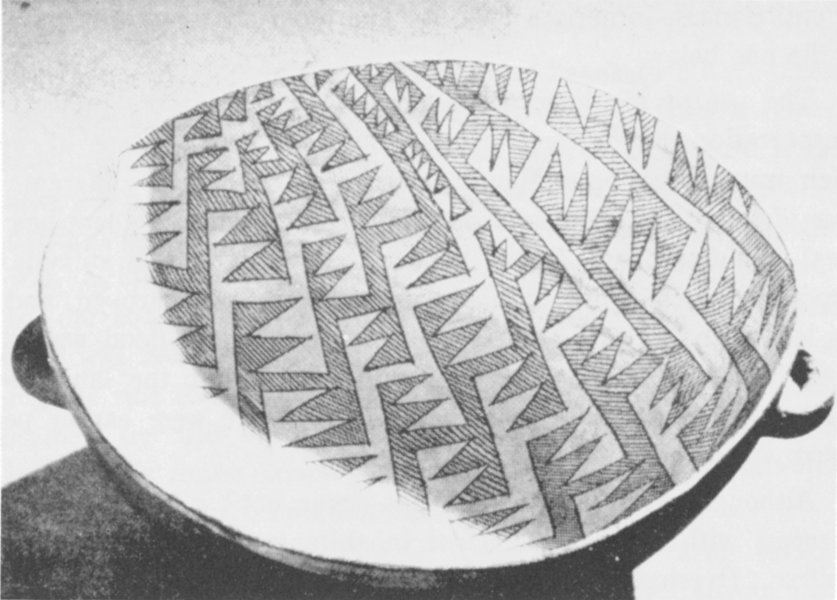
Fig. 30—Chaco black-on-white pottery of the Great-Pueblo period. (Courtesy The American Museum of Natural History; Taylor Museum photograph.)
In its own way, pottery reached as high a point of development as did architecture. The main wares were black-on-white and corrugated. The former was thin and hard, usually a good white, but sometimes a light gray. Designs were, for the most part, hatchured patterns with the thin filling lines surrounded by heavier boundary lines. Band decorations were widely used. Bowls, pitchers, and ladles were the most usual shapes, but cylindrical vases and effigy pots with human figures were not unknown. The cooking ware was corrugated and usually consisted of large jars with wide mouths. This pottery 89 was very well made, with attractive patterns produced by making sharp, clear-cut, indentations in the corrugations. Some red pottery has also been found.
Neither the architecture nor the pottery which we refer to as being of the Chaco-Canyon type was limited to the narrow confines of the canyon itself. They are also represented in such places as the great ruin at Aztec, New Mexico,[94] and at various other sites in the San Juan area. In some cases, particularly in northeastern Arizona, architecture was Chacoan in character, but pottery was not.
At Chaco Canyon, and in other Great-Pueblo centers, various minor arts also flourished. Feather cloth continued to be made, and still provided robes and blankets for the living and wrappings for the dead. Flocks of domesticated turkeys were kept to provide feathers, and parrots and other brilliantly colored birds were brought from the south. Cotton fabrics were steadily increasing in importance. Some large blankets were woven which must have required the use of an upright loom. Colored yarns were used, and there was some painting of finished fabrics. Variations in weaving also provided decoration. There is no evidence that the people wore any tailored garments, but the remains of a poncho with a slit for the head has been found. There were also some garments of dressed buckskin, in addition to those of feather and cotton cloth.
Some sandals with notched toes were woven of fine cord, but this art had degenerated and decoration was less elaborate, both as regards colored and raised patterns. Most sandals were of plaited yucca leaves, and many had square toes. Twined-weaving does not seem to have survived. Coiled baskets were still produced, but they were not plentiful. They were of a finer weave than those of the preceding periods but had fewer colored designs. Yucca ring baskets were extremely common. These were made by fastening the outer edges of a bowl-shaped mat, made of twilled yucca leaves, over a wooden ring. Twilled mats of rushes or reeds, were made in quantity and were widely used as floor and roof coverings. Tubular pipes were made of both clay and stone. These are rarely found whole, and it is thought they may have been intentionally broken—possibly to avoid profanation after use in sacred rites.
It was in the field of ornaments that the minor arts of the Chaco people reached their highest development. Olivella-shell beads were still widely used, and there were also stone beads and stone and shell pendants carved into the form of birds and animals; but it was turquoise 90 which provided the material for the finest ornaments. Some beautiful mosaics were made of turquoise, and it was also used in the making of beads. One incomparable necklace found at Pueblo Bonito contained twenty-five hundred beads and four pendants of magnificent sky blue stones.[71] All were shaped and polished with a skill that would do credit to a modern jeweller with all his highly specialized tools. An unbelievable amount of work must have gone into the production of such an ornament when only stone tools were available. Unfortunately we do not have many such specimens—due to the mystery which surrounds the final disposition of the remains of the ancient inhabitants of Pueblo Bonito.
Although burials are commonly found in the refuse heaps associated with the small dwellings of Chaco Canyon, the majority of the dead of the great communal houses have never been found. Occasional burials have been found but not enough to account for even five per cent of the deaths which must have occurred during the period of occupation. Many of the graves which have been found in abandoned rooms had already been looted by pre-archaeological grave robbers. The few undisturbed interments which have been discovered suggest that grave offerings were extremely rich, and, with such an incentive, archaeologists have searched far and wide for the ancient cemeteries, but, as yet, without success. There is no indication that cremation was practiced, so there is still hope that some day we may find the spot where the ancient people laid the dead to rest, and so learn more of their arts and crafts.
Some idea of the remarkable finds which may yet be made may be gained from a burial found in Ridge Ruin, a Great-Pueblo site about twenty miles east of Flagstaff, Arizona.[88] Here was found the body of a man interred with over six hundred articles, many of which show the most remarkable workmanship. They included pottery, beautiful baskets, fine turquoise mosaics, stone and shell ornaments, and hundreds of finely flaked arrowheads. This was of course an unusual burial, and many of the offerings were ceremonial objects such as would be placed in a grave only under extraordinary circumstances, but it gives some idea of the wealth of material which may yet be found and which will contribute to our knowledge of the ancient Pueblo culture.
The great dwellings of Chaco Canyon apparently were abandoned in the twelfth century, and there is no doubt a fascinating story connected with the abandonment of these huge buildings which were erected with so much labor and finished with such care. It is a story 91 which we do not yet fully understand, and, to a great extent, we can only guess at the causes which underlay the migration. It was probably the first phase of the general movement which eventually involved the entire population of the northern part of the Southwest, but it is even more difficult to account for than some of the later migrations, for there were no particularly severe droughts at this time. There were some dry years, however, which may have led to disastrous arroyo-cutting.
Some of the most famous of all buildings of this period are those of Mesa Verde,[73][95] whose location in high cliffs has led to the use of the name “Cliff Dwellers” for the people who lived here from the middle of the eleventh century until the latter part of the thirteenth. Mesa Verde is a large plateau in the drainage of the Mancos River in southwestern Colorado. Here in great, high caves, protected by massive sandstone overhangs, but open to the sun, were built huge houses which were really cities. These pueblos were in many essentials like those of Chaco Canyon and other open sites, but they seem to have grown by accretion rather than according to a fixed plan, and the shape of the structures was largely determined by that of the caves which sheltered them.
There are certain unmistakable differences between the architecture and pottery of Chaco Canyon and of Mesa Verde. As in the case of the Chaco culture, Mesa Verde traits were not confined to the type locality, but had a far-reaching influence. Numerous ruins with the same basic characteristics, but not necessarily in caves, are found along the Mancos River and for some distance to the east and to the west. After the abandonment of the Mesa Verde proper, the influence became quite important in the south.
At Mesa Verde walls were thinner than in the Chacoan houses. This can probably be traced to the material used, as well as to the fact that the cave ceilings somewhat limited the height of the buildings, and with the reduced strain, thick walls were not needed. Flat tabular stones were not available, and walls were constructed of massive stone which was shaped into large, loaflike, blocks by pecking. Walls were of solid rock with no center fill of rubble or earth, and little mortar was used.
92
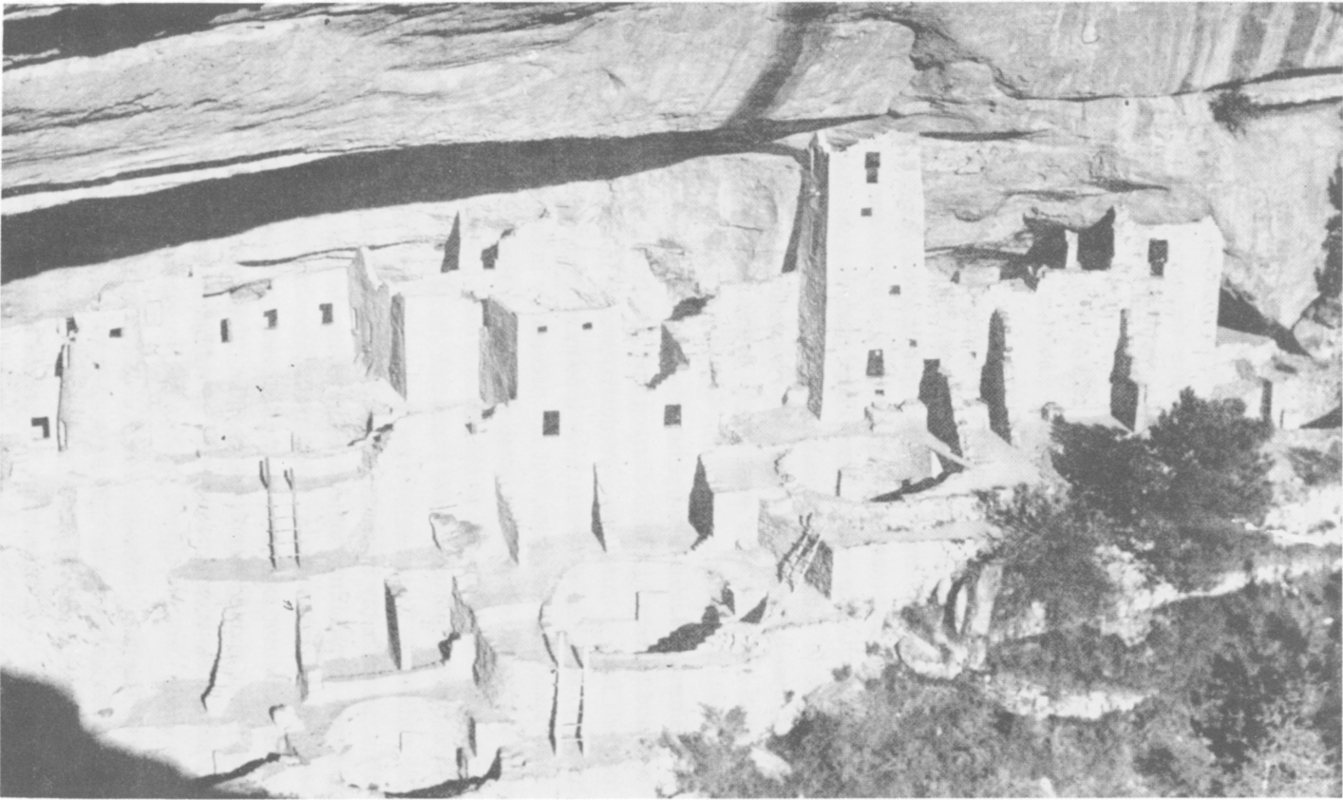
Fig. 31—Cliff Palace, Mesa Verde National Park, Colorado.
93
Of the many ruins in Mesa Verde National Park the most famous, and also the largest, is Cliff Palace.[125] With its many rooms and great stone towers it does give the impression of a palace, but this is of course a misnomer. Far from being the palace of a ruler, it was the home of hundreds of farmers and their families. Cliff Palace is a terraced building reaching to four stories in height in some places and containing over two hundred rooms and twenty-three kivas. The rooms were small, often irregularly shaped, and had low ceilings. Not all of them were used as living quarters. Some were used for storage. Storage must have been of great importance, since grain designed for winter food, as well as seed corn, had to be preserved. Also, it is probable that these ancient farmers accumulated large reserves to tide them over years when the crops failed, as do their present-day descendants. Other rooms contained boxlike structures of stone slabs which held metates, and these are thought to have been milling rooms in which the corn was ground. The living rooms, each one occupied by one family, were small and probably none too comfortable.
Some rooms were entered through the roofs but others had doors and windows. Even when doors were present, they were small and high above the floor and were probably reached by ladders. Few of the rooms contained fireplaces. The smoke from a fire in a small room with inadequate ventilation would present a definite problem, but life in the winter in an unheated room in a high canyon would not seem particularly appealing to present-day Americans. The walls of the houses were neatly plastered, sometimes colored and sometimes embellished by well painted designs.
The small size of the rooms has often given rise to a belief that the inhabitants were abnormally small. Actually the people were of normal size, but they probably did not spend much time in the rooms. Much of the life of the great house must have centered about the open courts and terraced roofs. When the men were not working in the fields or hunting on the mesa tops, they must have spent much time in their kivas, which may have served as habitations for the unmarried men and general meeting places, as well as providing a setting for the religious rites. While we cannot be sure what these ceremonies were, it seems certain that they were concerned with the well-being of the crops, which must be the first concern of all farmers, and that their form and content must have been greatly influenced by the ever present need of water which has always dominated life in the Southwest.
Most of the kivas were small circular structures, about thirteen feet in diameter, with the wall set back a foot or more, some three feet above the floor, to form an encircling bench. On this bench were six masonry pilasters which helped to support a cribbed roof. The spaces between pilasters formed recesses. The one to the south was the 94 deepest and contained the ventilator flue. The deflector, which stood between it and the center fire pit, was usually of masonry, but sometimes of wattle work. In addition to these circular kivas, which were the normal type, there were also circular or rectangular rooms with rounded corners which seem to have had a ceremonial nature, although they lacked the usual kiva features and were not subterranean, though surrounded by high walls. For the most part kivas lay in the front of the cave, but there were also some in the rear.
In addition to the various rooms and kivas there were also towers, sometimes incorporated in the building-mass of the great house, and sometimes built separately. They had various shapes, including round, oval, D-shaped, and rectangular. Some were two stories high. There were doorways in the side, but no windows. There are many theories as to the use of these towers, but there are some objections to all of them. One is, that they were designed as observation posts to watch for enemies, or as fortresses. They are usually loop-holed and, when found at a distance from the dwelling, are often on easily defended points which command a good view of the adjoining terrain. This, however, is not invariably the case, for some of the isolated towers are so placed that there would be little visibility, and defense would be extremely difficult. Many are far too small to have served as fortresses. Another theory is that they may have had some ceremonial use, and may have served as solar observatories to obtain calendrical data essential in the planting and harvesting of crops and fixing of dates for religious rites connected with these activities. Some, however, are located in spots not suitable for making such observations.
Across the canyon from Cliff Palace is a remarkable surface-structure known as “Sun Temple”, which some archaeologists consider an elaborate form of tower. This is an unroofed D-shaped building with double walls over twelve feet high. The space between the walls is divided into small rooms, and there are ten other rooms at the west end of the building. There is one kiva in this western section and two others in the big center court enclosed by the walls.
Life in Mesa Verde, as in all the Pueblo area, depended on agriculture. There was dry farming on the mesa tops, but irrigation was particularly well developed here.[7] A broad, shallow ditch, some four miles long, and with a very regular gradient has been found on the Mesa Verde. Apparently water was turned out on the cornfields from this ditch. There were also check dams which caught the run-off of heavy summer rains and made it available for the crops. They served 95 a further purpose in conserving soil which might otherwise have been washed away. Reservoirs were present and must have also provided water for the fields, but they have not yet been studied sufficiently for us to have much information as to their construction or use.
Mesa Verde pottery is as distinctive as its architecture. Fine corrugated vessels were made, and a small percentage of imported red pottery was present, but the outstanding ware was black-on-white. This pottery has certain distinctive features which make it easy to recognize. The walls are fairly thick, and rims tend to be square and flat. The background is a pearly white with grayish undertones. Most vessels have been so carefully polished that they have a glossy surface which sometimes almost gives an impression of translucence. The decoration, applied with black paint, is usually in the form of geometric patterns, although a few bowls show life-forms in their designs. Band patterns were extremely common, and many large solid elements as well as hatchured patterns were used. The latter tend to be much coarser than those on Chaco pottery. The most distinctive forms were flat-bottomed mugs, which resemble beer steins, and “kiva jars.” The latter are vessels in the form of a somewhat flattened sphere, with fitted covers resting on an inner rim, as do those of modern sugar bowls. There were also many bowls, ollas (water jars), ladles, canteens, and seed jars.
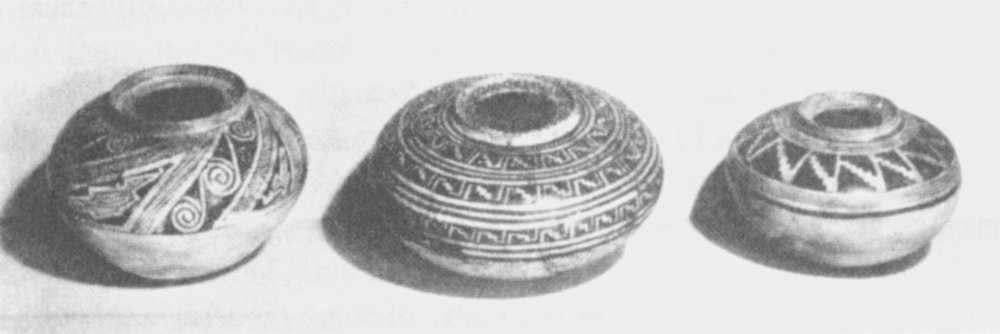
Fig. 32—Mesa Verde black-on-white pottery of the Great-Pueblo period. (Courtesy Mesa Verde National Park.)
The minor arts of Mesa Verde seem to have been much like those of Chaco Canyon, but neither material nor craftsmanship appears to have been as good. Again, the scarcity of burials has reduced the chances of obtaining much valuable information. In open sites they have been found occasionally in refuse heaps, but more often they occur in pits under floors of houses which continued to be occupied, or in abandoned rooms. At Mesa Verde a few burials have been found 96 in refuse heaps behind the houses, a few under the floors of abandoned rooms, and others in the cracks and crevices of the talus slope in front of the caves. There is also some evidence of occasional cremations.[24] On mesa tops, have been found a few stone rings overlying calcined human bones, and one room in Cliff Palace was found to contain ashes and human bones. There is no evidence, however, that cremation was widely practiced, and the few graves which have been found would account for only a small fraction of the deaths which must have occurred during the period of occupancy. It is believed probable that most burials may have been in the refuse heaps in front of the caves and that they have weathered away.
The last building date we have for Mesa Verde is 1273, but it is possible that the great houses may have been occupied for some time after this. The final date of departure probably falls within the period of the disastrous drought of 1276 to 1299, when the farmers of Mesa Verde must have been fighting a losing battle against overwhelming odds. The departure seems to have been an orderly one, for the people took most of their possessions with them. There does not seem to have been any one, great migration. Rather it appears that first one section, and then another, was abandoned as one or more small groups moved on. The abandonment of the cliff houses has given rise to many fantastic stories, and there has grown up a certain belief that the “Cliff Dwellers” more or less disappeared into thin air. Certainly there is enough mystery connected with this strange departure, but great numbers of people do not simply vanish. Actually, they moved farther and farther south, and perhaps to the southeast and southwest, looking for more favorable locations. As they mingled with other groups they lost their identity, but doubtless there is still a strain of Mesa Verde blood in the present Pueblo Indian population. Perhaps the Indian, whom we see selling jewelry in the lobby of some modern Southwestern hotel, had ancestors who helped build the ancient city which we know as Cliff Palace.
In addition to sites which were occupied by people with a Chacoan culture and those inhabited by people with Mesa Verde affiliations, there are others which show both influences at different periods. Lowry Ruin,[81] not far from Mesa Verde in southwestern Colorado, contains a Pueblo and a Great Kiva with Chacoan Masonry. The early pottery was not entirely like that found in sites in the Chaco Canyon itself, but closely resembled it. It must be emphasized that Chacoan is simply a term which refers to a generalized culture, and not just to the sites 97 of the type locality. In the top portion of the fill of some rooms at Lowry Ruin is found Mesa Verde black-on-white pottery. It is not known whether this indicates the presence of Mesa Verde people, or if only the pottery, or perhaps even the technique, was introduced. We do know, however, that Lowry Pueblo was occupied, abandoned, and then reoccupied a number of times from the time when it was first built, late in the eleventh century, until it was finally deserted, about the middle of the twelfth century. This is one of the sites which does much to upset certain theories as to the causes of the abandonment of the northern frontier. It was not prepared for defense, and had entrances on the ground level, and there is no indication of any violence. Final abandonment came long before the great drought of 1276 to 1299.
An even more famous site is that of Aztec,[94] now a National Monument, which lies one mile north of the town of Aztec, New Mexico. Here were built a big communal house and Great Kiva with Chacoan masonry. The ground plans were almost identical with those of Chettro Kettle, one of the important structures of Chaco Canyon. The main building was in the shape of a square “U”, with an arc-shaped row of rooms in front. More famous than the Pueblo itself is the “House of the Great Kiva.” This remarkable structure was essentially circular, and consisted of a large kiva surrounded by a concentric ring of arc-shaped surface-rooms. The kiva, which was encircled by two benches or shelves, was forty-one feet across at floor level and forty-eight feet in diameter at the level of the second bench. In the floor were two large, masonry-lined, sub-floor vaults and a masonry box, midway between the south ends of the vaults, which is believed to have been a fire altar. The twelve rooms surrounding the kiva are not stained and littered, as are the usual living quarters, so it seems certain that they were strictly ceremonial chambers. On the south side is an alcove, opening directly into the kiva, which is thought to have been a shrine room. A rectangle of masonry in the center of the alcove was presumably a permanent altar.
98
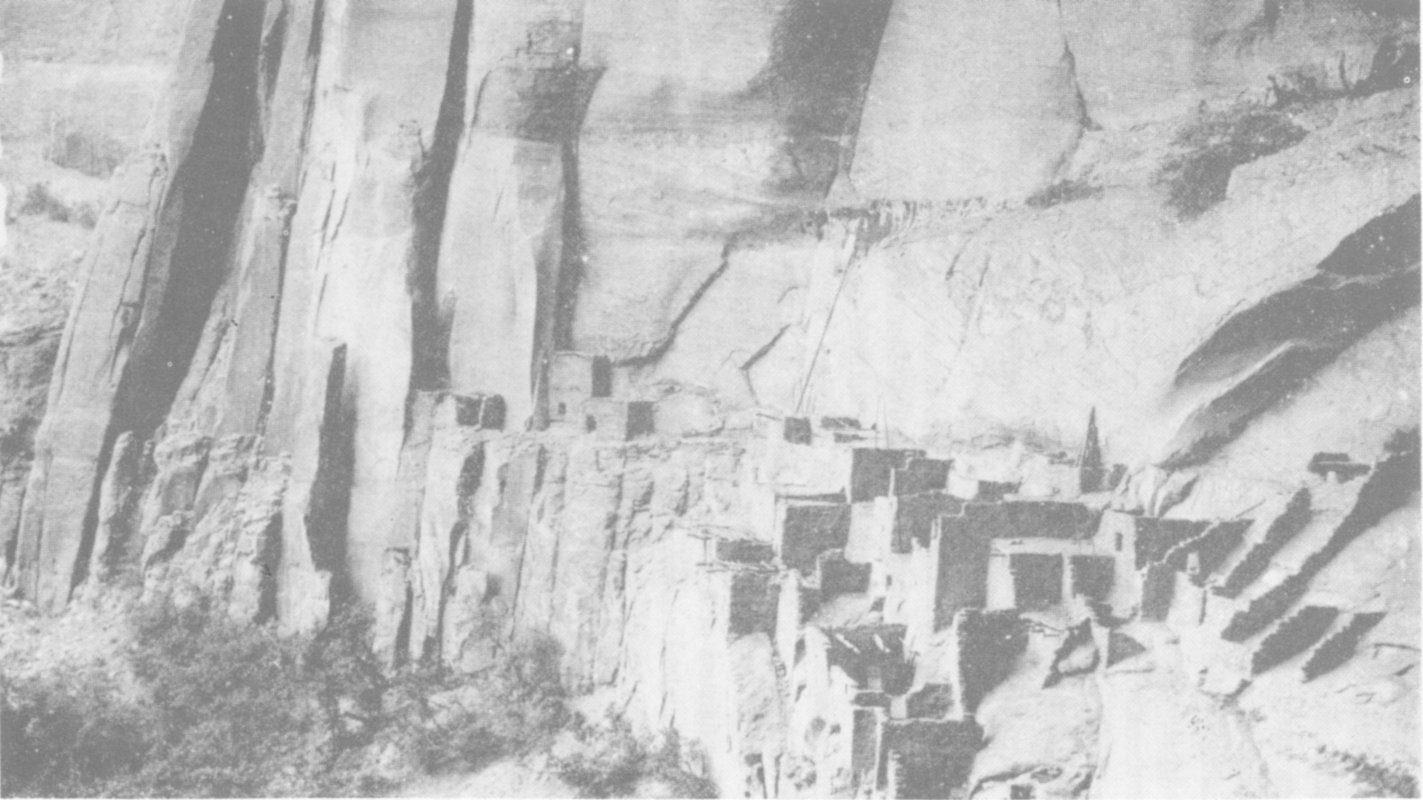
Fig. 33—Betatakin, Navajo National Monument, Arizona. (Courtesy National Park Service.)
99
Some of the living rooms in the pueblo bear evidence of Mesa Verde workmanship, and almost 95% of the pottery is of the Mesa Verde type. This gave rise to the belief that Aztec was a hybrid settlement of people of both cultures. Excavation proved that the explanation was not quite so simple. The original builders of the Pueblo and Great Kiva had Chacoan connections. They occupied the Pueblo for many years, then, taking their possessions with them, they moved away. Why they left, or where they went, we do not know. For a long time the Pueblo was abandoned, then a group of Mesa Verde people arrived and moved in. They changed and modified many of the rooms in accordance with their own customs. The rooms which they built were smaller and the masonry was of the typical Mesa Verde type, as was the pottery. After this immigration the great house was occupied for a long time. At first the people were quite prosperous, but eventually there came a period of depression and disintegration. Building techniques became progressively worse, and there was an equal deterioration in pottery making. Living quarters were no longer cleaned. Many women and children died, and, when they were buried few, if any, mortuary offerings were placed with them. The end came when the pueblo was intentionally fired and destroyed. Whether this was done by the people themselves, or by enemies who attacked them when they were no longer able to defend themselves, we do not know.
In the vicinity of Kayenta, Arizona, which lies to the south of the San Juan and west of both Mesa Verde and Chaco Canyon, was a third cultural center with far-reaching influences.[3][73] Here are found both cliff houses and pueblos in the open. Two of the largest and most famous cliff dwellings are Keet Seel and Betatakin. These were among the last of the great houses of the San Juan area to be occupied. Tree-ring dates for Betatakin range between 1260 and 1277, and those for Keet Seel between 1274 and 1284. By the latter date the remainder of the northern frontier had been almost entirely deserted.
The masonry throughout was quite inferior. It was somewhat better in the open sites, which were characterized by loose aggregations of houses, than in the cliff houses. On the whole, masonry was marked by the use of irregularly shaped stones, inaccurate coursing, and the use of great quantities of adobe mortar. Also, wattlework walls, that is, walls formed of upright poles through which were interwoven smaller sticks, were quite common. One of the chief differences between the Kayenta area and other cultural centers lies in the kivas. In open sites and in some cliff houses, of which Bat Woman House is a good example, only circular kivas are found, but they lack the pilasters characteristic of such structures in other sections. At Keet Seel there are some kivas, but many of the ceremonial structures are of another type, sometimes called kihus. These are square above-ground chambers which contain the characteristic fire pits and deflectors of kivas, but have a door instead of an air shaft. At Betatakin this is the only type of ceremonial room.
Pottery from this area differs in many respects from that of the 100 eastern sites. Corrugated pottery was made, but it displays poorer workmanship and less graceful shapes than examples from Chaco and Mesa Verde. Black-on-white ware was excellent, with a good paste and a clear slip. The decoration is fine and quite distinctive. Elaborate patterns, primarily interlocking keys, frets, and spirals, were used. The elements, painted in black, are so close together and so heavy that little of the white background shows and a negative design results, giving the impression of a white design on a black background. What little of the white background does appear is often hatched or cross-hatched, giving what has been described as a “mosquito bar” effect. The principal forms were ollas, bowls, and ladles. Seed jars and small handled jugs were also made, but they were not as common. An important form was the colander, a type of utensil which was confined to this culture.
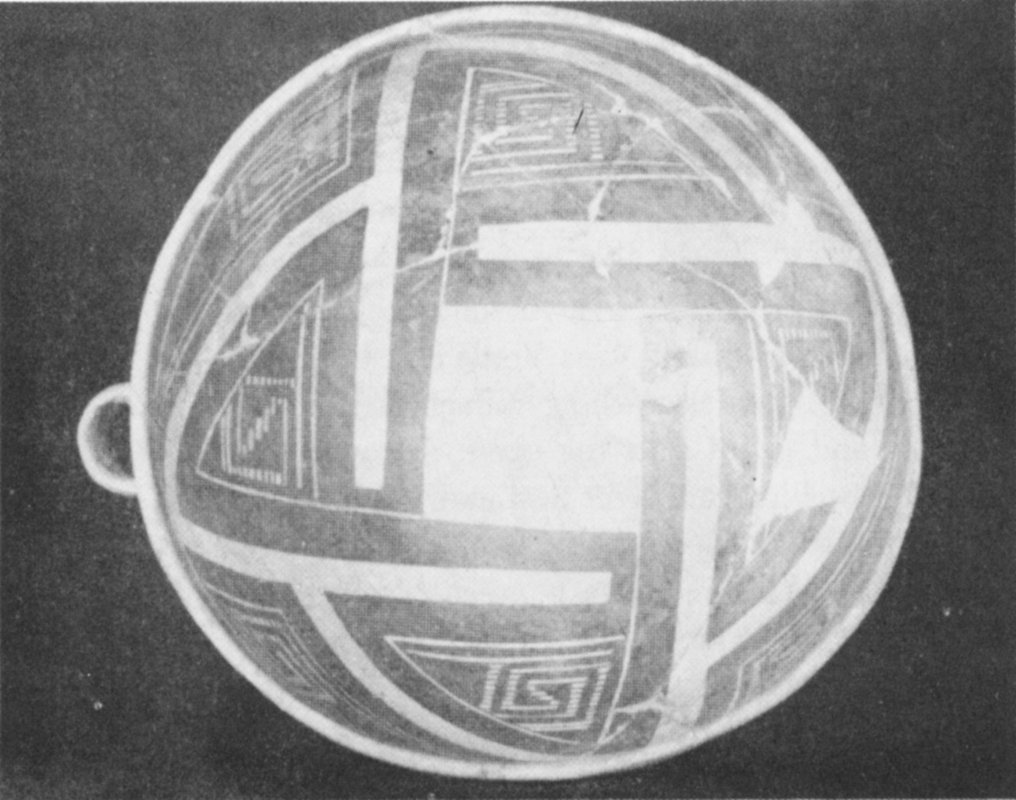
Fig. 34—Black-on-white pottery from the Kayenta area. Great-Pueblo period. (Courtesy Museum of Northern Arizona.)
The most distinctive Kayenta pottery was a polychrome ware on which, as the name implies, multiple colors were used. The base color was orange or yellow, and designs were applied in black, red, and white paint. There was a wide use of broad, red bands outlined in black or in black and white. Coarse hatchures divided into groups, with 101 other design elements between the groups, were quite common. There was an abundance of this ware, although bowls and small handled jugs were the only forms represented.
Very few burials have been found in the cliff houses. A small number have been uncovered in unoccupied sections of the caves, in the talus slope in front, and in small shelters nearby. In open sites closely flexed bodies accompanied by mortuary pottery have been found in oval pits dug in the rubbish heaps.
Although attention is naturally centered on the San Juan region, where the Great Pueblo culture had its most spectacular development and where the most extensive excavations have been carried on, the remainder of the Plateau Province cannot be overlooked.
Sixteen miles from Zuñi, in the Little Colorado drainage, is a famous site, known as the “Village of the Great Kivas.”[108] Here were found three communal dwellings and two Great Kivas. Of the latter, only one has been excavated. It was bordered with rooms but had no true peripheral chambers. Both are larger than the Great Kiva at Aztec. The one which has been excavated is fifty-one feet in diameter, and the unexcavated one is seventy-five feet across. In addition to these structures and some small kivas associated with the largest building, there were two rectangular rooms with kiva features. These are similar to the fraternity chambers used in Zuñi at the present time. The construction of the village was begun in the eleventh century by people with a Chacoan culture. After a time, due to the arrival of new people, the community increased in size. It is thought that these people came from the south, possibly from the Upper Gila region.
To the west, in what we now know as the Hopi country, good-sized Pueblos were being constructed. There was much black-on-white and gray corrugated pottery and, in the latter part of the period, fine pottery with black designs on an orange background was made. Kivas were rectangular or D-shaped. To the south and east of this region a particularly fine polychrome ware was being made. Black and white designs were applied on an orange-red background.
Still farther south, in the vicinity of Fort Apache, Arizona, is Kinishba, a Great-Pueblo site occupied between 1050 and 1350 A. D. It combined three pueblos, of which two have been excavated. The main building is an irregularly rectangular structure, built around a big central court, which seems to have grown by accretion rather than according to fixed plan. The masonry was not particularly good. The stones were not carefully shaped, and there was an extensive use of 102 mortar. Many fine ornaments were made. Kinishba appears to have been something of a trade center, and pottery characteristic of many different areas is found here. One distinctive type of pottery which was made locally was a polychrome ware with red and black designs on a buff background.
The Rio Grande drainage, to the east, did not become a very important province until the following period, but there is evidence of the presence of a scattered population as far back as Developmental-Pueblo times. Eventually, migrations from the north brought in many new people. Prior to that time architecture was not highly developed. There was little coursed masonry, but extensive use of adobe. Some rather inferior black on white pottery of a generalized type and a poor corrugated ware were manufactured, and a little black-on-red pottery was imported.
In the Mimbres drainage of southwestern New Mexico, lived a group of people who, during the Great-Pueblo Period, made some of the most remarkable pottery that has ever been produced. Although they are often considered as part of the Anasazi, much of their development was due to two other cultures as well. Because of this, discussion of the Mimbres people and their achievements will be postponed until the other cultures have been considered.
The Largo-Gallina Phase
In the Largo drainage of north-central New Mexico some extremely interesting remains of a Pueblolike people have been found.[91] Chronologically they fit into Great-Pueblo times, but they are not entirely Anasazi in culture. The name Largo has been given to this cultural phase. Tree-ring dates have been obtained in Largo sites, and it is possible to place the period of occupation as extending from the beginning of the twelfth to the middle of the thirteenth century.
The inhabitants of these sites lived in both pit and surface houses. These structures are relatively large. The latter have massive walls of uncoursed masonry up to four feet thick. All dwellings contained low-walled storage bins. Although more evidence will be needed before definite conclusions may be reached, it seems possible to show a definite architectural development from pit houses to the thick walled surface houses of uncoursed masonry which were followed by others with coursed masonry walls. Other, presumably later, structures may be described as small pueblos, but these have not yet been thoroughly investigated.
103
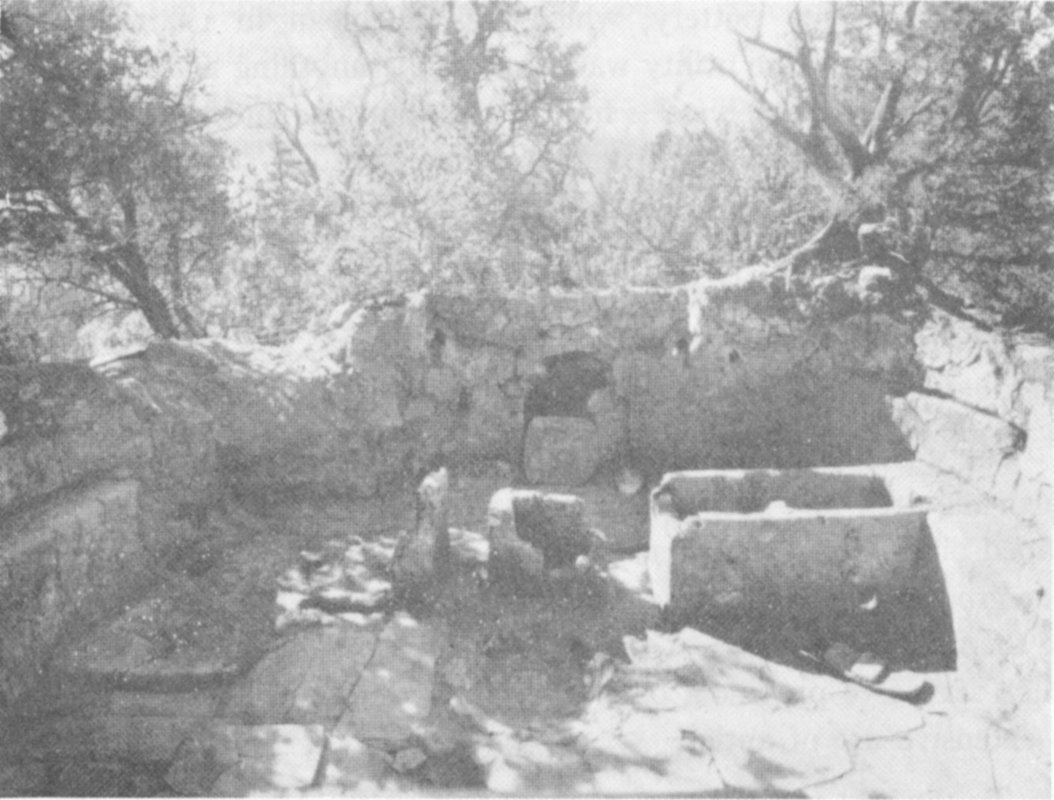
Fig. 35—Largo surface house.
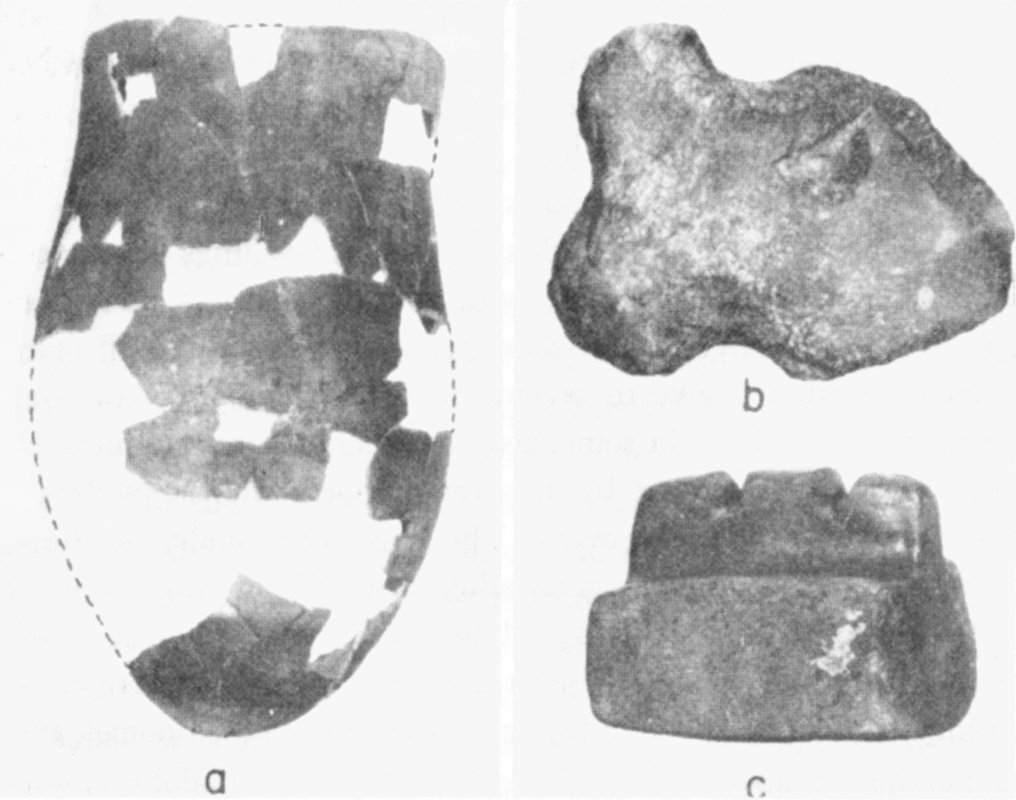
Largo artifacts, a. pointed-bottomed pot, b. axe, c. arrow-shaft smoother. (Courtesy Laboratory of Anthropology.)
104
Black-on-white pottery, which was Puebloan in character, was made, but most of the utility ware was unlike anything made elsewhere by the Anasazi. These vessels had pointed bottoms and were decorated with fillets at the rim or just below. They were not scraped, but were smoothed by holding a mushroom-shaped object inside the vessel, while it was still plastic, and striking the exterior with a wooden paddle. This is known as the paddle-and-anvil technique. These vessels resemble Woodland pottery from the eastern United States and Navajo cooking pots.
Other distinctive artifacts included axes of a triple-notched type which required a T-shaped hafting, arrow-shaft smoothers, and elbow-shaped pipes. The smoothers are large pieces of fine grained rock with deep grooves in which arrow shafts were rubbed in the process of shaping them. On the bowls of the pipes were two little leglike projections which served to provide a base when they were not in use. There was an extensive use of antler.
To the east of the Largo country and on the other side of the continental divide are found similar sites which represent the same culture. This phase has been called the Gallina.[63] Both phases are often considered together and referred to as the Largo-Gallina.
In the Gallina country there is the same combination of pit houses and surface structures as in the Largo sites. Most sites are in good defensive positions, but this is not true of all of them. Sites usually consist of three or four house units grouped together, although single houses also have been found. Most of these dwellings are towerlike structures, square in outline but with rounded corners. They range from eighteen to twenty feet in diameter and have walls still standing to a height of from twelve to seventeen feet. These walls were extraordinarily massive, being in some cases as much as six feet thick. House interiors were characterized by flagstone floors and the wide use of storage bins with sandstone covers. The bins were usually on the south side. In most houses, there was an adobe bench encircling the northern part of the room. Fine murals had been painted above the bench in one house. On the whole, these structures resemble square kivas to which bins have been added, although they were used as homes and not as ceremonial chambers. Roofs consisted of a pole and adobe foundation with flagstones providing a shingled effect. Entrance appears to have been through the roof which, due to the great height of the buildings, must have been reached by ladders or platforms. In addition to the 105 towerlike buildings there are also pit houses which are found in conjunction with them.
Anasazi traits include twilled yucca sandals, coiled basketry, feather-cloth, twined-bags, and black-on-white pottery. Axes, shaft-smoothers, and pipes, resemble those found in Largo sites and the cooking pots with the pointed bottoms are the same. Chisel-like objects made of deer and elk antler and unusual stone knives were also found. The latter were leaf-shaped blades with notches in the sides close to the center. One end was pointed and the other somewhat blunted. It is the latter end which seems to have been used while the pointed end was hafted.
In general, the Largo-Gallina seems to be a Pueblo phase, probably derived from the Rosa phase[41] of the Governador area, which was subjected to foreign influences, probably from the north. Similarities between Largo-Gallina and Navajo utility vessels may indicate some relationship.
Athapaskan People
We may next consider the problem of the Navajos and Apaches who figured so prominently in Southwestern history. They are relative newcomers in the area and it is only within recent years that they have stirred the interest of many archaeologists, although the Navajos have been literally haunted by ethnologists for a long time.
Both Navajos and Apaches speak dialects of the Athapaskan language which is spoken by many groups in northwestern Canada. At some time in the relatively recent past, groups of Athapaskan-speaking people left their northern homeland and drifted southward, some going along the coast and others wandering farther east. Some reached the Southwest and the descendants of these migrants are the Indians whom we know as Navajos and Apaches.
There are many theories as to the route which they followed. Recent finds, in the Colorado Rockies, of circular structures of dry-laid masonry which are non-Pueblo in character and which resemble certain Navajo houses or hogans, suggest that at least some of the migrants may have followed the main mountain ranges.[68] It is also possible that they may have moved south through the Great Basin west of the Rocky Mountains, or along the High Plains east of the mountains. Pottery finds give 1100 A. D. as the earliest date for the hoganlike structures in the Colorado mountains. It is not certain that these houses were built by Athapaskan people, however, and there is no definite knowledge as to just when the Athapaskans reached the Southwest and first came 106 into contact with the Pueblo Indians. The earliest tree-ring date yet obtained in the Pueblo area from any site which we may be sure is Navajo is from the Governador area and falls in the middle of the sixteenth century.[40] If the Navajos arrived as early as 1200 A.D. they may have influenced the Largo-Gallina people and have been influenced by them, but this is still a moot question. A relatively early arrival might also aid in explaining the withdrawal of the Pueblos from the northern area.
SUMMARY
We may summarize the Great-Pueblo period as follows. It was the period in which the Anasazi culture attained its highest development, and it was marked by intense local specialization. Most of the basic aspects of the culture had already been well established, but there was tremendous improvement and amplification. Unit houses continued to be occupied throughout the period but there was a general coalescence of the population. The trend was toward concentration in great, terraced communal houses, up to five stories in height, and large enough to shelter hundreds of people. Some were built in the open and others in large natural caverns in cliffs. Small kivas, presumably used by small groups such as clans, were incorporated in the houses or placed in the central court. There were also Great Kivas, larger and more elaborate structures, believed to have served an entire community. There was local variation in architectural details, both as regards masonry types and house structures.
Pottery was remarkably fine and designs were often quite elaborate. There was such specialization that the products of various centers are readily distinguished. Culinary ware was corrugated. Among the decorated types, black-on-white predominated but there was some black-on-red ware and some black bowls with red interiors, and in the Kayenta district and farther south polychrome pottery was widely made. Late in the period black-on-orange wares became important in the Little Colorado drainage.
Much progress was made in the weaving of cotton cloth. Ornaments were highly developed and turquoise was widely used. Remarkable mosaics as well as beads and pendants were manufactured. Some coiled baskets were still made but yucca ring baskets were the leading type.
Although it is only in the realm of material culture that we have concrete evidence, there can be little doubt that the heights reached in the production of material things must have been reflected in the 107 whole life of the people. There is every reason to believe that an essentially democratic form of government prevailed, but communal living must have required a high degree of organization. Doubtless religion played a great part in the life of the community and had far-reaching influences.
In the latter part of the thirteenth century, the Southwest seems to have had a dry period, marked by arroyo cutting that destroyed farmland, which was followed by a disastrous drought. These factors, with possible raids by nomadic warriors, internal discord, and probably others of which we are ignorant, led to a general withdrawal of population from many areas and a concentration in the central portion of the Plateau.
THE REGRESSIVE AND HISTORIC-PUEBLO PERIODS
The period which followed the Great-Pueblo era and which lasted until historic times was called Pueblo IV under the Pecos Classification. It was defined as “the stage characterized by contraction of area occupied; by the gradual disappearance of corrugated wares; and, in general, by decline from the preceding cultural peak.”[74] At the present time it is often referred to as the Regressive-Pueblo period.[110] This term is not really satisfactory. Admittedly, the latter part of the thirteenth and the beginning of the fourteenth century was a period of great instability, migrations occurred, and centers of population shifted. Once the shift had been made, however, important new communities developed in the drainages of the Little Colorado and the Rio Grande, and a renaissance began. It seems entirely possible that the Pueblo people might have achieved another remarkably high cultural stage had it not been for the arrival of the Spaniards in 1540.
Even after Europeans arrived in the Southwest, the native culture was far from being completely submerged, and, while aboriginal progress was retarded, it was not entirely stopped. Since the first advent of white men in the Southwest until the present day, the Pueblos have fought what sometimes appears to be a losing battle against the encroachment of European, and later, of American culture. Actually the battle has not yet been entirely lost. We shall never know how the Pueblo people might have developed, and what heights they might have reached had they been left to their own devices. At least, though, they have not been entirely assimilated by the civilization which has engulfed them, and they have succeeded in retaining some of their old way of life.
108
It might seem that as soon as written records become available for a period it should be classed as historic rather than prehistoric. The Pueblo Indians, however, were sufficiently successful in withstanding outside influences that the terminal date for the Regressive-Pueblo period is usually given as 1700, and only the period from 1700 to the present is called the Historic-Pueblo period.
The trend during Regressive-Pueblo times was toward larger houses. In the Hopi area the early houses were characterized by fine masonry and covered about an acre of ground. Later they became much larger and, in some cases, covered from ten to twelve acres of ground. These houses were sometimes made up of long rows of buildings with plazas between them. Kivas were rectangular, with a niche at one end of the room containing a bench. The normal size was about ten or fourteen feet square. On the floor, which was usually paved with stones, are found loom blocks. These are sandstone blocks with depressions designed to hold poles on which the warp threads are wound. The finding of these loom blocks in prehistoric kivas is most interesting, for, among the Hopi even today, the weaving is done by the men in the kivas. The use of commercially woven fabrics for most clothing has naturally curtailed the practice of this craft, but ceremonial clothing and fine white blankets which serve as wedding robes are still woven in the kivas.
The early pottery was largely black-on-yellow, but some polychrome ware was made, and there was also plain cooking pottery and some corrugated. The latter became progressively less widely used, and later cooking ware is almost entirely plain. In some later sites some of the black-on-yellow ware is marked by a distinctive stippling technique as black paint was splattered over the yellow background. During the period from 1400 to 1625 some of the most beautiful pottery ever made in the Southwest was being produced in the Hopi country. This is a polychrome ware which bears exceptionally fine designs, which include geometric and life forms and particularly graceful patterns, applied in red and black paint on a yellow background. Over forty years ago, archaeologists were excavating ancient villages in the Hopi country and finding examples of this beautiful ware. A woman of the village of Walpi, named Nampeyo, was the wife of one of the workmen employed by the expedition. She was already a fine potter, and she recognized the great artistry represented by these ancient vessels. She began to use similar designs and continued to produce remarkably fine pottery for over thirty years, although, for much of that time, her sight was failing and eventually she became blind, and the final painting of the graceful vessels which she had shaped had to be entrusted to others. The influence of this talented woman can still be seen in the fine pottery made by Hopi women of the First Mesa.
109
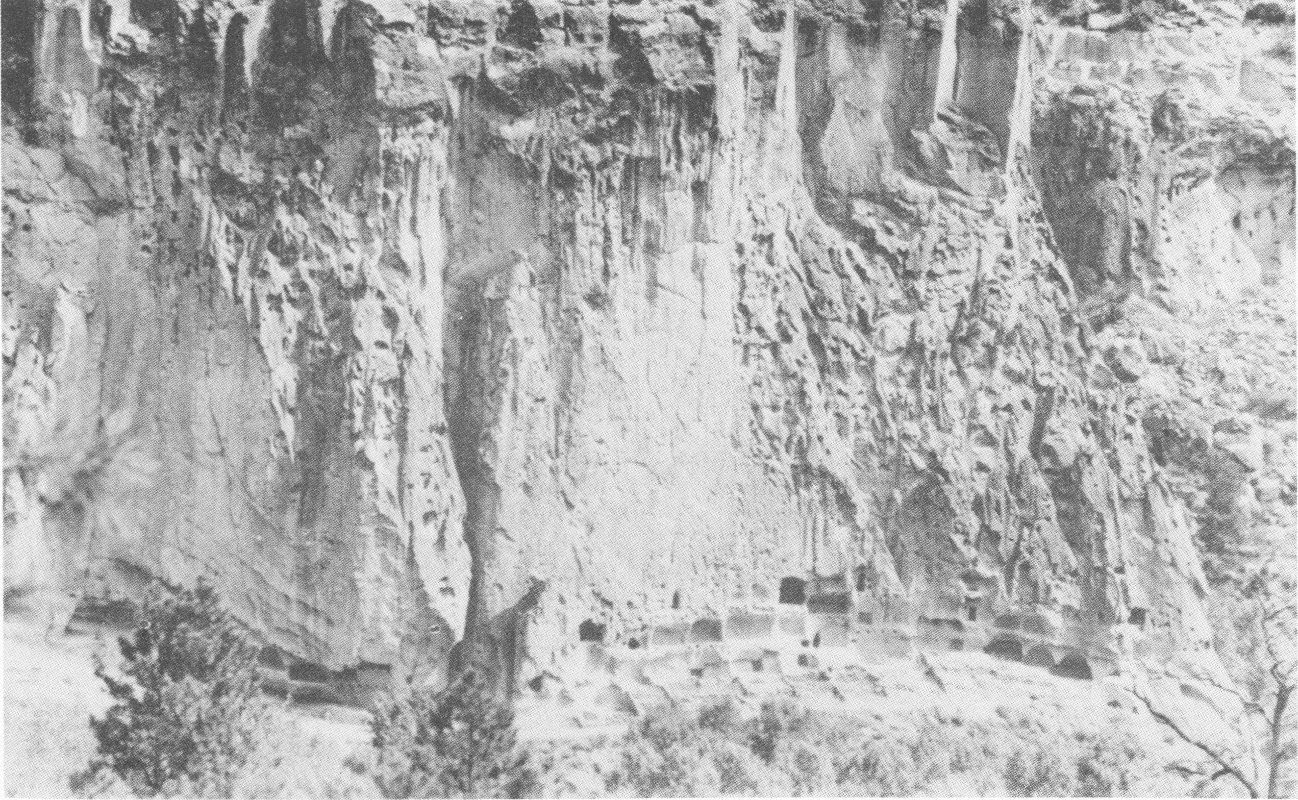
Fig. 36—Cavate dwellings and talus houses at Bandelier National Monument, New Mexico. (Courtesy National Park Service.)
110
In the Zuñi district houses and kivas were much like those of the Hopi country. Pottery in this area was largely decorated with glaze paints. These are vitreous mixtures obtained by the use of lead in the paint. Glaze paints were difficult to apply and had a tendency to run or settle in masses. As a result, designs were poor, but the use of glazes was confined to decorations and entire vessels were not covered.
In the Rio Grande drainage, people with an earlier Pueblo culture were just beginning to come together into large communities when this period began. Doubtless, the advent of people from other parts of the Plateau province did much to intensify this trend. As time went by, houses became larger and fewer in number. Tuff blocks and adobe were widely used in their construction and there was some use of cavate dwellings. These are rooms, excavated into the back walls of caves, which have porchlike chambers in front.
Two famous Regressive-Pueblo sites in this region, which are known to many tourists, are Puye,[62] on the Pajarito Plateau, and Tyuonyi in El Rito de los Frijoles.[60] Beams from Puye have yielded tree-ring dates ranging from 1507 to 1565. This settlement, perched on a huge mass of yellowish gray tuff, consists of two aggregations of buildings. Forming a quadrangle on top of the mesa, were four, terraced community houses built around a court. There were also houses built in and against the cliff walls, usually at the top of the talus slope. At Tyuoni, whose dates range between about 1423 and 1513, there is a great communal house which was, in part, two stories high and roughly circular in form. It was made of tuff blocks. Three small kivas were built in the center court or plaza. A few hundred yards to the east of the ruin lies a large kiva. For a little over a mile along the canyon wall were cave rooms dug into the cliff and rows of small houses built of tuff blocks. Some of the cave rooms had porchlike structures erected in front of them, but others did not.
The largest and strongest pueblo during this period was Pecos, which lay at the headwaters of the Pecos River in northern New Mexico.[73] The first buildings were erected shortly before 1300, and final abandonment did not come until 1838. Such a long record is, of course, of tremendous archaeological importance, and it is indeed fortunate that some of the most extensive and painstaking excavations ever undertaken in the Southwest were at this site. There was evidence of at least six distinct towns. Great masses of pottery have been excavated, with careful attention being paid to stratigraphy, and very detailed studies have been made.[75][77] Well over a thousand skeletons have been obtained and given careful study.
111
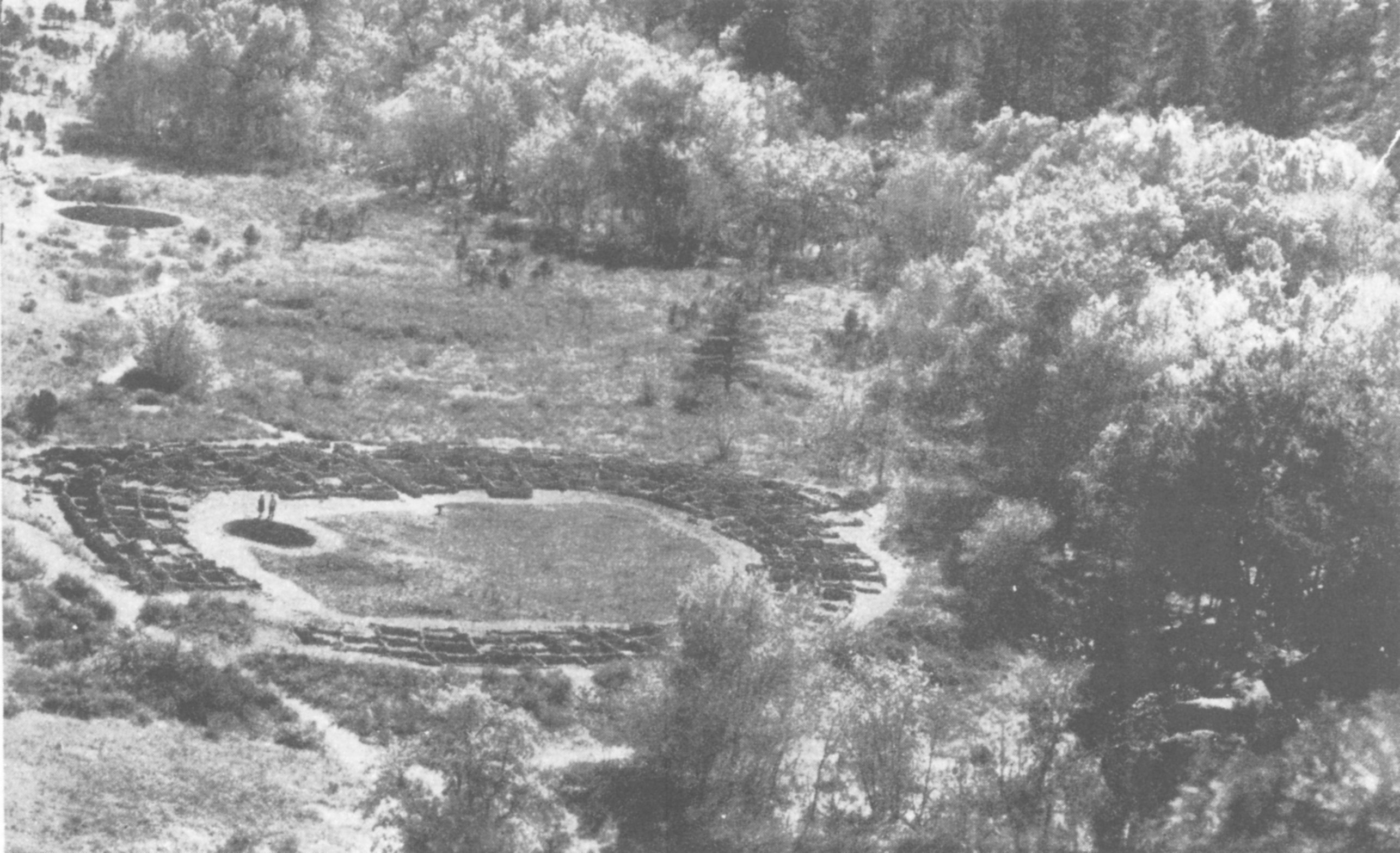
Fig. 37—Tyuonyi, Bandelier National Monument, New Mexico. (Courtesy National Park Service.)
112
Throughout the Rio Grande area, glazed wares were widely made. The earlier forms had glazed designs applied on red vessels. Later, light colored vessels were used. A series of six different types of glazed wares, which were chronologically sequent, have been identified. By 1540 decorations were very carelessly applied and glazed wares were not of a high quality. It was not, however, until the latter part of the seventeenth century that they disappeared altogether and were replaced by light colored vessels, with designs in dull red and black paint, much like those made by the many present-day Indians.
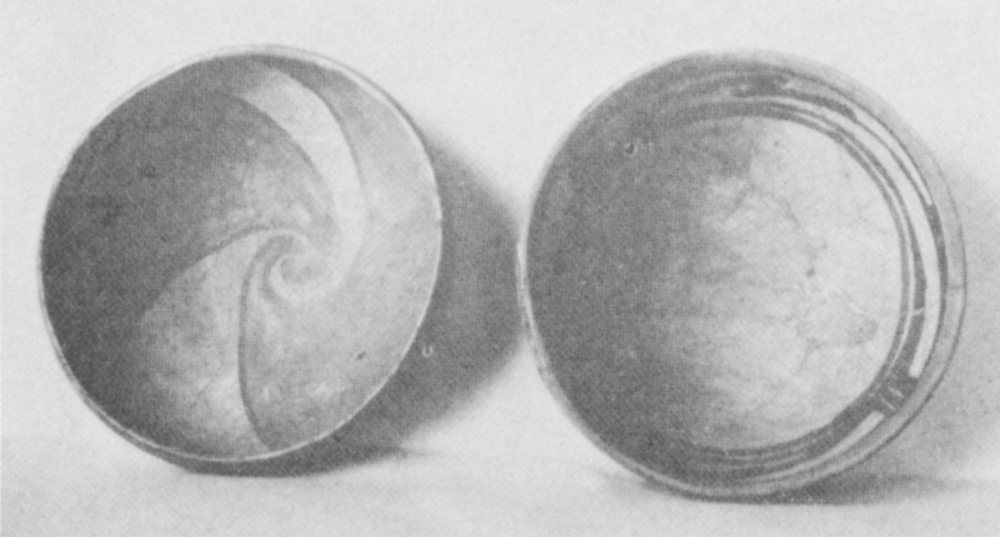
Fig. 38—Glazed ware from the Rio Grande area. Regressive-Pueblo period. (Courtesy School of American Research.)
In the northern Rio Grande area black-on-white pottery died out to a great extent and was largely replaced by what we know as Biscuit Ware.[90] This name is derived from the resemblance of this pottery to china in the “biscuit stage” of manufacture. Biscuit ware is a thick pottery with a soft crumbly paste tempered with volcanic tuff. The background is a light gray or tan, and somewhat coarse designs are applied in black paint. Corrugated culinary ware was replaced by plain black pottery.
In southeastern New Mexico, and extending into Texas, a distinctive ware made during this period is found. This has a brown slip. 113 Bowl exteriors are undecorated, but the interiors have designs applied in red and black. Associated with it, is a plain brick-red ware.
The story of the Spanish conquest of the Southwest, which was interrupted by a revolt of the Pueblos in 1680, is as dramatic a tale as history can produce. Although 1540 is the date usually given for the first meeting between the Pueblo Indians and the Spaniards, it was actually in 1539 that the first contact occurred. In that year a Franciscan monk, Fray Marcos de Niza, accompanied by a Moor named Esteban, started north from Mexico to investigate tales of large and wealthy cities which were rumored to lie in that direction. Esteban went on ahead, and, reaching what is now New Mexico, was slain by the Indians. Fray Marcos did not dare to proceed, but caught a glimpse of one of the pueblos of Zuñi from a distance, and returned with tales of great cities.
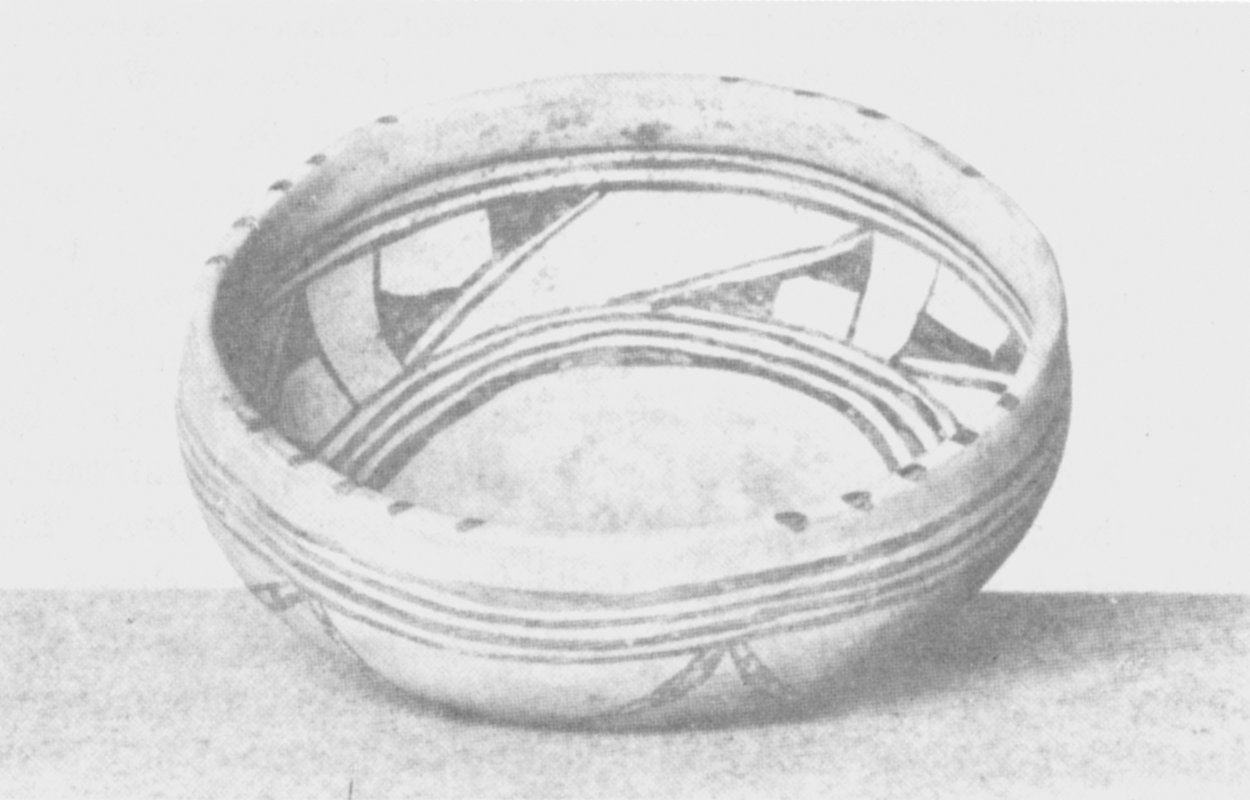
Fig. 39—Biscuit ware from the Rio Grande area. Regressive-Pueblo period. (Courtesy School of American Research.)
In 1540 an expedition was organized under the leadership of Francisco Vasquez de Coronado to search for the fabulous “Seven Cities of Cibola” in the north. After a long and difficult journey the expedition reached Hawikuh, one of the Zuñi villages. The disappointment of the adventurers may well be imagined, for here was no city of gold, ready to yield its wealth to the invaders, but a community of simple farmers who, not only had no riches, but had little conception of the role that wealth could play in society. Later, Coronado moved 114 his forces to Tiguex on the Rio Grande, another Pueblo town. Trouble soon developed, and the Indians were massacred. The Spaniards then moved on to the Pueblo of Pecos, and there followed an expedition into the Plains as the search continued for the fabulous and mythical golden cities. In 1542, Coronado and his men withdrew to New Spain, and the Pueblos were left in peace for forty years. After 1580, various expeditions entered the Pueblo domain, and in 1598 it became a part of the Spanish dominions. In 1609 the city of Santa Fe was founded.
From the beginning there was a clash between the two cultures. The Pueblos resisted as best they could, but they were no match for the more highly organized Spaniards with their superior weapons and their inestimable advantage of being mounted. The colonizers and missionaries who entered the country looked upon the Indians as a subject people; there were abuses and many excesses, and the Indians were shamefully exploited. Corn, the all-important staple of the Indians, was requisitioned, and Spanish horses trampled Pueblo corn fields. Every effort was made to break down the prevailing form of government. Missionaries were determined to destroy the old religion and make converts among the natives. The principle, that the end justifies the means, was developed in its most pernicious form. There were floggings and hangings, and Indians were sold into slavery. All in all, it is a disgraceful page in history. Even the most cursory glance at our own record of dealings with various Indian groups, however, suggests that we are hardly in a position to “cast the first stone.” Under the circumstances, even the smallest pebble would be excessive.
The presence of the Spaniards had other far-reaching and disastrous effects on the Pueblos. They had no immunity to European diseases, and many died. Worst of all, however, was the increasing pressure of fierce nomadic tribes. Tribes, such as the Utes, the Comanches, the Navajos and the Apaches, had been something of a menace before, but, as they acquired horses, stolen from the Spaniards, their mobility was greatly increased, and they became a scourge, sweeping over the Southwest, killing, pillaging, and destroying.
In 1642, there was a mild revolt of the Pueblo Indians against the Spaniards in which the Governor of the territory was killed, but they were not well organized and the revolt was soon put down. It was not until 1680 that a successful revolt took place. This dramatic episode in Southwestern history has been called “the first American Revolution.” The success of the undertaking was largely due to Popé, an old medicine man of the Pueblo of San Juan. When the Spaniards first appeared 115 there were some seventy villages. By 1680 the number had been greatly reduced. Added to the difficulties imposed by the lack of a common language, was the separation of the Pueblos, not only as regards distance, but in another and more important sense. As has already been pointed out, each of the pueblos was essentially a separate city-state with its own government, and, to some extent, its own culture. Popé, however, succeeded in interesting the people of the scattered communities in the common cause. First, the people of Taos were enlisted and then, one by one the other pueblos were added to the list, until all were united, including even the far off and peaceful Hopi.
At last, all was in readiness and a knotted cord was sent throughout the Pueblo domain, each knot representing one day which was to elapse before the warriors were to arise and cast out the invaders. Somehow the Spaniards learned of the plot, and the revolt took place a little earlier than had been planned. None the less, some four hundred people were killed, and the survivors fled to the garrison at Santa Fe. Santa Fe continued under siege until supplies and water were exhausted. When the town could no longer be held, troops and civilians marched away, without opposition from the Indians, and took refuge in the vicinity of what is now the city of El Paso, Texas.
For twelve years the Spaniards were kept out of the Pueblo country, although various attempts were made to retake the area. Even with the removal of the hated Spaniards, these were not happy times for the Pueblos. Mounted nomads as well as Spanish troops were a constant threat, and many groups were forced to move to mesa tops where defense was somewhat easier. As if all this were not enough, there came a severe drought which, to such people, can mean only suffering and starvation. At last in 1692, the land of the Pueblos again became a part of the Spanish domain. This time the conquest was bloodless. Don Diego de Vargas accomplished this remarkable feat largely by a display of force, coupled with a policy of turning the suspicions of the Pueblos against each other. United they had been able to drive out the invaders; divided they were powerless to prevent their return. It is a story to ponder carefully in these times.
116
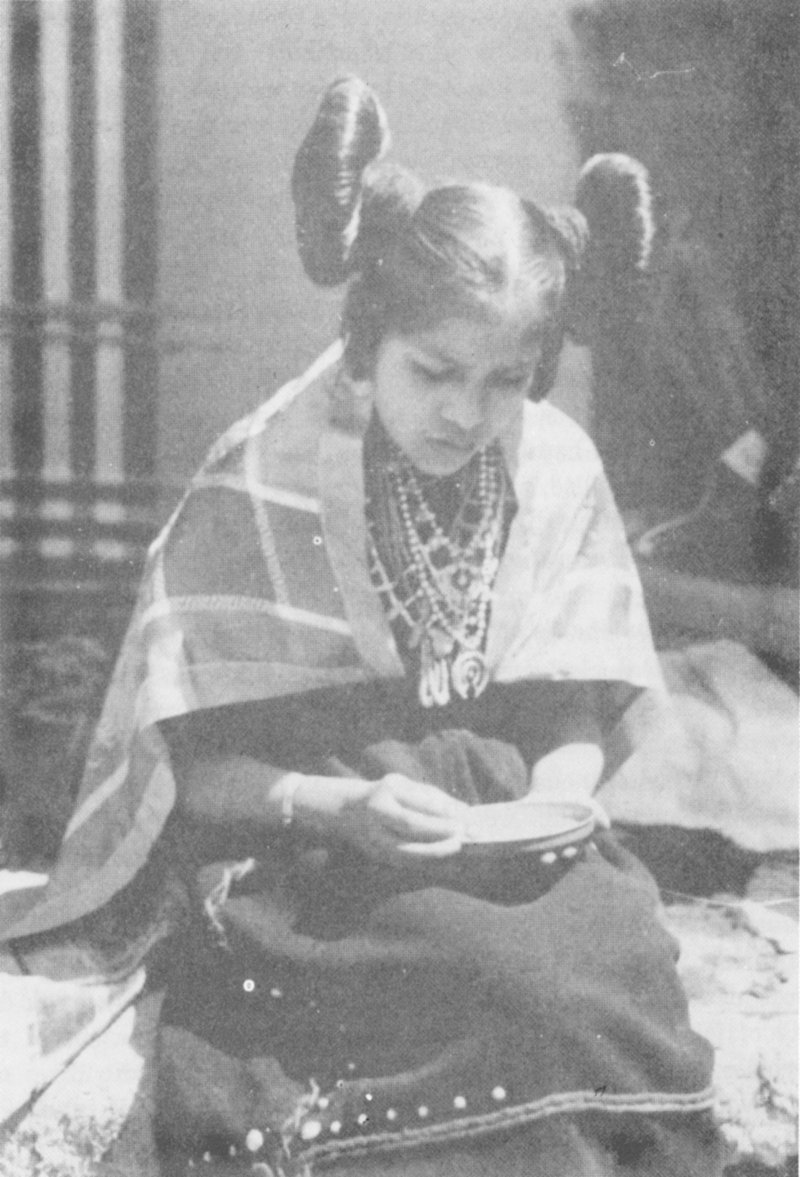
Fig. 40—Hopi maiden. Similar hair dresses are shown on figures in Developmental-Pueblo pictographs and on Mimbres pottery. (Courtesy Museum of Northern Arizona.)
117
Some Indians refused to accept Spanish domination and moved to the almost inaccessible Governador country of northern New Mexico where they lived among their traditional enemies, the Navajo, for some fifty years. Many Pueblo traits which appear in Navajo culture may stem from this contact. Other refugees joined the Hopis who were never reconquered. The reconquest did not by any means mark the end of all trouble. There continued to be periodic uprisings in the Rio Grande area, and the Spaniards did not have an easy time. In addition to their troubles with the Indians of the Pueblos, there was a constant threat from various wild predatory tribes. There was also much internal dissension as a result of a conflict between church and state. In 1821 the Pueblo homeland became part of the Republic of Mexico, and then, in 1848, New Mexico became a territory of the United States.
Throughout the period from 1540 until the present day, the Pueblos have been subjected to the influences of alien cultures. Some traits of these cultures they have accepted, others they have rejected. They have learned to keep livestock, they cultivate many fruits and vegetables unknown to their ancestors, they use metal tools and machinery. Machine-made fabrics are widely used, and there is an ever increasing trend toward wearing the white man’s apparel. Pottery is still made, and interesting new wares have been developed, but it is made to be sold and, in Indian homes, most of the beautiful old vessels have been replaced by metal and china containers.
Nominally the people of the Pueblos are Christians, and there is no village without a chapel in which the people worship. There are kivas too, however, and sometimes openly, sometimes secretly, the old rites are practiced and the old gods are worshiped. Houses may have windows and galvanized roofs, but basically the architecture is the same. There is some dissension in various villages, but in many there is still a remarkable group unity. On the surface, there is an ever growing tendency for the Pueblo Indians to become more like the white neighbors who surround them, but it would be naive to believe that the old culture has disappeared completely. Perhaps some day it will, but the end is not yet. Those who know and understand the way of the “ancient ones” admit the inevitability of change, but they feel that there is much to be learned from the old way of life.
118