15. Antiquities
Reading edition
The most conspicuous remains of antiquity in the islands are the Pictish castles or brochs, [4] of which there are seventy or eighty. Most of them are in ruins; but the one notable exception is that of Mousa Castle, the most perfect of its kind in existence. Another broch is in the loch of Clickimin. Though only a remnant, it conveys a good idea of the massive structure of these buildings.
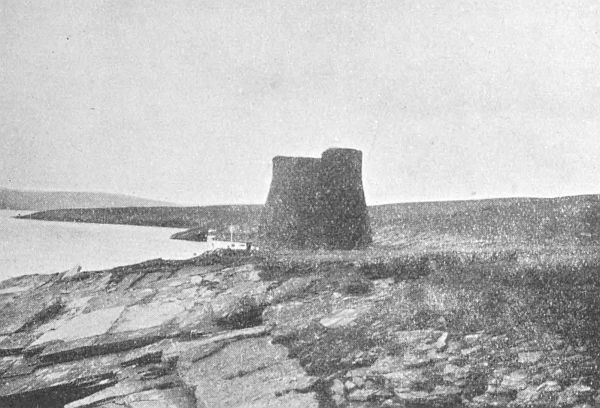
Broch of Mousa
Standing stones occur in every parish. Other prehistoric relics are the stone circles, the earth-houses or underground dwellings, and “pechts knowes.” The last are artificial mounds of burnt stones and earth. In some of these are found stone coffins or cists, in others urns containing the ashes of the dead.
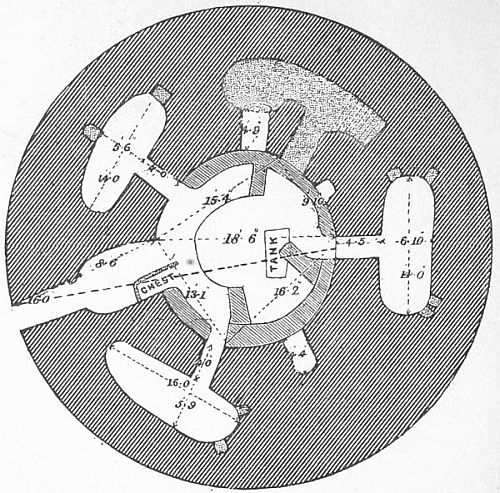
Ground Plan, Broch of Mousa
Implements and weapons of the Stone Age are being continually unearthed. Some are rough and include hammers, clubs, whorls for spinning, stones for pounding corn, whetstones, vessels for liquids. Others are polished, and show a great advance on the rough in workmanship. These include celts or axes of porphyry or serpentine, locally known as “thunderbolts” and held in veneration by the finder. Another polished weapon is the knife, said to be found only in Shetland.
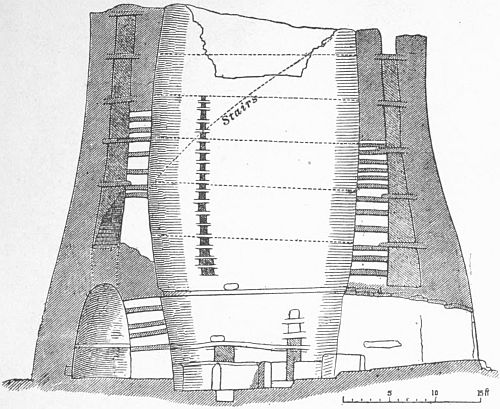
Sectional Elevation, Broch of Mousa
Gold, silver and bronze ornaments of the Viking Age are occasionally discovered—one of the most recent and beautiful a bracelet of gold in the isle of Oxna.
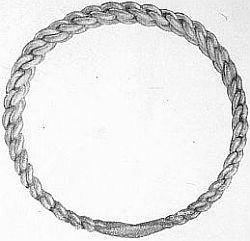
Gold Armlet (Norse) from Isle of Oxna
Inscribed or sculptured stones are of two kinds—Celtic, and Norse or runic. Examples of the Celtic are the Bressay Stone, the St Ninian Stone, the Lunnasting Stone, with Ogham inscriptions, and the richly sculptured monument found in Burra Isle. These are all indications of the Christianity of the pre-Norse days. Four runic stones have been discovered, three in Cunningsburgh and one in Northmavine.
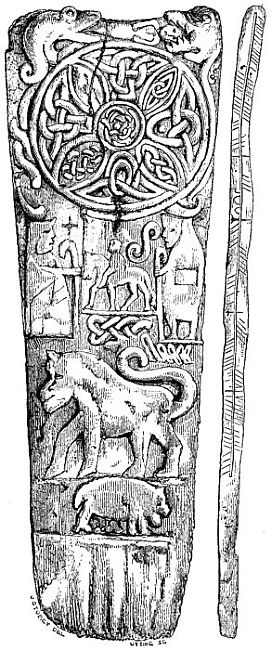
Bressay Stone
(Obverse)
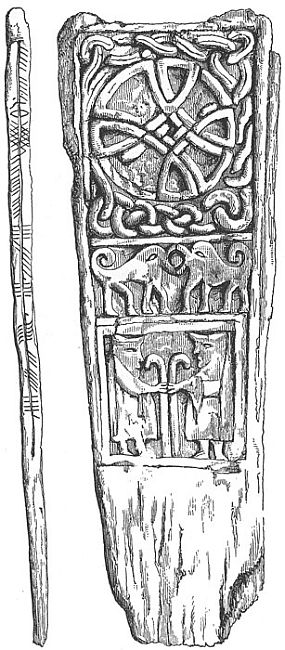
Bressay Stone
(Reverse)
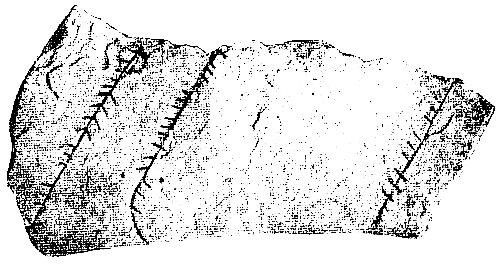
Portion of Sandstone Slab with Ogham Inscription from Cunningsburgh
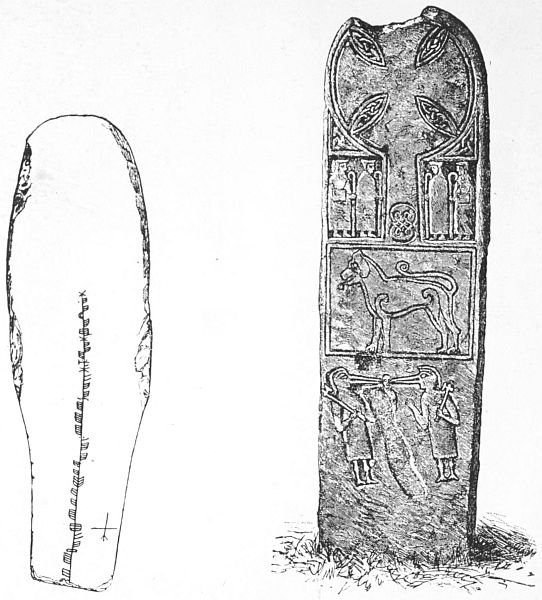
Lunnasting Stone Burra Stone