THE FUNCTION OF THE CLASS JOURNAL
Reading edition
Ralph T. Olcott, Editor "American Nut Journal"
In the multiplicity of publications one must distinguish, for his use, those which are for entertainment or general education and those which specialize. Class publications differ from trade or professional publications in that they are not confined in their appeal to the members of a trade or profession. The class publication is for that portion of the general public which is wholly, or to a certain degree, interested in the particular object to which it is devoted.
What has been said with regard to class publications is probably understood in a general way, but a brief consideration of its bearing upon the nut industry may make the status of a nut journal clearer. Let us suppose that an industry has no publication devoted especially to it. It must then depend upon communications between individuals and upon annual meetings and their printed proceedings for its interchange of thought; for it is presumed that it will have a national or sectional organization. A very efficient organization with the means at hand to serve its members well can do a great deal to keep members in touch with each other and to advance the interests of the industry. Organization, of course, is essential; but without a periodical exponent there is lacking the advantage to all readers of general timely discussion, questions asked and answered, special articles, illustrations and the news relating exclusively to the industry—all of which makes the periodical a working tool, and its bound and indexed files an almost indispensable adjunct to the literature and reference storehouse of the field covered.
Not only to the individual, but also to the class association do these characteristics appeal with special force. For, unlike the trade journal, it goes out among the general public as a factor in the education of those who seek information of the special kind. In this way it is a means for extending the operation of the industry, and consequently of increasing the membership and influence of the association. And right here is a point which those who have been operating in the industry for some time should consider. If any portion of the general public is to receive through the class journal the information desired, there must of necessity appear in the journal from time to time statistical or other matter with which the experienced nut grower is familiar. To a considerable extent the novice may be referred to existing literature on a special subject; but not all of such literature is readily available. For instance, the American Nut Journal has been carrying in each issue a summary of the figures showing the progress of the American nut industry. These figures have been seen repeatedly by experienced growers, but even for them they may prove convenient for reference; and certainly to the newcomer they should be interesting and valuable. Original matter, of course, must be the basis upon which the contents of a class publication are built. But an article, or a portion of an article, which has an important bearing on the specialty under consideration may often be reproduced in the class publication, even though it may have appeared elsewhere; for we are all too busy to read many publications, and the chief purpose of the class publication is to assemble from all sources that which particularly relates to the subject. In theory at least the class journal should be the storehouse to which in its bound and indexed form the subscriber may go for information on any phase of the special subject. That is a high and not altogether attainable ideal, but the nearer the journal approaches to that aim the more valuable will it be to its subscribers. It should at least record the sources of all information on its special subject, even if it cannot present it all.
What has here been said in outline regarding the function of the class journal will indicate to the nut grower the place the American Nut Journal should occupy in the development of nut culture. It is unnecessary to say that co-operation between the editor and those in the industry is essential, and for that reason all should feel free to exchange views through this medium. Aside from the practical benefit it may be to the individual, it is a constant source of publicity for the organized effort represented in an association of nut growers—and it is through publicity that an industry develops.
To deserve the co-operation of all in the industry the management of the class publication representing it must determine what is the highest and largest function of the field which it serves and then strive in every legitimate way to promote that function.
To deserve the manifold advantages which such a publication affords it is incumbent upon those in the industry, on their part, to make it possible through their subscriptions and through their advertising to maintain such a medium. It is probable that if there were no such publication every loyal member of this association would gladly pledge ten cents a month provided some one could be found who would expend the time and effort to provide it. Just that opportunity has been presented, and it is a pleasure to say that many have appreciated it.
The President: There is no one thing that would get results for you better than a good periodical. The Department of Agriculture issues bulletins but that department cannot go into the journal business, the business of publishing my opinion or someone else's opinion. The Department of Agriculture must confine itself to the summaries of facts, and that leaves a gap that must be filled in by some good periodical properly edited. It is with great pleasure that we see the American Nut Journal which Mr. Olcott is putting out and attempting to give us the best he can get. The chair will be glad to hear any further suggestions on this subject.
W. C. Reed: I think we are very fortunate in having a journal of this kind, and having known Mr. Olcott for a number of years I know he is giving the people a good journal. I think it is customary in most instances for all trade organizations to have their journal, and I think in this case the Northern Nut Growers Association ought to adopt The American Nut Journal as their official organ. I make that as a motion.
Mr. McCoy: I second the motion.
The President: It has been moved and seconded that we adopt The American Nut Journal as the official organ of our association.
(Motion unanimously carried.)
The President: Mr. W. C. Reed, you have something on the program and we will be glad to hear from you now.
Mr. Reed: I had prepared a short paper on top working the black walnut with the Persian or English walnut but I won't read the paper on account of the limited time, for there are others here we would rather hear from. Quite a number of you are going to Vincennes and you can ask questions there and understand it better than I can tell you here. However there may be some that can't go along, so any questions you want to ask at this time I will be glad to answer.
Mr. Potter: It will be impossible for me to go to Vincennes on Saturday as I have to go home tomorrow night. I would like to ask Mr. Reed if the method of grafting the pecan is the same as top working the black walnut?
Mr. Reed: Yes sir. Suppose this is a large tree twelve, eighteen or twenty inches in diameter. We cut the limbs back to where they are four or five inches in diameter and, supposing that we want to graft this limb here, we will cut it up here one or two feet because it is hard to cut limbs without their splitting. Sometimes they will split on both sides. For that reason we cut them high and then again, later, back to where we want to graft. We usually find it best to do the first cutting back along the latter part of February or first of March, and when it gets time to do our grafting we cut them off again about two inches so that we shall have fresh wood. We saw them with a fine tooth saw. We prefer to do our grafting from about the first to the tenth of May. We keep scions in cold storage. I think that is quite an advantage although I haven't tried the walnut in cold storage until this year and hadn't thought very much about it until the last few years: but we find the ones we were most successful with were the ones we had kept in cold storage.
Professor Smith: What time were they cut?
Mr. Reed: In February, I think, but I think it would be much better if they were cut in November or early December, especially the walnut, and I shall do that this year. With the pecans I don't think it will make any difference.
Professor Smith: What temperature in storage do you use?
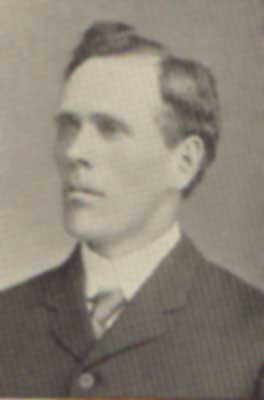
W. C. REED Vice-President of the Northern Nut Growers Association
Mr. Reed: Ordinary apple storage, thirty-two to thirty-eight, or freezing. This spring we grafted between the first and tenth of May; some of the trees were in full leaf. The sap was flowing very readily and they bled very freely, although the ones that had been cut back early would not bleed like the ones you cut when you are ready to graft. In grafting we used the wedge graft, splitting straight down and placing three or four scions on each limb three or four inches in diameter. However the method we like the best is the slip bark method, but we have had fairly good results with both methods. Of the trees we grafted this spring 60 to 75 per cent were grafted from cold storage scions. We used some that had not been in cold storage, and we didn't get them to grow. We wax the grafts thoroughly and cover them with paper sacks. We do not use any tying on the large limbs as we don't find it necessary. However, we have done more budding than grafting in top working large trees and I think it is a little surer, but we have been fairly successful with both. For budding we cut them back the same as if we were going to graft. We let the sprouts grow until about the middle of July or first or middle of August, and we have let them go as late as the first of September. Then they are ready for budding. We follow about the same method as has been demonstrated. In working large trees it is very important that you keep all cuts waxed thoroughly with grafting wax.
Mr. McCoy: Have you had this experience, that English walnuts will produce female blooms before they do the male blooms?
Mr. Reed: We haven't had them long enough to determine that clearly. We have eight trees and four of them produced pistillate blooms and we had to bring pollen to pollenize them.
Mr. McCoy: It is possible to have your sprouts almost where you want them by taking the sharp end of an old file and dressing the bark carefully. The buds are more apt to come there than anywhere.
Mr. Reed: We sometimes lose a good many shoots from storms. One tree was budded about three weeks ago and that storm about ten days ago broke every one of them.
Mr. Pomeroy: What time did you say to bud the black walnut?
Mr. Reed: About the first of August, from the middle of July to the middle of August, as a rule. We are budding some yet. That depends on the wood; do it when the wood is ripe enough. We are holding back on some now to get the wood ripe enough, and as fast as they get ripe enough we bud them. You can bud them late if you cut them back freely in the spring, smooth with the ground. Then your buds will take much more rapidly because you have the sap.
Mr. McCoy: Have you had the best success when you cut your trees back in the pruning season? In slip bark grafting there are two ways, you know. One is to wait until you are ready to graft and then cut back. Which do you think is the best?
Mr. Reed: In top working the large trees we had the best success cutting back early, that is in the nursery. We have never cut back any at the time we were ready to do the work.
Mr. Mccoy: In other words you head off the sap flow?
Mr. Reed: Yes sir, we hold it back.
J. F. Wilkinson: Do you find it any advantage to cut your leaflets off before you bud?
Mr. Reed: I haven't tried that enough to know. When you were at our place some of them had been trimmed in full leaf and had dropped the leaf stalk, and some had been cut off three weeks and still didn't let loose. We can tell more next spring as I kept a record of that.
Mr. Pomeroy: How do you know when it is ripe enough?
Mr. Reed: I don't think a man lives who knows exactly. You have to use your own judgment. For instance, when bud wood colors up like this I would feel sure it was ripe enough. When it is green I am more afraid of it, although we have some good success with the green wood, but cold storage wood is still better.
Dr. Morris: Professor Van Deman said the other day that in cutting bud wood at this time of year it is good to give the bud rest for two or three days. He cuts the scions and puts them in the ice house. That gives them rest and the buds start better and are firmer. Has anyone had experience with that way?
Mr. Dorr: There is another question I want to ask. If we want to experiment with the processes that have been suggested here, shouldn't Evansville have a place where we can store scions? We should have an ice house. Some of us who don't have shoes, haven't any ice house. I worked in South Carolina one time and made this discovery, and it almost made me weak. The great majority of farmers in South Carolina are men who make fifty dollars a year; they cultivate three acres and own a mule in partnership with two or three other men. Suppose some enthusiast like this man plants an orchard there. What inducement has he for that kind of work? The dream I have had here for Evansville, which is my home, is to bring some of that kind of work into the high schools.
Mr. White: In regard to the point brought out by Dr. Morris about cold storage bud wood, I believe that it is better for being chilled. We have found it hastens the callous. The same theory has been borne out by the work of the Department of Agriculture in propagating the blueberry. They found it would not callous and form roots unless they chilled it. Isn't that right, Mr. Close?
Proffessor Close: I don't remember that.
Mr. White: I think all wood must be frozen or chilled, or put in cold storage, before it will take well. I found that by putting scions in cold storage they callous much more readily. Where the temperature is near the freezing point walnut and pecan wood will callous more readily. On some that I took out on the 31st of July I had written the names, and the callous had formed until we could scarcely read the names. In a week or ten days the callous was around them. On new wood, it would take twice as long.
Professor Smith: If they had calloused in cold storage was it because they had been too warm?
Mr. White: No sir. If you will take a tree that you want to set out and cover the roots until you can set it out, you will find the callous forming no matter if the ground is frozen hard.
Professor Smith: You mean a tree planted in the fall?
Mr. White: Yes sir.
Mr. Pomeroy: Where one had no cold storage what would he do?
The President: If you haven't cold storage, such as Evansville affords, and have an ice house you can use that. It is very important to pack the scions in excelsior and sawdust and be sure there is very slight moisture, and to paper line your boxes. Colonel Sober keeps chestnut scions by standing them on end in cans. He fills in with a thin layer of sawdust, punches holes for them to breathe, puts a lid on and sets them in the ice house and says they keep splendidly.
Professor Smith: In an ordinary ice house?
The President: Yes sir.
Colonel Sober: I have kept them that way for two years.
Mr. White: Dr. Morris will tell you the next best thing if you haven't cold storage.
Dr. Morris: We use a method I got from Professor Craig, the way he kept his for many years. His plan was to set a plain wooden box very smoothly on the ground, smooth off the ground so the box would set evenly on all sides, then pack in a layer of perhaps half an inch of fine leaves like black locust leaves, and on that he would put a single layer of scions, then, more leaves and scions.
Mr. Moseley: If you have an ordinary ice box, would that be cold enough to put the buds in?
Dr. Morris: I think that would be plenty cold enough. I know of a man in Maryland that has been using that for a number of years.
The Secretary: Do you wax the ends?
Dr. Morris: Sometimes I do, and sometimes I don't.
The President: You couldn't keep your scions all the time in an ice box, could you?
Dr. Morris: No, not for any length of time, but just for a few days you could, in an ordinary refrigerator.
The President: When you cut your scions in the winter for future use, you should keep them down pretty close to freezing. I used scions in Maryland this spring cut last February in this locality. We put them in cold storage and kept them there until April. Then they were taken out and shipped to me in Washington. They arrived in perfect condition and I took them to a big green house across the street and put them in a long box and set them up in the big refrigerator where they kept their buds. I had these within two inches of a thousand pounds of ice and the Green River proceeded to grow within two weeks. You have to keep them in cold storage. It is so cheap, however, in Evansville that there is no excuse not to keep them in perfect condition. These cold storage people here, Holt & Brandon, are very fine people. We have kept very large amounts of bud wood there and their charges have been very small.
Before we get through I want to call your attention to the rest of the program. Immediately after adjournment there will be automobiles waiting to take all who want to go sight seeing in Evansville. This is by the courtesy of the Evansville Business Association. I want especially again to call your attention to the lecture tonight by Mr. C. A. Reed, and for fear that those here may have an idea that it will be strictly technical I wish to say that he will avoid technicalities as far as possible. He has one of the finest collections of lantern slides I have ever seen. He will take you to the walnut regions of California and to nut regions all over the United States. Any questions asked him will be cheerfully answered but I would suggest that unless there is something extremely important, you reserve your questions until the conclusion of his talk and not interrupt unnecessarily because there are a great many slides to get through with. Those of you who are here, come tonight and bring your friends, bring the ladies and children and everybody else, because it will be interesting and educative generally. Do not forget that we leave in the morning at 7:15, not 16, nor 26; that car will leave at 7:15 and if you will be there on time we can got together on the car. We will now adjourn until 8 o'clock.
Meeting re-convened at 8:00 P. M.
The President: The first thing on the program will be an invitation to join the association. For the purposes of our organization we need members, and we especially need anyone who has any interest whatever in nut culture. The membership of persons joining now will expire on the 31st day of December, 1914; the membership dues are $2 per year, which includes a copy of the annual report. By joining now you get this report and the three preceding ones.
Professor Close: Mr. Chairman, may I say something regarding the annual report?
The President: We will be glad to hear you, Professor Close.
Professor Close: It seems to me that those who pay dues for 1914 ought to receive the report of the meeting for 1914 no matter when it is printed, even if it is not for three or four months after the end of the calendar year. In that way the reports will match the calendar year; that is they are the reports for the year that the meeting was held and the papers and discussions took place, and this one should be known as the report for 1914. That is the way we run them in the other societies and it seems to me there would be no confusion at all if it were managed in that way.
The President: The chair very heartily agrees with that suggestion and thinks that should be the practice of the society. The chair would be very glad to entertain a motion to make that the rule.
Professor Close: I should be glad to make the motion that the proceedings of the meeting of each calendar year be reported as of that calendar year and distributed to the members who pay dues for that calendar year.
(Seconded and carried unanimously.)
The President: Are there any other candidates for admission to this society? If so, hold up your hands and our distinguished secretary will visit you immediately. Are there any committee reports?
W. C. Reed: The committee on nomenclature desires to report as follows:
Voted on the Smith and Potter resolution to recommend changing the name of the Busseron pecan to Vincennes; Posey pecan to Wabash; Buttrick pecan to Illinois. It was the opinion of the committee that the other names of pecans had been established by the Department of Agriculture by printing in the year book, and that it was not advisable to change them.
We recommend, as advisable for members introducing new varieties, to confer with the committee on nomenclature before listing new names.
Signed. W. C. Reed, W. C. Deming, R. L. McCoy, R. T. Morris, C. A. Reed.
A Member: I move the adoption of this report.
A Member: I second the motion.
The President: It has been moved and seconded that the report of the committee on nomenclature be adopted. Are you ready for the question? All in favor of the motion make it known in the usual way. It is unanimously carried that we adopt this report. Are there any other committee reports?
Professor Close: Mr. Chairman, Ladies and Gentlemen: The committee on exhibits has not had a very arduous duty, because we can't have at this time of year very extensive exhibits. But what we have are very interesting. Mr. W. C. Reed has an exhibit of English walnuts, hickory nuts and hardy almonds. You have all noticed the exhibits he has in the glass case. That is very instructive and is put up in such a way that it can be carried from place to place. He also has some photographs of trees. Mr. Wilkinson has an exhibit of fruiting limbs of shagbark hickory and pecans, and various seedlings. To some of us some of those things are almost new. Colonel Sober has an exhibit of grafted chestnut trees. He also has the burrs and in glass jars he has the nuts. Then there is quite an exhibit of the native varieties made by our president, which is very fine. There are also some persimmons. I think, everything considered, the society is to be congratulated upon the quality of the exhibits even though the quantity is not so very great.
The President: If there is no objection the report of the committee on exhibits will be adopted. The report is adopted. Are there any further committee reports?
Mr. Potter: The committee on resolutions reports as follows:
Resolved, That we extend our thanks to the Mayor and the Citizens of Evansville, Indiana, for the courteous entertainment they have favored us with, and for the excellent facilities that they have placed at our disposal.
Second—That we extend to the Evansville Business Association, and to the members thereof, our deep appreciation of their entertainment and courteous treatment that they have extended to our association.
Third—That we extend our deep appreciation and gratitude to Hon. T. P. Littlepage, our president, and Dr. W. C. Deming, our secretary, for their untiring and valuable services in behalf of this association.
Fourth—That we express the thanks of the association to its members and others who have attended this meeting, and helped to make it a success.
Fifth—That we especially extend our thanks and appreciation to Mr. C. A. Reed of the Department of Agriculture at Washington, D. C., and to Col. C. K. Sober, for their excellent lectures and special work in behalf of this association at this meeting.
Sixth—That we express our most sincere thanks and appreciation to J. F. Wilkinson, for his courteous treatment and entertainment of this association at his home.
Seventh—Be it further resolved, that we especially thank each and every individual member of this association, for their attendance at this meeting, and for their earnest efforts and interest in behalf of the same, in helping to make this meeting a success in every way, and making it the most enthusiastic meeting that has ever been held by this association, and we thank any and all members for any special work or research that has been carried on by said member in behalf of this association, as disclosed by this meeting.
Eighth—Resolved, That we extend to Mr. W. C. Reed our sincere thanks for his kind invitation to the members of the association to be his guests at his home in Vincennes, Indiana, on Saturday, August 22d, 1914.
Signed. W. O. Potter, H. R. Weber, J. Russell Smith.
The President: If there are no objections, the report of the committee on resolutions will be adopted. It is so ordered. The next thing on the program will be the lecture and lantern slides by Mr. C. A. Reed.
Meeting called to order at Enterprise, on Friday, August 21, at 10:30 A. M.
The President: I want the records to show that this meeting convened in Enterprise, Luce Township, Spencer County, Indiana, where the members of the Northern Nut Growers Association visited and studied the native Ohio River pecan trees, and I want to hear the opinions of the different visitors. The state entomologist, Mr. Baldwin, will please express himself upon the native pecan trees on the Ohio River.
Mr. Baldwin: My remarks will be so brief it will not be necessary for me to go forward. I don't know that it is necessary for me to mention the fact that I have never lived in and very seldom visited, localities where pecans grow in this state and cannot, therefore, express an authoritative opinion as to the merits and demerits of the pecan trees in this section. It is noticeable that the trees are more free from insects and fungus trouble than trees in many places. Mr. Simpson, who has had considerable experience in the South, called my attention to a very destructive pest that does not exist here in numbers sufficient to be destructive, as it is in Florida, but he is of the opinion that it was introduced into that section from this section.
Mr. President: What is it?
Mr. Baldwin: Mr. Simpson says—I didn't see any of the insects, and probably you couldn't identify it without labor,—but Mr. Simpson says there are two broods and the second brood is now at work. This certainly is a good field for work for the entomologist. Of course the same thing would hold true with this insect that is true of others; when a new species is introduced into a country where it has not heretofore existed, where the natural parasites are not found, it is more destructive than where the natural parasites exist. That point is illustrated very well by the moths that are so very destructive in New England, and don't do very much damage in the countries from which they come. From my observations on other native nut trees I was greatly impressed with the abundance of nuts that some of the native trees bear here. I am sorry I am not able to talk about something that would be more interesting to those interested in pecans and other nuts.
The Chairman: I should be glad to have our secretary put in the record a few of his observations.
Dr. Deming: Mr. Littlepage has been talking to us about these pecans since we started this organization, and has long promised to show us these trees. We can't get any idea of such trees without seeing them. We have had many word pictures of them but I had not been able to form any idea of how great they are. They have a beautiful outline as we see it silhouetted against the sky, and every evidence of being trees that bear lots of nuts, which is the kind of trees we are all looking for. We don't have the pecan tree in the North as a native at all. There are a few in New England, a few scattered here and there, but none bearing. I have heard of a pecan not far from my home, possibly twenty-five miles, that does not bear. I have seen in the city of Hartford a pecan tree that was nine feet and three inches in circumference and ninety feet high, of unknown origin, but not bearing. The nut tree that grows best through our part of the country is the shagbark hickory. It is very much like the pecan tree here, but never grows to anything like its size, is not nearly so beautiful a tree and I don't believe it bears as heavily. I think the average hickory nuts there are very much inferior to the average pecan here. We also haven't the black walnut there as a native. That is I have never seen it native though it probably was originally so in parts of the country. However, when planted it grows to a very large size, and makes a magnificent tree. About ten miles from my house is the largest in the state. We have lots of butternuts over the country but no nut tree that compares in beauty and usefulness with the pecan here.
The President: Dr. Smith should be able to size up the situation and give us some of his impressions. I want to get them in the record.
Dr. Smith: Gentlemen, I don't see how anybody can live by these trees here and not realize that they are a source of fortune. I can't understand how men can look at them every year, gather and sell the nuts and not realize that they are a source of livelihood. I just measured a big tree in a tobacco field down the road that was thirteen feet and eleven inches in circumference, that had a sixty foot reach, and was about one hundred and twenty-five feet high. We measured another, that had a sixty-six foot reach and they were all bending down with fruit. It was marvelous and they were certainly giving us their evidence that the thing for us to do is to go ahead and reproduce them.
The President: Dr. Van Duzee, tell us your impressions of these trees.
Col. Van Duzee: Mr. Chairman, I simply will add this. As I came through this wonderfully fertile section of the country, I observed people building bungalows and cottages and setting out trees other than pecan in their dooryards. That is the pity of it. As Dr. Smith says these people here are living close to some of the most magnificent natural trees I have ever seen, and yet they will go and plant around their gardens trees that will do nothing in the world but produce shade. It seems to me there is room for the best kind of missionary work here. I am glad the nut growers met here and I hope the effect will be to cause people to think. As we came down the road we estimated that on one tree there were four or five hundred pounds of nuts. The owner of that tree didn't study the soil that produced that magnificent crop. Our driver said they had had two years of failure in their farming operations and yet right here in the same place nature has handed them another magnificent crop. I have an idea that the average annual value per acre of crops on the farms of southern Indiana and Illinois will run in the neighborhood of a ten dollar bill, and here is a tree, one tree, presenting thirty dollars. I have no doubt in the world that there will be fifty or sixty dollars' worth of nuts on this tree up here, and it doesn't occupy a quarter of an acre of land.
I want to speak about the insects. I don't believe you need to worry about these unless the planting goes away beyond what I think it will in this section. Here is the proof, right here in this river bottom in the nuts we see on these trees and the growth of the trees. They are thrifty, not mutilated by insects or dying. They are at home and the conditions are absolutely favorable. I have been very much pleased and very glad I came, and if I were not thoroughly tied up in a section I think is more adapted to nut growing, I should come up here and undertake to do something in this section, for I see great possibilities.
The President: That is an opinion that is of real value. Now I will call for volunteers. Those of you who have been sight seeing here and have impressions and ideas you would like to express we should be glad to hear from.
Professor Close: One thought that has interested me is this. If we should take away from this neighborhood about half a dozen men this great industry would be forgotten. It is to these men who have done this kind of work that we owe a great deal. They are engaged in a wonderful work. I presume they realize how great it is. It means the developing of an industry that will grow in the United States and could be carried to other countries. These great trees are a wonder, no question about it, and the fact that here is a new industry being pushed by half a dozen men is still more wonderful.
The President: If this section of the country had been planted to seedling pecans it would have made every man who owned forty acres of it, comfortable. We have with us Mr. Dodd, who is one of the old residents of this neighborhood. He can tell us some interesting things. He was here long before I came and looks at present as if he might be here many years yet. We certainly hope he will be. If it were not for him we would not know that Enterprise is on the map. He reports for the county paper and keeps the world in touch with Enterprise. I should like to hear him tell about the old pecan trees when he first knew them, and I want what he knows about them to go into the record.
Mr. Dodd: Mr. President, and Ladies and Gentlemen: I'm no speech maker, never made one in my life, but I guess I know something about the pecan business. These trees were here when I came and that was in 1852. Those big trees that you looked at were big trees then, and must have been fifty years old, I judge, from what I have learned from older people. So you see they have been there a long time. I have a piece of ground here and if I had known as much about the pecan business then as I do now I would have had every foot of my land in pecans. I make a right smart little money in pecans as it is. Littlepage knows that. I have shipped pecans to him off my trees, shipped them to him many times. They are no better than the others, but we are old friends and he wanted me to send them to him and I did. I don't know anything about the pecan business in a general way, as to what they will produce or how much money they will average, but I think we have slept on our rights in this country for seventy-five years. If that is any good to you, you are welcome to it, and we are glad you are here today.
Mr. Pomeroy: One tree out in the back here looks as if it might be fifteen or sixteen years old and it is bearing well. It is a large tree well filled with nuts, notwithstanding the fact that lightning has struck it twice and destroyed at least two years' crops. It seems to me there are thousands of dollars to be made in an investment in nut trees here where they do so well.
The President: Now has any one else any observations to make? Mr. Weber.
Mr. Weber: Out here you remember you showed us quite a number of seedlings growing in a corn field like milkweeds, growing right alongside of them, and one of us thought the milkweeds were the pecans, as they looked much the same. It seems to be hard to keep them down.
The President: That reminds me that when this organization was formed I had the honor of being the first man on the ground. Dr. Deming called the meeting to order, Dr. Morris was there and so was Professor Craig, who has since passed to the great beyond, and a number of others, and I remember telling the bunch who were there at that time, that if I ever had the opportunity I would take them into a country where the pecans really grew. I have attempted to make good. If there remains any doubt in your minds we will proceed to lose you in the great Green River pecan woods, and if you are not pretty well stocked with provisions, you may never get out. I told Professor Close who is making a study of the pawpaw for the Department of Agriculture, that we also grew pawpaws in southern Indiana and that I would show him some large trees. So he came down with us and we went to Boonville and got in Senator Hemenway's automobile and I introduced him to a pawpaw tree six feet and a half in circumference at the ground, five foot in circumference three feet from the ground. So the chair takes some pleasure in having been able to show the things that were promised. Let us hear from Mr. Riehl.
Mr. Riehl: I think you folks are very unfair to me. You have said everything I wanted to say before you called on me and I really don't know what else I can say. I had in mind what Professor Smith has been saying to me, and what some of you people have already said, that it is time for you people here to wake up. You don't know what you have got. You are like people in many other sections of the country, they don't appreciate what they have at their very doorways. If I were a young man, I would come here and plant pecan and walnut trees, but I am too old now to make such changes. In a few years you may remember what I have said. The walnuts are as profitable as anything else, and much more so than any farm crop you can grow. Nothing will produce as much value and with as little trouble as nut trees. I am convinced of that.
Professor Smith: If they would follow your suggestions they would soon have another Garden of Eden.
The President: Professor Smith has reminded us that the crops in the Garden of Eden were purely tree crops, and they grew without effort. But after the fall Adam and Eve had to go out and cultivate the soil and raise corn. Probably in that garden they had pecans and walnuts. I believe that is his theory and it may be good.
Professor Smith: O, beg your pardon, that is in the book of Genesis. The text describes nothing whatever except trees, and then Adam fell and had to dig in the ground and make his bread by the sweat of his face.
Mr. Potter: Is the tree of knowledge the pecan tree?
The President: I don't know. Can any one else say?
Professor Smith: My remarks on the Garden of Eden were brought out by what our President said, but I have published others that are not very lengthy and you can buy them.
The President: Let's hear from Mr. Lockwood.
Mr. Lockwood: Dr. Knapp wants me to expose my ignorance and tell you the crimes I committed and intended to commit. It was about three years ago that we purchased a little over a thousand acres in Gibson County, near Grayville, and about three hundred and fifty acres of it were in timber. We decided to clear up as rapidly as possible all the forest land and cultivate it in corn. Now comes the crime which Dr. Knapp wants me to expose and I am going to confess it. We deadened probably a hundred of as fine pecan trees as you ever saw, from six to eighteen inches in diameter, and Dr. Knapp heard about it and visited our farm, and it was on his account principally that we quit cutting the pecan trees. Now if anybody else cuts them we have them arrested. We have the second best orchard in Gibson County. I have joined the association and came here to get a line on you and I have got a good many good things by coming. I would like to have you visit our farms. We have some very fine trees to see and I will also give you something to eat, because I am the chief cook. I want to emphasize the remark one member made that it is a great work these men are doing. You get that impression when you come to the meeting, and it shows great sacrifice and love for their fellow men.
The President: That is very good, Mr. Lockwood. Now Dr. Knapp will tell us what he thinks.
Dr. Knapp: I know very little about pecans but I was interested in Mr. Lockwood's trees because he had a magnificent pecan orchard, possibly five hundred trees, and they were contemplating having the trees cut down because they thought they were in the way of the cultivation of the land for corn. This is not the case because the pecan tree goes away down deep for water and is not like the surface root trees. I have seen large wheat fields in the same location with large pecan trees in them, and men have told me that they produce just as much per acre on the land where the pecan trees are as where there are no pecan trees. I went to see Mr. Lockwood and took him what little literature I had on the pecan industry and promised to send him some more, and insisted that he read it before he destroyed his trees. He kept his promise and I am glad to see that he has taken an interest in the pecan industry.
The Chairman: You are a real benefactor, Dr. Knapp, and entitled to great praise.
Professor Smith: While we are distributing things gratis I want to make a little statement in the same vein as a previous speaker. He points out the work that a few enthusiasts are doing. Most of the things worth while are done by the people who never get any credit in a financial way. You will find the things that count are started and done by that live force of men that work for the fun of working with no promise of reward. Why should Mr. McCoy or Mr. Reed come down here and tell us how to bud trees, and what varieties to use? It is plainly a labor of enthusiasm and love. I want to express my particular appreciation of the work done by Mr. Thomas P. Littlepage. We hear from Indiana through Mr. Littlepage. On every occasion when we get in trouble and want bud wood, along he comes and helps us out. He seems to have all kinds of equipment for keeping it or he can always go to a pecan tree and get it. We never hear of the trouble or expense. He spends money as if he had a barrel of it. He has spent lots of money trying to get the people to know there was an Indiana pecan. We also know that Mr. McCoy and Mr. Wilkinson and others too numerous to mention have lost thousands of dollars and have worked long and hard to get this industry started. The industry needs enthusiasm and no end of work. It means work to get out and hunt trees and bud wood and these men are entitled to lots of credit for their efforts.
The President: The chair appreciates that compliment but he is hardly entitled to so much praise. However, all the efforts we have made to create interest in the pecan have been well spent. We have had lots of trouble in getting bud wood and if it had not been for Ford Wilkinson we never would have gotten anywhere. He is the best climber in the country. He has gone at all times and under all conditions and has done more real hard work than all the rest of us put together. He always climbs the trees. The Major tree is about fifty feet to the first limb. We couldn't have gotten along without him. And Mr. McCoy is entitled to great credit. The first time I ever saw the Posey nut Mr. McCoy brought some to my home in Boonville. That was a number of years ago. He first stimulated Mr. Brown to put the Warrick pecan on exhibition. As I grew up I knew where these pecan trees were and who kept a dog and what time he got up and there were not many pecan trees then I would not attempt to climb, but I wasn't as large as I am now. Of late years Mr. Wilkinson has done more than I have along that line.
Mr Wilkinson: I appreciate what you say of me but it takes all kinds of people to make a world and to grow pecan trees. I have tried to do my part but without the others I couldn't have done anything. We expect to continue at the work as long as there is any success in sight at all and hope soon that some of the hard part will be over.
The President: Before we leave that subject I want to say that a few years ago some of us who had begun to think we knew something about the pecan and were quite sure of our ground, induced Mr. C. A. Reed of the Department of Agriculture to come down here and make some trips through these woods and tell us what he knew, or what he thought of these pecans. We gave him all the facts we could, and the suggestions he made started us on the right track as to the varieties to propagate.
The President: The boat is ready, but before we go I want the report on nominations. I want the officers elected in Enterprise.
Dr. Deming: I would like to say this before we proceed to the election of officers. There has been some talk among us that it would stimulate interest in our work and meetings, and would enable us to confer honors on more people, and more members who deserve such honors, if the term of the presidency were limited to one year. There has been no rule about it but our first two presidents have each held office two years. They have been re-elected to office as a matter of courtesy and appreciation of their efforts. If from now on we limit the term of the presidency to one year I think it would be better. We think it would be desirable to make the rule that the President shall not be eligible for immediate re-election, that is, he shall not follow himself. I mention it so that if this rule is adopted in the revision of our constitution and by-laws the person who is about to be elected President, and the members of the association, will understand that there will be nothing personal about such action.
The President: In connection with that I should like to say that the present President has at different times heard suggestions of that kind made, and I am glad you mentioned it. I wasn't fortunate enough last year to be at the meeting, as I had to be in St. Louis to help try a case before the interstate commerce commission, or I should have brought that up then.
Dr. Morris is absent and Professor Close is the next on the committee on nominations. Professor Close, will you report?
Professor Close: I did not know I was the next member and Dr. Morris did not leave any data with me. However we discussed it and decided to recommend the election of J. Russell Smith for President, Mr. W. C. Reed for Vice-President and Dr. Deming for Secretary and Treasurer.
The President: Any remarks on the report of the nominating committee? If not, those in favor of adopting the report, thereby declaring the officers named elected, make it known by rising. (Vote taken.) Contrary by the same sign. Your officers for the next year will be Dr. J. Russell Smith, President, W. C. Reed, Vice-President, and Dr. W. C. Deming, Secretary and Treasurer. I congratulate the association.
Meeting adjourned.
Meeting called to order at 8:30 p. m., at Evansville, Indiana.
Professor Smith: The members of this association have always got to be on the lookout for good parent trees of any and all varieties of nuts. I think, however, there is a shortage of information in the matter of walnuts. I have talked to a number of persons and it is the general opinion that we want to know, and know quickly, more about parent trees of the Persian walnut. I therefore move that the chair appoint a committee to give this matter particular attention during the next twelve months and report at the next annual meeting.
(Seconded and carried)
The President: The chair appoints the incoming President, C. P. Close and C. A. Reed.
The next is the question about the place of the next meeting. It occurs to the chair that it might be desirable to leave that to the executive committee. But that is a matter for the association to decide and the chair will entertain motions or suggestions.
Mr. C. A. Reed: I was going to move that it be left to the committee. I know from past experiences that is the best course to pursue.
(Seconded and carried.)
Colonel Van Duzee: I would like very much to extend a cordial invitation to the members of this association to meet with the National Association at Thomasville, Georgia, in October. We have a program full of merit. Our meeting will be held in the heart of the nut planting area where all the pecan planting has been done in the last few years. We have several fine orchards in the immediate vicinity and matters of general interest will be discussed. We would be glad to have anybody that can meet with us, and if you have friends interested in nut culture we will be glad to have them.
The President: It is unnecessary to say that the South has forged ahead of us in pecan culture, and she not only has great pecan orchards but she has great men who have done this work and they will be at the meeting of the National Nut Growers. I have had the pleasure of attending some of these meetings and I can say to the members here it will be well worth their while to go down there.
Is there any further business? If not we will have Colonel Sober's paper, after which the pictures will follow.
Professor Smith: I am sure after hearing Colonel Sober's lecture, and seeing his pictures, we will want to ask him some questions. I know that Colonel Sober has worked out an unique method in the root system, and I wish he would tell us about it.
Colonel Sober: The slides I have will show that.
The President: Is there anything else?
Mr. Doan: How does Colonel Sober take care of the blight?
Colonel Sober: In answer to that I will say that in 1909 I discovered the blight on some trees, just a speck, and I took my knife and cut it off. That is my best method and then you are sure of it.
The President: Are there any further questions?
Mr. Doan: Are all his trees Paragon?
The President: I think they are. The Secretary will read Colonel Sober's paper.
The Secretary here read extracts from the preface and introduction to Fuller's book on nut culture, prepared by Col. C. K. Sober, with personal interpellations, as follows:
I believe that the moment is opportune for advocating an effort to cultivate all kinds of edible and otherwise useful nut-bearing trees and shrubs adapted to the soil and climate of the United States, thereby inaugurating a great, permanent and far-reaching industry. We are spending millions for imported articles of everyday use which might easily and with large profit be produced at home, and in many instances the most humiliating part of the transaction is that we send our money to people who do not purchase any of our productions and almost ignore us in commercial matters. I am not referring to products ill-adapted to our climate, nor to those which, owing to scarcity and high price of labor, we are unable to produce profitably, but to such nuts as the walnut, hickory, butternut, pecan and chestnut which we can raise as readily as peaches, apples and pears. There certainly can be no excuse for the neglect of such nut trees on the score of cost of labor in propagation and planting, because our streets and highways are lined and shaded with equally expensive kinds, although they are absolutely worthless for any other purpose than shade or shelter, yielding nothing in the way of food for either man or beast. Can any one invent a reasonable excuse for planting miles and miles of roadside trees of such kinds as elm, maple, ash, willow, cottonwood and many other similar kinds, where shellbark hickory, walnut, butternut, pecan and chestnut would thrive just as well, cost no more, and yet yield bushels of delicious and highly prized nuts, and this annually or in alternate years, continuing, and increasing in productiveness for one, two or more centuries. The nut trees which grow to a large size are just as well adapted for planting along roadsides, in the open country, as other kinds that yield nothing in the way of food for either man or beast. They are also fully as beautiful in form and foliage, and in many instances far superior to the kinds often selected for such purposes.
The only objection I have heard of as being urged against planting fruit and nut trees along the highway is that they tempt boys and girls as well as persons of larger growth to become trespassers. I find this only applies to where there is such a scarcity that the quantity taken perceptibly lessens the total crop. But where there is an abundance either the temptation to trespass disappears or I fail to recognize the loss. As we cannot very well dispense with the small boy and his sister I am in favor of providing them bountifully with all the good things that climate and circumstance will afford.
On my farms in Irish Valley, Northumberland County, Pa., I have planted a Paragon chestnut tree every forty feet along the public highways and driveways making a total of 769 trees. These trees range in age from four to ten years old.
A mile in this country is 5,280 feet, and if chestnut trees are set forty feet apart, which is allowing sufficient room for them to grow during an ordinary lifetime, we get 133 trees per mile in a single row. Two rows may be planted, where the roads are wide enough, one on each side, and then we get 266 trees per mile. I can estimate the crop when the chestnut trees are twenty years old at two bushels per tree, or 532 bushels for a double row per mile. At the moderate price of $4 per bushel, we would realize $2,128 for the crop on a double row, with a fair assurance that the yield would increase steadily for the next hundred years or more, while the cost of gathering and marketing the nuts is no greater, and in many instances much less, than that of the ordinary grain crops. At the expiration of the first half century one half of the trees may be removed, if they begin to crowd, and the timber used for whatever purpose it may best be adapted. The remaining trees would probably improve, on account of having more room for development.
The chestnut thrives best in light, well drained soil, and those containing a large proportion of sand or decomposed quartz, slate and gravel; but it is rarely found, nor does it thrive very well, in heavy clays or limestone soil where the limestone rock comes near the surface. It is true that chestnut groves, and sometimes extensive forests, are found on hills and ridges overlying limestone, but a careful examination of the soil among the trees will show that it is a drift deposit containing little or no lime. I find in Pennsylvania the chestnut tree grows from the banks of the Susquehanna River to the tops of the mountains.
In planting the chestnut tree it should never be planted any deeper than it was in the nursery rows. If planted any deeper it is certain death to the tree, as I find that the earth placed around the trees above where it was in the nursery rows scalds and destroys the tree. Here is where the great mistake is made in planting out the chestnut tree, and this I have found out by practical experience. It is far better to plant it one inch less than it was in the nursery than to plant it an inch deeper.
There has been a steady increase in the demand for, and a corresponding advance in the price of all kinds of edible nuts during the past three or four decades, and this is likely to continue for many years to come, because consumers are increasing far more rapidly than producers. Besides, the forests, which have long been the only source of supply of the native kinds, are rapidly disappearing, while there has not been, as yet, any special effort to make good the loss by replanting or otherwise. The dealers in such articles in our larger cities assure me that the demand for our best kinds of edible nuts is far in excess of the supply, and yet not one housewife or cook in a thousand in this country has ever attempted to use nuts of any kind in the preparation of meats and other dishes for the table, as is so generally practiced in European and Oriental countries.
The question may be asked if the demand is sufficient to warrant the planting of the hardy nut trees extensively along our highways or elsewhere. In answer to such a question it may be said that we not only consume all of the edible nuts raised in this country, but import millions of pounds annually of the very kinds which thrive here as well as in any other part of the world.
Where farmers want a row of trees along the roadside, to be utilized for line fence posts, they cannot possibly find any kinds better adapted for this purpose than chestnut, walnut, hickory and pecan. In a few years they may yield enough to pay the taxes on the entire farm, the crop increasing in amount and value not only during the lifetime of the planter, but that of many generations of his descendants.
This appeal to the good sense of our rural population is made in all sincerity and with the hope that it will be heeded by every man who has a spark of patriotism in his soul, and who dares show it in his labors by setting up a few milestones in the form of nut-bearing trees along the roadsides—if for no other purpose than the present pleasure of anticipating the gratification such monuments will afford the many who are certain to pass along these highways years hence.
It is surely not good policy to enrich other nations at the expense of our own people, as we are now doing in sending millions of dollars annually to foreign countries in payment for such luxuries as edible nuts that could be readily and profitably produced at home. There need be no fear of an overproduction of such things, no matter how many may engage in their cultivation.[A]
Colonel Van Duzee: I have no questions to ask, but as I am going to be obliged to leave the session before the close of the lecture, I should like to express my appreciation of the paper which has been read and make a remark or two. I am so heartily in sympathy, in this commercial age, with some of the thoughts expressed there, that it is a pleasure to listen to a paper which takes into consideration something a little beyond, and the idea of planting trees by the roadside for the benefit of humanity, is of too much importance to be overlooked. I could go on at great length along this line, but as I have not time I just wanted to express my appreciation before I have to go.
The President: Has anyone else any suggestions or any general business?
The Secretary: There has been no discussion at all of the filbert, I think. That is a nut that is possibly going to be of great importance in the future. I think it was Mr. Doan who asked me about the filbert and there might be someone here who could give us some information about its possibilities. Perhaps Mr. Reed could tell us something about it.
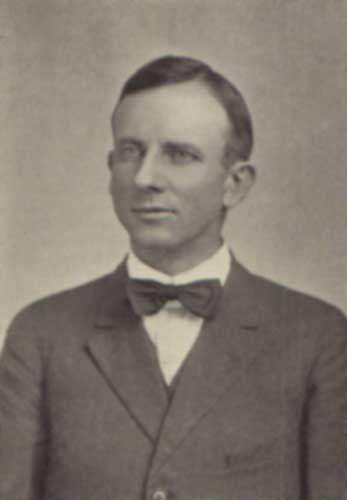
C. A. REED In charge of Nut Culture Investigations, United States Department of Agriculture
Mr. C. A. Reed: Well, I am glad the subject has been brought up but I would rather listen than try to talk. As Mr. Littlepage made clear in his paper yesterday, there has been considerable effort in the eastern states towards the introduction of the filbert, but almost uniformly such attempts have met with failure. About two weeks ago some of us visited Dr. Morris's place and while there we were shown some large European filberts, ten to twelve feet high, bearing heavily. These were not suffering from the effects of the blight at all so far as we could see, and they were right in the district where the native northern filbert is one of the most common of the wild plants. It was quite a revelation to me to see the native filbert or hazels bearing so heavily. Everywhere we went we saw low bushy hazels not over two feet from the ground loaded with immature nuts. I thought there was an opportunity for some nut enthusiast to canvass that territory, and find the best individual plants for propagation. The filbert, it seems to me, offers an unusually inviting field, and unless I am greatly mistaken there is a great field for exploration. Dr. Deming lives in that same section, and he tells us that on his farm the hazels are even more common than at Dr. Morris's place. Dr. Morris agrees with us that there is a fine opportunity for searching for the best varieties. He has done it and has found, I believe, one which he thinks is especially fine. I would be glad to hear from any one else about these nuts.
Mr. Riehl: Mr. President, I have made a little observation of the European and I don't think it will count for very much. I know of trees that were planted in one of our experiment stations. I last saw them three or four years ago and they were twelve or fifteen feet high and bearing very heavy crops. I saw no disease of any kind but it was in the city of Alton and I don't suppose there is a native hazel within miles of it. That may be why they were bearing so well and were exempt from disease. I haven't seen those trees for the last four years and what has happened to them I don't know. I intend to go and see what has become of them.
The President: Mr. Doan, what is your especial interest in the hazel?
Mr. Doan: I think it offers great possibilities. The different species that we have tried show that. The fact that it grows freely, even though certain branches of it have the blight, which does not at once destroy the whole bush, and the fact that it bears freely and abundantly, I think are points in its favor. A great many persons couldn't wait eight or ten years for a nut tree to bear but could wait a much shorter time. I think this is one good point in favor of the hazels.
The President: There is no doubt that the hazel offers a very excellent opportunity for study and investigation. There are many varieties of the native hazel that are very fine and it seems to me that therein lies a field of work for this association. There is no information to the productive nut grower of more value than the facts as to what these nuts will do, how they can be produced, how quickly they bear, and what they are worth. We have very little reliable information about the English walnut. When we listened to Mr. Reed last night we were forced to the conclusion that as yet we know nothing about it. There are a few apparently promising English walnut trees throughout the North but there are many things to be taken into consideration before you can recommend those for propagation. It seems to me the hazel offers a field of considerable importance. Has any one else any suggestions to offer?
Mr Potter: This hazel proposition interests almost every member of the association. It seems to me as if we might get at something more definite and instructive and I move that the chair appoint a special committee to investigate the hazel, and report at the next meeting.
A Member: I second the motion.
The Chairman: It has been moved and seconded that the chair appoint a committee of three to investigate the hazel or filbert, and report at the next meeting. Are you ready for the question?
Mr. Riehl: I hardly think that will do any good. I believe there is a field where good work can be done but I doubt whether the chair or any one else is able to appoint a committee that can find out much that will be of value between now and our next annual meeting. There are so few superior hazels. I tried for many years to find a native hazel that is worthy of planting. I have heard of some but have been unable to get them. I heard of one and had it promised to me but he has forgotten it, I guess, and I never got it. I know of another that is said to be very good, but the man that has it won't let anybody have it unless he gets five hundred dollars, and there is no man willing to pay that on his say-so that it is a good thing. So we have got nothing to go on for such committee to make a report on. A much better plan would be for this association to offer a prize of a certain sum of money to any one who will report a superior hazel. Let that get in the papers and be talked of so the boys and girls will hear of it and they will contend for the twenty-five or fifty dollars. There are no doubt such fine hazels but the trouble is to find them. I think the best way would be to offer a reward and let them be brought to us. In that way we can accomplish something, but to appoint a committee when we have nothing to go on will do no good.
The President: There is a great deal in the suggestions of Mr. Riehl. It has been noticed by all of us in nut culture that the individual opinion of the man who has seen only his tree or bush is perhaps not worth much. That is why the data we have on the walnut is unsatisfactory. So much of it comes from the man who has seen only his tree, and does not know what a first class bearing tree is like. The same difficulty would arise, to some extent, in your suggestion, Mr. Riehl, as to offering the prize. That is perhaps one of the best methods to stimulate interest but there is this difficulty in the way, that the nuts must be gathered, and the tree be investigated before it could be properly authenticated. I have had people tell me they have seen pecans from certain trees, that long (measuring on finger). There never was a pecan grew in the world that long. The question before the house is the appointment of this committee. Is there any further discussion? If not those in favor of it make it known by rising. (Two.) Those opposed make it known by rising. (Seven.) The motion is lost. Is there any further business? If not we will stand adjourned sine die.