Front matter (continued 2)
Reading edition
Specimens examined.—Total, 238, distributed as follows:
British Columbia: Alta Lake, on Pac. Gt. Eastern Ry., 2600 ft., 5 (MVZ); Okanagan, 1 (FM); Vedder Crossing, 4 (1 MVZ, 3 PM); Chilliwack Valley, 2 (NMC); 18 mi. S Chilliwack, 1 (MVZ); Cultus Lake, 2 (NMC); Lihumption Park, 4500-4800 ft., 12 (NMC); Seymour Mtn., 4000 ft., 8 (1 MVZ, 7 PM); Cariboo, 2 (FM); Sumas, 8 (1 MVZ, 7 FM); Huntingdon, 40 (NMC); Parnassus Creek, Black Tusk Meadow, 5200 ft., 1 (PM); Howe Sound, Brackendale, 2 (NMC); Stanley Park, Vancouver, 1 (PM); Allison Pass, Manning Park, 1 (PM); Manning Park, 2 (PM).
California: Del Norte Co.: Crescent City, 11 (6 FM, 5 USBS); Requa, 4 (FM).
Oregon: Benton County: 3 mi. N Corvallis, 2. Clatsop County: Old Fort Clatsop, 100 ft., 11 (MVZ); 71/2 mi. S Cannon Beach, 50 ft., 1 (MVZ). Columbia County: 7 mi. SE Rainier, 100 ft., 11 (MVZ). Curry County: Gold Beach, 3 (FM). Douglas County: Gardiner, 7 (5 MVZ, 2 FM). Lane County: Sutton Lake, 6 mi. N Florence, 1 (MVZ). Lincoln County: Delake, 3 (2 MVZ); Newport, 2 (MVZ). Multnomah County: Portland, Council Crest, 950 ft., 1 (MVZ). Tillamook Co.: Tillamook, 1 (MVZ); 9 mi. S Tillamook, 1 (MVZ); Netarts, 3 (SDM); Blaine, 3 (MVZ). Washington County: 181/2 mi. NW Portland, 1300 ft., 5 (MVZ).
Washington: Clallam County: Deer Lake, 3800 ft., 3. Clarke County: 31/2 mi. E and 11/2 N Amboy, 3500 ft., 3 (MVZ); 11/2 mi. ENE Amboy, 3500 ft., 13 (MVZ); 31/2 mi. E and 5 mi. N Yacolt, 500 ft., 1 (MVZ); 11/2 mi. W Yacolt, 800 ft., 11 (MVZ). Cowlitz County: 6 mi. NE Kelso, 4 (MVZ); 4 mi. E mouth Kalama River, 5 (MVZ). King County: Lakeridge Tract, S end Forest Ave., Lake Washington, 2 (MVZ); Seattle 2 (MVZ); Snoqualmie Pass, 5 (MVZ). Mason County: Potlatch, 2 (MVZ). Pacific County: 11/2 mi. N Chinook, 10 ft., 1 (MVZ); 31/2 mi. SE Chinook, 10 ft., 5 (MVZ). Pierce Co.: 5 mi. E Tacoma, 4 (MVZ); Puyallup, 3 (1 MVZ, 2 FM); Mt. Rainier, 1 (MVZ); 3 mi. E Ashford, 1 (LMH). Skamania County: Ice Caves, 2800 ft., 5 mi. WSW Guler, 1 (MVZ). Thurston County: Boston Harbor, 5 (CAS). Wahkiakum County: 4 mi. E Skamokawa, 5 (MVZ). Whatcom County: Baker Lake, 2 (MVZ).
Marginal records.—British Columbia: Okanagan; Manning Park. Washington: Baker Lake; Snoqualmie Pass; Mt. Rainier; Ice Caves, 2800 ft., 5 mi. WSW Gulch. Oregon: Portland, Council Crest, 950 ft. California: Requa; Crescent City. Oregon: Gold Beach; Gardiner; Sutton Lake, 6 mi. N Florence; Newport; Netarts; Old Fort Clatsop, 100 ft. Washington: 31/2 mi. SE Chinook, 10 ft.; Deer Lake, 3800 ft. British Columbia: Stanley Park, Vancouver; Alta Lake, 2600 ft.
Zapus princeps Allen
(Synonymy under subspecies)
Range.—The Rocky Mountains region from Yukon south into Arizona and New Mexico; westward through eastern Oregon and through the Cascades and Sierra Nevada of California; eastward in the northern Great Plains to extreme eastern parts of the Dakotas (see fig. 46).
Characters of the species: External.—Size medium to large (total length 216 mm to 247 mm); tail longer than head and body (129 mm to 148 mm) and bicolored, pale brown to grayish-brown above, white to yellowish-white below; hind feet long (31 mm to 34 mm), grayish-white above; back variable from yellowish-gray to salmon-brown and ochraceous; sides paler than back; lateral line usually present but sometimes indistinct or entirely absent (when present usually clear Ochraceous-Buff); ventral coloration white, usually suffused with ochraceous; ears usually dark, sometimes flecked and usually narrowly edged with light color; guard hairs average 142 microns (130u to 168u) in diameter; underhair with medullary pigment in form of hollow squares; cuticular scales of underhair larger and fewer than in other species.
Baculum.—Size medium (total length 5.6 mm to 6.6 mm); base moderately broad (0.7 mm to 0.8 mm); tip narrow (0.26 mm to 0.31 mm) rounded and dished out in dorsal aspect, blunted; shaft rounded, slightly sinusoidal, recurved at tip.
Skull.—Large, not exceptionally broad and deep in relation to length; rostrum broad but tapering; pterygoid fossa moderately narrow; anterior ramus of zygomatic process usually broad; incisive foramina usually broadly rounded and elongate; auditory bullae usually moderately inflated; coronoid process of mandible relatively short. Upper premolars of medium size (averaging .55 mm in length and .50 mm in breadth), sometimes functional, with occlusal surface normally divided by single shallow re-entrant fold; m1 relatively short, narrow anteriorly.
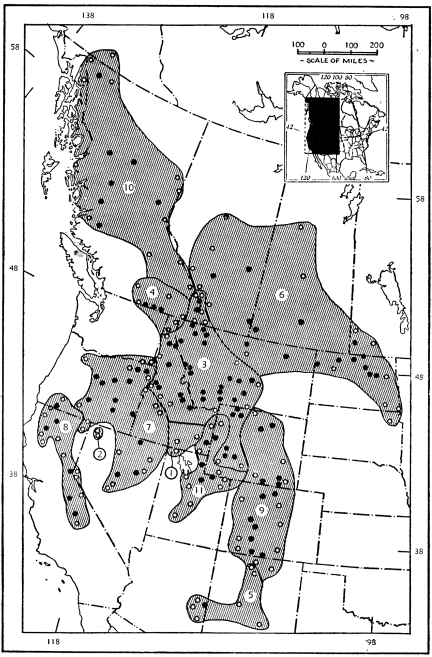
Fig. 46. Distribution of Zapus princeps.
Guide to subspecies
1. Z. p. cinereus 7. Z. p. oregonus
2. Z. p. curtatus 8. Z. p. pacificus
3. Z. p. idahoensis 9. Z. p. princeps
4. Z. p. kootenayensis 10. Z. p. saltator
5. Z. p. luteus 11. Z. p. utahensis
6. Z. p. minor
Geographic Variation
There are 11 subspecies recognized, most of which are in the mountains of the western United States and southwestern Canada. There is geographic variation in color, relative proportions of external parts (tail, hind feet, head, and body), and shape and size of the skull.
Three basic types of coloration occur in Z. princeps, as pointed out by Hall (1931:9). Yellow-sided dark-backed jumping mice exemplified by kootenayensis, idahoensis, and utahensis are found to the eastward in the Rocky Mountains. Reddishbrown-sided, brown-backed jumping mice typified by luteus and pacificus are found to the westward in the Sierra Nevada and in New Mexico and Arizona; mice with yellowish-buff or pinkish-buff-sides and light backs are the subspecies, cinereus, curtatus, and oregonus, that occur in the intervening Great Basin.
External dimension as a whole decreases from north to south, although not uniformly. For example, the smallest individuals are of the southernmost geographic subspecies (Z. p. luteus), but the largest are of the subspecies (Z. p. utahensis) that is near the geographic center of the range for the species. In the skull there is geographic variation in the length and shape of the zygomata, size and shape of the incisive foramina, alignment of maxillary tooth-rows, size and shape of auditory bullae, position of the postpalatal notch in relation to M3, and the presence or absence and size of the medial projection on the inferior ramus of the zygomatic process of the maxillary.
NATURAL HISTORY
Habitat.—Zapus princeps occurs most commonly adjacent to streams where grasses and herbs are in lush growth. It frequents mountain meadows neighboring small streams and is often taken from alder, aspen, or stands of willow, where the moist ground supports a heavy undergrowth of herbs. Davis (1939:330) found these mice in heavy herbage along a small stream bordered by quaking aspen near Victor, Teton County, Idaho. They were found along streams bordered by willow, rose, alder, huckleberry, sedges, and herbs of various kinds at Alturas Lake, Mill Creek, and at the head of the Pahsimeroi River. Linsdale (1938:195) found jumping mice in the Toyabe Mountains, Nevada, near the streamsides or in seepy areas close to the streams where associated vegetation included rose, willow, wild peach, sage, grasses, and herbs. In the Uinta Mountains, Utah, R. D. Svihla (1931:264) obtained them from willows along streams in mountain parks. Borell and Ellis (1934:37) in the Ruby Mountains, Nevada, found jumping mice to be common in heavy vegetation along streams. Louise Kellogg (1916:369) obtained jumping mice in northern California; all were near water, in grassy meadows, or under alders where vegetation was dense.
Zapus princeps is locally abundant, but its numbers seem to vary considerably from year to year as well as seasonally. Early autumn, when young of the year are abroad, seems to be the period of greatest abundance. Moore (1928:154) remarks that runways were plainly marked and well strewn with four-inch pieces of brome-grass. Davis (1939:334) notes that Z. princeps has runways, and found that sections, four inches long, of cut grass piled in runways was good evidence of the presence of the mouse.
Behavior.—In reference to locomotion of Z. princeps, Davis (loc. cit.) writes, “In rapid progression jumping mice move by a series of zigzag hops. One young of the year found in tall grass near Victor made horizontal leaps of approximately three feet. The zigzag course was difficult for me to follow, and I was led to wonder if this mode of locomotion were not advantageous to the mice in eluding animals that would do them harm.” Hollister (1912:26) remarked that princeps, when startled, sometimes jumps five to six feet at a bound. Concerning the swimming ability of Z. princeps, Bailey (1936:233) quotes from Hollister’s notes, “While I was walking around the grassy border of a small pond one jumped out at my feet and struck in the water like a frog, which at first it was thought to be, until it was seen swimming across the pond on the surface of the water … he certainly handled himself as if perfectly at home and swam with little effort and great speed over the still surface of the pond.” Davis (1939:334) obtained two individuals at Mill Creek, Idaho, in traps placed on artificial islands of stones in the middle of the creek where the water was about six inches deep. He speculated that the only way the mice could have reached the traps was by swimming. Grinnell, Dixon, and Linsdale (1930:531) record an individual which was seen hopping in the inch-deep water of a small stream at Lake Helen, California.
According to Hollister (1912:26) and Davis (1939:335), jumping mice are for the most part nocturnal, but occasionally they are seen by day in tall grass.
Little is recorded concerning the hibernation of Z. princeps. What data are available suggest that, starting in July, these animals accumulate a heavy layer of fat on the inside of the skin with especially large amounts in the inguinal region. By August or early September, animals are excessively fat, and the start of hibernation is dependent then upon the arrival of a heavy cold snap. Grinnell, Dixon, and Linsdale (1930:531), in their study of the vertebrates of the Lassen Peak region of California noted that the latest activity by these mice was September 13. As regards the time of onset of hibernation in Idaho, Davis (1939:336) states that, “I know of no records of capture later than September and infer that hibernation begins in that month or the next.” Bailey (1932:227) writes that in New Mexico, animals obtained on September 20 were very fat, probably were ready to hibernate at the first cold wave, and had winter nests in burrows well underground.
Enemies.—Bailey (loc. cit.) lists hawks, owls, and weasels as natural predators on Z. princeps. Stanford (1931:362) records the garter snake (Thamnophis) as a predator of jumping mice. A large snake of this genus obtained by him regurgitated two jumping mice a few hours after its capture. Grinnell, Dixon, and Linsdale (1937:232) report that on Parker Creek, in California, H. C. Bryant frightened a weasel that dropped a freshly killed jumping mouse. Crowe (1943:407) reported Cuterebra fly larvae in the inguinal region of a Z. princeps obtained at Invermere, British Columbia. Several mice of this species taken at Moccasin Lake, 19 mi. W and 4 mi. N of Lander, 10,000 ft., Fremont County, Wyoming, were heavily infested with mites of the family Laelaptidae.
Food.—In early September in central Utah, Moore (1928:154) found only a white, starchy, glutinous paste in stomachs of six Z. princeps and only traces of a brown seed coat in a seventh. The main seeds eaten seemed to be from an introduced brome-grass which was abundant in the vicinity of capture. Bailey (1932:226) wrote of Z. princeps in New Mexico, that “In feeding they cut down the tall grass, beginning at the bottom and cutting the stem at intervals as high as they can reach until the seed part of the grass is brought down.” He (op. cit.:227) remarked that the food was almost entirely seeds of grass and grasslike plants and that the stomach contents almost always were perfectly clean white dough from the shelled kernels of small seeds.
Reproduction.—Females with embryos have been collected from late May to mid-July and lactating individuals until late August. Possibly there is only one litter per season as Davis (1939:336) suggests is the case in Idaho.
Embryos in 25 pregnant females averaged 5 (2-7). The mammae of the female are arranged in four pairs (two abdominal, one pectoral, and one inguinal).
Z. princeps builds a grass nest on the ground which is placed under cover of vegetation or surface litter. Bailey (1932:227) writes that in New Mexico jumping mice of this species use fibers of grass to construct a ball-shaped nest. The nest usually has one opening but sometimes there are two. In the Ruby Mountains, of Nevada, Borell and Ellis (1934:37) found the globular nests of this mouse on the ground in tall grass.
Zapus princeps cinereus Hall
Zapus princeps cinereus Hall, Univ. California Publ. Zool., 37:7, April 10, 1931.
Type.—Female, adult, skin and skull; No. 45422, Mus. Vert. Zool.; Pine Canyon, 6600 feet altitude, Raft River Mountains, 17 mi. northwest Kelton, Boxelder County, Utah; obtained on July 14, 1930, by Annie M. Alexander; original No. 689.
Range.—Raft River Mt’s in northwestern Utah and in isolated mountains in southern Idaho. See fig. 46. Zonal range: Transition and Canadian.
Description.—Size, medium; back with broad mid-dorsal band, varying from pale brown mixed with Pinkish-Buff to dark brown mixed with Warm-Buff or Ochraceous-Buff; sides varying from near Pinkish-Buff to near Ochraceous-Buff; ventral surface white to base of hairs, not suffused with other color; tail bicolored, pale brown above and white to yellowish-white below; ears dark, edged with white or yellowish-white; upper teeth divergent anteriorly; auditory bullae small; skull relatively long; zygomata relatively weak and not widely bowed; nasals wide posteriorly; pterygoid fossae relatively narrow.
Comparisons.—From Zapus princeps nevadensis, Z. p. cinereus differs as follows: Size averaging smaller; entire coloration lighter; zygomata not so widely bowed; incisive foramina not so wide posteriorly; auditory bullae smaller; nasals wider posteriorly; pterygoid fossae narrower.
From Zapus princeps idahoensis, Z. p. cinereus can be distinguished by: generally paler color; smaller auditory bullae; broader interorbital region; anteriorly diverging tooth-rows; narrower pterygoid fossae.
For comparison with Zapus princeps utahensis see account of that subspecies.
Remarks.—Davis (1939:343) writes that “since cinereus was described from nine specimens, only two of which are near adult, one cannot place much value on the coloration ascribed to it by Hall (1931:7).” I examined the type series and found, as did Davis (loc. cit.), that the type is much lighter and grayer than is a near adult paratype, which was obtained the same day; however, I do not concur with Davis (loc. cit.) that specimens from Mt. Harrison, 10 mi. S Albion, Idaho, which are darker and much more ochraceous than the paratype, necessarily are more nearly typically colored. These individuals, judged by cranial characters, are more nearly typical of cinereus but show intergradation with Z. p. idahoensis in their darker and more ochraceous pelage.
Durrant (1952:387) found that the gray color of Z. p. cinereus was not diagnostic in separating Z. p. cinereus from Z. p. utahensis, because gray animals are also found in Z. p. utahensis. Specimens from Camp Tendoy, Pocatello, Idaho, are intermediate in color and in cranial characters as between Z. p. idahoensis and Z. p. cinereus, but here are referred to Z. p. cinereus. Whitlow and Hall (1933:268) compared these individuals with specimens of Z. p. princeps and Z. p. cinereus, finding them intermediate but in the aggregate of several differential characters better referred to the latter.
Specimens examined.—Total, 35, distributed as follows:
Idaho: Bannock County: Camp Tendoy, Pocatello, 2 (MVZ). Cassia County: Mt. Harrison, 10 mi. S Albion, 16 (MVZ).
Utah: Boxelder Co.: south fork of George Creek, 5 mi. SE Yost, Raft River Mts., 6700 ft., 1 (UU); George Creek, 7 mi. SE Yost, Raft River Mts., 6500 ft., 6 (UU); Pine Canyon, 6600 ft., 17 mi. NW Kelton, Raft River Mts., 8 (MVZ); Pine Creek, 3 mi. N Rosette, Raft River Mts., 6100 ft., 2 (UU).
Marginal records.—Idaho: Camp Tendoy, Pocatello. Utah: Pine Creek, 3 mi. N Rosette, Raft River Mts., 6100 ft. Idaho: Mt. Harrison, 10 mi. S Albion.
Zapus princeps curtatus Hall
Zapus princeps curtatus Hall, Univ. California Publ. Zool., 37:7, April 10, 1931.
Zapus princeps oregonus, Taylor, Univ. California Publ. Zool., 7:281, June 24, 1911.
Type.—Female, adult, skin and skull, No. 7991, Mus. Vert. Zool.; head of Big Creek, 8000 feet altitude, Pine Forest Mountains, Humboldt County, Nevada; obtained on June 30, 1909, by Walter P. Taylor and C. H. Richardson, original No. 777 of W. P. T.
Range.—Pine Forest Mt’s, Humboldt County, Nevada. See fig. 46. Zonal range: Transition and Canadian.
Description.—Size medium; back pale near Light Ochraceous-Buff with admixture of black hair forming dark dorsal band; sides lighter than back; lateral line faintly indicated; ventral surface white; tail bicolored, grayish-white to yellowish-white below and pale brown above; ears dark, edged with yellowish-white; feet grayish-white above; palatal bridge short; tooth-rows almost parallel; mastoid region of skull relatively narrow; incisive foramina wide posteriorly; narrow across zygomata; nasals relatively narrow posteriorly.
Comparisons.—For comparison with Zapus princeps oregonus see account of that subspecies.
Remarks.—This jumping mouse, which was described from the Pine Forest Mountains, closely resembles Zapus princeps oregonus but differs in lighter color, slightly smaller body, less divergent tooth-rows, shorter palate, and narrower skull across the mastoid region.
The Pine Forest Mountains are isolated from neighboring boreal regions by a belt of the Upper Sonoran Life-zone, which is inhospitable to Zapus; therefore, intergrades between Z. p. oregonus and Z. p. curtatus are not known and probably do not exist. Nevertheless, Z. p. curtatus shows close affinity with Z. p. oregonus, as indicated by Taylor (1911:281), and I agree with Hall (1931:7) that the relationships of Z. p. curtatus are best expressed by arranging it as a subspecies of Zapus princeps.
Specimens examined.—Total, 18, all from Nevada, distributed as follows: Humboldt County: Pine Forest Mts.; Alder Creek, 6000 ft., 2 (MVZ); head of Big Creek, 8000 ft., 14 (MVZ); Leonard Creek, 6500 ft., 2 (MVZ); Meadow, 1 (MVZ).
Marginal records.—Nevada: Pine Forest Mts., Alder Creek; Meadow.
Zapus princeps idahoensis Davis
Zapus princeps idahoensis Davis, Jour. Mamm., 15:221, August 10, 1931.
Jaculus hudsonius, Allen, Bull. Essex Inst., 6:61, April, 1874 (part—the part in Carbon County, Wyoming).
Zapus hudsonius, Merriam, N. Amer. Fauna, 5:72-73, July 30, 1891.
Zapus princeps princeps, Preble, N. Amer. Fauna, 15:22-23, August 8, 1899 (part).
Type.—Male, adult, skin and skull; No. 54845, Mus. Vert. Zool.; 5 mi. E Warm Lake, 7000 ft., Valley County, Idaho; obtained on July 9, 1932, by Robert T. Orr; original No. 660.
Range.—From Banff, Alberta, southward through extreme southwestern Alberta and extreme southwestern British Columbia, most of the panhandle of Idaho, Kamiak Butte in eastern Washington, western Montana, and western Wyoming (Green, Wind River and Absoroka ranges of the Rocky Mt’s). See fig. 46.
Description.—Size, medium; back from near Clay Color to near Warm Buff, usually overlaid with black hairs forming broad dorsal band; sides lighter than back; lateral line indistinct or wanting; belly pure white, occasionally faintly tinged with Ochraceous-Buff; tail indistinctly bicolored, tan to grayish-white below and pale brown above; hind feet grayish-white above; ears dark, edged with white or yellowish-white; postpalatal notch anterior to posterior border of last molars; proximal part of inferior ramus of zygomatic process of maxillary relatively narrow and usually without enlarged median projection; auditory bullae well inflated; incisive foramina relatively narrow.
Comparisons.—From Zapus princeps kootenayensis, Z. p. idahoensis differs as follows: Size averaging larger; upper parts with greater suffusion of ochraceous, not grayish or dusty; skull larger; incisive foramina longer and relatively wider; zygomatic breadth averaging greater; nasals broader at tips; auditory bullae more inflated.
From Zapus princeps oregonus, Z. p. idahoensis differs in: Size averaging smaller; upper parts generally more suffused with black hairs, on the average more yellowish with less ochraceous; skull smaller; incisive foramina narrower (breadth less, instead of more, than 52 per cent of length); palatal bridge shorter; zygomatic arch shorter; pterygoid fossae narrower.
From Zapus princeps utahensis, Z. p. idahoensis can be distinguished by: Size less; color slightly darker; skull averaging smaller in zygomatic breadth, least interorbital constriction, and occipitonasal length; palate narrower; upper tooth-rows nearly parallel as opposed to diverging anteriorly.
From Zapus princeps minor, Z. p. idahoensis differs in: Size larger; color of underparts less ochraceous; lateral line indistinct or wanting; skull averaging larger in all measurements taken except that the two subspecies are approximately same in least interorbital constriction, length of zygomatic arch, and distance from anterior face of incisors to postpalatal notch; nasals, in profile, straight instead of with proximal third depressed; postpalatal notch anterior to posterior face of last molar, instead of even with, or usually posterior to, same.
From Zapus princeps saltator, Z. p. idahoensis differs as follows: Size averaging slightly larger; color darker, being less ochraceous and more yellow dorsally and laterally; auditory bullae more inflated; zygomatic arches less bowed laterally; incisive foramina narrower.
For comparison with Zapus princeps princeps and Zapus princeps cinereus see accounts of those subspecies.
Remarks.—Intergradation occurs at almost all of the places where the range of Z. p. idahoensis is known to touch that of any other geographic race. Nevertheless, each of the populations studied has characters which make this subspecies recognizable as a taxonomic unit, although its characters are not yet stabilized even in the central part of its range.
Among named subspecies of Zapus princeps, Zapus p. idahoensis most closely resembles Zapus princeps kootenayensis, its nearest geographic neighbor to the north. Three specimens from 2 mi. NE Weippe, 3000 ft., Idaho, are best referred to Z. p. idahoensis but show relationship to Z. p. kootenayensis in size and shape of the tympanic bullae. The relationship of individuals from Idaho, here referred to Z. p. idahoensis, from Glidden Lakes, Enaville, Cascade Creek, and 13 mi. E and 5 mi. N Coeur d’Alene, is discussed in the account of Z. p. kootenayensis. British Columbian specimens from Newgate and Crows Nest Pass, 4450 ft., as well as Albertan specimens from Crows Nest Pass and various places in Waterton Lake Park, resemble Z. p. kootenayensis in color but cranially are more nearly like Z. p. idahoensis.
Intergradation with Zapus princeps oregonus was noted by Davis (1939:340) in a specimen from Cedar Mountain in Idaho. I have not seen this individual which he referred to Z. p. idahoensis but have seen a specimen from the N Fork of Potlatch River (15 mi. SE Cedar Mt.), which, in color, closely resembles Z. p. oregonus but cranially (shape of incisive foramina, size, and inflation of auditory bullae) is more nearly like Z. p. idahoensis to which it is referred. Davis (loc. cit.) indicates that specimens from summit of Smith Mt., from 1 mi. N Bear Creek R. S., from 1/2 mi. E Black Lake, and from 3 mi. W Payette Lake, Idaho, are in an area of intergradation between Z. p. oregonus and Z. p. idahoensis, but he referred them to Z. p. idahoensis on the basis of cranial characters and length of hind foot. Seven specimens from Alturas Lake, 7000 ft., Idaho, were likewise so allocated by Davis (loc. cit.). I concur with him and in addition refer the following intermediate individuals from Idaho to Z. p. idahoensis: New Meadow, 1; Warren, 1; Perkins Lake, 7000 ft., Sawtooth Nat’l Forest, 1; Prairie Creek, 12 mi. W Ketchum, 2400 ft., 3. All are more nearly like Z. p. oregonus in color but cranially they show more resemblance to Z. p. idahoensis.
In the eastern part of the range of Z. p. idahoensis, intergradation occurs with Zapus princeps minor, as at 15 mi. S Heath, N Fork Flat Willow Creek, Big Snowy Mt’s, Montana. Specimens from there have the lateral line enlarged and the maximum seen in this species of Ochraceous color ventrally. The pterygoid fossae are large and the bullae are reduced as in Z. p. minor, but in the sum total of the characters the mice more closely resemble Z. p. idahoensis. At Lewistown, 7 mi. NE Judith Mt’s, Lime Kiln Gulch, Montana, the animals are colored as are Z. p. minor but cranially are like Z. p. idahoensis to which they are referred. Specimens from the Highwood Mt’s, Montana, also are intergrades; they have a relatively distinct lateral line as in Z. p. minor but show no ventral suffusion of Ochraceous; they have large bullae, nasals that are straight in lateral profile and other cranial characters of Z. p. idahoensis to which they are here referred.
A single specimen from Kamiak Butte, Whitman County, Washington, has been referred to Z. p. idahoensis by Dalquest (1948:373). I have not seen this individual, but, on geographic grounds, it is likely to be of this subspecies.
Specimens examined.—Total, 342, distributed as follows:
Alberta: Boom Creek, 5600 ft., 27 mi. W Banff, 2 (NMC); Banff, Cascade Basin, 2 (NMC); Bryant Creek, Banff Park, 1 (NMC); Spray River, 7 mi. Cabin, Banff Park, 3 (NMC); Crows Nest Pass, 2 (NMC); Waterton Lakes Park, 16 (NMC); Linnets Pond, Waterton Lakes Park, 4 (NMC); Bertha Creek, Waterton Lakes Park, 8 (NMC).
British Columbia: Vermilion Crossing, Kootenay, 1 (ROM); Paradise Mine, 3 (PM); Crows Nest Pass, 4450 ft., 3 (NMC); Newgate, 10 (NMC).
Idaho: Adam Co.: 1/2 mi. E Black Lake, 6800 ft., 8; summit of Smith Mtn., 7500 ft., 9 (3 MVZ); 1 mi. N Bear Creek R. S., SW Slope Smith Mtn., 5400 ft., 13; New Meadows, 1 (USBS); 3 mi. W Payette, 5400 ft., 4 (MVZ). Blaine County: Perkins Lake, 7000 ft., Sawtooth Nat’l Forest, 1; Alturas Lake, 7000 ft., 3 (MVZ); Prairie Creek, 12 mi. NW Ketchum, 2400 ft., 3. Clearwater County: 2 mi. NE Weippe, 3000 ft., 3 (MVZ). Custer County: Loon Creek R. S., 6000 ft., Challis Nat’l Forest, 2; Head Pahsimeroi River, 2 (MVZ); Mill Creek, 14 mi. WSW Challis, 8370 ft., 1 (MVZ). Fremont County: 7 mi. W West Yellowstone, 7000 ft., 3; 17 mi. E and 4 mi. N of Ashton, 6275 ft., 9 (MVZ). Idaho Co.: Packers Meadow, near state line, South Lobo Hot Springs, 5150 ft., 7 (USBS); Warren, 1 (USBS). Kootenai Co.: 13 mi. E and 5 mi. N Coeur d’Alene, 5; Cascade Creek, 36 mi. E Coeur d’Alene, Coeur d’Alene Nat’l Forest, 1 (USBS). Latah Co.: N Fork Potlatch River, 1 (USBS). Lemhi County: Salmon River Mts., 3 (USBS). Shoshone Co.: Enaville 1 (USBS); Glidden Lakes, 5700 ft., 4 (MVZ). Valley County: 5 mi. E Warm Lake, 7000 ft., 6 (MVZ); 5 mi. W Cape Horn, 7000 ft., Sawtooth Range, 1 (MVZ).
Montana: Beaverhead County: Birch Creek, 18 mi. NE Dillon, 7100 ft., 14 (MVZ). Carbon Co.: Pryor Mts., 1 (USBS); 2 mi. E Shriver, 6500 ft., 6 (MVZ). Cascade Co.: Neihart, 1 (USBS). Chouteau Co.: Upper Muddy, 1 (USBS); Highwood Mts., 2 (USBS). Fergus Co.: Lime Kiln Gulch, 7 mi. NE Judith Mts., 3 (USBS); 15 mi. S Heath, N Fork Flat Willow Creek, 8 (USBS); 10 mi. W Tyler, N Fork Flat Willow Creek, 1 (USBS); Crystal Lake, 6000 ft., Big Snowy Mts., 3 (UM). Flathead Co.: Waterton Lake, 1 (USBS); Crosley Lake, Glacier Nat’l Park, 1 (USBS); Paola, 1 (USBS); Summit, 2 (USBS); 1 mi. W and 2 mi. S Summit, 5000 ft., 12. Gallatin Co.: 4 mi S Logan, Camas Creek, Big Belt Mts., 5 (USBS); Gallatin Gateway, 5 (SDM); west fork West Gallatin River, 6500 ft., 6 (USBS). Glacier Co.: Babb, 1 (LMH); 21/2 mi. W and 11/2 mi. S Babb, 4700 ft., 1; Many Glaciers, 4900 ft., Glacier Nat’l Park, 5 (MVZ); 6 mi. S St. Marys, 6500 ft., 1; St. Marys Lake, 7 (USBS); McDermit Lake, 1 (USBS); Blackfoot Agency, 1 (USBS). Golden Valley County: Swimming Woman Canyon, 3/4 mi. S Fergus County line, Big Snowy Mts., 4 (UM). Judith Basin Co.: Little Belt Mts., Dry Wolf Creek, 20 mi. SW Stanford, 4 (USBS); 13 mi. W Buffalo, 1 (USBS). Madison Co.: 12 mi. SW Alder, Hinch Creek, Ruby Mts., 2 (USBS). Meagher Co.: 16 mi. N White Sulphur Springs, Little Belt Mts., 7 (USBS). Park County: West Boulder Creek, 18 mi. SE Livingston, 1 (USBS); Emigrant Gulch, 3 mi. SE Chico, 6500 ft., 4 (USBS); 2 mi. NE Cooke, 8000 ft., 22 (MVZ). Ravalli County: 3 mi. SW Florence, 3700 ft., 1; 6 mi. E Hamilton, 3700 ft., 1. Sanders Co.: Prospect Creek, near Thompson, 1 (USBS). Sweet Grass Co.: near head of Big Timber Creek, 5200 ft., Crazy Mts., 11 (USBS); Brannin Ranch, Sweet Grass Creek Canyon, 6 (UM); Big Timber, 1 (USBS). Teton County: 171/2 mi. W and 61/2 mi. N Agusta, 5100 ft., 2.
Wyoming: Fremont County: Moccasin Lake, 19 mi. W and 4 mi. N of Lander, 10,000 ft., 1; 231/2 mi. S and 5 mi. W Lander, 8600 ft., 4. Park County: 311/2 mi. N and 36 mi. W Cody, 6900 ft., 7; 28 mi. N and 30 mi. W Cody, 7200 ft., 1; 161/4 mi. N and 17 mi. W Cody, 5625 ft., 14; 2 mi. S and 42 mi. W Cody, 6400 ft., 5; 12 mi. W Wapiti, 6 (LMH); 25 mi. S and 28 mi. W Cody, 6350 ft., 5. Sublette County: E end Island Lake, 10,600 ft., 3 mi. S Fremont Park, 1; N side Halfmoon Lake, 7900 ft., 3; W end Halfmoon Lake, 7900 ft., 2; 10 mi. NE Pinedale, 8000 ft., 1; 5 mi. E and 8 mi. N Pinedale, 7500 ft., 1; 3 mi. E and 5 mi. N Pinedale, 7500 ft., 4; 19 mi. W and 2 mi. S Big Piney, 7700 ft., 3.
Marginal records.—Alberta: Boom Creek, 5600 ft., 27 mi. W Banff; Crows Nest Pass; Waterton Lakes Park. Montana: Highwood Mts.; 15 mi. S Heath, N Fork Flat Willow Creek; 2 mi. E Shriver, 6500 ft. Wyoming: 231/2 mi. S and 51/2 mi. W Lander, 8600 ft.; 10 mi. W and 2 mi. S Big Piney, 7700 ft. Idaho: 7 mi. W West Yellowstone, 7000 ft.; Prairie Creek, 12 mi. NW Ketchum, 2400 ft.; 5 mi. W Warm Lake, 7000 ft.; 1 mi. N Bear Creek R. S., SW slope Smith Mtn., 5400 ft.; N Fork Potlatch River; 13 mi. E and 5 mi. N Coeur d’Alene. British Columbia: Newgate; Vermilion Crossing, Kootenay.
Zapus princeps kootenayensis Anderson
Zapus princeps kootenayensis Anderson, Ann. Rept. Nat. Mus. Canada for 1931:108, November 24, 1932.
Zapus princeps princeps, Preble, N. Amer. Fauna, 15:23, August 8, 1899 (part).
Type.—Adult female, skin and skull, No. 10,020, Nat. Mus. Canada; near summit of Green Mountain, head of Murphy Creek, about 10 miles north of Rossland, West Kootenay district, British Columbia, at about, 6000 ft.; latitude 49° 13′ north, longitude 117° 52′ west; obtained on July 18, 1929, by R. M. Anderson, original No. 24.
Range.—From Glacier in the Selkirk Range, British Columbia, south to 5 mi. W Cocolalla, Bonner County, Idaho, west and north to Sullivan Lake, Pend Oreille County, Washington; and northwestward to Manning Park on the eastern summit of the Cascade Range in British Columbia. See fig. 46.
Description.—Size, medium; color moderately dark; upper parts noticeably dull and dusty; broad dorsal band of dull Ochraceous-Buff to near Warm Buff sprinkled with black hair to a varying degree, resulting in two color phases (dark has more black hair; Ochraceous phase or Warm Buff phase has more brown hair); sides paler than back owing to fewer black hairs; lateral line, when present, narrow and dull; ventral surface pure white; tail bicolored, pale brown above, yellowish-white to dull white below; ears dark with narrow white or yellowish-white edgings; feet white above; skull narrow across zygomata; incisive foramina narrow; bullae moderately inflated; nasals narrow at tips; postpalatal notch anterior to posterior face of last molars; braincase moderately narrow; zygomatic arch short.
Comparisons.—From Zapus princeps saltator, Z. p. kootenayensis differs as follows: Upper parts generally dull with less ochraceous; sides with more yellow, less ochraceous; lateral line wanting or not bright; skull averaging slightly smaller; incisive foramina smaller and narrower posteriorly; small medium projection on inferior ramus of the zygomatic process of maxillary frequently present instead of absent; pterygoid fossae shorter and narrower.
For comparison with Zapus princeps idahoensis see account of that subspecies.
Remarks.—This subspecies is paler and averages smaller than either of the subspecies with adjoining geographic ranges. There is intergradation with Zapus princeps idahoensis in color, shape and size of incisive foramina, and in the shape of the nasals in Idaho-taken specimens from Glidden Lakes and Enaville. These individuals are thought to be Z. p. idahoensis. Specimens from the same state taken at Cascade Creek and 13 mi. E and 5 mi. N Coeur d’Alene show intergradation in color, size and inflation of bullae, configuration of nasals, and shape of the vomer between Zapus princeps idahoensis and Z. p. kootenayensis. The majority of characters studied show these animals to be referable to Z. p. idahoensis.
Specimens from Monashee Pass, 4000 ft., British Columbia, show relationship to Zapus princeps saltator in the posteriorly wide incisive foramina, in the narrow vomer, and, in some individuals, in the increased amount of ochraceous, dorsally and laterally. The majority of characters studied show these animals to be referable to Z. p. kootenayensis.
The animals available from Glacier, British Columbia, are in color more nearly like Z. p. saltator and cranially combine the characters of Z. p. idahoensis, Z. p. saltator, and Z. p. kootenayensis. The sum total of their characters places them with Z. p. saltator. Anderson (1932:108) remarks on the disparity of size between the two sexes of Z. p. kootenayensis, stating that females are considerably larger than males. I have examined most of the material used in the original description and find that animals of like age in the two sexes show no significant size difference. Anderson (loc. cit.) seems to have compared young males with adult females.
Specimens examined.—Total, 68, distributed as follows:
British Columbia: Manning Park, 3 (PM); Good Fellow Creek, Manning Park, 1 (PM); Mt. Beaver Valley, 6300 ft., Manning Park, 1 (PM); Timberline Valley, 6500 ft., 3 (PM); Allison Pass, 1 mi. E Manning Park, 1 (PM); Monashee Pass, 4000 ft., 13 (PM); Hope-Princeton Summit, 5500 ft., 1 (NMC); Hedley, Stirling Creek, 1 (NMC); Anarchist Mts., 1 (PM); Fairview-Keremeos Summit, 5 (NMC); Westbridge, 2 (NMC); Midway, 2 (NMC); Green Mtn., near Rossland, 6000 ft., 12 (11 NMC, 1 MVZ); Mt. Old Glory, 7000 ft., Rossland, 5 (4 NMC, 1 MVZ); Rossland, 5800 ft., 12 (11 NMC, 1 MVZ); Camp 6, Meadow Creek, 7 mi. SE of Yahk, 1 (NMC).
Idaho: Bonner County: 5 mi. W Cocolalla, 3500 ft., 2 (MVZ). Boundary County: 4 mi. W Meadow Creek, 3000 ft., 2 (MVZ).
Marginal records.—British Columbia: Monashee Pass, 4000 ft.; Camp 6, Meadow Creek, 7 mi. SE Yahk. Idaho: 4 mi. W Meadow Creek, 3000 ft.; 5 mi. W Cocolalla, 3500 ft. British Columbia: Hope-Princeton Summit, 5500 ft.; Manning Park.
Zapus princeps luteus Miller
Zapus luteus, Miller, Proc. Biol. Soc. Washington, 24:253, December 23, 1911.
Zapus luteus australis, Bailey, Proc. Biol. Soc. Washington, 26:132, May 21, 1913. Type from Socorro, Socorro County, New Mexico.
Type.—Female, adult, skin and skull, No. 133601, U. S. Nat. Mus. Biol. Surv. Coll., Espanola, 5000 ft., Rio Arriba Co., New Mexico; obtained on June 24, 1904, by McClure Surber, original No. 162.
Range.—White Mt’s of southern Apache County and northern Greenlee County, Arizona; in New Mexico, from the Sacramento Mt’s, Otero County, northward to the San Juan Mt’s, Rio Arriba County. See fig. 46. Zonal range: Lower Sonoran (1 individual), Upper Sonoran, Transition, and Canadian.
Description.—Size, small; back near Ochraceous-Buff, having black hair interspersed; mid-dorsal band not always well marked; sides Ochraceous-Buff with fine admixture of black hair; lateral line blending with Ochraceous-Buff of sides, not distinct; ventral surface white to base of hairs, in some cases lightly suffused with color of sides; tail indistinctly bicolored, tan to grayish-white below and brown above; hind feet grayish-white above; ears brownish, narrowly edged with Ochraceous-Buff; skull small; antorbital foramina relatively large; interorbital region broad; inferior ramus of the zygomatic process of the maxillary broad, often with medial projection; incisive foramina narrow posteriorly becoming broadly rounded anteriorly; palatal bridge relatively long; pterygoid fossae narrow; zygomatic arches relatively robust; nasals tapering at each end.
Comparisons.—From Zapus princeps princeps, Z, p. luteus differs as follows: Size, smaller; color lighter, more Ochraceous-Buff; ears lighter, edged with Ochraceous-Buff as compared with white or yellowish-white; lateral line indistinct or wanting as opposed to distinct; dorsal stripe not well defined; interorbital region broader; antorbital foramina relatively larger; zygomatic arches more robust; nasals tapering at each end as opposed to parallel sided; auditory bullae smaller, less inflated.
Remarks.—The characters of this subspecies are relatively stable throughout most of its geographic range. Hall and Davis (1934:56) remarked that their material from the White Mountains of Arizona answered precisely to Miller’s original description (1911:253) of the species, and my examination of these and other specimens from that area indicates the same thing except that the specimens average slightly darker mid-dorsally than those from New Mexico.
Zapus luteus australis, based on a single individual taken in a riparian thicket along the Rio Grande at Socorro, New Mexico, is referable to Z. p. luteus. The diagnostic characters, referred to in the original description, are as follows: Small, slender, and very narrow skull; especially narrow braincase; slender rostrum; and light dentition. These are expressions of age, rather than of geographic variation, in that the individual is a subadult (young of the year). The color, which is paler than in adults of Z. p. luteus, is almost identical with that of a subadult (No. 205585 USBS) from Alpine, Arizona. I can see no basis for recognition of Z. p. australis and the name, therefore, is placed as a synonym of Z. p. luteus.
Four specimens from 4 mi. NE El Rito, 7000 ft., New Mexico, show intergradation, in the shape of the nasals and incisive foramina, in the robustness of the zygomatic arch, and in the breadth of the braincase with a specimen of Zapus princeps princeps from Tierra Amarilla, New Mexico. In color and in external measurements as well as in other cranial characters they closely agree with typical Z. p. luteus and are here referred to the latter.
Specimens examined.—Total, 49, distributed as follows:
Arizona: Apache Co.: North Fork White River, White Mts., 24 (SDM); Alpine, 8500 ft., 6 (USBS); West Fork Black River, 7700 ft., 8 (MVZ); Greenlee County: Hannagan Creek, 8200 ft., 2 (MVZ).
New Mexico: Otero Co.: 12 mi. E Cloudcroft, 7500 ft., 2 (USBS). Rio Arriba Co.: 4 mi. NE of El Rito, 7000 ft., 4; Espanola, 5000 ft., 2 (USBS). Socorro Co.: Socorro, 1 (USBS).
Marginal records.—New Mexico: 4 mi. N El Rito, 7000 ft.; Espanola, 5000 ft.; 12 mi. E Cloudcroft, 7500 ft. Arizona: Hannagan Creek, 8200 ft.; W. Fork Black River, 7700 ft.; N. Fork White River, White Mts. New Mexico: Socorro.
Zapus princeps minor Preble
Zapus princeps minor Preble, N. Amer. Fauna, 15:23, August 8, 1899.
Zapus hudsonius campestris, Bailey, N. Amer. Fauna, 49:117, January 8, 1927 (part).
Type.—Adult female, skin and skull, No. 73673, U. S. Nat. Mus. Biol. Surv. Coll., Wingard, near Carlton House, Saskatchewan; obtained on July 23, 1895, by J. Alden Loring, original No. 3123.
Range.—Most of southern half of Saskatchewan and Alberta, northeastern Montana southeastward to Aweme, Manitoba, and Webster, South Dakota. See fig. 46. Zonal range: Transition, Hudsonian, and Canadian.
Description.—Size, small; back dark, usually with a distinct mid-dorsal band of black mixed with Warm Buff; sides lighter, more yellowish, but always with an admixture of black hairs; lateral line distinct, near Ochraceous-Buff, ventral surface characteristically suffused with Ochraceous-Buff; tail bicolored, grayish-white to yellowish-white below and pale brown above; hind feet grayish-white above; ears dark, edged with white or yellowish-white; skull small; postpalatal notch often anterior to posterior part of molars; inferior ramus of zygomatic process of maxillary often with well developed medial projection; auditory bullae flattened; nasals narrower anteriorly and proximal third depressed; base of zygomatic process of squamosal broad.
Comparisons.—From Zapus princeps princeps, Z. p. minor differs as follows: Size averaging smaller in all measurements taken, except least interorbital constriction which is approximately the same; color dorsally and laterally more yellowish, less Ochraceous-Buff; ventrally greater suffusion of Ochraceous-Buff.
For comparison with Zapus princeps idahoensis see account of that subspecies.
Remarks.—This geographic race is notably stable and retains most of its diagnostic characters throughout nearly all parts of its range. Intergradation occurs with Zapus princeps idahoensis at various localities in Montana, as is described in more detail in the account of idahoensis. Crowe (1943:406) gives evidence of intergradation between Zapus princeps idahoensis and Z. p. minor in specimens from Entrance in western Alberta. Crowe (loc. cit.) described these individuals as intermediate in color (lateral line present, under parts washed with buff, sides and dorsal stripe rich in ochraceous), and in cranial characters (smaller skulls, anteriorly narrower nasals, shorter more deflected rostrum, and higher cranium); but he considered them closer to Z. p. minor.
A skin without skull from Kananaskis Valley, Alberta, shows intergradation between Z. p. idahoensis and Z. p. minor. This individual is like Z. p. idahoensis in dorsal and lateral coloring, but is nearer Z. p. minor in ventral coloring and in the presence of a distinct lateral line. External measurements provide basis for tentatively assigning the skin to Z. p. minor.
Specimens examined.—Total, 118, distributed as follows:
Alberta: 4 mi. N Marinville, 2; Blindman River, 1 (USBS); Camrose, 1 (ROM); Red Deer River, 1 (USBS); Didsbury, Little Red Deer River, 1 (ROM); Kananaskis Valley, 7000 ft., 1 (ROM); High River, 2 (ROM); Lodge Creek, 2 (NMC).
Manitoba: Shoal Lake, 6 (NMC); Oak Lake, 4 (NMC); Aweme, 7 (6 ROM; 1 USBS).
Montana: Chouteau County: Eagle Creek, 25 mi. SE Big Sandy, 3 (UM). Hill Co.: Fort Assiniboine, 1 (USBS); Bear Paw Mt’s, 20 mi. SE Fort Assiniboine, 4 (USBS); head Eagle Creek, Bear Paw Mt’s, 7 (UM). Valley Co.: Glasgow, 1 (USBS).
North Dakota: Benson Co.: 4 mi. W Leeds, 1400 ft., 2; 2 mi. W Fort Totten, 1400 ft., 13; Fort Totten, 4 (USBS). Bottineau Co.: 48/10 mi. N Bottineau, 2100 ft., 2; 31/2 mi. N Bottineau, 1920 ft., 2; 21/10 mi. N Bottineau, 1800 ft., 3; Bottineau, 1 (USBS). Dickey Co.: Oakes, 3 (USBS). Grand Forks Co.: Larimore, 3 (USBS). Montrail Co.: 6 mi. N Lostwood, 2 (USBS). Nelson Co.: Stump Lake, 1 (USBS). Richland Co.: Lidgerwood, 1 (USBS); 4 mi. S Blackner, (USBS). Rolette Co.: St. John, 1 (USBS). Sargent County: 71/5 mi. E and 11/5 mi. S Oakes, 1200 ft., 6; 3 mi. W Cayuga, 1000 ft., 2. Walsh Co.: Grafton, 2. Ward Co.: Minot, 3 (CMNH). Williams Co.: Grinnell, 2 (USBS); Buford, 2 (USBS).
Saskatchewan: Wingard, near Carlton House, 2 (USBS); Fort Carlton, 1 (MVZ); Indian Head, 2 (USBS); Cypress Hills, N Maple Creek, 18 (NMC); Battle Creek, 1 (NMC).
South Dakota: Day Co.: Webster, 1 (Chic. AS).
Marginal records.—Saskatchewan: Wingard, near Carlton House; Fort Carlton. Manitoba: Shoal Lake; Aweme. North Dakota: Larimore; 4 mi. S Blackner. South Dakota: Webster. North Dakota: Oakes; Grinnell. Montana: Eagle Creek, 25 mi. SE Big Sandy. Alberta: High River; Kananaskis Valley, 2000 ft.; Red Deer River; Blindman River; 4 mi. N Marinville.
Zapus princeps oregonus Preble
Zapus princeps oregonus Preble, N. Amer. Fauna, 15:24, August 8, 1899.
Zapus major Preble, N. Amer. Fauna, 15:24, August 8, 1899, type from Warner Mt’s, Lake County, Oregon.
Zapus princeps major, Hall, Univ. California Publ. Zool., 37:10, April 10, 1931.
Zapus nevadensis Preble, N. Amer. Fauna, 15:25, August 8, 1899, type from Ruby Mt’s, Elko County, Nevada.
Zapus princeps nevadensis, Hall, Univ. California Publ. Zool., 37:10, April 10, 1931.
Zapus princeps palatinus Hall, Univ. California Publ. Zool., 37:8, April 10, 1931, type from Wisconsin Creek, 7800 ft., Toyabe Mt’s, Nye County, Nevada.
Zapus princeps princeps, Anthony, Bull. Amer. Mus. Nat. Hist., 33:17, March 17, 1913.
Type.—Male, adult, skin and skull; No. 78156, U. S. Nat. Mus. Biol. Surv. Coll.; Elgin, Blue Mountains, Union Co., Oregon; obtained on May 29, 1896, by Edward A. Preble, original No. 959.
Range.—Southeastern Washington, eastern Oregon east of Cascades, northeastern California, central and northeastern Nevada, and southwestern Idaho. See fig. 46. Zonal range: Transition and Canadian.
Description.—Size large; back from near Light Ochraceous-Buff to near Cinnamon-Buff, usually overlaid with black hairs forming broad dorsal band, which in some individuals is almost black; sides lighter than back, from near Light Pinkish-Cinnamon to near Cinnamon-Buff and Ochraceous-Buff, often with black hairs interspersed; lateral line faintly marked or wanting; belly pure white; tail bicolored, grayish-brown above and grayish-white to yellowish-white below; ears dark, edged with color of sides; palatal bridge long; interorbital region broad; inferior ramus of zygomatic process of maxillary usually with median projection; auditory bullae relatively small; incisive foramina greatly enlarged posteriorly; tooth-rows divergent anteriorly; nasals narrow posteriorly.
Comparisons.—From Zapus princeps curtatus, Z. p. oregonus differs as follows: Size averaging larger; upper parts darker; tooth-rows more divergent anteriorly; palatal bridge longer; mastoid region broader; incisive foramina relatively wider posteriorly.
For comparisons with Zapus princeps cinereus, Zapus princeps pacificus and Zapus princeps idahoensis see accounts of those subspecies.
Remarks.—The coloration in Z. p. oregonus varies somewhat from north to south. In the northern part of the range the average coloration of the upper parts is darker with more ochraceous on the sides. To the southward the upper parts are progressively paler and the sides are near Light Pinkish-Cinnamon. Because of this variation of color, and because of the small samples available to workers in the past, three populations of this subspecies have been named as distinct. However, with the large amount of additional material now available, the supposed diagnostic characters of these “forms” prove to be within the range of individual variations of each of several populations of which large samples are available.
Zapus major Preble (1899:24) was described as having zygomata short, palate broad and long, incisive foramina large and elliptical, and color dark. Some specimens of Z. p. oregonus, from nearly all parts of its geographic range, show these same characters. Resemblances in anteriorly divergent tooth-rows, broad interorbital region, small auditory bullae, and posteriorly narrow nasals, are additional reasons for placing Z. major as a synonym of Z. p. oregonus.
Zapus nevadensis Preble (1899:25), here considered a synonym of Z. p. oregonus, was described as having: auditory bullae small, posterior border of the palate usually convex anteriorly, palatal bridge long, and color pale. These characters, however, are within the range of individual variation of Zapus p. oregonus. Similarities such as tooth-rows diverging anteriorly, nasals narrow posteriorly, interorbital region broad, and incisive foramina enlarged posteriorly are added reasons for placing Z. nevadensis as a synonym of Z. p. oregonus.
Zapus princeps palatinus Hall (1931:8) was described as having: palatal bridge long, incisive foramina wide posteriorly, posterior border of palate straight or convex posteriorly, and color pale. These characteristics are to be found in some individuals in most populations of Z. p. oregonus. Additional well marked cranial similarities, such as small auditory bullae, broad interorbital region, and nasals narrow posteriorly offer additional evidence as to the close relationship of Z. p. palatinus and Z. p. oregonus. Hall (loc. cit.), with a small sample available to him for comparative purposes (14 specimens of Z. p. palatinus and 12 specimens of Z. p. nevadensis), was impressed by the condition of the palate in Z. p. palatinus and wrote: “the generally straight, or even posteriorly convex, posterior border of the palate seems to be unique among described forms of Zapus. The name palatinus is given in allusion to this structural feature.” With more than 300 specimens of Z. p. oregonus available for study I find that a straight or posteriorly convex posterior border of the palate occurs in more than 50 per cent of the individuals examined. Specimens displaying this described palatal condition are known from all parts of the range of Z. p. oregonus, but do occur in a higher percentage of specimens in the area ascribed by Hall (loc. cit.) to the range of Z. p. palatinus.
Intergradation with Zapus princeps idahoensis and Zapus princeps cinereus is discussed in the accounts of those subspecies.
Specimens examined.—Total, 340, distributed as follows:
California: Modoc Co.: Buck Creek R. S., 1 (CAS); Willow Ranch, 4 (CAS); Sugar Hill, 5000 ft., 1 (MVZ); Goose Lake Meadows, near Sugar Hill, 4 (MVZ); Parker Creek, Warner Mts., 5500 ft., 18 (MVZ); Dry Creek, Warner Mts., 4800 ft., 3 (MVZ) east face Warner Peak, Warner Mts., 8700 ft., 1 (MVZ); 5 mi. NW Eagle Peak, 7000 ft., 5 (MVZ); Lassen Creek, 1 (SDM); Happy Camp, 1 (CAS).
Idaho: Boise Co.: Bald Mtn. R. S., Boise Nat’l Forest, 10 mi. S. Idaho City, 7400 ft., 2 (USBS). Elmore Co.: Trail Creek, Boise Nat’l Forest, 2 (USBS). Washington County: 1 mi. NE Heath, SW Slope Cuddy Mtn., 4000 ft., 20 (5 MVZ).
Nevada: Elko County: 6 mi. SW Mountain City, Cobb Creek, 6500-6550 ft., 44 (MVZ); summit between heads of Copper and Coon creeks, Jarbidge Mts., 18 (9 MVZ); head of Ackler Creek, 6800 ft., 2: Steel Creek, 7000 ft., 11 (4 MVZ); summit of Secret Pass, 6200 ft., 8; south fork Long Creek, 7830 ft., 4; Harrison Pass R. S., Green Mtn., Canyon, 6050 ft., 12. Eureka County: 4 mi. S Tonkin, Denay Creek, Roberts Mt’s, 1 (MVZ). Humboldt County: Martin Creek R. S., 1 (MVZ); 13 mi. N Paradise Valley, 6700 ft., 19 (MVZ). Lander County: Kingston R. S., 7500 ft., 4 (MVZ). Nye County: Wisconsin Creek, 7000 ft., 12 (MVZ). White Pine County: Willow Creek, 2 mi. S Elko County line, Ruby Mts., 6500 ft., 24 (2 MVZ).
Oregon: Baker Co.: East Pine Creek, 21/2 mi. NE Cornucopia, 6 (USBS); McEwen, 2 (USBS); Bourne, 7 (USBS). Clackamas County: Marks Creek, 12 mi. N of Howard, 2 (USBS); Howard, 2 (USBS). Crook County: Ochoco R. S., 4000 ft., 4 (MVZ). Grant Co.: Austin, 2 (USBS); Cold Spring, 4900 ft., 8 mi. E Austin, 4 (MVZ); Beech Creek, 1 (USBS); Strawberry Mts., 6 (USBS); north fork Malheur River, 21 mi. SE Prairie City, 5000 ft., 21 (MVZ). Harney Co.: 10 mi. N. Harney, 1 (USBS); Steen Mts., Keiger Gorge, 6900 ft., 6 (USBS); Diamond, 4300 ft., 2 (USBS). Jefferson Co.: Foley Creek, 12 mi. E Hay Creek, 1 (USBS). Klamath Co.: Fort Klamath, 1 (USBS). Lake Co.: Silver Creek, 7000 ft., Yamsey Mts., 1 (USBS); 2 mi. E Lakeview, 5200 ft., 3 (MVZ). Malheur Co.: Jordan Valley, 4200 ft., 1 (USBS). Umatilla Co.: Meacham, 1 (USBS). Union County: Elgin, 2 (USBS). Wallowa Co.: Paradise, 10 mi. N Horse Creek, 7000 ft., 1 (USBS); Minam Lake, 1 (USBS); 16 mi. S and 3 mi. E Lostine, 5500 ft., 9 (MVZ); west fork Wallowa River, 5000 ft., 21/2 mi. above Wallowa Lake, 1 (FM); near Wallowa Lake, 4500 ft., 3 (FM). Wheeler County: 11 mi. W and 7 mi. S Mitchell, 4850 ft., 20 (MVZ).
Washington: Asotin Co.: Anatone, 3300 ft., 1 (USBS). Columbia County: Twin Buttes, 25 mi. SE Dayton, Blue Mts., 2 (MVZ); Stayawhile Spring, 5150 ft., 4 (MVZ).
Marginal records.—Washington: Anatone, 3300 ft. Oregon: East Pine Creek, 21/2 mi. NE Cornucopia. Idaho: 1 mi. NE Heath, SW slope Cuddy Mtn., 4000 ft.; Bald Mtn., R. S., Boise Nat’l Forest, 10 mi. S. Idaho City, 7400 ft.; Trail Creek, Boise Nat’l Forest. Nevada: Harrison Pass R. S., Ruby Mts.; Steel Creek, 7000 ft.; Wisconsin Creek, 7000 ft.; 13 mi. N Paradise Valley, 6700 ft. California: Lassen Creek; Buck Creek R. S. Oregon: Fort Klamath; Howard; Meacham. Washington: Twin Buttes, 25 mi. SE Dayton, Blue Mts.
Zapus princeps pacificus Merriam
Zapus pacificus Merriam, Proc. Biol. Soc. Washington, 11:104, April 26, 1897; Preble, N. Amer. Fauna, 15:30, August 8, 1899.
Jaculus hudsonius, Baird, Repts. Expl. and Surv. 111 8 (pt. 1):433, July 14, 1858 (part—the part from Canoe Creek, California).
Zapus alleni Elliot, Field Columbian Mus., publ. 27, zool. ser., 1:212, April 19, 1898, type from Pyramid Peak, Lake Tahoe, El Dorado County, California.
Zapus trinotatus alleni, Elliot, Field Columbian Mus. Publ. 91, zool. ser., 3:315, July 5, 1904; Preble, N. Amer. Fauna, 15:27, August 8, 1899.
Zapus pacificus alleni, Howell, Univ. California Publ. Zool., 21:232, May 20, 1920.
Zapus trinotatus pacificus, Bailey, N. Amer. Fauna, 55:233, August 29, 1936.
Zapus princeps alleni, Hall, Mammals of Nevada; Univ. California Press, Berkeley, California, 579, July 1, 1946.
Type.—Male, subadult, skin and skull, No. 80445, U. S. Nat. Mus. Biol. Surv. Coll.; Prospect, Rogue River Valley, Jackson Co., Oregon; obtained on August 29, 1896, by Edward A. Preble, original No. 1454.
Range.—Sierra Nevada Mt’s, from Kern Peak, Tulare County, California, northeastward to Mt. Rose, Washoe County, Nevada, then northwestward through the Trinity and Salmon mountains, California, to the upper Rogue River Valley, Oregon, thence southwestward to South Yolla Bolly Mt’n, Tehama County, California. See fig. 46. Zonal range: Transition, Canadian, and Hudsonian.
Description.—Size medium; color bright; back near Ochraceous-Buff with admixture of black hair forming dark dorsal band; sides bright Ochraceous-Buff with fine admixture of black hair; lateral line blending with color of sides or wanting or indistinct; ventral surface white; tail bicolored, grayish-brown above, yellowish-white below, in some specimens with white tip; feet grayish-white above; ears dark, edged with Ochraceous Buff; braincase relatively narrow; incisive foramina relatively short; pterygoid fossae usually broad; proximal part of inferior ramus of zygomatic process of maxillary broad; postpalatal notch usually broadly rounded; auditory bullae relatively small and flattened; nasals parallel sided; maxillary tooth-row short; interorbital region moderately broad.
Comparison.—From Zapus princeps oregonus, Z. p. pacificus differs in being brighter in all pigmented areas; more ochraceous and less yellow laterally; dorsally more ochraceous and less black; size averaging smaller; maxillary tooth-rows shorter; auditory bullae less inflated and smaller; interorbital region averaging narrower; palatal bridge averaging shorter; incisive foramina shorter and posteriorly narrower; nasals parallel rather than narrowed posteriorly.
Remarks.—Original describers considered both Z. pacificus and Z. alleni as specifically distinct from Z. trinotatus. Merriam (1897a:104) named Z. pacificus and gave the following diagnostic characters: short rostrum and nasals; small auditory bullae; basioccipital broad between bullae. Elliot (1898:212) named Z. alleni and ascribed to it the following diagnostic characters: cranium long and narrow; nasals same breadth for entire length; palate wide; pterygoid fossae wide posteriorly; auditory bullae small; basisphenoid and basioccipital wide; upper tooth-rows short. Preble (1899:27) considered Z. alleni to be a subspecies of the species Z. trinotatus, remarking that the skulls are similar to those of Z. trinotatus but smaller with much smaller bullae; in coloration the animals are lighter above and without fulvous below. Preble remarked that the skull of Z. alleni differs so greatly from that of Z. montanus that comparison was not required. Preble (op. cit.:30) treated Z. pacificus as a full species. Howell (1920:233) considered Z. pacificus and Z. alleni to be subspecies of Z. pacificus. Howell (loc. cit.) pointed out size, cranial, and color similarities between the two, and remarked that pacificus is clearly distinct from Z. montanus, its nearest geographic neighbor. Hall (1946:578) arranged Z. alleni as a subspecies of Z. princeps, although not on grounds wholly satisfactory to him because actual intergrades between alleni and neighboring races of princeps were not available.
I here consider Z. alleni to be synonymous with Z. pacificus; the latter is a subspecies of Z. princeps. Certain diagnostic characters, such as the shape and size of the os penis, the diameter and pigment pattern of the hair, the over-all proportions of the skull, and the size and shape of the teeth indicate that alleni and princeps belong to the same species, even though animals from intermediate geographic areas are not available to show actual intergradation.
The diagnostic characters referred to in the original description of Z. alleni, as given earlier in this account, agree with characters of specimens of Z. p. pacificus. Howell (1920:233) remarks that, in coloration and length of foot, typical alleni differs but slightly from pacificus. Howell (loc. cit.) noted, as I also have, that there are slight cranial differences in specimens from various parts of the range of Z. p. pacificus; these variations are somewhat clinal in nature, cranial dimensions showing a slight increase from south to north. The largest animals occur in western Tehama, Trinity, and Siskiyou counties, California. Samples from various localities in Jackson County, Oregon, are slightly smaller than these, but are larger than specimens from the southern Sierra Nevada.
Specimens examined.—Total, 264, distributed as follows:
California: Alpine County: Carson River, 1/4 mi. SW Woodfords, 5700 ft., 3 (MVZ); Diamond Valley, 5500 ft., 1 mi. SE Woodfords, 6 (MVZ); Faith Valley, 1 (MVZ). El Dorado County: Glen Alpine Creek, near Fallen Leaf Lake, 6600 ft., 8 (MVZ); 1 mi. W Fyffe, 1 (MVZ); Fresno County: Hume, 1 (MVZ). Mariposa County: Chinquapin, 6700 ft., Yosemite Nat’l Park, 12 (MVZ); E fork Indian Canyon, 7300 ft., 8 (MVZ); Merced Grove, Big Trees, 7 (MVZ); 1 mi. E Merced Lake, 5 (MVZ); near Mono Meadow, Yosemite Nat’l Park, 4 (MVZ); near Mt. Hoffman, 8100 ft., Yosemite Nat’l Park, 5 (MVZ); Porcupine Flat, 8100 ft., Yosemite Nat’l Park, 9 (MVZ); Yosemite Creek, Yosemite Valley, 7 (MVZ); foot Yosemite Falls, Yosemite Nat’l Park, 8 (MVZ). Mono County: Walker Lake, 8000 ft., 5 (MVZ); Swager Canyon, 7800 ft., 3; Mono Lake P. O. 6500 ft., 4 (MVZ). Placer Co.: Truckee River, Squaw Creek, 1 (SDM); W bank Truckee River, 1 (MVZ). Plumas County: Rich Gulch, 3850 ft., 11 mi. W and 8 mi. N Quincy, 2 (MVZ). Shasta County: Warner Creek, 8000 ft., Lassen Peak, 6 (MVZ). Siskiyou Co.: Donomore Meadow, 5800 ft., 15 mi. W Hilt, 7 (MVZ); Poker Flat, 5000 ft., 12 mi. NW Happy Camp, 7 (MVZ); Little Shasta, 1 (USBS); Siskiyou Mts., 6000 ft., 2 (USBS); Sisson, 1 (SDM); Mt. Shasta, 6500 ft., 6 (MVZ). Salmon River Divide, 2 (MVZ); S fork Salmon River, 5000 ft., 7 (MVZ). Tehama County: 2 mi. W Black Butte, on Lassen Rd., 6800 ft., 5 (MVZ); 2 mi. E Mineral, 5200 ft., 2 (MVZ); 2 mi. S Yolla Bolly Mtn., 11 (MVZ). Trinity Co.: N fork Coffee Creek, 4500 ft., 34 (MVZ); Canyon Creek, 4 (USBS); 8 mi. NE Hyampon, 2900 ft., 1 (MVZ); 3 mi. NNW Mad River Bridge, 2900 ft., South Fork Mtn., 5 (MVZ); 11/2 mi. N Mad River Bridge, 3000 ft., South Fork Mtn., 6 (MVZ); 1 mi. SW North Yolla Bolly Mtn., 14 (11 MVZ); 1/2 mi. S South Yolla Bolly Mtn., 3 (MVZ). Tulare County: Jordan Hot Springs, Sierra Nevada Mts., 6700 ft., 9 (MVZ); Sherman Creek, Sequoia Nat’l Park, 1 (MVZ); Tokopah Valley, 7000 ft., Sequoia Nat’l Park, 1 (MVZ); 2 mi. E Kern Peak, 9300 ft., Sierra Nevada Mts., 1 (MVZ). Tuolumne County: head Lyle Canyon, Yosemite Nat’l Park, 10,000 ft., 9 (MVZ); Tuolumne Meadows, 8600 ft., Yosemite Nat’l Park, 1 (MVZ).
Nevada: Douglas County: 1/2 mi. E Zephyr Cove, Lake Tahoe, 6400 ft., 1 (MVZ). Ormsby County: S end Marlette Lake, 8000 ft., 2 (MVZ); 1/2 mi. S Marlette Lake, 8150 ft., 3 (MVZ). Washoe County: 1/2 mi. S Mt Rose, 9500 ft., 3 (2 MVZ); 3 mi. S Mt. Rose, 8500 ft., 3 (MVZ).
Oregon: Jackson Co.: Prospect, 3 (2 USBS, 1 MVZ); W slope Grizzly Peak, 4600 ft., 1 (USBS); Siskiyou, 1 (USBS); Longs Camp, N base Ashland Peak, 3300 ft., 1 (USBS).
Marginal records.—Oregon: Prospect. Nevada: 3 mi. S Mt. Rose, 8500 ft.; 1/2 mi. E Zephyr Cove, Lake Tahoe, 6400 ft. California: Mono Lake P. O., 6500 ft.; 2 mi. E Kern Peak, 9300 ft., Sierra Nevada Mts.; Rich Gulch, 3850 ft., 11 mi. W and 8 mi. N Quincy; Warner Creek, 8000 ft., Lassen Peak; 2 mi. S Yolla Bolly Mtn.; 8 mi. NE Hyampon, 2900 ft.; Siskiyou Mts., 6000 ft.; Poker Flat, 5000 ft., 12 mi. NW Happy Camp.
Zapus princeps princeps J. A. Allen
Zapus princeps J. A. Allen, Bull. Amer. Mus. Nat. Hist., 5:71-72, April 28, 1893; Preble, N. Amer. Fauna, 15:23, August 8, 1899.
Type.—Female, adult, skin and skull; No. 5260/4140, Amer. Mus. Nat. Hist.; Florida, La Plata County, Colorado; obtained on June 27, 1892, by Charles P. Rowley.
Range.—Sierra Madre, Medicine Bow, Laramie, and Big Horn mountains of Wyoming southward through Colorado into the Taos and San Juan mountains in northern New Mexico. See fig. 46. Zonal range: Transition, Canadian and Hudsonian.
Description.—Size, medium; back dark usually with broad mid-dorsal band of black mixed with Warm Buff or Ochraceous-Buff; sides light (Warm Buff) but varying to Ochraceous-Buff, always with admixture of black hair; lateral line distinct and broad, varying from Light Ochraceous-Buff to Ochraceous-Buff; ventral surface white to base of hairs, frequently suffused with Ochraceous-Buff; tail indistinctly bicolored, tan to grayish-white below and pale brown above; hind feet grayish-white above; ears edged with white or yellowish-white; skull medium; large medial projection on inferior ramus of zygomatic process of maxillary; palate moderately long; postpalatal notch usually broadly rounded and posterior to posterior part of last molar; proximal part of inferior ramus of zygomatic process of maxillary broad; pterygoid fossae broad; auditory bullae moderately inflated.
Comparisons.—From Zapus princeps luteus, Z. p. princeps differs as follows: Total length, tail and hind foot longer; color darker, being less ochraceous; ears darker, edged with white or yellowish-white instead of Ochraceous-Buff; lateral line more distinct; skull larger, except least interorbital breadth which is smaller; auditory bullae larger, more inflated; pterygoid fossae larger; incisive foramina broader, longer, and posteriorly more truncate; nasals broader, tapering less distally.
From Zapus princeps idahoensis, Z. p. princeps differs in: Size larger; darker with more Ochraceous-Buff; lateral line much more distinct; underparts frequently suffused with Ochraceous-Buff rather than seldom so; skull larger as regards length of palatal bridge, length of zygomatic arch, and width of proximal part of inferior ramus of zygomatic process of maxillary; pterygoid fossae broader; medial projection on inferior ramus of zygomatic process of maxillary large instead of reduced or absent; postpalatal notch usually anterior to, or on a plane with, posterior face of last molars rather than posterior to same.
Remarks.—This subspecies retains most of its diagnostic characters in all parts of its geographic range. An individual from the type locality, Florida, Colorado, resembles Zapus princeps luteus in color, but cranially is most nearly like Z. p. princeps. A specimen from Tierra Amarilla, New Mexico, a locality 25 miles north of, and in homogeneous habitat with, El Rito, New Mexico, from which specimens of Z. p. luteus are known, shows resemblance to the latter in some cranial characters (see account of Zapus princeps luteus) but is most nearly like Z. p. princeps to which it is referred.
Animals from Medicine Wheel Ranch, 9000 ft., 28 mi. E Lovell, Wyoming, which are here referred to Z. p. princeps, show intergradation with Zapus princeps idahoensis, being similar in size of pterygoid fossae, breadth of postpalatal notch, and in size and degree of inflation of the auditory bullae, but differ in color and in other cranial characters. Specimens from 2 mi. E Shriver, 6500 ft., Montana, which lack the distinct lateral line and ventral suffusion of Ochraceous-Buff, are here referred to Z. p. idahoensis.
Specimens examined.—Total, 344, distributed as follows:
Colorado: Archuleta County: upper Navajo River, 5 (CMNH); Navajo River, 6 (CMNH). Boulder Co.: 121/2 mi. S Estes Park, 2; 3 mi. S Ward, 3; Gold Hill, 1 (USBS); 7 mi. NW Nederland’s, 2 (UM); 3 mi. E Pine Cliff, 3 (CMNH). Chaffee County: 11/2 mi. S Monarch, 10,500 ft., 2 (OKLA). Conejos Co.: Antonito, 1 (USBS); 5 mi. S and 24 mi. W Antonito, 9600 ft., 2. Costilla Co.: 7 mi. SE Russell, 9200 ft., 1 (MVZ); Fort Garland, 6 (USBS). El Paso County: Minnehaha, Half Way, 5 (UM). Grand Co.: Rocky Mtn. Nat’l Park, 5 (UM). Gunnison County: Gothic, 10 (8 OKLA; 2 USBS); Major Creek, foot of Monarch Pass, 1 (OKLA). Jackson Co.: Arapahoe Pass, Rabbit Ear Mts., 1 (USBS). La Plata Co.: 7 mi. N Florida, Florida River, 7146 ft., 8 (MVZ); Florida, 6500 ft., 11 (1 FM; 9 AMNH). Larimer Co.: Elkhorn, 7000 ft., 1 (USBS); 191/2 mi. W and 21/2 mi. S Loveland, 7300 ft., 3. Mineral Co.: Wasson Ranch, Creede, 1; 3 mi. E Creede, 1; 23 mi. S and 11 mi. E Creede, 9300 ft., 5. Rio Blanco Co.: 91/2 mi. SW Pagoda Peak, 7700 ft., 5; Meeker, 1 (USBS). Rio Grande County: Rock Creek Camping Area, 1 (OKLA). Saguache Co.: Saguache Park, Cochetopa Forest, 1 (USBS); 22 mi. W Saguache, 1 (MVZ); 20 mi. S Saguache, Cochetopa Pass, 1 (USBS). San Juan County: 61/2 mi. SW Silverton, 4.
New Mexico: Rio Arriba Co.: Tierra Amarilla, 1 (USBS). Taos Co.: Hondo Canyon, 8200 ft., west slope Taos Mts., 1 (USBS); east slope Taos Mts., 8800 ft., 1 (USBS).
Wyoming: Albany County: 32 mi. N and 121/2 mi. E Laramie, 6080 ft., 1; 30 mi. N and 10 mi. E Laramie, 6760 ft., 1; 29 mi. N and 83/4 mi. E Laramie, 6420 ft., 6; 2 mi. S Browns Peak, 10,600 ft., 2; 3 mi. ESE Browns Peak, 10,000 ft., 8; 8 mi. E and 4 mi. S Laramie, 8600 ft., 2; 8 mi. E and 6 mi. S Laramie, 8500 ft., 1; 1 mi. ESE Pole Mtn., 8350 ft., 2; 11/2 mi. ESE Pole Mtn., 8200 ft., 1; 2 mi. SE Pole Mtn., 8300 ft., 3; Centennial, 8120 ft., 1. Big Horn County: Medicine Wheel Ranch, 9000 ft., 28 mi. E Lovell, 36; 12 mi. E and 2 mi. N Shell, 7500 ft., 13; 17 mi. E and 3 mi. S Shell, 9000 ft., 1; 171/2 mi. E and 41/2 mi. S Shell, 9100 ft., 6. Carbon County: Bridgers Pass, 18 mi. SW Rawlins, 7500 ft., 6; Lake Marie, Medicine Bow Nat’l Forest, 10,400 ft., 6; 14 mi. E and 6 mi. S Saratoga, 5; 10 mi. N and 10 mi. E Encampment, 8000 ft., 1; 10 mi. N and 12 mi. E Encampment, 7200 ft., 2; 10 mi. N and 14 mi. E Encampment, 8000 ft., 28; 9 mi. N and 3 mi. E Encampment, 2; 8 mi. N and 8 mi. E Encampment, 8900 ft., 1; 8 mi. N and 14 mi. E Encampment, 8400 ft., 5; 8 mi. N and 141/2 mi. E Encampment, 8100 ft., 12; 8 mi. N and 16 mi. E Encampment, 8400 ft., 6; 8 mi. N and 22 mi. E Encampment, 10,000 ft., 1; 8 mi. N and 191/2 mi. E Savery, 8800 ft., 12; 8 mi. N and 20 mi. E Savery, 8800 ft., 1; 71/2 mi. N and 18 mi. E Savery, 8400 ft., 2; 71/2 mi. N and 181/2 mi. E Savery, 8400 ft., 1; 7 mi. N and 18 mi. E Savery, 8400 ft., 2; 6 mi. N and 131/2 mi. E Savery, 8400 ft., 6; 6 mi. N and 14 mi. E Savery, 8350 ft., 6; 4 mi. N and 8 mi. E Savery, 7300 ft., 1. Converse County: 21 mi. S and 24 mi. W Douglas, 7400 ft., 6; 21 mi. S and 241/2 mi. W Douglas, 7400 ft., 3; 211/2 mi. S and 241/2 mi. W Douglas, 7600 ft., 15; 221/2 mi. S and 241/2 mi. W Douglas, 7600 ft., 1; 23 mi. S and 25 mi. W Douglas, 7800 ft., 7. Johnson County: 61/2 mi. W and 2 mi. S Buffalo, 5700 ft., 4; 51/2 mi. W and 11/2 mi. S Buffalo, 5520 ft., 3; 51/2 mi. W and 1 mi. S Buffalo, 4800 ft., 1; 1 mi. W and 4/5 mi. S Buffalo, 4800 ft., 1. Laramie County: 5 mi. W and 1 mi. N Horse Creek P. O., 3. Natrona County: 2 mi. W and 7 mi. S Casper, 6370 ft., 2. Washakie County: 9 mi. E and 5 mi. N Tensleep, 7400 ft., 2; 9 mi. E and 4 mi. N Tensleep, 7000 ft., 5.
Marginal records.—Wyoming: Medicine Wheel Ranch, 9000 ft., 28 mi. E Lovell; 21 mi. S and 24 mi. W Douglas, 7400 ft.; 5 mi. W and 1 mi. N Horse Creek P. O. Colorado: Gold Hill; Minnehaha. New Mexico: E slope Taos Mts.; Tierra Amarilla. Colorado: Florida; 61/2 mi. SW Silverton; Meeker. Wyoming: Bridgers Pass, 18 mi. W Rawlins, 7500 ft.
Zapus princeps saltator J. A. Allen
Zapus saltator J. A. Allen, Bull. Amer. Mus. Nat. Hist., 12:3-4, March 4, 1899; Preble, N. Amer. Fauna, 15:31, August 8, 1899.
Zapus princeps, Preble, N. Amer. Fauna, 15:23, August 8, 1899 (part—the part from Glacier, British Columbia).
Zapus hudsonius, Kermode and Anderson, Rep. Prov. Mus. Nat. Hist. for 1913:21, 1914.
Zapus princeps saltator, Hall, Univ. California Publ. Zool., 37:10, April 10, 1931.
Type.—Female, subadult, skin and skull, No. 14408, Amer. Mus. Nat. Hist.; Telegraph Creek, British Columbia; obtained on August 23, 1897, by A. J. Stone.
Range.—Southern Yukon and southeastern Alaska south in British Columbia, to Bella Coola Inlet and Glacier. See fig. 46. Zonal range: Canadian and Hudsonian.
Description.—Size medium; back near Ochraceous-Buff, overlaid with black hairs forming dark dorsal band thickly flecked with ochraceous; sides lighter than back; lateral line usually distinct; belly pure white, sometimes faintly suffused with Ochraceous-Buff; tail bicolored, dark above and grayish-white below; hind feet grayish-white above; ears dark, edged with yellowish-white or Ochraceous-Buff; incisive foramina long, broad posteriorly; palatal bridge relatively short; postpalatal notch anterior to posterior border of last molars; proximal part of inferior ramus of zygomatic process of maxillary without enlarged median projection; zygomatic arch short.
Comparisons.—For comparison with Zapus princeps kootenayensis and Zapus princeps idahoensis see accounts of those subspecies.
Remarks.—The geographic range of Z. p. saltator, as here understood, includes several localities heretofore considered to be within the geographic ranges of neighboring subspecies. Specimens from Indianpoint Lake, 15 mi. N of Barkerville, British Columbia, for example, which Hall (1934:379) considered nearer Z. p. princeps, are here referred to Z. p. saltator, with which they closely agree in cranial measurements and color of pelage. One individual from Glacier, British Columbia, thought to be Z. p. princeps by Preble (1899:32), is here considered to show intergradation between Z. p. kootenayensis and Z. p. saltator but is more nearly like Z. p. saltator to which it is here referred. Intergradation between Zapus princeps idahoensis and Z. p. saltator is noted, in color and in shape and size of the incisive foramina, in a specimen from Vermilion Crossing, Kootenay, British Columbia. The majority of cranial characters show these animals to be referable to Z. p. idahoensis. Specimens from Mt. Revelstoke, 3400 ft., British Columbia, show intergradation in shape of auditory bullae, in breadth of pterygoid fossae, and in shape and size of antorbital foramina between Z. p. idahoensis and Z. p. saltator. Resemblance in pelage and in the majority of cranial characters indicates that these specimens are best referred to Z. p. saltator.
Specimens examined.—Total, 187, distributed as follows:
Alaska: Taku River, 1 (MVZ).
British Columbia: Atlin, 7 (6 CAS; 1 PM); Deep Creek, 60 mi. above Telegraph Creek, 1 (USBS); Sawmill Lake, near Telegraph Creek, 6 (MVZ); junction 4 mi. N Telegraph Creek, 1 (ROM); McDame Post, Dease River, 1 (USBS); Stikine River, at Glenora, 28 (MVZ); Kispiox Valley, 23 mi. N Hazelton, 3 (MVZ); 9-mi. Mtn., 4500 ft., NE Hazelton, 1 (MVZ); Hazelton, 959 ft., 20 (MVZ); Bear River, 7 mi. N Bear Lake, 1 (USBS); Charlie Lake, Fort St. John, 1 (PM); Moose River, 2 (PM); Tupper Creek, 7 (PM); Babine, 2 (USBS); Port Simpson, 3 (USBS); 12 mi. N Summit Lake, Alaska Highway, 3300 ft., 3 (NMC); Giscome, 1 (USBS); Ootsa Lake, 3 (PM); Inverness, mouth Skeena River, 1 (USBS); W end Eutsuk Lake, 1 (PM); Wapiti, head of Middle Branches River, 1 (USBS); Hagensborg, 15 (NMC); Stuie, Cariboo Mtn., 4700 ft., 2 (NMC); Rainbow Mts., Mt. Brilliant, 5000 ft., 10 (NMC); N 7 Wistaria P. O., 13 (NMC); Mt. McLean, Lillooet, 1 (PM); Mt. Robson P. O., Mt. Robson Park, 1 (MVZ); Indianpoint Lake, 15 mi. NE Barkerville, 42 (29 MVZ; 18 PM); Cottonwood P. O., 2 (MVZ); Mt. Revelstoke, 3400 ft., 6 (PM); Glacier, 1 (ROM).
Yukon: Rose River, mile 95 on Canol Road, 1 (NMC).
Marginal records.—Yukon: Rose River, mile 95 on Canol Road, British Columbia; McDame Post, Dease River; Charlie Lake, Fort St. John; Tupper Creek; Wapiti, head of Middle Branches River; Mt. Robson P. O., Mt. Robson Park; Mt. Revelstoke, 3400 ft.; Cottonwood P. O.; Rainbow Mts., Mt. Brilliant, 5000 ft.; Inverness, mouth Skeena River. Alaska: Taku River. British Columbia: Atlin.
Zapus princeps utahensis Hall
Zapus princeps utahensis Hall, Occ. papers, Mus. Zool., Univ. Michigan, 296:3, November 2, 1934.
Jaculus Hudsonius, J. A. Allen, Bull. Essex Inst., 6:65, April, 1874 (part—the part concerning Great Salt Lake Valley, Utah).
Zapus princeps princeps, Wolfe, Jour. Mamm., 91:154, May 9, 1928.
Zapus princeps idahoensis, Davis, Recent Mammals of Idaho, Caxton Printers, Caldwell, Idaho, p. 341, April 5, 1939 (part—the part from southeast Idaho).
Type.—Female, adult, skin and skull; No. 59153, Museum of Zoology, University of Michigan; Beaver Creek, 19 mi. S Manila, Daggett County, Utah; obtained on July 16, 1928, by A. and R. D. Svihla, original No. 176.
Range.—Southeastern Idaho and extreme western Wyoming (Teton, Snake, and Uinta Mt’s) southward through Uinta, Wasatch, Oquirrh, and Beaver Mt’s of Utah. See fig. 46. Zonal range: Transition, Canadian, and Hudsonian.
Description.—Size, large; back from Cinnamon-Buff to Warm Buff overlaid with black hairs; sides lighter with less admixture of black hairs; lateral line indistinct, sometimes wanting; tail bicolored, brownish-black above, white to yellowish-white beneath; feet grayish-white above; ventral surface white to base of hairs; ears dark, edged with white to yellowish-white; skull large; palatal bridge relatively short; upper tooth-rows diverging anteriorly; occipitonasal length great; interorbital region broad; zygomata widely bowed; postpalatal notch anterior to posterior face of last molars; mastoid width great.
Comparisons.—From Zapus princeps princeps, Z. p. utahensis differs in: color dorsally and laterally less ochraceous, lacking broad lateral line; skull larger in every part measured, excepting length of palatal bridge and breadth of palate at M3; zygomata more bowed; upper tooth-rows more divergent anteriorly; postpalatal notch anterior to posterior border of last molars.
Compared with Zapus princeps cinereus, Z. p. utahensis differs as follows: Size averaging larger; upper parts darker, Cinnamon-Buff not Pinkish-Buff; incisive foramina wider posteriorly; palate wider; zygomata more robust.
For comparison with Zapus princeps idahoensis see account of that subspecies.
Remarks.—Zapus princeps utahensis most closely resembles the several subspecies in the Great Basin in its large size, widely bowed zygomata, and posteriorly broadened incisive foramina. Intergradation between Z. p. utahensis and Zapus princeps cinereus, geographically the nearest of the Great Basin subspecies, is not known. Intergradation in color and cranial characters occurs between Zapus princeps idahoensis and Z. p. utahensis in specimens from 17 mi. E and 4 mi. N of Ashton, Idaho. All these specimens are, however, referable to Z. p. idahoensis. Animals from 9 mi. SE Irwin and from 3 mi. SW Victor, Idaho, resemble Z. p. utahensis in most differential characters (dorsally ochraceous, lateral line more distinct, incisive foramina large, palate broad anteriorly, auditory bullae less inflated), and are here referred to Z. p. utahensis. A series of specimens from the head of Crow Creek, Idaho, were considered by Davis (1939:340) to be intergrades between Z. p. idahoensis and Z. p. utahensis; he thought that the specimens were more nearly like Z. p. utahensis in color, but cranially (80 per cent in average ratio of anterior width of palate to posterior width of palate), more nearly like Z. p. idahoensis, to which subspecies he referred them. I have examined these specimens and find them to be more nearly like Z. p. utahensis not only in color but in cranial characters as well. For example, the average ratio obtained by me for anterior width of palate to posterior width of palate is 72 per cent, rather than 80 per cent as given by Davis (loc. cit.). Other cranial characters, size of the incisive foramina, shape of the foramen magnum, and shape of the auditory bullae, indicate relationship with Z. p. utahensis to which they are here referred. Two immature individuals from Strawberry Creek, 20 mi. E Preston, Idaho, considered to be Z. p. idahoensis by Davis (op. cit.:341), also are here referred to Z. p. utahensis.
Specimens examined.—Total, 178, distributed as follows:
Idaho: Bonnerville County: 9 mi. SE Irwin, 6400 ft., 3. Caribou Co.: Head Crow Creek, Preuss Mts., 7500 ft., 6 (USBS). Franklin County: Strawberry Creek, 20 mi. NE Preston, 6700 ft., 2 (MVZ). Teton County: 3 mi. SE Victor, 6 (MVZ).
Utah: Beaver County: Puffer Lake, 1 (UU). Daggett County: junction Deep Creek and Carter Creek, 7900 ft., 2 (UU). Duchesne Co.: Currant Creek, Uinta Forest, 2 (USBS). Morgan Co.: exact locality not given, 1 (UU). Rich County: 12 mi. SW Woodruff, 1 (MVZ). Salt Lake County: Lambs Canyon, 2 mi. above Parleys Canyon, 7000 ft., 1 (UU); head Lambs Canyon, 9000 ft., 3 (UU); Salamander Lake and Lambs Canyon, 9000 ft., 11 (UU); “The Firs,” Mill Creek Canyon, 2 (UU); Brighton, Silver Lake P. O., 8700 ft., Cottonwood Canyon, 1 (UU); Brighton, Big Cottonwood Canyon, 8000 ft., 1 (UU); 1 mi. above Alta, 4 (UU); Butterfield Canyon, approximately 5 mi. above Butterfield Tunnel, 3 (UU). Sanpete Co.: 8 mi. E Fairview and 5 mi. S Mammoth R. S., Manti Nat’l Forest, 9000 ft., 1 (USBS); Baldy R. S., Manti Nat’l Forest, 1 (UU); Ephraim, 8850 ft., 1 (USBS). Summit County: Henrys Fork, Uinta Mts., 8000 ft., 4 (UU); 14 mi. S and 2 mi. E Robertson, 9300 ft., 3. Uintah County: 21 mi. W and 15 mi. N Vernal, 10,050 ft., 1. Utah County: Payson Lake, 8300 ft., 12 mi. SE Payson, Mt. Nebo, 12 (UU); 1 mi. E Payson Lake, 8300 ft., Mt. Nebo, 3 (UU). Wasatch County: Provo River, 3 mi. N Soapstone R. S., Wasatch Nat’l Forest, 1 (UU).
Wyoming: Lincoln County: 3 mi. N and 11 mi. E Alpine, 5650 ft., 37. Teton County: 1/4 mi. E Moran, 6700 ft., 4; Bar B. G. Ranch, 6500 ft., 21/2 mi. NE Moose, 11; Moose, 6225 ft., 1. Uinta County: 2 mi. E Robertson, 7200 ft., 1; 9 mi. S Robertson, 8000 ft., 21; 9 mi. S and 21/2 mi. E Robertson, 8000 ft., 1; 91/2 mi. S and 1 mi. W Robertson, 8600 ft., 2; 10 mi. S and 1 mi. W Robertson, 8700 ft., 18; 101/2 mi. S and 2 mi. E Robertson, 8900 ft., 1; 13 mi. S and 1 mi. E Robertson, 9000 ft., 4; 5 mi. E Lonetree, 1 (ROM).
Marginal records.—Wyoming: 1/4 mi. E Moran, 6700 ft.; 2 mi. E Robertson, 7200 ft. Utah: junction Deep Creek and Carter Creek, 7900 ft.; Paradise Park, 21 mi. W and 15 mi. N Vernal, 10,500 ft.; Ephraim, 8500 ft.; Puffer Lake; Payson Lake, 8300 ft., 12 mi. SE Payson, Mt. Nebo; Butterfield Canyon, approximately 5 mi. above Butterfield Tunnel. Idaho: Strawberry Creek, 20 mi. NE Preston, 6700 ft.; 3 mi. SW Victor.
Zapus hudsonius (Zimmerman)
(Synonymy under subspecies)
Range.—From Pacific Coast of Alaska eastward to Atlantic Coast; from northern limit of tree-growth south into central Colorado and northeastern parts of Oklahoma and Georgia. See fig. 47.
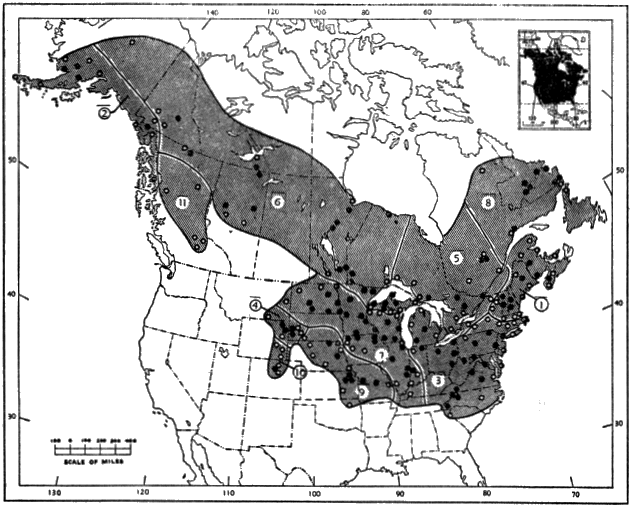
Fig. 47. Distribution of Zapus hudsonius.
Guide to subspecies
1. Z. h. acadicus 7. Z. h. intermedius
2. Z. h. alascensis 8. Z. h. ladas
3. Z. h. americanus 9. Z. h. pallidus
4. Z. h. campestris 10. Z. h. preblei
5. Z. h. canadensis 11. Z. h. tenellus
6. Z. h. hudsonius
Externals.—Size small to medium (total length 188 mm to 216 mm); tail longer than head and body (112 mm to 134 mm) and bicolored, pale brown to brownish-black above, white to yellowish-white below; hind feet long (28 mm to 31 mm), grayish-white above; back ochraceous to dark brown; sides paler than back with dark hair interspersed; lateral line usually present but sometimes indistinct or entirely absent (when present usually clear Ochraceous-Buff); ventral coloration white, sometimes with suffusion of ochraceous; guard hairs average 115 microns (96u to 140u) in diameter; underhair with pigment pattern in form of hollow, narrow rectangles; cuticular scales of underhair large and fewer than those of the underfur of Z. trinotatus, but underhair of Z. hudsonius otherwise resembles that of Z. trinotatus.
Baculum.—Size small (total length 4.5 mm to 4.9 mm); base medium in width (0.64 mm to 0.72 mm); tip narrow (0.24 mm to 0.26 mm) and dished out in dorsal aspect, blunted; shaft rounded, curving gently upward at tip.
Skull.—Small to medium and relatively narrow in relation to length; rostrum pointed and short; mastoid region relatively narrow; incisive foramina short; base of zygomatic process of squamosal narrow; coronoid process of mandible short, relatively weak. Upper premolar usually small (averaging .30 mm in length and .35 mm in breadth) sometimes functional (most often so in old adults), occlusal surface divided by single shallow re-entrant fold, which in worn teeth forms centrally located lake; tooth-row short as compared to that of other species; individual cheek-teeth usually smaller than those of other species; lower cheek-teeth shorter and narrower than those of other species; angle of mandible strongly inflected.
Geographic Variation
The species Z. hudsonius is divisible into 11 subspecies based on differences in color, relative proportions of the tail, hind feet, body, and size and shape of parts of the skull (zygomata, braincase, incisive foramina, auditory bullae, pterygoid fossae, rostrum, and interorbital breadth).
Color of the pelage varies, as a general rule, from dark-backed, dull-sided individuals in the northern parts of the geographic range of the species to light-backed, bright-sided individuals in the southern parts of the range.
Individuals from the southernmost geographic races (Z. h. americanus and Z. h. pallidus) are the smallest for the species and those from the northernmost subspecies (Z. h. alascensis) are the largest. One subspecies, Z. h. campestris, from the central part of the range of the species, however, seems to be out of the cline. This form inhabits the eastern foothills of the Rocky Mountains and is a robust animal approaching Z. princeps in size.
Seemingly there is no clinal variation in the several qualitative features of the cranium, for instance in the shape of the auditory bullae, shape of the incisive foramina, and shape of the postpalatal notch. On the other hand, the dimensions of the entire skull show that the larger crania are of the northernmost subspecies and the smaller of the southernmost subspecies.
NATURAL HISTORY
Habitat.—Zapus hudsonius occurs in low undergrowth usually of grasses or forbs or both, in open coniferous forests, deciduous hardwood groves, or in stands of tall shrubs and low trees, but most frequently in open, moist areas.
Quimby (1951:75) notes that jumping mice were more common in the moist lowlands than in the drier uplands. More were in the open type lowlands than in the forested type, and these mice favored habitats normally bordered by small streams affording moist to semi-aquatic living conditions. The reports of Goodwin (1924:255), Christian (1936:416), G. S. Miller (1899:329), Cory (1912:249), Lyon (1936:277), Stoner (1918:123), and others, although concerning widely different parts of North America, indicate that Z. hudsonius selects habitats in vegetation of like form, even though different assemblages of plant species may be involved.
An average of 11.91 mice per acre was recorded by Quimby (1951:91) from a study plot at Itasca Park, Clearwater County, Minnesota. He gives the monthly population densities per acre for Z. hudsonius at Centerville, Anoka County, Minnesota, as follows: June 2.78, July 3.57, August 3.10, and September 1.81. Blair’s (1940:248) data on bi-monthly population density per acre for Z. hudsonius on the Edwin S. George Reserve, Livingston County, Michigan, are remarkably similar, when adjusted on a monthly basis, to those obtained by Quimby (loc. cit.). Blair’s (loc. cit.) monthly population densities per acre are as follows: June 3.90, July 3.85, August 3.10, and September 2.00. Townsend (1935:90) estimated population densities per acre for Z. hudsonius in central New York state, at 11 to 72 individuals. As Quimby (1951:92) points out, Townsend’s figures are probably too high, as commonly is the case when the moving quadrat technique is used because animals from neighboring areas enter the trapped area to take over the niches made available by their predecessors’ removal.
The population of Z. hudsonius may vary considerably from year to year as well as seasonally. Blair (1940:249) found notably fewer jumping mice on the George Reserve in 1938 than in 1939. Quimby (1951:94) found the numbers of Zapus to be highly variable and thought that there was a rapid turnover. Young animals were not caught until July when 25 per cent were either juveniles, young, or subadults; from this time on these age classes increased to a high of sixty-one per cent in September. Quimby (loc. cit.) found that separating the individuals into their proper age classes was more difficult in September, since the young from early litters are adultlike in appearance. His data indicate as he remarked, “That the over-wintering adults are, for the most part, gradually replaced by the young of the year as the summer progresses.”
The sexes in Z. hudsonius vary only slightly from a one to one ratio. Quimby (1951:63) found a sex ratio of 110 females to 100 males and Blair (1940:245) records a sex ratio of 113 males to 100 females. Townsend (1935:42) records a sex ratio in central New York of 155 males to 100 females. Such a wide variation from a one to one ratio suggest that the moving quadrat technique, which Townsend (1935:90) employed in obtaining his data, may be, in some way unknown to me, more selective for the males.
Behavior.—The saltatorial powers of Z. hudsonius are well developed and often have been described in the literature. Stoner (1918:123) remarks that, “When disturbed hudsonius moves away by a series of leaps … the distance traversed in one of these leaps is from six to eight feet.”; Cory (1912:249) observed these mice to make surprisingly long leaps, and, according to him, a distance of 10 feet is by no means unusual; Handley and Patton (1947:49) credit these animals with jumping eight to ten feet at a single bound; Hamilton (1935:190) remarked that he noted an average of not more than four to six feet per jump; Townsend (1935:91) observed one individual make jumps of about two feet; and Harper (1932:29) records a jumping mouse leaping for distances of two to three feet. Quimby (1951:72) notes that he had never seen one jump farther than three feet. He found that the greatest jumps occurred initially and normally covered a distance of two to three feet; subsequent leaps were shorter but more rapid. A jumping mouse in full retreat progressed by jumps of about one foot.
Statements concerning the gait of Z. hudsonius are not in agreement but the consensus of opinion is that these animals when unfrightened progress by a series of hops of one to six inches, or, occasionally, with a slow creeping motion while the animal is on all fours. When frightened, however, their progress is by long bounds; the mice make a series of two or three such leaps to the nearest protective cover, and then sit motionless until pursued.
Concerning the use of the tail as a balancing organ, G. S. Miller (1899:330) describes the behavior of a jumping mouse from which the tail had been severed by the sickle of a mowing machine. "When I approached, it made violent efforts to escape, but the moment it was launched in the air, its body, deprived of its balancing power, turned end over end so that it was as likely as not to strike the ground facing the direction from which it had come."
Riparian animals such as Z. hudsonius need enter the water to escape from enemies or perhaps in search of food. Zapus hudsonius can and does swim. Hamilton (1935:190) found it to be a strong swimmer capable of remaining in the water for from four to five minutes. According to Hamilton (loc. cit.), when the mouse is swimming the head is held high, the tail is arched near its middle, and only the hind limbs are employed in propulsion. According to Sheldon (1938:327), Philip Allan, in northern Minnesota, saw many Z. hudsonius swimming three or four inches under the surface of the water. The mice swam upstream and only the hind legs were employed in the swimming movements. N. A. Preble (1944:200), at Archer’s Pond, 3 miles southeast of Center, Ossipee County, New Hampshire, observed a jumping mouse swimming rapidly under water toward another portion of the shore 30 or 40 feet away. The mouse, swimming less than a foot beneath the surface, was vigorously using both forefeet and hind feet, but the long tail trailing limply behind, contributed in no way to the animal’s movements. Quimby (1951:72) released five of the mice, one at a time, in the open water of a lake. He followed alongside in a boat and observed that, “In all instances the animals proved to be excellent swimmers both on and underneath the surface. The methods of progression were similar to land movements; i. e., the limbs were employed differently at various times depending upon the speed. When first placed in water they moved rapidly by lunges produced by sweeping strokes of the hind limbs employed simultaneously. This movement was accomplished similarly to the long jumps made on land … Following the first excited lunges, they settled down to a steadier and slower gait using all four limbs one at a time. The anterior part of the body was held high in the water … When approached too closely, they attempted to escape by diving. The maximum distance noted was about four feet … One was able to swim vigorously for approximately three minutes after which it tired greatly and was in danger of drowning.”
As concerns digging ability, Goodwin (1935:148) reports that Z. hudsonius makes its own burrows; these are short and close to the surface in the summer but longer, deeper, and below the frost-line in winter. Two captives used their forefeet and nails in digging a tunnel in the foot of soil that Goodwin (loc. cit.) had placed in their cage. Quimby (1951:72) remarks that captives excavate soil by means of the front feet and throw the soil out behind; as the burrow deepened the hind feet were also utilized to throw the loose soil out of the burrow.
Zapus hudsonius climbs; Sheldon (1934:293) observed captive animals to climb over small evergreen trees in their cages. They moved with surprising sureness and agility, chasing each other among the branches or sitting for several minutes at a time on one of the limbs. Hamilton (1935:190) found that the mice ran over limbs and brush which were placed in their outdoor enclosure.
Ordinarily Z. hudsonius is nocturnal, appearing in the early dusk and remaining active until pre-dawn. Occasional individuals are abroad in daylight hours. Sheldon (1934:293) found in Nova Scotia that Z. hudsonius is most active from early dusk through the night, but that it may be abroad in daylight as well. Her statements are based on trapping results, field observations, and observations made on captive individuals. Quimby (1951:73) found that Z. hudsonius in Michigan is mostly nocturnal; however, he saw mice on a few occasions in the daytime. Diurnal activity seems to be increased in cloudy or damp weather; Quimby (loc. cit.) almost invariably trapped more of these mice on cloudy, damp days than on other days.
This jumping mouse usually is silent but does utter various sounds. Sheldon (1934:295) records squeaking and clucking noises. Quimby (1951:73) records the clucking noise described by Sheldon (loc. cit.) and mentions also the squeaking and suckling sounds produced by the small young. This mouse is most vociferous when young or when about to go into hibernation. Sheldon (1938:327) writes that Z. hudsonius makes a drumming noise by vibrating the tail against dry leaves.
Many data are available concerning the hibernation of Z. hudsonius. In general it seems necessary for the mice to put on a certain amount of fat preparatory to hibernation. This fat is deposited in a thin layer over the inside of the skin, over the back, and in the body cavities. The thickest deposits are in and about the inguinal region.
Quimby (1951:83) noted that gain in weight was accelerated in a brief period prior to entrance into hibernation. This relationship of rapid gain in weight to hibernation allows a person to estimate the date of hibernation. Cold weather seems to hasten hibernation, but less so than the correct physiologic condition which is foreshadowed by a rapid gain in weight. For example, Quimby’s (1951:84) data reveal that mice that were moved to a heated room gained weight and hibernated in a fashion similar to those in unheated surroundings. Hamilton (1935:193) states that, “It seems necessary for the mouse to lay on a certain amount of fat before it is capable of hibernation.” Hamilton (loc. cit.) reported that 18 specimens of Z. hudsonius taken [presumably in an active state] near Ithaca, New York, on November 13, were without a trace of fat.
Data that are available concerning the hibernation sites of Z. hudsonius show that almost invariably these mice seek shelter in burrows beneath the surface of the ground and there construct nests of grass, leaves, or some other vegetation. Nicholson (1937:103) found a hibernating Z. hudsonius on the George Reserve, Livingston County, Michigan, on October 20. The mouse was in a nest, composed of 10 to 12 damp elm leaves, in a sand bank two feet three inches vertically and three feet nine inches horizontally from the surface. On April 11, 1948, Schwartz (1951:228) found five nests (three with occupants) of Z. hudsonius at Jefferson City, Cole County, Missouri. All nests were one foot beneath the surface of a pile of coal-ash, which was about three and one-half feet high and five feet in diameter. The nests were spherical, approximately four inches in diameter and consisted of dried oak leaves and bits of dried grass. Grizzell (1949:74) found two hibernating jumping mice at the Patuxent Research Refuge, Laurel, Maryland, in January, 1948. The mice were in separate woodchuck dens; one mouse was 40 inches below the surface and the other was 26 inches below the surface. The mice were curled up in the center of masses of dead leaves, and thus, were well insulated against the cold. On April 29, 1944, at Ithaca, New York, Eadie (1949:307) uncovered a hibernating jumping mouse. The nest, about the size of a baseball, was compactly made of fine grasses and was 10 inches below the surface of the ground in a mound of earth that was approximately six by four feet at the base and three feet high.
From the foregoing reports on hibernation sites it is evident that well drained areas are utilized. Sheldon (1934:300) remarks that the burrows used for hibernating are dug in a bank or some place from which the rain water and melted snow probably drains off.
Eadie (1949:307), Grizzell (1949:75), Sheldon (1934:299), Schwartz (1951:228), and Sheldon (1938:331) all agree that the hibernating mouse rolls up into a ball-like shape (resting on its head and pelvis) with the head between the hind legs, the nose against the lower belly, the forefeet curled on the chest, and the tail curled around the head and body.
A marked loss of weight occurs immediately after hibernation begins, and then reduction in weight is slow and regular. (See Hamilton, 1935:194 and Quimby, 1951:84.)
Sheldon (1934:297) cites a letter from Vernon Bailey in which he remarks on the necessity of abundant moisture and saturate air for hibernating jumping mice. Bailey writes “… they will awaken at times famished for water and will drink and drink before going back to sleep.”
Hamilton (1935:195) thinks that in the Ithaca area of New York these mice probably leave their winter quarters in the second half of April and that in southern New York and Long Island they emerge considerably earlier. Quimby (1951:82) and Bernard Bailey (1929:163) report that males appear earlier in the spring than do the females. Quimby (loc. cit.), by recording the sequence and dates of phenological events and appearance of Zapus in several years, was able to predict fairly accurately the time of emergence of Zapus in a succeeding year. In Minnesota, jumping mice emerged late compared to other hibernating rodents.