TRADITIONS OF BATTLE-FIELDS.
Reading edition
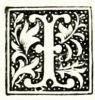
t has been frequently remarked that the general decay of local traditions, or the difficulty of obtaining particulars of events, or the sites of the most remembered passages of history, is, year by year, becoming more evident. It might be expected that in the vicinity of great transactions, among a rude and ignorant peasantry, we should find more frequent vestiges of the one memorable action which made their locality famous; yet, it is astonishing to find how often these are completely obliterated.
Much of this falling-off in tradition may be referred to the more rigid test to which it is subjected by means of the printing-press; as well as to the new class of materials for history. For a century or so, the habit had prevailed of receiving implicitly the traditions and records of past times, assuming them to have been substantiated at the date of their publication. This mode of constructing history consisted merely of breaking up and re-arranging the old materials, which have been compared to stereotype blocks. The worthlessness of this mode of proceeding has become apparent; and now the opposite error has come strongly into vogue—that of going back to neglected documents of the same date as the transaction, and, on their evidence, revoking the settled deliberate verdict of past centuries. The vast accession of materials of this kind obtained of late years, is truly surprising. There is likewise another means of verifying the dates, places, and names, of great events: we mean in the visits of archæologists to the sites, and the comparison of the actual localities with recorded details; proceedings of the most pleasurable and intellectual kind.
Nevertheless, the old traditional stock is not yet entirely exhausted. There are no families in the British Islands more ancient than many of those which are yet to be found among our yeomanry and peasantry. Every now and then some proof comes to light of an antiquity of tenure on the part of such families, far exceeding that of the Stanleys or Howards. The Duke of York, for example, ejected from a farm at Chertsey a certain Mr. Wapshott, who claimed lineal and accredited descent from Reginald Wapshott, the armour-bearer of Alfred, who is said to have established Reginald in this very farm. This personage was an example of the tenacity with which tradition might be thus preserved, for his family version of their origin derived them from Wapshott, the warrener, and not the armour-bearer of Alfred.[68]
Again, we have recovered of late a series of instances, which show how few individuals not uncommonly intervene between ourselves and the eye-witnesses of remarkable men or actions. King William IV. had spoken to a butcher at Windsor, who had conversed with Charles II. What is still more remarkable, a person living in 1847, aged then about sixty-one, was frequently assured by his father that, in 1786, he repeatedly saw one Peter Garden, who died in that year at the age of 127 years; and who, when a boy, heard Henry Jenkins give evidence in a court of justice at York, to the effect that, when a boy, he was employed in carrying arrows up the hill before the battle of Flodden Field.
This battle was fought in1513
Henry Jenkins died in 1670, at the age of169
Deduct for his age at the time of the battle of Flodden Field12
——157
Peter Garden, the man who heard Jenkins give his evidence, died at127
Deduct for his age when he saw Jenkins11
——116
The person whose father knew Peter Garden was born shortly before 1786, or 70 years since70
——
a.d. 1856
In this year, 1856, Mr. Sidney Gibson, F.S.A. showed, as above, that a person living in 1786, conversed with a man that fought at Flodden Field.
We now proceed to narrate a few instances in which the details of early battles have been most successfully investigated and identified.
There is not much myth about the Battle of Hastings. On that undulating upland, and in that steep morass, raged on Saturday, October 14th, a.d. 1060, from nine till three, when its tide first turned, as fierce a battle, as real a stand-up fight between the army of England and the great Norman host, as any which has ever decided the destinies of countries. There is no important battle, the details of which have been so carefully handed down to us. How the Conqueror's left foot slipped on landing—the ill omen—and how his right foot "stacked in the sand"—the good omen of "seisin;"—how the ships were pierced, so that his host might fight its way to glory without retreat; and how he merrily extracted an omen for good even while putting on his hauberk the wrong side foremost; how brother Gurth with the tender conscience counselled brother Harold with the seared conscience to stay away from the fray, lest his broken oath to William should overtake him; and how, as they reconnoitred the vast Norman host, the elder brother's heart had failed him, had not the younger one called him scoundrel for his meditated flight; the prayerful eve in the one camp and the carousing eve in the other, "with wassails and drinkhails;" the exploits of valiant knight Taillifer between the lines; how the Normans shot high in air to blind the enemy; and the dreadful mêlée in the "blind ditch Malfosse shadowed with reed and sedge;" and the Conqueror's hearty after-battle meal, when he was chaired among the dying and the dead; and that exquisitely pathetic touch of story which tells how Edith, the swan-necked,—for the love she bore to Harold,—when all others failed to recognise him, was brought to discover his mutilated corse among the slain; and the Conqueror's vow, so literally redeemed, to fix the high altar of the "Abbey of the Battaile" where the Saxon gonfanon fell—all these, and a thousand other minute circumstances of the memorable day, stand out in as clear relief at this distance of time as the last charge of Waterloo, or the closing scene at Trafalgar.
Sussex has little occasion to feel humbled by having been the scene of this well-contested field. Whatever the inhabitants of the British isles have since been able to effect for their own greatness and for the happiness of the human race, is attributable in no small degree to the issue of that fight. Thenceforth the Saxon was guided and elevated by the high spirit and far-reaching enterprise of the Norman, and the elements of the national character were complete.[69]
Among the memorials of the conquered must not be forgotten the roll of the companions of the Conqueror, which was installed with great festivity in August, 1862, at Dives, a small town on the seacoast, in the department of Calvados, in Normandy. It was near this town, at the mouth of the Dives, that William and his companions in arms met previous to their embarkation for the subjugation of England. The very spot was already marked by a column erected in 1861, by M. de Caumont, the eminent Norman savant and archæologist; and the fête in August, 1862, was held under the auspices of the same learned gentleman. The commemoration was intended to be international, and a public invitation was given to the English residents in the locality; but, from some unexplained cause or other, no English person attended. Sir Bernard Burke attributes this absence to the announcement being imperfectly made; "for what," he asks, "could more come home to the better and more educated classes of English people than the inauguration of a roll which contains the greatest names amongst us; a roll to which the proudest feel prouder still to belong, and which may be said to form the very household words of our glory—the roll, in fact, of what has since been the best and bravest aristocracy in the universe?"
The fête commenced by a meeting in the Market-hall of Dives, which was characteristically decorated; one of the objects being a large picture of the construction and embarkation of William's fleet, painted from the Bayeux Tapestry. The Dives Roll is deposited within the church, over the principal entrance. It differs from the Battle Abbey Roll in this respect, that the latter is the roll of those who actually fought at Hastings, and the former is the roll of those who assembled for the expedition, and were otherwise engaged in furthering the conquest of England. The roll is printed in the Bulletin de la Societé des Antiquaires de Normandie, and in the Vicissitudes of Families, third series.
Next are three battles of the fifteenth century: Towton, Tewkesbury, and Bosworth. Towton Field, supposed to be the most fierce and bloody battle that ever happened in any domestic war, was fought between the Houses of York and Lancaster in 1461. On the 29th of March, the armies met at Towton: the Lancastrians were totally routed, and Edward left unquestionably king. The carnage of this terrible field is appalling. Proclamations forbidding quarter were issued before the engagement. Like Leipsic, it reached over the night; but, unlike Leipsic, even the hours of darkness brought no rest. They fought from four o'clock in the afternoon, throughout the whole night, on to noon the next day. Like Waterloo, it was fought on a Sunday. And the accounts of contemporary writers state, in words very like the letters from Mont St. Jean, that, for weeks afterwards the blood stood in puddles, and stagnated in gutters, and that the water of the wells was red. No inaccuracy is more frequent in ancient authors than that of numbers, and generally on the side of exaggeration. But on this occasion we can form a more correct estimate of the carnage by the concurrence of unusually reputable testimonies; and, perhaps, in these times it will give the best idea of it, to say that the number of Englishmen slain exceeded the sum of those who fell at Vimiera, Talavera, Albuera, Salamanca, Vittoria, and Waterloo.[70]
Tewkesbury Field has been minutely explored. Mr. Richard Brooke, F.S.A., after narrating, from Holinshed, the circumstances which preceded this memorable battle—from the arrival of Queen Margaret at Weymouth, to the termination of the conflict, and the murder of Prince Edward—points out the field of battle as close to the first mile-stone on the high road leading from Tewkesbury through Tredington to Cheltenham and Gloucester. On the western side of the town of Tewkesbury is the Home-ground, or Home-hill, where once a castle stood; a part of this elevated ground is a field, called "the Gastons," which extends to the first mile-stone, just opposite which, on the eastern side of the road, is a field which has been immemorially called "Margaret's Camp." The battle was, according to tradition, fought on that place, and in the adjacent fields on the southward, as also in those a little eastward of it. In "Margaret's Camp," in the centre is a small circular inclosure, surrounded by a ditch, without hedge or bank, but having some large elm trees growing round its inner edge. This is too insignificant to have been a military entrenchment; but it may have been the place of interment of some of the slain; or is thought to have been formed in comparatively modern times to commemorate the spot where the Lancastrian army was posted. In the field, called "Gup's Hill," Mr. Brooke was told by elderly persons, bones had formerly been discovered.
The old annalists and chroniclers, Mr. Brooke says, have left us much in the dark as to the exact spot near the camp of the Lancastrians where Edward's forces passed the night prior to the battle; but on the morning of the battle, and immediately before it commenced, his army, according both to tradition and probability, took up a position upon some elevated ground adjoining the turnpike-road, and to the southward of and opposite the Lancastrian army. From that position a tract of ground (now fields and closes) slopes downwards, so as to form a depression between it and the spot occupied by the Lancastrians. This tract of ground was formerly called the "Red Piece," and it is now intersected by the turnpike-road, and forms two fields, one on each side of the road, one of which is called the Near Red Close, and the other the Further Red Close. This tract of ground extends to the field called "Margaret's Camp," and it appears almost certain that it was on the southward side of the latter that Edward's forces made their attack.
A meadow in the rear of the Lancastrian position, and lying on the westward side of the turnpike-road, half a mile from Tewkesbury, and within a few hundred yards of the Tewkesbury Union Workhouse, is called the "Bloody Meadow:" an idea is generally entertained that it derives its name from the slaughter of many of the fugitives, who fled from the battle towards the meadow, in hope of getting over the Severn, as there is a ferry not far from it. Fourteen or fifteen years ago, was found in the Bloody Meadow a long piece of iron, which appeared to have been part of a sword-blade.
Bosworth Field is a still more memorable site. On August 22, 1485, was fought the famous battle of Bosworth, the precise spot being pointed out by the following passage contained in a proclamation sent by Henry VII., almost immediately after his victory, to the municipality of York: "Moreover, the King ascertaineth you that Richard, Duke of Gloucester, lately called King Richard, was slain at a place called Sandeford, in the county of Leicester, and brought dead off the field," &c.
The field of battle lies about three miles south of Market Bosworth; and it is clear from direct historical testimony, which is in this instance fully corroborated by local traditions, that the principal encounter between the forces of Richard and Richmond took place on "Ambien Hill," on the southern slope of which rises the spring, "Richard's Well," from which the King is traditionally reported to have drank during the engagement. The plain of Redmoor was also partly comprehended in the movements of the two armies, and across which there cannot be a doubt the flight of the vanquished royalists was afterwards directed towards Dadlington, Stoke Golding, and Crown Hill, besides the strong position of Ambien Hill, on the south and west. It is, therefore, evident that the place where the King fell must be looked for in the immediate vicinity of these two well-ascertained sites of conflict. Now Sandeford, or Sandford, named in the proclamation of Henry VII., is not known to have existed as a hamlet or village in the county of Leicester, from the date of Domesday-book; hence Sandford is taken to imply an ancient road or passage over some fordable stream or water-course. It has been found that the old road from Leicester to Atherstone, through the villages of Peckleton and Kirkby Mallory, and along which road Richard advanced, when on his march from Leicester upon Sunday, August 21, to meet his antagonist, used formerly, after skirting and partially traversing the field of battle, to cross a ford, remembered by the present generation, and situated at but a short distance from the south-western slope of Ambien Hill. And part of the comparatively modern highway which now passes over the site of the same ford, is called the Sandroad at the present time. The stream which once flooded the highway, is now carried through a vaulted tunnel beneath it. The ford has consequently disappeared; but any visitor to Bosworth Field, who inquires for the Water Gate, may yet stand on the ground pointed out as the scene of the death of Richard III. by the words of his rival Henry VII. It should be added that Mr. J. F. Hollings, of Leicester, who has communicated the above details to Notes and Queries, 2nd S., No. 150, has shown also that the Ordnance Map is not altogether to be relied upon as a guide to the various localities connected with the battle of Bosworth.
Mr. Syer Cuming, F.S.A., in a paper read to the British Archæological Association, in 1862, has grouped these interesting Memorials of Richard III. On this occasion, the archæologists proceeded from Leicester to the battle-field; and a considerable accession to the number being received at Bosworth, the procession extended upwards of half-a-mile in length. On arriving at the field, large numbers of people had preceded the procession and congregated round the platform, and altogether there could not have been fewer than a thousand persons present. The platform was decorated with banners. A facsimile of the crown of Richard III. was shown on a cushion in front of Major Wollaston, who presided on the occasion. A flag marked the place where King Richard died, near a small pond, and a white flag pointed out the position of Richmond's army.
Richard Plantagenet was born about the year 1450, of Lady Cecilia, wife of Richard, Duke of York, in the ancient castle of Fotheringhay, Northamptonshire; but his natal abode was swept away by order of our first James, and we have perhaps no earlier relic of the Prince than his official seal as Admiral of England the date of which is fixed by Mr. Pettigrew between the years 1471 and 1475. It bears on it a large vessel, the mainsail blazoned with the arms of France and England, crossed by a label of three points; similar charges appearing on a flag held by a greyhound at the aft-castle. The verge represents a collar of roses, and within it is a legend setting forth that it is the seal of Richard, Duke of Gloucester, Admiral of England, for the counties of Dorset and Somerset—S' Rici: Dvc' Glovc': Admiralli: Angl: I: Com: Dors' et Soms.
[When Dr. Dibdin was on his "Northern Tour," published in 1838, at Whiburn, in the neighbourhood of Tynemouth, he had the good fortune to be introduced to Sir Hedworth Williamson's old trunk of family seals, in red and white wax, among which he found a warrant of Richard III., then Duke of Gloucester, dated 20th of February, in the thirteenth year of Edward IV., with the Autograph of the Duke, and part of the Seal appended; both of which are of most rare occurrence.]
If tradition is to be believed, King John and Queen Elizabeth must have had as many palaces as there are counties in England; and though the name of Richard III. is less frequently connected with old mansions, there are still plenty of antiquated houses which are said to have been his abiding-places for more or less lengthy periods. Among others may be mentioned the Black Boy Inn, Chelmsford, where were formerly to be seen two carved bosses on the ceiling of its great room: one being painted with a blue boar on a deep red field, surrounded by a collar of seven stars or mullets; the other, with a full-blown rose, once entirely white, but subsequently white and red, indicative of the union of the Houses of York and Lancaster. Both these bosses were communicated to the Gentleman's Magazine (May, 1840), by John Adey Repton; but the editor of that serial contended that the boar is the insignia of Vere, Earl of Oxford, and that the tradition regarding Richard must therefore be rejected, forgetful of the fact that after the attainder of the Earl for high treason, his vast possessions in Essex and other counties were given to the Duke of Gloucester, so that the Black Boy Inn may, after all, have served as a hunting-lodge of the Plantagenet. Of Richard's two London residences one has altogether vanished, and the other has lost much of its antique aspect, but Shakspeare has given a world-wide and lasting fame to both. Baynard's Castle stood on the northern bank of the Thames, and was destroyed in the Great Fire of 1666. It was in the court of this fortress that Stafford, Duke of Buckingham, offered the crown to the Duke of Gloucester, and where the dramatist makes the latter say:—
"Since you will buckle fortune on my back, To bear her burden, whe'r I will or no, I must have patience to endure the load." Richard III. ii. 7.
The other dwelling alluded to is Crosby Place, Bishopsgate, built by Sir John Crosby about the year 1467; and, in spite of alterations and renovations, this is still one of the finest examples of Early Domestic architecture in England. Hither Shakspeare makes Gloucester invite the Lady Anne; and bid the murderers repair after the assassination of Clarence and the young princes in the Tower.
The old building in Leicester, which was properly called "King Richard's House," was known to be part of the Old Blue Boar: at the commencement of the last century, it was used as an inn, and known by that sign, though originally it bore the name of the "White Boar," the cognizance of King Richard III.; but, after his defeat, this sign was torn down by the infuriated populace, and the owner or landlord compelled to change the title. Popular tradition has always identified the building with the ill-fated monarch, and the inquiries of our local antiquaries confirm the tradition. It was taken down in the month of March, 1836; but, fortunately, before its destruction, a drawing was made of the front; and that has been frequently engraved. In this house Richard took up his quarters, and slept on a bedstead, the remains of which are believed to be in existence. It had a false bottom, in which a large sum of money could be concealed, and did duty as a military chest. Engravings of the house and bedstead are given in Hutton's Battle of Bosworth Field, 2d edition, by J. Nichols, F.S.A.
Richard is reported to have been peculiarly subject to the influence of omens. "During his abode at Exeter," says Holinshed, "he went about the citie, and viewed the seat of the same, and at length he came to the castle; and when he understood that it was called Rugemont, suddenlie he fell into a dumpe, and (as one astonied) said, 'Well, I see my dayes be not long.' He spake this of a prophecy told him, that when he once came to Richmond, he should not long live after." He had more rational cause for alarm when Jockey of Norfolk produced the doggrel warning found in his tent, for it clearly indicated the desertion and treachery that were about to prove fatal to him.
On the night before the battle, going the rounds, Richard found a sentinel asleep, and stabbed him, with the remark, "I found him asleep, and have left him as I found him."
The vanguard of Richard's army was commanded by the Duke of Norfolk; the centre and main body by the King himself, who rode at their head, mounted on his celebrated milk-white steed, White Surrey, and arrayed in the splendid suit of armour which he had worn at Tewkesbury. Like Henry V. at Agincourt, Richard wore a golden crown, not as a man would wear a hat or cap, but by way of crest over his helmet. Richmond, too, bore himself gallantly, and rode through the ranks, marshalling and encouraging his men, arrayed in complete armour, but unhelmeted. His vanguard, commanded by the Earl of Oxford, began the battle by crossing the low ground towards the elevated position where Richard prudently waited the attack. "The trumpets blew, and the soldiers shouted, and the King's archers courageously let fly their arrows. The Earl's bowmen stood not still, but paid them home again; and the terrible shot once passed, the armies joined, and came to hand-strokes."[71]
The leaders of those days deemed it a point of honour to fight hand to hand, if possible, and Oxford and Norfolk managed to engage in a personal encounter. After shivering their spears on each other's shields or breastplates, they fell to with their swords. Oxford, wounded in the arm by a blow which glanced from his crest, returned it by one which hewed off the vizor of Norfolk's helmet, leaving the face bare; and then, disdaining to follow up the advantage, drew back, when an arrow from an unknown hand pierced the Duke's brain. Surrey, hurrying up to assist or avenge his father, was surrounded and overpowered by Sir Gilbert Talbot and Sir John Savage, who commanded on the right and left for Richmond:—
"Young Howard single with an army fights; When, moved with pity, two renownèd knights, Strong Clarendon and valiant Conyers, try To rescue him, in which attempt they die. Now Surrey, fainting, scarce his sword can hold, Which made a common soldier grow so bold, To lay rude hands upon that noble flower, Which he disdaining—anger gives him power,— Erects his weapon with a nimble round, And sends the peasant's arm to kiss the ground."— Bosworth Field, by Sir John Beaumont, Bart.
If we may credit tradition or the chroniclers, all this was literally true. When completely exhausted, Surrey presented the hilt of his sword to Talbot, whom he requested to take his life, and save him from dying by an ignoble hand. He lived to be the Surrey of Flodden Field, and the worthy transmitter of "all the blood of all the Howards."
When Richard was about to make that renowned charge, which historians describe as the last effort of despair, he was bringing up his main body, and intelligence reached him that Richmond was posted behind the hill with a slender attendance. His plan was formed on the instant; nor, although fiery courage or burning hate might have suggested it, was it ill-judged or reckless. Three-fourths of the combatants, if we include the Stanleys, were ready to side with the strongest. Richmond's army, without Richmond, was a rope of sand. His fall would be the signal for a general scattering, or a feigned renewal of hollow allegiance to the conqueror. Neither did the execution of the proposed coup de main betoken a sudden impulse inconsiderately acted upon. Richard rode out at the right flank of his army, and ascended a rising ground to get a view of his enemy, with whose person he was not acquainted. He summoned to his side a chosen body of knights, all of whom, with the exception of Lord Lovell, perished with him; and he paused to drink at a spring, which still goes by his name. That Richard's horse was slain is very doubtful; and, for aught we know, it was White Surrey that bore him, like a thunderbolt, against the bosom of his foe; and it was spear in rest that he dashed against Richmond's surprised and fluttered bodyguard.
The personal prowess of the pair who were contending for a kingdom, is thus estimated by Hutton: "Richard was better versed in arms, Henry was better served. Richard was brave, Henry was a coward. Richard was about five feet four, rather runted, but only made crooked by his enemies; and wanted six weeks of thirty-three. Henry was twenty-seven, slender, and near five feet nine, with a saturnine countenance, yellow hair, and grey eyes." According to Grafton, Richard, so soon as he descried Richmond, "put spurs to his horse, and, like a hungry lion, ran with spear in rest towards him." He unhorsed Sir John Cheney, a strong and brave knight,[72] and rushing on Sir William Brandon, Henry's standard-bearer, cleft his skull, tore the standard from his grasp, and flung it on the ground. "He was now," says Hume, "within reach of Richmond himself, who declined not the combat." Others say that Richmond drew back, as a braver man might have done in his place—
"No craven he, and yet he shuns the blow, So much confusion magnifies the foe."
Fortunately for him, Sir William Stanley came up at the very nick of time, "with three thousand tall men," and overpowered Richard, who died, fighting furiously, and murmuring with his last breath, Treason! Treason! Treason! So nicely timed was Stanley's aid, that Henry afterwards justified the ungrateful return he made for it, by saying: "He came time enough to save my life, but he stayed long enough to endanger it." Richard received wounds enough to let out a hundred lives; his crown had been struck off at the beginning of the onset; and his armour was so broken, and his features were so defaced, that he was hardly to be recognised when dragged from beneath a heap of slain.
And can that stripped and mutilated corpse be the crowned monarch who at morning's rise led a gallant army to an assured victory, who had recently been described by Philip de Commines as holding the proudest position held by any King of England for a hundred years? Nothing places in a stronger light the depth of moral degradation and insensibility, fast verging towards barbarism, to which men's minds had been sunk by the multiplied butcheries of these terrible conflicts, than the indignities heaped upon the dead King, with the sanction, if not by the express orders, of his successor. The body, perfectly naked, with a rope round the neck, was flung across a horse, like the carcase of a calf, behind a pursuivant-at-arms, and was thus carried in triumph to Leicester. It was exposed two days in the Town-hall, and then buried without ceremony in the Gray Friars' Church. At the destruction of the religious houses, the remains were thrown out, and the coffin, which was of stone, was converted into a watering-trough at the White Horse Inn. The best intelligence that Mr. Hutton, who made a journey on purpose in 1758, could collect concerning it, was that it was broken up about the latter end of the reign of George I., and that some of the pieces had been placed as steps in the cellar of the inn. "To what base uses may we return!" The sign of the White Boar at Leicester, at which Richard slept, was forthwith converted into the Blue Boar; and the name of the street called after it has been corrupted into Blubber-lane.
Leicester and Richard III. are associated in traditional history, which the Corporation have handed down, with a newly-built bridge, in two inscriptions:—1. "This bridge was erected by the Corporation of Leicester, in the mayoralty of S. Viccars, Esq., a.d. 1862, on the site of the ancient Bow Bridge, over which King Richard III. passed, at the head of his army, to the battle of Bosworth Field, August, 1485. Joseph Whetstone, Chairman of Highway Committee; S. Stone, Town Clerk; E. S. Stephens, Borough Surveyor." The plate on the opposite side bears the legend in verse, according to Speed's History of Great Britain:—
"Upon this bridge [as tradition hath Delivered] stood a stone of some height, Against which King Richard, as he passed Towards Bosworth, by chance struck his spur, And against the same stone, as he was brought Back, hanging by the horse's side, his head Was dashed and broken, as a wise woman [Forsooth] had foretold, who, before Richard's Going to battle, being asked as to his success, Said that where his spur struck, his head Should be broken."
This is legendary evidence of Richard's belief in omens, in addition to that recorded at page 305.
Richard had a habit of gnawing his under lip, and a trick of playing with his dagger, which, although misconstrued into signs of an evil disposition, were, probably, mere outward manifestations of restlessness. Polydore Virgil speaks of his "horrible vigilance and celerity." It was the old story of the sword wearing out the scabbard; and the chances are, that he would not long have survived Bosworth Field had he come off unscathed and the conqueror.
"In the dreadful wars of York and Lancaster," writes Mr. Brooke,[73] "it is said that more than 10,000 Englishmen lost their lives; but that is merely the number believed to have been slain in battle; and, however repulsive it may be to our feelings, it must be admitted that it cannot include the numbers who must have perished during that disastrous period, in unimportant skirmishes, in marauding parties, in private warfare, by assassination, by the axe or by the halter, in pursuance of or under the colour of judicial sentences, or by open and undisguised murder. Besides this horrible sacrifice of human life, during this distracted period it is shocking to think what sufferings unprotected and helpless persons must have been exposed to, from the lawless partisans of the rival parties, when they passed through or were located near any district, which they chose to consider as favouring their antagonists. Pillage, cruelty, violence to women, incendiarism, and contempt of the laws and of religion, were the natural attendants upon a civil war, carried on with feelings of bitter hatred by each party; and it is certain that the examples of cruelty and wickedness which were openly set by the nobles and leaders of both factions would readily be copied by their followers. One of our ancient historical writers correctly states, that 'this conflict was in maner unnaturall, for in it the sonne fought against the father, the brother against the brother, the nephew against the uncle, the tenant against his lord.'"
It is well known that the Wars of the Roses had weakened to the last degree the great nobles—destroying many of the houses, and impoverishing all to such an extent that when Henry assumed the Crown he found himself in possession of nearly absolute power. Under his Plantagenet predecessors the great nobles had so much authority that at times they could defy the Crown, and an influential earl might be regarded as almost the rival of the Sovereign. The English barons were now reduced to comparative insignificance, and the descendants of men who in the bygone time might have aspired to the throne, and actually ruled as independent princes in their ample domains, were content to appear at Court and to swell the train of their Sovereign liege. The Wars of the Roses had in reality precipitated in England a change which was gradually approaching—the destruction of the feudal, and the rise of the municipal system. But the decay of the feudal system and the rise of the municipal produced consequences which are very important for their social and political bearings.[74]
Sad are the memories of these devastating wars, which are intertwined with many a legendary tale and fitful romance. Not the least curious of these records is the story that in a beautiful district of England, whilst the wars raged, there was discovered in the garden of Longleat Priory, in Wiltshire, a French rose-tree, covered on one side with white roses, and on the opposite with red; which, being known, attracted crowds of persons, who believed it to portend the speedy return of peace to their country, by the union of the rival powers. According to the same tradition, a short time afterwards, the tree bore roses of mixed petals, and there immediately followed the marriage of Henry VII. and Elizabeth, thus fulfilling the floral prediction by the friendship and union of the contending parties. The rose is thought to have been an early specimen of our "York and Lancaster;" a red-white—the colours of the two houses—hence its name; and although the account is probably but a fable, it has, like many others, found its way into history.
The tendency to embalm falsehoods is a part of the question of the worth of traditions, which is really worthy of a philosophical inquiry. The rib of the Dun cow and Guy's porridge-pot are still shown at Warwick Castle, though the one is the bone of a fossil elephant, and the other a military cooking vessel of the time of Charles I. Sir Samuel Meyrick scientifically classified and arranged the collection of armour in the Tower, but the Beefeaters stick to the old stories still. Richard the Third's bed in the neighbourhood of Bosworth, turns out to be Elizabethan;[75] Queen Mary's, at Holyrood, to be of the last century. Only the other day they sold off at Berkeley the bed of the murdered Edward as an undoubted anachronism and admitted imposture. Old chairs are as little to be trusted. Some persons have even doubted the famous Glastonbury specimen, but these are unduly cautious and sceptical. St. Crispin's chair in Linlithgow Cathedral is of excellent mahogany,—a wood which he could only have obtained by miracle previous to the discovery of America. Princes of Wales are not more fortunate in their traditions than the Popes themselves, for the Tower of Carnarvon, in which it is said that the first of them was born, was almost certainly built after he came into existence. The printing press will dispose of these false traditions in time, as it has already extinguished so many others, whether false or true.[76]