PRESIDENT JOHNSON AND HIS WAR ON CONGRESS
Reading edition
BY
CARL SCHURZ
ILLUSTRATED WITH PHOTOGRAPHS
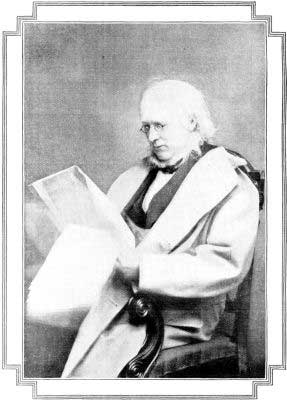
I was on the point of returning to the West when I received a message from Horace Greeley, the famous editor of the New York Tribune, asking me to take charge of the news bureau of that journal in Washington, as its chief correspondent. Although the terms offered by Mr. Greeley were tempting, I was disinclined to accept, because I doubted whether the work would be congenial to me, and because it would keep me in the East. But Mr. Greeley, as well as some of my friends in Congress, persuaded me that, since I had studied the condition of things in the South and could give reliable information concerning it, my presence in Washington might be useful while the Southern question was under debate. This determined me to assent, with the understanding, however, that I should not consider myself bound beyond the pending session of Congress.
Thus I entered the journalistic fraternity. My most agreeable experience consisted in my association with other members of the craft. I found among the correspondents of the press a number of gentlemen of uncommon ability and high principle—genuine gentlemen, who loved truth for its own sake, who heartily detested sham and false pretense, and whose sense of honor was of the finest. This was the rule, to which, as to all rules, there were of course some exceptions; but they were rare. My more or less intimate contact with public men high and low was not so uniformly gratifying. I enjoyed, indeed, the privilege of meeting statesmen of high purpose, of well-stored minds, of unselfish patriotism, and of the courage of their convictions. But disgustingly large was, on the other hand, the number of small, selfish politicians I ran against—men who seemed to know no higher end than the advantage of their party, which involved their own; who were always nervously sniffing for the popular breeze; whose most demonstrative ebullitions of virtue consisted in the most violent denunciations of the opposition; whose moral courage quaked at the appearance of the slightest danger to their own or their party's fortunes; and whose littlenesses exposed them sometimes with involuntary frankness to the newspaper correspondent whom they approached to beg for a "favorable notice" or for the suppression of an unwelcome news item. They were by no means in all instances men of small parts. On the contrary, there were men of marked ability and large acquirements among them. But never until then had I known how great a moral coward a member of Congress may be.
It is probably now as it was then. There were few places in the United States where the public men appearing on the national stage were judged as fairly and accurately as they were in Newspaper Row in Washington.
HORACE GREELEY AT WHOSE REQUEST CARL SCHURZ BECAME THE CHIEF WASHINGTON CORRESPONDENT OF THE NEW YORK TRIBUNE IN 1865
I remained at the head of the Tribune office in Washington, according to my promise to Mr. Greeley, to the end of the winter season, and then accepted the chief-editorship of the Detroit Post, a new journal established at Detroit, Michigan, which was offered to me—I might almost say urged upon me—by Senator Zachariah Chandler. In the meantime I had occasion to witness the beginning of the political war between the executive and the legislative power concerning the reconstruction of the "States lately in rebellion."
The Beginnings of the Struggle
I am sure I do not exaggerate when I say that this political war has been one of the most unfortunate events in the history of this Republic, for it made the most important problem of the time, a problem of extraordinary complexity, which required the calmest and most delicate and circumspect treatment, the foot-ball of a personal and party brawl which was in the highest degree apt to inflame the passions and to obscure the judgment of everybody concerned in it. Since my return from the South, the evil effects of Mr. Johnson's conduct in encouraging the reactionary spirit prevalent among the Southern whites had become more and more evident and alarming from day to day. Charles Sumner told me that his personal experience with the President had been very much like mine. When Sumner left Washington in the spring, he had received from Mr. Johnson at repeated intervals the most emphatic assurances that he would do nothing to precipitate the restoration of the "States lately in rebellion" to the full exercise of self-governing functions, and even that he favored the extension of the suffrage to the freedmen. The two men had parted with all the appearance of a perfect friendly understanding. But when the Senator returned to Washington in the late autumn that understanding seemed to have entirely vanished from the President's mind and to have given place to an irritated temper and a certain acerbity of tone in the assertion of the "President's policy."
From various other members of Congress I heard the same story. Mr. Johnson, strikingly unlike Abraham Lincoln, evidently belonged to that unfortunate class of men with whom a difference of opinion on any important matter will at once cause personal ill feeling and a disturbance of friendly intercourse. By many Congressmen Mr. Johnson was regarded as one who had broken faith, and the memory of the disgraceful exhibition of himself in a drunken state at the inauguration ceremonies, which under ordinary circumstances everybody would have been glad to forget, was revived, so as to make him appear as a person of ungentlemanly character. All these things combined to impart to the controversies which followed a flavor of reckless defiance and rancorous bitterness, the outbursts of which were sometimes almost ferocious.
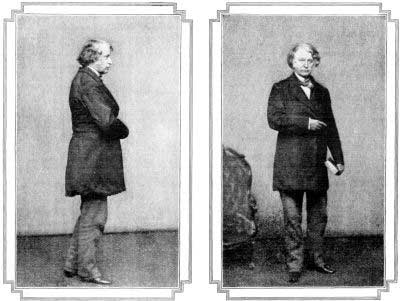
TWO PORTRAITS OF CHARLES SUMNER
The first gun of the political war between the President and Congress, which was to rage four years, was fired by Thaddeus Stevens in the House of Representatives by the introduction, even before the hearing of the President's Message, of the resolution already mentioned, which substantially proclaimed that the reconstruction of the late rebel States was the business, not of the President alone, but of Congress. This theory, which was constitutionally correct, was readily supported by the Republican majority, and thus the war was declared. Of Republican dissenters who openly took the President's part, there were but few—in the Senate, Doolittle of Wisconsin, Dixon of Connecticut, Norton of Minnesota, Cowan of Pennsylvania, and, for a short period, Morgan of New York, as the personal friend of Mr. Seward. In the House of Representatives, Mr. Raymond of New York, the famous founder of the New York Times, acted as the principal Republican champion of the "President's policy."
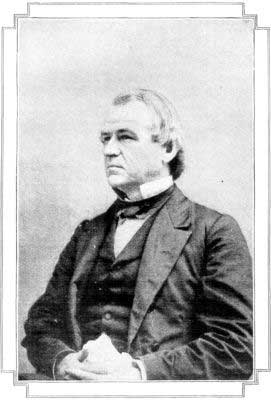
PRESIDENT ANDREW JOHNSON WHOSE RECONSTRUCTION POLICY LED TO THE FOUR YEARS' WAR BETWEEN HIMSELF AND CONGRESS
Stevens the Dominating Figure of the Struggle
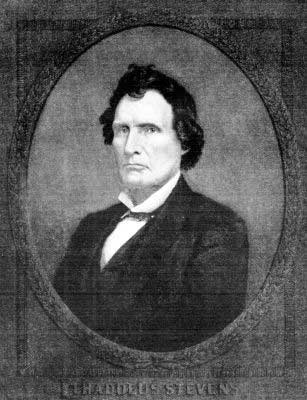
Thaddeus Stevens was the acknowledged leader of the Republicans in the House. Few historic characters have ever been more differently judged from different points of view. A Southern writer of fiction has painted him as the fiend incarnate; others have spoken of him as a great leader of his time, far-sighted, a man of uncompromising convictions, intellectually honest, of unflinching courage and energy. I had come into personal contact with him in the Presidential campaigns of 1860 and 1864, when he seemed to be pleased with my efforts. I had once heard him make a stump speech which was evidently inspired by intense hatred of slavery, and remarkable for argumentative pith and sarcastic wit. But the impression his personality made upon me was not sympathetic: his face, long and pallid, topped with an ample dark-brown wig which was at the first glance recognized as such; beetling brows overhanging keen eyes of uncertain color which sometimes seemed to scintillate with a sudden gleam; the under lip defiantly protruding; the whole expression usually stern. His figure would have looked stalwart but for a deformed foot which made him bend and limp. His conversation, carried on in a hollow voice devoid of music, easily disclosed a well-informed mind, but also a certain absolutism of opinion, with contemptuous scorn for adverse argument. He belonged to the fierce class of anti-slavery men who were inspired by humane sympathy with the slave and righteous abhorrence of slavery, but also by hatred of the slaveholder. What he himself seemed to enjoy most in his talk was his sardonic humor, which he made play upon men and things like lurid freaks of lightning. He shot out such sallies with a fearfully serious mien, or at least he accompanied them with a grim smile which was not at all like Abraham Lincoln's hearty laugh at his own jests.
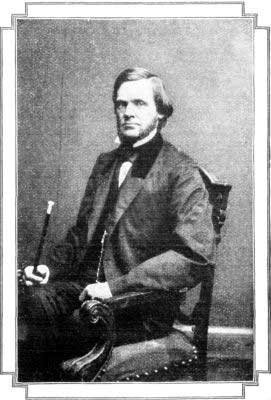
From the collection of P. H. Meserve JOHN SHERMAN WHO TRIED TO HEAL THE BREACH BETWEEN PRESIDENT JOHNSON AND THE SENATE
THADDEUS STEVENS> THE LEADING OPPONENT OF THE MOVEMENT TO RESTORE SLAVERY, AND THE MOST BITTER OF PRESIDENT JOHNSON'S ANTAGONISTS
Thus Mr. Stevens' discourse was apt to make him appear a hardened cynic, inaccessible to the finer feelings, and indifferent whether he gave pain or pleasure. But now and then a remark escaped him—I say "escaped him," because he evidently preferred to wear the acrid tendencies of his character on the outside—which indicated that there was behind his cynicism a rich fund of human kindness and sympathy. And this was strongly confirmed by his neighbors at Lancaster, Pennsylvania, his home, where on one of my campaigning tours I once spent a day and a night. With them, even with many of his political opponents, "old Thad," as they called him, appeared to be eminently popular. They had no end of stories to tell about the protection he had given to fugitive slaves, sometimes at much risk and sacrifice to himself, and of the many benefactions he had bestowed with a lavish hand upon the widows and orphans and other persons in need, and of his generous fidelity to his friends. They did not, indeed, revere him as a model of virtue, but of the occasional lapses of his bachelor life from correct moral standards, which seemed to be well known and freely talked about, they spoke with affectionate lenity of judgment.
When I saw him again in Washington at the opening of the Thirty-ninth Congress, in December, 1865, he looked very much aged since our last meeting, and infirm in health. In repose his face was like a death-mask, and he was carried in a chair to his seat in the House by two stalwart young negroes. There is good authority for the story that once when they had set him down, he said to them, with his grim humor: "Thank you, my good fellows. What shall I do when you are dead and gone?" But his eyes glowed from under his bushy brows with the old keen sparkle, and his mind was as alert as ever. It may be that his age—he was then seventy-four—and his physical infirmities, admonishing him that at best he would have only a few years more to live, served to inspire him with an impatient craving and a fierce determination to make the best of his time, and thus to intensify the activity of his mental energies. To compass the abolition of slavery had been the passion of his life. He had hailed the Civil War as the great opportunity. He had never been quite satisfied with Lincoln, whose policy seemed to him too dilatory. He demanded quick, sharp, and decisive blows.
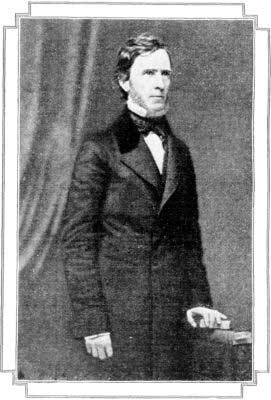
WILLIAM PITT FESSENDEN HEAD OF THE JOINT COMMITTEE ON RECONSTRUCTION, WHICH WAS DENOUNCED BY PRESIDENT JOHNSON AS AN "IRRESPONSIBLE CENTRAL DIRECTORY"
Now that the abolition of slavery was actually decreed, he saw President Johnson follow a policy which, in his view, threatened to undo the great work. His scornful anger at Andrew Johnson was equaled only by his contempt for the Republicans who sided with the President. He was bound to defeat this reactionary attempt and to see slavery thoroughly killed beyond the possibility of resurrection, at any cost. As to the means to be employed, he scrupled little. He wanted the largest possible Republican majority in Congress, and to this end he would have expelled any number of Democrats from their seats, by hook or crook. When my old friend and quondam law partner, General Halbert E. Paine, who was chairman of the Committee on Elections in the House, told him that, in a certain contested election case to be voted upon, both contestants were rascals, Stevens simply asked: "Well, which is our rascal?" He said this, not in jest, but with perfect seriousness. He would have seated Beelzebub in preference to the angel Gabriel, had he believed Beelzebub to be more certain than Gabriel to aid him in beating the President's reconstruction policy. His speeches were short, peremptory, and commanding. He bluntly avowed his purposes, however extreme they seemed to be. He disdained to make them more palatable by any art of persuasion, or to soften the asperity of his attacks by charitable circumlocution. There was no hypocrisy, no cant in his utterances. With inexorable intellectual honesty, he drew all the logical conclusions from his premises. He was a terror in debate. Whenever provoked, he brought his batteries of merciless sarcasm into play with deadly effect. Not seldom, a single sentence sufficed to lay a daring antagonist sprawling on the ground amid the roaring laughter of the House, the luckless victim feeling as if he had heedlessly touched a heavily charged electric wire. No wonder that even the readiest and boldest debaters were cautious in approaching old Thaddeus Stevens too closely, lest something stunning and sudden happen to them. Thus the fear he inspired became a distinct element of power in his leadership—not a wholesome element, indeed, at the time of a great problem which required the most circumspect and dispassionate treatment.
William Pitt Fessenden
A statesman of a very different stamp was Senator Fessenden of Maine, who, being at the head of the senatorial part of the joint Committee on Reconstruction, presided over that important body. William Pitt Fessenden was a man who might easily have been overlooked in a crowd. There was nothing in his slight figure, his thin face framed in spare gray hair and side whiskers, and his quiet demeanor, to attract particular notice. Neither did his appearance in the Senate Chamber impress one at first sight as that of a great power in that important assembly. I saw him more than once there walk with slow steps up and down in the open space behind the seats, with his hands in his trousers pockets, with seeming listlessness, while another senator was speaking, and then ask to be heard, and, without changing his attitude, make an argument in a calm conversational tone, unmixed with the slightest oratorical flourish, so solid and complete that little more remained to be said on the subject in question. He gave the impression of having at his disposal a rich and perfectly ordered store of thought and knowledge upon which he could draw with perfect ease and assurance. When I was first introduced to him, he appeared to be rather distant in manner than inviting friendly approach. But I was told that ill health had made him unsociable and somewhat morose and testy, and, indeed, there was often the trace of suffering and weariness in his face. It was also remarked in the Senate that at times he was ill-tempered and inclined to indulge in biting sarcasms and to administer unkind lectures to other senators, which in some instances disturbed his personal intercourse with his colleagues. But there was not one of them who did not hold him in the highest esteem as a statesman of commanding ability and of lofty ideals, as a gentleman of truth and conscience, as a great jurist and an eminent constitutional lawyer, as a party man of most honorable principles and methods, and as a patriot of noblest ambition for his country.
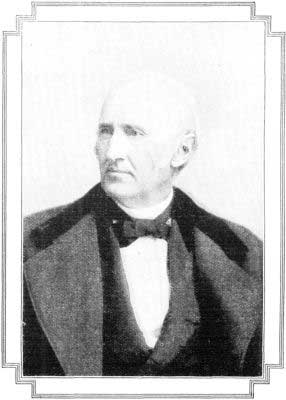
WENDELL PHILLIPS WHOM PRESIDENT JOHNSON NAMED AS ONE OF THE ENEMIES OF THE REPUBLIC IN HIS SPEECH OF FEBRUARY 22
Being a man also of conservative instincts, averse to unnecessary conflicts, and always disinclined to go to extremes, in action as well as in language, he was expected to exert a moderating influence in his committee; and this expectation was not disappointed so far as his efforts to prevent a final breach between the President and the Republican majority in Congress were concerned. But regarding the main question whether the "States lately in rebellion" should be fully restored to their self-governing functions and to full participation in the government of the Republic without having given reasonable guaranties for the maintenance of the "legitimate results of the war," he was in point of principle not far apart from Mr. Stevens.
The President's Logic
It must be admitted that, if we accept his premises, Mr. Johnson made in point of logic a pretty plausible case. His proposition was that a State, in the view of the Federal Constitution, is indestructible; that an ordinance of secession adopted by its inhabitants, or its political organs, did not take it out of the Union; that by declaring and treating those ordinances of secession as "null and void," of no force, virtually non-existent, the Federal government itself had accepted and sanctioned that theory; that during the rebellion the constitutional rights and functions of those States were merely suspended, and that when the rebellion ceased they were ipso facto restored; that, therefore, the rebellion having actually ceased, those States were at once entitled to their former rights and privileges—that is, to the recognition of their self-elected State governments and to their representation in Congress. Admitting the premises, this was logically correct in the abstract.
But this was one of the cases to which a saying, many years later set afloat by President Cleveland, might properly have been applied: we were confronting a condition, not a theory. The condition was this: Certain States had through their regular political organs declared themselves independent of the Union. They had, for all practical purposes, actually separated themselves from the Union. They had made war upon the Union. That war put those States in a position not foreseen by the Constitution. It imposed upon the government of the Union duties not foreseen by the Constitution; by "military necessity," war necessity, the Union was compelled to emancipate the negroes from slavery and to accept their military services. The war had compelled the government of the Union to levy large loans of money and thus to contract a huge public debt. The government had also, in the course of the war, the aid of the Union men of the South. It had thus assumed solemn obligations for value received or services rendered. It had assumed the duty to protect the emancipated negroes in their freedom, the Southern Union men in their security, and the public creditor from loss. This duty was a duty of honor as well as of policy. The Union could, therefore, not consent, either in point of honor or of sound policy, to the restoration of the late rebel States to the functions of self-government and to full participation in the national government so long as that restoration was reasonably certain to put the freedom of the emancipated slaves, or the security of the Southern Union men, or the rights of the public creditor, into serious jeopardy.
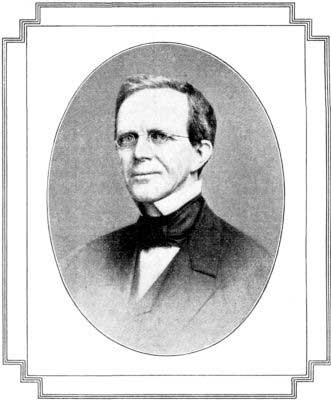
SENATOR LYMAN TRUMBULL WHO MOVED THAT THE FREEDMEN'S BUREAU BILL OF JANUARY 12 BE PASSED OVER PRESIDENT JOHNSON'S VETO
Lincoln's Policy versus Johnson's
It was pretended at the time, and it has since been asserted by historians and publicists of high standing, that Mr. Johnson's Reconstruction policy was only a continuation of that of Mr. Lincoln. This was true only in a superficial sense, and not in reality. Mr. Lincoln had, indeed, put forth reconstruction plans which contemplated an early restoration of some of the rebel States; but he had done this while the Civil War was still going on, and for the evident purpose of encouraging loyal movements in those States and of weakening the Confederate State governments there by opposing to them governments organized in the interest of the Union, which could serve as rallying-points to the Union men. So long as the rebellion continued in any form and to any extent, the State governments he contemplated would have been substantially in the control of really loyal men who had been on the side of the Union during the war. Moreover, he always emphatically affirmed, in public as well as private utterance, that no plan of reconstruction he had ever put forth was meant to be "exclusive and inflexible," but might be changed according to different circumstances.
Now circumstances did change; they changed essentially with the collapse of the Confederacy. There was no more organized armed resistance to the national government, to distract which loyal State governments in the South might have been efficacious. But there was an effort of persons lately in rebellion to get possession of the reconstructed Southern State governments for the purpose, in part, of using their power to save or restore as much of the system of slavery as could be saved or restored. The success of these efforts was to be accomplished by the precipitate and unconditional readmission of the late rebel States to all their constitutional functions. This situation had not yet developed when Lincoln was assassinated. He had not contemplated it when he put forth his plans of reconstructing Louisiana and the other States. Had he lived, he would have as ardently wished to stop bloodshed and to reunite all the States as he ever did. But is it to be supposed, for a moment, that, seeing the late master class in the South still under the influence of their old traditional notions and prejudices, and at the same time sorely pressed by the distressing necessities of their situation, intent upon subjecting the freedmen again to a system very much akin to slavery, Lincoln would have consented to abandon those freedmen to the mercies of that master class!
The Personal Bitterness of the Struggle
No less striking was the difference of the two policies in what may be called the personal character of the controversies of the time. When the Republican majority in Congress had already declared its unwillingness to accept President Johnson's leadership in the matter of reconstruction, a strong desire was still manifested by many Republican senators and members of the House to prevent a decided and irremediable breach with the President. Some of them were sanguine enough to hope that more or less harmonious coöperation, or at least a peaceable modus vivendi, might still be obtained. Others apprehended that the President's policy, with its plausibilities, might after all find favor with the popular mind, which was naturally tired of strife and excitement, eager for peace and quiet, and that its opponents might appear as reckless disturbers. Still others stood in fear of a rupture in the Republican party, which, among other evil consequences, might prove disastrous to their own political fortunes. Several men of importance, such as Fessenden and Sherman in the Senate and some prominent members of the House, seriously endeavored to pour oil upon the agitated waters by making speeches of a conciliatory tenor. Indeed, if Andrew Johnson had possessed only a little of Abraham Lincoln's sweet temper, generous tolerance, and patient tact in the treatment of opponents, he might at least have prevented the conflict of opinions from degenerating into an angry and vicious personal brawl. But the brawl was Johnson's congenial atmosphere.
The Judiciary Committee of the Senate, on January 12, 1866, reported a bill to continue the existence, to increase the personnel, and to enlarge the powers of the Freedmen's Bureau. It was discussed in both Houses with great thoroughness and in a temperate spirit, and the necessity of the measure for the protection of the freedmen and the introduction of free labor in the South was so generally acknowledged that the recognized Republican friends of the President in the Senate as well as in the House supported it. It passed by overwhelming majorities in both Houses, and everybody, even those most intimate with the President, confidently expected that he would willingly accept and sign it. But on the 19th of February he returned it with his veto, mainly on the assumed ground that it was unnecessary and unconstitutional, and also because it was passed by a Congress from which eleven States, those lately in rebellion, were excluded—thus throwing out a dark hint that before the admission of the late rebel States to representation this Congress might be considered constitutionally unable to make any valid laws at all. Senator Trumbull, in an uncommonly able, statesmanlike, and calm speech, combated the President's arguments and moved that the bill pass, the President's veto notwithstanding. But the "Administration Republicans," although they had voted for the bill, now voted to sustain the veto, and, there being no two-thirds majority to overcome it, the veto prevailed. Thus President Johnson had won a victory over the Republican majority in Congress. This victory may have made him believe that he would be able to kill with his veto all legislation unpalatable to him, and that, therefore, he was actually master of the situation. He made the grave mistake of underestimating the opposition.
A Humiliating Spectacle
On February 22, 1866, a public meeting was held in Washington for the purpose of expressing popular approval of the President's reconstruction policy. The crowd marched from the meeting-place to the White House to congratulate the President upon his successful veto of the Freedmen's Bureau Bill. The President, called upon to make a speech in response, could not resist the temptation. He then dealt a blow to himself from which he never recovered. He spoke, in the egotistic strain usual with him, of the righteousness of his own course, and then began to inveigh in the most violent terms against those who opposed him. He denounced the joint Committee on Reconstruction, the committee headed by Fessenden, as "an irresponsible central directory" that had assumed the powers of Congress, described how he had fought the leaders of the rebellion, and added that there were men on the other side of the line who also worked for the dissolution of the Union. By this time some of the uproarious crowd felt that he had descended to their level, and called for names. He mentioned Thaddeus Stevens, Charles Sumner, and Wendell Phillips as men who worked against the fundamental principles of the government, and excited the boisterous merriment of the audience by calling John W. Forney, the Secretary of the Senate and a prominent journalist, "a dead duck" upon whom "he would not waste his ammunition." Again he spoke of his rise from humble origin,—a tailor who "always made a close fit,"—and broadly insinuated that there were men in high places who were not satisfied with Lincoln's blood, but, wanting more, thought of getting rid of him, too, in the same way.
I remember well the impression made by this speech as it came out in the newspapers. Many if not most of the public men I saw in Washington, remembering the disgraceful appearance of Andrew Johnson in a drunken state at the inauguration, at once expressed a belief that he must have been in the same condition when delivering that speech. Most of the newspapers favoring the President's policy were struck dumb. Of those opposing him, most of them spoke of it in grave but evidently restrained language. The general feeling was one of profound shame and humiliation in behalf of the country.
In Congress, where Mr. Stevens, with his characteristic sarcasm, described the whole story of the President's speech as a malignant invention of Mr. Johnson's enemies, the hope of preventing a permanent breach between him and the Republican majority was even then not entirely extinct. On the 26th of February, Sherman made a long and carefully prepared speech in the Senate, advocating harmony. He recounted all the virtues Andrew Johnson professed and all the services he had rendered, and solemnly affirmed his belief that he had always acted upon patriotic motives and in good faith. But he could not refrain from "deeply regretting his speech of the 22d of February," He added that it was "impossible to conceive a more humiliating spectacle than the President of the United States invoking the wild passions of a mob around him with the utterance of such sentiments as he uttered on that day." Still, Mr. Sherman thought that "this was no time to quarrel with the Chief Magistrate." Other prominent Republicans, such as General J. D. Cox of Ohio—one of the noblest men I have ever known,—called upon him to expostulate with him in a friendly spirit, and he gave them amiable assurances, which, however, subsequently turned out to have been without meaning. Then something happened which cut off the last chance of mutual approach.
On March 13th the House passed the Civil Rights Bill, which the Senate had already passed on the 2d of February. Its main provision was that all persons born in the United States, excepting Indians, not taxed, were declared to be citizens of the United States, and such citizens of every race and color should have the same right in every State and Territory of the United States to make and enforce contracts, to sue, be parties, and give evidence, to inherit, purchase, lease, sell, hold, and convey real and personal property, and to have the full and equal benefit of all laws and proceedings for the security of person and property as was enjoyed by white citizens. The bill had nothing to do with "social equity," and did not in any way interfere with Mr. Johnson's scheme of reconstruction. In fact, it was asserted, no doubt truthfully, that Mr. Johnson himself had at various times shown himself, by word and act, favorable to its provisions. It appeared, indeed, in every one of its features so reasonable and so necessary for the enforcement of the Thirteenth Constitutional Amendment prohibiting slavery, that disapproval of it by the President was regarded as almost impossible. Aside from the merits of the bill, there was another reason, a reason of policy, for the President to sign it. Had he done so, he would have greatly encouraged the conciliatory spirit which, in spite of all that had happened, was still flickering in many Republican bosoms, and he might thus, even at this late hour, have secured an effective following among the Republicans in Congress. But he did not. He returned the bill to Congress with a veto message so weak in argument that it appeared as if he had been laboriously groping for pretexts to kill the bill. One of the principal reasons he gave was again the sinister one that Congress had passed the bill while eleven States were unrepresented, thus repeating the threatening hint that the validity of the laws made by such a Congress might be questioned.
False Encouragement to the South
Congress promptly passed the bill over the President's veto by a two-thirds majority in each House, and thus the Civil Rights Bill became a law. President Johnson's defeat was more fatal than appeared on the surface. The prestige he had won by the success of his veto of the Freedmen's Bureau Bill was lost again. The Republicans, whom in some way he had led to expect that he would sign the Civil Rights Bill, now believed him to be an insincere man capable of any treachery. The last chance of an accommodation with the Republican party was now utterly gone. But, worse than all, the reactionists in the South, who were bent upon curtailing the freedom of the emancipated negroes as much as possible, received his veto of the Civil Rights Bill with shouts of delight. Believing him now unalterably opposed to the bestowal, upon the freedmen, of equal civil rights such as were specified in the bill, they hailed President Johnson as their champion more loudly than ever. Undisturbed by the defeat of the veto, which they looked upon as a mere temporary accident, they easily persuaded themselves that the President, aided by the Administration Republicans and the Democratic party at the North, would at last surely prevail, and that now they might safely deal with the negro and the labor question in the South as they pleased. The reactionary element felt itself encouraged to the point of foolhardiness by the President's attitude. Legislative enactments and municipal ordinances and regulations tending to reduce the colored people to a state of semi-slavery multiplied at a lively rate. Measures taken for the protection of the emancipated slaves were indiscriminately denounced in the name of the Constitution of the United States as acts of insufferable tyranny. The instant admission to seats in the national Congress of senators and representatives from the "States lately in rebellion" was loudly demanded as a constitutional right, and for these seats men were presented who but yesterday had stood in arms against the national government, or who had held high place in the insurrectionary Confederacy. And the highest authority cited for all these denunciations and demands was Andrew Johnson, President of the United States.
The impression made by these things upon the minds of the Northern people can easily be imagined. Men of sober ways of thinking, not accessible to sensational appeals, asked themselves quite seriously whether there was not real danger that the legitimate results of the war, for the achievement of which they had sacrificed uncounted thousands of lives and the fruits of many, many years of labor, were in grave jeopardy again. Their alarm was not artificially produced by political agitation; it was sincere and profound, and began to grow angry. The gradual softening of the passions and resentments of the war was checked. The feeling that the Union had to be saved once more from the rule of the "rebels with the President at their head" spread with fearful rapidity, and well-meaning people looking to Congress to come to the rescue were becoming less and less squeamish as to the character of the means to be used to that end.
This popular temper could not fail to exercise its influence upon Congress and to stimulate the radical tendencies among its members. Even men of a comparatively conservative and cautious disposition admitted that strong remedies were necessary to avert the threatening danger, and they soon turned to the most drastic as the best. Moreover, the partizan motive pressed to the front to reinforce the patriotic purpose. It had gradually become evident that President Johnson, whether such had been his original design or not,—probably not,—would by his political course be led into the Democratic party. The Democrats, delighted, of course, with the prospect of capturing a President elected by the Republicans, zealously supported his measures and flattered his vanity without stint. The old alliance between the pro-slavery sentiment in the South and the Democratic party in the North was thus revived—that alliance which had already cost the South so dearly in the recent past by making Southern people believe that if they revolted against the Federal Government the Northern Democracy would stand by them and help them to victory.
THE JULY INSTALMENT OF CARL SCHURZ' MEMOIRS WILL CONCLUDE THE STORY OF PRESIDENT JOHNSON'S STRUGGLE WITH CONGRESS