Part 1 — CHAPTER I (continued 2)
Reading edition
204. Division of company into platoons. The company is further divided into two, three or four platoons, each consisting of not less than two, nor more than four squads. In garrison or ceremonies the strength of platoons may exceed four squads. (161)
205. Designation of squads and platoons. At the formation of the company the platoons or squads are numbered consecutively from right to left and these designations do not change.
For convenience in giving commands and for reference, the designations, right, center, left, when in line, and leading, center, rear, when in column, are applied to platoons or squads. These designations apply to the actual right, left, center, head, or rear, in whatever direction the company may be facing. The center squad is the middle or right middle squad of the company.
The designation "So-and-so's" squad or platoon may also be used. (162)
206. Assignment of platoons; assignment of guides. Platoons are assigned to the lieutenants and noncommissioned officers, in order of rank, as follows: 1, right; 2, left; 3, center (right center); 4, left center.
Plate II.
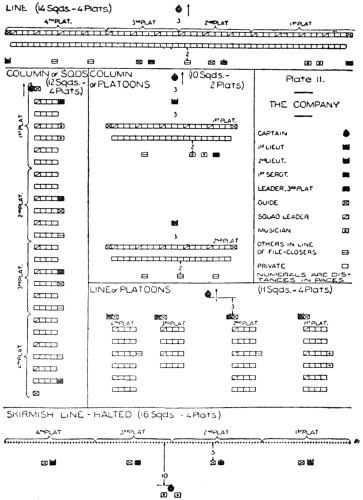
The noncommissioned officers next in rank are assigned as guides, one to each platoon. If sergeants still remain, they are assigned to platoons as additional guides. When the platoon is deployed, its guide, or guides, accompany the platoon leader.
During battle, these assignments are not changed; vacancies are filled by noncommissioned officers of the platoon, or by the nearest available officers or noncommissioned officers arriving with reënforcing troops. (163)
207. Post of first sergeant, quartermaster sergeant and musicians. The first sergeant is never assigned as a guide. When not commanding a platoon, he is posted as a file closer opposite the third file from the outer flank of the first platoon; and when the company is deployed he accompanies the captain.
The quartermaster sergeant, when present, is assigned according to his rank as a sergeant.
Enlisted men below the grade of sergeant, armed with the rifle are in ranks unless serving as guides; when not so armed they are posted in the line of file closers.
Musicians, when required to play, are at the head of the column. When the company is deployed, they accompany the captain, and perform the duties laid down in par. 272. (164)
208. Certain movements executed by company and by platoon as prescribed in Schools of the Soldier and the Squad. The company executes the halt, rests, facings, steps, and marchings, manual of arms, loadings, and firings, takes intervals and distances and assembles, increases and diminishes intervals, resumes attention, obliques, resumes the direct march, preserves alignments, kneels, lies down, rises, stacks, and takes arms, as explained in the Schools of the Soldier and the Squad, substituting in the commands company for squad.
The same rule applies to platoons, detachments, details, etc., substituting their designation for squad in the commands. In the same manner these execute the movements prescribed for the company, whenever possible, substituting their designation for company in the commands. (165)
209. Depleted company led as platoon. A company so depleted as to make division into platoons impracticable is led by the captain as a single platoon, but retains the designation of company. The lieutenants and first sergeant assist in fire control; the other sergeants place themselves in the firing line as skirmishers. (166)
CLOSE ORDER
Rules
210. Platoon guides. The guides of the right and left, or leading and rear, platoons, are the right and left, or leading and rear, guides, respectively, of the company when it is in line or in column of squads. Other guides are in the line of file closers.
In platoon movements the post of the platoon guide is at the head of the platoon, if the platoon is in column, and on the guiding flank if in line. When a platoon has two guides their original assignment to flanks of the platoon does not change. (167)
211. Guides of a column of squads; changing guides and file closers to opposite flank. The guides of a column of squads place themselves on the flank opposite the file closers. To change the guides and file closers to the other flank, the captain commands: 1. File closers on left (right) flank; 2. MARCH. The file closers dart through the column; the captain and guides change.
In the column of squads, each rank preserves the alignment toward the side of the guide. (168)
212. File closers do not execute loadings or firings; execution of manual of arms and other movements. Men in the line of file closers do not execute the loadings or firings.
Guides and enlisted men in the line of file closers execute the manual of arms during the drill unless specially excused, when they remain at the order. During ceremonies they execute all movements. (169)
213. Action of guides in taking intervals and distances. In taking intervals and distances, unless otherwise directed, the right and left guides, at the first command, place themselves in the line of file closers, and, with them, take a distance of 4 paces from the rear rank. In taking intervals, at the command march, the file closers face to the flank and each steps off with the file nearest him. In assembling the guides and file closers resume their position in line. (170)
214. Repetition of commands by platoon leaders in platoon drill. In movements executed simultaneously by platoons (as platoons right or platoons, column right), platoon leaders repeat the preparatory command (platoon right, etc.), applicable to their respective platoons. The command of execution is given by the captain only. (171)
To Form the Company
215. At the sounding of the assembly the first sergeant takes position 6 paces in front of where the center of the company is to be, faces it, draws saber, and commands: FALL IN.
The right guide of the company places himself, facing to the front, where the right of the company is to rest, and at such point that the center of the company will be 6 paces from and opposite the first sergeant; the squads form in their proper places on the left of the right guide, superintended by the other sergeants, who then take their posts.
The first sergeant commands: REPORT. Remaining in position at the order, the squad leaders, in succession from right, salute and report: All present; or, Private(s) —— absent. The first sergeant does not return the salutes of the squad leaders; he then commands: 1. Inspection, 2. ARMS, 3. Order, 4. ARMS, faces about, salutes the captain, reports: Sir, all present or accounted for, or the names of the unauthorized absentees, and, without command, takes his post.
If the company can not be formed by squads, the first sergeant commands: 1. Inspection, 2. ARMS, 3. Right shoulder, 4. ARMS, and calls the roll. Each man, as his name is called, answers here and executes order arms. The sergeant then effects the division into squads and reports the company as prescribed above.
The captain places himself 12 paces in front of the center of, and facing, the company in time to receive the report of the first sergeant, whose salute he returns, and then draws saber.
The lieutenants take their posts when the first sergeant has reported and draw saber with the captain. The company, if not under arms, is formed in like manner omitting reference to arms. (172)
216. For the instruction of platoon leaders and guides, the company, when small, may be formed in single rank. In this formation close order movements only are executed. The single rank executes all movements as explained for the front rank of a company. (173)
To Dismiss the Company
217. Being in line at a halt, the captain directs the first sergeant: Dismiss the company. The officers fall out; the first sergeant places himself faced to the front, 3 paces to the front and 2 paces from the nearest flank of the company, salutes, faces toward opposite flank of the company and commands: 1. Inspection, 2. ARMS, 3. Port, 4. ARMS, 5. DISMISSED. (174)
Alignments
218. The alignments are executed as prescribed in the School of the Squad, the guide being established instead of the flank file. The rear-rank man of the flank file keeps his head and eyes to the front and covers his file leader.
At each alignment the captain places himself in prolongation of the line, 2 paces from and facing the flank toward which the dress is made, verifies the alignment, and commands: FRONT.
Platoon leaders take a like position when required to verify alignments. (175)
Movements on the Fixed Pivot
219. Being in line, to turn the company: 1. Company right (left), 2. MARCH, 3. Company, 4. HALT; or, 3. Forward, 4. MARCH.
(After) (Before) (For detail see diagram on page 56)
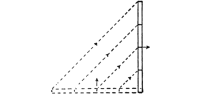
At the second command the right-flank man[1] in the front rank faces to the right in marching and marks time; the other front-rank men oblique to the right, place themselves abreast of the pivot, and mark time; in the rear rank the third man from the right, followed in column by the second and first, moves straight to the front until in rear of his front-rank man, when all face to the right in marching and mark time; the remaining men of the rear rank move straight to the front 4 paces, oblique to the right, place themselves abreast of the third man, cover their file leaders, and mark time, the right guide steps back, takes post on the flank, and marks time.
The fourth command is given when the last man is 1 pace in rear of the new line.
The command halt may be given at any time after the movement begins; only those halt who are in the new position. Each of the others halts upon arriving on the line, aligns himself to the right, and executes front without command. (176)
From Line To Column Of Platoons.
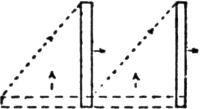
220. Being in line, to form column of platoons, or the reverse: 1. Platoons right (left), 2. MARCH, 3. Company, 4. HALT; or, 3. Forward, 4. MARCH.
Executed by each platoon as described for the company.
Before forming line the captain sees that the guides on the flank toward which the movement is to be executed are covering. This is effected by previously announcing the guide to that flank. (177)
From Line To Column Of Squads.

From Line Of Platoons To Column Of Platoons.
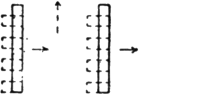
221. Being in line, to form column of squads, or the reverse; or, being in line of platoons, to form column of platoons, or the reverse: 1. Squads right (left), 2. MARCH; or, 1. Squads right (left), 2. MARCH, 3. Company, 4. HALT.
Executed by each squad as described in the School of the Squad.
If the company or platoons be formed in line toward the side of the file closers, they dart through the column and take posts in rear of the company at the second command. If the column of squads be formed from line, the file closers take posts on the pivot flank, abreast of and 4 inches from the nearest rank. (178)
Movements on the Moving Pivot
(After) (Before) Outline
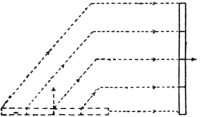
222. Being in line, to change direction: 1. Right (Left) turn, 2. MARCH, 3. Forward, 4. MARCH.
Executed as described in the School of the Squad, except that the men do not glance toward the marching flank and that all take the full step at the fourth command. The right guide is the pivot of the front rank. Each rear-rank man obliques on the same ground as his file leader. (179)
(After) (Before)
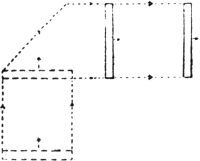
223. Being in column of platoons, to change direction: 1. Column right (left), 2. MARCH.
At the first command the leader of the leading platoon commands: Right turn. At the command march the leading platoon turns to the right on moving pivot; its leader commands: 1. Forward, 2. MARCH, on completion of the turn. Rear platoons march squarely up to the turning point of the leading platoons and turn at command of their leaders. (180)
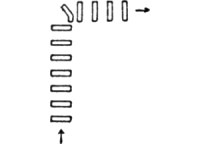
224. Being in column of squads, to change direction: 1. Column right (left), 2. MARCH.
At the second command the front rank of the leading squad turns to the right on moving pivot as in the School of the Squad; the other ranks, without command turn successively on the same ground and in a similar manner. (181)
From Column Of Squads To Line Of Platoons.
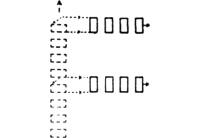
225. Being in column of squads, to form line of platoons or the reverse: 1. Platoons, column right (left), 2. MARCH.
Executed by each platoon as described for the company. (182)
226. Being in line, to form column of squads and change direction: 1. Squads right (left), column right (left), 2. MARCH; or, 1. Right (Left) by squads, 2. MARCH.
Squads Right Column Right.
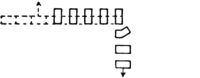
In the first case the right squad initiates the column right as soon as it has completed the squad right.
Right By Squads.
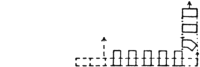
In the second case, at the command march, the right squad marches forward; the remainder of the company executes squads right, column left, and follows the right squad. The right guide, when he has posted himself in front of the squad, takes four short steps, then resumes the full step; the right quad conforms. (183)
From Line To Line Of Platoons.
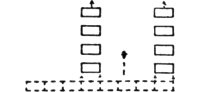
227. Being in line, to form line of platoons: 1. Squads right (left), platoons, column right (left), 2. MARCH; or, 1. Platoons, right (left) by squads, 2. MARCH.
Executed by each platoon as described for the company in the preceding paragraph. (184)
Facing or Marching to the Rear
228. Being in line, line of platoons, or in column of platoons or squads, to face or march to the rear: 1. Squads right (left) about, 2. MARCH; or, 1. Squad right (left) about, 2. MARCH; 3. Company, 4. HALT.
Executed by each squad as described in the School of the Squad.
If the company or platoons be in column of squads, the file closers turn about toward the column, and take their posts; if in line, each darts through the nearest interval between squads. (185).
229. To march to the rear for a few paces: 1. About, 2. FACE, 3. Forward, 4. MARCH.
If in line, the guides place themselves in the rear rank, now the front rank; the file closers, on facing about, maintain their relative positions. No other movement is executed until the line is faced to the original front. (186)
On Right (Left) Into Line
230. Being in column of platoons or squads, to form line on right or left: 1. On right (left) into line, 2. MARCH, 3. Company, 4. HALT, 5. FRONT.
From Column Of Platoons To Line On Right.
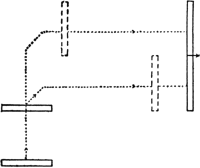
At the first command the leader of the leading unit commands: Right turn. The leaders of the other units command: Forward, if at a halt. At the second command the leading unit turns to the right on moving pivot. The command halt is given when the leading unit has advanced the desired distance in the new direction; it halts; its leader then commands: Right dress.
From Column Of Squads To Line On Right.
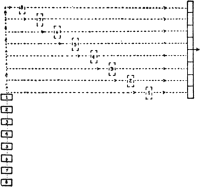
The units in rear continue to march straight to the front; each, when opposite the right of its place in line, executes right turn at the command of its leader; each is halted on the line at the command of its leader, who then commands: Right dress. All dress on the first unit in line.
If executed in double time, the leading squad marches in double time until halted. (187)
Front Into Line
231. Being in column of platoons or squads, to form line to the front: 1. Right (Left) front into line, 2. MARCH, 3. Company, 4. HALT, 5. FRONT.
At the first command the leaders of the units in rear of the leading one command: Right oblique. If at a halt, the leader of the leading unit commands: Forward. At the second command the leading unit moves straight forward; the rear units oblique as indicated. The command halt is given when the leading unit has advanced the desired distance; it halts; its leader then commands: Left dress. Each of the rear units, when opposite its place in line, resumes the original direction at the command of its leader; each is halted on the line at the command of its leader, who then commands: Left dress. All dress on the first unit in line. (188)
232. Being in column of squads to form column of platoons, or being line of platoons, to form the company in line: 1. Platoons, right (left) front into line, 2. MARCH, 3. Company, 4. HALT, 5. FRONT.
From Column Of Squads To Line To The Front.
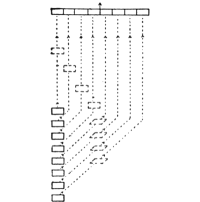
From Column Of Platoons To Line To The Front.
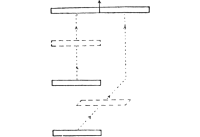
Executed by each platoon as described for the company. In forming the company in line, the dress is on the left squad of the left platoon. If forming column of platoons, platoon leaders verify the alignment before taking their posts; the captain commands front when the alignments have been verified.
When front into line is executed in double time the commands for halting and aligning are omitted and the guide is toward the side of the first unit in line. (189)
At Ease and Route Step
233. The column of squads is the habitual column of route, but route step and at ease are applicable to any marching formation. (190)
To march at route step: 1. Route step, 2. MARCH.
Sabers are carried at will or in the scabbard; the men carry their pieces at will, keeping the muzzles elevated; they are not required to preserve silence, nor to keep the step. The ranks cover and preserve their distance. If halted from route step, the men stand at rest. (191)
To march at ease: 1. At ease, 2. MARCH.
The company marches as in route step, except that silence is preserved; when halted, the men remain at ease. (192)
Marching at route step or at ease: 1. Company, 2. ATTENTION.
At the command attention the pieces are brought to the right shoulder and the cadenced step in quick time is resumed. (193)
To Diminish The Front of A Column of Squads
234. Being in column of squads: 1. Right (left) by twos, 2. MARCH.
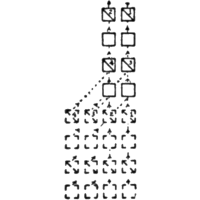
At the command march all files except the two right files of the leading squad execute in place halt; the two left files of the leading squad oblique to the right when disengaged and follow the right files at the shortest practicable distance. The remaining squads follow successively in like manner. (194)
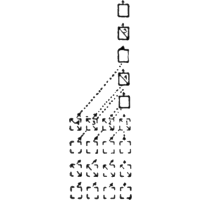
235. Being in column of squads or twos: 1. Right (Left) by file, 2. MARCH.
At the command march, all files execute in place halt except the right file of the leading two or squad. The left file or files of the leading two or squad oblique successively to the right when disengaged and each follows the file on its right at the shortest practicable distance. The remaining twos or squads follow successively in like manner. (195)
Being in column of files or twos, to form column of squads; or, being in column of files, to form column of twos: 1. Squads (Twos), right (left) front into line, 2. MARCH.
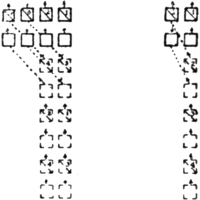
At the command march, the leading file or files halt. The remainder of the squad, or two, obliques to the right and halts on line with the leading file or files. The remaining squads or twos close up and successively form in rear of the first in like manner.
This diagram illustrates a squad executing LEFT front into line.
The movement described in this paragraph will be ordered right or left, so as to restore the files to their normal relative positions in the two or squad. (196)
The movements prescribed in the three preceding paragraphs are difficult of execution at attention and have no value as disciplinary exercises. (197)
EXTENDED ORDER
Rules for Deployment
236. Designation of base squads. The command guide right (left or center) indicates the base squad for the deployment; if in line it designates the actual right (left or center) squad; if in column the command guide right (left) designates the leading squad, and the command guide center designates the center squad, as laid down in par. 205. After the deployment is completed, the guide is center without command, unless otherwise ordered. (199)
237. Action of squad leaders at preparatory command for forming skirmish line. At the preparatory command for forming skirmish line, from either column of squads or line, each squad leader (except the leader of the base squad, when his squad does not advance) cautions his squad, follow me or by the right (left) flank, as the case may be; at the command march, he steps in front of his squad and leads it to its place in line, as explained in par. 169. (200)
238. Point on which base squad marches. Having given the command for forming skirmish line, the captain, if necessary, indicates to the corporal of the base squad the point on which the squad is to march; the corporal habitually looks to the captain for such directions. (201)
239. Deployment of the squads. The base squad (par. 199) is deployed as soon as it has sufficient interval. The other squads are deployed as they arrive on the general line; each corporal halts in his place in line and commands or signals, as skirmishers (executed as prescribed in par. 170); the squad deploys and halts abreast of him.
If tactical considerations demand it, the squad is deployed before arriving on the line. (202)
240. Alignment of deployed lines; deployed line faces to front on halting. Deployed lines preserve a general alignment toward the guide, as prescribed in par. 65. Within their respective fronts, individuals or units march so as best to secure cover or to facilitate the advance, but the general and orderly progress of the whole is paramount.
On halting, a deployed line faces to the front (direction of the enemy) in all cases and takes advantage of cover, the men lying down if necessary. (203)
241. Certain movements in extended order executed by same commands as in close order. The company in skirmish line advances, halts, moves by the flank, or to the rear, obliques, resumes the direct march, passes from quick to double time and the reverse by the same commands and in a similar manner as in close order; if at a halt, the movement by the flank or to the rear is executed by the same commands as when marching. Company right (left, half right, half left) is executed as explained for the front rank (in par. 165) skirmish intervals being maintained. (See par. 171.) (204)
242. Deployment of platoons and detachments. A platoon or other part of the company is deployed and marched in the same manner as the company, substituting in the commands, platoon (detachments, etc.), for company. (205)
Deployments (See pars. 170–172.)
243. Being in line, to form skirmish line to the front: 1. As skirmishers, guide right (left or center), 2. MARCH.
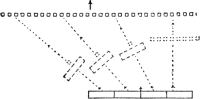
If marching, the corporal of the base squad moves straight to the front; when that squad has advanced the desired distance, the captain commands: 1. Company, 2. HALT. If the guide be right (left), the other corporals move to the left (right) front, and, in succession from the base, place their squads on the line; if the guide be center, the other corporals move to the right or left front, according as they are on the right or left of the center squad, and in succession from the center squad place their squads on the line.
If at a halt, the base squad is deployed without advancing; the other squads may be conducted to their proper places by the flank; interior squads may be moved when squads more distant from the base have gained comfortable marching distance. (206)
244. Being in column of squads, to form skirmish line to the front: 1. As skirmishers, guide right (left or center), 2. MARCH.
Guide Right.
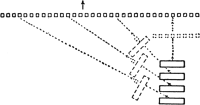
Guide Center (Marching).
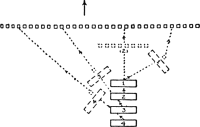
Guide Center (At A Halt).
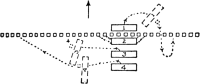
If marching, the corporal of the base squad deploys it and moves straight to the front; if at a halt, he deploys his squad without advancing. If the guide be right (left), the other corporals move to the left (right) front, and, in succession from the base, place their squads on the line; if the guide be center, the corporals in front of the center squad move to the right (if at a halt, to the right rear), the corporals in rear of the center squad move to the left front, and each, in succession from the base, places his squad on the line.
The column of twos or files is deployed by the same commands and in like manner. (207)
245. Deployment in an oblique direction. The company in line or in column of squads may be deployed in an oblique direction by the same commands. The captain points out the desire direction; the corporal of the base squad moves in the direction indicated; the other corporals conform. (208)
246. Deployment to flank or rear. To form skirmish line to the flank or rear the line or the column of squads is turned by squads to the flank or rear and then deployed as described. (209)
247. Increasing or decreasing intervals. The intervals between men are increased or decreased as described in the School of the Squad, as explained in par. 172, adding to the preparatory command, guide right (left or center) if necessary, as explained in par. 236. (210)
The Assembly
248. The captain takes his post in front of, or designates, the element on which the company is to assemble and commands: 1. Assemble, 2. MARCH.
If in skirmish line the men move promptly toward the designated point and the company is reformed in line. If assembled by platoons, these are conducted to the designated point by platoon leaders, and the company is reformed in line.
Platoons may be assembled by the command: 1. Platoons, assemble, 2. MARCH.
Executed by each platoon as described for the company.
One or more platoons may be assembled by the command: 1. Such platoon (s), assemble, 2. MARCH.
Executed by the designated platoon or platoons as described for the company. (211)
The Advance
249. Methods of advancing. The advance of a company into an engagement (whether for attack or defense) is conducted in close order, preferably column of squads, until the probability of encountering hostile fire makes it advisable to deploy. After deployment, and before opening fire, the advance of the company may be continued in skirmish line or other suitable formation, depending upon circumstances. The advance may often be facilitated, or better advantage taken of cover, or losses reduced by the employment of the platoon or squad columns, as laid down in pars. 250–251, or by the use of a succession of thin lines, as explained in par. 255. The selection of the method to be used is made by the captain or major, the choice depending upon conditions arising during the progress of the advance. If the deployment is found to be premature, it will generally be best to assemble the company and proceed in close order.
Patrols are used to provide the necessary security against surprise. (212)
250. Being in skirmish line: 1. Platoon columns, 2 MARCH.
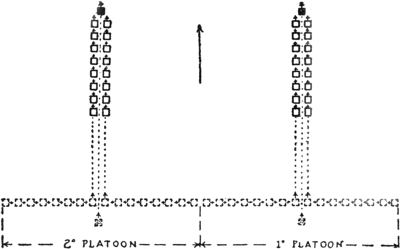
The platoon leaders move forward through the center of their respective platoons; men to the right of the platoon leader march to the left and follow him in file; those to the left march in like manner to the right; each platoon leader thus conducts the march of his platoon in double column of files; platoon guides follow in rear of their respective platoons to insure prompt and orderly execution of the advance. (213)
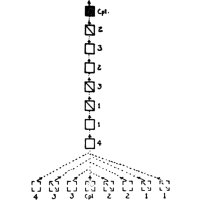
251. Being in skirmish line: 1. Squad columns, 2. MARCH.
Each squad leader moves to the front; the members of each squad oblique toward and follow their squad leader in single file at easy marching distances. (214)
252. Platoon columns are profitably used where the ground is so difficult or cover so limited as to make it desirable to take advantage of the few favorable routes; no two platoons should march within the area of burst of a single shrapnel[2]. Squad columns are of value principally in facilitating the advance over rough or brush-grown ground; they afford no material advantage in securing cover. (215)
253. To deploy platoon or squad columns: 1. As skirmishers, 2. MARCH.
Skirmishers move to the right or left front and successively place themselves in their original positions on the line. (216)
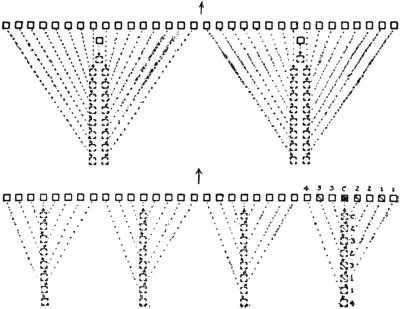
254. Being in platoon or squad columns: 1. Assemble, 2. MARCH.
Assembly Made On Right Platoon.
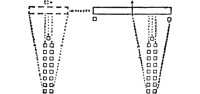
Assembly Made On Right Squad.
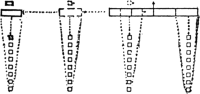
The platoon or squad leaders signal assemble. The men of each platoon or squad, as the case may be, advance and, moving to the right and left, take their proper places in line, each unit assembling on the leading element of the column and re-forming in line. The platoon or squad leaders conduct their units toward the element or point indicated by the captain, and to their places in line; the company is reformed in line. (217)
255. Being in skirmish line, to advance by a succession of thin lines: 1. (Such numbers), forward, 2. MARCH.
The captain points out in advance the selected position in front of the line occupied. The designated number of each squad moves to the front; the line thus formed preserves the original intervals as nearly as practicable; when this line has advanced a suitable distance (generally from 100 to 250 yards, depending upon the terrain and the character of the hostile fire), a second is sent forward by similar commands, and so on at irregular distances until the whole line has advanced. Upon arriving at the indicated position, the first line is halted. Successive lines, upon arriving, halt on line with the first and the men take their proper places in the skirmish line.
Ordinarily each line is made up of one man per squad and the men of a squad are sent forward in order from right to left as deployed. The first line is led by the platoon leader of the right platoon, the second by the guide of the right platoon, and so on in order from right to left.
The advance is conducted in quick time unless conditions demand a faster gait.
The company having arrived at the indicated position, a further advance by the same means may be advisable. (218)
256. Use and purpose of advance in succession of thin lines. The advance in a succession of thin lines is used to cross a wide stretch swept, or likely to be swept, by artillery fire or heavy, long-range rifle fire which cannot profitably be returned. Its purpose is the building up of a strong skirmish line preparatory to engaging in a fire fight. This method of advancing results in serious (though temporary) loss of control over the company. Its advantage lies in the fact that it offers a less definite target, hence is less likely to draw fire. (219)
257. Improvised formations. The above are suggestions. Other and better formations may be devised to fit particular cases. The best formation is the one which advances the line farthest with the least loss of men, time, and control. (220)
The Fire Attack
258. Advance of firing line; advance by rushes. The principles governing the advance of the firing line in attack are considered in the School of the Battalion. (See par. 342–356.)
When it becomes impracticable for the company to advance as whole by ordinary means, it advances by rushes. (221)
259. Advancing by rushes. Being in skirmish line: 1. By platoon (two platoons, squad, four men, etc.), from the right (left), 2. RUSH.
The platoon leader on the indicated flank carefully arranges the details for a prompt and vigorous execution of the rush and puts it into effect as soon as practicable. If necessary, he designates the leader for the indicated fraction. When about to rush, he causes the men of the fraction to cease firing and to hold themselves flat, but in readiness to spring forward instantly. The leader of the rush (at the signal of the platoon leader, if the latter be not the leader of the rush) commands: Follow me, and running at top speed, leads the fraction to the new line, where he halts it and causes it to open fire. The leader of the rush selects the new line if it has not been previously designated.
The first fraction having established itself on the new line, the next like fraction is sent forward by its platoon leader, without further command of the captain, and so on successively, until the entire company is on the line established by the first rush.
If more than one platoon is to join in one rush, the junior platoon leader conforms to the action of the senior.
A part of the line having advanced, the captain may increase or decrease the size of the fractions to complete the movement. (222)
260. Rush of company as whole led by captain. When the company forms a part of the firing line, the rush of the company as a whole is conducted by the captain, as described for a platoon in the preceding paragraph. The captain leads the rush; platoon leaders lead their respective platoons; platoon guides follow the line to insure prompt and orderly execution of the advance. (223)
261. Advance by crawling or otherwise. When the foregoing method of rushing, by running, becomes impracticable, any method of advance that brings the attack closer to the enemy, such as crawling, should be employed.
For regulations governing the charge, see paragraphs 355 and 356. (224)
(All rushes should be made with life and ginger, and all the men should start together. All rushes should be made under covering fire, and when a unit rushes forward the adjoining unit or units make up for the loss of fire thus caused by increasing the rate of their fire.
A unit commander about to rush forward, will not do so until he sees that the adjoining unit or units have started to give him the protection of their covering fire and, if necessary, he will call to them to do so. Each unit must be careful not to advance until the last unit that rushed forward has had time to take up an effective fire. When sights have to be adjusted at the conclusion of a rush, the men should do so in the prone position even though it be necessary for the men to kneel for firing. The same as the men who rush should start simultaneously from the prone position, so should they stop simultaneously, all men dropping down to the ground together, wherever they may be, at the command "Down," given by the unit commander when the leading men have reached the new position. The slower members who drop down in rear will crawl up to the line after the halt. So that the slower members may not be crowded out of the line, and also to prevent bunching, the faster men should leave room for them on the line.—Author.)
The Company in Support (Being part of a battalion)
262. Formations adopted by support. To enable it to follow or reach the firing line, the support adopts suitable formations, following the principles explained in paragraphs 249–255.
The support should be kept assembled as long as practicable. If after deploying a favorable opportunity arises to hold it for some time in close formation, it should be reassembled. It is redeployed when necessary. (225)
263. Support controlled by major: size of reënforcement; captain on look out for major's signals. The movements of the support as a whole and the dispatch of reënforcements from it to the firing line are controlled by the major.
A reënforcement of less than one platoon has little influence and will be avoided whenever practicable. (See par. 353.)
The captain of a company in support is constantly on the alert for the major's signals or commands. (226)
264. Reënforcement to join firing line deployed as skirmishers and occupy existing intervals. A reënforcement sent to the firing line joins it deployed as skirmishers. The leader of the reënforcement places it in an interval in the line, if one exists, and commands it thereafter as a unit. If no such suitable interval exists, the reënforcement is advanced with increased intervals between skirmishers; each man occupies the nearest interval in the firing line, and each then obeys the orders of the nearest squad leader and platoon leader. (227)
265. Promptness in reënforcing firing line. A reënforcement joins the firing line as quickly as possible without exhausting the men. (228)
266. Original platoon divisions to be maintained; duties of officers and sergeants upon joining firing line. The original platoon division of the companies in the firing line should be maintained and should not be broken up by the mingling of reënforcements.
Upon joining the firing line, officers and sergeants accompanying a reënforcement take over the duties of others of like grade who have been disabled, or distribute themselves so as best to exercise their normal functions. Conditions will vary and no rules can be prescribed. It is essential that all assist in mastering the increasing difficulties of control. (229)
The Company Acting Alone
267. Employed according to principles of battalion acting alone. In general, the company, when acting alone, is employed according to the principles applicable to the battalion acting alone as laid down in pars. 327–363; the captain employs platoons as the major employs companies, making due allowance for the difference in strength.
The support may be smaller in proportion or may be dispensed with. (230)
268. Protection against surprise. The company must be well protected against surprise. Combat patrols on the flanks are especially important as explained in par. 410. Each leader of a flank platoon details a man to watch for the signals of the patrol or patrols on his flank. (231)
FIRE
269. Issuing of ammunition and loading of pieces before deployment; firings in close order. Ordinarily pieces are loaded and extra ammunition is issued before the company deploys for combat.
In close order the company executes the firings, as prescribed in pars. 179–194, at the command of the captain, who posts himself in rear of the center of the company.
Usually the firings in close order consist of saluting volleys only. (See par. 189 for volley firing.) (232)
270. Firing controlled by platoon leaders. When the company is deployed, the men execute the firings at the command of their platoon leaders; the latter give such commands as are necessary to carry out the captain's directions, and, from time to time, add such further commands as are necessary to continue, correct, and control, the fire ordered. (233)
271. Use of signals during firing. The voice is generally inadequate for giving commands during fire and must be replaced by signals of such character that proper fire direction and control is assured. (See par. 92 for signals; pars. 285–286 for fire direction and pars. 287–290 for fire control.) To attract attention, signals must usually be preceded by the whistle signal (short blast). A fraction of the firing line about to rush should, if practicable, avoid using the long blast signal as an aid to cease firing. (See par. 91.) Officers and men behind the firing line can not ordinarily move freely along the line, but must depend on mutual watchfulness and the proper use of the prescribed signals. All should post themselves so as to see their immediate superiors and subordinates. (234)
272. Duties of musicians. The musicians assist the captain by observing the enemy, the target, and the fire-effect, by transmitting commands or signals, and by watching for signals. (For posts of musicians see par. 207.) (235)
273. Blank Cartridges. Firing with blank cartridges at an outlined or represented enemy (par. 7) at distances less than 100 yards is prohibited. (236)
274. Effect of fire and influence of ground. The effect of fire and the influence of the ground in relation thereto, and the individual and collective instruction in marksmanship, are treated in the Small-Arms Firing Manual. (237)
Ranges
275. Classification. For convenience of reference, ranges are classified as follows:
0 to 600 yards, close range.
600 to 1,200 yards, effective range.
1,200 to 2,000 yards, long range.
2,000 yards and over, distant range. (238)
276. Determination of distance to target. The distance to the target must be determined as accurately as possible and the sights set accordingly. Aside from training and morale, this is the most important single factor in securing effective fire at the longer ranges. (239)
277. Method of determining the range; estimators.
Except in a deliberately prepared defensive position, the most accurate and only practicable method of determining the range will generally be to take the mean of several estimates.
Five or six officers or men, selected from the most accurate estimators in the company, are designated as range estimators and are specially trained in estimating distances.
Whenever necessary and practicable, the captain assembles the range estimators, points out the target to them, and adopts the mean of their estimates. The range estimators then take their customary posts. (240)
Classes of Firing
278. Volley firing, as explained in par. 189, has limited application. In defense it may be used in the early stages of the action if the enemy presents a large compact target. It may be used by troops executing fire of position, as set forth in par. 438. When the ground near the target is such that the strike of bullets can be seen from the firing line, ranging volleys may be used to correct the sight setting.
In combat, volley firing is executed habitually by platoon. (241)
279. Fire at will, as explained in par. 190, is the class of fire normally employed in attack or defense. (242)
280. Clip fire (see par. 192.) has limited application. It is principally used: 1. In the early stages of combat, to steady the men by habituating them to brief pauses in firing. 2. To produce a short burst of fire. (243)
The Target
281. Assignment of target by major; change of target to be avoided; hostile firing line usual target. Ordinarily the major will assign to the company an objective in attack or sector in defense; the company's target will lie within the limits so assigned. In the choice of target, tactical considerations are paramount; the nearest hostile troops within the objective or sector will thus be the usual target. This will ordinarily be the hostile firing line; troops in rear are ordinarily proper targets for artillery, machine guns, or, at times, infantry employing fire of position, as set forth in par. 438.
Change of target should not be made without excellent reasons therefor, such as the sudden appearance of hostile troops under conditions which make them more to be feared than the troops comprising the former target. (244)
282. Distribution of fire; allotment of target to platoon leaders. The distribution of fire over the entire target is of special importance.
The captain allots a part of the target to each platoon, or each platoon leader takes as his target that part which corresponds to his position in the company. Men are so instructed that each fires on that part of the target which is directly opposite him. (245)
283. All Parts of target equally important. All parts of the target are equally important. Care must be exercised that the men do not slight its less visible parts. A section of the target not covered by fire represents a number of the enemy permitted to fire coolly and effectively. (246)
284. Use of aiming points in case of invisible targets.
If the target can not be seen with the naked eye, platoon leaders select an object in front of or behind it, designate this as the aiming target, and direct a sight setting which will carry the cone of fire into the target. (247)
Fire Direction[3]
285. Impracticability in combat of commanding company directly. When the company is large enough to be divided into platoons, it is impracticable for the captain to command it directly in combat. His efficiency in managing the firing line is measured by his ability to enforce his will through the platoon leaders. Having indicated clearly what he desires them to do, he avoids interfering except to correct serious errors or omissions. (248)
286. Captain directs the fire. The captain directs the fire of the company or of designated platoons. He designates the target, and, when practicable, allots a part of the target to each platoon, as prescribed in par. 340. Before beginning the fire action he determines the range, as explained in par. 277, announces the sight setting, as prescribed in par. 188, and indicates the class of fire to be employed (See par. 278) and the time to open fire. Thereafter, he observes the fire effect (See pars. 428–429), corrects material errors in sight setting, prevents exhaustion of the ammunition supply, as explained in par. 432–433, and causes the distribution of such extra ammunition as may be received from the rear. (249)
Fire Control
287. Platoon the fire unit. In combat, the platoon is the fire unit. From 20 to 35 rifles are as many as one leader can control effectively. (250)
288. Special duties of platoon leaders. Each platoon leader puts into execution the commands or directions of the captain, having first taken such precautions to insure correct sight setting and clear description of the target or aiming target as the situation permits or requires; thereafter, he gives such additional commands or directions as are necessary to exact compliance with the captain's will. He corrects the sight setting when necessary. He designates an aiming target when the target can not be seen with the naked eye. (251)
289. General duties of platoon leaders; duties of platoon guides and squad leaders. In general, platoon leaders observe the target and the effect of their fire and are on the alert for the captain's commands or signals; they observe and regulate the rate of fire, as laid down in par. 191. The platoon guides watch the firing line and check every breach of fire discipline. (See pars. 291–294.) Squad leaders transmit commands and signals when necessary, observe the conduct of their squads and abate excitement, assist in enforcing fire discipline and participate in the firing. (252)
290. Importance of fire control. The best troops are those that submit longest to fire control. Loss of control is an evil which robs success of its greatest results. To avoid or delay such loss should be the constant aim of all.
Fire control implies the ability to stop firing, change the sight setting and target, and resume a well directed fire. (253)
Fire Discipline
291. What fire discipline implies. "Fire discipline implies, besides a habit of obedience, a control of the rifle by the soldier, the result of training, which will enable him in action to make hits instead of misses. It embraces taking advantage of the ground; care in setting the sight and delivery of fire; constant attention to the orders of the leaders, and careful observation of the enemy; an increase of fire when the target is favorable, and a cessation of fire when the enemy disappears; economy of ammunition." (See pars. 432–433.) (Small-Arms Firing Manual.)
In combat, shots which graze the enemy's trench or position and thus reduce the effectiveness of his fire have the approximate value of hits; such shots only, or actual hits, contribute toward fire superiority.
Fire discipline implies that, in a firing line without leaders, each man retains his presence of mind and directs effective fire upon the proper target. (254)
292. Rate of fire. To create a correct appreciation of the requirements of fire discipline, men are taught that the rate of fire, as prescribed in par. 191, should be as rapid as is consistent with accurate aiming; that the rate will depend upon the visibility, proximity, and size of the target; and that the proper rate will ordinarily suggest itself to each trained man, usually rendering cautions or commands unnecessary.
In attack the highest rate of fire is employed at the halt preceding the assault, and in pursuing fire. (See pars. 490–494.) (255)
293. Position fire in advance by rushes. In an advance by rushes, as explained in par. 259, leaders of troops in firing positions are responsible for the delivery of heavy fire to cover the advance of each rushing fraction. Troops are trained to change slightly the direction of fire so as not to endanger the flanks of advanced portions of the firing line. (256)
294. Action in defense, when target disappears. In defense, when the target disappears behind cover, platoon leaders suspend fire, as prescribed in par. 193, prepare their platoons to fire upon the point where it is expected to reappear, and greet its reappearance instantly with vigorous fire. (257)
SCHOOL OF THE BATTALION
295. Battalion a tactical unit; duties and responsibilities of major. The battalion being purely a tactical unit, the major's duties are primarily those of an instructor in drill and tactics and of a tactical commander. He is responsible for the theoretical and practical training of the battalion. He supervises the training of the companies of the battalion with a view to insuring the thoroughness and uniformity of their instruction.
In the instruction of the battalion as a whole, his efforts will be directed chiefly to the development of tactical efficiency, devoting only such time to the mechanism of drill and to the ceremonies as may be necessary in order to insure precision, smartness, and proper control. (258)
296. Movements explained for battalion of four companies. The movements explained herein are on the basis of a battalion of four companies; they may be executed by a battalion of two or more companies, not exceeding six. (259)
297. Arrangement of companies in formations. The companies are generally arranged from right to left according to the rank of the captains present at the formation. The arrangement of the companies may be varied by the major or higher commander.
After the battalion is formed, no cognizance is taken of the relative order of the companies. (260)
298. Designation of companies. In whatever direction the battalion faces, the companies are designated numerically from right to left in line, and from head to rear in column, first company, second company, etc.
The terms right and left apply to actual right and left as the line faces; if the about by squads be executed when in line, the right company becomes the left company and the right center becomes the left center company.
The designation center company indicates the right center or the actual center company according as the number of companies is even or odd. (261)
299. Post of special units. The band and other special units, when attached to the battalion, take the same post with respect to it as if it were the nearest battalion. (262)
CLOSE ORDER
Rules
300. Repetition of commands by captains. Captains repeat such preparatory commands as are to be immediately executed by their companies, as forward, squads right, etc.; the men execute the commands march, halt, etc., if applying to their companies, when given by the major. In movements executed in route step or at ease the captains repeat the command of execution, if necessary. Captains do not repeat the major's commands in executing the manual of arms, nor those commands which are not essential to the execution of a movement by their companies, as column of squads, first company, squads right, etc.
In giving commands or cautions captains may prefix the proper letter designations of their companies, as A Company, HALT; B Company, squads right, etc. (263)
301. Captains repeating command for guide. At the command guide center (right or left), captains command: Guide right or left, according to the positions of their companies. Guide center designates the left guide of the center company, as explained in 3d Sec. par. 298. (264)
Plate III.
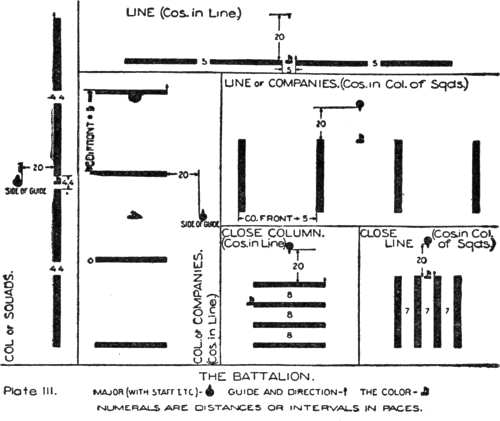
302. Position of captains in dressing companies; action of guides in dressing. When the companies are to be dressed, captains place themselves on that flank toward which the dress is to be made, as follows:
The battalion in line: Besides the guide (or the flank file of the front rank, if the guide is not in line) and facing to the front.
The battalion in column of companies: Two paces from the guide, in prolongation of and facing down the line.
Each captain, after dressing his company, commands: FRONT, and takes his post.
The battalion being in line and unless otherwise prescribed, at the captain's command dress or at the command halt, when it is prescribed that the company shall dress, the guide on the flank away from the point of rest with his piece at right shoulder, dresses promptly on the captain and the companies beyond. During the dress he moves, if necessary, to the right and left only; the captain dresses the company on the line thus established. The guide takes the position of order arms at the command front. (265)
303. Certain movements executed as in Schools of the Soldier, Squad and Company. The battalion executes the halt (See par. 116), rests (See pars. 100–101), facings (See par. 104), steps and marchings (See pars. 107–109), manual of arms (See pars. 120–147), resumes attention (See par. 102), kneels (See pars. 174–177), lies down (See par. 175), rises (See par. 176), stacks and takes arms (See pars. 160–161), as explained in the Schools of the Soldier and Squad, substituting in the commands battalion for squad.
The battalion executes squads right (left) (See par. 221), squads right (left) about (See par. 228), route step and at ease (See par. 233), and obliques and resumes the direct march (See pars. 162–163), as explained in the School of the Company. (266)
304. Certain movements executed as in School of the Company. The battalion in column of platoons, squads, twos, or files changes direction. (See pars. 223–224); in column of squads, forms column of twos or files and re-forms columns of twos or squads, as explained in the School of the Company. (See pars. 234–235.) (267)
305. Simultaneous execution by companies or platoons of movements in School of the Company. When the formation admits of the simultaneous execution by companies or platoons of movements in the School of the Company the major may cause such movement to be executed by prefixing, when necessary, companies (platoons) to the commands prescribed therein: As 1. Companies, right front into line, 2. MARCH. To complete such simultaneous movements, the commands halt or march, if prescribed, are given by the major. The command front, when prescribed, is given by the captains. (See par. 302.) (268)
306. Execution of loadings and firings by battalion. The battalion as a unit executes the loadings and firings only in firing saluting volleys. The commands are as for the company, substituting battalion for company. At the first command for loading, captains take post in rear of the center of their respective companies. At the conclusion of the firing, the captains resume their posts in line.
On other occasions, when firing in close order is necessary, it is executed by company or other subdivision, under instructions from the major, as prescribed in pars. 179–194. (269)
To Form the Battalion
307. For purposes other than ceremonies: The battalion is formed in column of squads. The companies having been formed, the adjutant posts himself so as to be facing the column, when formed, and 6 paces in front of the place to be occupied by the leading guide of the battalion; he draws saber; adjutant's call is sounded or the adjutant signals assemble.
The companies are formed, at attention, in column of squads in their proper order. Each captain, after halting his company, salutes the adjutant; the adjutant returns the salute and, when the last captain has saluted, faces the major and reports: Sir, the battalion is formed. He then joins the major. (270)
308. For ceremonies or when directed: The battalion is formed in line.
The companies having been formed, the adjutant posts himself so as to be 6 paces to the right of the right company when line is formed, and faces in the direction in which the line is to extend. He draws saber; adjutant's call is sounded; the band plays if present.
The right company is conducted by its captain so as to arrive from the rear, parallel to the line; its right and left guides precede it on the line by about 20 paces, taking post facing to the right at order arms, so that their elbows will be against the breasts of the right and left files of their company when it is dressed. The guides of the other companies successively prolong the line to the left in like manner and the companies approach their respective places in line as explained for the right company. The adjutant, from his post, causes the guides to cover.
When about 1 pace in rear of the line, each company is halted and dressed to the right against the arms of the guides. (See par. 302.)
The band, arriving from the rear, takes its place in line when the right company is halted; it ceases playing when the left company has halted.
When the guides of the left company have been posted, the adjutant, moving by the shortest route, takes post facing the battalion midway between the post of the major and the center of the battalion.
The major, staff, noncommissioned staff, and orderlies take their posts, as prescribed in pars. 73; 76–78.
When all parts of the line have been dressed, and officers and others have reached their posts, the adjutant commands: 1. Guides, 2. POSTS, 3. Present, 4. ARMS. At the second command guides take their places in the line. (Plate II, page 69.) The adjutant then turns about as explained in par. 74, and reports to the major: Sir, the battalion is formed, as prescribed in par. 75; the major directs the adjutant: Take your post, Sir; draws saber and brings the battalion to the order. The adjutant takes his post, passing to the right of the major. (271)
To Dismiss the Battalion
309. Dismiss your companies.
Staff and noncommissioned staff officers fall out; each captain marches his company off and dismisses it, as laid down in par. 217. (272)
To Rectify the Alignment
310. Being in line at a halt, to align the battalion: 1. Center (right or left), 2. DRESS.
The captains dress their companies successively toward the center (right or left) guide of the battalion, each as soon as the captain next toward the indicated guide commands: FRONT. The captains of the center companies (if the dress is center) dress them without waiting for each other. (273)
311. To give the battalion a new alignment: 1. Guides center (right or left) company on the line, 2. Guides on the line, 3. Center (right or left), 4. DRESS, 5. Guides, 6. POSTS.
At the first command, the designated guides place themselves on the line, as prescribed in par. 308, facing the center (right or left). The major establishes them in the direction he wishes to give the battalion.
At the second command, the guides of the other companies take posts, facing the center (right or left), so as to prolong the line.
At the command dress, each captain dresses his company to the flank toward which the guides of his company face, taking the positions prescribed in par. 302.
At the command posts, given when all companies have completed the dress, the guides return to their posts. (Plate II, page 69.) (274)
To Rectify the Column
312. Being in column of companies, or in close column, at a halt, if the guides do not cover or have not their proper distances, and it is desired to correct them, the major commands: 1. Right (left), 2. DRESS.
Captains of companies in rear of the first place their right guides so as to cover at the proper distance; each captain aligns his company to the right and commands: FRONT. (See par. 302.) (275)
On Right (Left) Into Line
313. Being in column of squads or companies: 1. On right (left) into line, 2. MARCH, 3. Battalion, 4. HALT.
Being in column of squads: At the first command, the captain of the leading company commands; Squads right. If at a halt each captain in rear commands: Forward. At the second command, the leading company marches in line to the right; the companies in rear continue to march to the front and form successively on the left, each, when opposite its place, being marched in line to the right.
From Column Of Squads To Line On Right. From Column Of Companies To Line On Right.
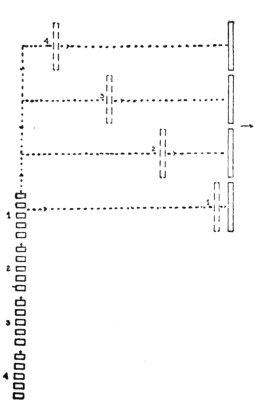
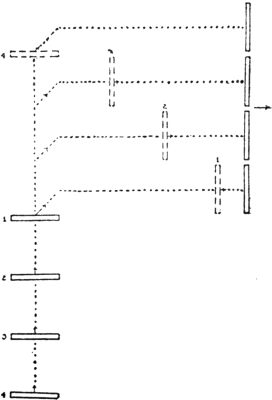
The fourth command is given when the first company has advanced the desired distance in the new direction; it halts and is dressed to the right by its captain (par. 265); the others complete the movement, each being halted 1 pace in rear of the line established by the first company, and then dressed to the right.
Being in column of companies: At the first command, the captain of the first company commands: Right turn. If at a halt, each captain in rear commands: Forward. Each of the captains in rear of the leading company gives the command: 1. Right turn, in time to add, 2. MARCH, when his company arrives opposite the right of its place in line.
The fourth command is given and the movement completed as explained above.
Whether executed from column of squads or column of companies, each captain places himself so as to march beside the right guide after his company forms line or changes direction to the right.
If executed in double time, the leading company marches in double time until halted. (276)
Front into Line
314. Being in column of squads or companies: 1. Right (left) front into line, 2. MARCH.
From Column Of Squads To Line To The Front.
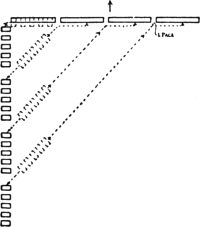
Being in column of squads: At the first command, the captain of the leading company commands: Column right; the captain of the companies in rear: column half right. At the second command the leading company executes column right, and, as the last squad completes the change of direction, is formed in line to the left, as prescribed in par. 221, halted and dressed to the left. (See par. 302.) Each of the companies in rear is conducted by the most convenient route to the rear of the right of the preceding company, thence to the right, parallel to and 1 pace in rear of the new line; when opposite its place, it is formed in line to the left, halted, and dressed to the left.
From Column Of Companies To Line To The Front.
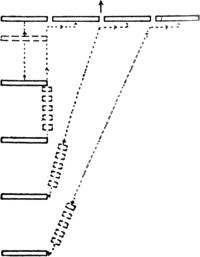
Being in column of companies: If marching, the captain of the leading company gives the necessary commands to halt his company at the second command; if at a halt the leading company stands fast. At the first command, the captain of each company in rear commands: Squads right, or Right by squads, and after the second command conducts his company by the most convenient route to its place in line, as described above.
Whether executed from column of squads or column of companies, each captain halts when opposite, or at the point, where the left of his company is to rest. (277)
To Form Column of Companies Successively to the Right or Left
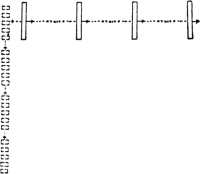
315. Being in column of squads: 1. Column of companies, first company, squads right (left), 2. MARCH.
The leading company executes squads right and moves forward. The other companies move forward in column of squads and successively march in line the right on the same ground as the leading company and in such manner that the guide covers the guide of the preceding company. (278)
To Form Column of Squads Successively to the Right or Left
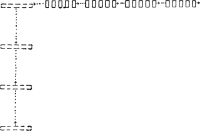
316. Being in column of companies (Plate III, page 90): 1. Column of squads, first company, squads right (left), 2. MARCH.
The leading company executes squads right and moves forward. The other companies move forward in column of companies and successively march in column of squads to the right on the same ground as the leading company. (279)
To Change Direction
317. Being in column of companies or close column. (Plate III, page 90); 1. Column right (left), 2. MARCH.
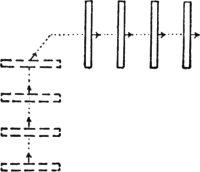
The captain of the first company commands: Right turn.
The leading company turns to the right on moving pivot, the captain adding: 1. Forward, 2. MARCH, upon its completion.
The other companies march squarely up to the turning point; each changes direction by the same commands and means as the first and in such manner that the guide covers the guide of the preceding company. (280)
318. Being in line of companies or close line. (Plate III, page 90): 1. Battalion right (left), 2. MARCH, 3. Battalion, 4. HALT.
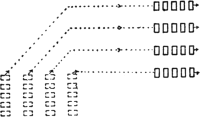
The right company changes direction to the right, as prescribed in par. 224; the other companies are conducted by the shortest line to their places abreast of the first.
The fourth command is given when the right company has advanced the desired distance in the new direction; that company halts; the others halt successively upon arriving on the line. (281)
319. Being in column of squads, the battalion changes direction by the same commands and in the manner prescribed for the company, as explained in par. 224. (282)
Mass Formations
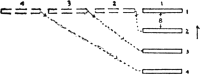
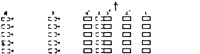
From Line. From Line Of Companies. (1, 2, 3, 4—Old Line) (1, 2', 3', 4'—New Line)
From Column Of Squads. From Column Of Companies. (1, 2, 3, 4—Old Column) (1, 2', 3', 4'—New Column)
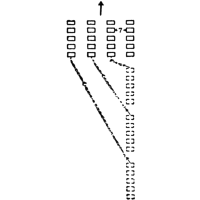
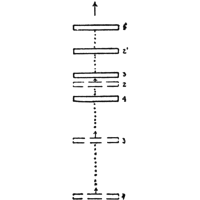
319a. Being in column of squads, to form a line of columns of companies or company subdivisions, facing in any desired direction, at any desired interval, on the right or left of the leading element of the battalion: 1. Line of companies (half companies, platoons), at (so many) paces, guide right (left), 2. MARCH, 3. Battalion, 4. HALT.
The leading company (or subdivision) marches in the direction previously indicated by the major until the command halt is given and then halts. Each succeeding company (or subdivision) marches by the most direct route to its place at the prescribed intervals on the left (right) of the next preceding company (or subdivision), halting when it is abreast of the leading element of the battalion.
If the battalion be in any formation other than column of squads, the major indicates the desired direction to the leading element. The entire command forms column of squads and executes a movement in conformity with the principles indicated above. (2821/2)
320. Being in line, line of companies, or column of companies. (Plate III, page 90): 1. Close on first (fourth) company, 2. MARCH.
If at a halt, the indicated company stands fast; if marching, it is halted; each of the other companies is conducted toward it and is halted in proper order in close column.
If the battalion is in line, companies form successively in rear of the indicated company; if in column of squads, companies in rear of the leading company form on the left of it.
In close column formed line on the first company, the left guides cover; formed on the fourth company, right guides cover. If formed on the leading company, the guide remains as before the formation. In close line, the guides are halted abreast of the guide of the leading company.
The battalion in column closes on the leading company only. (283)
(In closing from line of companies and in extending from close line, the companies other than the base one, may be moved either by the commands, (a) 1. Squads, right (left), 2. MARCH; (b) 1. Right (left) oblique, 2. MARCH; (c) 1. Forward, 2. MARCH; (d) 1. Squads left (right) 2. MARCH; (e) 1. Company, 2. HALT; or, (a) 1. By the right (left) flank, 2. MARCH; (b) 1. Company, 2. HALT; (c) 1. Left (right), 2. FACE; or if at a halt by the commands, (a) 1. Right (left), 2. FACE; (b) 1. At Trail, 2. Forward, 3. MARCH; (c) 1. Company, 2. HALT; (d) 1. Left (right), 2. FACE. In some commands it is customary to use one method while in other commands another is used. For the sake of uniformity all companies of a given command should use the same method.—Author.)
To Extend the Mass
321. Being in close column or in close line; 1. Extend on first (fourth) company, 2. MARCH.
From Close Column.. (1, 2, 3, 4—Old Column) (1', 2', 3', 4—New Column)
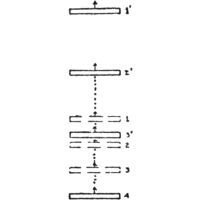
From Close Line.
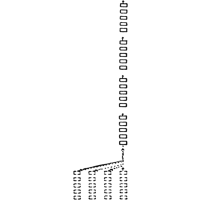
Being in close line: if at a halt, the indicated company stands fast; if marching, it halts; each of the other companies is conducted away from the indicated company and is halted in its proper order in line of companies.
Being in close column, the extension is made on the fourth company only. If marching, the leading company continues to march; companies in rear are halted and successively resume the march in time to follow at full distance. If at halt, the leading company marches; companies in rear successively march in time to follow at full distance.
Close column is not extended in double time. (See author's note, par. 320.) (284)
322. Being in close column: 1. Right (left) front into line, 2. MARCH. Executed as from column of companies, as explained in par. 314. (285)
323. Being in close column: 1. Column of squads, first (fourth) company, squads right (left), 2. MARCH.
The designated company marches in column of squads to the right. Each of the other companies executes the same movement in time to follow the preceding company in column. (286)
324. Being in close line: 1. Column of squads, first (fourth) company, forward, 2. MARCH.
The designated company moves forward. The other companies (halting if in march) successively take up the march and follow in column. (287)
Route Step and at Ease
325. The battalion marches in route step and at ease as prescribed in the School of the Company. (See par. 233.) When marching in column of companies or platoons, the guides maintain the trace and distance.
In route marches the major marches at the head of the column; when necessary, the file closers may be directed to march at the head and rear of their companies. (288)
Assembly
326. The battalion being wholly or partially deployed, or the companies being separated: 1. Assemble, 2. MARCH.
The major places himself opposite to or designates the element or point on which the battalion is to assemble. Companies are assembled, as explained in par. 248, and marched to the indicated point. As the companies arrive the major or adjutant indicates the formation to be taken. (289)
COMBAT PRINCIPLES
Orders
327. The following references to orders are applicable to attack or defense: (290)
328. Use of prescribed commands; "tactical orders," "orders" and "commands." In extended order, the company is the largest unit to execute movements by prescribed commands or means. The major, assembling his captains if practicable, directs the disposition of the battalion by means of tactical orders. He controls its subsequent movements by such orders or commands as are suitable to the occasion. (291)
329. Major's order making disposition of battalion for combat; base company in attack. In every disposition of the battalion for combat the major's order should give subordinates sufficient information of the enemy, of the position of supporting and neighboring troops, and of the object sought to enable them to conform intelligently to the general plan.
The order should then designate the companies which are to constitute the firing line and those which are to constitute the support. In attack, it should designate the direction or the objective, the order and front of the companies on the firing line, and should designate the right or left company as base company. In defense, it should describe the front of each company and, if necessary, the sector to be observed by each, as prescribed in 281–284. (292)
330. Reconnaissance and protection of flanks. When the battalion is operating alone, the major provides for the reconnaissance and protection of his flanks; if part of a larger force, the major makes similar provisions, when necessary, without orders from higher authority, unless such authority has specifically directed other suitable reconnaissance and protection. (293)
331. Issue of extra ammunition when battalion is deployed. When the battalion is deployed upon the initiative of the major, he will indicate whether extra ammunition shall be issued; if deployed in pursuance of orders of higher authority, the major will cause the issue of extra ammunition, unless such authority has given directions to the contrary. (For ammunition supply see pars. 569–575.) (294)
Deployment
(See pars. 456–462; 463–466.)
332. The following principles of deployment are applicable to attack or defense. (295)
333. Avoiding premature deployment. A premature deployment involves a long, disorganizing and fatiguing advance of the skirmish line, and should be avoided. A greater evil is to be caught by heavy fire when in dense column or other close order formation; hence advantage should be taken of cover in order to retain the battalion in close order formation until exposure to heavy hostile fire may reasonably be anticipated. (296)
334. Depth of deployment and density of firing line; companies and detachments conducted to their places by their commanders. The major regulates the depth of the deployment and the extent and density of the firing line, subject to such restrictions as a senior may have imposed.
Companies or designated subdivisions and detachments are conducted by their commanders in such manner as best to accomplish the mission assigned to them under the major's orders. Companies designated for the firing line march independently to the place of deployment, form skirmish line, and take up the advance. They conform, in general, to the base company, as prescribed in Par. 329. (297)
335. Division of battalion into firing line and support. The commander of a battalion, whether it is operating alone or as part of a larger force, should hold a part of his command out of the firing line. By the judicious use of this force, the major can exert an influence not otherwise possible over his firing line and can control, within reasonable limits, an action once begun. So, if his battalion be assigned to the firing line, the major will cause one, two, or three companies to be deployed on the firing line, retaining the remaining companies or company as a support for that firing line. The division of the battalion into firing line and support will depend upon the front to be covered and the nature and anticipated severity of the action. (298)
336. Size of support. If the battalion be part of a larger command, the number of companies in the firing line will generally be determinable from the regimental commander's order; the remainder constitutes the support, as prescribed in par. 335. If the battalion is acting alone, the support must be strong enough to maintain the original fire power of the firing line, to protect the flanks, and to perform the functions of a reserve, whatever be the issue of the action, as explained in par. 445. (299)
337. Position of support. If the battalion is operating alone, the support may, according to circumstances, be held in one or two bodies and placed behind the center, or one or both flanks of the firing line, or echeloned beyond a flank. If the battalion is part of a larger force, the support is generally held in one body. (300)
338. Distance between firing line and support. The distance between the firing line and the supporting group or groups will vary between wide limits; it should be as short as the necessity for protection from heavy losses will permit. When cover is available, the support should be as close as 50 to 100 yards; when such cover is not available, it should not be closer than 300 yards. It may be as far as 500 yards in rear if good cover is there obtainable and is not obtainable at a lesser distance. (301)
339. Placing entire battalion or regiment in firing line at beginning. In exceptional cases, as in a meeting engagement, it may be necessary to place an entire battalion or regiment in the firing line at the initial deployment, the support being furnished by other troops. Such deployment causes the early mingling of the larger units, thus rendering leadership and control extremely difficult. The necessity for such deployment will increase with the inefficiency of the commander and of the service of information. (302)
Fire
340. Major apportions target. Fire direction and fire control are functions of company and platoon commanders, as laid down in pars. 285–290. The major makes the primary apportionment of the target—in defense, by assigning sectors of fire, in attack, by assigning the objective. In the latter case each company in the firing line takes as its target that part of the general objective which lies in its front. (303)
341. Major indicates where or when fire fight begins. The major should indicate the point or time at which the fire fight is to open. He may do this in his order for deployment or he may follow the firing line close enough to do so at the proper time. If it be impracticable for him to do either, the senior officer with the firing line, in each battalion, selects the time for opening fire. (304)
Attack
(See pars. 456–502.)
342. Battalion the attack unit. The battalion is the attack unit, whether operating alone or as part of a larger unit. (305)
343. Advance of battalion acting as one of several in firing line. If his battalion be one of several in the firing line, the major, in executing his part of the attack, pushes his battalion forward as vigorously as possible within the front, or section, assigned to it. The great degree of independence allowed to him as to details demands, in turn, the exercise of good judgment on his part. Better leadership, better troops, and more favorable terrain enable one battalion to advance more rapidly in attack than another less fortunate, and such a battalion will insure the further advance of the others. The leading battalion should not, however, become isolated; isolation may lead to its destruction. (306)
344. Close in on enemy as much as possible before opening fire. The deployment having been made, the firing line advances without firing. The predominant idea must be to close with the enemy as soon as possible without ruinous losses. The limited supply of ammunition and the uncertainty of resupply, the necessity for securing fire superiority in order to advance within the shorter ranges, and the impossibility of accomplishing this at ineffective ranges, make it imperative that fire be not opened as long as the advance can be continued without demoralizing losses. The attack which halts to open fire at extreme range (over 1,200 yards) is not likely ever to reach its destination. Every effort should be made, by using cover or inconspicuous formations, or by advancing the firing line as a whole, to arrive within 800 yards of the enemy before opening fire. (For expenditure of ammunition see pars. 432–433; for advancing the attack see par. 467.) (307)
345. Fire to be directed against the hostile infantry. Except when the enemy's artillery is able to effect an unusual concentration of fire, its fire upon deployed infantry causes losses which are unimportant when compared with those inflicted by his infantry; hence the attacking infantry should proceed to a position as described above, and from which an effective fire can be directed against the hostile infantry with a view to obtaining fire superiority. The effectiveness of the enemy's fire must be reduced so as to permit further advance. The more effective the fire to which the enemy is subjected the less effective will be his fire. (308)
346. The further advance of the firing line; size of rushing units. Occasionally the fire of adjacent battalions, or of infantry employing fire of position, as explained in par. 438, or of supporting artillery, as explained in pars. 434–438, will permit the further advance of the entire firing line from this point, but it will generally be necessary to advance by rushes, as laid down in par. 259, of fractions of the line.
The fraction making the rush should be as large as the hostile fire and the necessity for maintaining fire superiority will permit. Depending upon circumstances, the strength of the fraction may vary from a company to a few men.
The advance is made as rapidly as possible without losing fire superiority. The smaller the fraction which rushes, the greater the number of rifles which continue to fire upon the enemy. On the other hand, the smaller the fraction which rushes the slower will be the progress of the attack. (309)
347. Size of rushing units. Enough rifles must continue in action to insure the success of each rush. Frequently the successive advances of the firing line must be effected by rushes of fractions of decreased size; that is, advances by rushes may first be made by company, later by half company or platoon, and finally by squads or files; but no subsequent opportunity to increase the rate of advance, such as better cover or a decrease of the hostile fire, should be overlooked. (310)
348. The rush begun by a flank unit. Whenever possible, the rush is begun by a flank fraction of the firing line. In the absence of express directions from the major, each captain of a flank company determines when an advance by rushes (par. 222) shall be attempted. A flank company which inaugurates an advance by rushes becomes the base company, if not already the base. An advance by rushes having been inaugurated on one flank, the remainder of the firing line conforms; fractions rush successively from that flank and halt on the line established by the initial rush.
The fractions need not be uniform in size; each captain indicates how his company shall rush, having due regard to the ground and the state of the fire fight. (311)
349. Fractions to advance under covering fire. A fraction about to rush is sent forward when the remainder of the line is firing vigorously; otherwise the chief advantage of this method of advancing is lost.
The length of the rush will vary from 30 to 80 yards, depending upon the existence of cover, positions for firing, and the hostile fire. (312)
350. Subsequent advances. When the entire firing line of the battalion has advanced to the new line, fresh opportunities to advance are sought as before. (313)
351. Prearranged methods of advancing by rushes prohibited. Two identical situations will never confront the battalion; hence at drill it is prohibited to arrange the details of an advance before the preceding one has been concluded, or to employ a fixed or prearranged method of advancing by rushes. (314)
352. Post of the major. The major posts himself so as best to direct the reënforcing of the firing line from the support. When all or nearly all of the support has been absorbed by the firing line, he joins, and takes full charge of, the latter. (315)
353. Size of reënforcements. The reënforcing of the firing line by driblets of a squad or a few men has no appreciable effect. The firing line requires either reënforcement or a strong one. Generally one or two platoons will be sent forward under cover of a heavy fire of the firing line. (316)
354. Two methods of reënforcing the firing line. To facilitate control and to provide intervals in which reënforcements may be placed, the companies in the firing line should be kept closed in on their centers as they become depleted by casualties during the advance.
When this is impracticable reënforcements must mingle with and thicken the firing line. In battle the latter method will be the rule rather than the exception, and to familiarize the men with such conditions the combat exercises of the battalion should include both methods of reënforcing. Occasionally, to provide the necessary intervals for reënforcing by either of these methods, the firing line should be thinned by causing men to drop out and simulate losses during the various advances. Under ordinary conditions the depletion of the firing line for this purpose will be from one-fifth to one-half of its strength. (317)
355. Fixing bayonets. The major or senior officer in the firing line determines when bayonets shall be fixed and gives the proper command or signal. It is repeated by all parts of the firing line. Each man who was in the front rank prior to deployment, as soon as he recognizes the command or signal, suspends firing, quickly fixes his bayonet, and immediately resumes firing; after which the other men suspend firing, fix bayonets, and immediately resume firing. The support also fixes bayonets. The concerted fixing of the bayonet by the firing line at drill does not simulate battle conditions and should not be required. It is essential that there be no marked pause in the firing. Bayonets will be fixed generally before or during the last, or second last, advance preceding the charge. (318)
356. The charge. Subject to orders from higher authority, the major determines the point from which the charge is to be made. (See Pars. 478–489 regarding the charge.) The firing line having arrived at that point and being in readiness, the major causes the charge to be sounded. The signal is repeated by the musicians of all parts of the line. The company officers lead the charge. The skirmishers spring forward shouting, run with bayonets at charge, and close with the enemy.
The further conduct of the charging troops will depend upon circumstances; they may halt and engage in bayonet combat or in pursuing fire, as explained in par. 486; they may advance a short distance to obtain a field of fire or to drive the enemy from the vicinity; they may assemble or reorganize, etc. If the enemy vacates his position every effort should be made to open fire at once on the retreating mass, reorganization of the attacking troops being of secondary importance to the infliction of further losses upon the enemy and to the increase of his confusion, as set forth in pars. 490–494. In combat exercises the major will assume a situation and terminate the assault accordingly. (319)
Defense
357. Tactical unit best suited to defensive action. In defense, as in attack, the battalion is the tactical unit best suited to independent assignment. Defensive positions are usually divided into sections and a battalion assigned to each. (320)
358. Trenches. The major locates such fire, communicating, and cover trenches and obstacles as are to be constructed. He assigns companies to construct them and details the troops to occupy them. (See "Field Fortifications," Chapter XVI, Part III.) (321)
359. Reënforcement of firing line. The major reënforces the firing line in accordance with the principles applicable to and explained in connection with, the attack, in pars. 352–354, maintaining no more rifles in the firing line than are necessary to prevent the enemy's advance. (322)
360. Opening fire. The supply of ammunition being usually ample, fire is opened as soon as it is possible to break up the enemy's formation, stop his advance or inflict material loss, but this rule must be modified to suit the ammunition supply. (323)
361. Fixing bayonets. The major causes the firing line and support to fix bayonets when an assault by the enemy is imminent. Captains direct this to be done if they are not in communication with the major and the measure is deemed advisable.
Fire alone will not stop a determined, skillfully conducted attack. The defender must have equal tenacity; if he can stay in his trench or position and cross bayonets, he will at least have neutralized the hostile first line, and the combat will be decided by reserves. (324)
362. Support to cover withdrawal. If ordered or compelled to withdraw under hostile infantry fire or in the presence of hostile infantry, the support will be posted so as to cover the retirement of the firing line (325)
363. Support in case of battalion acting alone. When the battalion is operating alone, the support must be strong and must be fed sparingly into the firing line, especially if a counter-attack is planned. Opportunities for counter-attack should be sought at all times, as explained in pars. 525–530. (326)
COMBAT
INTRODUCTION
364. Scope of subject of combat tactics in this book. Part II of these regulations treats only of the basic principles of combat tactics as applied to infantry and to the special units, such as machine guns and mounted scouts, which form a part of infantry regiments and battalions.
The combat tactics of the arms combined are considered in Field Service Regulations. (350)
365. Demands of modern combat upon infantry; complicated maneuvers impracticable; success dependent upon leadership, etc. Modern combat demands the highest order of training, discipline, leadership, and morale on the part of the infantry. Complicated maneuvers are impracticable; efficient leadership and a determination to win by simple and direct methods must be depended upon for success. (351)
366. Duties and quality of infantry. The duties of infantry are many and difficult. All infantry must be fit to cope with all conditions that may arise. Modern war requires but one kind of infantry—good infantry. (352)
367. Offensive necessary for decisive results; use of ground, fire efficiency, etc.; local success. The infantry must take the offensive to gain decisive results. Both sides are therefore likely to attempt it, though not necessary at the same time or in the same part of a long battle line.
In the local combats which make up the general battle the better endurance, use of ground, fire efficiency, discipline, and training will win. It is the duty of the infantry to win the local successes which enable the commanding general to win the battle. (356)
368. Requisites of infantry; trained to bear heaviest burdens; good infantry can defeat vastly superior infantry of poor quality. The infantry must have the tenacity to hold every advantage gained, the individual and collective discipline and skill needed to master the enemy's fire, the determination to close with the enemy in attack, and to meet him with the bayonet in defense. Infantry must be trained to bear the heaviest burdens and losses, both of combat and march.
Good infantry can defeat an enemy greatly superior in numbers, but lacking in training, discipline, leadership, and morale. (354)
369. Fixed forms and instructions covering all cases impossible; study and practice necessary; purposes of practical and theoretical instruction. It is impossible to establish fixed forms or to give general instructions that will cover all cases. Officers and noncommissioned officers must be so trained that they can apply suitable means and methods to each case as it arises. Study and practice are necessary to acquire proper facility in this respect. Theoretical instruction can not replace practical instruction; the former supplies correct ideas and gives to practical work an interest, purpose, and definiteness not otherwise obtainable. (355)
370. Exercises in extended order to be in nature of combat exercises; all combat exercises to be conducted under assumed tactical situations. After the mechanism of extended order drill has been learned with precision in the company, every exercise should be, as far as practicable, in the nature of a maneuver (combat exercise) against an imaginary, outlined, or represented enemy.
Company extended order drill may be conducted without reference to a tactical situation, but a combat exercise, whatever may be the size of the unit employed, should be conducted under an assumed tactical situation. (356)
371. Effective method of conducting combat exercises. An effective method of conducting a combat exercise is to outline the enemy with a few men equipped with flags. The umpire or inspector states the situation, and the commander leads his troops with due regard to the assumptions made.
Changes in situation, the results of reconnaissance, the character of artillery fire, etc., are made known to the commander when necessary by the umpire or inspector, who, in order to observe and influence the conduct of the exercise, remains in rear of the firing line. From this position he indicates, with the aid of prearranged signals, the character of the fire and movements of the hostile infantry. These signals are intended for the men outlining the enemy. These men repeat the signals; all officers and men engaged in the exercise and in sight of the outlined enemy are thus informed of the enemy's action, and the exercise is conducted accordingly.
Assistant umpires, about one for each company in the firing line, may assist in indicating hostile fire and movements and in observing the conduct of the exercise.
An outlined enemy may be made to attack or defend.
Situations should be simple and natural. During or after the exercise the umpire or inspector should call attention to any improper movements or incorrect methods of execution. He will prohibit all movements of troops or individuals that would be impossible if the enemy were real. The slow progress of events to be expected on the battlefield can hardly be simulated, but the umpire or inspector will prevent undue haste and will attempt to enforce a reasonably slow rate of progress.
The same exercise should not be repeated over the same ground and under the same situation. Such repetitions lead to the adoption of a fixed mode of attack or defense and develop mere drill masters. Fixed or prearranged systems are prohibited. (357)
LEADERSHIP
General Considerations
372. What constitutes art of leadership. The art of leadership consists of applying sound tactical principles to concrete cases on the battlefield.
Self-reliance, initiative, aggressiveness, and a conception of team-work are the fundamental characteristics of successful leadership. (358)
373. Basis of success; adherence to original plan. A correct grasp of the situation and a definite plan of action form the soundest basis for a successful combat.