X CAFÉ LIFE OF THE MADRILEÑOS
Reading edition
In every part of Spain the café is a popular resort and the rendezvous of friends. Here all classes foregather to discuss the news, to criticise the new bull-fighter, to extol a favourite dancer, to transact business, to play at dominoes or draughts, to read the journals, to sip coffee, and to smoke cigarettes. Many hours of each day are dedicated by the Madrileño to the café. He goes there as a matter of routine for his morning refresco, and again in the evening for his coffee with a dash of spirit.
The cafés are comfortable, and they provide for different classes of customers. They are never decorated in a resplendent manner; but, as Gautier observed, “this want of splendour is amply compensated by the excellence and variety of the refreshments.” Gautier mentions the Café de Levante among others, and this is still a favourite resort of men-about-town. In the Calle de Alcalá are three representative coffee-houses, the Café de Madrid, the Café Suizo, and the Café de Fornos. The Café Inglés is in the Calle de Sevilla. The houses of refreshment in the Puerta del Sol are the resort of all types of Madrid character, from the diplomat to the professional swindler. From nine o’clock in the evening until two in the morning these cafés are thronged. The customary beverage is café con leche (coffee with milk) or black coffee, with a drop of cognac. Light wines and spirits are also provided, but these are used sparingly by the majority of the Madrileños, for, whatever may be the faults of the Spaniard, immoderation in the use of alcohol is certainly not one of them.
To attract the attention of the waiters at the cafés, you clap your hands, or make a hissing sound between your closed teeth. The coffee is usually excellent, and the spirit is brought to you in a bottle marked with measures. The crowds in the Madrid cafés lack the picturesqueness of those in some of the smaller towns of Castile, Murcia, and Andalusia, where the dress of the provinces is still worn. You will see no majas in the capital; the grisettes of Madrid cannot be distinguished from the rest of the female population. The capa is, however, still worn by men of almost all ranks, and these, and the broad-brimmed hats, give a touch of the romantic to the throngs in the coffee-houses of the Puerta del Sol.
There are wine-shops and taverns in Madrid, but the seats are not luxurious, and there is no display of carved mahogany and engraved glass, and no separation of the classes. The “accommodation” may be somewhat rude; still the wine is good and cheap, and the tone and atmosphere of the posada are more wholesome than those of the London public-house. A glass of the wine of the country can be bought for a penny in these taverns, and the finest wines cost only a few pence the glass. Immense wine-barrels flank the walls, and there is an array of spirit and fruit syrup bottles behind the counter.
The chief hotels of Madrid are the Hotel de la Paz, Hotel del Universo, the Roma, and the Hotel de Paris. They are centrally situated, and fairly well appointed. The meals are almuerzo and comida, corresponding to luncheon and dinner. There is no meal in Spain resembling the hearty English breakfast. The Spaniard takes a cup of chocolate and a dry roll upon rising, and goes about his business or his pleasure until eleven or twelve o’clock, when almuerzo, the first real meal of the day, is served.
Some of the Spanish dishes are only palatable to English people after a taste for them has been sedulously cultivated. Many of the viands are flavoured with garlic. The menu for comida consists of soup, fish, an egg dish, meat, sometimes a puchero or stew, and cakes and fruit. Table wine is usually provided free of charge. Every man smokes in the dining-room, both during and after meals.
Among the best restaurants are the Fornos, the Italiano and the Inglés.
PRINTED BY TURNBULL AND SPEARS EDINBURGH
PLATE 1
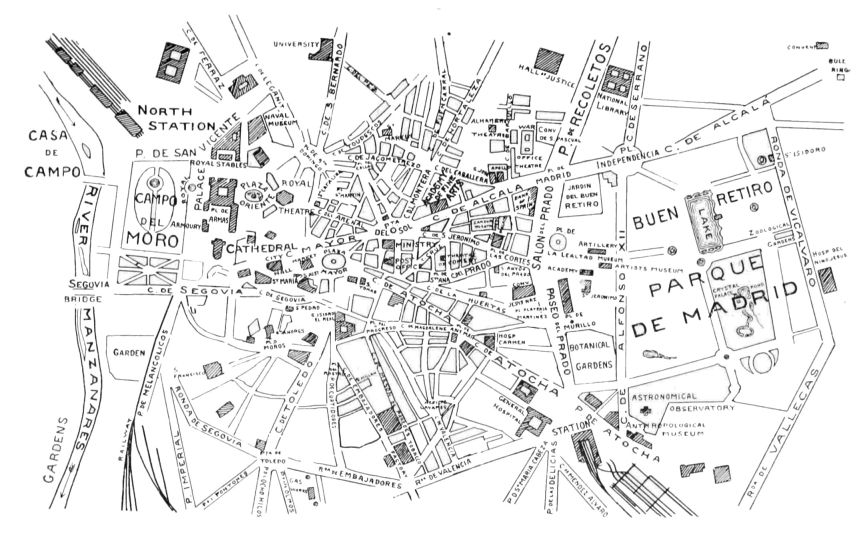
PLATE 1.
MADRID
Specially drawn for The Spanish Series
PLATE 2
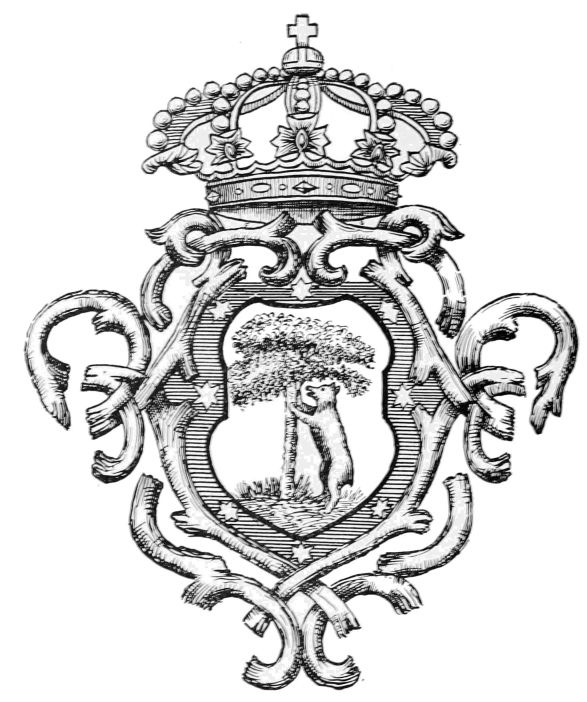
PLATE 2.
ARMS OF MADRID
PLATE 3
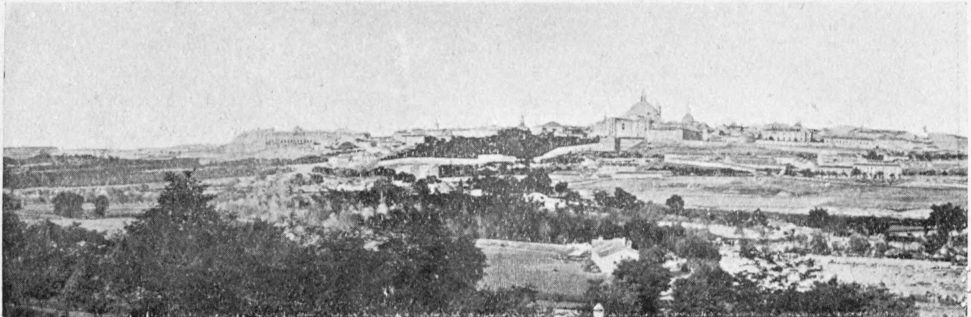
PLATE 3.
General View of Madrid.
PLATE 4
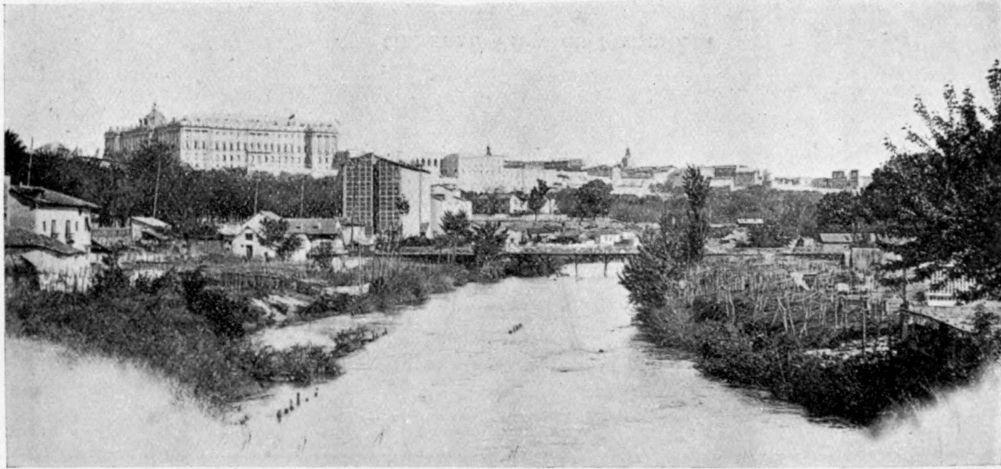
PLATE 4.
View of Madrid from the Teja.
PLATE 5
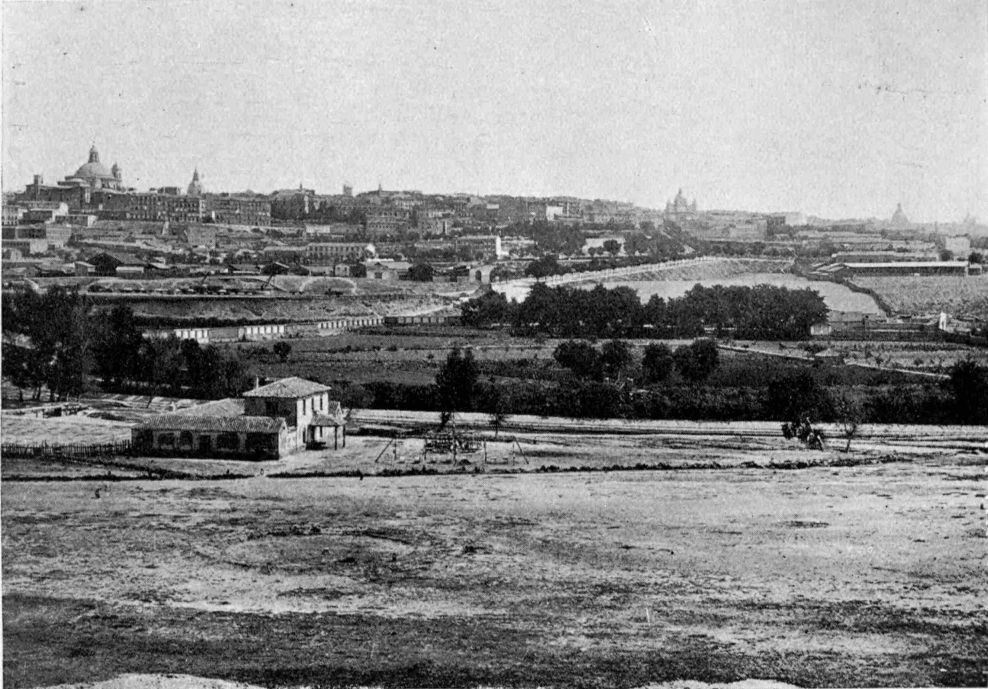
PLATE 5.
General View of Madrid.
PLATE 6
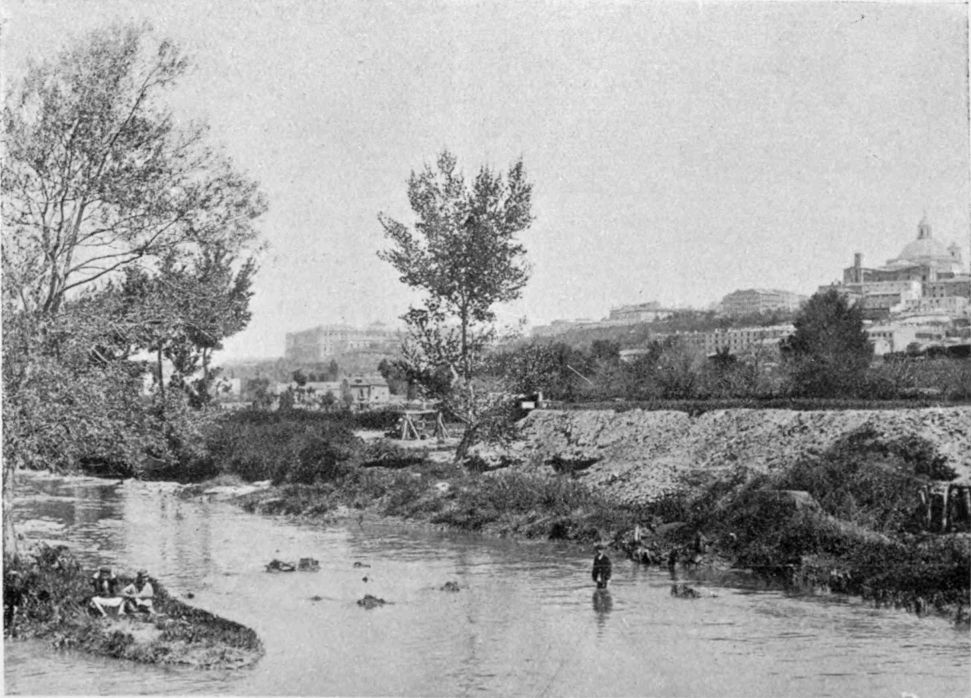
PLATE 6.
View of Madrid from San Isidro.
PLATE 7
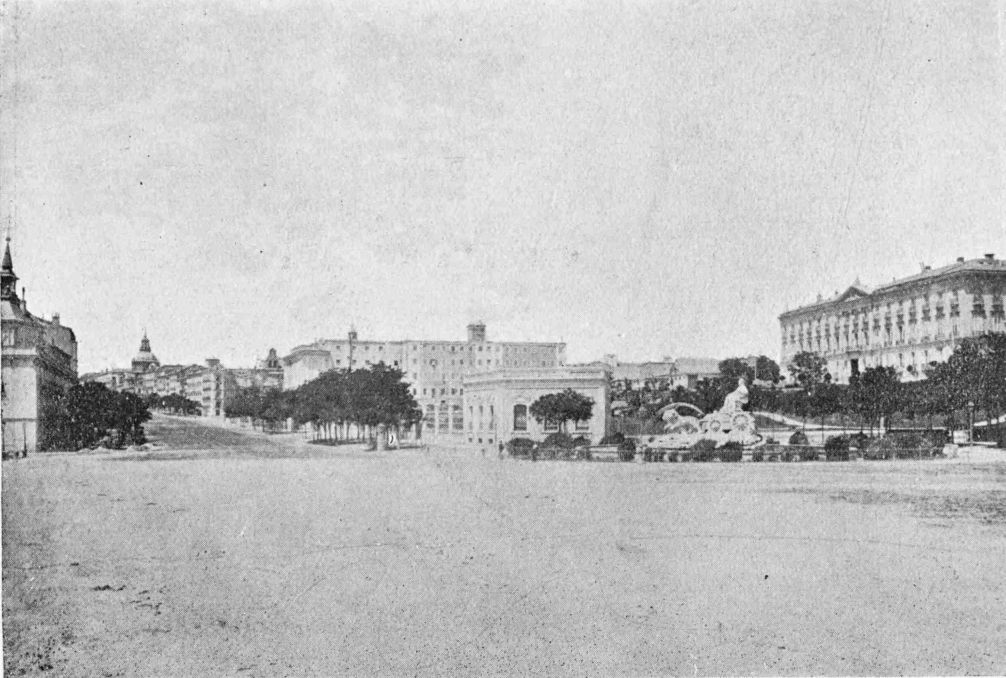
PLATE 7.
The Fountain of Cybele and Calle de Alcalá.
PLATE 8
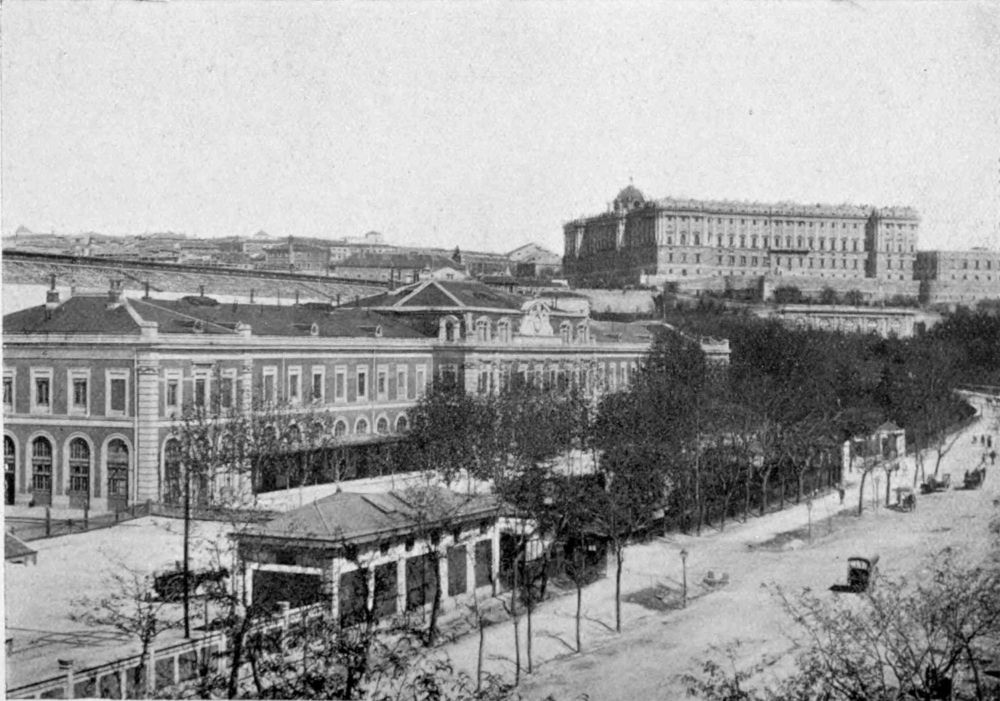
PLATE 8.
The Northern Railway Station and Royal Palace.
PLATE 9
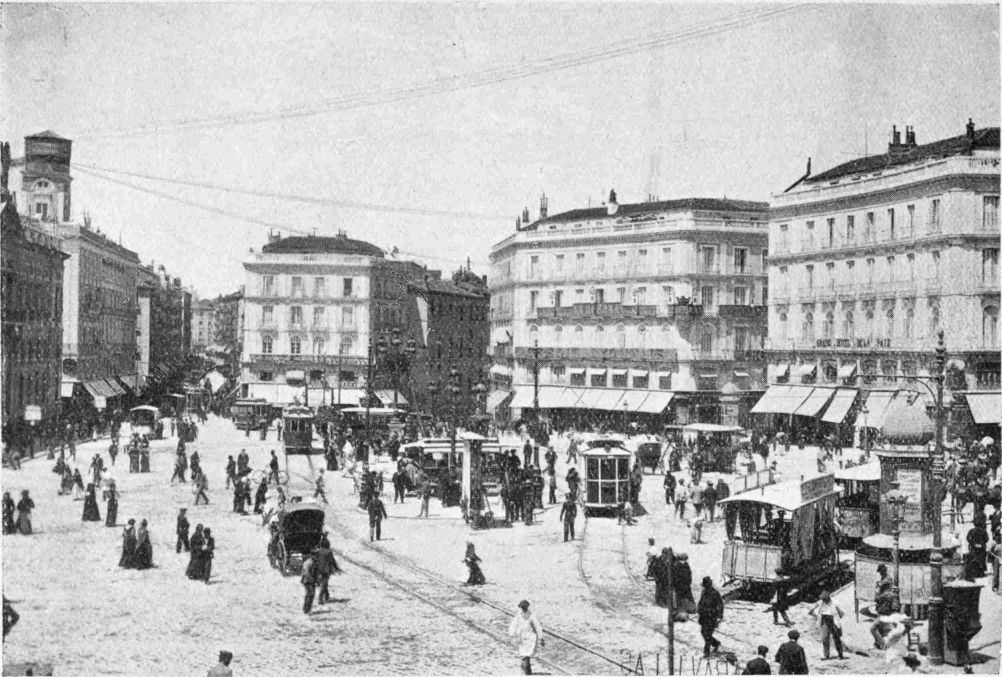
PLATE 9.
Puerta del Sol.
PLATE 10
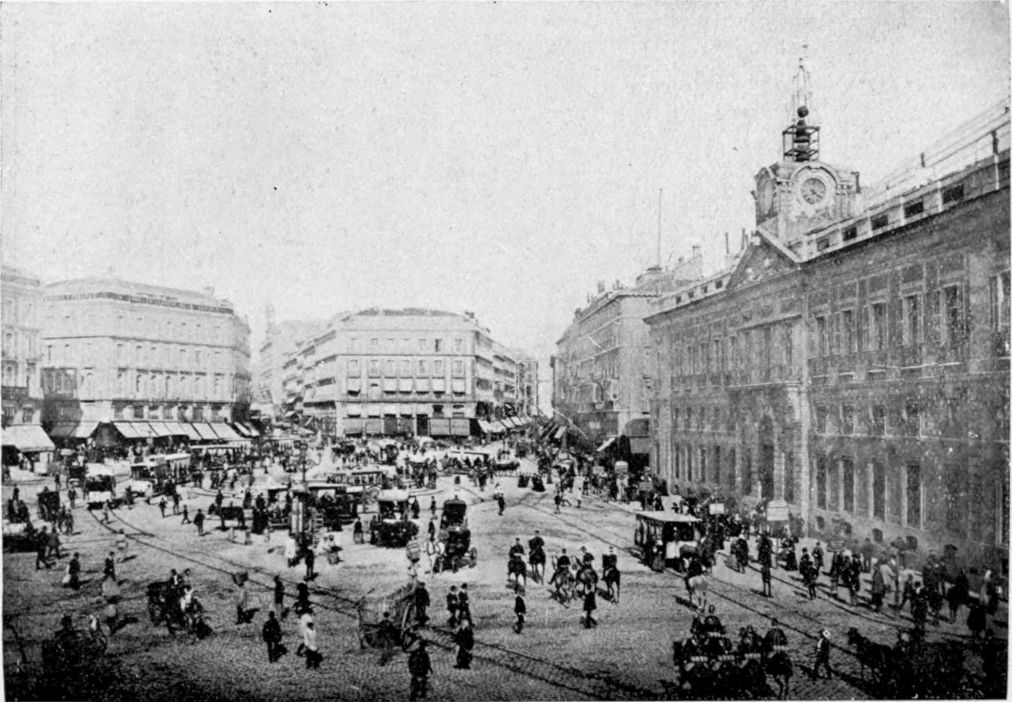
PLATE 10.
Puerta del Sol.
PLATE 11
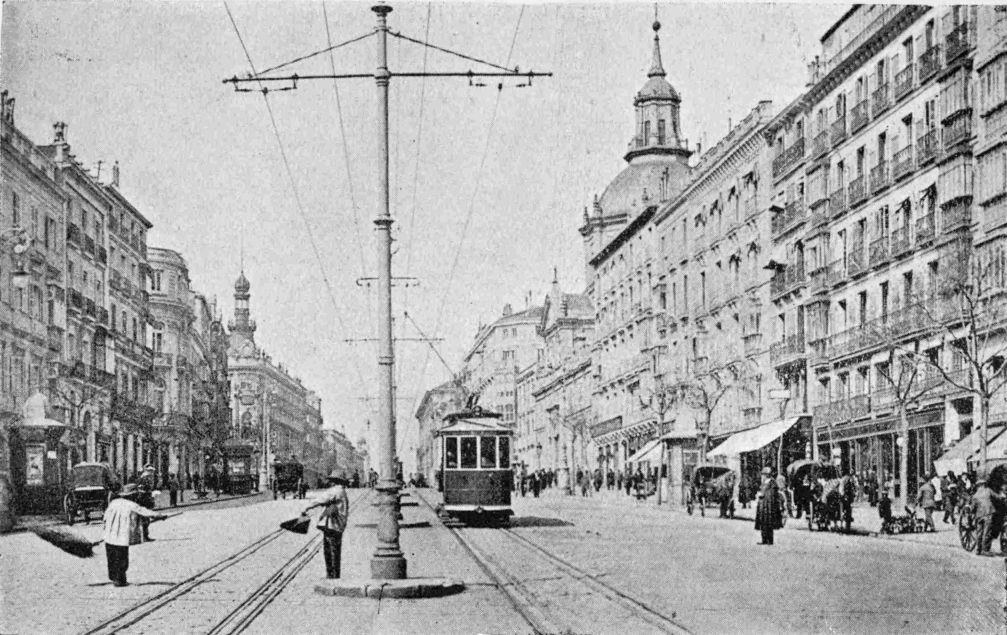
PLATE 11.
Calle de Alcalá.
PLATE 12
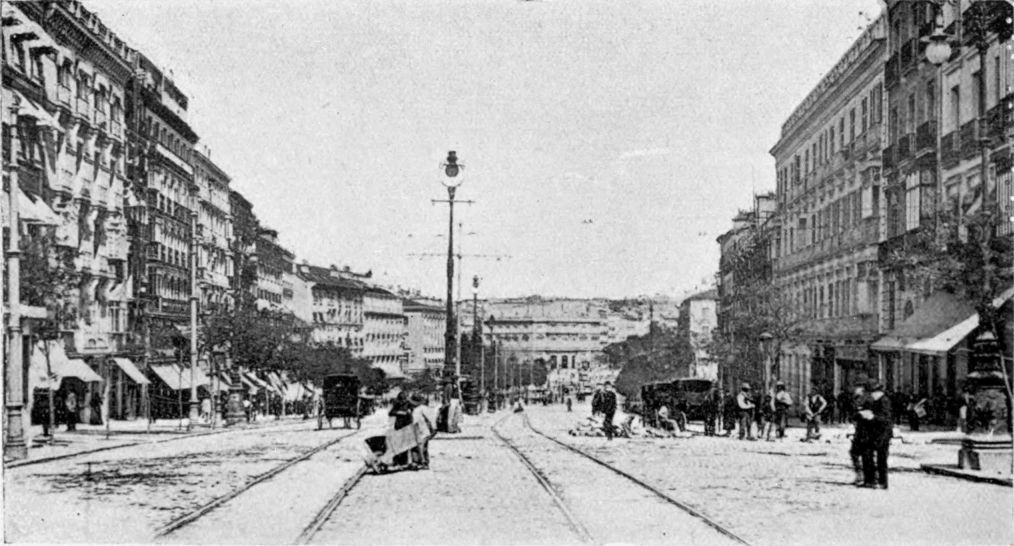
PLATE 12.
Calle de Alcalá.
PLATE 13
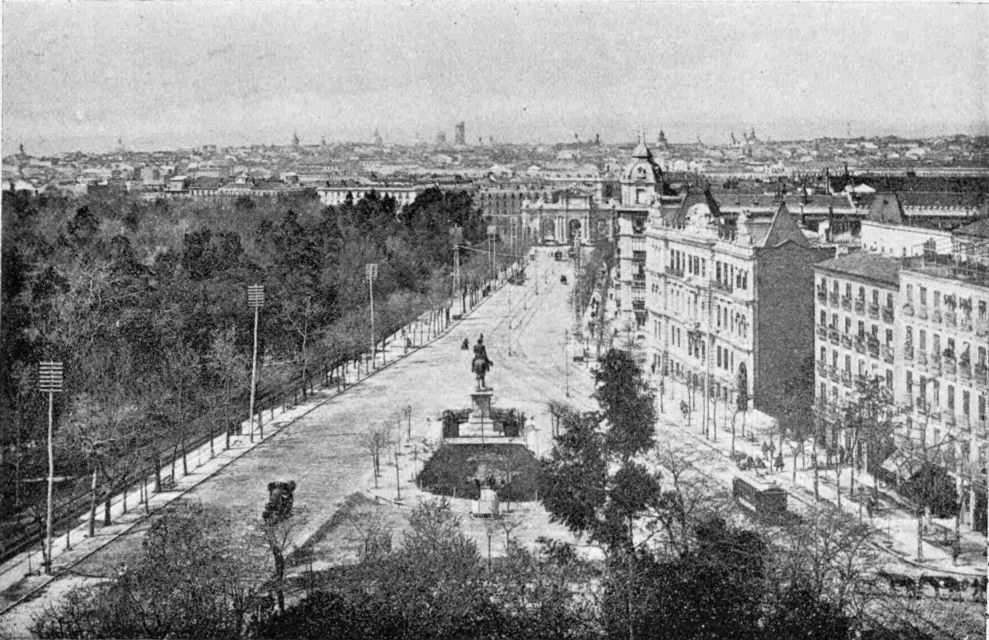
PLATE 13.
Calle de Alcalá.
PLATE 14
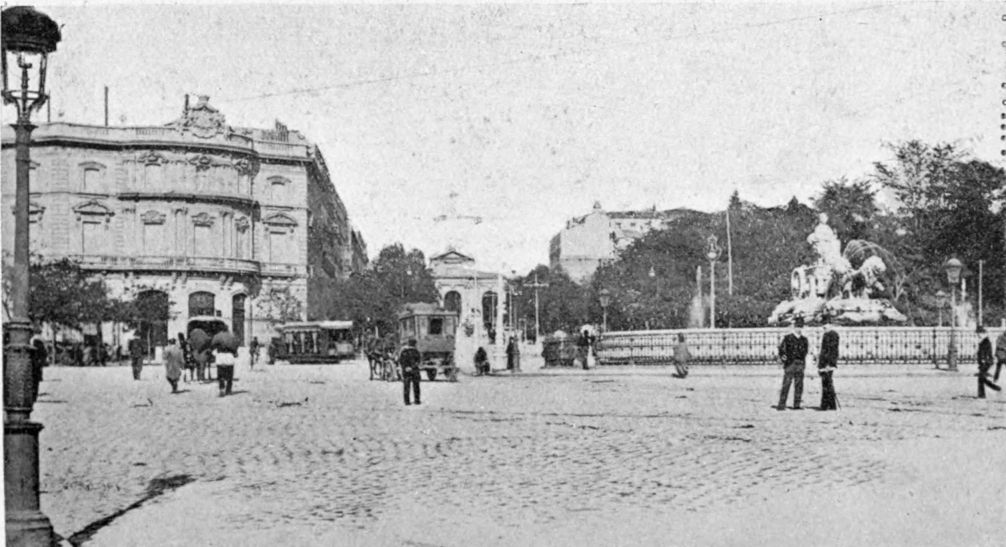
PLATE 14.
Calle de Alcalá.
PLATE 15
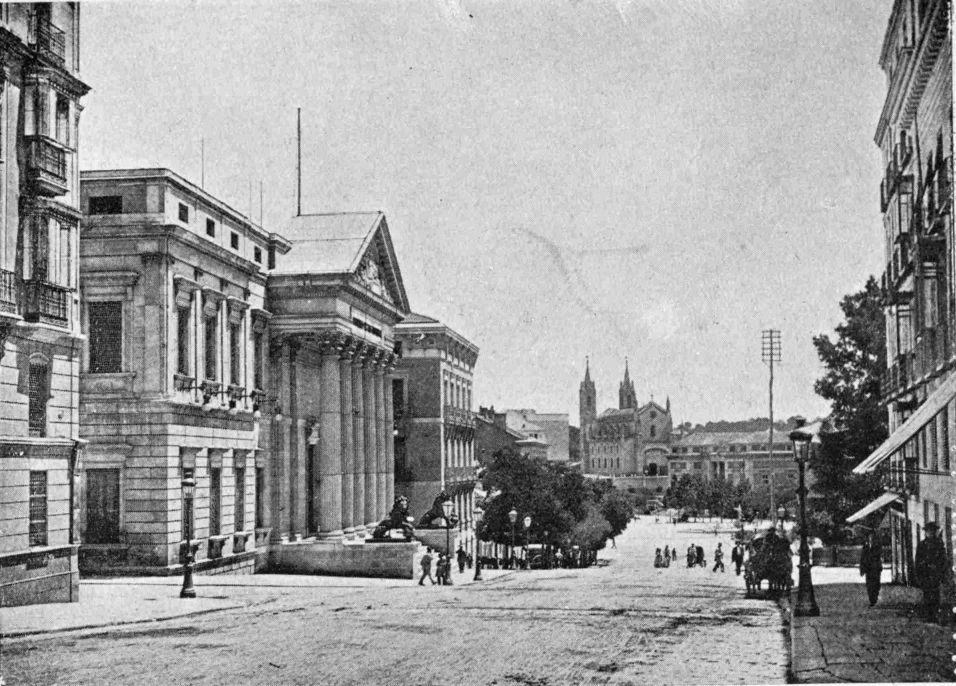
PLATE 15.
Carrera de San Jerónimo.
PLATE 16
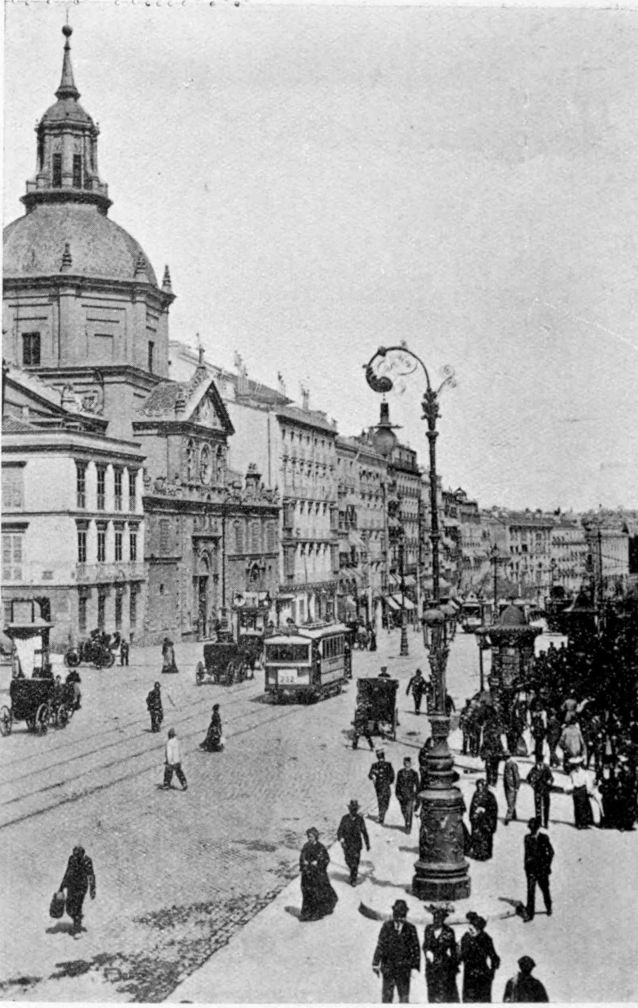
PLATE 16.
Calle de Alcalá.
PLATE 17
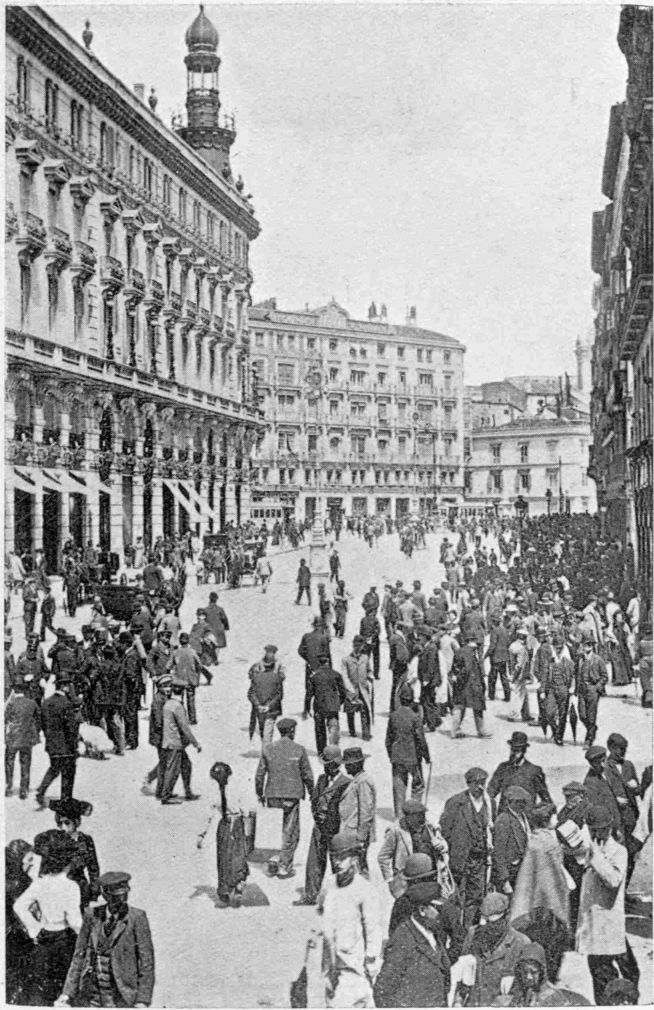
PLATE 17.
Calle de Sevilla.
PLATE 18
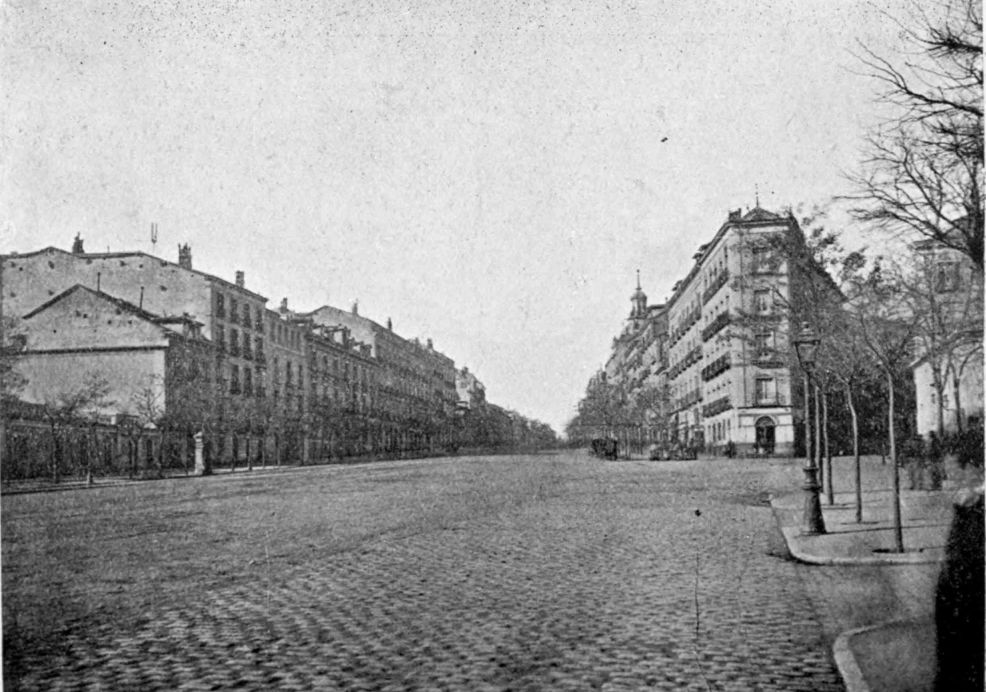
PLATE 18.
Calle de Alcalá.
PLATE 19
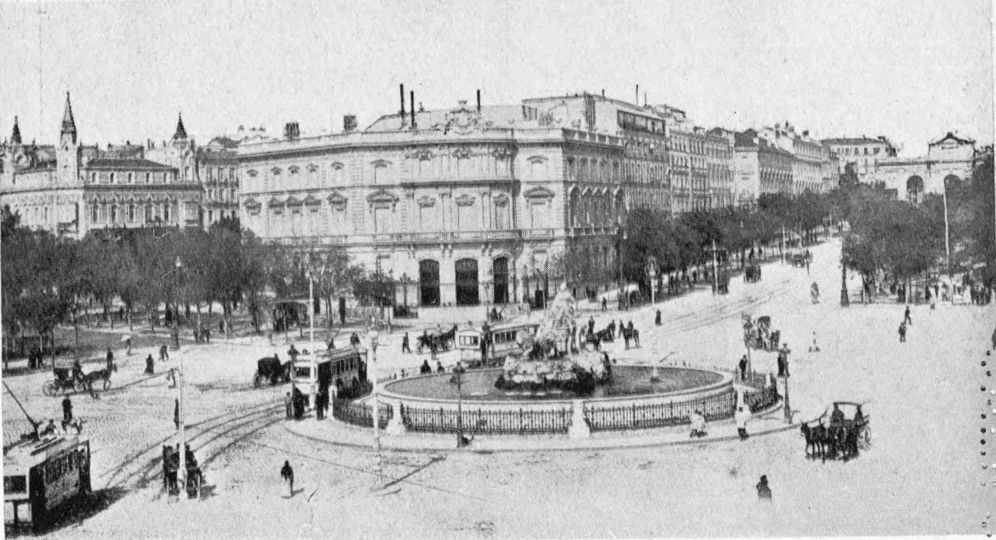
PLATE 19.
Plaza de Castelar.
PLATE 20
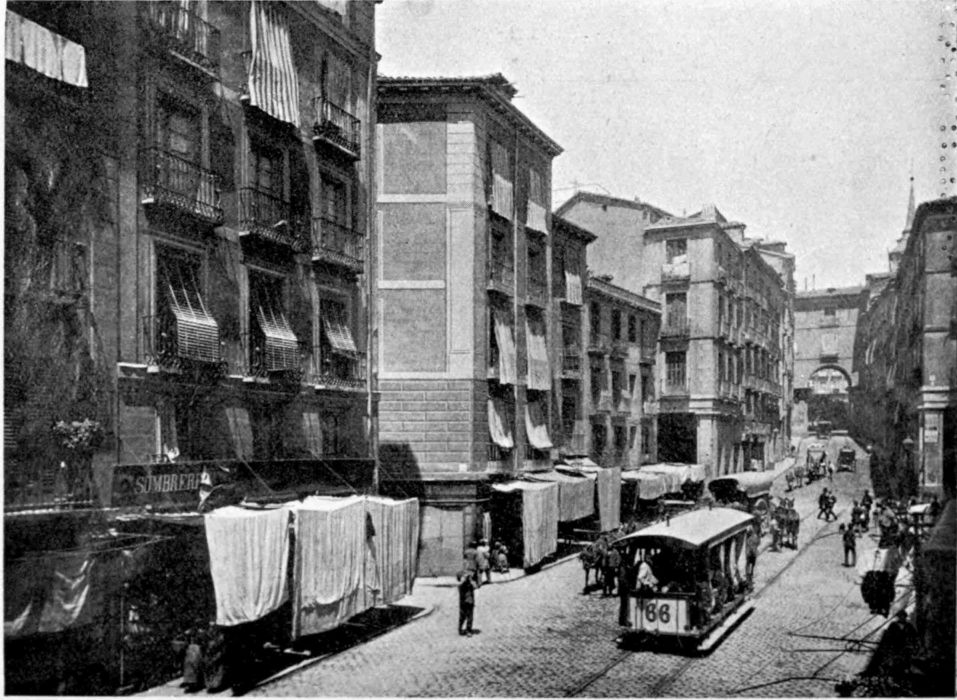
PLATE 20.
Calle de Toledo.
PLATE 21
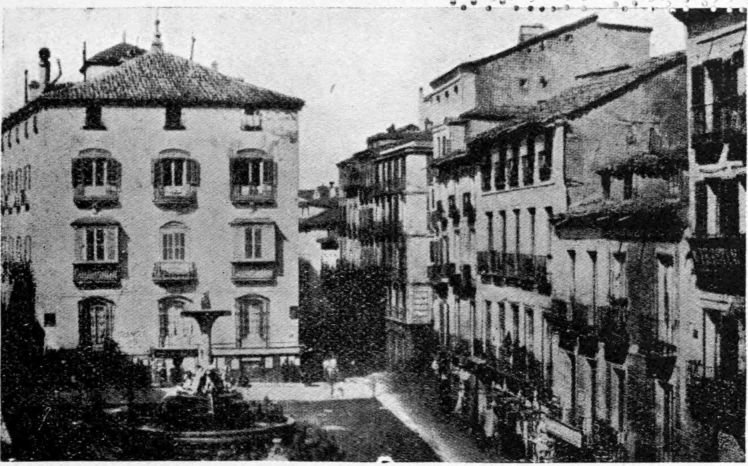
PLATE 21.
In Old Madrid.
PLATE 22
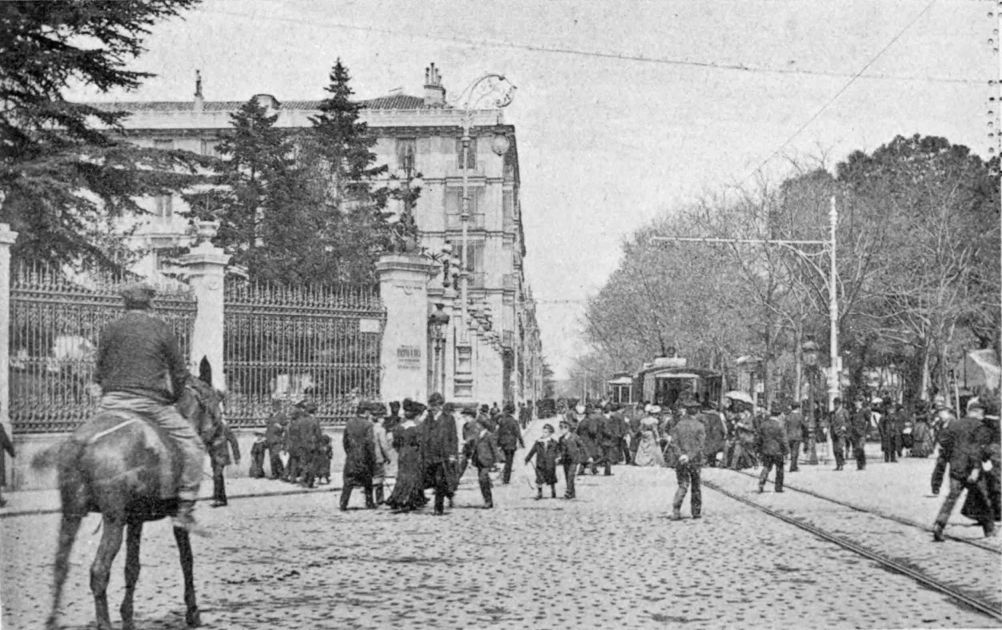
PLATE 22.
Paseo de Recoletos.
PLATE 23
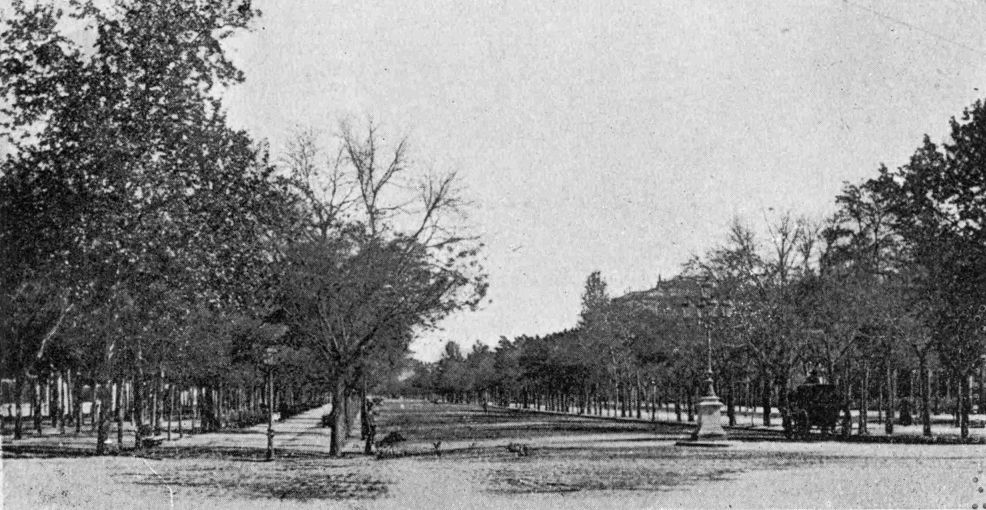
PLATE 23.
Paseo de Recoletos.
PLATE 24
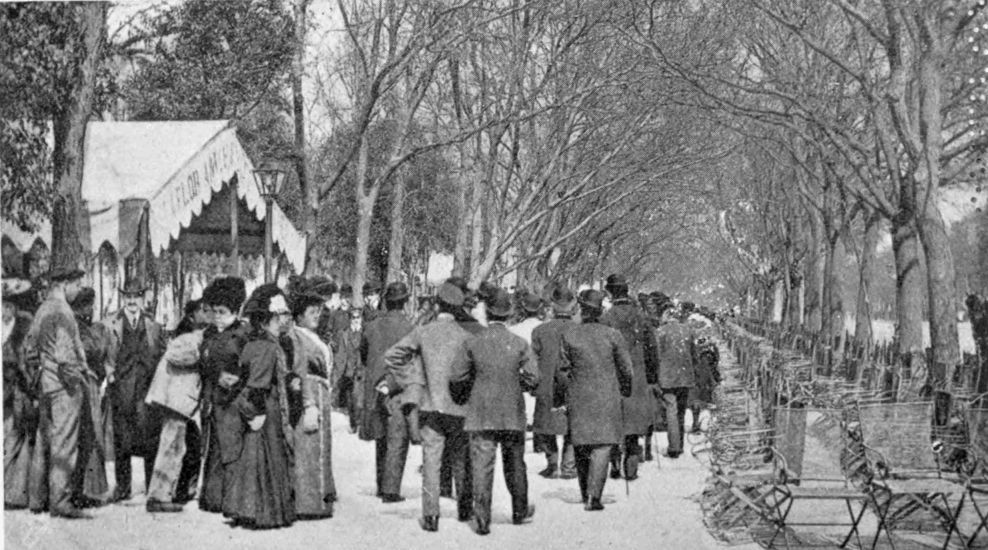
PLATE 24.
Paseo de Recoletos.
PLATE 25
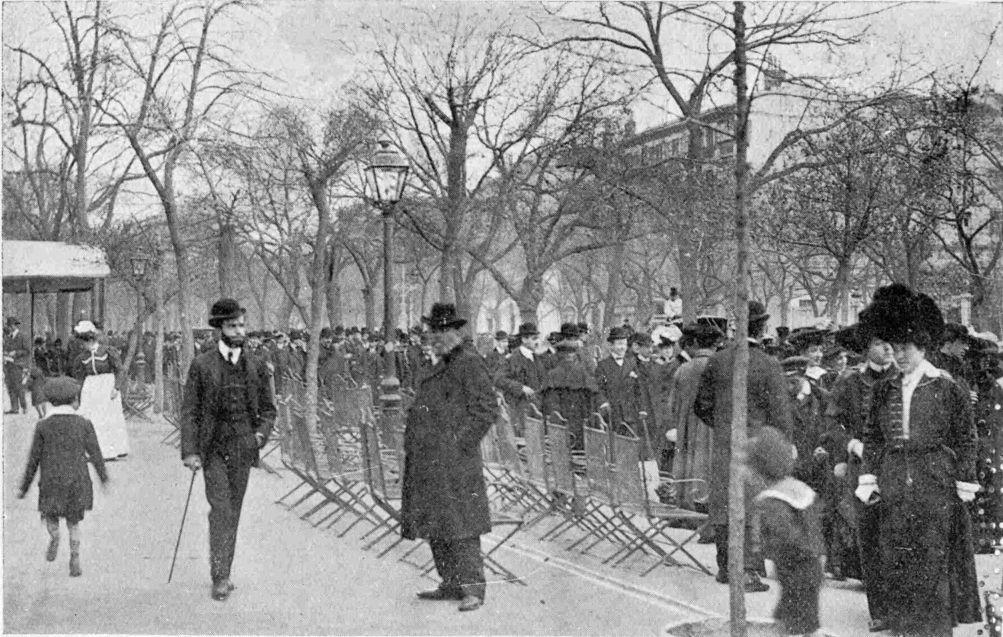
PLATE 25.
Paseo de Recoletos.
PLATE 26
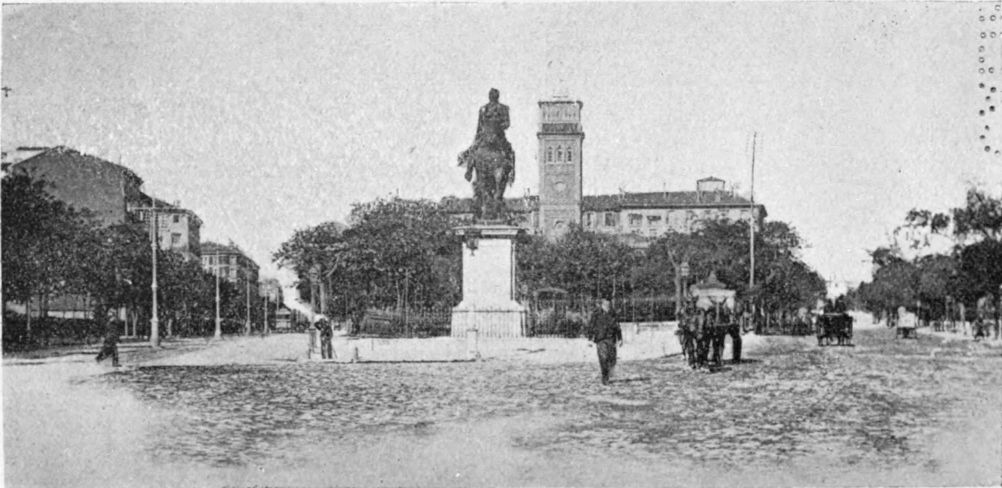
PLATE 26.
Calle de Alcalá and Statue of Aguirre.
PLATE 27
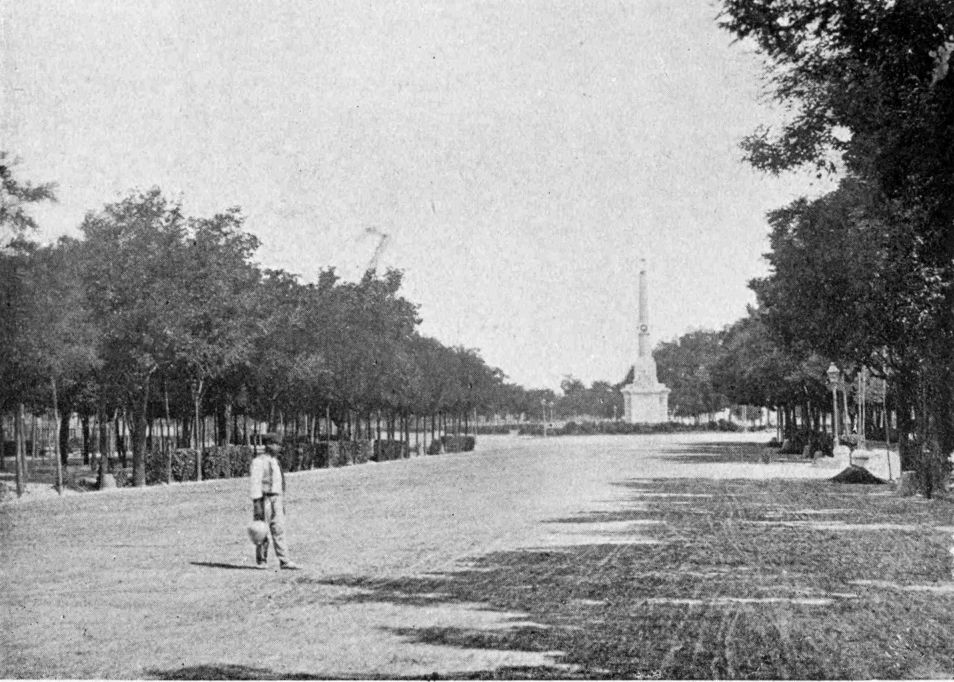
PLATE 27.
Paseo de la Castellana.
PLATE 28
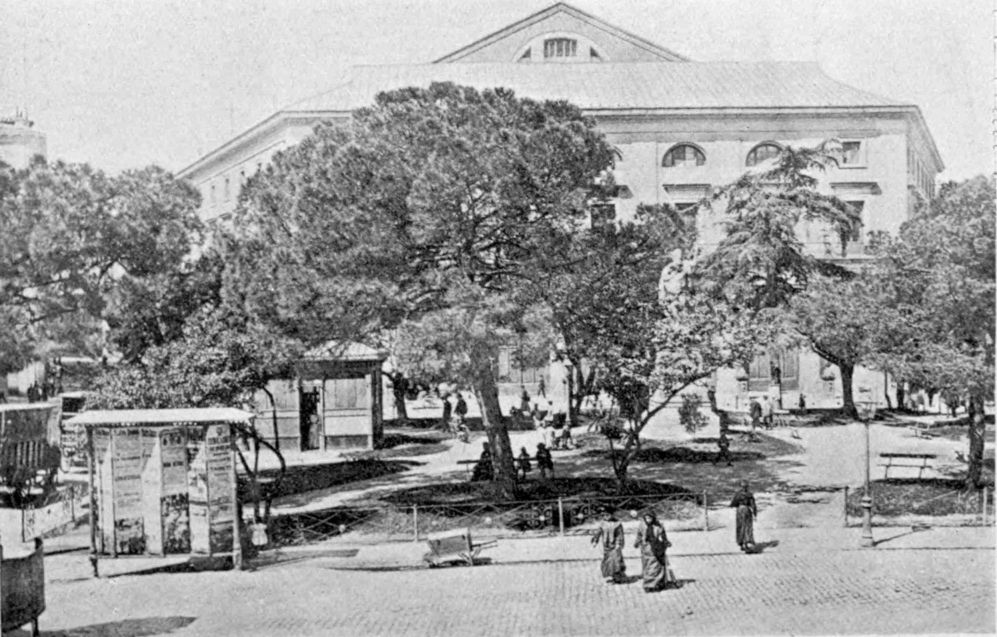
PLATE 28.
Plaza de Isabel II.
PLATE 29
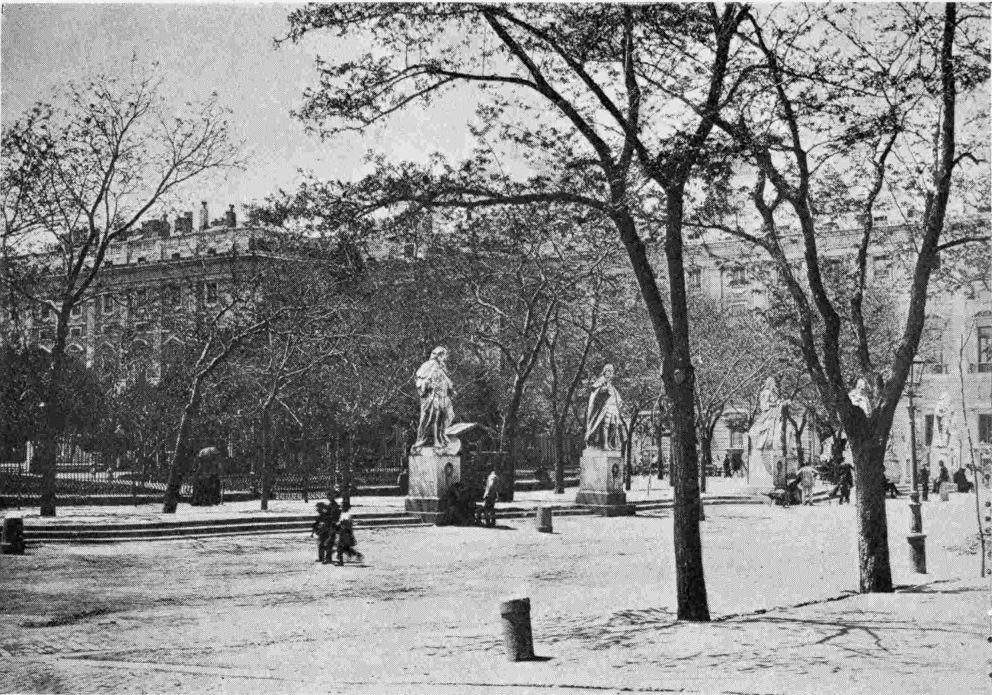
PLATE 29.
Plaza de Oriente.
PLATE 30
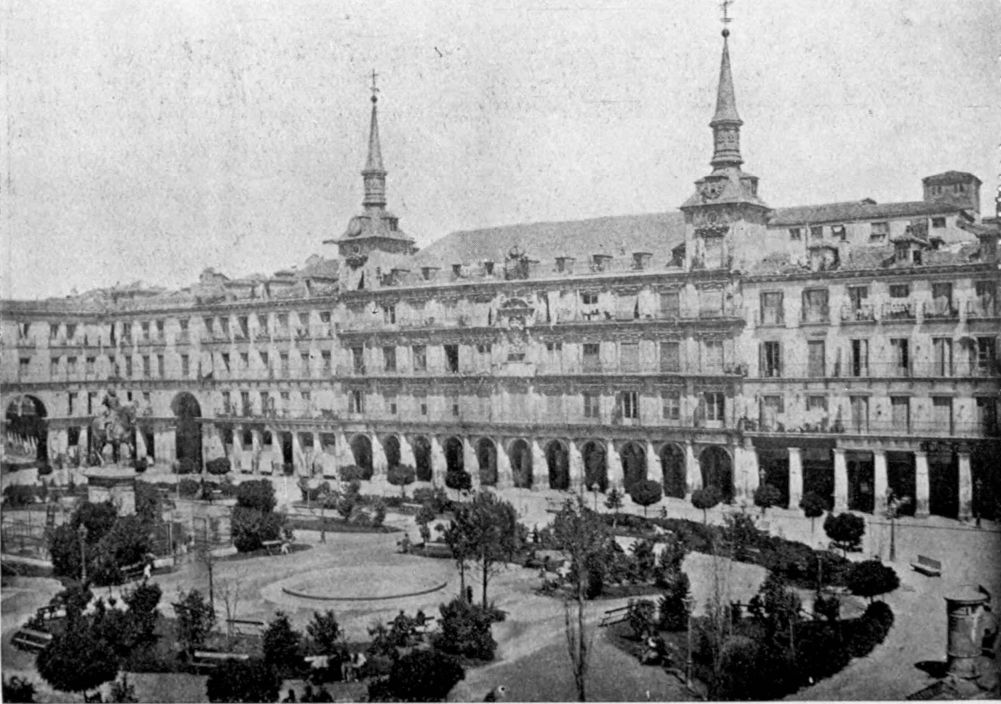
PLATE 30.
Plaza Mayor.
PLATE 31
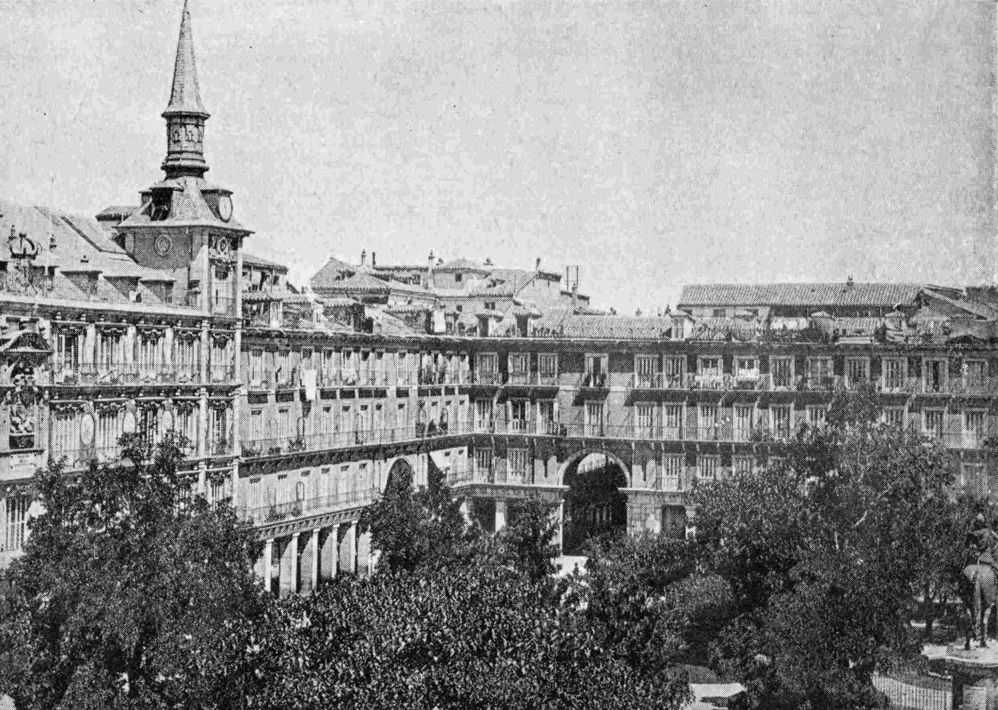
PLATE 31.
Plaza Mayor.
PLATE 32
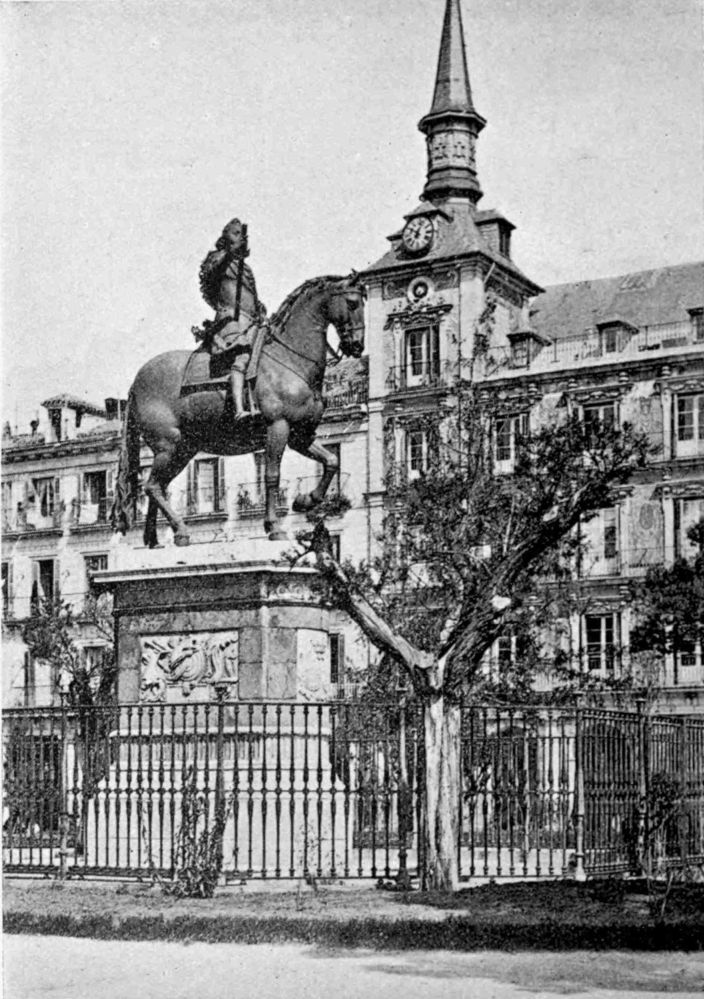
PLATE 32.
Plaza Mayor and Statue of Philip III.
PLATE 33
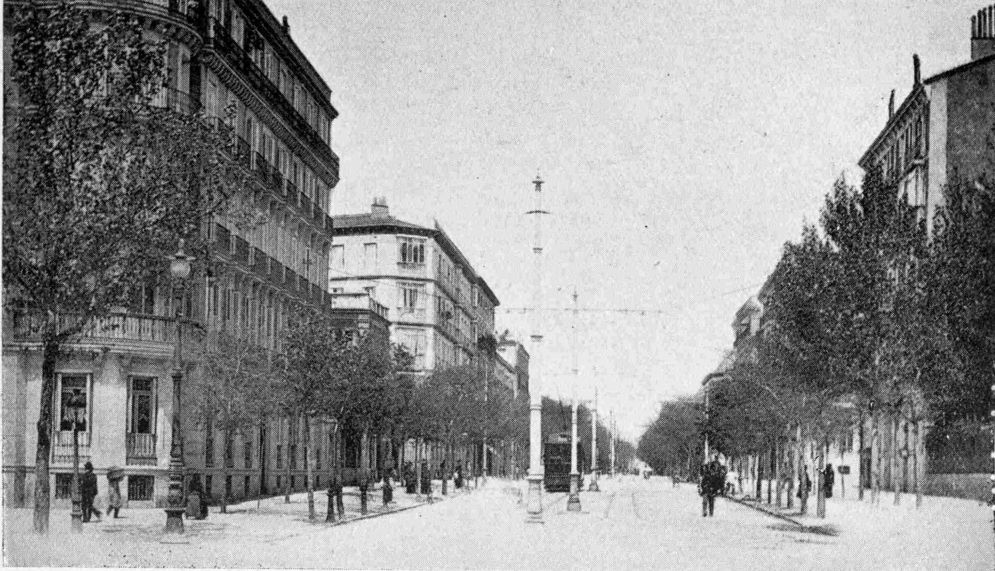
PLATE 33.
Calle de Serrano.
PLATE 34
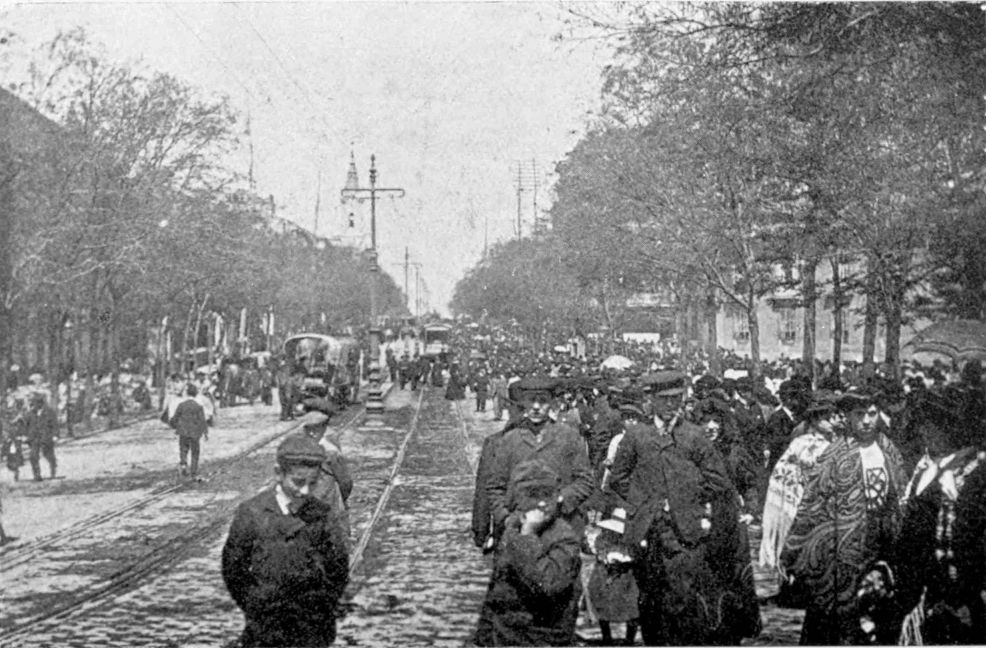
PLATE 34.
Calle de la Princesa on Good Friday.
PLATE 35
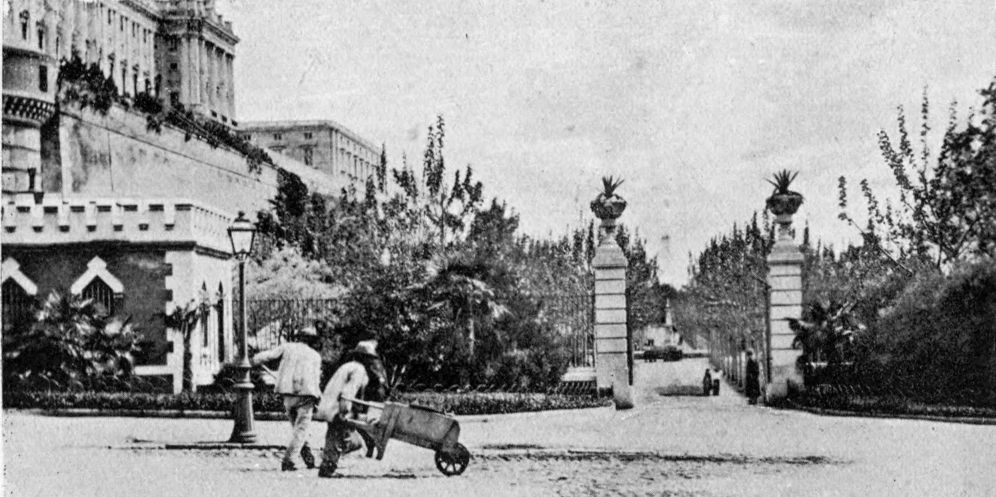
PLATE 35.
Entrance to the Park of Alfonso XIII.
PLATE 36
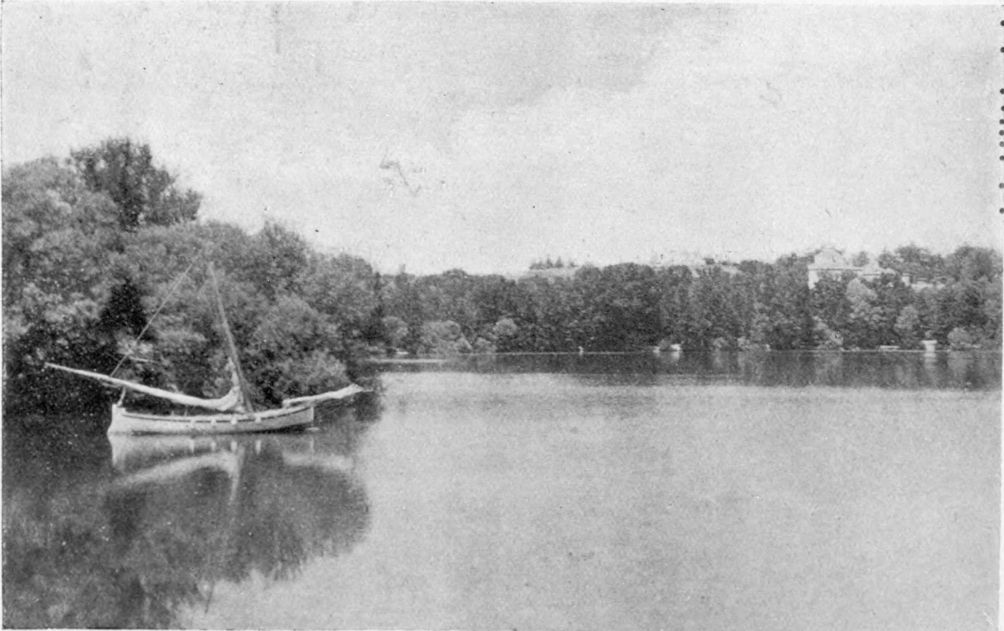
PLATE 36.
Casa de Campo. The Lake.
PLATE 37
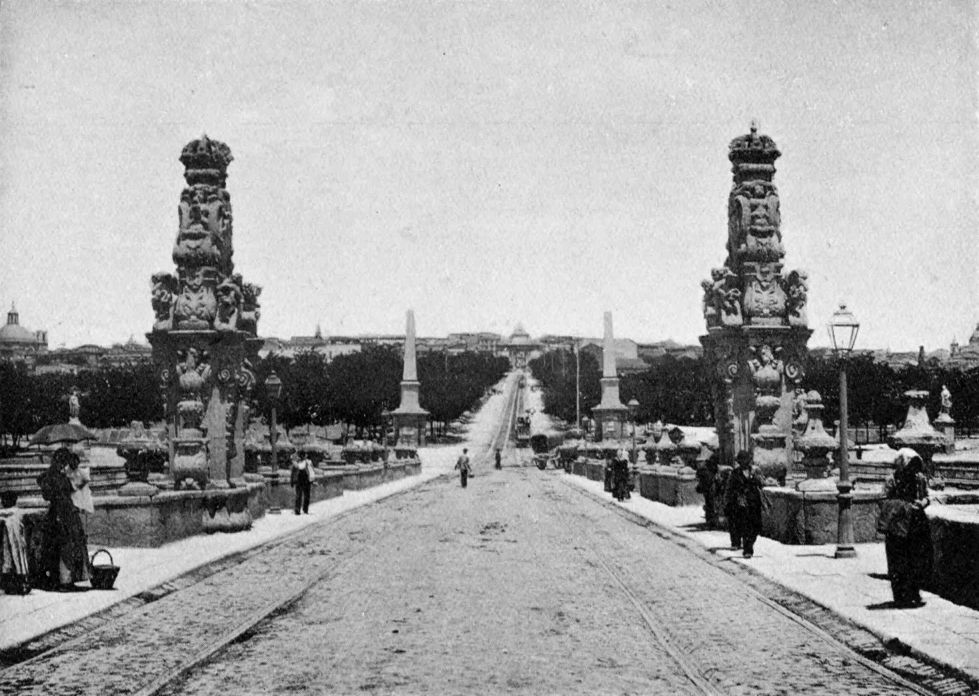
PLATE 37.
Toledo Bridge.
PLATE 38
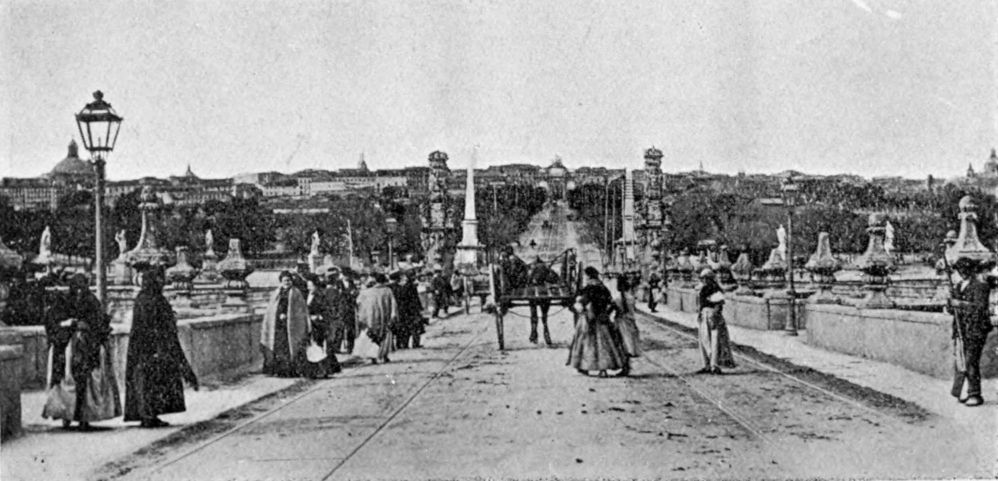
PLATE 38.
Toledo Bridge.
PLATE 39
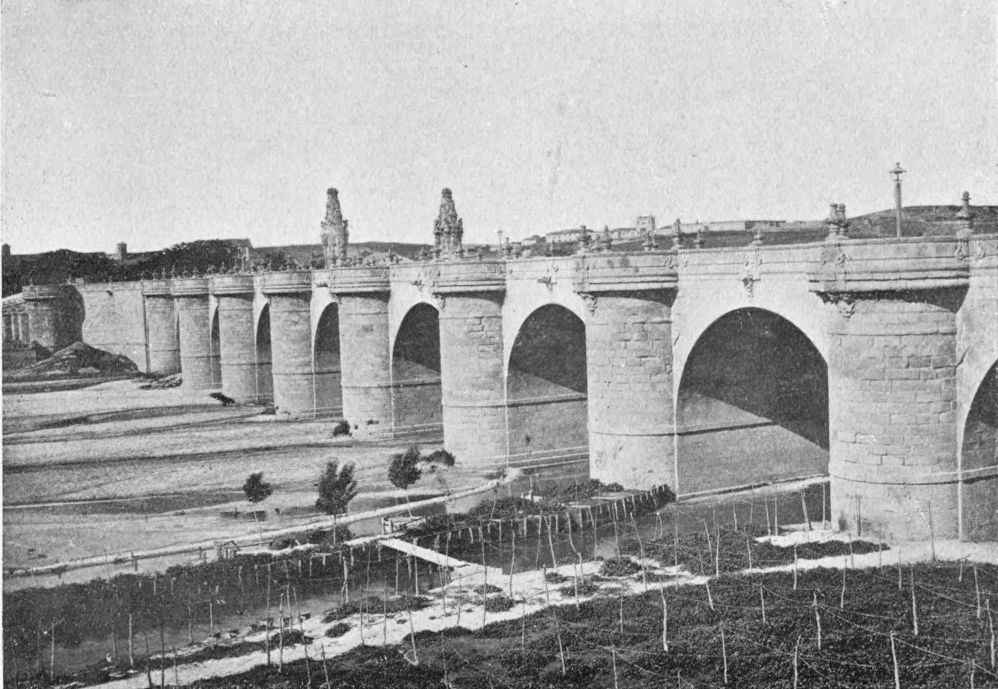
PLATE 39.
Toledo Bridge.
PLATE 40
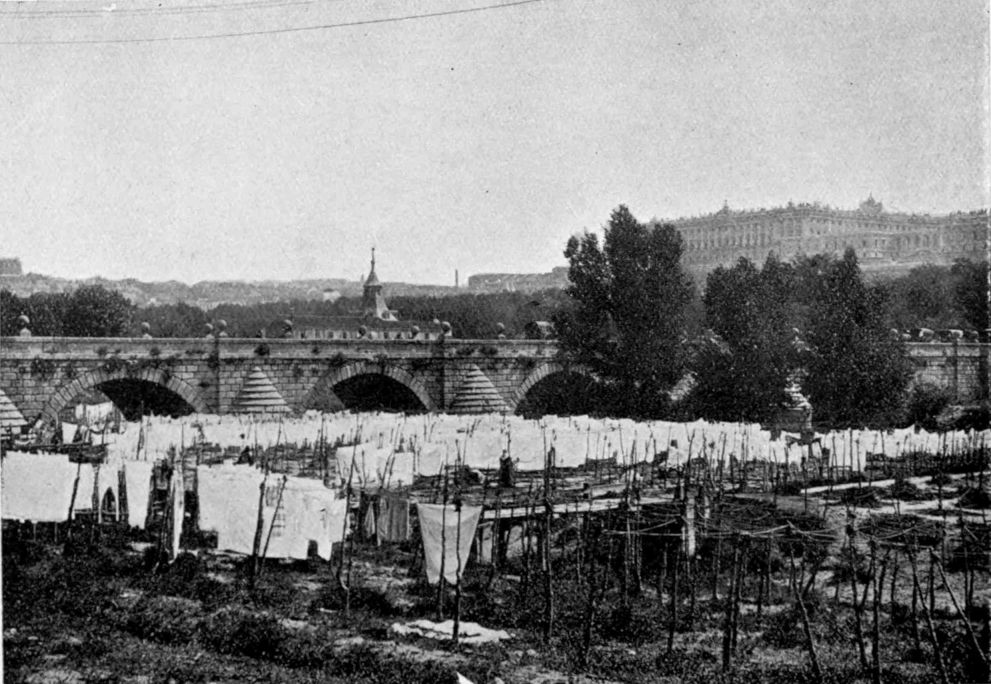
PLATE 40.
Segovia Bridge.
PLATE 41
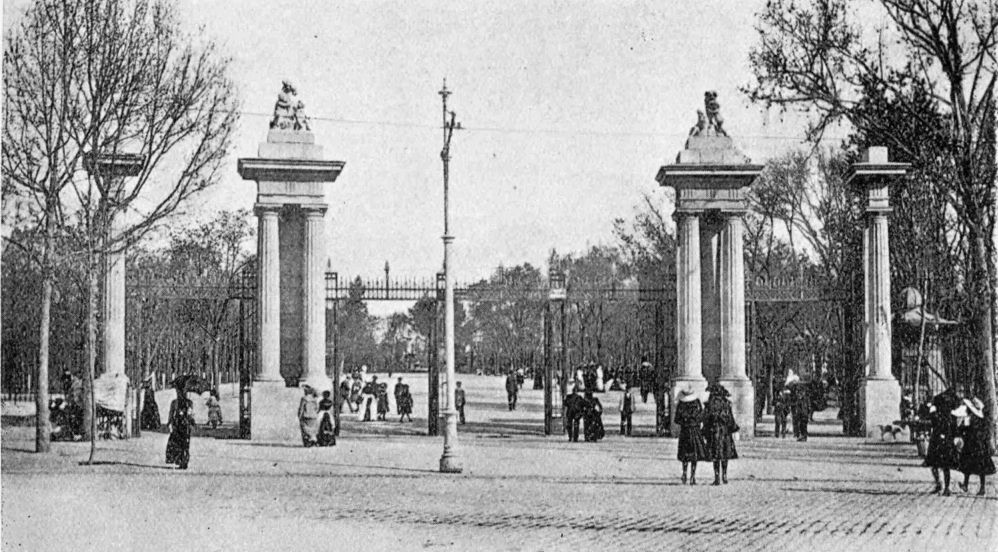
PLATE 41.
Entrance to the Retiro.
PLATE 42
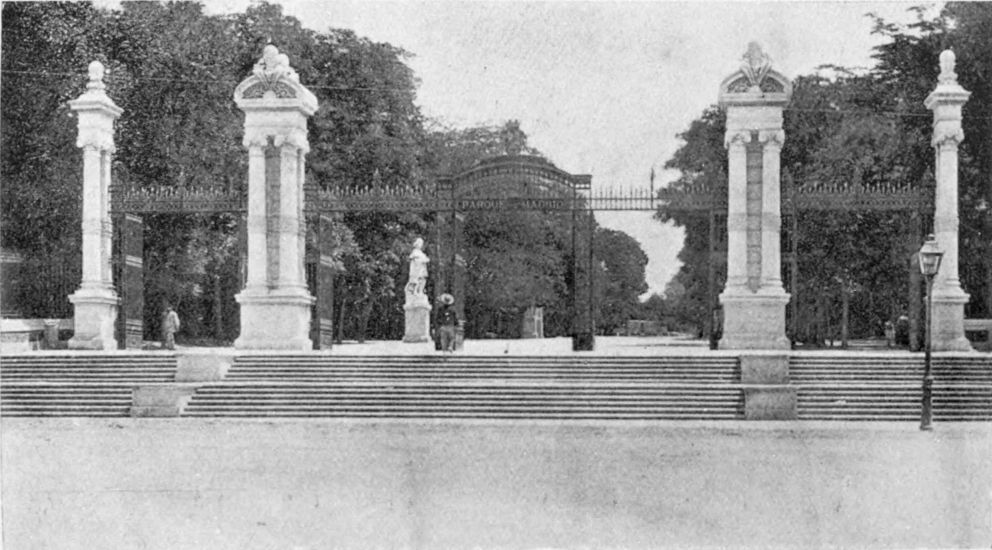
PLATE 42.
Entrance to the Retiro.
PLATE 43
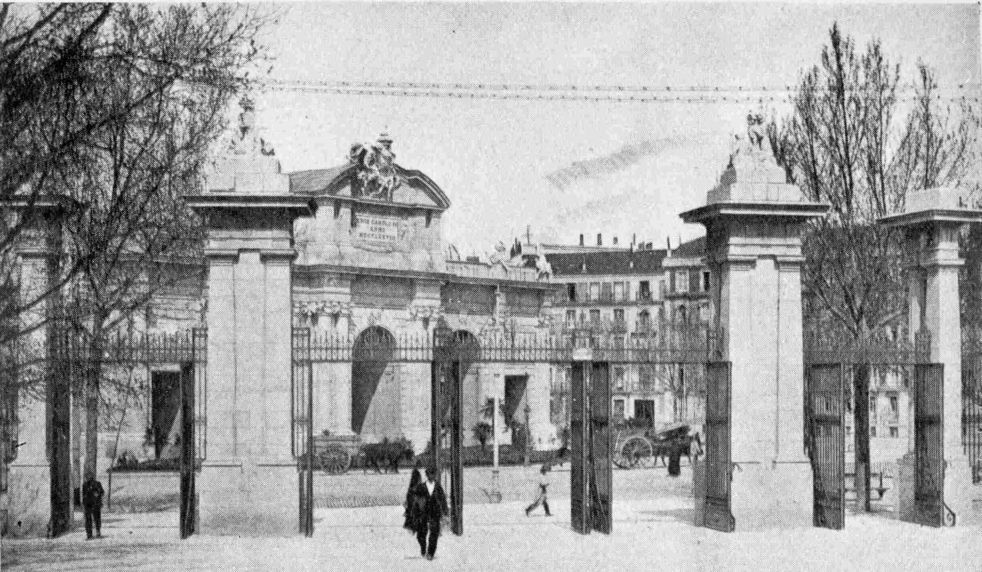
PLATE 43.
Principal Entrance to the Retiro.
PLATE 44
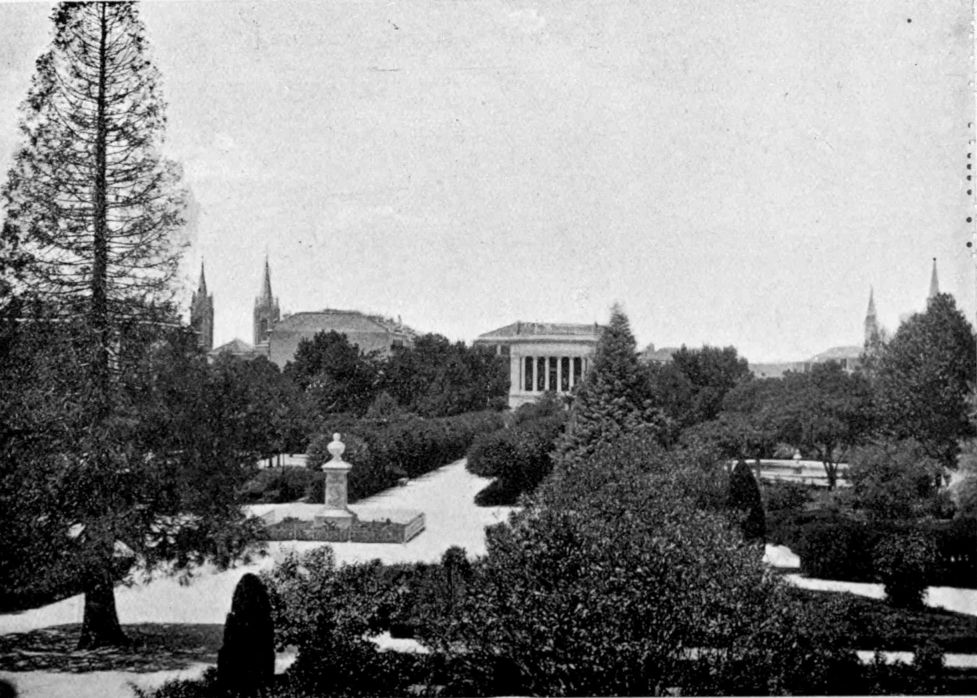
PLATE 44.
Retiro. The Parterre.
PLATE 45
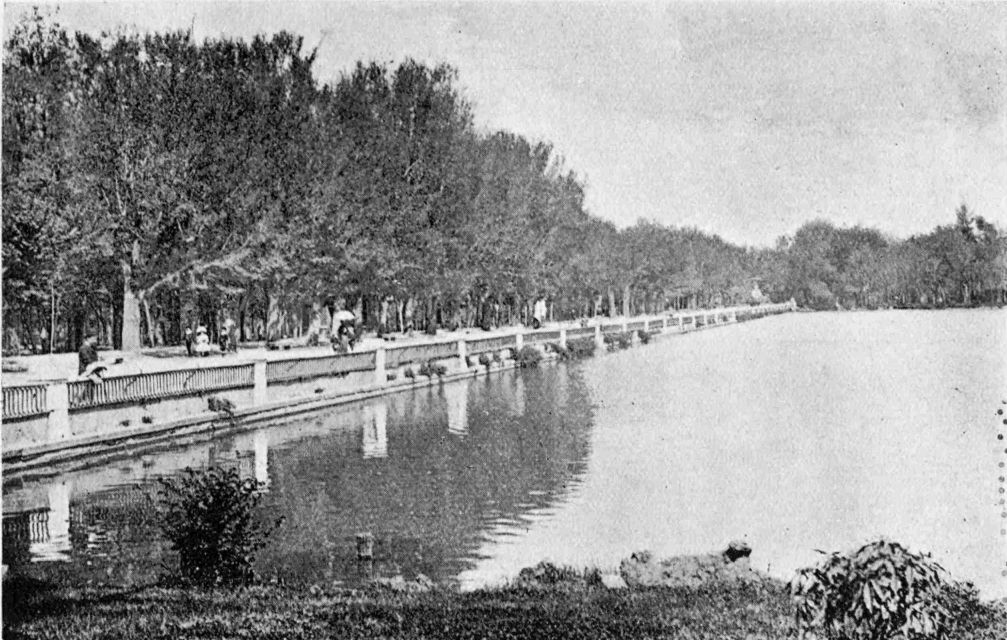
PLATE 45.
Retiro. The Lake.
PLATE 46
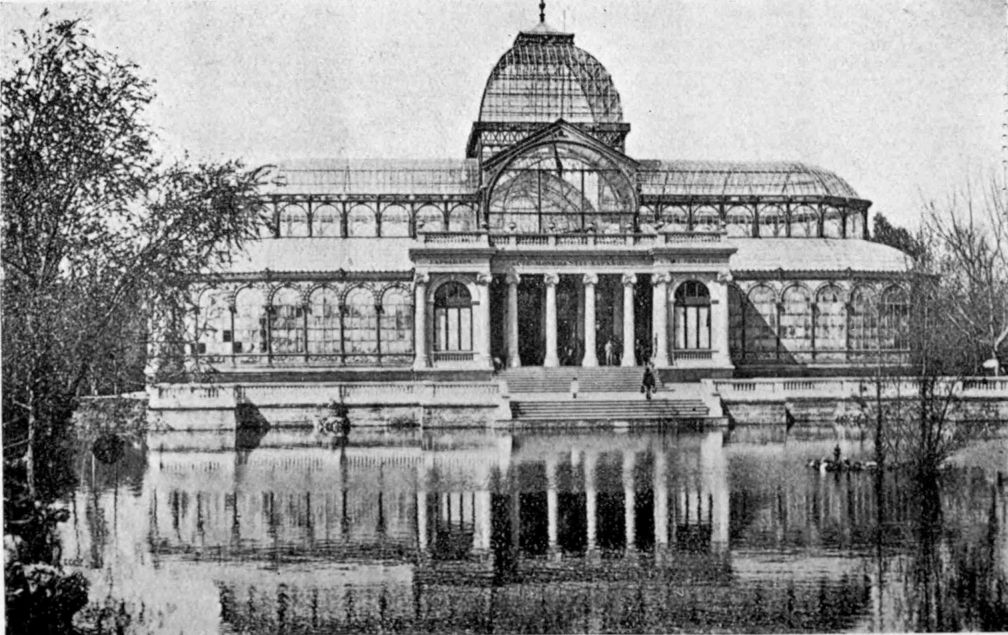
PLATE 46.
Retiro. The Crystal Palace.
PLATE 47
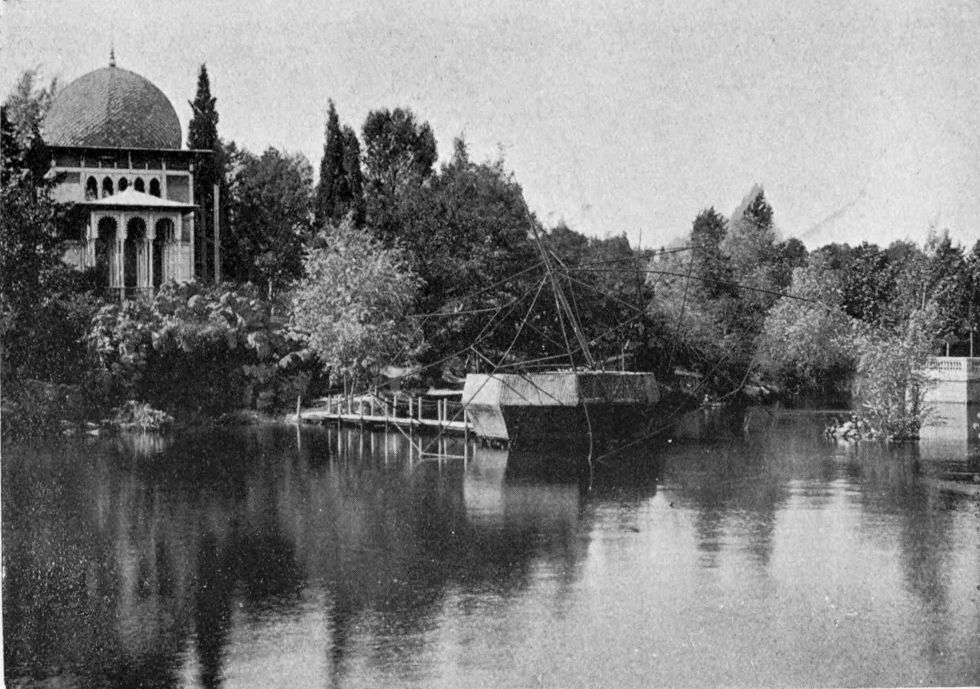
PLATE 47.
Retiro. Arab Pavilion.
PLATE 48
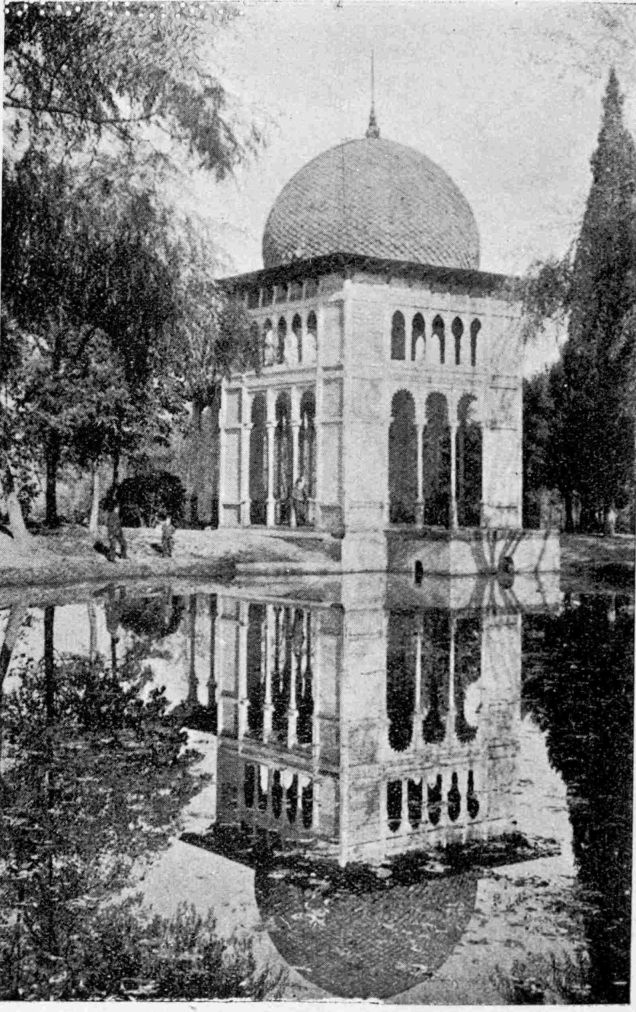
PLATE 48.
Retiro. Arab Temple.
PLATE 49
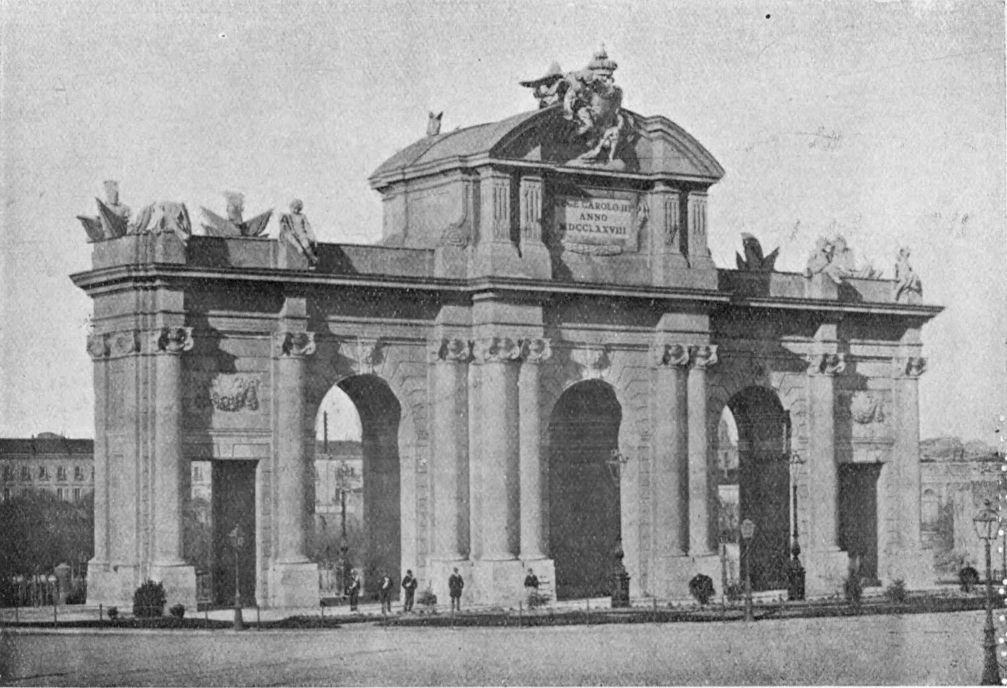
PLATE 49.
Gate of Alcalá.
PLATE 50
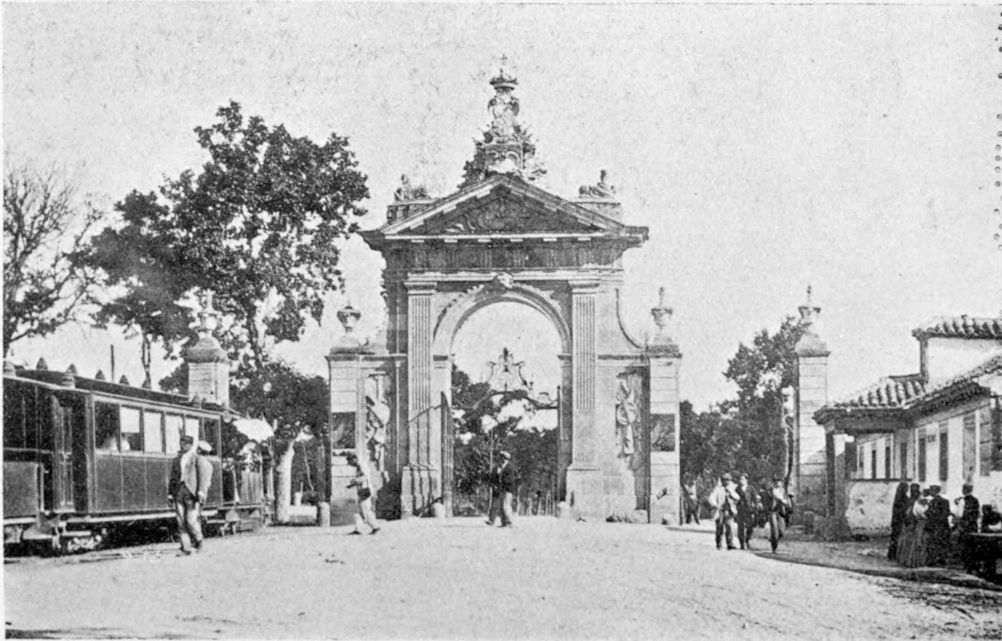
PLATE 50.
Gate of Hierro.
PLATE 51
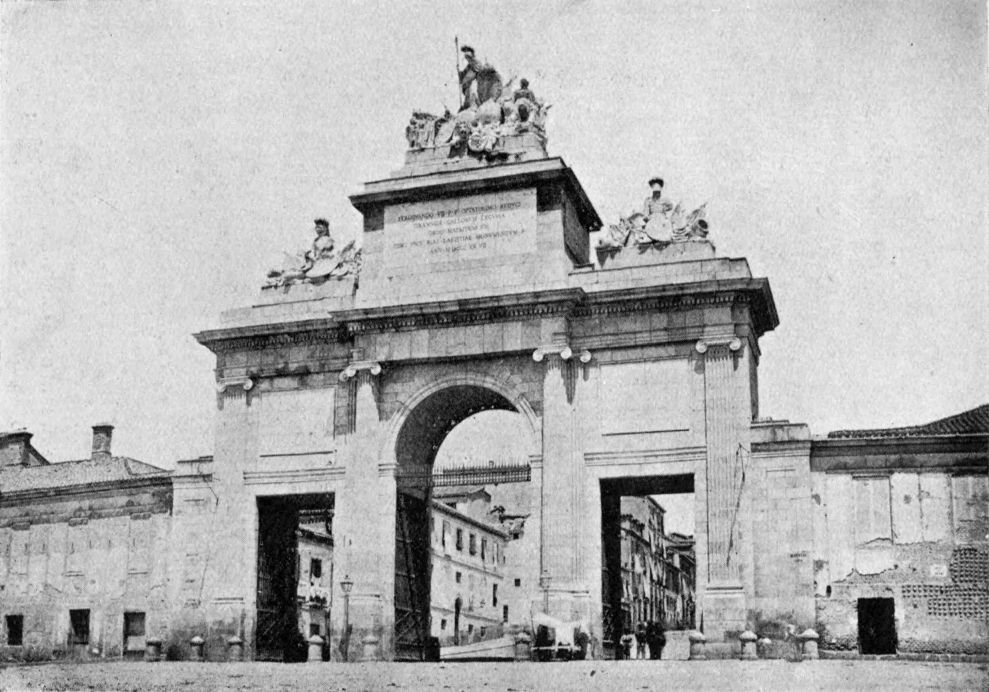
PLATE 51.
Gate of Toledo.
PLATE 52
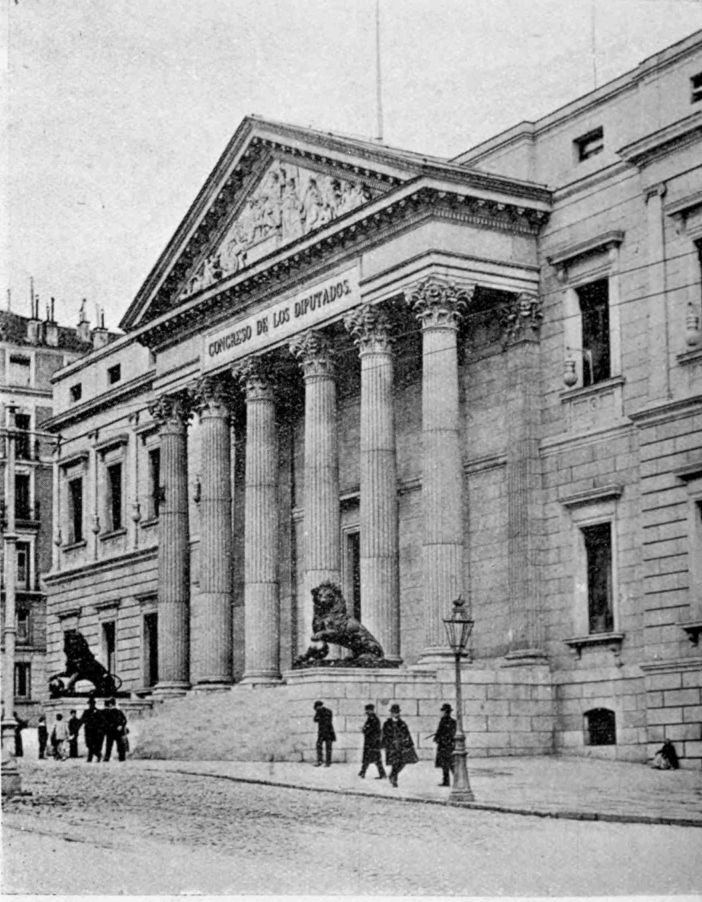
PLATE 52.
Chamber of Deputies.
PLATE 53
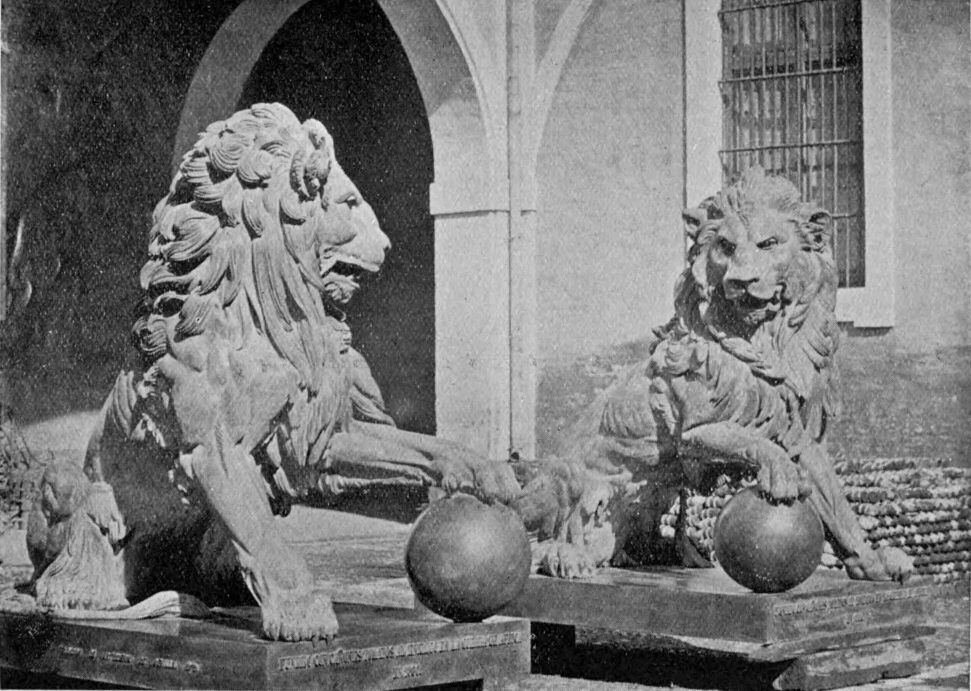
PLATE 53.
The Cortes. Two Bronze Lions in front of the Palace.
PLATE 54
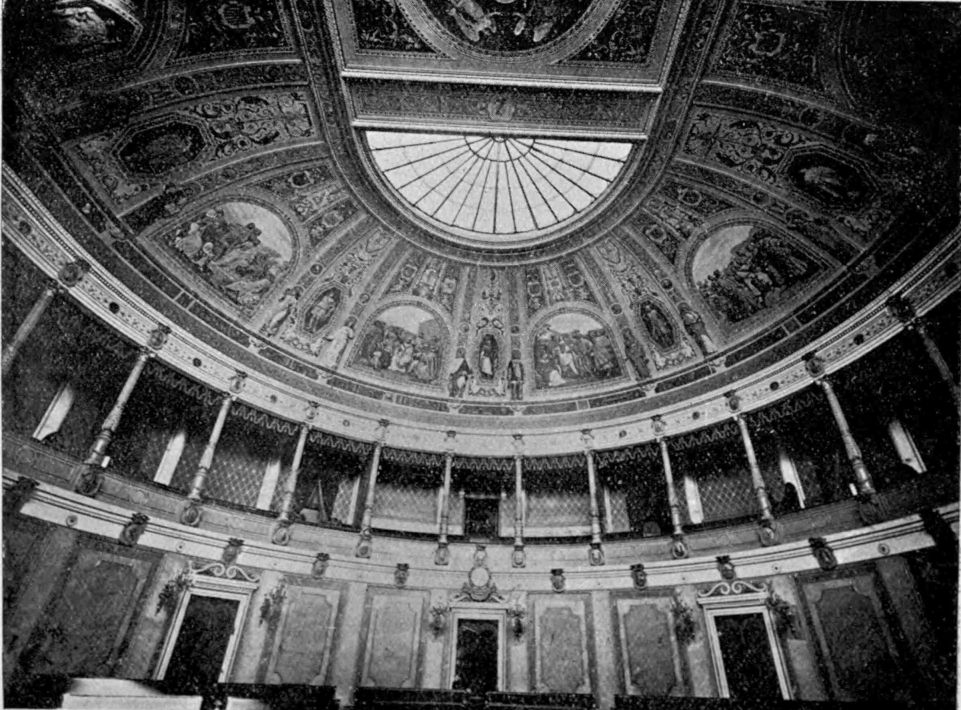
PLATE 54.
Interior of the Chamber of Deputies.
PLATE 55
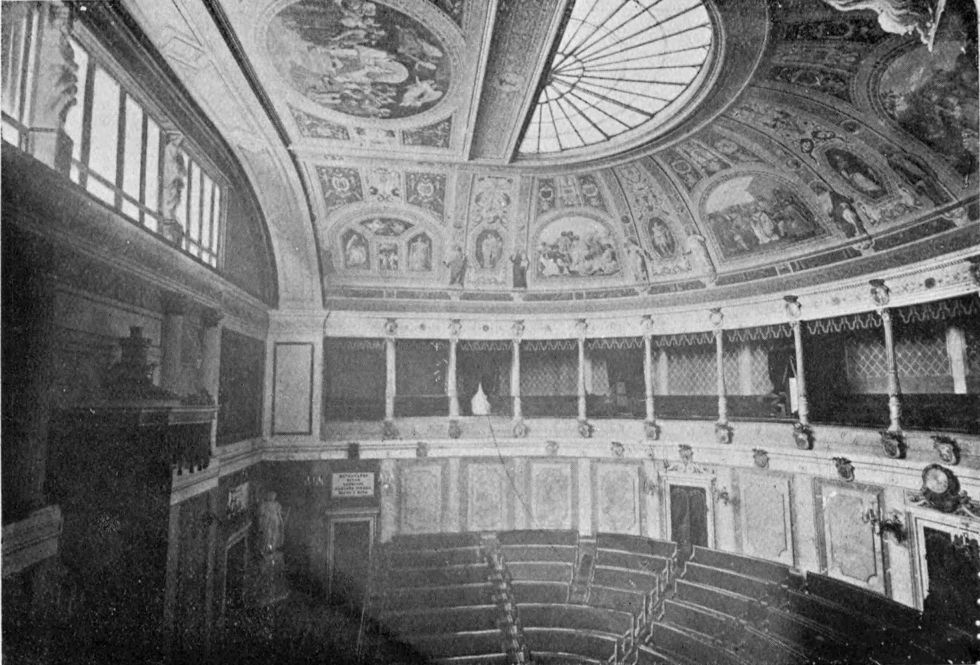
PLATE 55.
Interior of the Chamber of Deputies.
PLATE 56
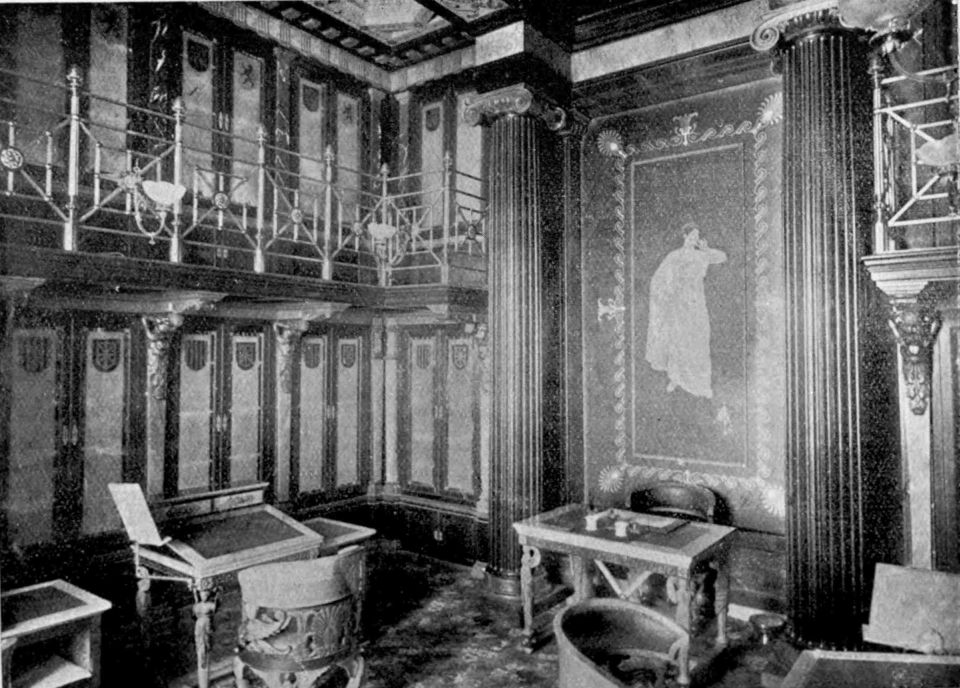
PLATE 56.
Reception Room at the Chamber of Deputies. Decorated by Don A. Mélida.
PLATE 57
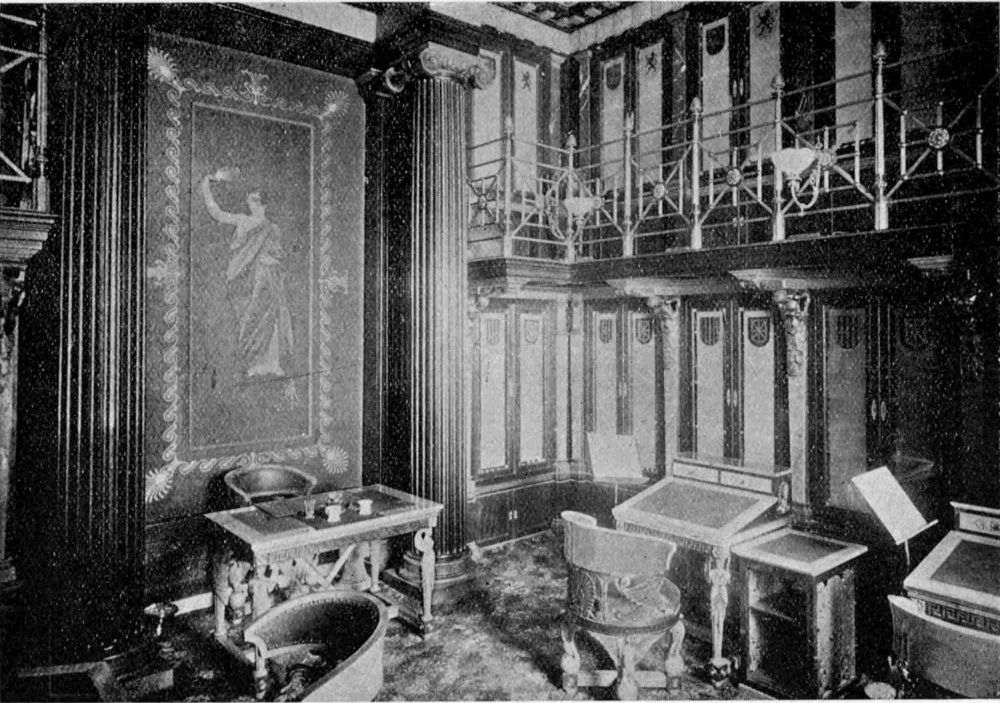
PLATE 57.
Reception Room at the Chamber of Deputies. Decorated by Don A. Mélida.
PLATE 58
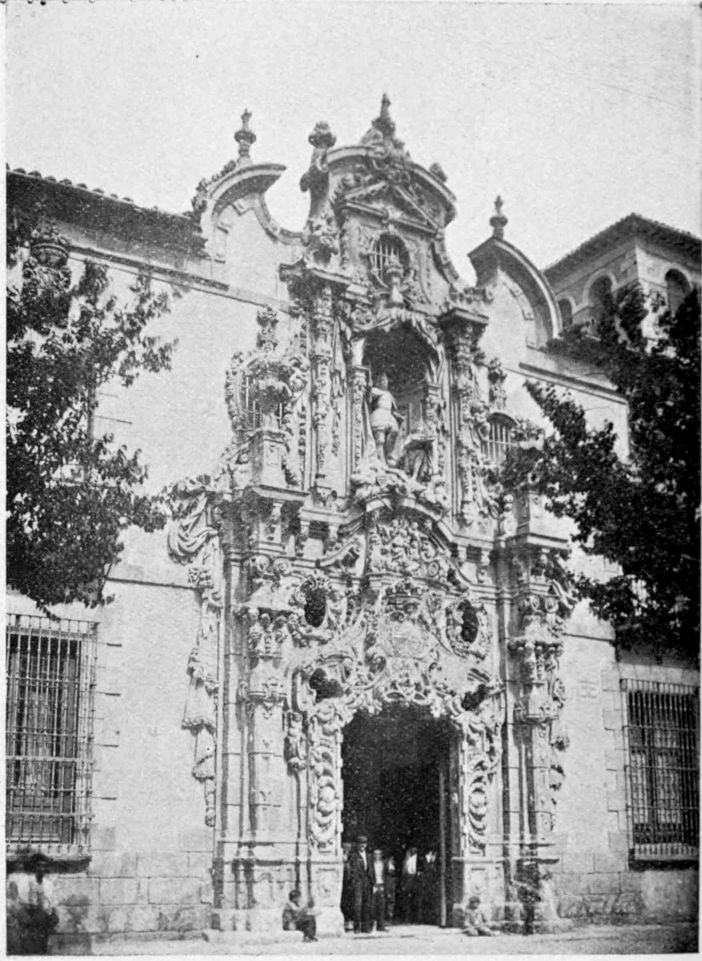
PLATE 58.
Façade of the Hospital. Calle Fuencarral.
PLATE 59
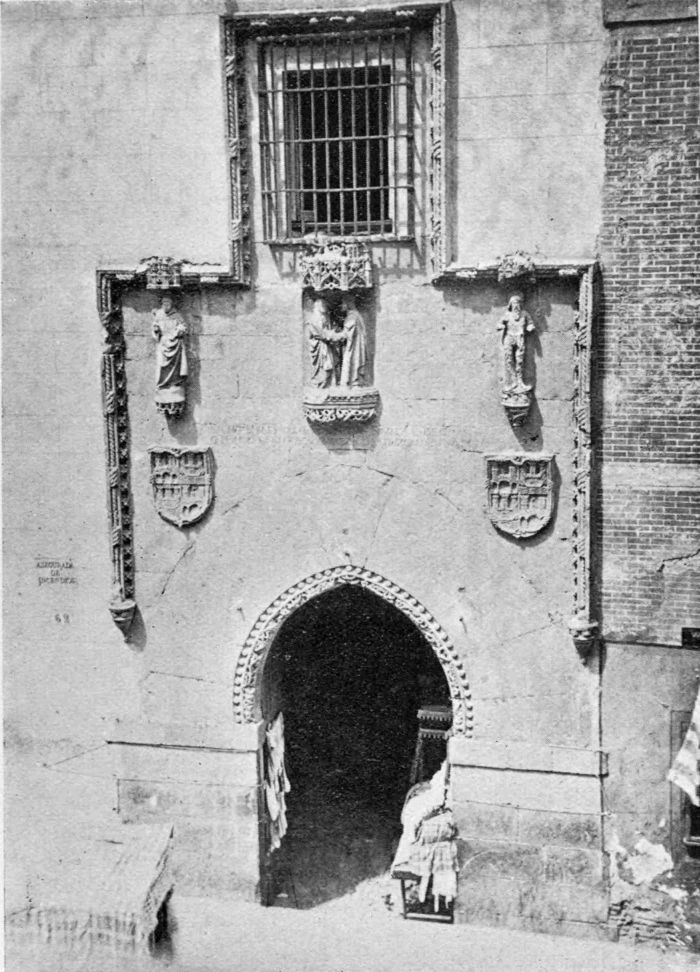
PLATE 59.
La Latina.
PLATE 60
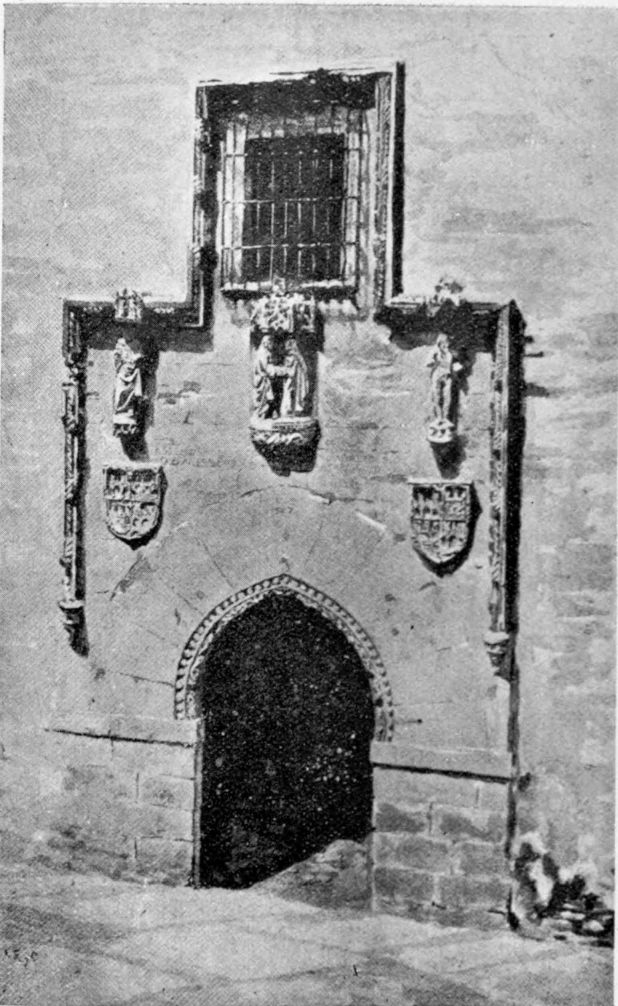
PLATE 60.
Portal of the Hospital of the Conception or “La Latina” in the Calle de Toledo.
PLATE 61
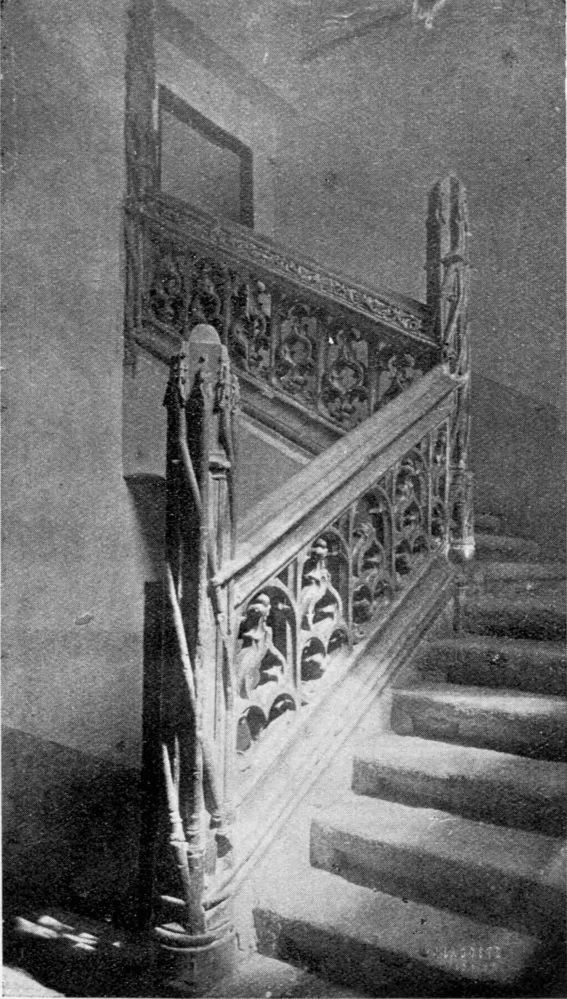
PLATE 61.
Staircase of la Latina.
PLATE 62
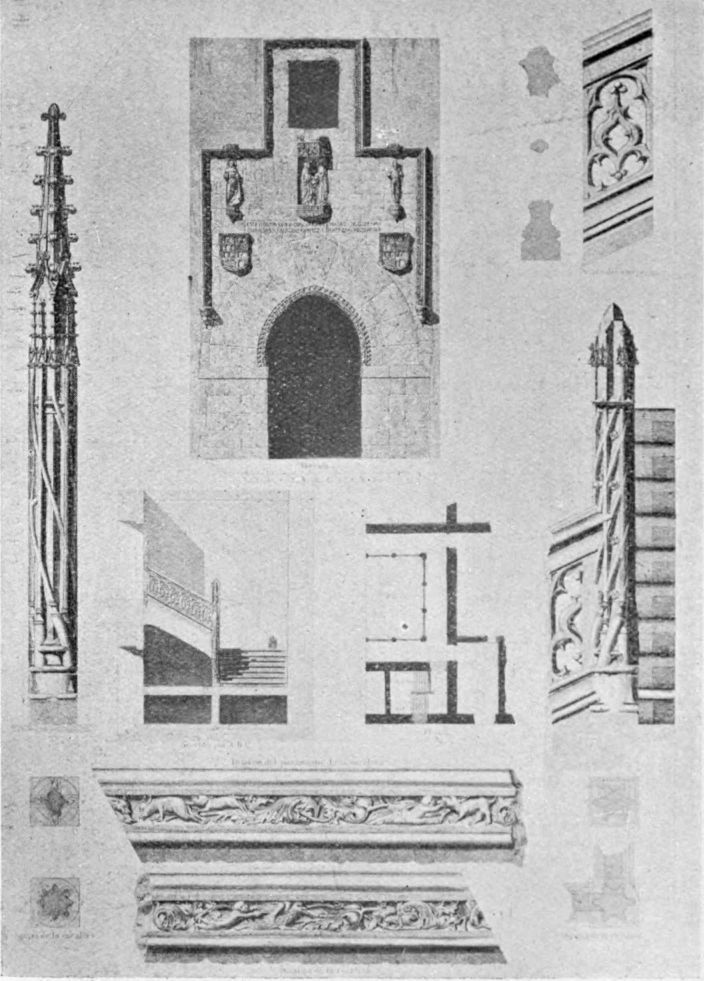
PLATE 62.
Portal and Staircase of the Hospital de la Latina.
PLATE 63
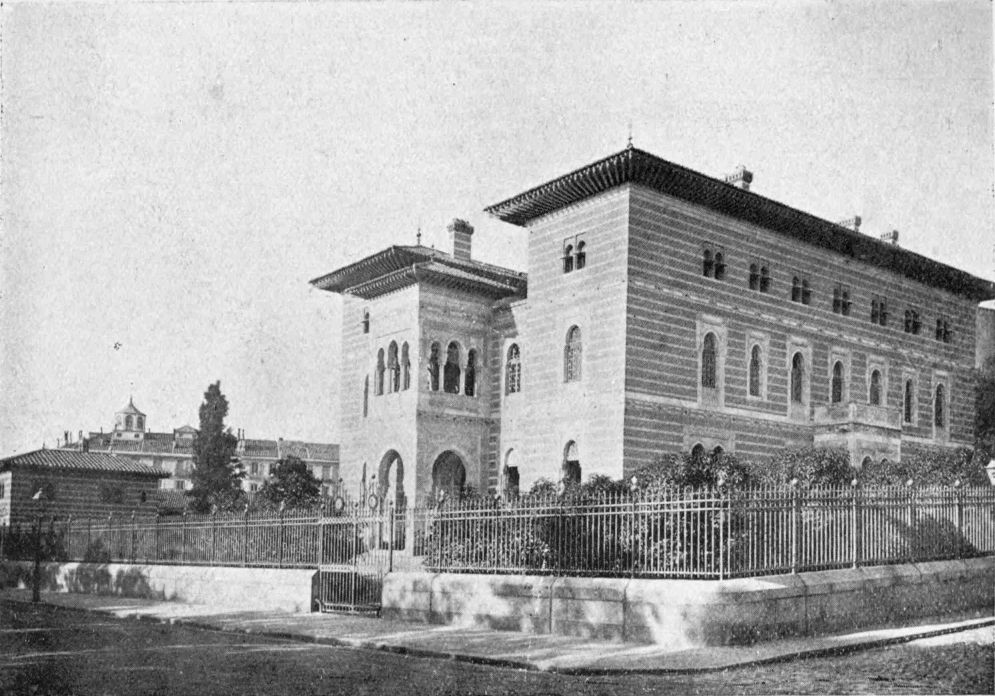
PLATE 63.
Arabian Palace of the Prado.
PLATE 64
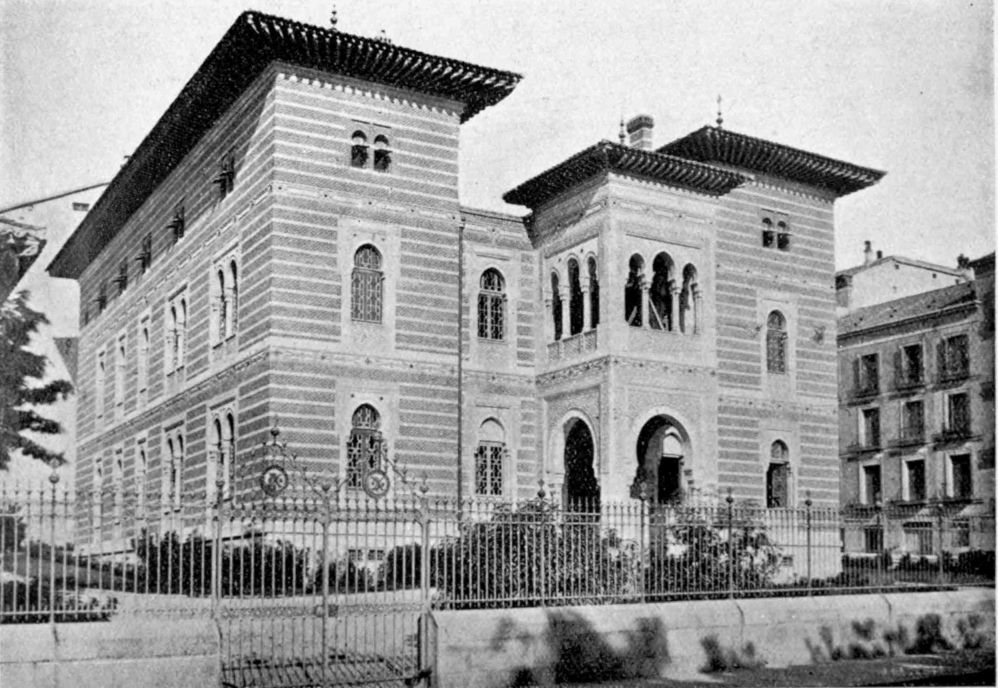
PLATE 64.
Arabian Palace of the Prado.
PLATE 65
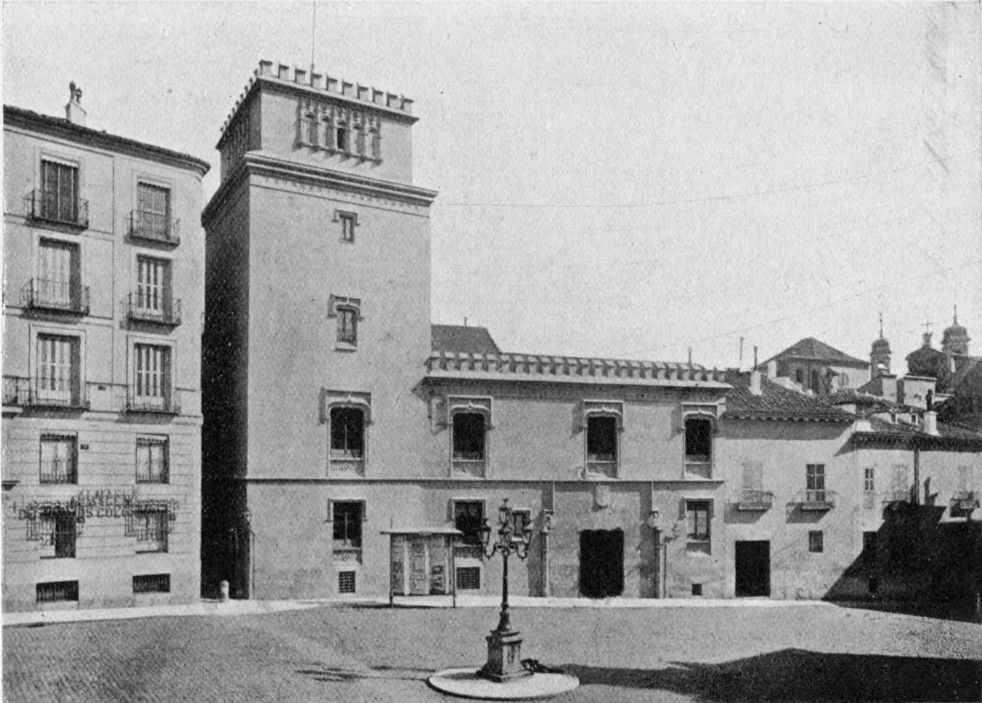
PLATE 65.
Lujanes Tower.
PLATE 66
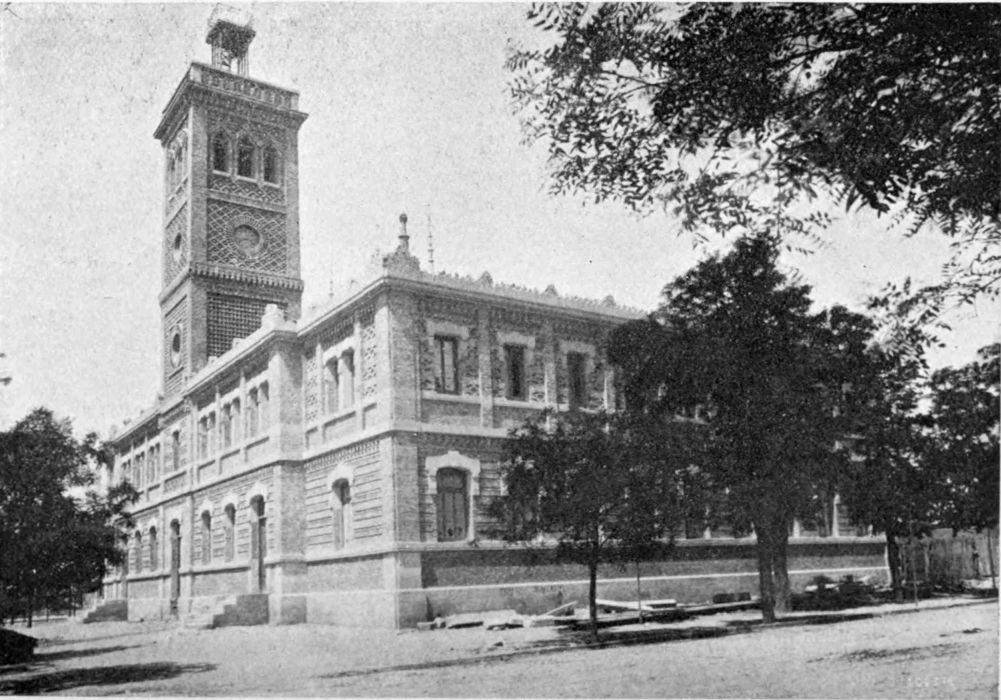
PLATE 66.
The Aguirre School.
PLATE 67
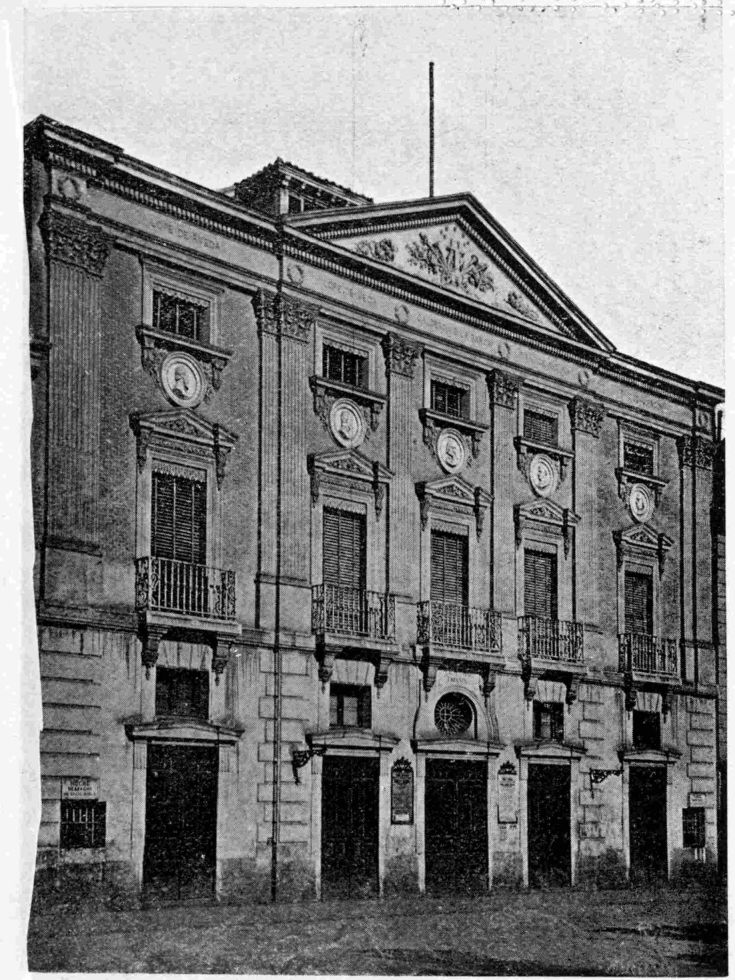
PLATE 67.
The Spanish Theatre.
PLATE 68
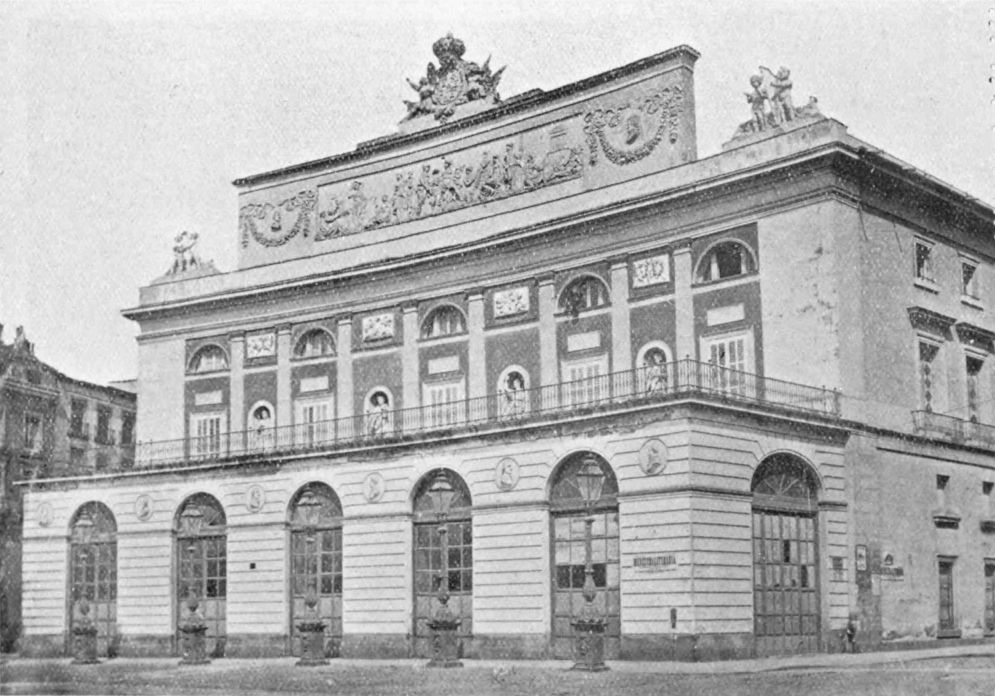
PLATE 68.
The Royal Theatre.
PLATE 69
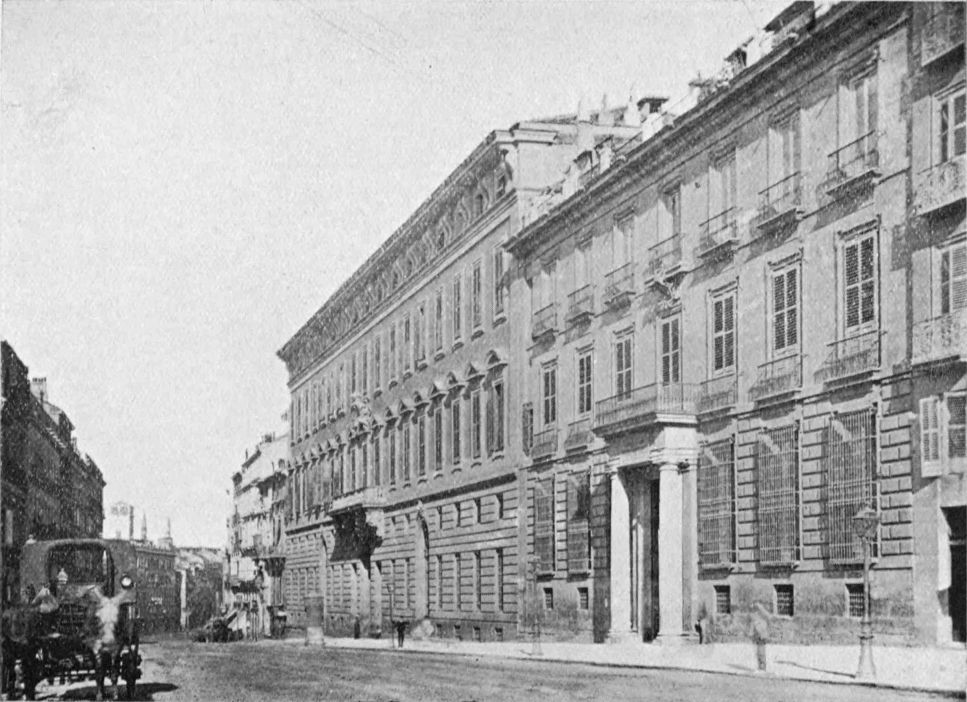
PLATE 69.
The Treasury Office in the Calle de Alcalá.
PLATE 70
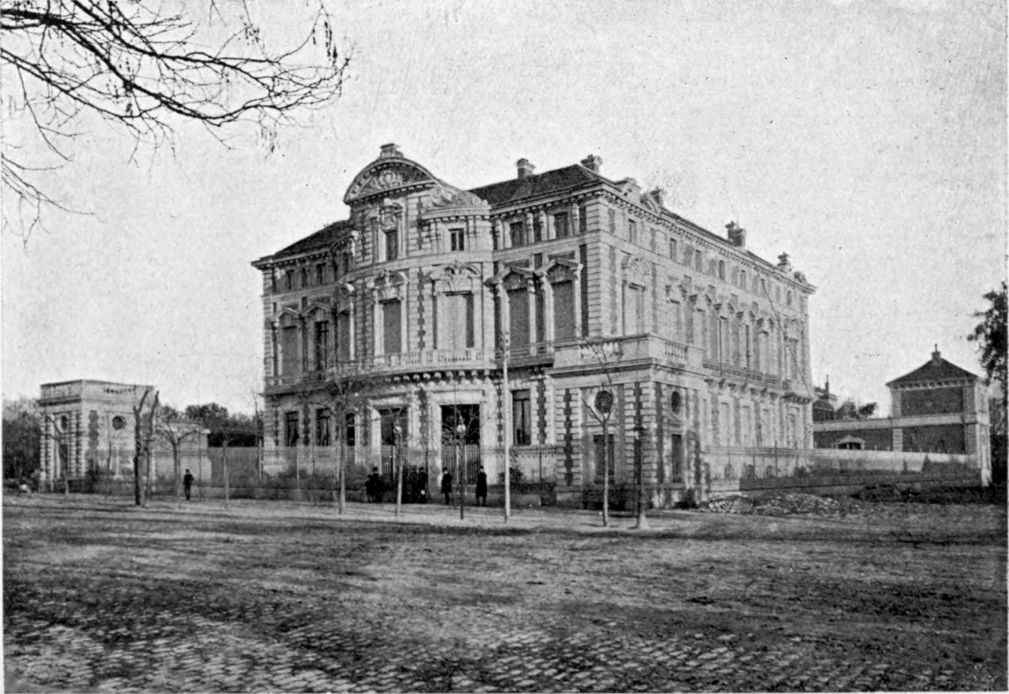
PLATE 70.
Palace of the Marqués de Portugalete.
PLATE 71
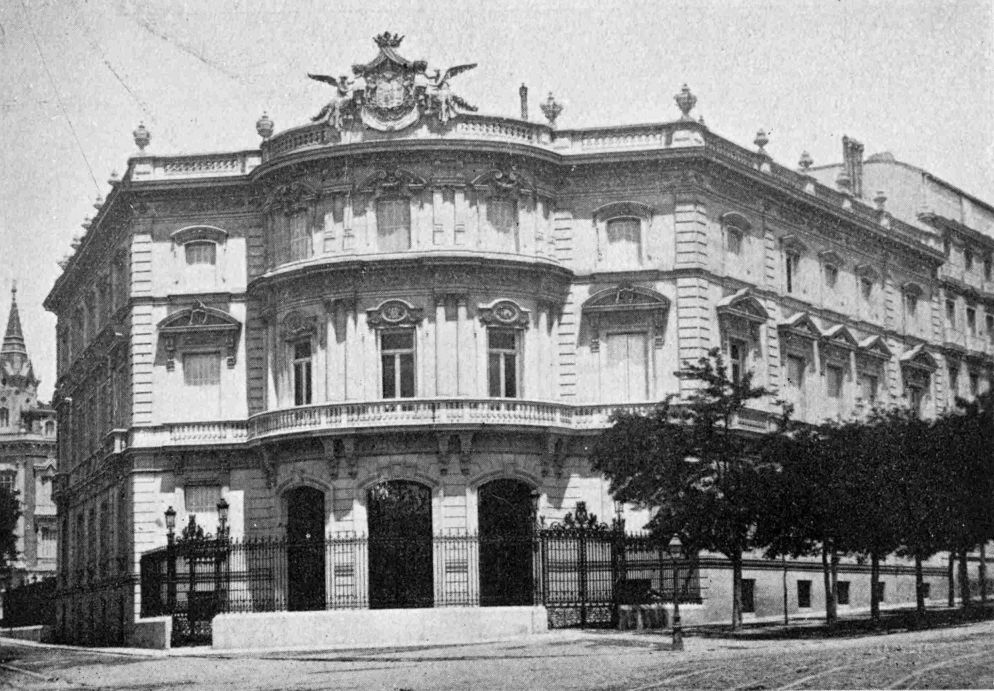
PLATE 71.
Palace of the Marqués de Linares.
PLATE 72
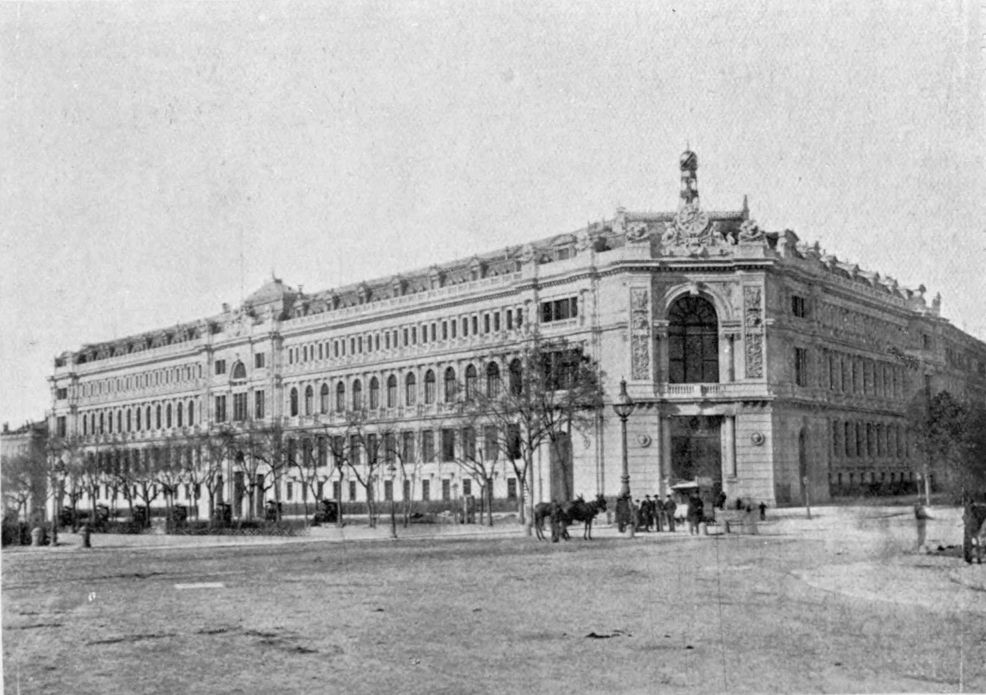
PLATE 72.
The Bank of Spain.
PLATE 73
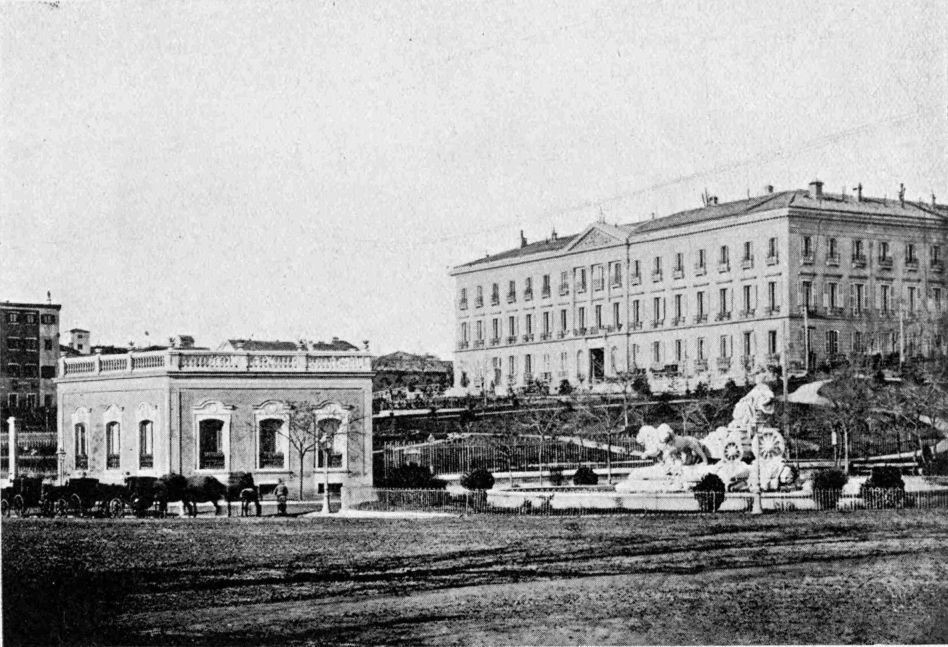
PLATE 73.
The War Office.
PLATE 74
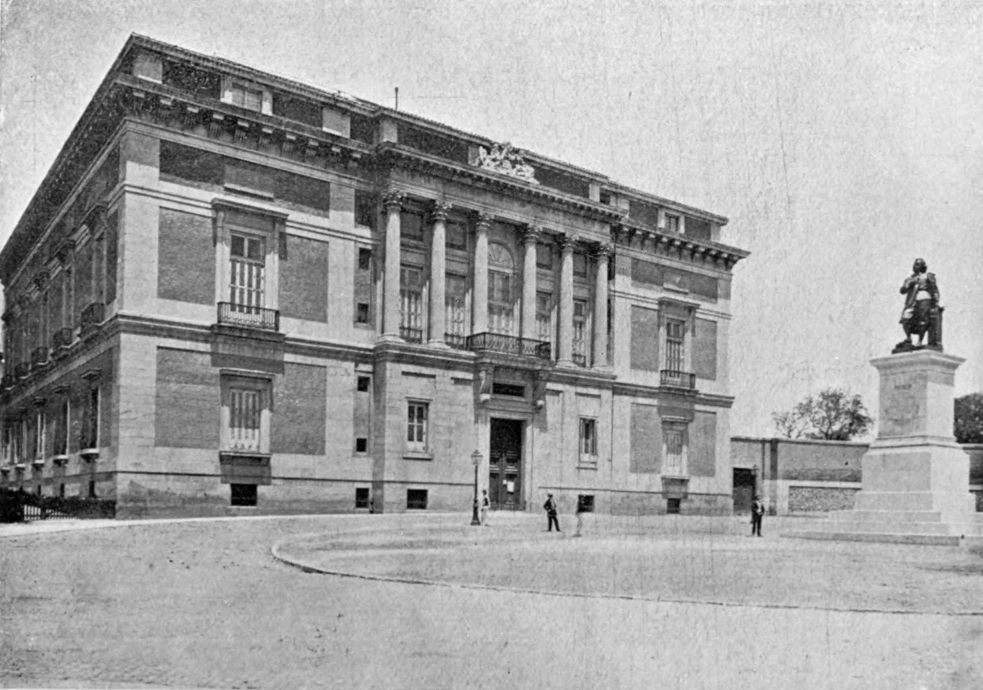
PLATE 74.
Southern Façade of the Museum and the Statue of Murillo.
PLATE 75
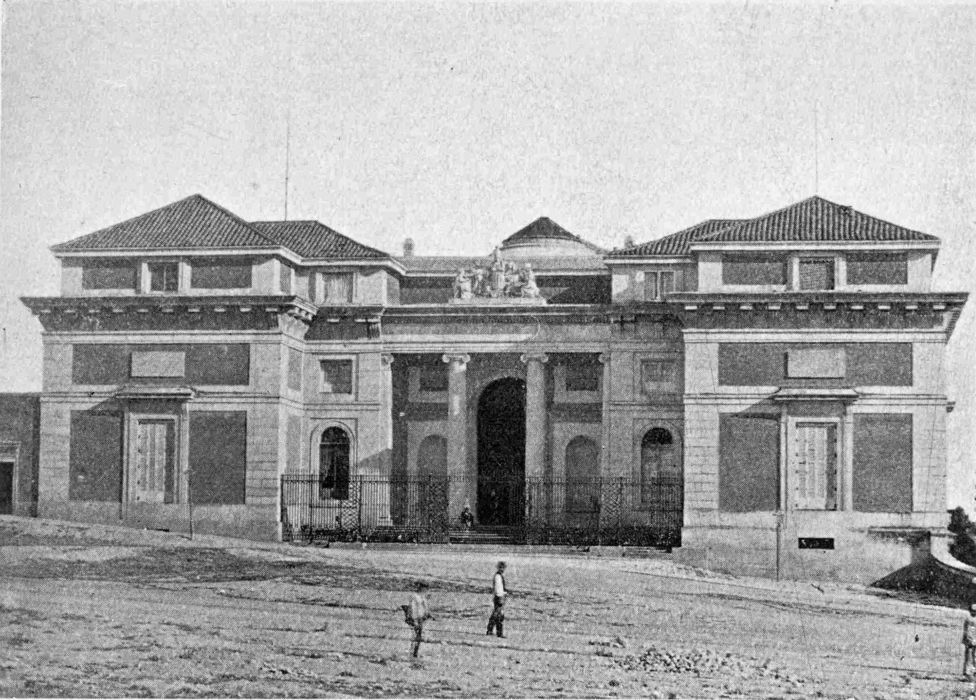
PLATE 75.
The Prado Gallery. North Façade.
PLATE 76
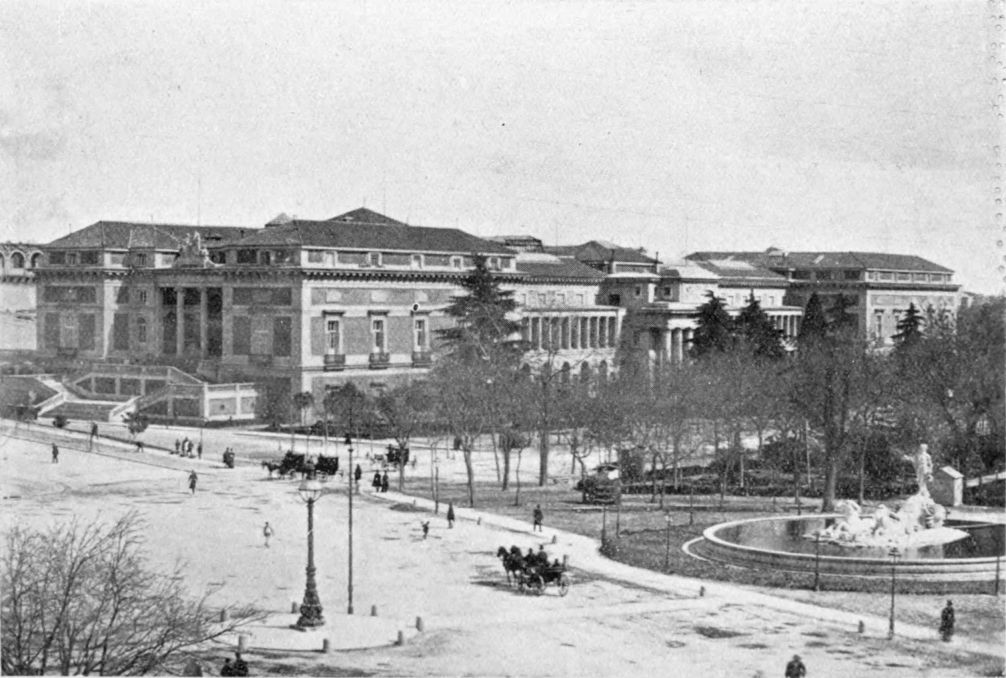
PLATE 76.
The Prado Gallery.
PLATE 77
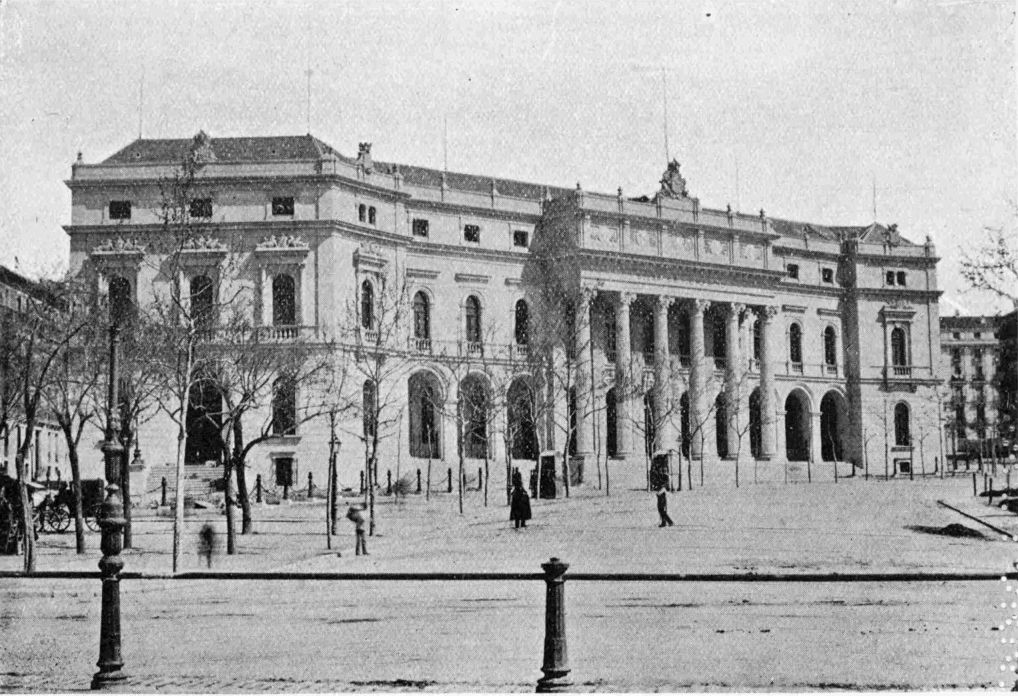
PLATE 77.
The New Exchange.
PLATE 78
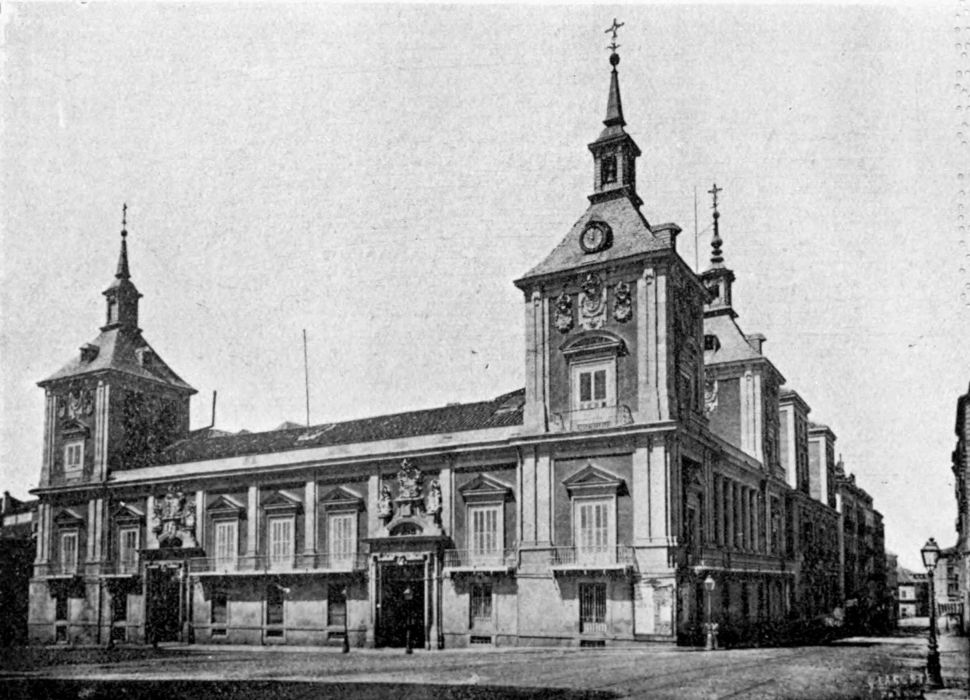
PLATE 78.
The Town Hall.
PLATE 79
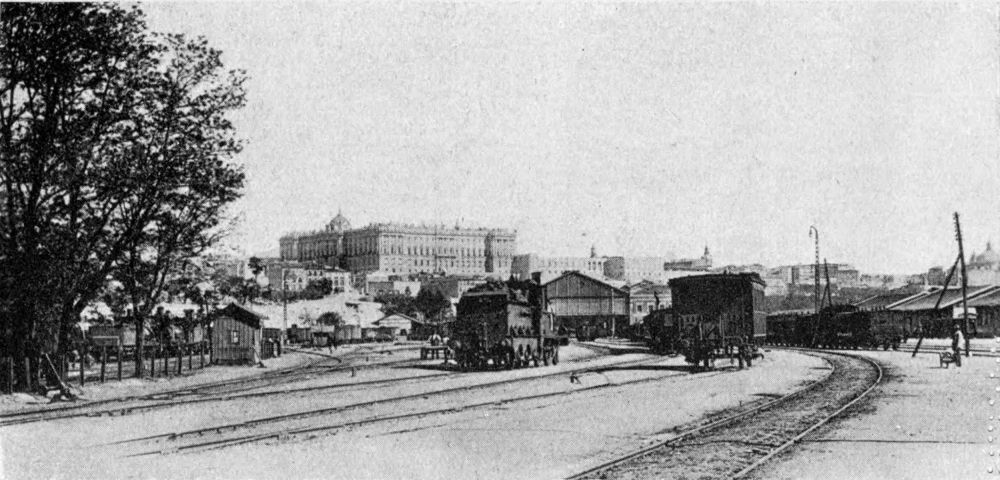
PLATE 79.
The Northern Railway Station.
PLATE 80
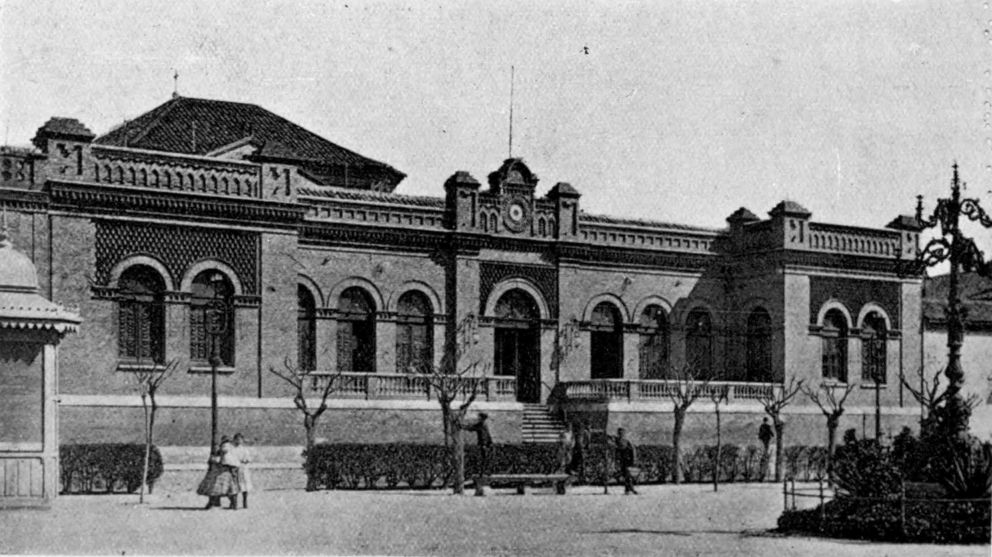
PLATE 80.
Círculo de Contribuyentes.
PLATE 81
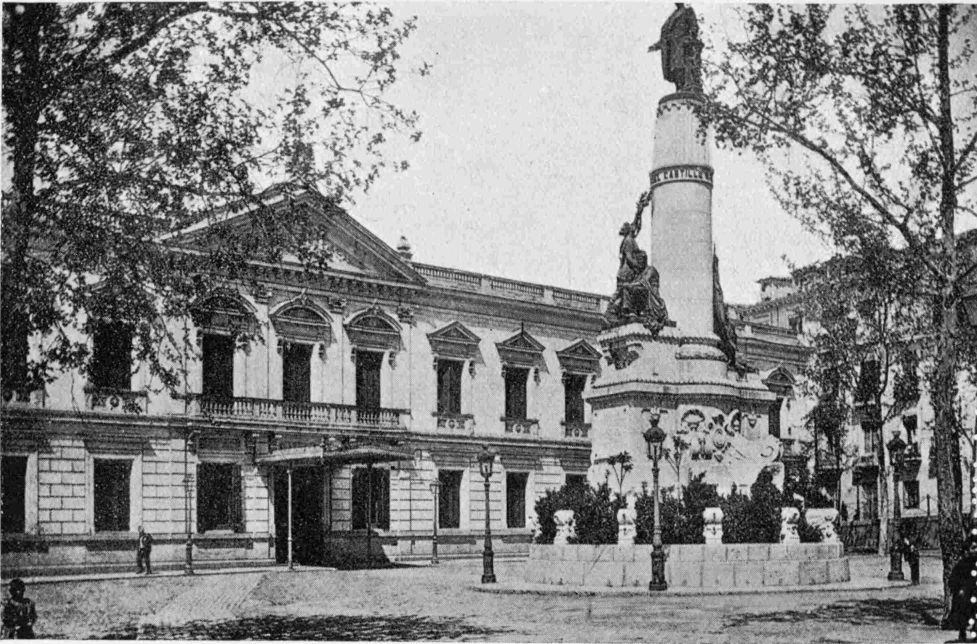
PLATE 81.
The Senate House.
PLATE 82
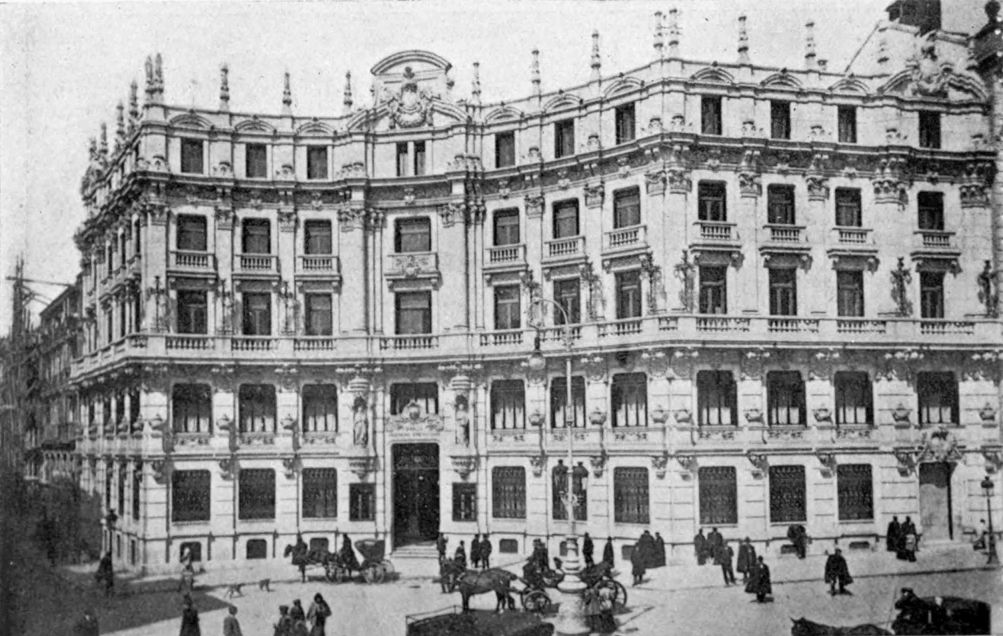
PLATE 82.
Hispano-American Bank.
PLATE 83
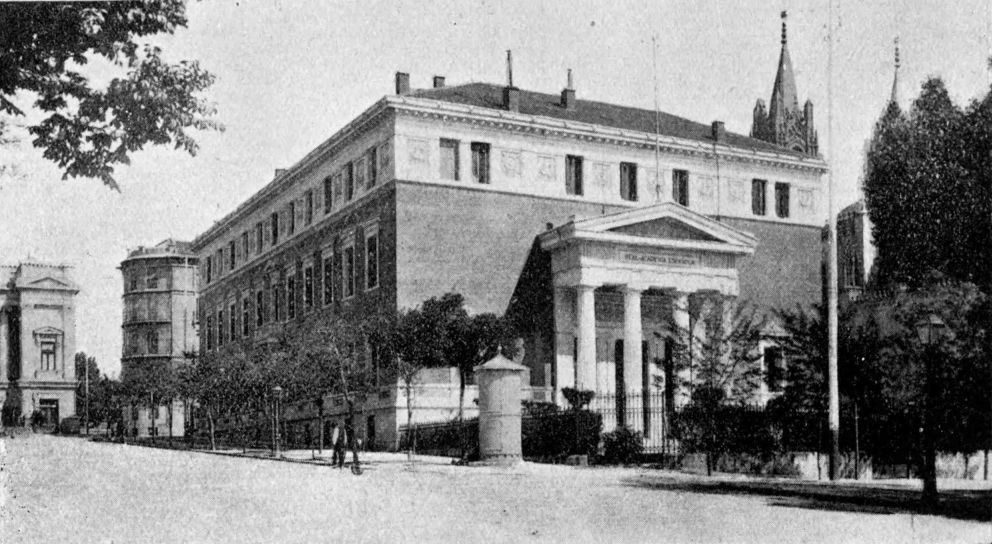
PLATE 83.
The Spanish Academy.
PLATE 84
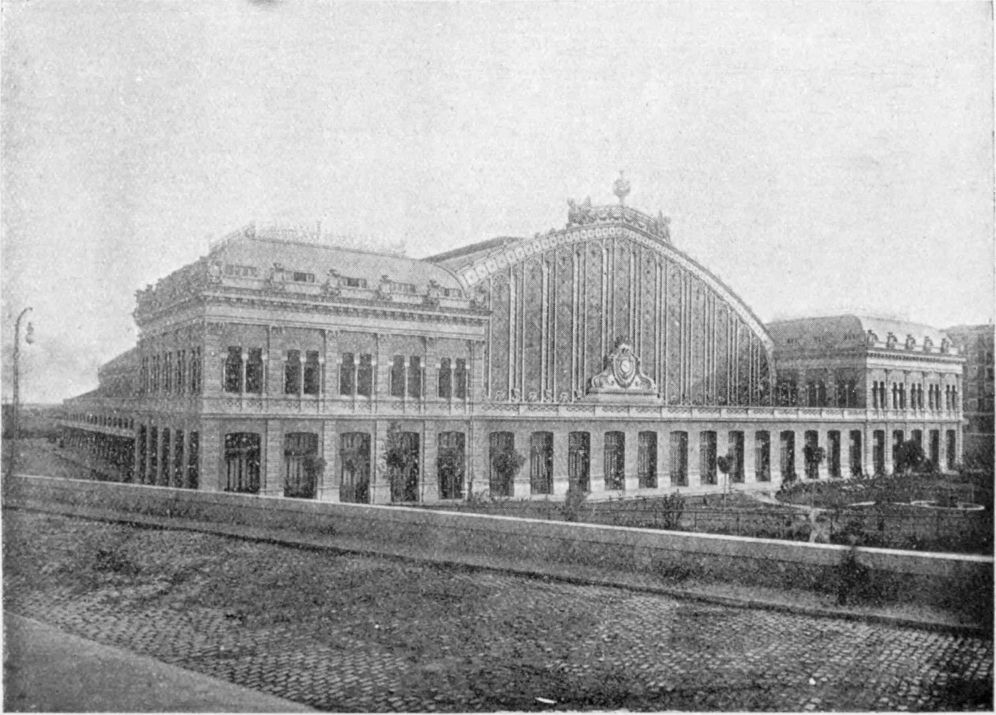
PLATE 84.
The Atocha Station.
PLATE 85
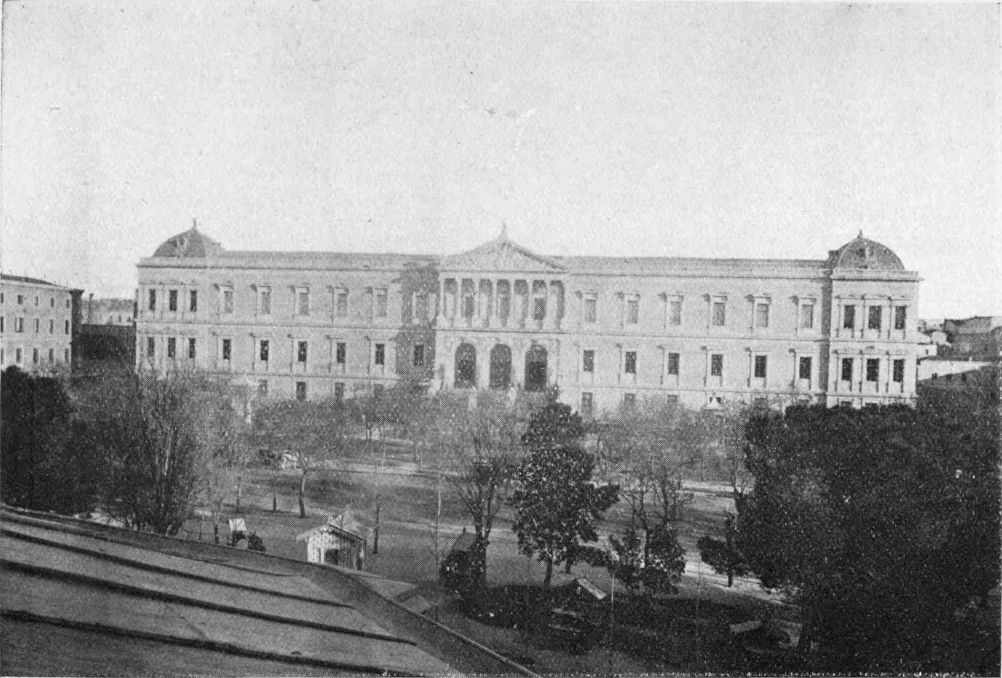
PLATE 85.
National Library.
PLATE 86
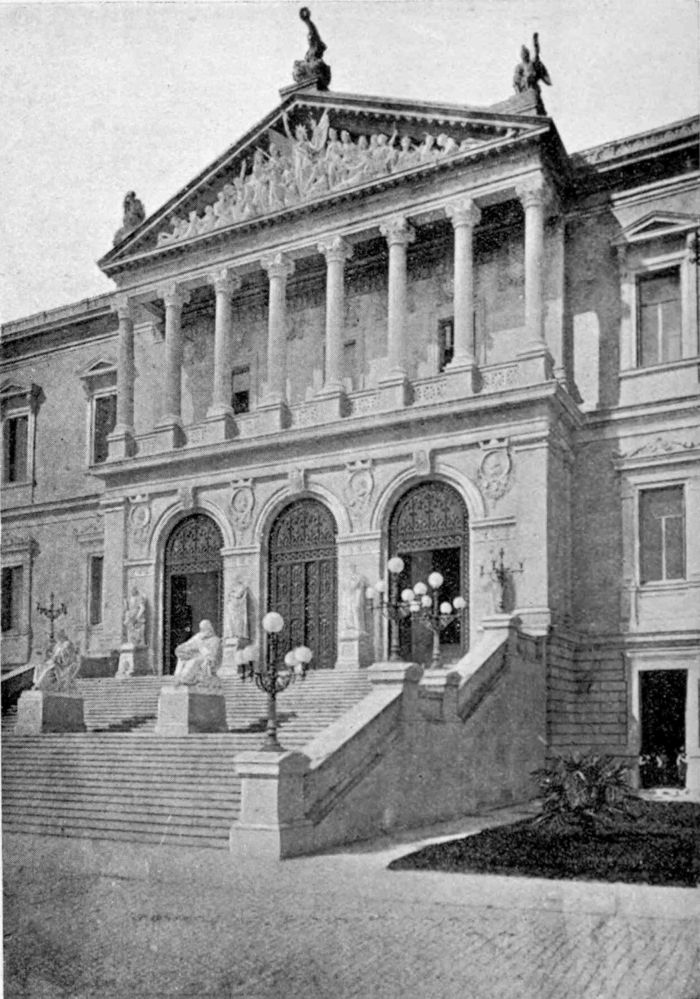
PLATE 86.
The National Library and Museum.
PLATE 87
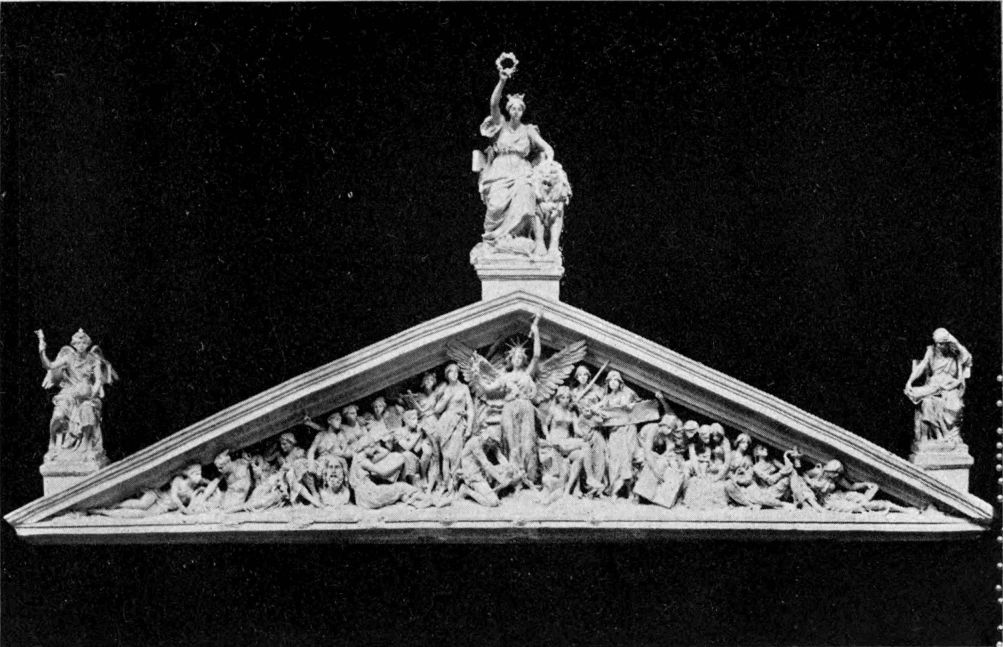
PLATE 87.
National Library. Detail of the Façade.
PLATE 88
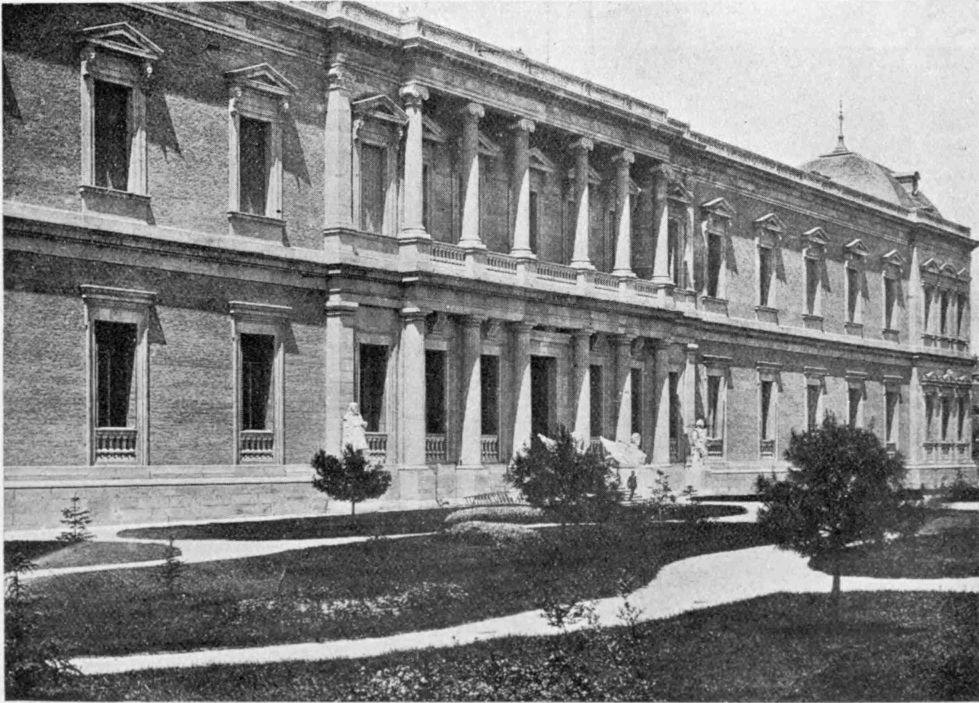
PLATE 88.
National Library and Museum. East Façade.
PLATE 89
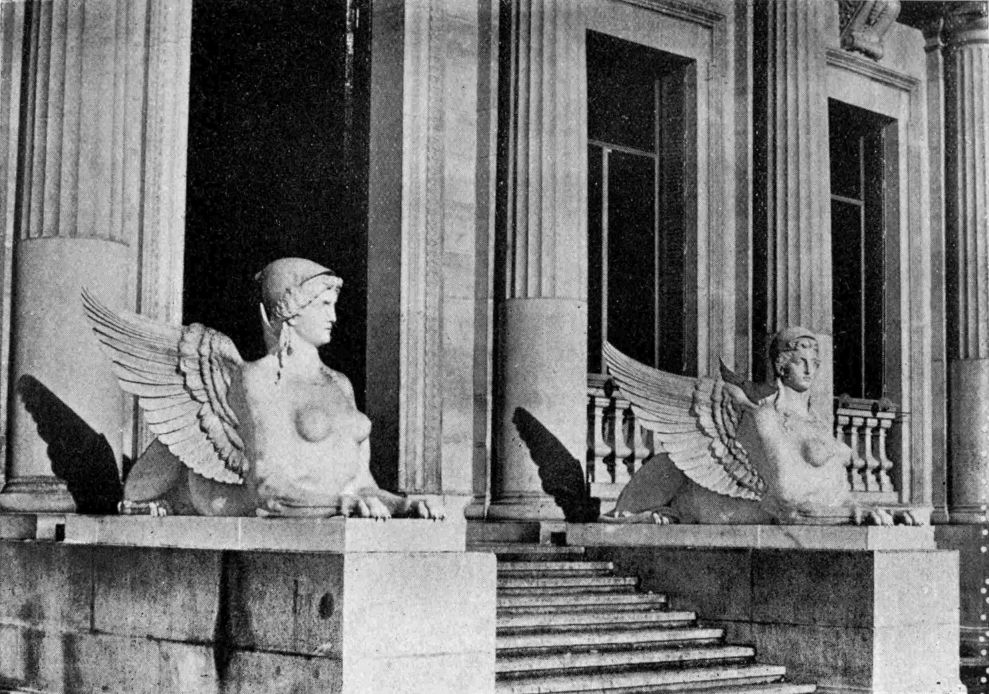
PLATE 89.
National Library. Sphinx.
PLATE 90
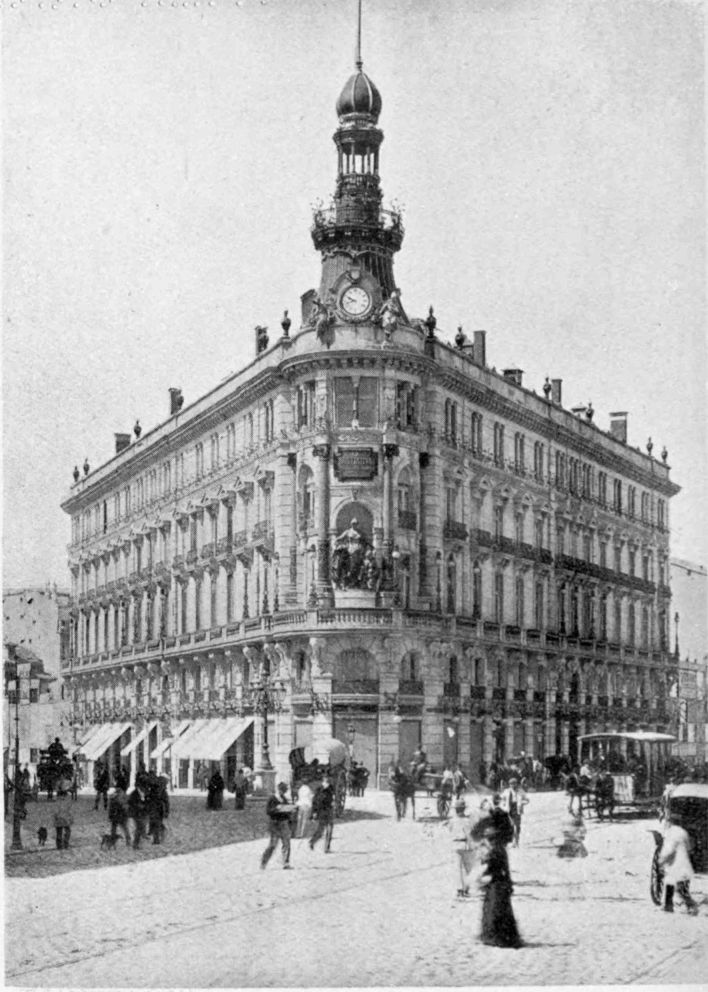
PLATE 90.
The Equitable Buildings in the Calle de Alcalá.
PLATE 91
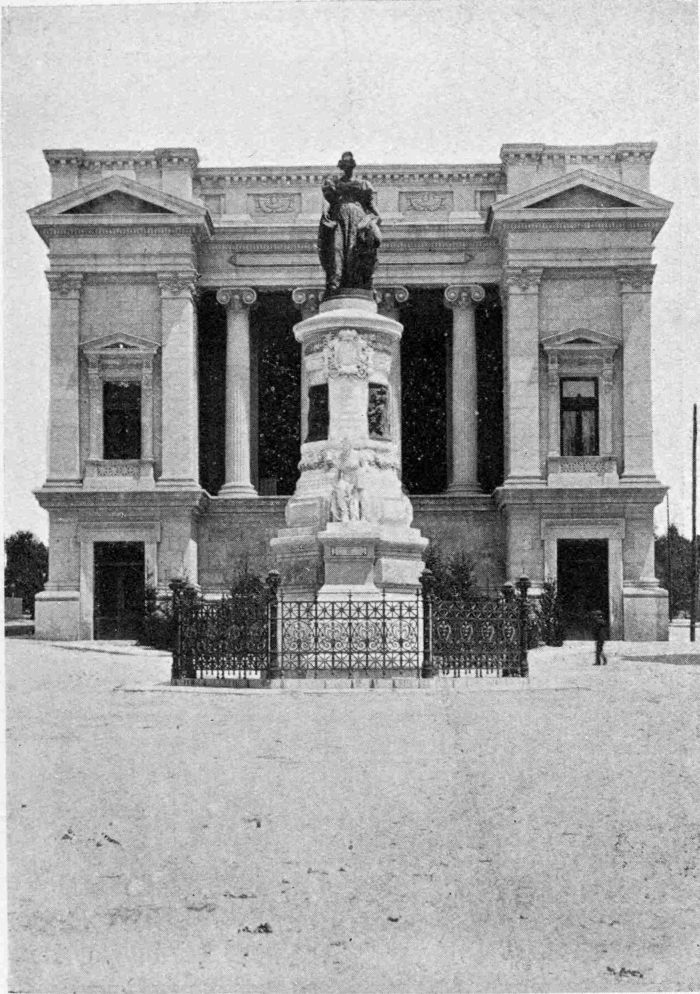
PLATE 91.
Statue of María Cristina and Museum of Reproductions.
PLATE 92
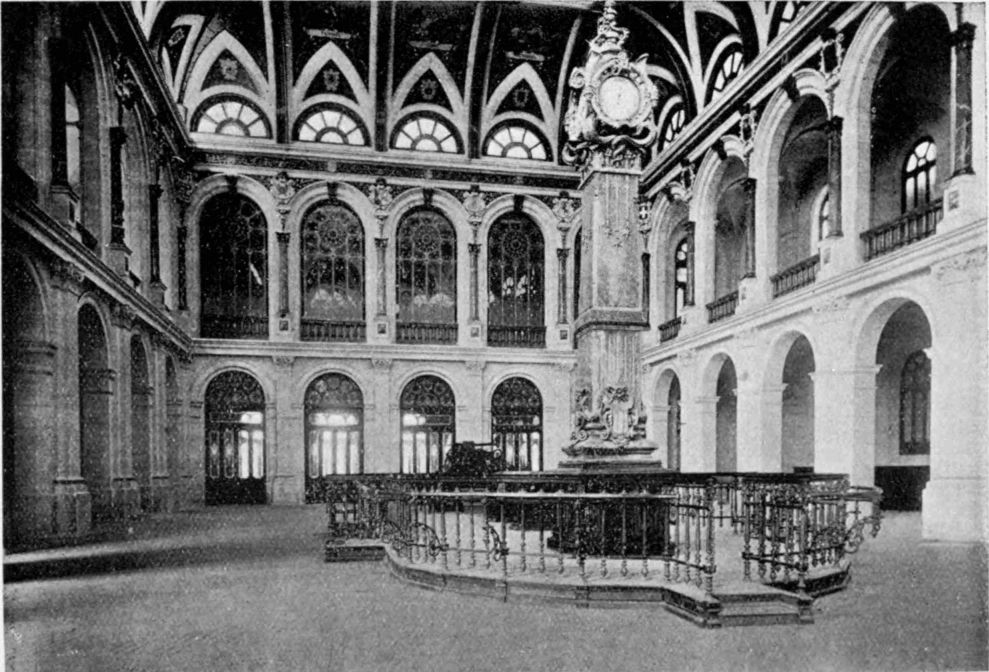
PLATE 92.
Interior of the New Exchange.
PLATE 93
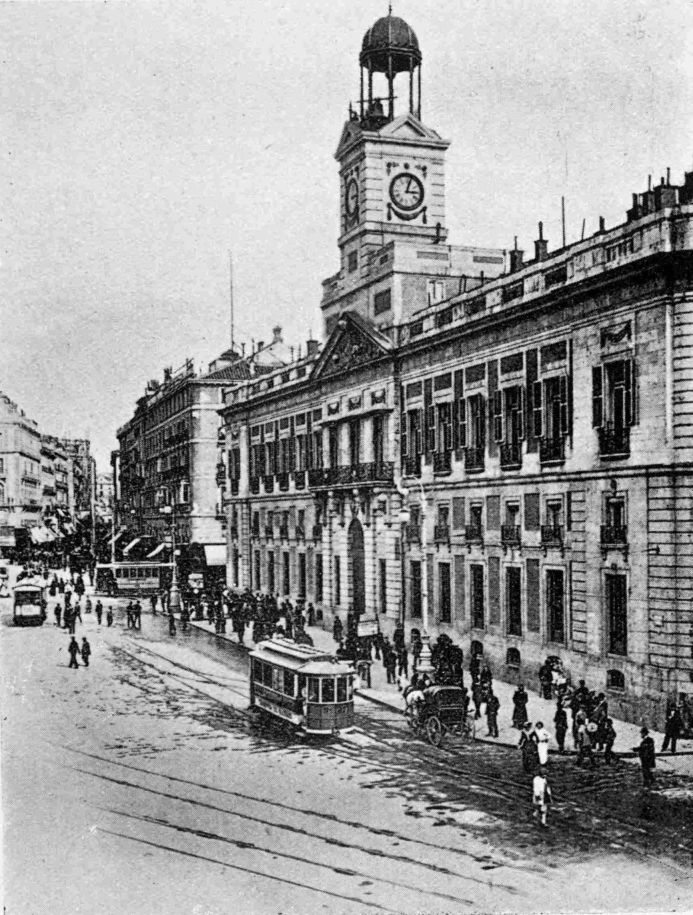
PLATE 93.
The Home Office.
PLATE 94
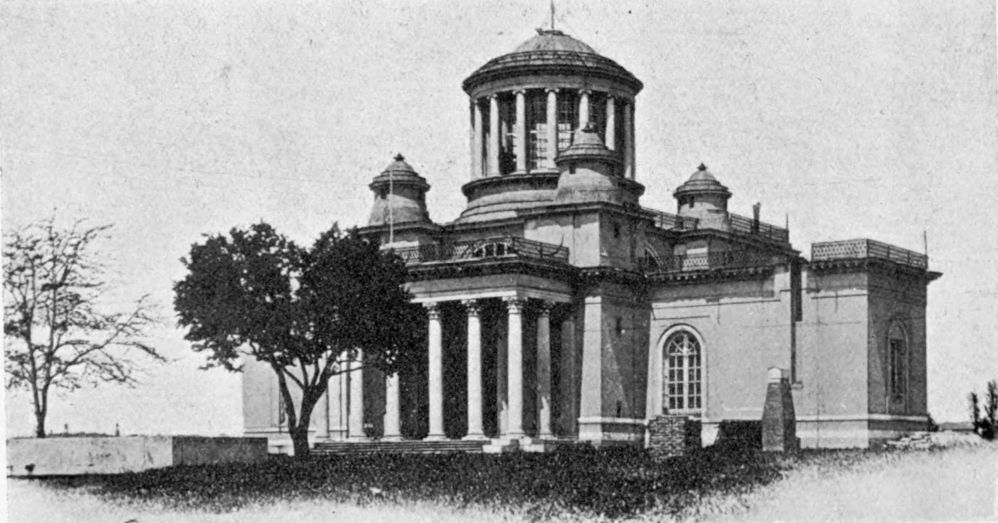
PLATE 94.
Astronomical Observatory.
PLATE 95
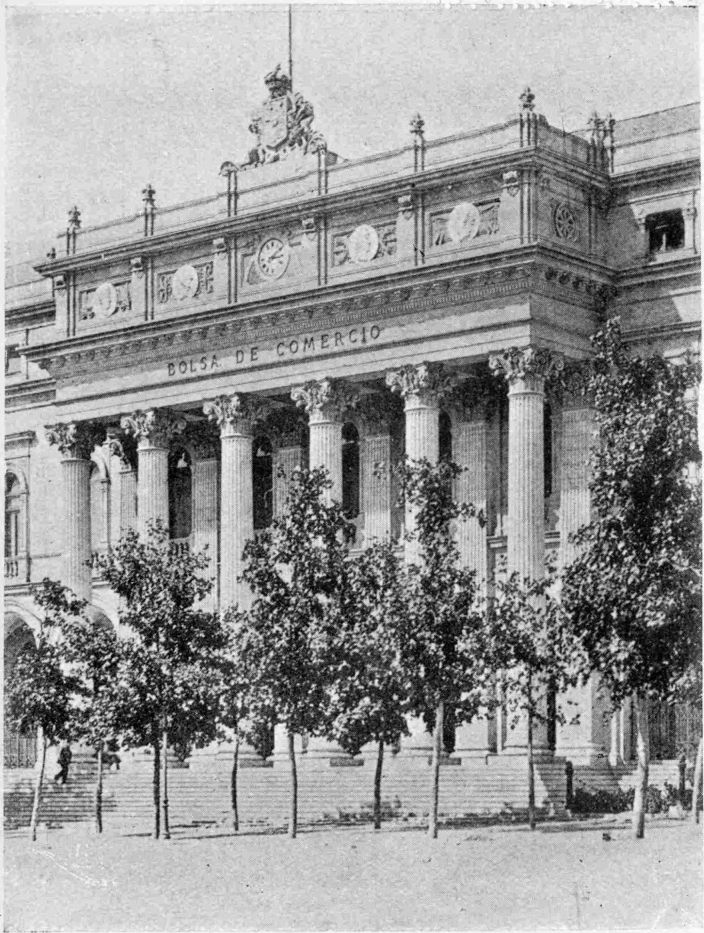
PLATE 95.
The Exchange.
PLATE 96
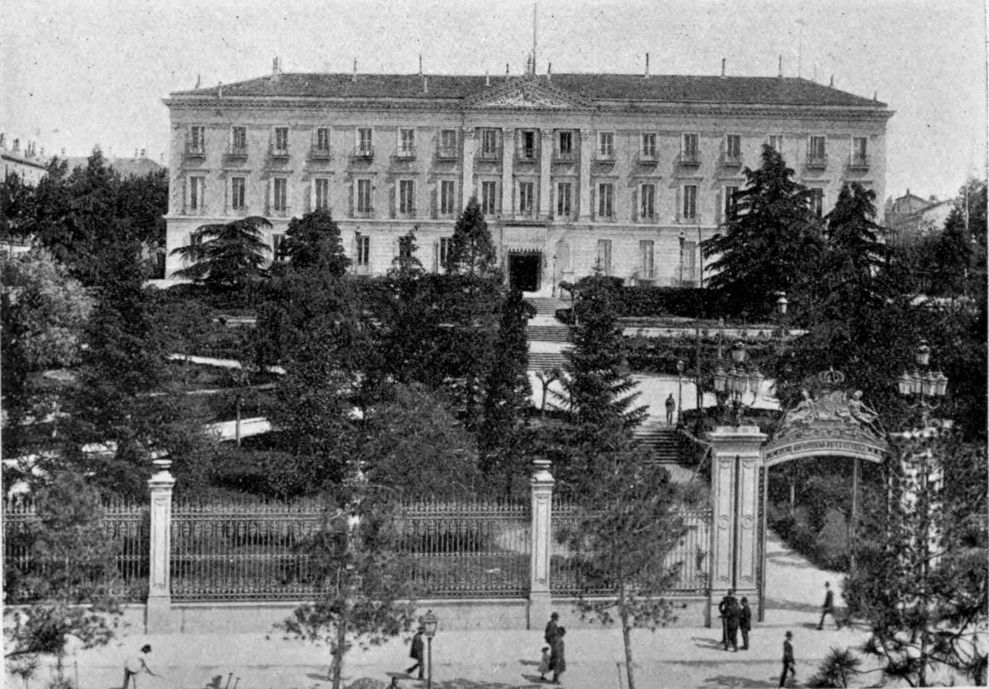
PLATE 96.
The War Office.
PLATE 97
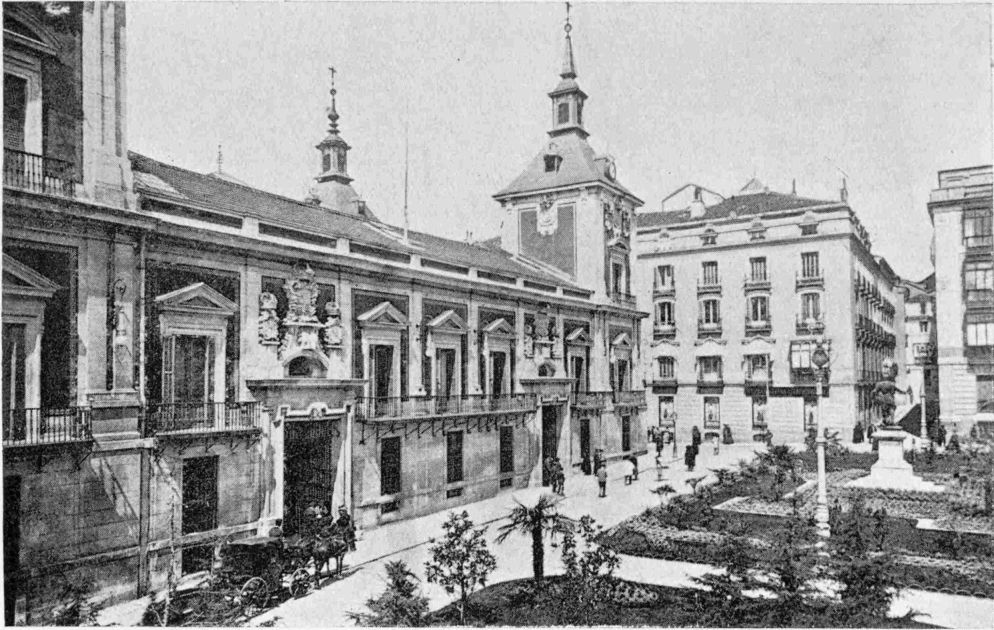
PLATE 97.
The Town Hall.
PLATE 98
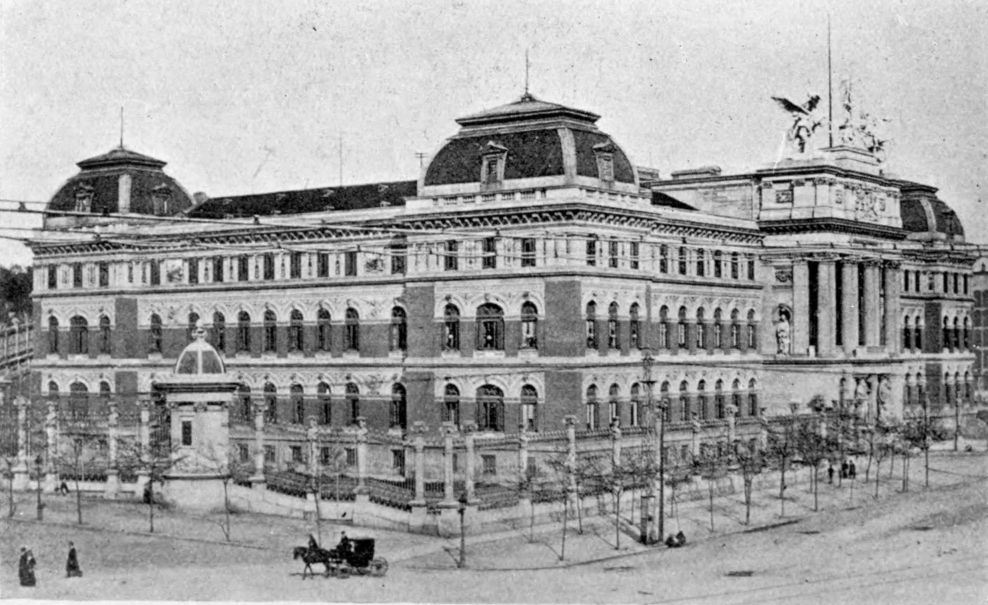
PLATE 98.
Ministerio de Fomento.
PLATE 99
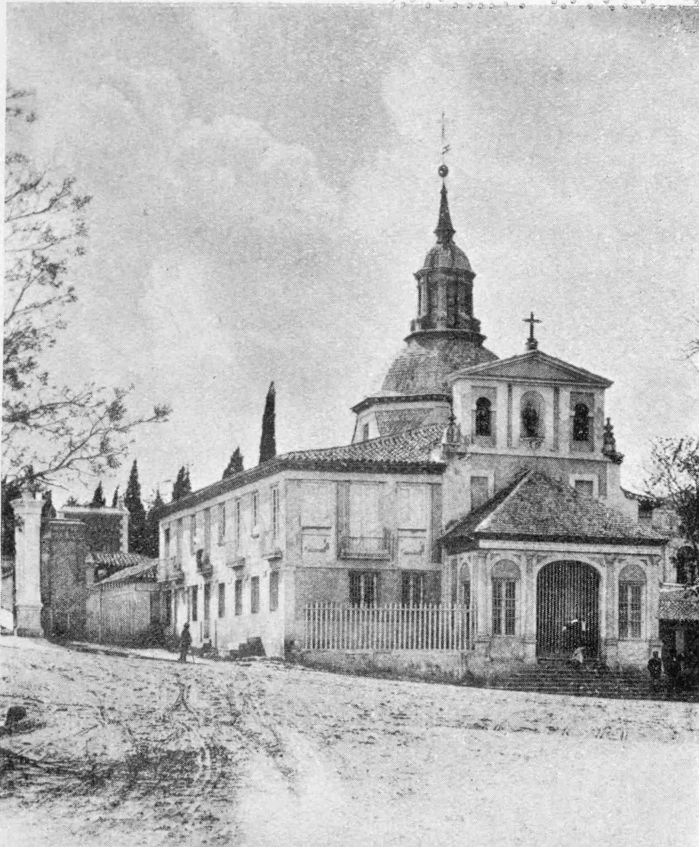
PLATE 99.
Hermitage of San Isidro.
PLATE 100
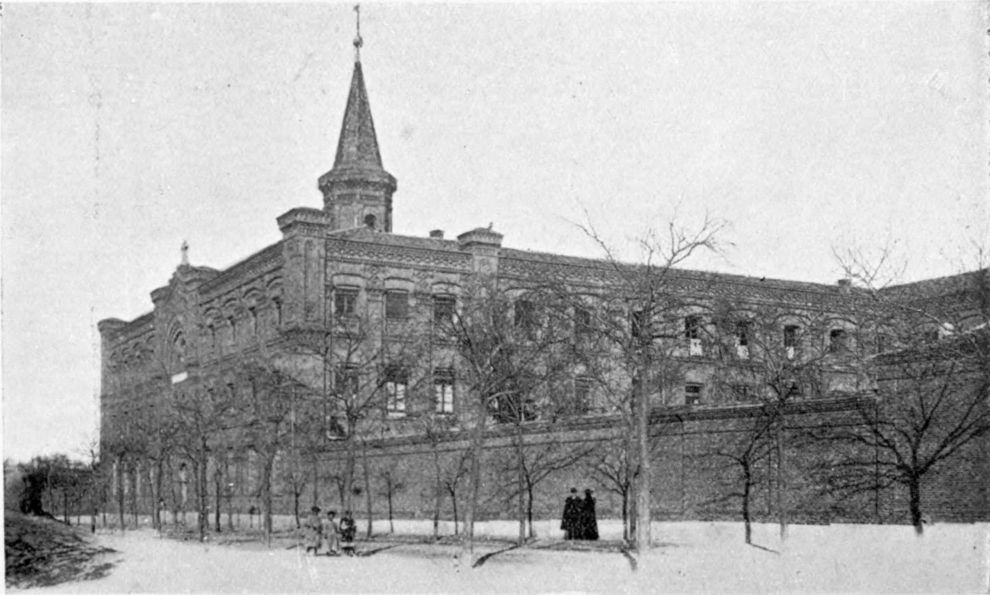
PLATE 100.
Refuge of Our Lady of Mercy.
PLATE 101
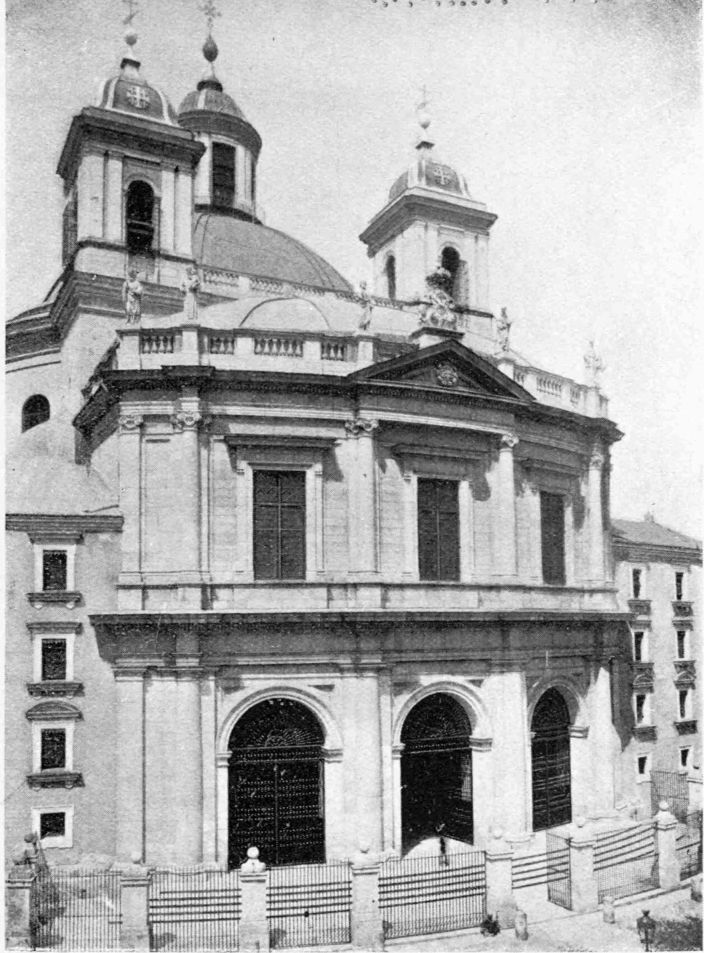
PLATE 101.
Church of San Francisco el Grande.
PLATE 102
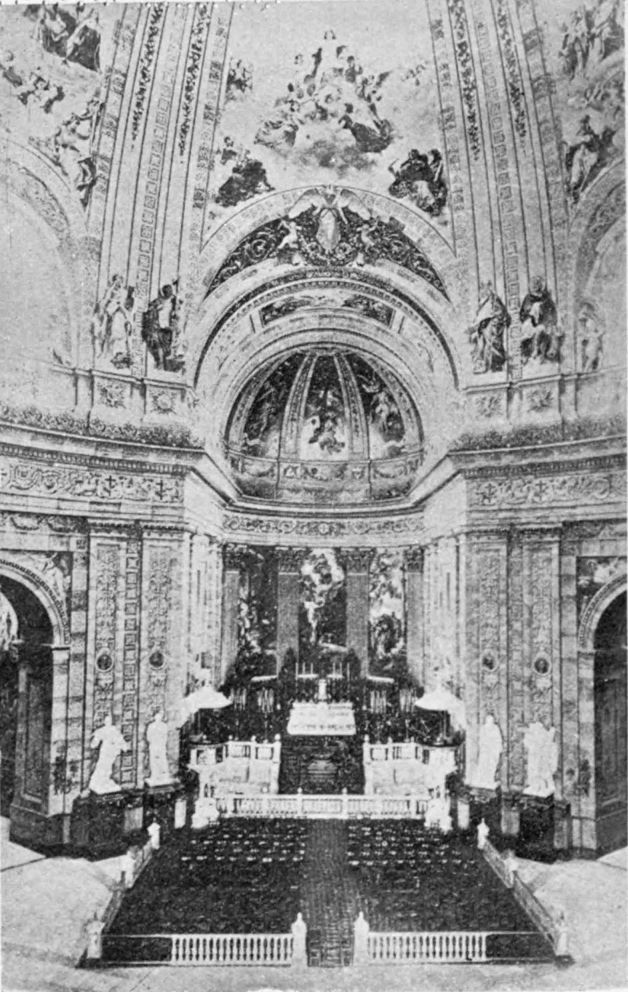
PLATE 102.
San Francisco el Grande.
General View from the Choir.
PLATE 103
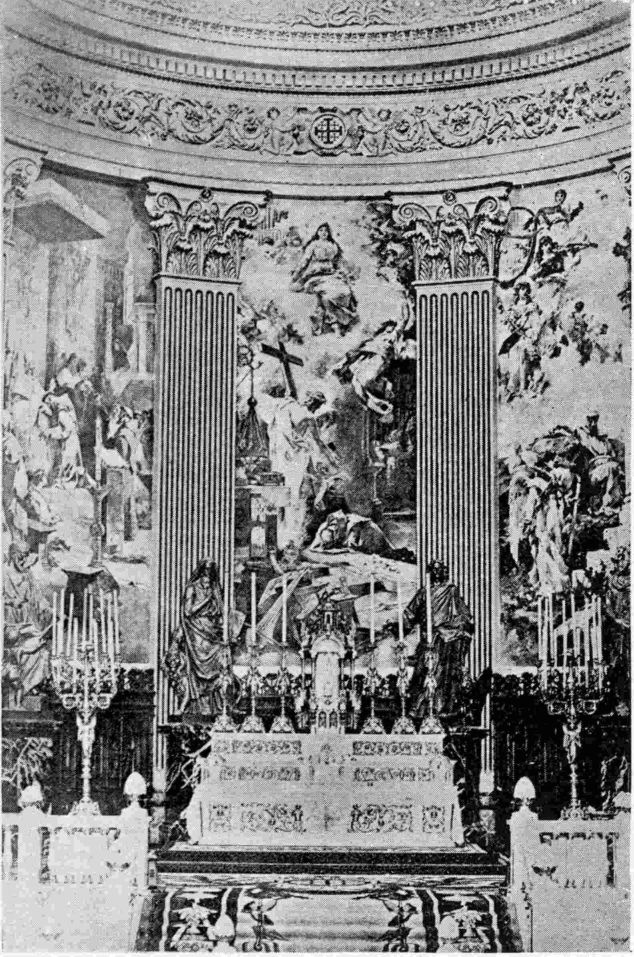
PLATE 103.
San Francisco el Grande. The Concession of the Jubilee of the Porciúncula.
PLATE 104
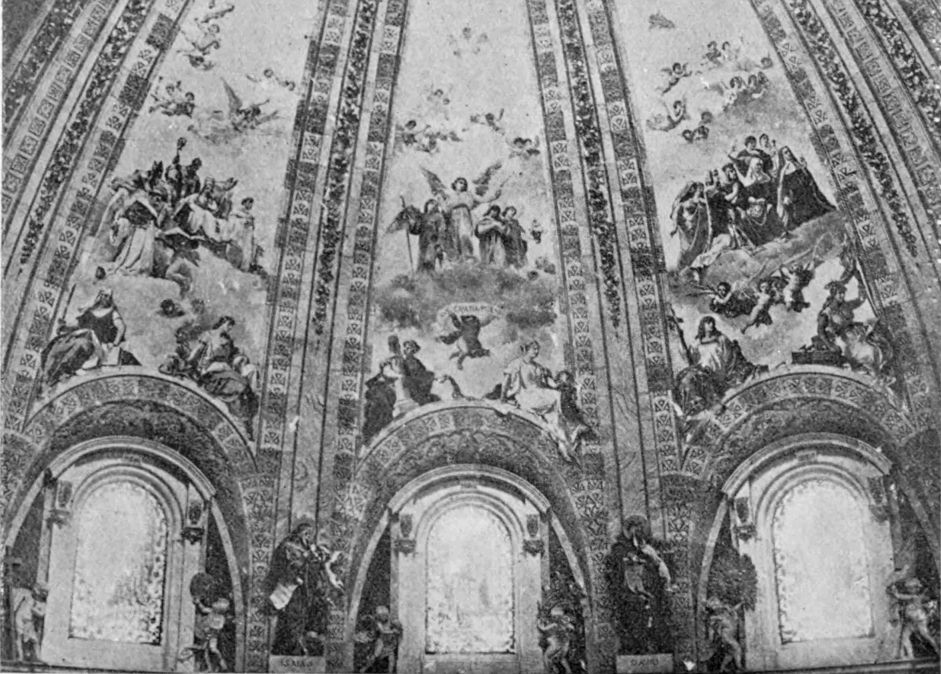
PLATE 104.
San Francisco el Grande. Left Side of the Cupola.
PLATE 105
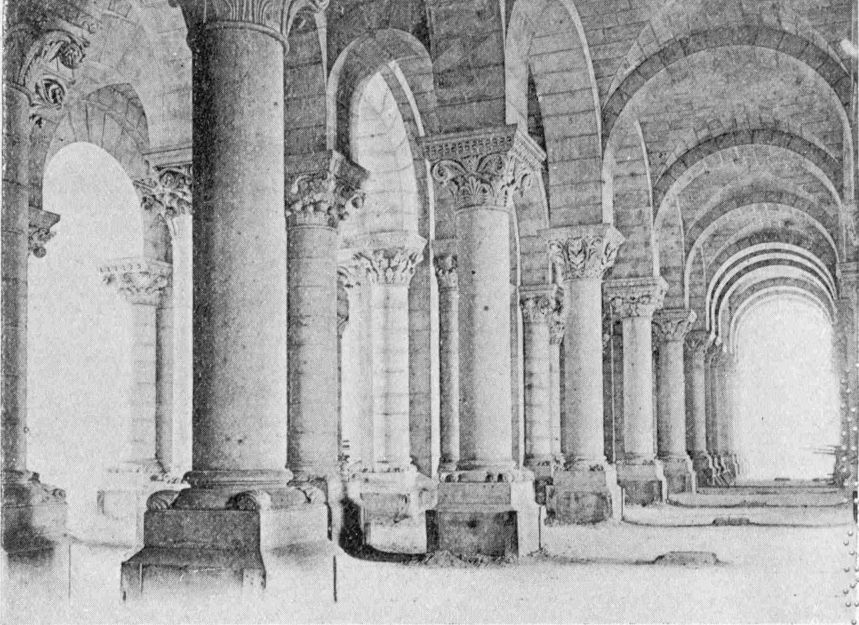
PLATE 105.
Crypt in the Almudena Cathedral.
PLATE 106
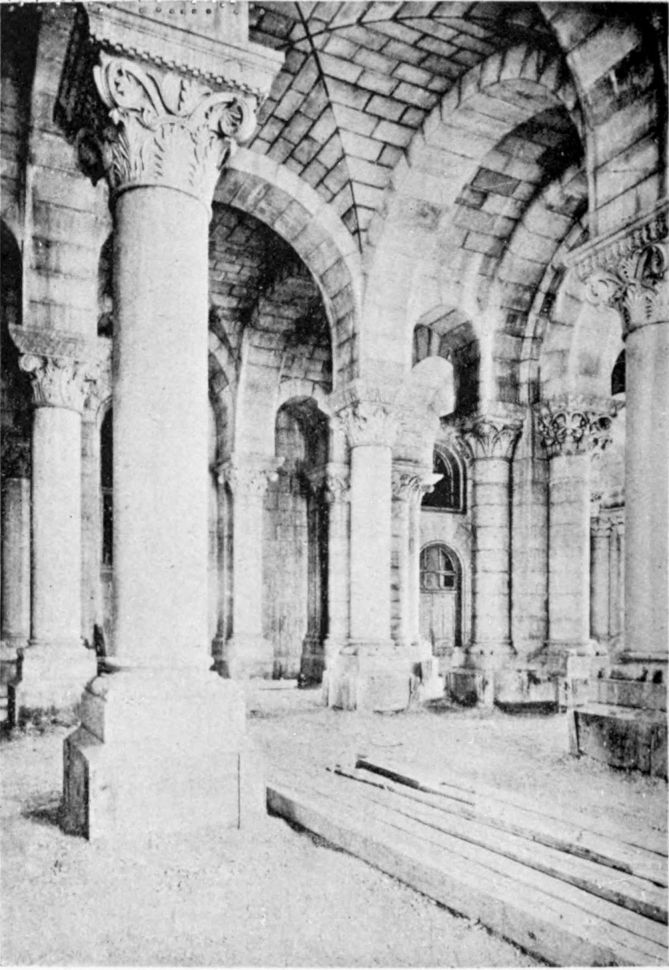
PLATE 106.
The Cathedral. Partial View of the Crypt.
PLATE 107
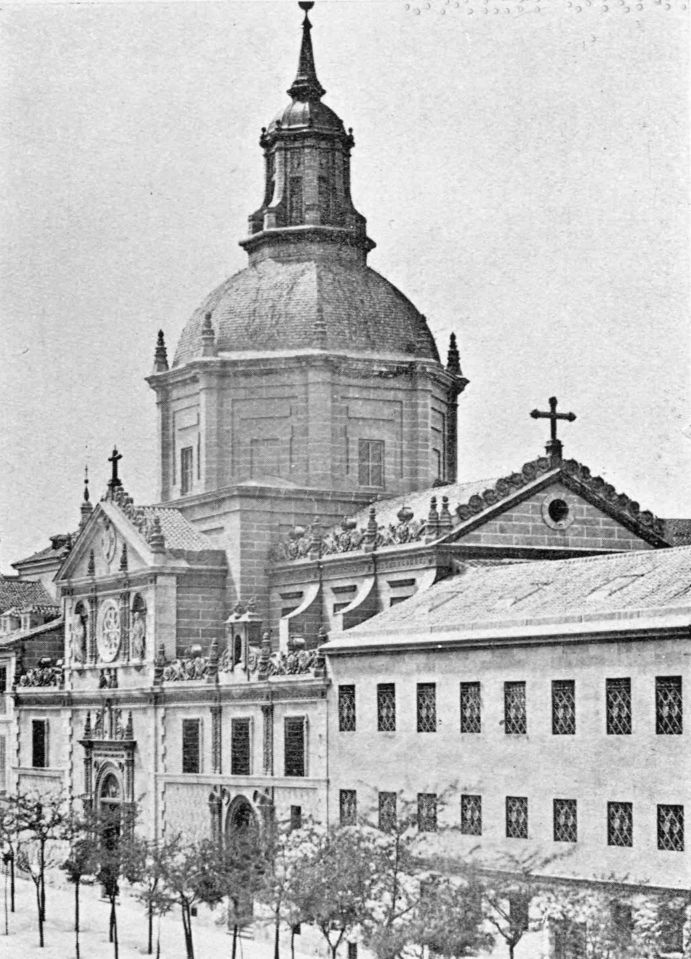
PLATE 107.
Church of Las Calatravas.
PLATE 108
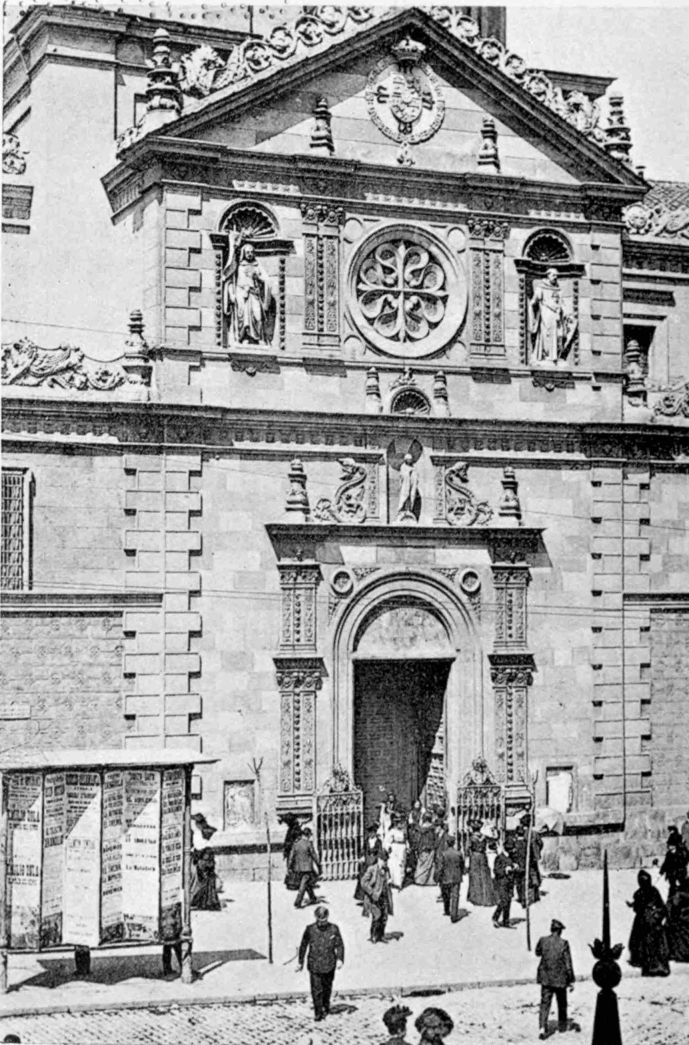
PLATE 108.
Las Calatravas.
PLATE 109
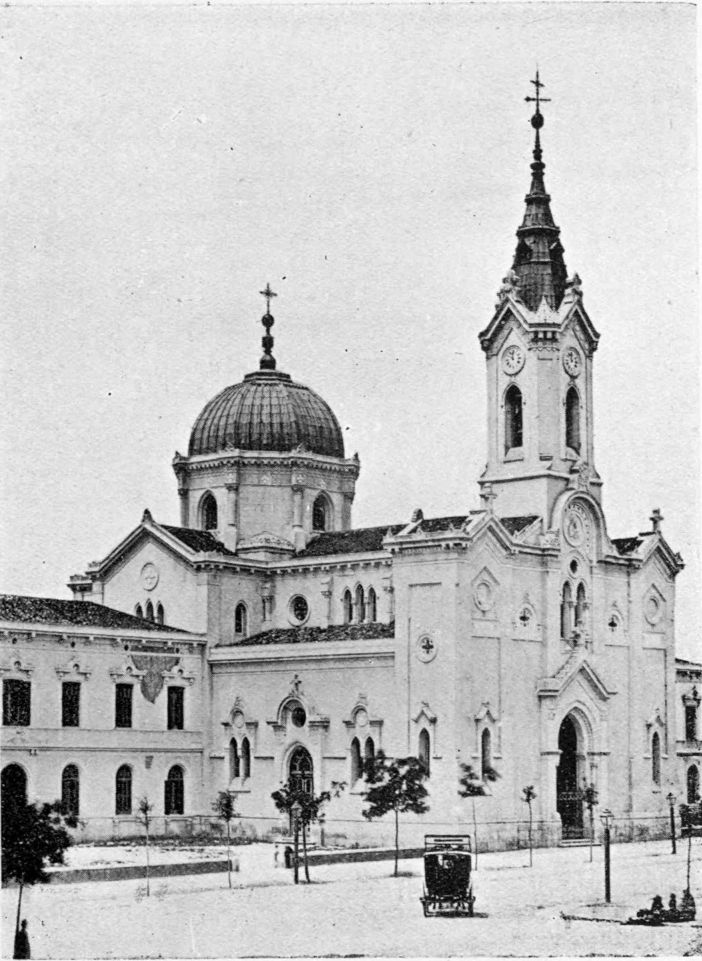
PLATE 109.
Church of El Buen Suceso.
PLATE 110
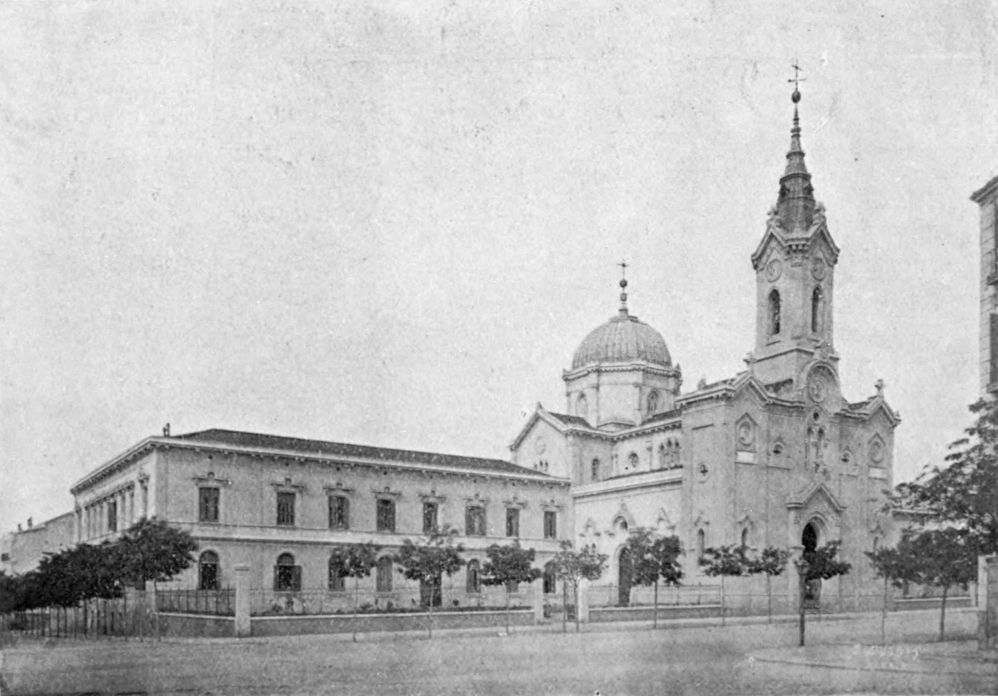
PLATE 110.
General View of the Church El Buen Suceso.
PLATE 111
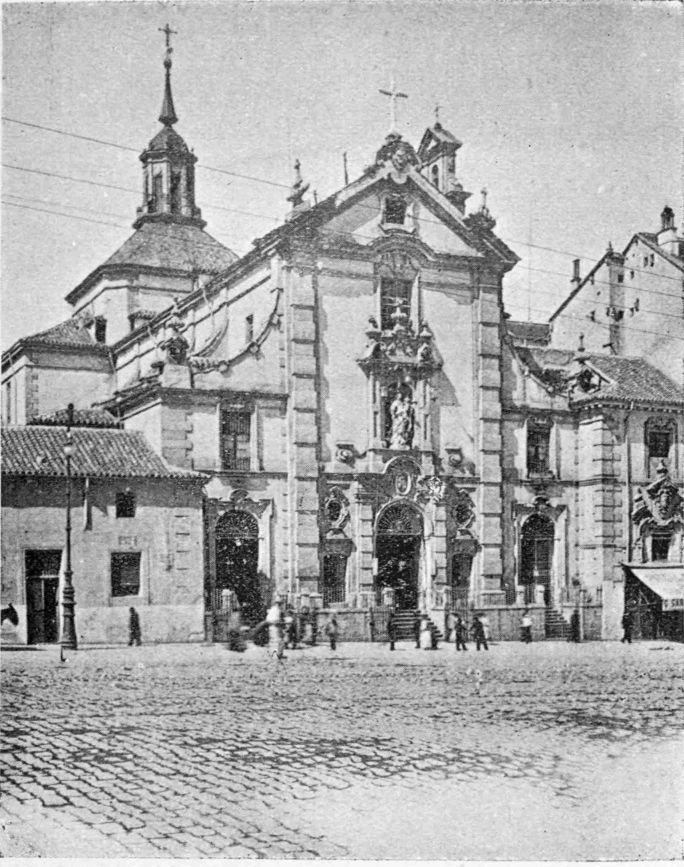
PLATE 111.
Church of San José.
PLATE 112
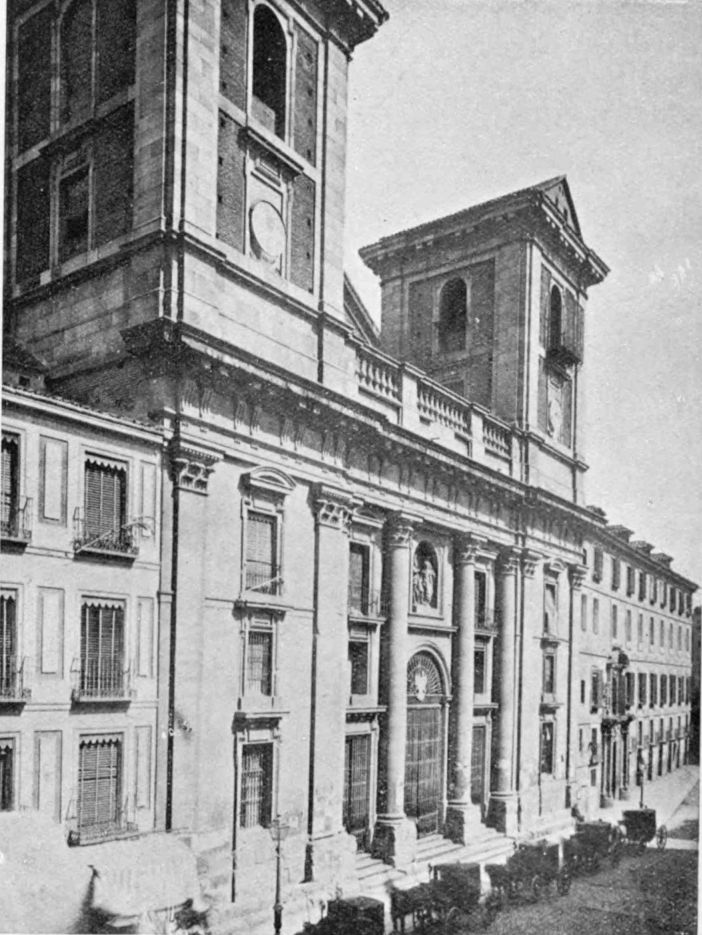
PLATE 112.
Church of San Isidro el Real.
PLATE 113
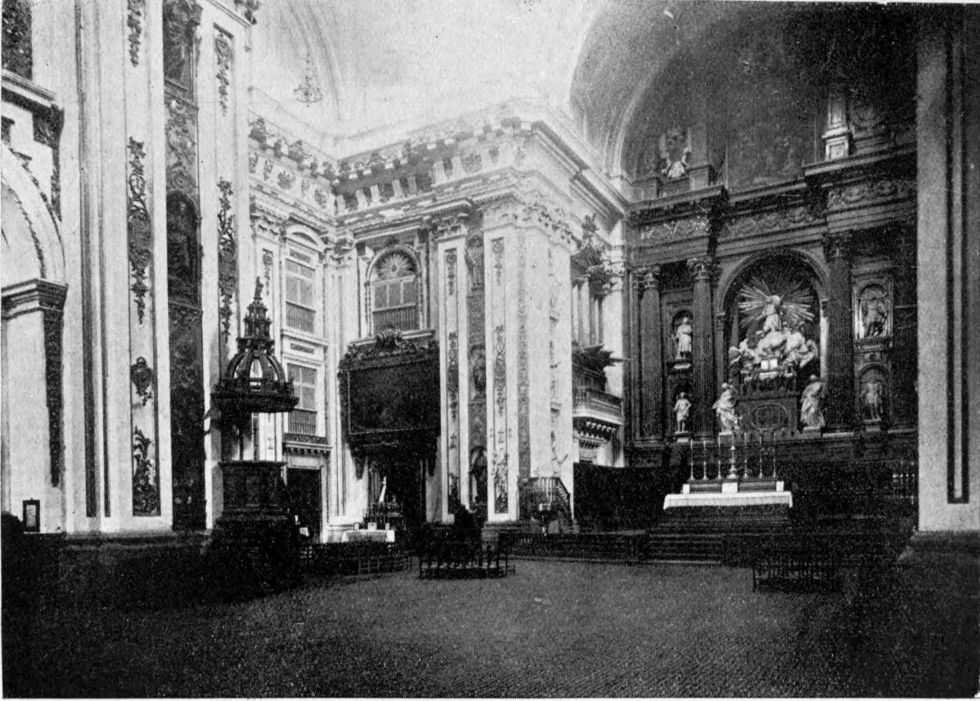
PLATE 113.
Interior of the Church of San Isidro.
PLATE 114
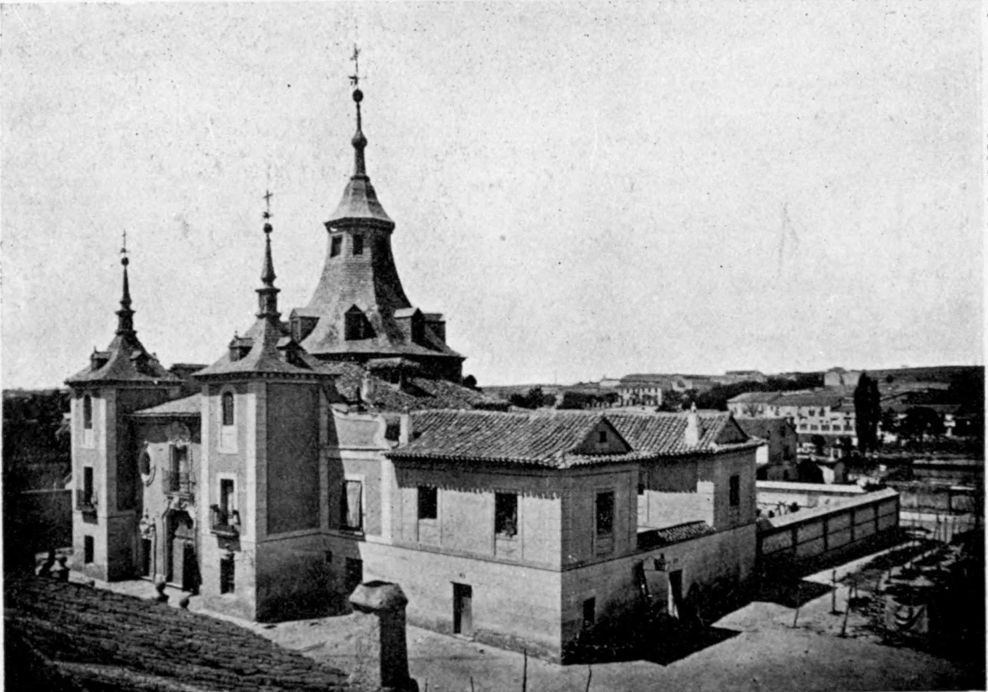
PLATE 114.
Church of La Virgen del Puerto.
PLATE 115
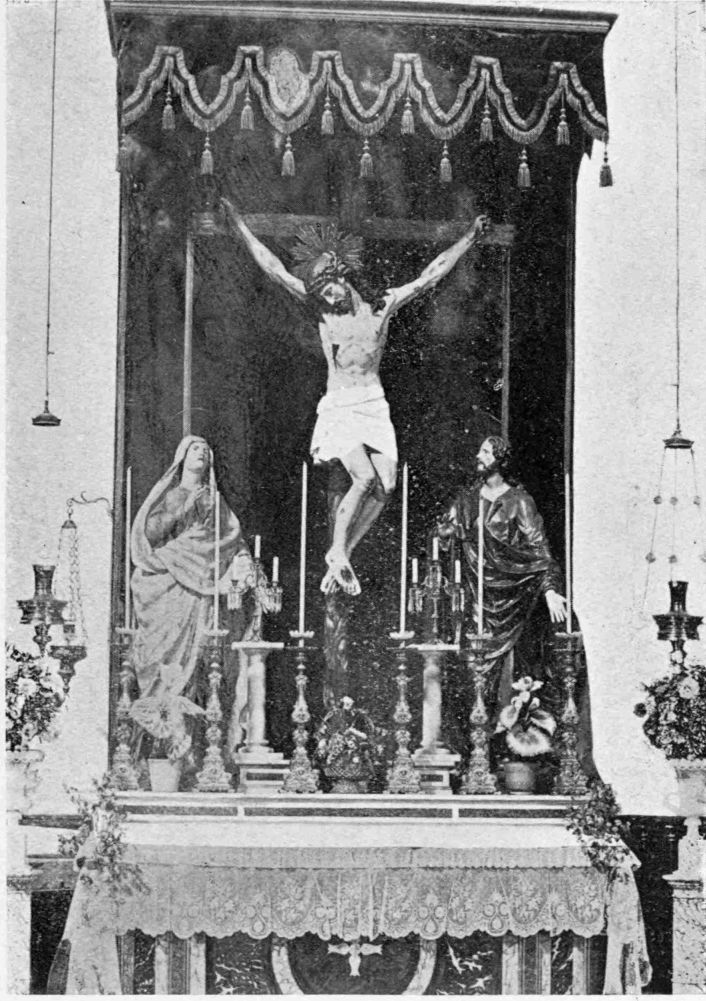
PLATE 115.
Church of Las Salesas. The Suffering Christ.
PLATE 116
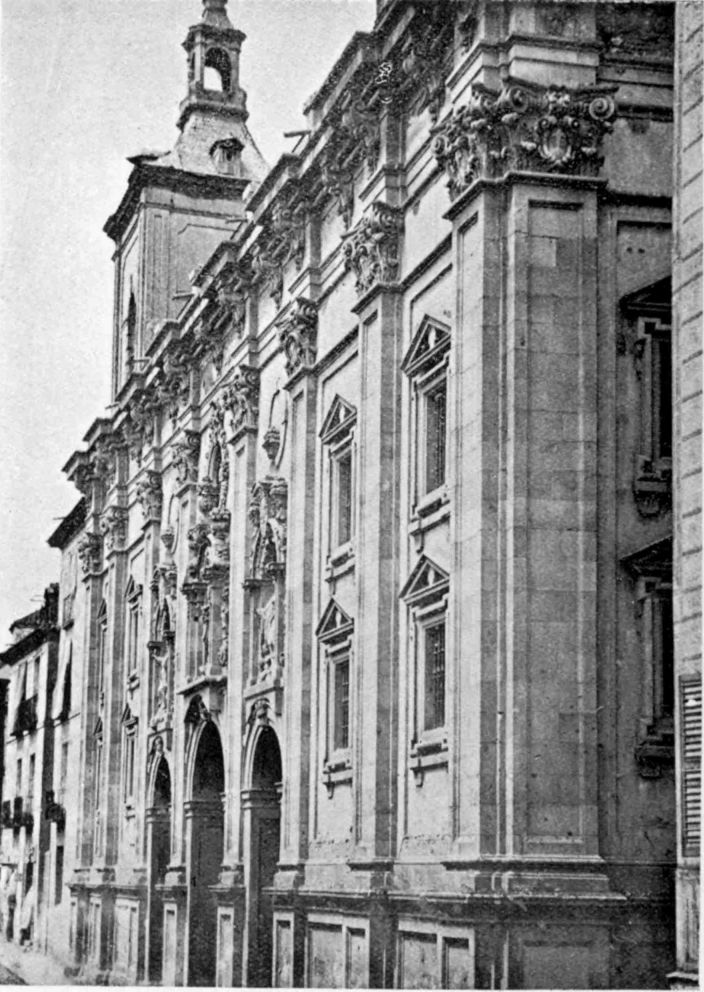
PLATE 116.
Church of San Cayetano.
PLATE 117
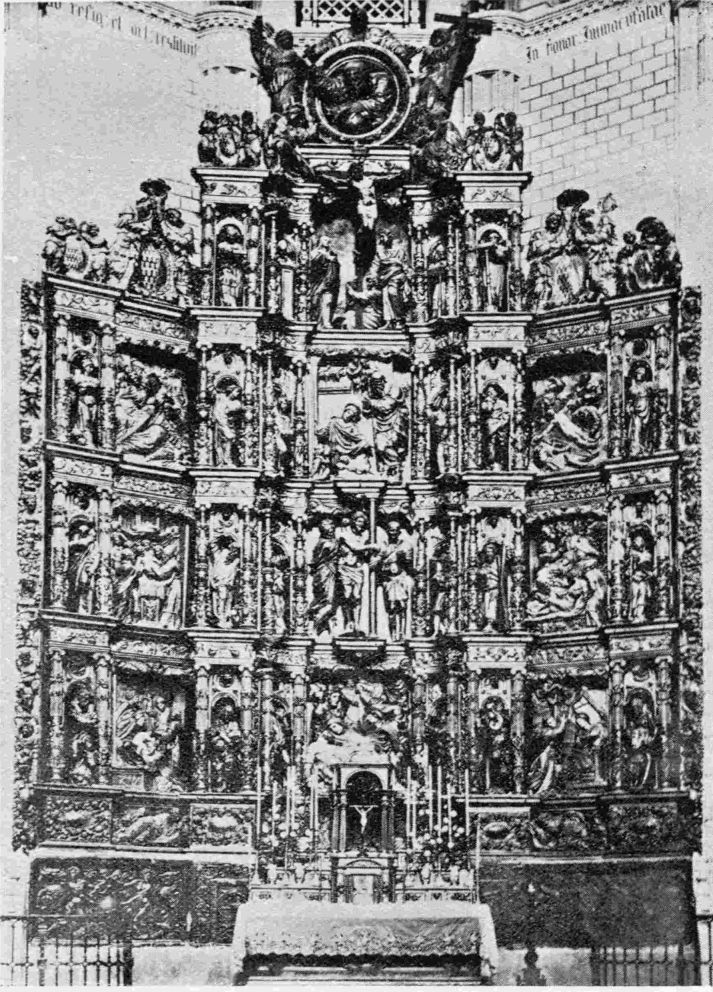
PLATE 117.
Altar Piece in the Bishop’s Chapel.
PLATE 118
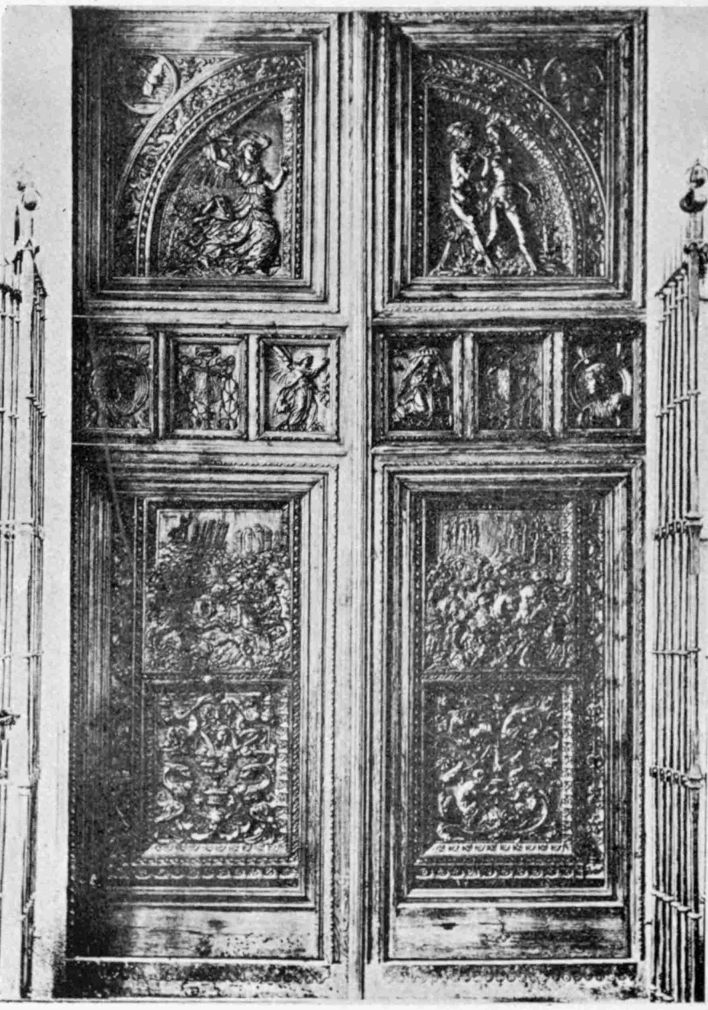
PLATE 118.
Door in the Bishop’s Chapel.
PLATE 119
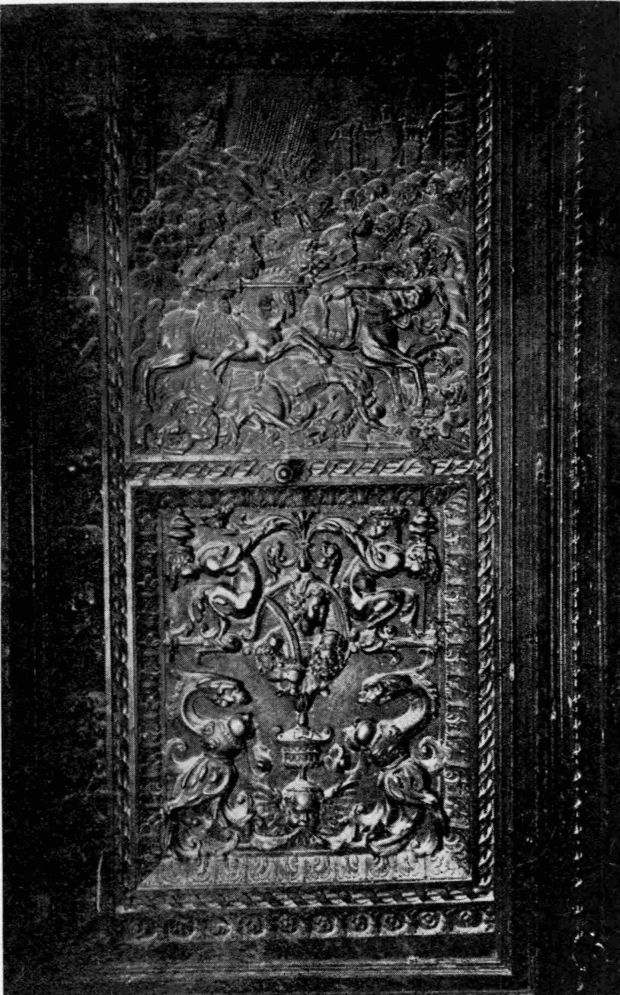
PLATE 119.
The Bishop’s Chapel. Left Side of the Door.
PLATE 120
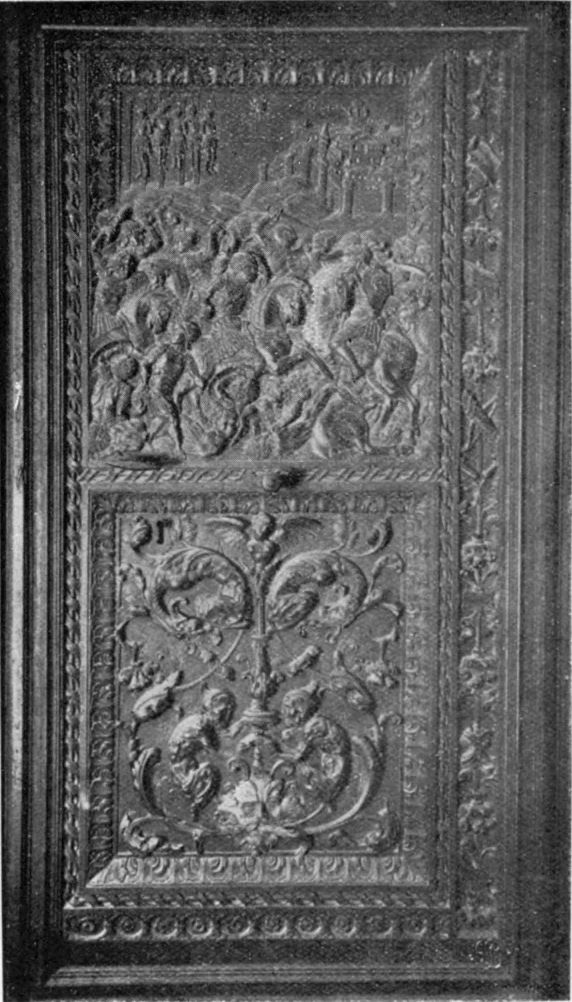
PLATE 120.
The Bishop’s Chapel. Right Side of the Door.
PLATE 121
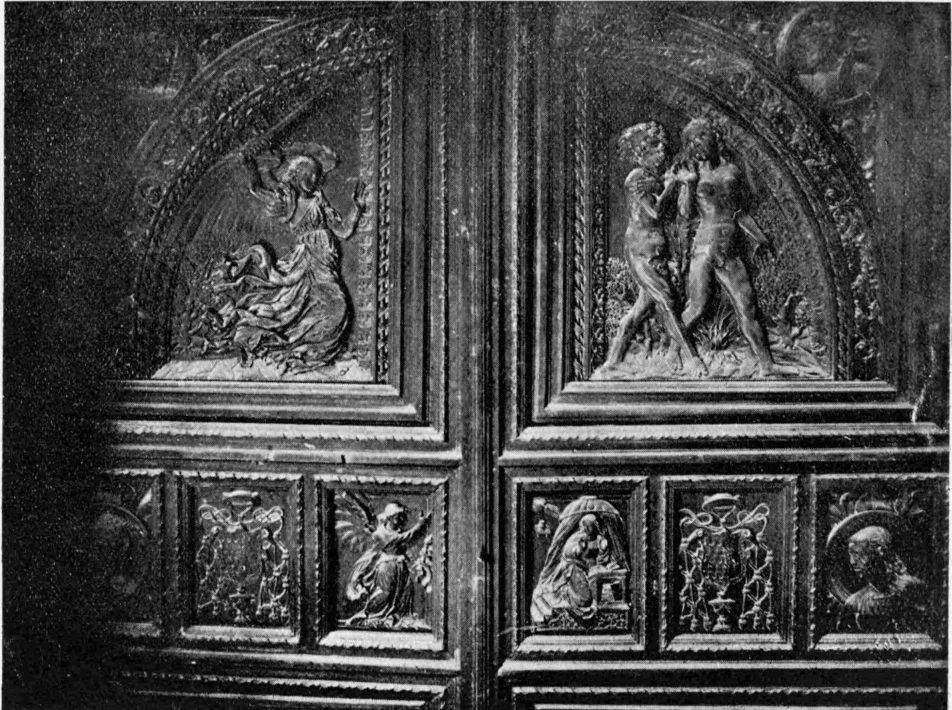
PLATE 121.
The Bishop’s Chapel. Upper Part of the Door.
PLATE 122
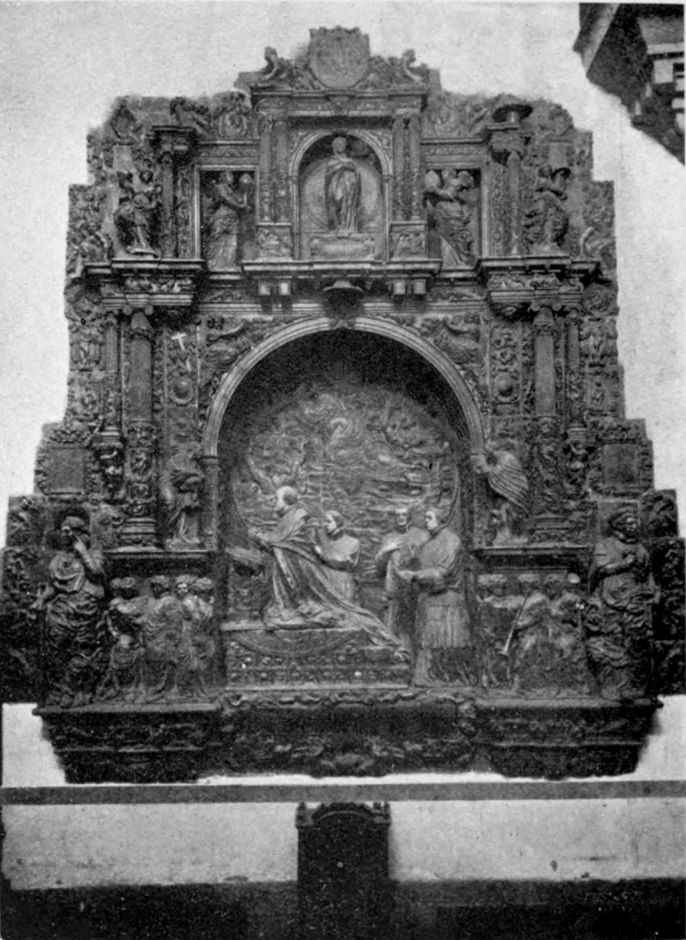
PLATE 122.
The Bishop’s Chapel. Sepulchre of the Bishop of Plasencia.
PLATE 123
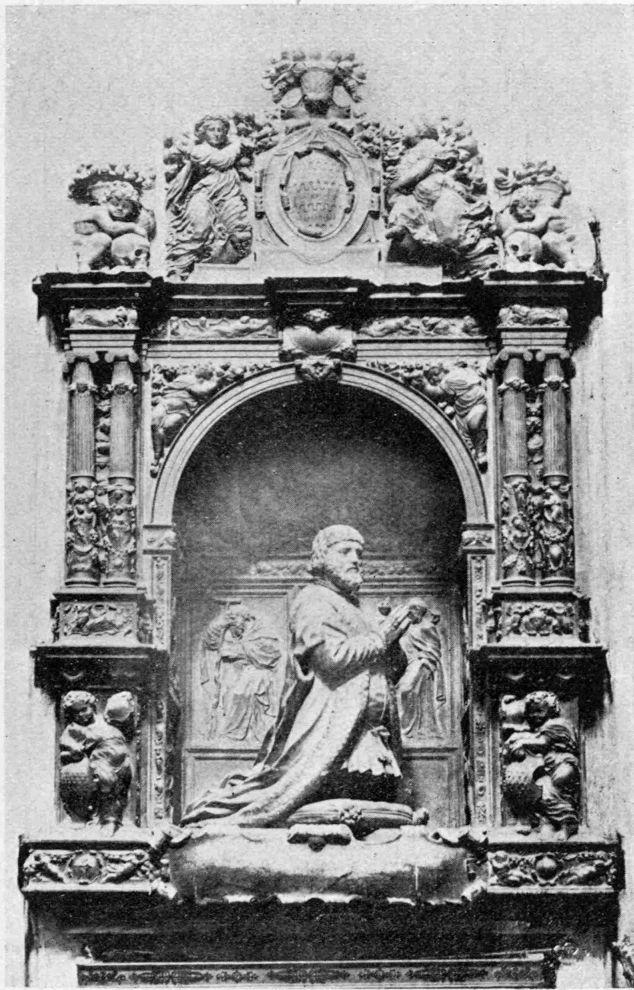
PLATE 123.
The Bishop’s Chapel. Sepulchre of Don Francesco de Vargas.
PLATE 124
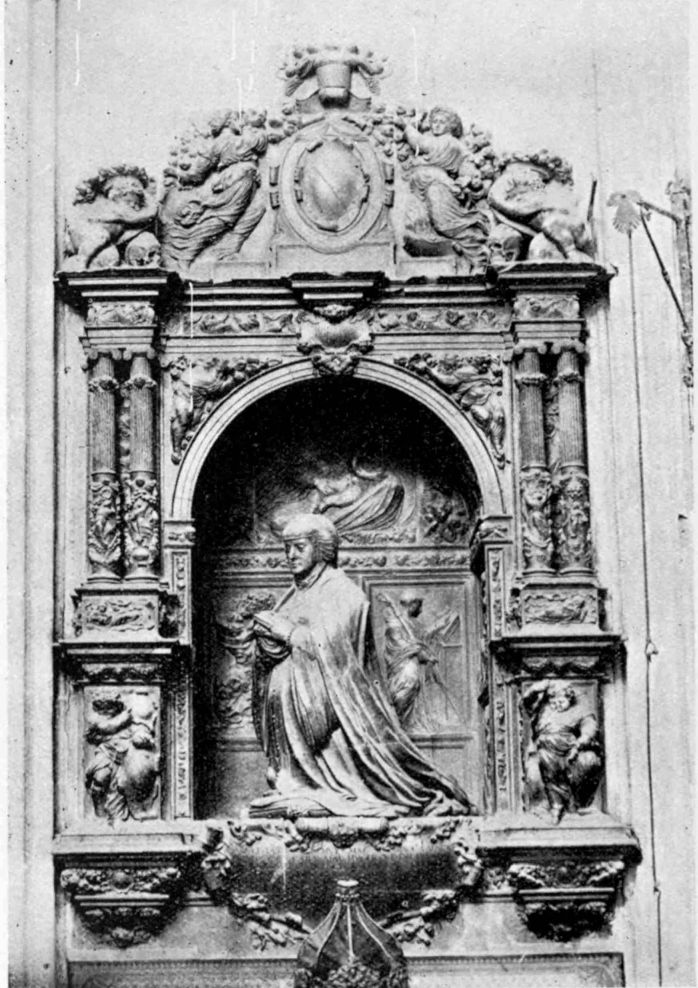
PLATE 124.
The Bishop’s Chapel. Sepulchre of Doña Ines de Carvajal.
PLATE 125
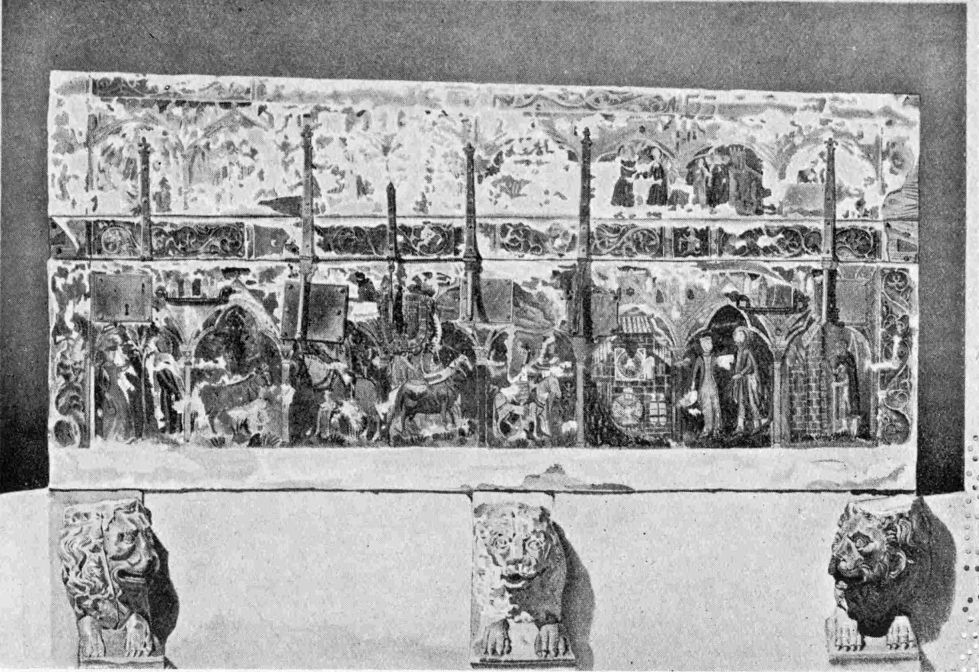
PLATE 125.
Parish Church of St Andrew. Sepulchre of San Isidro Ploughman, Patron Saint of Madrid.
PLATE 126
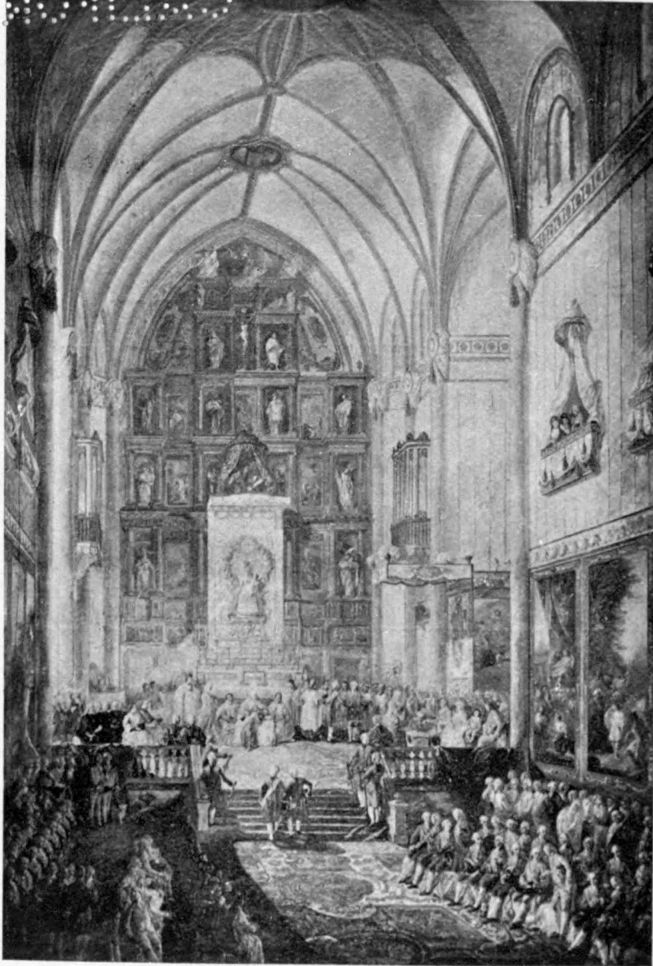
PLATE 126.
Interior of the Church of San Jerónimo.
FROM A PICTURE IN THE PRADO OF THE PRINCE OF THE ASTURIAS (FERDINAND VII.) TAKING THE OATH OF ALLEGIANCE IN 1789.
PLATE 127
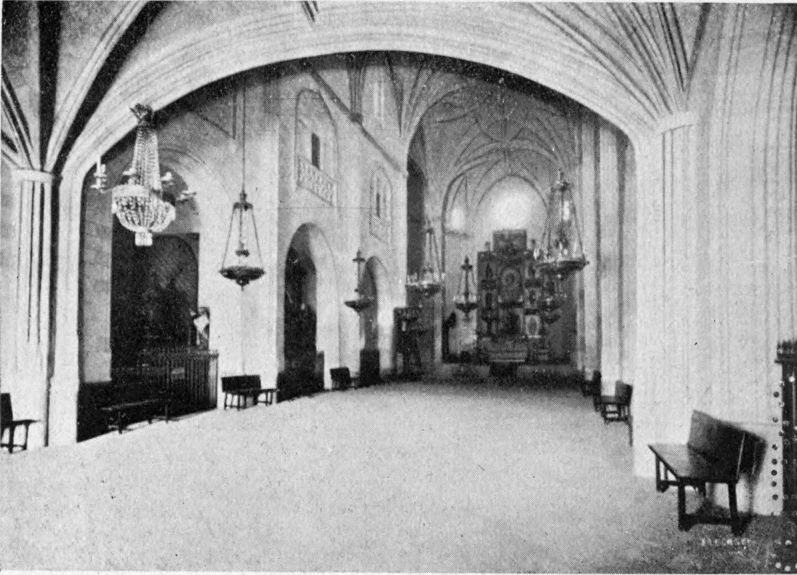
PLATE 127.
View of the Interior of the Church of San Jerónimo.
PLATE 128
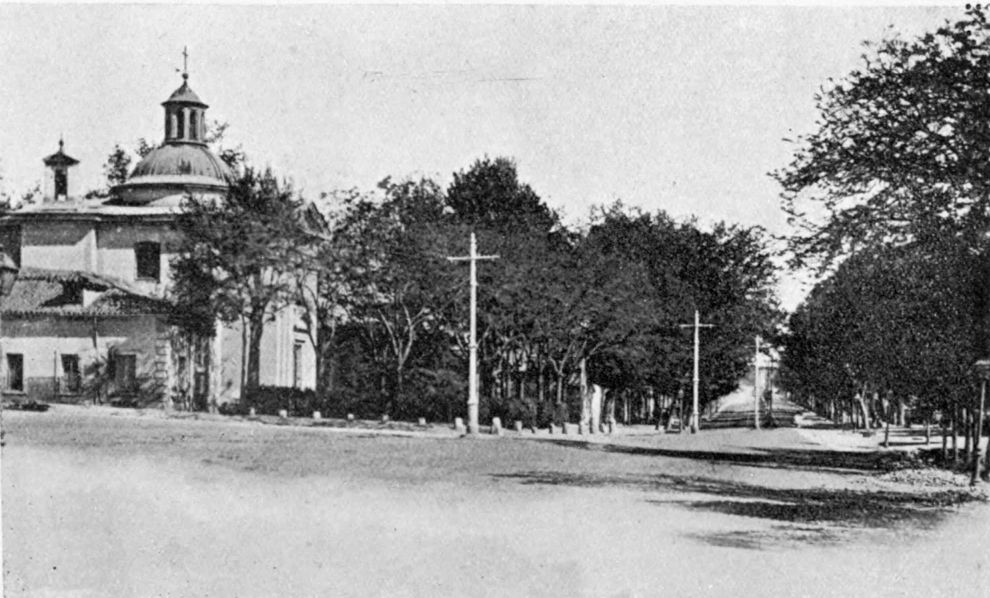
PLATE 128.
San Antonio de la Florida.
PLATE 129
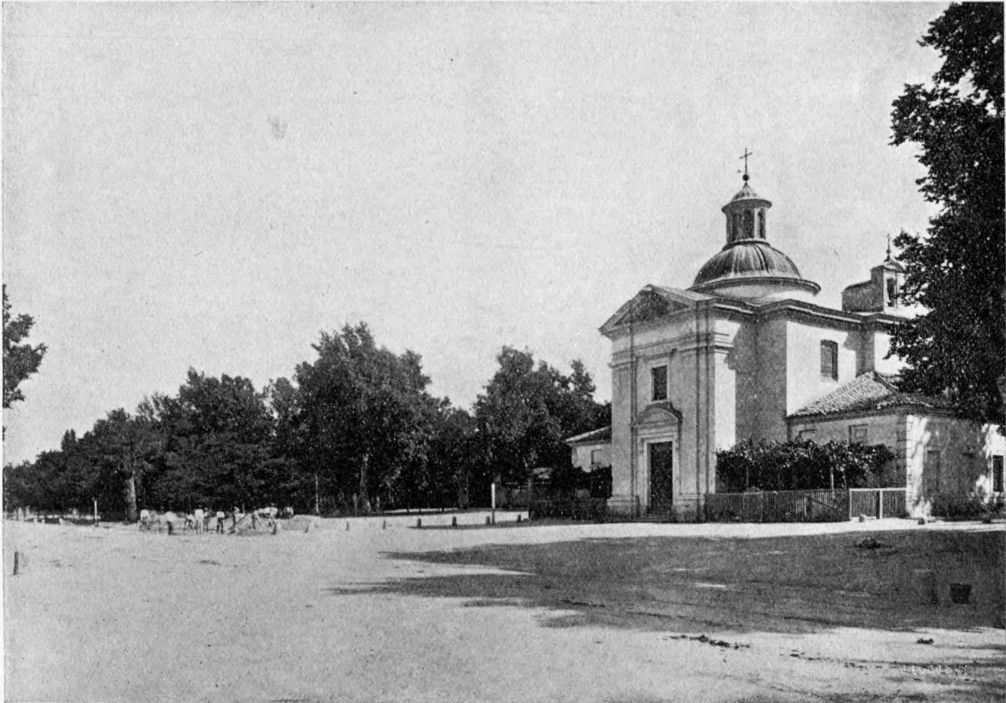
PLATE 129.
Church of San Antonio de la Florida.
PLATE 130
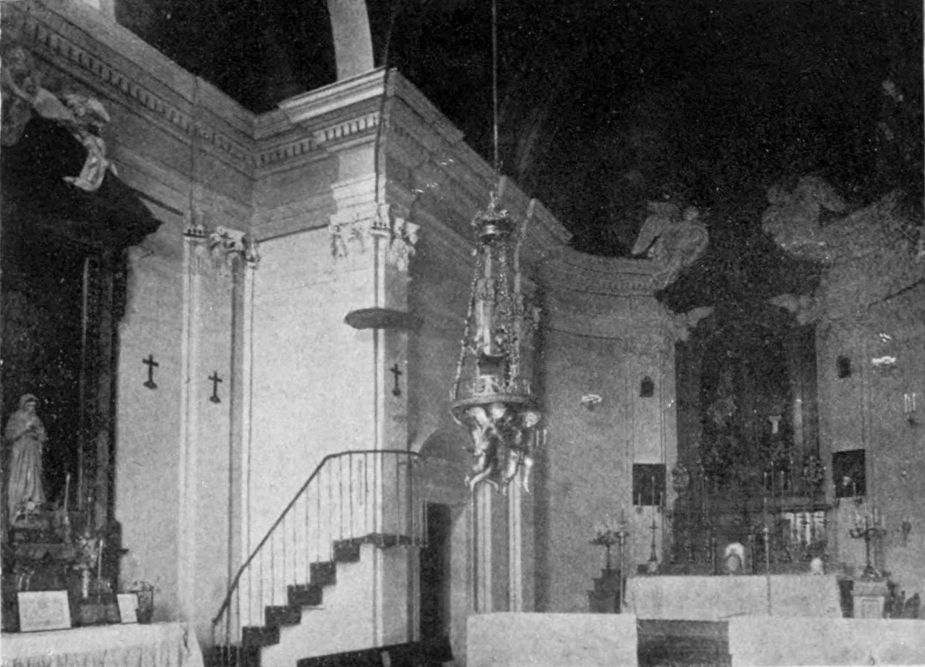
PLATE 130.
Interior of the Church of San Antonio de la Florida.
PLATE 131
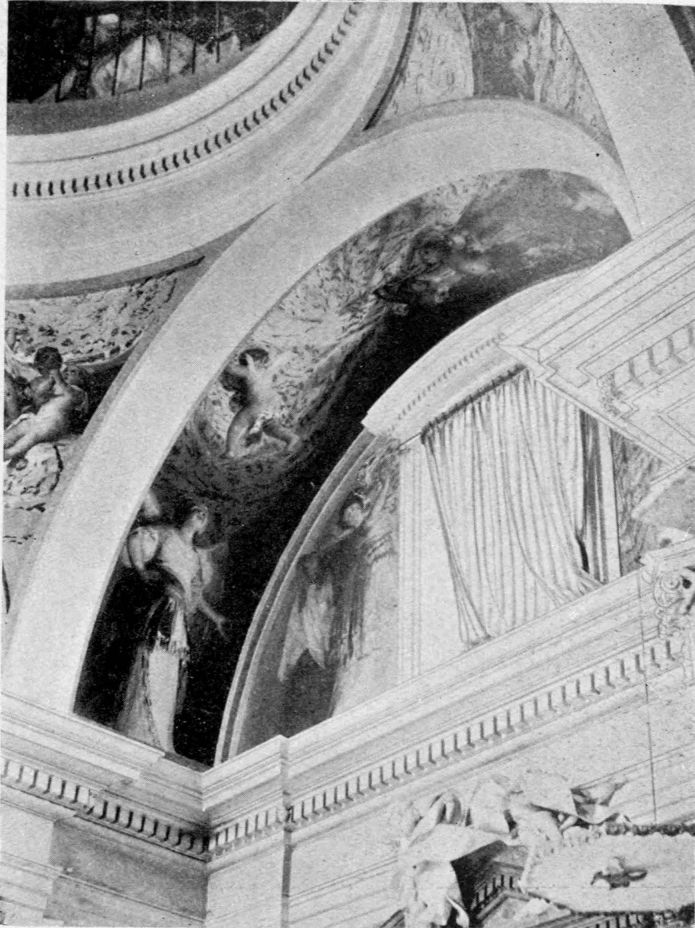
PLATE 131.
Fresco in San Antonio de la Florida, by Goya.
PLATE 132
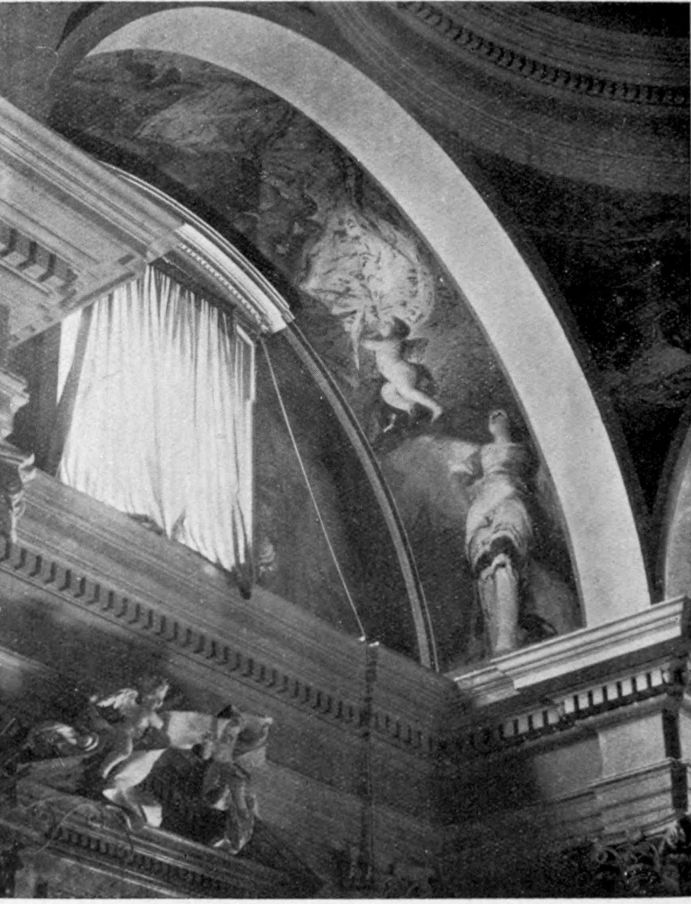
PLATE 132.
Fresco in San Antonio de la Florida, by Goya.
PLATE 133
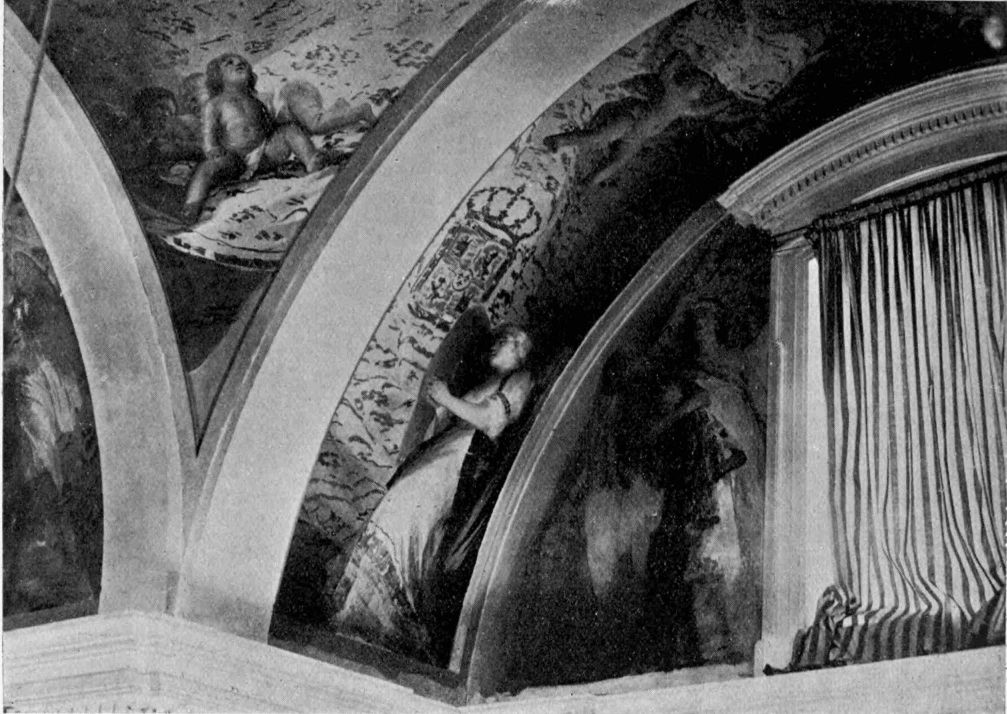
PLATE 133.
Fresco in San Antonio de la Florida, by Goya.
PLATE 134
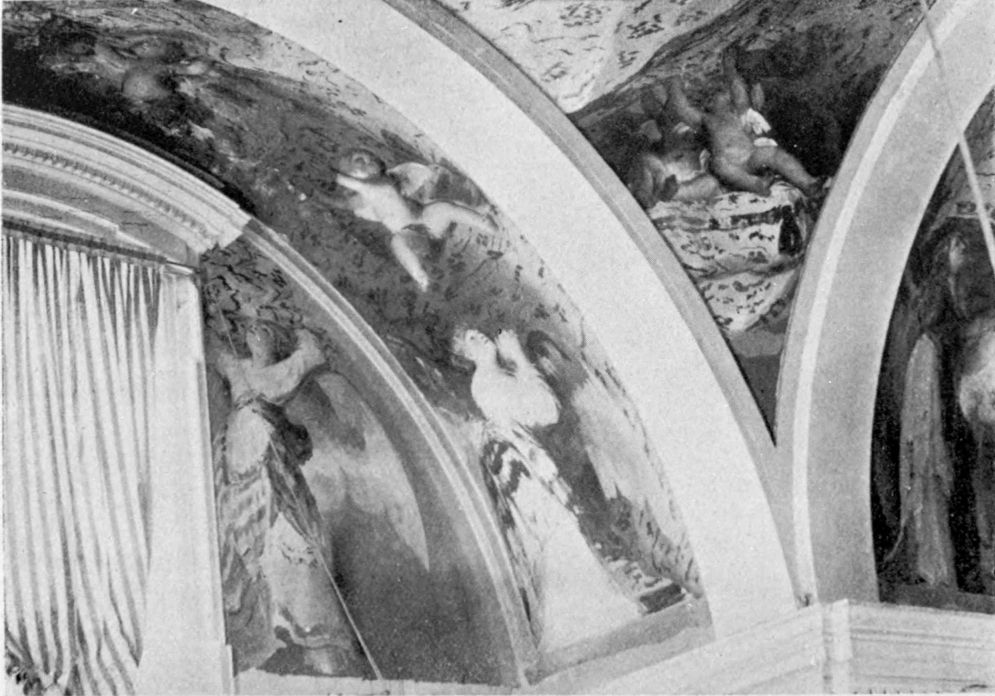
PLATE 134.
Fresco in San Antonio de la Florida, by Goya.
PLATE 135
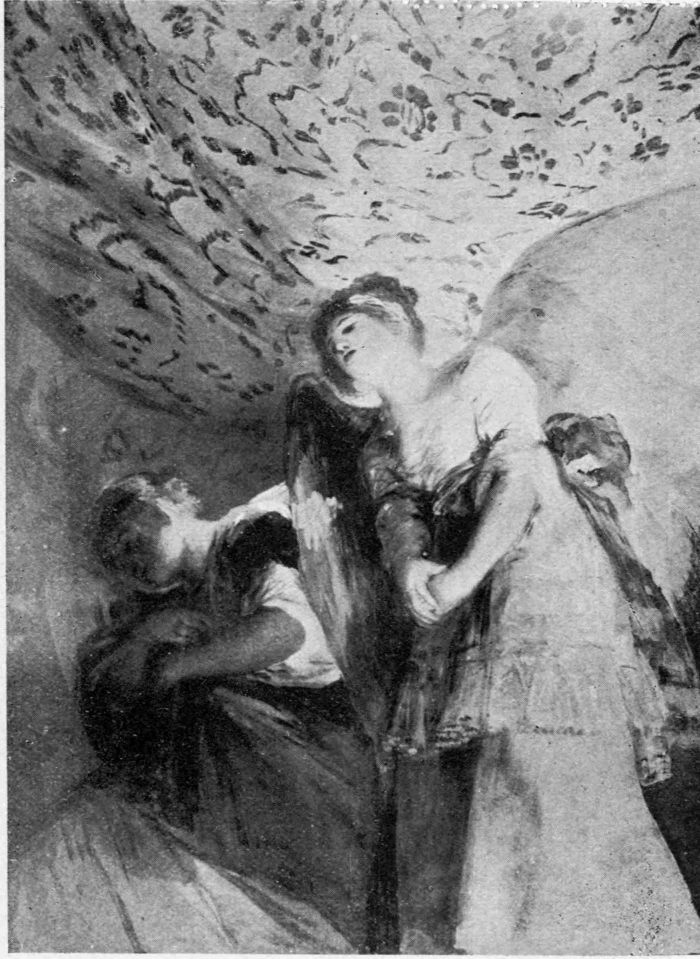
Plate 135.
Group of Angels in San Antonio de la Florida, by Goya.
PLATE 136
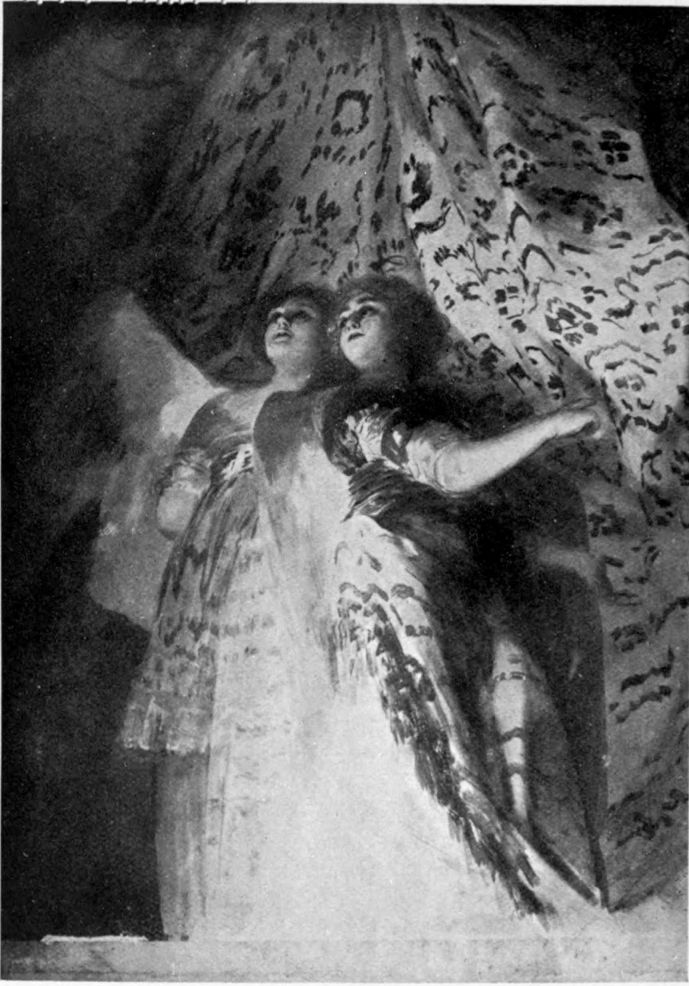
PLATE 136.
Group of Angels in San Antonio de la Florida, by Goya.
PLATE 137
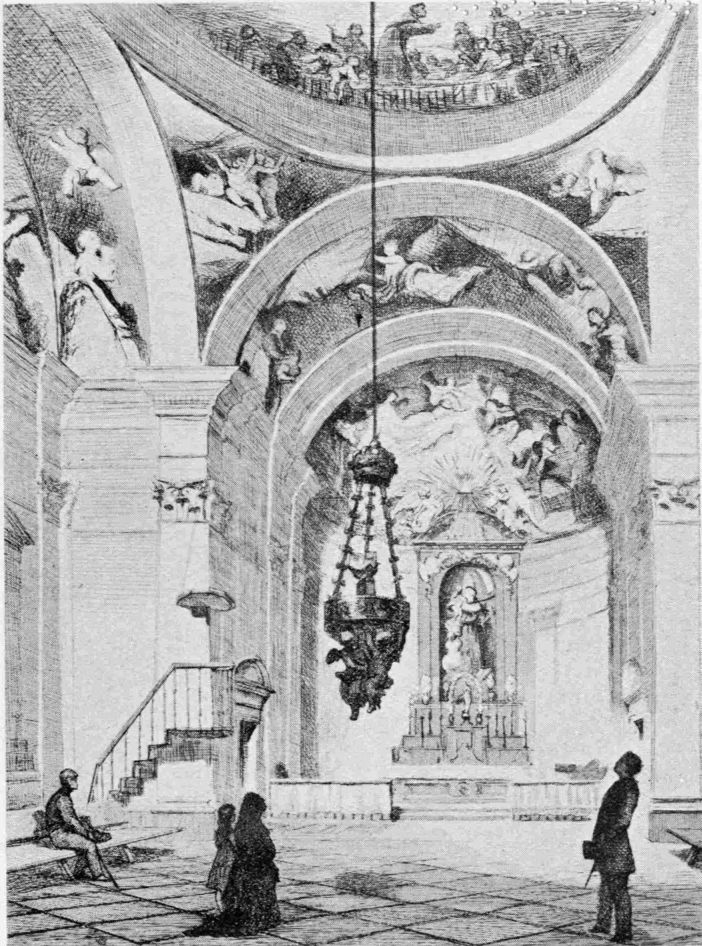
PLATE 137.
Interior of the Church of San Antonio de la Florida.
PLATE 138
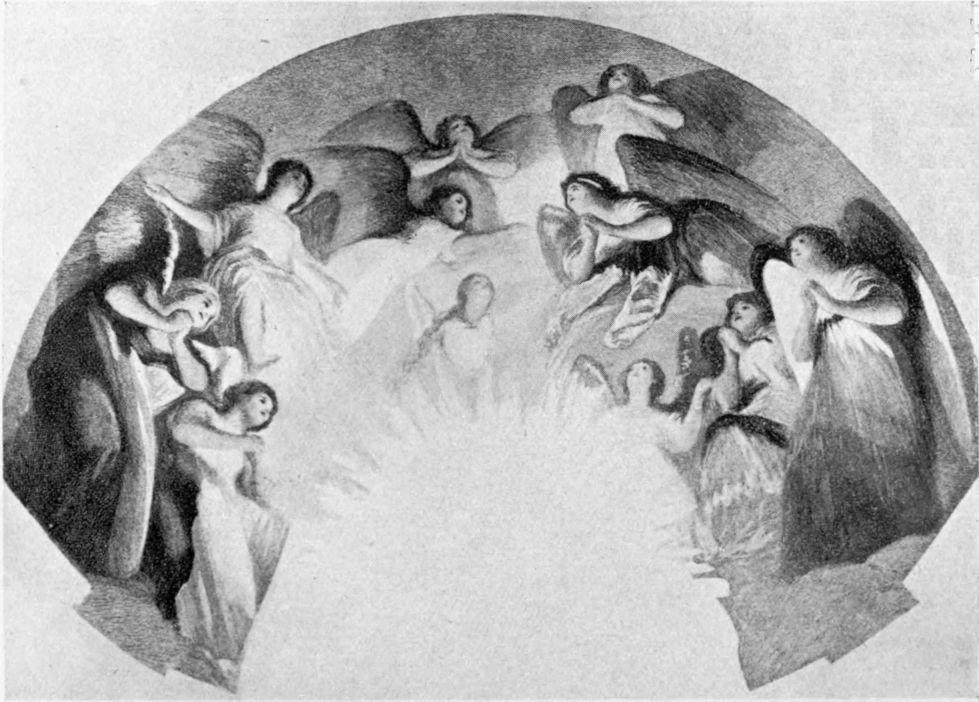
PLATE 138.
San Antonio de la Florida. Painting in the Principal Chapel, by Goya.
PLATE 139
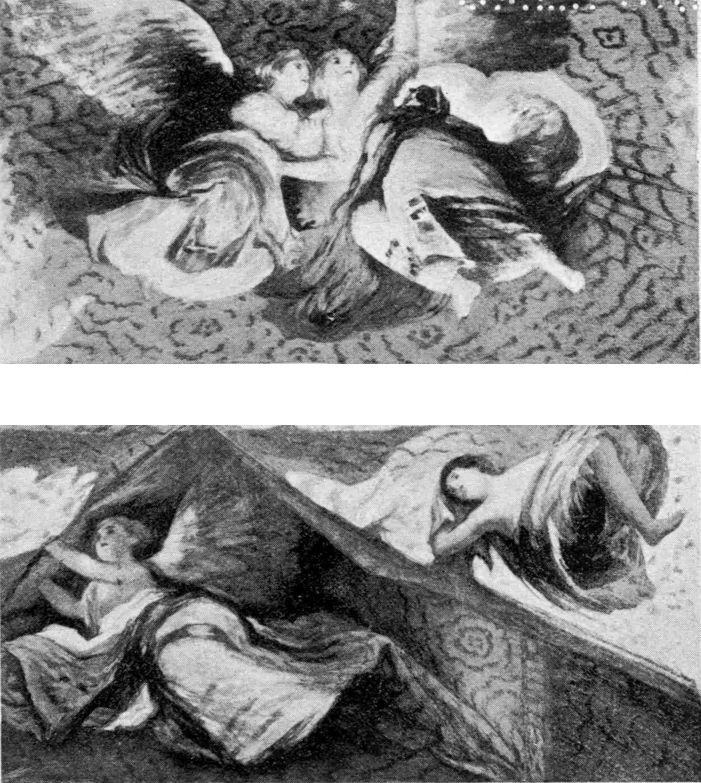
PLATE 139.
San Antonio de la Florida. Paintings on the Centres of the Intrados of the Choir and Principal Chapel Arches, by Goya.
PLATE 140
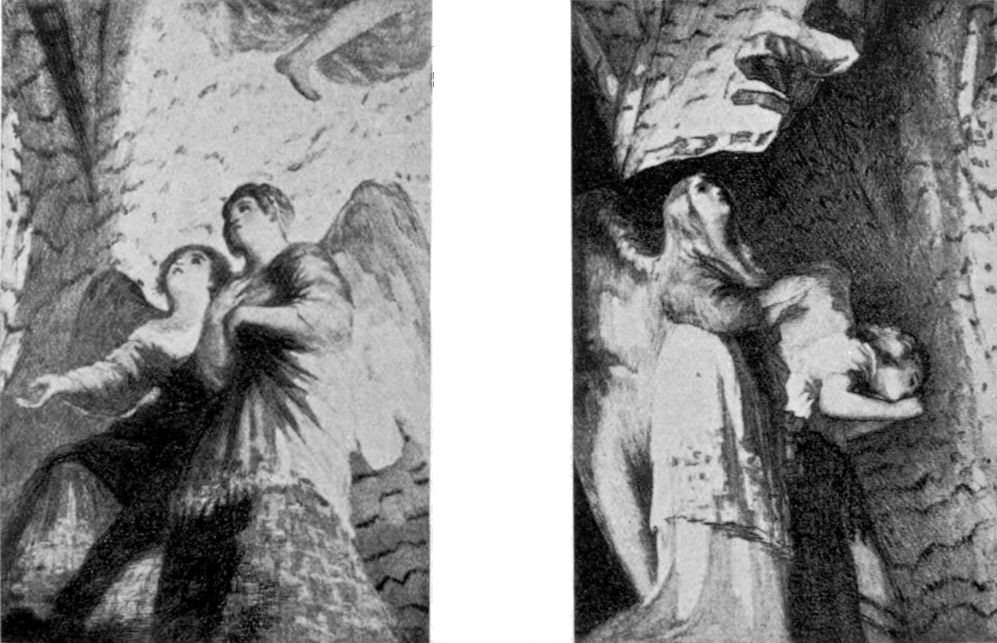
PLATE 140.
San Antonio de la Florida. Paintings on the Springings of the Intrados of the Principal Chapel Arches, by Goya.
PLATE 141
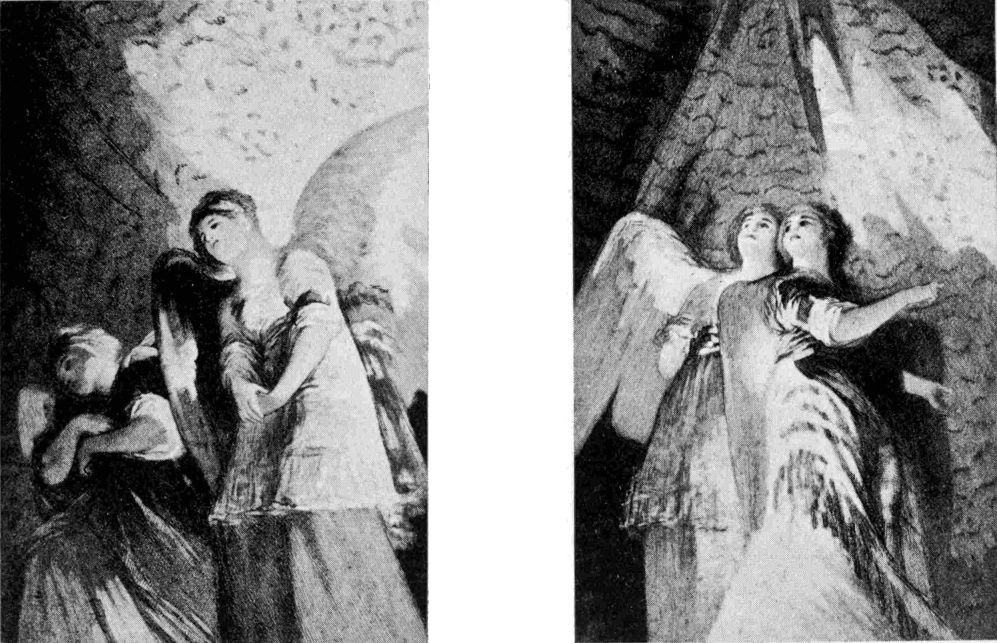
PLATE 141.
San Antonio de la Florida. Paintings on the Springings of the Intrados of the Choir Arches, by Goya.
PLATE 142
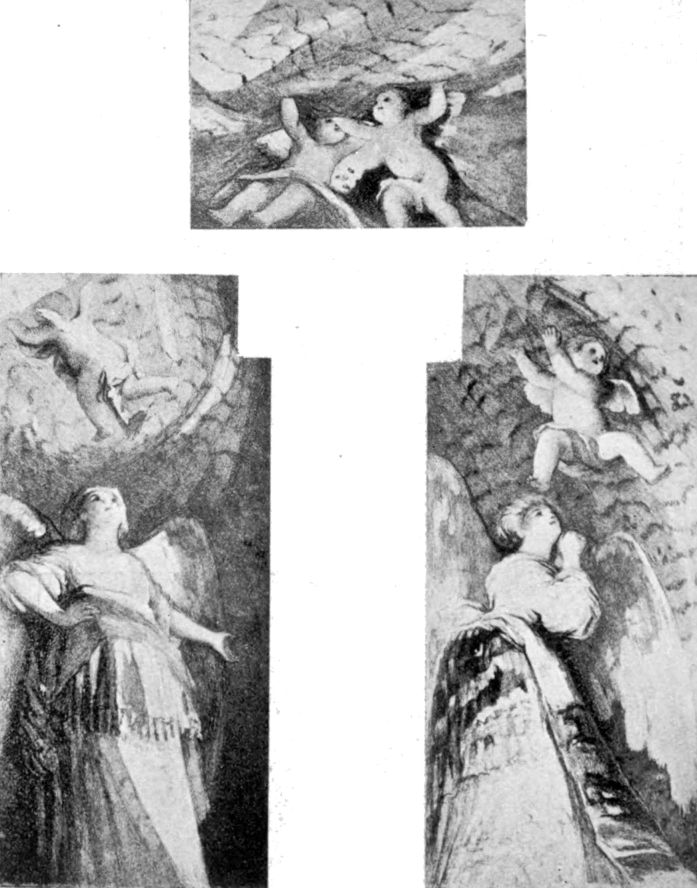
PLATE 142.
San Antonio de la Florida. Paintings on the Intrados of the Chapel Arch, Left Side, by Goya.
PLATE 143
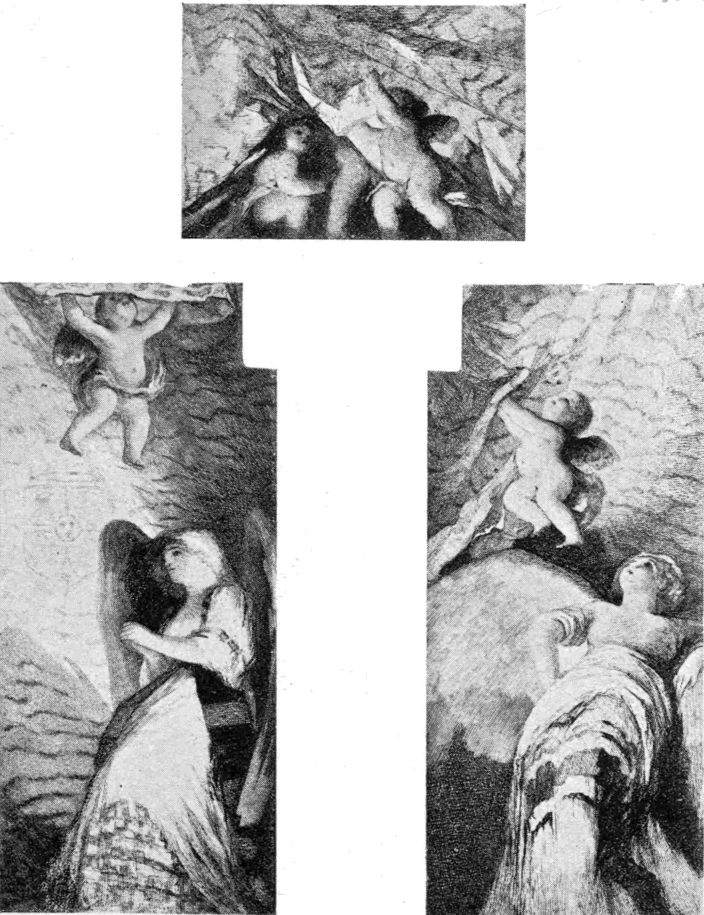
PLATE 143.
San Antonio de la Florida. Paintings on the Intrados of the Chapel Arch, Right Side, by Goya.
PLATE 144
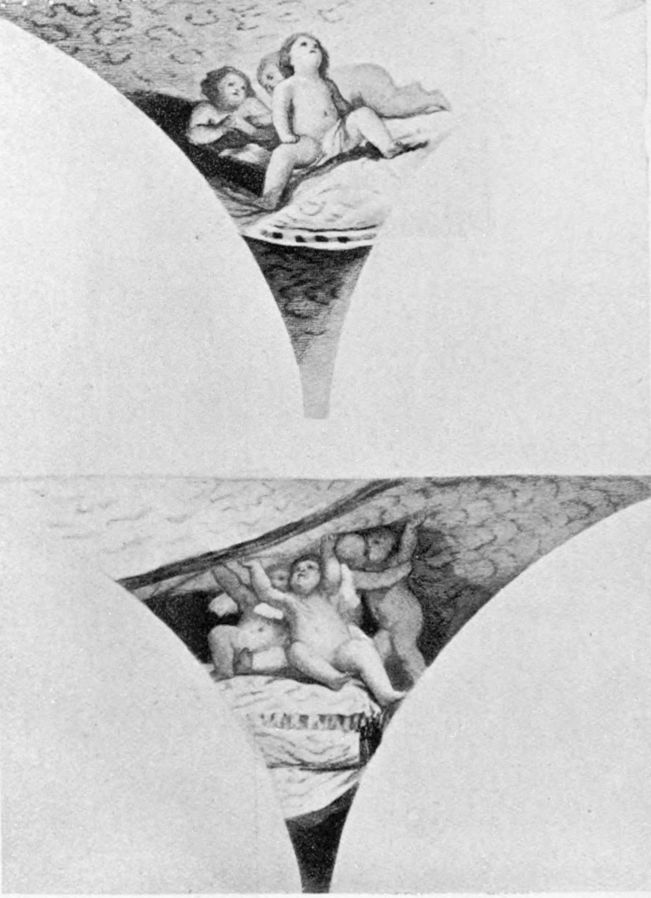
PLATE 144.
San Antonio de la Florida. Triangles Formed by the Dome Adjoining the Principal Chapel, by Goya.
PLATE 145
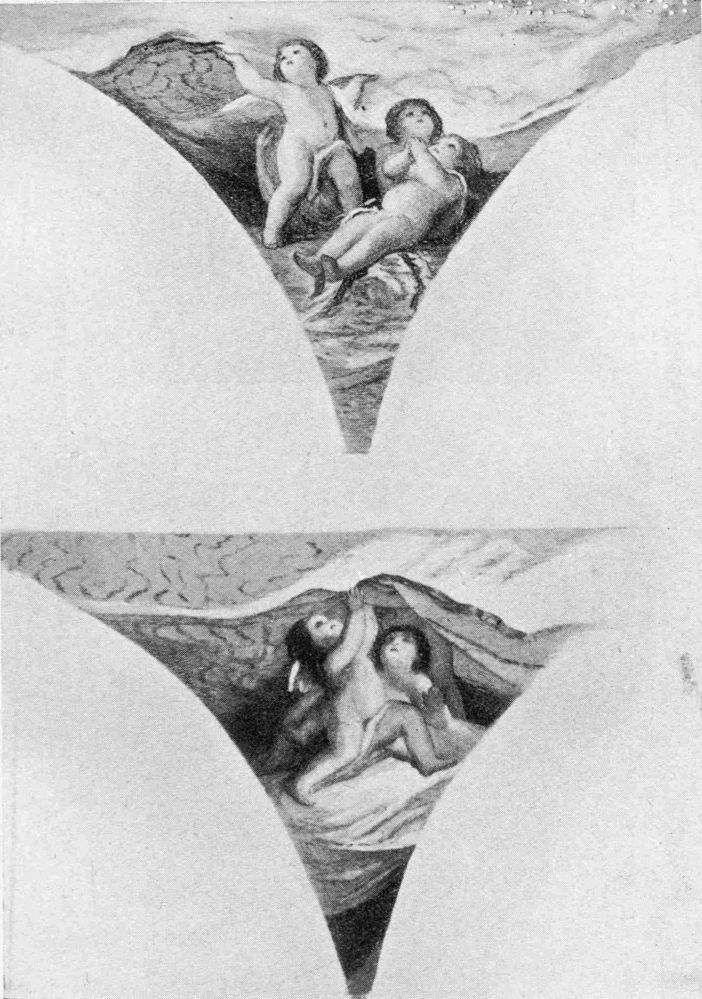
PLATE 145.
San Antonio de la Florida. Triangles Formed by the Dome Adjoining the Choir, by Goya.
PLATE 146
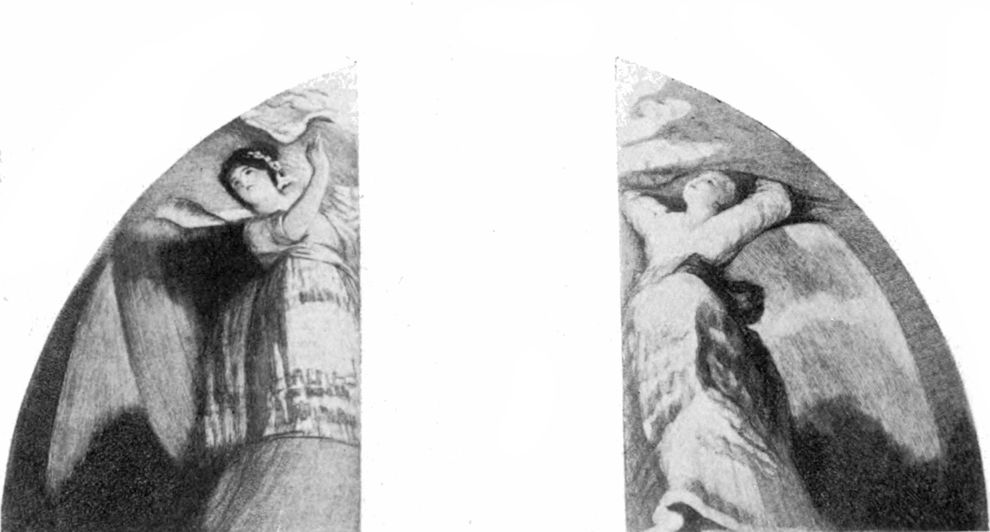
PLATE 146.
San Antonio de la Florida. Paintings at the Left Sides of the Windows of the Dome, by Goya.
PLATE 147
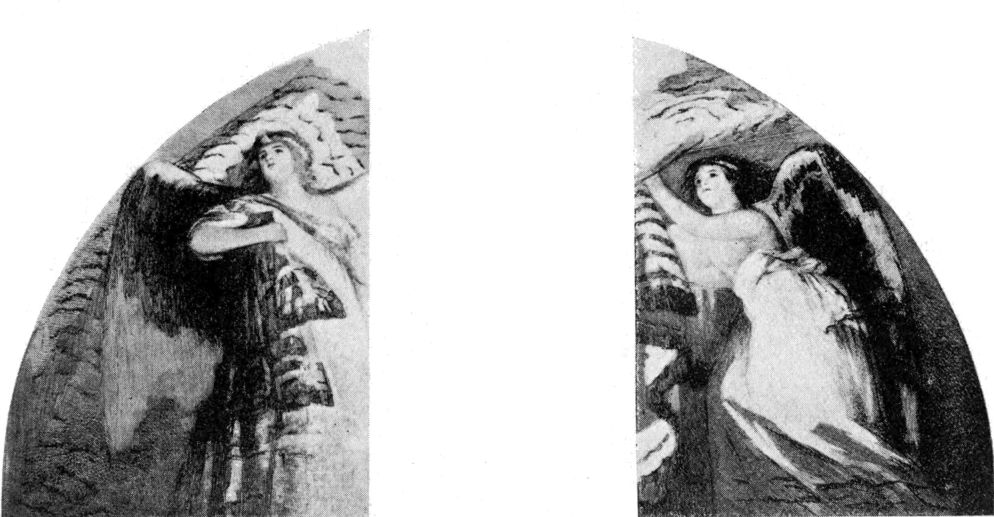
PLATE 147.
San Antonio de la Florida. Paintings at the Right Sides of the Windows of the Dome, by Goya.
PLATE 148
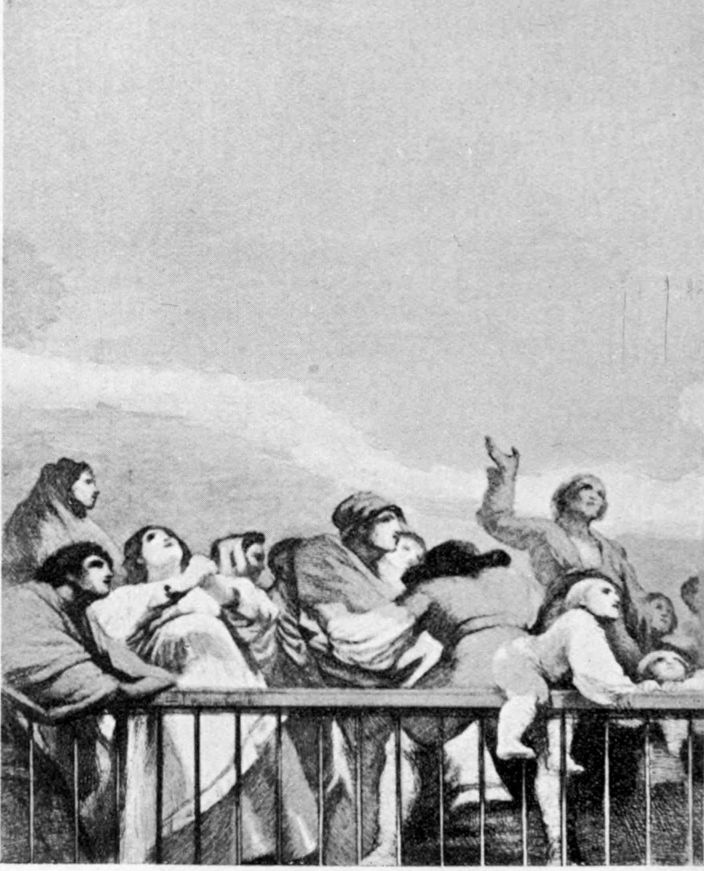
PLATE 148.
San Antonio de la Florida. First Group on the Cupola to the Left of the Centre, by Goya.
PLATE 149
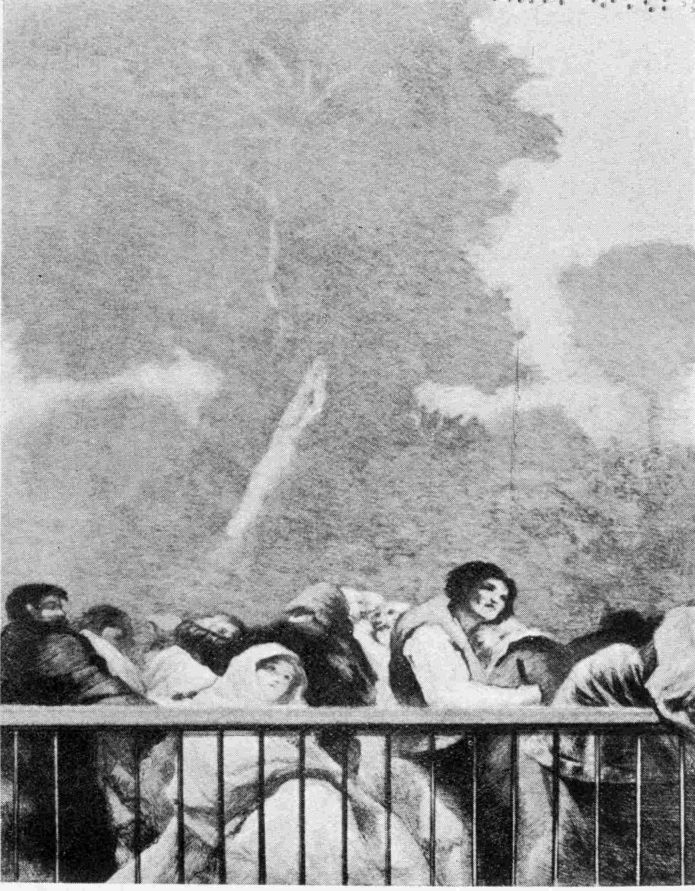
PLATE 149.
San Antonio de la Florida. Second Group on the Cupola to the Left of the Centre, by Goya.
PLATE 150
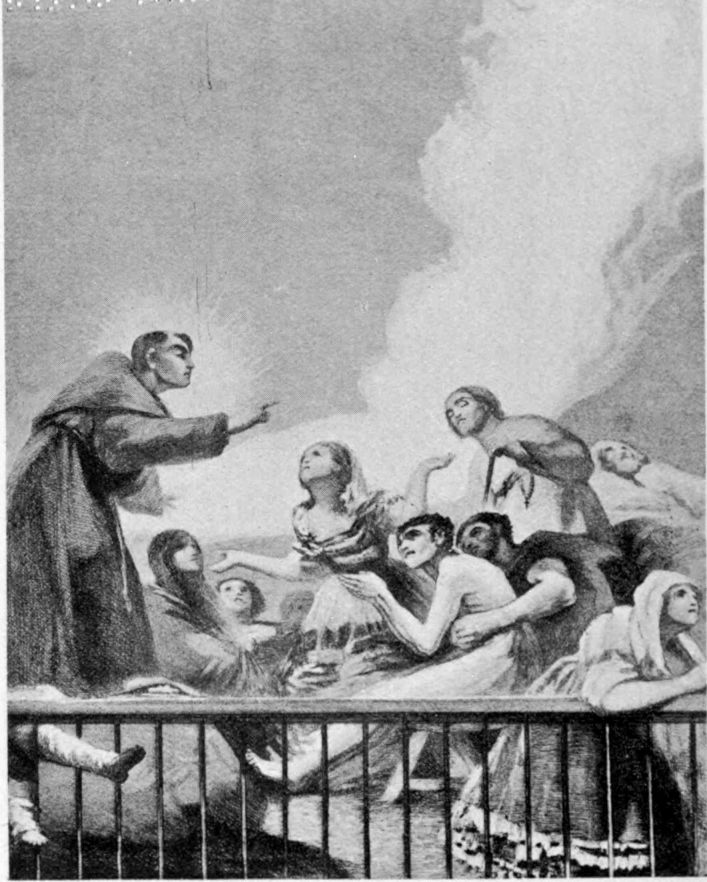
PLATE 150.
San Antonio de la Florida. Centre of the Composition on the Cupola facing the Entrance, by Goya.
PLATE 151
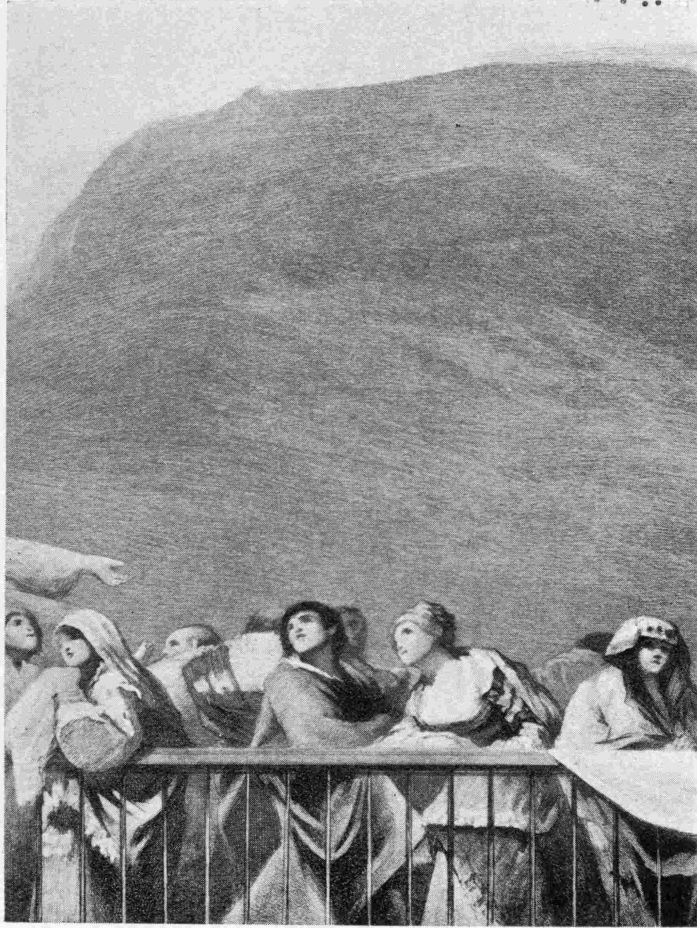
PLATE 151.
San Antonio de la Florida. First Group on the Cupola to the Right of the Centre, by Goya.
PLATE 152
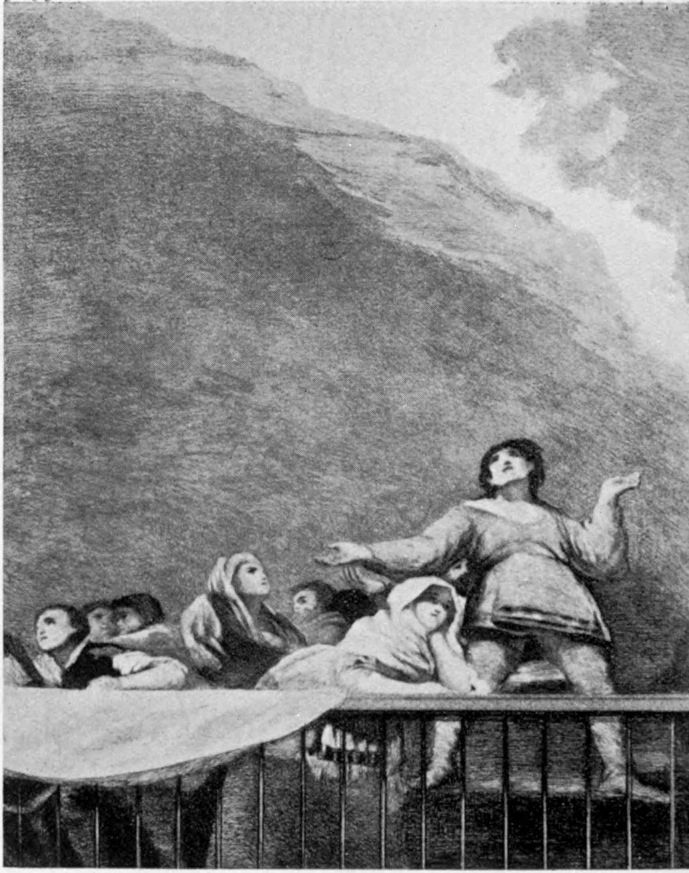
PLATE 152.
San Antonio de la Florida. Second Group on the Cupola to the Right of the Centre, by Goya.
PLATE 153
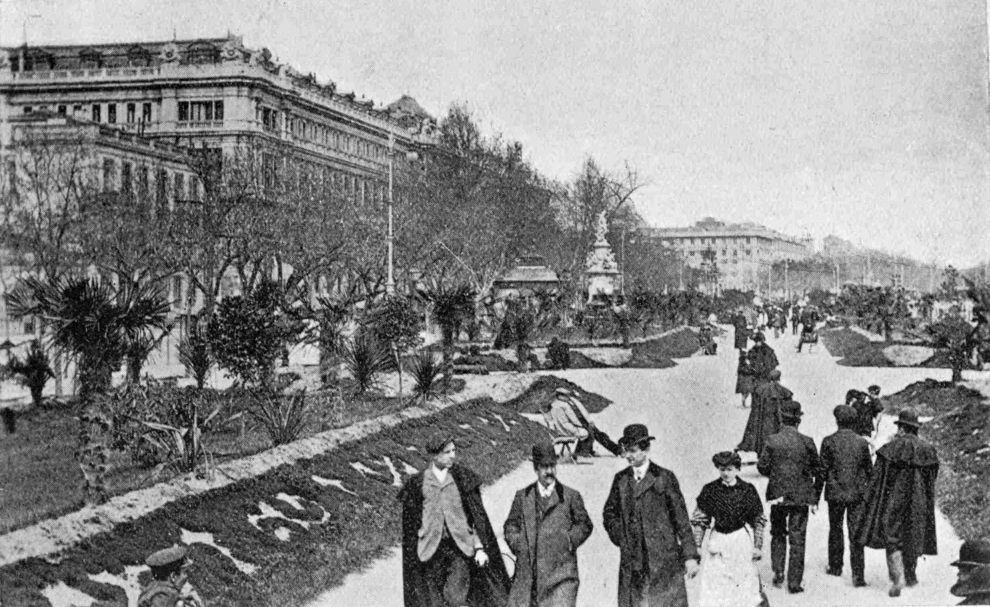
PLATE 153.
The Prado.
PLATE 154
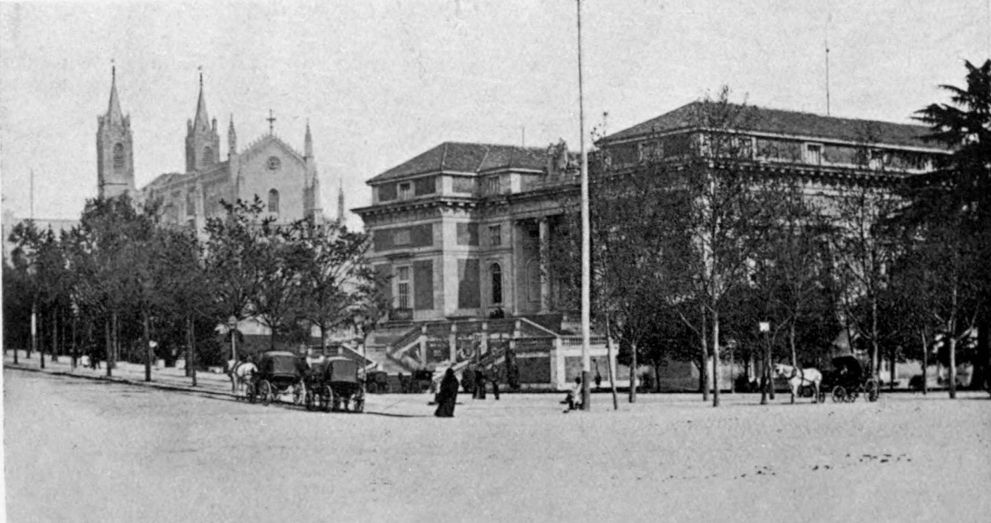
PLATE 154.
The Prado.
PLATE 155
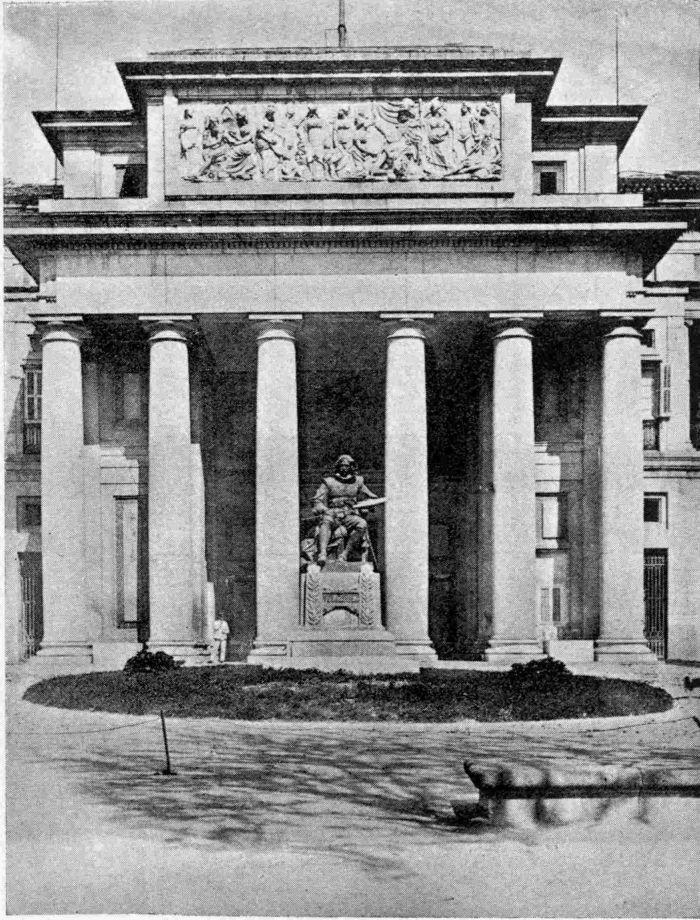
PLATE 155.
The Prado Gallery.
PLATE 156
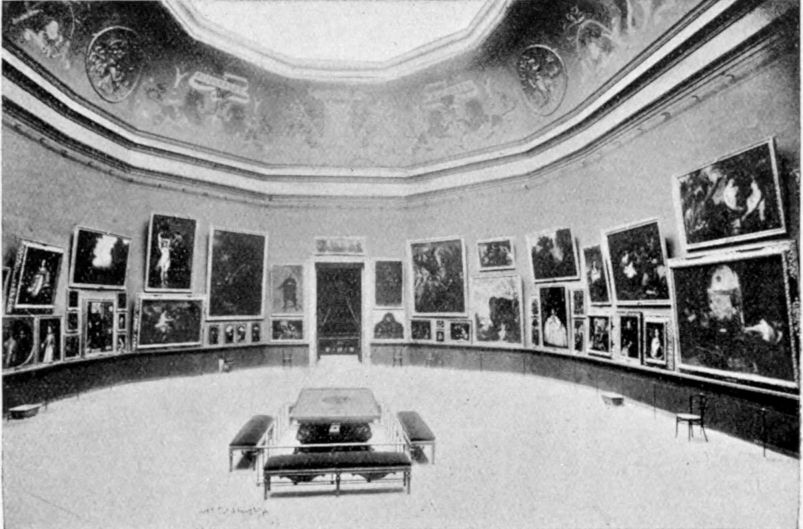
PLATE 156.
The Prado. The Velazquez Gallery.
PLATE 157
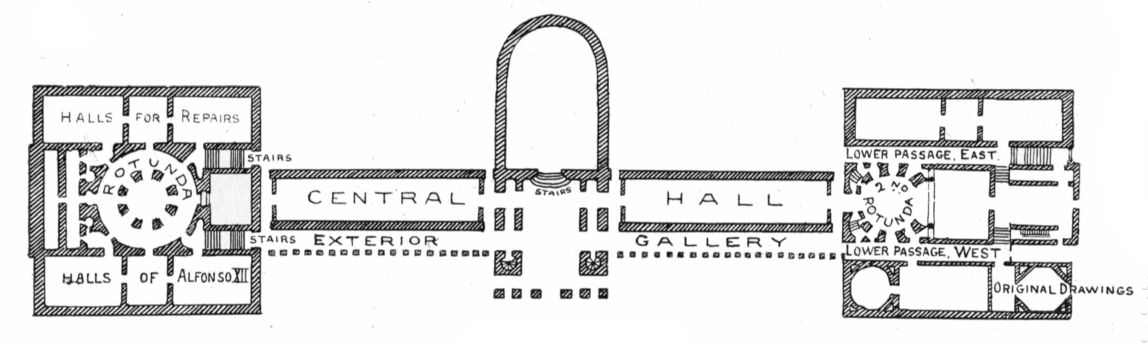
PLATE 157.
MADRID PICTURE GALLERY
PLATE 158
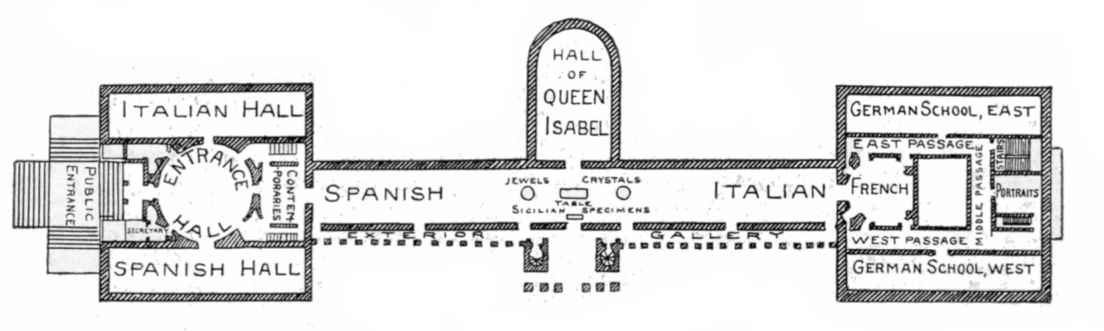
PLATE 158.
MADRID PICTURE GALLERY.
PLATE 159
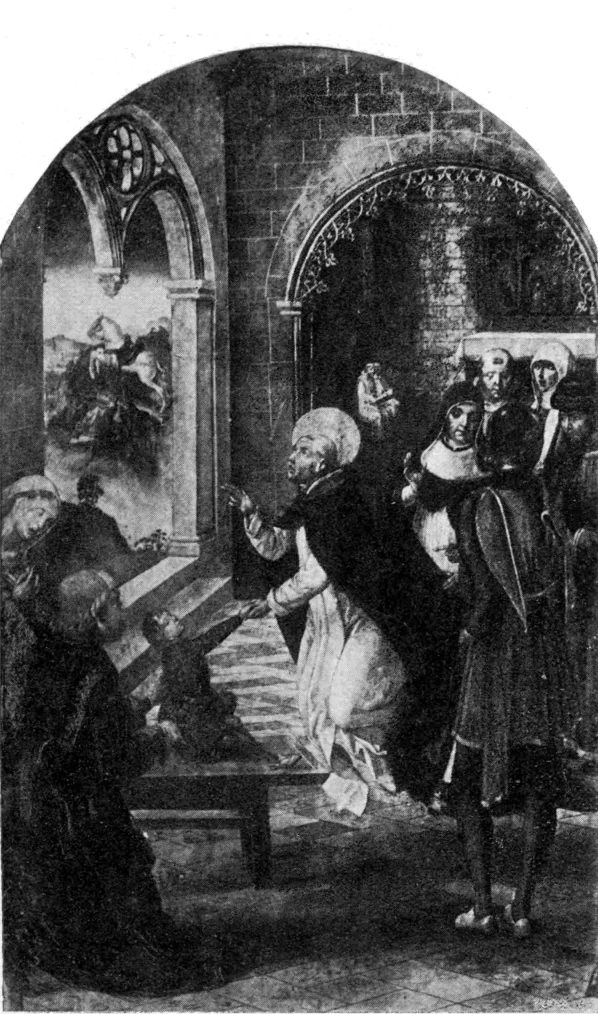
PLATE 159.
Scene in the Life of Santo Domingo de Guzman, by Pedro Berruguete.
PRADO.
PLATE 160
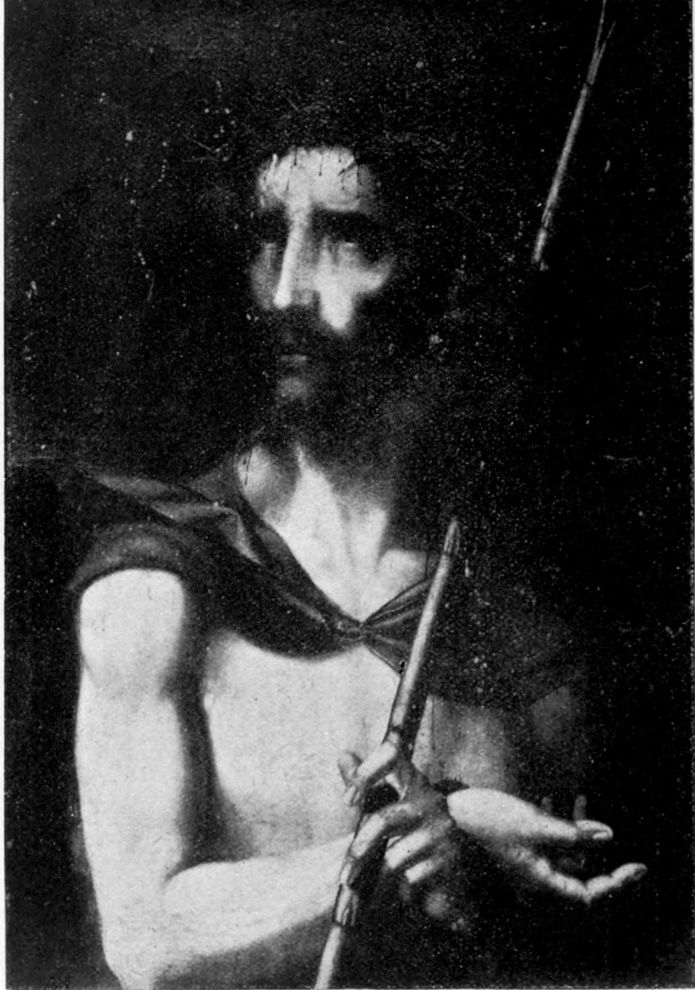
PLATE 160.
Ecce Homo, by Luis de Morales.
PRADO.
PLATE 161
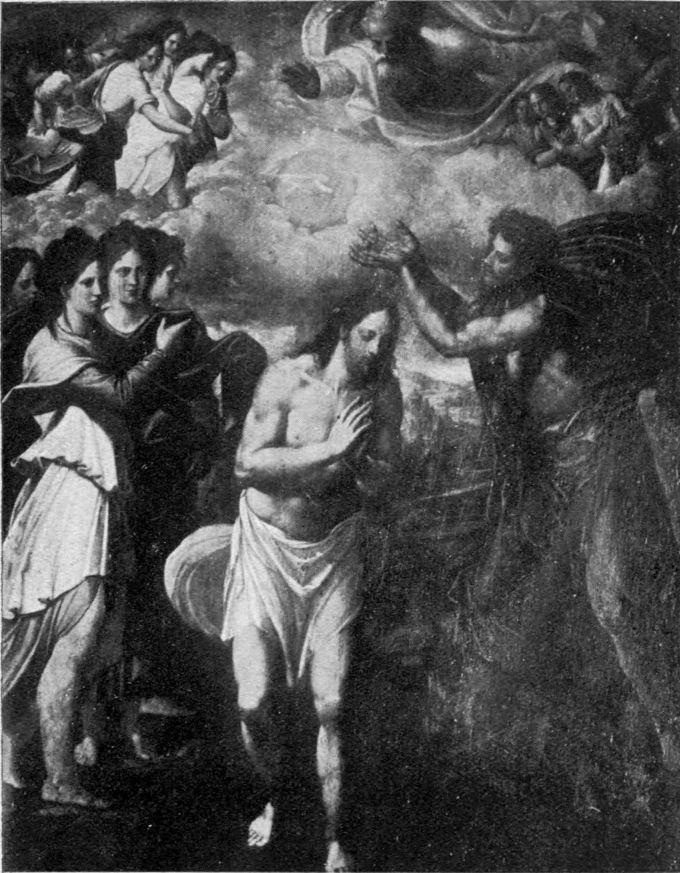
PLATE 161.
The Baptism of Christ, by Navarrete.
PRADO.
PLATE 162
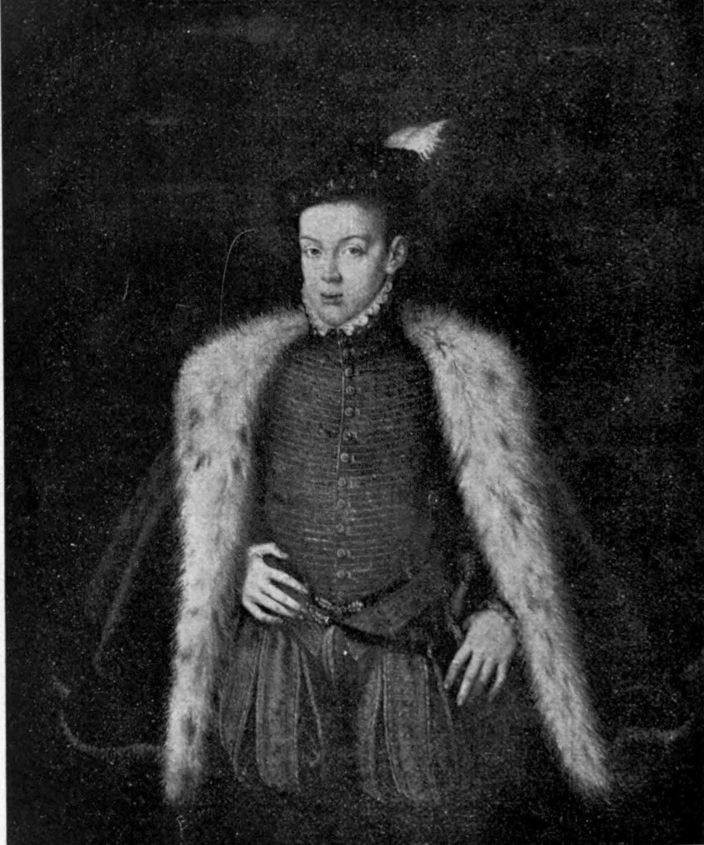
PLATE 162.
Portrait of Don Carlos, Son of Philip II., by Alonso Sánchez Coello.
PRADO.
PLATE 163
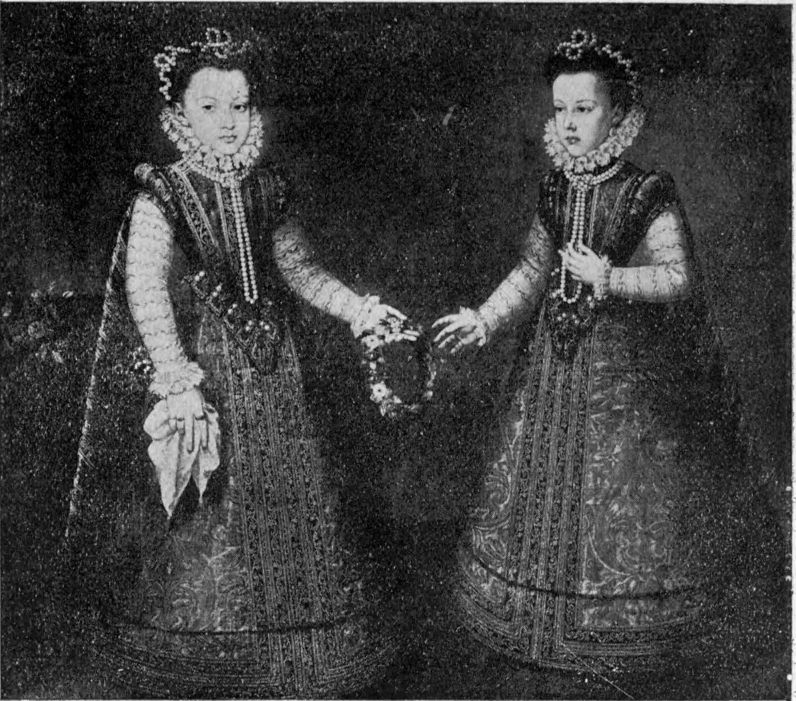
PLATE 163.
The Infantas Isabel Clara Eugenia and Catalina Micaela, Daughters of Philip II., by Alonso Sánchez Coello.
PRADO.
PLATE 164
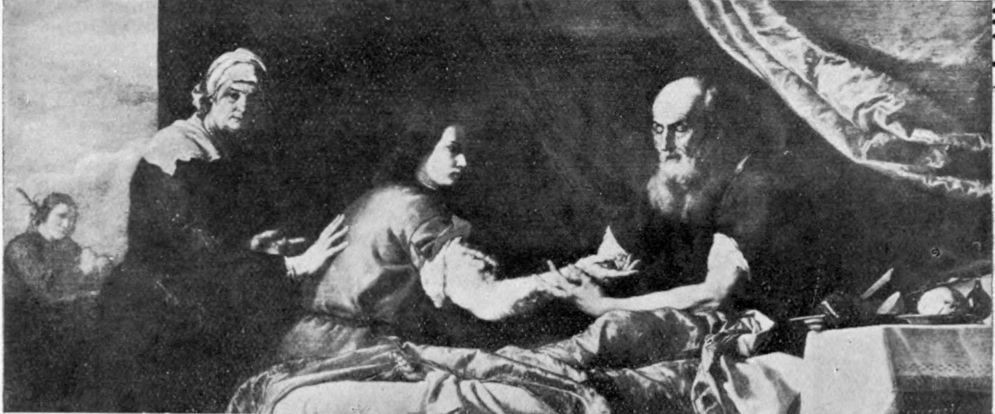
PLATE 164.
Jacob Receiving the Blessing of his Father Isaac, by Ribera.
PRADO.
PLATE 165
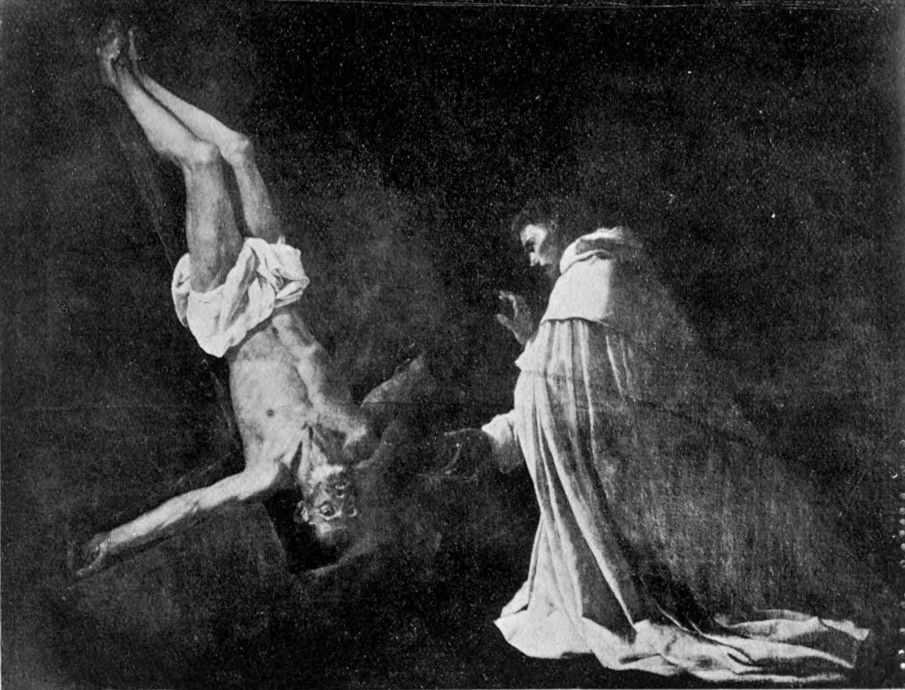
PLATE 165.
Vision of St Peter the Apostle to St Peter Nolasco, by Zurbarán.
PRADO.
PLATE 166
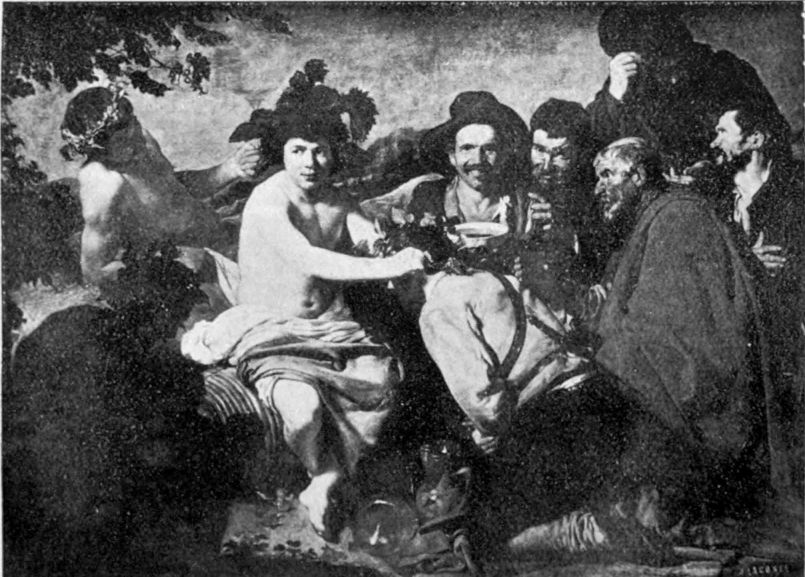
PLATE 166.
Los Borrachos, by Velazquez.
PRADO.
PLATE 167
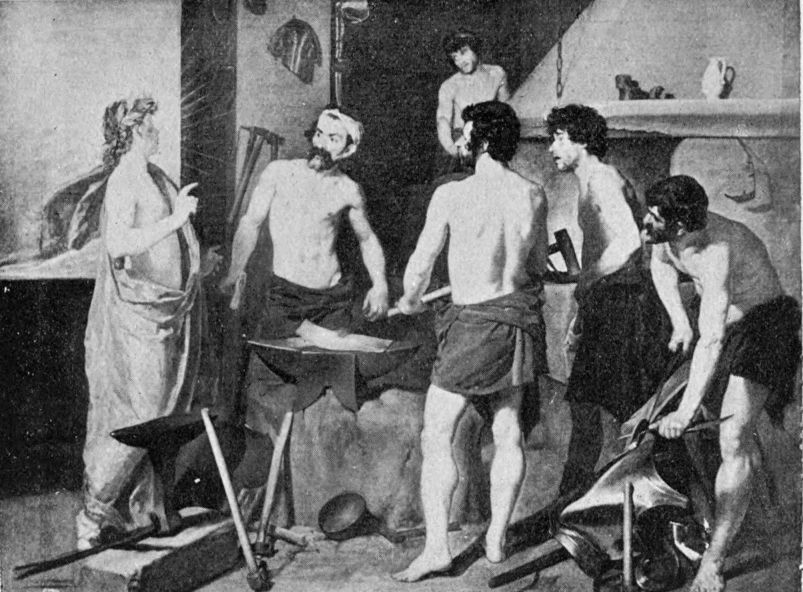
PLATE 167.
The Forge of Vulcan, by Velazquez.
PRADO.
PLATE 168
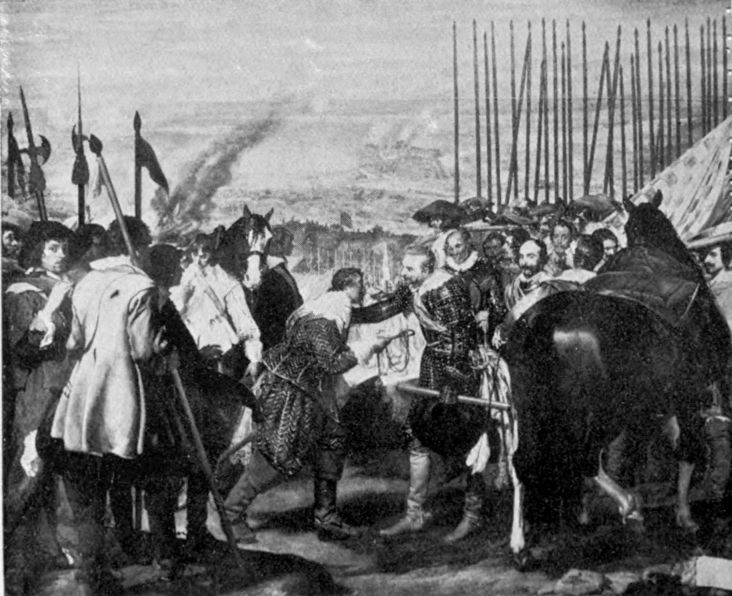
PLATE 168.
The Surrender of Breda, by Velazquez.
PRADO.
PLATE 169
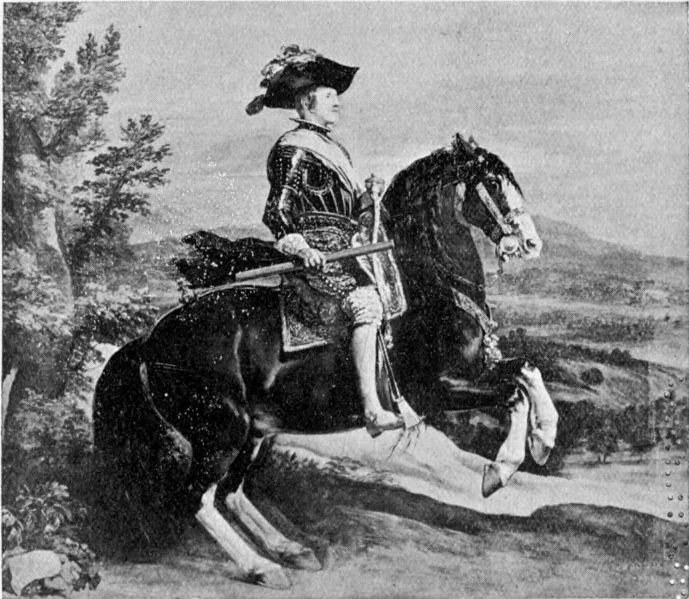
PLATE 169.
Philip IV., by Velazquez.
PRADO.
PLATE 170
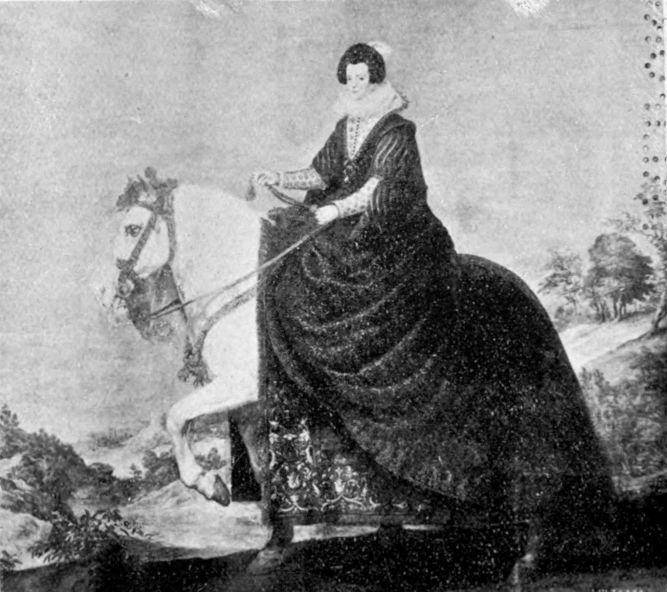
PLATE 170.
Queen Isabel of Bourbon, by Velazquez.
PRADO.
PLATE 171
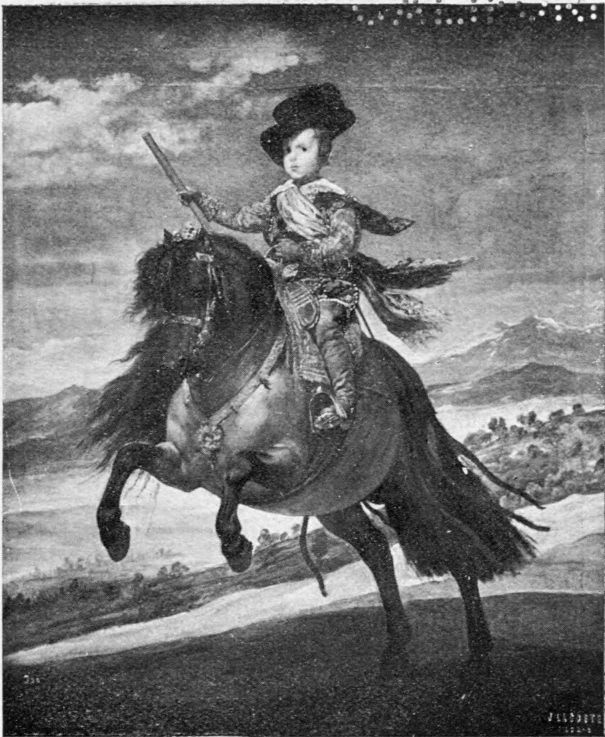
PLATE 171.
Don Baltasar Carlos, by Velazquez.
PRADO.
PLATE 172
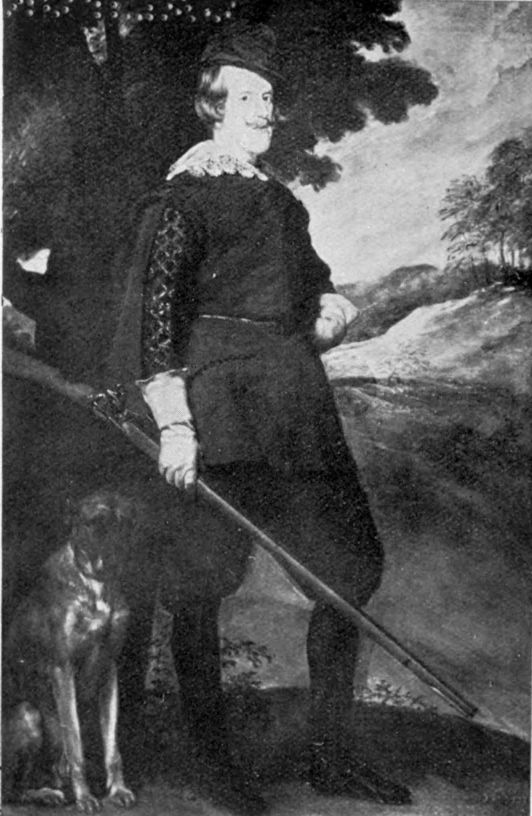
PLATE 172.
Philip IV. in Hunting Costume, by Velazquez.
PRADO.
PLATE 173
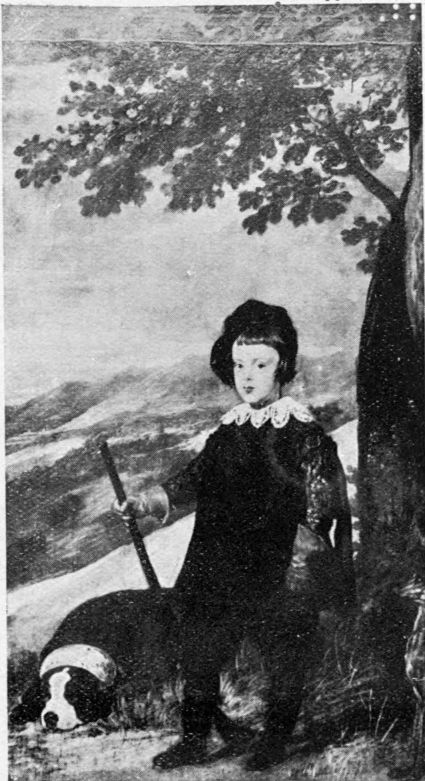
PLATE 173.
Don Baltasar Carlos in Hunting Costume, by Velazquez.
PRADO.
PLATE 174
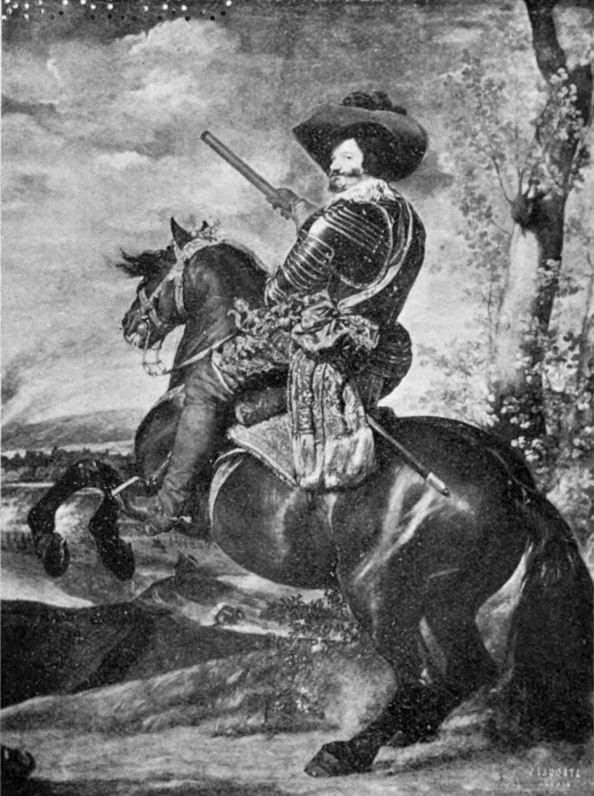
PLATE 174.
Duke of Olivares, by Velazquez.
PRADO.
PLATE 175
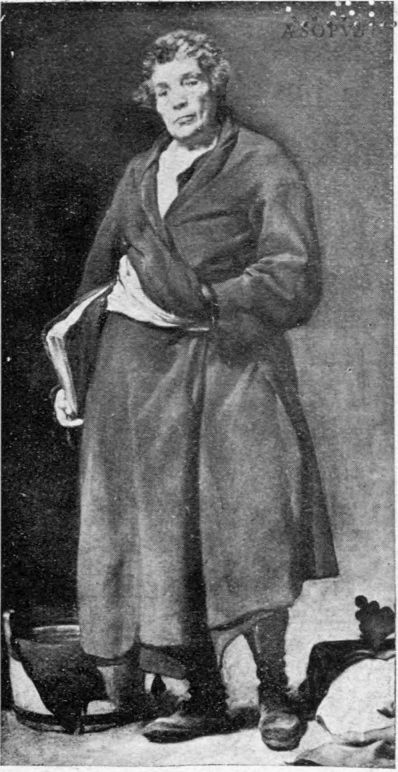
PLATE 175.
Æsop, by Velazquez.
PRADO.
PLATE 176
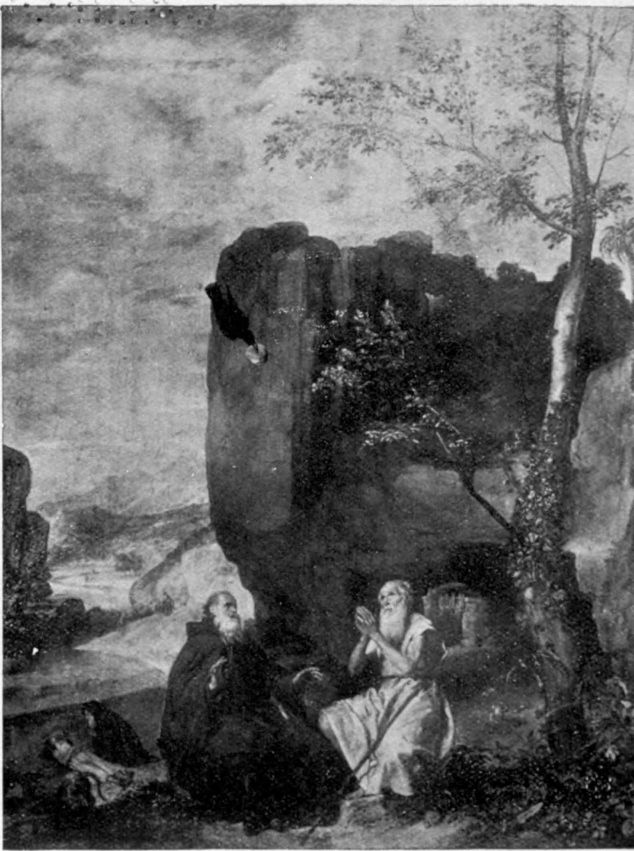
PLATE 176.
St Antony Abbot Visiting St Paul, by Velazquez.
PRADO.
PLATE 177
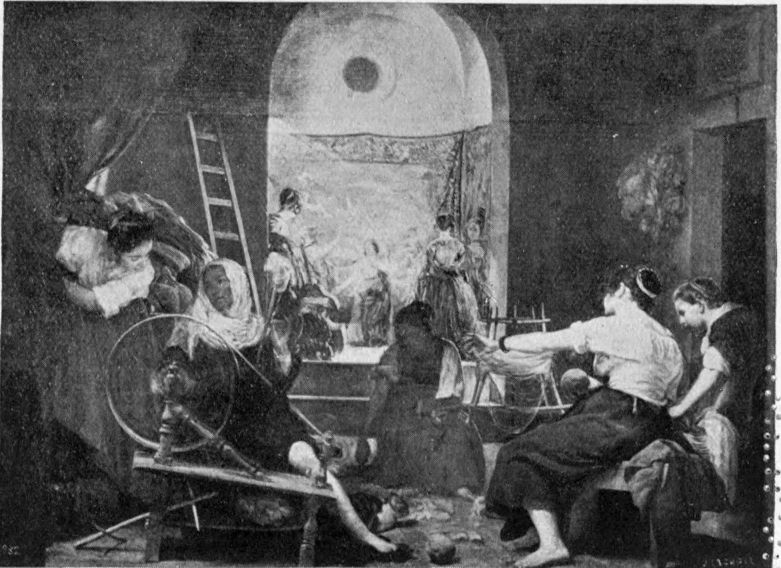
PLATE 177.
Las Hilanderas, by Velazquez.
PRADO.
PLATE 178
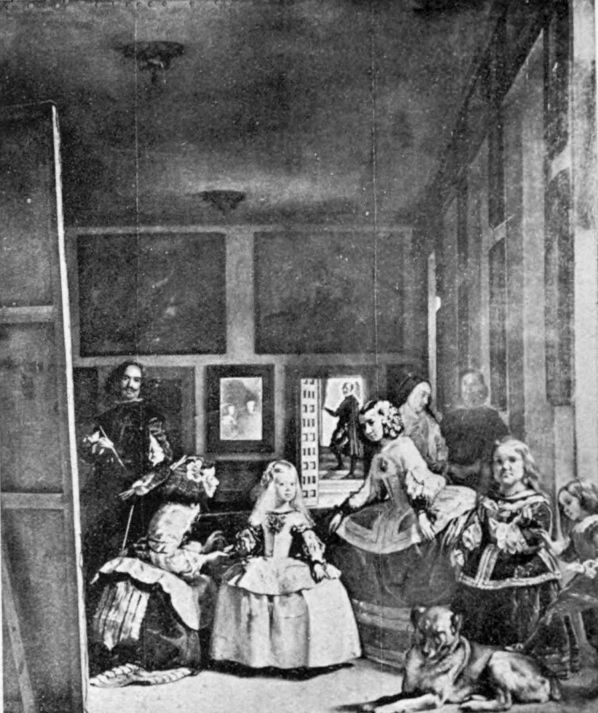
PLATE 178.
Las Meninas, by Velazquez.
PRADO.
PLATE 179
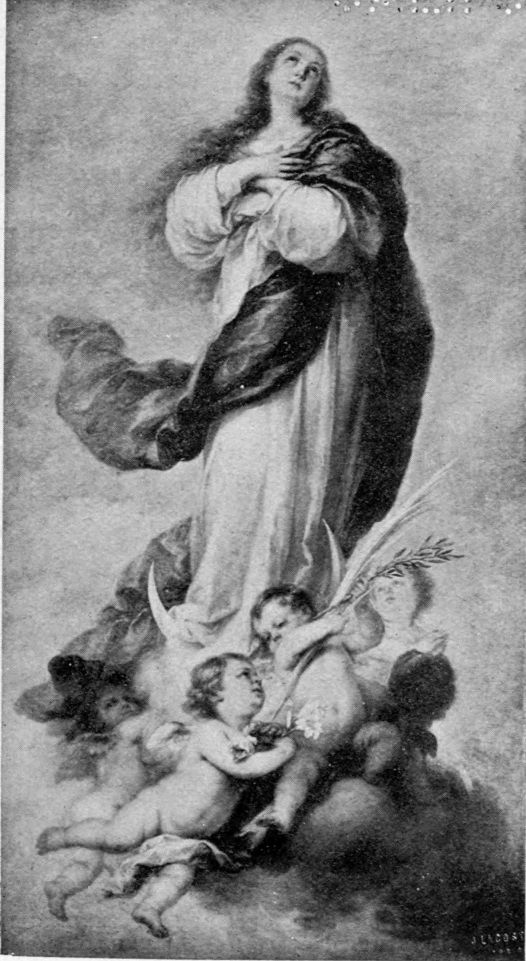
PLATE 179.
Our Lady of the Immaculate Conception, by Murillo. PRADO.
PLATE 180
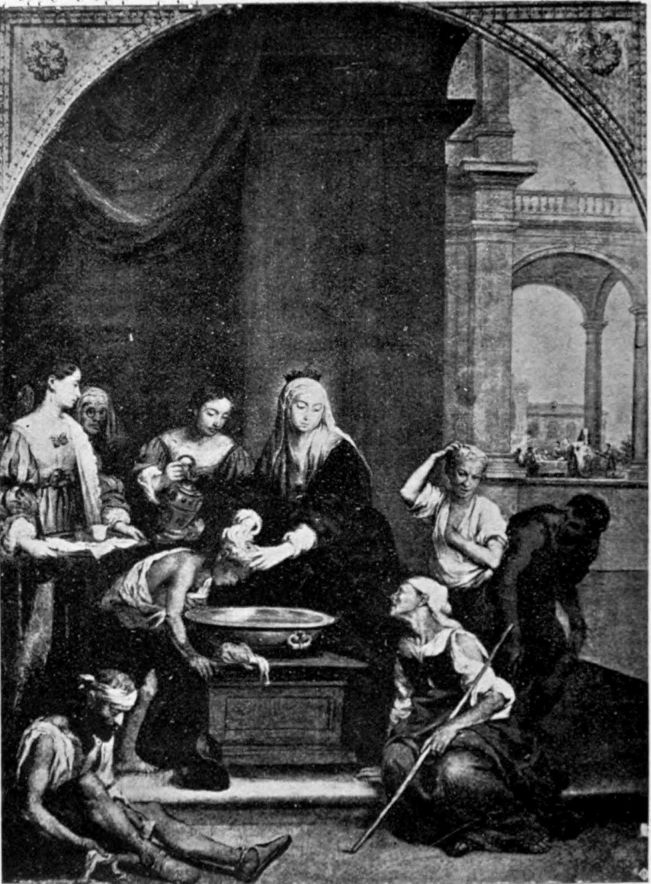
PLATE 180.
El Tiñoso: St Elizabeth of Hungary Tending the Sick in her Hospital, by Murillo.
PRADO.
PLATE 181
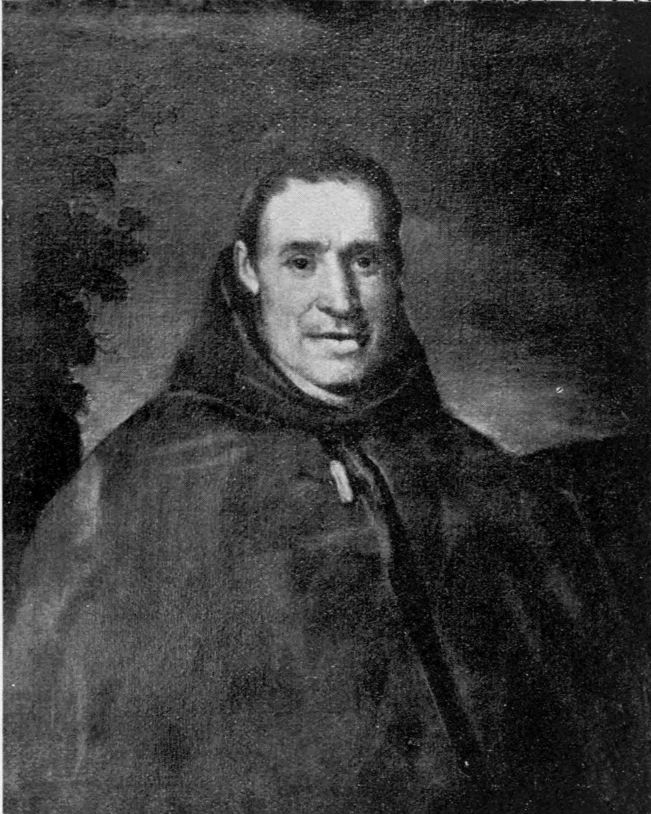
PLATE 181.
Father Cabanillas, by Murillo.
PRADO.
PLATE 182
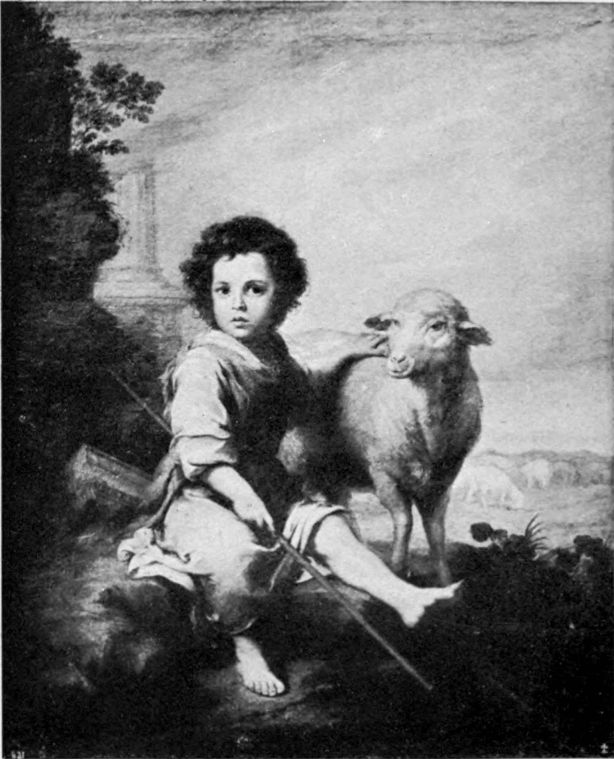
PLATE 182.
The Child Jesus as Shepherd, by Murillo.
PRADO.
PLATE 183
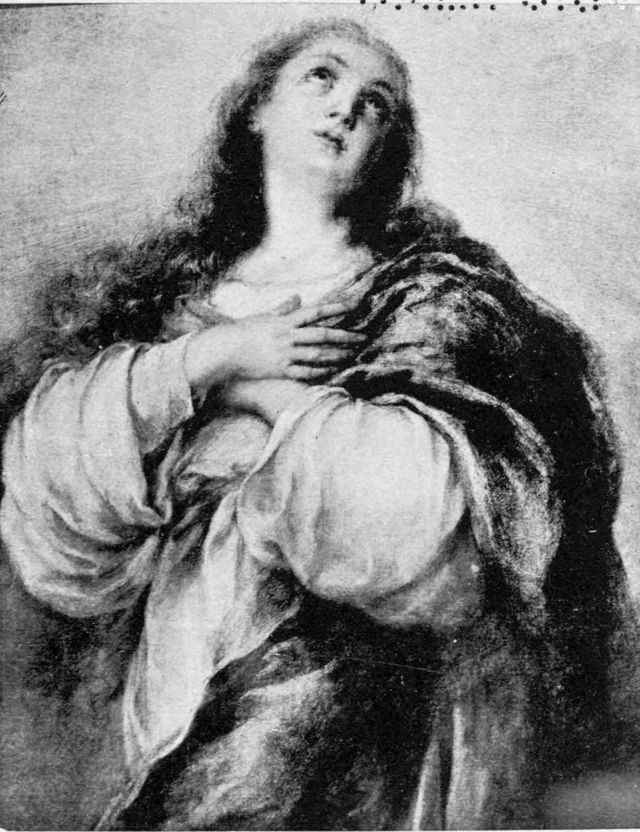
PLATE 183.
Detail of Plate 179, by Murillo.
PRADO.
PLATE 184
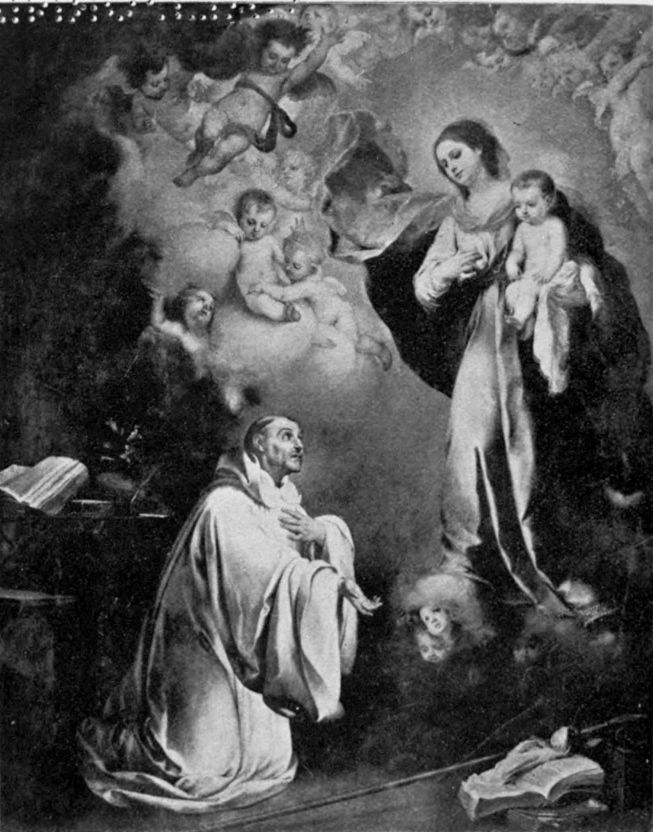
PLATE 184.
The Vision of St Bernard, by Murillo.
PRADO.
PLATE 185
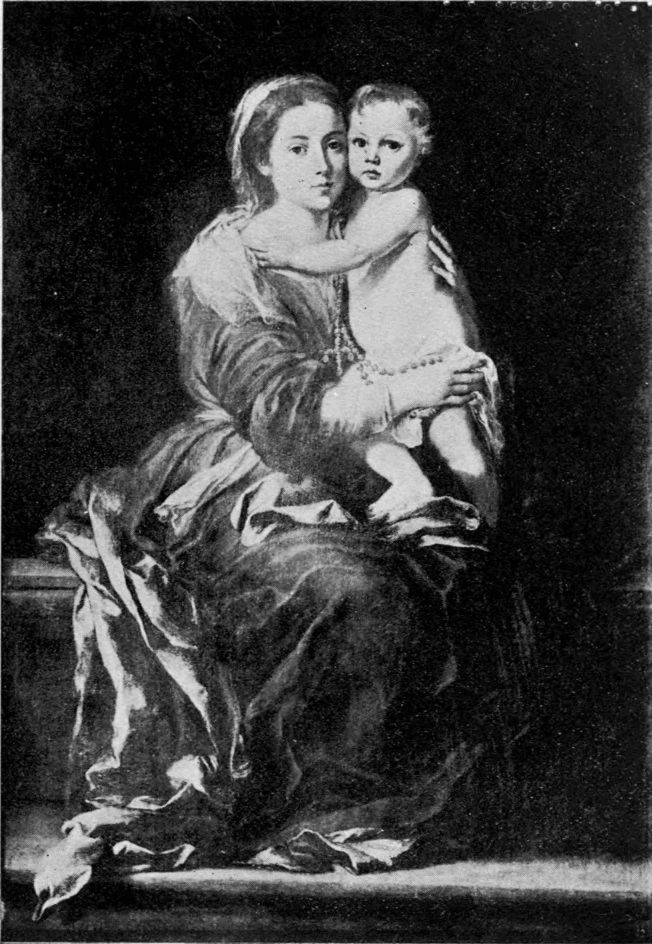
PLATE 185.
The Virgin of the Rosary, by Murillo.
PRADO.
PLATE 186
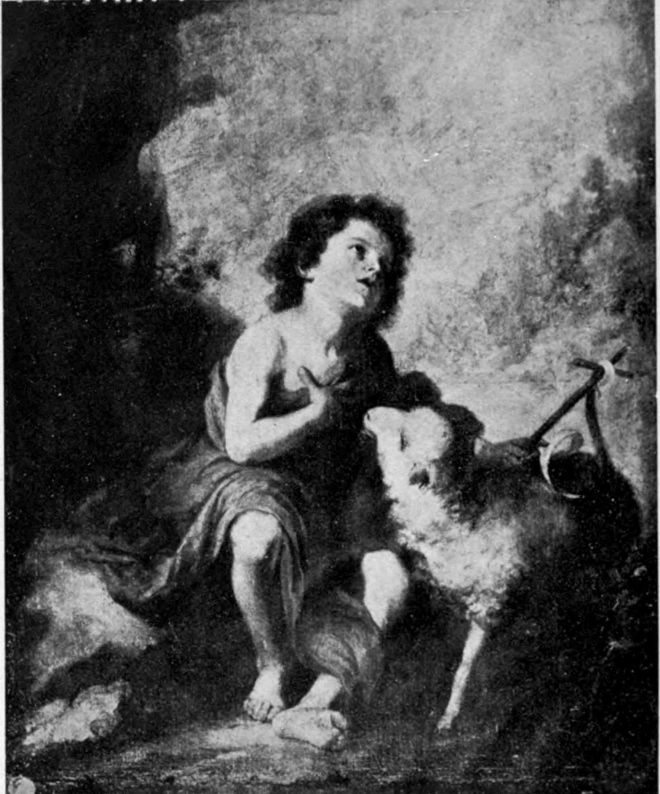
PLATE 186.
The Child St John, by Murillo.
PRADO.
PLATE 187
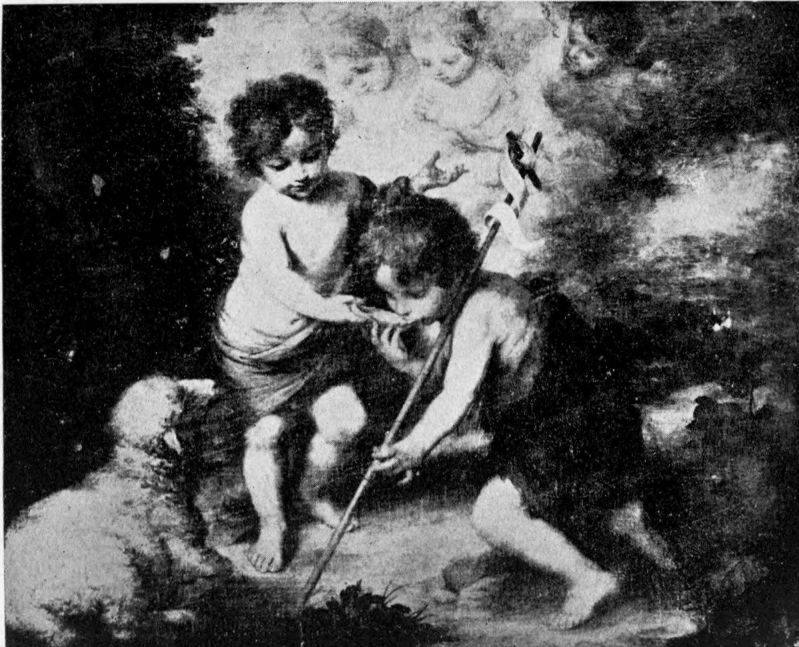
PLATE 187.
The Children, Jesus and St John, Known by the Name of “Los Niños de la Concha,” by Murillo.
PRADO.
PLATE 188
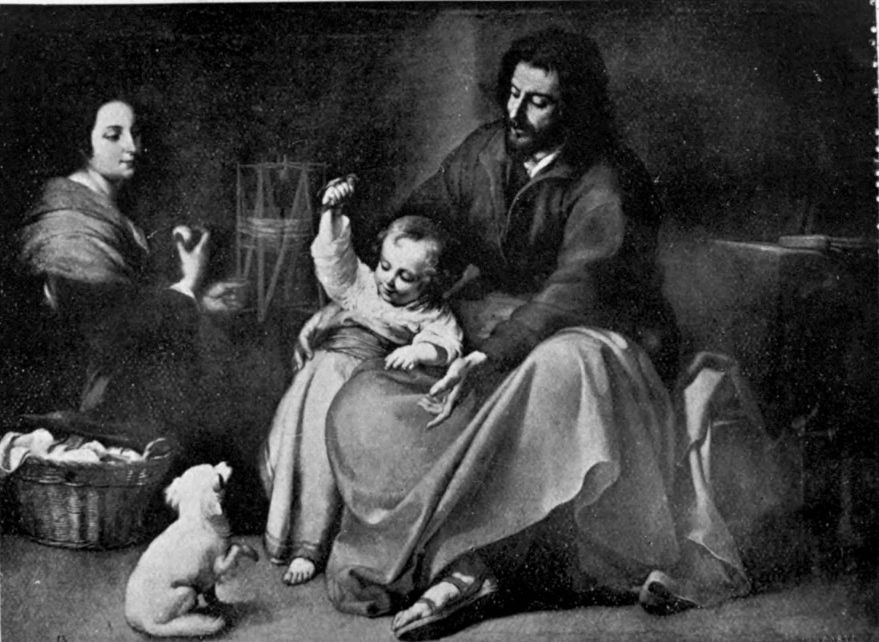
PLATE 188.
The Holy Family and the Bird, by Murillo.
PRADO.
PLATE 189
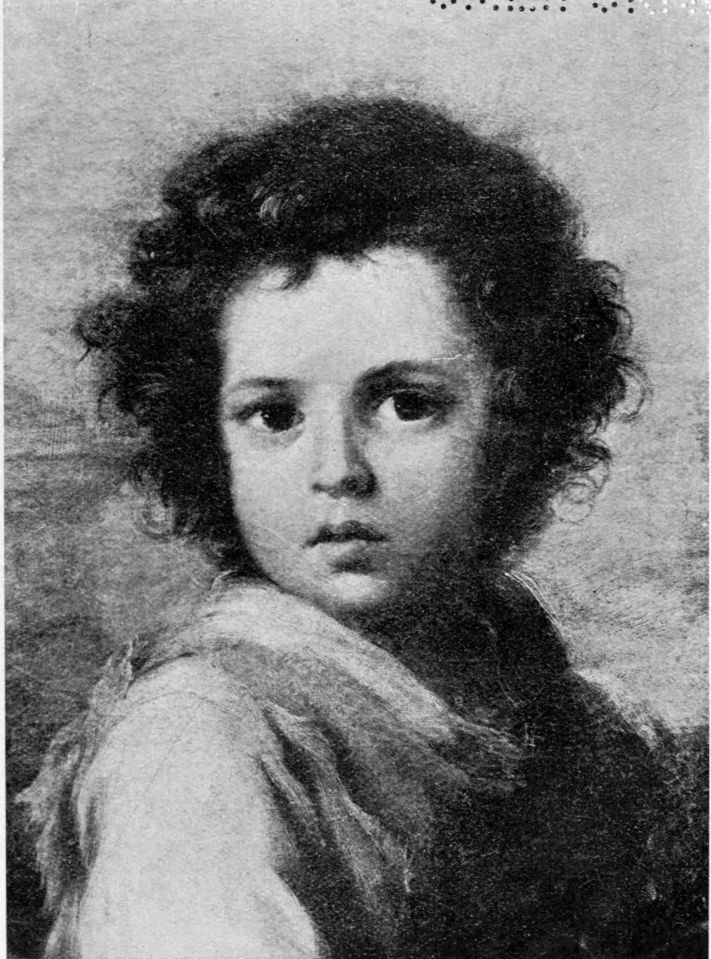
PLATE 189.
Head of the Holy Shepherd (Fragment), by Murillo.
PRADO.
PLATE 190
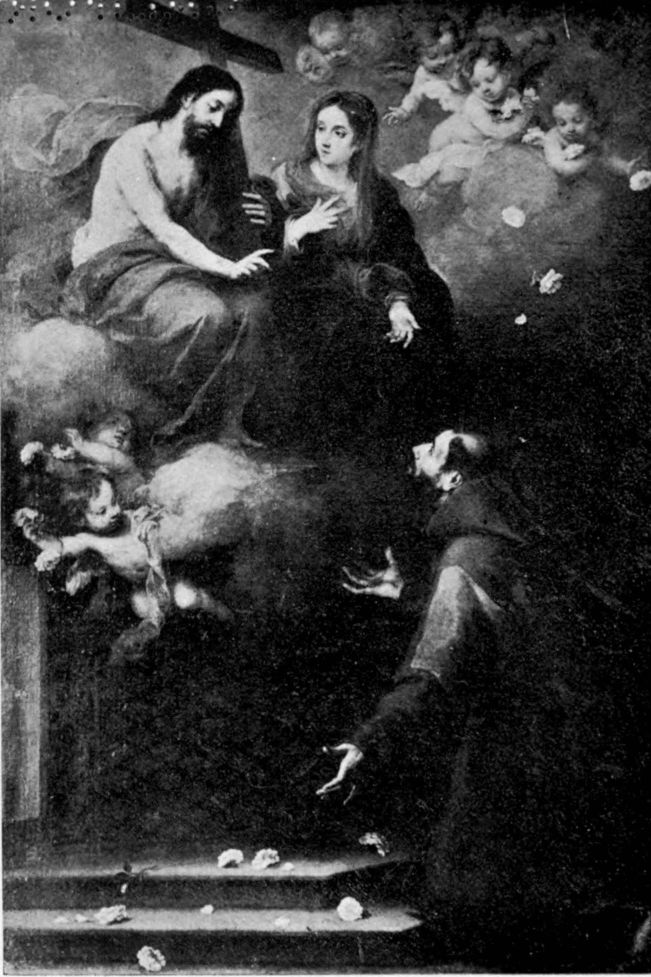
PLATE 190.
La Porciúncula (the Vision of St Francis), by Murillo.
PRADO.
PLATE 191
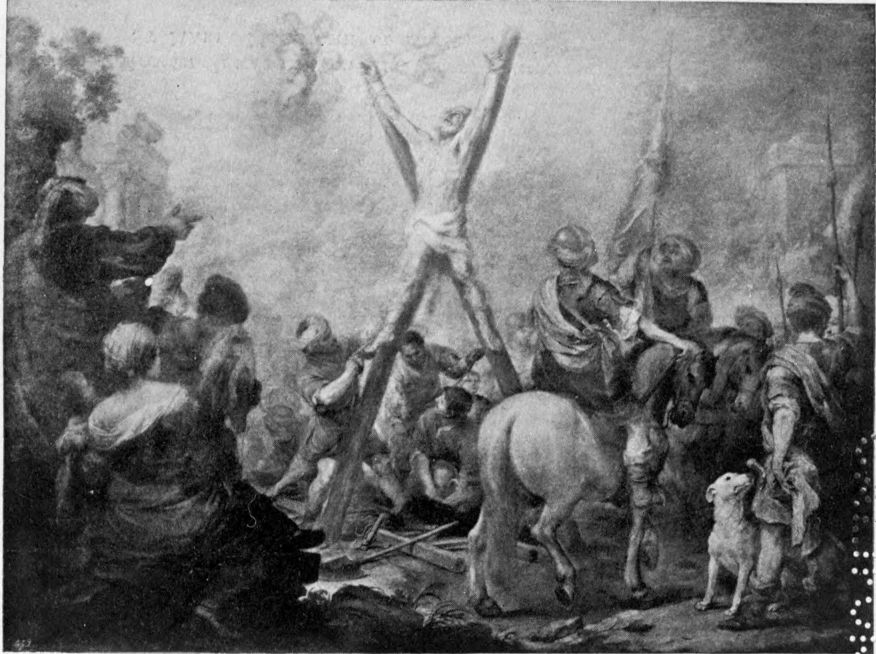
PLATE 191.
The Martyrdom of St Andrew the Apostle at Patras, by Murillo.
PRADO.
PLATE 192
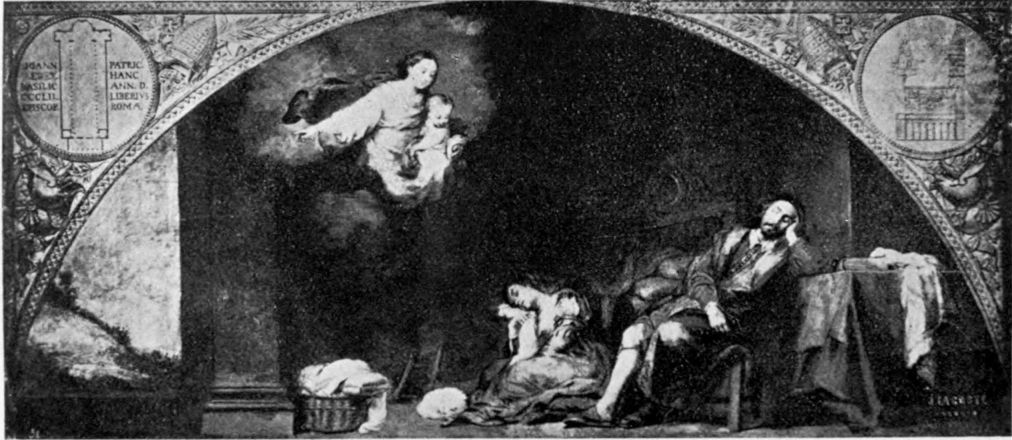
PLATE 192.
The Dream of the Roman Senator and his Wife, Which Produced the Church of St Maria Maggiore at Rome, by Murillo.
PLATE 193
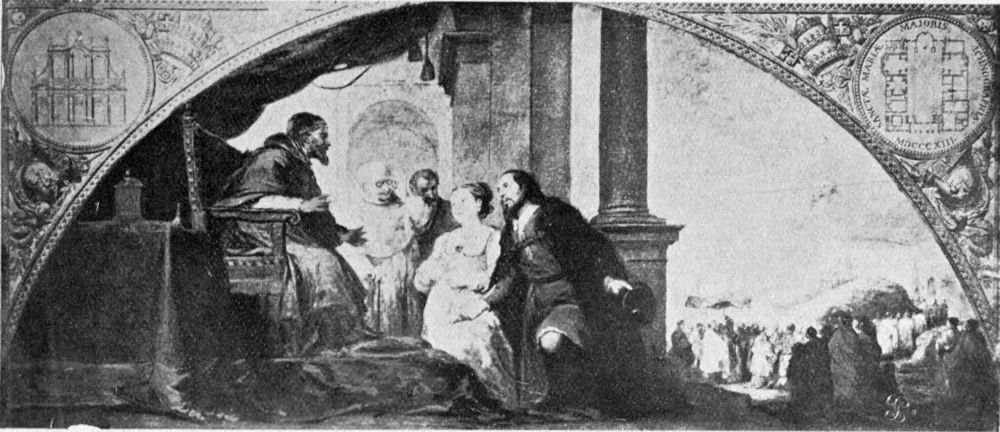
PLATE 193.
The Roman Senator and his Wife telling their Dream to Pope Liberius, by Murillo.
PLATE 194
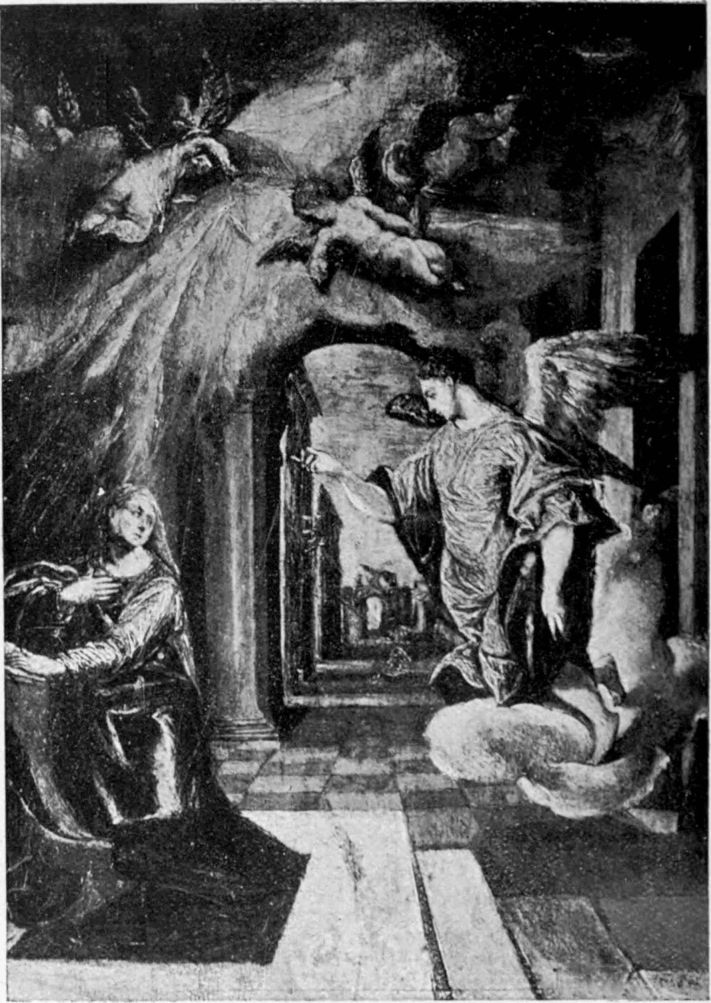
PLATE 194.
The Annunciation, by El Greco,
PRADO.
PLATE 195
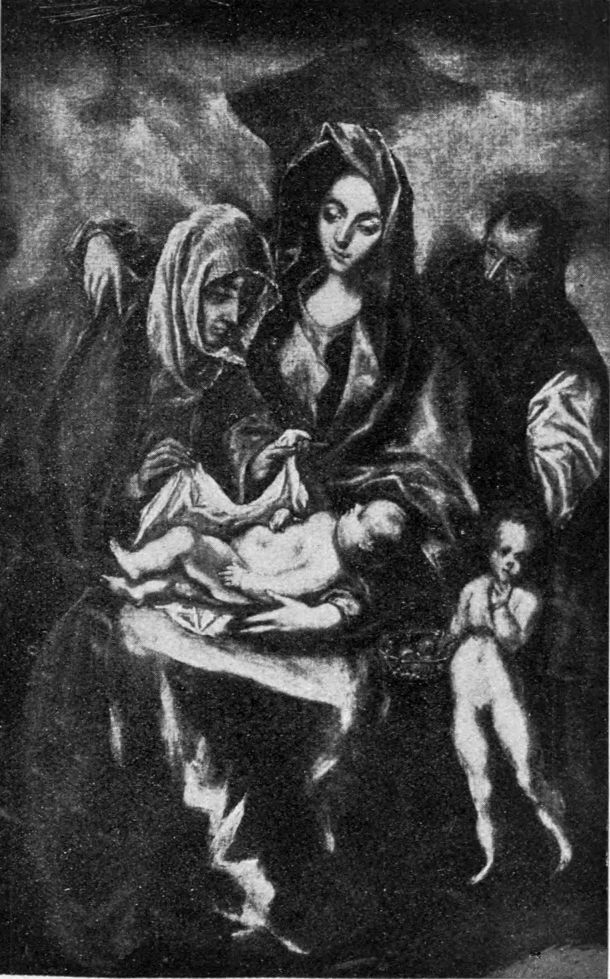
PLATE 195.
The Holy Family, by El Greco.
PRADO.
PLATE 196
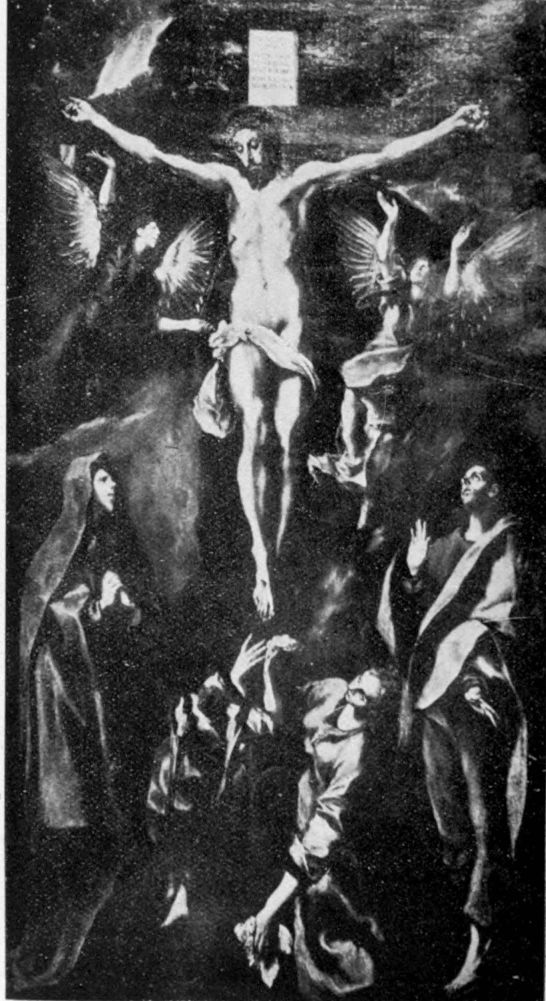
PLATE 196.
The Crucifixion, by El Greco.
PRADO.
PLATE 197
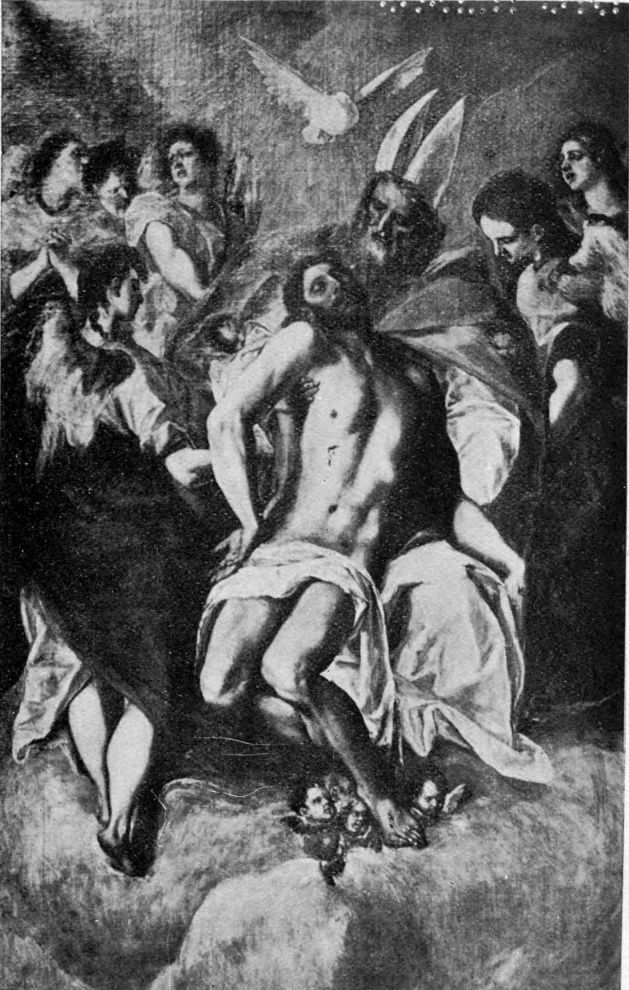
PLATE 197.
The Dead Christ in the Arms of God the Father, by El Greco.
PRADO.
PLATE 198
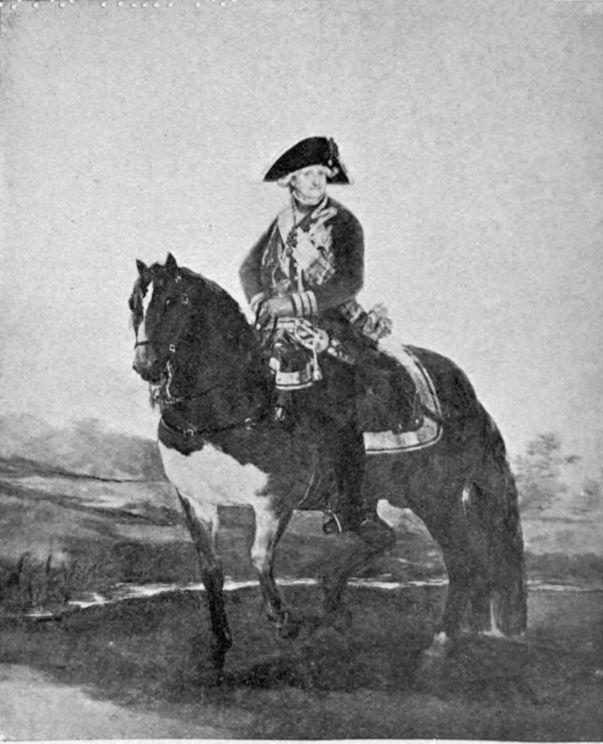
PLATE 198.
Charles IV., by Goya.
PRADO.
PLATE 199
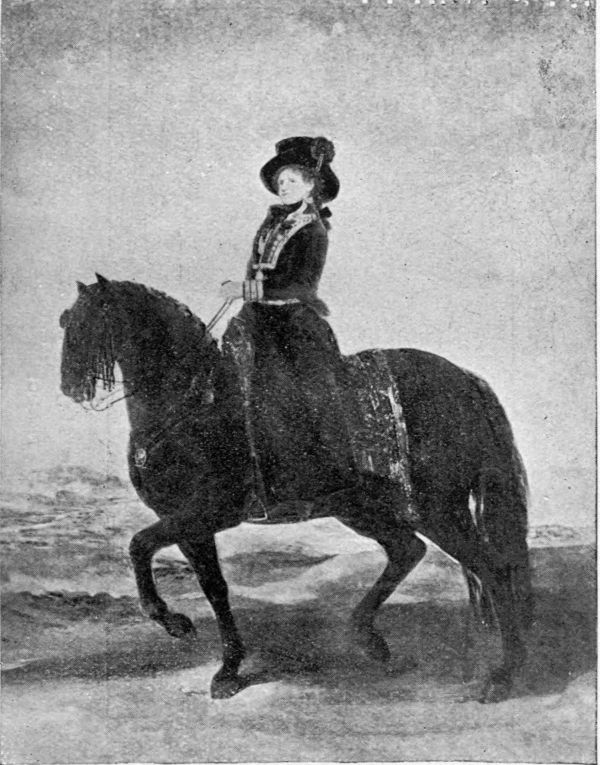
PLATE 199.
Queen Maria Luisa, by Goya.
PRADO.
PLATE 200
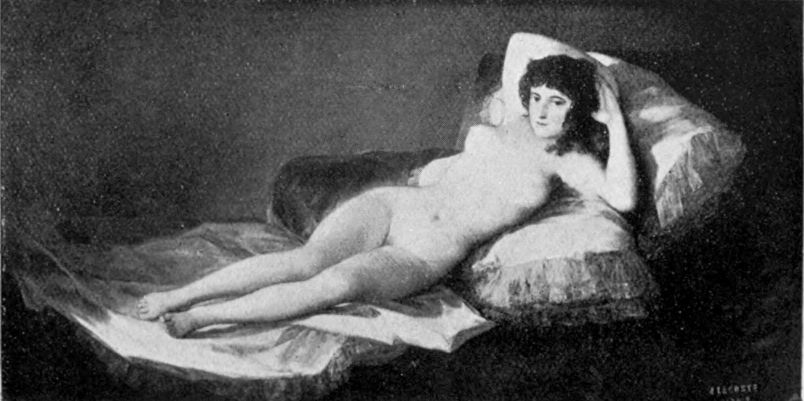
PLATE 200.
The Nude Maja, by Goya.
PRADO.
PLATE 201
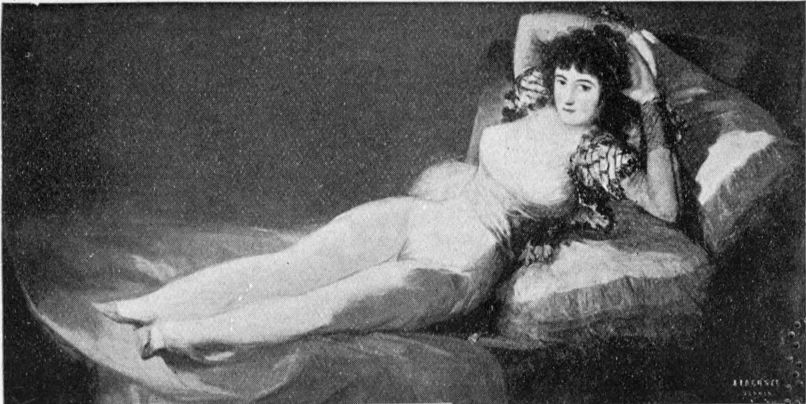
PLATE 201.
The Draped Maja, by Goya.
PRADO.
PLATE 202
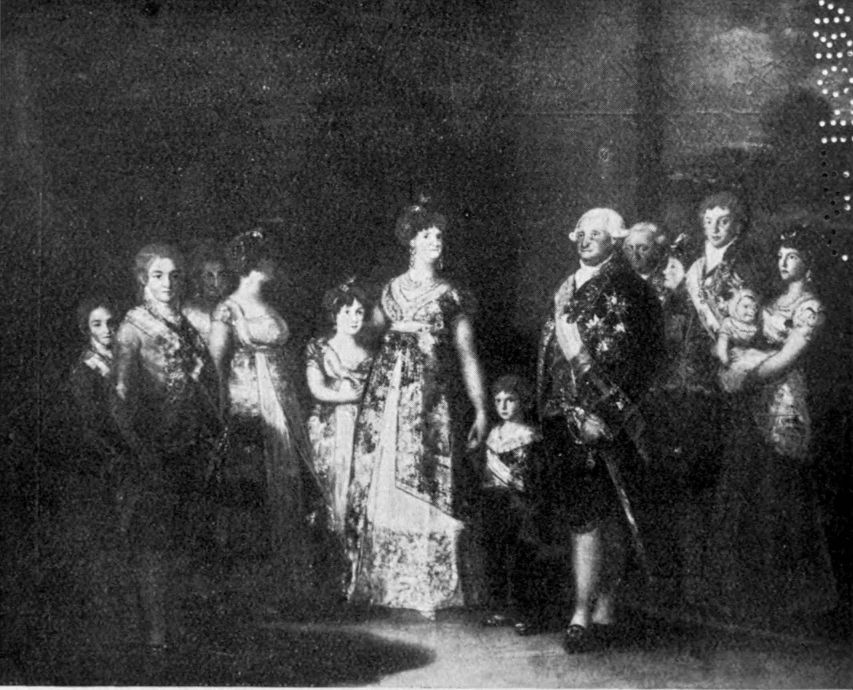
PLATE 202.
The Family of Charles IV., by Goya.
PRADO.
PLATE 203
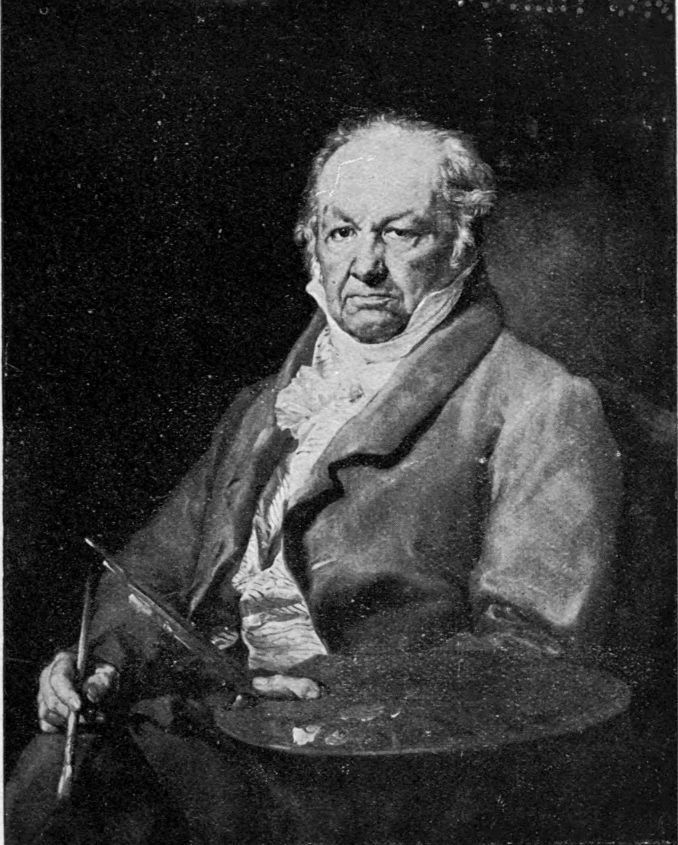
PLATE 203.
Goya at the Age of 80, by V. López.
PRADO.
PLATE 204
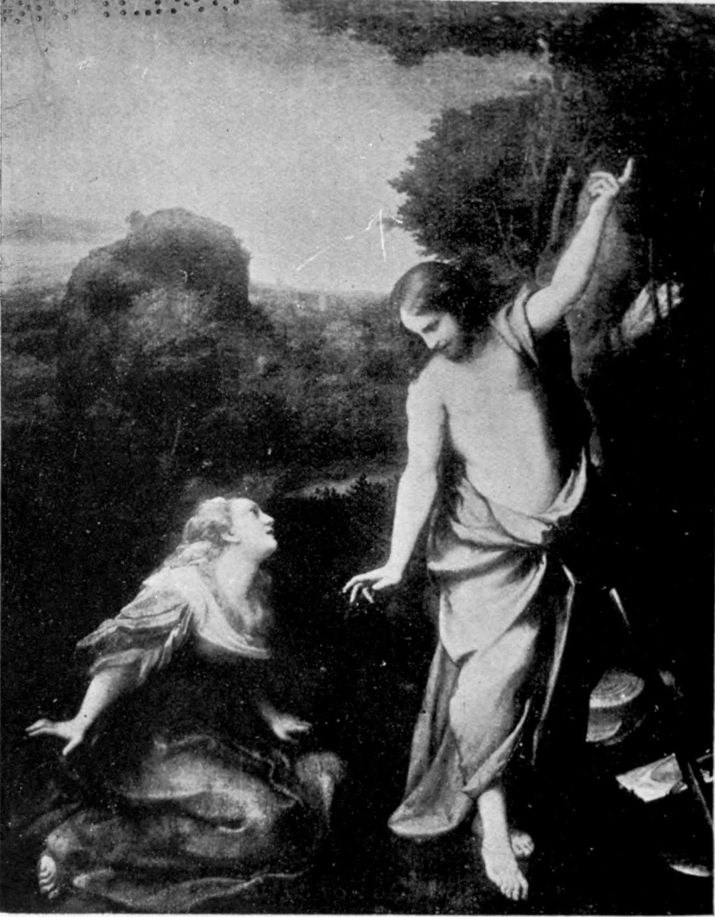
PLATE 204.
Jesus and Mary Magdalene, by Correggio.
PRADO.
PLATE 205
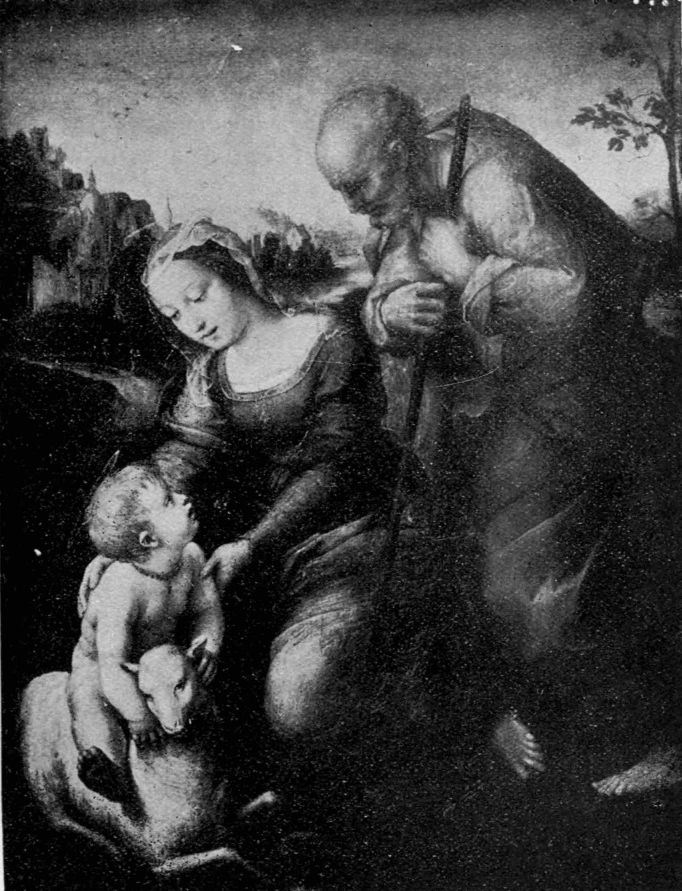
PLATE 205.
The Holy Family and the Lamb, by Rafael.
PRADO.
PLATE 206
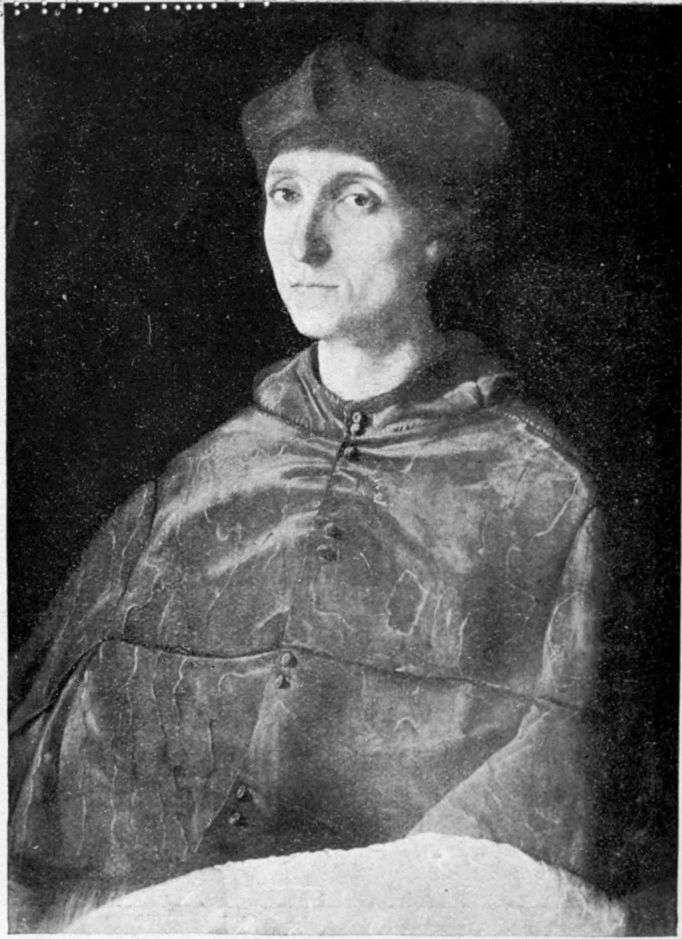
PLATE 206.
A Cardinal, by Rafael.
PRADO.
PLATE 207
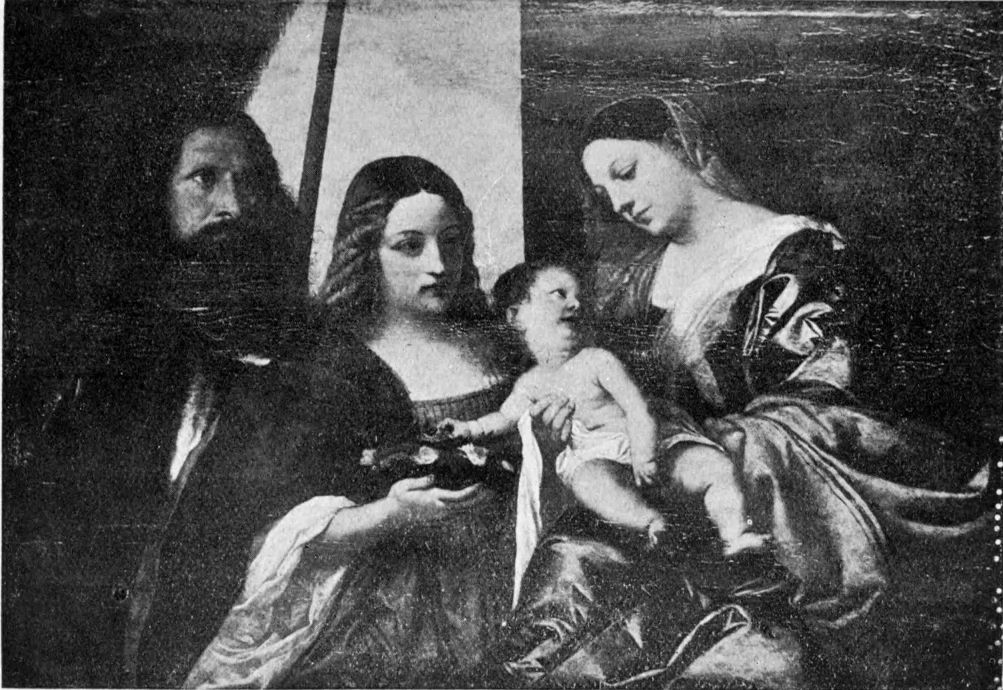
PLATE 207.
Madonna and Child, with St Bridget and St Hulpus, by Titian.
PRADO.
PLATE 208
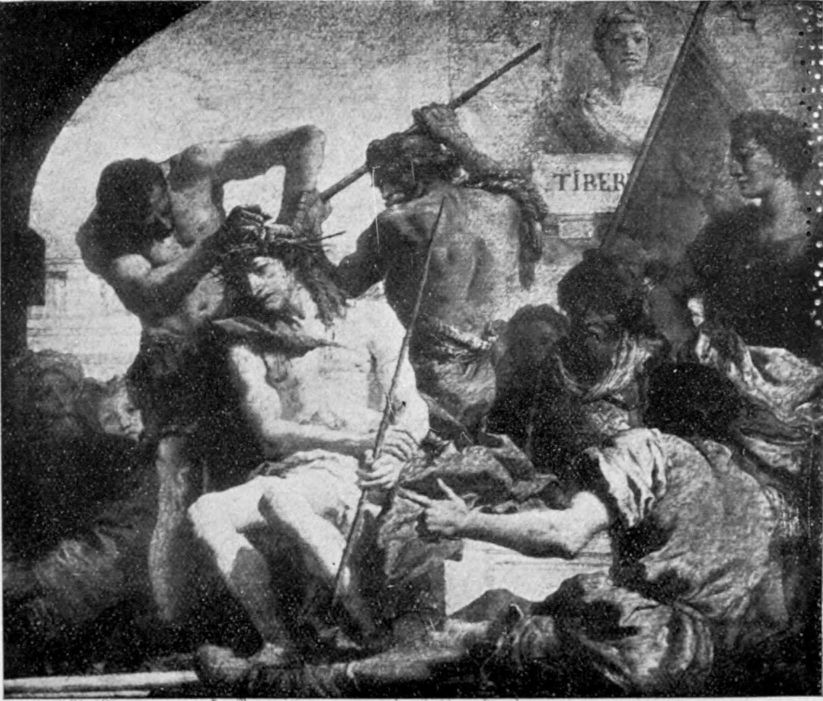
PLATE 208.
The Crown of Thorns, by Domingo Tiepolo.
PRADO.
PLATE 209
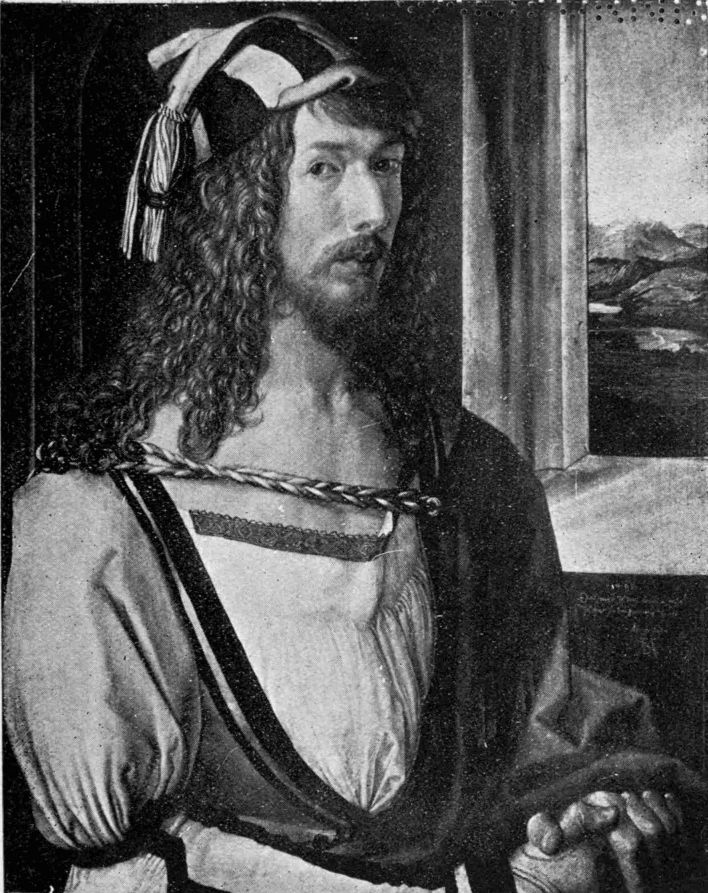
PLATE 209.
Portrait of Albrecht Dürer, by Himself.
PRADO.
PLATE 210
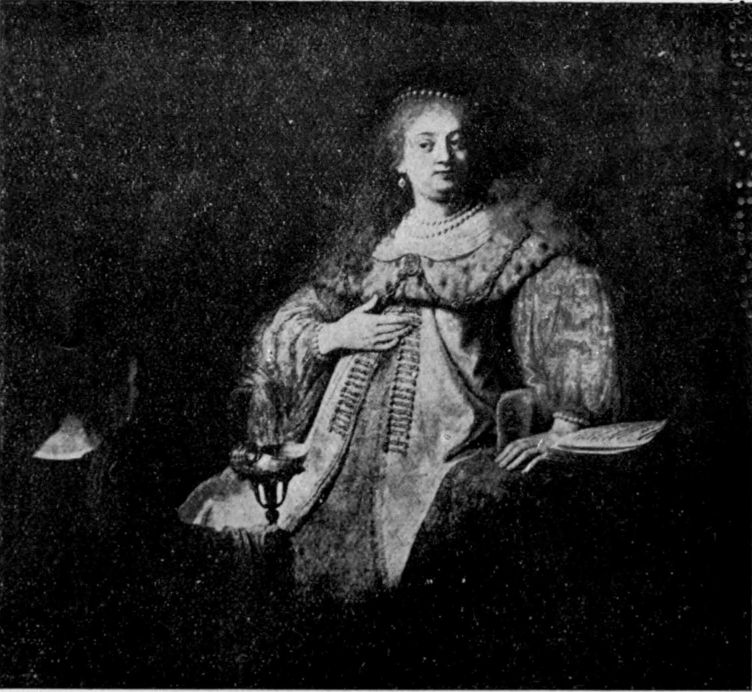
PLATE 210.
Queen Artemisia, by Rembrandt.
PRADO.
PLATE 211
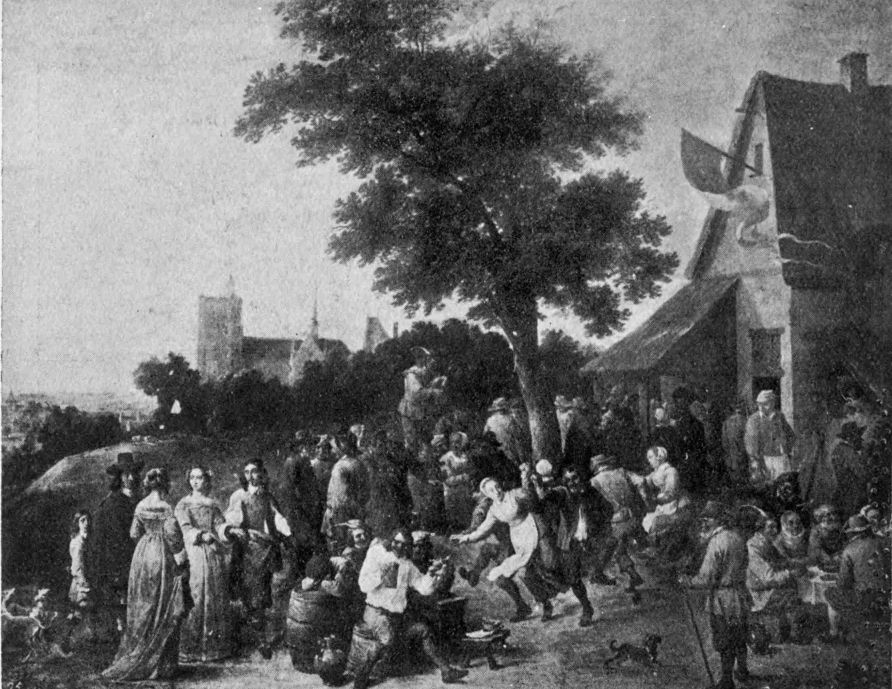
PLATE 211.
Village Fête, by Teniers.
PRADO.
PLATE 212
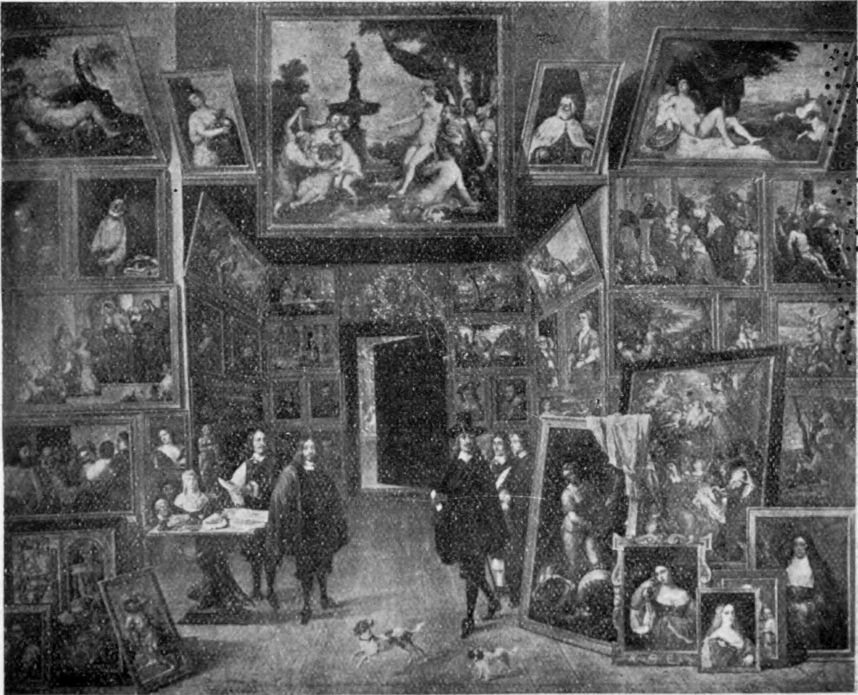
PLATE 212.
Gallery of the Archduke Leopold in Brussels, by Teniers.
PRADO.
PLATE 213
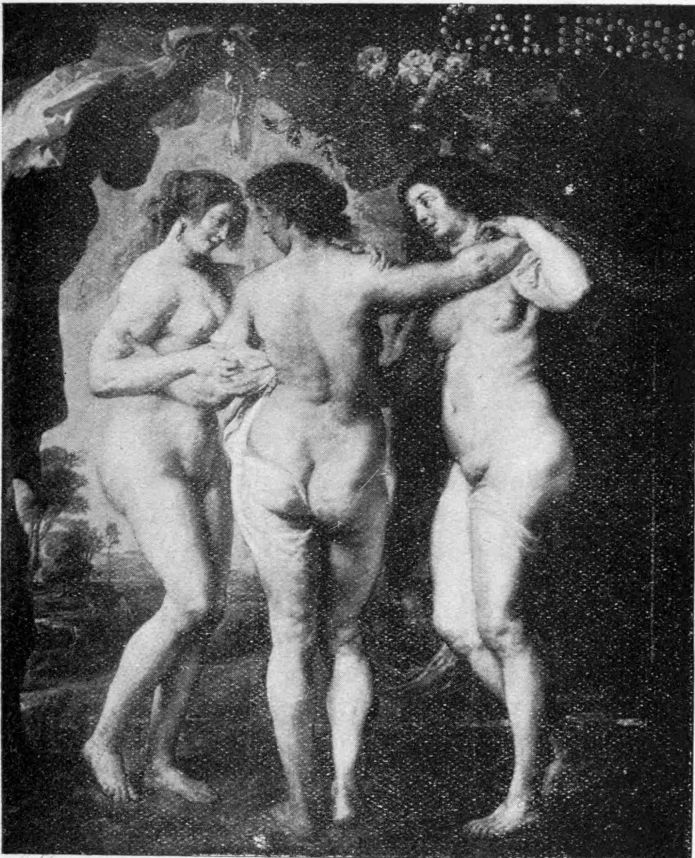
PLATE 213.
The Three Graces, by Rubens.
PRADO.
PLATE 214
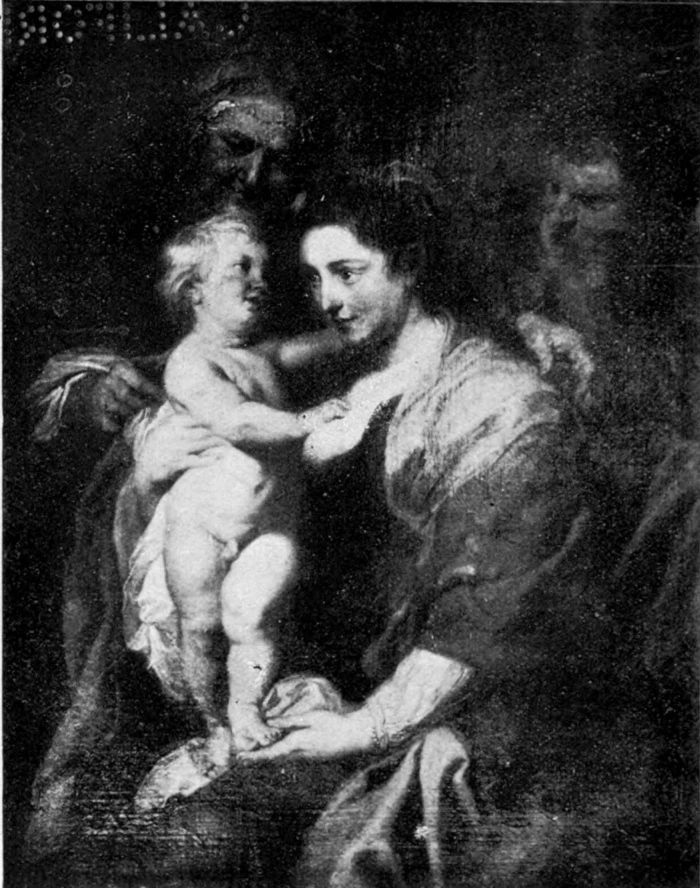
PLATE 214.
The Holy Family, by Rubens.
PRADO.
PLATE 215
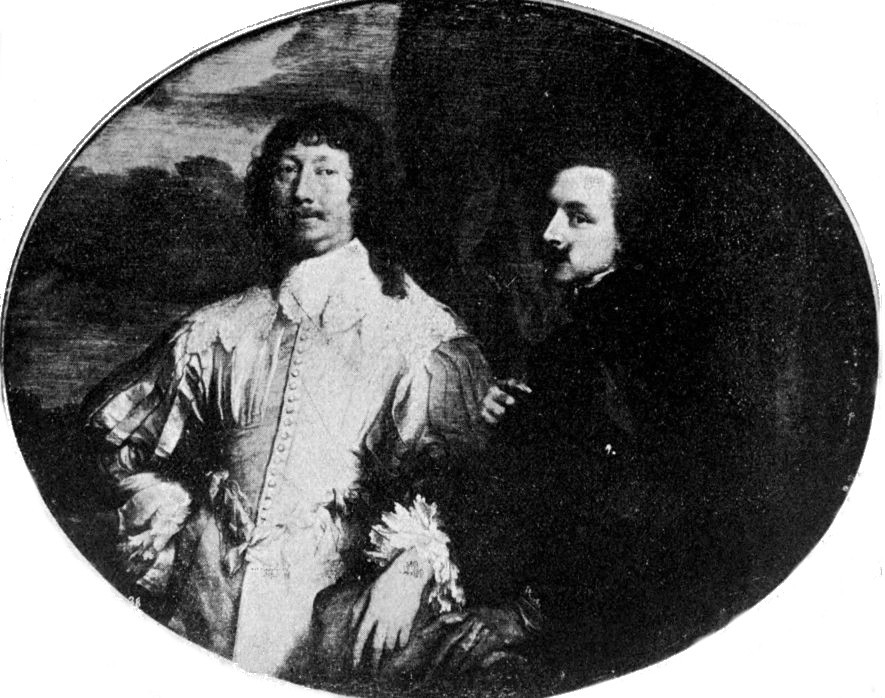
PLATE 215.
Van Dyck and Count Bristol, by Van Dyck.
PRADO.
PLATE 216
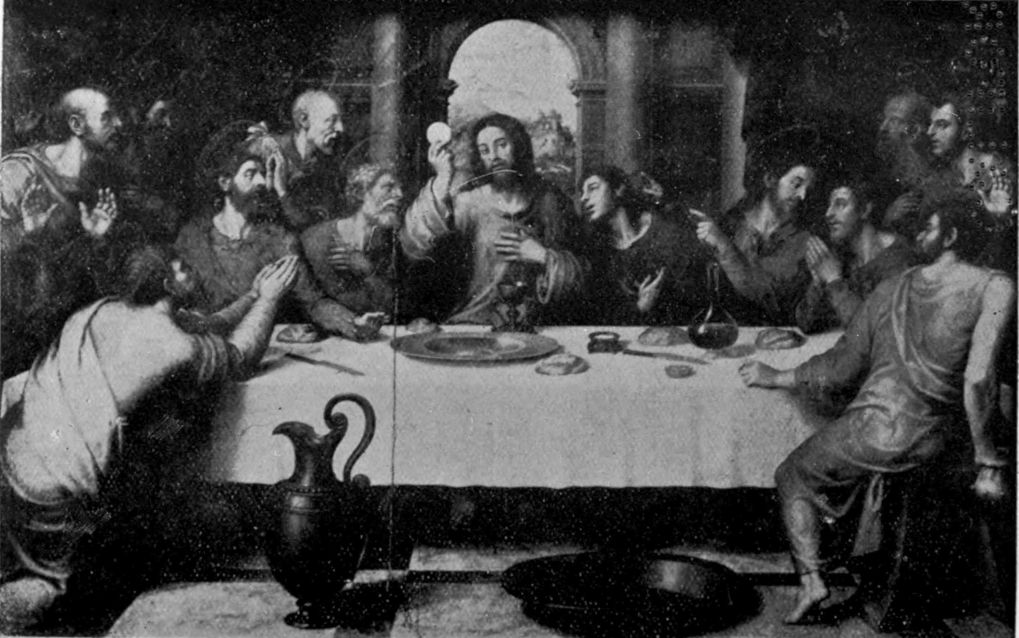
PLATE 216.
The Last Supper, by Juan de Juanes.
PRADO.
PLATE 217
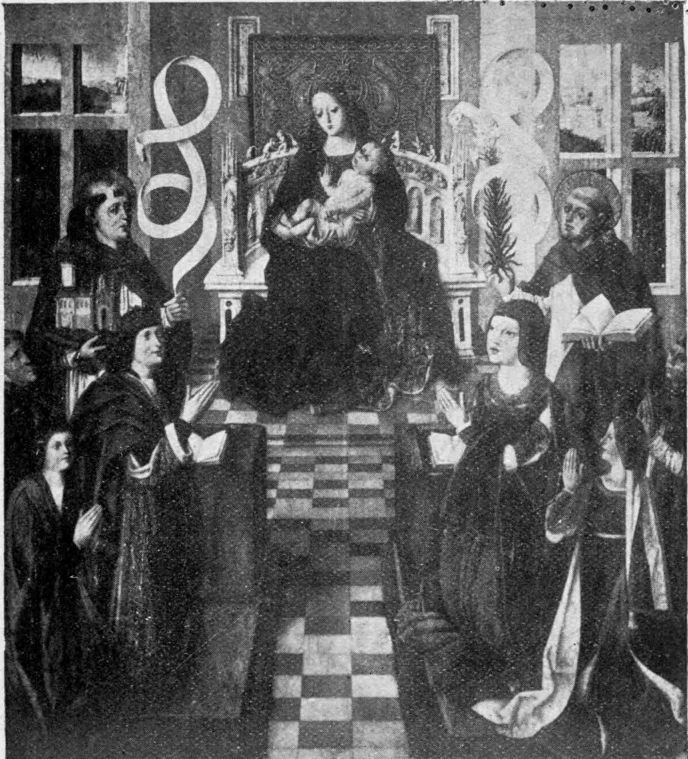
PLATE 217.
The Catholic Sovereigns adoring the Virgin, by Juan de Borgoña. PRADO.
PLATE 218
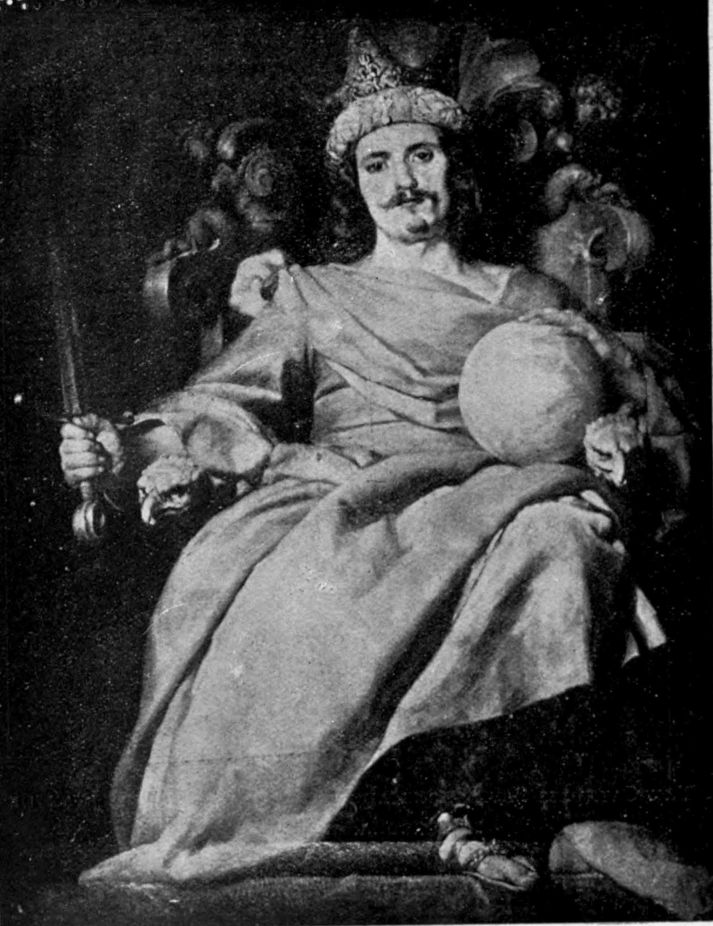
PLATE 218.
A Gothic King, by Alonso Cano.
PRADO.
PLATE 219
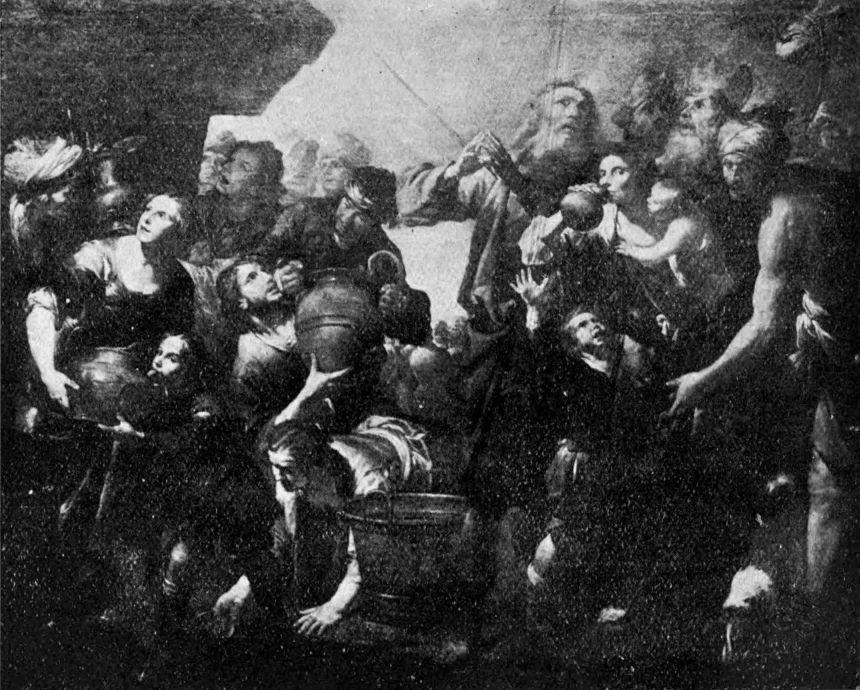
PLATE 219.
The Water from the Rock, by Juan de las Roelas, El Clérigo.
PRADO.
PLATE 220
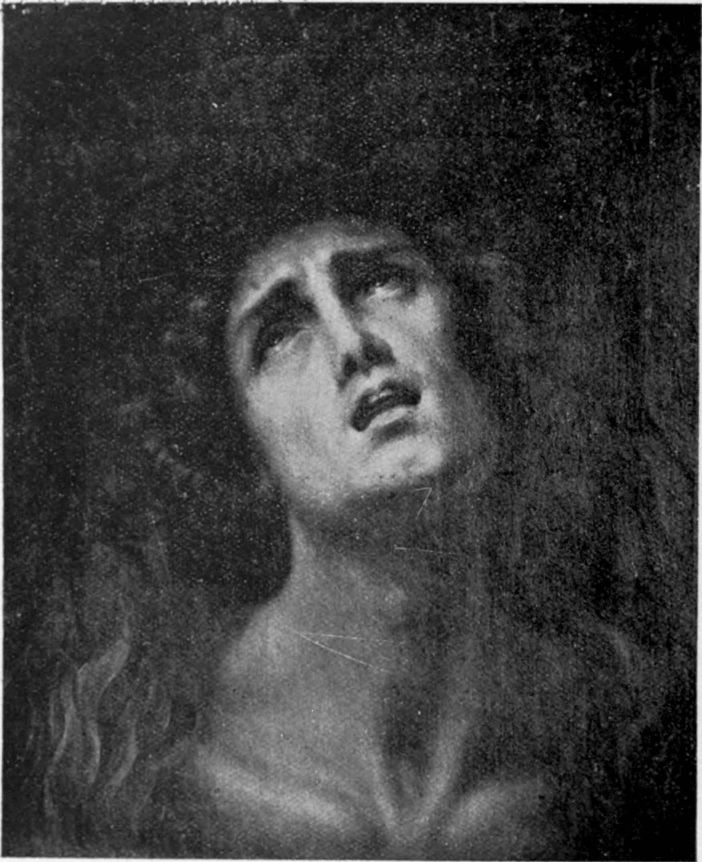
PLATE 220.
A Soul in Pain, by Ribalta.
PRADO.
PLATE 221
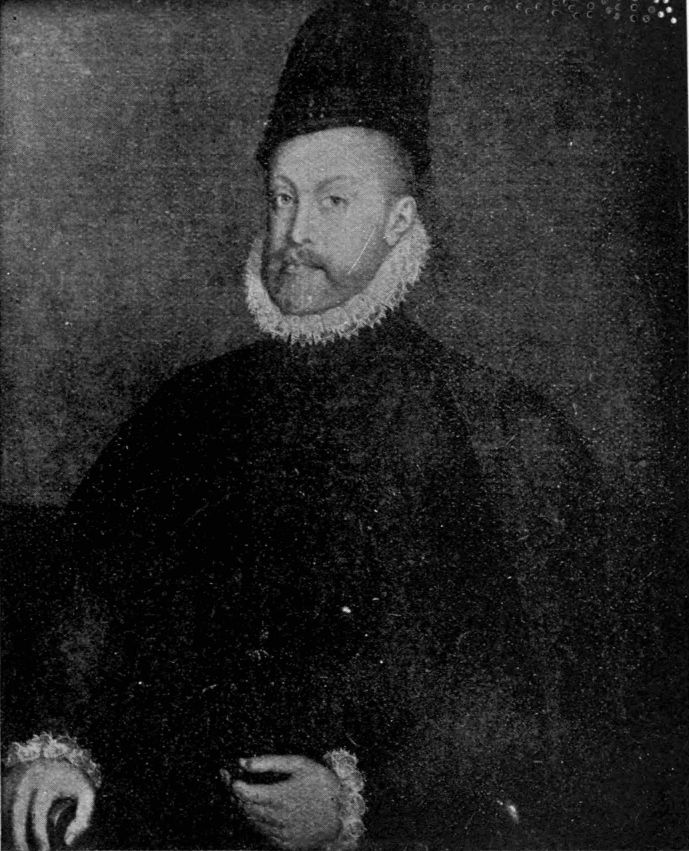
PLATE 221.
Portrait of Philip II., by Pantoja de la Cruz.
PRADO.
PLATE 222
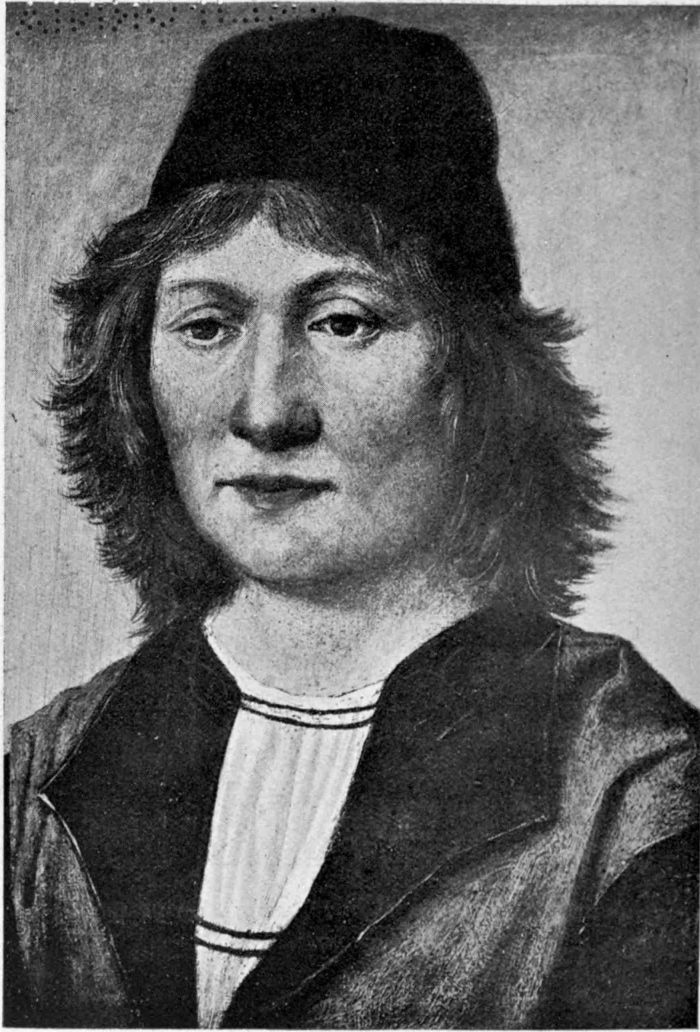
PLATE 222.
Portrait of Pedro Berruguete. 15th Century.
COLLECTION OF DON JOSÉ DE LAZARO GALDEANO.
PLATE 223
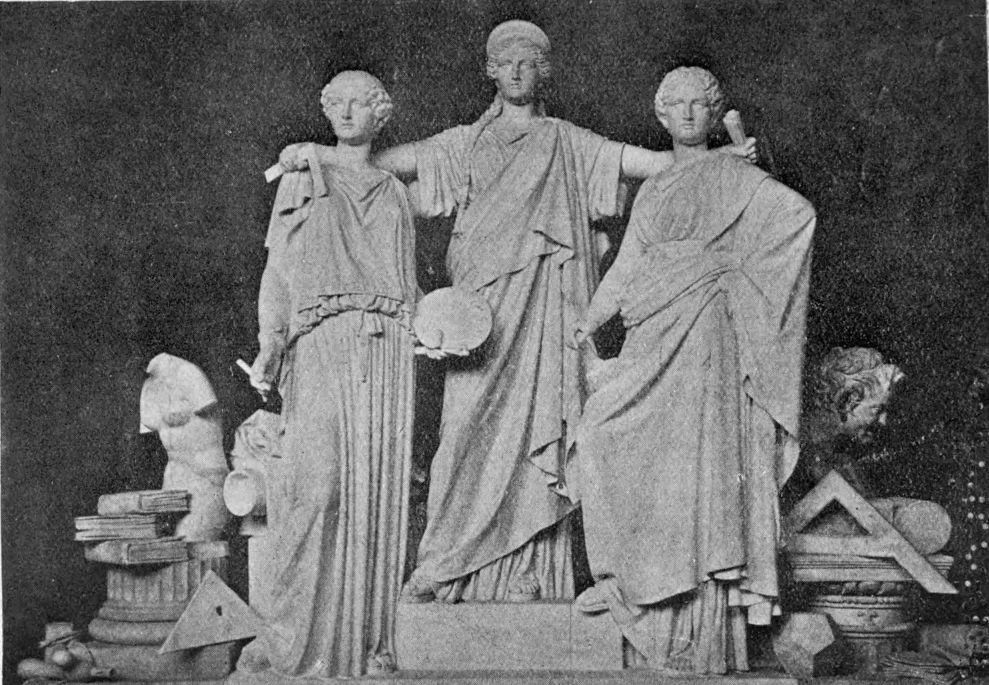
PLATE 223.
Architecture, Painting, and Sculpture, by G. Suñol.
ALLEGORIC GROUP INTENDED FOR THE FAÇADE OF THE PRADO.
PLATE 224
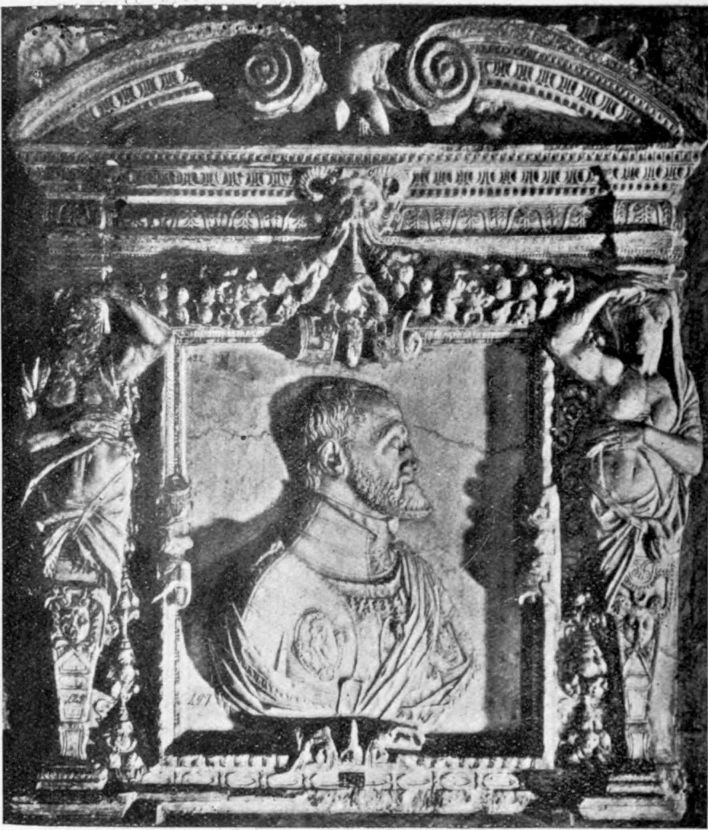
PLATE 224.
The Emperor Charles V.
PRADO MUSEUM.
PLATE 225
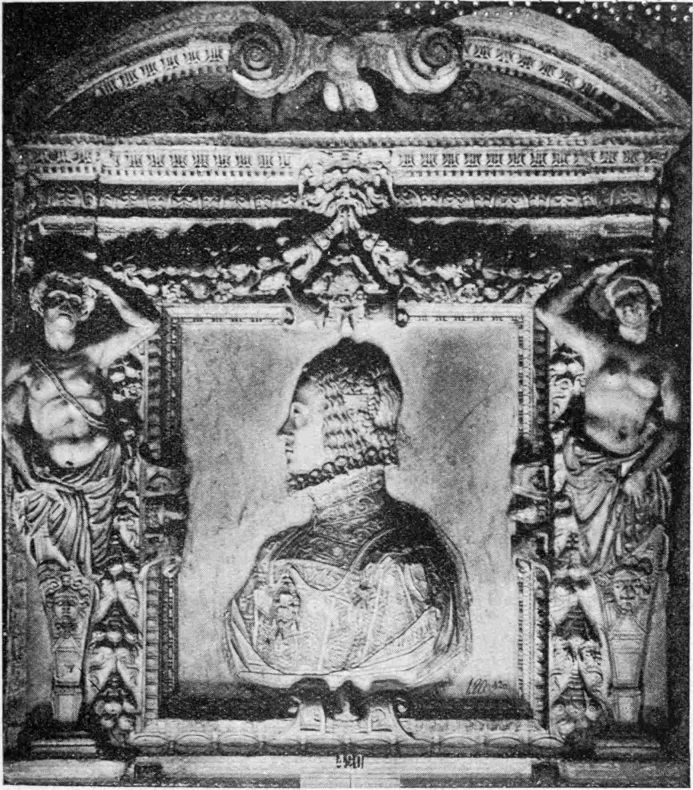
PLATE 225.
The Empress Isabel of Portugal, Wife of Charles V.
The prado.
PLATE 226
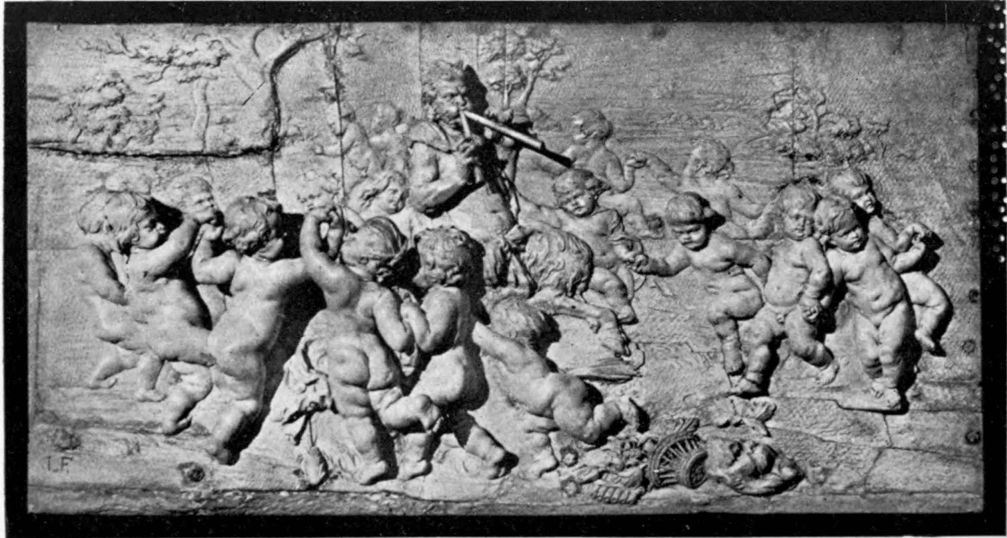
PLATE 226.
A Satyr and Children Dancing.
The prado.
PLATE 227
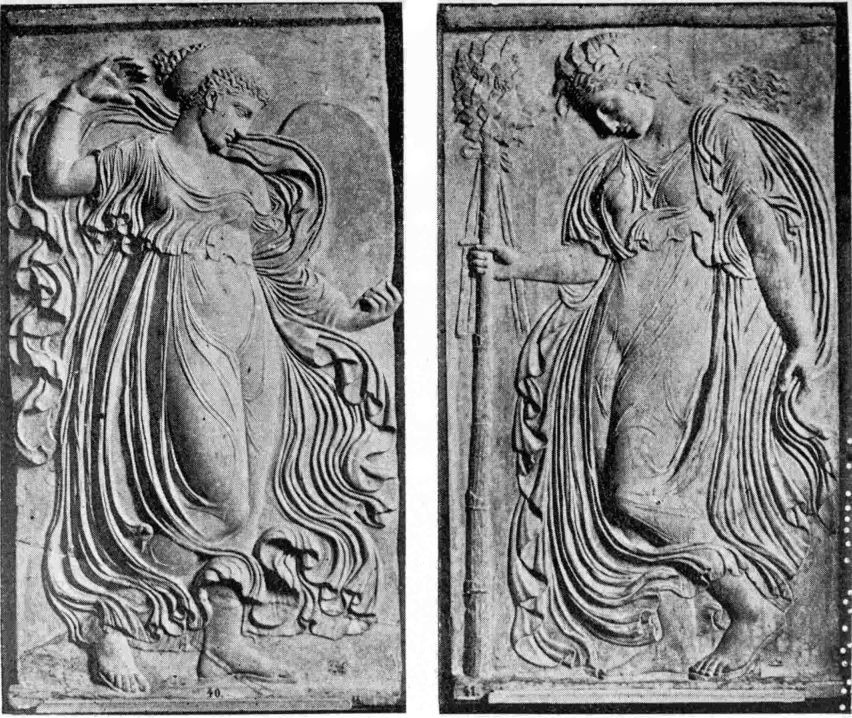
PLATE 227.
Marble Relief. Life-size Figures.
The prado.
PLATE 228
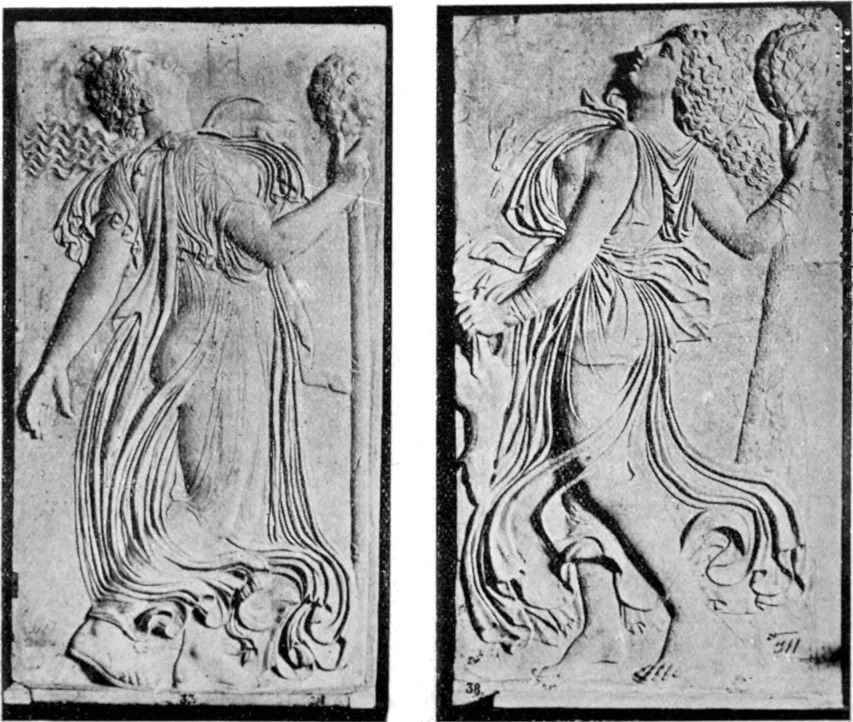
PLATE 228.
Marble Relief. Bacchantes. Life-size Figures.
The prado.
PLATE 229
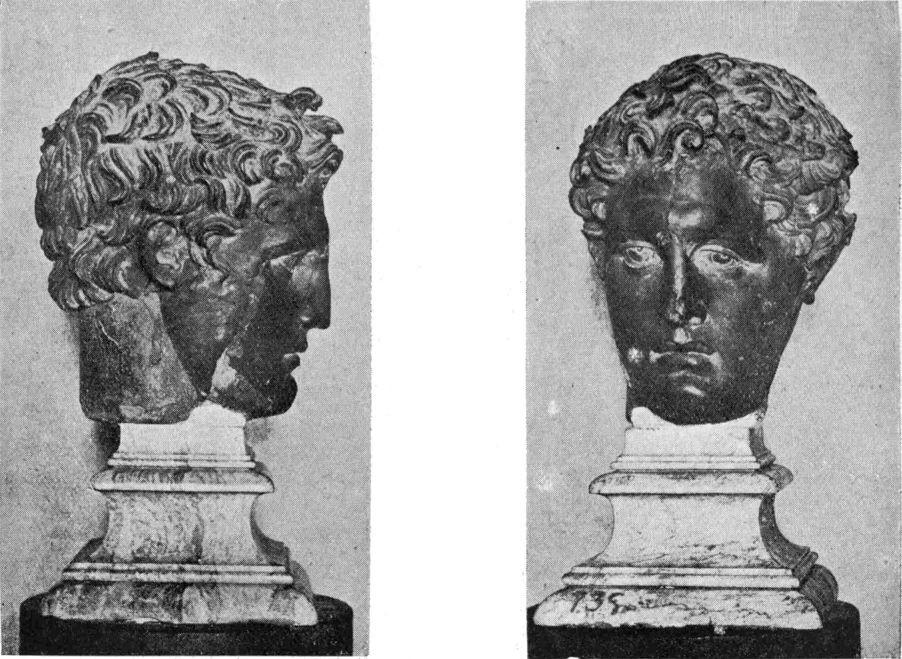
PLATE 229.
Bronze Heads.
The prado.
PLATE 230
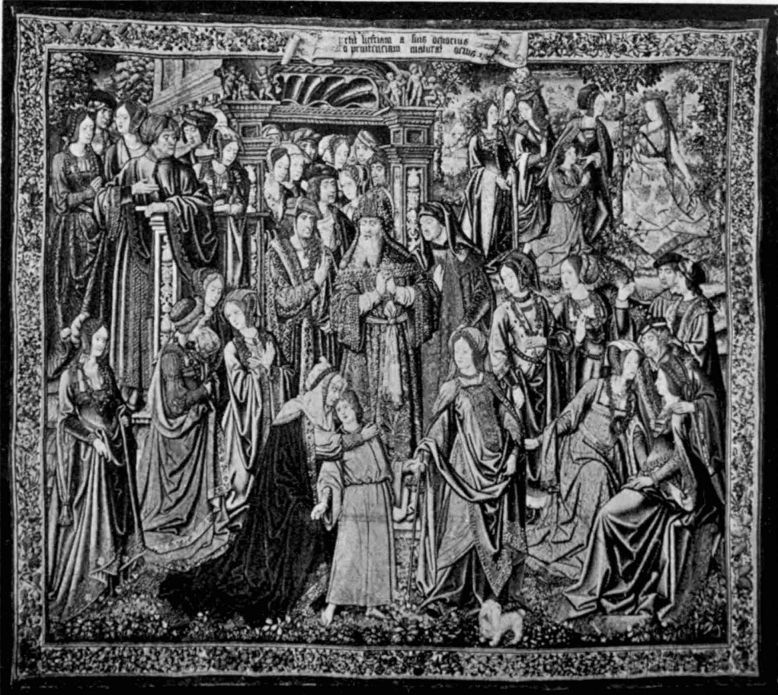
PLATE 230.
Tapestry. The Baptist taking Leave of his Parents to devote himself to Penitence.
PLATE 231
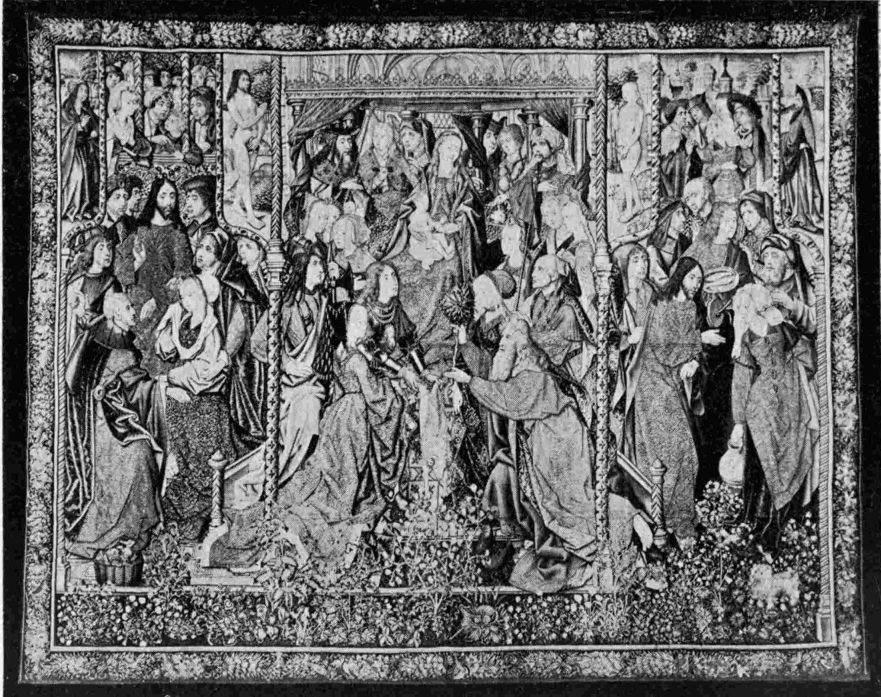
PLATE 231.
Tapestry. The Virgin Enthroned, Gideon showing the Lamb’s Skin, and other Scenes.
PLATE 232
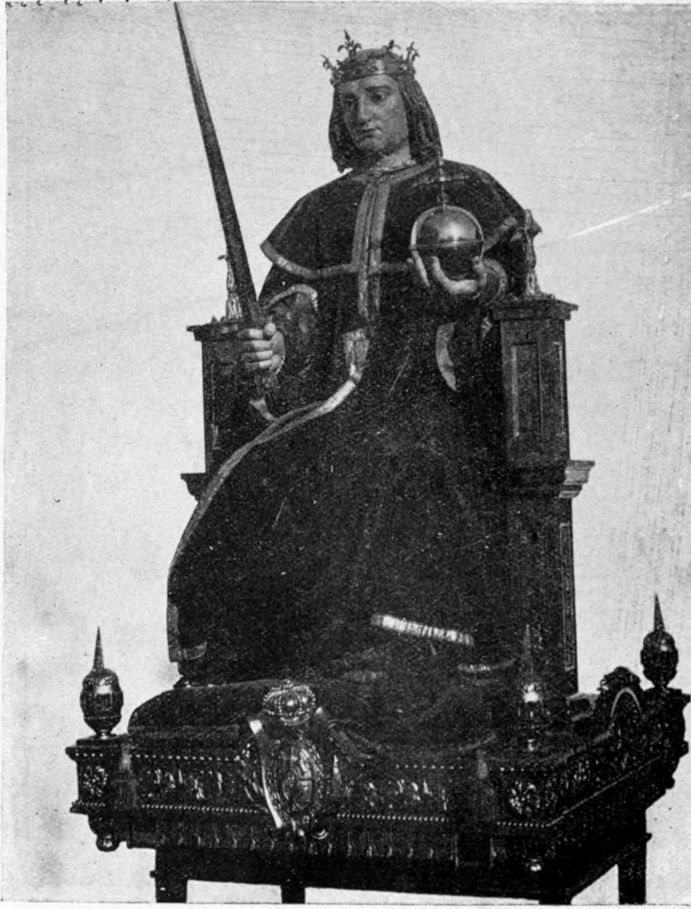
PLATE 232.
Effigy of St Ferdinand, King of Spain.
Chapel Royal.
PLATE 233
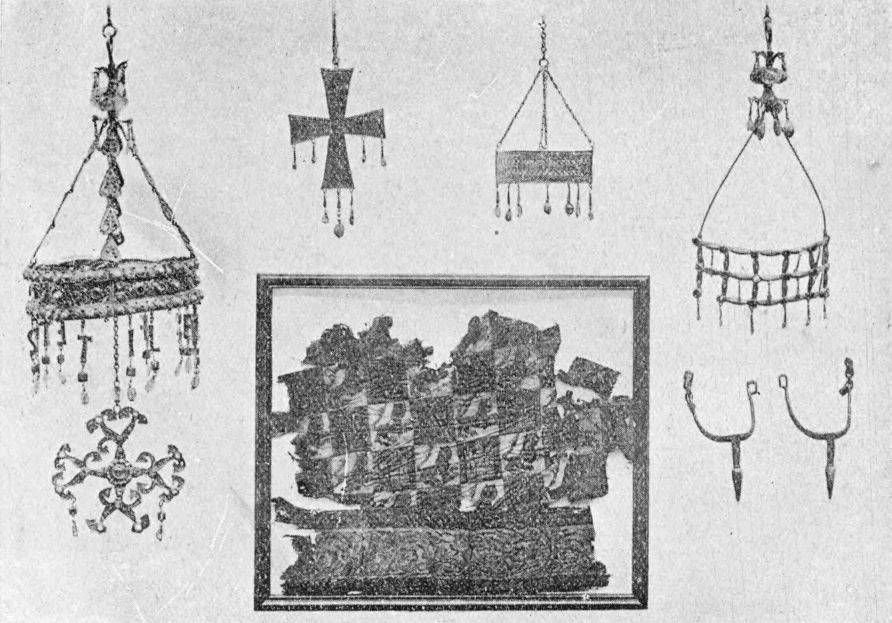
PLATE 233.
(1 TO 5) Crowns and Votive Crosses of Guarrazar.
(6) Remains of St Ferdinand’s Robe.
(7) Moorish Spurs of St Ferdinand.
ROYAL ARMOURY.
PLATE 234
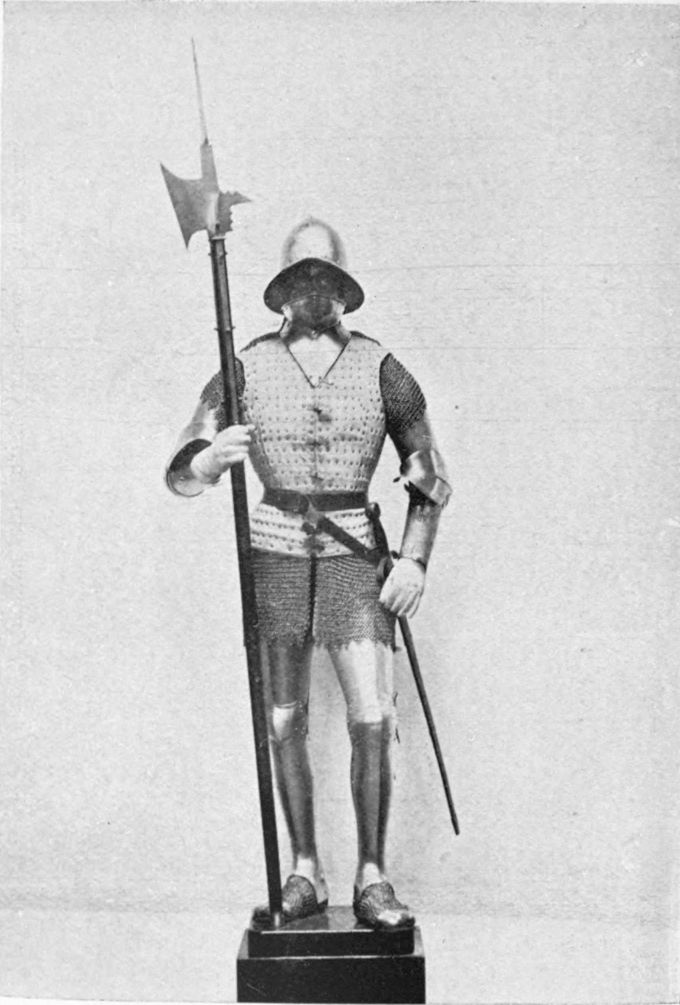
PLATE 234.
C 1. Spanish Man-at-Arms, 15th Century.
ROYAL ARMOURY.
PLATE 235
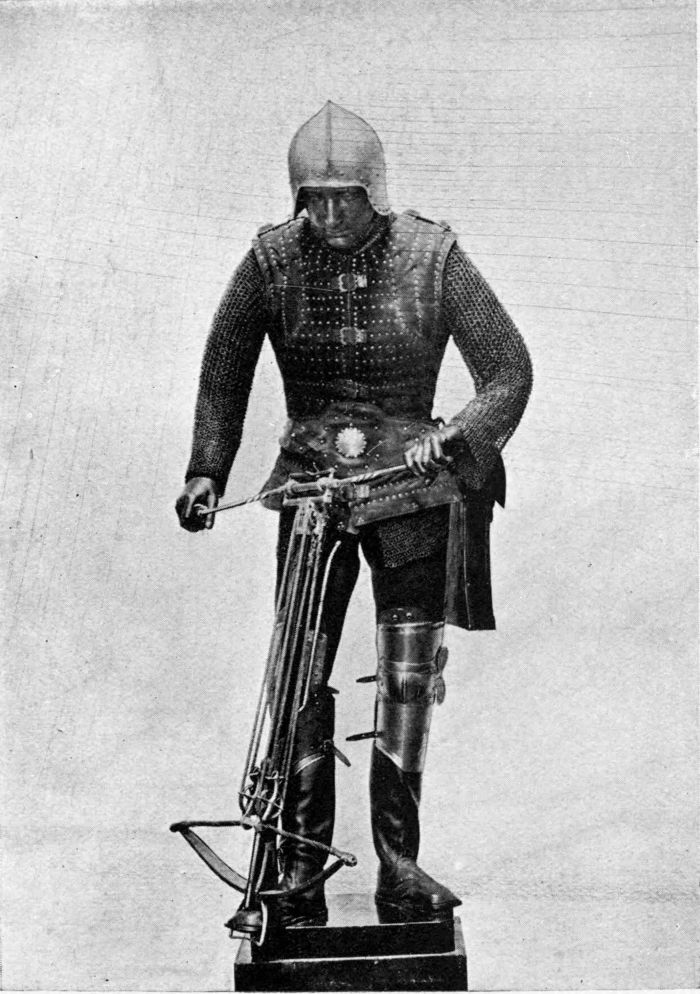
PLATE 235.
C 4. Spanish Crossbowman, 15th Century.
ROYAL ARMOURY.
PLATE 236
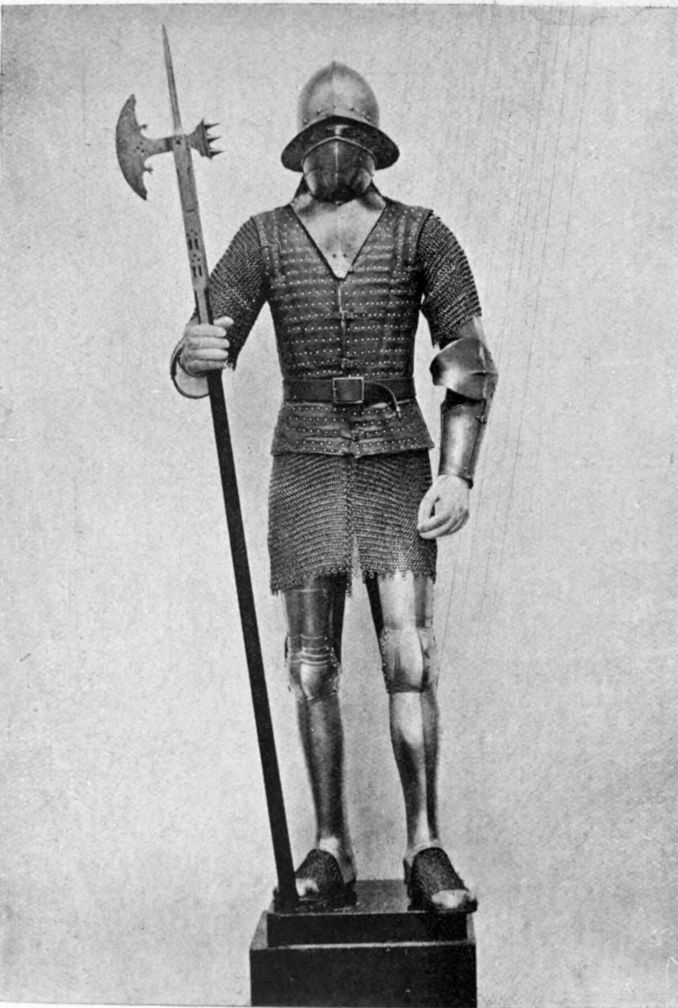
PLATE 236.
C 2. Spanish Halberdier, 15th Century.
ROYAL ARMOURY.
PLATE 237
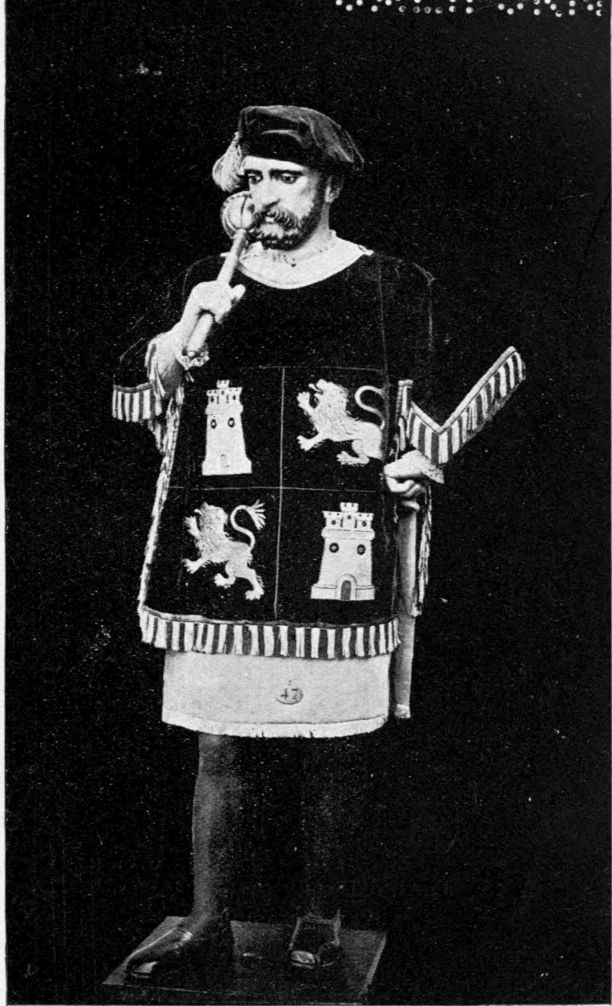
PLATE 237.
Mace-Bearer of the 16TH Century with Surcoat displaying the Arms of Castile and Leon.
PLATE 238
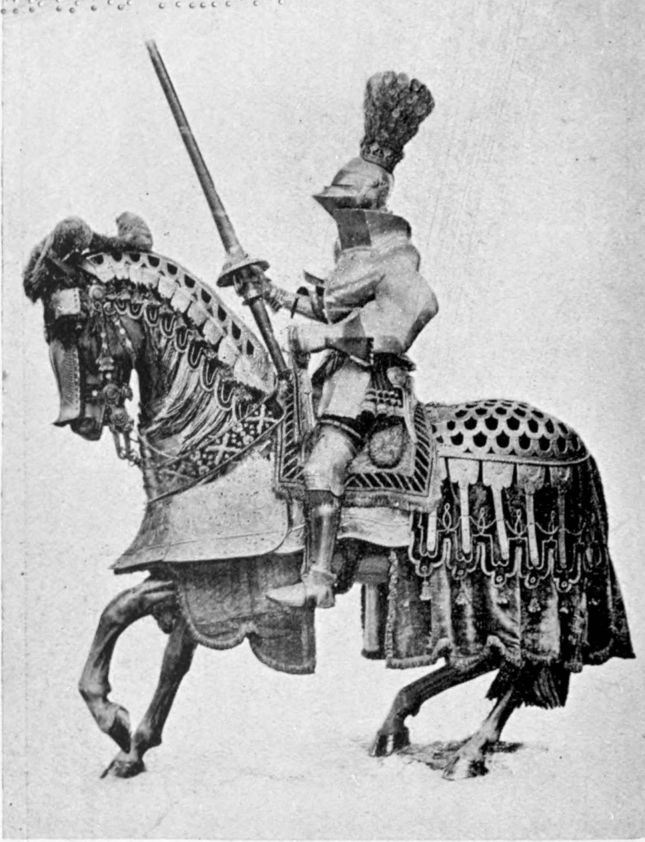
PLATE 238.
A 26. Tilting Harness of Charles V.
ROYAL ARMOURY.
PLATE 239
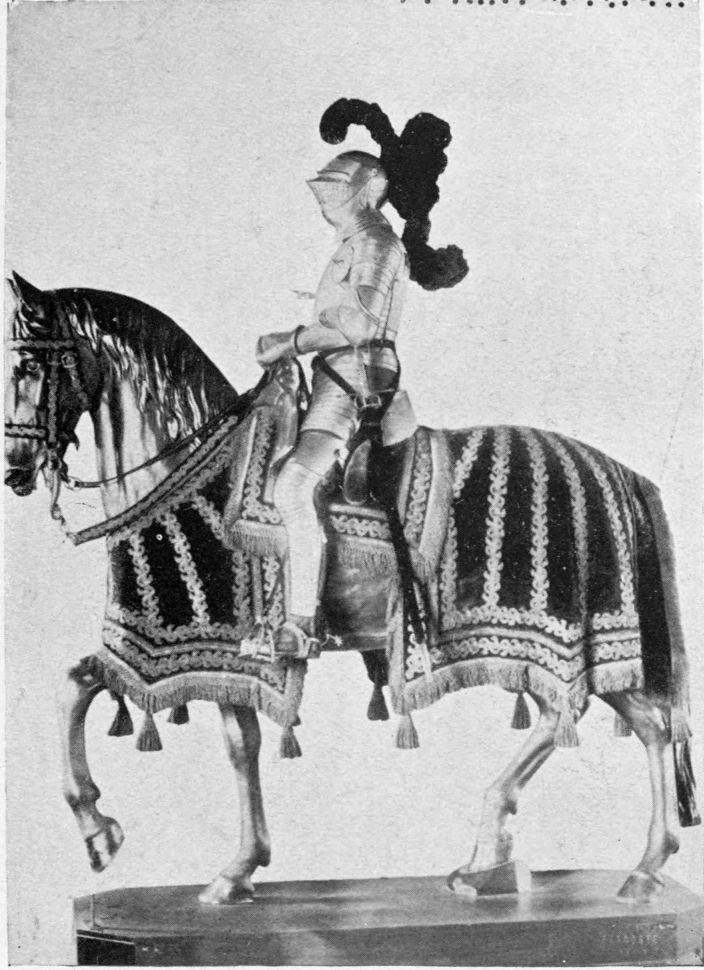
PLATE 239.
A 112. Armour presented to Charles V. by the Duke of Mantua.
ROYAL ARMOURY.
PLATE 240
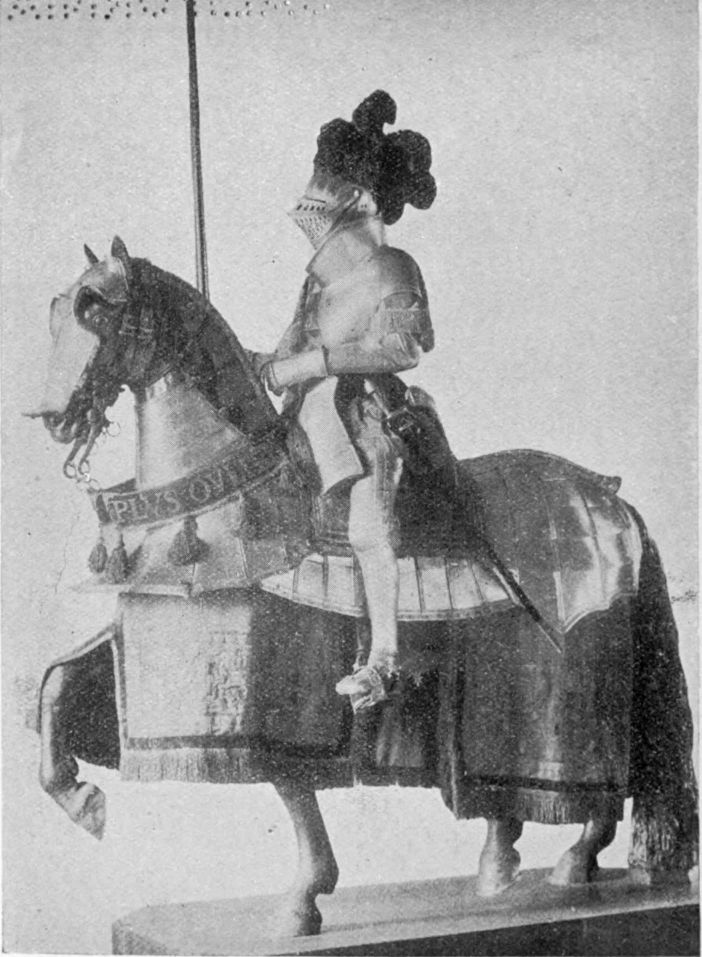
PLATE 240.
Armour of Charles V. made by Desiderio Colman.
(1849 CATALOGUE.)
ROYAL ARMOURY.
PLATE 241
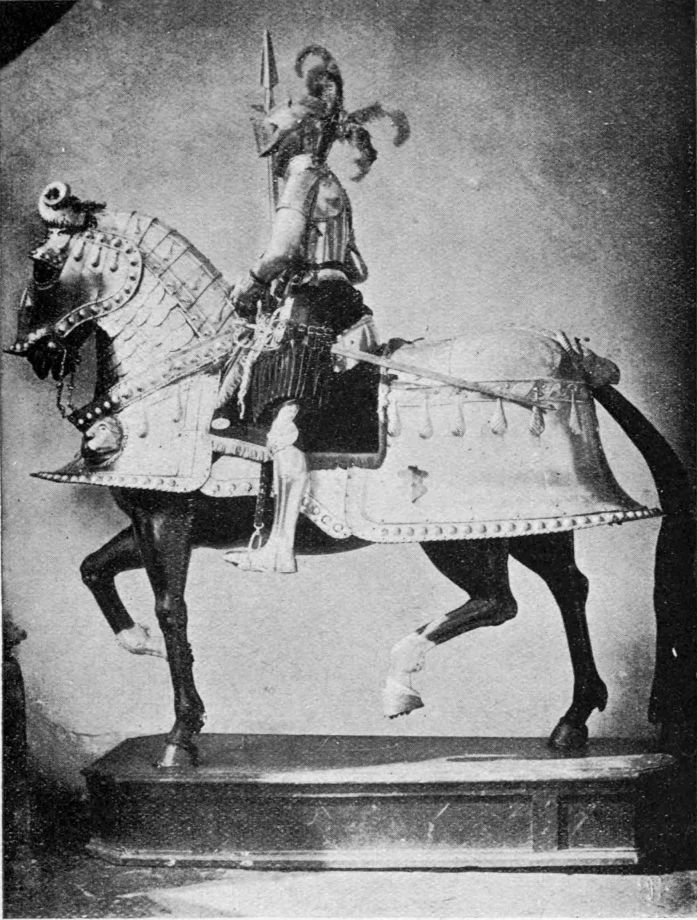
PLATE 241.
A 231. Armour made for Prince Philip (II.) by Wolf of Landshut (1550).
ROYAL ARMOURY.
PLATE 242
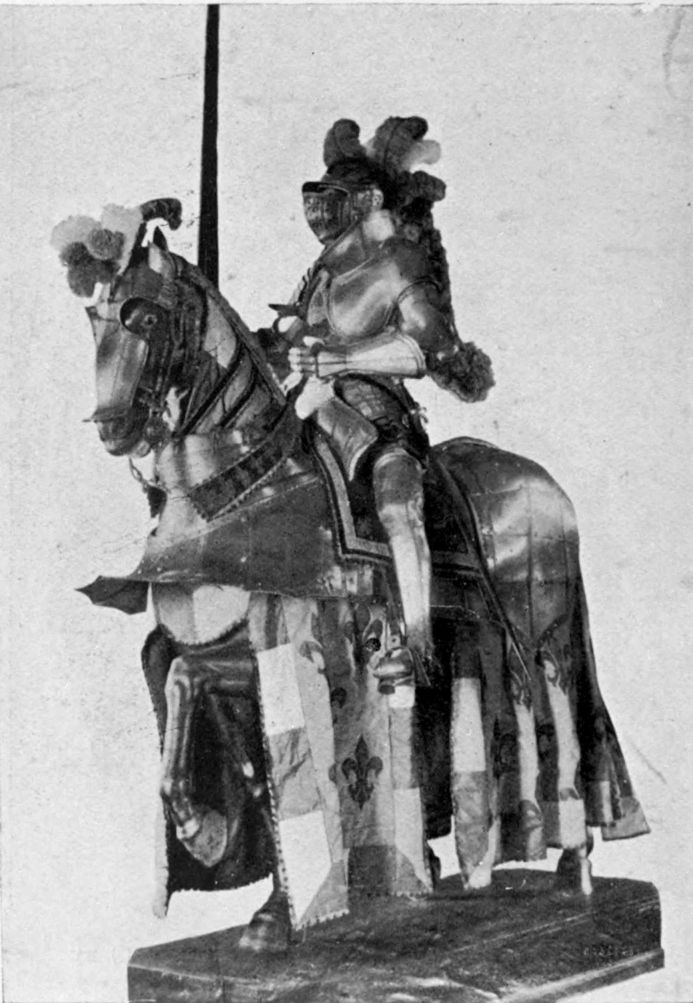
PLATE 242.
Armour of Charles V., Augsburg or Nuremberg Make.
(1849 CATALOGUE.)
ROYAL ARMOURY.
PLATE 243
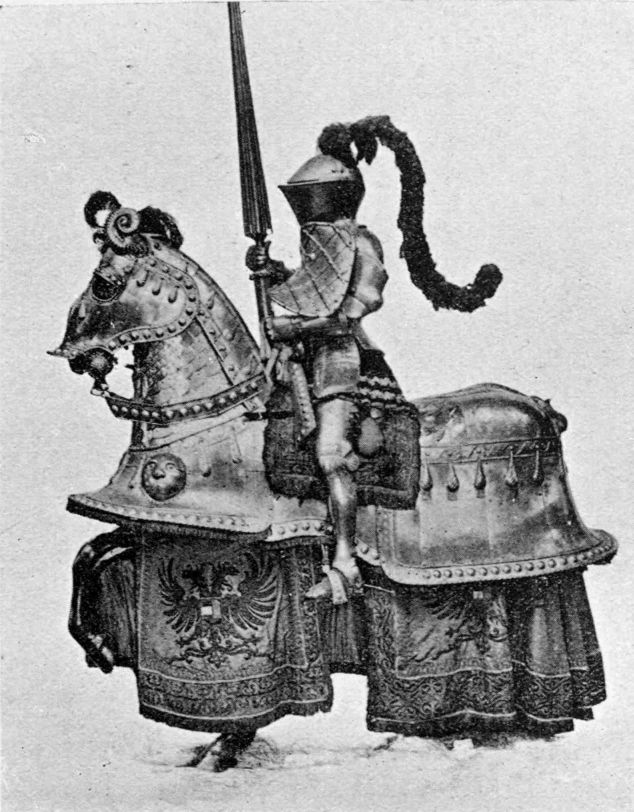
PLATE 243.
A 37. Tilting Harness of Charles V. made by Desiderio Colman, Helmschmied.
ROYAL ARMOURY.
PLATE 244
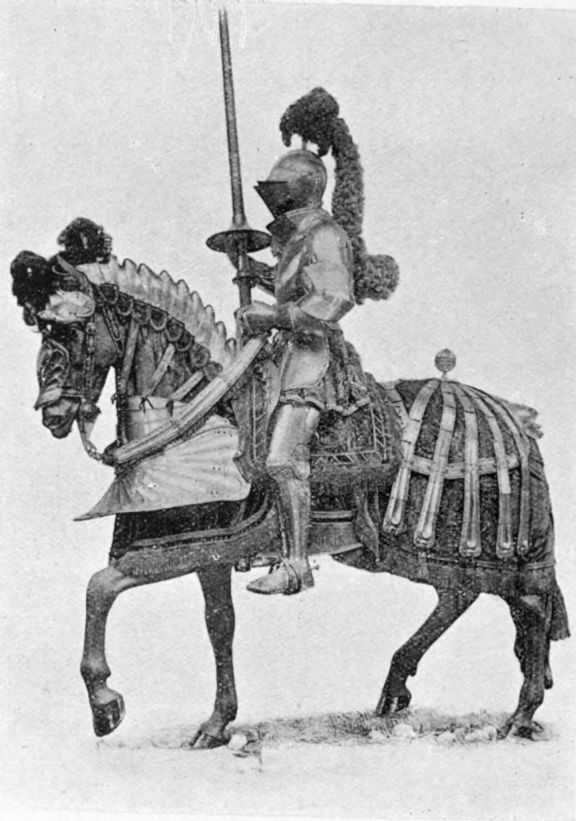
PLATE 244.
A 65. Tilting Harness of Charles V.
ROYAL ARMOURY.
PLATE 245
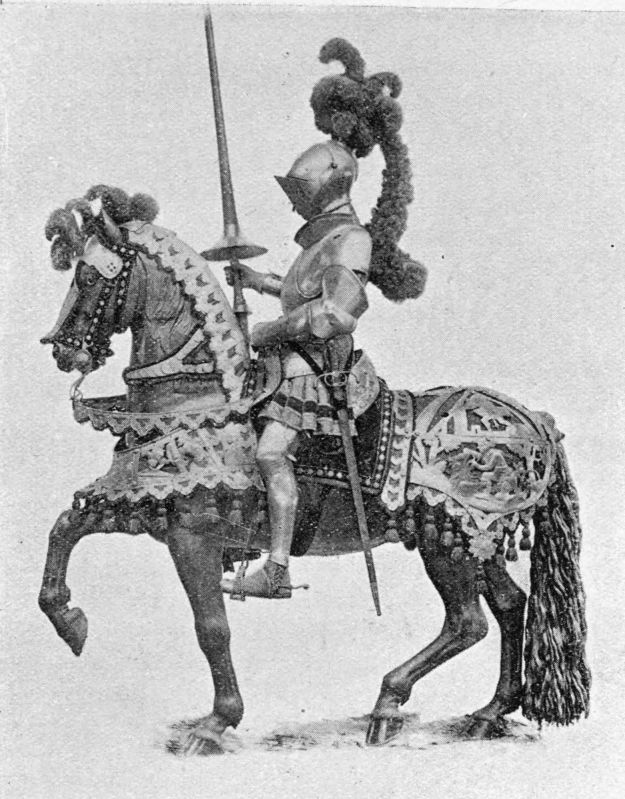
PLATE 245.
A 149. Armour of Charles V. (1541).
ROYAL ARMOURY.
PLATE 246
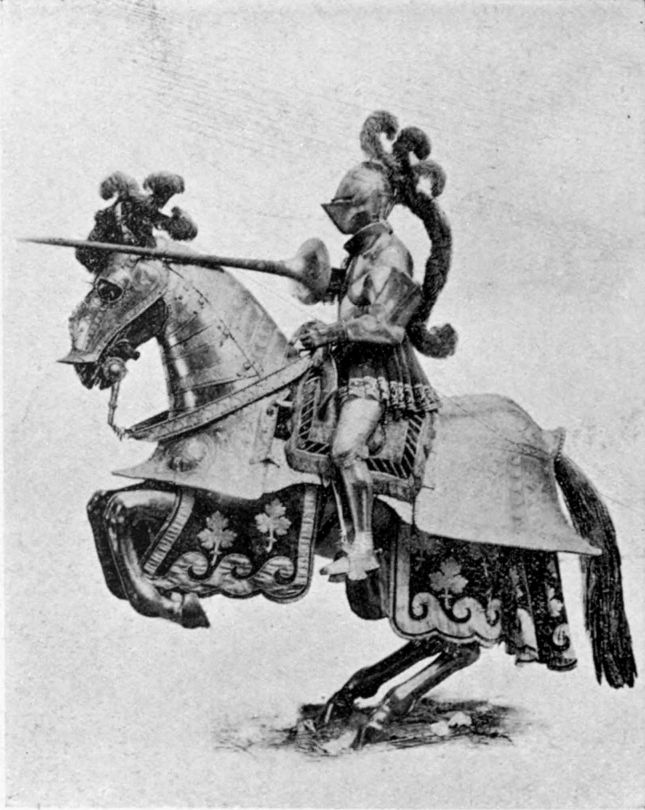
PLATE 246.
A 243. Equestrian Armour of Philip II. made by Sigmund Wolf of Landshut.
ROYAL ARMOURY.
PLATE 247
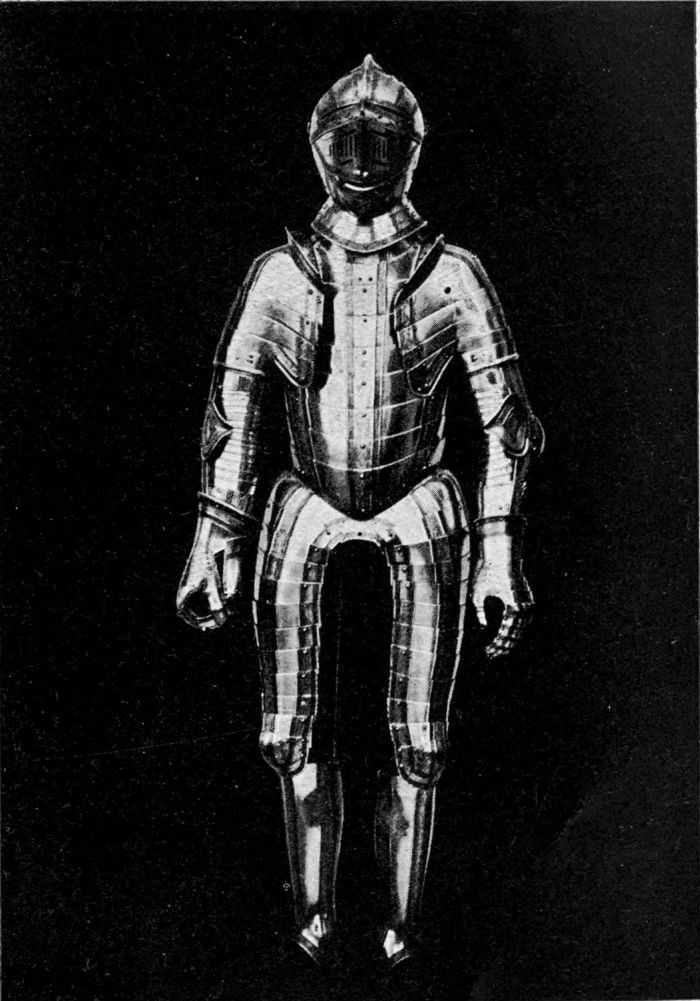
PLATE 247.
Armour of King Philip II.
ROYAL ARMOURY.
PLATE 248
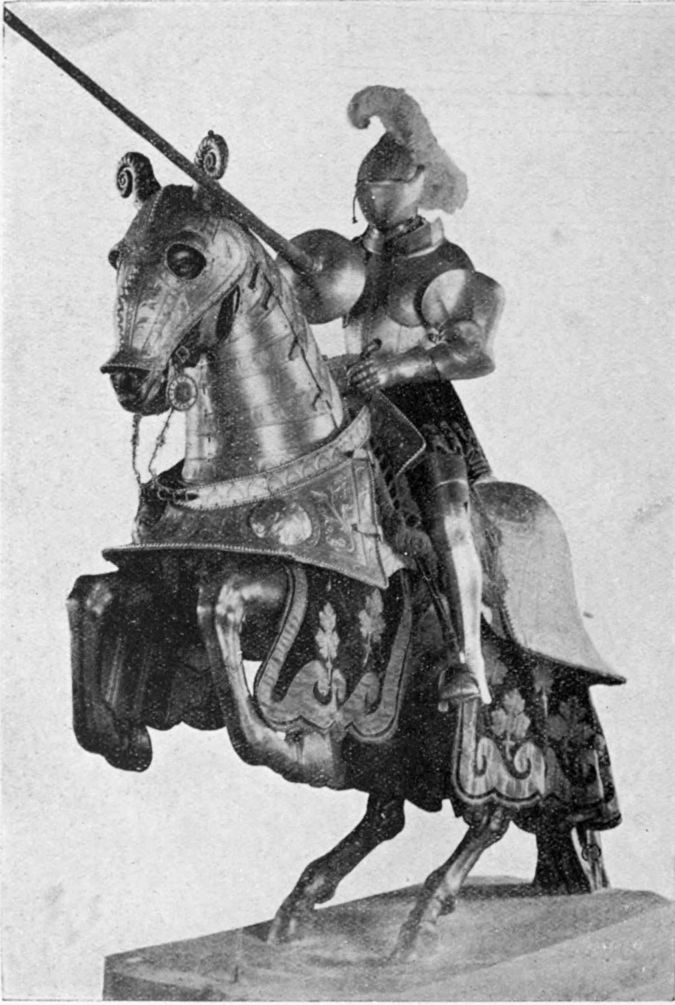
PLATE 248.
Armour of Philip II., engraved with the Royal Arms of England.
ROYAL ARMOURY.
PLATE 249
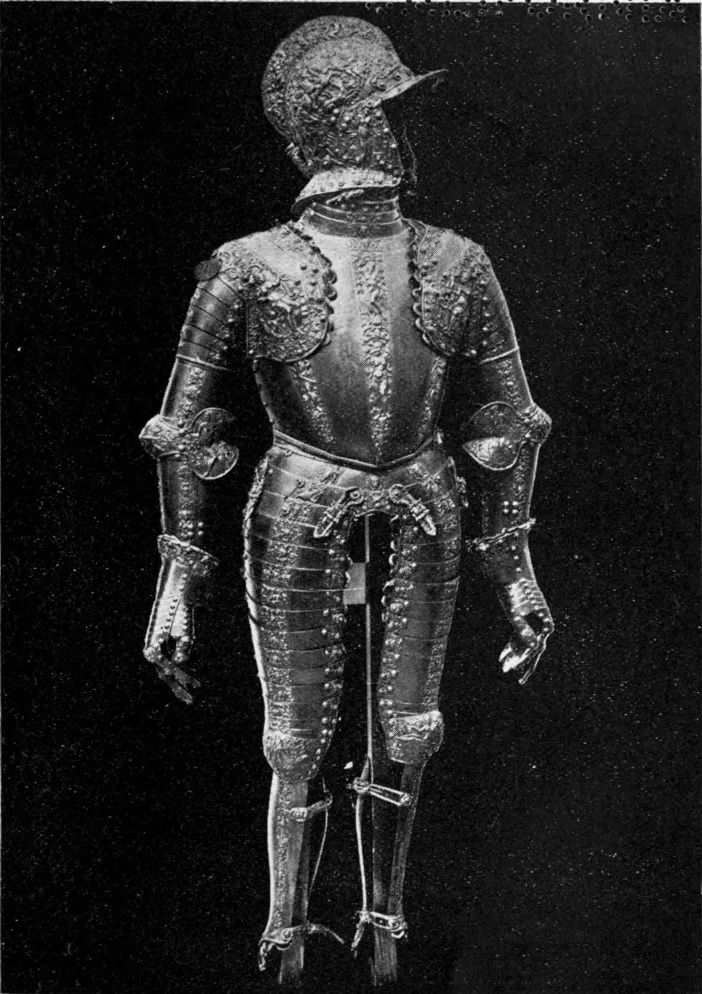
PLATE 249.
A 290. Armour of King Sebastian of Portugal.
ROYAL ARMOURY.
PLATE 250
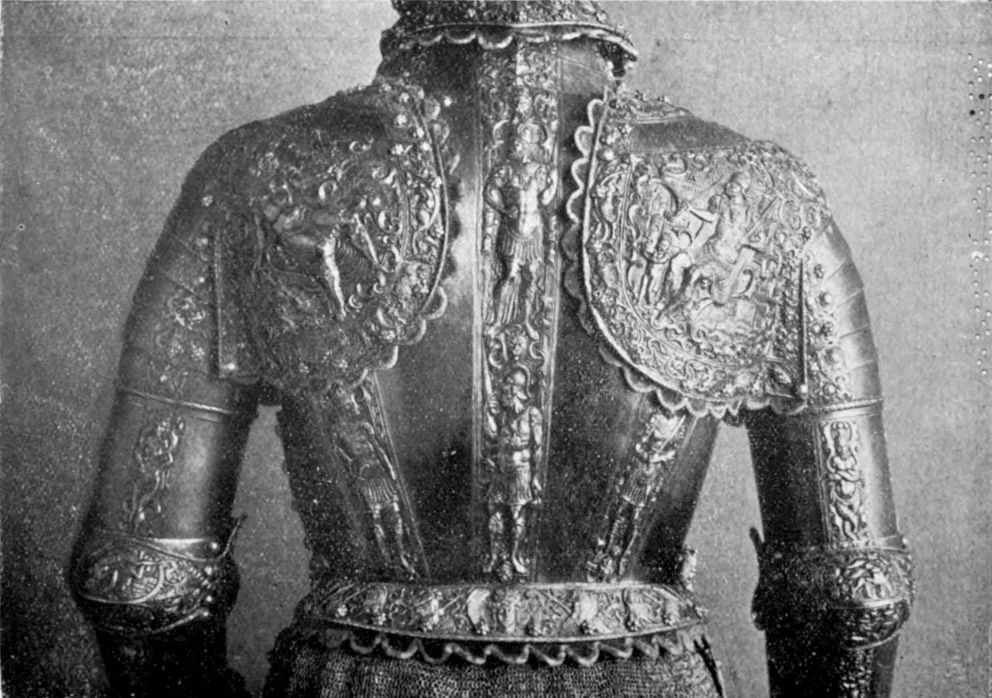
PLATE 250.
A 290. Armour of King Sebastian, Back Plate (Details).
ROYAL ARMOURY.
PLATE 251
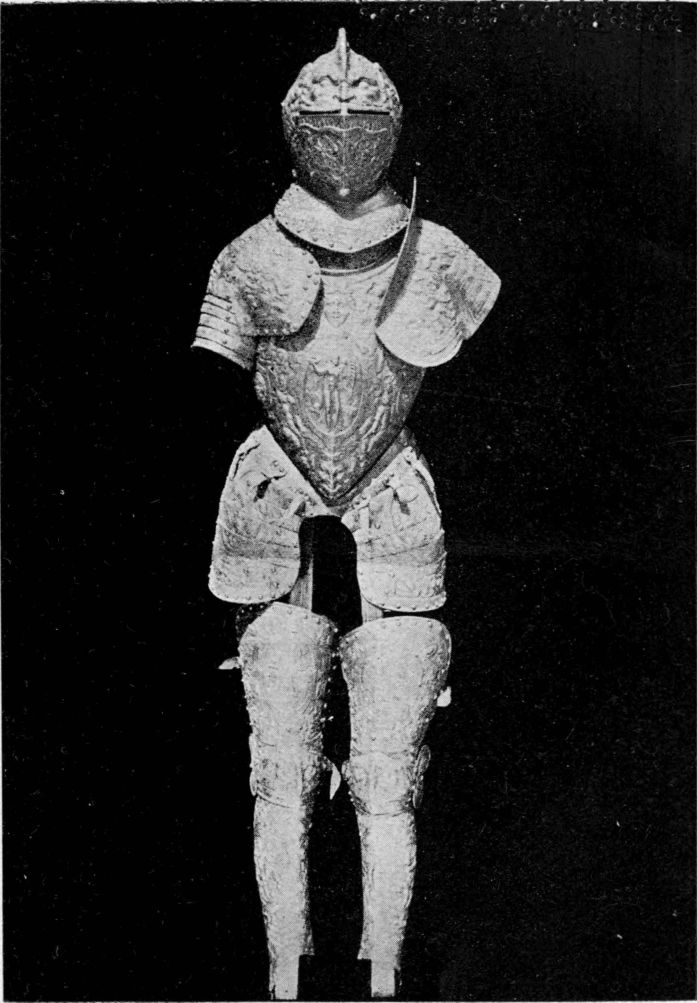
PLATE 251.
A 291. Armour of Philip III. made by Lucio Picinino of Milan.
ROYAL ARMOURY.
PLATE 252
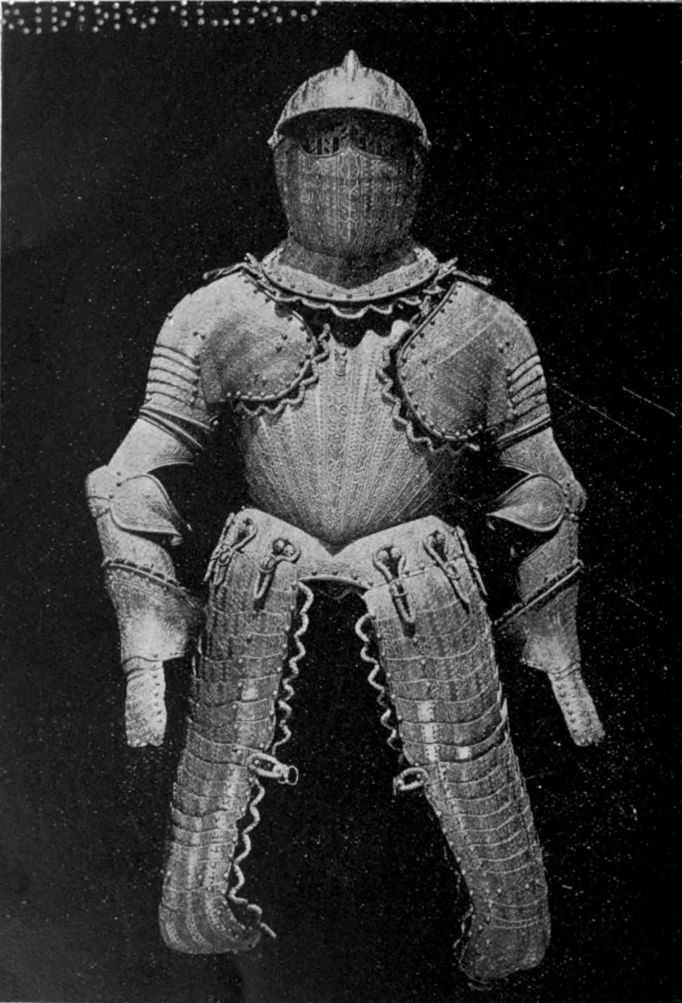
PLATE 252.
Armour made at Pamplona for the Duke of Savoy (1620).
ROYAL ARMOURY.
PLATE 253
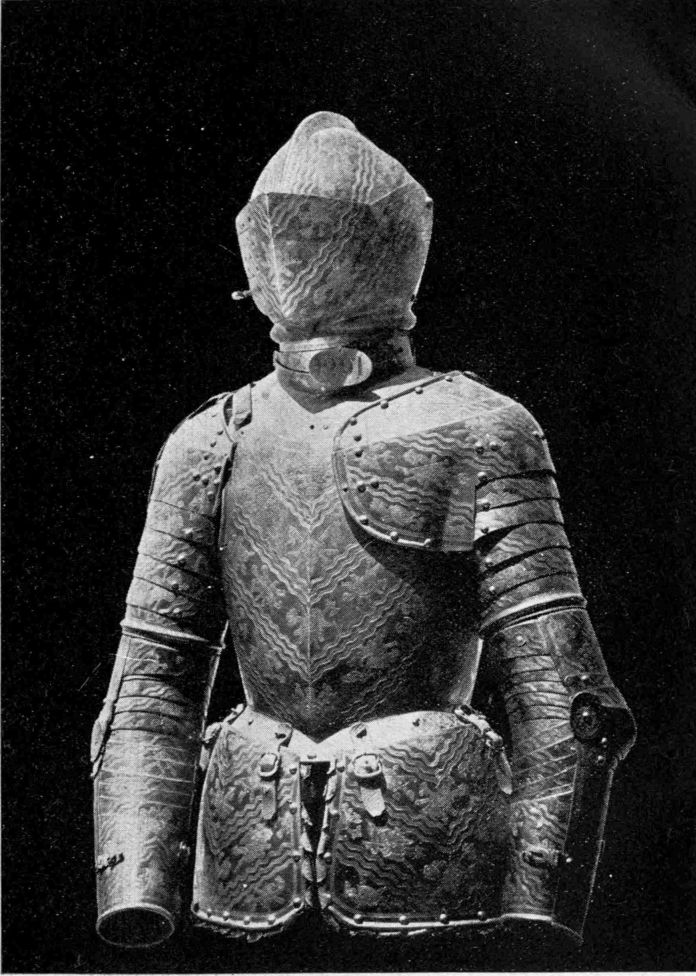
PLATE 253.
Half Armour of Philip IV.
ROYAL ARMOURY.
PLATE 254
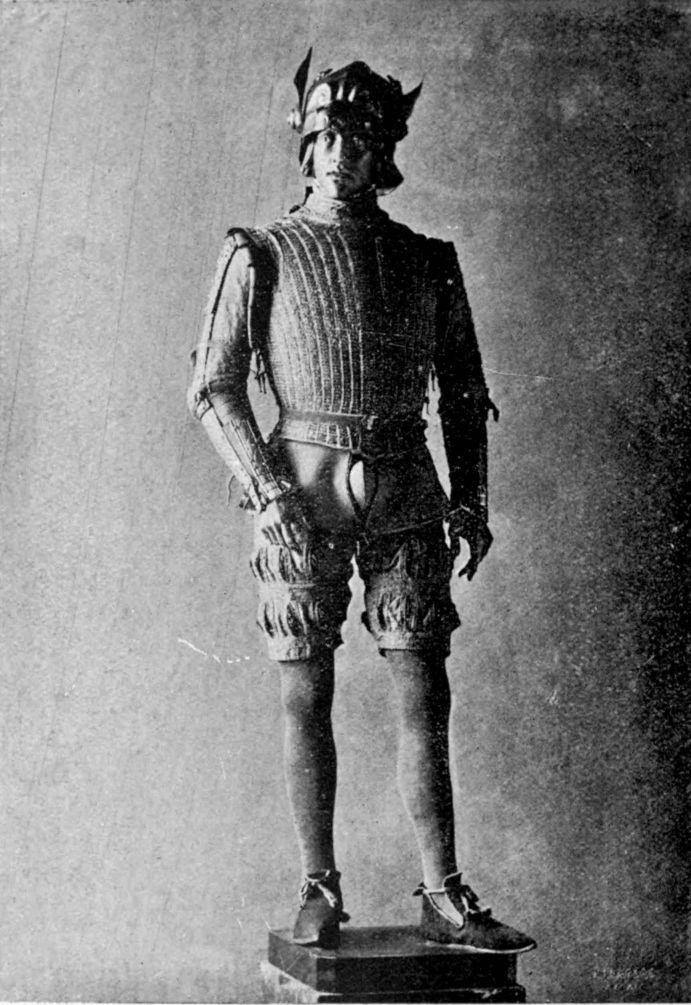
PLATE 254.
Milanese Brigantine which belonged to Charles V.
ROYAL ARMOURY.
PLATE 255
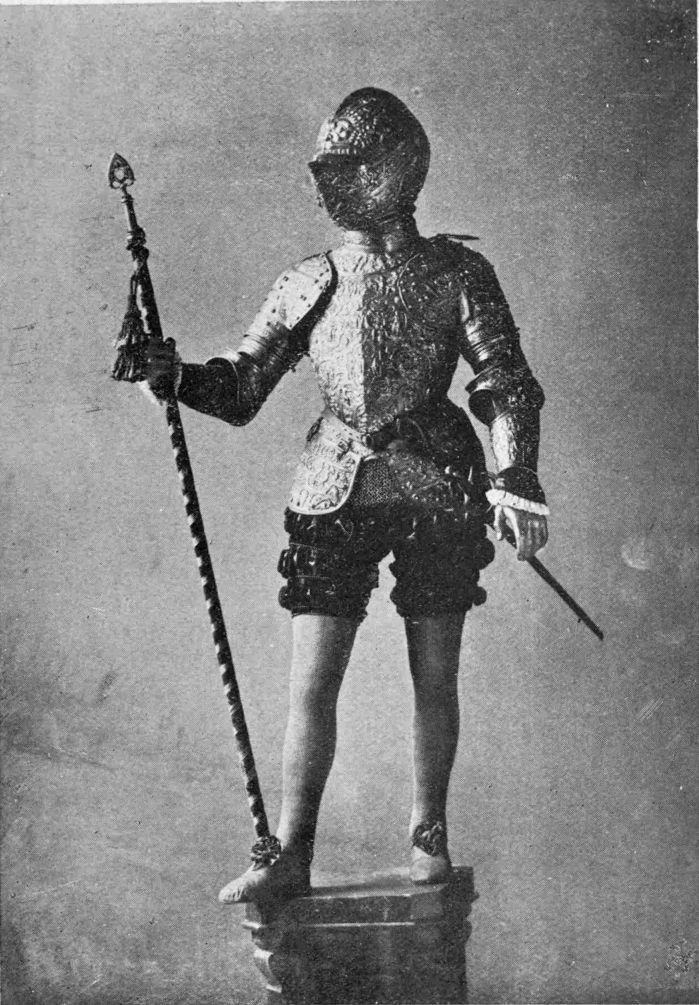
PLATE 255.
B 1. Boy’s Half Armour made in Italy for the Infante, afterwards Philip III.
ROYAL ARMOURY.
PLATE 256
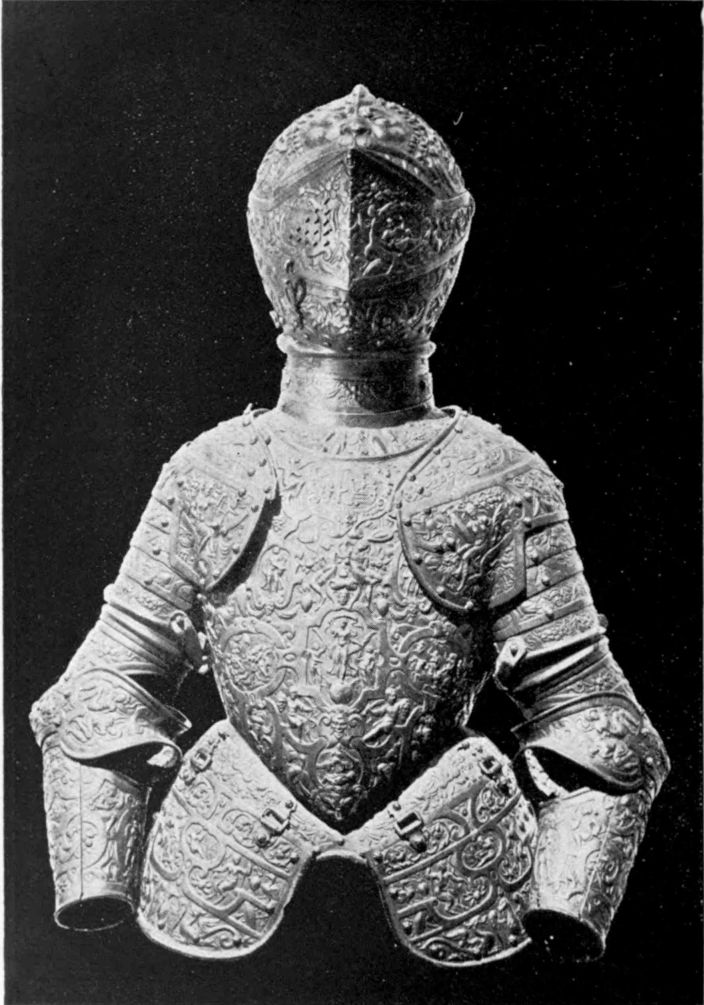
PLATE 256.
D 1. Boy’s Half Armour made for the Infante, afterwards Philip III. (Second View.)
ROYAL ARMOURY.
PLATE 257
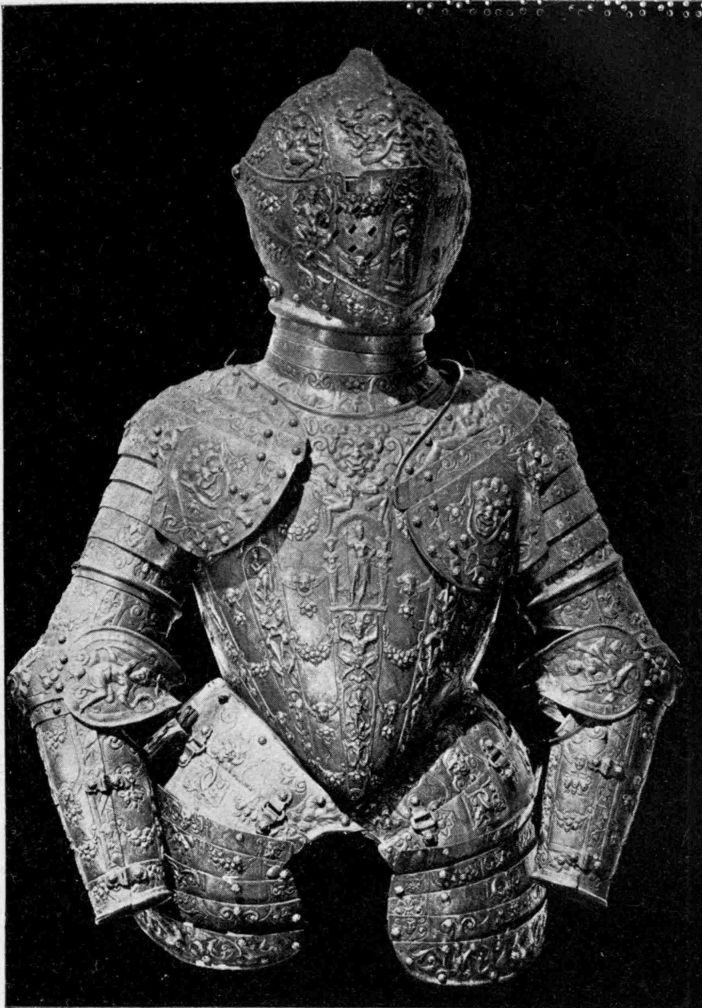
PLATE 257.
B 4. Half Armour Presented to the Infante, afterwards Philip III., by the Duke of Terranova.
ROYAL ARMOURY.
PLATE 258
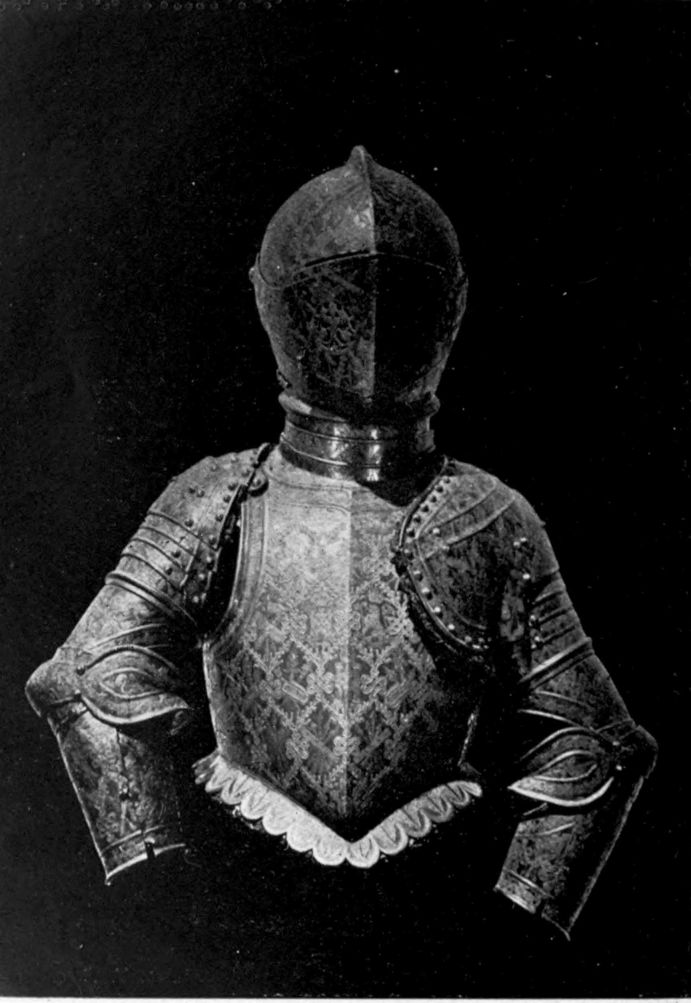
PLATE 258.
B 18. Boy’s Half Armour made for the Infante Fernando, Son of Philip III.
ROYAL ARMOURY.
PLATE 259
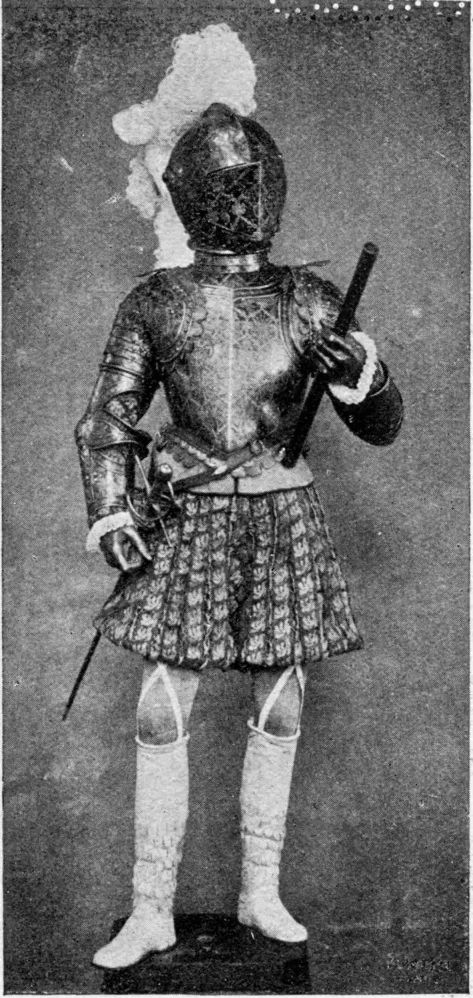
PLATE 259.
Half Armour belonging to Prince Philip, afterwards Philip IV.
ROYAL ARMOURY.
PLATE 260
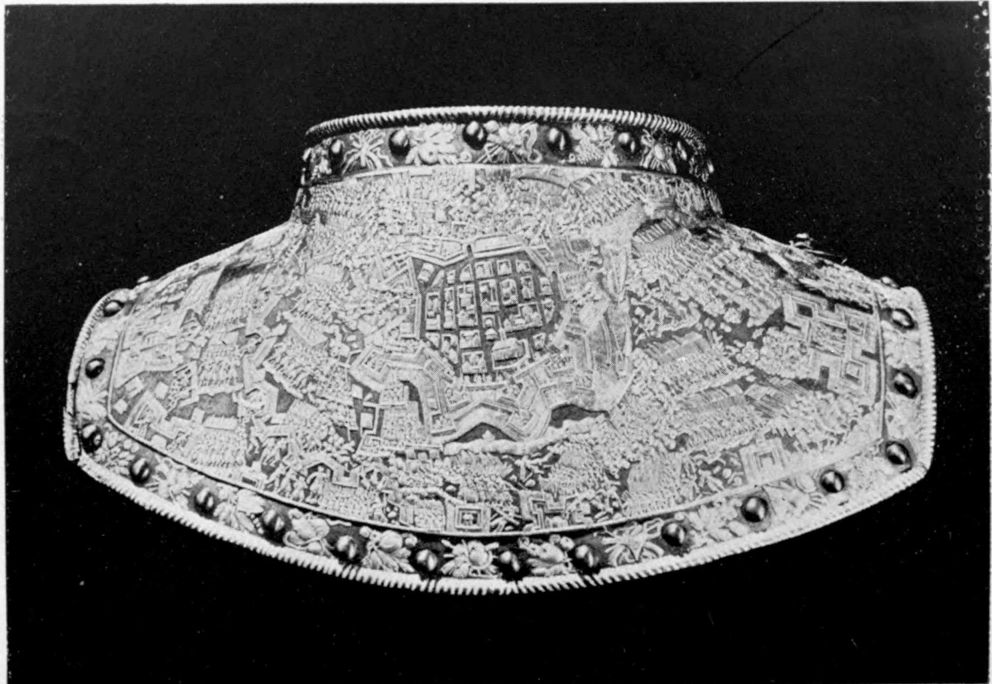
PLATE 260.
A 434. Gorget. Subject: The Siege of Ostend, 1601.
ROYAL ARMOURY.
PLATE 261
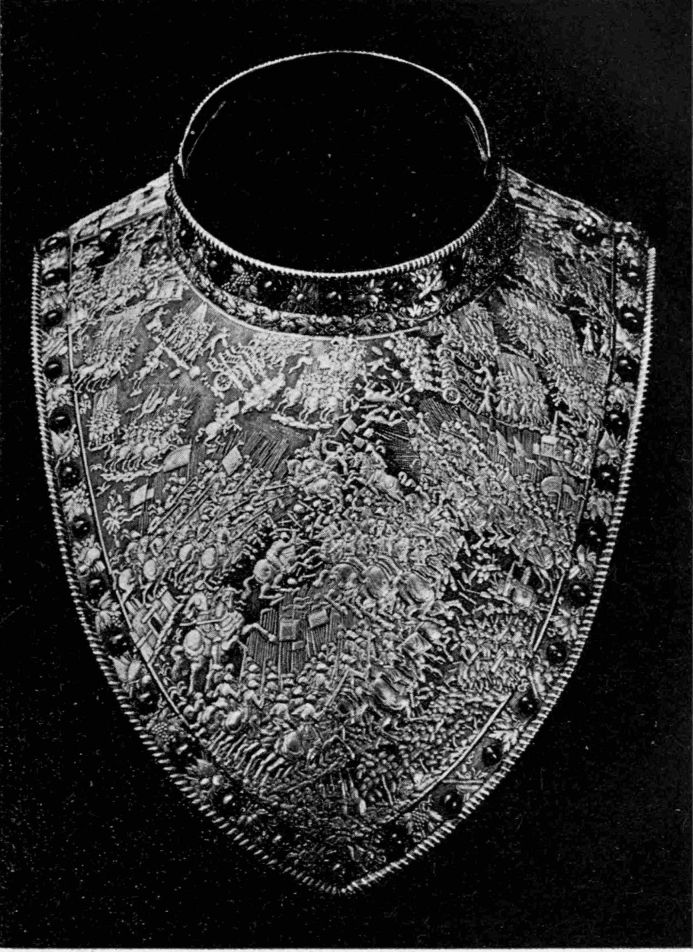
PLATE 261.
A 434. Gorget of Philip II.
Subject: The Battle of Nieuport.
ROYAL ARMOURY.
PLATE 262
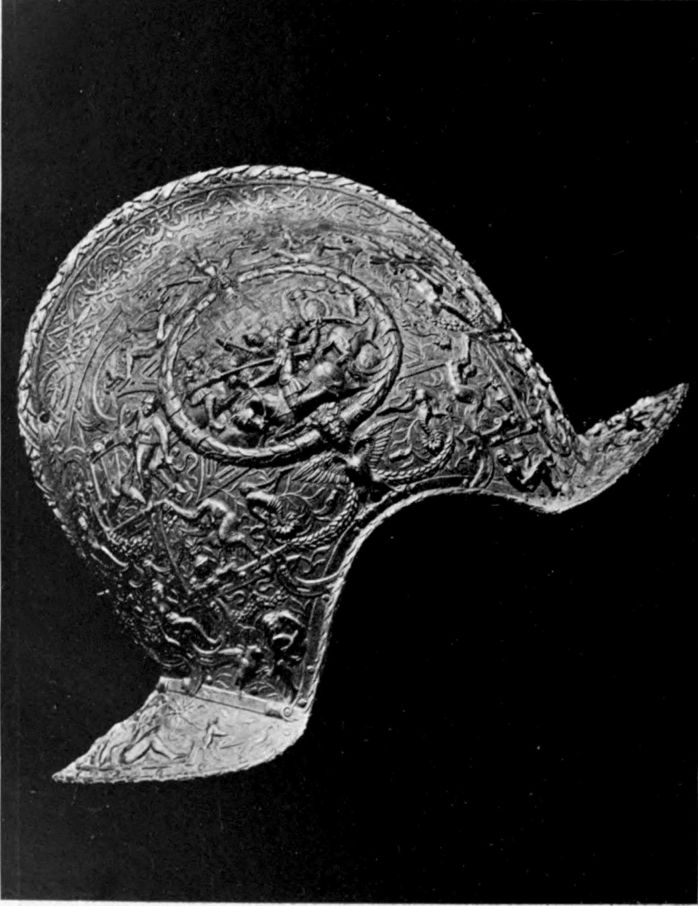
PLATE 262.
Helmet of Philip II. made at Augsburg in 1549.
ROYAL ARMOURY.
PLATE 263
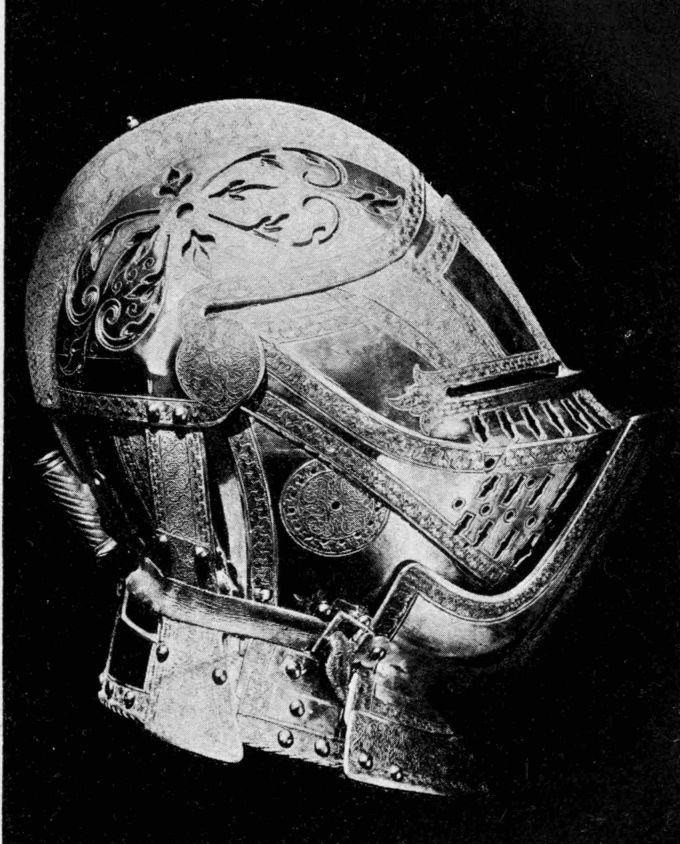
PLATE 263.
A 243. Helmet of Philip II. made by Wolf of Landshut in 1554.
ROYAL ARMOURY.
PLATE 264
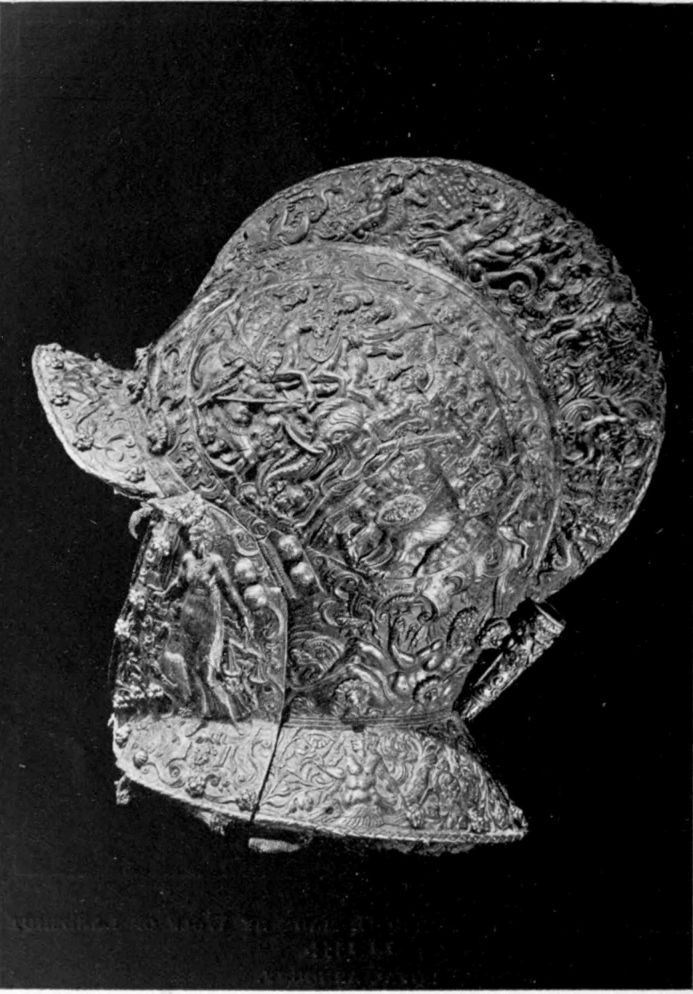
PLATE 264.
A 290. Burgonet of King Sebastian of Portugal.
ROYAL ARMOURY.
PLATE 265
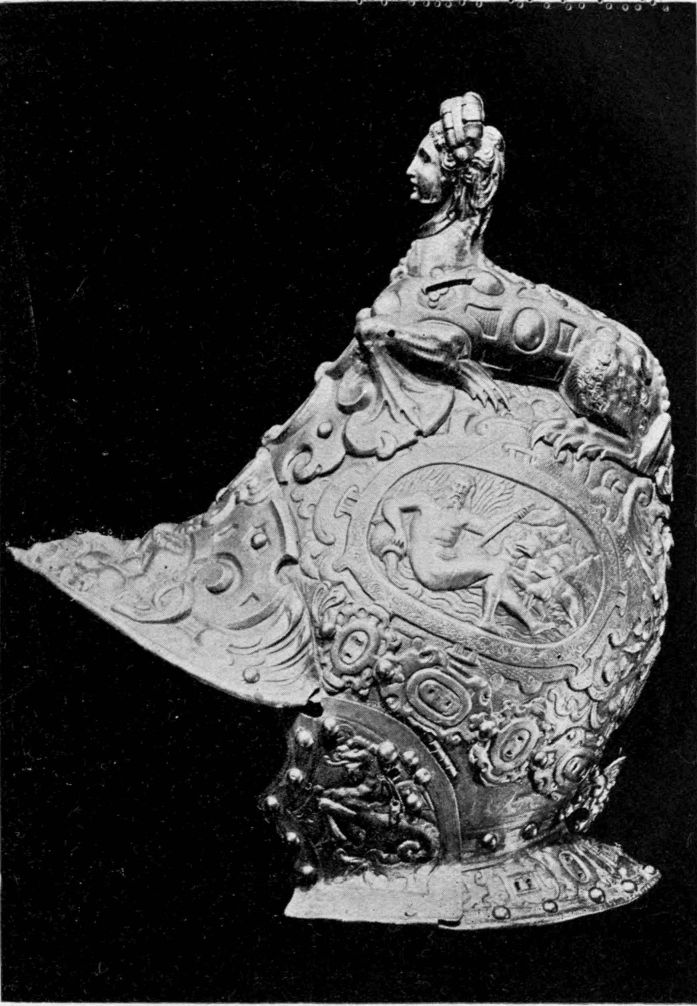
PLATE 265.
A 292. Burgonet made for Philip III. by Lucio Picinino.
ROYAL ARMOURY.
PLATE 266
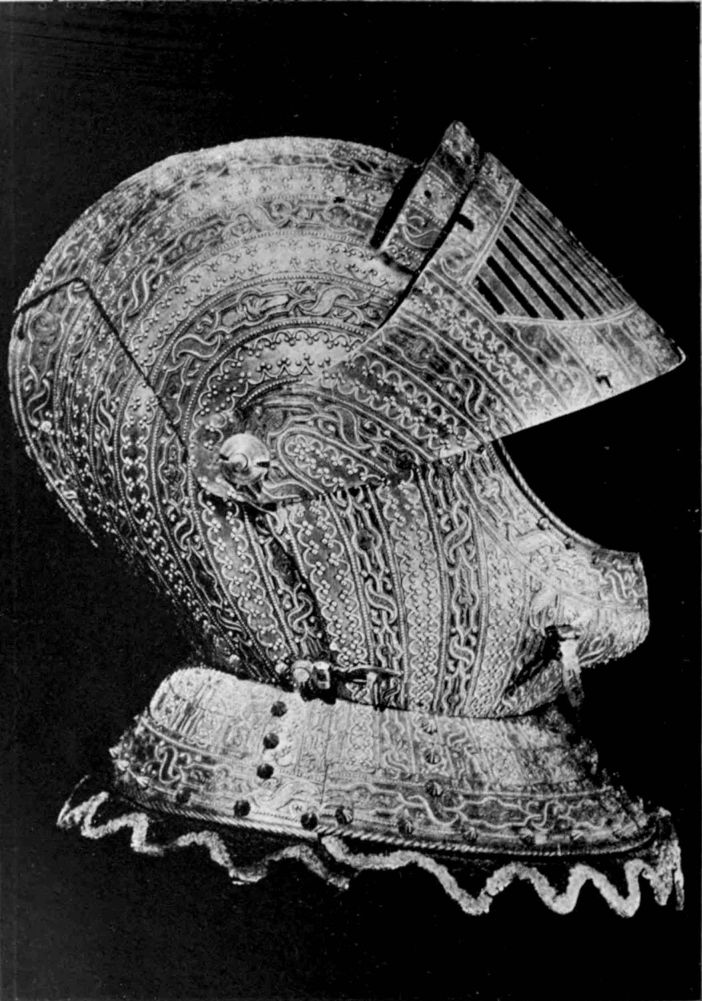
PLATE 266.
A 350. Helmet for the Duke of Savoy (Side View).
ROYAL ARMOURY.
PLATE 267
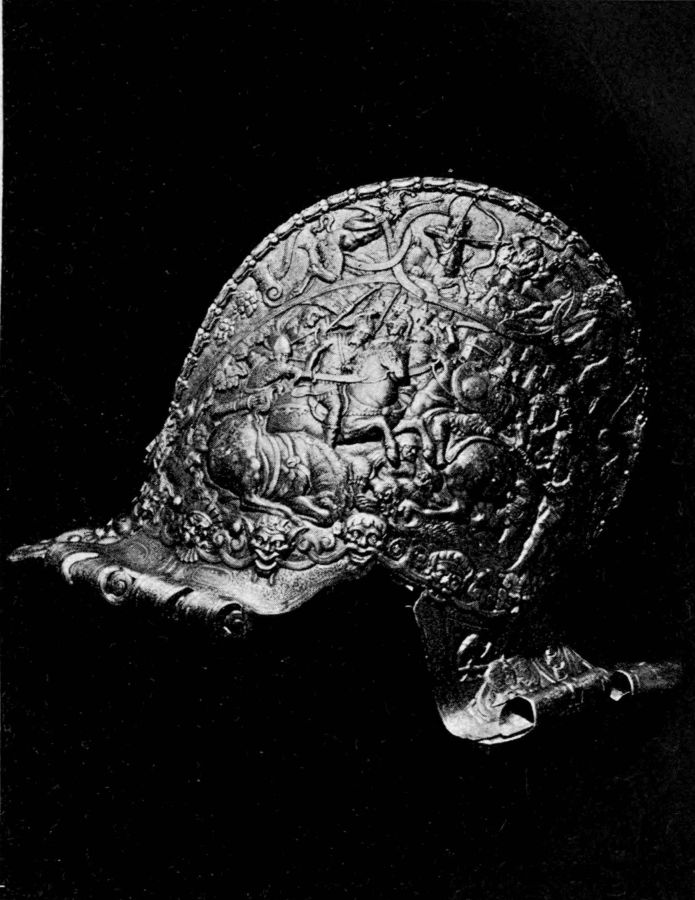
PLATE 267.
D 3. Burgonet of Charles V. designed by Giulio Romano.
ROYAL ARMOURY.
PLATE 268
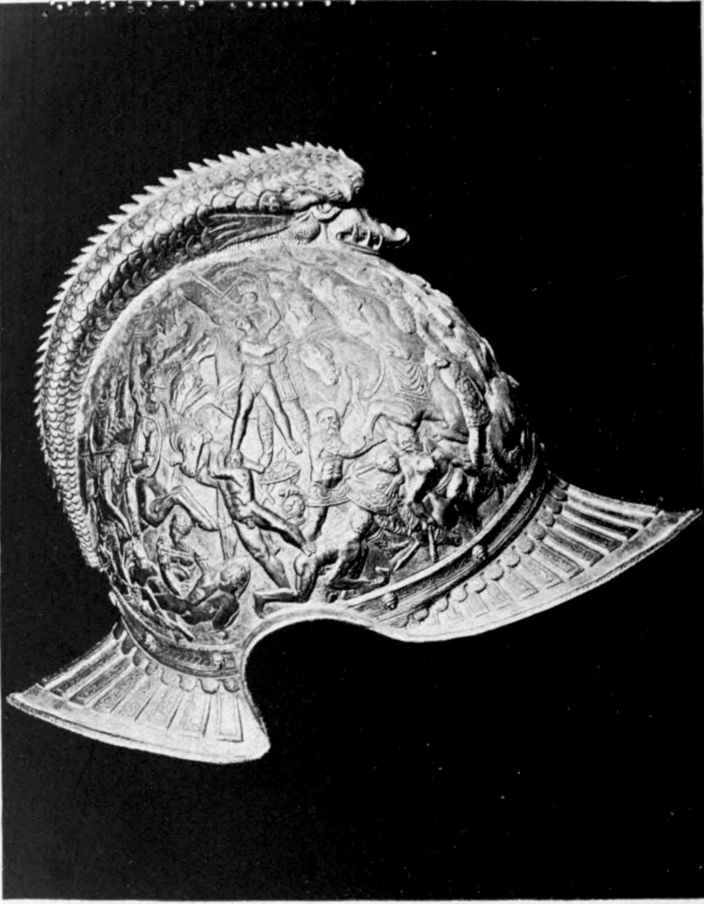
PLATE 268.
M 5. Helmet of Francis I. of France, taken at the Battle of Pavia.
ROYAL ARMOURY.
PLATE 269
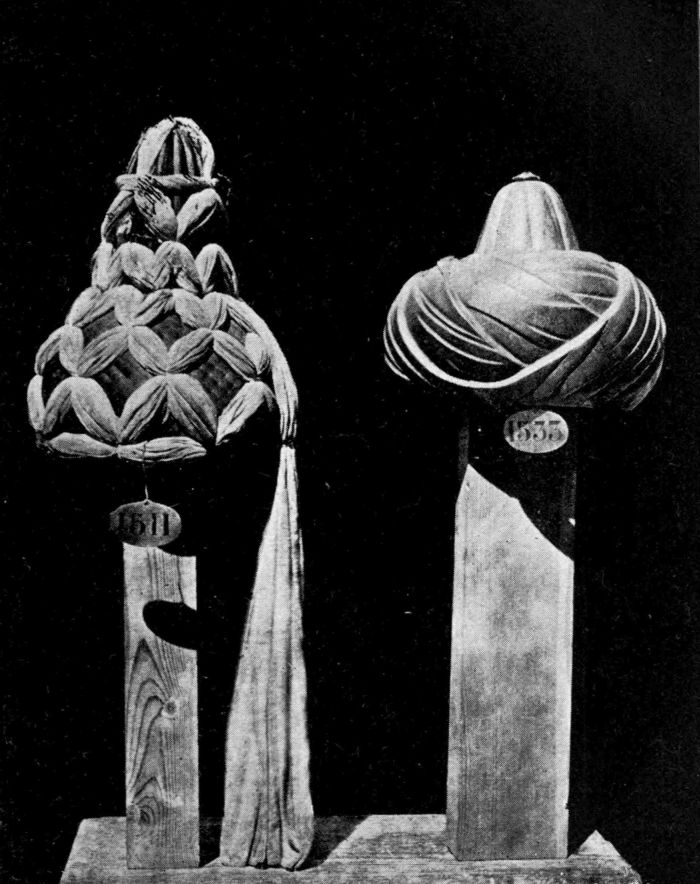
PLATE 269.
1511. Satin and Velvet Turban found in the Palace of Mustafa, Bey of Oran, in 1722.
1533. Steel Turban of Ali Pasha, Turkish Admiral at Lepanto.
ROYAL ARMOURY.
PLATE 270
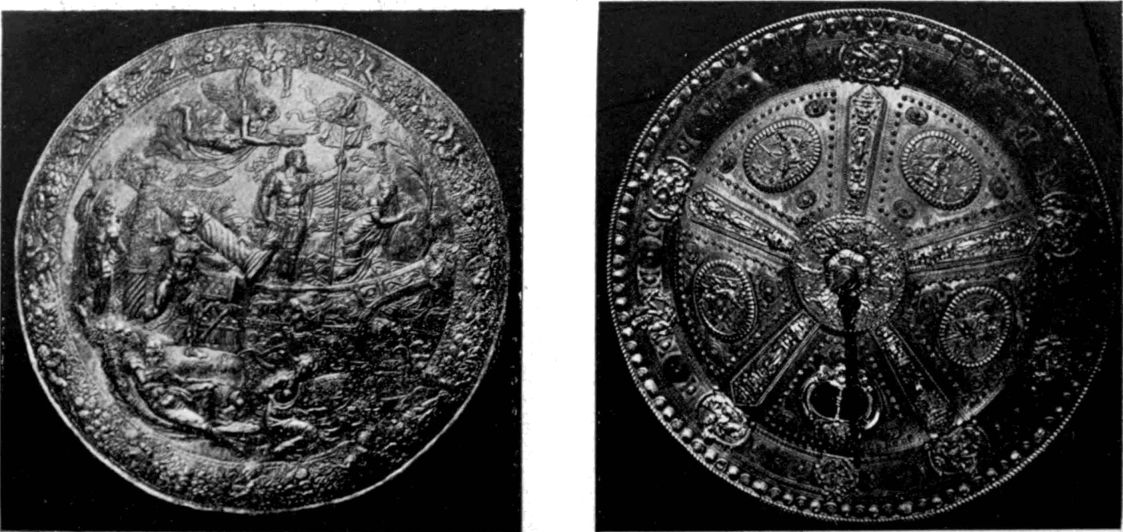
PLATE 270.
D 63. The “Plus Ultra” Shield Designed by Giulio Romano. D 10. Shield, Early 17th Century. Design: Warriors in Combat.
ROYAL ARMOURY.
PLATE 271
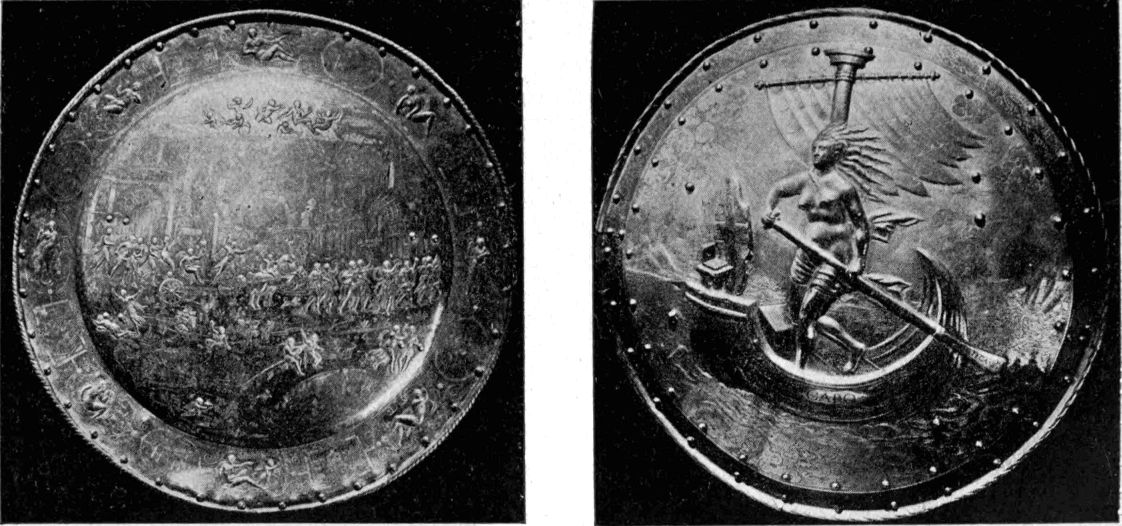
PLATE 271.
D 69. Italian Shield, 16th Century. Design: The Triumph of Love. D 68. Shield of Augsburg Make, 16th Century.
ROYAL ARMOURY.
PLATE 272
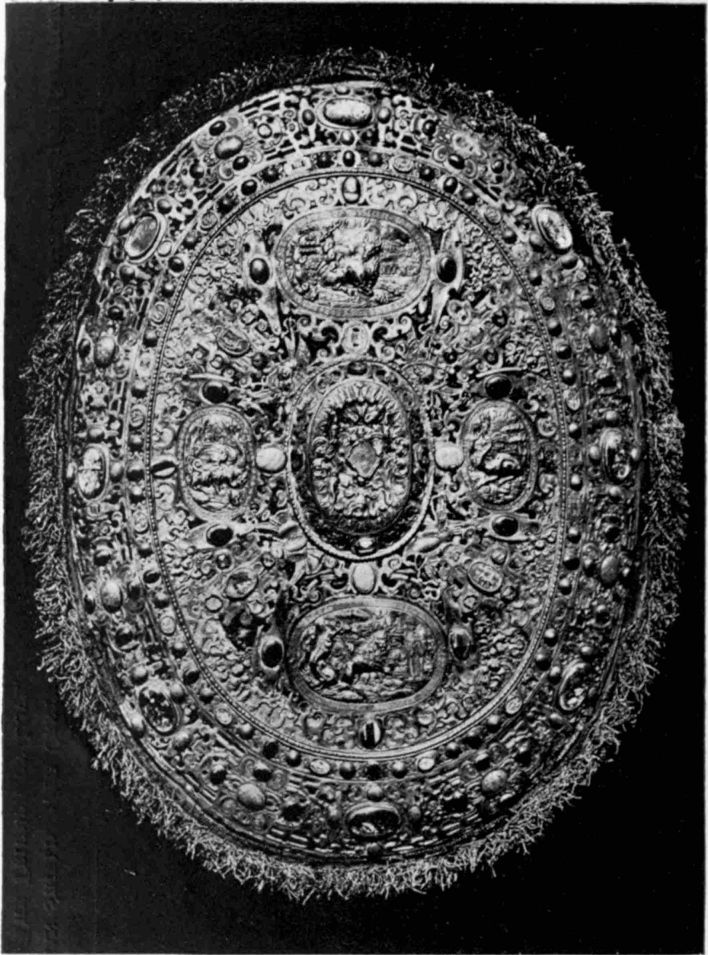
PLATE 272.
D 79. Shield Presented to Philip III. by the Duke of Savoy in 1603.
ROYAL ARMOURY.
PLATE 273
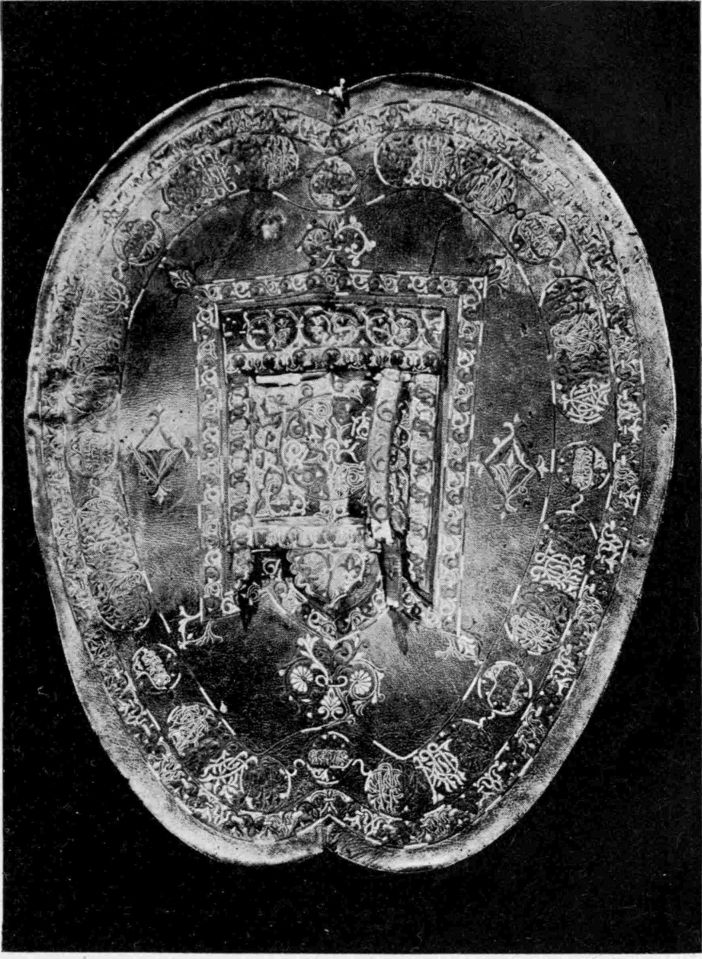
PLATE 273.
D 86. Moorish Leather Shield, End of 15th Century.
ROYAL ARMOURY.
PLATE 274
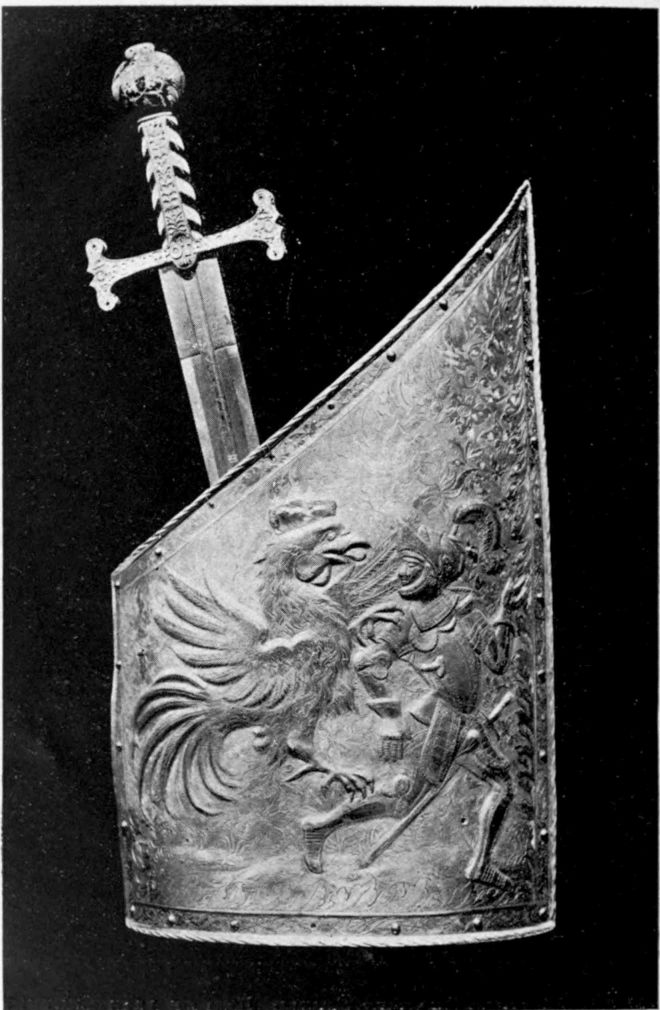
PLATE 274.
M 6. Shield and Sword of Francis I. of France, taken at the Battle of Pavia. Design: The Gallic Cock attacking a Warrior and putting him to Flight.
ROYAL ARMOURY.
PLATE 275
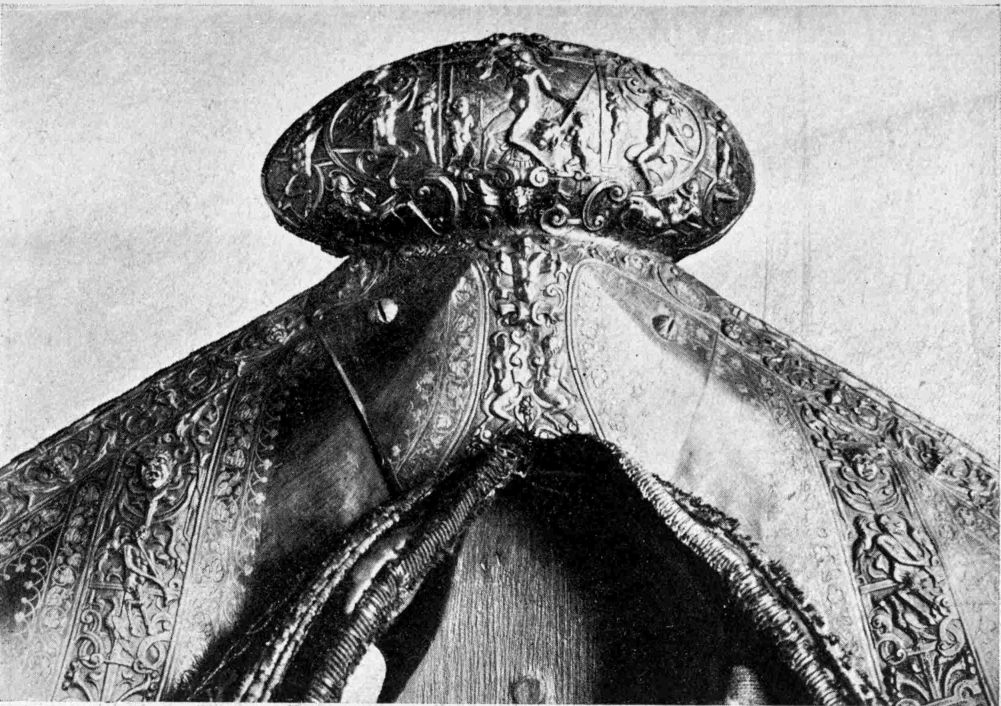
PLATE 275.
A 242. Pommel and Cantle of Saddle of Philip II.
ROYAL ARMOURY.
PLATE 276
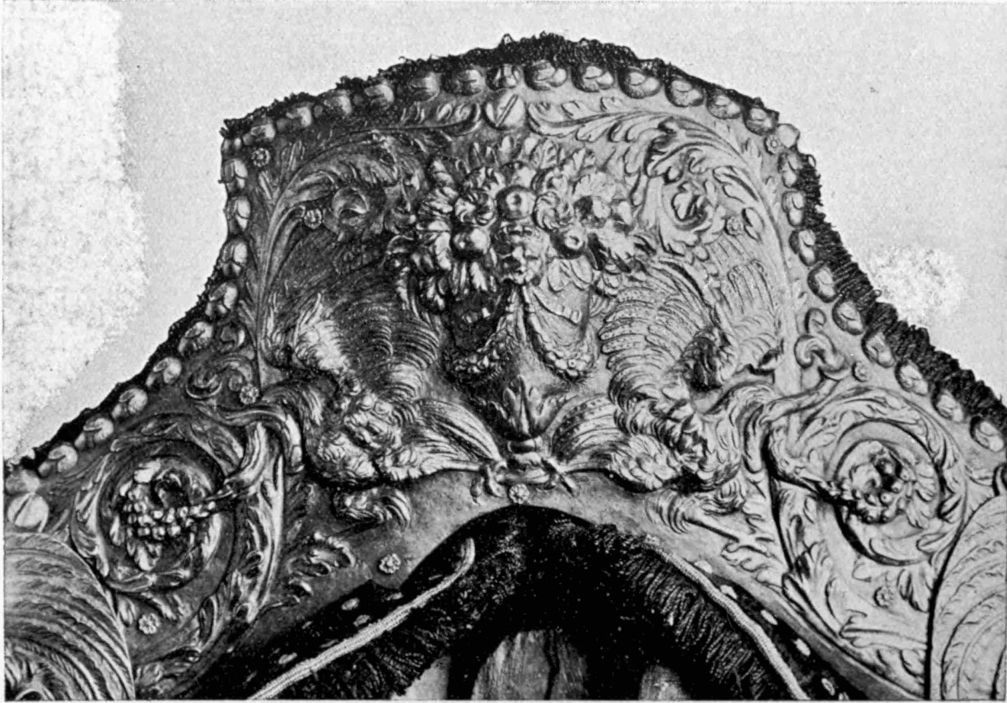
PLATE 276.
A 291. Cantle-Plates of Saddle made by Lucio Picinino.
ROYAL ARMOURY.
PLATE 277
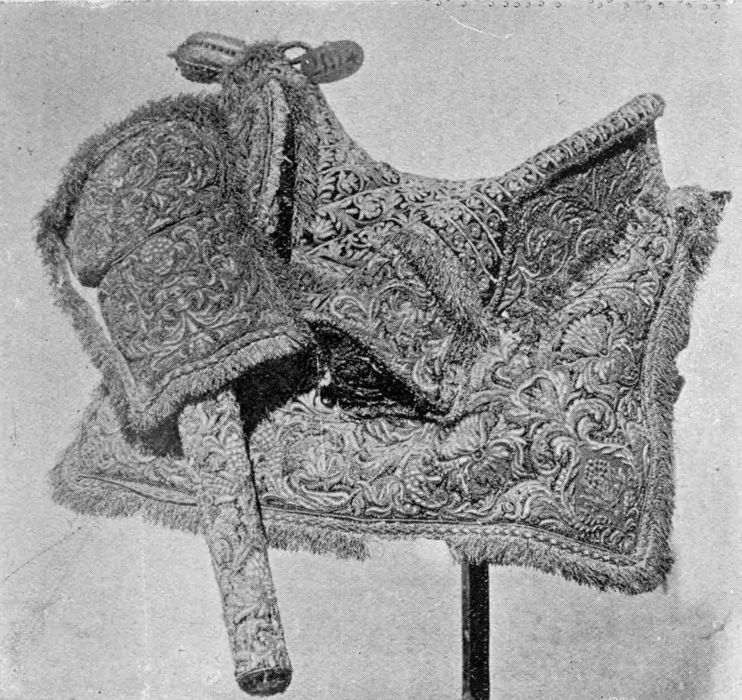
PLATE 277.
Turkish Saddle given to Charles III.
ROYAL ARMOURY.
PLATE 278
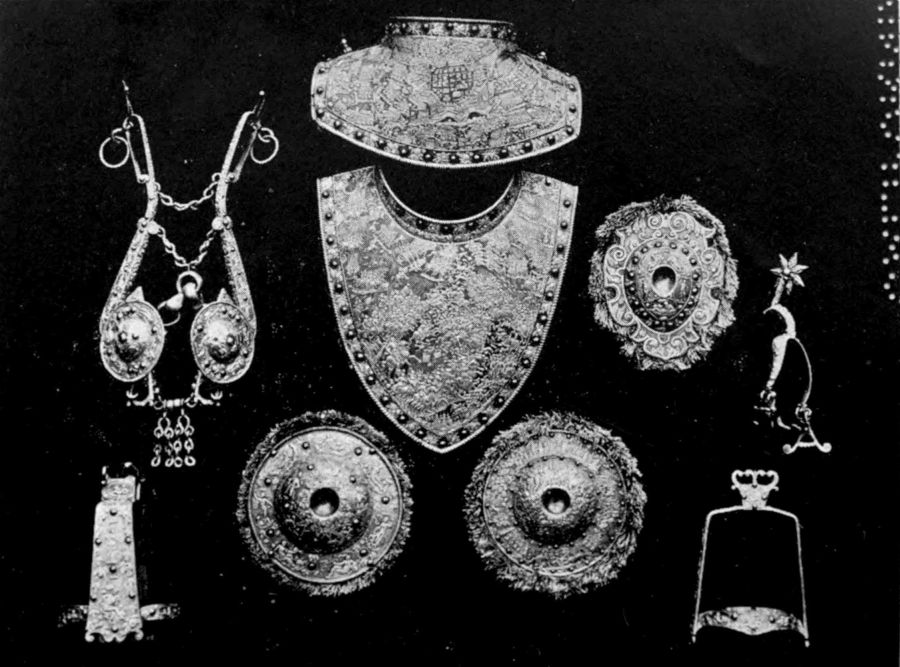
PLATE 278.
Trophy formed of several Pieces of Armour of Philip II.
ROYAL ARMOURY.
PLATE 279
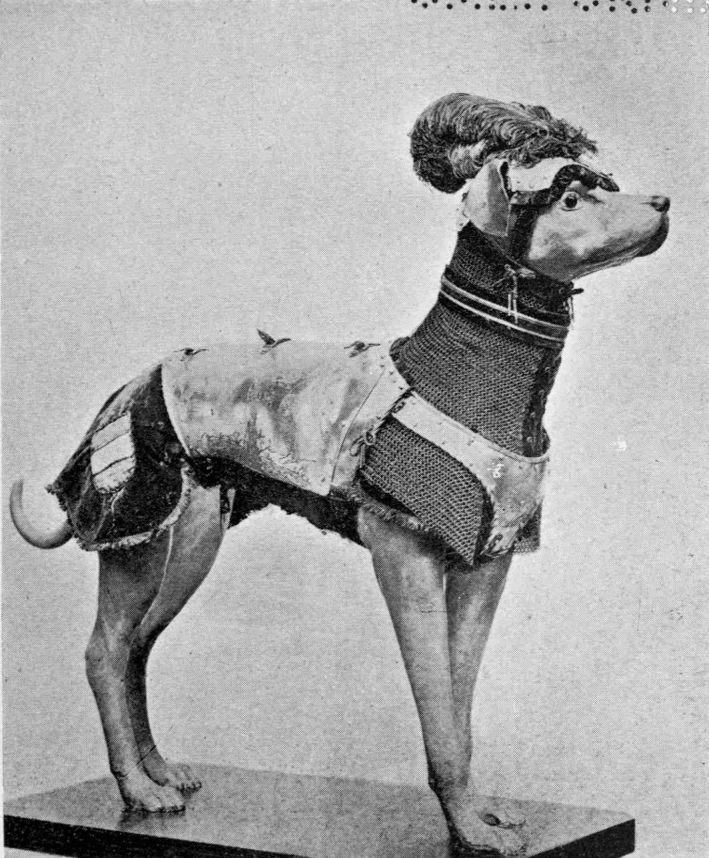
PLATE 279.
Armour of a Greyhound.
ROYAL ARMOURY.
PLATE 280
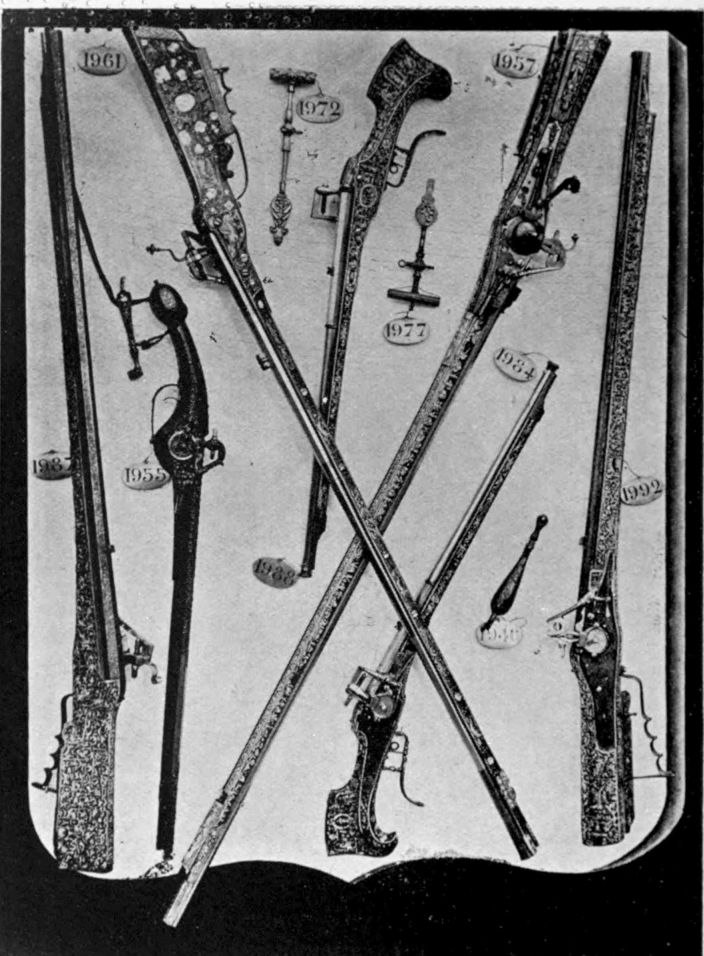
PLATE 280.
1987, 1992. Spanish Arquebuses, End of 16th Century.
1955. Petronel, 16th Century.
1961. Spanish Arquebus, with Octagonal Barrel inlaid with Mother of Pearl and Ivory, 16th Century.
1972, 1977, 1946. Keys or Cranks to cock the Arquebuses.
ROYAL ARMOURY.
PLATE 281
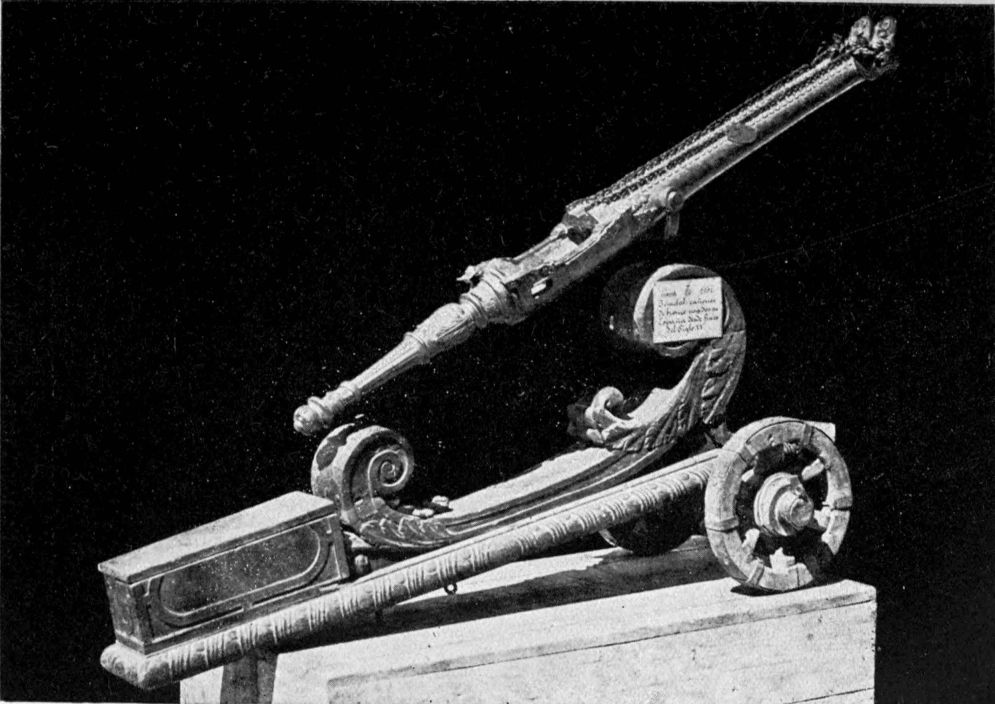
PLATE 281.
Double Breech-Loading Cannon, in Bronze, used in Spain at the End of the 15th Century.
ROYAL ARMOURY.
PLATE 282
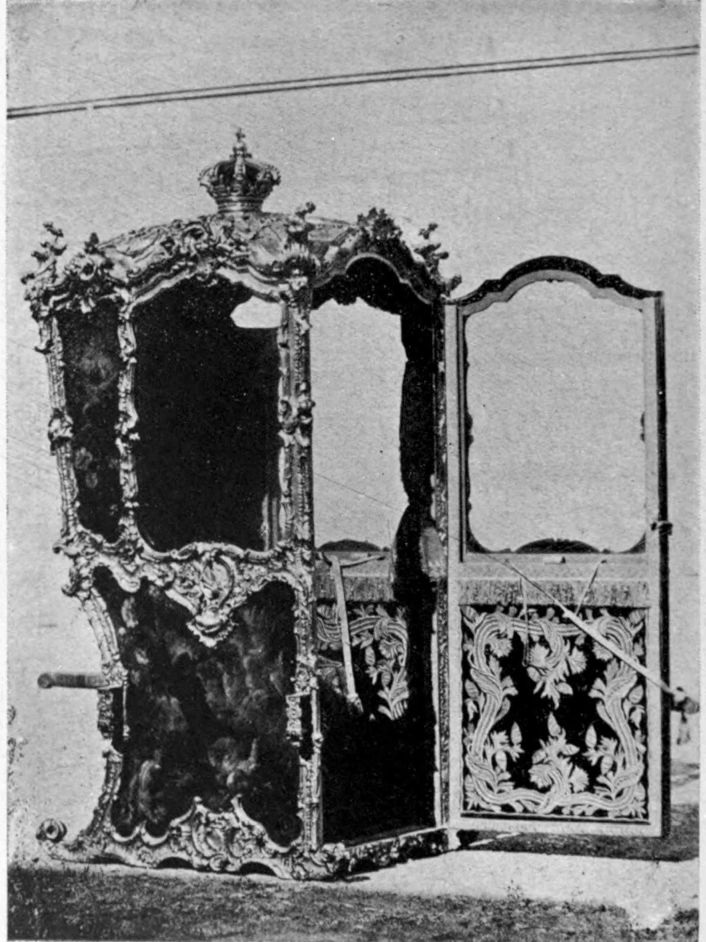
PLATE 282.
Sedan Chair of Philip V.
(FROM THE COACH-HOUSES OF THE ROYAL PALACE, MADRID.)
ROYAL ARMOURY.
PLATE 283
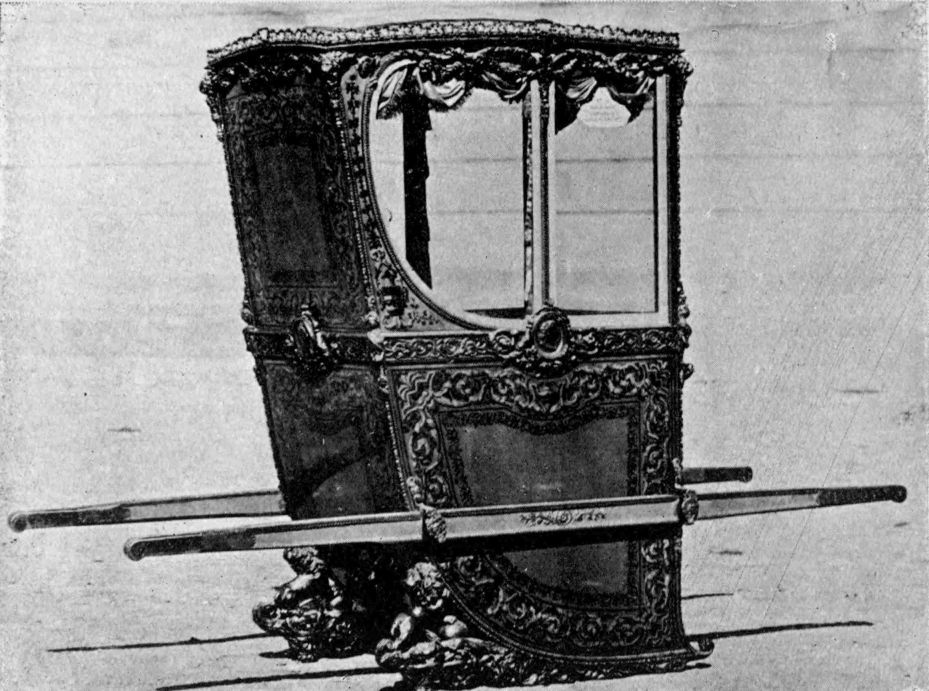
PLATE 283.
Sedan Chair of Ferdinand VI.
(FROM THE COACH-HOUSES OF THE ROYAL PALACE, MADRID.)
ROYAL ARMOURY.
PLATE 284
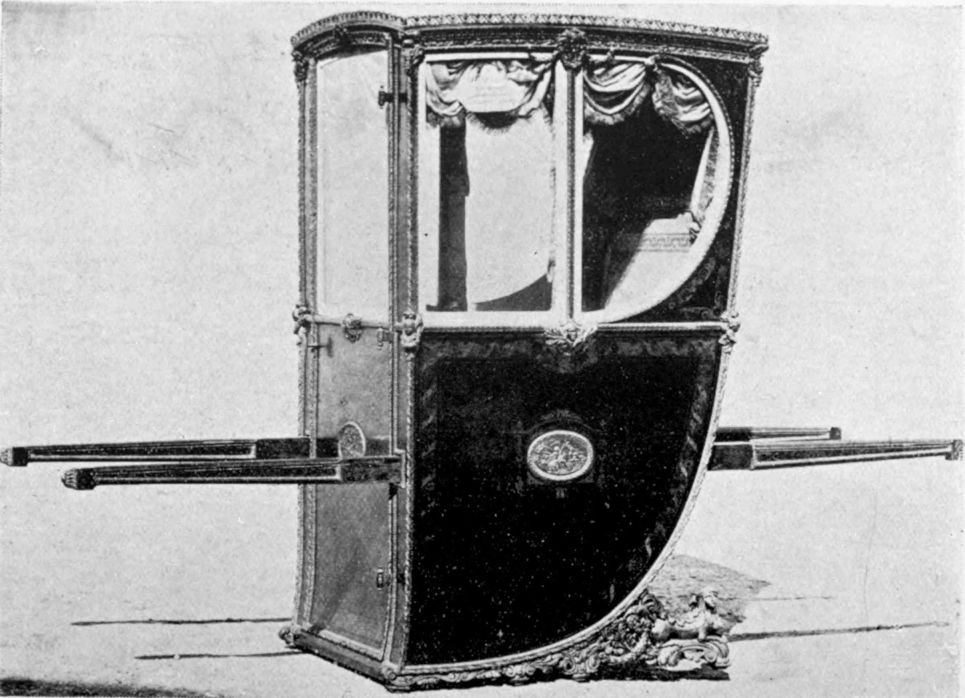
PLATE 284.
Sedan Chair of Charles IV.
(FROM THE COACH-HOUSES OF THE ROYAL PALACE, MADRID.)
ROYAL ARMOURY.
PLATE 285
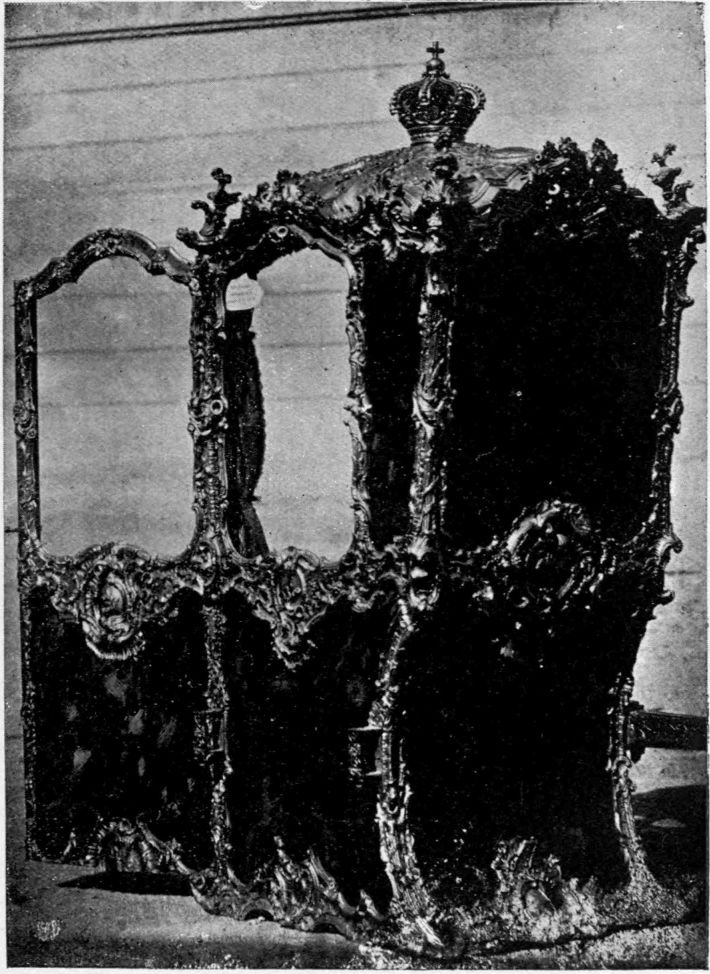
PLATE 285.
Sedan Chair of Philip V.
(FROM THE COACH-HOUSES OF THE ROYAL PALACE, MADRID.)
ROYAL ARMOURY.
PLATE 286
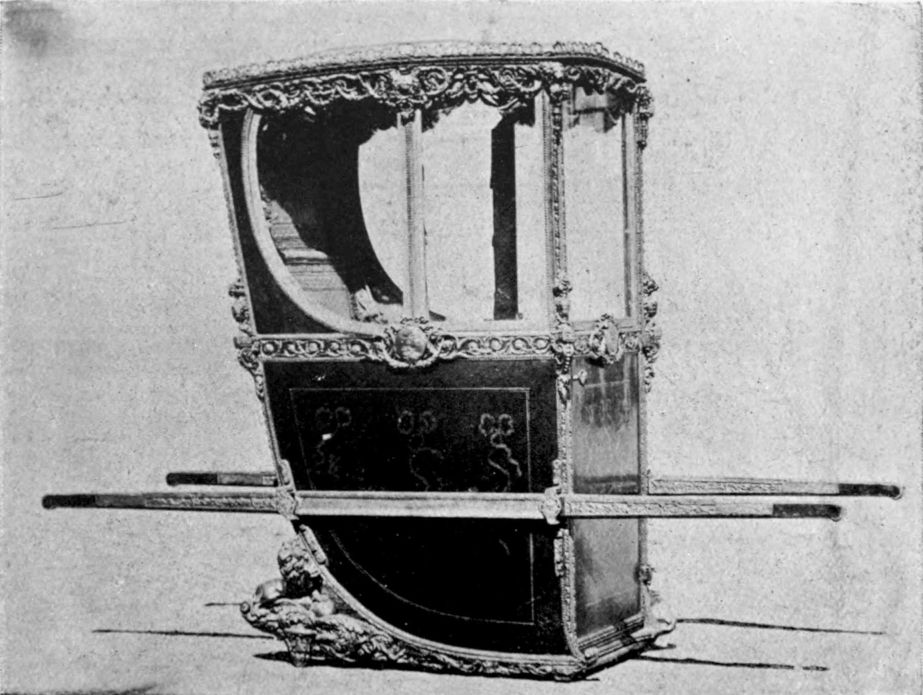
PLATE 286.
Sedan Chair of Charles III.
(FROM THE COACH-HOUSES OF THE ROYAL PALACE, MADRID.)
ROYAL ARMOURY.
PLATE 287
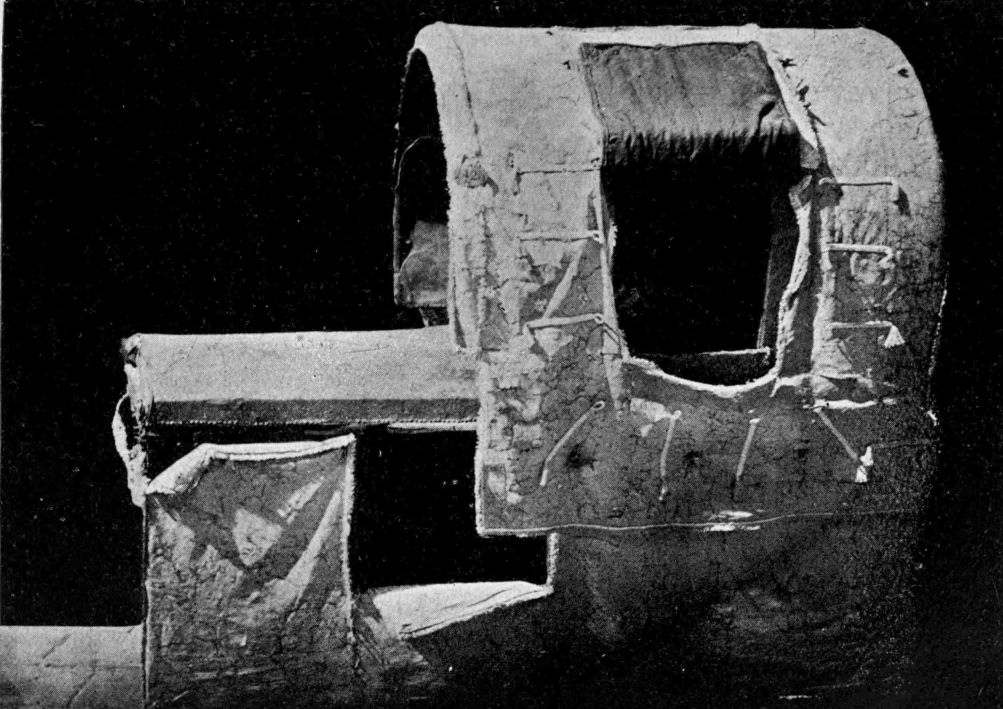
PLATE 287.
Campaign Litter of the Emperor Charles V.
ROYAL ARMOURY.
PLATE 288
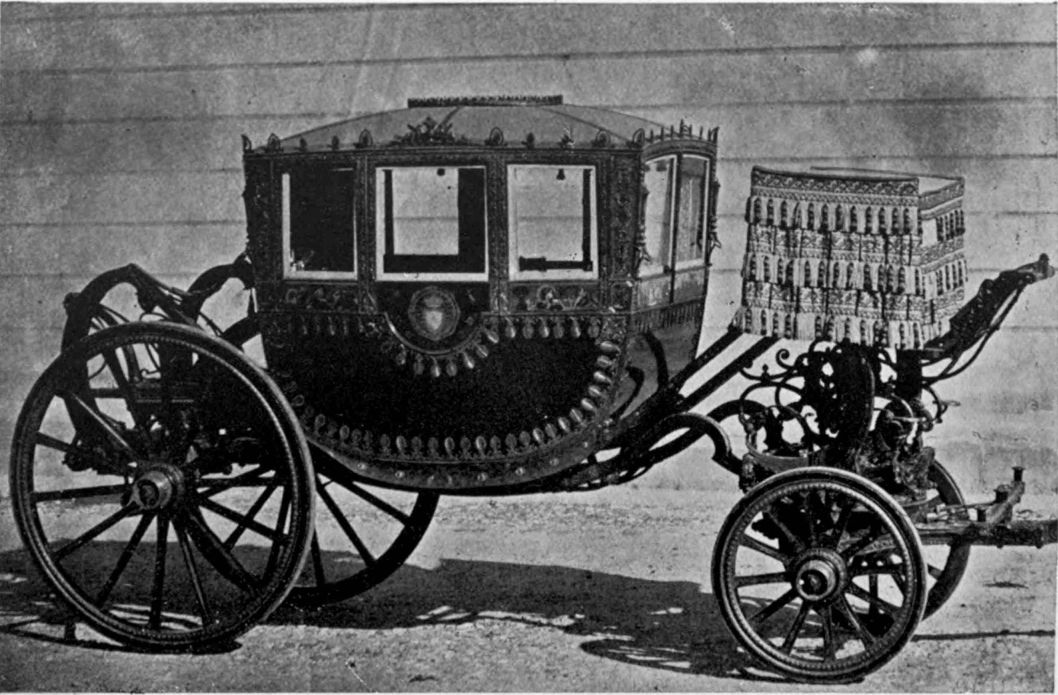
PLATE 288.
Carriage Given by Napoleon I. To Charles IV.
(FROM THE COACH-HOUSES OF THE ROYAL PALACE, MADRID.)
ROYAL ARMOURY.
PLATE 289
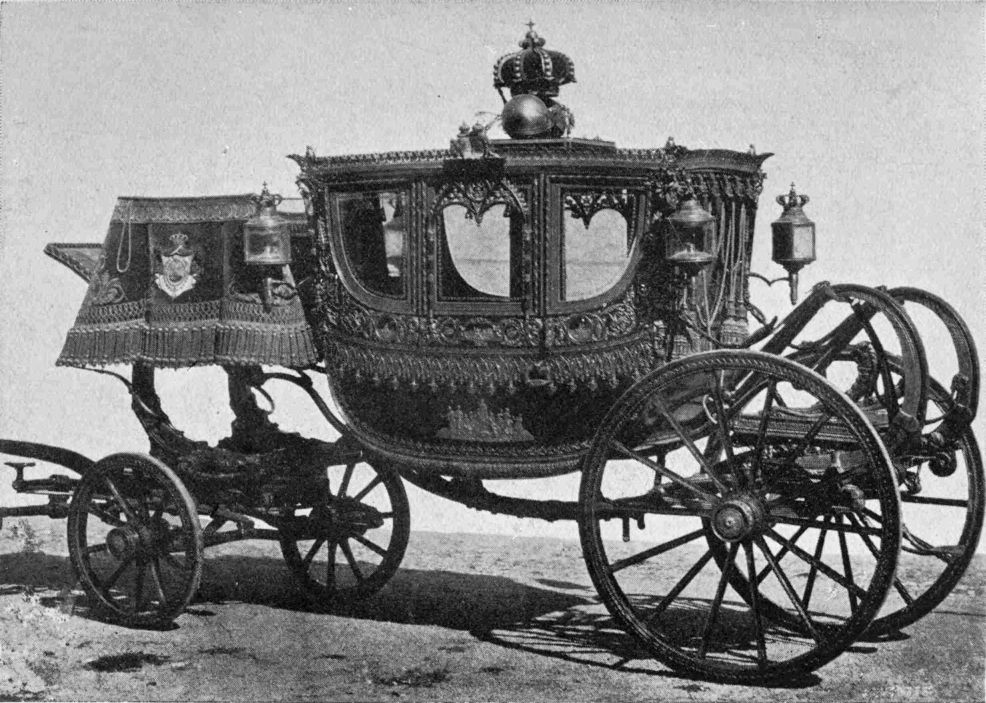
PLATE 289.
The Crown Coach.
(FROM THE COACH-HOUSES OF THE ROYAL PALACE, MADRID.)
ROYAL ARMOURY.
PLATE 290
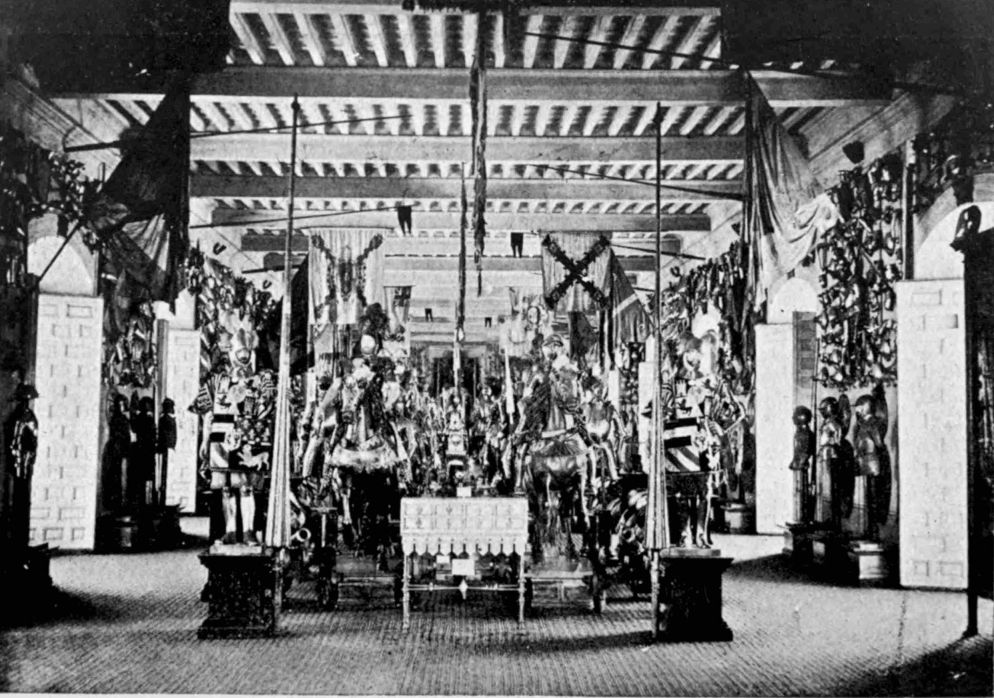
PLATE 290.
General View of the Interior of the Old Armoury.
PLATE 291
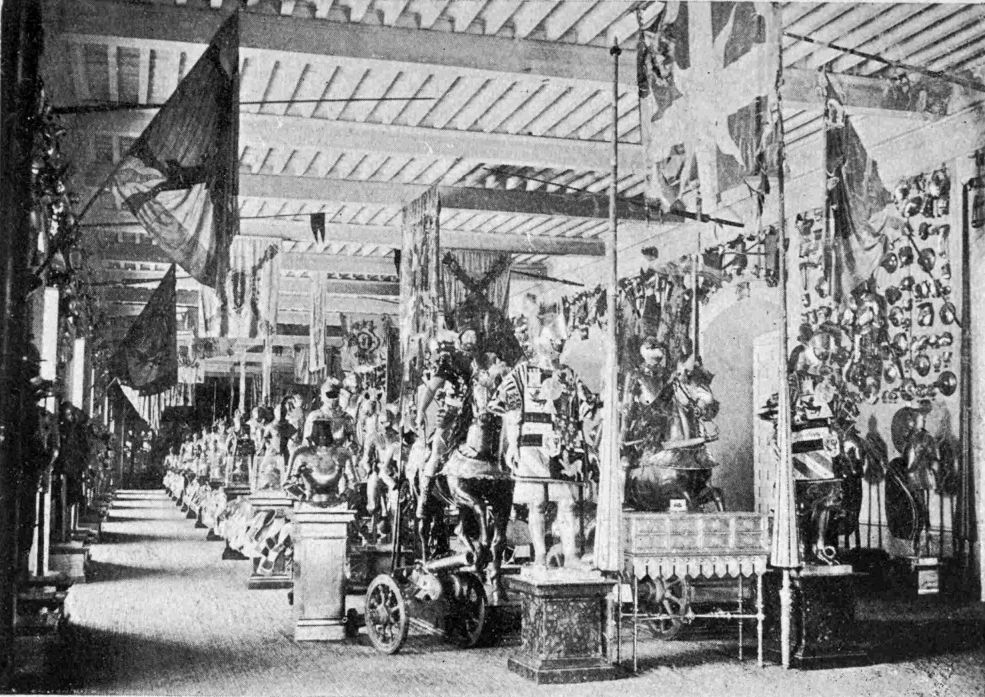
PLATE 291.
General View of the Interior of the Old Armoury.
PLATE 292
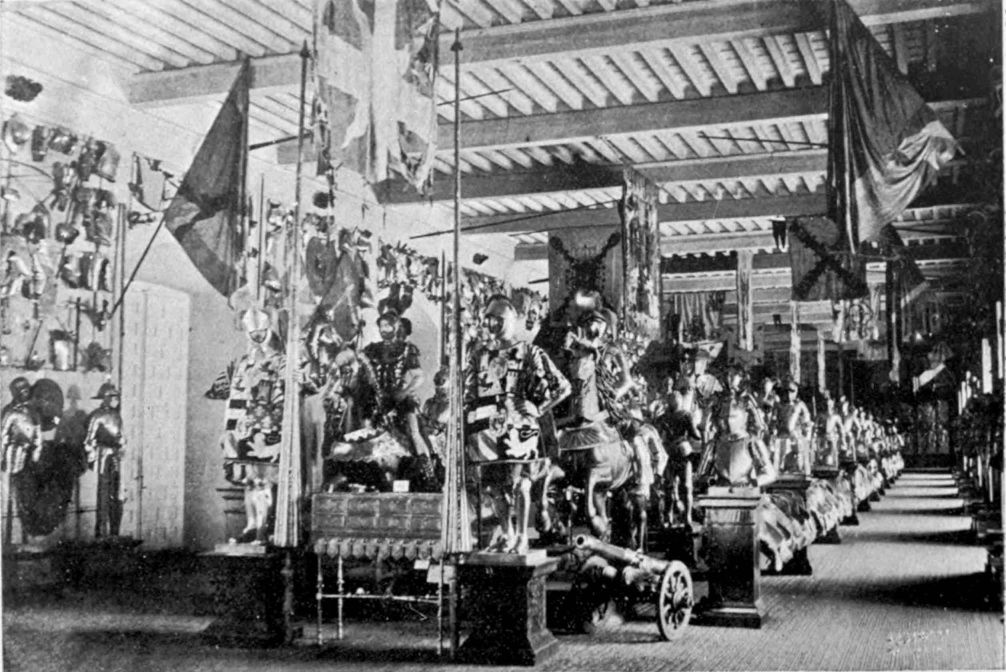
PLATE 292.
General View of the Interior of the Old Armoury.
PLATE 293
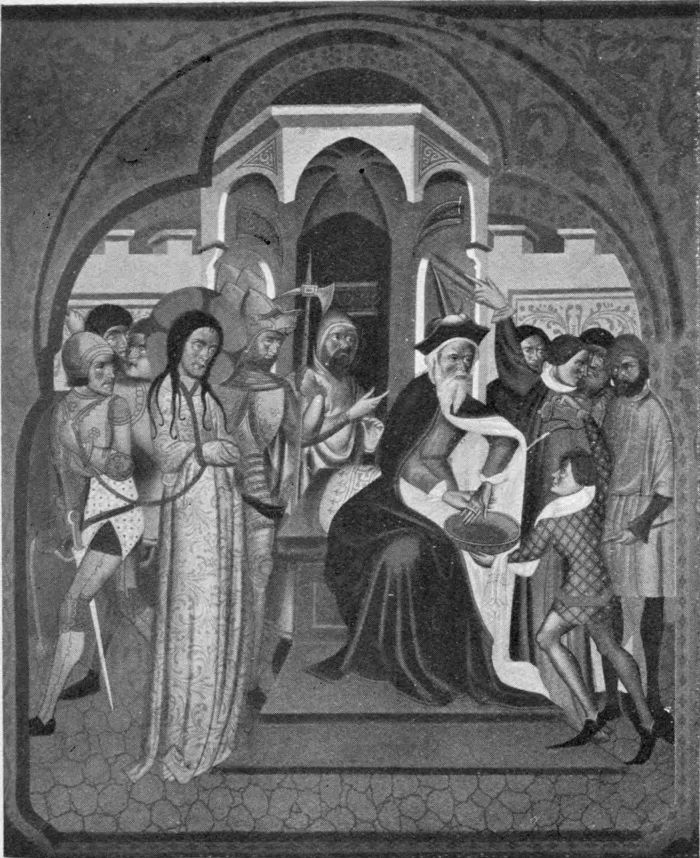
PLATE 293.
Royal Academy of History.
Exterior of the Triptych-Reliquary from the Stone Monastery in Aragon.
PLATE 294
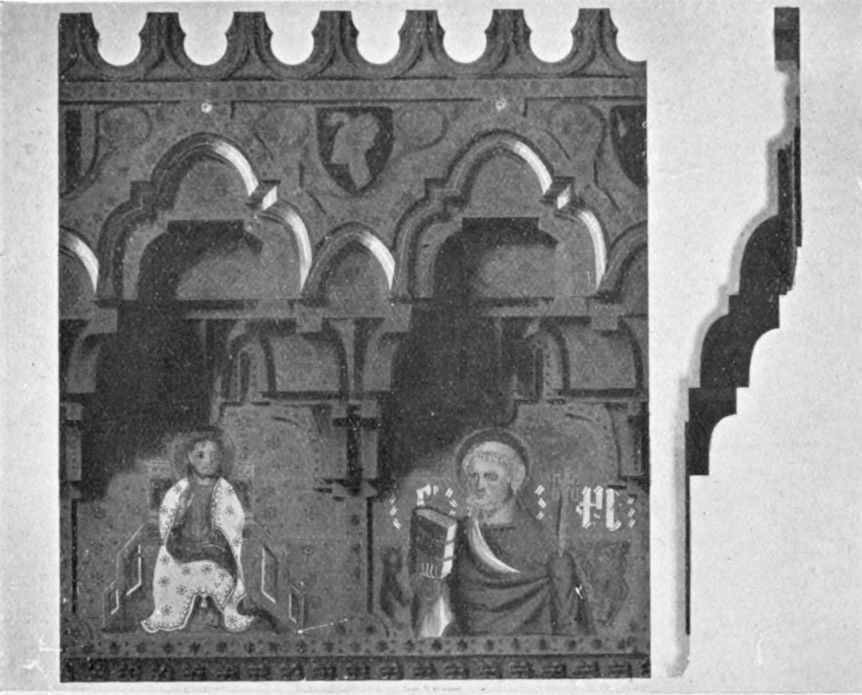
PLATE 294.
Royal Academy of History.
Part of the Triptych-Reliquary from the Stone Monastery in Aragon.
PLATE 295
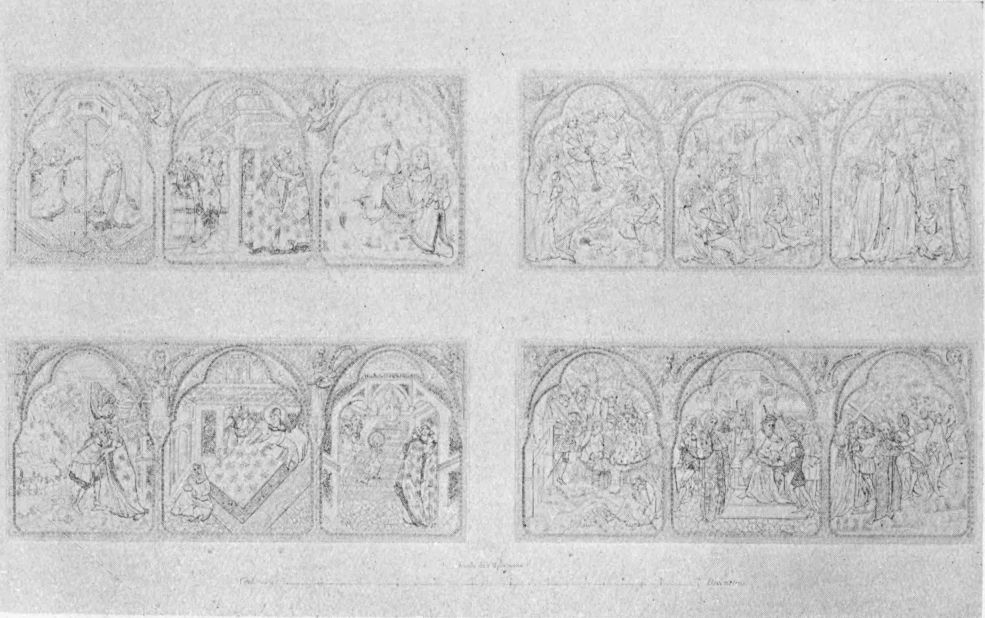
PLATE 295.
Royal Academy of History.
Paintings on the Exterior of the Triptych-Reliquary from the Stone Monastery in Aragon.
PLATE 296
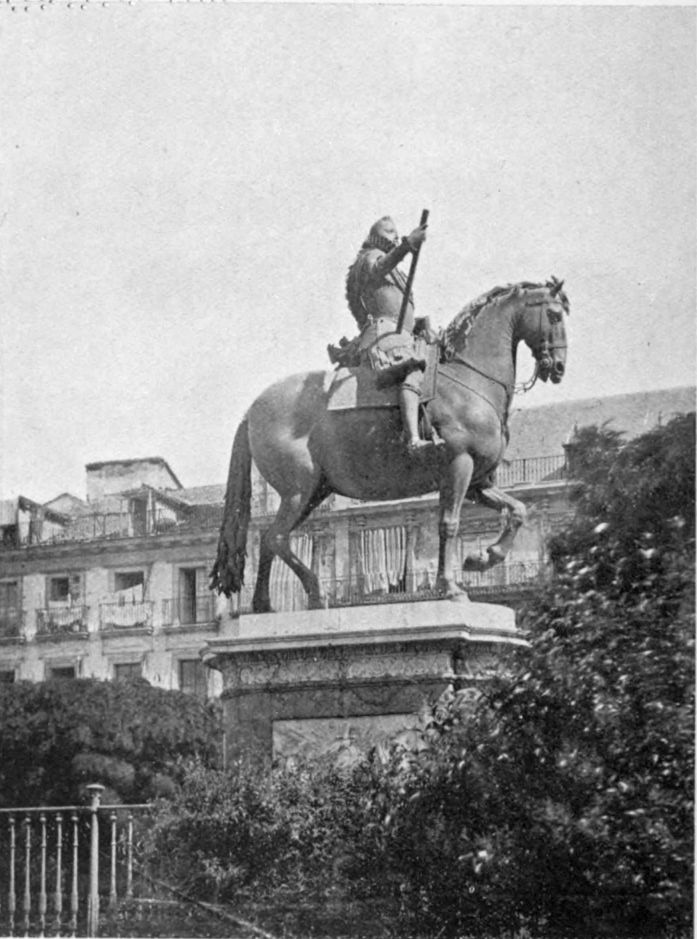
PLATE 296.
Statue of Philip III. in the Plaza Mayor.
PLATE 297
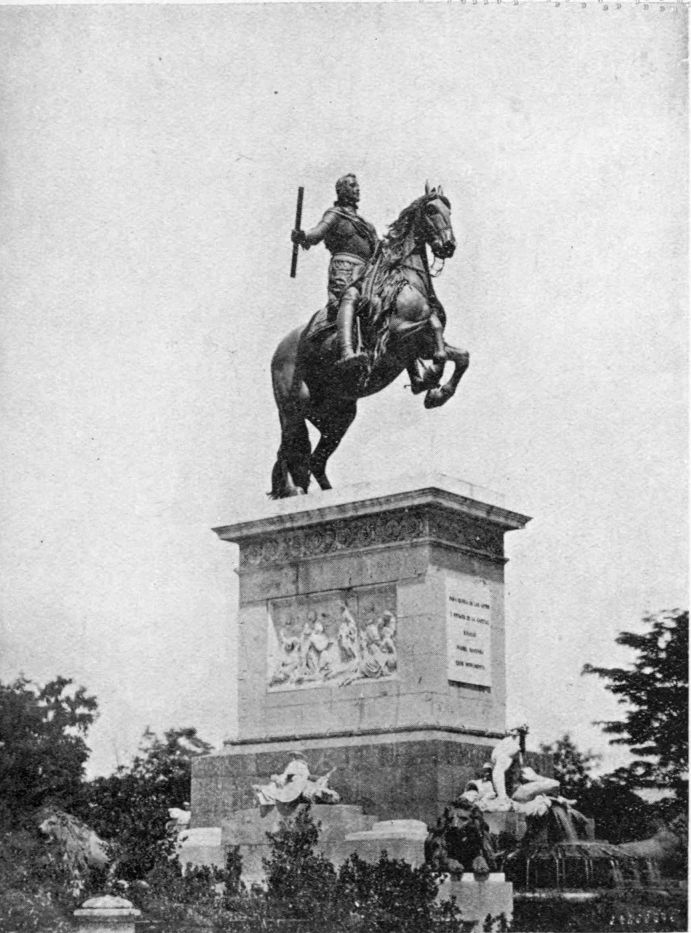
PLATE 297.
Statue of Philip Iv. in the Plaza de Oriente.
PLATE 298
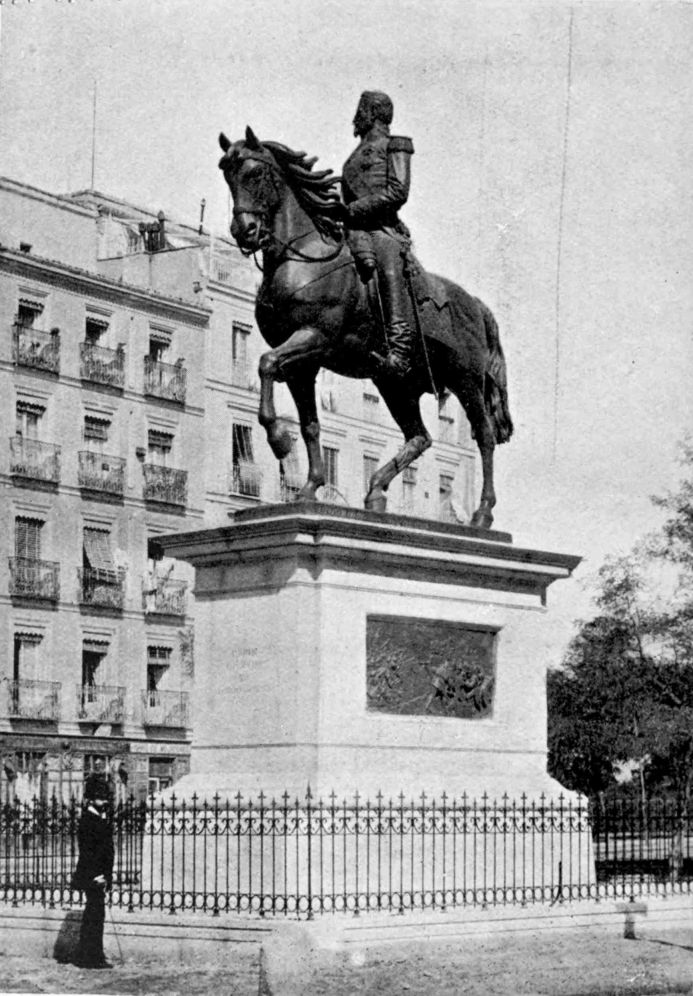
PLATE 298.
Statue of Espartero the Peace-maker.
PLATE 299
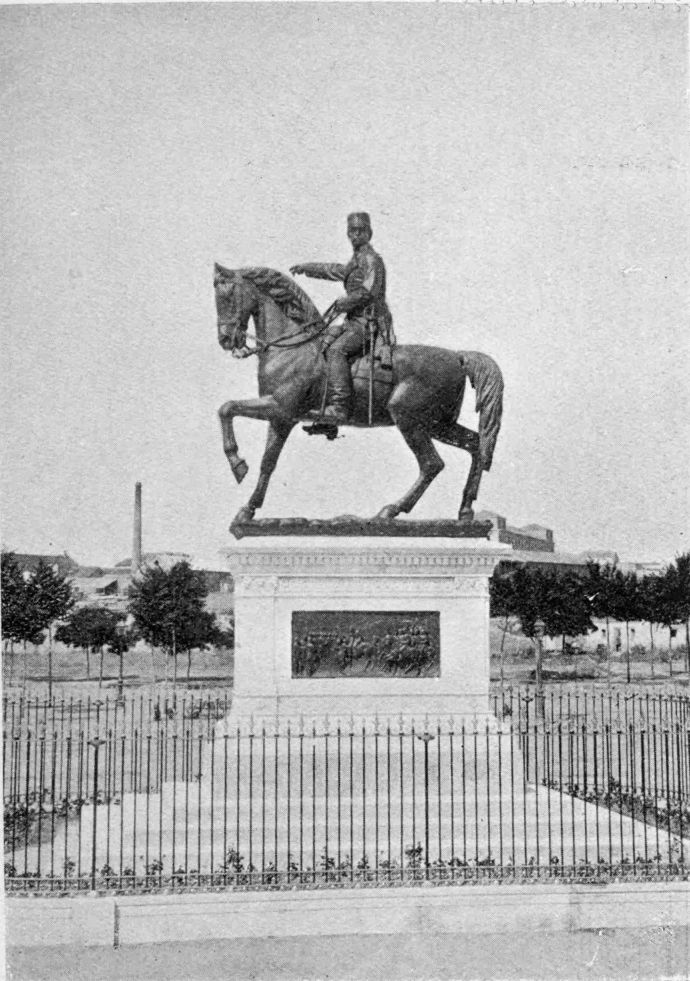
PLATE 299.
Statue of General Concha, Marqués del Duero.
PLATE 300
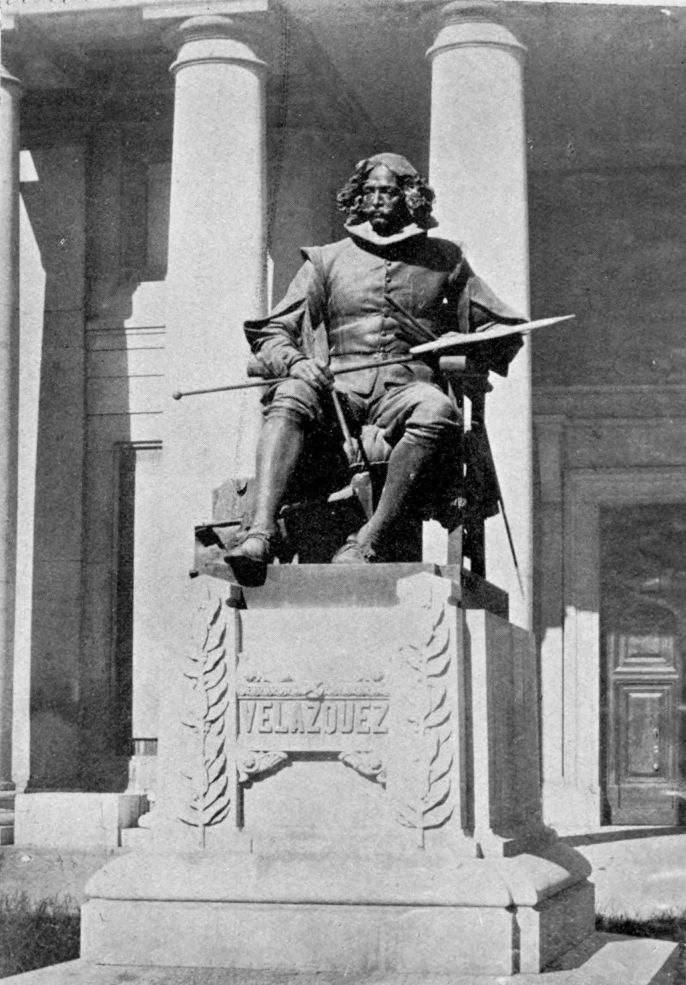
PLATE 300.
Statue of Velazquez.
PLATE 301
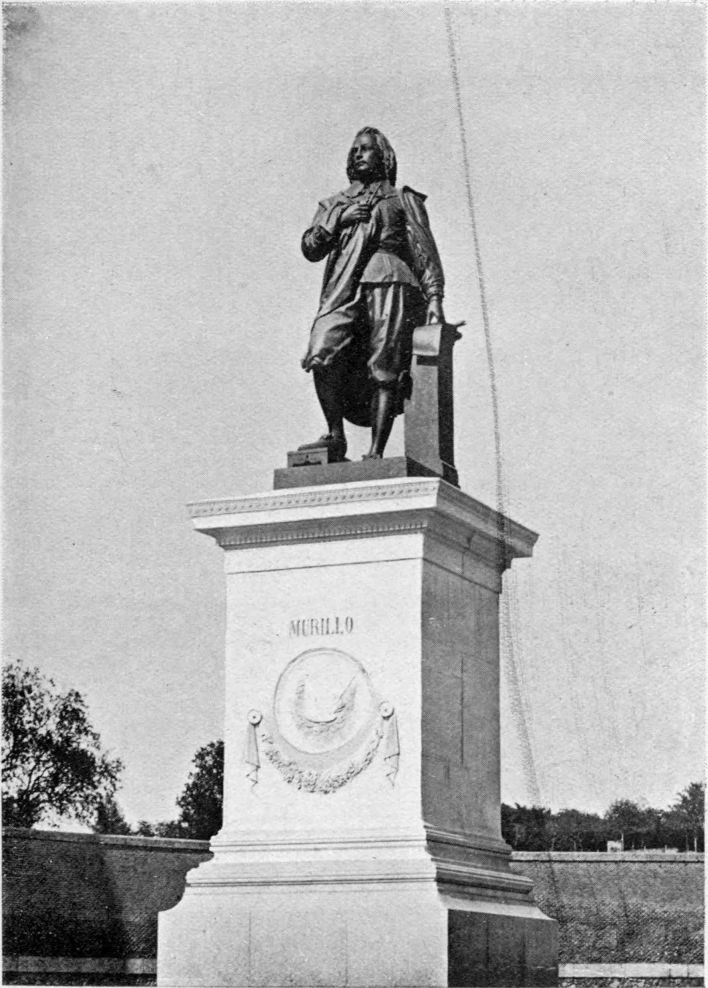
PLATE 301.
Statue of Murillo.
PLATE 302
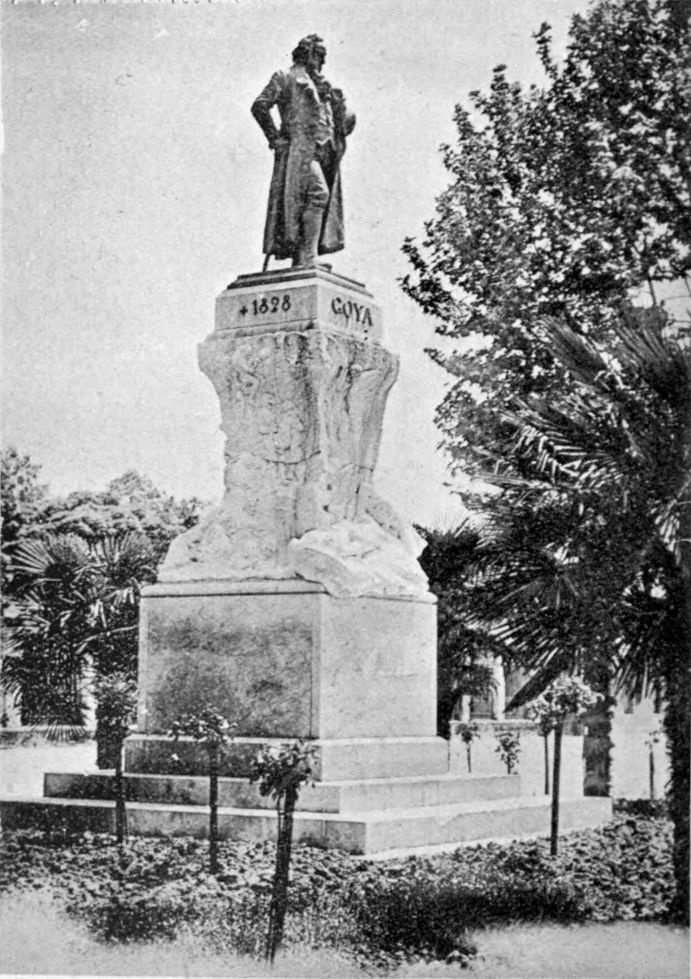
PLATE 302.
Retiro. Statue of Goya.
PLATE 303
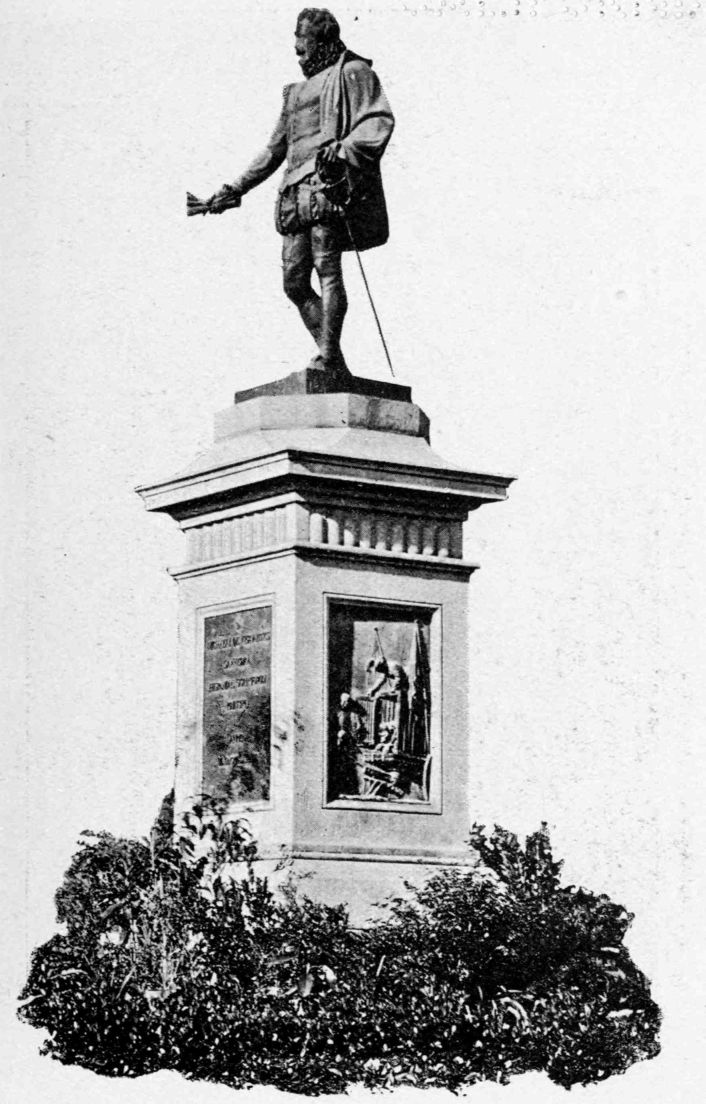
PLATE 303.
Statue of Cervantes.
PLATE 304
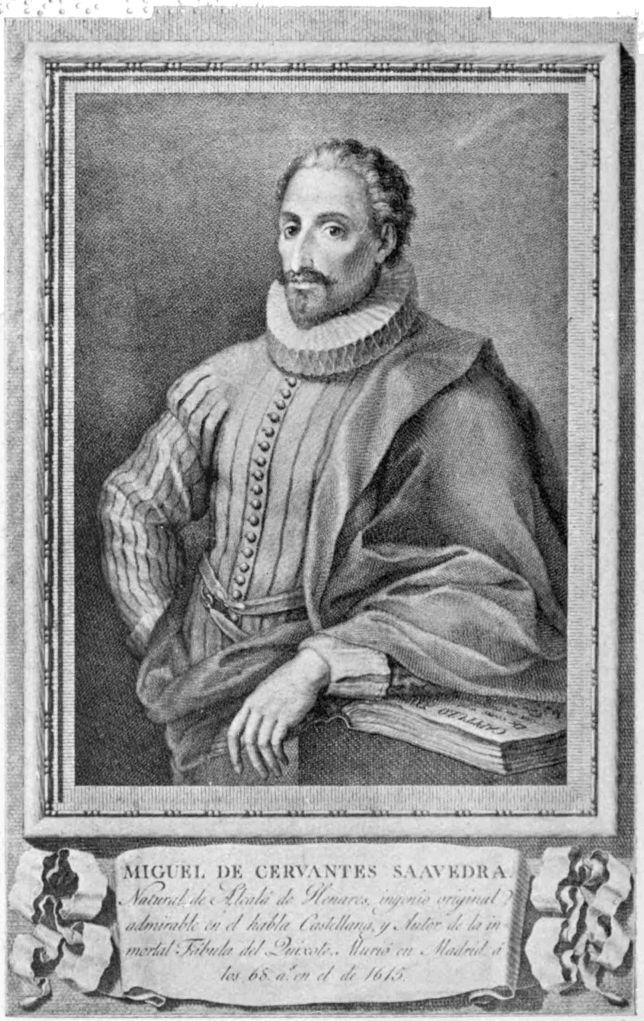
PLATE 304.
Cervantes.
PLATE 305
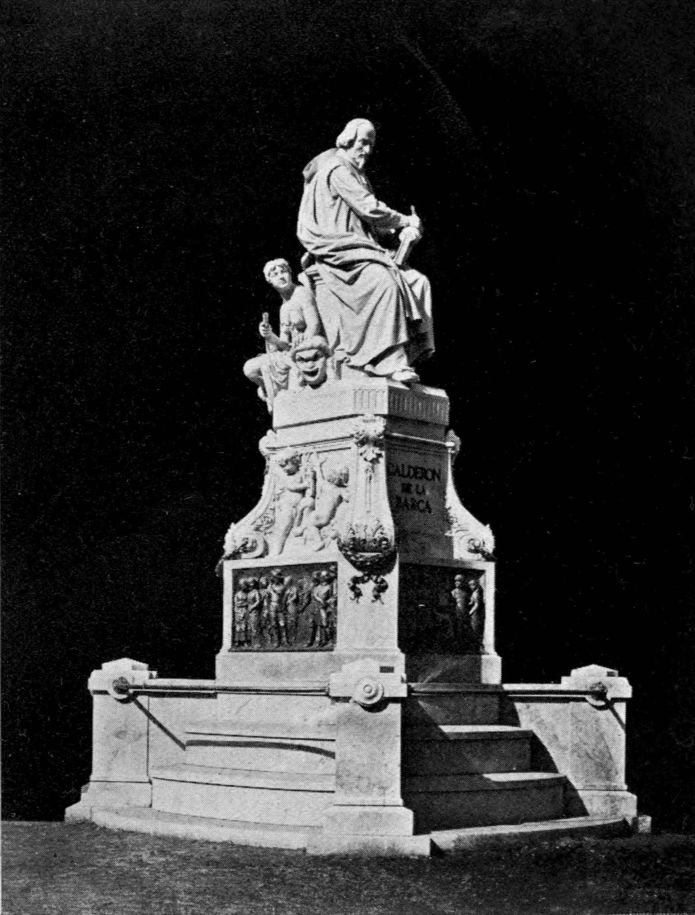
PLATE 305.
Statue of Calderón de la Barca.
(THE WORK OF J. FIGUERAS.)
PLATE 306
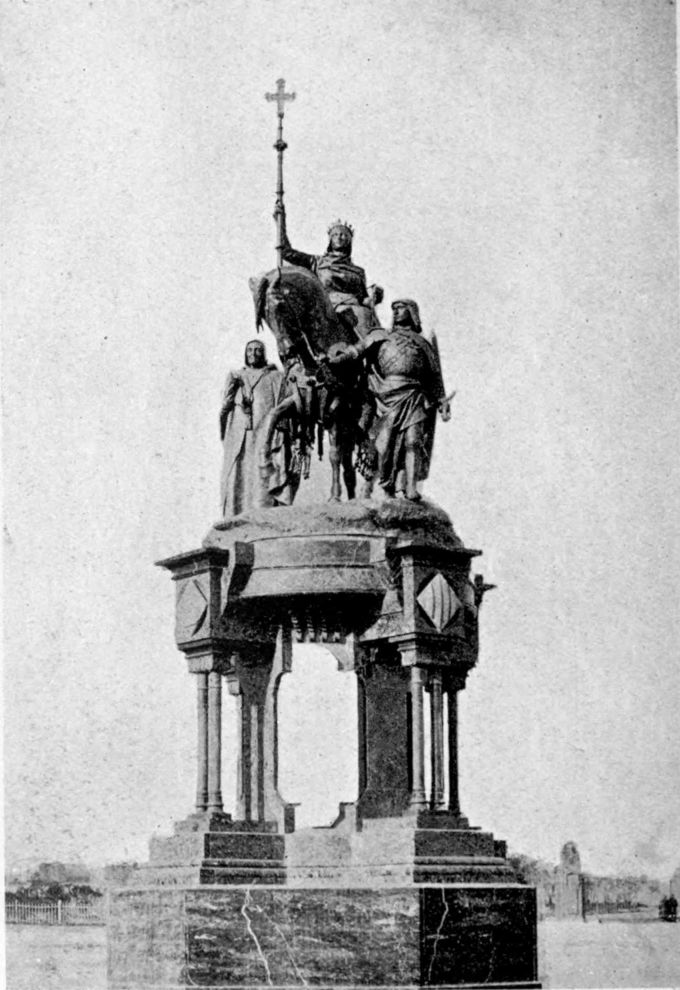
PLATE 306.
Isabel the Catholic. Bronze Group in the Castellana.
(THE WORK OF OMS.)
PLATE 307
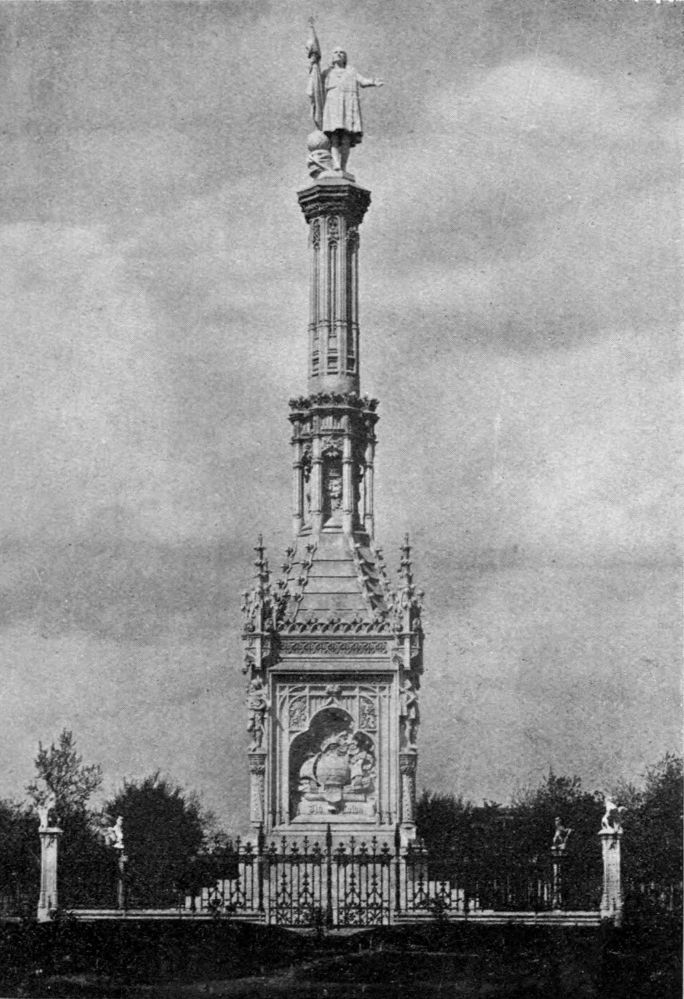
PLATE 307.
Monument to the Memory of Columbus in the Paseo de Recoletos.
PLATE 308
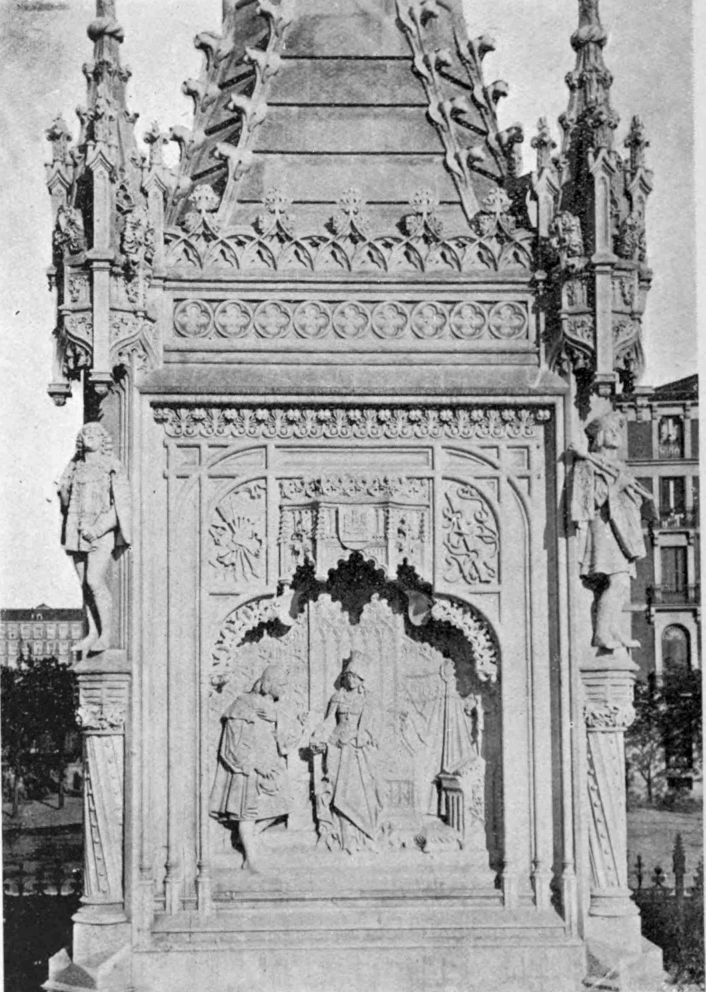
PLATE 308.
Monument to the Memory of Columbus in the Paseo de Recoletos.
PLATE 309
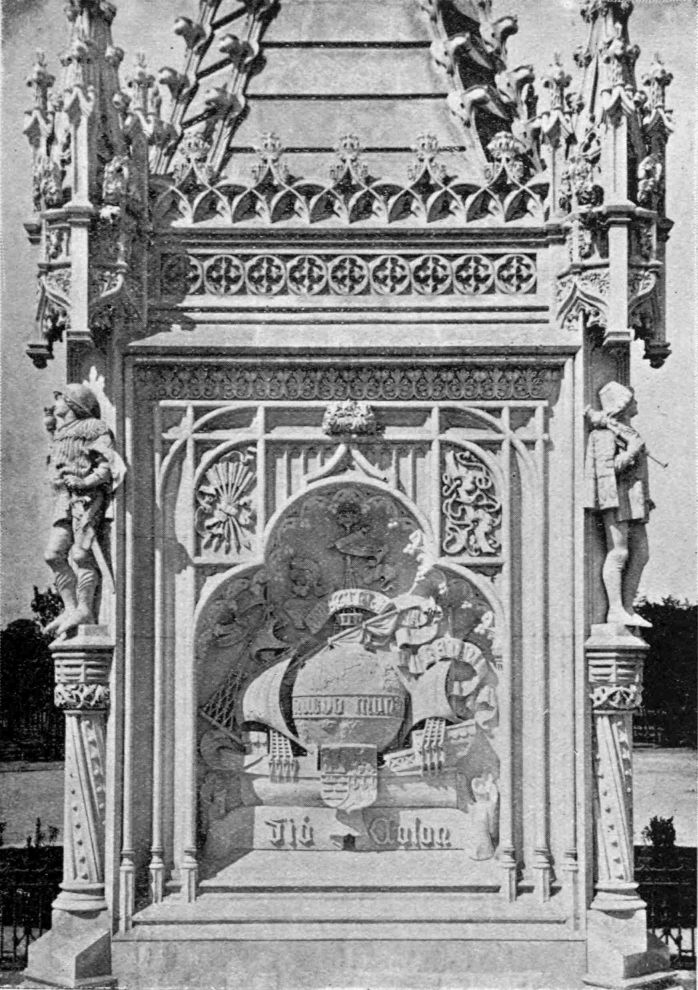
PLATE 309.
Monument to the Memory of Columbus in the Paseo de Recoletos.
PLATE 310
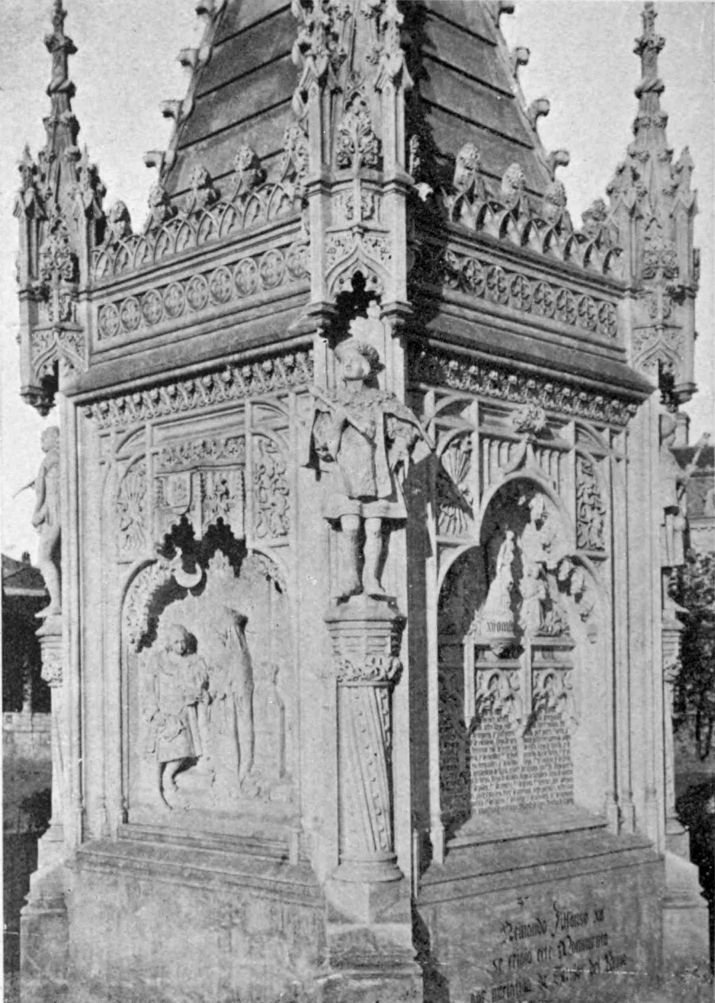
PLATE 310.
Monument to the Memory of Columbus in the Paseo de Recoletos.
PLATE 311
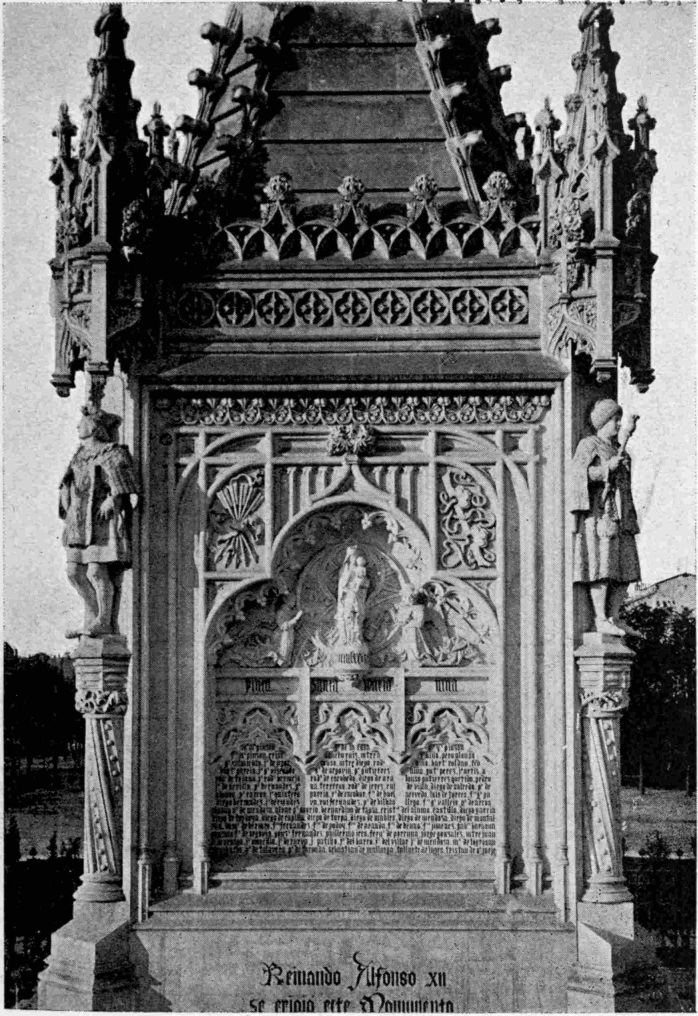
PLATE 311.
Monument to the Memory of Columbus in the Paseo de Recoletos.
PLATE 312
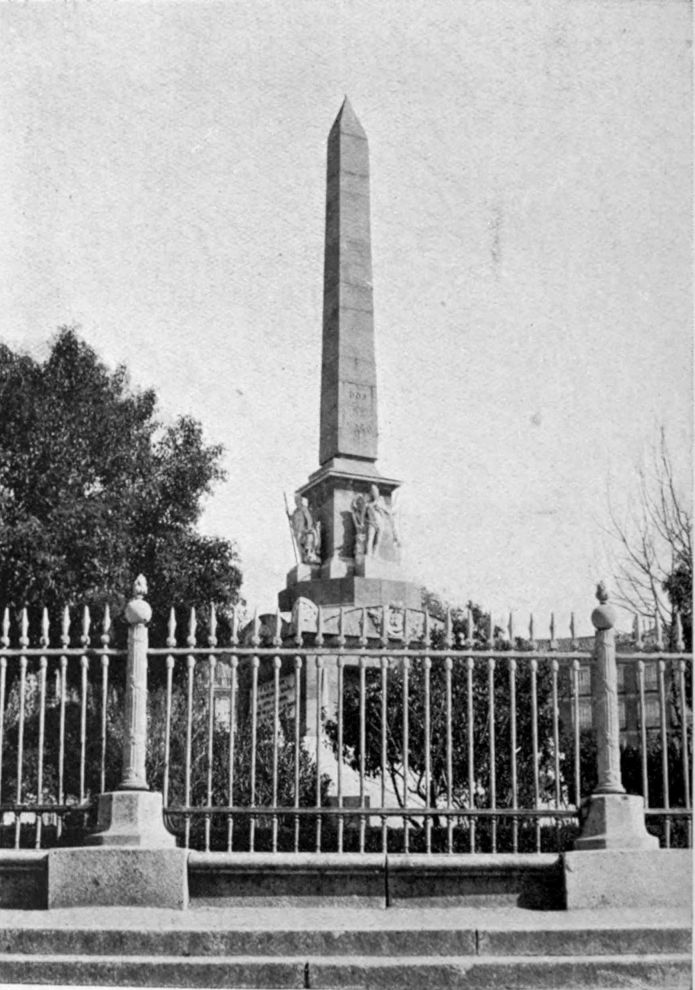
PLATE 312.
Monument to Commemorate the 2nd of May.
PLATE 313
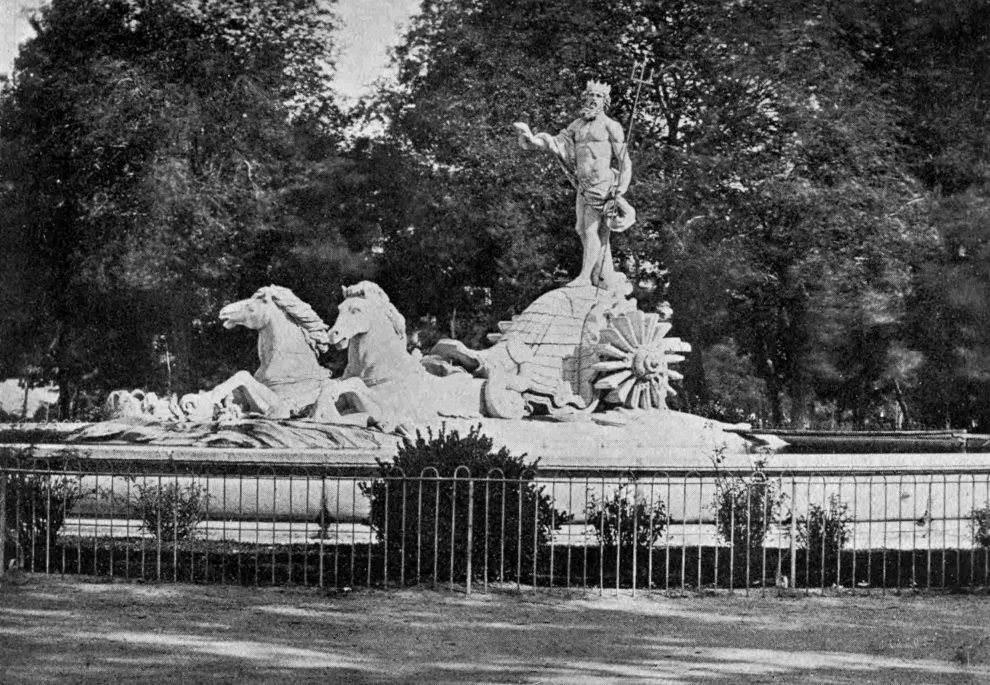
PLATE 313.
Fountain of Neptune in the Prado.
PLATE 314
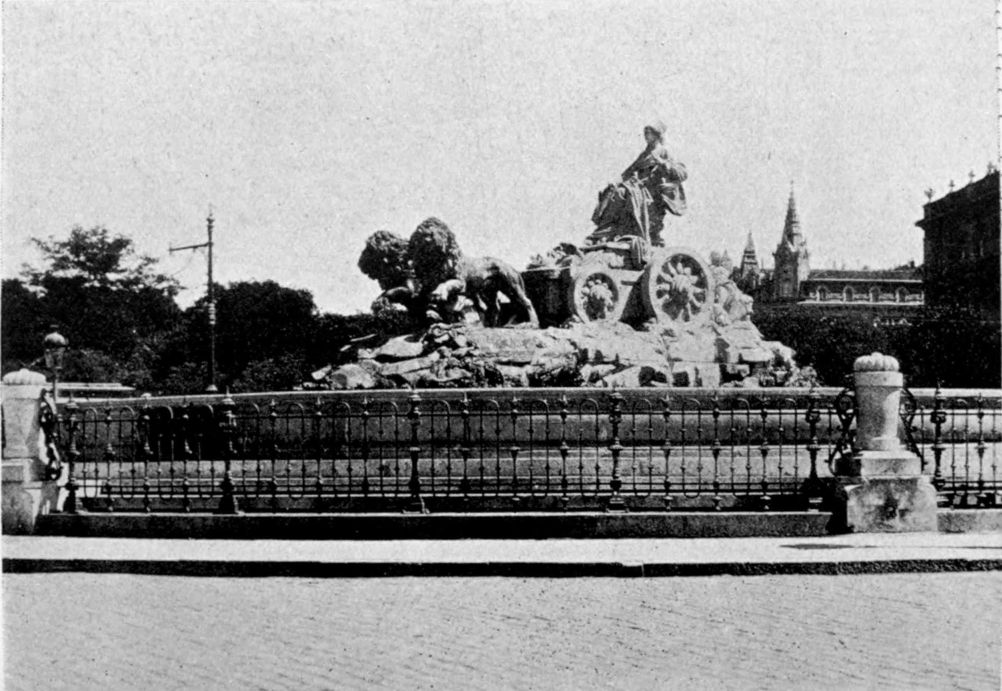
PLATE 314.
The Fountain of Cybele.
PLATE 315
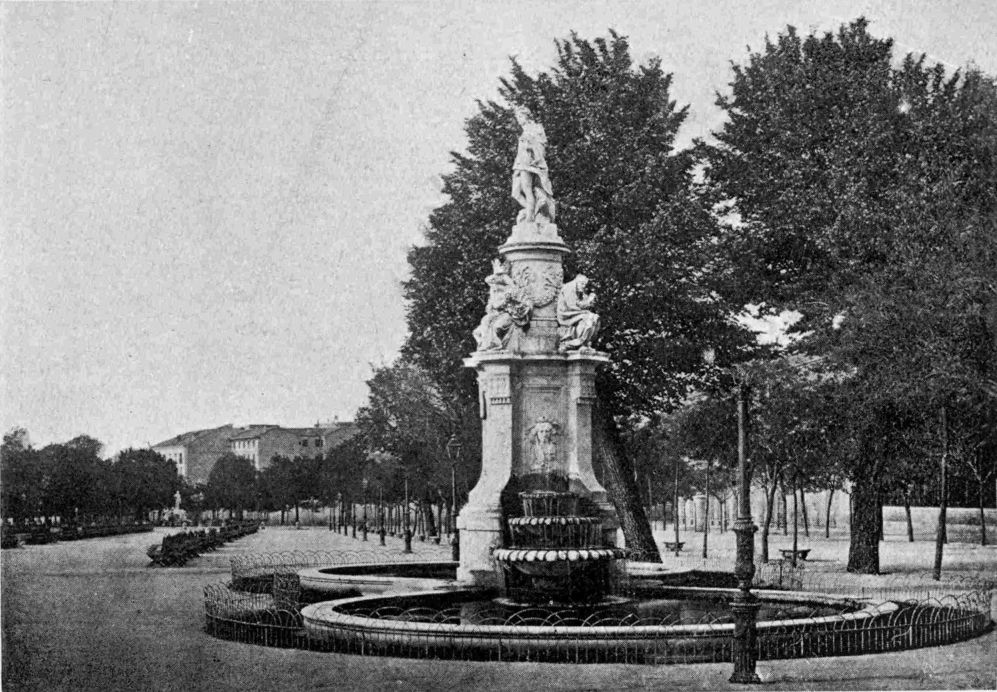
PLATE 315.
The Prado, with the Fountain of the Four Seasons.
PLATE 316
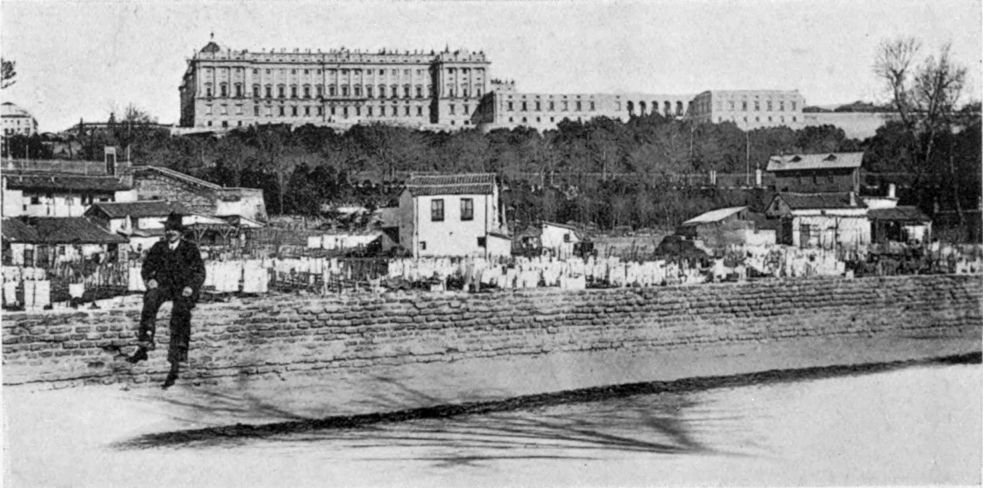
PLATE 316.
The Royal Palace from the Casa de Campo.
PLATE 317
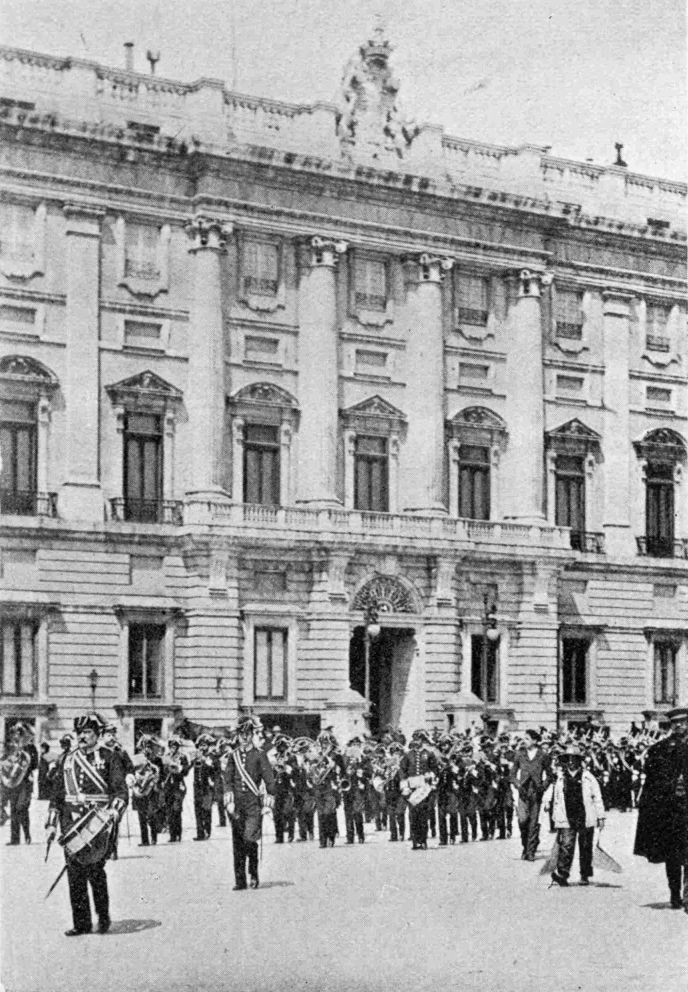
PLATE 317.
Royal Palace. The Changing of the Guard (Halberdiers).
PLATE 318
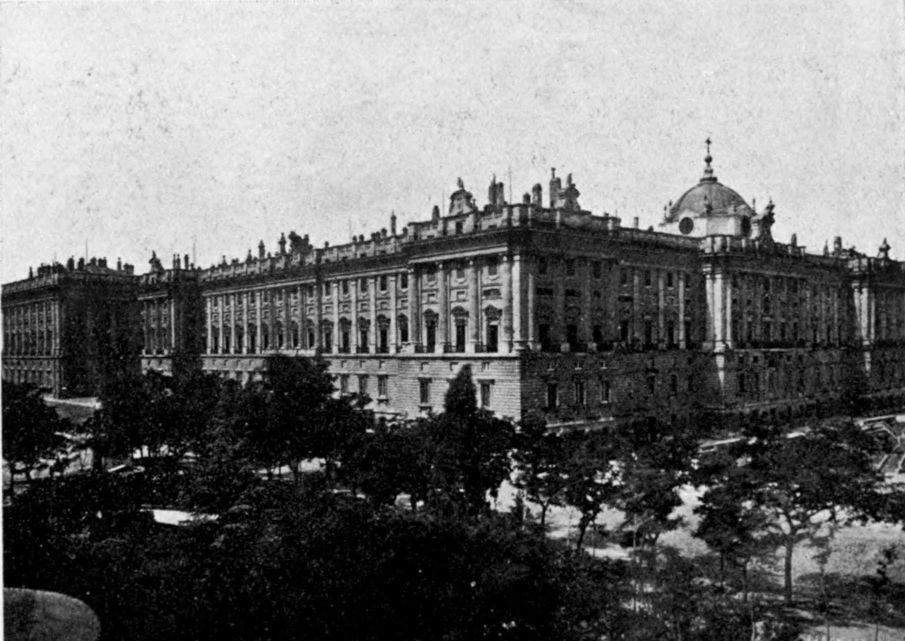
PLATE 318.
The Palace.
PLATE 319
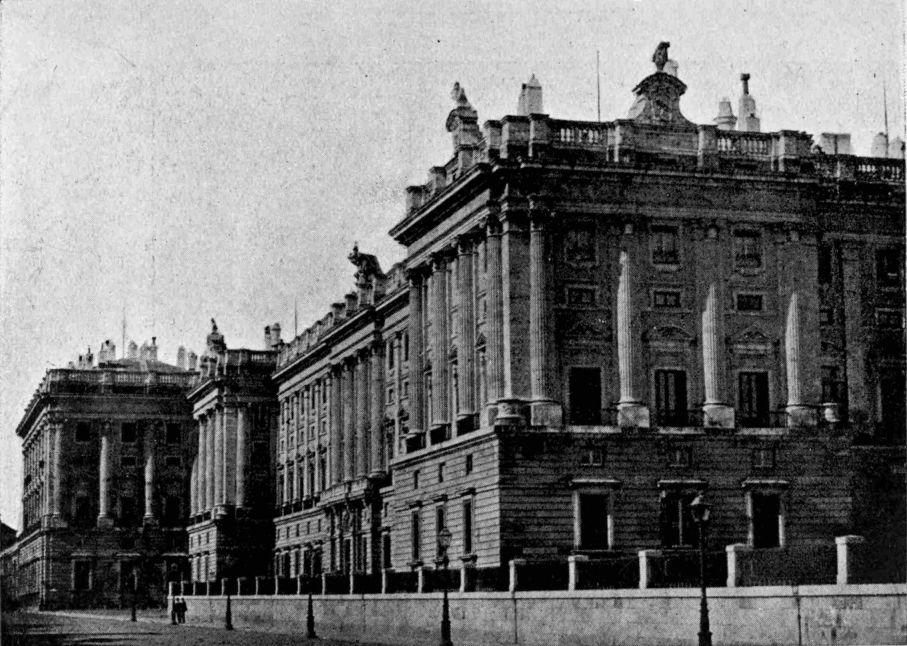
PLATE 319.
The Palace from the Plaza de Oriente.
PLATE 320
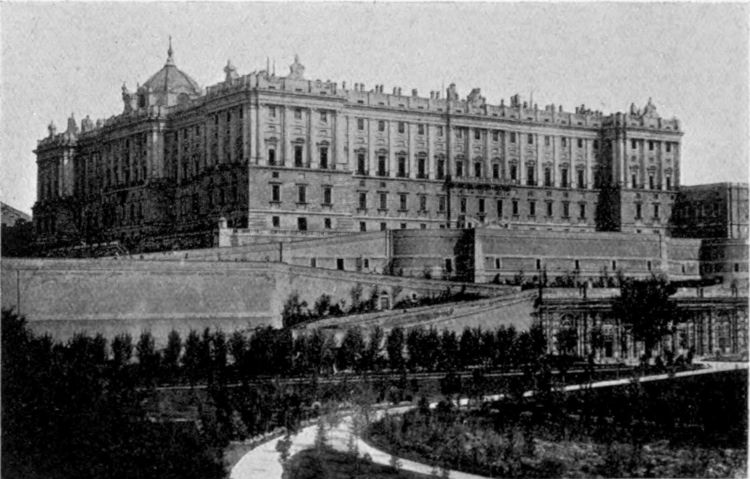
PLATE 320.
The Royal Palace.
PLATE 321
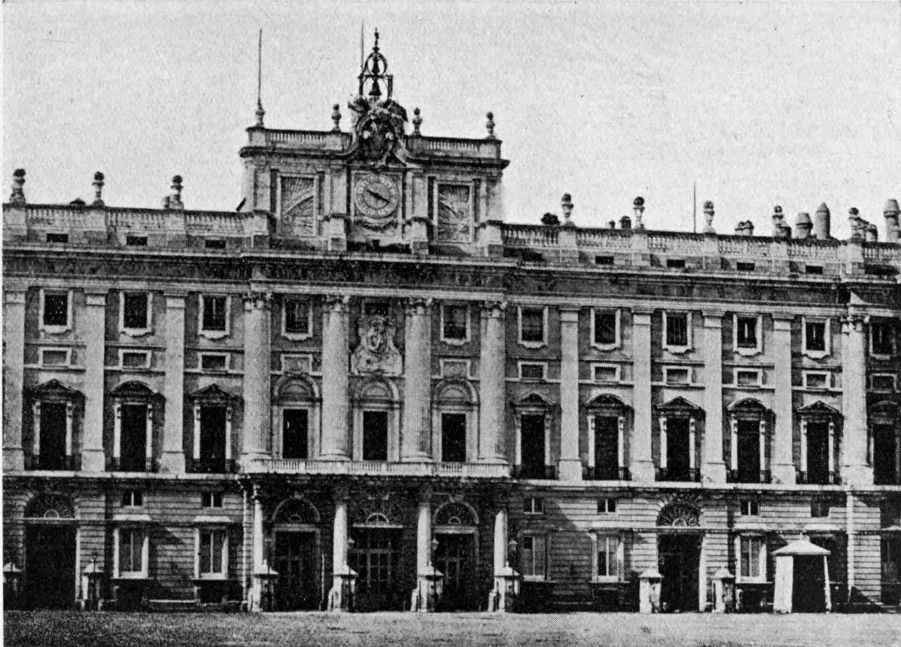
PLATE 321.
Façade of Palace.
PLATE 322
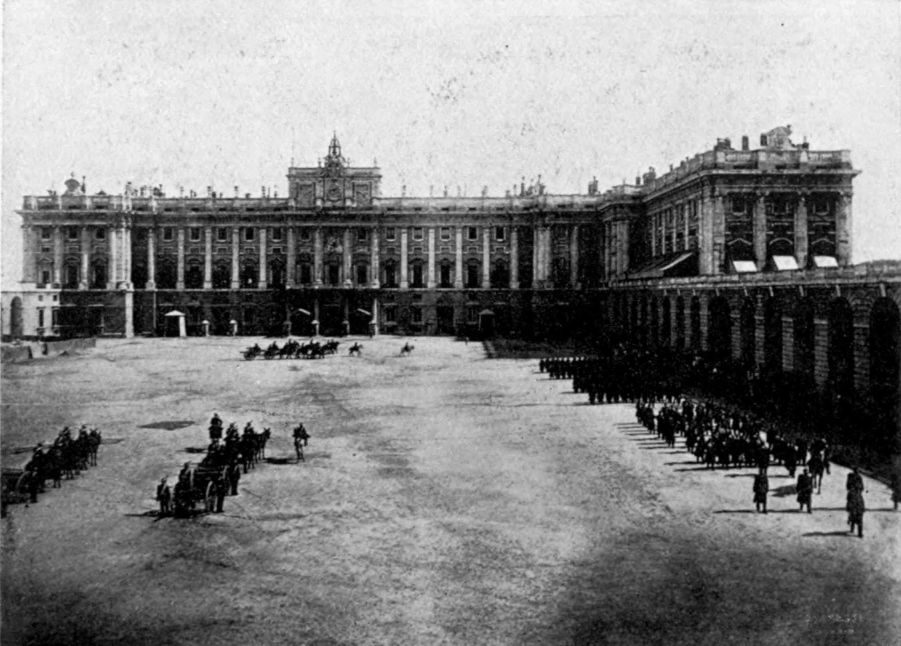
PLATE 322.
Palace and Plaza de la Armeria.
PLATE 323
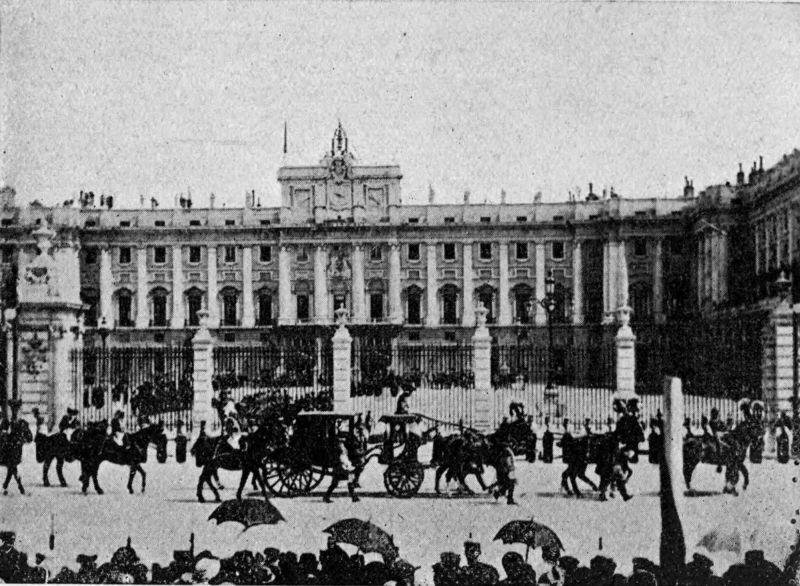
PLATE 323.
The Queen Mother leaving the Palace.
PLATE 324
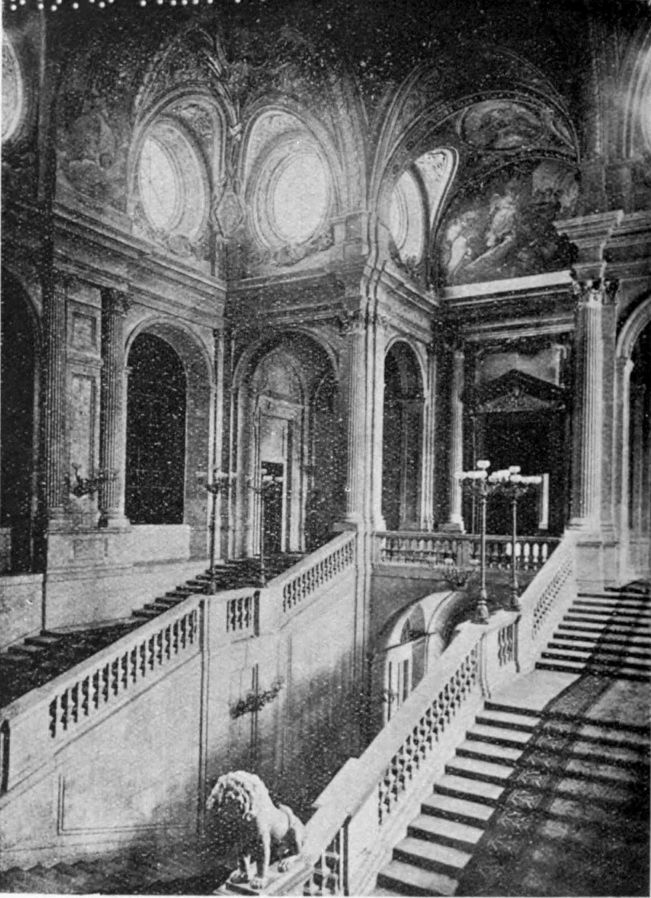
PLATE 324.
Principal Staircase.
PLATE 325
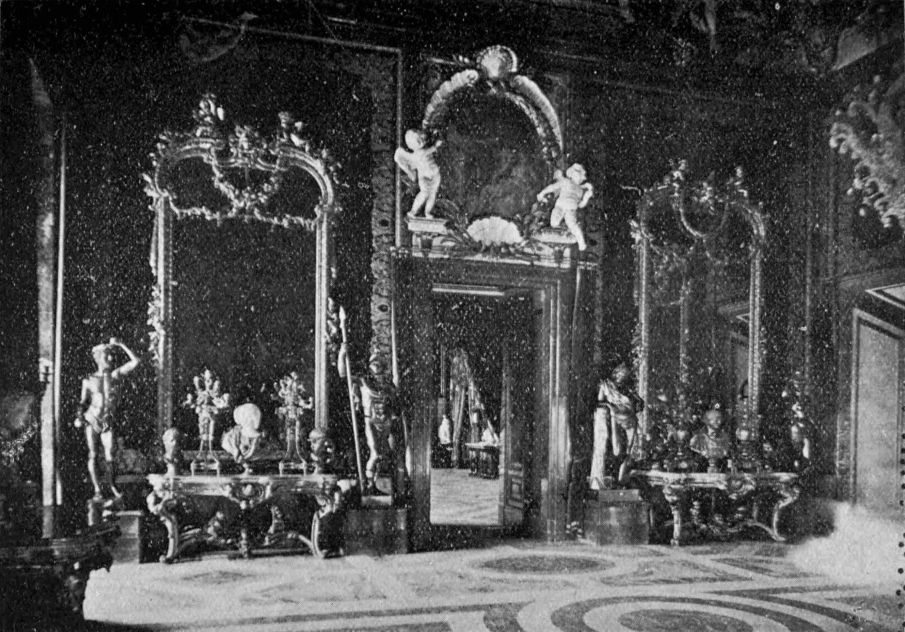
PLATE 325.
Detail of Throne Room.
PLATE 326
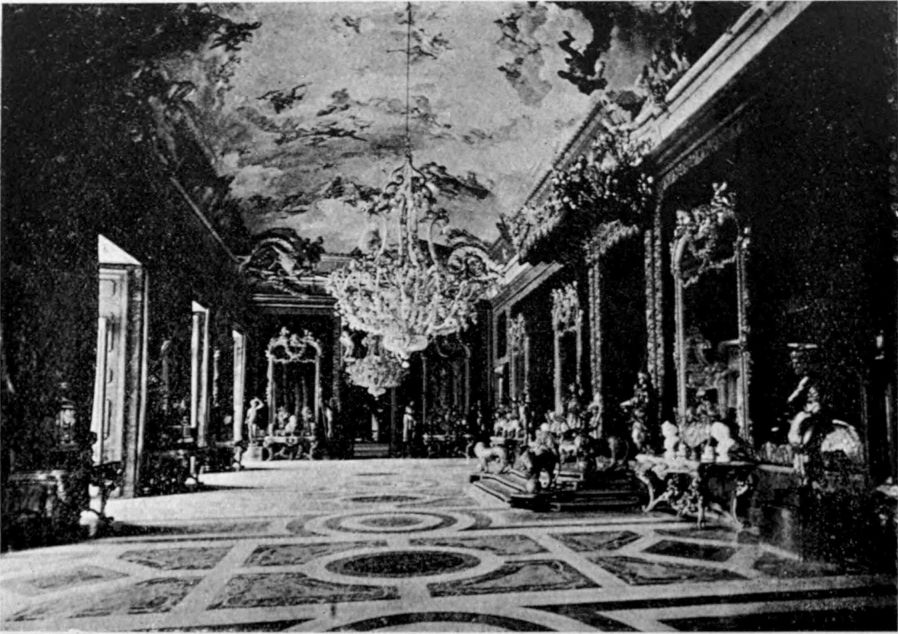
PLATE 326.
General View of Throne Room.
PLATE 327
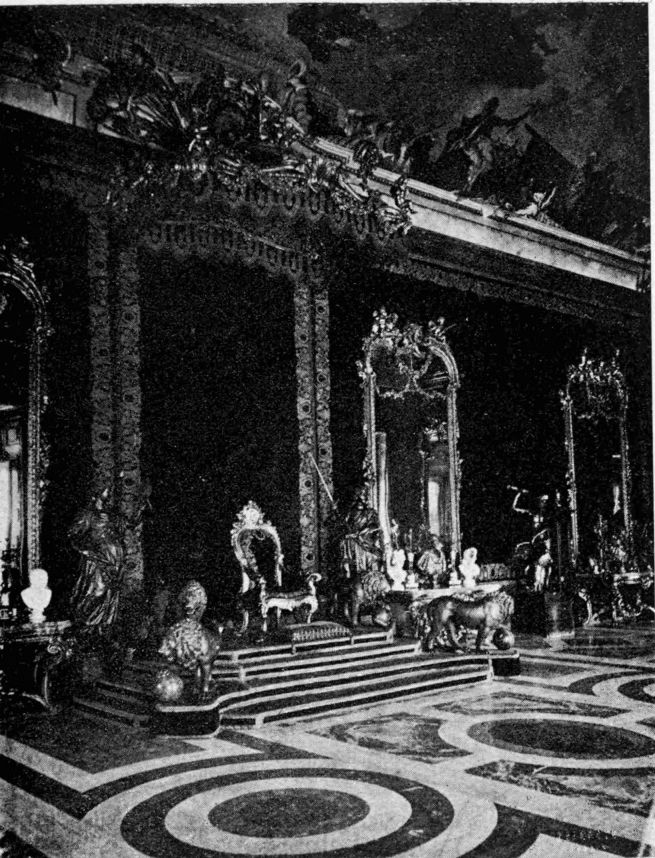
PLATE 327.
The Throne.
PLATE 328
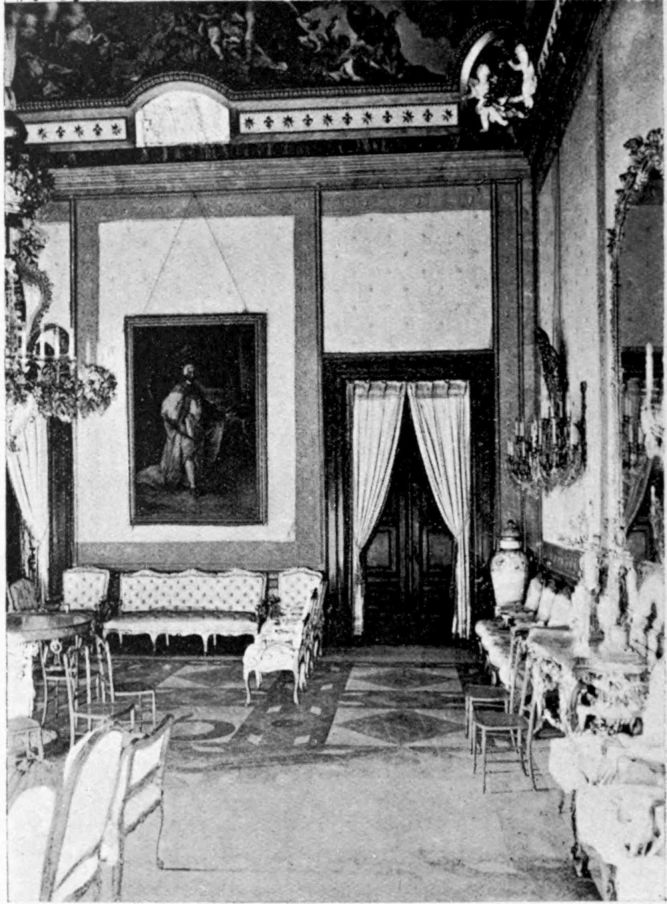
PLATE 328.
Room of Charles III.
PLATE 329
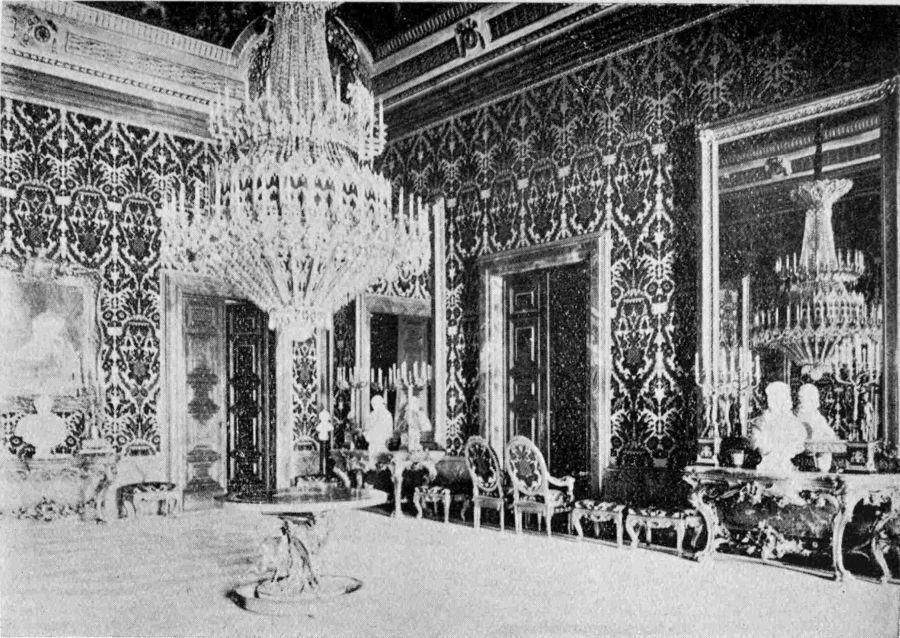
PLATE 329.
The Queen’s Room.
PLATE 330
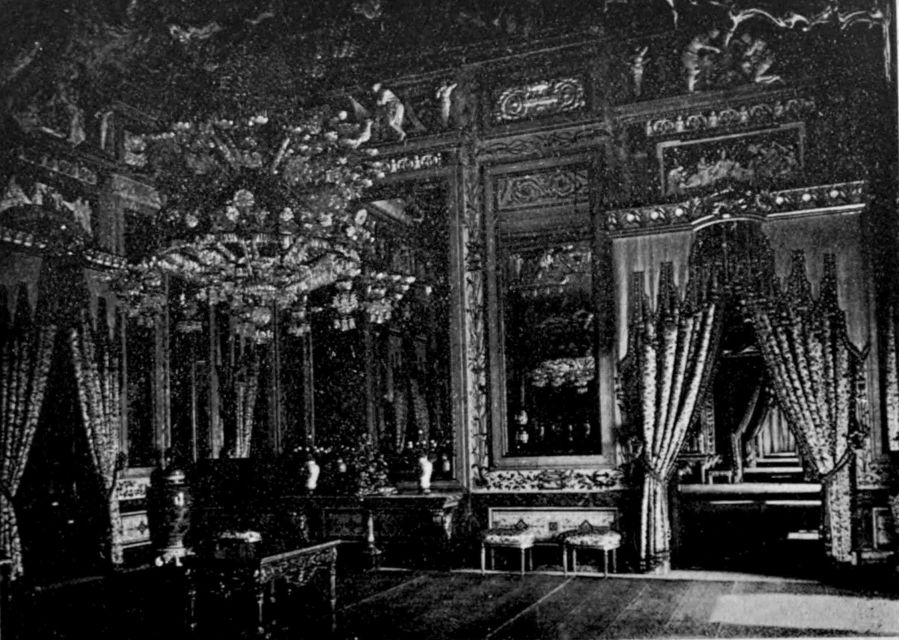
PLATE 330.
Room of Mirrors.
PLATE 331
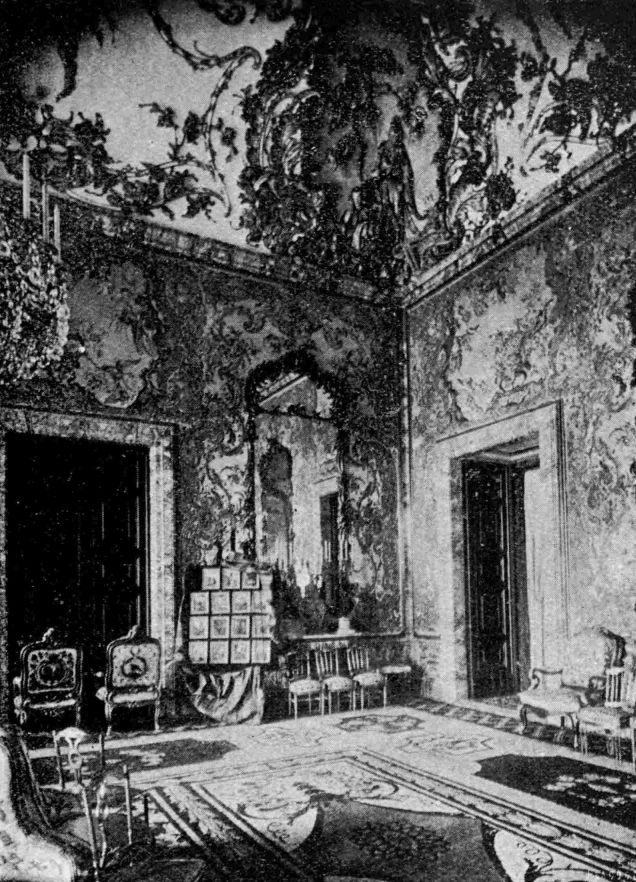
PLATE 331.
Gasparini Room of Charles III.
PLATE 332
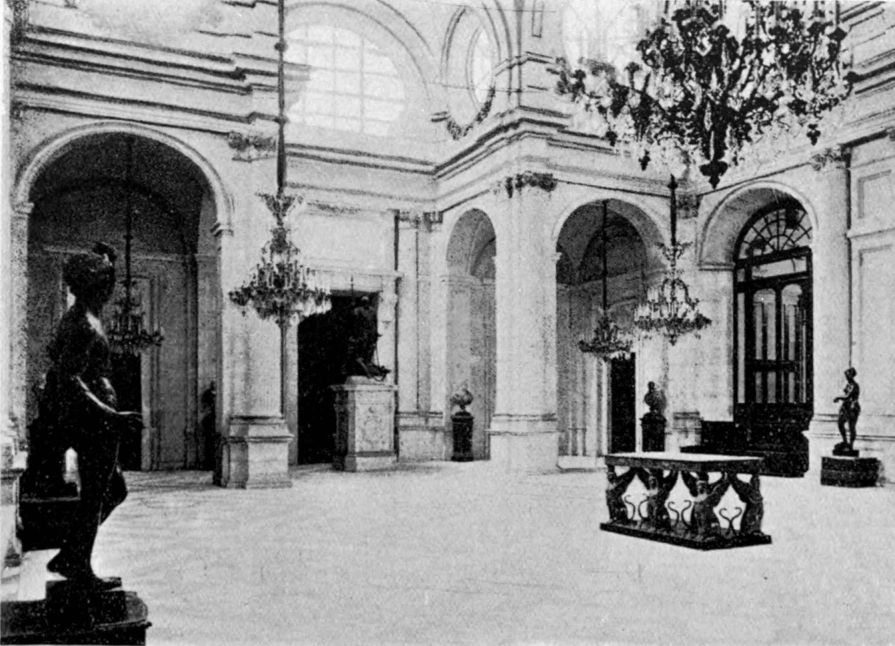
PLATE 332.
Hall of Columns.
PLATE 333
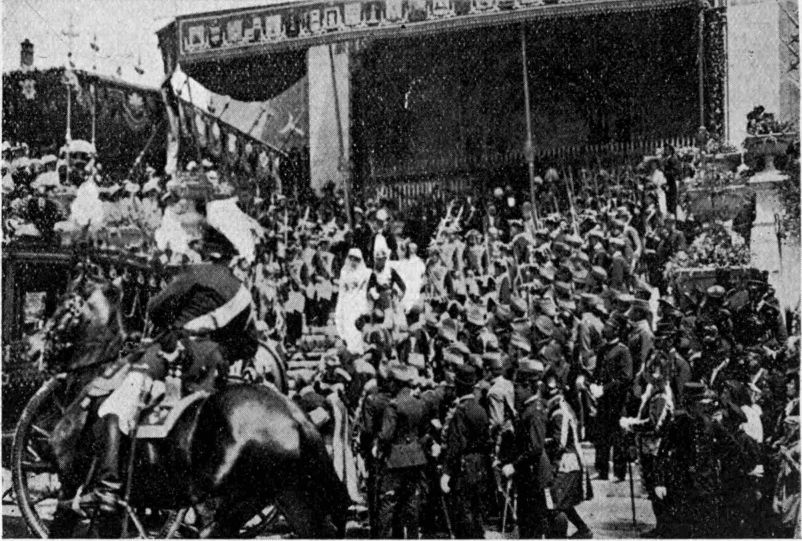
PLATE 333.
The Wedding.
The King and Queen leaving the Church and entering the Royal Coach.
PLATE 334
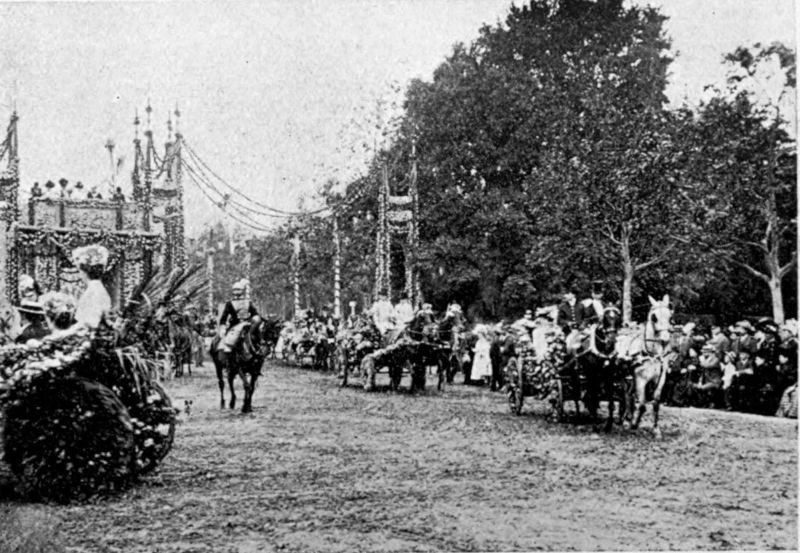
PLATE 334.
A Battle of Flowers.
PLATE 335
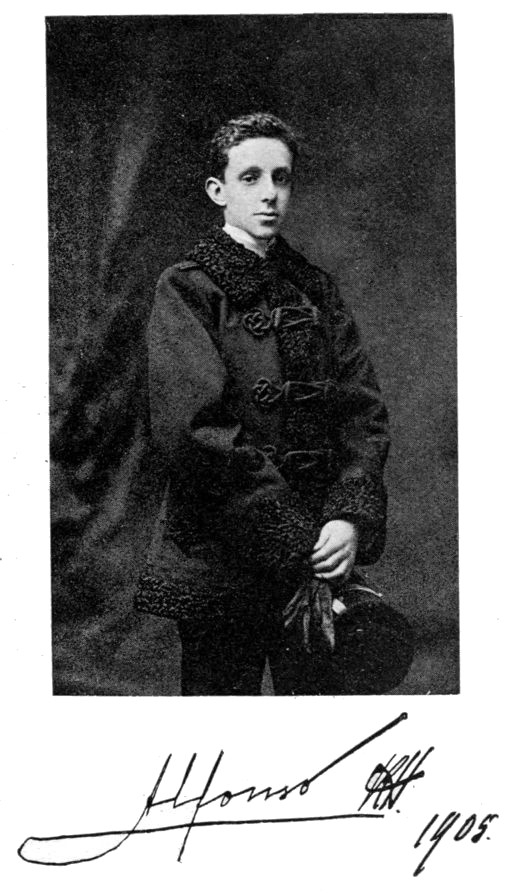
PLATE 335.
His Majesty the King of Spain.
PLATE 336
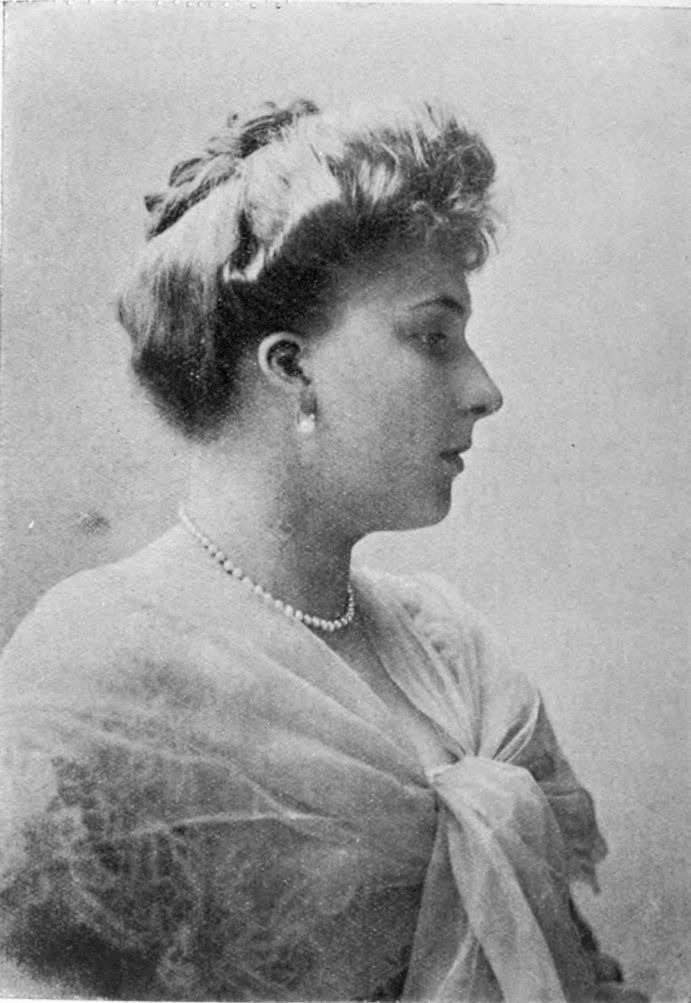
PLATE 336.
H.M. Queen Victoria of Spain.
PLATE 337
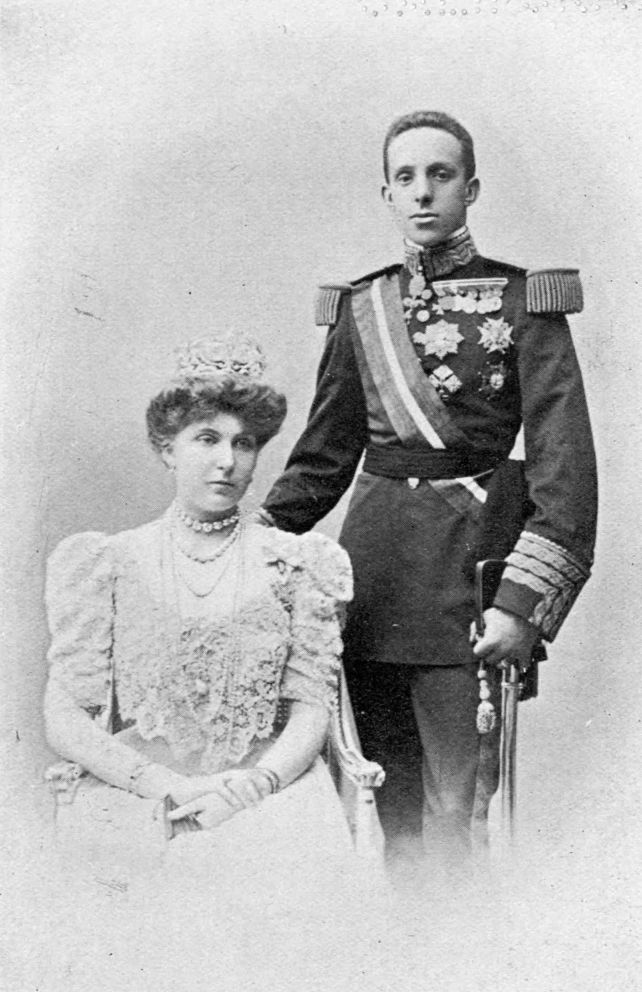
PLATE 337.
The King and Queen of Spain.
PLATE 338
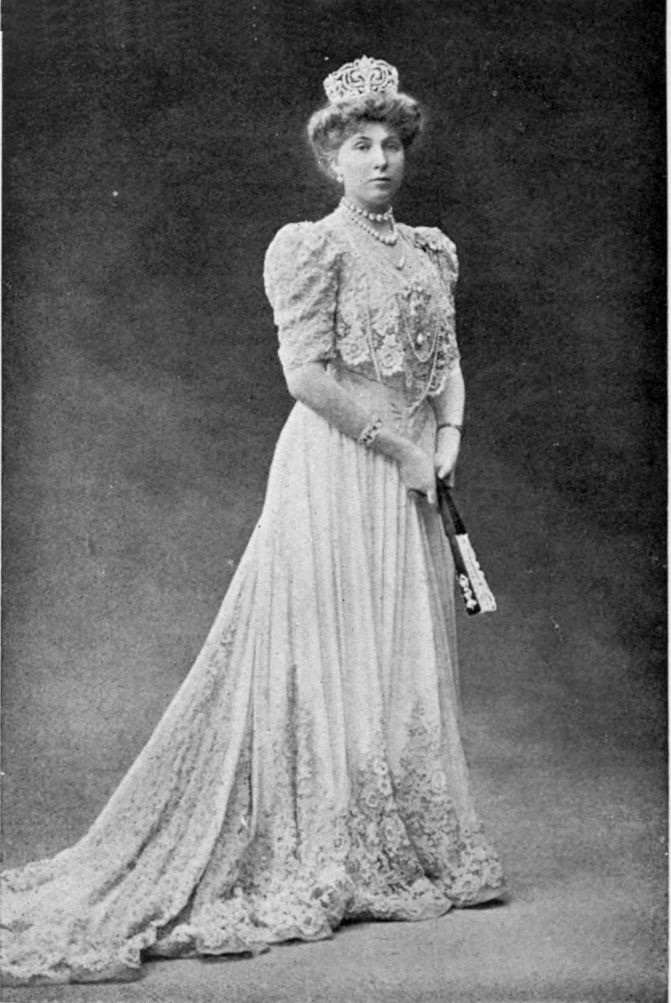
PLATE 338.
H.M. Queen Victoria.
PLATE 339
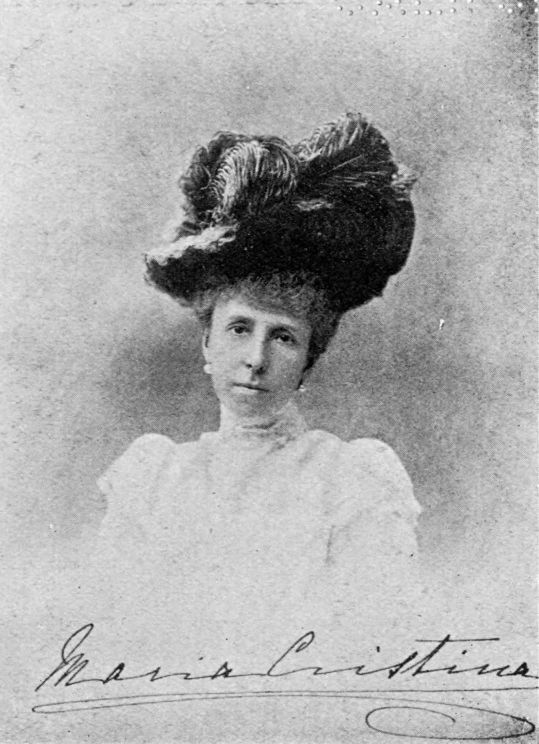
PLATE 339.
Her Majesty the Queen Mother.
PLATE 340
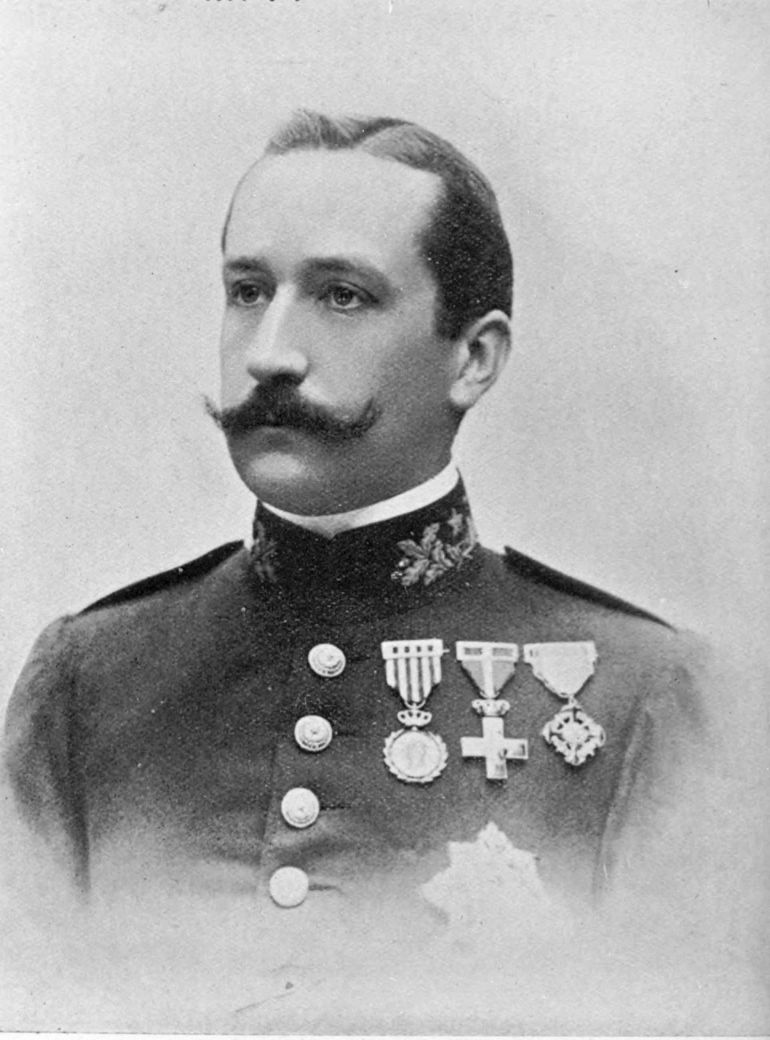
PLATE 340.
Don Carlos of Bourbon.
PLATE 341
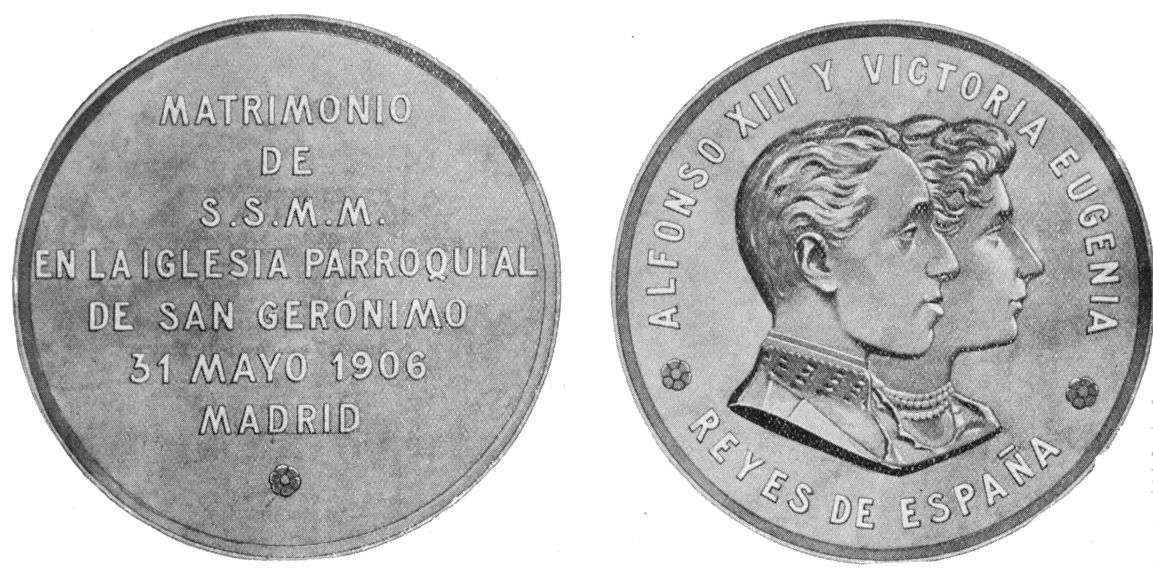
PLATE 341.
Medal struck in Honour of the Royal Marriage.
PLATE 342
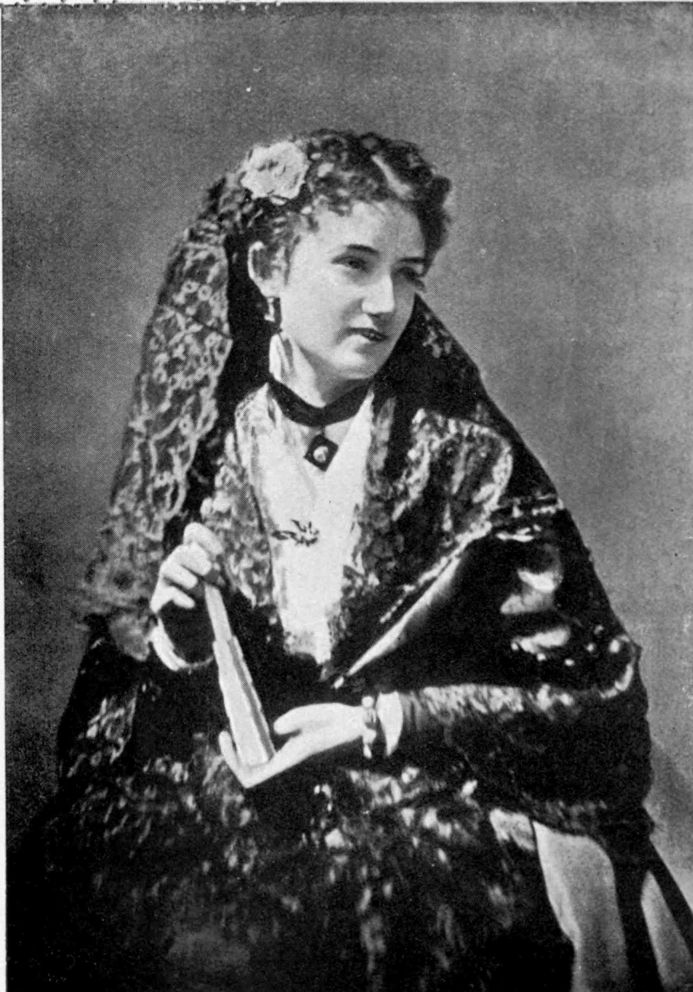
PLATE 342.
A Lady with a Mantilla.
PLATE 343
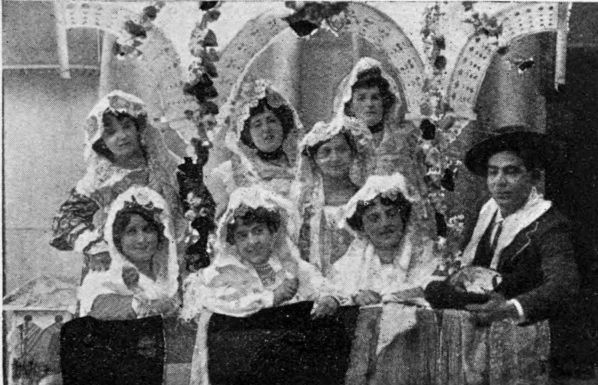
PLATE 343.
Mantillas.
PLATE 344
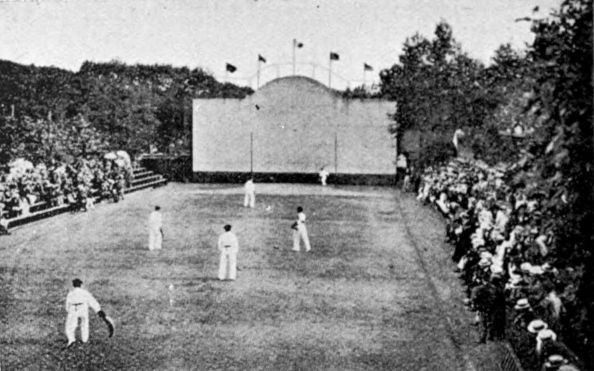
PLATE 344.
An Out-door Pelota Court, with Six Players, Three against Three.
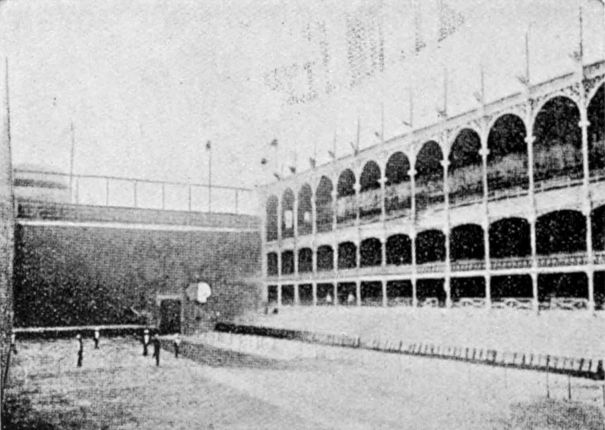
A Pelota Court.
PLATE 345
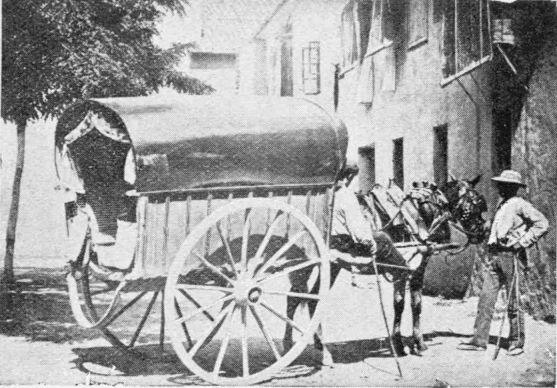
PLATE 345.
A Tartaña.
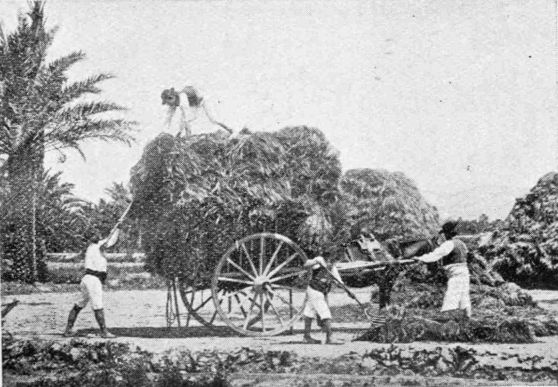
The Harvest Cart.
PLATE 346
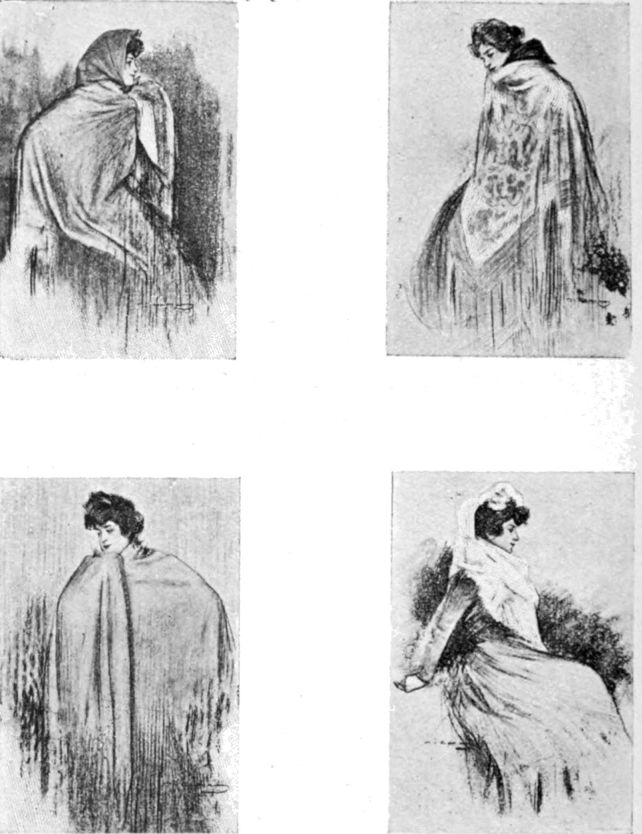
PLATE 346.
Sketches in Spain.
PLATE 347
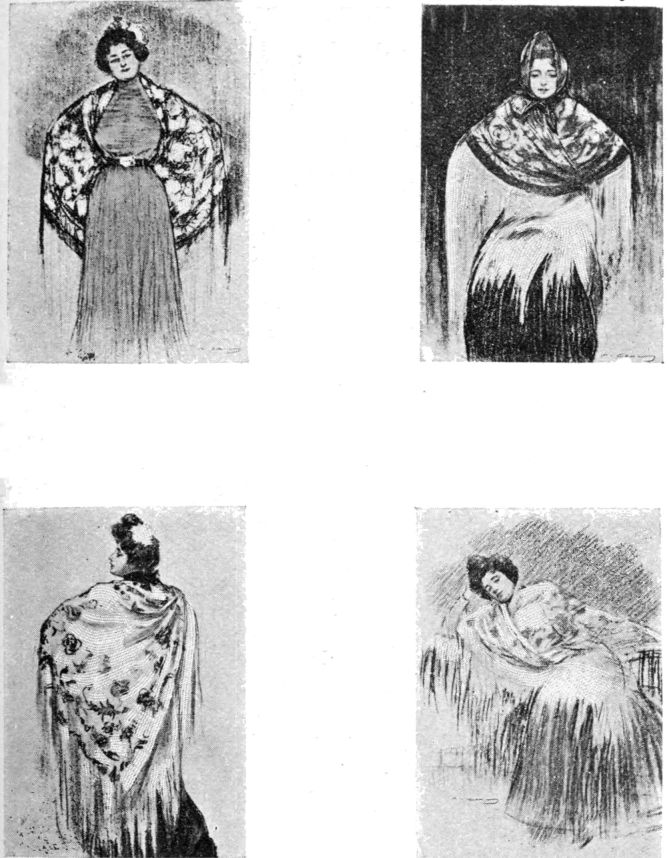
PLATE 347.
Sketches in Spain.
PLATE 348
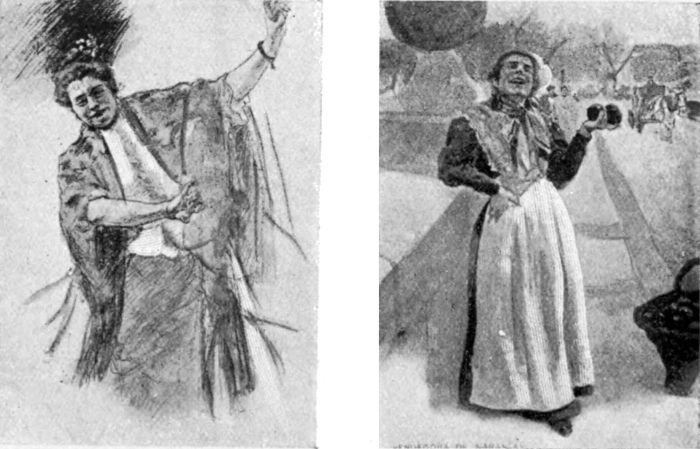
PLATE 348.
A Dancer. An Orange Seller.
PLATE 349
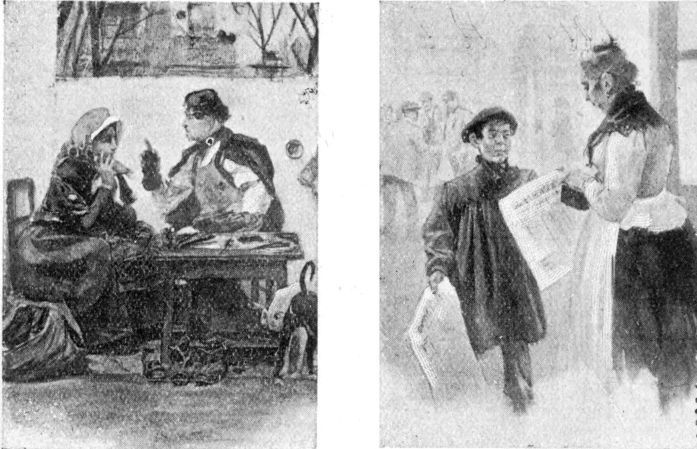
PLATE 349.
The Counsellor of the Village. Full List of Lottery Results.
PLATE 350
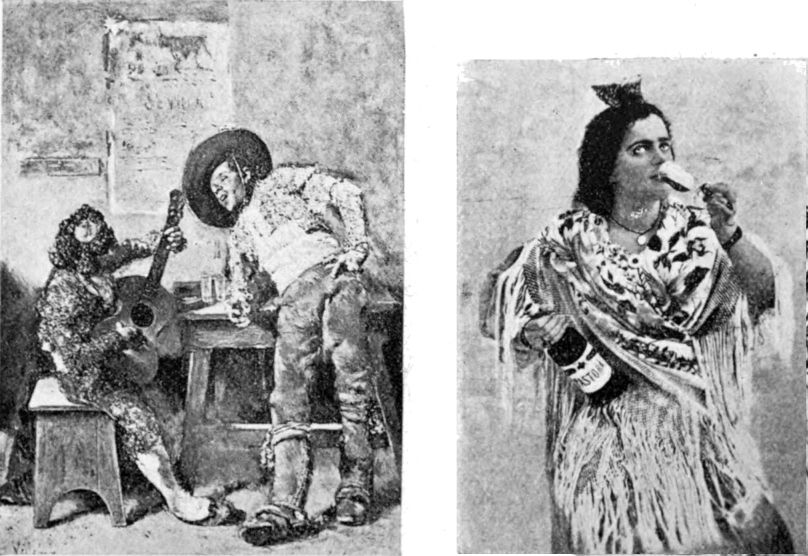
PLATE 350.
Bull-fighters at the Tavern. A Spanish Girl.
PLATE 351
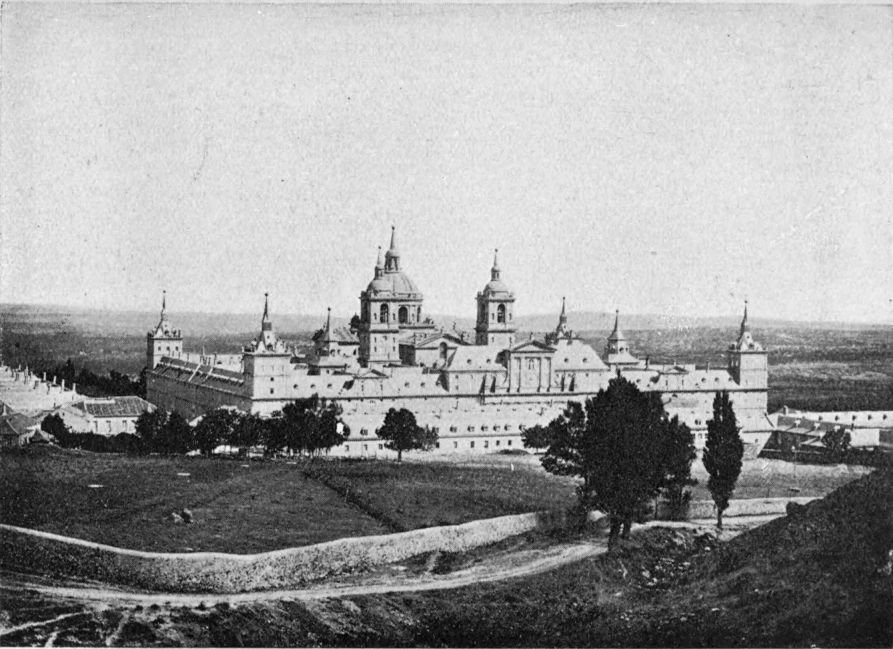
PLATE 351.
View of the Monastery of the Escorial.
PLATE 352
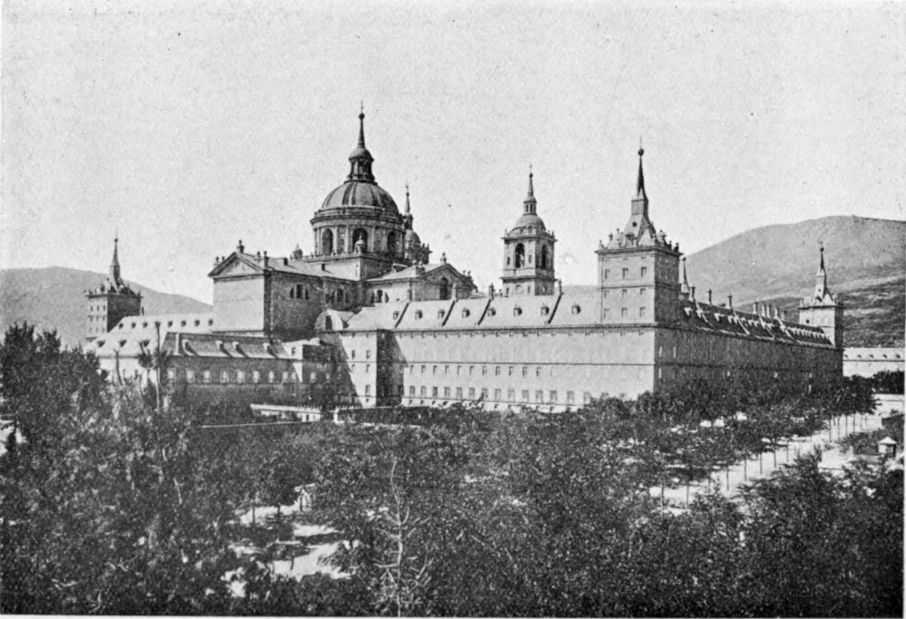
PLATE 352.
View of the Monastery (East Side).
PLATE 353
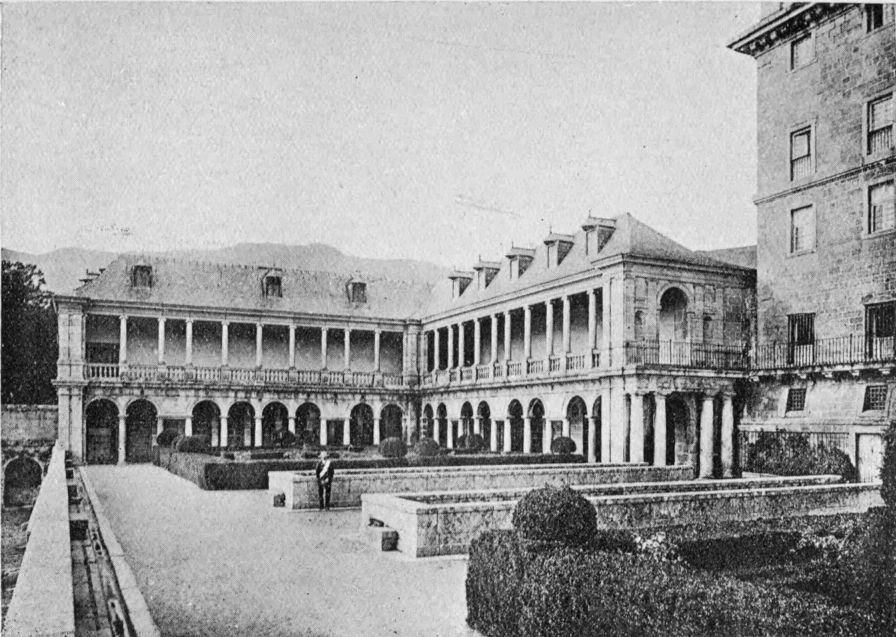
PLATE 353.
The Colonnade of the Monastery.
PLATE 354
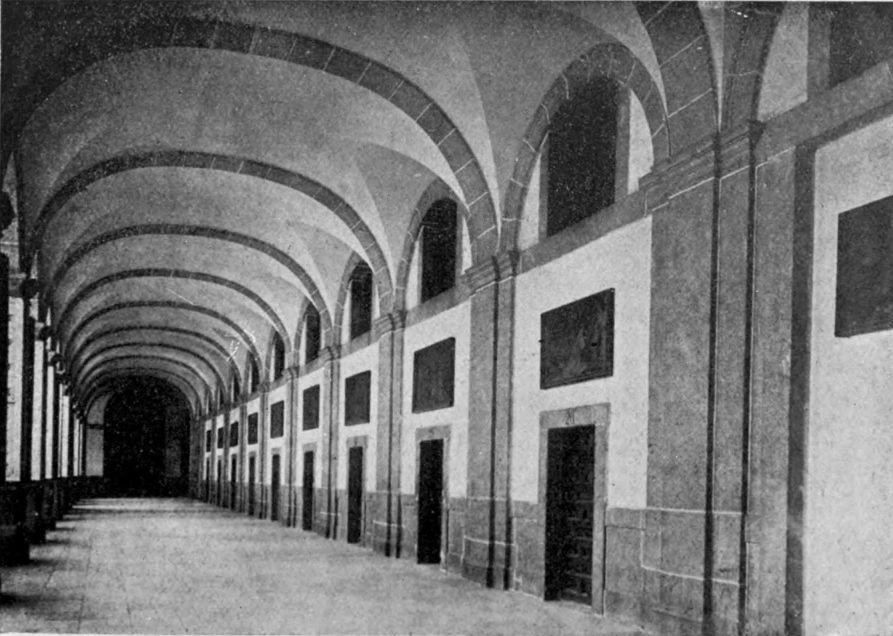
PLATE 354.
Upper Cloister of the Monastery.
PLATE 355
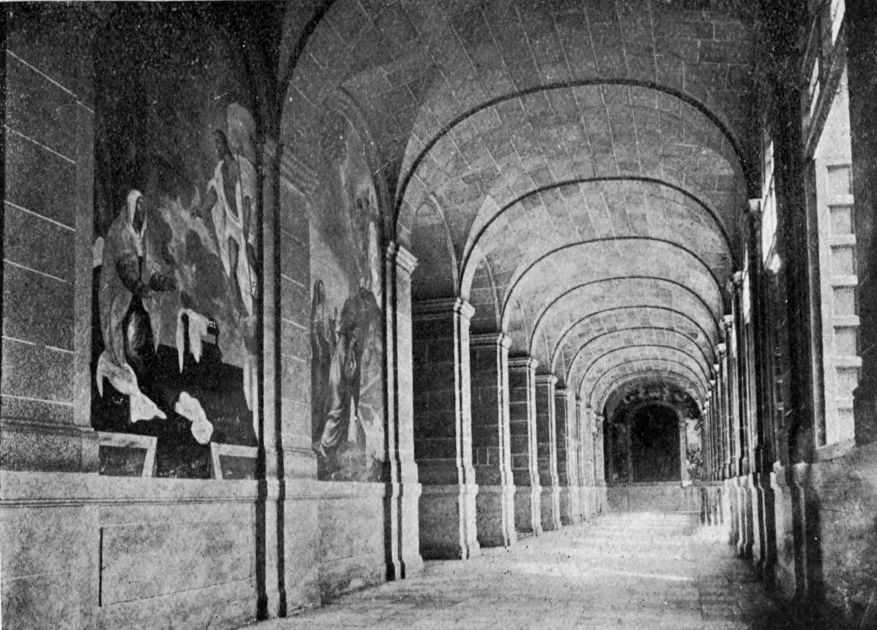
PLATE 355.
Lower Cloister of the Monastery.
PLATE 356
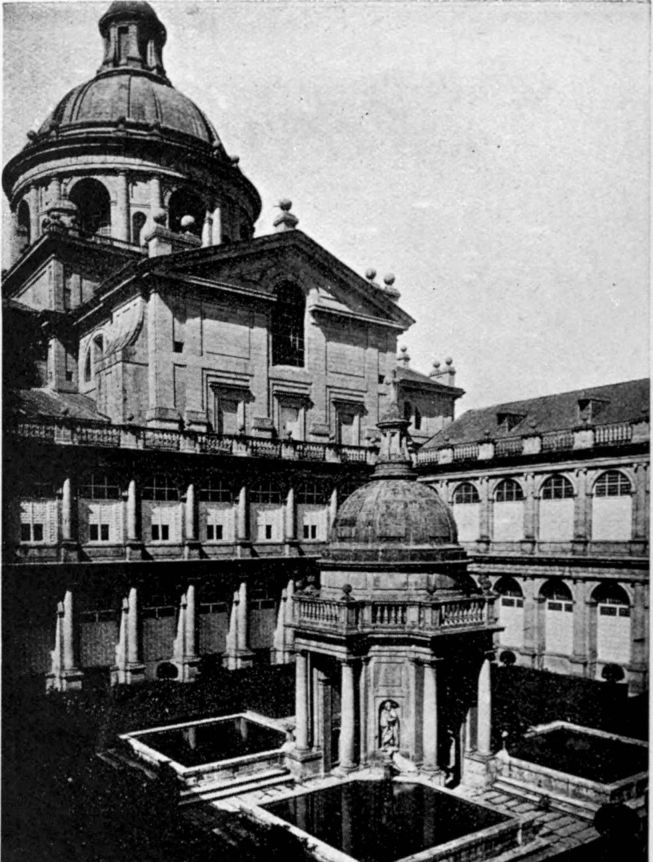
PLATE 356.
The Evangelists’ Court.
PLATE 357
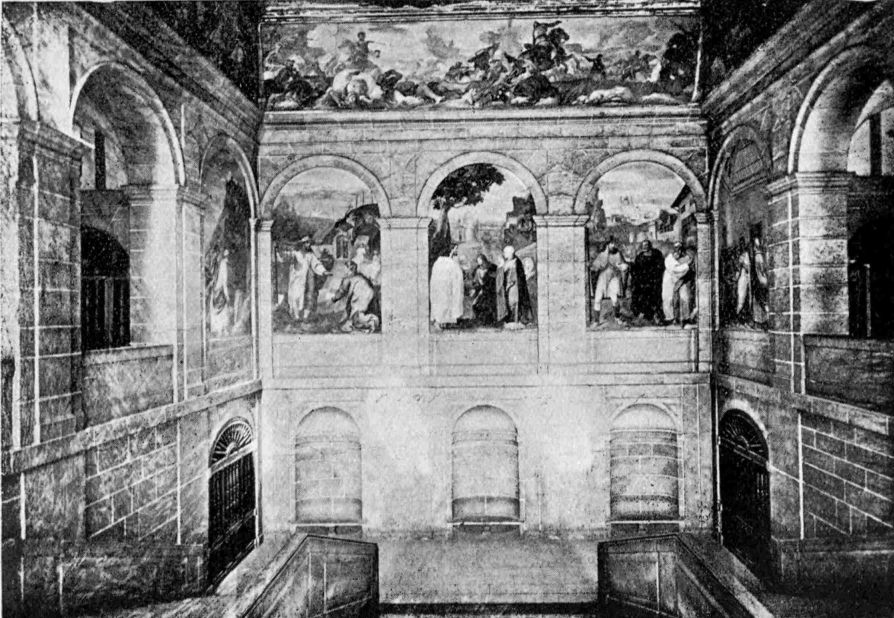
PLATE 357.
Principal Staircase of the Monastery.
PLATE 358
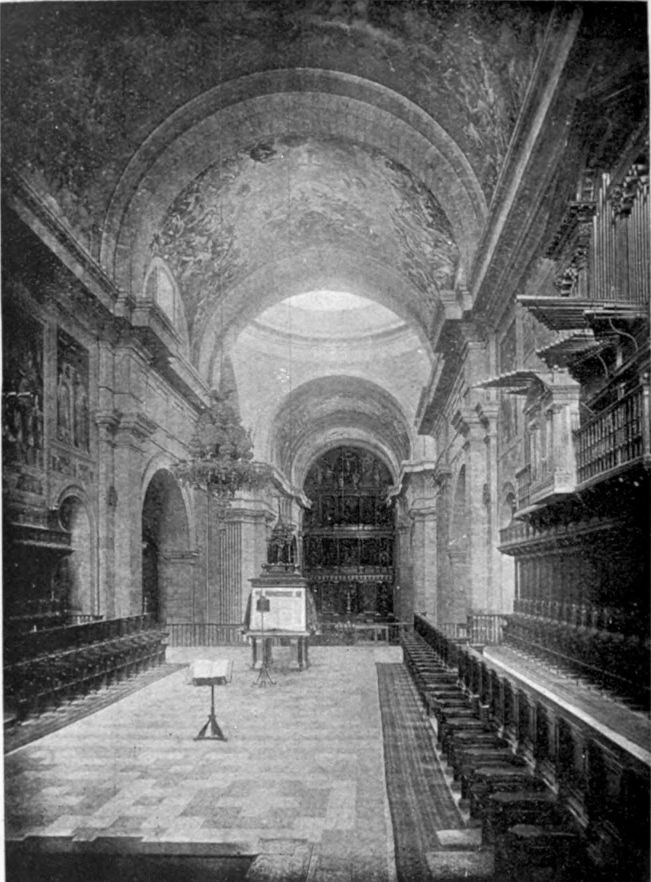
PLATE 358.
Interior of the Church.
PLATE 359
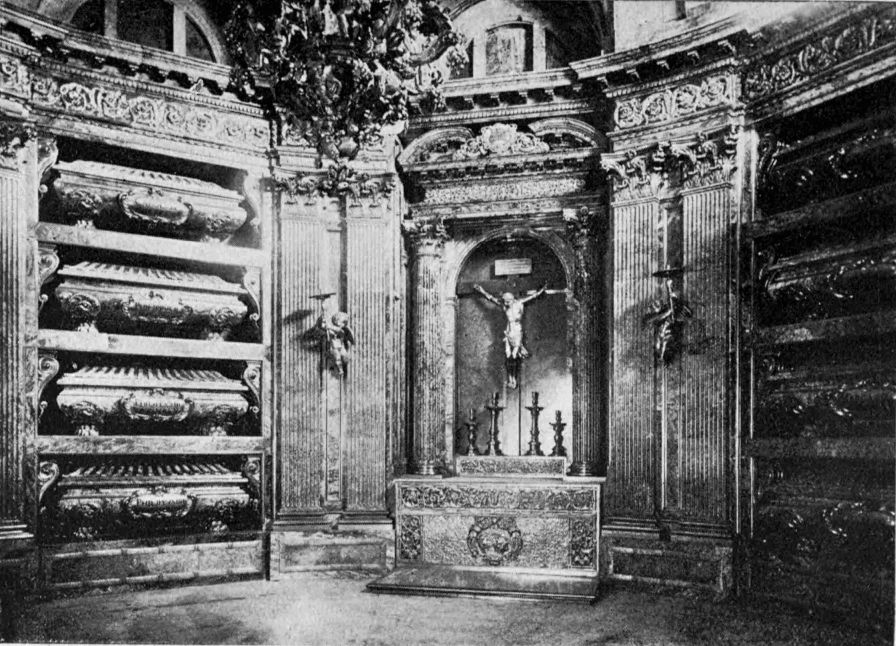
PLATE 359.
Panteon of the Kings.
PLATE 360
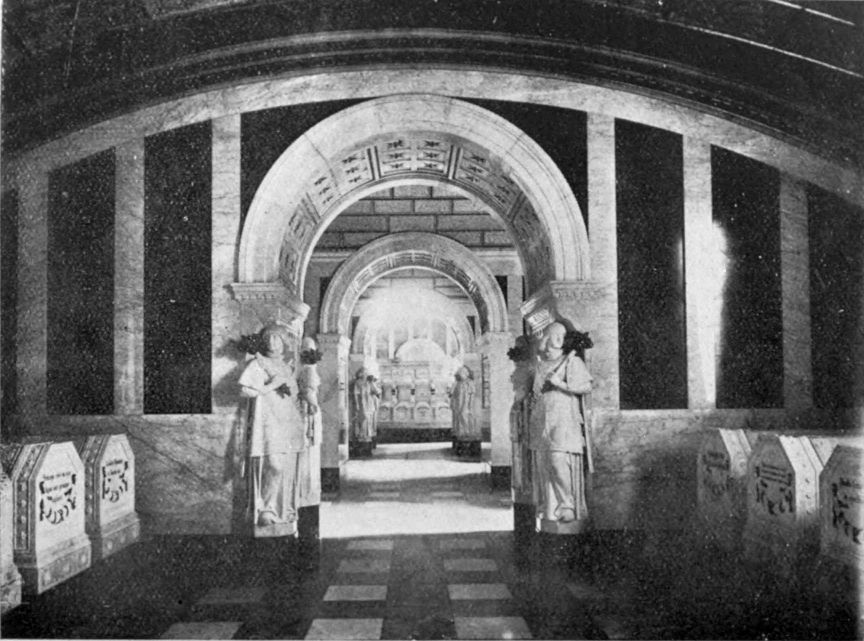
PLATE 360.
Panteon of the Infantes.
PLATE 361
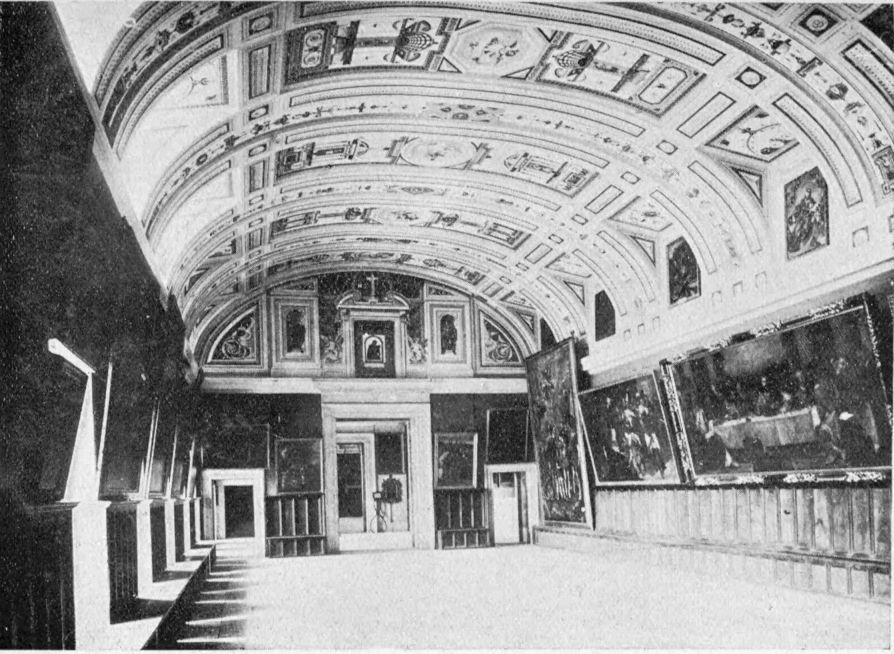
PLATE 361.
Chapter Room. (Monastery.)
PLATE 362
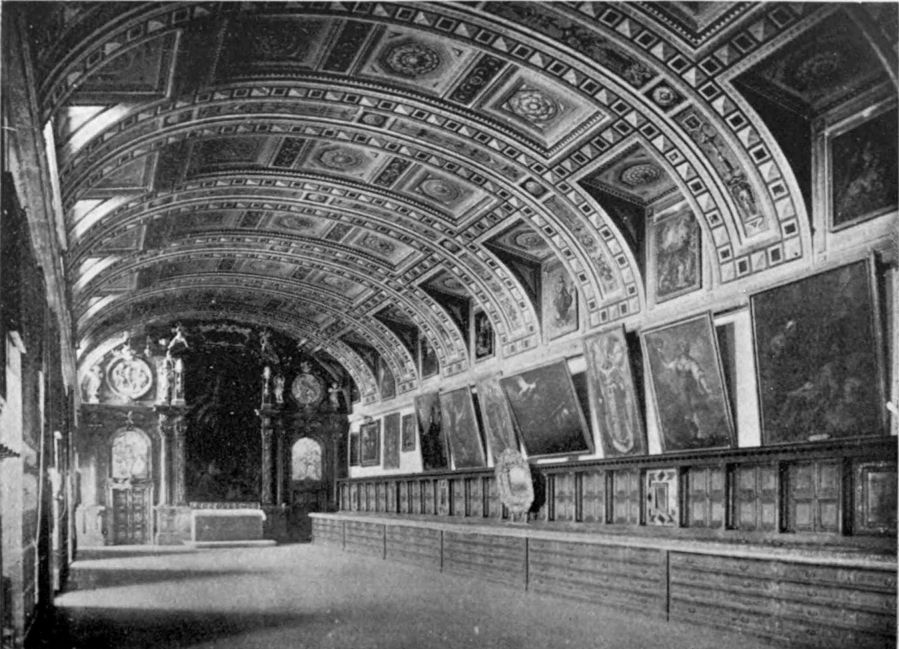
PLATE 362.
Sacristy. (Monastery.)
PLATE 363
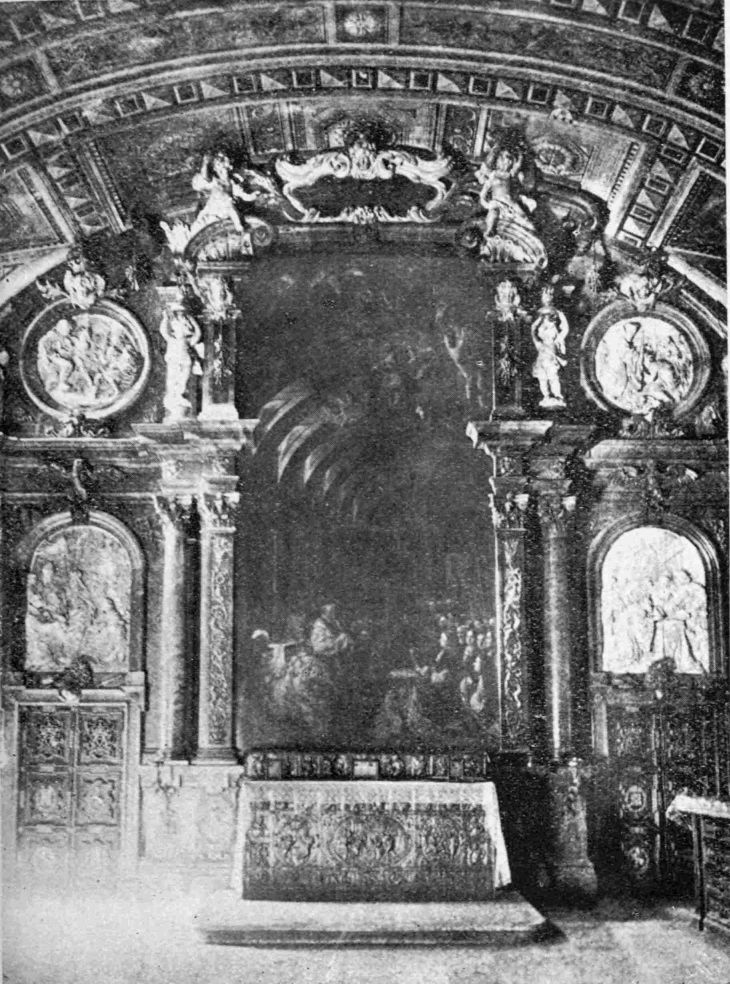
PLATE 363.
Altar-piece of the Santa Forma, Painted by Claudio Coello.
(Sacristy of the Monastery.)
PLATE 364
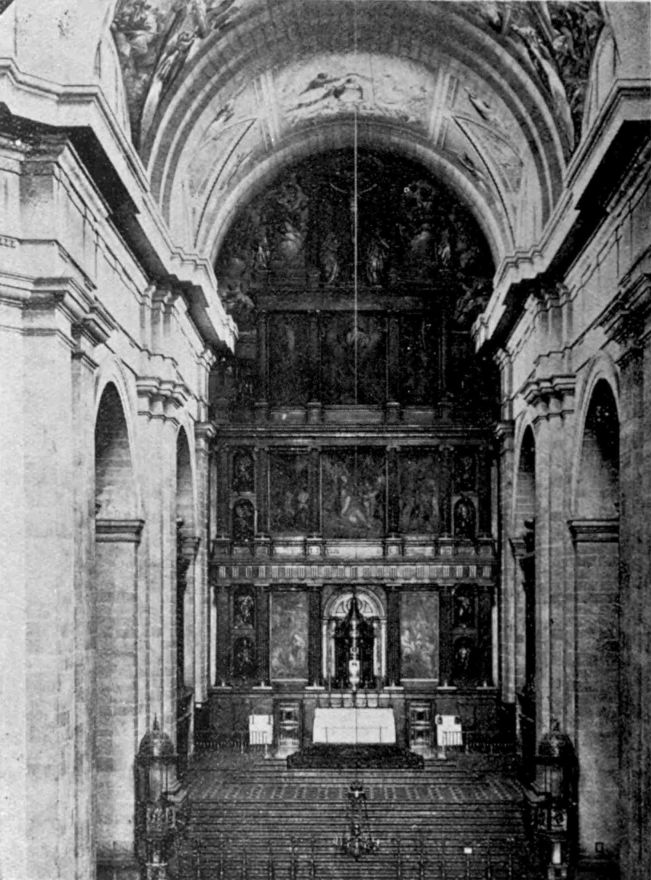
PLATE 364.
Retablo at the High Altar.
(Basilica of the Monastery.)
PLATE 365
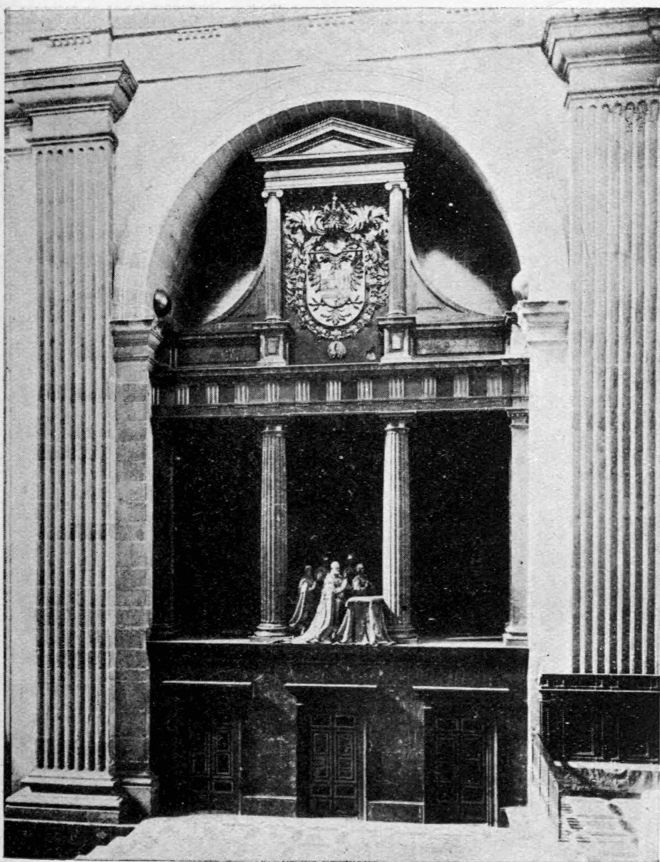
PLATE 365.
Left Side of the High Altar: Interment of the Emperor Charles V.
PLATE 366
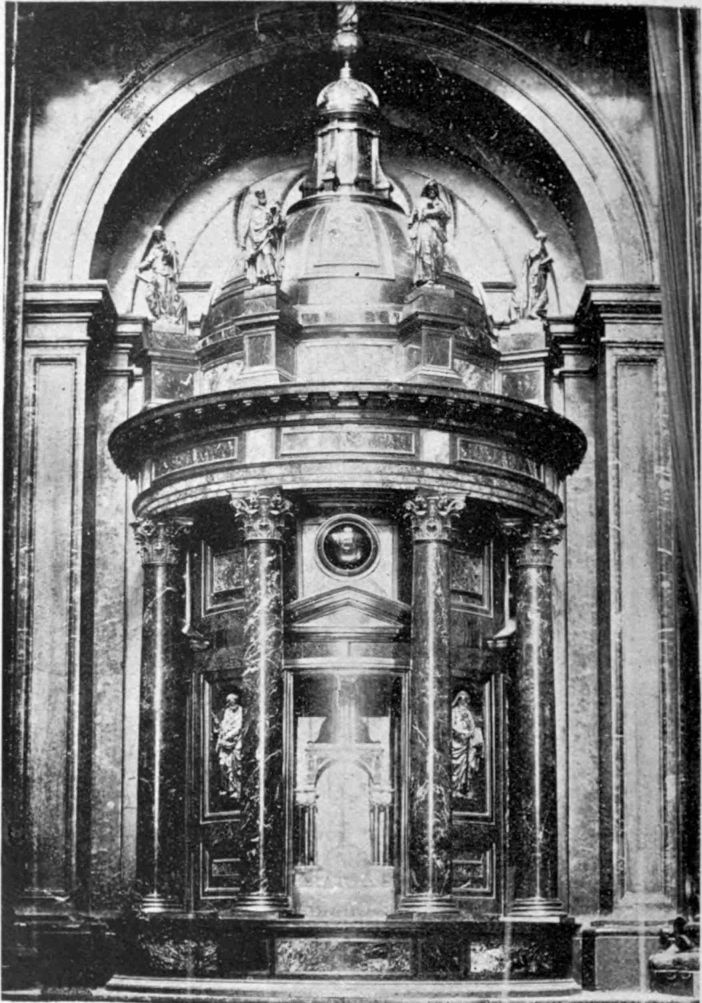
PLATE 366.
The Tabernacle in the Escorial Church.
PLATE 367
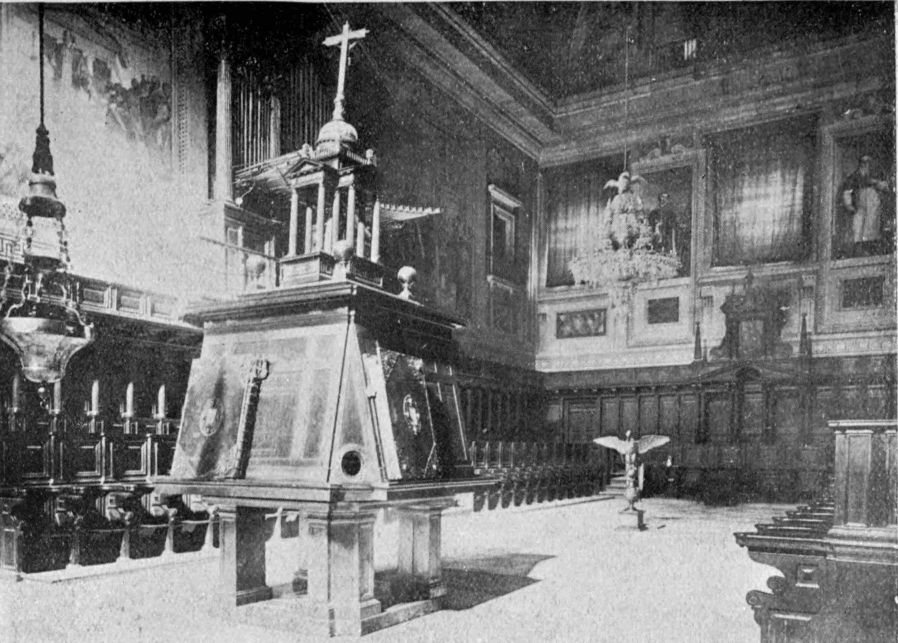
PLATE 367.
Choir Stalls. (Basilica of the Monastery.)
PLATE 368
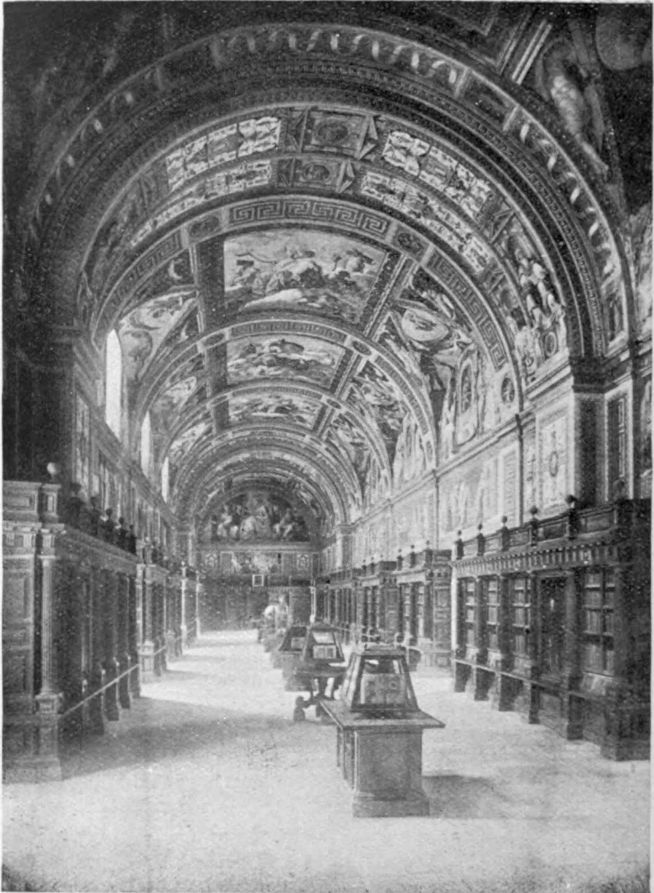
PLATE 368.
Library of the Monastery.
PLATE 369
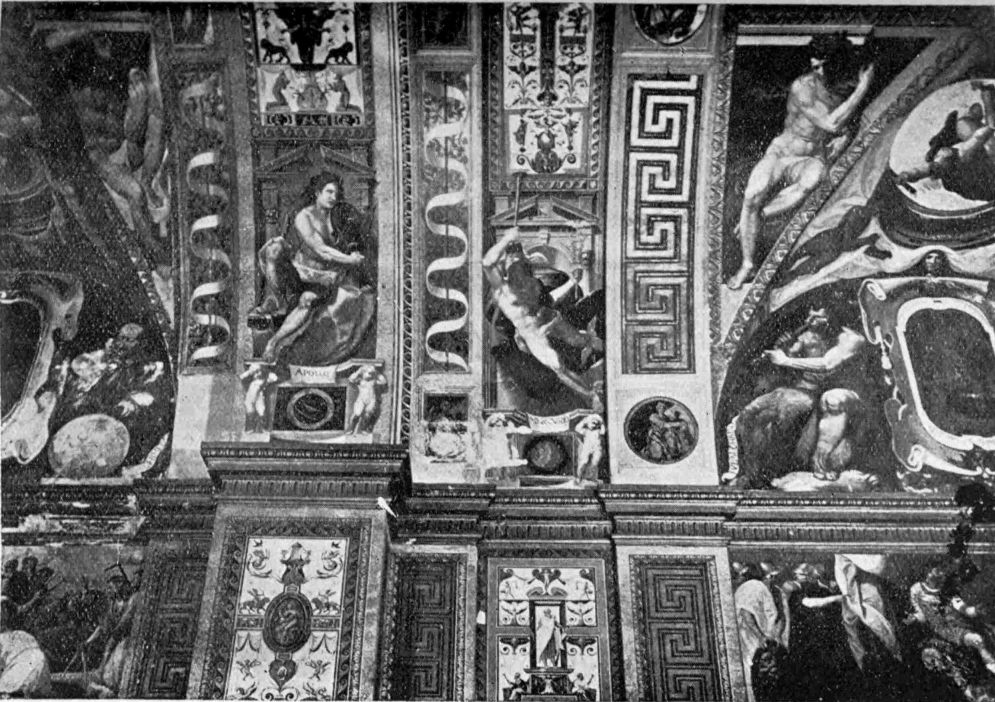
PLATE 369.
Apollo and Mercury, by Peregrino Tibaldi.
(Fresco on the Arch of the Escorial Library.)
PLATE 370
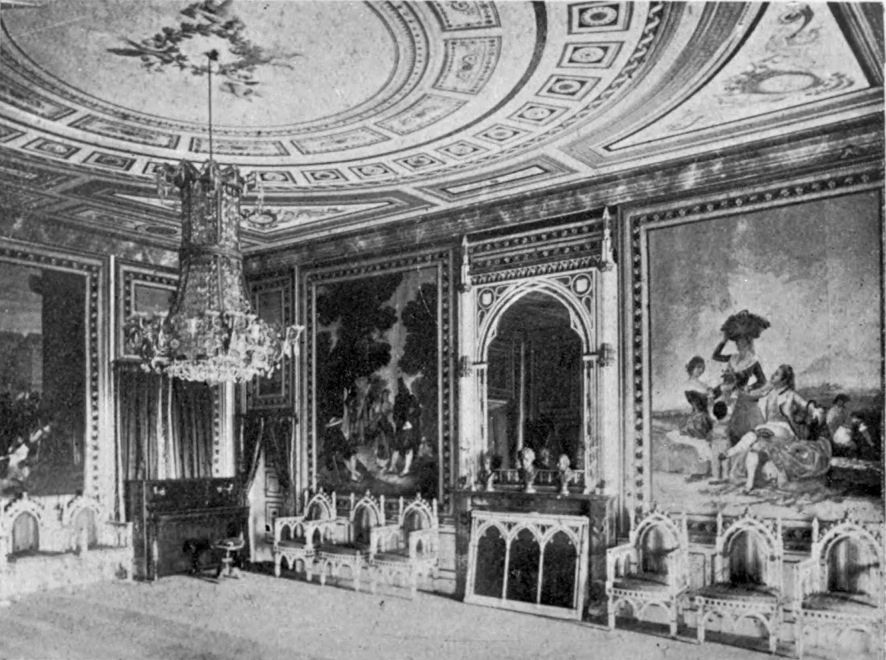
PLATE 370.
Reception Hall. (Palace.)
PLATE 371
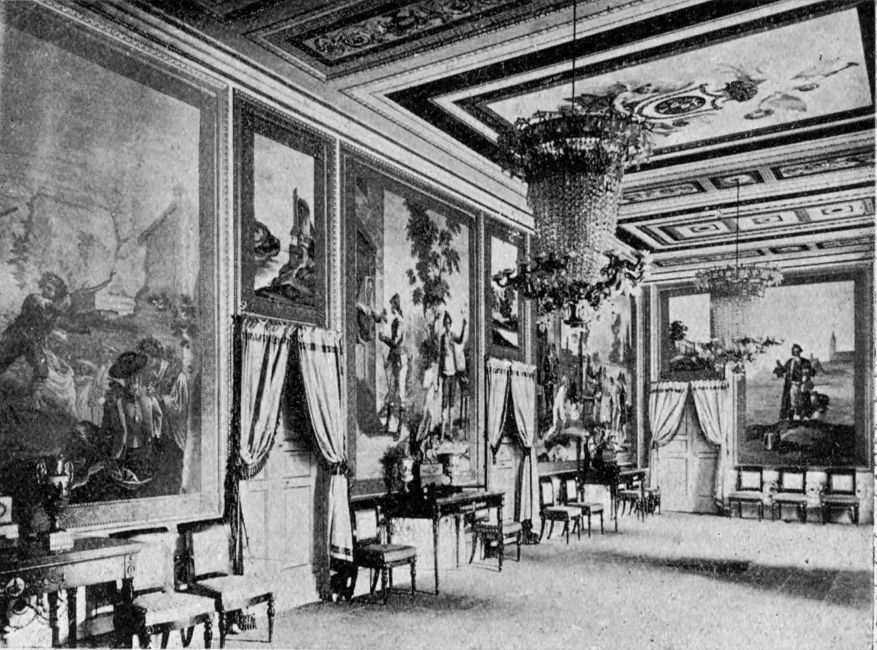
PLATE 371.
Hall of Ambassadors. (Palace.)
PLATE 372
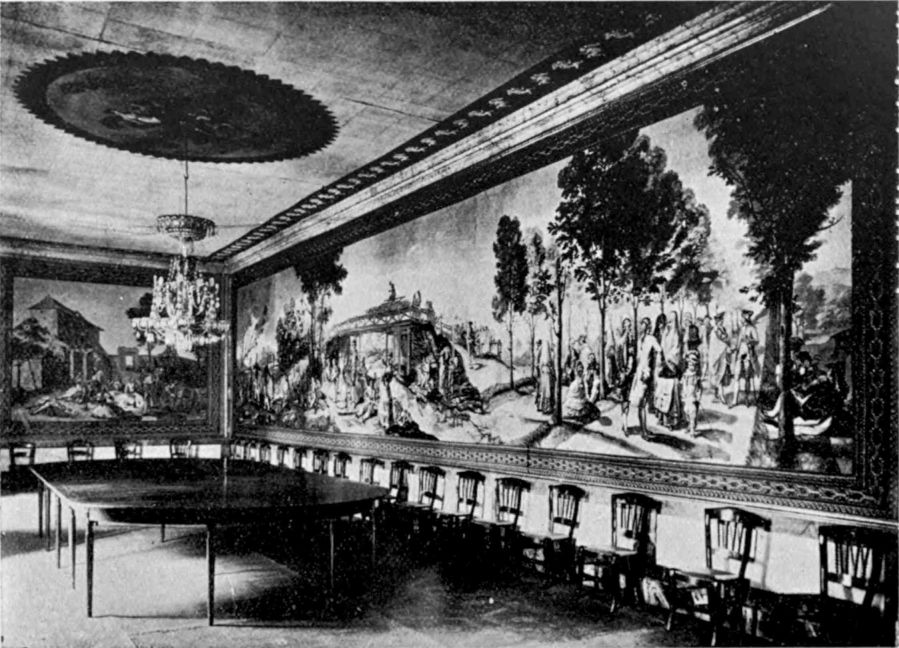
PLATE 372.
Dining-Hall. (Palace.)
PLATE 373
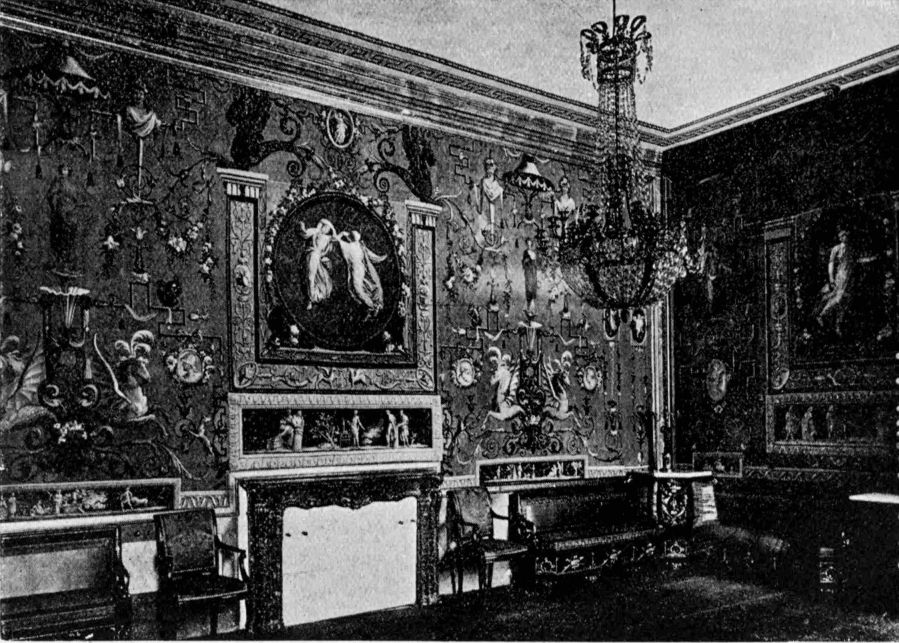
PLATE 373.
Pompeian Hall. (Palace.)
PLATE 374
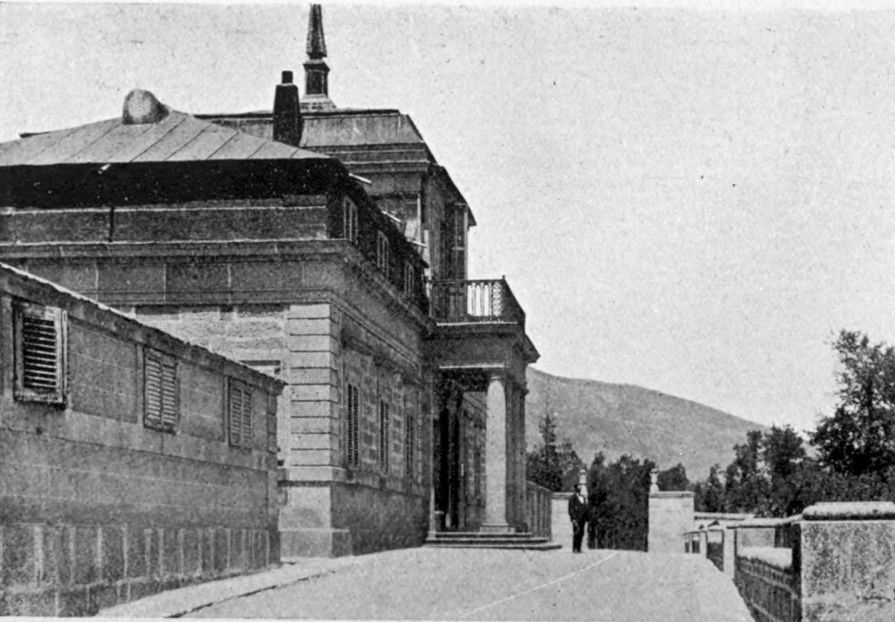
PLATE 374.
“Casa del Principe” or Lower Lodge.
PLATE 375
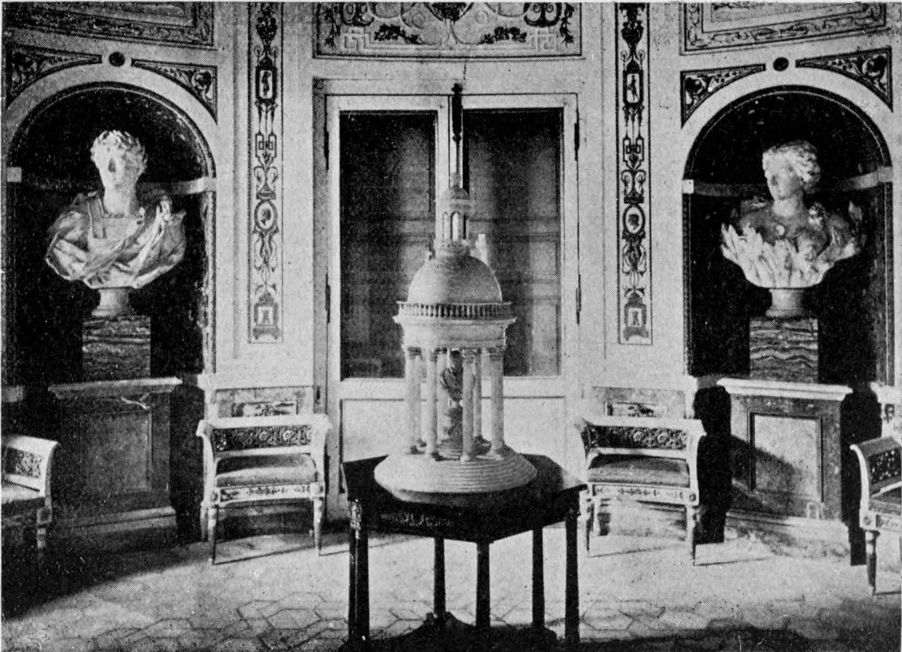
PLATE 375.
Coffee-Room. (Casa del Principe.)
PLATE 376
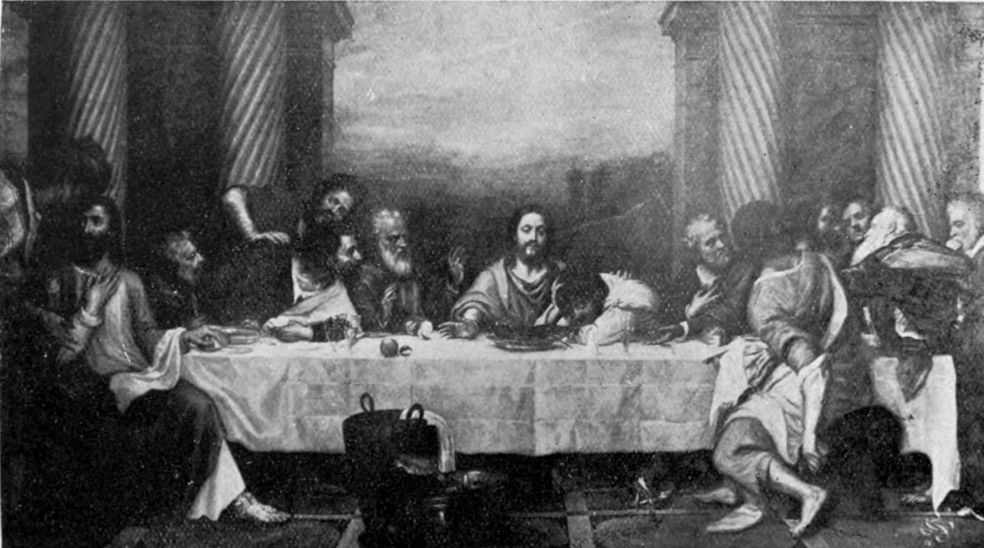
PLATE 376.
The Last Supper, by Titian. (The Escorial.)
PLATE 377
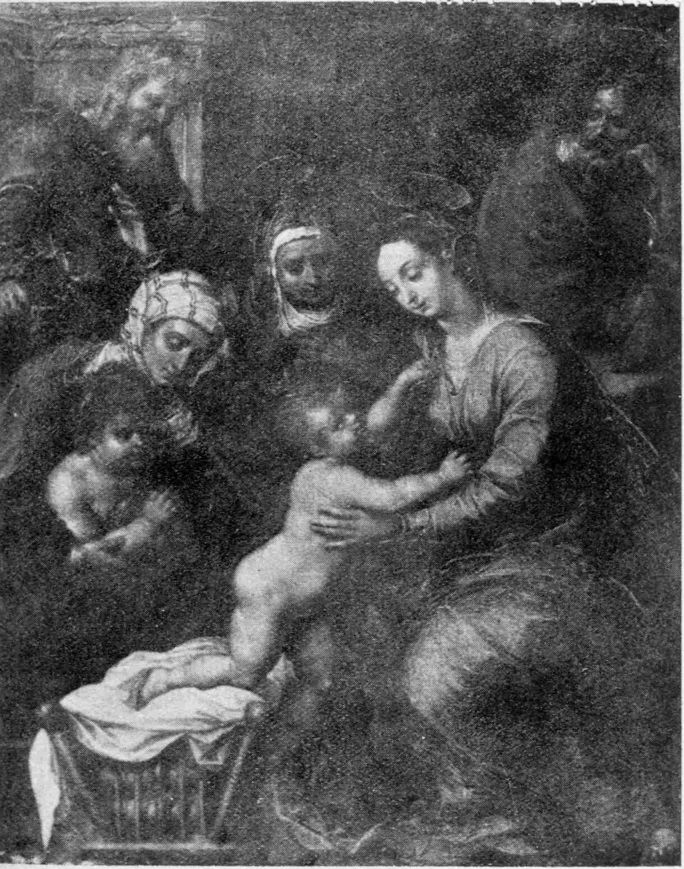
PLATE 377.
The Holy Family, by Rafael.
(Casa del Principe at the Escorial.)
PLATE 378
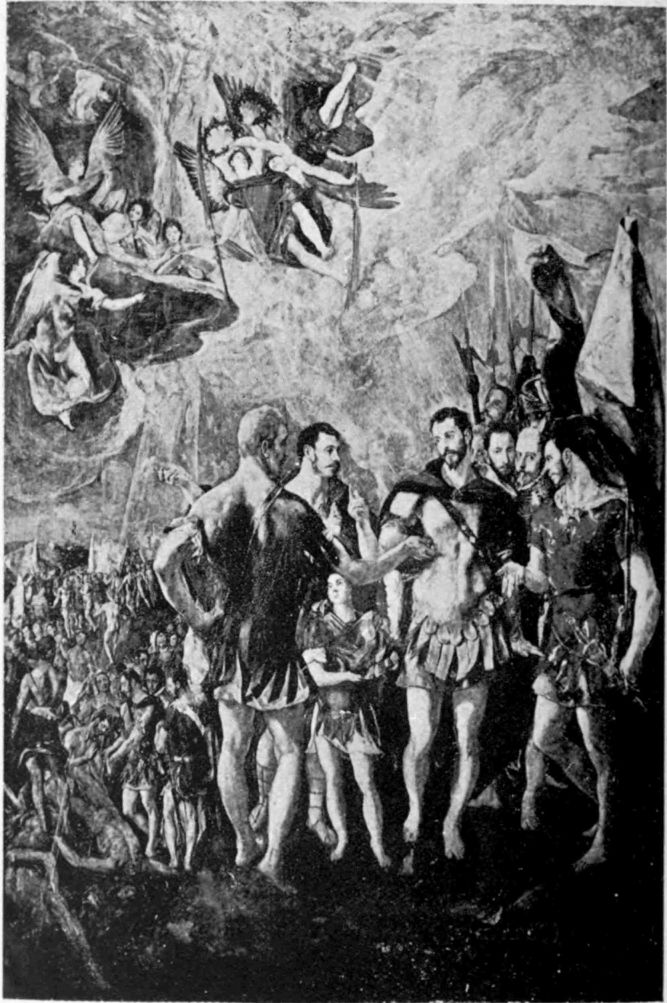
PLATE 378.
St Maurice and other Martyrs, by El Greco.
(Chapter Hall of the Escorial.)
PLATE 379
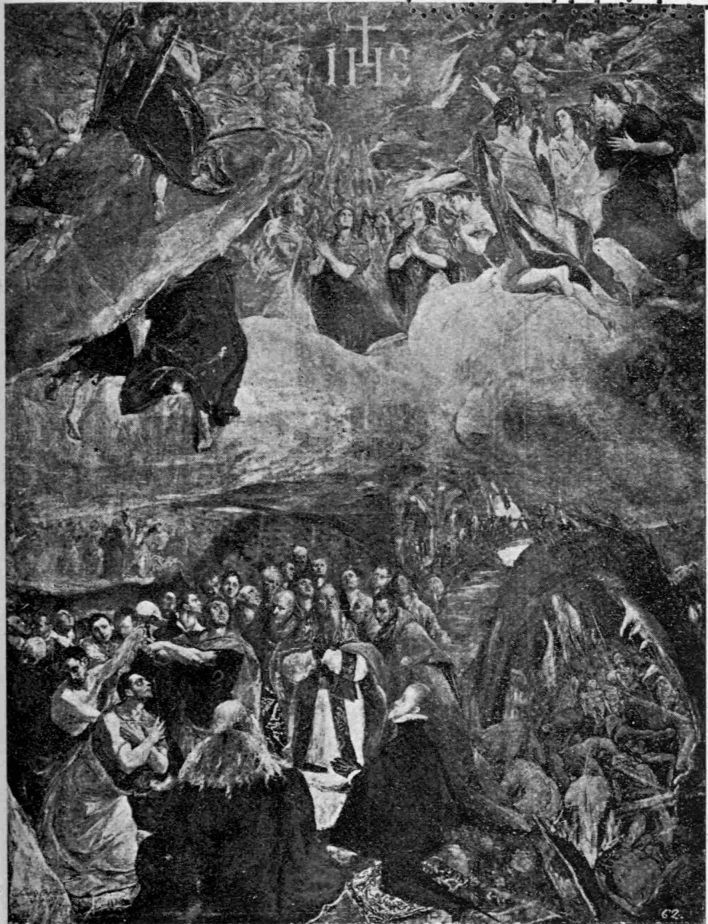
PLATE 379.
The Dream of Philip II., by El Greco.
(Chapter Hall of the Escorial.)
PLATE 380
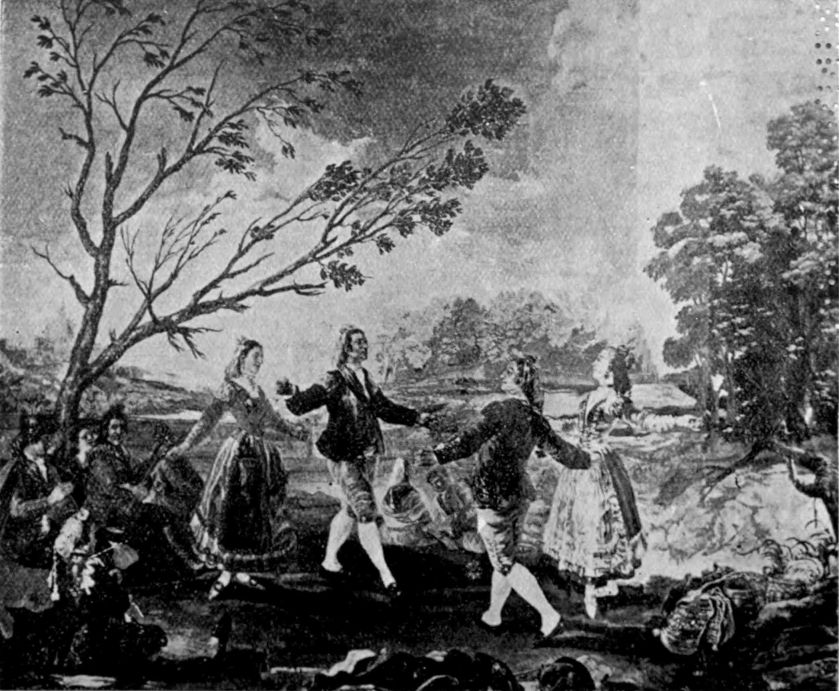
PLATE 380.
Country Dance, by Goya.
PLATE 381
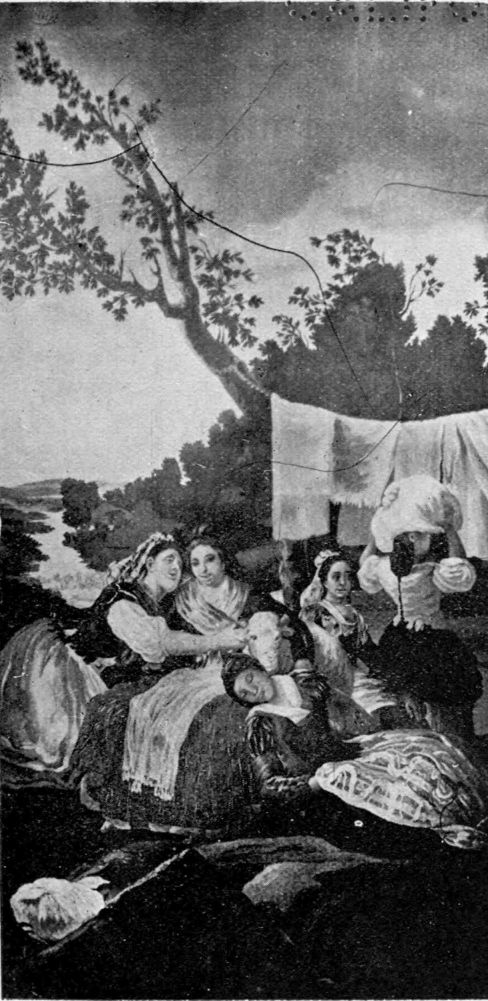
PLATE 381.
The Washerwomen, by Goya.
(Tapestry in the Escorial Palace.)
PLATE 382
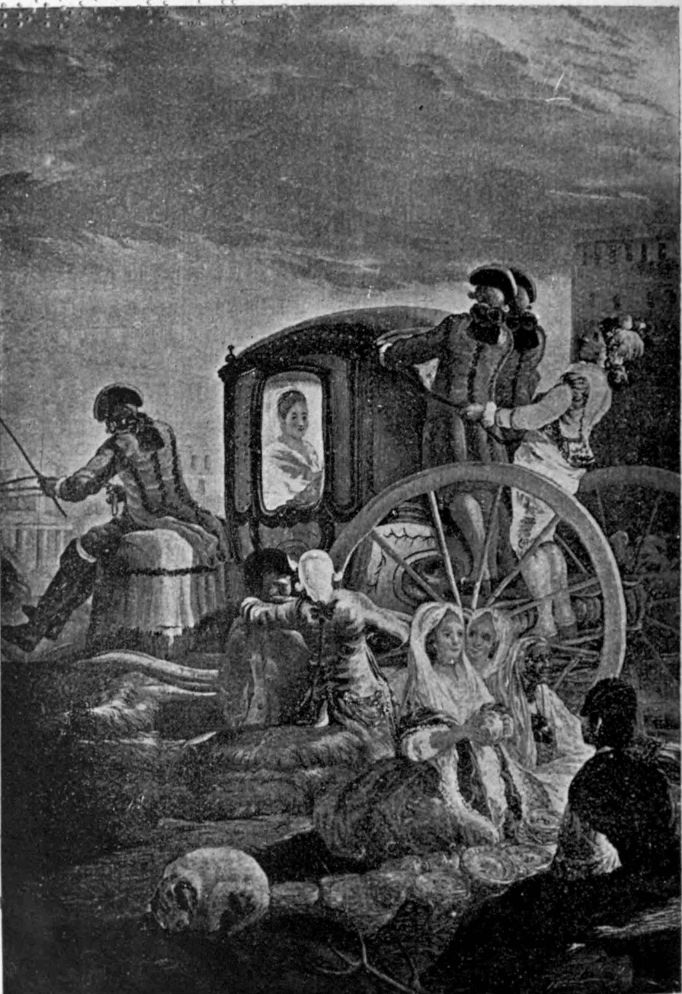
PLATE 382.
The China Merchant, by Goya.
(Tapestry in the Escorial Palace.)
PLATE 383
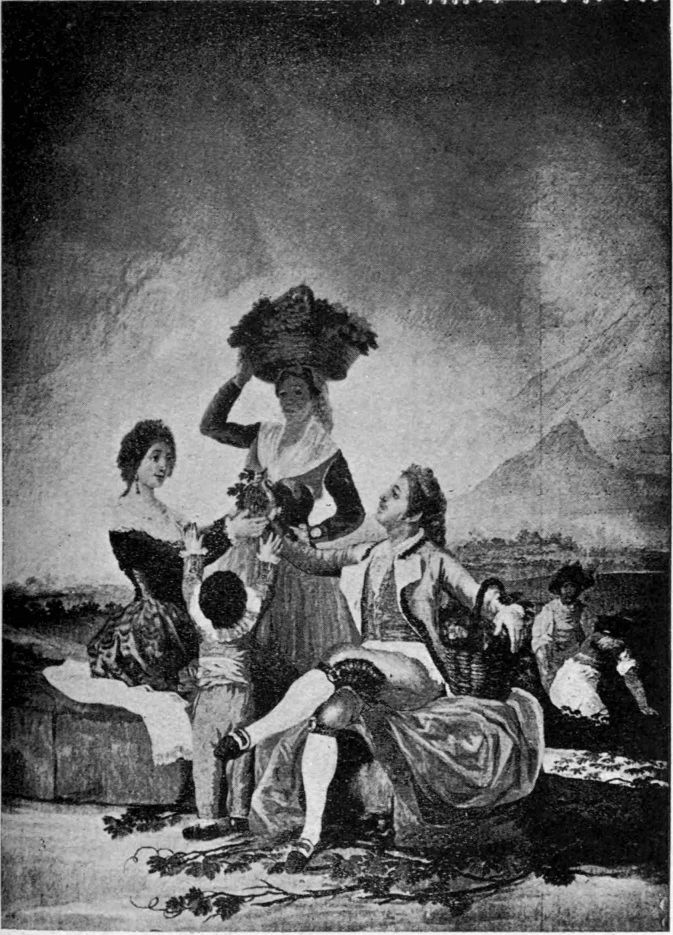
PLATE 383.
The Grape-Sellers, by Goya.
(Tapestry in the Escorial Palace.)
PLATE 384
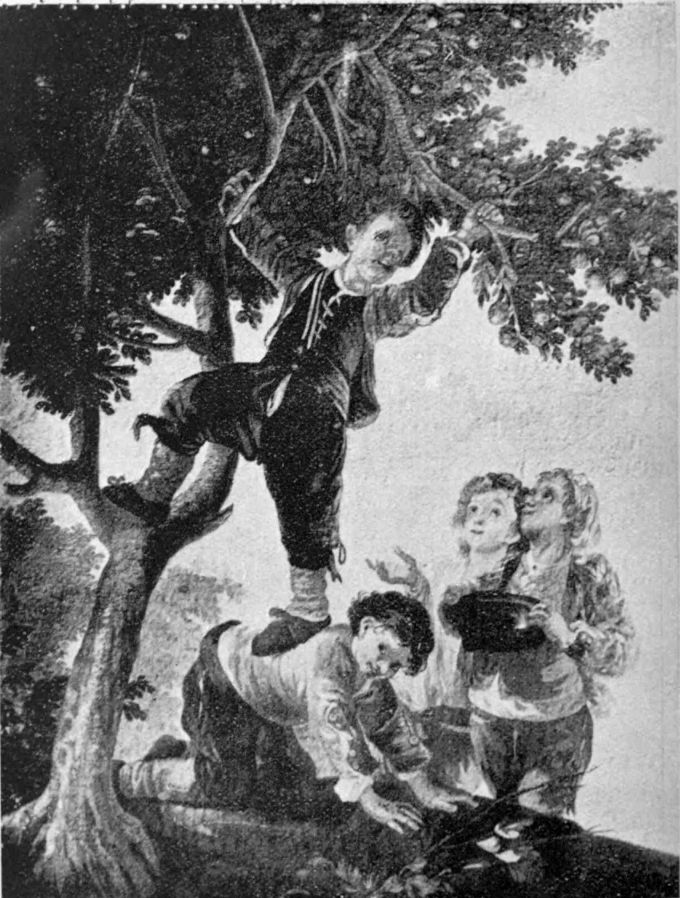
PLATE 384.
Children picking Fruit, by Goya.
(Tapestry in the Escorial Palace.)
PLATE 385
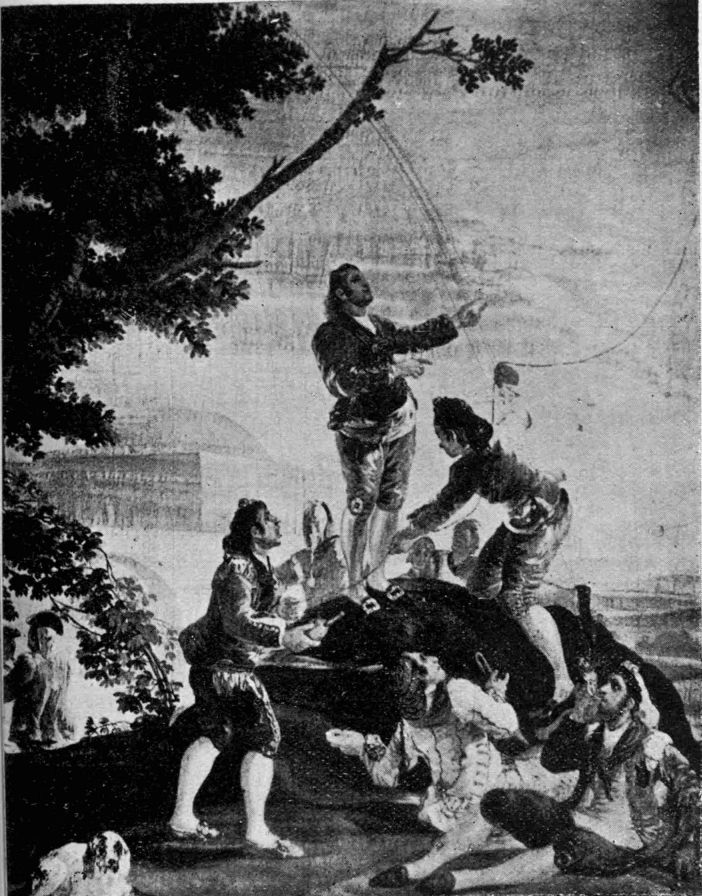
PLATE 385.
The Kite, by Goya.
(Tapestry in the Escorial Palace.)
PLATE 386
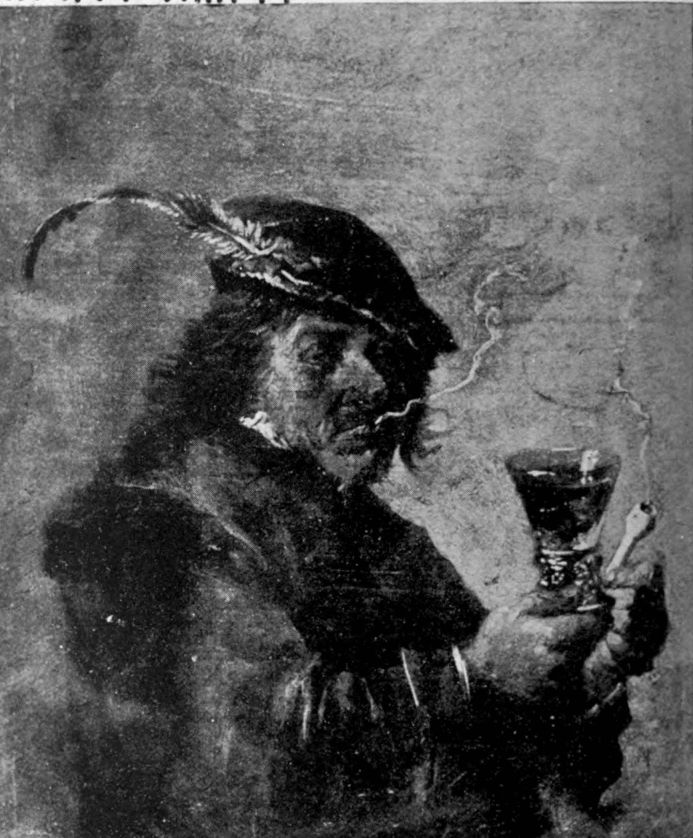
PLATE 386.
A Smoker, by Teniers.
(Casa del Principe at the Escorial.)
PLATE 387
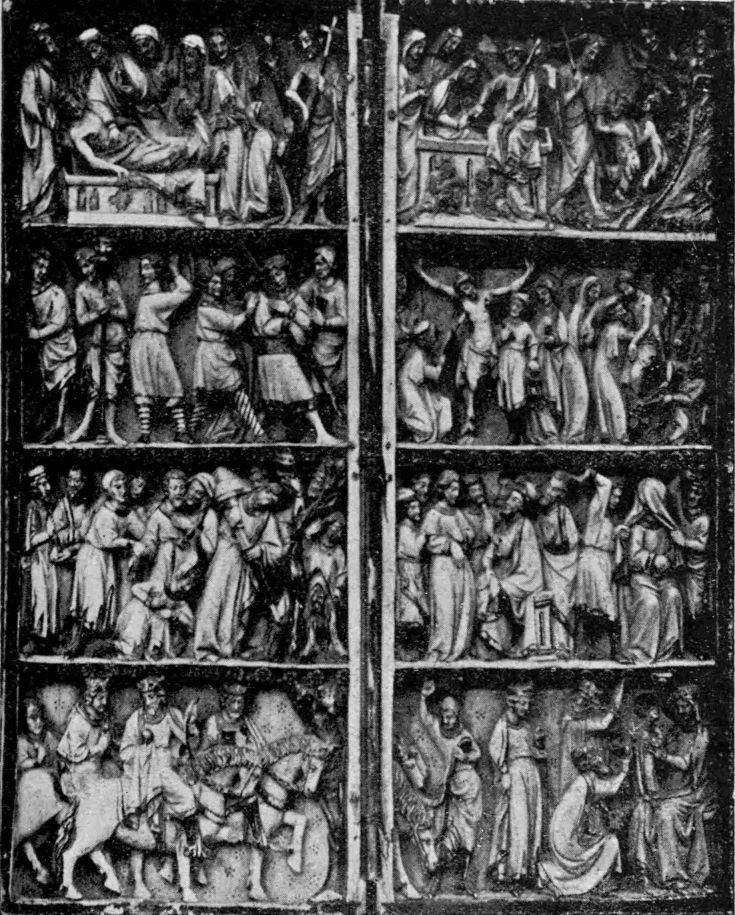
PLATE 387.
The Story of the Passion.
Diptych, in Ivory, of the 13th Century.
(FROM THE CAMARÍN OF ST THERESA.)
PLATE 388
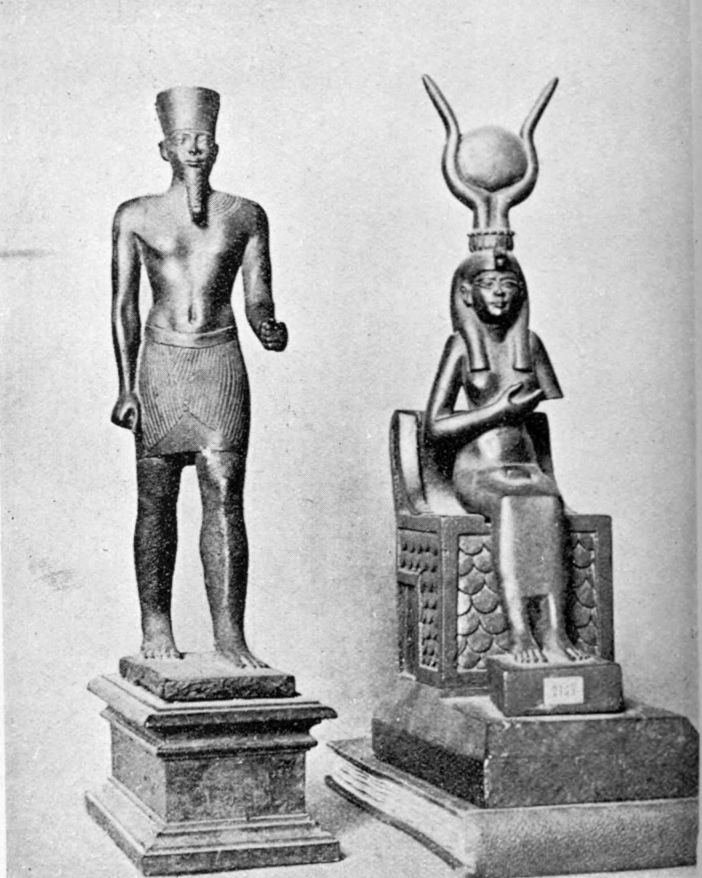
PLATE 388.
Egyptian Bronzes. Amon-Ra and Isis.
NATIONAL ARCHÆOLOGICAL MUSEUM.
PLATE 389
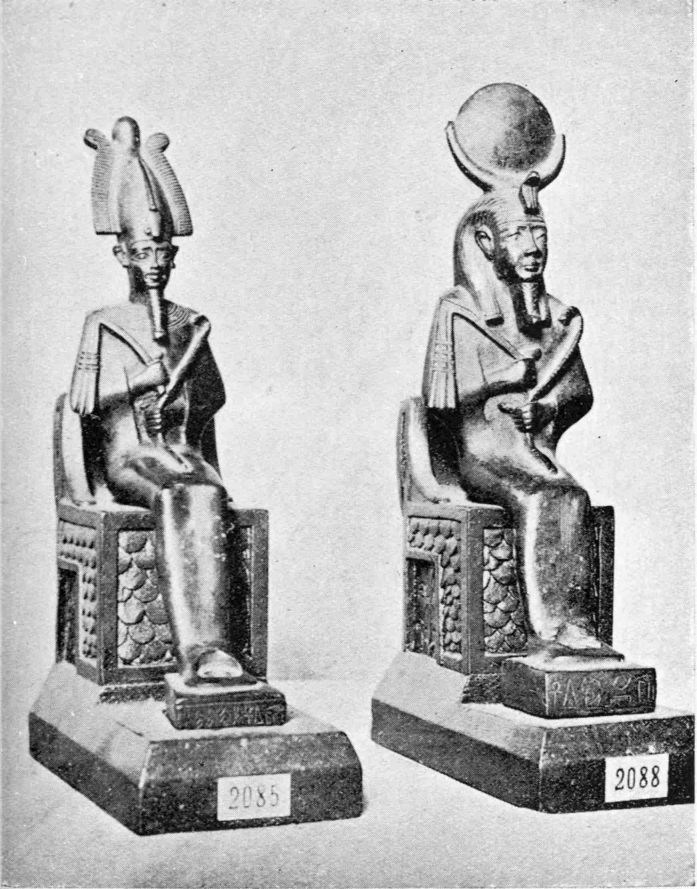
PLATE 389.
Egyptian Bronzes. Osiris and Osor-Api.
NATIONAL ARCHÆOLOGICAL MUSEUM.
PLATE 390
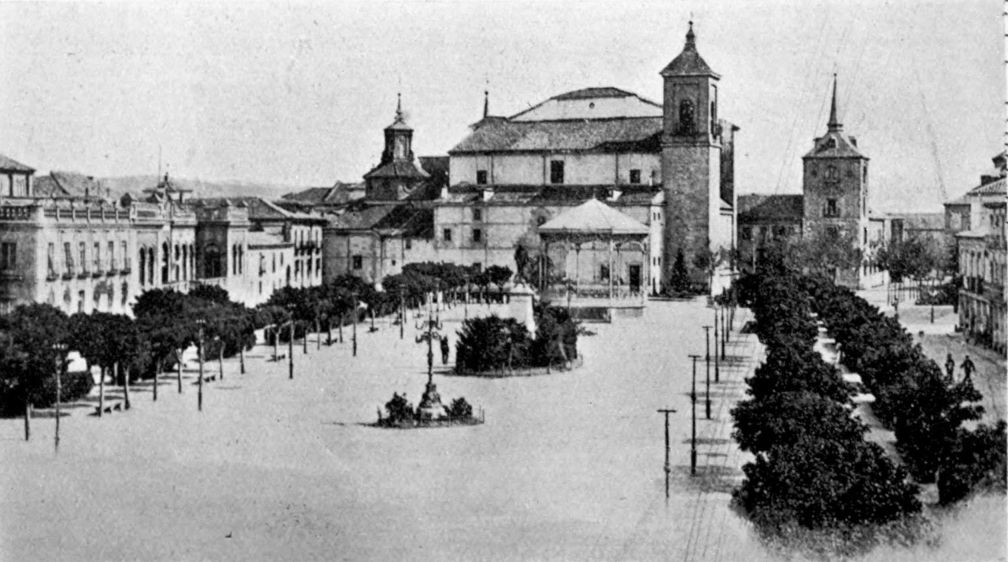
PLATE 390.
Alcalá de Henares. Paseo de Cervantes.
PLATE 391
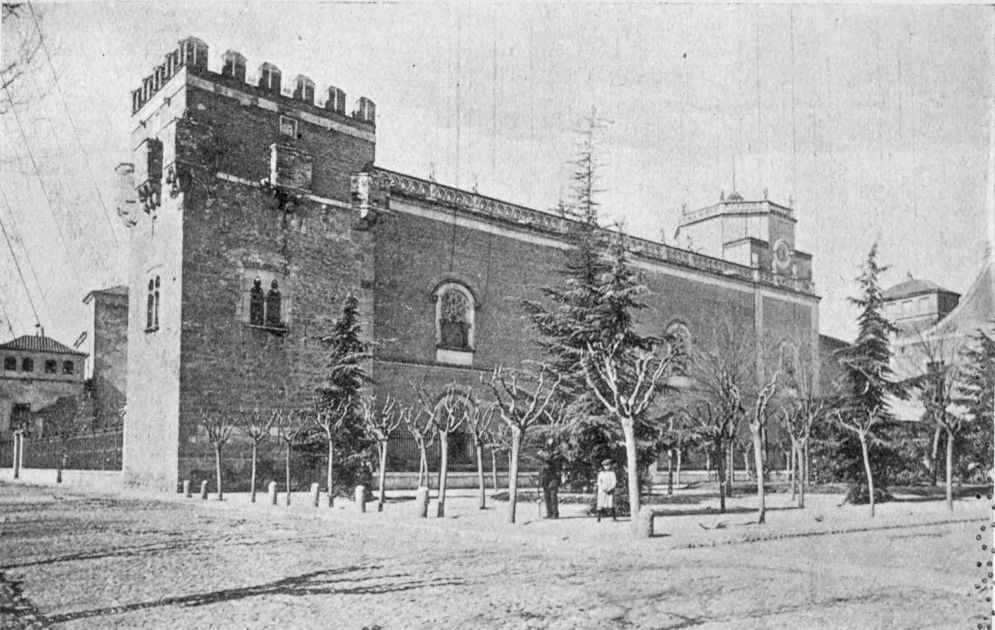
PLATE 391.
Alcalá de Henares. General Central Archives.
PLATE 392
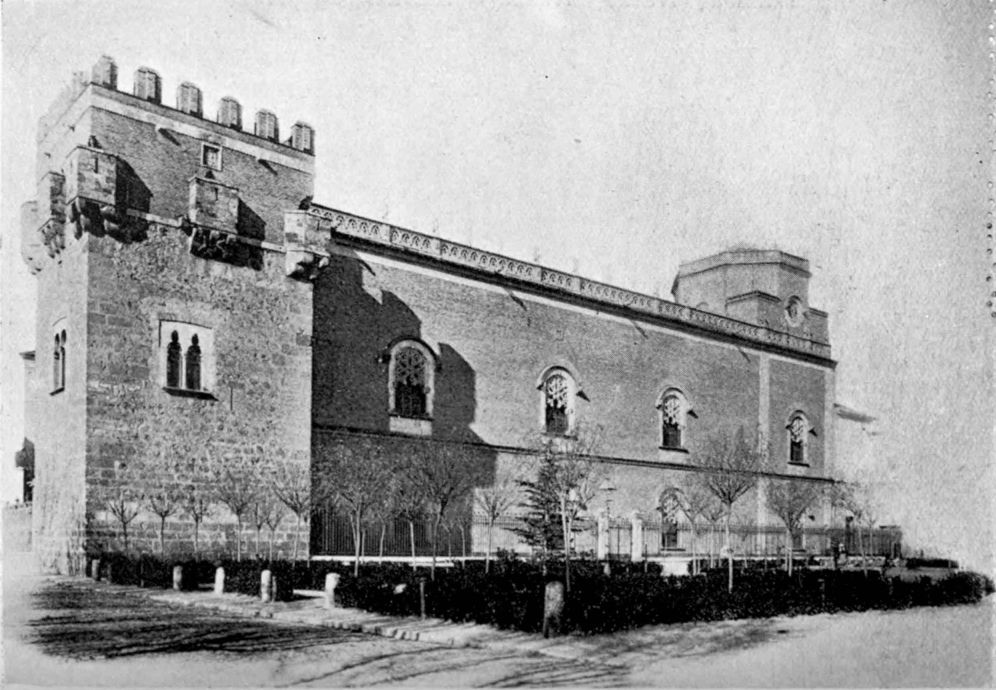
PLATE 392.
Alcalá de Henares. General Central Archives.
PLATE 393
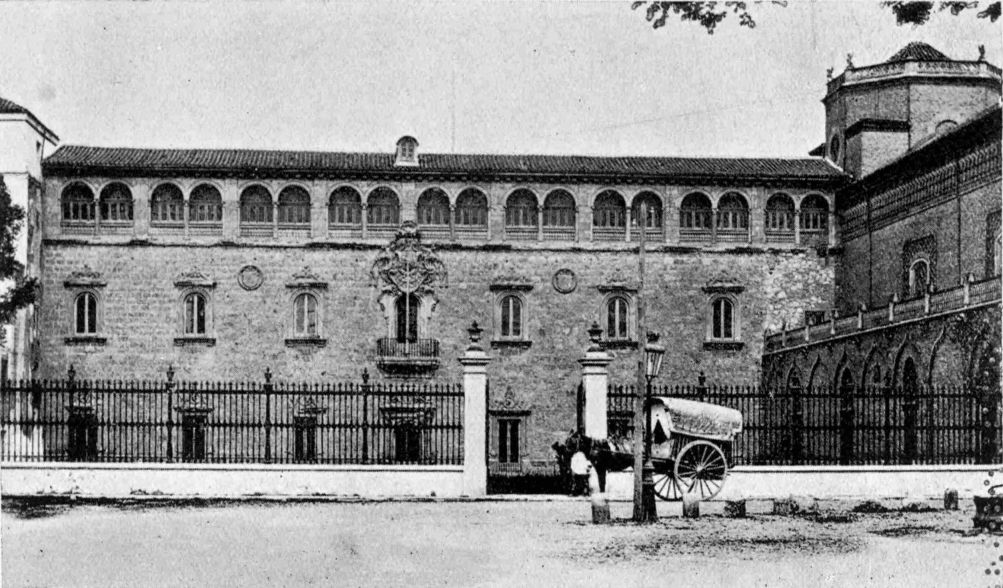
PLATE 393.
Alcalá de Henares. Façade of the Archives.
PLATE 394
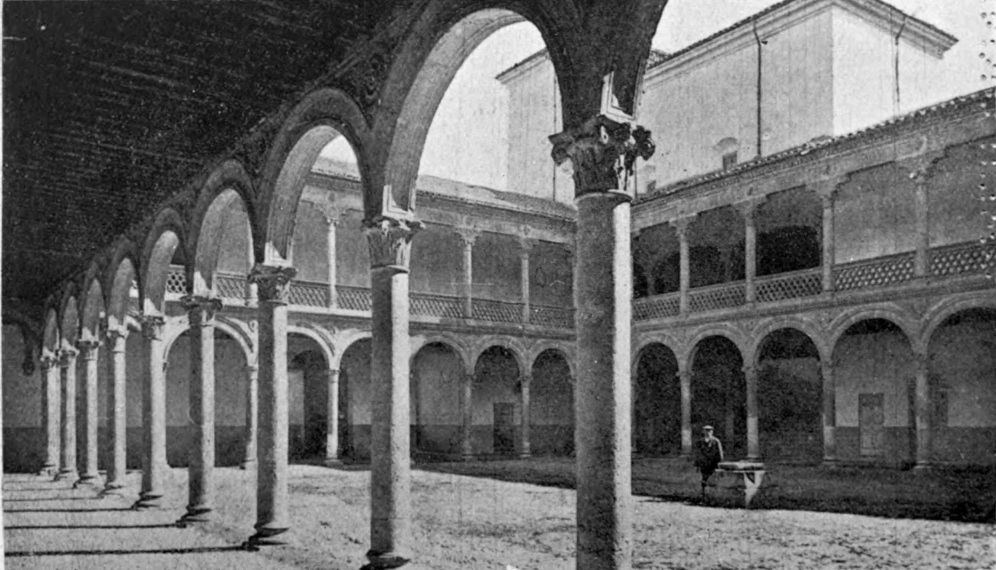
PLATE 394.
Court of the Alcalá de Henares. General Central Archives.
PLATE 395
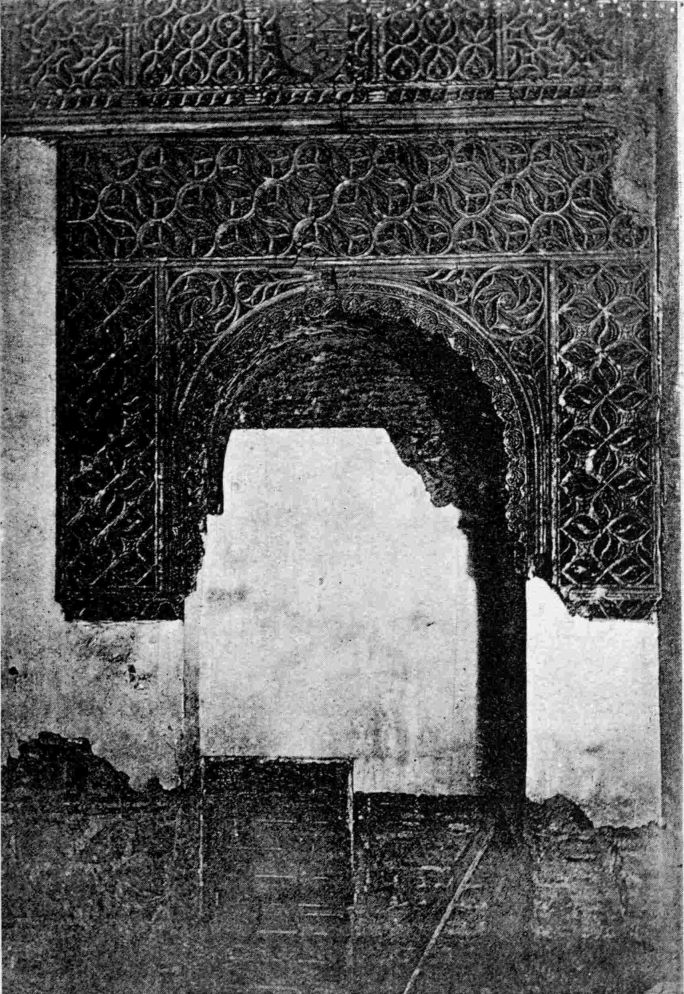
PLATE 395.
Alcalá de Henares.
Chapel of the “Oidor.” Actual State of the North Wall.
PLATE 396
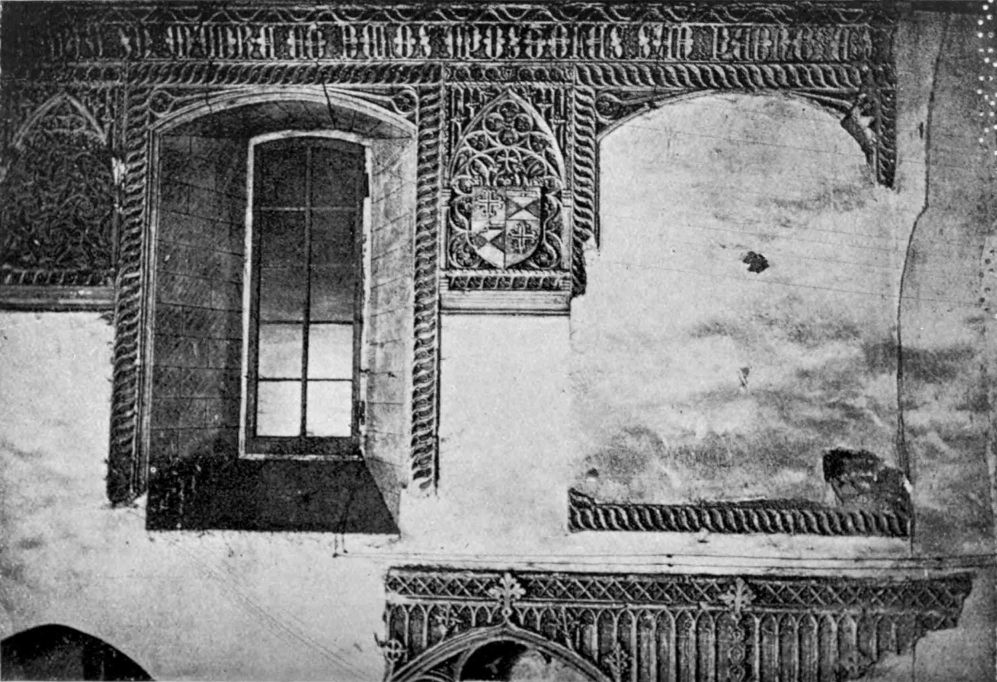
PLATE 396.
Alcalá de Henares. Actual State of the South Wall.
PLATE 397
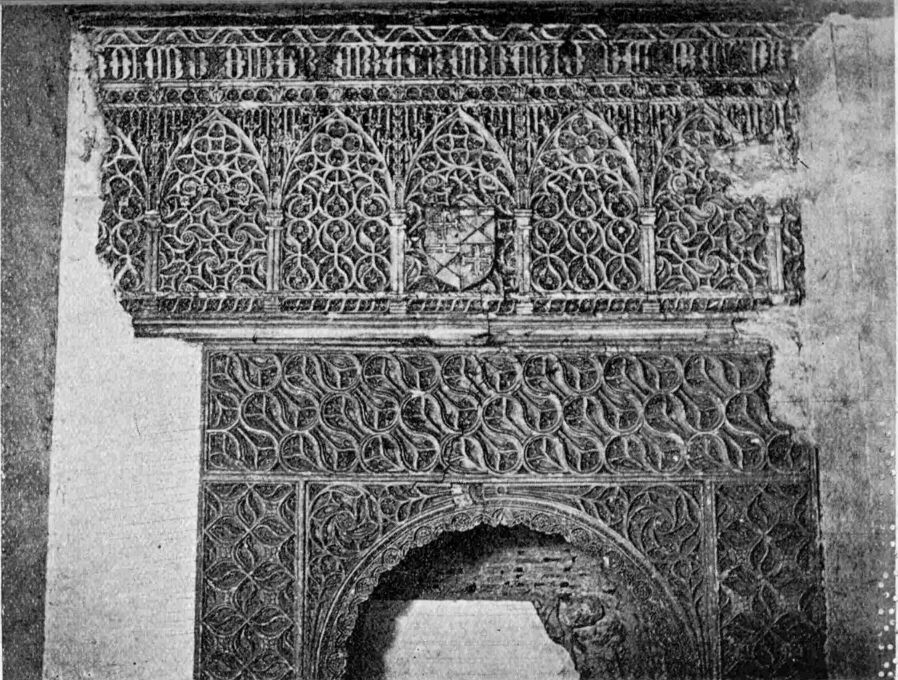
PLATE 397.
Alcalá de Henares.
Chapel of the “oidor.” Actual State of the Frieze round the North Wall.
PLATE 398
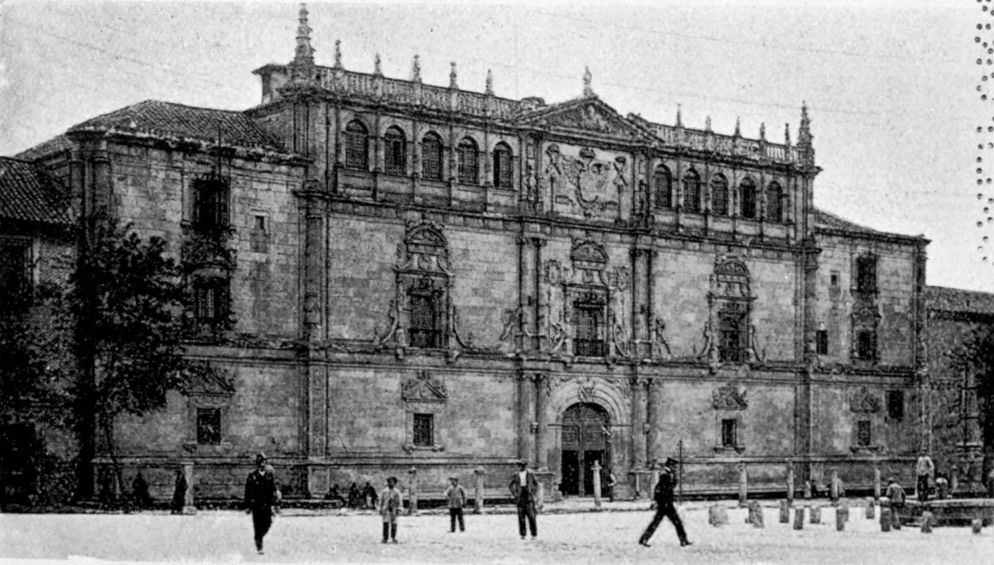
PLATE 398.
Alcalá de Henares. The University.
PLATE 399
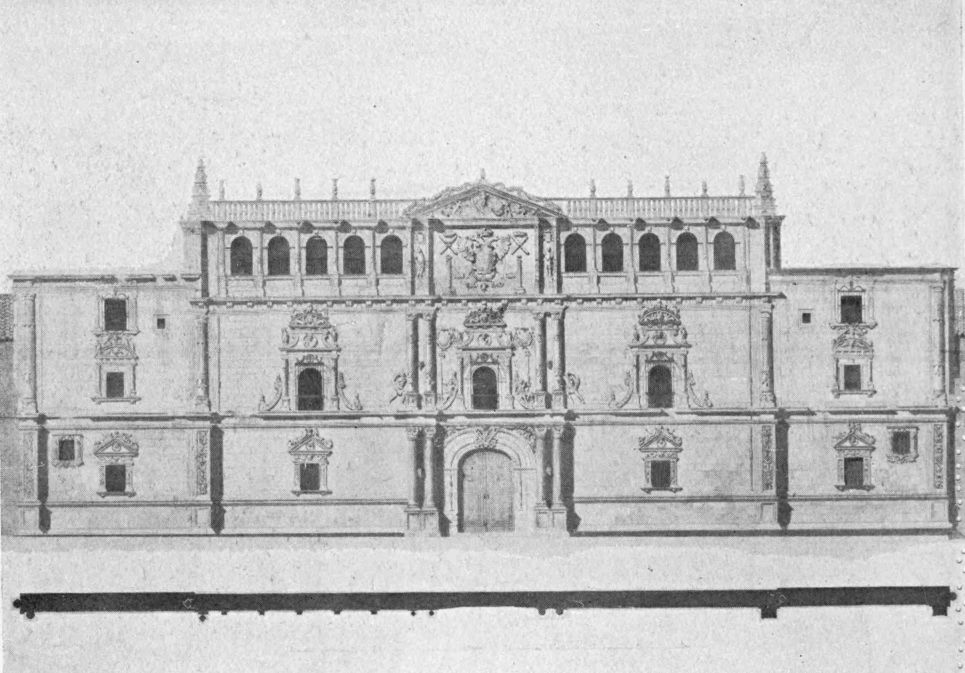
PLATE 399.
Alcalá de Henares. Façade of the University.
PLATE 400
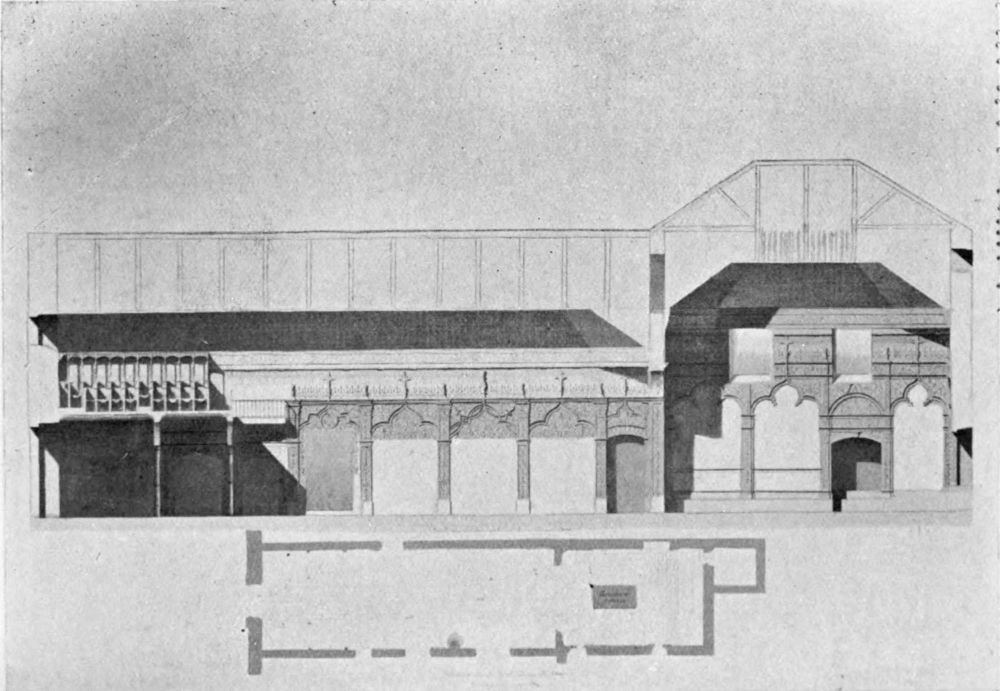
PLATE 400.
Alcalá de Henares.
Longitudinal Section of the Chapel of San Ildefonso in the University.
PLATE 401
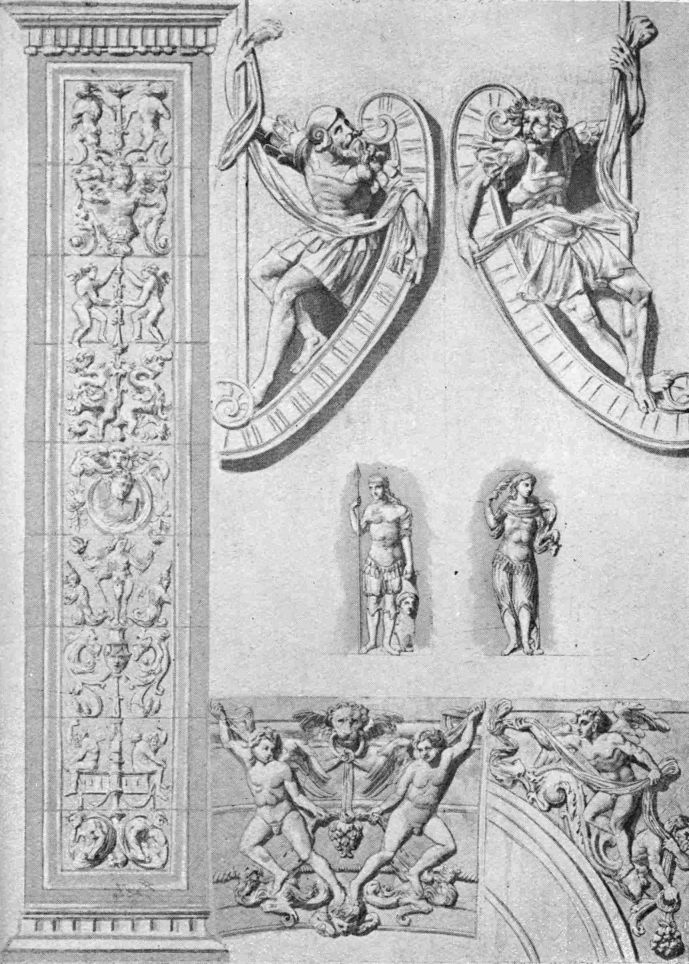
PLATE 401.
Alcalá de Henares.
Details of the Façade of the University.
PLATE 402
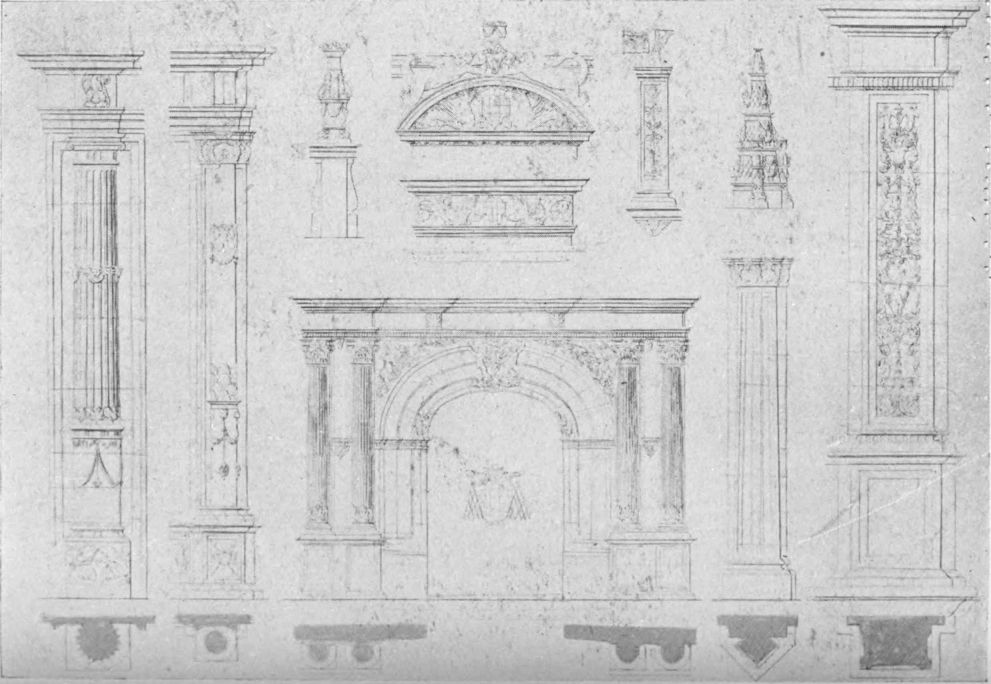
PLATE 402.
Alcalá de Henares. Details of the Façade of the University.
PLATE 403
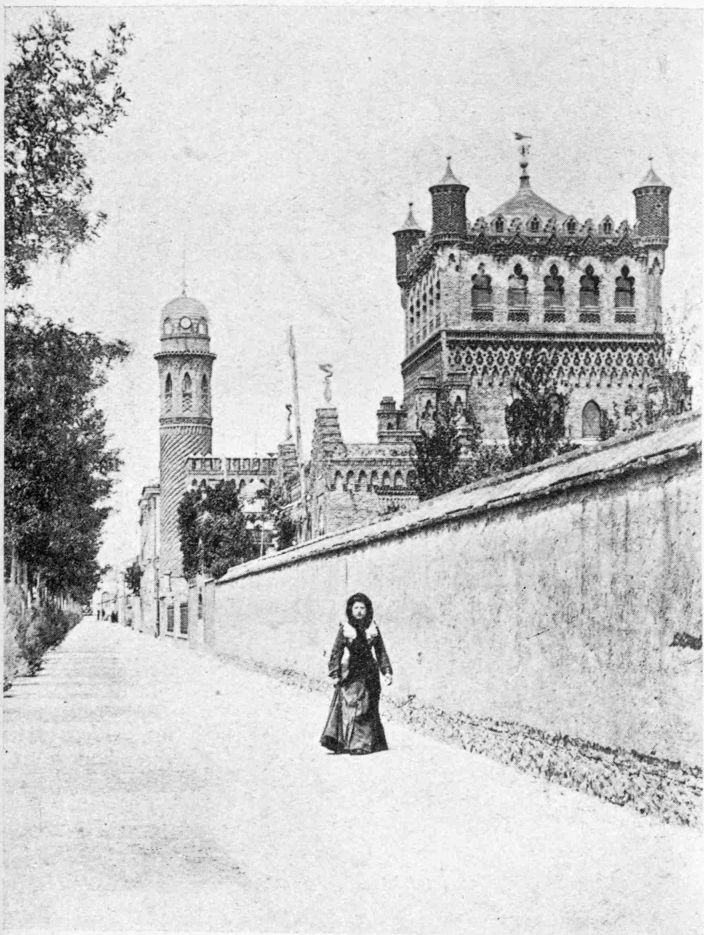
PLATE 403.
Alcalá de Henares.
Paseo de la Estación.
PLATE 404
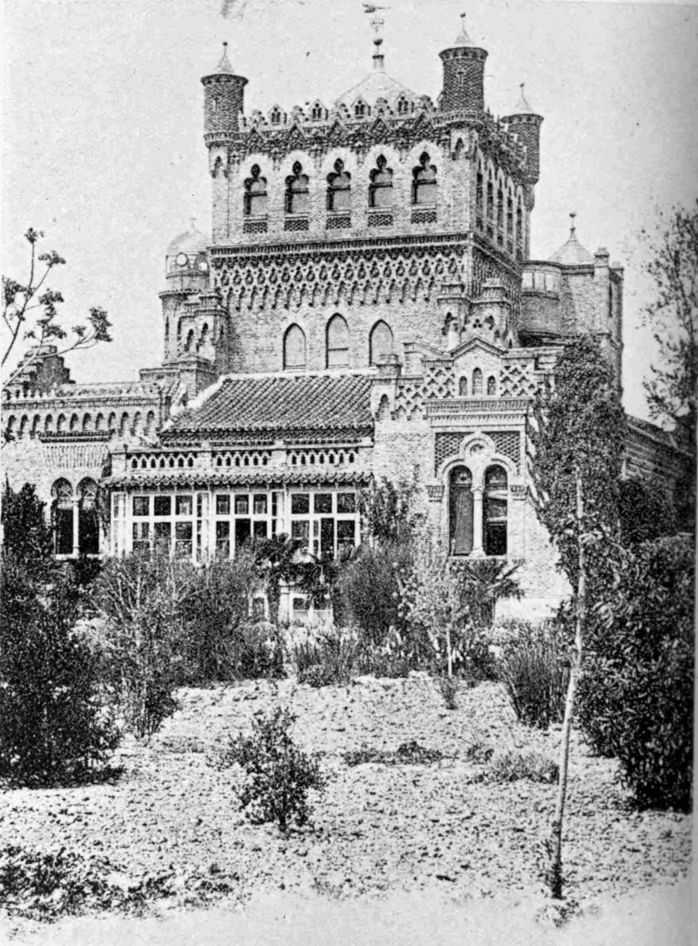
PLATE 404.
Alcalá de Henares.
Moorish Palace.
PLATE 405
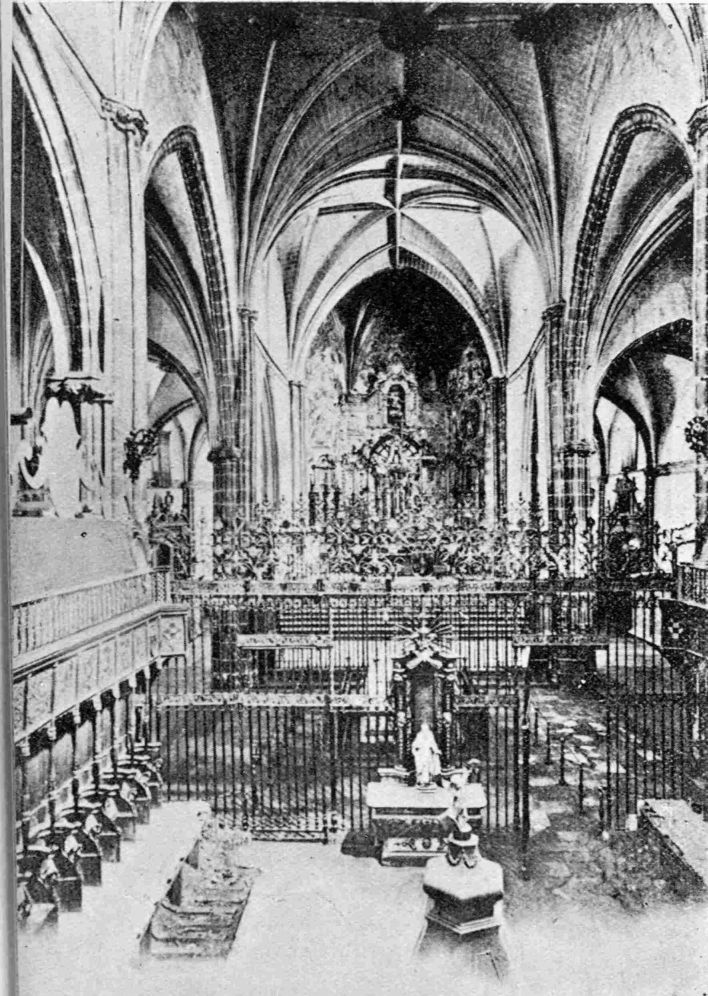
PLATE 405.
Alcalá de Henares.
Interior of the Cathedral.
PLATE 406
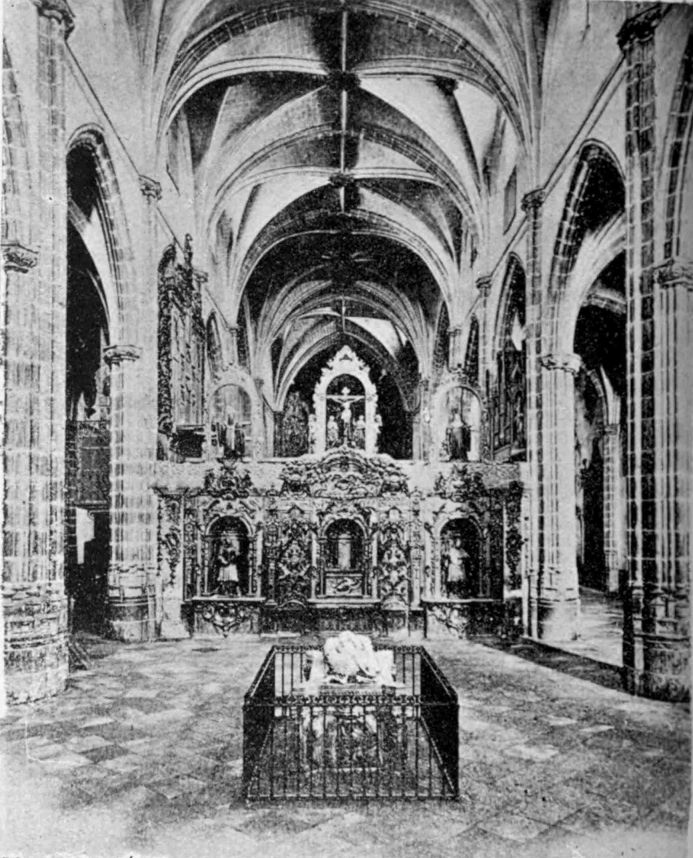
PLATE 406.
Alcalá de Henares.
Interior of the Cathedral.
PLATE 407
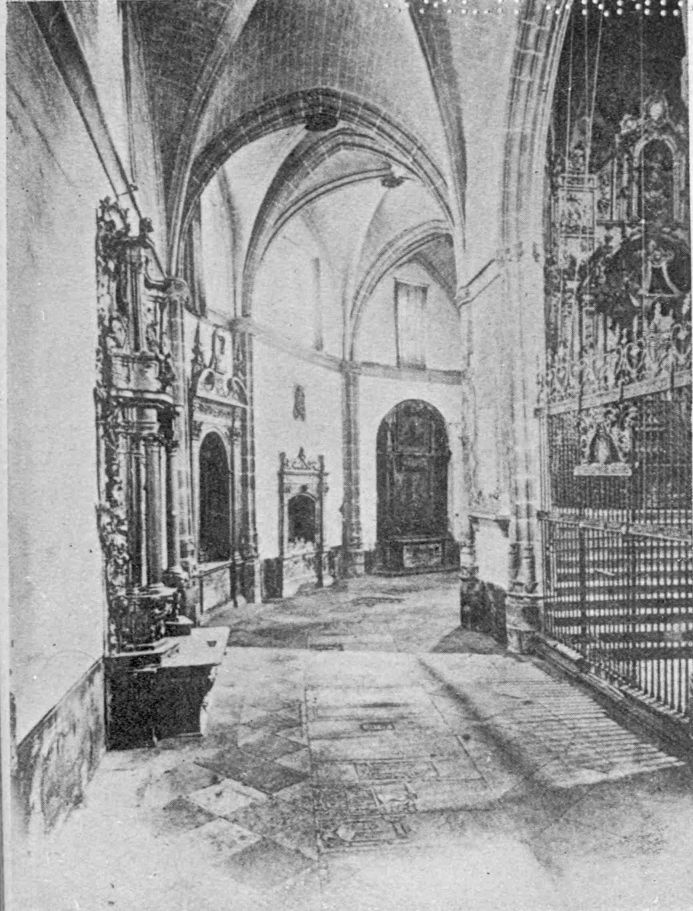
PLATE 407.
Alcalá de Henares.
The Cathedral. Nave.
PLATE 408
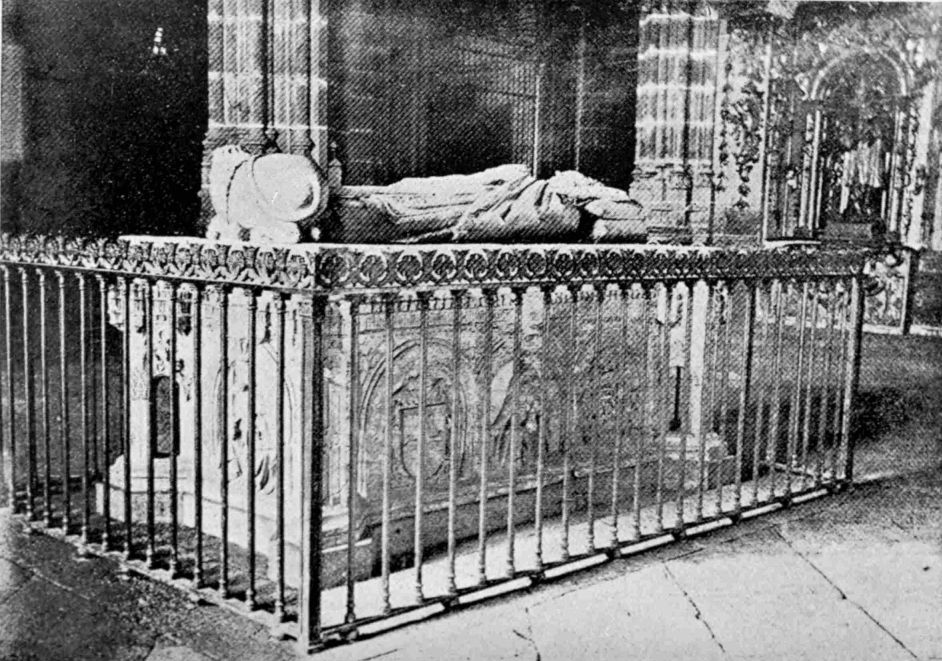
PLATE 408.
Alcalá de Henares.
Sepulchre of Don Alonso Carrillo, Archbishop of Toledo.
PLATE 409
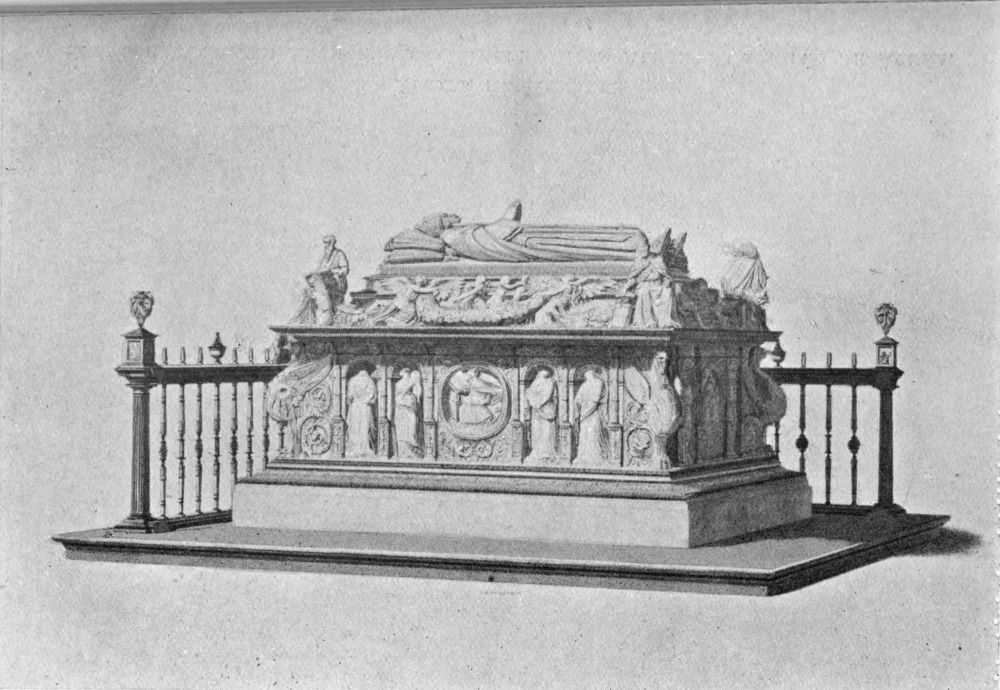
PLATE 409.
Alcalá de Henares.
Sepulchre of Cardinal Francisco Ximénez de Cisneros.
PLATE 410
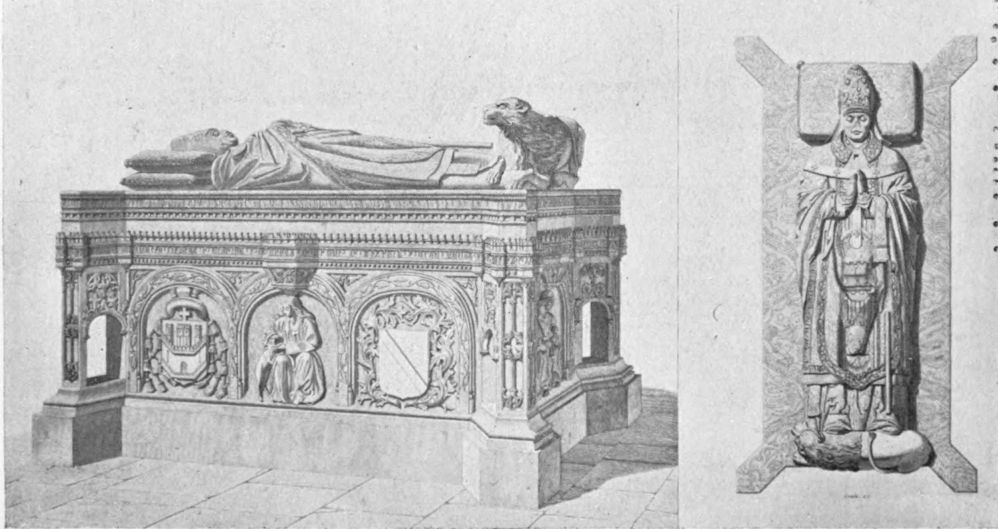
PLATE 410.
Alcalá de Henares.
Sepulchre of the Archbishop of Toledo, Don Alfonso Carrillo de Acuña.
PLATE 411
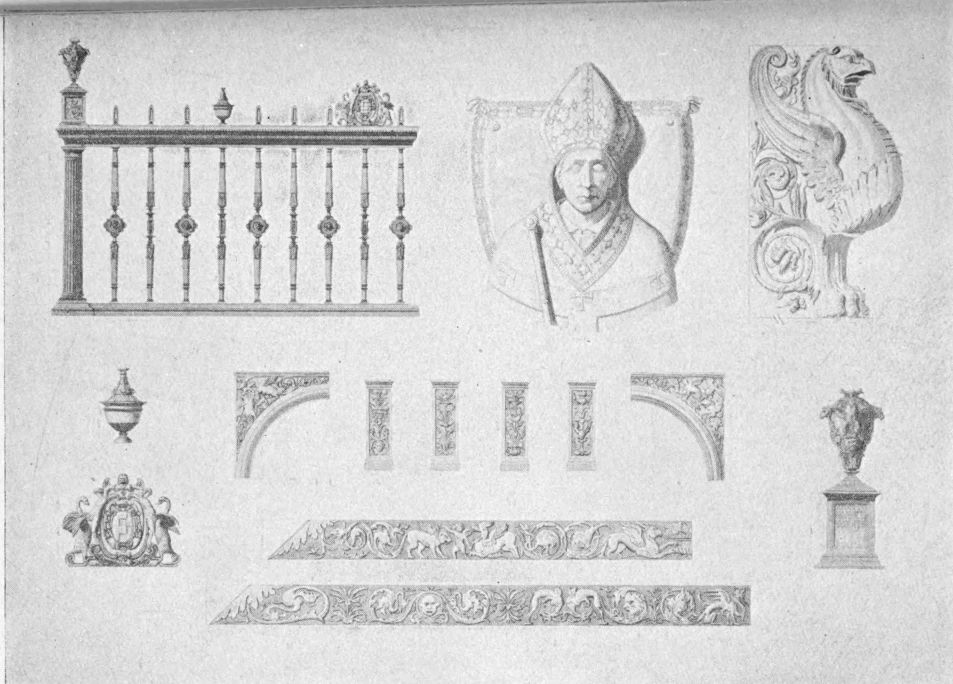
PLATE 411.
Alcalá de Henares.
Details of the Sepulchre of Cardinal Francisco Ximénez de Cisneros.
PLATE 412
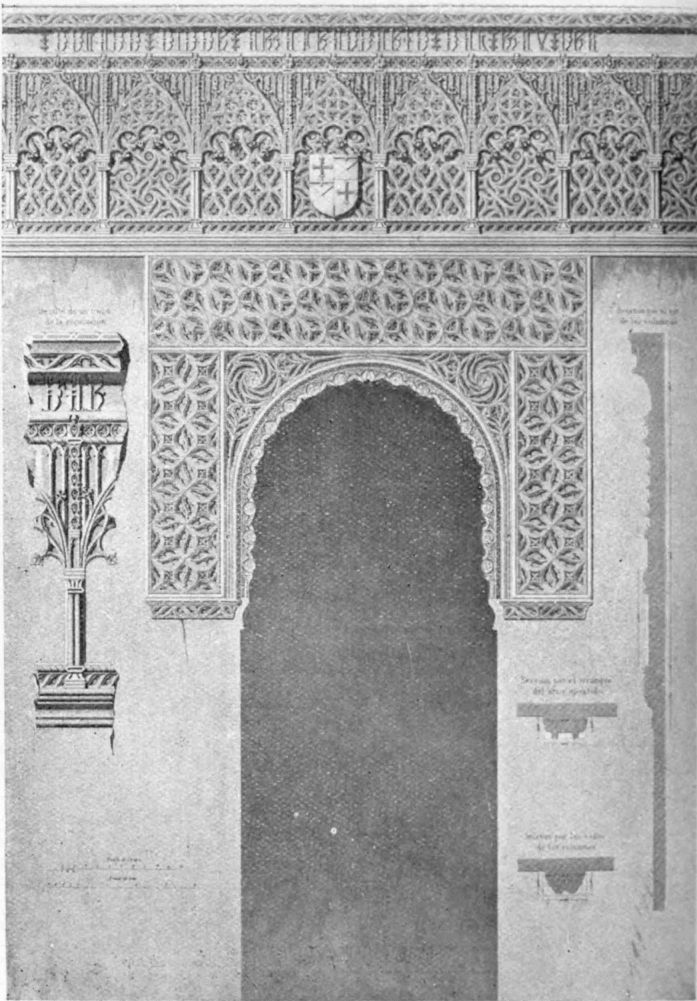
PLATE 412.
Alcalá de Henares.
Chapel of Santiago in the Church of Santa María.
PLATE 413
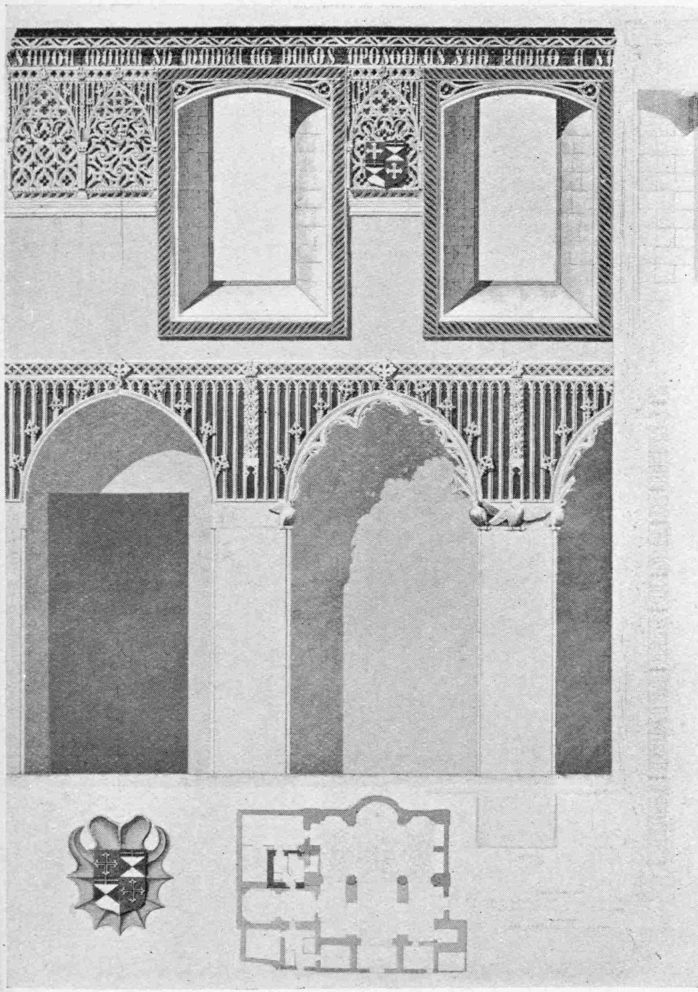
PLATE 413.
Alcalá de Henares.
Chapel of Santiago in the Church of Santa María.
PLATE 414
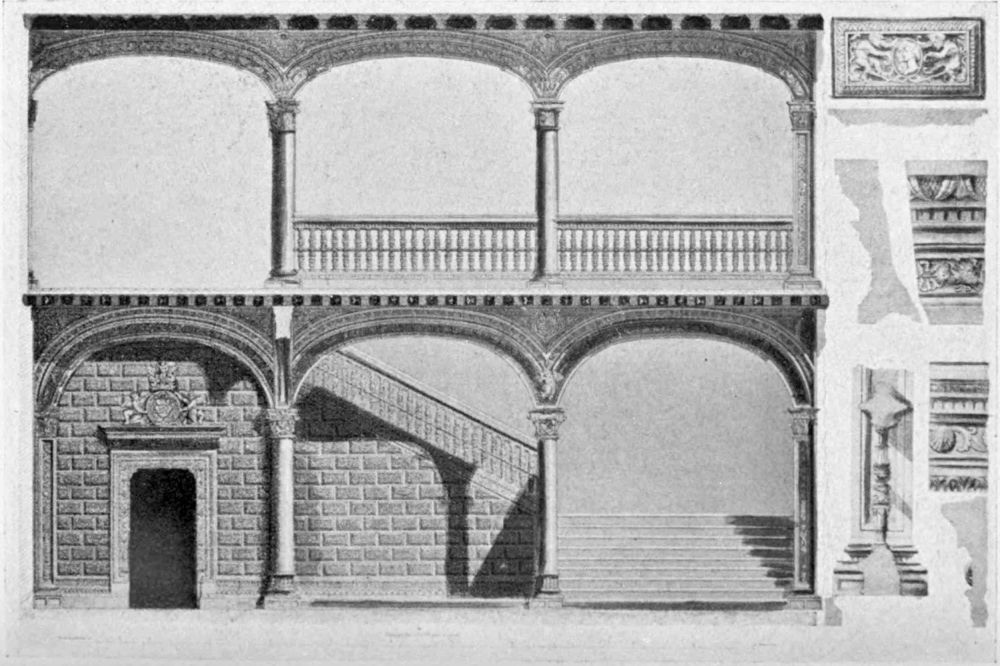
PLATE 414.
Alcalá de Henares. Staircase in the Archbishop’s Palace.
PLATE 415
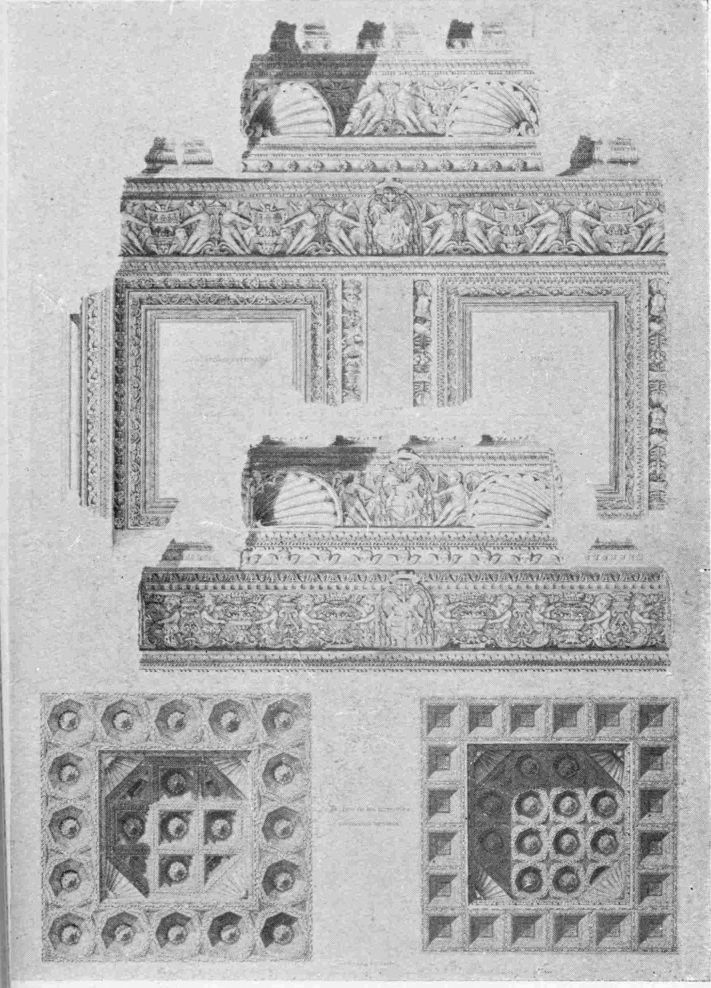
PLATE 415.
Alcalá de Henares.
Details of the Western Court and Entrance Court, Archbishop’s Palace.
PLATE 416
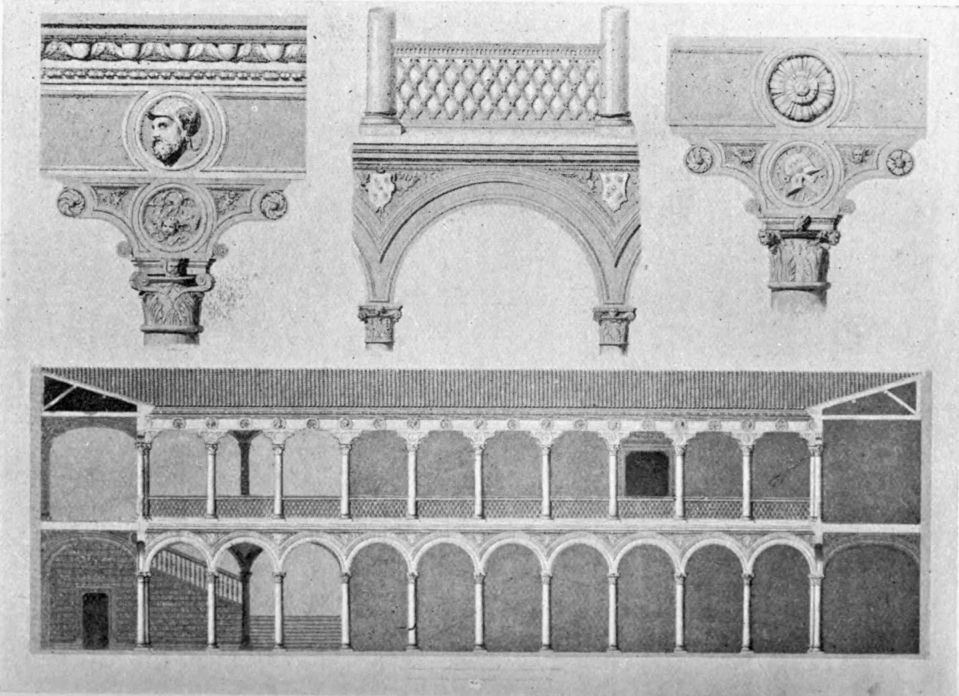
PLATE 416.
Alcalá de Henares.
Longitudinal Section and Details of the Archbishop’s Palace.
PLATE 417
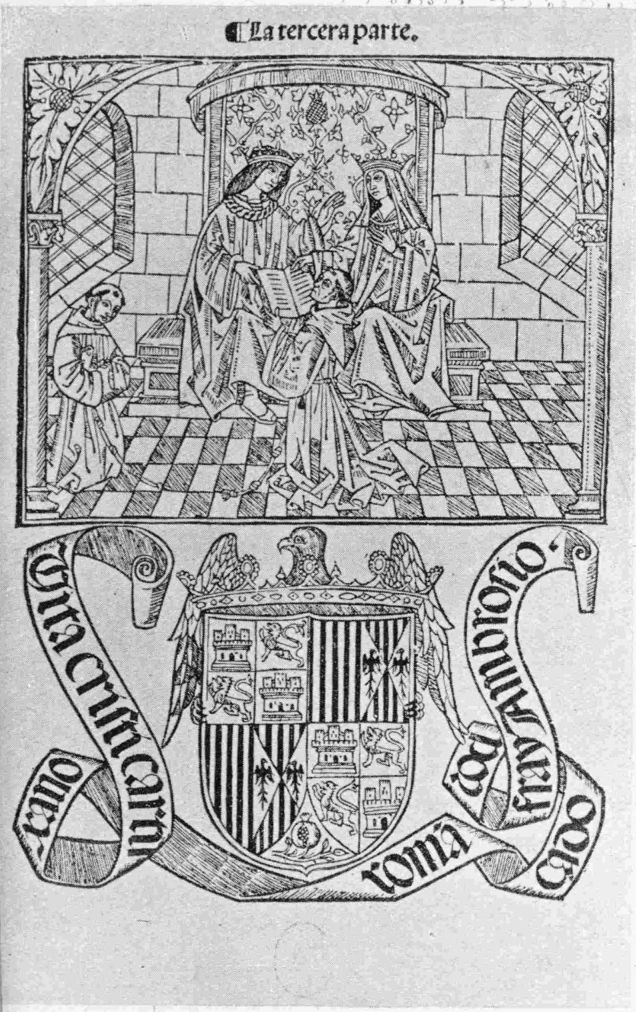
PLATE 417.
Alcalá de Henares.
Frontispiece of a Book called “Vita Cristi Cartuxano.”
PLATE 418
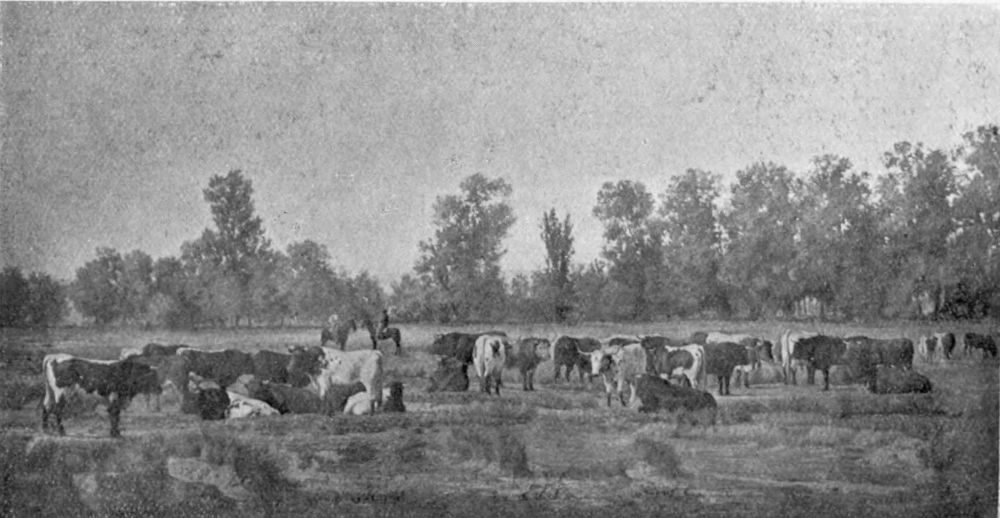
PLATE 418.
Muñoza Bulls, the Property of the Duke of Veragua, by Joaquín Díez.
PLATE 419
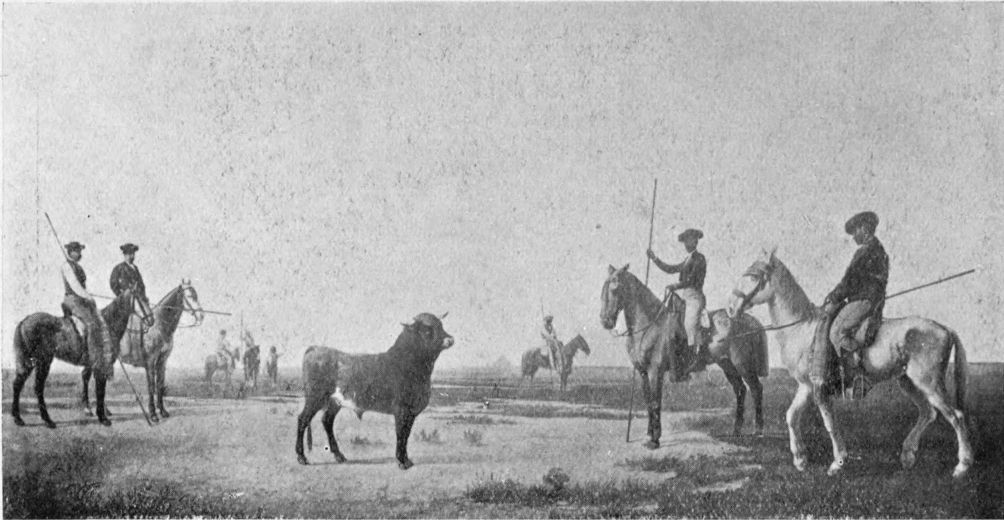
PLATE 419.
Testing a “Becerro,” or Young Bull, at Tablada, near Seville, by Joaquín Díez.
PLATE 420
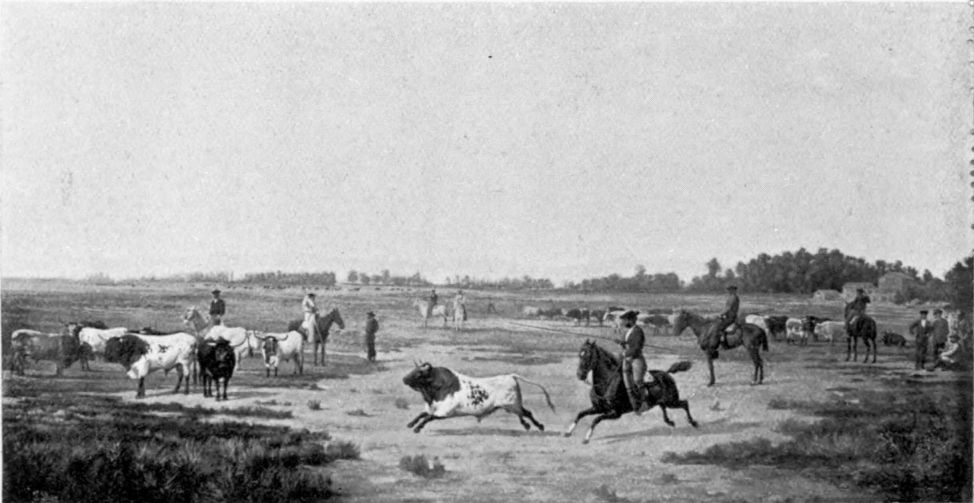
PLATE 420.
Selecting Bulls from the herd of the Duke of Veragua at “La Muñoza,” by Joaquín Díez.
PLATE 421
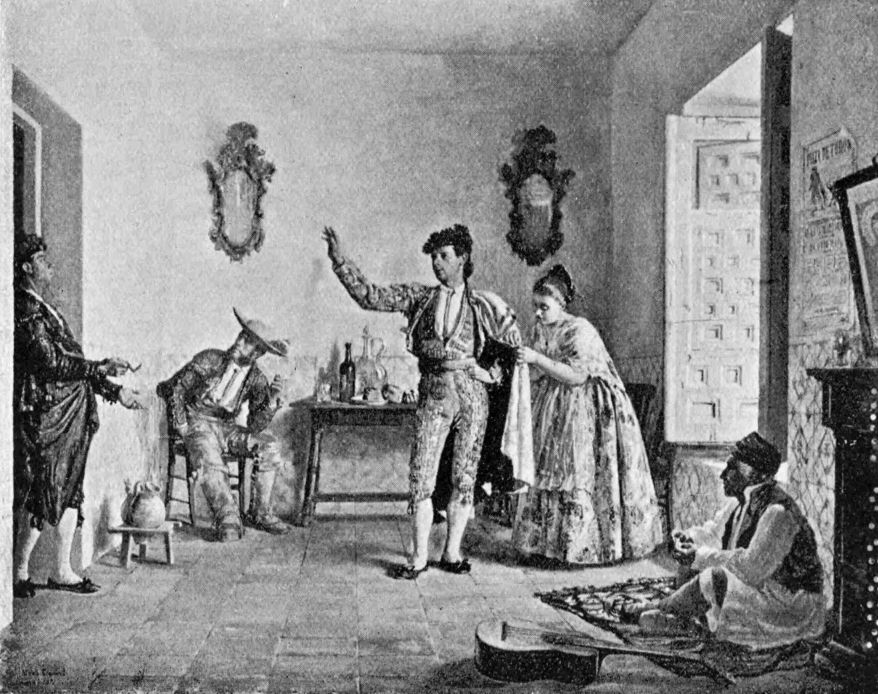
PLATE 421.
The Toilet of the Toreador before the Bull-fight, by V. Esquivel.
PLATE 422
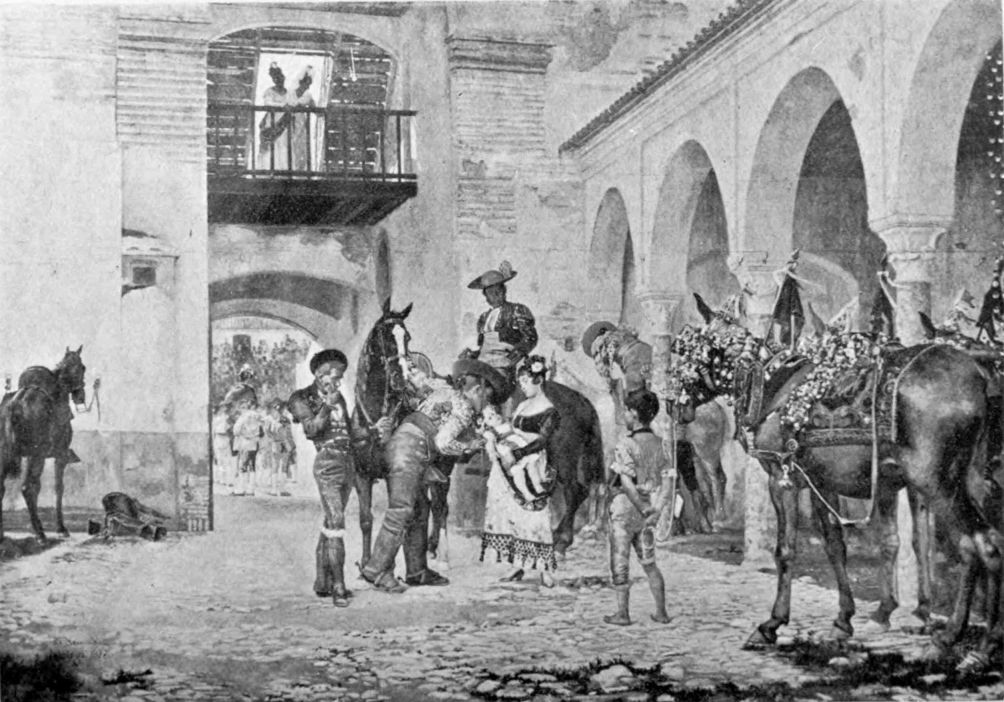
PLATE 422.
Before the Bull-fight by B. Ferrandiz.
PLATE 423
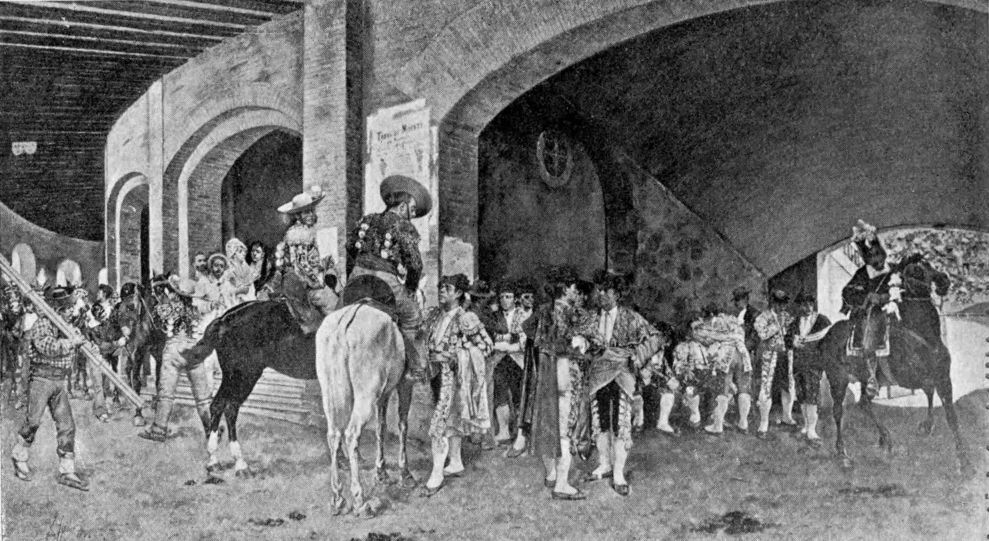
PLATE 423.
Toreadors preparing to enter the Arena, by J. Agrasot.
PLATE 424
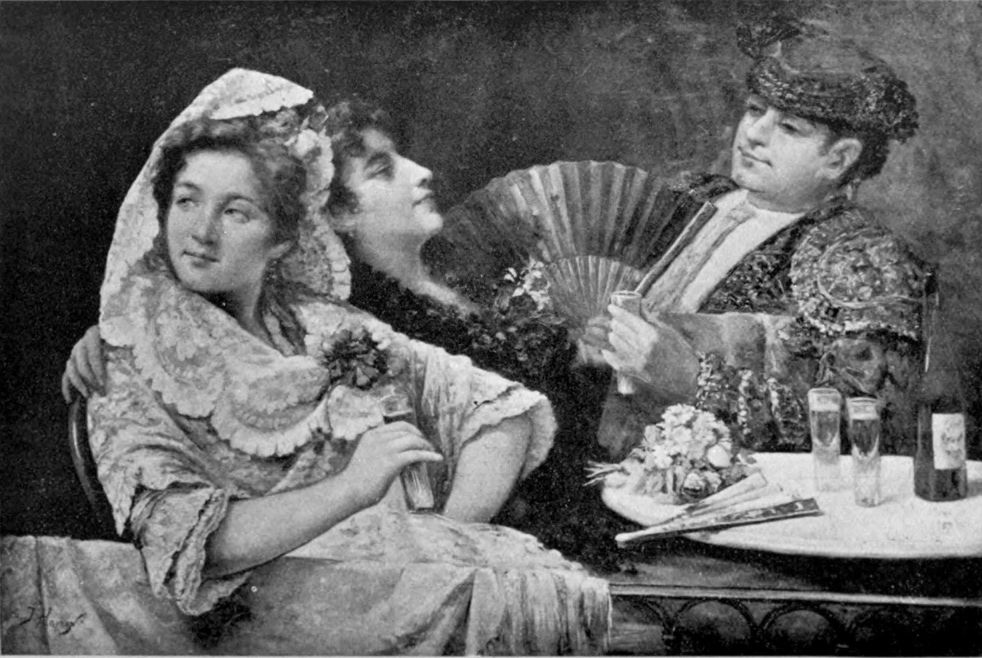
PLATE 424.
Entertaining the Bull-fighter, by Alarcón.
PLATE 425
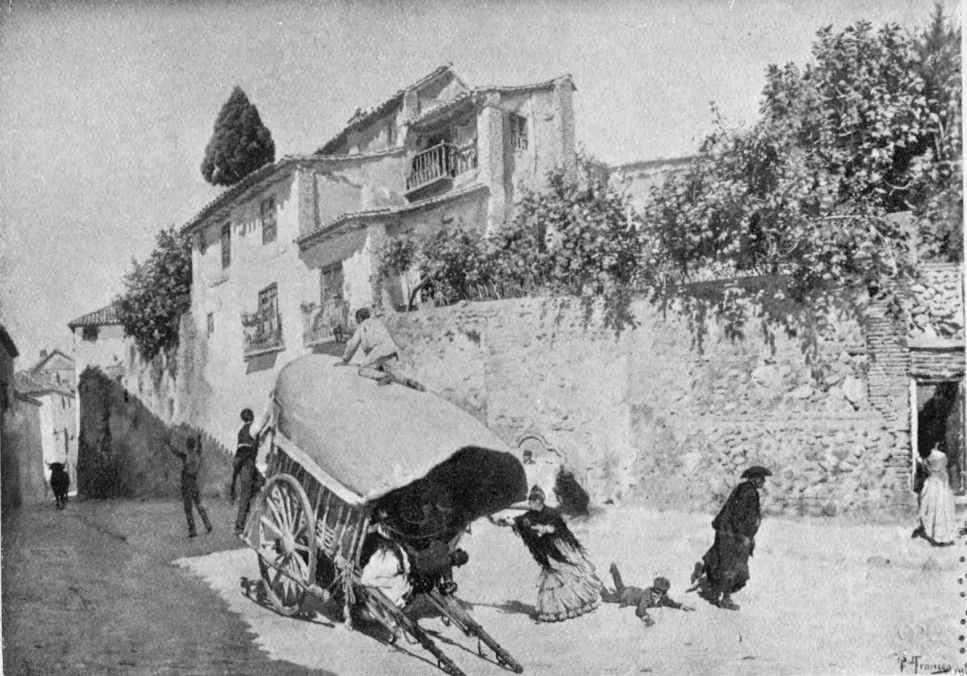
PLATE 425.
“Here comes the Bull!” by P. Francés.
NATIONAL EXHIBITION OF BEAUX-ARTS, 1887.
PLATE 426
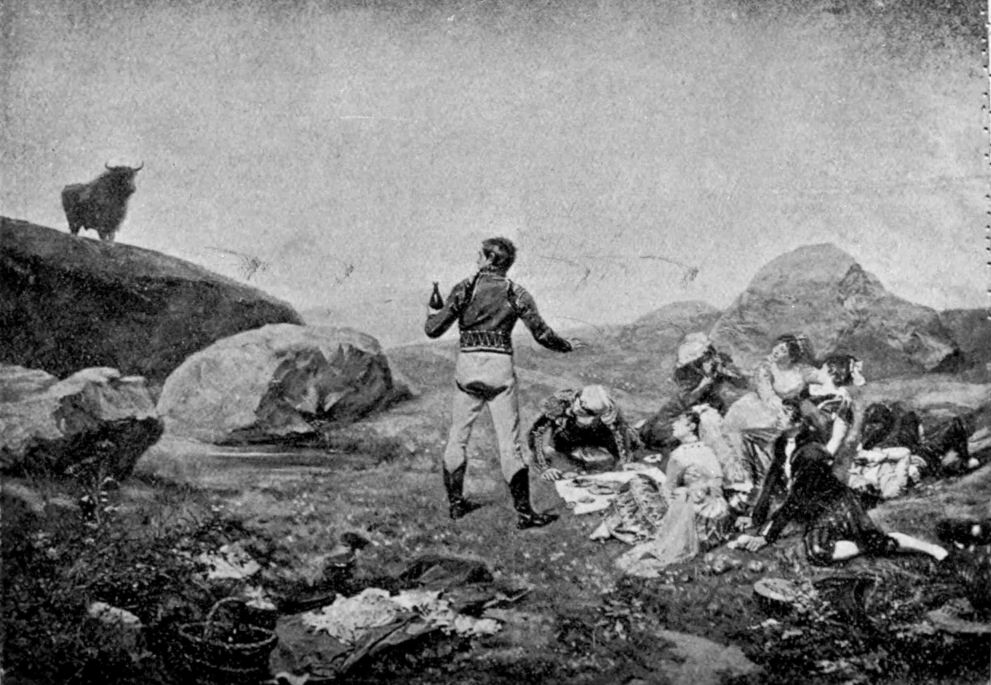
PLATE 426.
“The Uninvited Guest,” by E. Mélida.
PLATE 427
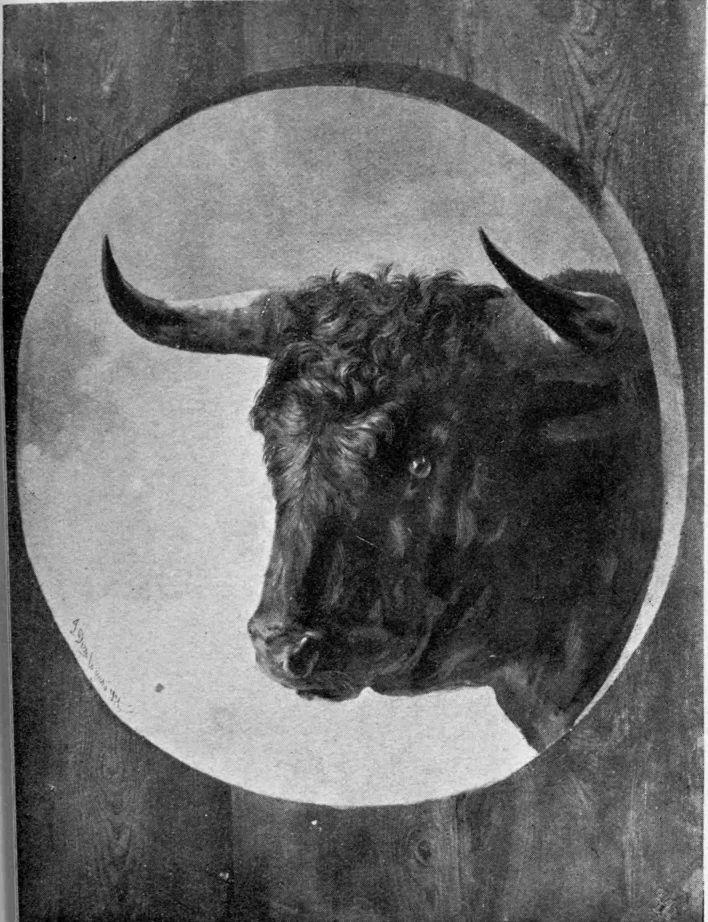
PLATE 427.
Head of a Bull, by Joaquín Díez.
PLATE 428
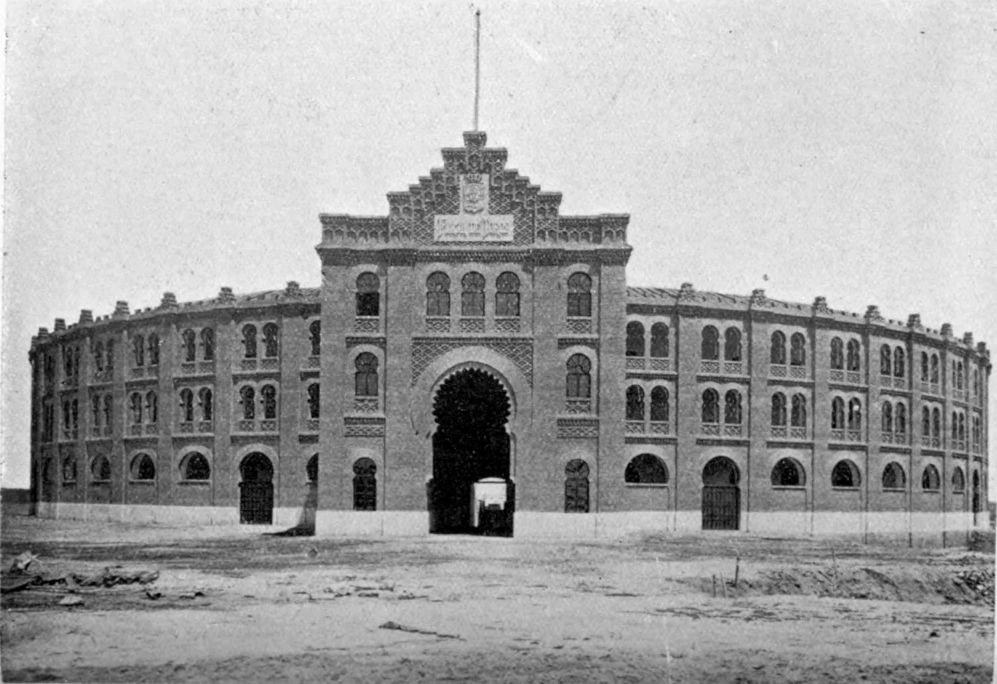
PLATE 428.
Principal Façade of the New Plaza de Toros.
PLATE 429
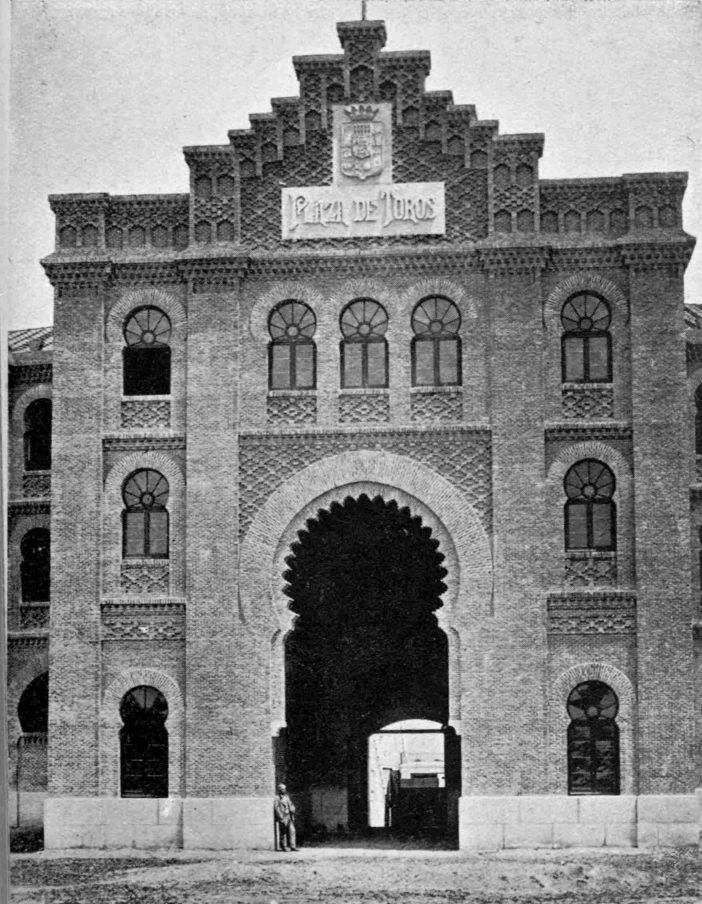
PLATE 429.
Principal Entrance to the New Plaza de Toros.
PLATE 430
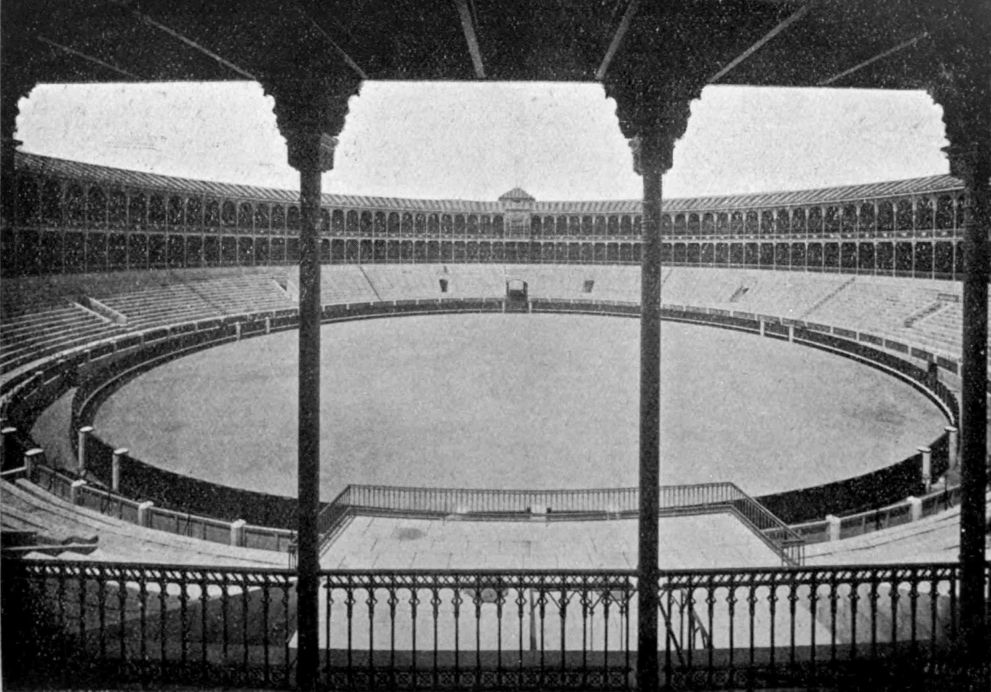
PLATE 430.
Interior of the New Plaza de Toros.
PLATE 431
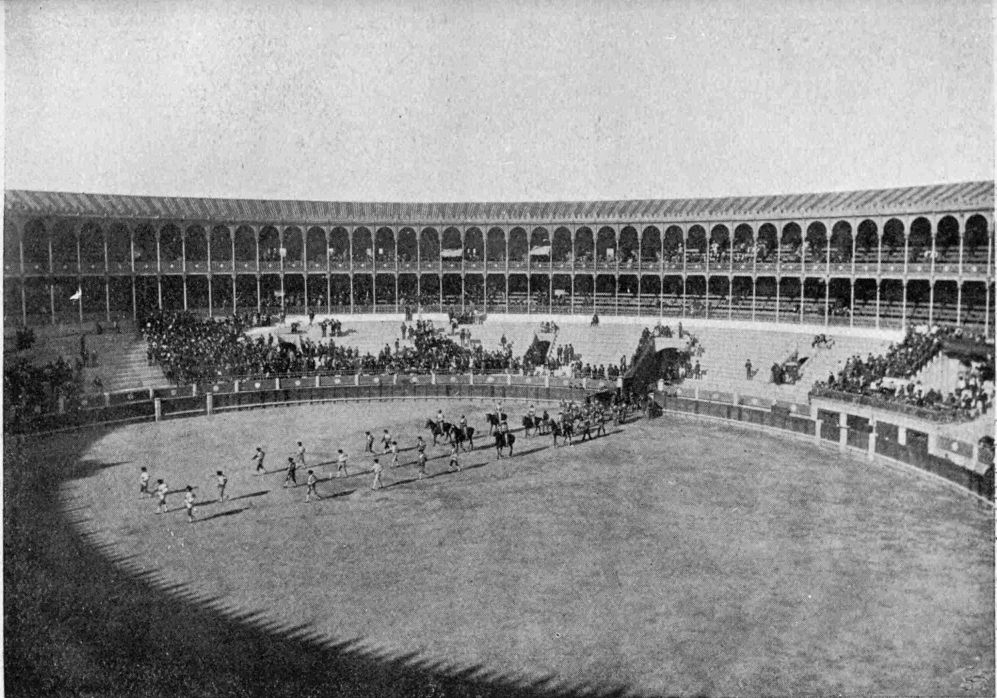
PLATE 431.
Bull-fight. Entrance of the “Cuadrilla.”
PLATE 432
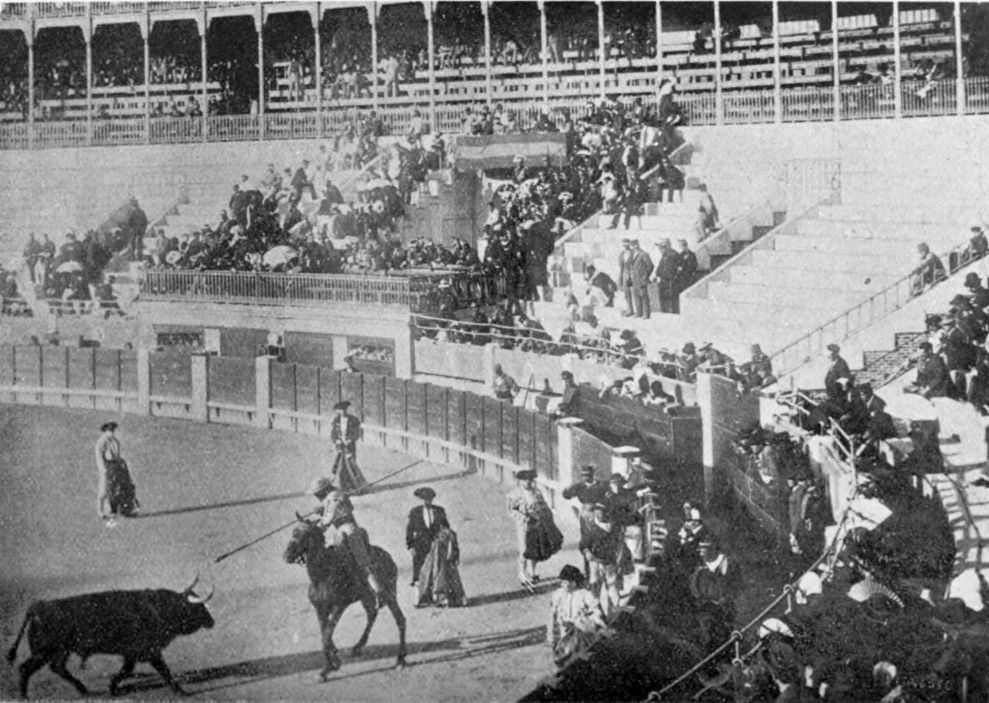
PLATE 432.
Bull-fight. A Picador inciting the Bull.
PLATE 433
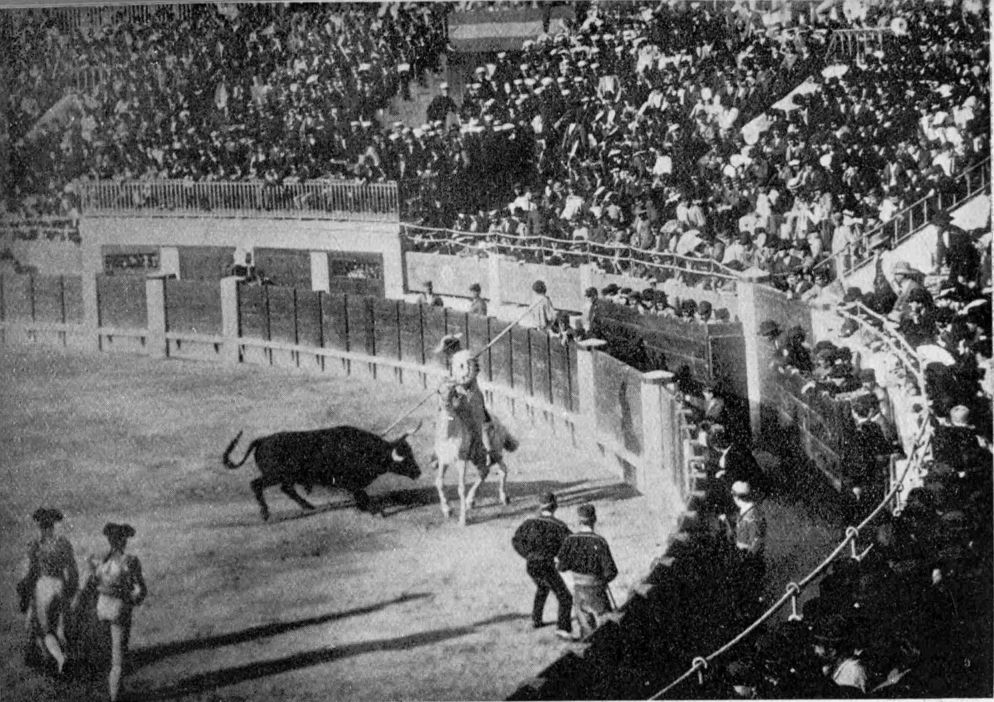
PLATE 433.
Bull-fight. The Picador.
PLATE 434
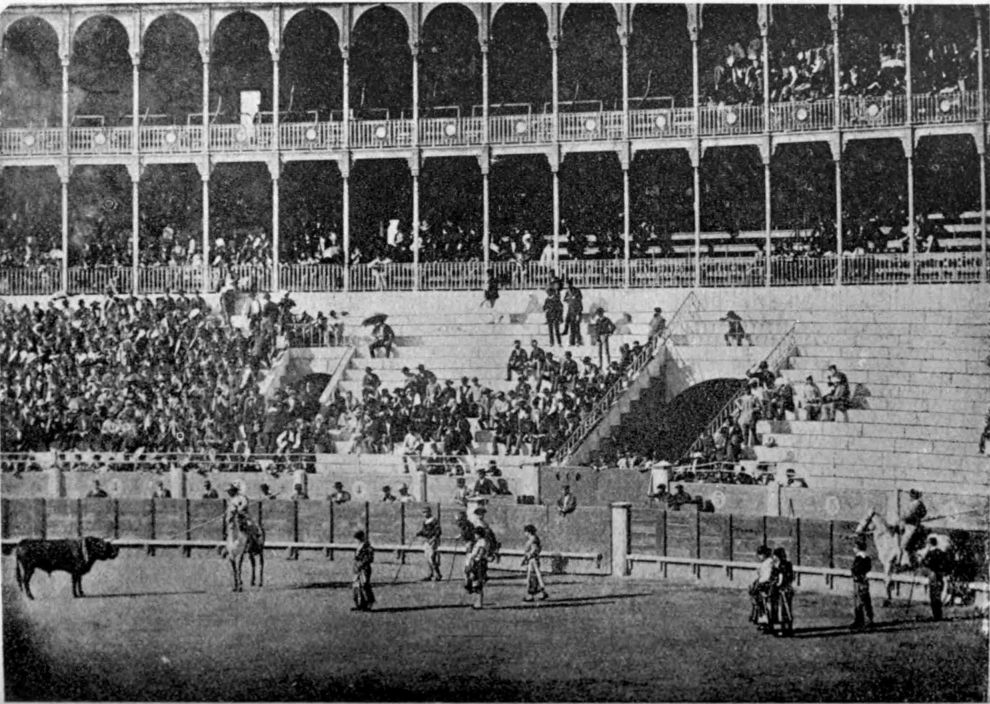
PLATE 434.
Bull-fight. The Picador.
PLATE 435
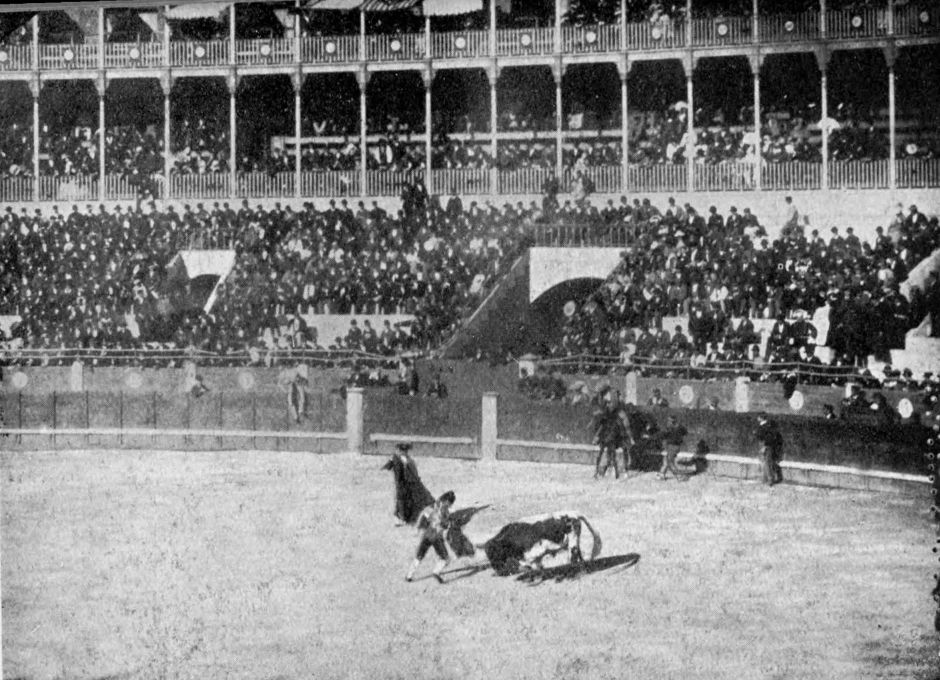
PLATE 435.
Bull-fight. A “Quite.”
PLATE 436
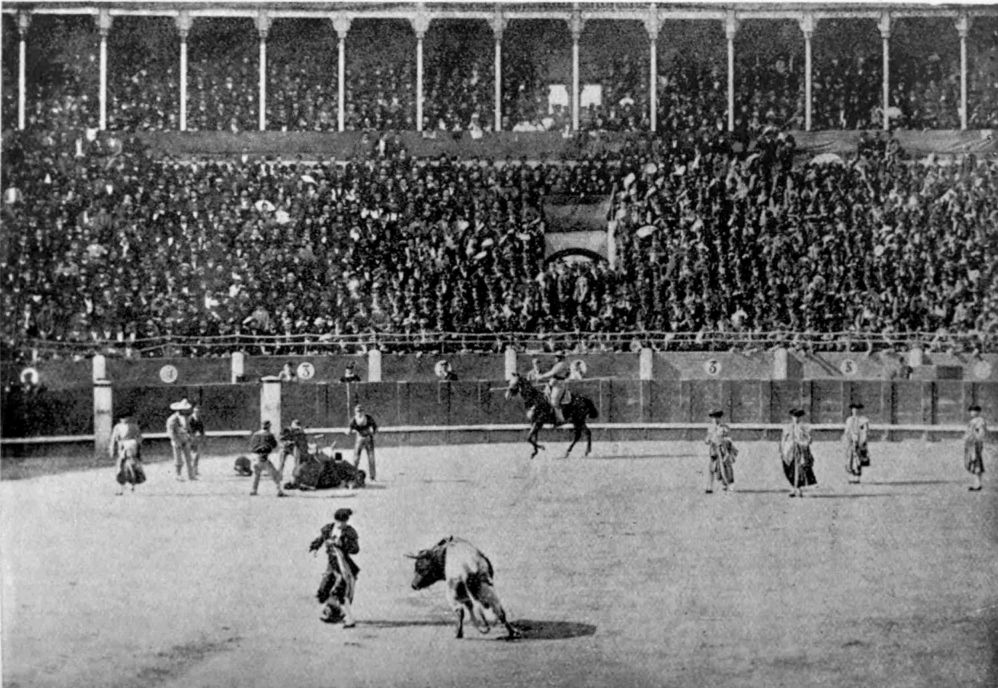
PLATE 436.
Bull-fight. A “Quite” of El Gallo.
PLATE 437
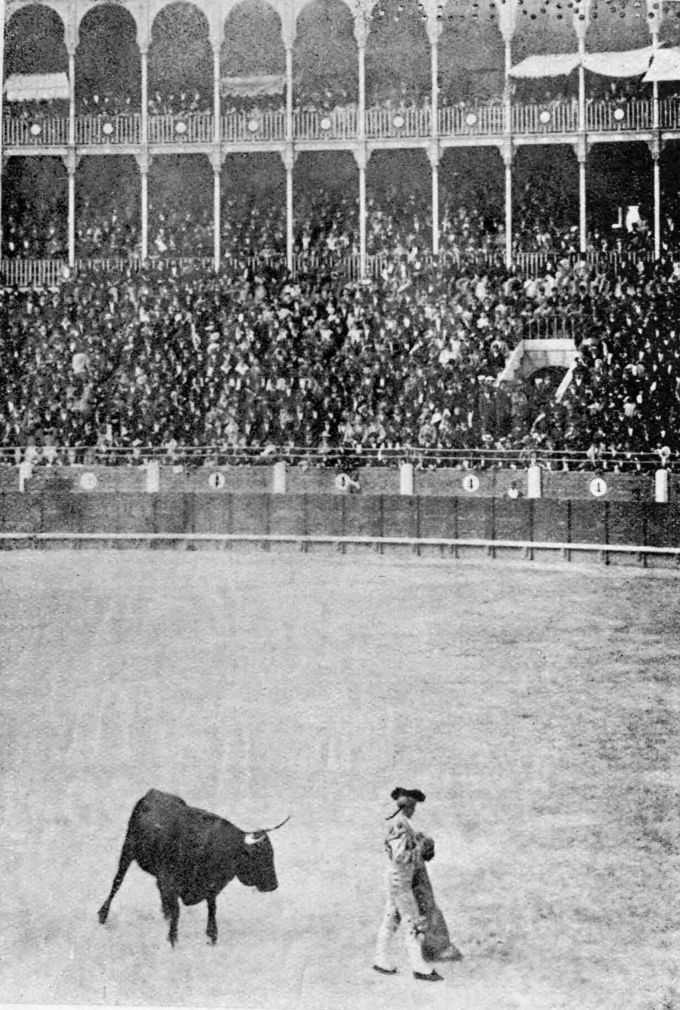
PLATE 437.
Bull-fight. Lagartijo after a “Recorte.”
PLATE 438
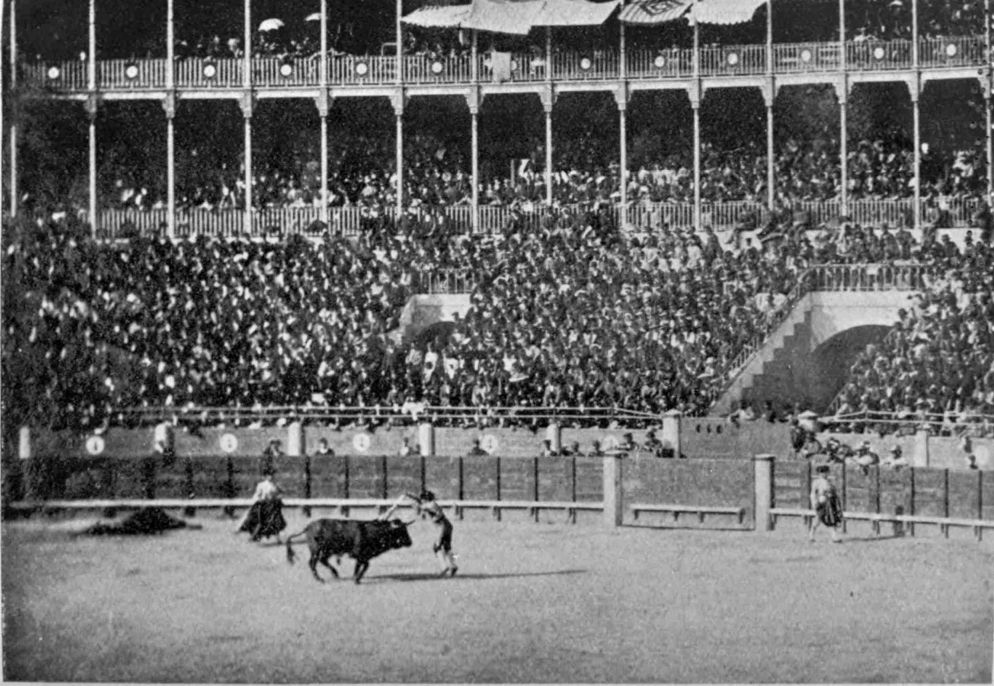
PLATE 438.
Bull-fight. The Banderillas.
PLATE 439
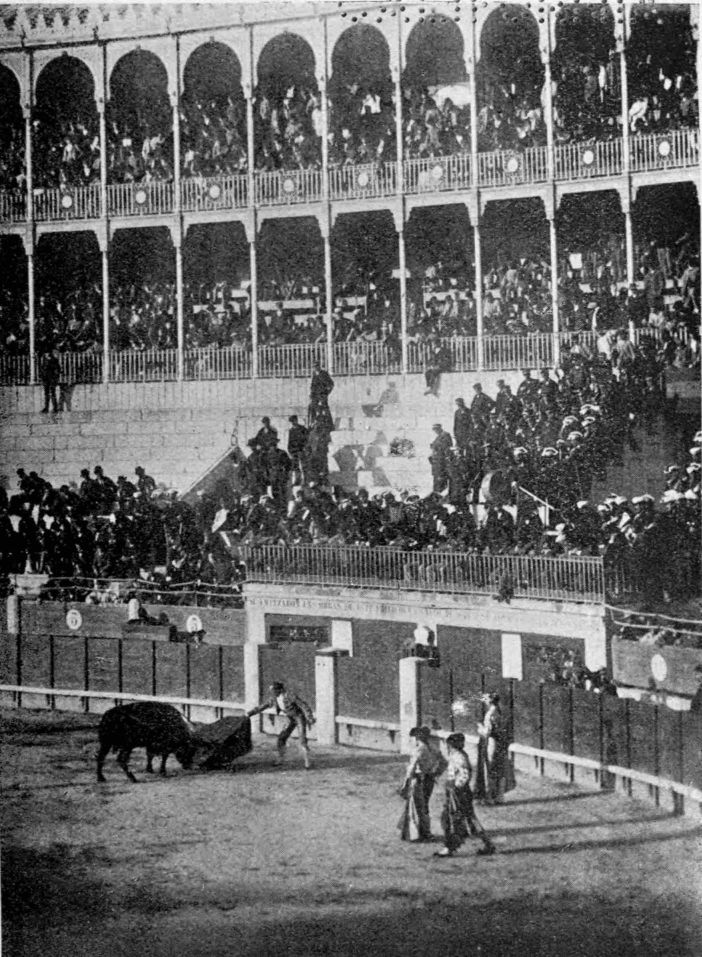
PLATE 439.
Bull-fight.
Frascuelo irritating the Bull with a Cloak before killing Him.
PLATE 440
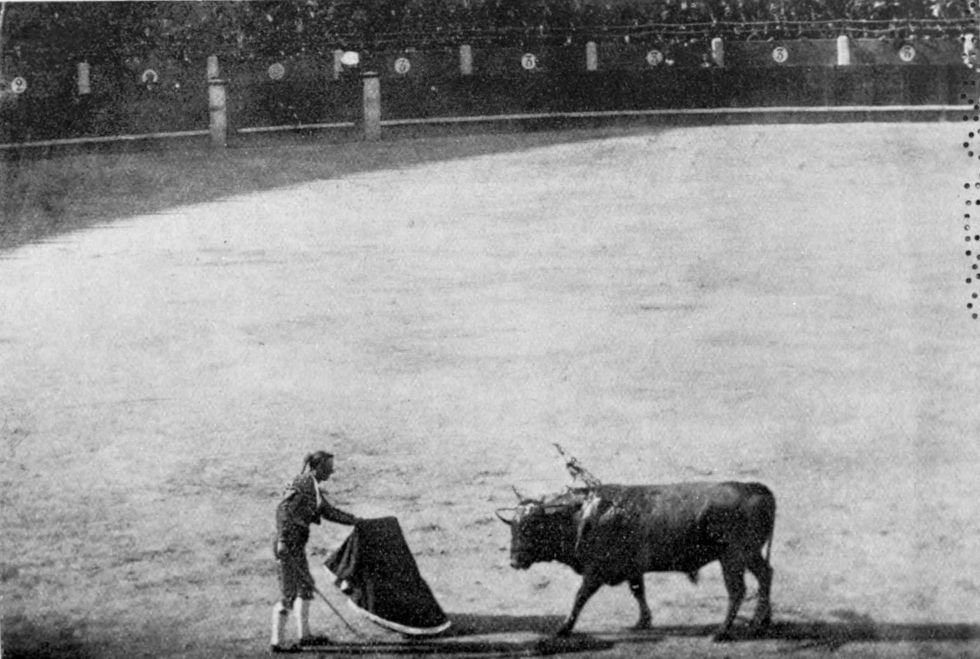
PLATE 440.
Bull-fight. Lagartijo irritating the Bull with a Cloak before killing Him.
PLATE 441
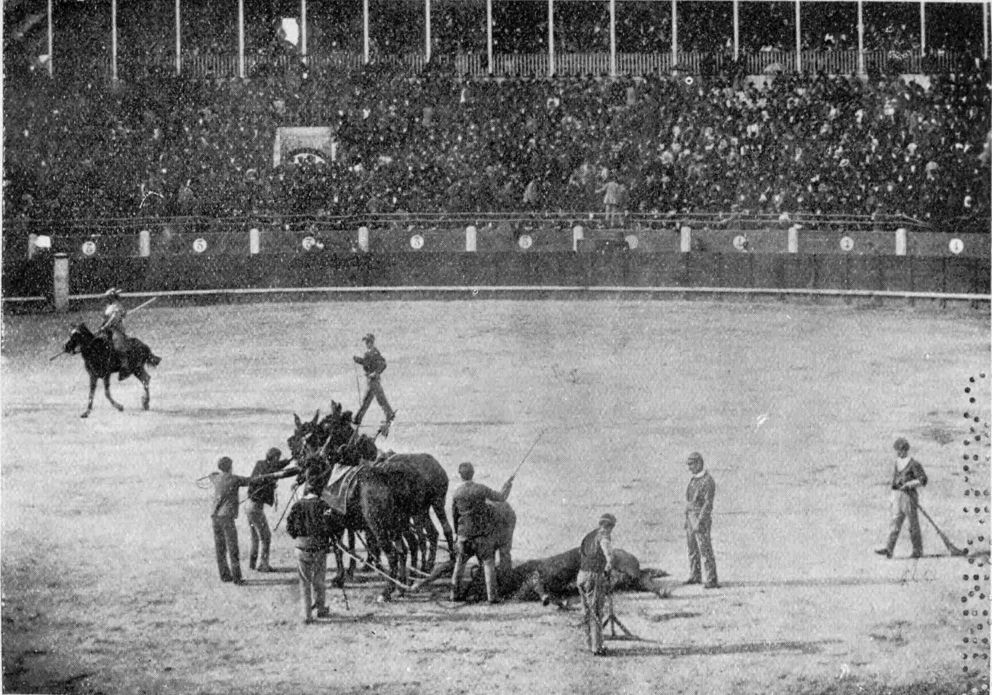
PLATE 441.
Bull-fight. The Bull being dragged out of the Arena.
PLATE 442
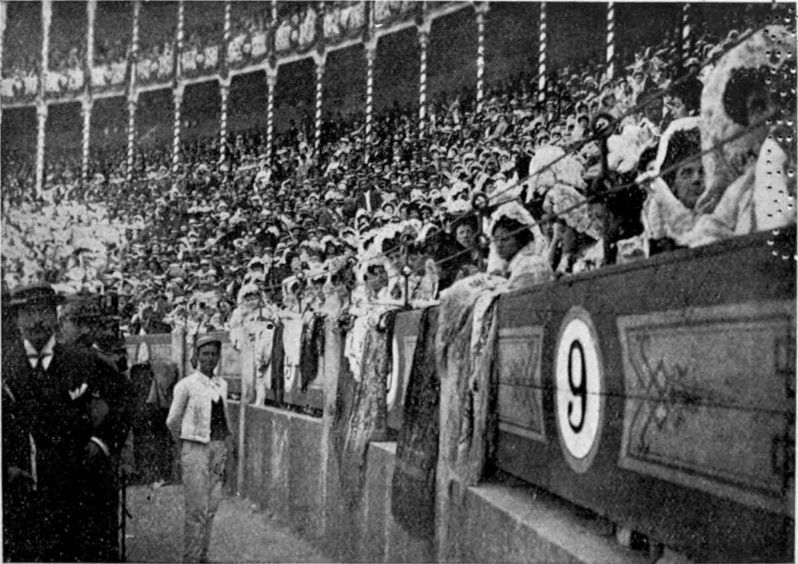
PLATE 442.
Ladies at the Bull-fight.
PLATE 443
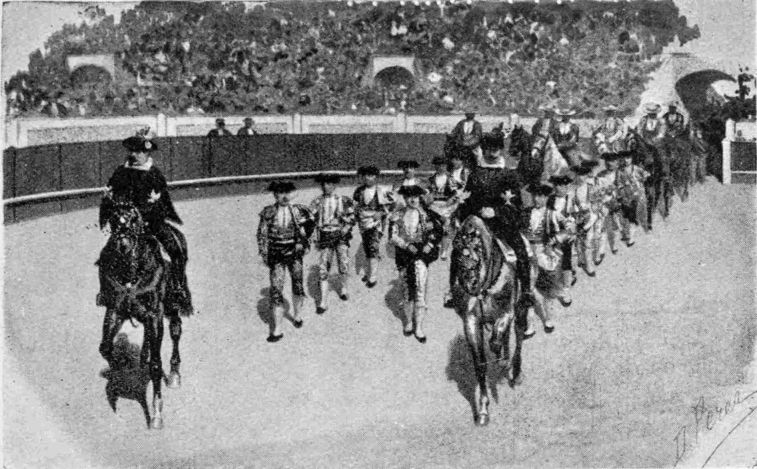
PLATE 443.
The Procession.
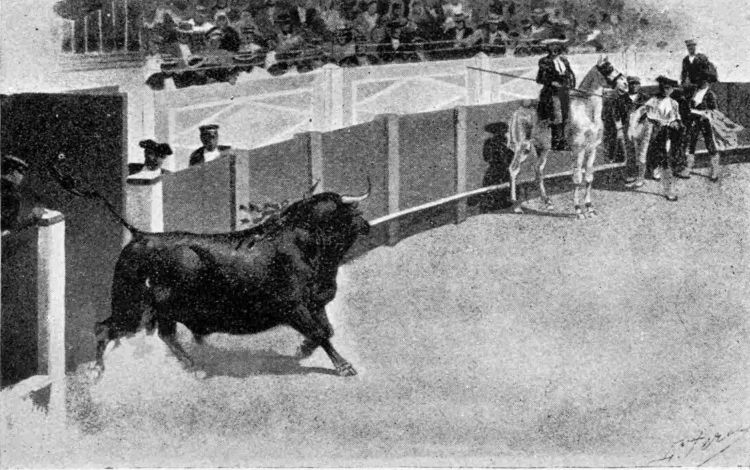
Entrance of the Bull.
PLATE 444
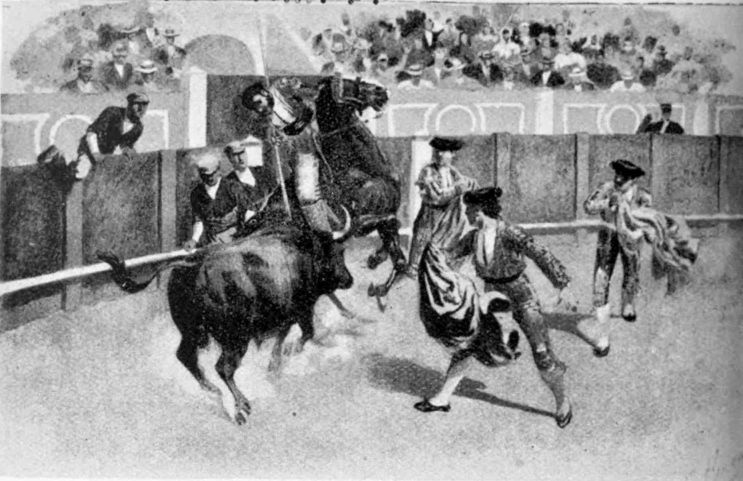
PLATE 444.
The Picador.
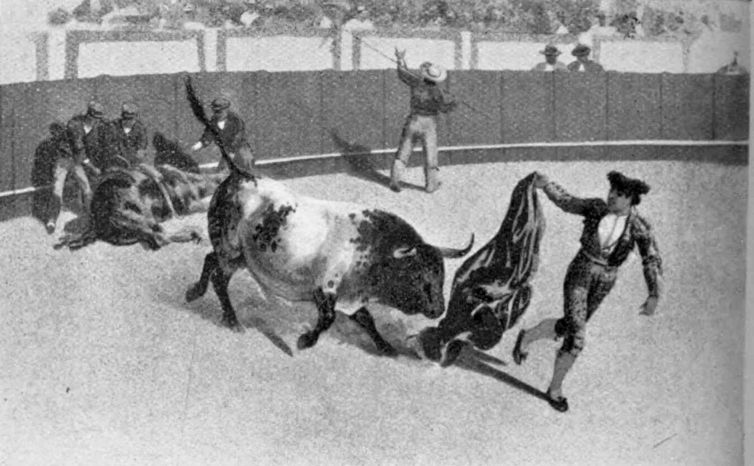
At Close Quarters.
PLATE 445
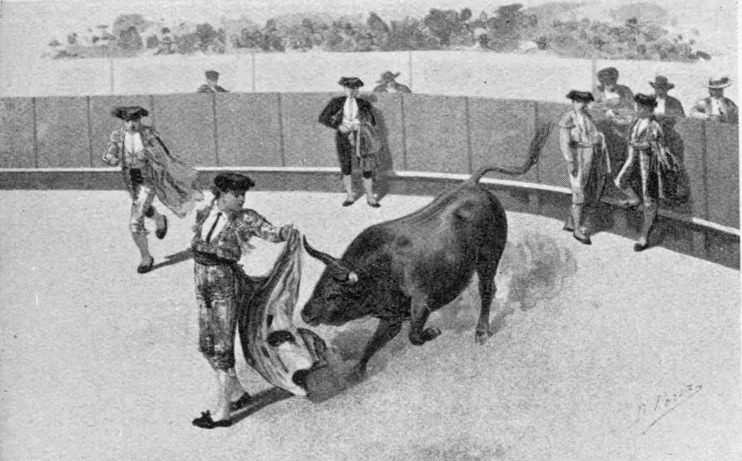
PLATE 445.
A Turn with his Back to the Bull.
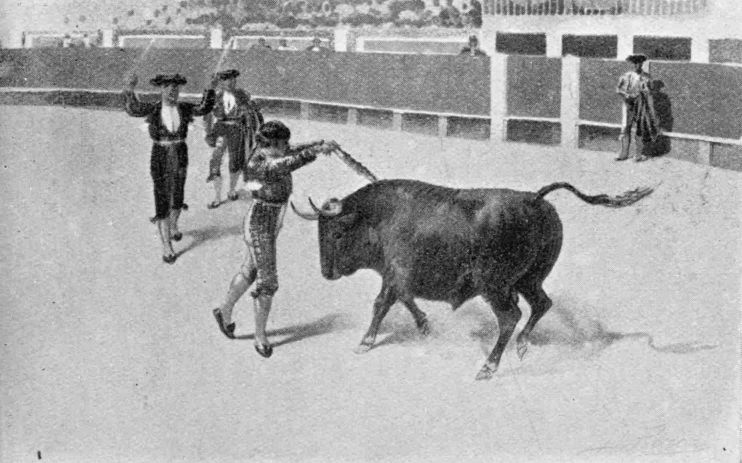
Fixing the Banderillas.
PLATE 446
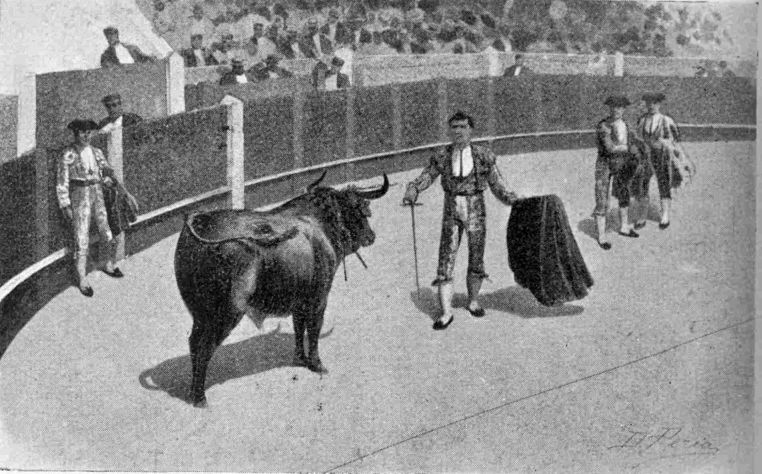
PLATE 446.
The Matador.
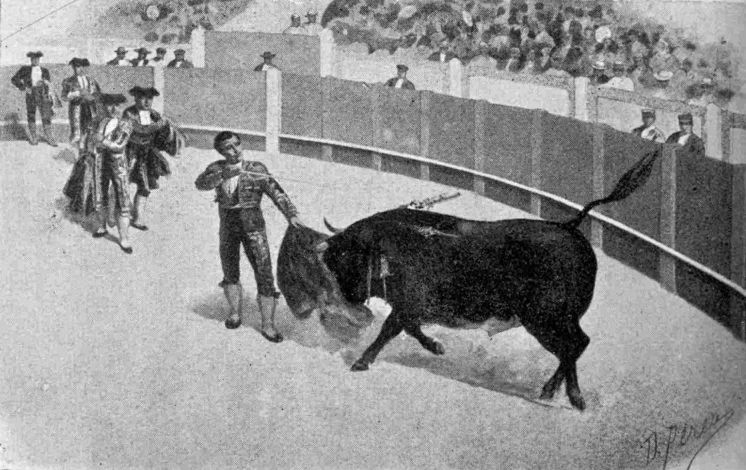
The Final Stroke.
PLATE 447
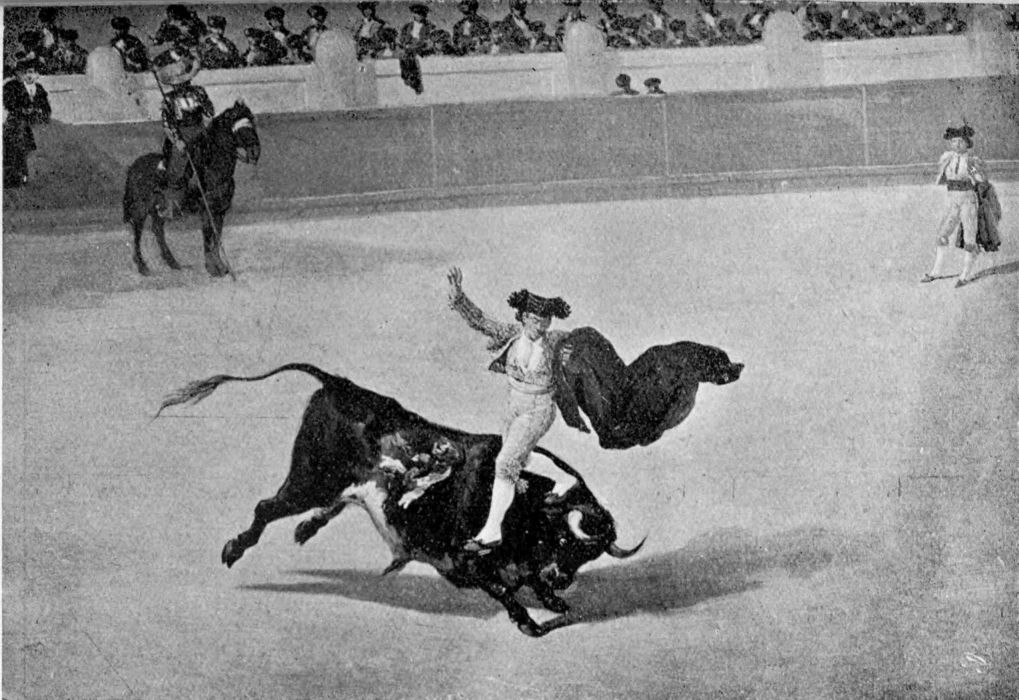
PLATE 447.
Bull-fight. Leap over the Bull’s Neck.
PLATE 448
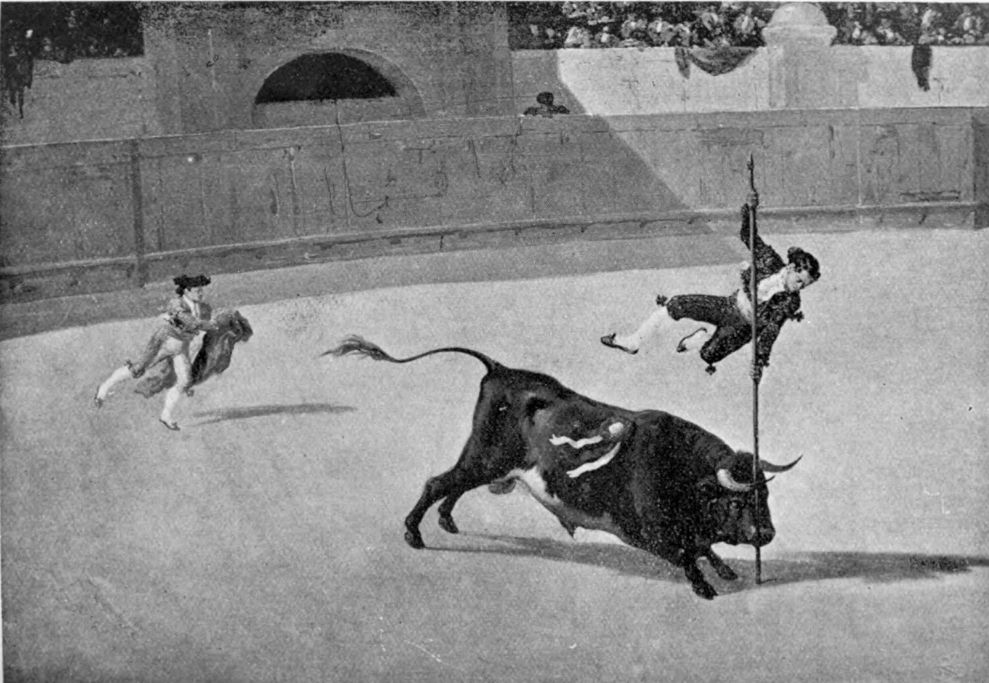
PLATE 448.
Bull-fight. Leap with the Pole.
PLATE 449
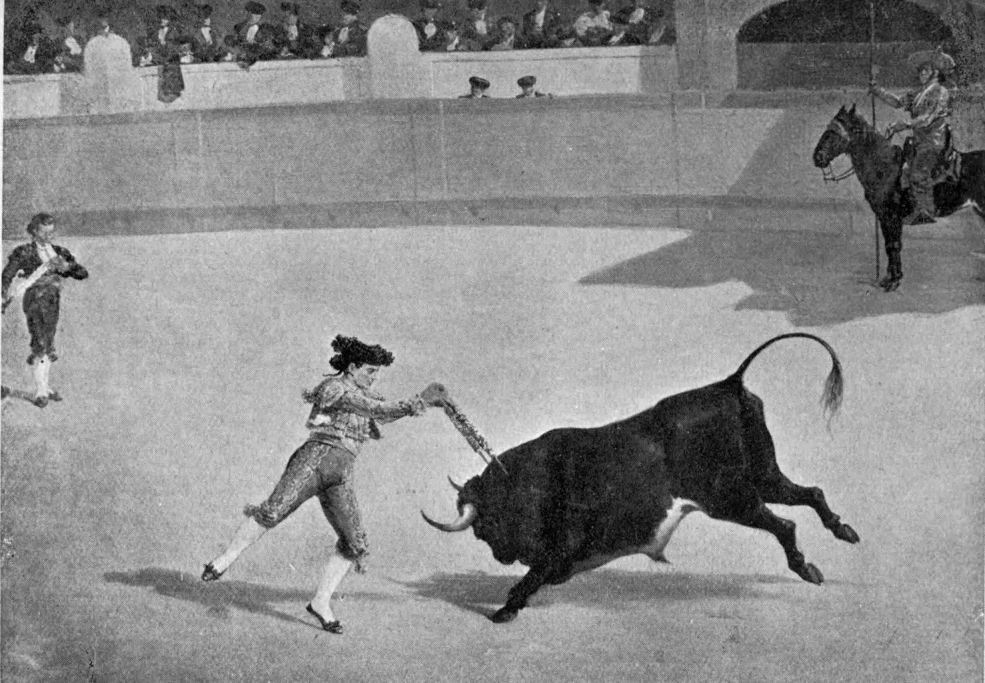
PLATE 449.
Bull-fight. Banderillas.
PLATE 450
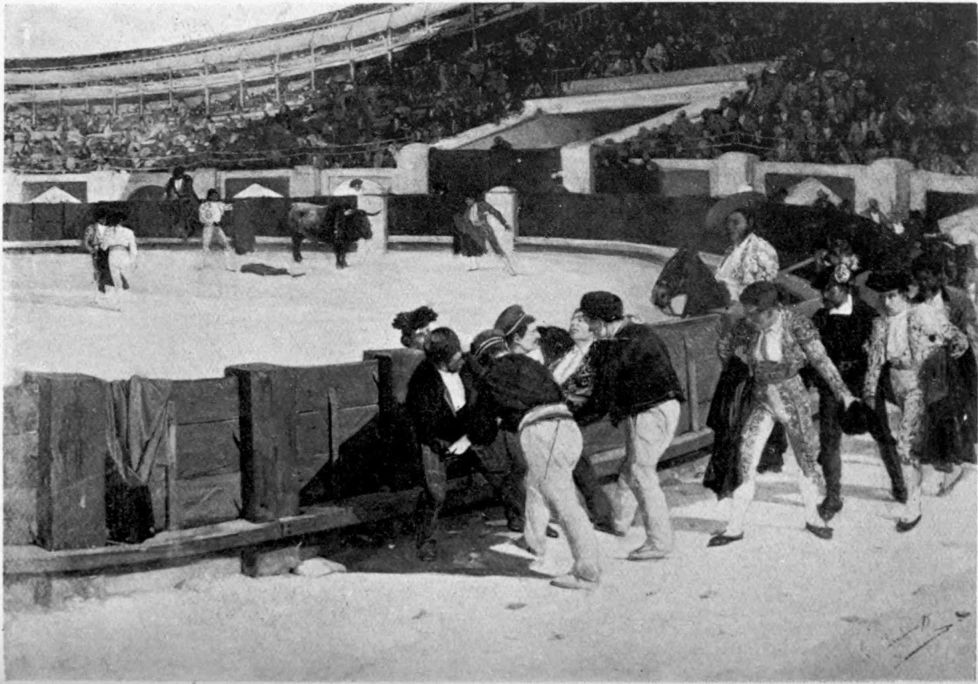
PLATE 450.
Toreador wounded during a Bull-fight, by Lizcano.
PLATE 451
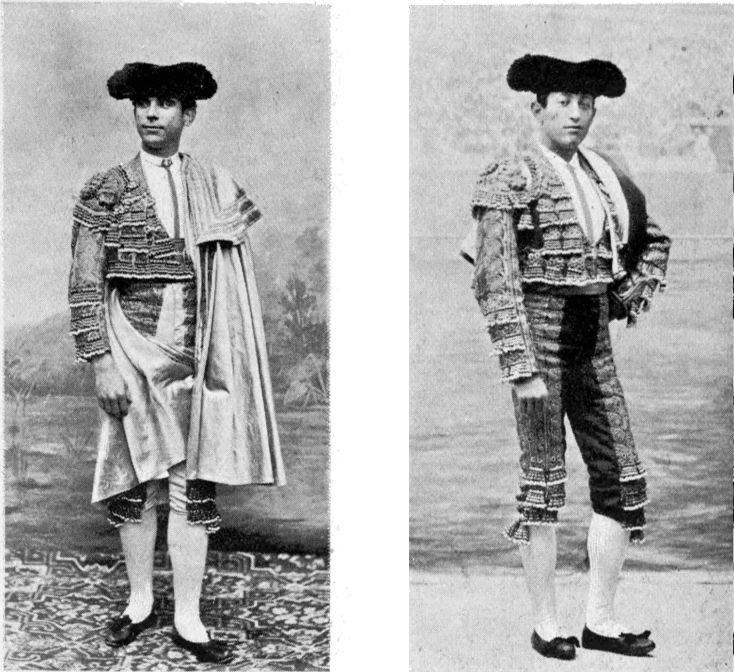
PLATE 451.
Guerrita. Banderillero. Antonio Fuentes.
PLATE 452
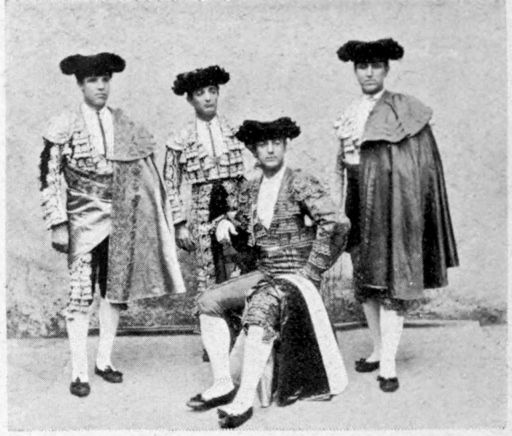
PLATE 452.
Luis Mazzantini and Cuadrilla.
PLATE 453
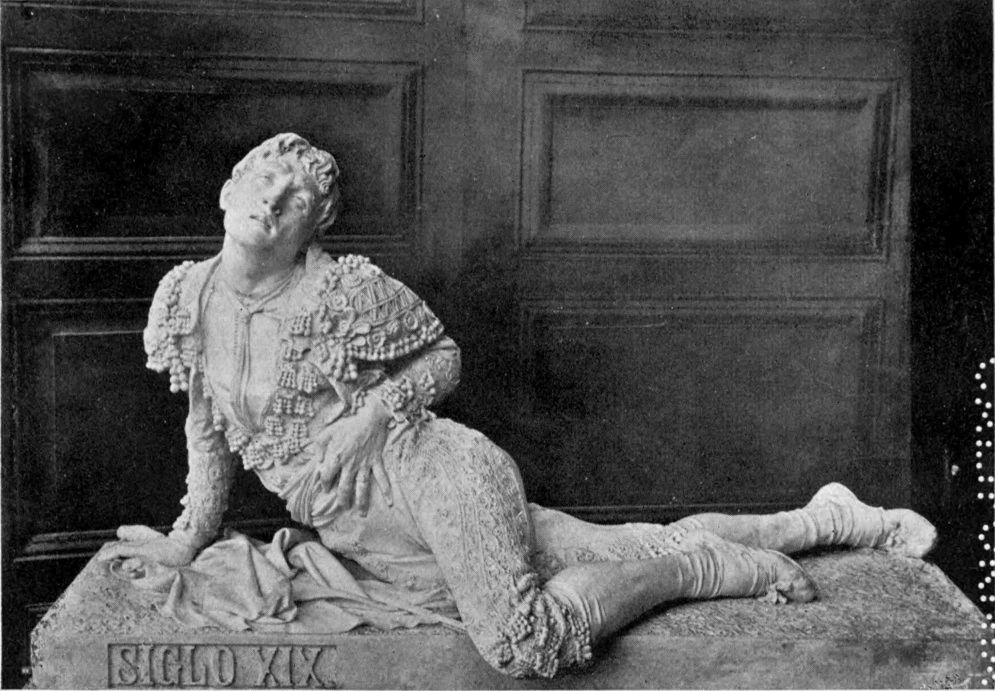
PLATE 453.
Bull-fight.
Last Moments of a Toreador after being attacked in the Arena, by R. Novas.
THE SPANISH SERIES
Crown 8vo. Gilt Top. Price 3/6 net.
“Mr. A. Calvert’s Spanish Series will be heartily welcomed by all students of Spanish art, for it is not too much to say that never before has an attempt been made to present to the public so vast a number of reproductions from quite acceptable photographs of Spanish works of art at so low a price.”—The World.
“ ...Calculated to give English readers a most comprehensive survey of this fascinating land, and to convey a clear idea of its historic greatness. The get-up of the books is in every way worthy of a series of this magnitude.”—Sketch.
“Every volume in the Spanish Series has taught us to expect a high standard of excellence.”—Daily News.
Goyawith612 illustrations
Toledo”510”
Madrid”453”
Galicia——
Seville”300”
Murillo”165”
Cordova”160”
El Greco”136”
Velazquez”136”
The Prado”220”
The Escorial”278”
Sculpture in Spain”140”
Valencia and Murcia”300”
Royal Palaces of Spain”164”
Vizcaya and Santander——
Spanish Arms and Armour”386”
Granada and the Alhambra”460”
Leon, Burgos and Salamanca”462”
Catalonia and Balearic Islands”250”
The Royal Tapestries at Madrid”200”
Valladolid, Oviedo, Segovia,”413”
Zamora, Avila and Zaragoza”413”
UNIFORM WITH THIS VOLUME
EL GRECO
A BIOGRAPHY & APPRECIATION. WITH 136 PLATES
In a Series such as this, which aims at presenting every aspect of Spain’s eminence in art and in her artists, the work of Domenico Theotocópuli must be alloted a volume to itself. “El Greco,” as he is called, who reflects the impulse, and has been said to constitute the supreme glory of the Venetian era, was a Greek by repute, a Venetian by training, and a Toledan by adoption. His pictures in the Prado are still catalogued among those of the Italian School, but foreigner as he was, in his heart he was more Spanish than the Spaniards.
El Greco is typically, passionately, extravagantly Spanish, and with his advent, Spanish painting laid aside every trace of Provincialism, and stepped forth to compel the interest of the world. Neglected for many centuries, and still often misjudged, his place in art is an assured one. It is impossible to present him as a colourist in a work of this nature, but the author has got together reproductions of no fewer than 140 of his pictures—a greater number than has ever before been published of El Greco’s works.
VELAZQUEZ
A BIOGRAPHY & APPRECIATION. WITH 136 PLATES
DIEGO RODRIGUEZ DE SILVA Y VELAZQUEZ—“our Velazquez,” as Palomino proudly styles him—has been made the subject of innumerable books in every European language, yet the Editor of this Spanish series feels that it would not be complete without the inclusion of yet another contribution to the broad gallery of Velazquez literature.
The great Velazquez, the eagle in art—subtle, simple, incomparable—the supreme painter, is still a guiding influence of the art of to-day. The greatest of Spanish artists, a master not only in portrait painting, but in character and animal studies, in landscapes and historical subjects, impressed the grandeur of his superb personality upon all his work. Spain, it has been said, the country whose art was largely borrowed, produced Velazquez, and through him Spanish art became the light of a new artistic life.
THE PRADO
A GUIDE AND HANDBOOK TO THE ROYAL PICTURE GALLERY OF MADRID. WITH 220 PLATES
This volume is an attempt to supplement the accurate but formal notes contained in the official catalogue of a picture gallery which is considered the finest in the world. It has been said that the day one enters the Prado for the first time is an important event like marriage, the birth of a child, or the coming into an inheritance; an experience of which one feels the effects to the day of one’s death.
The excellence of the Madrid gallery is the excellence of exclusion; it is a collection of magnificent gems. Here one becomes conscious of a fresh power in Murillo, and is amazed anew by the astonishing apparition of Velazquez; here is, in truth, a rivalry of the miracles of art.
UNIFORM WITH THIS VOLUME
VALLADOLID, OVIEDO, SEGOVIA, ZAMORA, AVILA AND ZARAGOZA
A HISTORICAL AND DESCRIPTIVE ACCOUNT, WITH 413 PLATES
The glory of Valladolid has departed, but the skeleton remains, and attached to its ancient stones are the memories that Philip II. was born here, that here Cervantes lived, and Christopher Columbus died. In this one-time capital of Spain, in the Plaza Mayor, the fires of the Inquisition were first lighted, and here Charles V. laid the foundation of the Royal Armoury, which was afterwards transferred to Madrid.
More than seven hundred years have passed since Oviedo was the proud capital of the Kingdoms of Las Asturias, Leon, and Castile. Segovia, though no longer great, has still all the appurtenances of greatness, and and with her granite massiveness and austerity, she remains an aristocrat even among the aristocracy of Spanish cities. Zamora, which has a history dating from time almost without date, was the key of Leon and the centre of the endless wars between the Moors and the Christians, which raged round it from the eighth to the eleventh centuries.
In this volume the author has striven to re-create the ancient greatness of these six cities, and has preserved their memories in a wealth of excellent and interesting illustrations.
VALENCIA AND MURCIA
A GLANCE AT AFRICAN SPAIN, WITH 300 ILLUSTRATIONS
Every traveller to the fertile Provinces which form the subject of this volume has been forcibly impressed by their outward resemblance to the more favoured parts of Northern Africa. And here, only to a degree less than in Andalusia, the Moors made themselves very much at home, and have left behind them ineffaceable impressions.
In this delightful region the dusky invaders established themselves at Valencia, which they dubbed the City of Mirth. The history of the land is alike a fevered dream of mediævalism. Across its pages flit the shadowy forms of Theodomir, and the Cid and Jaime lo Conqueridor, standing out against a back-ground of serried hosts and flaming cities. The people to-day are true children of the sun, passionate, vivacious, physically well proportioned. The country is a terrestrial paradise, where the flowers ever blossom and the sun ever shines. To-day the Valencian supplements the bounty of Nature by enterprise and industry. His ports pulsate with traffic, and side by side with memorials of the life of a thousand years ago, modern social Spain may be studied at Alicante and El Cabanal, the Brighton and Trouville of the Peninsula.
UNIFORM WITH THIS VOLUME
THE ROYAL TAPESTRIES
AT MADRID
A HISTORICAL AND DESCRIPTIVE ACCOUNT OF THE COLLECTION OF BEAUTIFUL TAPESTRIES IN THE ROYAL PALACE AT MADRID. WITH OVER 200 PLATES
The Royal Palace at Madrid contains the most valuable and interesting collection of Tapestries in Europe. These were for the most part woven in Flanders, some in the early fifteenth century, at a time when the industry in that country had reached its zenith. At a later period the work of the Flemish artists was imitated in Spain itself with no little success. Among the designers of these superb works of art were Quentin Matsys, Pieter Breughel, and the Divine Raphael himself. Not artistically only but historically the collection is of rare interest.
SPANISH ARMS AND ARMOUR
A HISTORICAL AND DESCRIPTIVE ACCOUNT OF THE ROYAL ARMOURY AT MADRID. WITH 386 PLATES
Although several valuable and voluminous catalogues of the Spanish Royal Armoury have, from time to time, been compiled, this “finest collection of armour in the world” has been subjected so often to the disturbing influences of fire, removal and rearrangement, that no hand catalogue of the Museum is available, and this book has been designed to serve both as a historical souvenir of the institution and a record of its treasures.
GRANADA AND THE ALHAMBRA
WITH AN ACCOUNT OF THE MOSLEM RULE IN SPAIN AND OF THE ARCHITECTURE, AND THE DECORATION OF THE MOORISH PALACE, AND 460 PLATES
This volume is the third and abridged edition of a work which the author was inspired to undertake by the surpassing loveliness of the Alhambra, and by his disappointment in the discovery that no such thing as an even moderately adequate illustrated souvenir of “this glorious sanctuary of Spain” was obtainable. Keenly conscious of the want himself, he essayed to supply it, and the result is a volume that has been acclaimed with enthusiasm alike by critics, artists, architects, and archæologists.
UNIFORM WITH THIS VOLUME
LEON, BURGOS AND SALAMANCA
A HISTORICAL AND DESCRIPTIVE ACCOUNT, WITH 462 PLATES
In Leon, once the capital of the second kingdom in Spain; in Burgos which boasts one of the most magnificent cathedrals in Spain, and the custodianship of the bones of the Cid; and in Salamanca, with its university, which is one of the oldest in Europe the author has selected three of the most interesting relics of ancient grandeur in this country of departed greatness. Leon to-day is nothing but a large agricultural village, torpid, silent, dilapidated; Burgos, which still retains traces of the Gotho-Castilian character, is a gloomy and depleting capital; and Salamanca is a city of magnificent buildings, a broken hulk, spent by the storms that from time to time have devastated her.
CATALONIA AND THE BALEARIC ISLANDS
A HISTORICAL AND DESCRIPTIVE ACCOUNT, WITH 250 PLATES
Catalonia is the Spain of to-day and of the future. There are those who believe that Catalonia contains all the elements essential to the complete regeneration of Spain, and that she will raise the whole country to her industrial level. But the old county of Barcelona has a glorious and stirring past, as well as a promising future. Her history goes back to the days of Charlemagne, and has to tell of merchant princes and of hazardous commercial enterprise reminding one of the Italian maritime republics. The Balearic Islands, one of which (Minorca) was long an English possession, constitute one of the most flourishing provinces of the Kingdom. Delightful as a place of sojourn or residence, Majorca and her sister isles reveal many and conspicuous traces of that prehistoric race which once offered bloody sacrifices to the Sun on all the shores of the Inland Sea.
THE ESCORIAL
A HISTORICAL AND DESCRIPTIVE ACCOUNT OF THE SPANISH ROYAL PALACE, MONASTERY AND MAUSOLEUM. WITH PLANS AND 278 PLATES
The Royal Palace, Monastery, and Mausoleum of El Escorial, which rears its gaunt, grey walls in one of the bleakest and most impossible districts in the whole of Spain, was erected to commemorate a victory over the French in 1557. It was occupied and pillaged by the French two-and-a-half centuries later, and twice it has been greatly diminished by fire; but it remains to-day, not only the incarnate expression of the fanatic religious character and political genius of Philip II., but the greatest mass of wrought granite which exists on earth, the leviathan of architecture, the eighth wonder of the world.
UNIFORM WITH THIS VOLUME
GALICIA
THE LAND AND THE PEOPLE. A HISTORICAL AND DESCRIPTIVE ACCOUNT. ILLUSTRATED
The old kingdom of Galicia may not inaptly be termed the Wales of Spain. Its people approximate closely to the old Celtic type, with a large admixture of the Teutonic blood of that strange forgotten tribe, the Suevi, who held sway here for two centuries. Though every traveller in Spain has met the sturdy patient Gallegos in the capacity of porters, servants, and workers, few trouble to visit their country, a pleasant land of green hills, deep valleys smiling lakes, brawling streams and long fjords like gulfs.
ROYAL PALACES OF SPAIN
A HISTORICAL AND DESCRIPTIVE ACCOUNT OF THE SEVEN PRINCIPAL PALACES OF THE SPANISH KINGS. WITH 164 PLATES.
Spain is beyond question the richest country in the world in the number of its Royal Residences, and while few are without artistic importance, all are rich in historical memories. Thus from the Alcazar at Seville which is principally associated with Pedro the Cruel, to the Retiro, built to divert the attention of Philip IV. from his country’s decay; from the Escorial, in which the gloomy mind of Philip II. is perpetuated in stone, to La Granja, which speaks of the anguish and humiliation of Christina before Sergeant Garcia and his rude soldiery; from Aranjuez to Rio Frio, and from El Prado, darkened by the agony of a good king, to Miramar, to which a widowed Queen retired to mourn: all the history of Spain, from the splendid days of Charles V. to the present time, is crystallised in the Palaces that constitute the patrimony of the crown.
VIZCAYA AND SANTANDER
SOME ACCOUNT OF THE CANTABRIAN LAND AND OF SPANISH NAVARRE. BY ALBERT F. CALVERT
Whether or not the Basques be the aboriginal inhabitants of the Peninsula, they are at least the oldest of its peoples, and among the most interesting. Their language, their customs their fueros of local code, above all their mysterious origin, have been the themes of discussion and speculation among the learned for centuries—and are likely to continue so. Meanwhile they flourish exceedingly, and their towns, or at least their sea-ports hum with life and energy.