Front matter (continued 3)
Reading edition
The limestone of Pole Hill is composed almost wholly of organic fragments, cemented by crystalline carbonate of lime, and traversed by slender veins of the same mineral. Among the fragments may be recognised under the microscope portions of Trilobites, and of brachiopod and gastropod shells, and numerous joints and plates of Crinoids. The latter are remarkable for the manner in which their reticulated structure, which is similar to that of modern Crinoids, has been injected with a silicious substance, which is seen distinctly in slices, and still more plainly in decalcified specimens. This filling is precisely similar in appearance to the serpentine filling the canals of Eozoon, the only apparent difference being in the forms of the cells and tubes of the Crinoids, as compared with those of the Laurentian fossil; the same silicious substance also occupies the cavities of some of the small shells, and occurs in mere amorphous pieces, apparently filling interstices. From its mode of occurrence, I have not the slightest doubt that it occupied the cavities of the crinoidal fragments while still recent, and before they had been cemented together by the calcareous paste. This silicious filling is therefore similar on the one hand to that effected by the ancient serpentine of the Laurentian, and on the other to that which results from the depositions of modern glauconite. The analysis of Dr. Hunt, which I give below, fully confirms these analogies.
I may add that I have examined under the microscope portions of the substance prepared by Dr. Hunt for analysis, and find it to retain its form, showing that it is the actual filling of the cavities. I have also examined the small amount of insoluble silica remaining after his treatment with acid and alkaline solvents, and find it to consist of angular and rounded grains of quartzose sand.
The following are Dr. Hunt’s notes:—
"The fossiliferous limestone from Pole Hill, New Brunswick, probably of Upper Silurian age, is light gray and coarsely granular. When treated with dilute hydrochloric acid, it leaves a residue of 5·9 per cent., and the solution gives 1·8 per cent. of alumina and oxide of iron, and magnesia equal to 1·35 of carbonate—the remainder being carbonate of lime. The insoluble matter separated by dilute acid, after washing by decantation from a small amount of fine flocculent matter, consists, apart from an admixture of quartz grains, entirely of casts and moulded forms of a peculiar silicate, which Dr. Dawson has observed in decalcified specimens filling the pores of crinoidal stems; and which when separated by an acid, resembles closely under the microscope the coralloidal forms of arragonite known as flos ferri, the surfaces being somewhat rugose and glistening with crystalline faces. This silicate is sub-translucent, and of a pale green colour, but immediately becomes of a light reddish brown when heated to redness in the air, and gives off water when heated in a tube, without however, changing its form. It is partially decomposed by strong hydrochloric acid, yielding a considerable amount of protosalt of iron. Strong hot sulphuric acid readily and completely decomposes it, showing it to be a silicate of alumina and ferrous oxide, with some magnesia and alkalies, but with no trace of lime. The separated silica, which remains after the action of the acid, is readily dissolved by a dilute solution of soda, leaving behind nothing but angular and partially rounded grains of sand, chiefly of colourless vitreous quartz. An analysis effected in the way just described on 1·187 grammes gave the following results, which give, by calculation, the centesimal composition of the mineral:—
Silica ·3290 38·93 = 20·77 oxygen.
Alumina ·2440 28·88 = 13·46 "
Protoxyd of iron ·1593 18·86 = 6·29 "

Magnesia ·0360 4·25
Potash ·0140 1·69
Soda ·0042 ·48
Water ·0584 6·91 = 6·14 "
Insoluble, quartz ·3420
1·1869 100·00
"A previous analysis of a portion of the mixture by fusion with carbonate of soda gave, by calculation, 18·80 p. c. of protoxide of iron, and amounts of alumina and combined silica closely agreeing with those just given.
"The oxygen ratios, as above calculated, are nearly as 3 : 2 : 1 : 1. This mineral approaches in composition to the jollyte of Von Kobell, from which it differs in containing a portion of alkalies, and only one half as much water. In these respects it agrees nearly with the silicate found by Robert Hoffman, at Raspenau, in Bohemia, where it occurs in thin layers alternating with picrosmine, and surrounding masses of Eozoon in the Laurentian limestones of that region;[AD] the Eozoon itself being there injected with a hydrous silicate which may be described as intermediate between glauconite and chlorite in composition. The mineral first mentioned is compared by Hoffman to fahlunite, to which jollyte is also related in physical characters as well as in composition. Under the names of fahlunite, gigantolite, pinite, etc., are included a great class of hydrous silicates, which from their imperfectly crystalline condition, have generally been regarded, like serpentine, as results of the alteration of other silicates. It is, however, difficult to admit that the silicate found in the condition described by Hoffman, and still more the present mineral, which injects the pores of palæozoic Crinoids, can be any other than an original deposition, allied in the mode of its formation, to the serpentine, pyroxene, and other minerals which have injected the Laurentian Eozoon, and the serpentine and glauconite, which in a similar manner fill Tertiary and recent shells."
(C.) Various Minerals filling Cavities of Fossils in the Laurentian.
The following on this subject is from a memoir by Dr. Hunt in the Twenty-first Report of the Regents of the University of New York, 1874:—
"Recent investigations have shown that in some cases the dissemination of certain of these minerals through the crystalline limestones is connected with organic forms. The observations of Dr. Dawson and myself on the Eozoon Canadense showed that certain silicates, namely serpentine, pyroxene, and loganite, had been deposited in the cells and chambers left vacant by the disappearance of the animal matter from the calcareous skeleton of the foraminiferous organism; so that when this calcareous portion is removed by an acid there remains a coherent mass, which is a cast of the soft parts of the animal, in which, not only the chambers and connecting canals, but the minute tubuli and pores are represented by solid mineral silicates. It was shown that this process must have taken place immediately after the death of the animal, and must have depended on the deposition of these silicates from the waters of the ocean.
"The train of investigation thus opened up, has been pursued by Dr. Gümbel, Director of the Geological Survey of Bavaria, who, in a recent remarkable memoir presented to the Royal Society of that country, has detailed his results.
"Having first detected a fossil identical with the Canadian Eozoon (together with several other curious microscopic organic forms not yet observed in Canada), replaced by serpentine in a crystalline limestone from the primitive group of Bavaria, which he identified with the Laurentian system of this country, he next discovered a related organism, to which he has given the name of Eozoon Bavaricum. This occurs in a crystalline limestone belonging to a series of rocks more recent than the Laurentian, but older than the Primordial zone of the Lower Silurian, and designated by him the Hercynian clay slate series, which he conceives may represent the Cambrian system of Great Britain, and perhaps correspond to the Huronian series of Canada and the United States. The cast of the soft parts of this new fossil is, according to Gümbel, in part of serpentine, and in part of hornblende.
"His attention was next directed to the green hornblende (pargasite) which occurs in the crystalline limestone of Pargas in Finland, and remains when the carbonate of lime is dissolved as a coherent mass closely resembling that left by the irregular and acervuline forms of Eozoon. The calcite walls also sometimes show casts of tubuli…. A white mineral, probably scapolite was found to constitute some tubercles associated with the pargasite, and the two mineral species were in some cases united in the same rounded grain.
"Similar observations were made by him upon specimens of coccolite or green pyroxene, occurring in rounded and wrinkled grains in a Laurentian limestone from New York. These, according to Gümbel, present the same connecting cylinders and branching stems as the pargasite, and are by him supposed to have been moulded in the same manner…. Very beautiful evidences of the same organic structure consisting of the casts of tubuli and their ramifications, were also observed by Gümbel in a purely crystalline limestone, enclosing granules of chondrodite, hornblende, and garnet, from Boden in Saxony. Other specimens of limestone, both with and without serpentine and chondrodite, were examined without exhibiting any traces of these peculiar forms; and these negative results are justly deemed by Gümbel as going to prove that the structure of the others is really, like that of Eozoon, the result of the intervention of organic forms. Besides the minerals observed in the replacing substance of Eozoon in Canada, viz., serpentine, pyroxene, and loganite, Gümbel adds chondrodite, hornblende, scapolite, and probably also pyrallolite, quartz, iolite, and dichroite."
(D.) Glauconites.
The following is from a paper by Dr. Hunt in the Report of the Survey of Canada for 1866:—
"In connection with the Eozoon it is interesting to examine more carefully into the nature of the matters which have been called glauconite or green-sand. These names have been given to substances of unlike composition, which, however, occur under similar conditions, and appear to be chemical deposits from water, filling cavities in minute fossils, or forming grains in sedimentary rocks of various ages. Although greenish in colour, and soft and earthy in texture, it will be seen that the various glauconites differ widely in composition. The variety best known, and commonly regarded as the type of the glauconites, is that found in the green-sand of Cretaceous age in New Jersey, and in the Tertiary of Alabama; the glauconite from the Lower Silurian rocks of the Upper Mississippi is identical with it in composition. Analysis shows these glauconites to be essentially hydrous silicates of protoxyd of iron, with more or less alumina, and small but variable quantities of magnesia, besides a notable amount of potash. This alkali is, however, sometimes wanting, as appears from the analysis of a green-sand from Kent in England, by that careful chemist, the late Dr. Edward Turner, and in another examined by Berthier, from the calcaire grossier, near Paris, which is essentially a serpentine in composition, being a hydrous silicate of magnesia and protoxyd of iron. A comparison of these last two will show that the loganite, which fills the ancient Foraminifer of Burgess, is a silicate nearly related in composition.
I. Green-sand from the calcaire grossier, near Paris. Berthier (cited by Beudant, Mineralogie, ii., 178).
II. Green-sand from Kent, England. Dr. Edward Turner (cited by Rogers, Final Report, Geol. N. Jersey, page 206).
III. Loganite from the Eozoon of Burgess.
IV. Green-sand, Lower Silurian; Red Bird, Minnesota.
V. Green-sand, Cretaceous, New Jersey.
VI. Green-sand, Lower Silurian, Orleans Island.
The last four analyses are by myself.
I. II. III. IV. V. VI.
Silica 40·0 48·5 35·14 46·58 50·70 50·7
Protoxyd of iron 24·7 22·0 8·60 20·61 22·50 8·6
Magnesia 16·6 3·8 31·47 1·27 2·16 3·7
Lime 3·3 .... .... 2·49 1·11 ....
Alumina 1·7 17·0 10·15 11·45 8·03 19·8
Potash .... traces. .... 6·96 5·80 8·2
Soda .... .... .... ·98 ·75 ·5
Water 12·6 7·0 14·64 9·66 8·95 8·5
—— —— —— —— —— ——
98·9 98·3 100·00 100·00 100·00 100·0 "
Plate VI.
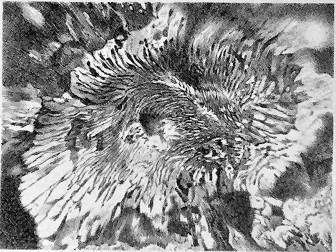
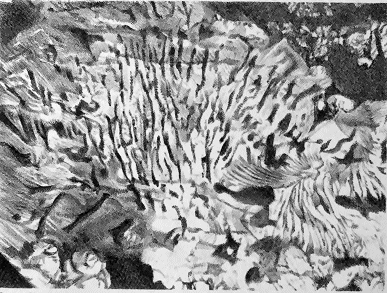
From a Photo. by Weston.
Vincent Brooks, Day & Son Lith.
CANAL SYSTEM OF EOZOON.
SLICES OF THE FOSSIL (MAGNIFIED.)
To face Chap. 6.
CHAPTER VI. CONTEMPORARIES AND SUCCESSORS OF EOZOON.
The name Eozoon, or Dawn-animal, raises the question whether we shall ever know any earlier representative of animal life. Here I think it necessary to explain that in suggesting the name Eozoon for the earliest fossil, and Eozoic for the formation in which it is contained, I had no intention to affirm that there may not have been precursors of the Dawn-animal. By the similar term, Eocene, Lyell did not mean to affirm that there may not have been modern types in the preceding geological periods: and so the dawn of animal life may have had its gray or rosy breaking at a time long anterior to that in which Eozoon built its marble reefs. When the fossils of this early auroral time shall be found, it will not be hard to invent appropriate names for them. There are, however, two reasons that give propriety to the name in the present state of our knowledge. One is, that the Lower Laurentian rocks are absolutely the oldest that have yet come under the notice of geologists, and at the present moment it seems extremely improbable that any older sediments exist, at least in a condition to be recognised as such. The other is that Eozoon, as a member of the group Protozoa, of gigantic size and comprehensive type, and oceanic in its habitat, is as likely as any other creature that can be imagined to have been the first representative of animal life on our planet. Vegetable life may have preceded it, nay probably did so by at least one great creative æon, and may have accumulated previous stores of organic matter; but if any older forms of animal life existed, it is certain at least that they cannot have belonged to much simpler or more comprehensive types. It is also to be observed that such forms of life, if they did exist, may have been naked protozoa, which may have left no sign of their existence except a minute trace of carbonaceous matter, and perhaps not even this.
But if we do not know, and perhaps we are not likely to know, any animals older than Eozoon, may we not find traces of some of its contemporaries, either in the Eozoon limestones themselves, or other rocks associated with them? Here we must admit that a deep sea Foraminiferal limestone may give a very imperfect indication of the fauna of its time. A dredger who should have no other information as to the existing population of the world, except what he could gather from the deposits formed under several hundred fathoms of water, would necessarily have very inadequate conceptions of the matter. In like manner a geologist who should have no other information as to the animal life of the Mesozoic ages than that furnished by some of the thick beds of white chalk might imagine that he had reached a period when the simplest kinds of protozoa predominated over all other forms of life; but this impression would at once be corrected by the examination of other deposits of the same age: so our inferences as to the life of the Laurentian from the contents of its oceanic limestones may be very imperfect, and it may yet yield other and various fossils. Its possibilities are, however, limited by the fact that before we reach this great depth in the earth’s crust, we have already left behind in much newer formations all traces of animal life except a few of the lower forms of aquatic invertebrates; so that we are not surprised to find only a limited number of living things, and those of very low type. Do we then know in the Laurentian even a few distinct species, or is our view limited altogether to Eozoon Canadense? In answering this question we must bear in mind that the Laurentian itself was of vast duration, and that important changes of life may have taken place even between the deposition of the Eozoon limestones and that of those rocks in which we find the comparatively rich fauna of the Primordial age. This subject was discussed by the writer as early as 1865, and I may repeat here what could be said in relation to it at that time:—
"In connection with these remarkable remains, it appeared desirable to ascertain, if possible, what share these or other organic structures may have had in the accumulation of the limestones of the Laurentian series. Specimens were therefore selected by Sir W. E. Logan, and slices were prepared under his direction. On microscopic examination, a number of these were found to exhibit merely a granular aggregation of crystals, occasionally with particles of graphite and other foreign minerals, or a laminated mixture of calcareous and other matters, in the manner of some more modern sedimentary limestones. Others, however, were evidently made up almost entirely of fragments of Eozoon, or of mixtures of these with other calcareous and carbonaceous fragments which afford more or less evidence of organic origin. The contents of these organic limestones may be considered under the following heads:—
1. Remains of Eozoon.
2. Other calcareous bodies, probably organic.
3. Objects imbedded in the serpentine.
4. Carbonaceous matters.
5. Perforations, or worm-burrows.
"1. The more perfect specimens of Eozoon do not constitute the mass of any of the larger specimens in the collection of the Survey; but considerable portions of some of them are made up of material of similar minute structure, destitute of lamination, and irregularly arranged. Some of this material gives the impression that there may have been organisms similar to Eozoon, but growing in an irregular or acervuline manner without lamination. Of this, however, I cannot be certain; and on the other hand there is distinct evidence of the aggregation of fragments of Eozoon in some of these specimens. In some they constitute the greater part of the mass. In others they are embedded in calcareous matter of a different character, or in serpentine or granular pyroxene. In most of the specimens the cells of the fossils are more or less filled with these minerals; and in some instances it would appear that the calcareous matter of fragments of Eozoon has been in part replaced by serpentine."
"2. Intermixed with the fragments of Eozoon above referred to, are other calcareous matters apparently fragmentary. They are of various angular and rounded forms, and present several kinds of structure. The most frequent of these is a strong lamination varying in direction according to the position of the fragments, but corresponding, as far as can be ascertained, with the diagonal of the rhombohedral cleavage. This structure, though crystalline, is highly characteristic of crinoidal remains when preserved in altered limestones. The more dense parts of Eozoon, destitute of tubuli, also sometimes show this structure, though less distinctly. Other fragments are compact and structureless, or show only a fine granular appearance; and these sometimes include grains, patches, or fibres of graphite. In Silurian limestones, fragments of corals and shells which have been partially infiltrated with bituminous matter, show a structure like this. On comparison with altered organic limestones of the Silurian system, these appearances would indicate that in addition to the debris of Eozoon, other calcareous structures, more like those of crinoids, corals, and shells, have contributed to the formation of the Laurentian limestones.
"3. In the serpentine[AE] filling the chambers of a large specimen of Eozoon from Burgess, there are numerous small pieces of foreign matter; and the silicate itself is laminated, indicating its sedimentary nature. Some of the included fragments appear to be carbonaceous, others calcareous; but no distinct organic structure can be detected in them. There are, however, in the serpentine, many minute silicious grains of a bright green colour, resembling green-sand concretions; and the manner in which these are occasionally arranged in lines and groups, suggests the supposition that they may possibly be casts of the interior of minute Foraminiferal shells. They may, however, be concretionary in their origin.
"4. In some of the Laurentian limestones submitted to me by Sir W. E. Logan, and in others which I collected some years ago at Madoc, Canada West, there are fibres and granules of carbonaceous matter, which do not conform to the crystalline structure, and present forms quite similar to those which in more modern limestones result from the decomposition of algæ. Though retaining mere traces of organic structure, no doubt would be entertained as to their vegetable origin if they were found in fossiliferous limestones.
"5. A specimen of impure limestone from Madoc, in the collection of the Canadian Geological Survey, which seems from its structure to have been a finely laminated sediment, shows perforations of various sizes, somewhat scalloped at the sides, and filled with grains of rounded silicious sand. In my own collection there are specimens of micaceous slate from the same region, with indications on their weathered surfaces of similar rounded perforations, having the aspect of Scolithus, or of worm-burrows.
"Though the abundance and wide distribution of Eozoon, and the important part it seems to have acted in the accumulation of limestone, indicate that it was one of the most prevalent forms of animal existence in the seas of the Laurentian period, the non-existence of other organic beings is not implied. On the contrary, independently of the indications afforded by the limestones themselves, it is evident that in order to the existence and growth of these large Rhizopods, the waters must have swarmed with more minute animal or vegetable organisms on which they could subsist. On the other hand, though this is a less certain inference, the dense calcareous skeleton of Eozoon may indicate that it also was liable to the attacks of animal enemies. It is also possible that the growth of Eozoon, or the deposition of the serpentine and pyroxene in which its remains have been preserved, or both, may have been connected with certain oceanic depths and conditions, and that we have as yet revealed to us the life of only certain stations in the Laurentian seas. Whatever conjectures we may form on these more problematic points, the observations above detailed appear to establish the following conclusions:—
“First, that in the Laurentian period, as in subsequent geological epochs, the Rhizopods were important agents in the accumulation of beds of limestone; and secondly, that in this early period these low forms of animal life attained to a development, in point of magnitude and complexity, unexampled, in so far as yet known, in the succeeding ages of the earth’s history. This early culmination of the Rhizopods is in accordance with one of the great laws of the succession of living beings, ascertained from the study of the introduction and progress of other groups; and, should it prove that these great Protozoans were really the dominant type of animals in the Laurentian period, this fact might be regarded as an indication that in these ancient rocks we may actually have the records of the first appearance of animal life on our planet.”
With reference to the first of the above heads, I have now to state that it seems quite certain that the upper and younger portions of the masses of Eozoon often passed into the acervuline form, and the period in which this change took place seems to have depended on circumstances. In some specimens there are only a few regular layers, and then a heap of irregular cells. In other cases a hundred or more regular layers were formed; but even in this case little groups of irregular cells occurred at certain points near the surface. This may be seen in plate III. I have also found some masses clearly not fragmental which consist altogether of acervuline cells. A specimen of this kind is represented in fig. 31. It is oval in outline, about three inches in length, wholly made up of rounded or cylindrical cells, the walls of which have a beautiful tubular structure, but there is little or no supplemental skeleton. Whether this is a portion accidentally broken off from the top of a mass of Eozoon, or a peculiar varietal form, or a distinct species, it would be difficult to determine. In the meantime I have described it as a variety, “acervulina,” of the species Eozoon Canadense.[AF] Another variety also, from Petite Nation, shows extremely thin laminæ, closely placed together and very massive, and with little supplemental skeleton. This may be allied to the last, and may be named variety “minor.”
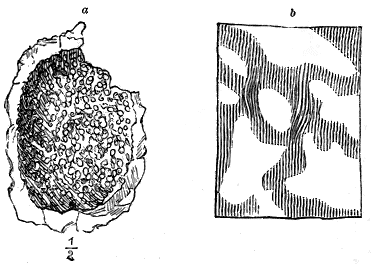
Fig. 31. Acervuline Variety of Eozoon, St. Pierre.
(a.) General form, half natural size. (b.) Portion of cellular interior, magnified, showing the course of the tubuli.
All this, however, has nothing to do with the layers of fragments of Eozoon which are scattered through the Laurentian limestones. In these the fossil is sometimes preserved in the ordinary manner, with its cavities filled with serpentine, and the thicker parts of the skeleton having their canals filled with this substance. In this case the chambers may have been occupied with serpentine before it was broken up. At St. Pierre there are distinct layers of this kind, from half an inch to several inches in thickness, regularly interstratified with the ordinary limestone. In other layers no serpentine occurs, but the interstices of the fragments are filled with crystalline dolomite or magnesian limestone, which has also penetrated the canals; and there are indications, though less manifest, that some at least of the layers of pure limestone are composed of fragmental Eozoon. In the Laurentian limestone of Wentworth, belonging apparently to the same band with that of St. Pierre, there are many small rounded pieces of limestone, evidently the debris of some older rock, broken up and rounded by attrition. In some of these fragments the structure of Eozoon may be plainly perceived. This shows that still older limestones composed of Eozoon were at that time undergoing waste, and carries our view of the existence of this fossil back to the very beginning of the Laurentian.
With respect to organic fragments not showing the structure of Eozoon, I have not as yet been able to refer these to any definite origin. Some of them may be simply thick portions of the shell of Eozoon with their pores filled with calcite, so as to present a homogeneous appearance. Others have much the appearance of fragments of such Primordial forms as Archæocyathus, to be described in the sequel; but after much careful search, I have thus far been unable to say more than I could say in 1865.
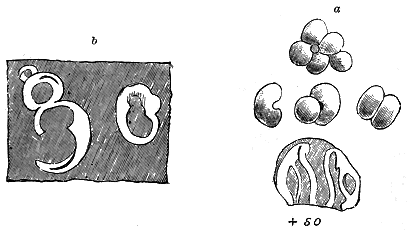
Fig. 32. Archæospherinæ from St. Pierre.
(a.) Specimens dissolved out by acid. The lower one showing interior septa. (b.) Specimens seen in section.
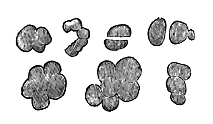
Fig. 33. Archæospherinæ from Burgess Eozoon.
Magnified.
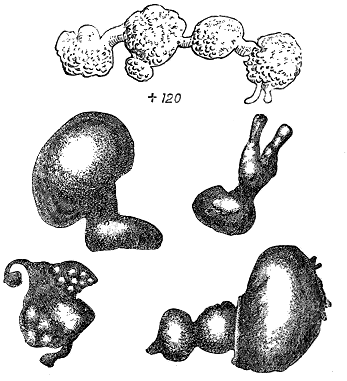
Fig. 34. Archæospherinæ from Wentworth Limestone.
Magnified.
It is different, however, with the round cells infiltrated with serpentine and with the silicious grains included in the loganite. I have already referred to and figured (fig. 18) the remarkable rounded bodies occurring at Long Lake. I now figure similar bodies found mixed with fragmental Eozoon and in separate thin layers at St. Pierre (fig. 32), also some of the singular grains found in the loganite occupying the chambers of Eozoon from Burgess (fig. 33), and a beaded body set free by acid, with others of irregular forms, from the limestone of Wentworth (fig. 34). All these I think are essentially of the same nature, namely, chambers originally invested with a tubulated wall like Eozoon, and aggregated in groups, sometimes in a linear manner, sometimes spirally, like those Globigerinæ which constitute the mass of modern deep-sea dredgings and also of the chalk. These bodies occur dispersed in the limestone, arranged in thin layers parallel to the bedding or sometimes in the large chamber-cavities of Eozoon. They are so variable in size and form that it is not unlikely they may be of different origins. The most probable of these may be thus stated. First, they may in some cases be the looser superficial parts of the surface of Eozoon broken up into little groups of cells. Secondly, they may be few-celled germs or buds given off from Eozoon. Thirdly, they may be smaller Foraminifera, structurally allied to Eozoon, but in habit of growth resembling those little globe-shaped forms which, as already stated, abound in chalk and in the modern ocean. The latter view I should regard as highly probable in the case of many of them; and I have proposed for them, in consequence, and as a convenient name, Archæospherinæ, or ancient spherical animals.
Carbonaceous matter is rare in the true Eozoon limestones, and, as already stated, I would refer the Laurentian graphite or plumbago mainly to plants. With regard to the worm-burrows referred to in 1865, there can be no doubt of their nature, but there is some doubt as to whether the beds that contain them are really Lower Laurentian. They may be Upper Laurentian or Huronian. I give here figures of these burrows as published in 1866[AG] (fig. 35). The rocks which contain them hold also fragments of Eozoon, and are not known to contain other fossils.
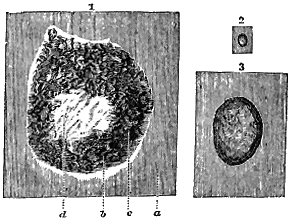
Fig. 35. Annelid Burrows, Laurentian or Huronian.
Fig 1. Transverse section of Worm-burrow—magnified, as a transparent object. (a.) Calcareo-silicious rock. (b.) Space filled with calcareous spar. (c.) Sand agglutinated and stained black. (d.) Sand less agglutinated and uncoloured. Fig. 2. Transverse section of Worm-burrow on weathered surface, natural size. Fig. 3. The same, magnified.
If we now turn to other countries in search of contemporaries of Eozoon, I may refer first to some specimens found by my friend Dr. Honeyman at Arisaig, in Nova Scotia, in beds underlying the Silurian rocks of that locality, but otherwise of uncertain age. I do not vouch for them as Laurentian, and if of that age they seem to indicate a species distinct from that of Canada proper. They differ in coarser tubulation, and in their canals being large and beaded, and less divergent. I proposed for these specimens, in some notes contributed to the survey of Canada, the name Eozoon Acadianum.
Dr. Gümbel, the Director of the Geological Survey of Bavaria, is one of the most active and widely informed of European geologists, combining European knowledge with an extensive acquaintance with the larger and in some respects more typical areas of the older rocks in America, and stratigraphical geology with enthusiastic interest in the microscopic structures of fossils. He at once and in a most able manner took up the question of the application of the discoveries in Canada to the rocks of Bavaria. The spirit in which he did so may be inferred from the following extract:—
"The discovery of organic remains in the crystalline limestones of the ancient gneiss of Canada, for which we are indebted to the researches of Sir William Logan and his colleagues, and to the careful microscopic investigations of Drs. Dawson and Carpenter, must be regarded as opening a new era in geological science.
"This discovery overturns at once the notions hitherto commonly entertained with regard to the origin of the stratified primary limestones, and their accompanying gneissic and quartzose strata, included under the general name of primitive crystalline schists. It shows us that these crystalline stratified rocks, of the so-called primary system, are only a backward prolongation of the chain of fossiliferous strata; the elements of which were deposited as oceanic sediment, like the clay-slates, limestones, and sandstones of the palæozoic formations, and under similar conditions, though at a time far more remote, and more favourable to the generation of crystalline mineral compounds.
"In this discovery of organic remains in the primary rocks, we hail with joy the dawn of a new epoch in the critical history of these earlier formations. Already in its light, the primeval geological time is seen to be everywhere animated, and peopled with new animal forms of whose very existence we had previously no suspicion. Life, which had hitherto been supposed to have first appeared in the Primordial division of the Silurian period, is now seen to be immeasurably lengthened beyond its former limit, and to embrace in its domain the most ancient known portions of the earth’s crust. It would almost seem as if organic life had been awakened simultaneously with the solidification of the earth’s crust.
"The great importance of this discovery cannot be clearly understood, unless we first consider the various and conflicting opinions and theories which had hitherto been maintained concerning the origin of these primary rocks. Thus some, who consider them as the first-formed crust of a previously molten globe, regard their apparent stratification as a kind of concentric parallel structure, developed in the progressive cooling of the mass from without. Others, while admitting a similar origin of these rocks, suppose their division into parallel layers to be due, like the lamination of clay-slates, to lateral pressure. If we admit such views, the igneous origin of schistose rocks becomes conceivable, and is in fact maintained by many.
"On the other hand, we have the school which, while recognising the sedimentary origin of these crystalline schists, supposes them to have been metamorphosed at a later period; either by the internal heat, acting in the deeply buried strata; by the proximity of eruptive rocks; or finally, through the agency of permeating waters charged with certain mineral salts.
“A few geologists only have hitherto inclined to the opinion that these crystalline schists, while possessing real stratification, and sedimentary in their origin, were formed at a period when the conditions were more favourable to the production of crystalline materials than at present. According to this view, the crystalline structure of these rocks is an original condition, and not one superinduced at a later period by metamorphosis. In order, however, to arrange and classify these ancient crystalline rocks, it becomes necessary to establish by superposition, or by other evidence, differences in age, such as are recognised in the more recent stratified deposits. The discovery of similar organic remains, occupying a determinate position in the stratification, in different and remote portions of these primitive rocks, furnishes a powerful argument in favour of the latter view, as opposed to the notion which maintains the metamorphic origin of the various minerals and rocks of these ancient formations; so that we may regard the direct formation of these mineral elements, at least so far as these fossiliferous primary limestones are concerned, as an established fact.”
His first discovery is thus recorded, in terms which show the very close resemblance of the Bavarian and Canadian Eozoic.
"My discovery of similar organic remains in the serpentine-limestone from near Passau was made in 1865, when I had returned from my geological labours of the summer, and received the recently published descriptions of Messrs. Logan, Dawson, etc. Small portions of this rock, gathered in the progress of the Geological Survey in 1854, and ever since preserved in my collection, having been submitted to microscopic examination, confirmed in the most brilliant manner the acute judgment of the Canadian geologists, and furnished palæontological evidence that, notwithstanding the great distance which separates Canada from Bavaria, the equivalent primitive rocks of the two regions are characterized by similar organic remains; showing at the same time that the law governing the definite succession of organic life on the earth is maintained even in these most ancient formations. The fragments of serpentine-limestone, or ophicalcite, in which I first detected the existence of Eozoon, were like those described in Canada, in which the lamellar structure is wanting, and offer only what Dr. Carpenter has called an acervuline structure. For further confirmation of my observations, I deemed it advisable, through the kindness of Sir Charles Lyell, to submit specimens of the Bavarian rock to the examination of that eminent authority, Dr. Carpenter, who, without any hesitation, declared them to contain Eozoon.
"This fact being established, I procured from the quarries near Passau as many specimens of the limestone as the advanced season of the year would permit; and, aided by my diligent and skillful assistants, Messrs. Reber and Schwager, examined them by the methods indicated by Messrs. Dawson and Carpenter. In this way I soon convinced myself of the general similarity of our organic remains with those of Canada. Our examinations were made on polished sections and in portions etched with dilute nitric acid, or, better, with warm acetic acid. The most beautiful results were however obtained by etching moderately thin sections, so that the specimens may be examined at will either by reflected or transmitted light.
"The specimens in which I first detected Eozoon came from a quarry at Steinhag, near Obernzell, on the Danube, not far from Passau. The crystalline limestone here forms a mass from fifty to seventy feet thick, divided into several beds, included in the gneiss, whose general strike in this region is N.W., with a dip of 40°-60° N.E. The limestone strata of Steinhag have a dip of 45° N.E. The gneiss of this vicinity is chiefly grey, and very silicious, containing dichroite, and of the variety known as dichroite-gneiss; and I conceive it to belong, like the gneiss of Bodenmais and Arber, to that younger division of the primitive gneiss system which I have designated as the Hercynian gneiss formation; which, both to the north, between Tischenreuth and Mahring, and to the south on the north-west of the mountains of Ossa, is immediately overlaid by the mica-slate formation. Lithologically, this newer division of the gneiss is characterized by the predominance of a grey variety, rich in quartz, with black magnesian-mica and orthoclase, besides which a small quantity of oligoclase is never wanting. A further characteristic of this Hercynian gneiss is the frequent intercalation of beds of rocks rich in hornblende, such as hornblende-schist, amphibolite, diorite, syenite, and syenitic granite, and also of serpentine and granulite. Beds of granular limestone, or of calcareous schists are also never altogether wanting; while iron pyrites and graphite, in lenticular masses, or in local beds conformable to the great mass of the gneiss strata, are very generally present.
"In the large quarry of Steinhag, from which I first obtained the Eozoon, the enclosing rock is a grey hornblendic gneiss, which sometimes passes into a hornblende-slate. The limestone is in many places overlaid by a bed of hornblende-schist, sometimes five feet in thickness, which separates it from the normal gneiss. In many localities, a bed of serpentine, three or four feet thick, is interposed between the limestone and the hornblende-schist; and in some cases a zone, consisting chiefly of scapolite, crystalline and almost compact, with an admixture however of hornblende and chlorite. Below the serpentine band, the crystalline limestone appears divided into distinct beds, and encloses various accidental minerals, among which are reddish-white mica, chlorite, hornblende, tremolite, chondrodite, rosellan, garnet, and scapolite, arranged in bands. In several places the lime is mingled with serpentine, grains or portions of which, often of the size of peas, are scattered through the limestone with apparent irregularity, giving rise to a beautiful variety of ophicalcite or serpentine-marble. These portions, which are enclosed in the limestone destitute of serpentine, always present a rounded outline. In one instance there appears, in a high naked wall of limestone without serpentine, the outline of a mass of ophicalcite, about sixteen feet long and twenty-five feet high, which, rising from a broad base, ends in a point, and is separated from the enclosing limestone by an undulating but clearly defined margin, as already well described by Wineberger. This mass of ophicalcite recalls vividly a reef-like structure. Within this and similar masses of ophicalcite in the crystalline limestone, there are, so far as my observations in 1854 extend, no continuous lines or concentric layers of serpentine to be observed, this mineral being always distributed in small grains and patches. The few apparently regular layers which may be observed are soon interrupted, and the whole aggregation is irregular."
It will be observed that this acervuline Eozoon of Steinhag appears to exist in large reefs, and that in its want of lamination it differs from the Canadian examples. In fossils of low organization, like Foraminifera, such differences are often accidental and compatible with specific unity, but yet there may be a difference specifically in the Bavarian Eozoon as compared with the Canadian.
Gümbel also found in the Finnish and Bavarian limestones knotted chambers, like those of Wentworth above mentioned (fig. 36), which he regards as belonging to some other organism than Eozoon; and flocculi having tubes, pores, and reticulations which would seem to point to the presence of structures akin to sponges or possibly remains of seaweeds. These observations Gümbel has extended into other localities in Bavaria and Bohemia, and also in Silesia and Sweden, establishing the existence of Eozoon fossils in all the Laurentian limestones of the middle and north of Europe.
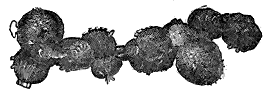
Fig. 36. Archæospherinæ from Pargas in Finland. (After Gümbel.)
Magnified.
Gümbel has further found in beds overlying the older Eozoic series, and probably of the same age with the Canadian Huronian, a different species of Eozoon, with smaller and more contracted chambers, and still finer and more crowded canals. This, which is to be regarded as a distinct species, or at least a well-marked varietal form, he has named Eozoon Bavaricum (fig. 37). Thus this early introduction of life is not peculiar to that old continent which we sometimes call the New World, but applies to Europe as well, and Europe has furnished a successor to Eozoon in the later Eozoic or Huronian period. In rocks of this age in America, after long search and much slicing of limestones, I have hitherto failed to find any decided organic remains other than the Tudor and Madoc specimens of Eozoon. If these are really Huronian and not Laurentian, the Eozoon from this horizon does not sensibly differ from that of the Lower Laurentian. The curious limpet-like objects from Newfoundland, discovered by Murray, and described by Billings,[AH] under the name Aspidella, are believed to be Huronian, but they have no connection with Eozoon, and therefore need not detain us here.
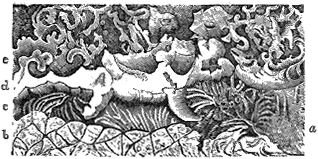
Fig. 37. Section of Eozoon Bavaricum, with Serpentine, from the Crystalline Limestone of the Hercynian primitive Clay-state Formation at Hohenberg; 25 diameters.
(a.) Sparry carbonate of lime. (b.) Cellular carbonate of lime. (c.) System of tubuli. (d.) Serpentine replacing the coarser ordinary variety. (e.) Serpentine and hornblende replacing the finer variety, in the very much contorted portions.
Leaving the Eozoic age, we find ourselves next in the Primordial or Cambrian, and here we discover the sea already tenanted by many kinds of crustaceans and shell-fishes, which have been collected and described by palæontologists in Bohemia, Scandinavia, Wales, and North America;[AI] curiously enough, however, the rocks of this age are not so rich in Foraminifera as those of some succeeding periods. Had this primitive type played out its part in the Eozoic and exhausted its energies, and did it remain in abeyance in the Primordial age to resume its activity in the succeeding times? It is not necessary to believe this. The geologist is familiar with the fact, that in one formation he may have before him chiefly oceanic and deep-sea deposits, and in another those of the shallower waters, and that alternations of these may, in the same age or immediately succeeding ages, present very different groups of fossils. Now the rocks and fossils of the Laurentian seem to be oceanic in character, while the Huronian and early Primordial rocks evidence great disturbances, and much coarse and muddy sediment, such as that found in shallows or near the land. They abound in coarse conglomerates, sandstones and thick beds of slate or shale, but are not rich in limestones, which do not in the parts of the world yet explored regain their importance till the succeeding Siluro-Cambrian age. No doubt there were, in the Primordial, deep-sea areas swarming with Foraminifera, the successors of Eozoon; but these are as yet unknown or little known, and our known Primordial fauna is chiefly that of the shallows. Enlarged knowledge may thus bridge over much of the apparent gap in the life of these two great periods.
Only as yet on the coast of Labrador and neighbouring parts of North America, and in rocks that were formed in seas that washed the old Laurentian rocks, in which Eozoon was already as fully sealed up as it is at this moment, do we find Protozoa which can claim any near kinship to the proto-foraminifer. These are the fossils of the genus Archæocyathus—“ancient cup-sponges, or cup-foraminifers,” which have been described in much detail by Mr. Billings in the reports of the Canadian Survey. Mr. Billings regards them as possibly sponges, or as intermediate between these and Foraminifera, and the silicious spicules found in some of them justify this view, unless indeed, as partly suspected by Mr. Billings, these belong to true sponges which may have grown along with Archæocyathus or attached to it. Certain it is, however, that if allied to sponges, they are allied also to Foraminifera, and that some of them deviate altogether from the sponge type and become calcareous chambered bodies, the animals of which can have differed very little from those of the Laurentian Eozoon. It is to these calcareous Foraminiferal species that I shall at present restrict my attention. I give a few figures, for which I am indebted to Mr. Billings, of three of his species (figs. 38 to 40), with enlarged drawings of the structures of one of them which has the most decidedly foraminiferal characters.
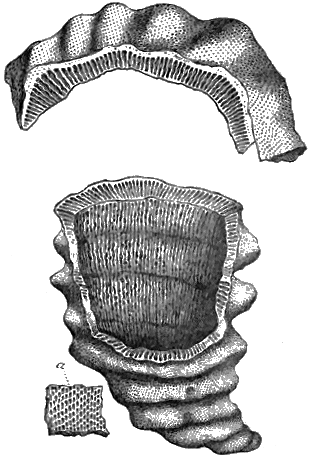
Fig. 38. Archæocyathus Minganensis—a Primordial Protozoon. (After Billings.)
(a.) Pores of the inner wall.
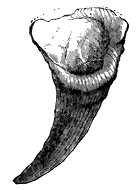
Fig. 39. Archæocyathus profundus—showing the base of attachment and radiating chambers. (After Billings.)
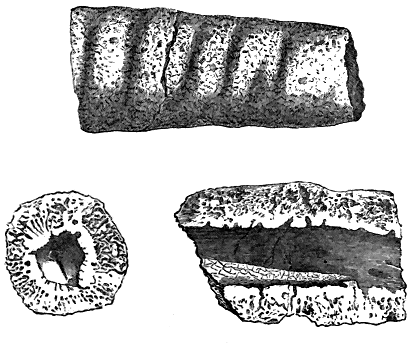
Fig. 40. Archæocyathus Atlanticus—showing outer surface and longitudinal and transverse sections. (After Billings.)
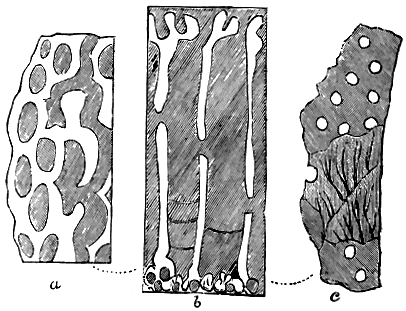
Fig. 41. Structures of Archæocyathus Profundus.
(a.) Lower acervuline portion. (b.) Upper portion, with three of the radiating laminæ. (c.) Portion of lamina with pores and thickened part with canals. In figs. a and b the calcareous part is unshaded.
To understand Archæocyathus, let us imagine an inverted cone of carbonate of lime from an inch or two to a foot in length, and with its point buried in the mud at the bottom of the sea, while its open cup extends upward into the water. The lower part buried in the soil is composed of an irregular acervuline network of thick calcareous plates, enclosing chambers communicating with one another (figs. 40 and 41 A). Above this where the cup expands, its walls are composed of thin outer and inner plates, perforated with innumerable holes, and connected with each other by vertical plates, which are also perforated with round pores, establishing a communication between the radiating chambers into which they divide the thickness of the wall (figs. 38, 39, and 41 B). In such a structure the chambers in the wall of the cup and the irregular chambers of the base would be filled with gelatinous animal matter, and the pseudopods would project from the numerous pores in the inner and outer wall. In the older parts of the skeleton, the structure is further complicated by the formation of thin transverse plates, irregular in distribution, and where greater strength is required a calcareous thickening is added, which in some places shows a canal system like that of Eozoon (fig. 41, B, C).[AJ] As compared with Eozoon, the fossils want its fine perforated wall, but have a more regular plan of growth. There are fragments in the Eozoon limestones which may have belonged to structures like these; and when we know more of the deep sea of the Primordial, we may recover true species of Eozoon from it, or may find forms intermediate between it and Archæocyathus. In the meantime I know no nearer bond of connection between Eozoon and the Primordial age than that furnished by the ancient cup Zoophytes of Labrador, though I have searched very carefully in the fossiliferous conglomerates of Cambrian age on the Lower St. Lawrence, which contain rocks of all the formations from the Laurentian upwards, often with characteristic fossils. I have also made sections of many of the fossiliferous pebbles in these conglomerates without finding any certain remains of such organisms, though the fragments of the crusts of some of the Primordial tribolites, when their tubuli are infiltrated with dark carbonaceous matter, are so like the supplemental skeleton of Eozoon, that but for their forms they might readily be mistaken for it; and associated with them are broken pieces of other porous organisms which may belong to Protozoa, though this is not yet certain.
Of all the fossils of the Silurian rocks those which most resemble Eozoon are the Stromatoporæ, or “layer-corals,” whose resemblance to the old Laurentian fossil at once struck Sir William Logan; and these occur in the earliest great oceanic limestones which succeed the Primordial period, those of the Trenton group, in the Siluro-Cambrian. From this they extend upward as far as the Devonian, appearing everywhere in the limestones, and themselves often constituting large masses of calcareous rock. Our figure (fig. 42) shows a small example of one of these fossils; and when sawn asunder or broken across and weathered, they precisely resemble Eozoon in general appearance, especially when, as sometimes happens, their cell-walls have been silicified.
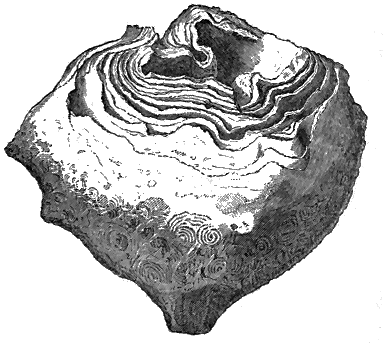
Fig. 42. Stromatopora rugosa, Hall—Lower Silurian, Canada. (After Billings.)
The specimen is of smaller size than usual, and is silicified. It is probably inverted in position, and the concentric marks on the outer surface are due to concretions of silica.
There are, however, different types of these fossils. The most common, the Stromatoporæ properly so called, consist of concentric layers of calcareous matter attached to each other by pillar-like processes, which, as well as the layers, are made up of little threads of limestone netted together, or radiating from the tops and bottoms of the pillars, and forming a very porous substance. Though they have been regarded as corals by some, they are more generally believed to be Protozoa; but whether more nearly allied to sponges or to Foraminifera may admit of doubt. Some of the more porous kinds are not very dissimilar from calcareous sponges, but they generally want true oscula and pores, and seem better adapted to shield the gelatinous body of a Foraminifer projecting pseudopods in search of food, than that of a sponge, living by the introduction of currents of water. Many of the denser kinds, however, have their calcareous floors so solid that they must be regarded as much more nearly akin to Foraminifers, and some of them have the same irregular inosculation of these floors observed in Eozoon. Figs. 43, A to D, show portions of species of this description, in which the resemblance to Eozoon in structure and arrangement of parts is not remote.
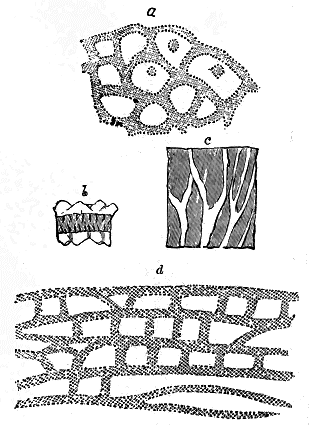
Fig. 43. Structures of Stromatopora.
(a.) Portion of an oblique section magnified, showing laminæ and columns. (b.) Portion of wall with pores, and crusted on both sides with quartz crystals. (c.) Thickened portion of wall with canals. (d.) Portion of another specimen, showing irregular laminæ and pillars.
These fossils, however, show no very distinct canal system or supplemental skeleton, but this also appears in those forms which have been called Caunopora or Cœnostroma. In these the plates are traversed by tubes, or groups of tubes, which in each successive floor give out radiating and branching canals exactly like those of Eozoon, though more regularly arranged; and if we had specimens with the canals infiltrated with glauconite or serpentine, the resemblance would be perfect. When, as in figs. 44 and 45 A, these canals are seen on the abraded surface, they appear as little grooves arranged in stars, which resemble the radiating plates of corals, but this resemblance is altogether superficial, and I have no doubt that they are really foraminiferal organisms. This will appear more distinctly from the sections in fig. 45 B, C, which represents an undescribed species recently found by Mr. Weston, in the Upper Silurian limestone of Ontario.
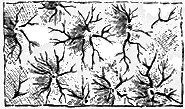
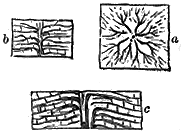
Fig. 44. Caunopora planulata, Hall—Devonian; showing the radiating canals on a weathered surface. (After Hall.) Fig. 45. Cœnostroma—Guelph Limestone, Upper Silurian, from a specimen collected by Mr. Weston, showing the canals. (a.) Surface with canals, natural size. (b.) Vertical section, natural size. (c.) The same magnified, showing canals and laminæ.
There are probably many species of these curious fossils, but their discrimination is difficult, and their nomenclature confused, so that it would not be profitable to engage the attention of the reader with it except in a note. Their state of preservation, however, is so highly illustrative of that of Eozoon that a word as to this will not be out of place. They are sometimes preserved merely by infiltration with calcite or dolomite, and in this case it is most difficult to make out their minute structures. Often they appear merely as concentrically laminated masses which, but for their mode of occurrence, might be regarded as mere concretions. In other cases the cell-walls and pillars are perfectly silicified, and then they form beautiful microscopic objects, especially when decalcified with an acid. In still other cases, they are preserved like Eozoon, the walls being calcareous and the chambers filled with silica. In this state when weathered or decalcified they are remarkably like Eozoon, but I have not met with any having their minute pores and tubes so well preserved as in some of the Laurentian fossils. In many of them, however, the growth and overlapping of the successive amœba-like coats of sarcode can be beautifully seen, exactly as on the surface of a decalcified piece of Eozoon. Those in my collection which most nearly resemble the Laurentian specimens are from the older part of the Lower Silurian series; but unfortunately their minute structures are not well preserved.
In the Silurian and Devonian ages, these Stromatoporæ evidently carried out the same function as the Eozoon in the Laurentian. Winchell tells us that in Michigan and Ohio single specimens can be found several feet in diameter, and that they constitute the mass of considerable beds of limestone. I have myself seen in Canada specimens a foot in diameter, with a great number of laminæ. Lindberg[AK] has given a most vivid account of their occurrence in the Isle of Gothland. He says that they form beds of large irregular discs and balls, attaining a thickness of five Swedish feet, and traceable for miles along the coast, and the individual balls are sometimes a yard in diameter. In some of them the structure is beautifully preserved. In others, or in parts of them, it is reduced to a mass of crystalline limestone. This species is of the Cœnostroma type, and is regarded by Lindberg as a coral, though he admits its low type and resemblance to Protozoa. Its continuous calcareous skeleton he rightly regards as fatal to its claim to be a true sponge. Such a fossil, differing as it does in minute points of structure from Eozoon, is nevertheless probably allied to it in no very distant way, and a successor to its limestone-making function. Those which most nearly approach to Foraminifera are those with thick and solid calcareous laminæ, and with a radiating canal system; and one of the most Eozoon-like I have seen, is a specimen of the undescribed species already mentioned from the Guelph (Upper Silurian) limestone of Ontario, collected by Mr. Weston, and now in the Museum of the Geological Survey. I have attempted to represent its structures in fig. 44.
In the rocks extending from the Lower Silurian and perhaps from the Upper Cambrian to the Devonian inclusive, the type and function of Eozoon are continued by the Stromatoporæ, and in the earlier part of this time these are accompanied by the Archæocyathids, and by another curious form, more nearly allied to the latter than to Eozoon, the Receptaculites. These curious and beautiful fossils, which sometimes are a foot in diameter, consist, like Archæocyathus, of an outer and inner coat enclosing a cavity; but these coats are composed of square plates with pores at the corners, and they are connected by hollow pillars passing in a regular manner from the outer to the inner coat. They have been regarded by Salter as Foraminifers, while Billings considers their nearest analogues to be the seed-like germs of some modern silicious sponges. On the whole, if not Foraminifera, they must have been organisms intermediate between these and sponges, and they certainly constitute one of the most beautiful and complex types of the ancient Protozoa, showing the wonderful perfection to which these creatures attained at a very early period. (Figs. 46, 47, 48.)
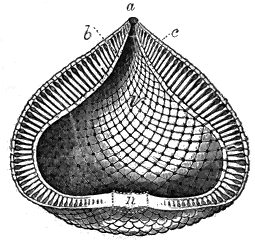
Fig. 46. Receptaculites, restored. (After Billings.)
(a.) Aperture. (b.) Inner wall. (c.) Outer wall. (n.) Nucleus, or primary chamber. (v.) Internal cavity.
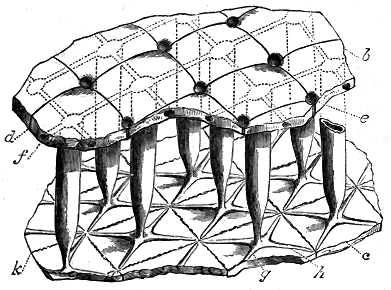
Fig. 47. Diagram of Wall and Tubes of Receptaculites. (After Billings.)
(b.) Inner wall. (c.) Outer wall. (d.) Section of plates. (e.) Pore of inner wall. (f.) Canal of inner wall. (g.) Radial stolon. (h.) Cyclical stolon. (k.) Suture of plates of outer wall.
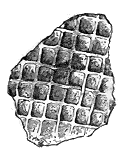
Fig. 48. Receptaculites, Inner Surface of Outer Wall with the Stolons remaining on its Surface. (After Billings.)
I might trace these ancient forms of foraminiferal life further up in the geological series, and show how in the Carboniferous there are nummulitic shells conforming to the general type of Eozoon, and in some cases making up the mass of great limestones.[AL] Further, in the great chalk series and its allied beds, and in the Lower Tertiary, there are not only vast foraminiferal limestones, but gigantic species reminding us of Stromatopora and Eozoon.[AM] Lastly, more diminutive species are doing similar work on a great scale in the modern ocean. Thus we may gather up the broken links of the chain of foraminiferal life, and affirm that Eozoon has never wanted some representative to uphold its family and function throughout all the vast lapse of geological time.
NOTES TO CHAPTER VI.
(A.) Stromatoporidæ, Etc.
For the best description of Archæocyathus, I may refer to The Palæozoic Fossils of Canada, by Mr. Billings, vol. i. There also, and in Mr. Salter’s memoir in The Decades of the Canadian Survey, will be found all that is known of the structure of Receptaculites. For the American Stromatoporæ I may refer to Winchell’s paper in the Proceedings of the American Association, 1866; to Professor Hall’s Descriptions of New Species of Fossils from Iowa, Report of the State Cabinet, Albany, 1872; and to the Descriptions of Canadian Species by Dr. Nicholson, in his Report on the Palæontology of Ontario, 1874.
The genus Stromatopora of Goldfuss was defined by him as consisting of laminæ of a solid and porous character, alternating and contiguous, and constituting a hemispherical or sub-globose mass. In this definition, the porous strata are really those of the fossil, the alternating solid strata being the stony filling of the chambers; and the descriptions of subsequent authors have varied according as, from the state of preservation of the specimens or other circumstances, the original laminæ or the filling of the spaces attracted their attention. In the former case the fossil could be described as consisting of laminæ made up of interlaced fibrils of calcite, radiating from vertical pillars which connect the laminæ. In the latter case, the laminæ, appear as solid plates, separated by very narrow spaces, and perforated with round vertical holes representing the connecting pillars. These Stromatoporæ range from the Lower Silurian to the Devonian, inclusive, and many species have been described; but their limits are not very definite, though there are undoubtedly remarkable differences in the distances of the laminæ and in their texture, and in the smooth or mammillated character of the masses. Hall’s genus Stromatocerium belongs to these forms, and D’Orbigny’s genus Sparsispongia refers to mammillated species, sometimes with apparent oscula.
Phillip’s genus Caunopora was formed to receive specimens with concentric cellular layers traversed by “long vermiform cylindrical canals;” while Winchell’s genus Cœnostroma includes species with these vermiform canals arranged in a radiate manner, diverging from little eminences in the concentric laminæ. The distinction between these last genera does not seem to be very clear, and may depend on the state of preservation of the specimens. A more important distinction appears to exist between those that have a single vertical canal from which the subordinate canals diverge, and those that have groups of such canals.
Some species of the Cœnostroma group have very dense calcareous laminæ traversed by the canals; but it does not seem that any distinction has yet been made between the proper wall and the intermediate skeleton; and most observers have been prevented from attending to such structures by the prevailing idea that these fossils are either corals or sponges, while the state of preservation of the more delicate tissues is often very imperfect.
(B.) Localities of Eozoon, or of Limestones supposed to contain it.
In Canada the principal localities of Eozoon Canadense are at Grenville, Petite Nation, the Calumets Rapids, Burgess, Tudor, and Madoc. At the two last places the fossil occurs in beds which may be on a somewhat higher horizon than the others. Mr. Vennor has recently found specimens which have the general form of Eozoon, though the minute structure is not preserved, at Dalhousie, in Lanark Co., Ontario. One specimen from this place is remarkable from having been mineralized in part by a talcose mineral associated with serpentine.
I have examined specimens from Chelmsford, in Massachusetts, and from Amity and Warren County, New York, the latter from the collection of Professor D. S. Martin, which show the canals of Eozoon in a fair state of preservation, though the specimens are fragmental, and do not show the laminated structure.
In European specimens of limestones of Laurentian age, from Tunaberg and Fahlun in Sweden, and from the Western Islands of Scotland, I have hitherto failed to recognise the characteristic structure of the fossil. Connemara specimens have also failed to afford me any satisfactory results, and specimens of a serpentine limestone from the Alps, collected by M. Favre, and communicated to me by Dr. Hunt, though in general texture they much resemble acervuline Eozoon, do not show its minute structures.
Plate VII.
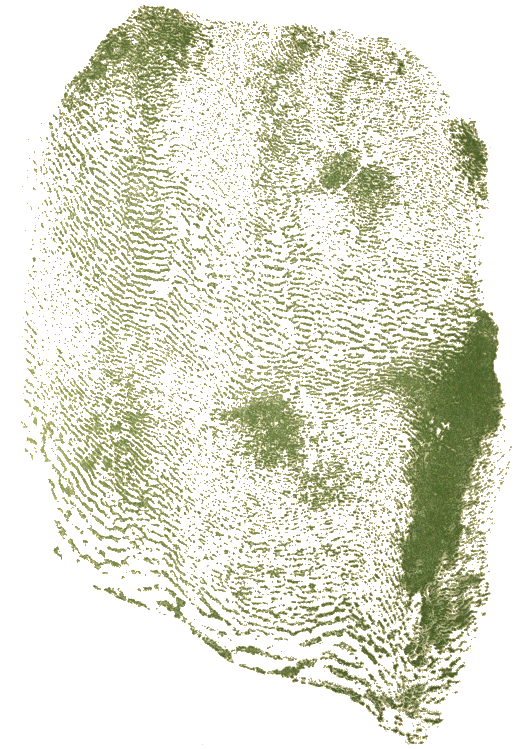
Untouched nature-print of part of a large specimen of Eozoon, from Petite Nation.
The lighter portions are less perfect than in the original, owing to the finer laminæ of serpentine giving way. The dark band at one side is one of the deep lacunæ or oscula.
CHAPTER VII. OPPONENTS AND OBJECTIONS.
The active objectors to the animal nature of Eozoon have been few, though some of them have returned to the attack with a pertinacity and determination which would lead one to believe that they think the most sacred interests of science to be dependent on the annihilation of this proto-foraminifer. I do not propose here to treat of the objections in detail. I have presented the case of Eozoon on its own merits, and on these it must stand. I may merely state that the objectors strive to account for the existence of Eozoon by purely mineral deposition, and that the complicated changes which they require to suppose are perhaps the strongest indirect evidence for the necessity of regarding the structures as organic. The reader who desires to appreciate this may consult the notes to this chapter.[AN]
I confess that I feel disposed to treat very tenderly the position of objectors. The facts I have stated make large demands on the faith of the greater part even of naturalists. Very few geologists or naturalists have much knowledge of the structure of foraminiferal shells, or would be able under the microscope to recognise them with certainty. Nor have they any distinct ideas of the appearances of such structures under different kinds of preservation and mineralisation. Further, they have long been accustomed to regard the so-called Azoic rocks as not only destitute of organic remains, but as being in such a state of metamorphism that these could not have been preserved had they existed. Few, therefore, are able intelligently to decide for themselves, and so they are called on to trust to the investigations of others, and on their testimony to modify in a marked degree their previous beliefs as to the duration of life on our planet. In these circumstances it is rather wonderful that the researches made with reference to Eozoon have met with so general acceptance, and that the resurrection of this ancient inhabitant of the earth has not aroused more of the sceptical tendency of our age.
It must not be lost sight of, however, that in such cases there may exist a large amount of undeveloped and even unconscious scepticism, which shows itself not in active opposition, but merely in quietly ignoring this great discovery, or regarding it with doubt, as an uncertain or unestablished point in science. Such scepticism may best be met by the plain and simple statements in the foregoing chapters, and by the illustrations accompanying them. It may nevertheless be profitable to review some of the points referred to, and to present some considerations making the existence of Laurentian life less anomalous than may at first sight be supposed. One of these is the fact that the discovery of Eozoon brings the rocks of the Laurentian system into more full harmony with the other geological formations. It explains the origin of the Laurentian limestones in consistency with that of similar rocks in the later periods, and in like manner it helps us to account for the graphite and sulphides and iron ores of these old rocks. It shows us that no time was lost in the introduction of life on the earth. Otherwise there would have been a vast lapse of time in which, while the conditions suitable to life were probably present, no living thing existed to take advantage of these conditions. Further, it gives a more simple beginning of life than that afforded by the more complex fauna of the Primordial age; and this is more in accordance with what we know of the slow and gradual introduction of new forms of living things during the vast periods of Palæozoic time. In connection with this it opens a new and promising field of observation in the older rocks, and if this should prove fertile, its exploration may afford a vast harvest of new forms to the geologists of the present and coming time. This result will be in entire accordance with what has taken place before in the history of geological discovery. It is not very long since the old and semi-metamorphic sediments constituting the great Silurian and Cambrian systems were massed together in geological classifications as primitive or primary rocks, destitute or nearly destitute of organic remains. The brilliant discoveries of Sedgwick, Murchison, Barrande, and a host of others, have peopled these once barren regions; and they now stretch before our wondering gaze in the long vistas of early Palæozoic life. So we now look out from the Cambrian shore upon the vast ocean of the Huronian and Laurentian, all to us yet tenantless, except for the few organisms, which, like stray shells cast upon the beach, or a far-off land dimly seen in the distance, incite to further researches, and to the exploration of the unknown treasures that still lie undiscovered. It would be a suitable culmination of the geological work of the last half-century, and one within reach at least of our immediate successors, to fill up this great blank, and to trace back the Primordial life to the stage of Eozoon, and perhaps even beyond this, to predecessors which may have existed at the beginning of the Lower Laurentian, when the earliest sediments of that great formation were laid down. Vast unexplored areas of Laurentian and Huronian rocks exist in the Old World and the New. The most ample facilities for microscopic examination of rocks may now be obtained; and I could wish that one result of the publication of these pages may be to direct the attention of some of the younger and more active geologists to these fields of investigation. It is to be observed also that such regions are among the richest in useful minerals, and there is no reason why search for these fossils should not be connected with other and more practically useful researches. On this subject it will not be out of place to quote the remarks which I made in one of my earlier papers on the Laurentian fossils:—
"This subject opens up several interesting fields of chemical, physiological, and geological inquiry. One of these relates to the conclusions stated by Dr. Hunt as to the probable existence of a large amount of carbonic acid in the Laurentian atmosphere, and of much carbonate of lime in the seas of that period, and the possible relation of this to the abundance of certain low forms of plants and animals. Another is the comparison already instituted by Professor Huxley and Dr. Carpenter, between the conditions of the Laurentian and those of the deeper parts of the modern ocean. Another is the possible occurrence of other forms of animal life than Eozoon and Annelids, which I have stated in my paper of 1864, after extensive microscopic study of the Laurentian limestones, to be indicated by the occurrence of calcareous fragments, differing in structure from Eozoon, but at present of unknown nature. Another is the effort to bridge over, by further discoveries similar to that of the Eozoon Bavaricum of Gümbel, the gap now existing between the life of the Lower Laurentian and that of the Primordial Silurian or Cambrian period. It is scarcely too much to say that these inquiries open up a new world of thought and investigation, and hold out the hope of bringing us into the presence of the actual origin of organic life on our planet, though this may perhaps be found to have been Prelaurentian. I would here take the opportunity of stating that, in proposing the name Eozoon for the first fossil of the Laurentian, and in suggesting for the period the name “Eozoic,” I have by no means desired to exclude the possibility of forms of life which may have been precursors of what is now to us the dawn of organic existence. Should remains of still older organisms be found in those rocks now known to us only by pebbles in the Laurentian, these names will at least serve to mark an important stage in geological investigation."
But what if the result of such investigations should be to produce more sceptics, or to bring to light mineral structures so resembling Eozoon as to throw doubt upon the whole of the results detailed in these chapters? I can fancy that this might be the first consequence, more especially if the investigations were in the hands of persons more conversant with minerals than with fossils; but I see no reason to fear the ultimate results. In any case, no doubt, the value of the researches hitherto made may be diminished. It is always the fate of discoverers in Natural Science, either to be followed by opponents who temporarily or permanently impugn or destroy the value of their new facts, or by other investigators who push on the knowledge of facts and principles so far beyond their standpoint that the original discoveries are cast into the shade. This is a fatality incident to the progress of scientific work, from which no man can be free; and in so far as such matters are concerned, we must all be content to share the fate of the old fossils whose history we investigate, and, having served our day and generation to give place to others. If any part of our work should stand the fire of discussion let us be thankful. One thing at least is certain, that such careful surveys as those in the Laurentian rocks of Canada which led to the discovery of Eozoon, and such microscopic examinations as those by which it has been worked up and presented to the public, cannot fail to yield good results of one kind or another. Already the attention excited by the controversies about Eozoon, by attracting investigators to the study of various microscopic and imitative forms in rocks, has promoted the advancement of knowledge, and must do so still more. For my own part, though I am not content to base all my reputation on such work as I have done with respect to this old fossil, I am willing at least to take the responsibility of the results I have announced, whatever conclusions may be finally reached; and in the consciousness of an honest effort to extend the knowledge of nature, to look forward to a better fame than any that could result from the most successful and permanent vindication of every detail of our scientific discoveries, even if they could be pushed to a point which no subsequent investigation in the same difficult line of research would be able to overpass.
Contenting myself with these general remarks, I shall, for the benefit of those who relish geological controversy, append to this chapter a summary of the objections urged by the most active opponents of the animal nature of Eozoon, with the replies that may be or have been given; and I now merely add (in fig. 49) a magnified camera tracing of a portion of a lamina of Eozoon with its canals and tubuli, to show more fully the nature of the structures in controversy.
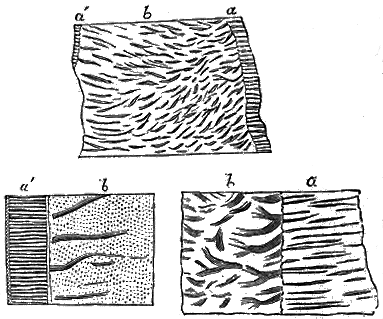
Fig. 49. Portion of a thin Transverse Slice of a Lamina of Eozoon, magnified, showing its structure, as traced with the camera.
(a.) Nummuline wall of under side. (b.) Intermediate skeleton with canals. (a′.) Nummuline wall of upper side. The two lower figures show the lower and upper sides more highly magnified. The specimen is one in which the canals are unusually well seen.
It may be well, however, to sum up the evidence as it has been presented by Sir W. E. Logan, Dr. Carpenter, Dr. Hunt, and the author, in a short and intelligible form; and I shall do so under a few brief heads, with some explanatory remarks:—
1. The Lower Laurentian of Canada, a rock formation whose distribution, age, and structure have been thoroughly worked out by the Canadian Survey, is found to contain thick and widely distributed beds of limestone, related to the other beds in the same way in which limestones occur in the sediments of other geological formations. There also occur in the same formation, graphite, iron ores, and metallic sulphides, in such relations as to suggest the idea that the limestones as well as these other minerals are of organic origin.
2. In the limestones are found laminated bodies of definite form and structure, composed of calcite alternating with serpentine and other minerals. The forms of these bodies suggested a resemblance to the Silurian Stromatoporæ, and the different mineral substances associated with the calcite in the production of similar forms, showed that these were not accidental or concretionary.
3. On microscopic examination, it proved that the calcareous laminæ of these forms were similar in structure to the shells of modern and fossil Foraminifera, more especially those of the Rotaline and Nummuline types, and that the finer structures, though usually filled with serpentine and other hydrous silicates, were sometimes occupied with calcite, pyroxene, or dolomite, showing that they must when recent have been empty canals and tubes.
4. The mode of filling thus suggested for the chambers and tubes of Eozoon, is precisely that which takes place in modern Foraminifera filled with glauconite, and in Palæozoic crinoids and corals filled with other hydrous silicates.
5. The type of growth and structure predicated of Eozoon from the observed appearances, in its great size, its laminated and acervuline forms, and in its canal system and tubulation, are not only in conformity with those of other Foraminifera, but such as might be expected in a very ancient form of that group.
6. Indications exist of other organic bodies in the limestones containing Eozoon, and also of the Eozoon being preserved not only in reefs but in drifted fragmental beds as in the case of modern corals.
7. Similar organic structures have been found in the Laurentian limestones of Massachusetts and New York, and also in those of various parts of Europe, and Dr. Gümbel has found an additional species in rocks succeeding the Laurentian in age.
8. The manner in which the structures of Eozoon are affected by the faulting, development of crystals, mineral veins, and other effects of disturbance and metamorphism in the containing rocks, is precisely that which might be expected on the supposition that it is of organic origin.
9. The exertions of several active and able opponents have failed to show how, otherwise than by organic agency, such structures as those of Eozoon can be formed, except on the supposition of pseudomorphism and replacement, which must be regarded as chemically extravagant, and which would equally impugn the validity of all fossils determined by microscopic structure. In like manner all comparisons of these structures with dendritic and other imitative forms have signally failed, in the opinion of those best qualified to judge.
Another and perhaps simpler way of putting the case is the following:—Only three general modes of accounting for the existence of Eozoon have been proposed. The first is that of Professors King and Rowney, who regard the chambers and canals filled with serpentine as arising from the erosion or partial dissolving away of serpentine and its replacement by calcite. The objections to this are conclusive. It does not explain the nummuline wall, which has to be separately accounted for by confounding it, contrary to the observed facts, with the veins of fibrous serpentine which actually pass through cracks in the fossil. Such replacement is in the highest degree unlikely on chemical grounds, and there is no evidence of it in the numerous serpentine grains, nodules, and bands in the Laurentian limestones. On the other hand, the opposite replacement, that of limestone by serpentine, seems to have occurred. The mechanical difficulties in accounting for the delicate canals on this theory are also insurmountable. Finally, it does not account for the specimens preserved in pyroxene and other silicates, and in dolomite and calcite. A second mode of accounting for the facts is that the Eozoon forms are merely peculiar concretions. But this fails to account for their great difference from the other serpentine concretions in the same beds, and for their regularity of plan and the delicacy of their structure, and also for minerals of different kinds entering into their composition, and still presenting precisely the same forms and structures. The only remaining theory is that of the filling of cavities by infiltration with serpentine. This accords with the fact that such infiltration by minerals akin to serpentine exists in fossils in later rocks. It also accords with the known aqueous origin of the serpentine nodules and bands, the veins of fibrous serpentine, and the other minerals found filling the cavities of Eozoon. Even the pyroxene has been shown by Hunt to exist in the Laurentian in veins of aqueous origin. The only difficulty existing on this view is how a calcite skeleton with such chambers, canals, and tubuli could be formed; and this is solved by the discovery that all these facts correspond precisely with those to be found in the shells of modern oceanic Foraminifera. The existence then of Eozoon, its structure, and its relations to the containing rocks and minerals being admitted, no rational explanation of its origin seems at present possible other than that advocated in the preceding pages.
If the reader will now turn to Plate. VIII., page 207, he will find some interesting illustrations of several very important facts bearing on the above arguments. Fig. 1 represents a portion of a very thin slice of a specimen traversed by veins of fibrous serpentine or chrysotile, and having the calcite of the walls more broken by cleavage planes than usual. The portion selected shows a part of one of the chambers filled with serpentine, which presents the usual curdled aspect almost impossible to represent in a drawing (s). It is traversed by a branching vein of chrysotile (s′), which, where cut precisely parallel to its fibres, shows clear fine cross lines, indicating the sides of its constituent prisms, and where the plane of section has passed obliquely to its fibres, has a curiously stippled or frowsy appearance. On either side of the serpentine band is the nummuline or proper wall, showing under a low power a milky appearance, which, with a higher power, becomes resolved into a tissue of the most beautiful parallel threads, representing the filling of its tubuli. Nothing can be more distinct than the appearances presented by this wall and the chrysotile vein, under every variety of magnifying power and illumination; and all who have had an opportunity of examining my specimens have expressed astonishment that appearances so dissimilar should have been confounded with each other. On the lower side two indentations are seen in the proper wall (c). These are connected with the openings into small subordinate chamberlets, one of which is in part included in the thickness of the slice. At the upper and lower parts of the figure are seen portions of the intermediate skeleton traversed by canals, which in the lower part are very large, though from the analogy of other specimens it is probable that they have in their interstices minute canaliculi not visible in this slice. Fig. 2, from the same specimen, shows the termination of one of the canals against the proper wall, its end expanding into a wide disc of sarcode on the surface of the wall, as may be seen in similar structures in modern Foraminifera. In this specimen the canals are beautifully smooth and cylindrical, but they sometimes present a knotted or jointed appearance, especially in specimens decalcified by acids, in which perhaps some erosion has taken place. They are also occasionally fringed with minute crystals, especially in those specimens in which the calcite has been partially replaced with other minerals. Fig. 3 shows an example of faulting of the proper wall, an appearance not infrequently observed; and it also shows a vein chrysotile crossing the line of fault, and not itself affected by it—a clear evidence of its posterior origin. Figs. 4 and 5 are examples of specimens having the canals filled with dolomite, and showing extremely fine canals in the interstices of the others: an appearance observed only in the thicker parts of the skeleton, and when these are very well preserved. These dolomitized portions require some precautions for their observation, either in slices or decalcified specimens, but when properly managed they show the structures in very great perfection. The specimen in fig. 5 is from an abnormally thick portion of intermediate skeleton, having unusually thick canals, and referred to in a previous chapter.
One object which I have in view in thus minutely directing attention to these illustrations, is to show the nature of the misapprehensions which may occur in examining specimens of this kind, and at the same time the certainty which may be attained when proper precautions are taken. I may add that such structures as those referred to are best seen in extremely thin slices, and that the observer must not expect that every specimen will exhibit them equally well. It is only by preparing and examining many specimens that the best results can be obtained. It often happens that one specimen is required to show well one part of the structures, and a different one to show another; and previous to actual trial, it is not easy to say which portion of the structures any particular fragment will show most clearly. This renders it somewhat difficult to supply one’s friends with specimens. Really good slices can be prepared only from the best material and by skilled manipulators; imperfect slices may only mislead; and rough specimens may not be properly prepared by persons unaccustomed to the work, or if so prepared may not turn out satisfactory, or may not be skilfully examined. These difficulties, however, Eozoon shares with other specimens in micro-geology, and I have experienced similar disappointments in the case of fossil wood.
In conclusion of this part of the subject, and referring to the notes appended to this chapter for further details, I would express the hope that those who have hitherto opposed the interpretation of Eozoon as organic, and to whose ability and honesty of purpose I willingly bear testimony, will find themselves enabled to acknowledge at least the reasonable probability of that interpretation of these remarkable forms and structures.
NOTES TO CHAPTER VII.
(A.) Objections of Profs. King and Rowney.
Trans. Royal Irish Academy, July, 1869.[AO]
The following summary, given by these authors, may be taken as including the substance of their objections to the animal nature of Eozoon. I shall give them in their words and follow them with short answers to each.
"1st. The serpentine in ophitic rocks has been shown to present appearances which can only be explained on the view that it undergoes structural and chemical changes, causing it to pass into variously subdivided states, and etching out the resulting portions into a variety of forms—grains and plates, with lobulated or segmented surfaces—fibres and aciculi—simple and branching configurations. Crystals of malacolite, often associated with the serpentine, manifest some of these changes in a remarkable degree.
"2nd. The ‘intermediate skeleton’ of Eozoon (which we hold to be the calcareous matrix of the above lobulated grains, etc.) is completely paralleled in various crystalline rocks—notably marble containing grains of coccolite (Aker and Tyree), pargasite (Finland), chondrodite (New Jersey, etc.)
"3rd. The ‘chamber casts’ in the acervuline variety of Eozoon are more or less paralleled by the grains of the mineral silicates in the pre-cited marbles.
"4th. The ‘chamber casts’ being composed occasionally of loganite and malacolite, besides serpentine, is a fact which, instead of favouring their organic origin, as supposed, must be held as a proof of their having been produced by mineral agencies; inasmuch as these three silicates have a close pseudomorphic relationship, and may therefore replace one another in their naturally prescribed order.
"5th. Dr. Gümbel, observing rounded, cylindrical, or tuberculated grains of coccolite and pargasite in crystalline calcareous marbles, considered them to be ‘chamber casts,’ or of organic origin. We have shown that such grains often present crystalline planes, angles, and edges; a fact clearly proving that they were originally simple or compound crystals that have undergone external decretion by chemical or solvent action.
"6th. We have adduced evidences to show that the ‘nummuline layer’ in its typical condition—that is, consisting of cylindrical aciculi, separated by interspaces filled with calcite—has originated directly from closely packed fibres; these from chrysotile or asbestiform serpentine; this from incipiently fibrous serpentine; and the latter from the same mineral in its amorphous or structureless condition.
"7th. The ‘nummuline layer,’ in its typical condition, unmistakably occurs in cracks or fissures, both in Canadian and Connemara ophite.
"8th. The ‘nummuline layer’ is paralleled by the fibrous coat which is occasionally present on the surface of grains of chondrodite.
"9th. We have shown that the relative position of two superposed asbestiform layers (an upper and an under ‘proper wall’), and the admitted fact of their component aciculi often passing continuously and without interruption from one ‘chamber cast’ to another, to the exclusion of the ‘intermediate skeleton,’ are totally incompatible with the idea of the ‘nummuline layer’ having resulted from pseudopodial tubulation.
"10th. The so-called ‘stolons’ and ‘passages of communication exactly corresponding with those described in Cycloclypeus,’ have been shown to be tabular crystals and variously formed bodies, belonging to different minerals, wedged crossways or obliquely in the calcareous interspaces between the grains and plates of serpentine.
"11th. The ‘canal system’ is composed of serpentine, or malacolite. Its typical kinds in the first of these minerals may be traced in all stages of formation out of plates, prisms, and other solids, undergoing a process of superficial decretion. Those in malacolite are made up of crystals—single, or aggregated together—that have had their planes, angles, and edges rounded off; or have become further reduced by some solvent.
"12th. The ‘canal system’ in its remarkable branching varieties is completely paralleled by crystalline configurations in the coccolite marble of Aker, in Sweden; and in the crevices of a crystal of spinel imbedded in a calcitic matrix from Amity, New York.
"13th. The configurations, presumed to represent the ‘canal systems,’ are totally without any regularity of form, of relative size, or of arrangement; and they occur independently of and apart from other ‘eozoonal features’ (Amity, Boden, etc.); facts not only demonstrating them to be purely mineral products, but which strike at the root of the idea that they are of organic origin.
"14th. In answer to the argument that as all the foregoing ‘eozoonal features’ are occasionally found together in ophite, the combination must be considered a conclusive evidence of their organic origin, we have shown, from the composition, physical characters, and circumstances of occurrence and association of their component serpentine, that they represent the structural and chemical changes which are eminently and peculiarly characteristic of this mineral. It has also been shown that the combination is paralleled to a remarkable extent in chondrodite and its calcitic matrix.
"15th. The ‘regular alternation of lamellæ of calcareous and silicious minerals’ (respectively representing the ‘intermediate skeleton’ and ‘chamber casts’) occasionally seen in ophite, and considered to be a ‘fundamental fact’ evidencing an organic arrangement, is proved to be a mineralogical phenomenon by the fact that a similar alternation occurs in amphiboline-calcitic marbles, and gneissose rocks.
"16th. In order to account for certain untoward difficulties presented by the configurations forming the ‘canal system,’ and the aciculi of the ‘nummuline layer’—that is, when they occur as ‘solid bundles’—or are ‘closely packed’—or ‘appear to be glued together’—Dr. Carpenter has proposed the theory that the sarcodic extensions which they are presumed to represent have been ‘turned into stone’ (a ‘silicious mineral’) ‘by Nature’s cunning’ (‘just as the sarcodic layer on the surface of the shell of living Foraminifers is formed by the spreading out of coalesced bundles of the pseudopodia that have emerged from the chamber wall’)—‘by a process of chemical substitution before their destruction by ordinary decomposition.’ We showed this quasi-alchymical theory to be altogether unscientific.
"17th. The ‘silicious mineral’ (serpentine) has been analogued with those forming the variously-formed casts (in ‘glauconite,’ etc.) of recent and fossil Foraminifers. We have shown that the mineral silicates of Eozoon have no relation whatever to the substances composing such casts.
"18th. Dr. Hunt, in order to account for the serpentine, loganite, and malacolite, being the presumed in-filling substances of Eozoon, has conceived the ‘novel doctrine,’ that such minerals were directly deposited in the ocean waters in which this ‘fossil’ lived. We have gone over all his evidences and arguments without finding one to be substantiated.
"19th. Having investigated the alleged cases of ‘chambers’ and ‘tubes’ occurring ‘filled with calcite,’ and presumed to be ‘a conclusive answer to’ our ‘objections,’ we have shown that there are the strongest grounds for removing them from the category of reliable evidences on the side of the organic doctrine. The Tudor specimen has been shown to be equally unavailable.
"20th. The occurrence of the best preserved specimens of Eozoon Canadense in rocks that are in a ‘highly crystalline condition’ (Dawson) must be accepted as a fact utterly fatal to its organic origin.
“21st. The occurrence of ‘eozoonal features’ solely in crystalline or metamorphosed rocks, belonging to the Laurentian, the Lower Silurian, and the Liassic systems—never in ordinary unaltered deposits of these and the intermediate systems—must be assumed as completely demonstrating their purely mineral origin.”
The answers already given to these objections may be summed up severally as follows:—
1st. This is a mere hypothesis to account for the forms presented by serpentine grains and by Eozoon. Hunt has shown that it is untenable chemically, and has completely exploded it in his recent papers on Chemistry and Geology.[AP] My own observations show that it does not accord with the mode of occurrence of serpentine in the Laurentian limestones of Canada.
2nd. Some of the things stated to parallel the intermediate skeleton of Eozoon, are probably themselves examples of that skeleton. Others have been shown to have no resemblance to it.
3rd. The words “more or less” indicate the precise value of this statement, in a question of comparison between mineral and organic structures. So the prismatic structure of satin-spar may be said “more or less” to resemble that of a shell, or of the cells of a Stenopora.
4th. This overlooks the filling of chamber casts with pyroxene, dolomite, or limestone. Even in the case of loganite this objection is of no value unless it can be applied equally to the similar silicates which fill cavities of fossils[AQ] in the Silurian limestones and in the green-sand.
5th. Dr. Gümbel’s observations are those of a highly skilled and accurate observer. Even if crystalline forms appear in “chamber casts,” this is as likely to be a result of the injury of organic structures by crystallization, as of the partial effacement of crystals by other actions. Crystalline faces occur abundantly in many undoubted fossil woods and corals; and crystals not unfrequently cross and interfere with the structures in such specimens.
6th. On the contrary, the Canadian specimens prove clearly that the veins of chrysotile have been filled subsequently to the existence of Eozoon in its present state, and that there is no connection whatever between them and the Nummuline wall.
7th. This I have never seen in all my examinations of Eozoon. The writers must have mistaken veins of fibrous serpentine for the nummuline wall.
8th. Only if such grains of chondrodite are themselves casts of foraminiferal chambers. But Messrs. King and Rowney have repeatedly figured mere groups of crystals as examples of the nummuline wall.
9th. Dr. Carpenter has shown that this objection depends on a misconception of the structure of modern Foraminifera, which show similar appearances.
10th. That disseminated crystals occur in the Eozoon limestones is a familiar fact, and one paralleled in many other more or less altered organic limestones. Foreign bodies also occur in the chambers filled with loganite and other minerals; but these need not any more be confounded with the pillars and walls connecting the laminæ than the sand filling a dead coral with its lamellæ. Further, it is well known that foreign bodies are often contained both in the testa and chambers even of recent Foraminifera.
11th. The canal system is not always filled with serpentine or malacolite; and when filled with pyroxene, dolomite, or calcite, the forms are the same. The irregularities spoken of are perhaps more manifest in the serpentine specimens, because this mineral has in places encroached on or partially replaced the calcite walls.
12th. If this is true of the Aker marble, then it must contain Eozoon; and specimens of the Amity limestone which I have examined, certainly contain large fragments of Eozoon.
13th. The configuration of the canal system is quite definite, though varying in coarseness and fineness. It is not known to occur independently of the forms of Eozoon except in fragmental deposits.
14th. The argument is not that they are “occasionally found together in ophite,” but that they are found together in specimens preserved by different minerals, and in such a way as to show that all these minerals have filled chambers, canals, and tubuli, previously existing in a skeleton of limestone.
15th. The lamination of Eozoon is not like that of any rock, but a strictly limited and definite form, comparable with that of Stromatopora.
16th. This I pass over, as a mere captious criticism of modes of expression used by Dr. Carpenter.
17th. Dr. Hunt, whose knowledge of chemical geology should give the greatest weight to his judgment, maintains the deposition of serpentine and loganite to have taken place in a manner similar to that of jollyte and glauconite in undoubted fossils: and this would seem to be a clear deduction from the facts he has stated, and from the chemical character of the substances. My own observations of the mode of occurrence of serpentine in the Eozoon limestones lead me to the same result.