Chapter V
Helene Meyer-Franck translation
I. The Beginning of Trouble—Paris and the Parisians in 1648—II. The Parliamentary Fronde—Mademoiselle Would Be Queen of France—III. The Fronde of the Princes and the Union of the Frondes—Projects for an Alliance with Condé—IV. La Grande Mademoiselle's Heroic Period—The Capture of Orleans—The Combat in the Faubourg Saint Antoine—The End of the Fronde.
I
Few political crises have left, either upon participants or upon witnesses, impressions as diverse as the impressions left by the Fronde. As examples of this fact take Retz (whose Mémoires are the epopee of revolutionary Paris), Omer Talon, the Queen's friend, M. de Motteville, La Rochefoucauld, duke and peer, Gaston d'Orléans, de Beaufort, Anne de Gonzague, Mme. de Chevreuse, and all the messieurs and mesdames whose ways of thinking we know. They furnished the divers views of the Fronde from which we gain our knowledge of that event, and as they deduced their impressions from the effect which the Fronde had upon their personal interests or sympathies, and from their mental conditions, it is difficult to form an independent or a just idea. Versatile and brilliant imaginations have left kaleidoscopic visions of a limited number of very plain realities, and as the only means of giving uniformity and sequency to a narrative which, though it covers various periods, is circumscribed by certain limits, is to make a selection from the many means of study furnished by a voluminous mass of documents, I have detached from history nothing but the facts which were connected with the life of the person around whom I have woven this narrative.
By relating everything concerning La Grande Mademoiselle and by showing her actively engaged in her daily pursuits when the Fronde took shape and during the war, I have hoped to make visible to the reader at least one figure of the most confused of all the harassed epochs of our modern history.
Mademoiselle's point of view may not have been one of the best, but it had at least one merit: it was not the point of view of an ordinary observer. The Fronde was La Grande Mademoiselle's heroic period, and her reasons for embracing the cause were fit for the fabric of a romance. She intended to marry, and a marriage appropriate to her high station required the veiling smoke of the battle-field and the booming music of great guns. She entered the army and played her part with such spirit that, according to her own story, she wondered to the end of her days how she could have committed so many follies. These pages are written to explain the mental condition which evolved not only La Grande Mademoiselle's follies but the follies of many of her countrymen.
It is evident from the memoirs on record that Mademoiselle did not expect a revolution, but in that respect she was as clear-sighted as her contemporaries; no one looked for any change. Four years had passed since the people raised the barricades, and all that time Paris had growled its discontent. Neither the Regent nor the courtiers had cared to ask what the canaille were thinking. The curés had been driven from the devastated country parishes to beg bread and shelter in the monasteries, and the industrious French people who had always been neat and merry lay in rags on their sordid beds, dying of famine because the usurers of the State—the national note-holders—had seized their tools and confiscated all means of paying the labourer.
In 1644 the people invaded the Palais de Justice and noisily protested against the new tax. They ordered Parliament to take their threats to the Queen. The Queen refused to remit the tax, and the city immediately assumed the aspect which it habitually wore on the eve of revolution. Groups of men and women stood about the streets, the people were eager and excited,—they knew not why. Business was suspended. The shopkeepers stood on their doorsteps. The third night after the Queen refused to listen to the appeal of the people, the milk-soup boiled over! Bands of men armed with clubs descended from the faubourgs, crowded the streets of Paris, and, to quote an eye-witness, "they gave fright enough to the city where fear and like emotions were unknown." After a few hours the crowd dispersed and the city became calm. But the road was clear, the canaille had found the way; they knew that it was possible to arm with clubs, or with anything that they could handle, and surge into the streets against the Crown. From that hour forerunners of the approaching storm multiplied. Parliament openly sustained the demands of the people. In Parliament there were natural orators whose denunciations of the causes of the prevailing misery were brilliant and terrible. The people's envoys accused the Regency of permitting the abuses, the injustice, and the oppression which had wrecked the peace of France. They persisted in their protestations, and the Majesty of the Throne could not silence them. At the solemn sessions of the beds of justice and in the Queen's own chambers they presented their arguments, and with voices hoarse with indignation, and with hands raised threateningly toward heaven they cried their philippics in the Queen's ears. Seated beside his mother the child-king looked on and listened. He could not understand the meaning of all the vehement words, but he never pardoned the voices which uttered them. The Court listened, astonished.
Mademoiselle weighed the words of the people, she paid close attention, but her memoirs do not speak of the revolts of public opinion. She was as unconscious of their meaning as the Queen,—and to say that is to tell the whole story. Only sixty years before that time the barricades of the League had closed the streets of Paris, and only ten years before the theatre lovers had witnessed a comedy called Alizon, in which one of the ancient leaguers had fixed such eyes upon the King as our Communardes fixed upon the Versaillais. No one had forgotten anything! The Parisians had kept their old arms bright; they were looking forward to a time when arms would be needed; yet the Regent thought that when she had issued an order commanding the people not to talk politics she had provided against everything.
The nation's depths, as represented by the middle classes, had found a new apostle in the person of a member of the Parliament, "President Barillon." Barillon had been a pillar of the Government, but his feelings had changed. Mme. de Motteville, who was in warm sympathy with the Regent, wrote bitterly of his new opinions. She said:
That man has a little of the shade of feeling which colours the actions of some of the men of our century who always hate the happy and the powerful. Such men think that they prove their greatness of heart by loving only the unfortunate, and that idea incessantly involves them in parties, and makes them do things adverse to the Queen.
The Court was as blind as the Queen's friend; it could not see that the day was coming when the determination to abolish abuses would sweep away the ancient social forms before their eyes. In the opinion of the Queen the criticisms and the ideas of the King's subjects constituted felony, and it was Barillon's fate to go down. Barillon had been the Queen's devoted friend and champion. After the King died he had worked hard to seat the royal widow on the throne. He believed—no one knew what excuse he had for believing such a thing—that the Queen shared his ideas of the rights of the poor and the humble, and that she believed as he believed: that kings owed certain duties to their subjects. Barillon was not forced to wait long for his enlightenment. Anne of Austria was a woman of short patience, and advice irritated her. As soon as the President's eyes were opened to the truth he rushed headlong into the arms of the Opposition. Anne of Austria scorned "his treachery to the Crown." His impassioned thoughts of divine justice were enigmatical to the sovereign understanding. She was enraged by the obstinacy of her old friend, and by her orders he was cast into the prison of Saint Piguerol, where he died, as the just Motteville said, "regretted by every one." Barillon was the precursor of the "Idealogues" of the eighteenth century and of the Socialists of our own day.
The Queen was one of the people who seem to have received eyes because they could not be blind without eyes. The King's porringer was empty because the King had no money. The Queen, his mother, had pawned the jewels of the crown to appease her creditors, yet she was indignant when the bourgeois said that France was bankrupt. She did not attach any importance to "that canaille,"—as she called the Parliament,—but she regarded criticism or disapproval as an attempt upon the authority of her son. As she expressed her exotic ideas freely, the bourgeois knew what she thought of them, and her abusive epithets were scored to the credit of the Opposition. As much from interest as from sympathy the Opposition invariably sustained the claims of the people. "The bourgeois were all infected with love for the public welfare," said the gentle Motteville bitterly. So the Court knew that in case of difficulty it could not count upon "that canaille."
Neither could Parliament count upon itself. There were too many counter-currents in its channels, too many individual interests, too many ambitions, too many selfish intrigues, to say nothing of the instinct of self-preservation which had turned the thoughts of the nobles toward a last desperate attempt to prevent the establishment of the absolute monarchy. They had resolved to make the attempt, and by it they hoped to save the remnant of their ancient privileges. They would have been justified in saving anything that they could lay their hands on, for no man is morally bound to commit suicide. In point of fact the only thing which they were morally bound to do was to remember that duty to country precedes all other duties, but in that day people had a very dim idea of duty to country. La Grande Mademoiselle believed that the King's right was divine, but she did not hesitate to act against the Court when her personal interests or the interests of her house demanded such action. After the "Affair Saujon,[127]" she practically retired from Court. Alluding to that fact, she said: "I did not think that the presence of a person whom the Queen had so maltreated could be agreeable to her Majesty."
She made long visits at her château of Bois-le-Vicomte, near Meaux. Her little court knew her prejudices and respected her feelings. She regarded the success of the French arms as a personal misfortune, because a French victory conferred more glory upon Monsieur le Prince. The death of the elder Condé had not lessened the insolent pretensions of the second junior branch, and the honours claimed by the hawk-eyed general afflicted the haughty Princess d'Orléans, who had no valiant soldier to add glory to her name.
Referring to the battle of Lens Mademoiselle said:
No one dared to tell me of it; the paper containing the account of it was sent to me from Paris, and they placed it on my table, where I saw it as soon as I arose. I read it with astonishment and grief. On that occasion I was less of a good Frenchman than an enemy.
This avowal is worthy of note because it furnishes a key to the approaching national crisis. Mademoiselle's treason was the crime of architects of the Fronde; of the Nobility first, afterward of all France. Mademoiselle wept over the battle of Lens, and when her father commanded her to return to Paris to appear with the Queen and to join in the public rejoicings her grief knew no bounds. The scene in the Palais Royal had destroyed her confidence and her sympathy, and she could not have "rejoiced with the Queen" on any occasion; but her father's commands were formal, and she was forced to assist with the Court (August 26th) at Notre Dame, when the Te Deum was chanted in thanksgiving for the victory of France.
On that occasion [said Mademoiselle] I placed myself beside Cardinal Mazarin, and as he was in a good humour I spoke to him of liberating Saujon. He promised me to do all in his power. He said that he should try to influence the Queen. I left them all at the Palais Royal and went away to get my dinner, and when I arrived I was informed of the clamour in the city; the bourgeois had taken arms.
The bourgeois had taken arms because of the unexpected arrest of two members of Parliament. "Old Broussel" was one of the two, and to the people he personified the democratic and humanitarian doctrines of President Barillon, who had died in his prison because he had angered the Queen by pleading the people's cause. The news of his arrest fell like a thunderbolt, and the people sprang to arms. The general excitement dispelled Mademoiselle's grief; she was not sorry for the uprising. She could not see anything to regret in the disturbance of the monarchy. Monsieur and the Queen had shown her that her interests were not theirs, they had tormented and humiliated her, and it pleased her wounded pride to think that her enemies were to be punished. The Tuileries were admirably situated for the occasion. Should there be a revolution it could not fail to take place under her windows, and even were she to be imprisoned—as she had been before—she could still amuse herself and witness the uprising at her ease. At that time there were no boulevards; the Seine was the centre of the capital. It was the great street and the great open hall in which the Parisians gave their fêtes. Entering Paris either from Rouen or from Dijon, travellers knew by the animation on the water when they were near the city. From the Cours la Reine to the little isle Saint Louis the river was edged with open-air shops and markets. On the river were barges laden with merchandise, with rafts, with water-coaches (which looked like floating houses), and with all the objects that man sets in the public view to tempt his fellows and to offer means of conveyance either to business or to pleasure. At various points the bargees and other river-men held jousts. All through the city there were exhibitions of fireworks and "water serenades," and along the shore, or moving swiftly among the delicate shallops and the heavy barges were gilded pleasure galleys with pennants flying in the wind.
The light, mirrored by the water, danced upon the damp walls of the streets which opened upon the quays.
The Seine was the light and the joy of Paris, the pride of the public life. Its arms enveloped Notre Dame, the mass of buildings called "the Palais," the Houses of the Parliament and the Bourse, an immense bazar whose galleried shops were the meeting-place of strollers and of gossips. A little below the Palais stretched the Pont-Neuf, with its swarms of street peddlers, jugglers, charlatans, and idlers who passed their days watching the parade of the people of Paris. "The disinherited," unfortunate speculators in the public bounty, sat apart from the stream of travellers, preparing for their business by slipping glass eyes into their heads, or by drawing out their teeth the better to amuse the public and to solicit alms.
All the emotions of the people were manifested first upon the river. The Seine was a queen; we have made it a sewer.
Even then Paris was a great cosmopolitan city, capable of receiving the people of the world; it was the only place in Europe where a palace could be made ready for guests in less than two hours. In less than one hour the hosts of the inns prepared dinner for one hundred guests at twenty écus a cover.
Yet in many respects the powerful city was in a barbarous condition; it was neither lighted nor swept, and as its citizens threw everything out of their windows, the streets were paved with black and infected mud. There was little or nothing like a police system, and the city was sown with "places of refuge" (a survival of the Middle Ages), which served as hiding-places for highwaymen and other malefactors, who enshrined themselves among the shadows and lay in wait for the weak or the unwary.
At that time the Duc d'Angoulême, the illegitimate son of Charles IX., used to send his servants into the streets to collect their wages from the passers-by. Having collected their money, the clever fellows returned to the ducal palace. The Duc d'Angoulême possessed the right of shelter, and his palace was vested with all the power of the horns of the altar: once within his gates, the criminal was in safety and "inviolable."
The Duc de Beaufort used to send his servants out into the streets to rob travellers for his personal benefit. When the robbers were arrested their proprietor demanded their release and made great talk of an indemnification.
The excessively mobile Parisian character has changed many times since the day of the Duc de Beaufort; but the people of the present are counterparts of the people of the times[128] of Louis XIII. and the Regency. One of Mademoiselle's contemporaries said: "The true Parisians love to work; they love the novelty of things; they love changes in their habits; they even love changes in their business. They are very pious, and very—credulous. They are not in the least drunkards; they are polite to strangers."
Subtract the piety and add absinthe, the mother of Folly, and we have the Parisians of our own day. They too are industrious; they are always changing something; they are changeable in themselves; they are credulous; they call religion "superstition," but they believe in "systems," in "panaceas," in high-sounding words, and in "great men"—men truly great, or spuriously great; they still cherish a belief in revolutions. They are as ready now as they were centuries ago to die for an idea, for a Broussel, and for much less than a Broussel. Just such Parisians as we meet in our daily walks raised the barricades in 1648. Broussel's windows looked out upon the river; the boatmen and the people of the water were the first to hear of his arrest, and they rushed crying into the streets; the people of the Halles joined them; and the "good bourgeoisie" followed the people's lead. The tradesmen closed their shops, the chains were drawn across the streets; and in the twinkling of an eye Paris bristled with antiquated firearms like an historical procession.
Mademoiselle, who heard the noise, ordered her carriage, and went out to pass the barricades. She had never seen the mob as she saw it then. The people swayed forward to meet the insolent noble who dared to defy them; but when they recognised their Princess, their hoarse cries turned to shouts of welcome, and eager hands raised the chains. Then, haughtily ignoring their fond smiles, Mademoiselle passed and the chains fell behind her.
So, with the canaille hailing her, she reached the Luxembourg, turned and recrossed the river, firm in her power as the Princess of the people. She had seen the barricades, and the sight was to influence her life.
She returned to the Tuileries in a glow not of triumph,—she had never doubted the people,—but she had passed the barriers raised by the people against her enemies, and the people had confirmed her right to rule, while the Regent trembled!
The Granddaughter of France was the real head of the people, and as the faëries had been present at her baptism, obstacles and monsters vanished at her approach.
With tender pride the people watched her progress; their favour was never based upon reason; they did not ask why they loved the haughty Princess who called them "Knaves" and considered them fit for the scaffold or the fagots. She was their goddess, and whenever she appeared they fell at her feet and worshipped her.
The Court did not approve of Mademoiselle's democratic popularity. When she arrived at the Tuileries she was imprisoned in her room; but as the whole Court was imprisoned, and as no one dared to cross his threshold, she was not inclined to murmur. Upon the whole the situation pleased her. She watched the pale, frightened faces of the courtiers with secret joy. Until then the Court had taken the people's threats for jests, but the barricades had opened their eyes to the danger of their position; the mob was at the palace gates, and no one knew how soon it would be in the palace! Mademoiselle was in high spirits. Standing at her open window, she watched the people; they were massed upon the quays eating and drinking by the light of little bonfires; many of them stretched out upon the ground where they could watch her and slept there until morning.
The night was calm, but Mademoiselle said of the day which followed it:
Early in the morning I was awakened by the Long Roll; the troops were starting to take back the Tour-de-Nesle, which some of the wretches had captured. I sprang from my bed and looked out of my window; it was not long before they came back; some of them were wounded, and I was seized with great fear and pity.
The canaille crowded the rue des Tuileries; the men carried swords, and they did it so awkwardly that Mademoiselle laughed at them.
The courtiers were prisoners; all the streets were barricaded with wine-butts filled with earth and with manure. Given time, skilled workmen could not have raised a more effective obstacle; it was good work, well done, and as a symbol of the strength and the intention of the people it was redoubtable.
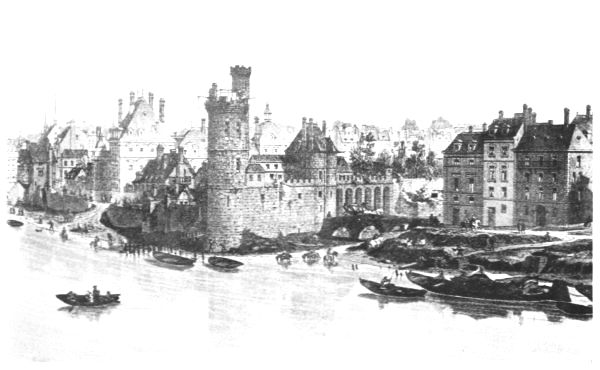
THE TOWER OF NESLE
FROM A CONTEMPORARY PRINT
The barricades of the Fronde, floating the old banners of the League, had evoked the past and touched the revolutionary current in the abandoned souls of the Parisians. Retz claimed that his hand fired the powder, and to do him justice, though his Memoirs make a great deal of the part that he played in the Fronde, they tell less than the truth. He might have said without boasting that he held Paris in the hollow of his hand. He had worked hard to acquire the power by which he bent the people to his will. Vincent de Paul had been his tutor, and Retz had been an unworthy pupil; he had remembered but one of Père Vincent's many lessons of brotherly love. His mind had seized the warning: "Know that the people is a Being, to be considered; not an inanimate object to be ignored," and from that simple precept he had deduced utilitarian conclusions fitted for his personal service, and drawn from them a plan for his own conduct. The principle of man's humanity had given him his idea. He had based his system on the susceptibility of men to the influence of intelligent suggestion, and by the judicious warmth of his sympathy he had surrounded himself with just such elements as his plan required.
This young Abbé Retz was the coadjutor of his uncle, the Archbishop of Paris. He was of an excellent family. He was astute, and, having decided to turn the people to account, he applied his mind to the task of learning the opinions of the lockpickers and ruffians of the city. His office gave him the right to go everywhere and to be seen in all company. He frequented the cellars and the garrets, he fraternised with the cut-throats, he distributed alms, and as equivalent for what he gave received instruction in the magic vocabulary of the men who shut the streets of a city as easily as a warder shuts a door; he studied the ways of the canaille seven years, living hand-in-glove and cheek-by-jole with the men of the dens; he studied his world as he studied the policy of the ministry and the face of the Queen; and when he felt that the footing of the Court was insecure he broke away from Royalty and put into action the science of the cut-throats. To act the part of Marius or Coriolanus before the people was to satisfy an ambition which had haunted him since he had first read Plutarch. Retz was the type of the hero of romance at a time when Corneille met his models in the public streets.
He cared more to excite the admiration of the masses than to acquire position or money; he was influenced more by passionate love of brilliant and extraordinary exploits than by ambition, because he knew that his exploits made the people admire him. In his opinion an out-and-out adventure was worth more than all else, and no condition seemed to him as desirable as the life of a conspirator. He was called le petit Catilina, and the title pleased him better than any other. His "popolo," collectively and individually, gloried in him, understood him, trusted him, and sympathised with him in all his longings. He was at home and at ease and as safe as in the archiepiscopal palace in the most dangerous of their dens.
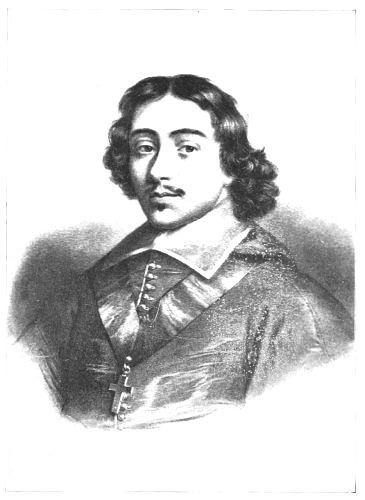
CARDINAL DE RETZ
He was the subject of all species of critical judgments; La Rochefoucauld and Saint Simon spoke admiringly of his "prodigious genius." Anne of Austria called him a "factionist." Mazarin, who as he loved neither virtue nor vice, could not judge justly of one of Plutarch's heroes, did not like Retz; but he feared him. Mademoiselle said in her memoirs: "The Cardinal tells me that he believes that Retz has a black soul." People who knew no better laughed at the Archbishop's nephew, and Retz involuntarily fostered their delusion. His swarthy face, crooked legs, and near-sighted awkwardness were well fitted to call forth the gayety of light-minded courtiers. To add to his questionable appearance, he robed himself in the costumes of a cavalier; his doublets and other garments were of gaudy stuffs, belaced and bedecked with baubles which were in all respects, and without any qualifying reservation, beneath the notice of a serious or an appreciative gentleman. His personal carriage (a prancing and tiptoeing swagger) impressed strangers with the idea that he was an unfortunate ballet-master whose troubles had dethroned his reason. But there are men upon the earth who are so constituted that they can support all the ridicule that can be heaped upon them; Retz was one of them; the fact that he was pleasing to women proves it.
While this enterprising episcopal agitator was engaged in earnest contemplation of the first effects of the mischief that he had made in his own quarter (the quarter of Notre Dame) the Parisians were preparing for battle; the fathers were polishing their muskets, the children were sharpening their pocket-knives. But Paris was calm, the rioters had gone back to the faubourgs. The streets were clear between the Tuileries and the Palais Royal, and Mademoiselle paid a visit to the Queen. She was in the Queen's salon when the Parliamentary deputation arrived, acting under stern orders from "the nation's depths," to demand the release of Broussel. Anne of Austria was angry; she refused the demand and the deputies went back to the bourgeoisie. They were not gone long; Mademoiselle was still with the Queen when they returned with the people's ultimatum: The people will have Monsieur Broussel! Anne of Austria was not dull and every possible contingency had been covered by her astute mentor. She ordered Broussel's release and the deputies departed, calm but triumphant.
Mathieu Molé negotiated the release, and while he talked to the Queen a member of Parliament, accompanying him, explained the political situation to Mademoiselle. The deputy's discourse was a clear statement of ugly facts and their consequences; it gave Mademoiselle an insight into the reasons and the secret views of the magistrates. The canaille spoke so loud that all the world could hear; the people's messengers held their heads as high as the nobles. As Mademoiselle watched "the long robes" file out of the royal presence she realised that all the riots and all the menaces had been but the beginning; she knew that the time was coming when, married or not married, every woman in France would be given her chance to do her duty.
When Broussel returned to the people the barricades disappeared; but the canaille was still nervous; a practical joker cried out that the Queen was preparing another Massacre of Saint Bartholomew, and the old muskets followed by the pocket-knives rushed into the streets. Another joker said that the Queen of Sweden with her army was at the gates of Saint Denis, and a prolonged roar was heard and the mob filled the streets and began to pillage. So, amidst alarms and alternations of hope and fear, the days passed for a time. The people of Paris rioted, then returned to their wretched homes. Whatever the day had been, the night brought vigilance. All slept dressed, ready for action. Mademoiselle, who was everywhere at once, was not afraid. When the canaille growled the loudest she went her way. She was happy; she revelled in sound and in movement and in the fears of the Court. At a ball in the rue Saint Antoine she heard shots fired all night and "danced to the music of the guns."
The Queen was anxious to be far from Paris; Mazarin too craved rest; but the royal habit of carrying about all the furniture of the household made secret escape difficult. The people were watching the Palais Royal; they were determined that the Queen should not leave them. Nevertheless the Court decided to make the attempt.
Apparently there had been no change at the royal palace; the roast-hasteners and the soup-skimmers were in their places, and all the mouth-servants were watching with ears pricked to hear the first whisper of an order, ready to hand water or to run at the beck and call of the myrmidons of the myrmidons. In the streets around the palace lounged the people, silent and sullen, giving vent to angry criticisms or watching for "tall Mademoiselle." Mademoiselle appeared frequently at her windows, and the people greeted her with friendly cries. Paris was calm; the silent river, bearing its gilded galleys, its charlatans, jugglers, serenaders, and shouting and singing river-men, ran by under its bridges as it had always run; the Parisians laughed at their own suspicions; one group left its post, then another, and thus, gradually relaxing their vigilance, the King's warders returned to their homes. The 12th September, before daylight, a few wains loaded with furniture crept away from the Palais Royal and took the road to Rueil. At daybreak the more suspicious of the Parisians approached the palace and watched and listened. Evidently the royal life was still progressing in regular order. The following morning before Paris was awake the young King was drawn from his bed, dressed, carried out into the courtyard, hidden in a coach, and set upon the road taken by the furniture. Mazarin accompanied him. Anne of Austria, "as the most valiant" (to quote the words of Mme. de Motteville) remained in the palace to cover the retreat of her Minister. In the course of the morning she was seen in various parts of Paris; that evening she vanished as the King and the Cardinal had done before her.
II
The royal flight deflected Paris. The members of Parliament reproached themselves for their excess of severity. They made overtures to the Queen.
It was believed that Anne of Austria, assured of the safety of her little brood, would reopen some of her old foreign correspondence and attempt to avenge her wrongs. Broussel had been released against her will—the city had raised the barricades—the Minister was an Italian and the Queen was anything but French! Paris prepared for the worst. Whence would the trouble come, from Spain or from England?
Parliament continued to send deputies to Saint Germain, but the Queen was obdurate. All business was suspended; people slept in their clothes; the bourgeois hid their money. The courtiers, who had remained in their palaces, hurried away followed by their furniture; and the evil faces which appear in Paris on the eve of a revolution were seen all over the city. The wains carrying the courtiers' furniture were pillaged, and the pillagers sacked the bakeries. Parliament had seized the reins of State, but the Parliamentary sessions resembled the stormy meetings of the existing Chamber. Personal interests and the interests of the coteries had entered politics. After a deplorable day in Parliament Olivier d'Ormesson noted sadly in his journal: "The public welfare is now used only as a pretext for avenging private wrongs."
Mademoiselle's feelings in regard to the events of the day were varied; they could not be wholly pleasant, for there was nothing in the revolt of the people to tempt the imagination of a personage fully convinced that the King was the deputy of God. The first Fronde was an outburst of despair provoked by an excess of public anguish. Yet Mademoiselle considered it the adventure of a party of agitators. The preceding century France had been an exceedingly rich country. Under Richelieu Monsieur had depicted it in a state of famine, and in the early days of the Regency, and later, when foreign nations were lauding Mazarin's diplomacy, the people of Paris were perishing from every form of squalid misery. The State paid out its moneys without counting them, lent at usurious interest, and gave the notes of its creditors to its note-holders, the bankers; the note-holders fell upon the debtors like brigands; the taxes were collected by armed men. Wherever the tax-gatherer had passed the land was bare, cattle, tools, carts, household furniture, and all the personal property of the victims of the State had been seized; the farmers had nothing to eat, nothing to sleep on, no shelter; they were homeless and hopeless; they had but one alternative: to go out upon the highways, and, in their turn, force a living from the passers-by at the point of the knife. Through the brigandage of the note-holders every year added a strip of abandoned ground to the waste lands of France.
The nation had turned honest men into thieves and pariahs.
Barillon raised his voice and the grave opened to receive him. Broussel was saved, but his salvation precipitated the catastrophe. The Queen had fled, abducting the King. The national Treasury was empty; affairs were desperate, and Parliament, its honour menaced, decided upon a measure which, had it been successfully effected, would have changed the course of French history.
England had inaugurated a successful political method by giving the nation a Constitution, and by introducing in France the orderly system with which the House of Commons had endowed England. With that end in view the magistrates and all the officials, who had paid for their offices, tried to seize the legislative and financial power of the State. They thought that by that means they could bring the royal authority to terms, and make the national Government an honest executive and guardian of the people's rights,—in the words of the reformers, "make it what it should be, to reign as it ought to reign."[129]
The nation, individually, approved the Parliamentary initiative. Each citizen, courtier, or man of the lower order urged on the scheme. Some applauded because they wished for the good of France. Others looked forward to "fishing in troubled waters." All knew that a great deal of business could be done under cover of the excitement attendant upon national disturbances. They who had no need of money and no thought of financial speculation hoped that their personal schemes might be advanced by a national crisis. Mademoiselle was of the latter class. She had decided to unite her acres and her millions with the fortunes of the King of France. Louis XIV. was ten years old. Anne-Marie-Louise was one and twenty, and she looked her age; her beauty was of the robust type which, mildly speaking, is not of a character to make a woman look younger than her years. Her manners were easy and assured. To the child who had so recently been dandled upon her knee the tall cousin was neither more nor less than the dreaded though respectable daughter of his uncle; the young King shrank from her. Mademoiselle suspected that he feared rather than loved her, and although her flatterers had told her that age was not an obstacle among people of her rank,[130] she was troubled by a presentiment that she should not be able to capture that particular husband unless she could carry him off by force; the thought unhinged all her political convictions; but the enterprises of Parliament gave promise of utility. Her memoirs show that she studied the situation from every point of view, and that a conflict raged within her breast. At times she believed that a public disturbance would be favourable to her interests; at other times she was worried by the thought of the inconveniences attendant upon war. One day she approved the designs of Parliament; the next day she indignantly denounced the subjects who had attempted to circumscribe the authority of the King. She adapted to the royal situation all the maxims derived from the "Divine Right," yet she rejoiced at all the errors of the Court.
She had errors in plenty to sustain her courage; the situation was so false that anything but error would have been impossible. Married or not married, Anne of Austria allowed herself a dangerous latitude; Mazarin did not protect her, she protected and defended him; to her mind all that he did was charming; she glanced knowingly at her courtiers if he opened his mouth or if he moved his hand. Her eyes beamed upon him with familiar meaning, and while he talked her arch smiles asked the Court if her Chief of Council was not a prince among men and the flower of ministers. She would have been happy in a hovel had she been able to fix him stably among his precious ancient draperies and the thousands of rare objects with which he had surrounded his handsome form. Mazarin had feathered his nest à l'Italien, and the style was by far too superfine for the times and for the taste of France. The gossips of the royal domestic offices had circulated the intimate details of the royal life. The public knew all about the favourite; they knew what he wore, what he ate, and what he did; and they thought of him as always at play with small, strangely rare animals, as graceful, as handsome, and as highly perfumed as their master. In imagination they saw Mazarin steeped in sloth, battening on the public funds, and nourishing his soft beauty by the aid of secrets of the toilet of his own invention. Anne of Austria did not care what the people thought. She delighted in Mazarin. She was happy because she had been able to lay the nation at his feet. The people said that she had laid them under his feet, and they declared with curses that it should not be.
Mazarin had rendered France incalculable services, but no one thanked him or did him justice. No one understood the work that he had accomplished. Paris knew nothing of foreign affairs. The people's minds were engrossed by the local misery, and so little interest was taken in politics that when the Peace of Westphalia was signed no one in France noticed it although the world classed it among great historical events.[131]
Paris knew more of the King's scullions than of Mazarin's diplomacy. The King's cousin: Mademoiselle la Princesse Anne-Marie-Louise d'Orléans,—fit bride for any king! must remain upon the stocks to pleasure "the Queen's thief."
The King, also, was the victim of the foreigner.
There was little in the royal larder, and that little was not equally distributed; the cohorts of the kitchen had made more than one strong personal drive in the King's interest. The wilful head with its floating veil of curls, the pouting mouth and tear-dimmed eyes were the oriflamme of the cooks' pantries. "Monsieur le Cardinal had forty little fishes[132] on his platter! I only had two on mine!" wailed the young monarch, and the cooks' corps rose in a body to defend the "Divine Right."
"Ma foi!" growled the bourgeois, "but he has toupet, that one! he makes himself master of the King's mother, takes the food out of the King's mouth, and sets up his pomade-pots in the King's house!" The people knew that, if they knew nothing of Westphalia; the handsome fop had eclipsed the diplomatist.
The people called Mazarin "the pomade inventor" and "moustache of the paste-pots" (not to cite their grosser expressions). When the mob cried: Vive le Roi! Retz heard echo answer: Mais point de Mazarin! The Queen was like all women deep in love; she wondered why people blamed her.
Her anger embittered the situation, but after making many futile attempts Parliament persuaded her to resume her duties and (the last day of October) the King, the Queen, the Court, and the retinue, followed by loaded vans, passed through the suburbs homeward bound. Before they reached the city they saw that public feeling had changed. The people had lost their respect for the Court. No one cared either for the Queen or for her Minister. The canaille hummed significant songs and cast bold glances at the mature lovers; the courtiers' eyes furtively lingered upon the walls where coarsely worded posters accused the Queen of her delinquencies. Anne of Austria was brave. She entered Paris with cheeks aflame but with head high. She would change all that! Parliament had urged her to return....
Time passed and the general attitude retained its flippancy. At Court all were counting the cost and planning how they could best turn the coming misfortunes of the Crown to their own profit; écus, dignities, offices, benefits of all kinds, would be within the gift of the new administration. The great were prepared for the emergency. Retz had driven his curés over to the opposition. La Rochefoucauld had urged Mme. de Longueville after the clerical sheep and Conti after her. Anne of Austria's patience was at an end; she had no one to advise her; after she had assured herself that the Condés would sustain her, she set out to the Luxembourg. Monsieur was in the agonies of one of the diplomatic attacks to which he was subject; no one knew whether his pains were real or feigned. He was in bed. He had not changed since the days of Richelieu; he was the same light-hearted, nervous, and bold poltroon, but his intellect was keen, he charmed strangers, he was pleasing even to those who knew him best. Though the Queen was used to his arts, she was dazed by the flood of words with which he welcomed her. From tender anxiety for her well-being he passed to the real anxiety of well-defined personal terror. Then, without stopping to take breath, he gave vent to such sentimental emotions that when Anne of Austria told her errand he had neither the face nor the force to refuse her prayer. She begged him to conduct the King out of Paris secretly, and—"By the faith of Monsieur!" he swore that he would do it.
This second flight was fixed for the night between the 5th-6th January. It was agreed that they should retire to Saint Germain, although there was no furniture in the château. Nothing could be sent out this time—the palace was full of spies—the people were on the watch! Let the furniture follow! Fatality must see to that! Mazarin bought two small camp-beds and sent them to Saint Germain; he left to Providence the task of providing for the rest.
The night of the 5th January Anne of Austria went to bed at her habitual hour for retiring. When she was assured that all the people of the palace were asleep she arose and confided her secret to her femme-de-chambre who awakened the servants, whom she could not do without. At three o'clock they took the King and little Monsieur from their beds and dressed them in their warmest garments. The Queen then led the children down an abandoned flight of steps which opened on the garden. It was moonlight and the cold was stinging. The royal family, followed by one femme-de-chambre and a few officers, passed out of the garden by the small door opening into the rue Richelieu. In the street they found two coaches waiting for them. They reached the Cours la Reine, which had been chosen for the general meeting-place, without difficulty; no one had arrived, and they waited. Mazarin had passed the evening at a soirée; at the appointed hour he entered his carriage and drove straight to the Cours la Reine. Monsieur and Condé had been with Mazarin all the evening, but instead of going directly to the Cours they hurried to their homes to prepare their unconscious families. Mme. de Longueville refused to leave her bed; she declared that she would never abandon Paris. Monsieur awakened his wife; she believed that she was dying, and her cries aroused the children; Monsieur had three infant daughters,[133] the eldest was two years and six months old; the youngest had attained the age of two months and fifteen days. The young Lorraines were vociferous, and mother and babes wept together; Gaston sang and whistled, laughed and grimaced. Finally when all the buckles had been adjusted, when the last limp arm had been introduced into its warm sleeve, the four helpless beings, struggling against the efforts of their natural leader, moved painfully through the dark passages of the Luxembourg into the little streets, and across the river. As the murmuring band passed the Tuileries a light struck in Mademoiselle's apartment illumined all the windows. Mademoiselle was rising at her own time! No need of haste for her, no need of secrecy! Her will was the people's law. At sight of the lighted windows the tears of the feeble wife flowed afresh.
Beyond the Tuileries all was confusion. At the last moment the Queen had despatched messengers to summon the courtiers and the courtiers had sent messengers to warn their relatives that the Court was on the march; all had hurried from their homes, and lord and lady were pressing forward toward the Cours la Reine, the gentlemen fastening their garments askew, or wrong side out as they went; the ladies, still in their nightcaps, moving wearily, soothing or upbraiding their weeping children. All wondered what it meant, all asked what the Canaille had done to force the Court to flee.
Mademoiselle was the last to reach the Cours. To quote her own words, she had been "all troubled with joy" when ordered to prepare for flight, because she had believed that her enemies were about to take a step which would force them to look upon the effects of their folly; but the misery of the sudden flitting, the indecent haste, the broken rest, the consciousness of bodily weakness had swallowed up her glee, and she arrived at the Cours in an ugly humour. She ached with cold; she was crowded in the coach; she sought excuses for intimating that the Queen had brought a useless flight upon the Court. The children voiced their woes. Numb with the cold, worn out and querulous, the ladies chided their husbands and the husbands rudely answered. The moon went down upon the wretched exiles; day had not dawned and black night hid the general woe.
They fled in the darkness, cahin-caha, the children sobbing, the women expressing their sufferings in ways equally tempestuous. The Queen was gay; she was running away with Mazarin! "Never," said Mademoiselle, "had I seen a creature as gay as she was! had she won a battle, taken Paris and had all who displeased her put to death, she could not have been happier." They found Saint Germain bare; they had neither furniture nor clothing; they were worn out and anxious, and the château furnished no means of rest or refreshment; the exiles stood at the gates all day watching the highway and questioning the passers-by. No one had seen the luggage or the furniture. Toward night news arrived from Paris; the wains were not coming; the people were angry because the Queen had run away; they had fallen upon the loads; they had broken the courtiers' furniture. Only one load was on the road,—Mademoiselle's; the King's loads had been respected, but they were not to leave Paris.
Mademoiselle had left the bulk of her commodities to be sent out at a later day; only one load belonging to her had started to leave Paris; the people had examined that tenderly and then despatched it for Saint Germain.
No need to watch longer for the loaded wains! The tired courtiers made the best of a bad business; half a dozen of the highest of the Great "shared the Cardinal's two camp-beds"; the quilts on which the children had been bedded on the way from Paris were spread upon the floor. Those who had no mattresses lay upon straw or upon bare boards. The ladies fared worst of all; they had been used to the tender cares of their femmes-de-chambre.
Mademoiselle's spirits rose; she had always boasted that she was "a creature superior to trifles," and the general difficulty had put her on her mettle. Monsieur's wife wept feebly; she told the courtiers of the luxury of her early life, and of her present sufferings. Monsieur's little daughters were restless and displeased. Mademoiselle noted this adventure in her memoirs:
I slept in a vast and finely gilded room, but there was very little fire in it, and it had neither window-panes nor windows, which, as the month was January, was not agreeable. My mattress was on the floor, and my sister, who had no mattress, slept with me. I had to sing to her to put her to sleep; she greatly troubled my sleep. She turned, and re-turned; then, feeling me close to her, she cried out that she "saw the beast," and then I had to sing to her again, and thus the night passed. I had no underclothing to change, and they washed my nightdress during the day and my day-chemise during the night. I had not my women to comb my hair and to dress me, and that was very inconvenient. I ate with Monsieur, who made very bad cheer.... I lived in that way ten days, then my equipage arrived, and I was very glad to have all my commodities.
Louis XIV. and little Monsieur played about Saint Germain in the wintry weather, and as the days passed their garments acquired the marks of use. The King's furniture did not arrive, neither did his boxes; the Parisians would not permit them to leave the city. All the gates of Paris were guarded; no one was passed without papers. It was so difficult for people of quality to obtain passports that the ladies ran away in the garb of monks, or disguised in some other way. The Marquise d'Huxelles went through the gates in the uniform of a soldier, with an "iron pot" on her head.[134] Paris had never refused its favourite anything, and Mademoiselle's chariots went and came and no one asked what they contained; the belongings of her friends were transported as freely as her own if they were in her boxes or in her wains. In after life she used to call those days "the time of plenty." "I had everything!" she wrote exultantly; "they gave me passports for all that I wished taken out, and not only that, but they watched over and escorted my chariots! nothing equalled the civilities that they showed me."
Time passed; the royal garments were unfit for wear and the Queen, reduced to extremities, begged Mademoiselle to smuggle for her. Mademoiselle granted her request with joy. She recorded the event exultantly: "One has enough of it,—when one is in condition to render services to such people, and when one sees that one is of importance!"
The Parisians had given their favourite a convincing token of their love, and she regarded it as a proof that she was the one best fitted to share the throne of France.
As the Parisians slept well on the night of the Queen's second flight, they were not conscious of their separation from royalty until the morning of the 6th January. The first emotion felt was consternation. Parliament made overtures to the Queen; the Queen rudely repulsed the overtures, and Parliament issued an edict of expulsion against Mazarin. Mazarin expelled, Parliament raised money, and set about recruiting an army. The Council of the Hôtel de Ville, representing Parisian commerce, sent a delegation to the King. Arrived in the royal presence, the deputies fell at the King's feet. They portrayed the horrors of civil war, they explained to the child that to be driven to attack Paris would be abominable. In the midst of his supplications the chief speaker, choked by sobs, cut short his plea. His emotion was more effective than any argument; his tears proved the solemnity of the hour. The King wept bitterly, and, in fact, every one wept but the Queen and Condé, who surveyed the general distress dry-eyed.
When calm was restored Anne of Austria refused to yield. The die was cast; civil war was inevitable. After long deliberation the Hôtel de Ville declared for resistance. The masses of the people were defiant; they accused the royal family of treason; they demanded vengeance.[135]
At that moment, when the nation stood alone, without a king, when a mob, driven mad by despair, clamoured for justice from the nobles, Mme. de Longueville entered the political field. Nature had not intended Mme. la Duchesse de Longueville for a business career; she was the impersonation of the soft graces of elegant leisure; and even in her grave she charmed men, as she will always charm them while there exists a portrait of her pale hair and angelic eyes, or an historian to recount "the delights of her calm mind illumined by the reflection of celestial light."[136] The fashionable education of the day had been her ruin; the little court of the Hôtel de Condé, long sojourns at Chantilly, where people lived as the heroes and heroines lived in Astrée,[137] excessive novel-reading and frequent and subtle discussions of "love" had made Mme. de Longueville a finished sentimentalist; and in her path she had found waiting for her a man well disposed and well fitted to exploit her sentimentalism, and bold enough to avow the part played by him in her career.
La Rochefoucauld's ambition was to augment the grandeur of his house, and he could not see why he should not put France to fire and sword, if by doing so he could seat his wife on a tabouret close to the Queen.[138] Under his guidance, Mme. de Longueville cast off her sloth and sacrificing her indolence to what she was assured was her "glory," became a political centre and acquired an influence as romantic as herself. Many of the lords who, after the flight of the Court, offered their swords to Parliament "for the service of the oppressed King" (that was the formula), were urged to that action by the persuasive Mme. de Longueville. M. de Longueville was her first recruit, the Prince de Conti was her second.
As soon as it was known that France was preparing for civil war, Mesdames de Longueville and de Bouillon started for Paris. The day after they arrived at their destination they presented themselves at the Hôtel de Ville, saying that they had come "to live right there, in the Town Hall, under the eye of the municipality, as hostages for the fidelity of their husbands."
Imagine [said Retz] these two ladies seated in the portico of the Hôtel de Ville, all the more beautiful because they had arranged themselves as if they had not cared for their appearance, though, in fact, they had taken great pains with it. Each held one of her children in her arms; and the children were as beautiful as their mothers. The Grève was full of people, even to the roofs. All the men shouted with joy, and all the women wept their tenderness. Having been gently led into the street by the aldermen, the Duchesses timidly returned to the portico and seated themselves in their old places. The city authorities then abandoned a vacant room to them, and in a few hours, with furniture and with other articles, they turned the concession into a luxurious salon, where they received the visits of the Parisians that same evening. Their salon was full of people of the fine world; the women were in full evening dress, the men were in war harness; violins were played in a corner, trumpets sounded an answer from the street, and people who loved romance were able to fancy that they were at the home of "Galatée" in Astrée.
So the Parisians were duped in the first days of the Fronde. "Galatée" reigned, and the reign of nymphs is expensive. The Court of the nymphs was daily augmented by general officers who offered themselves to the cause amidst the artless plaudits of the people. The generals were as expensive as the nymphs; they demanded money for themselves and for their soldiers; they exacted from Parliament a promise which Parliament agreed to put into effect whenever it could make terms with the Regent. M. le Prince de Conti demanded an important place at Court, money, and favours for his friends. M. de Beaufort demanded an important position, the government of a province for his father, money and pensions for himself, favours for his friends.
The Duc de Beaufort was a jolly dog whom the people loved. He was called "the King of the Halles," a title which expressed his popularity with the fish-wives, rabbit-pullers, agents of the abattoirs, strong-porters, sellers of mortuary wreaths, cheese merchants, and all the rest. He lounged through the markets and the slums tossing his sumptuous head like a Phœbus-Apollo. He affected the argot of the canaille. His good nature was infectious and although he was an Harpagon and a brigand by proxy, he was a very agreeable courtier.
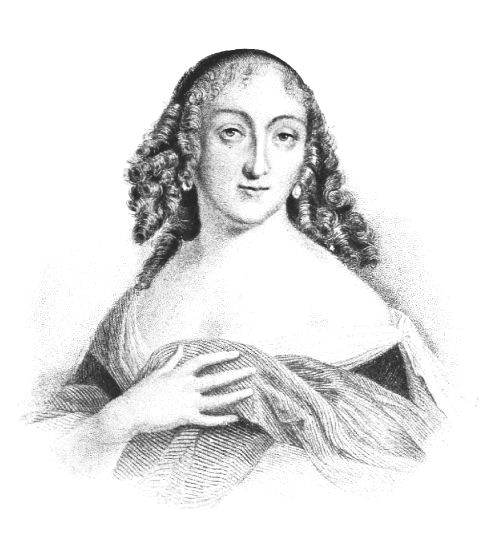
MADAME DE LA VALLIÉRE
FROM A STEEL ENGRAVING
The Maréchal de la Motte demanded a colonelcy for himself and favours for his friends. Every one wanted something, and all felt that whatever was to be had must be had at once; the time was coming when the nation would have nothing to bestow.
A document now before me contains sixteen names; the greatest names of France.[139] The owners of those names betrayed the King for the people because they hoped to gain honours and benefits by their treason. They would have betrayed the people for the King had they hoped to gain more from the King than from the people. The nobility had taken the position held by certain modern agitators; they resorted to base means because they were at an extremity. Like the farmers of France, the nobles had been ruined by the egotism of the royal policy.
They had been taught to think that they could not stand alone. Richelieu had prepared for an absolute monarchy by making them dependent upon the King's bounty; he had habituated them to look for gifts. This fact does not excuse the sale of their signatures, but it explains it. They knew that they had lost everything, they knew that the time was at hand when, should all go, as they had every reason of believing that it would go, the Government would have favours to bestow; they knew that their only means of speculation lay in their signatures. They were not base hirelings,—their final struggle was proof of that! they were the "fools of habit"; Richelieu had taught them to beg and they begged clamorously with outstretched hands, and not only begged but trafficked.
When they demanded honours and favours they did nothing more than their hierarchical head had habituated them to do. So much for their sale of signatures. The fact that they had resolved to make a supreme fight, not for independence,—they had no conception of independence,—but against an absolute monarchy,[140] explains the Fronde of the Princes. At the other end of the social ladder the mobility, or riff-raff, had taken the upper hand, dishonoured the people's cause, and made the Parisians ridiculous.
Driven to arms by their wrongs, lured by the magnetic eloquence of the skilled agents of political egotists, led by a feverish army of men who held their lives in their hands, and commanded by women who played with war as they played with love, the soldiers of the Fronde wandered over the country encamping with gaily attired and ambitious coquettes, and with ardent cavaliers whose gallant examples fretted their own enforced inaction. They were practical philosophers, moved by the instinct which sends the deer to its sanctuary. "Country" and "Honour" had come to be but shibboleths: they, the Frondeurs, were of a race apart from the stern regulars who blocked the capital under Condé, and when the time to fight came they ran, crying their disgust so loud that the whole country halted to listen. The public shame was unquestionable, and the national culpability, like the culpability of the individual, was well understood; the cry of "treason" aroused a general sense of guilt. Certain of the men of France had been faithful to the country from the beginning; the nation's statesmen, notably the magistrates, had acted for the public good; but in the general accusation Parliament, like all the other factors of the Government, was branded; its motives were questioned, and the names of honest men were made a by-word.
Passing and repassing, in and out of all the groups and among all the coteries, glided the Archbishop's coadjutor; now in the costume of a cavalier, bedizened with glittering tinsel, now in the lugubrious habit of his office. When dressed to represent the Church he harangued the people wherever he chanced to meet them; the night-hawks saw him disguised and masked running to the dens of his conspirators. Whatever else he was doing, he found time to preach religion, and he never missed a gathering of pretty women.
Meanwhile the price of bread had tripled; the Revolution had reached the provinces, and the generals had signed a treaty of alliance with Spain. This was paying dear for the violins of the heroines of the Hôtel de Ville!
In Parliament the magistrates, the solid men of France, revolted against the seigniors as they had revolted against the barricades. They knew what influences had been brought to bear upon individuals, they had seen the royal power exercised to the ruin of the country, they knew the strength of the mobility, and their own honour had been called in question; but their action was the result of an unselfish impulse. National affection, a natural patriotism, had raised them above fear and above rancour. They were determined to rescue the country, and they had lost faith in all intentions save their own.
Acting on their own counsel and on their own responsibility, they hastened to conclude the peace negotiations of Rueil (11th March, 1649). Their action irritated the generals. Peace thus arranged was not in their plan; it brought them no profit: they argued and bargained.
To quote Mme. de Motteville, they "demanded all France" in payment for their part in the treaty. They made it plain that if they should give their signatures it would be because they had been paid for them. Shameless haggling marked this period of the Fronde. After all those who had influence or signatures to dispose of had plucked the many-membered monarchy even to its pin-feathers, and after each of the assistants had taken a leg or a wing for himself, the generals consented to lay down their arms, and peace was proclaimed to the sound of trumpets.
The day after the proclamation was issued, Mademoiselle asked her father and the Queen for permission to return to Paris.
She wished to see how the Parisians regarded her and how they would receive her. She set out from Saint Germain across the devastated country. The soldiers of both parties had burned the houses, cut down the trees, and massacred or put to flight the inhabitants. It was April, the time when all the orchards are in flower, but the suburbs within six miles of Paris were bare and black; the ground was as lifeless as a naked rock.
III
"Monday, 8th April," noted a contemporary, "Mlle. d'Orléans arrived at her lodgings in the Tuileries, amidst the great applause of the Parisians. Tuesday, the 9th, every one called on Mademoiselle."
Mademoiselle wrote: "As soon as I was in my lodgings every one came to see me; all Paris came, the highest and the lowest of the party. During my three days' stay in Paris my house was never empty." A second visit to the Tuileries was equally triumphant, and Mademoiselle was confirmed in her determination to accomplish her destiny by marrying the King of France. The project was public property; the capital of the kingdom approved it, and the people were ready to barricade the streets in case the King, the Queen, or the Italian objected to it.
Mademoiselle should sit upon the throne! the People willed it!
At that time a comedy equal to any presented upon the stages of the theatres was played at Saint Germain, and the Queen was leading lady. The chiefs of the Fronde, generals, members of Parliament, representatives of all the corporate bodies and of all the classes—even the humblest—visited the château and assured the Queen of their allegiance. As Mademoiselle said: "No one would confess that he had ever harboured an intention against the King; it was always some one else whom he or she had opposed." The Queen received every one. She was as gracious to the shop-keeper as to the duke and peer. Anne of Austria appeared to believe all the professions that the courtiers made; and all alike, high and low, went away with protestations of joy and love.[141] The only one who lost her cue in this courtly comedy was Mme. de Longueville. Her position was so false that though she was artful she quailed; she was embarrassed, she blushed, stammered, and left the royal presence furiously angry at the Queen, although, to quote an ingenuous chronicler,[142] "the Queen had done nothing to intimidate her."
Saint Germain returned the visits made by the city, and each courtier was received in a manner appropriate to his deserts. Condé was saluted with hoots and hisses. The Parisians had not forgotten the part that he had played in the suburbs. The other members of the Court were well received, and when the Queen, seated in her coach, appeared, holding the little King by her hand, the people's enthusiasm resembled an attack of hysteria. The city had ordered a salute, and the gunners were hard at work, but the public clamour was so great that it drowned the booming of the cannon, and the aldermen fumed because, as they supposed, their orders to fire the salute had been ignored.[143] Exclamations and plaudits hailed the procession at every step. The canaille thrust their heads through the doors of the royal carriage and smiled upon the King; they voiced their praises with vehemence. Mazarin was the success of the day; the women thought him beautiful, and they told him so; the men clasped his hands. Mazarin eclipsed Mademoiselle, and Mademoiselle, neglected by the people, found the time very long.
Speaking of that hour she said, "Never was I bored as I was that day!"
The beauty of the Queen's favourite won the hearts of the people of the Halles, and the royal party entered the palace in triumph. When Anne of Austria first left her palace, after her return from exile, the women who peddled herrings fell upon her in a mass and with streaming eyes begged her to forgive them for opposing her. Anne of Austria was bewildered by the transports of their admiration. They approved of her choice of a lover; they sympathised with her in her love, and they were determined to make her understand it. The Queen's delicacy was wounded by the latitude of their protestations.
Paris had made the first advances and royalty had accepted them. As there were no public "journals," to speak to the country, a ball was given to proclaim that peace had been made, and the ball and the fireworks which followed—and which depicted a few essential ideas upon the sky by means of symbolical figures—acted as official notices. The fête took place with great magnificence the 5th September.
Louis XIV. was much admired, and his tall cousin almost as much so. "In the first figure the King led Mademoiselle," said the Chronicle "and he did it so lightly and with such delicacy that he might have been taken for a cupid dancing with one of the graces." The guests of the Hôtel de Ville, the little and the large Bourgeoisie, men, wives, and daughters, contemplated the spectacle from the tribunes; they were not permitted to mingle with the Court. Anne of Austria watched them intently; she was unable to conceal her surprise at their appearance. The wives of the bourgeois displayed a luxury equal to that of the wives of the nobles. Apparently their costumes were the work of a Court dressmaker. Their diamonds were superb. Anne of Austria had assisted at all the official fêtes of thirty years, and she had never seen such a thing.
The French Bourgeoisie was to be counted; not ignored. The appearance of the bourgeoises was a warning, but the quality either could not, or would not seize it.
When Paris had wept all the tears of its tenderness it returned to its former state of discontent. The whole country was restless; news of revolts came from the provinces. Condé was hated; he was imperious and exacting; he was in bad odour at Court; he had offended the Queen. As Mazarin was in the way of his plans, he had attempted to present the Queen with another favourite. Jarzé, a witless popinjay, was the man chosen by Condé to supplant the accomplished successor of de Richelieu. Jarzé was a human starling; he was giddy, stupid, and in every way ill-fitted to enter the lists with a rival armed with the gravity, the personal beauty, and the subtlety of Mazarin. Jarzé had full confidence in his own powers; he believed that to win his amorous battles he had only to have his hair frizzed and storm the fort. Anne of Austria was sedate and modest and she was deep in love. Jarzé had hardly opened the attack when she ordered him from her presence. Condé, stunned by the effect of his diplomacy, wavered an instant upon the field, but a sharp order from the Queen sent him after his protégé. Anne of Austria felt the outrage, and she vowed eternal anger to Condé.
Condé's lack of tact, coupled with his determination to work miracles, led him into many false positions. He had no political wit, and nothing could have been less like the great Condé of the battle-field than the awkward and insignificant Condé of civil life. In battle he acted as by inspiration. He surged before his armies like the god of war; he was calm, indifferent to danger, impetuous, and terrible; face to face with death, his mind developed and he could give a hundred orders to a hundred persons at once.[144] In Parliament, or with the chiefs of his political party, he was as nervous as a woman; he stood trembling, with face paling or reddening, laughing when he ought to weep, and bursting into fits of anger when the occasion called for joy. There was nothing fixed, or stable, in his whole make-up, except his overweening pride and an "invincible immoderation,"[145] which eventually precipitated him into the abyss. No one had as much natural wit, yet no one was as fantastic in tastes and in behaviour. He adored literature: sobbed over Cinna and thought Gomberville's Polexandre admirable. He swooned when he parted with Mlle. de Vigean, a few days later he—as Mademoiselle termed it—"forgot her all at one blow." He was a great genius but a crackbrain; a complicated being, full of contrasts and contradictions, but singularly interesting. He has been described as a "lank prince, with unkempt, dusty hair, a face like a bird-of-prey, and a flaming eye whose look tried men's souls."
The summer was barely over when Condé forced the Cardinal to sign a promise not to do any thing without his (Condé's) permission. Condé's imperious nature had driven him head long, and at that moment Monsieur's position depended upon his own activity. He had it in his power to sell support to the Crown; the Queen was on Change as a buyer. One step more and it would be d'Orléans against Condé with the Throne of France at his back! Monsieur's wife and Mademoiselle seldom agreed upon any subject, but they united in urging Monsieur to seize his opportunity. As usual, the household spies informed the people of the family discussions, and the popular balladists celebrated the aspirations of the ladies d'Orléans by a song which was sung all over Paris. France was represented as imploring Monsieur to save her from Condé, and Gaston was represented as answering:
... "I am sleepy! I would pass my life in sleep, Never have I a wish to be awakened: My wife, my daughter, you plead in vain, I sleep."[146]
Monsieur trembled with fear [wrote Retz]; at times it was impossible to persuade him to go to Parliament; he would not go even with Condé for an escort; the bare thought of it terrified him. When a paroxysm of fear seized him it was said that his Royal Highness was suffering from another attack of colic.
One day when several of his friends had, by their united efforts succeeded in getting him as far as the Saint Chapelle, he turned and ran back to his palace with the precipitation and the grimaces of a client of M. Purgon.[147]
Nothing could be done with Gaston; his conduct made Mademoiselle heart-sick. When the second or new Fronde took shape she had no part in it. She looked, on as a listless spectator, while Mazarin spun his web around his enemies and worked his way toward the old Fronde. Condé was marching on to a species of dictatorship when the King's minions brought him to a halt. He was arrested and cast into prison and the Parisians celebrated his disgrace by building bonfires (18th January). A great political party composed of women from all parts of France arose to champion Condé, and still the bravest of all women, La Grande Mademoiselle, sat with head bowed, deep in grief; her father's cowardice had drained life of its joy.
Having aroused the wrath of France by adventures which were the scandal of their hour, Mme. de Longueville had taken refuge in a foreign land and formed an alliance with Spain. France looked on bewildered by the turn of events; Mme. de Chevreuse and the Princess Palatine were in active life regarded as equals of men of State, consulted, and obeyed. Mme. de Montbazon had her own sphere of action; Mme. de Chatillon had hers[148]; both ladies were powerful and dangerous politicians. Others, by the dozen, and from one end of the kingdom to the other, were engaged in directing affairs of State.
Even the insignificant wife of Condé whom no one—not even her husband—had counted as worthy of notice, had reached the front rank at a bound by the upheaval of Bordeaux; yet La Grande Mademoiselle, who possessed the spirit and the energy of a man, was peremptorily ordered by her father and forced to follow Anne of Austria from province to province suppressing insurrections.
In the many months which Mademoiselle considered as unworthy of note in her memoirs, the only period of time well employed by her was passed in an attack of smallpox, which she received so kindly that it embellished her; she said of it: "Before then my face was all spotted; the smallpox took that all away."
Mme. de Longueville's alliance with Spain had cost France the invasion of the Archduke Leopold and de Turenne. In 1650 the Court went to the siege of Bordeaux and Mademoiselle was compelled to accompany the Queen and to appear as an adherent of the King's party; but before she set out upon her distasteful journey she wrote a letter to the invader (the Archduke Leopold) which she was not ashamed to record and which contained a frank statement of her opinion:
Your troops are more capable of causing joy than fear. The whole Court takes your arrival in good part, and your enterprises will never be regarded as suspicious. Do all that it pleases you to do; the victories that you are to win will be victories of benevolence and affection.[149]
Let us remember the nature of those victories of "benevolence and affection" before we form an opinion. Time has veiled with romance the manœuvres which the amazons of the Fronde made to excite the masses to rebellion, but the legend loses its glamour when we consider the brutal ferocity of the armies of the seventeenth century and the abominations practised in the name of glory. The women who shared the life of the generals of the Fronde were travesties of heroines, devoid of the gentler instincts of woman; there was nothing good in them; their imaginations were perverted, they incited their followers to cruelty, and playing with tigerish grace with the love of men, they babbled musically, in artful and well-turned sentences, of the questions of the day, and mocked and wreathed their arms above their heads when their victims were dying.
The Court arrived at Libourne 1st August and remained there thirty days. The weather was very warm, and the Queen secluded herself in her apartment and forced Mademoiselle to sit at her side working on her tapestry. Mademoiselle fumed; she was imprisoned like a child while all the ladies of France were engaged in military service. To add to her mortification, she felt that the Queen had taken a false step and that all Paris was laughing at the Court. Sitting in the Queen's close rooms, Mademoiselle reflected bitterly on her position. She had again entered into collusion with Saujon. The Emperor was for the second time a widower, and Mademoiselle had re-employed the services of her old ambassador. She had sent Saujon to the Emperor to make a second attempt to arrange a marriage. But she had not renounced the King of France, and one of her confidential friends had opened her eyes to the real character of her enterprise. Until then it had seemed natural enough that she should make efforts to establish herself in life; but through the officious indelicacy of her friend she had learned that she was pursuing two husbands at once. One of the objects of her pursuit was a man of ripe age, doubly widowed, the husband of two dead wives; the other a child of tender years,—and neither one nor the other would consent to marry her. She was glad to be far from Paris, where every one knew and pitied her. She burned incense to all her gods and prayed that civil war might keep the Parisians too busy to remember her. Her grief and shame were at their height when the scene changed. Monsieur awoke; Retz had worked a miracle. By means of his peculiar method, acting upon the principle of humanity's susceptibility to intelligent suggestion, Retz had persuaded Monsieur that he, Monsieur, was the only man in France fit to mediate between the parties; after long-continued series of efforts his clerical insinuations had aroused Gaston from his torpor, and one evening when the Queen, flushed and irritable, and Mademoiselle, dejected but defiant, sat at their needlework Gaston entered the dim salon and announced his importance. The trickster of the pulpit and of the slums had managed to infuse a little of his own spirit into the royal poltroon, and for the first time in his political career Gaston displayed some of the characteristics of a man. In an hour Bordeaux knew that the Prince d'Orléans had arrived in Libourne as the accredited mediator of the parties. The politicians fawned at his feet, and Anne of Austria rose effusively to do honour to Monsieur le Prince d'Orléans. By order of the Regent all despatches were submitted to Gaston, who passed upon them as best he could.
Mazarin rose to meet the situation; he was not bewildered by Retz's tactics; he affected to believe that Monsieur must be consulted upon all matters, and by his orders Monsieur's tables were littered with documents. Mazarin multiplied occasions for displaying his allegiance to the royal arbiter. Mademoiselle met the change in her situation joyfully, but calmly. It was the long-expected first smile of fortune; it was the natural consequence of her birth; things were entering their natural order; but she was observant and her mémoirs show us that she valued her incense at its real worth. While the political world bent the knee before Monsieur Mazarin fortified his own position. He sat with the ladies in the Queen's salon, he betrayed a fatherly solicitude in Mademoiselle's future and, as he acted his part, his enthusiasm increased. One day when he was alone with Mademoiselle he assured her that he had prayed long and earnestly for her establishment upon one of the thrones of the world. Sitting at her tapestry, Mademoiselle listened and averted her head to hide her anger. Mazarin, supposing that he had aroused her gratitude, exposed all his anxiety. Mademoiselle did not answer. At last, astonished by her silence, he cut short his declamation. Mademoiselle counted her stitches and snipped her threads; Mazarin watched her impassive face. After a long silence she arose, pushed aside her embroidery frame, and turning to enter her own apartment, she said calmly: "There is nothing upon earth so base that you have not thought of it this morning." Mazarin was alone; he sat with eyes fixed upon the floor, smiling indulgently, wrapt in thought; he was not angry,—he was never visibly excited to anger; but he did not return to the subject. Mademoiselle had resented his overtures because she had made known her projects freely and he had promised her a king, not an emperor. She reported the Cardinal's conduct to Lenet: "The Cardinal has promised me, a hundred times, that he would arrange to have me marry the King[150]—but the Cardinal is a knave!" The Queen said with truth that Mademoiselle was becoming a rabid Frondeuse. Mademoiselle had her own corps of couriers, who carried her the latest news from Paris; her court was larger than the Regent's. When Bordeaux was taken the people saw nothing and talked of nothing but Monsieur's daughter. Mademoiselle exultantly recorded her triumph:
"No one went to the Queen's, and when she passed in the streets no one cared at all for her. I do not know that it was very agreeable to her to hear that my court was large and that no one was willing to leave my house, when so few cared to go to her house."
While the Regent languished in solitude waiting for visitors who did not arrive her Minister received the rebuffs of the people of Bordeaux. The Queen was sick from chagrin, and as soon as arrangements could be made she returned to Paris. On the way to Paris the Court stopped at Fontainebleau. Gaston descended brusquely from his coach and as his foot touched the ground gave way to a violent outburst of nervous anger. Mazarin was the object of his fury; in some occult way the Cardinal had wounded his feelings. He fled to his room and locked his door, refusing to see either Mazarin or the Queen. As he stood his ground, and as no one could approach him, the Queen implored Mademoiselle to pacify him; and Mademoiselle, carrying her olive branch with a very bad grace, set out to play the part of dove in the ark. After many goings and comings, Monsieur consented to receive the Queen; but the Queen acidulated rather than sweetened the royal broth, and Monsieur broke away from her in a passion of fury. From that time all that Anne of Austria attempted to do failed; her evil hour was approaching. Mazarin had thought of two alternatives: he believed that he might buy Retz by making him a cardinal; or that he might win the good-will of Mademoiselle by marrying her to the King. But could he do either one thing or the other? Could he mortify his own soul by doing anything to give Retz pleasure? Retz was hateful to him.
Despite his powerful diplomatic capacity, Mazarin was not a politician, and some of his instincts bore a curious family resemblance to the characteristic instincts of the average woman; so although he believed that it would be possible to buy Retz with a red hat the thought of giving him the hat distressed him. So much for one of his alternatives!
As to marrying Mademoiselle to the King of France,—that would be difficult, if not impossible; the thought of such a marriage was repugnant to the King. Louis XIV. was wilful and the Queen was an indulgent mother. She pampered her children; she excused the King's failings. Mazarin was patient, but he had often considered Anne of Austria adverse to reason when the King was in question. The Cardinal was master of the Queen, but he was not, he never had been, he never could be, master of the Queen-mother.
In his extremity he resorted to his usual means,—intrigue; but he found that his power had waned. There were people who might have helped him, and who would have helped him in former times, but they had ceased to fear him; they demanded pay and refused to work without it. Mazarin was too normally natural a man to act against nature; he clung to his economies and as his supposititious agents refused to take their pay in "blessed water," his plans failed. His attempts were reported to his intended victims and before the sun set Mademoiselle of the Court and of the people, and the Abbé Retz of the Archbishopric and of the slums had arisen in their might against "the foreigner." Both of the leaders of the masses were implacable; each was powerful in his own way; both believed that they had been duped by the Archbishop's coadjutor; Retz had expected a hat; Mademoiselle had expected a husband; both, vowing vengeance to the death, turned their backs upon Mazarin. Mademoiselle had acquired the habit of suspicion; politics had given her new ideas; Retz had always been suspicious and he had prepared for every emergency. Mazarin, sitting in his perfumed bower, felt that the end was near. What was he? What had they always called him? "The stranger." ... The whole world was against him ... the nobles, the Parliaments ... the old Fronde, the Fronde of the Princes! ... Retz with his adjutants of the mobility! To crown his imprudence and to prove that he was more powerful as a lover than as a politician, Mazarin took the field at Rethel (15th December, 1650) and won the day; Turenne and his foreigners were beaten, and fear seized the people of France. An intriguer of that species could do anything! France was not safe in his presence; he must be driven out! During the Fronde it was common for women to dictate the terms of treaties. Anne de Gonzague, the Palatine Princess, whose only mandate lay in her eyes, her wit, and her bold spirit, drew up the treaty which followed Rethel, and the principal articles were liberty for the princes and exile for Mazarin.
Mademoiselle approved both articles before the treaty was signed. The times were full of possibilities for her; her visions of a marriage with Louis XIV. had been blurred by a sudden apparition. Condé had arisen in her dreams with a promise of something better. Might it not be wiser policy to unite the junior branches of the House of France? Might it not be more practical, more fruitful in results, to marry M. le Prince de Condé than to wage war against him? That he was a married man was of small importance. His wife, the heroine of Bordeaux, was in delicate health and as liable to die as any mortal; in the event of her death the dissent of the Opposition would be the only serious obstacle. Mademoiselle confided all her perplexities to her memoirs; she foresaw that the dissent of the Opposition would be ominous for the royal authority, and therefore ominous for the public peace. She reflected; Condé was a strong man; and who was stronger than the Granddaughter of France? She decided that they two, she and Condé, made one by marriage, might defy the obstacle. Mazarin knew all her thoughts, and he felt that the earth was crumbling under his feet; to quote Mademoiselle's own words: "He was quasi-on-his-knees" before her, offering her the King of France; but he made one condition: she must prevent her father's adhesion to the cause of M. le Prince.[151] Anne of Austria, with eyes swimming in tears, presented herself humbly, imploring Mademoiselle, in the name of their ancient friendship, to soften Monsieur's heart to "Monsieur le Cardinal." The Queen begged Mademoiselle to make her father understand that she, the Queen, "could not refuse Monsieur anything should he render her such service." Mademoiselle was ready to burst with pride when she repeated the Queen's promise. A future as bright as the stars lay before her; for the first time and for the last time she had a reason for her dreams.
Monsieur was the recognised chief of the coalition against Mazarin, but he was afraid to act; he did not like to leave compromising traces; he resisted when it was necessary to sign his name. Knowing that the treaty uniting the two Frondes must be signed and that he must sign it, his political friends went in a body to the Luxembourg treaty in hand. Gaston saw them coming and tried to escape, but they caught him in the opening of a double door, and closing the two sides of the door upon his body, squeezing him as in a vise, they thrust a pen between his fingers; then holding a hat before him for the treaty to rest on, they compelled him to sign his name. An eye-witness said that "he signed it as he would have signed a compact with the devil had he feared to be interrupted by his good angel." A few weeks later Parliament demanded the release of the princes and the exile of Mazarin. Then Mademoiselle was given a vision which filled her cup of joy to overflowing.
I had intended [she wrote in her memoirs] to go to bed very early, because I had arisen very early that morning; but I did not do it, because just as I was undressing they came to tell me of a rumour in the city. My curiosity led me out upon the terrace of the Tuileries. The terrace looked out upon several sides. It was a very beautiful moonlight night and I could see to the end of the street.[152] On the side toward the water was a barrier; some cavaliers were guarding the barrier to favour the departure of M. le Cardinal, who was leaving by way of La Conférence; the boatmen were crying out against his getting away; there were many valets and my violin players, who are soldiers, although that is not their profession. They were all trying to drive away the cavaliers, who were helping Mazarin to escape. Some pretty hot shots were fired.
At that same hour the Palais Royal was the scene of a drama. Mazarin was taking leave, and the Queen thought that she was looking upon him for the last time. The lovers who shared so many memories, and who must have had so many things to say before they parted, dared not, even for a moment, evade the hundreds of eyes fixed upon them. Mazarin could not conceal his grief; the Queen, though calm, was very grave. To the last moment the unhappy pair were forced to speak in such a way that the courtiers could not judge of their sorrow by their looks. At last it was over; the door closed upon Mazarin, and the wretched Queen was left among her courtiers. Mazarin hurried to his rooms, disguised himself as a cavalier, and went on foot out of the Palais Royal. Finding that the cavaliers and river-men were fighting on the quay, he turned into the rue de Richelieu and went away unmolested. It is known that before going to Germany he went to the prison of Havre and set the princes free. Eleven days after Mazarin took leave of the Queen Paris learned that Condé was en route and that he was to sup at the Luxembourg the following day. Mademoiselle knew that her new projects depended upon her first meeting with M. le Prince. She had sent the olive branch to his prison, but she did not know how he had received it. She awaited his coming at the Luxembourg. She said of that first interview:
Messieurs the Princes came into Madame's salon, where I was, and after they saluted they came to me and paid me a thousand compliments. M. le Prince bore witness in particular that he had been very much pleased when Guiteau assured him of my repentance for the great repugnance that I had felt for him. The compliments ended, we avowed the aversion that we had felt for one another. He confessed that he had been delighted when I fell sick of the smallpox, that he had passionately wished that I might be disfigured by it, and that I might be left with some deformity,—in short, he said that nothing could have added to the hatred that he felt for me. I avowed to him that I had never felt such joy as I felt when he was put in prison, that I had strongly wished that he might be kept there, and that I had thought of him only to wish him evil. This reciprocal enlightenment lasted a long time, and it cheered and amused the company and ended in mutual assurances of friendship.
During the interview the tumult of a great public fête was heard. At sight of Condé Paris had been seized by one of her sudden infatuations.
At the gates of the Palais Royal the masses mounted guard night and day to prevent the abduction of the King. It was generally supposed that the Queen would try to follow the Cardinal.
The Frondeurs were masters of Paris; their hour had come, and they held it in their power to prove that they had led France into adventures because they had formed a plan which they considered better than the old plan. But if there were any among them who were thinking of reform, their good intentions were not perceptible. The people of the past resembled the people of our day; they thought little of the public suffering. Interest in the actions of the great, or in the actions of the people whose positions gave them relative greatness, excluded interest in the general welfare. The rivalries and the personal efforts of the higher classes were the public events of France. Parliament was working along its own lines, hoping to gain control of the State, to hold a monopoly of reforms, and to break away from the nobility. The nobility, jealous of the "long robes," had directly addressed the nation's depths: the bourgeoisie and the mobility.